Skip to content
Slip Dress Manufacturer
Custom slip dress development built around fabric drape, controlled fit, clean construction, bulk consistency, and retail-ready brand delivery.
- Custom satin, crepe satin, stretch satin, viscose, chiffon, lace-trim, lined, and bias-cut slip dress development.
- Standard MOQ starts from 200 pieces per style/color, subject to fabric, color, trim, construction, and packaging requirements.
- Standard slip dress first samples commonly require 10–15 daysafter fabric, measurements, trims, and construction details are confirmed.
- Multi-style brand programs can cover 10–30 stylesand total order volumes from 20,000 to 80,000 pieces.
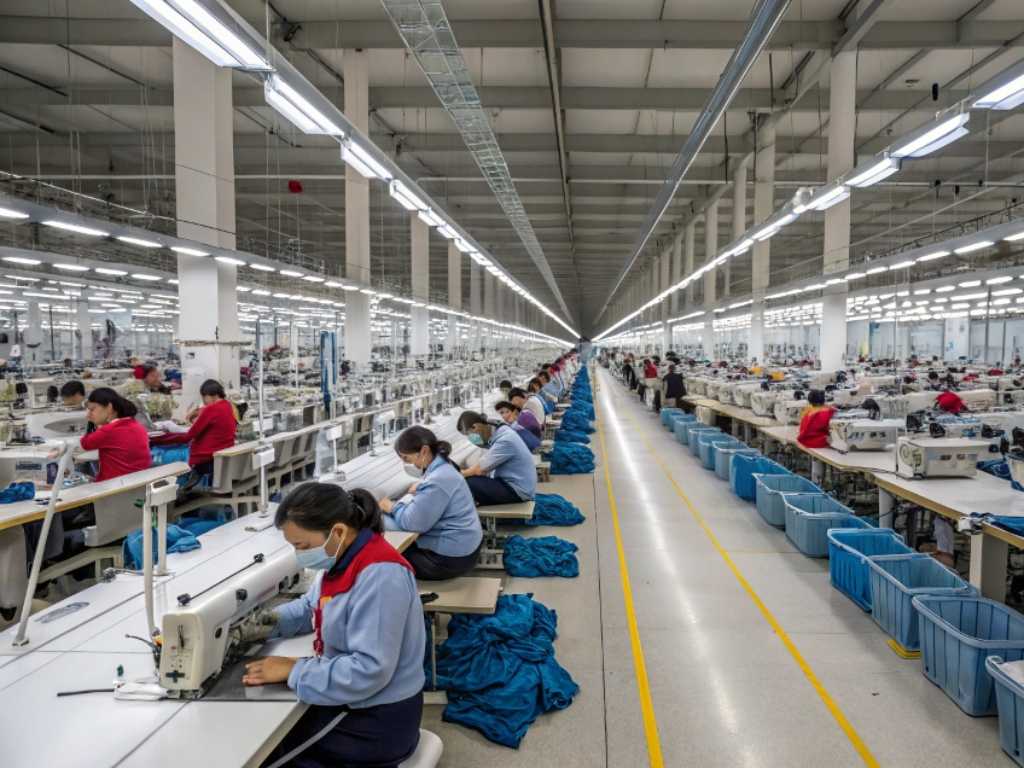
- Supported by 2 sample rooms, 7+ senior pattern makers, 20+ sample machinists, and 15+ QC inspectors.
- Development support covers tech pack review, fabric sourcing, pattern making, sample revisions, PP approval, bulk production, private labels, packing, and delivery coordination.
Manufacturing Support Built for Established Fashion Programs
Collection-Led Fashion Brands
Ideal programs begin with a clear product direction, defined sales channel, size range, planned quantity, and launch calendar.
Jinfeng Apparel can work from tech packs, reference garments, sketches, line sheets, or approved concept images to develop a coordinated slip dress range. Support includes:
- Fabric and lining direction
- Pattern development and fit correction
- Sample version management
- Multi-color and multi-size planning
- Private-label components
- Bulk production and staged delivery
- Pattern, fabric, trim, and packing records for repeat orders
The manufacturing structure is designed for brands developing seasonal assortments, ongoing dress collections, or repeatable core styles rather than isolated garment sourcing.
Sourcing and Development Teams
Sourcing managers, product developers, technical teams, merchandisers, and quality teams need more than a garment quotation. They need clear answers on fabric feasibility, fit risk, construction, MOQ, sample stages, production allocation, inspection, and packing. Jinfeng Apparel reviews the project before development to identify:
- Bias-cut or straight-grain construction
- Fabric weight, shine, stretch, and transparency
- Neckline and strap risks
- Lining and zipper requirements
- Size grading considerations
- Required sample stages
- Bulk production checkpoints
- Packaging and warehouse requirements
The result is a defined production route rather than a vague promise to reproduce a reference image.
Manufacturing Facts Behind Every Slip Dress Program
Since 2008
Six Owned Factories
Ten-Plus Production Partners
Two Sample Rooms
Seven-Plus Pattern Makers
Fifteen-Plus Inspectors
Fifteen-plus QC inspectors support incoming fabric inspection, cutting checks, in-line review, measurement control, appearance inspection, packing checks, and final inspection preparation.
Slip Dress Risks We Control Before Bulk Production
Twisted Side Seams
Bias-cut and fluid fabrics can lengthen unevenly after cutting or sewing. Poor grain alignment often causes side seams to rotate toward the front or back.
Control points include:
- Confirmed grain direction on every pattern piece
- Consistent marker placement
- Fabric stability review before final hem balancing
- Side-seam comparison during sample fitting
- Hanging review where the fabric requires settling
- Bulk checks against the approved golden sample
Unstable Necklines
Control points include:
- Neckline depth measurement
- Bust coverage review
- Cowl volume and fold direction
- Inner stabilization where required
- Fit testing across selected sizes
- Left-right symmetry checks
- Final comparison against approved PP comments
Uneven Strap Lengths
Control points include:
- Fixed or adjustable strap specification
- Strap width and finished length
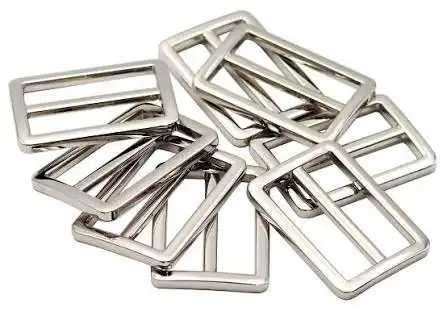
- Slider and ring compatibility
- Attachment reinforcement
- Adjustment range
- Left-right length matching
- Pull and appearance checks during finishing
Satin Snagging
Control points include:
- Incoming surface inspection
- Clean cutting and sewing areas
- Appropriate handling during bundle movement
- Inspection around zippers and metal sliders
- Protection from sharp tags or trims
- Appearance review under suitable lighting
- Packing methods selected for the fabric surface
Lining Migration
A lining that is too narrow, too long, too short, or improperly anchored can twist, show below the hem, pull against the outer shell, or restrict movement.
Control points include:
- Compatible lining weight and stretch
- Approved lining length
- Correct attachment points
- Slit and zipper compatibility
- Static and movement review
- Hem clearance
- Size-by-size fit evaluation where required

Complete Slip Dress Manufacturing Capabilities
OEM Production
ODM Development
Private Label
Fabric Sourcing
Pattern Making
Sample Development
Bulk Production
Quality Control
Repeat Orders
From Design Reference to Retail-Ready Delivery
Project Review
Fabric Direction
Pattern Development
First Sample
Fit Review
Revised Sample
PP Sample
Bulk Production
Delivery Coordination
Custom Slip Dress Styles for Modern Collections

Satin Mini Slip Dress
- Secure bust and underarm coverage
- Controlled mini length across sizes
- Balanced hip ease
- Stable spaghetti straps
- Optional lining for light colors
- Hem treatment suitable for a short curved edge
- Surface protection during sewing and packing

Bias-Cut Midi Dress
- Grain direction on every panel
- Waist and hip release
- Side-seam stability
- Fabric settling before hem correction
- Balanced midi proportion
- Appropriate seam and hem construction
- Size grading without excessive lengthening or distortion

Maxi Slip Dress
- Front and back length balance
- Hem clearance
- Side-seam control
- Slit position and height
- Lining length
- Packaging to reduce deep creases
- Size grading through the torso and length

Cowl-Neck Slip Dress
Cowl-neck designs depend on controlled fabric volume rather than a standard neckline opening.
Development focus:
- Cowl depth
- Fold direction
- Bust coverage
- Inner stabilization
- Strap angle
- Armhole exposure
- Left-right drape balance
Too little volume creates a flat neckline; too much volume may expose the bust or collapse unevenly. Sample fitting must consider both front appearance and movement.

V-Neck Slip Dress
A V-neck version requires precise depth, strap positioning, and neckline stability.
Development focus:
- V depth
- Point symmetry
- Bust width
- Neckline edge finish
- Strap placement
- Optional inner modesty support
- Size grading at the bust
Deep-V designs may require extra structure, double-layer construction, hidden support, or neckline stabilization depending on fabric and market positioning.

Lace-Trim Slip Dress
Lace changes the stretch, weight, edge behavior, and visual balance of a slip dress.
Development focus:
- Lace width and motif direction
- Color matching with satin
- Softness against the skin
- Clean joining methods
- Symmetry at the neckline or hem
- Lace shrinkage and distortion risk
- Protection during pressing and packing
Lace may be applied at the neckline, underbust, side panel, hem, back, or slit. Each placement requires a different attachment method.

Backless Slip Dress
Backless designs require careful control of front security, strap geometry, and back edge tension.
Development focus:
- Back depth
- Strap crossing or tie position
- Bust support
- Side-body coverage
- Back edge stability
- Fastening security
- Movement testing
Lower backs often shift more load onto the straps and front neckline. The sample should be checked while standing, walking, and sitting.

Side-Slit Slip Dress
A slit adds movement and visual length but creates stress at the opening point.
Development focus:
- Slit height
- Reinforcement
- Left or right placement
- Lining compatibility
- Seam allowance
- Symmetry
- Wear coverage
The slit should remain clean after movement and pressing. Reinforcement must support the opening without creating visible bulk.

Stretch Satin Slip Dress
Stretch satin allows a closer fit but requires control over stretch direction, recovery, seam tension, and measurement.
Development focus:
- Stretch percentage
- Recovery
- Negative or positive ease
- Seam waviness
- Hem behavior
- Lining compatibility
- Size stability after hanging or wear
A stretch satin pattern cannot be copied directly from a non-stretch satin style without reassessing bust, waist, hip, length, and strap balance.

Bridesmaid Slip Dress
- Color-card approval
- Dye-lot control
- Size grading
- Bust coverage
- Length consistency
- Lining and comfort
- Multi-batch color record management
Resort Slip Dress
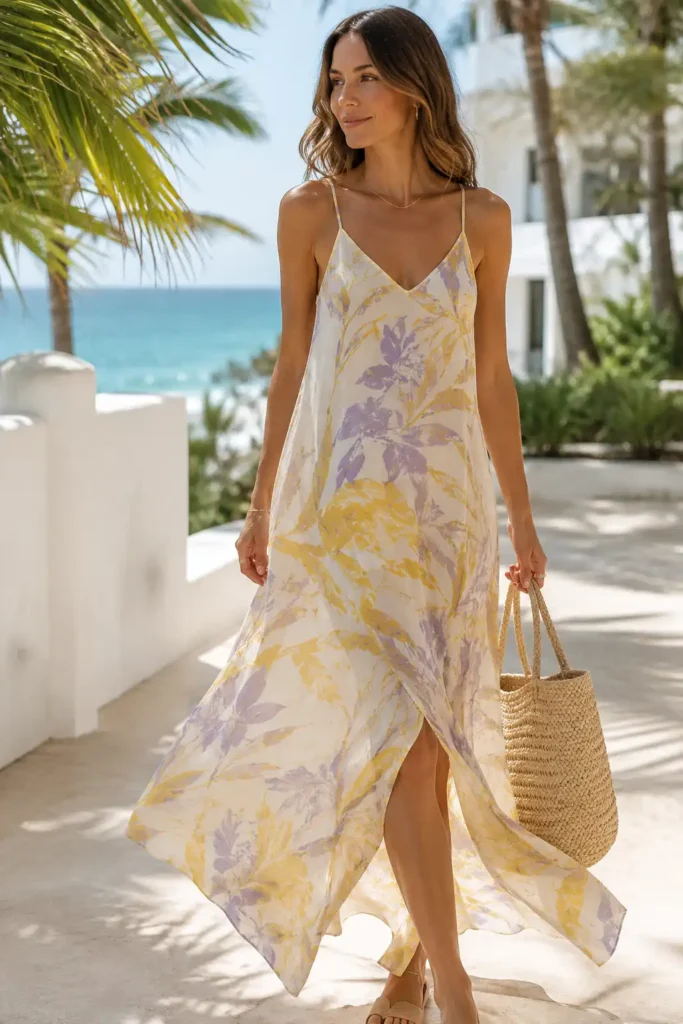
Resort versions prioritize lightness, movement, comfort, color, and packability.
Development focus:
- Breathable or lightweight fabric direction
- Wrinkle behavior
- Semi-transparency
- Adjustable straps
- Travel-friendly packing
- Print or color consistency
- Easy movement through the hip
Resort collections may extend into matching skirts, camisoles, cover-ups, jumpsuits, and coordinated sets.

Evening Slip Dress
- Premium surface appearance
- Controlled sheen
- Long-line fit
- Hidden support where needed
- Refined seam and hem finishing
- Careful pressing
- Protective retail packaging
Slip Dresses Designed for Distinct Sales Occasions

Date-Night Collections

Cocktail and Party
Wedding Guest

Bridesmaid Programs

Resort and Vacation

Evening Occasionwear
Build a Coordinated Slip Dress Collection

Length Extensions

Neckline Variations

Color Programs

Fabric Variations

Matching Separates

Seasonal Capsules
Compare Fabrics for Slip Dress Development
| Fabric Direction | Common Weight Range | Drape | Stretch | Transparency Risk | Suitable Slip Dress Direction | Main Production Risk |
|---|---|---|---|---|---|---|
| Polyester Satin | 80–220 gsm | Medium to high | Usually none | Medium in lighter weights | Commercial mini, midi, maxi, party styles | Snagging, shine direction, pressing marks |
| Matte Satin | 100–220 gsm | Medium to high | Usually none | Low to medium | Refined occasion and bridesmaid styles | Creasing, dull patches, seam impressions |
| Stretch Satin | 120–220 gsm | Medium | Low to medium | Low to medium | Fitted and body-skimming slip dresses | Recovery, seam waviness, measurement growth |
| Crepe Satin | 120–220 gsm | High | Usually none | Low to medium | Premium midi, maxi, and evening styles | Grain control, hanging growth, cost |
| Silk-Like Satin | 80–180 gsm | Medium to high | Usually none | Medium | Fashion-led commercial collections | Hand-feel consistency and batch variation |
| Viscose Woven | 90–180 gsm | High | Usually none | Medium | Resort, vacation, and soft midi dresses | Shrinkage, wrinkling, shape movement |
| Chiffon Layering | 50–100 gsm | High | None | High | Layered, romantic, or semi-sheer versions | Lining control, seam visibility, fraying |
| Lace Combination | Varies by structure | Varies | Varies | Medium to high | Trim, panel, neckline, or lingerie-inspired styles | Motif placement, stretch mismatch, skin comfort |
Fabric Selection Must Support Fit and Brand Positioning
Slip dress quality begins before cutting. Material decisions determine how the garment hangs, photographs, feels, fits, sews, presses, packs, and performs across production quantities.
Match Shine to the Intended Market Position
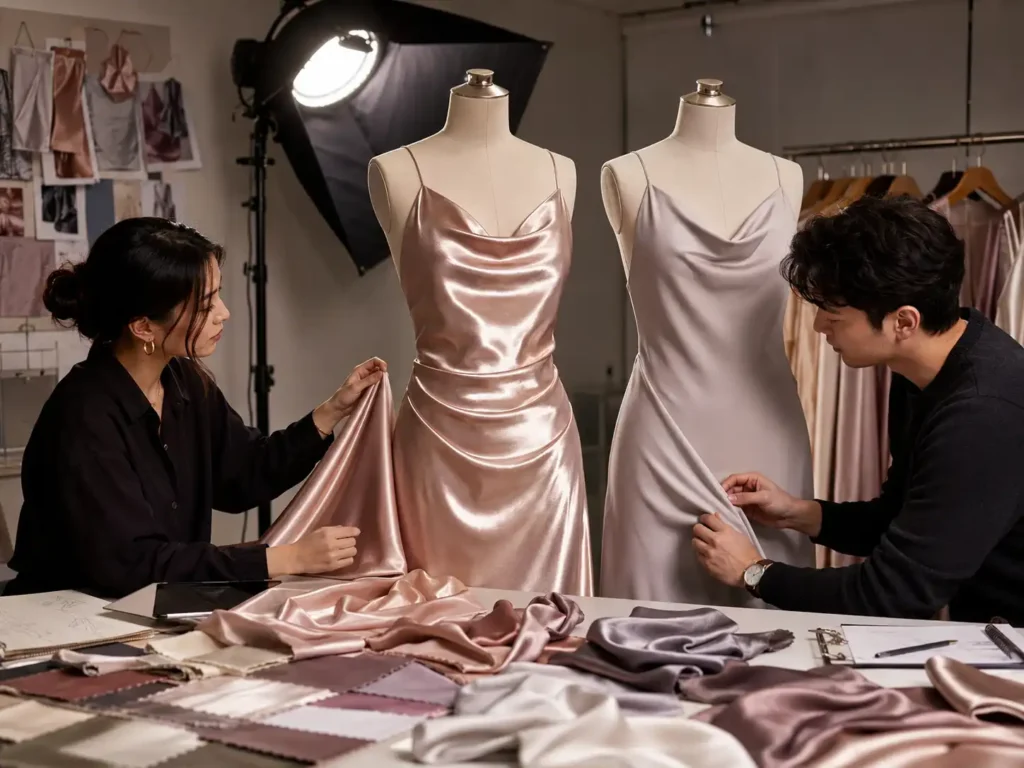
A highly reflective satin creates strong visual impact for party and evening collections, but it also exposes seam pressure, wrinkles, grain direction, and surface defects.
Softer matte satin may create a more refined appearance for premium ecommerce or bridesmaid programs.
Fabric review should consider:
- Studio photography under direct lighting
- Daylight appearance
- Color depth
- Surface smoothness
- Marking around seams
- Wrinkle visibility
- Suitability for the intended retail price
A fabric should not be approved from a small digital image alone.
Physical swatches, drape review, and sample construction provide more reliable information.

Control Weight, Drape, and Transparency Together
Light fabric can create elegant movement but may show underwear lines, lining edges, seam allowances, or body contours. Heavy satin may reduce transparency but can become too stiff for a true slip silhouette.
The review should compare:
- GSM or supplier weight specification
- Hand feel
- Fall and recovery
- Backlighting
- Body cling
- Seam visibility
- Lining requirement
- Finished garment weight
A fabric change from 90 gsm to 160 gsm can alter neckline fall, skirt swing, seam tension, hem behavior, and fit. Pattern and construction may require adjustment.

Reassess the Pattern When Stretch Changes
Stretch satin and non-stretch satin cannot share identical pattern assumptions. Even a modest amount of stretch changes bust fit, waist and hip ease, strap load, garment length, and recovery after wear.
The development team reviews:
- Stretch direction
- Stretch percentage
- Recovery
- Required ease
- Seam type
- Lining compatibility
- Measurement tolerance
- Expected wear behavior
A replacement fabric with different stretch should be treated as a product change, not a simple sourcing substitution.

Balance Cost Without Weakening the Garment
Cost optimization may involve alternative fabric compositions, consolidated colors, simplified lining, revised trim placement, improved marker planning, or a more production-efficient seam.
Cost changes should protect:
- Visual quality
- Required coverage
- Fit
- durability
- Brand positioning
- Approved sample appearance
- Packing presentation
A lower fabric price offers little value when it increases snagging, transparency, returns, pressing problems, or shade inconsistency.
Bias-Cut Engineering for Stable Drape and Balanced Hems
Bias cutting creates fluid movement by placing woven fabric diagonally to the grain. The same flexibility that gives a slip dress elegance also creates growth, twisting, and uneven hems when uncontrolled.
Grain Direction Controls the Entire Silhouette
Every major pattern piece requires a defined grain direction.
A mirrored front and back must maintain consistent orientation, especially when the fabric has directional shine.
Key controls include:
- Grain line marked on every pattern
- Correct marker orientation
- Consistent face direction
- Pairing of mirrored panels
- Shade and lot grouping
- Cut-panel identification
- Verification before bundles move to sewing
Incorrect direction may make one panel appear darker, drape differently, or pull the side seam off balance even when measurements appear correct.
Bias Growth Must Be Reviewed Before Hem Locking
Bias-cut panels can lengthen after cutting, hanging, sewing, steaming, or wearing. The effect depends on fabric weight, weave, panel shape, seam construction, and garment length.
The process may include:
- Fabric behavior review
- Controlled handling after cutting
- Sample hanging observation
- Length comparison at front, back, and sides
- Side-seam balance check
- Hem correction after the garment stabilizes
- Golden sample reference for production
Long maxi styles usually require more attention than mini styles because the additional fabric weight increases growth.
Side-Seam Twisting Requires Pattern and Sewing Control
Twisted side seams may come from grain misalignment, asymmetric growth, uneven seam feeding, or incorrect joining of panels.
Prevention includes:
- Accurate panel pairing
- Stable seam allowance
- Controlled feeding during sewing
- Matching notches
- Seam length comparison
- Hanging review
- Appearance check on a dress form or model
A visually straight side seam at the sewing stage may shift later, so inspection should occur after pressing and garment relaxation.
Grading Must Preserve the Bias Relationship
Size grading cannot simply enlarge every edge equally. Bust, waist, hip, length, neckline, and strap measurements must increase according to the approved fit while preserving panel balance and grain direction.
Grading review includes:
- Bust and hip progression
- Waist ease
- Armhole exposure
- Neckline depth
- Strap position
- Total garment length
- Slit height
- Hem sweep
The aim is consistent visual drape across the size range rather than a single sample that works only in the base size.
Key Measurements That Define Slip Dress Fit
Slip dress fit depends on a connected measurement system. Adjusting one point often changes several others, especially with cowl necks, low backs, bias panels, and narrow straps.
Bust, Neckline, and Armhole Work as One Area
Bust width controls coverage and ease. Neckline depth controls exposure. Armhole depth affects side-body coverage and bra visibility. Strap position connects all three points.
During fit review, the team evaluates:
- Bust circumference
- High-bust relationship
- Front neckline depth
- Armhole depth
- Front strap position
- Side seam at bust level
- Gaping during movement
- Coverage while sitting and leaning
A request to lower the neckline by 2 cm may also require strap, armhole, facing, lining, or bust-shaping adjustments.
Waist and Hip Determine Skimming Versus Pulling
A slip dress should usually fall smoothly without horizontal drag lines or excessive fabric collapse.
Review points include:
- Waist circumference
- High-hip and full-hip measurements
- Waist-to-hip length
- Ease distribution
- Bias growth
- Side-seam angle
- Slit opening behavior
- Fabric cling
Non-stretch satin needs adequate movement allowance. Stretch satin requires recovery control so the garment does not become loose after wear.
Strap Length Controls More Than Shoulder Position
Straps influence neckline height, cowl depth, armhole exposure, bust security, back height, and overall dress length.
The specification should define:
- Finished strap length
- Adjustable range
- Strap width
- Front attachment position
- Back attachment position
- Slider and ring placement
- Left-right matching
- Reinforcement method
For fixed straps, even a 1 cm change can noticeably alter the upper-body fit.
Dress Length and Slit Height Must Be Size-Aware
Mini, midi, and maxi lengths should be measured from a defined high-point shoulder or another agreed reference. Slit height must be related to finished length rather than copied blindly across all sizes.
Checks include:
- High-point shoulder to hem
- Center-front length
- Center-back length
- Side length
- Lining length
- Slit opening
- Hem sweep
- Left-right balance
Length measurement should occur after the garment has been pressed and allowed to settle.
Neckline and Strap Options for Controlled Coverage
| Type | Controls | Best suited to | Main risk |
|---|---|---|---|
| Cowl Neckline | cowl depth, fold volume, symmetry, bust coverage, inner stabilization | fluid satin, crepe satin, viscose | uneven collapse, excessive exposure, shifting during movement |
| V-Neckline | depth, point symmetry, edge stability, bust width, strap position | satin, stretch satin, lace-trim versions | gaping, stretching, uneven V point |
| Straight Neckline | top-edge tension, bust shaping, armhole exposure, strap spacing | cleaner mini and midi styles | center-front collapse or side gaping |
| Square Neckline | corner shape, neckline width, front stability, symmetry | structured interpretations and wider straps | distorted corners and uneven edge tension |
| Fixed Spaghetti Straps | exact length, width, reinforcement, placement | clean minimalist styles | poor fit when wearer proportions vary |
| Adjustable Straps | adjustment range, slider size, ring size, strap thickness, pull strength | broader fit flexibility and ecommerce programs | slipping sliders, mismatched hardware, uneven strap lengths |
| Cross-Back Straps | crossing position, back tension, strap length, attachment security | open-back and resort designs | twisting or excessive shoulder pressure |
| Tie-Back Straps | tie length, knot security, end finish, back coverage | resort and feminine occasion styles | inconsistent wearing position and long loose ends |
Cowl Neck Development Requires Controlled Fabric Volume
A successful cowl neckline must appear effortless while remaining secure, balanced, and repeatable across sizes. The drape is created through pattern shape, grain, strap angle, and fabric behavior.
Cowl Depth Must Match Bust Coverage
The neckline fold cannot be judged only while the garment hangs flat. Body shape, strap height, movement, and fabric weight change how deeply the cowl opens.
Sample review includes:
- Center-front depth
- Lowest visible point
- Cowl fold amount
- Bust coverage
- Armhole relationship
- Strap height
- Side-view exposure
- Movement during walking and sitting
For a deeper cowl, an internal modesty panel, hidden stitch, stabilizing tape, or controlled facing may be considered depending on the intended look.
Fabric Weight Changes the Shape of the Fold
A lightweight satin may create soft, multiple folds but can collapse unpredictably. A heavier satin may produce a broader, more stable drape but lose the delicate appearance expected from a slip dress.
Fabric comparison should assess:
- Fold memory
- Surface shine
- Edge thickness
- Bias flexibility
- Recovery after handling
- Wrinkling
- Compatibility with lining
- Appearance under studio light
Cowl construction should be reassessed whenever the fabric changes.
Symmetry Requires Pattern and Sewing Marks
Left and right neckline sides need consistent length, angle, strap attachment, and seam allowance.
Bulk controls include:
- Pattern notches
- Strap placement marks
- Fold reference points
- Neckline seam measurement
- Symmetry check before final pressing
- Comparison with the golden sample
- Final visual review on a form or hanger
A cowl may measure correctly and still appear uneven if the grain or fold direction changes.

Lining Controls Transparency, Comfort, and Garment Movement
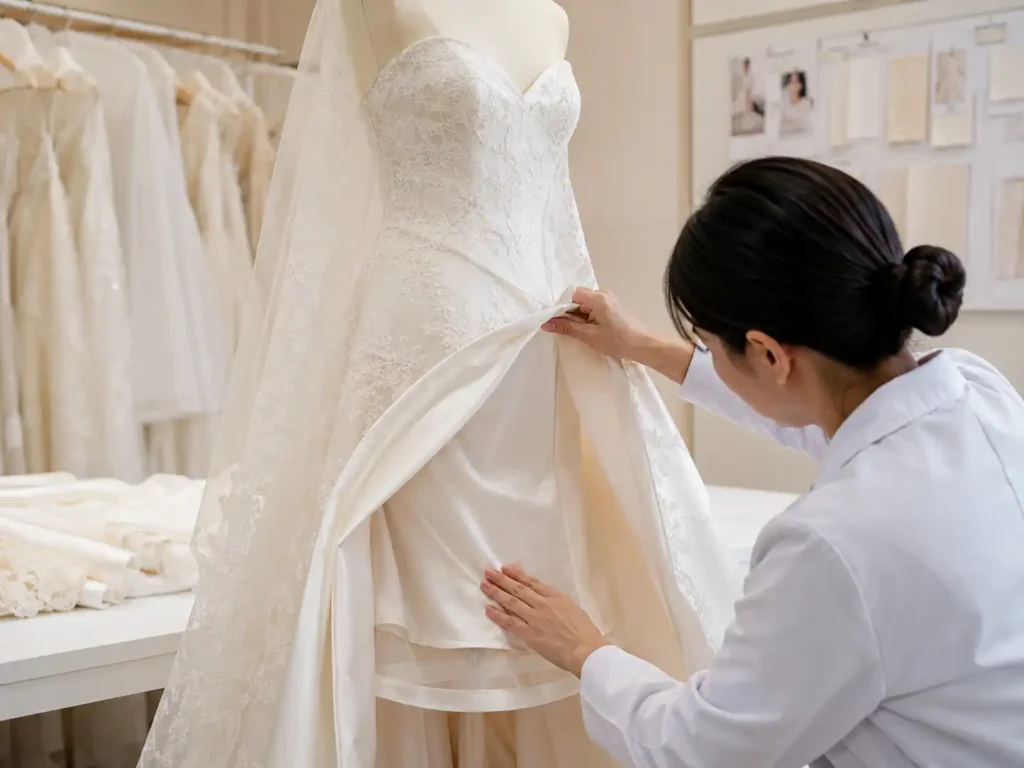
Lining is not an automatic addition. Its material, color, stretch, length, weight, and attachment method influence both appearance and fit.
Decide Whether Full Lining Is Necessary
Lining is commonly considered for:
- Light-colored satin
- Lower-weight fabric
- Body-skimming silhouettes
- Wedding guest or bridesmaid styles
- Evening garments requiring a polished interior
- Lace or chiffon combinations
- Styles where seam allowances may show
Match Lining Behavior to the Outer Fabric
A stiff lining can restrict a fluid shell. An overly slippery lining can migrate or twist. A non-stretch lining under stretch satin can limit movement and change fit.
Approval should cover:
- Weight
- Stretch
- Recovery
- Surface friction
- Color
- Transparency
- Shrinkage
- Static behavior
- Care compatibility
The outer shell and lining should move together without pulling or separating visibly.
Control Lining Length and Attachment
A lining that sits too close to the outer hem may become visible. A lining that is too short may pull at the slit or create tension.
Construction controls include:
- Agreed lining length
- Hem clearance
- Slit treatment
- Zipper attachment
- Side-seam connection
- Shoulder or neckline anchoring
- Movement allowance
- Final hanging review
For bias-cut garments, the lining may require separate settling and balance checks.
Design Details That Differentiate Slip Dress Collections

Adjustable Sliders

Lace Trims
Side Slits

Invisible Zippers

Back Ties
Clean Hem Finishes
Information Needed for an Accurate Project Review
Style Reference
Measurement Information
Quantity Plan
Fabric Direction
Trim and Branding
Launch and Delivery
Sample Rooms Turn Concepts Into Production Standards
Two sample rooms, seven-plus senior pattern makers, and twenty-plus sample machinists support structured slip dress development and bulk preparation.
Pattern Interpretation Before Sewing
A reference image does not show every construction detail.
The pattern team reviews neckline, bust shaping, straps, armholes, waist and hip ease, back coverage, slit, lining, zipper, hem, and grain direction before cutting the first sample.
Open questions are identified early:
- Is the dress bias-cut or straight-grain?
- Is the cowl created from the bodice or an added panel?
- Is the back elasticated, tied, zipped, or open?
- Does the light color require lining?
- Is the target fit loose, skimming, or fitted?
- Should straps be fixed or adjustable?
- Which measurements must be confirmed before sampling?
Sample Machinists Validate Construction
Sample machinists do more than assemble a one-off garment. Their work tests whether seams, straps, lining, lace, zipper, neckline, slit, and hem can be reproduced in bulk.
During sampling, the team reviews:
- Seam stability
- Needle or surface marks
- Strap-turning method
- Slider compatibility
- Edge finish
- Lining attachment
- Pressing response
- Bulk sewing feasibility
- Expected labor and quality risks
Fit Feedback Becomes Controlled Production Data
Comments such as “too loose at the bust” or “neckline too low” must become measurable instructions.
A revision may record:
- Bust reduced by 1 cm
- Waist reduced by 2 cm
- Hip increased by 2 cm
- Strap shortened by 1.5 cm
- Neckline raised by 1 cm
- Slit lowered by 4 cm
- Lining extended by 2 cm
- Dress length increased by 3 cm
Approved changes are transferred into the pattern, size chart, production file, and QC checklist.

Slip Dress Sample Development and Approval Stages
Style Review
The team reviews product type, fabric, grain, neckline, straps, lining, zipper, slit, measurements, colors, size range, quantity, and launch plan.
Fabric Confirmation
Swatches or fabric references are reviewed for composition, weight, shine, stretch, drape, transparency, hand feel, cost, minimums, and availability.
Pattern Development
A new pattern is made or an existing pattern is corrected according to the approved base size, measurements, style structure, and fabric behavior.
First Sample
A standard slip dress first sample commonly requires 10–15 days once materials and requirements are confirmed. Complex lace, special trims, or custom materials may require more time.
Fit Review
The garment is checked for neckline, bust, armholes, straps, waist, hips, back, length, slit, lining, side seams, and overall drape.
Revised Sample
Revised samples commonly require 7–15 days, depending on the number and complexity of changes and material availability.
Photo-Ready Sample
A photo-ready sample may be prepared for campaign, lookbook, ecommerce, showroom, or merchandising review. Its purpose and material standard must be agreed.
PP Sample
The PP sample normally requires 7–15 days after final materials, pattern, measurements, trims, labels, and construction are ready.
Golden Sample
The approved golden sample acts as a physical reference for bulk appearance, measurements, construction, finishing, and packing.
PP Approval Locks the Bulk Production Standard
Product Standard
Key records include:
- Final pattern version
- Approved size chart
- Grade rule
- Measurement tolerance
- Fabric and lining records
- Trim specifications
- Sewing instructions
- Pressing instructions
- Packing instructions
Material and Brand Standard
Any later change may affect:
- Cost
- Material availability
- MOQ
- Pattern
- Sample requirement
- Production schedule
- Quality risk
- Delivery plan
Production Planning for Multi-Style Slip Dress Orders
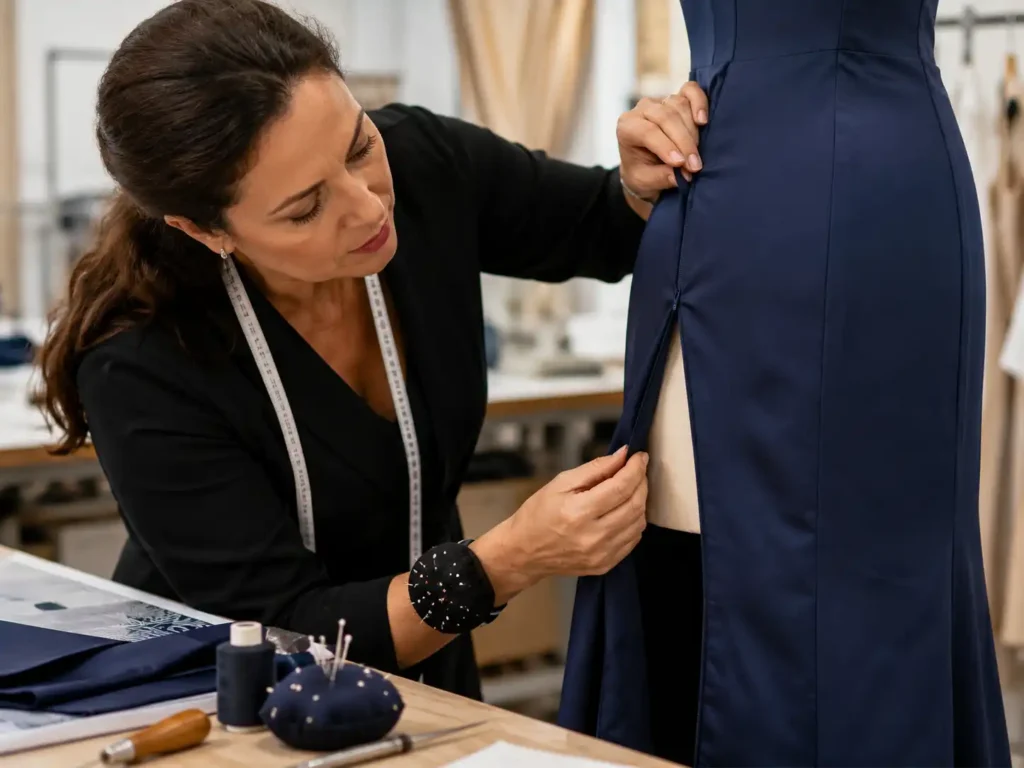
Large collections need style grouping, material grouping, sample priorities, production allocation, QC planning, and delivery coordination rather than a single undifferentiated schedule.
Allocate Styles by Construction and Fabric
Slip dresses may be grouped according to:
- Bias-cut or straight-grain patterns
- Non-stretch or stretch satin
- Lined or unlined construction
- Lace or trim complexity
- Mini, midi, or maxi lengths
- Zipped, tied, or pull-on openings
- Standard or special colors
- Private-label packing requirements
A factory suited to a basic woven mini dress may not be the best allocation for a long bias-cut lace-trim evening style.
Production assignment follows product suitability.
Group Materials to Improve Control
Multi-style orders are easier to manage when styles share approved fabric, lining, thread, hardware, lace, labels, or packing components.
Material grouping helps with:
- Color consistency
- Dye-lot planning
- Supplier minimums
- Trim matching
- Replacement planning
- Cost control
- Repeat-order records
Shared materials should not override fit or construction requirements. Every style still requires an individual production file.
Prioritize Hero Styles and Launch Dates
For 10–30 style programs, sample and production priorities may be set according to:
- Campaign date
- Hero SKU
- Fabric readiness
- Pattern complexity
- Photography need
- Bulk quantity
- Seasonal relevance
- Warehouse deadline
Priority management allows key styles to move first without losing control of the wider collection.
Plan Multi-Batch Delivery
A large program may be divided by style group, color group, launch wave, destination, or shipping method.
Delivery planning may include:
- Initial launch quantity
- Main bulk shipment
- Air and sea split
- Priority colors
- Priority sizes
- Separate warehouse destinations
- Carton and SKU separation
Cutting Control Protects Drape, Shade, and Symmetry
Cutting errors cannot be repaired by careful sewing. Fabric inspection, shade grouping, grain direction, marker planning, and cut-panel control establish the bulk foundation.
Inspect Fabric Before Cutting
Incoming fabric is reviewed for:
- Color and dye lot
- Surface marks
- Snags
- Weaving defects
- Width
- Weight
- Stretch
- Hand feel
- Drape
- Transparency
- Shade direction
- Supplier roll information
Separate Shade and Shine Direction
Satin may appear darker or lighter when panels face different directions.
Roll lots and directional shine must remain controlled through cutting, bundle movement, sewing, and packing.
Controls include:
- Lot identification
- Roll separation
- Panel-facing direction
- Bundle labels
- Replacement panel matching
- Lining and thread color matching
- Repeat-order fabric records
Protect Bias and Delicate Panels
Bias panels can stretch during handling. Narrow straps, low necklines, and long skirt panels are also vulnerable to distortion.
Handling controls include:
- Stable movement between operations
- Limited pulling or hanging from narrow points
- Correct bundle support
- Clear size and style identification
- Replacement of damaged panels before sewing
- Comparison against approved pattern dimensions
Confirm Pattern Version Before Bulk Cutting
The cutting team works from the final approved pattern and production order. Old versions must be removed from the active process.
The cutting file should match:
- PP sample version
- Size chart
- Grade rule
- fabric direction
- lining pattern
- slit and length specification
- approved quantity and size ratio
Sewing Workmanship for Clean Minimal Slip Dresses
A minimal garment requires precise execution. Uneven straps, visible needle marks, rippled seams, twisted lining, or unbalanced hems are immediately noticeable.
Straps and Hardware
Strap width, thickness, finished length, adjustment range, attachment points, and slider position must match the approved sample.
Workmanship checks include:
- Smooth turned straps
- No twisting
- Even width
- Secure stitching
- Correct hardware orientation
- No sharp edges
- Left-right length matching
- Stable adjustment under tension
Neckline and Armhole Edges
Neckline and armhole finishes must lie flat without stretching, puckering, rolling, or exposing the lining.
Controls include:
- Edge length
- Seam tension
- Facing or lining width
- Understitching where required
- Corner or V-point symmetry
- Cowl fold direction
- Armhole exposure
- Clean inner finishing
Side Seams and Zippers
Side seams should hang vertically and remain smooth over the waist and hip. Invisible zippers should not ripple or create bulk.
Checks include:
- Matched seam length
- Stable feeding
- Correct zipper placement
- Smooth opening
- Flat top finish
- No trapped lining
- No shine or needle damage
- Side-seam balance after pressing
Lining and Slits
Lining should support coverage without controlling the outer shell too tightly.
Checks include:
- Correct lining size
- Secure but flexible attachment
- Slit compatibility
- Hem clearance
- No twisting
- No visible pull
- Smooth zipper connection
- Balanced movement
Hems and Final Shape
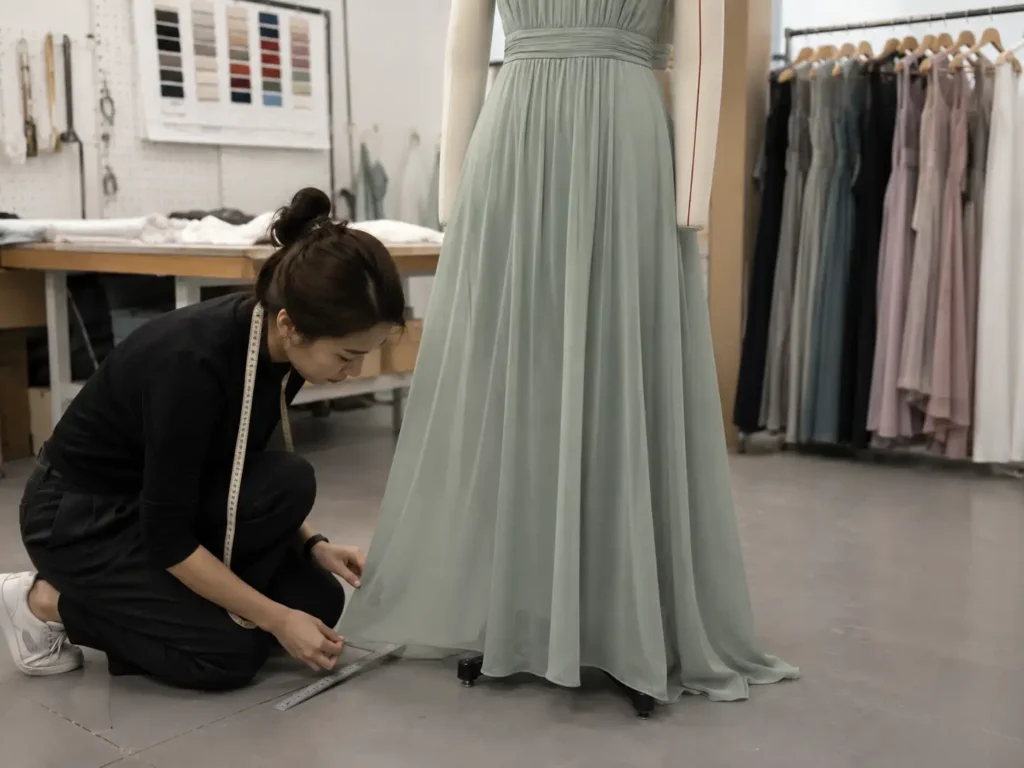
The hem should follow the approved silhouette without fluting, stiffness, uneven length, or visible thread tension.
Final review includes:
- Front, back, and side balance
- Curved hem control
- Narrow hem consistency
- Lining clearance
- Slit finish
- Pressing response
- Comparison with the golden sample
Eight Quality Gates for Slip Dress Production
Incoming Fabric QC
Cutting QC
Strap and Neckline Check
Sewing Inspection
Measurement Inspection
Appearance Inspection
Pressing Review
Pressing temperature, pressure, seam impressions, water marks, edge shape, hem balance, cooling, and handling are reviewed according to material behavior.

Measurement Control Across Sizes and Production Batches
Measurement control combines approved specifications, project tolerances, pattern versions, in-line checks, garment measurement, and comparison with the golden sample.
Define Critical Points Before Production
Critical measurements for a slip dress commonly include:
- Bust circumference
- Front neckline depth
- Armhole depth
- Strap length
- Waist circumference
- Hip circumference
- High-point shoulder to hem
- Center-front and center-back length
- Slit height
- Lining length
- Back depth
- Hem sweep
The final list depends on the garment structure.
Use Project-Level Tolerances
One tolerance cannot suit every measurement, fabric, and construction.
Narrow straps, neckline depths, long bias-cut hems, and stretch fabrics behave differently.
The QC file should define:
- Measurement point
- Approved specification
- Permitted project tolerance
- Measurement method
- Inspection stage
- Action when the result falls outside tolerance
Tolerances are confirmed according to the brand standard and garment structure.
Control Pattern and Grade Versions
Measurement consistency requires the cutting and sewing teams to use the correct final pattern and grade rule.
Controls include:
- Version identification
- Base-size approval
- Grading review
- Pattern issue date
- PP sample reference
- Removal of outdated patterns
- Update records after approved revisions
Measure During and After Production
Waiting until final inspection can allow a repeated measurement issue to affect a large quantity.
Measurement checks may occur:
- After initial sewing output
- During in-line production
- After pressing
- During finishing
- Before packing
- During final inspection
Results are compared against the approved specification and golden sample.
Private Labels and Retail-Ready Packing Support
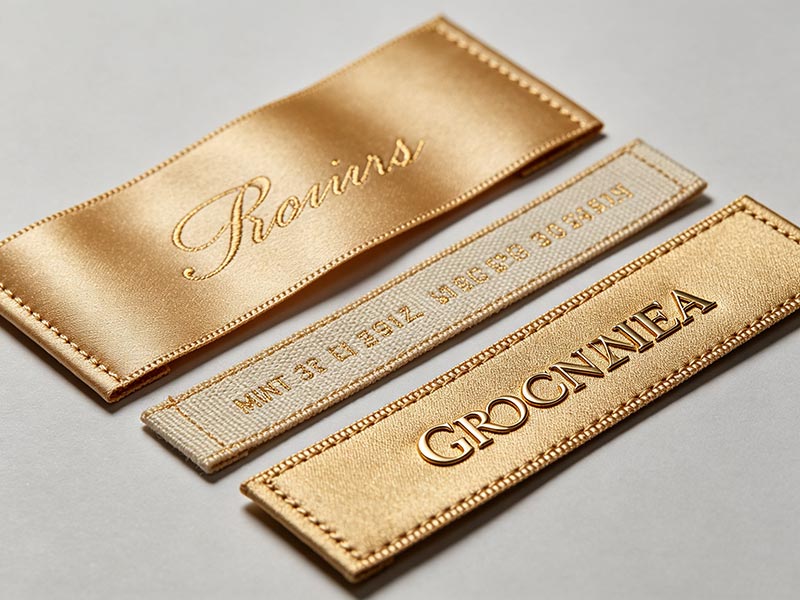
Woven Main Labels
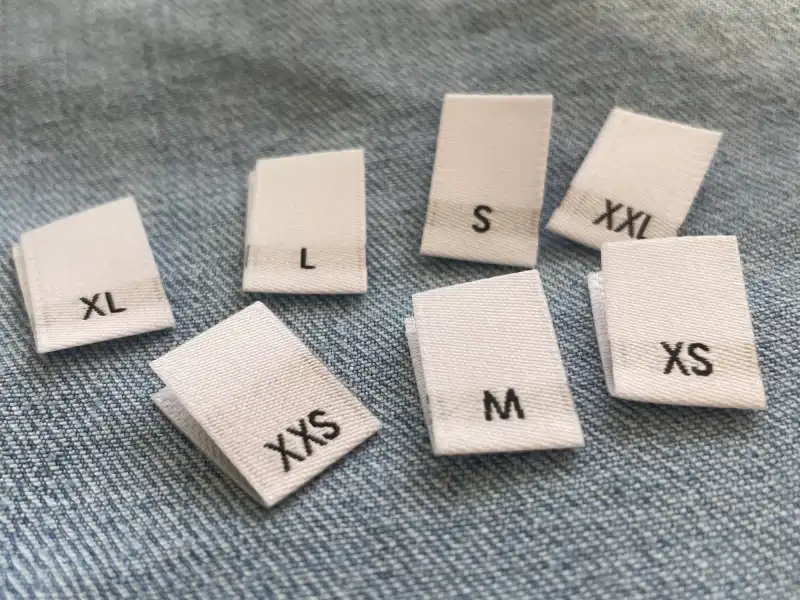
Size Labels
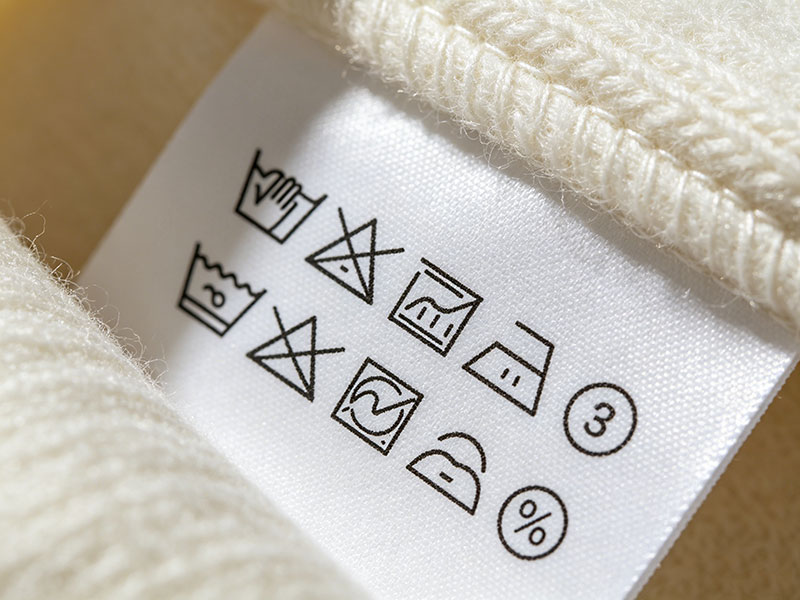
Care Labels

Hangtags
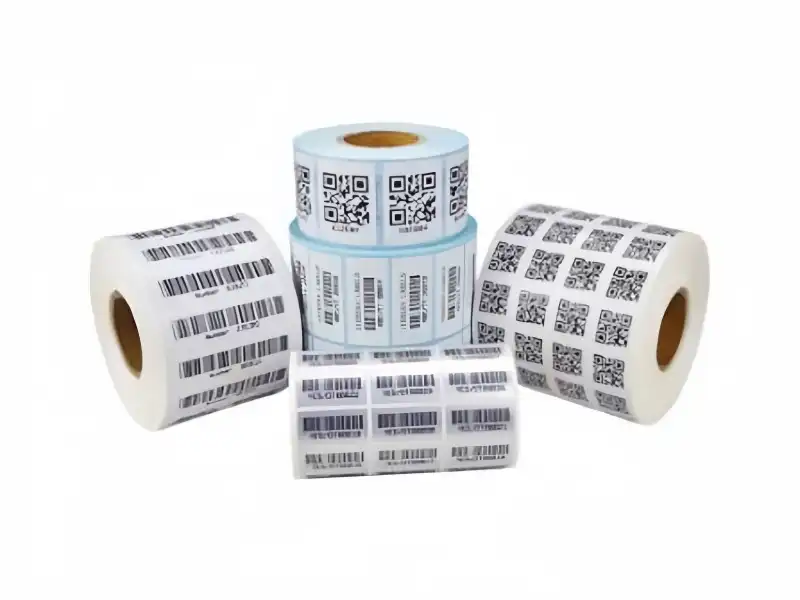
Barcode and SKU

Polybag Protection
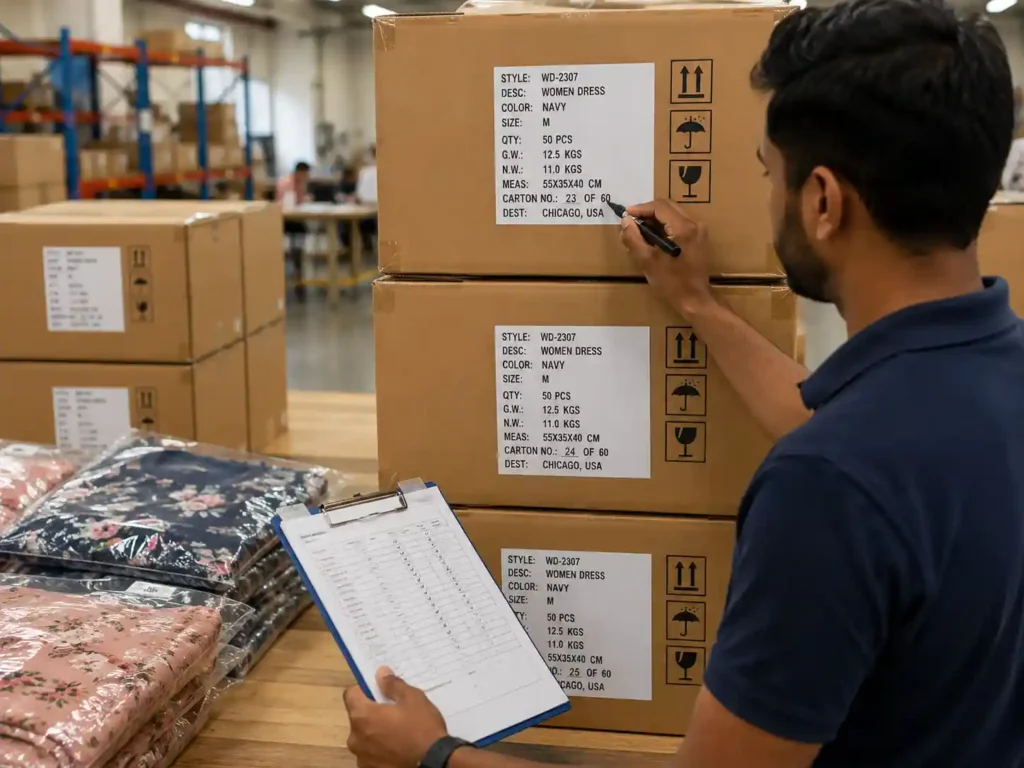
Carton Identification
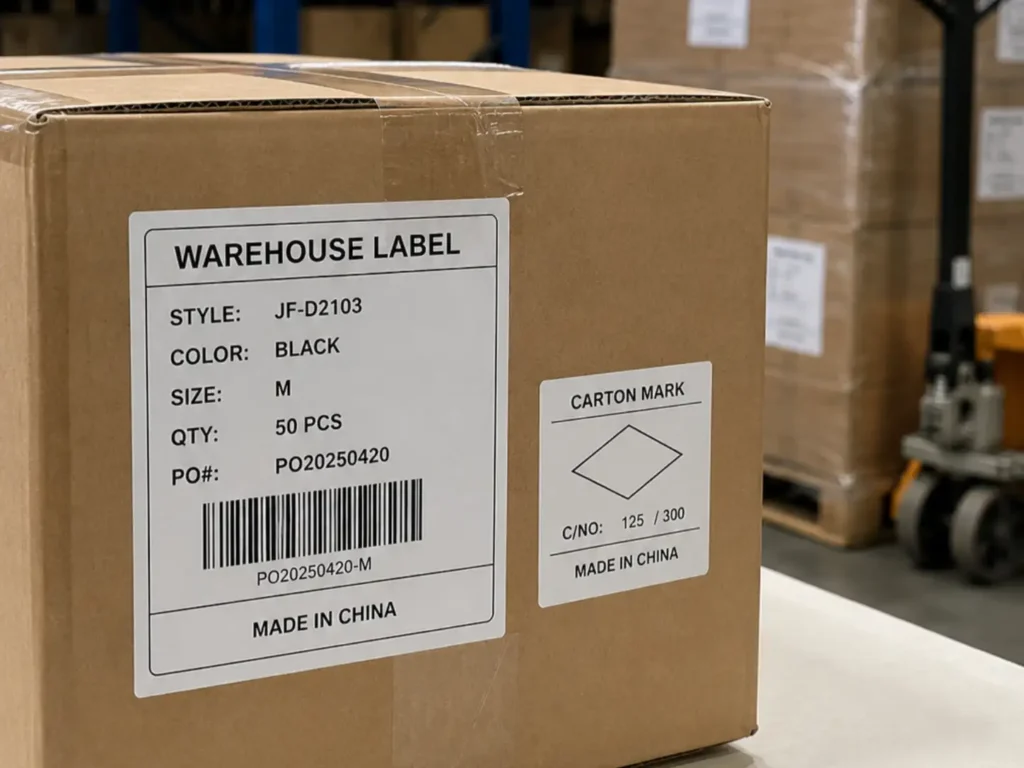
Warehouse Requirements

Shipment Records
Packing lists, commercial invoices, carton measurements, cargo details, shipment photos, and forwarder coordination support organized delivery.
Slip Dress Production Programs

United States Satin Drop
A premium ecommerce brand developed 18 slip dress styles across mini, midi, cowl-neck, lace-trim, and backless directions.
The program covered 36,600 pieces, seven sizes, and five coordinated color groups.
Main challenge: Multiple satin weights created different cowl depth, side-seam balance, and lining behavior.
Production response:
- Styles divided into four fabric groups
- Separate fit review for stretch and non-stretch satin
- Neckline and strap standards recorded by style
- Dye lots separated by color group
- PP samples approved before bulk cutting
- Hero styles prioritized for the campaign deadline
- Packing included tissue protection around hardware
Outcome: Two delivery waves supported the launch schedule while retaining style, color, size, and packaging separation.
United Kingdom Occasion Program
A UK occasionwear label developed 12 midi and maxi slip dress styles totaling 24,800 pieces.
The range included matte satin, crepe satin, lace-trim necklines, side slits, and low backs.
Main challenge: The collection required elegant drape with controlled bust coverage and consistent long hems.
Production response:
- Base-size fit review followed by grade-rule review
- Cowl and V-neck styles managed separately
- Long bias panels reviewed for growth before final hem balance
- Lace color matched to the main fabric and lining
- Slit height checked against finished dress length
- Final appearance inspection focused on wrinkles, shine, and hem balance
Outcome: The program was packed by style, color, and size for retail distribution, with pattern and material records retained for later color extensions.
Australia Resort Capsule
An Australian fashion brand developed 26 styles across slip dresses, satin camisoles, bias skirts, and matching resort separates. Total production reached 62,400 pieces across four coordinated fabric groups.
Main challenge: The brand needed a broad assortment with shared materials, consistent colors, and staggered warehouse delivery.
Production response:
- Styles grouped by fabric, trim, and launch priority
- Shared satin colors used across dresses and separates
- Lightweight styles reviewed for transparency and lining
- Hero SKUs moved through photo-sample and PP review first
- Bulk production divided into three coordinated waves
- Priority styles moved by air while the main quantity followed by sea
Outcome: The brand launched a coordinated resort assortment rather than disconnected individual garments, while maintaining separate SKU, barcode, and carton records.
How to Evaluate a Slip Dress Manufacturer
Product Knowledge
Fabric Evaluation
Pattern Capability
Sample Structure
PP Approval
Bulk Quality Control
Brand Delivery
Confidentiality and Reorders
Frequently Asked Questions About Slip Dress Manufacturing
The standard MOQ starts from 200 pieces per style/color. Fabric availability, custom dyeing, lace, hardware, construction, color quantity, size range, packing, and production schedule may affect the final minimum.
Yes. Development can begin from a reference image, sketch, original garment, line sheet, tech pack, or design file. Measurements, fabric, construction, quantity, color, and brand requirements are still needed for accurate assessment.
A standard dress first sample commonly requires 10–15 days after materials and requirements are confirmed. Complex lace, special hardware, custom fabric, multiple layers, or major pattern work may extend the schedule.
Yes. Bias-cut development focuses on grain direction, fabric growth, side-seam balance, waist and hip ease, hem correction, size grading, and bulk cutting control.
Common directions include polyester satin, matte satin, stretch satin, crepe satin, silk-like satin, viscose woven, chiffon layering, lace combinations, and selected printed woven fabrics.
Many light colors and lower-weight fabrics benefit from lining, but the decision depends on transparency, fit, fabric weight, seam visibility, comfort, and intended styling.
Yes. Options include fixed or adjustable straps, sliders, rings, cross-back straps, ties, cowl necks, V-necks, straight necklines, square necklines, lace trims, slits, and back details.
The PP sample confirms the final pattern, fabric, trims, measurements, construction, labels, packing, and quality standard before bulk production.
Packing may use controlled folding, tissue protection, hardware covering, suitable polybag dimensions, carton-pressure planning, and final appearance checks.
Yes. Support can include woven labels, size labels, care labels, hangtags, barcode stickers, SKU labels, polybags, carton marks, packing lists, and warehouse requirements.

Send Your Slip Dress Collection for Project Review
Share the available development files with Kelly for an initial review of style complexity, fabric direction, fit risks, sampling requirements, MOQ suitability, production planning, private-label packing, and delivery needs.
Useful information includes:
- Tech pack, reference images, sketches, or original sample photos
- Quantity per style and color
- Planned number of styles and total program volume
- Fabric composition, weight, swatch, or preferred appearance
- Base size, size chart, grade rule, and target market
- Color plan
- Lace, zipper, slider, ring, lining, and trim requirements
- Main label, size label, care label, hangtag, barcode, and packing files
- Target sample date, PP approval date, launch date, and warehouse date
- Shipping destination and preferred logistics arrangement