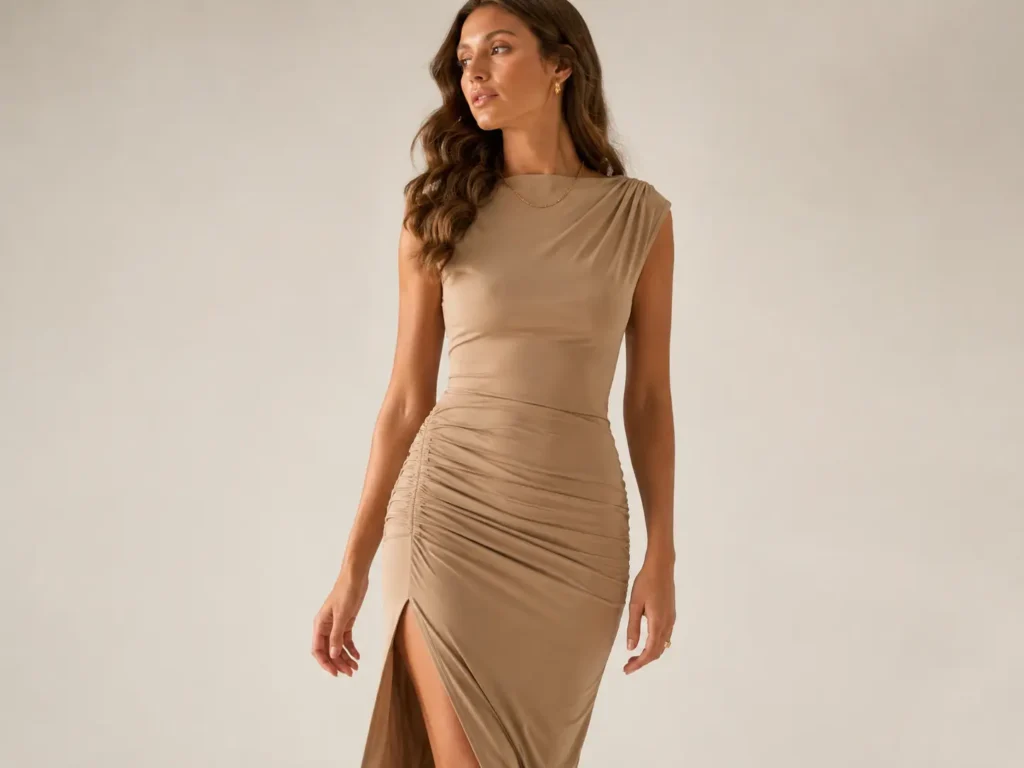
Shirred Dress Manufacturer

Custom shirred dresses engineered for stable stretch, accurate fit, clean finishing, and reliable sample-to-bulk production.
  • Shirring control built around finished width, row spacing, stretch range, and recovery – not appearance alone.
  • MOQ starts from 200 pcs per style/color, with multi-size distribution inside the confirmed quantity.
  • 6 owned women’s fashion factories, 10+ long-term satellite partners, 18+ sewing lines, and 100,000+ pcs regular monthly capacity.
  • Development support includes fabric direction, pattern making, fit correction, sample revision, PP approval, QC, private-label packing, and export delivery.

Numbers Behind Reliable Shirred Dress Production

A strong development system matters more than a single attractive sample. Jinfeng Apparel combines dedicated product development, structured production allocation, in-process quality control, and private-label delivery for multi-style women’s fashion programs.

Since 2008

Long-term experience in custom women’s fashion development, dress sampling, bulk production, quality control, and export coordination.

6 Owned Factories

Owned women’s fashion factories support woven dresses, stretch styles, occasionwear, structured pieces, and private-label programs.

18+ Sewing Lines

Production can be allocated by fabric behavior, construction complexity, order volume, and seasonal delivery requirements.

2 Sample Rooms

Separate development resources support first samples, fit samples, revised samples, photo samples, PP samples, and Golden samples.

7+ Pattern Makers

Senior pattern makers work on bust, waist, hip, bodice length, armhole, neckline, strap, sleeve, and dress-length balance.

15+ QC Inspectors

Quality checks cover incoming materials, cutting, sewing, in-line measurements, finished garments, pressing, packing, and final inspection.

Built for Established Fashion Programs

Jinfeng Apparel supports brands with clear product direction, structured sampling requirements, production quantities, private-label standards, and ongoing collection plans. Project information can begin with a reference image, original sample, line sheet, size chart, or complete tech pack.

Ideal Project Profile

The strongest fit is a fashion brand, sourcing office, product development team, retail program, or ecommerce label planning custom shirred dresses for seasonal launches, repeat orders, or multi-style collections. Projects commonly include defined fabric direction, target quantity, size range, color plan, label specifications, packaging rules, and a realistic launch calendar. Jinfeng can review development risks before sampling and allocate suitable production resources after PP approval.

Structured Brand Delivery

Programs may cover 10-30 styles, multiple colors, XS-XL or extended size ranges, private-label components, barcode systems, carton breakdowns, phased shipments, and repeat-order records. Patterns, measurements, fabric references, trims, sewing instructions, QC notes, and packing details can be retained for future production. Clear files and early material confirmation help control development speed, cost, and bulk consistency.

Six Risks Brands Must Control

Most shirred dress failures begin before bulk production. A controlled development route identifies where fabric, pattern, stretch, lining, sewing, or size grading can create inconsistent results.

Uneven Tension

Rows may look tighter on one section and looser on another when material feeding, thread preparation, stitch settings, or operator handling changes. The visible result includes waves, uneven panel width, distorted side seams, and inconsistent stretch. Jinfeng establishes an approved test swatch and checks first-piece dimensions before full production proceeds.

Unstable Width

Two garments marked with the same size can feel completely different when relaxed width or maximum comfortable extension varies. Finished width must be measured at defined points without overstretching. Production checks compare the approved sample, size chart, and tolerance instructions rather than relying on visual judgment.

Poor Bust Fit

A shirred bodice can flatten the bust, gape at the upper edge, sit too low, or expose more than the approved design. Coverage depends on neckline shape, bodice height, strap position, contraction ratio, lining, and body-length grading. Fit correction often requires pattern work as well as tension adjustment.

Fabric Distortion

Light woven fabrics can bubble, twist, pucker, or shift grain direction after repeated rows. Heavier fabrics may become bulky and stiff. Slippery fabrics can move during sewing. Jinfeng evaluates weight, drape, density, surface friction, shrinkage, and recovery before finalizing a material direction.

Weak Recovery

A panel may stretch well during fitting but fail to return to its original width after repeated wear, relaxation, or washing. Recovery checks compare measurements before stretching, after a controlled extension, after rest, and after an agreed care test. Material changes may require a new sample.

Bulk Mismatch

A sample can be made carefully by a development specialist while bulk production introduces variation in fabric lot, seam handling, row spacing, pressing, or measurement. PP approval, production instructions, first-piece review, in-line checks, and retained references reduce the gap between sample and bulk.

Custom Shirred Dress Product Range

Jinfeng Apparel develops shirred dresses across multiple lengths, silhouettes, fabrics, sleeve constructions, necklines, and wearing occasions. Each product receives its own pattern, stretch, lining, measurement, and bulk-control plan.

Shirred Mini Dress

Designed for party, vacation, date-night, and social-led collections. Development focuses on secure upper-body coverage, balanced bodice length, hem position, strap or sleeve stability, and enough recovery for movement. Cotton poplin, rayon, viscose, lightweight crepe, stretch mesh, and printed woven fabrics create different silhouettes. Bulk checks should include upper-edge security, waist placement, side-seam balance, skirt flare, and finished length across the size range.

Shirred Midi Dress

A midi length adds greater skirt weight, making the connection between shirred bodice and lower skirt especially important. The bodice must support the skirt without being pulled downward. Tiered skirts, puff sleeves, square necklines, and side slits are common options. Pattern review covers waist position, proportion, walking ease, skirt balance, and lining length. Packing should preserve the shirred surface while limiting hard fold marks.

Shirred Maxi Dress

Maxi dresses suit resort, summer, cruise, and occasion collections. Longer skirts increase fabric weight and can change how the bodice sits after hanging. Jinfeng reviews bodice support, waist seam strength, floor or ankle length, tier balance, print direction, and travel-focused packing. Rayon, viscose, chiffon, voile, crepe, and lightweight polyester require different shrinkage and drape controls before bulk cutting.

Shirred Sundress

Sundresses often use breathable woven fabrics, narrow straps, open backs, and pull-on construction. Fit depends on upper-edge grip, strap placement, armhole shape, bust coverage, and recovery. Adjustable straps can improve flexibility but add trim and assembly requirements. Lightweight fabrics may need partial lining or a double-layer bodice. Color and print direction should be approved before the pattern is released for production.

Shirred Resort Dress

Resort dresses combine comfort, visual movement, and packability. Common structures include shirred bodices, tiered skirts, floral prints, cut-outs, tie straps, and puff sleeves. Development checks fabric wrinkling, print placement, shrinkage, transparency, skirt volume, and folding. A resort collection may also require coordinated color groups, matching sets, or related tops and skirts for a wider seasonal assortment.

Shirred Bodycon Dress

Bodycon shirring requires close control of bust-waist-hip proportions, recovery, side-seam alignment, neckline stability, and dress length under stretch. Jersey, rib knit, stretch mesh, and elastic woven fabrics react differently from lightweight non-stretch wovens. The pattern must account for both base-fabric stretch and shirring contraction. Measurement QC should include relaxed and extended dimensions plus post-wash stability where required.

Shirred Puff Sleeve Dress

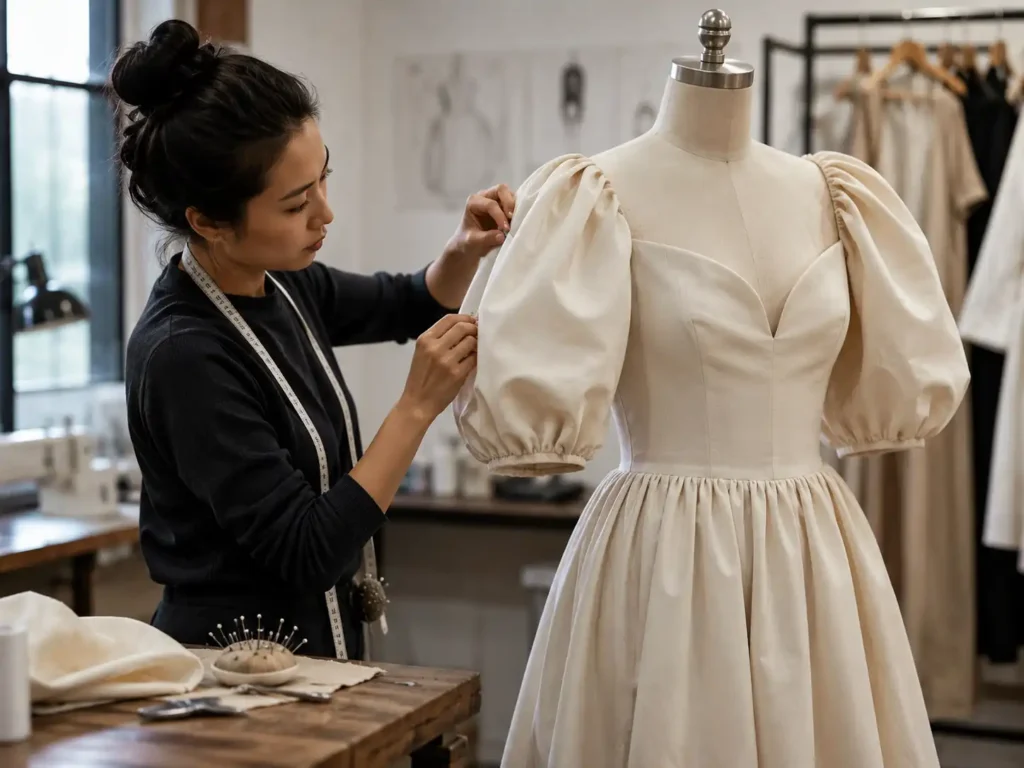
Puff sleeves add a second elastic zone at the sleeve head, cuff, or both. Sleeve volume must remain balanced with the bodice and shoulder line. Cuffs need enough stretch for comfort without sliding down. Jinfeng reviews bicep measurement, cuff position, sleeve length, gathering distribution, and edge finishing. Chiffon, voile, organza-like fabrics, and cotton blends each create a different sleeve shape.

Shirred Off-Shoulder Dress

Off-shoulder designs rely on secure elastic response along the neckline and sleeves. Excessive tension can restrict movement; insufficient tension can cause slipping. Pattern development considers shoulder circumference, upper-bust level, sleeve mobility, neckline recovery, and body-length movement when arms are raised. A fit sample is essential before final size grading.

Shirred Strapless Dress

Strapless shirred dresses require stronger upper-edge control and reliable bust coverage. Anti-slip tape, inner elastic, partial lining, structured panels, or removable straps may be evaluated according to the design. The upper edge should stay flat without cutting into the body. Jinfeng checks neckline height, top-edge recovery, underarm shape, bodice length, and support during movement.

Shirred Tiered Dress

Tiered skirts create volume below a fitted shirred section. Each tier affects weight, drape, seam load, and total length. Development should confirm tier ratios, gather distribution, print direction, seam strength, and lining strategy. Overly heavy tiers can pull the waist downward, while insufficient volume can weaken the intended silhouette. Production instructions should identify tier order and matching points clearly.

Shirred Printed Dress

Printed fabrics require control over motif direction, repeat placement, color grouping, and panel alignment. Shirring compresses the print, so scale and visual density can change after sewing. Large motifs may become unreadable in the contracted area. A sample or shirring swatch helps evaluate how the print behaves. Bulk cutting should follow approved direction and shade grouping.

Shirred Cut-Out Dress

Cut-outs add structural risk because shirring tension can pull openings out of shape. The opening edge, seam reinforcement, lining, tie placement, and body coverage must be developed together. Fit review checks whether the cut-out stays in the intended position across sizes and movement. Stretch recovery around the opening is monitored during sample revision and first-piece production approval.

Where Shirring Can Shape the Garment

Placement changes fit, support, movement, visual proportion, and production risk. Jinfeng reviews the function of every shirred zone before pattern development and sampling.

Full Shirred Bodice

Rows cover most of the upper body, creating broad stretch and close fit. Control points include top-edge stability, bust coverage, bodice height, waist position, side seams, and skirt attachment. The finished panel must recover evenly without creating a compressed or rigid feel.

Back Shirring

Back shirring adds flexibility while keeping a smoother front appearance. It is common in fitted dresses, corset-inspired styles, and woven occasionwear. Development checks back-panel width, zipper need, side-seam balance, lining freedom, and how the back stretches without pulling the front neckline.

Waist Shirring

Waist shirring creates shape and wearing comfort at the narrowest part of the dress. The position must align with the intended natural, high, or dropped waist. Excess tension can lift the skirt; weak tension can make the silhouette look loose. Finished waist measurement and extension range require clear standards.

Bust Panel Shirring

Localized bust shirring may create texture, volume, or flexible coverage. Pattern work must prevent flattening, gaping, or uneven cup appearance. Neckline design, center-front position, lining, straps, and under-bust seams influence the final fit. Sample fitting should be evaluated from front, side, and movement views.

Sleeve Cuff Shirring

Multiple rows at the cuff create a decorative elastic finish. Comfort is critical because a narrow cuff can mark the arm or restrict movement. Jinfeng checks relaxed cuff width, extended cuff width, sleeve volume, row spacing, edge finish, and size grading at the bicep and wrist.

Shoulder Shirring

Shirring at the shoulder can form adjustable volume, create a gathered cap, or support off-shoulder styling. The effect must stay symmetrical and avoid twisting the neckline. Shoulder position, sleeve pitch, armhole shape, and row direction are checked during sample review.

Side Panel Shirring

Side shirring can shape the waist, create adjustable length, or add texture through the torso. Uneven tension can twist the side seam or make one hem side higher. Pattern balance, seam reinforcement, drawcord options, and matching between left and right panels need clear control.

Skirt or Hip Shirring

Shirring through the skirt or hip creates body-contoured texture. Base-fabric stretch, lining, slit placement, and walking movement become important. Measurement checks should include hip fit, recovery, hem balance, and seam strain. Stretch mesh and jersey often require different methods from woven fabric.

Design Details Developed as One Structure

Necklines, sleeves, straps, tiers, linings, slits, and prints change how shirring fits and performs. Design details are reviewed together rather than added after the main pattern is complete.

Square Neckline

A square neckline should remain level after the bodice contracts. Upper-edge tension, strap position, corner reinforcement, and bust coverage must be balanced. Too much pull can curve the square shape; too little support can cause gaping. Front and back neckline measurements are reviewed separately.
Sweetheart Neckline Dress Manufacturer

Sweetheart Neckline

A sweetheart shape requires symmetrical center-front curves and enough support around the bust. Shirring should not flatten the neckline or shift the center point. Lining, inner elastic, cups, straps, or structured seams may be added according to the product direction.

Adjustable Straps

Adjustable straps improve fit flexibility across torso lengths, but hardware size, strap width, attachment strength, and slider movement need approval. Strap positions must align with the neckline and underarm. Bulk inspection checks equal strap length, secure bartacks, and matching hardware color.

Puff Sleeves

Sleeve volume, cuff stretch, sleeve-head gathering, and shoulder position should form one balanced shape. A heavier fabric needs more controlled volume; a light fabric may require extra fullness. The cuff should stretch comfortably and recover without wave marks or loose sections.

Ruffle Edges

Ruffles can be added at the neckline, sleeve, waist, tier, or hem. Their width and gathering ratio affect visual scale. The attachment seam must stay smooth beside the shirred area. Fine fabrics need clean edge finishing and careful pressing to avoid flattening the texture.

Tiered Skirts

Tier count, tier depth, gather ratio, seam order, and lining length determine the final volume. A heavy skirt can drag the bodice downward. Jinfeng reviews the relationship between shirred support and skirt weight before approving the final construction.

Slits and Cut-Outs

Slits and cut-outs must remain stable while nearby shirring stretches. Reinforcement, lining, seam allowance, edge finish, and body coverage are checked during fitting. A slit may also change walking ease and hem balance, especially on midi and maxi dresses.

Lining Options

A full lining, skirt lining, partial bodice lining, or double-layer bodice may be selected according to transparency, support, comfort, and stretch. The lining must not block the shirred panel’s expansion. Attachment points and lining ease are approved in the sample.

Tie Details

Shoulder ties, waist ties, back ties, and front bows add adjustability and styling value. Tie length, width, reinforcement, end finish, and placement should be specified. Ties near shirred areas must not distort panel width or pull seams out of alignment.

Print Placement

Shirring compresses motifs and changes visual density. Large florals, stripes, borders, and engineered prints require early review. A pre-production swatch can show whether the contracted print remains attractive. Cutting direction and shade grouping are recorded for bulk.

Choosing Fabric for Controlled Shirring

Fabric selection determines contraction, texture, drape, comfort, transparency, recovery, and bulk stability. Jinfeng compares the design target with fabric weight, structure, surface, stretch, shrinkage, and availability before final sampling.

Lightweight Woven Fabrics

Cotton voile, rayon, viscose, lightweight crepe, and fine polyester wovens are widely used for shirred mini, midi, maxi, and resort dresses. Their low weight supports soft gathering and comfortable expansion. Key controls include shrinkage, fabric slippage, transparency, seam puckering, and print direction. Rayon and viscose can drape beautifully but may change dimensions after relaxation or care. Cotton can form crisp texture but may feel bulky when the fabric is too dense. A shirring swatch shows whether the chosen weight produces the intended surface.

Structured Cotton and Poplin

Cotton poplin and cotton blends produce a more defined, architectural shirred surface. They work well for sundresses, square-neck minis, puff sleeves, and tiered dresses. Dense poplin requires enough panel allowance because contraction can be stronger and the finished area can become thick. Stitch rows, side seams, lining, and top-edge finishes must remain comfortable. Pre-production checks should review shrinkage, hand feel, recovery, colorfastness requirements, and whether the fabric softens after approved care.

Chiffon and Sheer Fabrics

Chiffon and sheer crepe create light movement but introduce transparency, slippage, thread visibility, and seam-control risks. Shirred bodices may need a compatible lining or double layer. The lining must allow expansion and should not create a visible hard edge. Fine fabrics also require careful row alignment and controlled pressing. For printed chiffon, motif direction and color grouping matter because the contracted panel can make a print appear darker than the unshirred skirt.

Jersey, Rib, and Stretch Mesh

Stretch fabrics combine base-material elasticity with the contraction of the shirred construction. Too much combined stretch can weaken recovery; too much contraction can create discomfort. Pattern reduction, row spacing, lining, and measurement tolerances should be developed specifically for the selected fabric. Bodycon, mesh, and close-fit styles require relaxed and extended measurements plus checks for neckline distortion, side-seam twisting, length movement, and post-wash size stability.

Linen Blends and Textured Fabrics

Linen blends suit resort and summer collections but can wrinkle, fray, and behave differently across blends. Pure linen may create a firmer texture, while viscose-linen blends add softness and drape. Development checks include shrinkage, seam appearance, edge handling, panel thickness, and packing. Textured fabrics can disguise minor surface variation, but heavy slubs or irregular yarns may influence row consistency. The fabric should be approved from the actual production direction whenever possible.

Satin and Glossy Surfaces

Light satin can create an elevated shirred dress, yet shine makes uneven rows, needle marks, puckering, and pressing damage more visible. Bias movement and fabric slippage can also shift side seams. Jinfeng reviews whether the satin weight is suitable for repeated rows and whether lining is needed. Matte satin, stretch satin, and satin-backed crepe can offer different balances of shine, recovery, and handling. Sample approval should include close-up surface inspection under strong light.

Fabric Performance Comparison for Shirred Dresses

The best fabric is the one capable of reaching the approved shape, stretch, hand feel, recovery, and bulk consistency. Material availability, color development, print method, lining, MOQ, and care requirements also affect the final production plan.

Fabric DirectionShirring ResponseBest ApplicationsMain Control PointsSample Verification
Cotton PoplinCrisp, defined texture; moderate bulkSundress, mini, puff sleeve, tiered dressDensity, shrinkage, top-edge comfort, seam thicknessFinished width, wash change, hand feel
Cotton VoileSoft and lightweight; easy contractionSummer dress, resort dress, lined bodiceTransparency, seam strength, lining freedomCoverage, row stability, recovery
Rayon / ViscoseFluid drape; soft surfaceMidi, maxi, printed resort dressShrinkage, slippage, distortion, color groupingRelaxation, wash result, print behavior
ChiffonFine texture; low weightOccasion, puff sleeve, layered maxiTransparency, thread visibility, puckeringLining stretch, row alignment, seam quality
Linen BlendNatural texture; firmer bodyResort, vacation, premium casualWrinkling, fraying, shrinkage, bulkFinished hand, fold recovery, seam appearance
Jersey / RibHigh stretch; close fitBodycon, fitted midi, casual dressCombined stretch, recovery, side-seam twistRelaxed/extended size, wash stability
Stretch MeshLight, elastic, transparentParty, bodycon, layered dressCoverage, tearing, lining, edge controlRecovery, opacity, seam strain
Light SatinGlossy, soft contractionOccasion, party, elevated resortPuckering, needle marks, slippage, pressingSurface close-up, row evenness, shine

How Shirring Tension Is Built and Controlled

Reliable shirring comes from an approved combination of thread preparation, stitch formation, row spacing, panel dimensions, fabric behavior, seam handling, and measurement checks. One setting cannot be copied across every fabric.

Approved Swatch Standard

Development starts with a fabric-specific swatch when construction risk is high. The swatch records original width, finished relaxed width, comfortable extension, row count, row spacing, panel height, surface appearance, and recovery after rest. A second swatch may be required when fabric weight, color treatment, print, or lining changes. The approved swatch becomes a visual and measurable reference for the sample room, production team, and QC inspectors.

Row Spacing and Alignment

Row spacing affects texture, contraction, flexibility, and visual quality. Narrow spacing creates dense coverage and stronger surface texture; wider spacing can feel softer but may look irregular on fine fabrics. Rows should remain parallel and should meet side seams cleanly. The top and bottom rows need secure finishing. Production instructions identify where shirring begins and ends, how rows relate to seam allowances, and which measurement points must be checked.

Balanced Contraction

Contraction is evaluated against the intended finished measurement. A panel can look attractive while being too small, too large, or inconsistent from one side to the other. The first production piece is measured before the line continues. In-line checks compare relaxed width and, when specified, extended width. Corrective action may involve panel allowance, stitch setup, thread preparation, handling method, or fabric replacement. Adjustments are documented rather than passed informally.

Secure Thread Finishing

Loose ends, broken elastic sections, skipped stitches, and weak seam connections can cause a garment to lose shape after wear. Thread ends should be secured according to the approved construction. Side seams must capture the rows without creating bulky ridges or exposed elastic. Finished garments are reviewed inside and outside. Areas near zippers, armholes, necklines, cut-outs, or lining attachments receive extra attention because construction transitions can concentrate strain.

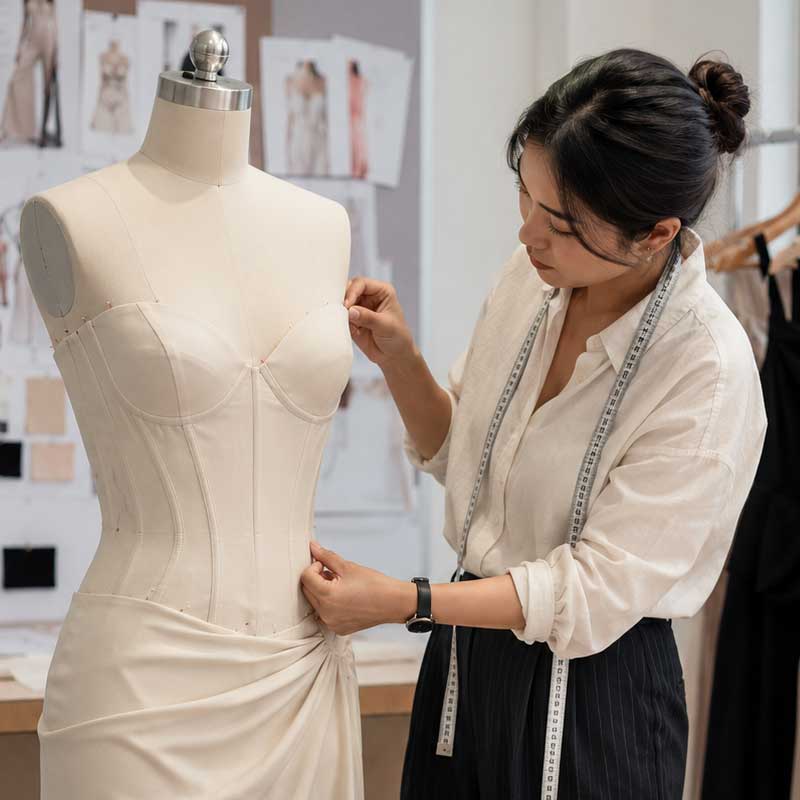
Pattern Engineering Before the First Sample

A shirred dress pattern begins with body fit and finished measurements, then works backward to the required panel allowance. Fabric contraction, bodice length, neckline shape, skirt weight, lining, and size grading must be resolved before bulk production.

From Finished Size to Panel Width

Pattern development identifies the required relaxed garment measurement and comfortable extension at the bust, waist, back, cuff, or other shirred zone. The initial panel width is calculated and then verified through a fabric swatch. A reference ratio can guide development, but the final ratio comes from the actual material and approved appearance. Cutting dimensions, seam allowances, row locations, and finished checkpoints are recorded. A later fabric change can require a new ratio and pattern revision.

Bodice Length and Waist Position

Repeated rows can shorten a panel vertically or change how the bodice sits on the body. The pattern must maintain the intended neckline height, underarm depth, bust coverage, waist placement, and torso proportion after contraction. A maxi skirt or heavy tier can pull the bodice downward, while a tight bodice can ride upward. Fit review examines standing, sitting, walking, and arm movement where relevant. Corrections may involve bodice length, row height, seam position, or skirt attachment.

Neckline and Armhole Stability

Square necklines, sweetheart shapes, strapless edges, and open armholes can distort when nearby shirring pulls unevenly. Stabilization may use lining, inner elastic, binding, stay tape, facing, or adjusted seam shape according to the design. The pattern maker checks symmetry, edge length, corner shape, strap position, and coverage. A clean flat-lay image alone is not enough; fit photos and movement feedback reveal whether the opening stays secure.

Skirt Balance and Weight

The lower skirt influences how the shirred upper body performs. Tiered, gathered, lined, or floor-length skirts add different loads. Pattern planning considers seam strength, gather ratio, skirt volume, lining weight, and total garment length. Side seams, waist seams, and center panels should remain balanced after hanging. Long garments may be checked after a rest period before final length approval. Packing folds should avoid placing hard pressure across the shirred area.

Fit and Size Grading for Shirred Dresses

Size grading must preserve visual proportion, body coverage, stretch comfort, and recovery. Increasing panel width alone rarely solves every fit change between XS, M, XL, or extended sizes.

Relaxed and Extended Measurements

A standard size chart may include relaxed bust, waist, and cuff measurements plus an agreed extended measurement for critical elastic zones. Measurement instructions must define garment position, tension method, and whether the fabric is allowed to rest before reading. The maximum physical stretch is not always the comfortable wearing stretch. Jinfeng records the measurement method so sample review, production, and final inspection use the same approach. Tolerances are set according to product structure and fabric behavior.

Grading Body Coverage

Larger sizes may require changes in bodice height, neckline coverage, strap position, armhole depth, sleeve width, skirt volume, and waist placement. Simply widening the shirred panel can create a low neckline or insufficient length. Smaller sizes may need reduced row height or adjusted strap spacing. Grading review compares front, side, and back balance. Where needed, key sizes are sampled or measured through production before the entire size run is released.

Size Ratio and Cutting Plan

MOQ is calculated per style/color, while sizes are distributed inside the confirmed quantity. A realistic size ratio improves cutting, measurement control, packing, and replenishment. Extremely fragmented ratios can create operational complexity. Brands should provide size breakdown, measurement chart, tolerance, label mapping, and carton requirements before bulk. Jinfeng can review whether the ratio aligns with the selected fabric, design, order quantity, and packing plan.

Fit Approval Records

Fit comments should identify exact points rather than broad statements such as “too tight.” Useful feedback includes upper bust, full bust, under bust, waist, bodice length, armhole, sleeve cuff, strap length, hip, slit, and finished dress length. Photos can be marked with arrows and measurements. Pattern revisions are recorded before a revised sample is made. Approved comments, pattern version, size chart, and sample reference are aligned before PP approval.

Lining, Elastic, and Trim Integration

Supporting materials must work with the shirred structure rather than restrict it. Lining, inner elastic, straps, hardware, closures, labels, and finishing details are tested through the sample before bulk approval.

Partial Bodice Lining

A partial lining can improve opacity, comfort, and upper-edge stability while leaving the lower shirred panel flexible. Attachment points must allow expansion. The lining shape, stretch, seam position, and edge finish are approved in the sample.

Full Dress Lining

Full lining supports sheer chiffon, light viscose, or occasion styles. The lining needs enough ease to move with the outer garment without restricting the shirred area. Length, slit position, hem finish, and side-seam alignment require separate checks.

Neckline Elastic

Inner elastic can reinforce strapless, off-shoulder, or wide-neck styles. Width, recovery, softness, and attachment tension must match the design. An overly firm edge may cut into the body; a weak edge may roll or slip.

Sleeve Elastic

Sleeve elastic or multiple shirred rows shape cuffs and upper sleeves. Relaxed and extended circumference, bicep movement, sleeve volume, and edge comfort are measured. The material must recover without creating a hard pressure line.

Adjustable Hardware

Strap sliders, rings, hooks, and loops should match strap width, garment weight, and brand finish. Hardware color, coating, edge smoothness, movement, and attachment strength are checked. Private-label requirements may affect supplier MOQ and lead time.

Pull-On or Zipper

Many shirred dresses use pull-on construction, while fitted front panels, limited stretch zones, or structured designs may still require a zipper. The opening method is decided from fit, styling, lining, and dressing comfort. Zipper seams should not interrupt the shirred panel unexpectedly.

What We Review Before Sampling

Complete project information allows a clearer feasibility review, more accurate quotation, better material planning, and a more controlled development schedule. Missing construction or quantity details can be identified before sample work begins.

Reference Image

Front, back, side, and close-up images help identify shirring placement, neckline shape, row height, skirt structure, lining, trims, and finishing. One front image rarely provides enough information for an accurate development plan.

Tech Pack

A tech pack should include flats, construction notes, measurements, tolerances, fabric, trims, labels, artwork, colorways, and packaging. Jinfeng can review missing points and identify where clarification is needed before sampling.

Target Quantity

Quantity should be listed per style and per color. MOQ starts from 200 pcs per style/color. A 10-30 style program can be planned by material group, sample priority, production allocation, and delivery phase.

Fabric Direction

Provide composition, weight, hand feel, stretch, drape, transparency, print, color, or an original swatch. When exact material is unavailable, Jinfeng can review alternative directions and explain likely fit, cost, MOQ, and lead-time effects.

Color Plan

Pantone references, physical swatches, print artwork, approved standards, and color grouping help control development. Custom dyeing, custom printing, certified materials, or special finishes may carry separate supplier requirements.

Size Range

Send the size chart, grading rule, size ratio, target market, and fit comments. Shirred zones may need relaxed and extended measurements. Extended sizes, petite, or tall ranges require structure-specific review.

Branding Files

Woven labels, care labels, size labels, hangtags, barcodes, SKU stickers, polybag artwork, and carton marks should be supplied in usable formats. Private-label materials may have separate production minimums.

Launch Calendar

Share photo-shoot, approval, bulk, warehouse, and launch deadlines. Timing depends on material readiness, sample complexity, revision rounds, PP approval, packaging, production allocation, QC, and shipping method. Earlier confirmation creates a more controllable schedule.

Test the Shirring Before Cutting the Sample

A small fabric trial can reveal contraction, texture, recovery, transparency, distortion, and row stability before a full sample consumes pattern and material resources. High-risk fabrics should be tested in the intended production direction.

  • Measure Before and After

    The trial records original fabric width and height, finished relaxed width and height, comfortable extension, row count, row spacing, and recovery after rest. The result shows whether the fabric can reach the intended finished measurement without feeling rigid or loose. Measurements are more useful when paired with close-up images and hand-feel comments. A second trial may compare a different spacing, panel allowance, or fabric direction.

  • Check Surface Quality

    The surface is inspected for bubbling, puckering, twisting, skipped stitches, visible elastic, shine marks, thread damage, and uneven rows. Fine chiffon, satin, viscose, cotton poplin, jersey, and stretch mesh each reveal different risks. Color can also influence visibility: dark glossy fabric may show needle or pressure marks more clearly, while a dense print may hide minor texture but make motif compression more noticeable.

  • Evaluate Recovery

    The panel is extended to an agreed working width, released, allowed to rest, and measured again. Where relevant, a care test is added. Recovery should be judged against the design and fabric rather than one universal percentage. A resort sundress and a fitted bodycon dress have different comfort and support requirements. Results guide pattern allowance, row height, lining, and sample construction.

  • Decide the Next Step

    A successful trial confirms the direction for pattern and sample development. An unsuitable result may lead to a different fabric weight, different composition, revised row spacing, adjusted panel allowance, modified lining, or a change from full shirring to a localized elastic panel. Early correction reduces repeated sample work and lowers the risk of a beautiful sample failing during bulk replication.

Shirred Dress Sample Development Route

Jinfeng Apparel distinguishes first, fit, revised, photo-ready, salesman, PP, and Golden samples. Each sample has a specific role; the first sample should not be treated as the final production standard.

Style Review

Jinfeng reviews reference files, construction, fabric, shirring placement, size range, quantity, branding, and delivery requirements. Open questions are listed before development starts.

Fabric Direction

Available fabrics, custom developments, linings, trims, colors, prints, and supplier requirements are reviewed. Material changes are assessed for fit, cost, MOQ, and timing.

Shirring Trial

A test swatch can be made for high-risk fabrics or unfamiliar constructions. Finished width, surface, extension, and recovery guide the pattern.

Pattern Development

The pattern is built around finished dimensions, body coverage, bodice height, neckline, armhole, straps, sleeves, waist position, skirt balance, and size grading.

First Sample

The first sample checks construction feasibility, visual proportion, shirring effect, garment balance, and preliminary measurements. It is not automatically the final bulk standard.

Fit Review

Fit comments cover bust, waist, bodice length, neckline, armhole, sleeve, strap, hip, skirt length, movement, and stretch comfort. Marked photos and measurements improve correction accuracy.

Revised Sample

Pattern, shirring, fabric, lining, trim, or construction changes are recorded and applied. A new sample may be required when material behavior changes significantly.

PP Approval

The PP sample locks fabric, color, construction, measurements, shirring standard, trims, labels, and packing direction before bulk production is released.

Sample Corrections With Measurable Decisions

Useful fit comments identify where a problem occurs, how much correction is needed, and whether the source is pattern, material, shirring, lining, or trim. Recorded changes create a clearer path to PP approval.

Too Tight

Review finished relaxed width, comfortable extension, panel allowance, row spacing, fabric recovery, lining restriction, and top-edge elastic. The solution may require pattern and construction changes rather than only reducing tension.

Too Loose

Check original panel width, contraction consistency, thread preparation, seam capture, fabric density, and whether the design needs inner elastic or structural support. Recovery after rest should also be reviewed.

Bust Coverage

Adjust neckline height, bodice length, strap position, armhole, center front, side coverage, lining, or cup support. Fit comments should identify where exposure occurs during standing and movement.

Waist Position

A waist sitting too high or low can come from bodice length, row height, skirt weight, body proportion, or seam placement. The correction is tested on the body before grading across sizes.

Uneven Rows

Review row direction, spacing, fabric grain, seam alignment, surface slippage, and handling. A visibly uneven sample should not be accepted as a hand-made variation when bulk consistency is required.

Sleeve or Strap Fit

Cuff pressure, bicep room, sleeve volume, strap length, slider range, attachment position, and shoulder balance are checked. Changes are recorded so production does not rely on informal adjustment.

Lock the Standard Before Bulk Production

PP approval converts design decisions into an executable production standard. Fabric, color, fit, shirring, construction, trims, labels, packing, and quality checkpoints should be settled before bulk material and line release.

  • PP Sample Approval

    The PP sample represents the agreed product direction for bulk. Review covers fabric, color, hand feel, transparency, lining, finished measurements, relaxed and extended dimensions where needed, shirring density, row spacing, neckline, straps, sleeves, waist position, skirt balance, seams, trims, labels, and packing. Any approved deviations should be documented. A PP sample should not be changed informally after production begins because one change can affect pattern, material, cost, or delivery.

  • Golden Sample Reference

    A Golden sample may be retained as the physical quality reference for appearance, workmanship, measurement method, and finishing. Production and QC teams compare critical details against the approved sample and written file. Physical references are especially valuable for shirring because texture, hand feel, extension, and recovery cannot be understood fully from a flat drawing. A Golden sample does not replace the size chart, sewing instructions, or QC checklist; all references work together.

  • Production File Package

    The production package may include final pattern version, measurement chart, grading rules, fabric approval, color standard, trim card, shirring swatch, sewing instructions, label files, barcode list, packing instruction, carton marks, and QC checkpoints. Style code, color code, size mapping, and version control reduce mixing across multi-style orders. For a 10-30 style collection, files should be organized by style and material group rather than stored as disconnected messages.

  • Change Control

    After approval, requested changes are reviewed for pattern impact, material impact, unit cost, supplier MOQ, production timing, QC, packing, and stock already prepared. A change can appear minor but still require a revised sample or updated PP approval. Formal confirmation prevents production teams from following old files. Jinfeng records approved revisions before releasing the updated standard to related teams.

Brand Production Partner​

From Approved Sample to Production Standard

Sample-to-bulk transfer is a managed handover, not a verbal instruction. Pattern, material, measurement, shirring, workmanship, labels, packing, and QC references must reach every related team in a controlled format.

Pattern and Measurement Handover

The final pattern version and approved size chart are released together. Critical points include bodice width, relaxed and extended measurements, bodice length, neckline, armhole, strap, sleeve cuff, waist position, hip, slit, and finished dress length. Measurement method and tolerance are clarified. Any size-specific adjustment should be visible in the grading file. Old pattern versions are separated from the approved production set to reduce accidental use.

Material and Trim Handover

Approved fabric composition, weight, color, print, hand feel, stretch, recovery, transparency, lining, elastic, straps, hardware, zippers, labels, and packaging are documented. Incoming material is checked against approved references. A change in fabric lot, color, width, finish, or stretch may require review before cutting. Private-label components are matched to style, color, size, barcode, and packing requirements.

Shirring and Workmanship Handover

The production instruction identifies shirring location, panel allowance, finished width, row count or approved height, row spacing, seam transitions, thread-end finishing, lining attachment, and first-piece checks. Close-up photos or a retained swatch can support the written standard. Workmanship requirements also cover neckline, armhole, straps, sleeves, side seams, tiers, slits, pressing, and thread cleaning.

QC and Packing Handover

QC receives the approved sample, measurement chart, tolerance, appearance points, stretch checks, workmanship criteria, label mapping, barcode list, packing instruction, and carton requirements. Inspection points are planned at material, cutting, sewing, in-line, finishing, and packing stages. Packing teams confirm folding, polybag, size sticker, SKU, assortment, carton mark, and carton breakdown before shipment preparation.

Bulk Production Built Around Critical Checkpoints

Every shirred dress moves through material control, pattern release, cutting, first-piece approval, sewing, in-line inspection, finishing, packing, and final review. Complex styles receive product-specific checks rather than a generic dress workflow.

Incoming Fabric

Fabric is checked for composition or supplied specification, color, shade, width, hand feel, stretch, recovery, print, visible defects, and quantity before cutting.

Fabric Relaxing

Materials requiring relaxation are allowed to settle before measurement and cutting. The need depends on fabric structure, stretch, handling, and production plan.

Cutting Control

Approved pattern version, grain direction, print direction, panel width, size markers, shade grouping, and bundle identification are checked. Critical shirred panels receive focused dimension control.

Shirring Setup

An approved swatch or PP reference is used to establish the production direction. First-piece panel width, row alignment, extension, and surface appearance are checked.

First-Piece Approval

A completed early garment is reviewed for fit-related measurements, shirring, neckline, straps, sleeves, seams, skirt balance, workmanship, labels, and construction before wider output continues.

Sewing Production

Bundles are produced under style-specific instructions. Side-seam matching, row capture, thread finishing, lining, trim attachment, tiers, slits, and closures are monitored.

In-Line Inspection

QC checks measurements, row consistency, seam balance, recovery, skipped stitches, thread ends, puckering, distortion, labels, and style-specific risks while correction remains possible.

Finishing and Packing

Garments are pressed without flattening the intended shirred texture, cleaned, measured, inspected, labeled, folded, packed, and verified against barcode and carton instructions.

Workmanship Standards Behind Even Shirring

Close-up workmanship determines whether a shirred dress feels refined or mass-produced without control. Straight rows, secure ends, balanced panels, clean seams, and careful finishing support both appearance and durability.

Parallel Rows and Balanced Panels

  • Rows should follow the approved direction and remain visually parallel across the panel.
  • Left and right sides need comparable contraction so side seams, necklines, and waistlines stay level.
  • The completed panel is checked against relaxed dimensions and approved appearance.
  • A narrow difference at the panel stage can become a visible fit problem after assembly.
  • Production checks should detect variation before large quantities are completed.

Clean Seam Transitions

  • Shirring often meets side seams, waist seams, necklines, armholes, zippers, linings, or tier seams.
  • These transitions should lie smoothly without thick ridges, exposed elastic, twisted allowances, or broken rows.
  • Seam allowances are planned to capture the shirred lines securely.
  • Matching points help keep front and back levels aligned.
  • Inside workmanship receives the same attention because loose elastic or rough seams can irritate the wearer.

Secure Ends and Durable Recovery

  • Thread ends must be secured so repeated stretching does not release the first or last rows.
  • Skipped stitches, broken sections, loose loops, and damaged elastic are inspected.
  • Where a care test is required, the garment is reviewed after the approved process for measurement change, row breakage, surface distortion, color effect, and recovery.
  • Durability expectations are agreed according to fabric, end use, and care label.

Controlled Pressing and Final Appearance

  • Heavy pressure or excessive heat can flatten texture, mark satin, distort stretch fabrics, or create shiny areas.
  • Pressing should preserve the intended shirred surface and garment shape.
  • Necklines, sleeves, waist seams, tiers, hems, and linings are balanced before final inspection.
  • Long dresses may be hung or rested to confirm hem level.
  • Packing folds are selected to reduce hard creases across the bodice.

Review Workmanship Request Detail Inspection

Quality Control From Fabric to Carton

Quality is controlled while correction remains possible. Material, cutting, first-piece, sewing, measurements, finishing, packing, and final inspection each have a distinct role in preventing bulk variation.

Fabric Inspection

Check color, shade, width, hand feel, stretch, recovery, print direction, visible defects, and quantity against the approved material direction.

Swatch Approval

Confirm the approved shirring result before full production: finished width, row appearance, extension, recovery, and surface quality.

Cutting Check

Verify pattern version, panel dimensions, grain, print direction, size marking, shade grouping, and bundle identity before sewing.

First-Piece Check

Review a completed early garment for measurements, fit-related points, shirring, seams, trims, lining, labels, and visual balance.

In-Line Tension

Measure critical shirred areas during production and compare row consistency, relaxed width, extension where required, and recovery.

Garment Measurement

Check bust, waist, bodice length, armhole, strap, sleeve cuff, hip, slit, and dress length according to the approved chart and method.

Appearance Review

Inspect row alignment, puckering, twisting, skipped stitches, loose ends, side-seam balance, neckline, tiers, print placement, and pressing.

Packing QC

Verify main label, size label, care label, hangtag, barcode, SKU sticker, folding, polybag, size ratio, carton mark, and carton breakdown.

Final Inspection

Final inspection can include defined sampling, AQL review, client-appointed inspection, or agreed checking method based on project requirements.
Review QC Plan Share Inspection Standard

Testing Stretch Recovery and Washing Stability

Care and recovery checks are selected according to fabric, construction, market requirements, and brand standards. The goal is to understand dimensional change and structural behavior before large quantities are shipped.

Pre-Test Measurements

Critical areas are measured before testing using the approved method. Records may include relaxed bust, waist, cuff, bodice length, and dress length. A controlled extension can also be recorded for key elastic zones. Garments should be conditioned or rested consistently before comparison. Photos document row appearance, side seams, neckline, lining, and surface condition.

Agreed Care Process

The care process follows the intended label direction or project test requirement. Fabric composition, dye, print, lining, trims, and embellishment influence the suitable method. Jinfeng does not apply one identical wash process to every dress. When a third-party test or market-specific requirement is needed, scope, sample quantity, cost, and timing are confirmed separately.

Post-Test Review

After care and rest, the garment is measured again. Review points include shrinkage, growth, recovery, row breakage, loosened ends, surface bubbling, puckering, color change, lining distortion, seam twisting, and hem balance. A result outside the agreed direction can lead to material review, pattern adjustment, construction change, revised care instruction, or a new sample.

Production Relevance

Testing is valuable only when findings enter the production file. Approved measurements, care notes, material records, and QC checkpoints should reflect the decision. A changed fabric lot or new color may need renewed evaluation when behavior differs. Repeat orders can move more efficiently because previous records are retained, while material and schedule still require confirmation.

Common Bulk Defects and Prevention Points

A defect list is useful only when every risk is connected to a prevention stage. Jinfeng builds checks into development, cutting, first-piece approval, sewing, finishing, and packing rather than waiting for final inspection.

Uneven Panel Width

Cause: inconsistent contraction, panel dimensions, or handling. Prevention: approved swatch, cutting control, first-piece measurement, and in-line width checks.

Wavy Rows

Cause: fabric distortion, spacing variation, or uncontrolled feeding. Prevention: fabric-specific trial, row guides, close-up approval, and early production review.

Loose Thread Ends

Cause: incomplete securing or seam capture. Prevention: defined end-finishing method, inside inspection, seam-transition review, and final thread cleaning.

Fabric Bubbling

Cause: unsuitable material behavior, excessive contraction, grain shift, or pressing. Prevention: swatch testing, panel allowance review, gentle finishing, and surface inspection.

Weak Recovery

Cause: poor elastic response, excessive extension, incompatible lining, or unsuitable base fabric. Prevention: recovery testing, material approval, fit review, and care evaluation.

Size Inconsistency

Cause: unclear measurement method, grading gaps, variable panel width, or mixed files. Prevention: approved size chart, pattern version control, in-line measurements, and size-specific QC.

Private Label and Retail-Ready Packing

A finished shirred dress becomes a brand product only when labels, barcodes, folding, polybags, size ratios, carton marks, and shipping files match the approved system. Packaging also protects the bodice texture and garment presentation.

Main Label

Brand label size, material, color, fold, placement, and attachment method are confirmed. The label should not irritate the wearer or interfere with the shirred panel.

Size Label

Size mapping must match the approved size chart, barcode list, hangtag, polybag sticker, and carton breakdown. Mixed-size errors are controlled during packing QC.

Care Label

Fiber content, care symbols, country information, language, and market requirements are provided by the brand or reviewed according to the project. Placement should stay comfortable and readable.
4.-Hangtag

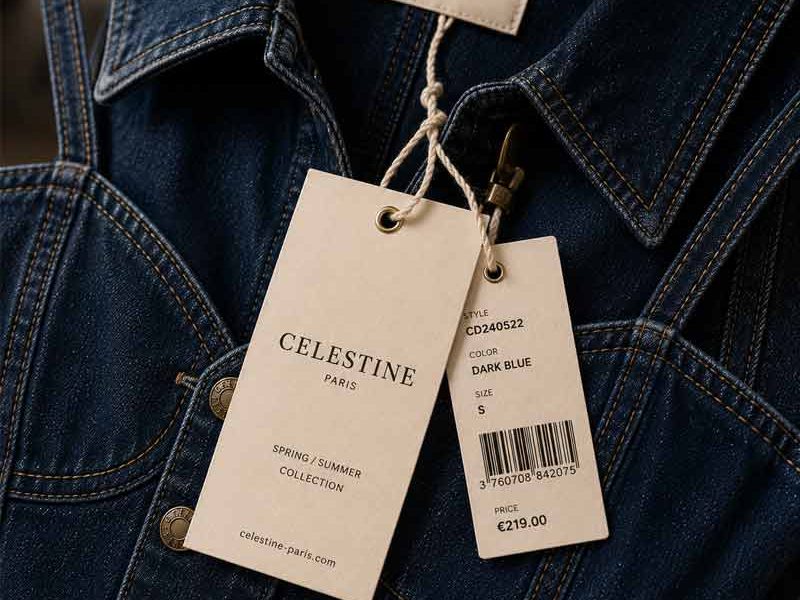
Hangtag

Hangtag artwork, string, seal, barcode, price area, and attachment point are confirmed. The tag should not snag delicate chiffon, satin, mesh, or shirred threads.

Barcode and SKU

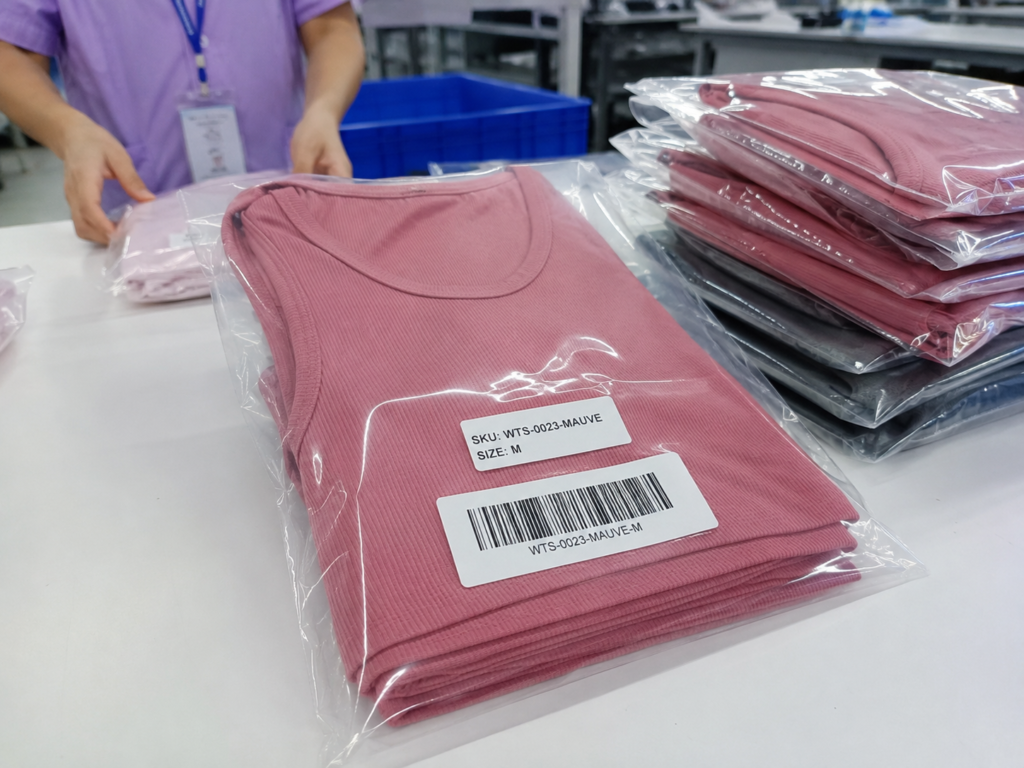
Barcode lists are matched to style, color, and size. Verification covers sticker content, scanning requirements where arranged, polybag placement, and carton assortment.

Polybag Packing

Bag size, warning text, ventilation, adhesive position, garment fold, size sticker, and SKU sticker are confirmed. The fold should avoid crushing the shirred bodice.

Carton Mark

PO, style, color, size ratio, carton number, destination, gross/net weight, and warehouse marks follow the approved instruction. Sensitive logistics data remains protected.

Delivery Preparation

Packing list, commercial invoice, carton measurements, weights, shipment photos, pickup coordination, and client-appointed forwarder requirements can be prepared according to the agreed logistics plan. Plan Private Label Review Packing Files

MOQ, Cost, and Schedule Planning

MOQ starts from 200 pcs per style/color. Final quantity, price, and schedule depend on fabric availability, color development, print, trims, shirring coverage, lining, size range, private-label materials, testing, production allocation, QC, packing, and shipping.
Project VariableMOQ EffectCost EffectSchedule Effect
Stock fabric and regular colorMore likely to support 200 pcs/style/colorLower development and sourcing burdenMaterial confirmation can be faster
Custom-dyed colorFabric supplier minimum may increaseLab dips, dyeing, wastage, and shade control add costColor approval and dyeing extend the schedule
Custom printPrinting method and fabric supplier set separate minimumsArtwork setup, strike-off, printing, and wastage add costStrike-off and print approval are required
Full bodice shirringGarment MOQ remains project-basedMore rows and labor increase costSwatch and first-piece control add development steps
Partial liningUsually no major garment MOQ changeLining material and construction add costLining approval may affect sampling
Multiple colorsEach color normally meets 200 pcs/style/colorMore color handling and material allocationColor approvals and production allocation expand
Extended size rangeSizes divide inside confirmed style/color quantityPattern, grading, measurement, and packing work increaseKey-size checks may be added
Private-label materialsLabels and packaging may have separate supplier minimumsArtwork, materials, barcode, and packing add costFile approval and material production are required
Complex trims or supportTrim supplier minimum may applyHardware, cups, elastic, or special lining add costTrim sourcing and approval affect timing
Phased shipmentNo direct change to garment MOQExtra sorting, packing, documents, and freight handlingDelivery plan must be locked before packing
 

Capacity for Multi-Style Dress Programs

Jinfeng Apparel operates a structured women’s fashion production system with 100,000+ pcs regular monthly capacity. Capacity is allocated according to product complexity, material, quantity, quality requirements, and schedule rather than applied as one identical figure to every style.

Development Team

2 sample rooms, 7+ senior pattern makers, and 20+ sample machinists support first, fit, revised, photo-ready, salesman, PP, and Golden samples. Projects are prioritized according to launch needs and complexity.

Production Network

6 owned women’s fashion factories and 10+ long-term satellite production partners support allocation by woven or knit fabric, construction, order volume, quality level, and seasonal schedule.

Sewing Capacity

18+ sewing lines and 6+ flexible production lines support multi-style dress programs, repeat orders, and production balancing. Complex products are allocated to suitable units rather than treated as identical styles.

Merchandising

12+ merchandisers coordinate files, materials, samples, approvals, production progress, labels, packing, inspection, shipping documents, and repeat-order records across style groups.

Quality Control

15+ QC inspectors support incoming material, cutting, sewing, in-line, measurement, finished garment, pressing, packing, final inspection, and client inspection coordination.

Finishing and Packing

30+ finishing and packing workers support thread cleaning, pressing, labeling, folding, polybags, barcodes, carton assortments, carton marks, and shipment preparation for private-label orders.

Discuss Capacity Plan Share Seasonal Forecast

Anonymous Shirred Dress Program Examples

Client identities, logos, tech packs, patterns, prices, and unreleased designs remain confidential. The examples below use anonymized project information to show how multi-style, multi-fabric, multi-size shirred dress programs can be managed.

US Shirred Occasionwear Collection

An anonymous US fashion brand developed 16 shirred mini, midi, and occasion dresses across satin-backed crepe, viscose, lightweight woven, and stretch mesh directions. The confirmed program totaled about 32,000 pieces across multiple colors and XS-XL sizing. Development risks included inconsistent upper-bodice recovery, neckline gaping, different contraction across fabrics, and barcode complexity. Jinfeng grouped styles by fabric behavior, created fabric-specific shirring trials, adjusted bodice height and upper-edge support, locked relaxed measurements in the PP file, and separated packing data by style/color/size. In-line QC focused on panel width, neckline level, row alignment, and label accuracy. Production was released in planned groups, with priority colors prepared for the first delivery phase.

Australian Resort Shirred Program

An anonymous Australian resort label planned 13 shirred sundress, tiered midi, and maxi styles totaling about 24,500 pieces. Fabrics included viscose, linen blends, floral printed woven, and lightweight crepe. Main challenges were viscose shrinkage, linen wrinkling, print compression through the bodice, heavy tiered skirts pulling the waist, and travel-focused packing.

Jinfeng reviewed shrinkage and drape before final pattern approval, controlled print direction, adjusted bodice support for maxi styles, and used partial or skirt lining according to transparency. Packing folds were positioned away from the main shirred area.

Color groups and carton breakdowns were managed by delivery wave to support the seasonal launch.

European Multi-Size Fit Program

An anonymous European ecommerce dress brand developed 20 shirred and elastic-bodice styles totaling about 46,000 pieces across woven and stretch categories.
The size range included XS-XL plus selected extended sizes. The main risk was preserving coverage and comfort while grading the bodice, neckline, armhole, sleeves, and waist position. Jinfeng recorded relaxed and extended measurements for critical zones, adjusted bodice height and strap placement by size, reviewed key sizes before full production, and created size-specific measurement checkpoints. Packing required coordinated size labels, barcodes, SKU stickers, and carton ratios. The brand retained approved pattern, fabric, trim, and QC records for repeat orders and related seasonal styles.

Design Protection and Compliance Support

Jinfeng Apparel protects project files throughout development, sampling, production, QC, packing, and shipment. Compliance documents and certified material resources are reviewed according to the actual factory, fabric supplier, certificate scope, color, batch, and project requirement.

NDA and File Protection

Jinfeng can sign an NDA before reviewing detailed tech packs, original samples, patterns, size charts, labels, packaging files, barcodes, SKU data, pricing, or unreleased collection information. Project files are used by related merchandising, pattern, sample, production, QC, packing, and logistics teams for the approved work. Without written authorization, Jinfeng does not publish client names, sample images, design details, labels, packaging, order information, or launch plans.

Anonymous Case Boundaries

Public examples can describe market, product type, fabric, style count, order scale, development challenge, QC focus, packing, and delivery result without exposing brand identity. No real client logo, website, social account, tech pack, pattern, order number, price, contact person, or unreleased collection name is used without permission. Internally developed samples or desensitized process images are preferred for manufacturing education.

Compliance and Material Records

Jinfeng can review available factory documents, supplier certificates, fabric composition information, care-label inputs, testing requirements, and client audit needs according to the project. OEKO-TEX-related, recycled, organic, or other certified fabric resources depend on supplier, material type, color, certificate validity, MOQ, cost, and lead time. No single statement is used to imply every fabric or every production unit carries the same certification scope.

Frequently Asked Questions About Shirred Dress Manufacturing

MOQ starts from 200 pcs per style/color. Quantity is calculated by style and color, not by adding several styles together. Multiple sizes can be distributed inside the confirmed quantity. Custom-dyed fabric, custom prints, certified materials, special trims, or private-label packaging may carry separate supplier minimums.
Yes. Front, back, side, and close-up images are preferred. Jinfeng reviews shirring placement, neckline, sleeves, straps, lining, skirt construction, fabric direction, size range, and production feasibility. Missing details are clarified before pattern and sample development.
Common directions include cotton poplin, cotton voile, rayon, viscose, chiffon, crepe, linen blends, lightweight polyester, jersey, rib knit, stretch mesh, and selected light satin. Suitability depends on weight, density, drape, surface, stretch, recovery, shrinkage, transparency, and intended silhouette.
Control begins with a fabric-specific swatch when needed. Jinfeng records original panel width, finished relaxed width, comfortable extension, row spacing, row appearance, and recovery. The approved result is transferred into first-piece checks, in-line measurements, and finished-garment QC.
Not always. Shirring commonly forms repeated elastic rows that contract a panel. Smocking may describe decorative stitched structures or machine-made elastic effects. Ruching gathers fabric but may not create the same functional stretch. Construction must be confirmed from close-up and inside views.
Many styles use pull-on construction because the shirred panel provides expansion. A zipper may still be needed for a structured front, limited stretch zone, fitted lining, corset-inspired detail, or design requirement. The opening method is decided during fit and construction review.
Critical zones can include relaxed and agreed extended measurements. The garment is positioned according to the measurement instruction and is not overstretched. Bust, waist, bodice length, neckline, armhole, strap, sleeve cuff, hip, slit, and dress length are checked against the approved size chart.
Grading reviews more than panel width. Bodice height, bust coverage, neckline, strap spacing, armhole, sleeve width, waist position, skirt volume, and dress length may change across sizes. Key sizes can receive extra sample or production checks according to the range.
Yes, when lining type, shape, stretch, ease, and attachment points are developed correctly. Options include partial bodice lining, double-layer bodice, skirt lining, or full lining. The sample confirms whether the lining expands with the outer garment and remains comfortable.
Yes. Sample charges cover project review, pattern work, fabric and trim preparation, single-piece sewing, measurement checks, communication, and revision work. Sample fees may be deducted according to confirmed bulk-order terms when the same approved style moves into production and meets MOQ.
The sampling timeline depends on style complexity, material readiness, custom color or print, trims, lining, shirring trials, size requirements, and revision rounds. Jinfeng confirms a project schedule after reviewing files and material availability rather than applying one fixed number to every style.
Bulk production begins after PP approval and confirmation of fabric, color, trims, size chart, labels, packing, production instructions, and required files. Changes after approval are reviewed for cost, material, pattern, QC, and schedule impact before release.
Yes. Each color normally follows the 200 pcs per style/color MOQ. Sizes are distributed inside the confirmed color quantity according to the approved size ratio. Custom colors, prints, labels, barcodes, and carton assortments are planned before production.
Inspection can cover incoming fabric, cutting, first piece, in-line sewing, relaxed and extended measurements, row alignment, recovery, seam transitions, neckline, straps, sleeves, skirt balance, finished appearance, labels, barcodes, packing, final inspection, and client-appointed inspection support.
Yes. Jinfeng supports NDA-based cooperation and uses project files only for approved development and production. Unreleased samples, tech packs, patterns, labels, packaging, quantities, prices, and launch plans are not published or shared with other clients without permission.

Start Your Shirred Dress Project

Send your reference image, tech pack, original sample details, or line sheet for an initial project review. A useful inquiry includes enough information to assess construction, fabric behavior, size grading, MOQ, sampling, private-label requirements, and production planning. Kelly will coordinate the first review with the relevant development team and identify any information needed before quotation or sampling.

Please include:

  • Style images or tech pack
  • Target quantity per style/color
  • Fabric composition, swatch, or preferred hand feel
  • Color or print direction
  • Size range and size chart
  • Shirring placement and fit expectations
  • Lining, trim, label, barcode, and packaging needs
  • Target approval, warehouse, or launch date

Tell Us About Your Dress Project

Share your product details, estimated quantity and development requirements. Our team will review your project and provide practical OEM/ODM production feedback.

Premium Women’s Apparel Production for Fashion Brands

From dress sample development to bulk production, JF Apparel supports fashion brands with confidential OEM/ODM manufacturing, reliable quality control and scalable production support.

START YOUR DRESS PROJECT

Ready to Develop Your Next Dress Collection?

Share your design concept, product requirements or sourcing plans with our team. We’ll review your project and provide practical feedback on development, materials, MOQ and production.

7-10 Days

Sample Development

200 PCS

Starting MOQ

Fast Response

Professional Follow-Up