 Skip to content
Semi-Formal Dress Manufacturer
Custom semi-formal dress development for fashion brands, from fabric direction and fit correction to private-label bulk delivery.
Jinfeng Apparel helps fashion brands build semi-formal dress programs for cocktail events, wedding guest collections, graduation seasons, homecoming, company dinners, holiday parties, date-night edits and occasionwear launches. Our team supports OEM, ODM and private-label womenswear from reference image, tech pack, original sample or line sheet to pattern development, sampling, PP approval, bulk production, QC, packing and export delivery.
- Since 2008— custom womenswear manufacturing experience for overseas dress programs.
- 6 owned women’s fashion factories— production support for cocktail, wedding guest, graduation, party and private-label dresses.
- 10+ long-term satellite partners— seasonal capacity for multi-style semi-formal programs.
- 2 sample rooms / 20+ sample machinists— first sample, fit sample, revised sample, photo-ready sample, PP sample and Golden sample support.
- 15+ QC inspectors— fabric, cutting, sewing, measurement, finishing, packing and final garment checks.
- MOQ from 200 pcs/style/color— suitable for planned brand programs, not stock resale or single-garment fulfillment.
Built for Structured Dress Development
Since 2008
- Custom womenswear manufacturing experience.
- Dress-led development and bulk production support.
- Export project communication for overseas fashion teams.
6 Owned Factories
- Owned production control for core womenswear categories.
- Factory allocation by fabric, structure and workmanship risk.
- Stronger sample-to-bulk handover after PP approval.
10+ Partner Factories
- Seasonal capacity support.
- Multi-batch production planning.
- Additional production resources for approved bulk programs.
Sample Room Team
- First sample and fit sample support.
- Revised sample and PP sample preparation.
- Sample comments retained for production handover.
QC Team
- Fabric, trims and cutting checks.
- In-line sewing and measurement review.
- Final garment and packing inspection.
MOQ Standard
- MOQ reviewed by style and color.
- Fabric supplier rules checked before confirmation.
- Quantity planning connected with launch calendar.
A Manufacturing Partner for Brand-Level Dress Programs
Best Fit Projects
- Brand-level product direction.
- Sample development requirement.
- Bulk order planning.
- Private-label packing needs.
- Multi-style seasonal launch.
- Long-term repeat potential.
Not Our Core Model
- Public stock resale.
- Single-piece fulfillment.
- Random micro orders.
- No sample path before bulk.
- No quantity plan.
- Lowest-price-only requests.

Controlled Balance for Semi-Formal Dresses
Semi-formal dresses sit between everyday dresses and full formal gowns. They need visual polish, event suitability, comfortable movement and production consistency without becoming overly heavy or bridal-level.
Between Casual and Formal
Semi-formal dresses usually serve cocktail parties, wedding guest events, graduation ceremonies, homecoming, company dinners, holiday parties, evening dates and special social occasions. A successful style must look polished in photos, feel wearable for several hours, match brand price positioning and remain efficient enough for repeatable bulk production.
Key development points include:
- Neckline depth must balance elegance and wearing safety.
- Lining must control transparency without ruining drape.
- Waistline, hip and bust must support target size grading.
- Fabric must hold shape after cutting, sewing, pressing and packing.
- Trims must match garment level and avoid discomfort.
- Packing must protect satin shine, lace surface, sequins and hems.
Semi-formal dress manufacturing is not only about attractive samples. Brands need sample-to-bulk translation, color consistency, size stability, garment finishing and packing accuracy. Jinfeng Apparel reviews each garment as a commercial SKU: style effect, fit risk, sewing difficulty, cost logic, QC focus and launch timing are considered together before production planning.
Dress Categories for Occasionwear Programs

Cocktail Dress
- Bust stability and side seam balance checked.
- Hem level and final pressing reviewed.
- Fabric and lining direction confirmed before PP approval.

Wedding Guest Dress
- Opacity and lining shade reviewed.
- Waist and skirt movement checked.
- Color and packing records prepared for bulk.

Graduation Dress
- Light-color opacity reviewed.
- Neckline and strap stability checked.
- Packing cleanliness controlled before shipment.
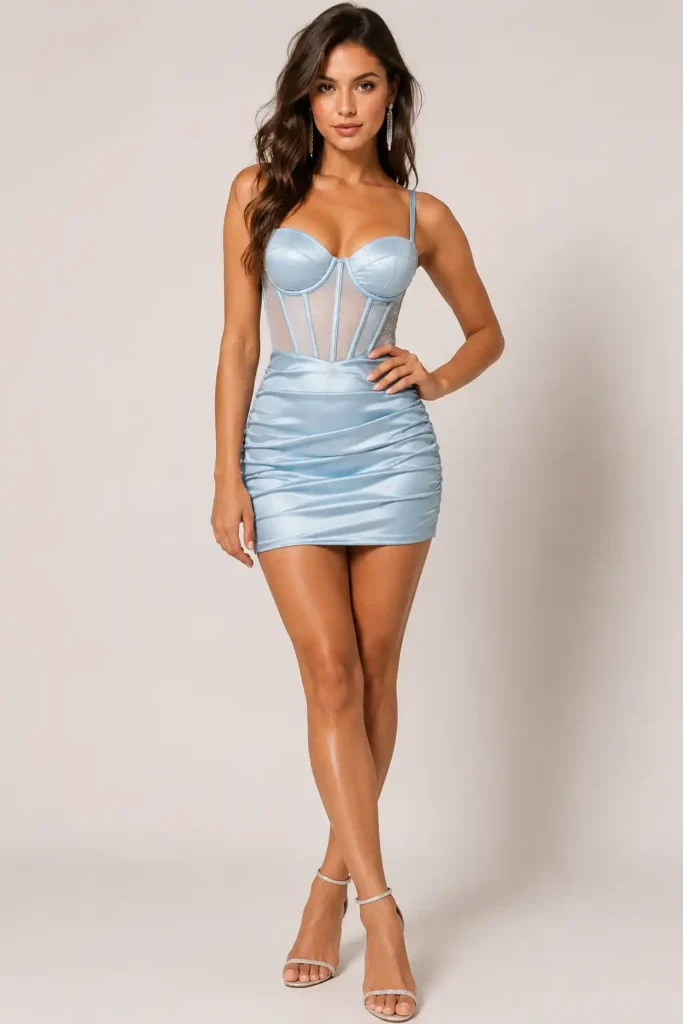
Homecoming Dress
- Bust support and mini length reviewed.
- Corset, tulle and sequin risks checked.
- PP sample records guide bulk execution.

Party Dress
- Stretch recovery and seam balance checked.
- Lining placement reviewed for coverage.
- Zipper, strap and trim comfort inspected.

Satin Midi Dress
- Shine direction and shade reviewed.
- Seam tension and zipper flatness checked.
- Fold and pressing method planned.
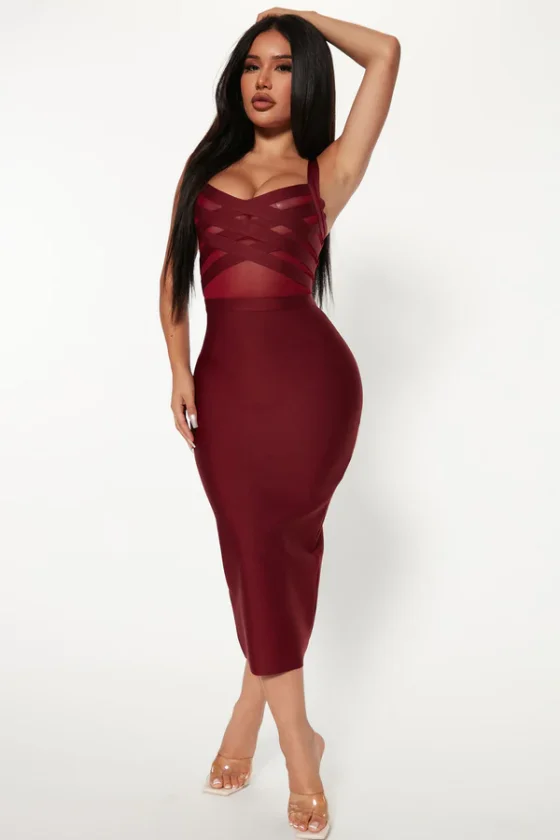
Mesh Bodycon Dress
- Mesh recovery and stretch direction tested.
- Lining coverage checked by body zone.
- Size grading based on fabric recovery.

Lace Dress
- Motif placement reviewed before cutting.
- Lining tone and edge finish checked.
- Damage inspection added before packing.

Sequin Dress
- Sequin direction and seam bulk reviewed.
- Lining and underarm comfort checked.
- Packing protection planned before shipment.

Corset Dress
- Cup and boning placement reviewed.
- Waist support and zipper strength checked.
- Pattern records locked before bulk.

Strapless Dress
- Upper bust and under bust reviewed.
- Grip tape, boning and cup option checked.
- Neckline stability tested before PP approval.

Halter Dress
- Neck pressure and strap strength checked.
- Bust coverage and armhole curve reviewed.
- Back opening balance tested in sample stage.

Backless Dress
- Back opening and side coverage checked.
- Hidden support and lining edge reviewed.
- Movement stability tested before PP lock.

A-Line Dress
- Waistline and skirt volume reviewed.
- Lining and fabric weight checked.
- Hem balance controlled during QC.

Slip Dress
- Bias behavior and side seam fall checked.
- Strap length and neckline balance reviewed.
- Hem width and slit stability controlled.

Evening-Lite Dress
- Formal look without heavy gown construction.
- Drape, lining and zipper reviewed.
- Carton packing matched with fabric sensitivity.
Manufacturing Support by Commercial Program
Different semi-formal dress programs require different development logic. Jinfeng Apparel supports teams needing style variety, fit accuracy, private-label finish, launch timing and repeat-order records.
Fashion Brands
Occasionwear Labels
Premium Ecommerce
Sourcing Offices
Buying Teams
Designer Labels
Retail Programs
Repeat Orders
Fabric Direction Shapes the Final Dress
| Fabric Type | Best Use | Main Risk | Jinfeng Control Focus |
|---|---|---|---|
| Satin | Cocktail, slip, wedding guest and party dresses | Shine direction, seam puckering, fold marks, shade difference | Weight review, lining choice, seam tension, pressing and packing method |
| Stretch Satin | Bodycon, ruched, fitted and corset-inspired dresses | Overstretch, shine distortion, seam pulling | Recovery check, pattern allowance, lining stretch and size grading |
| Lace | Cocktail, graduation, wedding guest and evening-lite styles | Motif mismatch, holes, fraying, lining mismatch | Motif placement, edge use, lining tone, zipper joining and damage inspection |
| Mesh | Bodycon, ruched, sleeve, cut-out and overlay styles | Transparency, seam twist, weak recovery | Stretch direction, lining coverage, seam reinforcement and grading by recovery |
| Chiffon | A-line, wrap, soft midi and occasion maxi dresses | Sheerness, fraying, uneven hem, cutting movement | Lining length, edge finish, layer control and hem balance |
| Crepe | Cocktail, midi, one-shoulder and semi-formal jumpsuits | Seam bulk, wrinkle marks, poor drape if weight is wrong | GSM review, lining match, seam allowance and pressing method |
| Velvet | Holiday, winter occasionwear and evening-lite styles | Nap direction, pressure marks, shade variation | Cutting direction, surface protection, pressing and carton care |
| Sequin Fabric | Party, holiday, statement mini and event dresses | Scratchy edges, missing sequins, heavy seams | Lining comfort, seam allowance, zipper zone and packing protection |
| Tulle / Organza | Skater, ruffle, graduation and layered styles | Layer imbalance, compression marks, edge damage | Layer count, hem balance, steaming and carton space |
| Jersey / Ponte | Fitted, ruched, club and comfortable semi-formal styles | Stretch instability, recovery loss, measurement drift | GSM, recovery, size grading and seam tension |
Fabric-Specific Control Before Sampling
Semi-formal dresses often fail when fabric is chosen only by appearance. Jinfeng Apparel reviews fabric behavior, garment structure and bulk risk together before sample cutting.
Satin Control
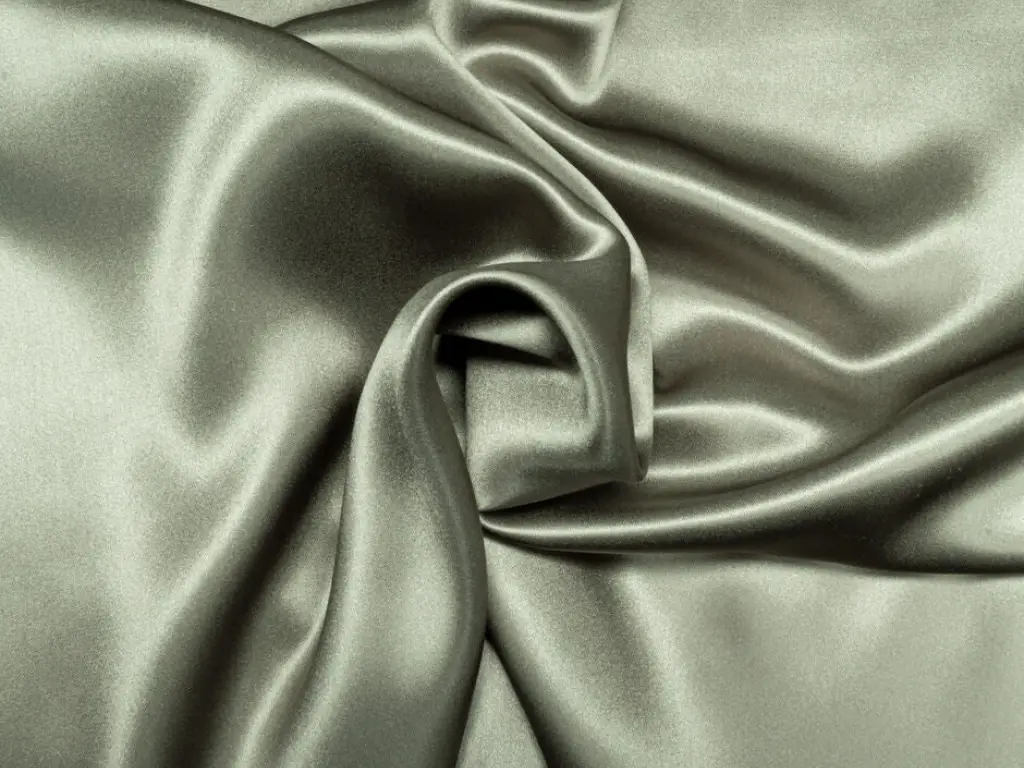
Satin is attractive for cocktail, slip, wedding guest and party dresses because of shine and smooth drape. Production risk comes from shine direction, seam puckering, ironing marks, color difference, fold lines and visible sewing defects. Jinfeng checks whether satin should be cut on grain or bias, whether lining is needed, whether seam areas need softer tension and whether packing may create pressure marks.
Control points include:
- Shine direction confirmation before cutting.
- Lining choice based on transparency and body contact.
- Seam tension control to reduce puckering.
- Pressing temperature and surface protection.
- Packing fold review for satin midi and maxi dresses.
- Color review under natural and indoor light.
Lace Control

Lace can raise perceived value for cocktail, graduation, wedding guest and evening-lite dresses, but lace needs careful placement and inspection. Jinfeng checks flower direction, repeat position, scallop edge usage, lining color, zipper joining and seam trimming. A lace dress can lose value quickly if the underlayer color is wrong or flower placement becomes uneven across sizes.
Control points include:
- Lace repeat and motif placement review.
- Edge usage for neckline, sleeve and hem.
- Lining tone approval against outer lace.
- Damage inspection before and after sewing.
- Zipper and seam joining control.
- Bulk check for holes, pulls and uneven trims.
Mesh Control

Mesh semi-formal dresses are common in bodycon, ruched, sleeve, cut-out, overlay and fitted party styles. Production risk comes from transparency, stretch direction, distorted seams, weak recovery and lining movement. Jinfeng reviews whether mesh needs power mesh, soft mesh, printed mesh, double layer or partial lining according to product positioning.
Control points include:
- Stretch direction testing before pattern work.
- Lining coverage for bust, waist and hip areas.
- Seam reinforcement for fitted areas.
- Ruched position symmetry.
- Transparency review under strong light.
- Size grading based on recovery, not only flat measurement.
Chiffon Control

Chiffon supports softer semi-formal dresses, wrap styles, A-line silhouettes, wedding guest edits and summer event pieces. Production risk comes from transparency, fraying, fabric slipping, uneven hem and lining imbalance. Jinfeng reviews outer fabric, lining, edge finish, layer relationship and pressing before sample approval.
Control points include:
- Transparency and lining color review.
- Cutting direction and fabric layer control.
- Edge finish and hem method.
- Gather ratio and waist seam balance.
- Lining length compared with outer length.
- Final pressing and fold method.
Pattern Control for Wearable Occasion Dresses
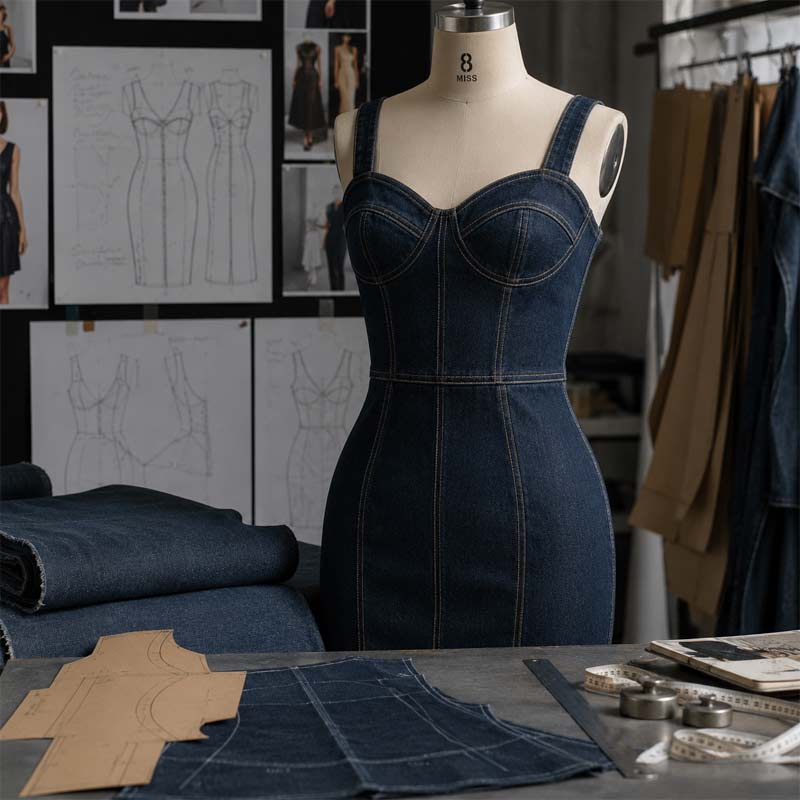
Semi-formal dresses are judged by how they look on the body. Jinfeng Apparel uses senior pattern makers, sample rooms and fit review records to reduce common risks before bulk production.
Body Measurement Points
A semi-formal dress may look correct on a hanger but fail when worn. Jinfeng reviews bust, upper bust, under bust, waist, high waist, low waist, hip, front length, back length, strap length, armhole, neckline depth, slit height, hem sweep and lining coverage. For bodycon, corset, strapless, halter and backless dresses, small measurement differences can affect wearing safety and comfort.
Common correction actions include:
- Adding or reducing bust ease.
- Raising neckline coverage.
- Adjusting under-bust and waist tension.
- Increasing hip allowance for fitted dresses.
- Shortening or lengthening straps.
- Lowering or raising slit height.
- Adjusting lining coverage.
- Adding bra cups, boning or grip tape when structure requires support.
Jinfeng does not push an unstable sample directly into bulk production. Fit feedback, measurement review, reference photos, original sample comparison and target market size habits are recorded before revised pattern or PP sample confirmation.
Details That Decide Dress Value
Halter Neck

Strapless Shape

Backless Cut

Deep V Neck
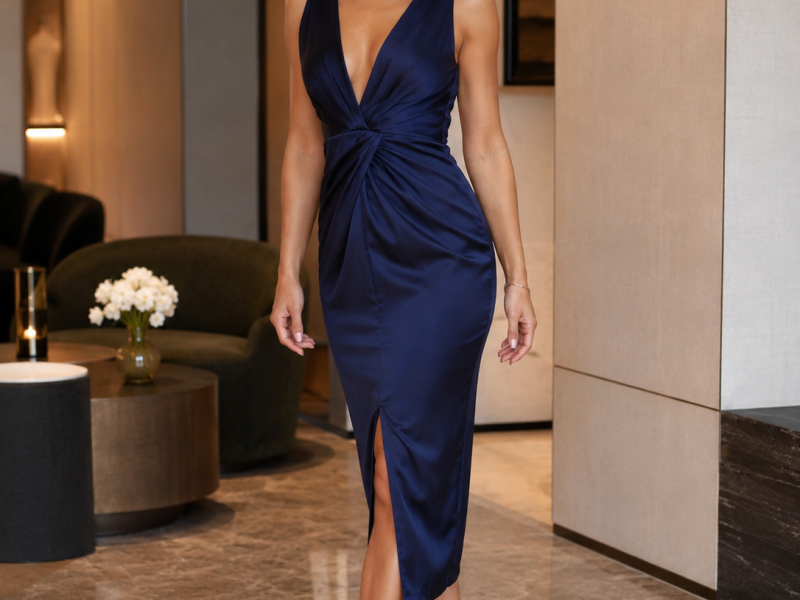
Ruching

Side Slit

Corset Structure

Cut-Out Detail

Ruffle Detail

Lining Structure
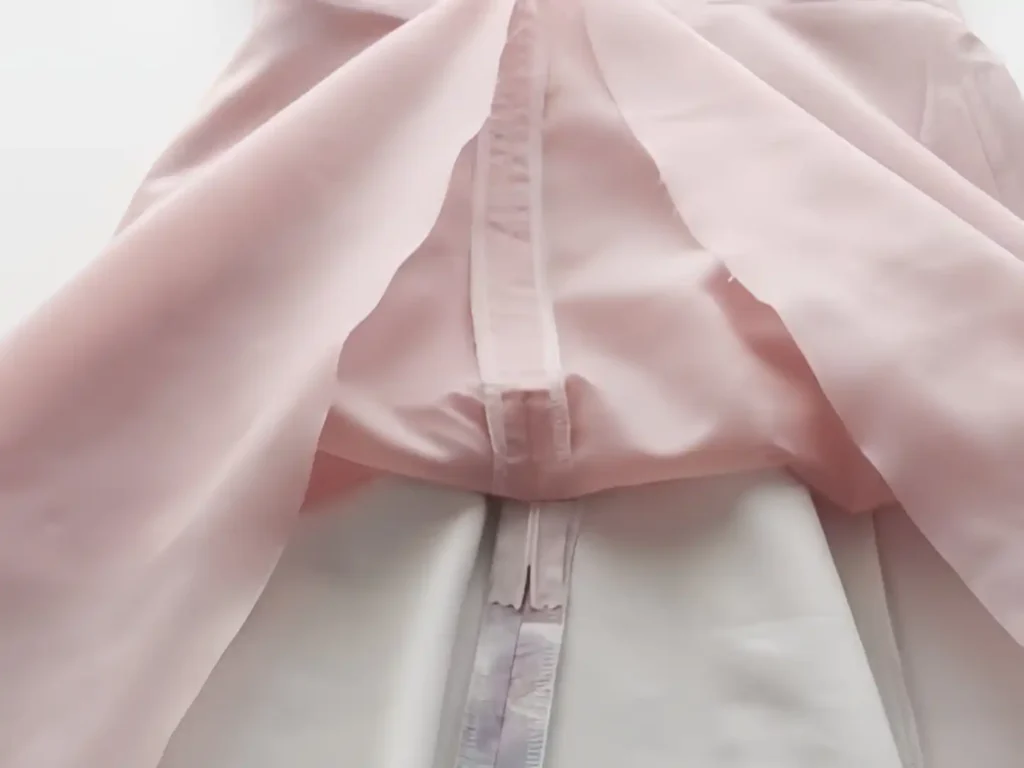
Invisible Zipper

Bra Cup Support

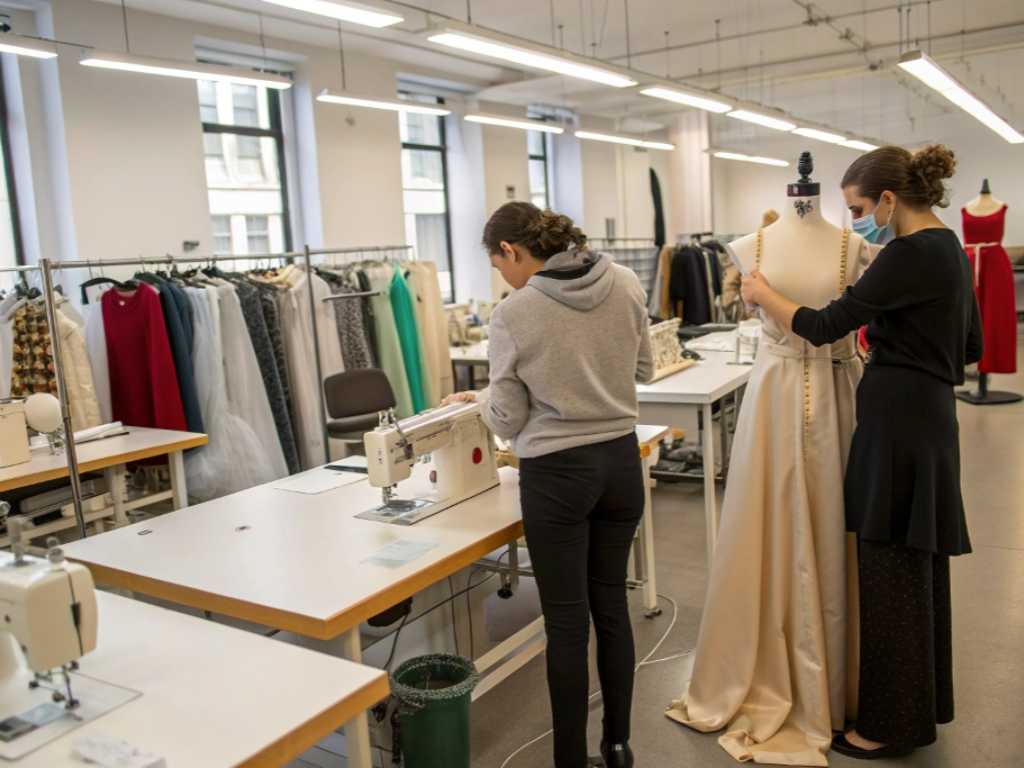
Workmanship Standards for Event-Ready Dresses
Semi-formal dresses need careful workmanship because defects are visible in photos, retail display, social content and return inspections. Jinfeng Apparel controls construction details from sample standard to bulk sewing.
Sewing and Finishing Control
A semi-formal dress usually has more visible surfaces than casual clothing. Satin can reveal puckering, lace can expose uneven seam trimming, mesh can distort when stretched, and fitted silhouettes show measurement errors quickly. Jinfeng reviews sewing sequence, seam allowance, needle choice, thread tension, zipper placement, lining attachment, hem method and pressing standard before bulk handover.
Workmanship focus includes:
- Even neckline, armhole and back-opening edges.
- Flat invisible zipper with smooth opening and closure.
- Balanced side seams and waist seams.
- Clean lining attachment without twisting.
- Reinforced slit opening and stress points.
- Ruched areas with consistent fold direction.
- Lace and mesh seams without exposed rough trimming.
- Satin surface protected during pressing and packing.
- Hem balance for midi, maxi and A-line dresses.
- Final appearance after garment is folded or hung.
The goal is not only a clean first sample. The same sewing logic must be repeatable across colors, sizes and production batches. Jinfeng uses sample comments, pattern files, sewing instructions and QC notes to support bulk consistency.
Trims Complete the Dress Structure
Invisible Zippers
Bra Cups
Boning
Grip Tape
Lace Trims
Sequins and Beads
Labels
Hangtags and Barcodes
Polybags and Cartons
From Reference to Production-Ready Sample
Sampling should verify fabric direction, pattern structure, fit, workmanship, trim choices and cost logic. Jinfeng Apparel manages sample development as a controlled process.
Sample Development Route
A typical semi-formal dress program starts from a reference image, tech pack, original sample, line sheet or design sketch. Jinfeng reviews product category, target fabric, quantity plan, size range, color plan, trims, label needs and launch timing before sample work. For standard-to-structured semi-formal dresses, brands often plan around 7–15 working days for first sample development after fabric direction and construction details are confirmed. Complex lace placement, sequins, corset construction, custom color and multi-revision programs may need project-specific timing.
Core sample steps include:
- Project review: style, target market, quantity, fabric, cost and timing.
- Fabric direction: hand feel, drape, stretch, opacity, shine and lining.
- Pattern work: body measurements, silhouette, length and construction.
- First sample: structure, fit, material and visual effect review.
- Fit comments: measurement notes, photos and revision list.
- Revised sample: correction of fit, trims, color, length or construction.
- Photo-ready sample: used for brand content when requested.
- PP sample: final pre-production approval for bulk.
- Golden sample: approved standard for production and QC reference.
Jinfeng records sample changes so final pattern, size chart, BOM, trims, label files and packing instructions can move into bulk production without losing important comments.

Locking the Dress Before Bulk Production
PP sample approval is a production gate. Semi-formal dresses should not enter bulk before fabric, measurements, construction, trims, labels and packing standards are locked.
Sample Feedback to Final Pattern
Semi-formal dress fit comments often involve bust instability, waistline mismatch, tight hip area, strap length, lining exposure, uneven hem, deep neckline risk or slit height. Jinfeng turns fit feedback into updated pattern files, size charts, measurement records and sample comments. Important revisions are not left only in chat history.
Correction records may include:
- Sample version: first sample, revised sample, PP sample.
- Issue category: fit, fabric, trim, color, construction or packing.
- Original comment from brand team.
- Jinfeng technical analysis.
- Revision action and pattern impact.
- Cost or lead time impact.
- Approval needed before next step.
- Next action: revised sample, PP sample or bulk-ready status.
PP Lock Scope
After PP sample approval, the following items should not change without review: fabric, color, trims, measurement, pattern, neckline, skirt length, lining, construction, label, hangtag, polybag, carton mark and packing method. When a brand needs changes after PP approval, Jinfeng reviews cost, material, line planning and timeline impact before confirming the next step.
Moving Approved Samples into Bulk
Bulk production succeeds when sample room information enters production clearly. Jinfeng Apparel prepares production references before cutting and sewing begin.
Production Handover Package
After PP approval, Jinfeng transfers key files and physical references into bulk production. Semi-formal dress styles can involve different fabrics, linings, trims, label placements and finishing standards across many SKUs, so clear handover reduces mismatch between sample and bulk.
Handover references may include:
- Final pattern file.
- Approved size chart and grade rule.
- Fabric reference and color approval.
- Trim card for zipper, cup, boning, tape, lace and label.
- Sewing instruction and construction notes.
- Measurement tolerance for key points.
- Label, hangtag, barcode and polybag instruction.
- Packing method and carton mark.
- QC checklist by style and material risk.
- PP sample or Golden sample reference.
For multi-style orders with 10–30 dress styles, Jinfeng organizes handover by style code, color, size ratio, material lot and delivery batch. Production planning also considers fabric arrival, cutting queue, sewing difficulty, pressing needs, QC windows and packing time.
QC Focus by Dress Type
| Dress Type | Main Risk | QC Focus |
| Satin Midi Dress | Seam puckering, shade difference, zipper waves, fold marks | Satin surface, seam tension, zipper flatness, pressing, polybag fold |
| Lace Dress | Motif mismatch, holes, fraying, lining mismatch | Lace placement, damage inspection, lining tone, zipper area |
| Mesh Bodycon Dress | Transparency, seam twist, recovery loss, lining movement | Stretch recovery, lining coverage, side seam, neckline stability |
| Sequin Dress | Missing sequins, sharp edges, heavy seams, carton abrasion | Sequin loss, lining comfort, zipper area, packing protection |
| Corset Dress | Cup shift, boning discomfort, zipper stress, neckline instability | Cup position, boning channel, waist tension, top edge, zipper function |
| Strapless Dress | Slipping, gaping, weak support | Upper bust, grip tape, boning, back height, movement check |
| Chiffon A-Line Dress | Fraying, uneven hem, transparency | Lining length, edge finish, layer control, hem balance |
| Ruched Dress | Uneven gathering, side seam twist, stretch distortion | Ruching density, left-right balance, fabric recovery, measurement |
| Slip Dress | Bias twist, strap length error, surface wrinkles | Cut direction, strap length, side seam fall, pressing |
| Backless Dress | Side coverage loss, strap stress, lining exposure | Back opening, strap attachment, side seam, inner finish |

Size Planning for Brand Dress Programs
Semi-formal dresses need size control because eventwear returns often come from bust, waist, hip, length or coverage issues. Jinfeng Apparel reviews body points before grading and PP approval.
Measurement Points That Matter
For semi-formal dresses, flat garment measurements are not enough. The garment must work on the body, especially for fitted, strapless, backless, bodycon, corset and slit styles. Jinfeng reviews brand size charts and target market fit habits before pattern adjustment.
Key measurement areas include:
- Bust, upper bust and under bust for fitted and strapless structures.
- Waist, high waist and low waist for body shaping.
- Hip and hem sweep for movement and comfort.
- Front length and back length for mini, midi and maxi dresses.
- Strap length for halter, cami and open-back styles.
- Armhole and neckline depth for coverage control.
- Slit height for walking ease and safety.
- Lining length and coverage for transparency control.
Size planning also affects fabric consumption, cost, production efficiency and packing ratio. A 20,000–80,000 pcs semi-formal program usually needs clear size ratios by region, color and style priority before bulk scheduling. Jinfeng can work from provided brand size charts or review an existing sample to align pattern development with the intended market.

MOQ by Style and Color
Jinfeng Apparel’s MOQ starts from 200 pcs per style/color. Quantity planning should be arranged by style, color, size ratio, fabric availability and launch priority.
How to Plan Quantities
MOQ from 200 pcs per style/color means one approved style in one approved color starts from 200 pcs as a production unit. A semi-formal dress collection may include many styles and colors, so planning should follow sales priorities rather than splitting every style into very small color lots.
Clear examples:
- 1 style in black, 200 pcs: available for project review.
- 1 style in black and ivory, 200 pcs per color: 400 pcs total.
- 10 styles with 2 colors each, 200 pcs per color: 4,000 pcs total.
- 20–30 styles with multi-color allocation: suitable for seasonal programs when sampling, material booking and PP approval are organized early.
- Custom dye, special lace, sequin fabric, custom trims or complex packing may require higher quantity due to material supplier rules.
For larger programs, Jinfeng can help allocate hero styles, secondary styles, repeat colors and launch batches. Better quantity planning can improve fabric booking, cutting layout, production line use, cost control and delivery scheduling.
Cost Factors for Semi-Formal Dresses
Fabric Choice
Lining and Layers
Construction Level
Trim Selection
Size Range
Color Quantity
Sample Complexity
Delivery Method

Planning Around Event Seasons
Semi-formal dress programs often follow wedding season, graduation season, holiday party season, homecoming, resort events and retail launch windows. Jinfeng Apparel supports development planning before peak production pressure arrives.
From Sample to Launch
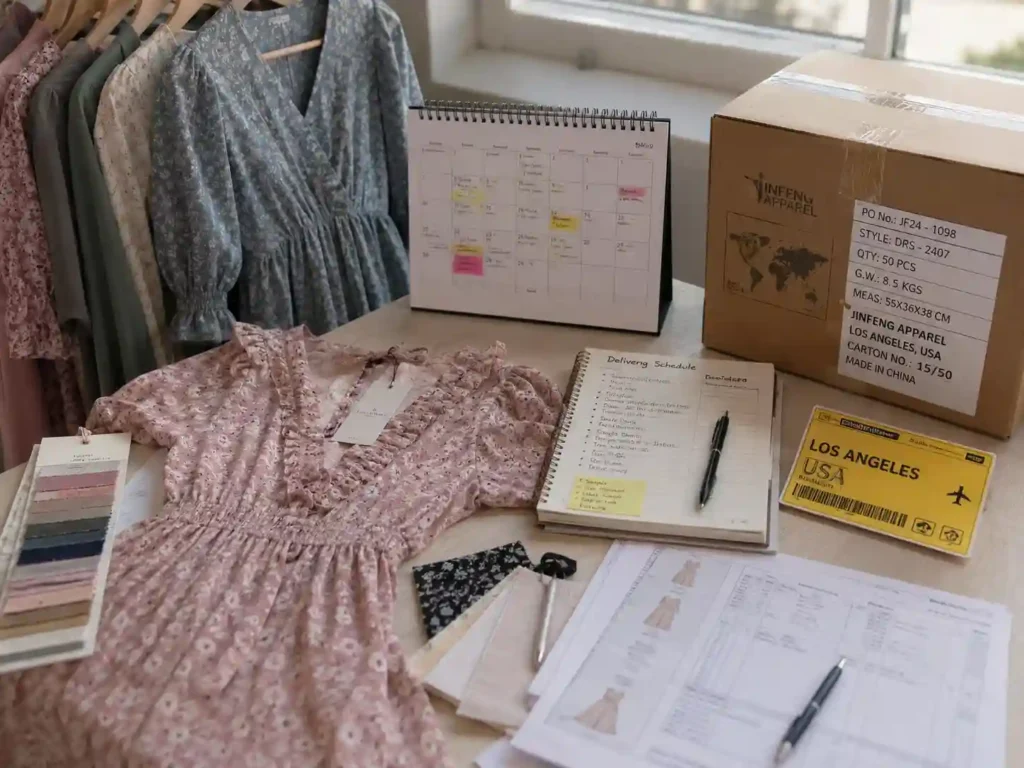
A semi-formal dress launch works best when brand teams plan backward from the target selling window. Sampling, fabric confirmation, PP approval, material booking, cutting, sewing, QC, packing and freight all need time. Rush production can be reviewed, but Jinfeng does not promise urgent delivery before checking fabric stock, trim readiness, style difficulty and line allocation.
Suggested planning logic:
- Reference review and quotation direction: before sample start.
- Fabric swatch and trim direction: before pattern cutting.
- First sample planning: usually 7–15 working days after major details are confirmed.
- Revised sample or fit sample: based on comments and material availability.
- PP sample approval: before material lock and bulk cutting.
- Bulk planning: often 25–45 production days after PP approval and material readiness for many structured dress programs; final timing depends on style count, fabric, colors, trims, order quantity and packing.
- Shipment planning: air, sea or split shipment according to launch urgency and cost.
For 20,000–80,000 pcs seasonal programs, early material booking and factory allocation are especially important. Lace, sequins, custom color and corset structures should be scheduled earlier than regular woven dresses.
Delivery Support for Retail-Ready Dresses
Private-Label Packing
Garment Protection
Carton Planning
Export Documents
Air and Sea Options
Forwarder Coordination
Signs of a Weak Dress Supplier
No Fabric Review
No Fit Process
No PP Sample
No Trim Confirmation
No QC Checklist
Unclear MOQ Logic
Weak Packing Control
No Brand Protection
Protecting Unreleased Dress Programs
Jinfeng Apparel supports NDA-based cooperation and protects brand development information throughout sampling, production and repeat-order management.
Confidential Development Handling
Semi-formal dress programs often include unreleased seasonal styles, private fabric choices, exclusive trims, size charts, target prices, launch dates, private labels and packaging files. Jinfeng does not publicly expose client brand names, original tech packs, unreleased samples, order quantities, private fabric details, packaging files or pricing information without authorization.
Protected information may include:
- Tech packs and line sheets.
- Original samples and reference images.
- Pattern files and size charts.
- Fabric and trim plans.
- Private-label files.
- Hangtag, barcode and packing artwork.
- Launch calendar and order quantity.
- Supply chain and logistics information.
For marketing and case sharing, Jinfeng uses anonymous project descriptions. Region, product category, fabric direction, construction challenge and general order range can be described without exposing brand identity or commercial secrets. Brand protection is especially important for fashion groups, designer labels, sourcing offices and premium ecommerce programs.
Anonymous Brand Project Examples

US Occasionwear Drop
A US premium ecommerce fashion brand planned a semi-formal capsule for cocktail, wedding guest and holiday party sales. The program included satin midi dresses, ruched mesh dresses, lace mini dresses, corset dresses and sequin party styles. The total production plan reached about 42,000 pcs. Main issues included inconsistent fit across bodycon and strapless styles, satin pressure marks during packing and tight launch timing for hero colors.
- 18 styles / about 42,000 pcs / 5 product groups — project data: satin midi, ruched mesh, lace mini, corset and sequin party styles; technical difficulty: fitted and strapless styles created inconsistent bust and hip results; solution: Jinfeng reviewed fabric direction, corrected bust and hip balance, and separated sample comments by silhouette.
- 3 sample stages / launch pressure — project data: first sample, revised sample and PP sample were needed before campaign approval; technical difficulty: hero colors had tight timing; solution: sample priority was organized by launch value and material readiness.
- Satin packing risk — project data: satin styles showed pressure marks after folding; technical difficulty: shiny surfaces exposed fold lines; solution: fold method, polybag size and carton pressure were adjusted.
- Private-label records — project data: labels, hangtags, barcodes and polybags were required; technical difficulty: similar color groups created SKU risk; solution: packing records were checked by style-color-size before carton sealing.

Australia Wedding Guest Collection
An Australian occasionwear label needed a spring wedding guest collection with soft colors, feminine silhouettes and retail-ready private-label packing. The order included chiffon wrap dresses, satin halter midis, floral printed maxis, lace A-line dresses and slip dresses. Total production reached around 36,000 pcs across 22 styles. The main challenge was balancing opacity, drape and color consistency across pastel and ivory tones.
- 22 styles / about 36,000 pcs / spring wedding program — project data: chiffon wrap dresses, satin halter midis, floral printed maxis, lace A-line dresses and slip dresses; technical difficulty: light colors created opacity and lining challenges; solution: Jinfeng checked lining tone, fabric shine, layer count, size ratio and hem finish before PP approval.
- 5 fabric groups / soft color palette — project data: chiffon, satin, floral woven, lace and crepe-based styles; technical difficulty: each fabric reacted differently during pressing and packing; solution: fabric-specific notes were prepared for sample and bulk teams.
- Opacity and drape control — project data: pastel and ivory tones needed stronger lining review; technical difficulty: shell color and lining color changed final look; solution: lining shade and layer length were confirmed before production.
- Retail-ready packing — project data: hangtags, size labels, barcodes and carton marks were needed; technical difficulty: multiple colors and sizes increased packing complexity; solution: SKU records were organized before bulk packing.

UK Graduation and Party Program
A UK fashion retailer planned a combined graduation and party dress program with 26 styles and about 68,000 pcs. Product directions included white graduation minis, satin corset dresses, mesh bodycon styles, black cocktail dresses and sequin party minis. Key risks included white fabric transparency, short dress length, cup placement, sequin comfort and barcode accuracy across many SKUs.
- 26 styles / about 68,000 pcs / UK seasonal program — project data: white graduation minis, satin corset dresses, mesh bodycon styles, black cocktail dresses and sequin party minis; technical difficulty: wide style mix created different fit, lining and packing risks; solution: Jinfeng arranged style-by-style sample review and grouped records by fabric and silhouette.
- Light-color risk / graduation styles — project data: white and pale styles needed opacity checks; technical difficulty: lining exposure and stain visibility increased return risk; solution: lining, fabric weight and packing cleanliness were reviewed before PP sample.
- Corset and sequin control — project data: cup placement, boning, sequin comfort and zipper zones required extra review; technical difficulty: small construction errors affected wearer comfort; solution: revised sample notes were transferred into production and QC records.
- SKU and barcode accuracy — project data: many styles, sizes and colors shipped together; technical difficulty: barcode mismatch could delay warehouse receiving; solution: packing lists and barcode files were checked before shipment.
Frequently Asked Questions
[CTA Button: Ask Kelly]
[CTA Button: Request Quote]
Start Your Semi-Formal Dress Project
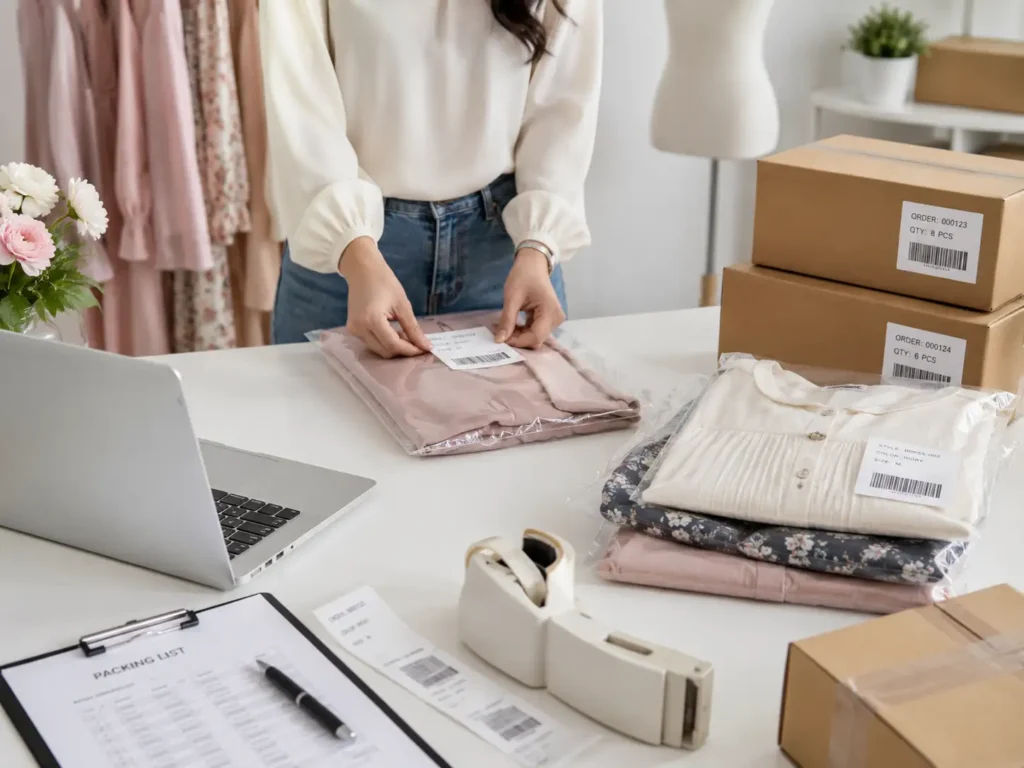
Jinfeng Apparel supports fashion brands and mid-to-large apparel programs with custom semi-formal dress development, sampling, PP approval, bulk production, QC, private-label packing and export delivery. Share your style references, tech packs, quantity plan or launch calendar with Kelly for project review. Our team can evaluate fabric direction, pattern complexity, trim requirements, MOQ fit, sample planning, bulk feasibility and packing details before formal quotation.
To receive a more accurate review, please prepare:
- Reference image, sketch, tech pack or original sample.
- Target style list and total quantity plan.
- Quantity by style, color and size ratio if available.
- Fabric preference such as satin, lace, mesh, chiffon, crepe or sequins.
- Size range and target market.
- Label, hangtag, barcode, polybag and carton requirements.
- Target launch date and preferred shipment method.


