 Skip to content

Seasonal Eventwear Collections
Seasonal eventwear should arrive as a coordinated commercial collection, not as a group of unrelated dresses. Jinfeng Apparel supports global fashion brands and mid-to-large apparel programs with multi-style development across wedding guest, graduation, homecoming, party, cocktail, evening, birthday and holiday occasions. Collection projects can be organized around 10-30 styles, with fabric direction, pattern work, sample priority, PP approval, bulk allocation, QC and private-label delivery managed as one program.
- Collection programs: commonly planned across 10-30 styles
- MOQ: starts from 200 pcs per style/color
- Sampling resources: 2 sample rooms, 7+ senior pattern makers and 20+ sample machinists
- Production organization: 6+ flexible production lines within a 100,000+ pcs monthly womenswear capacity system
- Quality support: 15+ QC inspectors covering material, production, garment and packing checks
Collection-Level Capacity for Seasonal Eventwear Programs
10-30 Style Development
Dedicated Sample Development
Flexible Bulk Organization
Built for Fashion Teams Managing Seasonal Eventwear
Occasionwear and Eventwear Brands
Premium Ecommerce and Retail Programs
Sourcing and Product Teams
Brands can start from a line sheet, tech pack, reference image, original sample or sketch.
Jinfeng reviews structure, fabric direction, trims, MOQ fit, sample priorities and production risks before the collection is committed to bulk.
Plan Eventwear Around the Seasonal Selling Calendar
Seasonal eventwear has a commercial deadline. Wedding season, graduation, homecoming, holiday parties and formal events each create a different product window, and missing the launch date can turn a good style into late inventory. A stronger collection plan links the event calendar with sample priority, fabric availability, photo sample timing, PP approval and bulk scheduling.
| Seasonal Window | Major Event Demand | Strong Product Direction | Development Focus |
|---|---|---|---|
| Spring | Wedding guest, graduation, brunch, early resort | Satin and lace minis, chiffon midis, A-line and corset styles | Light-color transparency, lining, photo-ready samples, color approval |
| Summer | Destination weddings, celebrations, vacation events | Slip, halter, backless, light maxi and printed occasion dresses | Drape, lightweight fabrics, print direction, travel packing, length balance |
| Fall | Homecoming, cocktail events, wedding season, evening occasions | Corset minis, satin midis, structured cocktail dresses, darker color stories | Fit support, color consistency, structured silhouettes, multi-size grading |
| Holiday / Winter | Party, birthday, gala, New Year and formal events | Sequin, velvet, metallic, mesh, evening and statement styles | Embellishment durability, skin comfort, pressing, packing protection, launch timing |
Build the Collection Around Real Eventwear Occasions
A commercial seasonal eventwear line usually needs more than one occasion. The strongest assortment covers different levels of formality and different reasons to dress up, while keeping a recognizable color, fabric or silhouette story. Jinfeng can develop occasion groups inside one program so wedding guest, party and evening products do not lose their own fit and manufacturing logic.

Wedding Guest and Occasion

Graduation and Homecoming

Party and Holiday

Cocktail and Going-Out

Evening and Formal

Birthday and Festival
Design a Balanced Eventwear Collection Architecture
A seasonal line should not contain twenty versions of the same silhouette. Strong assortments mix commercial sellers with visual hero pieces, vary length and structure, and create enough common fabric or color logic to control development cost. Jinfeng approaches collection development by linking product role, silhouette, fabric group and production risk before sampling begins.
Length Architecture
Mini dresses create strong party, graduation, homecoming and birthday options, but they require careful control of waist-hip proportion, lining and wearable length. Midi dresses work across wedding guest, cocktail and semi-formal occasions where drape, waist position, slit and proportion matter. Maxi and floor-length styles carry evening, formal and destination-event demand, requiring stronger hem balance, lining control and packing discipline.
A 10-30 style program does not need equal quantities of every length. A brand can emphasize one commercial length while using other lengths to widen the occasion range. The manufacturing plan should still group similar patterns or fabrics where useful, without forcing different silhouettes into the same construction logic.
Silhouette Architecture
Bodycon, corset, slip, A-line, halter, strapless, backless, one-shoulder, ruched and cut-out styles each create different fit risks. Bodycon depends on stretch recovery and side-seam stability. Corset and strapless shapes require bust support, cup shape, boning and anti-slip thinking. Slip and draped dresses rely on fabric behavior and clean seam balance. Backless and cut-out products need stable coverage while preserving the intended visual effect.
The collection should use silhouette variety to serve different occasions and body-fit expectations. Pattern development should therefore follow the actual construction of each style rather than treating one approved block as a shortcut for every SKU.
Hero and Commercial SKU Balance
Hero styles often carry stronger design details: corsetry, embellishment, dramatic drape, mesh placement, asymmetric necklines or metallic surfaces. Commercial supporting styles can use cleaner silhouettes, shared fabrics or repeated color stories. Giving both groups a clear role helps sample teams prioritize photo pieces while production teams prepare scalable styles for the main volume.
Hero pieces deserve earlier sample review because late changes to boning, embellishment or specialty trims can affect the whole launch. Commercial styles can often move more efficiently once fit, fabric and construction are locked. That separation gives a collection stronger visual impact without making every style equally complex or expensive.

Match Fabrics to Occasion, Silhouette and Production Risk
Fabric direction influences nearly every later decision: pattern balance, lining, trim selection, sample appearance, bulk consistency, pressing and packing. Eventwear requires a broader material mix than basic womenswear, so a collection benefits from early grouping by fabric behavior rather than choosing materials only by visual reference.
| Event / Product Direction | Preferred Fabrics | Strong Silhouettes | Main Manufacturing Risks |
|---|---|---|---|
| Party / Club | Mesh, sequin, satin, stretch knit, power mesh | Bodycon, mini, cut-out, backless, halter | Stretch recovery, transparency, sequin loss, skin scratching, zipper flatness |
| Wedding Guest / Occasion | Satin, chiffon, lace, crepe | Midi, maxi, slip, wrap, one-shoulder | Shade consistency, drape, lining color, lace placement, hem balance |
| Graduation / Homecoming | White satin, lace, chiffon, tulle, organza | Mini, A-line, corset, skater, fit-and-flare | Light-color transparency, bust support, short-length safety, cleanliness |
| Cocktail / Going-Out | Satin, crepe, lace, mesh, structured knit | Midi, mini, slip, ruched, one-shoulder | Neckline shape, waist position, lining, zipper and pressing |
| Evening / Formal | Satin, velvet, lace, sequin, tulle, organza | Floor-length, corset, mermaid, column, strapless | Structure, boning, slit, total length, pressing, packing protection |
| Holiday / Festival | Sequin, metallic, mesh, velvet, stretch knit | Mini, bodycon, cut-out, jumpsuit, two-piece | Trim durability, coating damage, stretch, embellishment protection, launch timing |
Satin and Stretch Satin

Satin can change appearance with weight, surface shine and cutting direction. Shade difference, snagging, zipper bulging, seam impression, pressing marks and packing creases should be reviewed before production. A matte satin wedding guest midi and a stretch satin party mini need different support, stretch and finishing decisions even when both are described as satin.
Mesh and Power Mesh

Mesh requires control of transparency, stretch direction, recovery, lining placement, neckline stability and holes. Printed mesh adds placement risk.
Double-layer mesh can improve coverage while changing stretch and weight. Party styles may accept more exposure, while occasion overlays normally need cleaner lining and seam treatment.
Lace and Chiffon

Lace quality depends on motif placement, panel matching, edge finishing, hole inspection and lining color. Chiffon brings drape and movement but can shift during cutting and can show transparency or uneven hems. Both fabrics benefit from early sample validation because many visual defects are difficult to correct after bulk cutting.
Sequin, Velvet and Metallic Surfaces

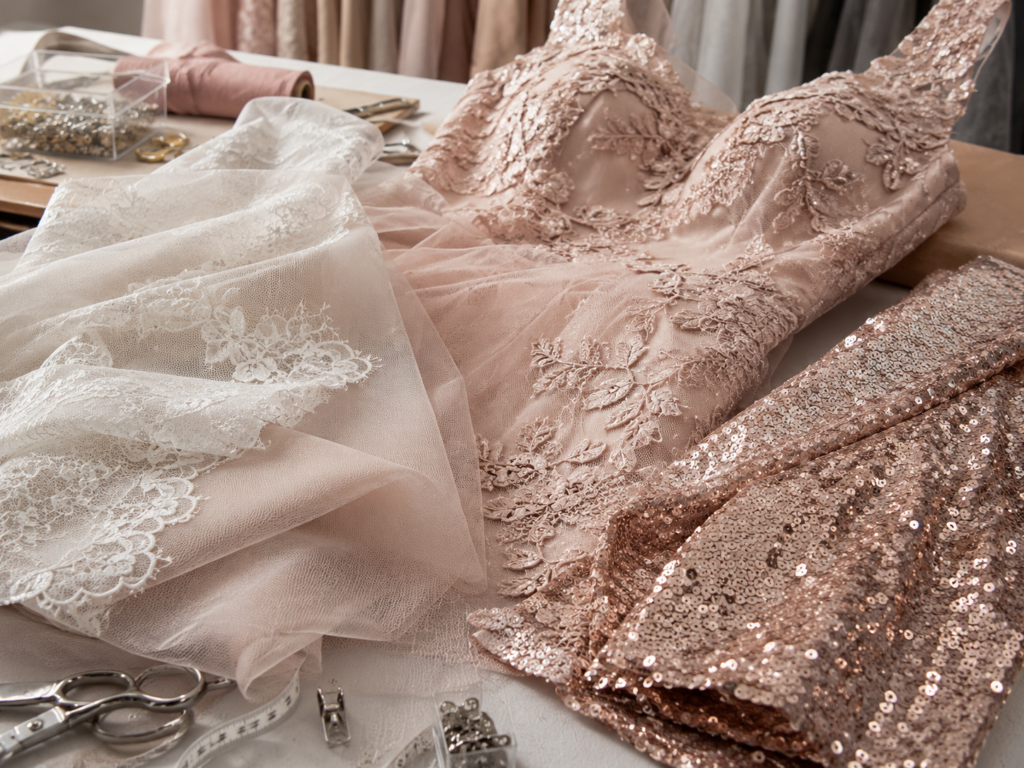
Sequin and metallic eventwear can create strong seasonal visual impact but need extra attention to abrasion, skin contact, seam thickness and packing. Velvet needs direction control and protection from pressure marks. Statement fabrics should be assigned to production units familiar with their handling rather than treated as ordinary woven fabric.

Control Eventwear Construction Before It Reaches Bulk
Strong eventwear can fail through small construction decisions: a corset cup that sits too high, a zipper that bows on satin, a mesh neckline that stretches, a ruched panel that loses symmetry, or a sequin seam that scratches the wearer. Jinfeng uses sample development to identify those issues while they can still be corrected in pattern, construction or material choice.
- Corsetry and Bust Support
Corset, strapless and deep-neckline dresses need a stable relationship between cup shape, under-bust position, boning, side coverage and waist tension. Adding boning alone does not create support. Pattern shape, fabric stability, lining and closure position must work together. Sample fitting should check standing, sitting and light movement so the neckline remains secure without excessive pressure. - Draping and Ruching
Draped and ruched styles depend on controlled fabric distribution. Uneven tension can pull side seams, distort waist placement or create bulk around zippers. Pattern pieces, grain direction and gathering ratios should be confirmed in the sample instead of adjusted by eye during production. Symmetry points can then be transferred into the sewing instruction for bulk control. - Cut-Out, Backless and Sheer Areas
Skin exposure needs both visual intent and wearability. Side coverage, neckline depth, armhole shape, lining edge, adhesive-friendly zones and strap position can affect whether the garment feels secure. Mesh inserts also need stretch and recovery checks because the same cut-out can widen after repeated pulling if fabric selection is too soft. - Embellishment and Trim Placement
Sequins, rhinestones, lace trims, chains, bows and decorative hardware can affect weight, balance and comfort. Placement should avoid high-friction zones where possible. Attachment strength, scratch risk, trim color and packing protection should be reviewed before PP approval, especially when the collection depends on statement details for photography.
Fit Eventwear for Appearance, Movement and Size Stability
Eventwear fit is more than matching a bust, waist and hip number. A garment must preserve the intended silhouette while handling movement, exposure, support and size grading. Mini lengths, strapless necklines, fitted hips, high slits and long hems all create fit risks that can become more visible in photography and returns if they are not resolved during sampling.
- Bust, Waist and Hip Balance
Bodycon, corset and fitted occasion styles rely on accurate distribution across bust, under-bust, waist and hip. Too much waist reduction can pull zippers or create side-seam twisting. Excess hip tension can lift mini hems or distort ruching. Fit comments should describe both measurement changes and the visual problem they are intended to solve. - Neckline, Strap and Armhole Security
Halter, one-shoulder, strapless, slip and backless products need specific control of neckline depth, strap length, upper-bust tension and armhole coverage. Fit should be checked from front, side and back, not only on a flat sample. Strap length or neckline corrections should then be recorded in the pattern and measurement file before the next sample round. - Length, Slit and Hem Balance
Mini dresses need safe wearable length under normal movement. Midi dresses depend on proportion between waist, hip, slit and hem. Maxi and floor-length eventwear needs total-length control and even hem balance around the body. Chiffon, satin and bias-influenced fabrics may change hanging behavior, so final length should be assessed in the actual fabric whenever possible. - Size Grading and Bulk Measurement
Bulk orders can be distributed across multiple sizes according to the approved brand size chart and size ratio. Grading rules should preserve neckline coverage, waist placement, hip ease and length relationships instead of scaling every measurement mechanically. Measurement QC during bulk should focus on style-critical points, especially for fitted or structured eventwear.


Run 10-30 Styles Through a Structured Sampling System
Multi-style sampling becomes inefficient when every style is treated as equally urgent. Jinfeng groups samples by launch priority, fabric readiness, pattern difficulty and trim complexity so photography pieces, hero SKUs and high-risk constructions receive attention earlier. Revision records then keep approved changes visible as the project moves toward PP.
- Style and Fabric Grouping
A 20-style program may contain several satin dresses, a mesh party group, lace occasion styles and structured corset pieces. Grouping by fabric and construction helps identify shared sourcing decisions while still keeping each style’s own fit and risk controls. Styles using special trims or custom-dyed materials should be separated from styles that can start from readily available development materials.
- Sample Priority
Priority can be set by launch date, hero SKU, photography need, material availability and construction risk. A hero sequin dress needed for a campaign may move earlier than a supporting crepe midi. A complex corset can also start earlier because additional fit corrections are more likely. The purpose is not to promise every sample at the same speed, but to protect the collection’s critical path.
- Sample Types and Timing
Regular dress samples are commonly planned around 10-15 days after development requirements and workable materials are confirmed. Complex corset, sequin, lace and mesh styles may take around 15-25 days or require project-specific timing. A collection may use first samples, fit samples, revised samples, photo-ready samples, salesman samples and PP samples depending on the brand’s launch process.
- Revision Tracking
Each revision should record pattern changes, measurements, fabric or trim changes, construction updates and approval status. Clear revision history prevents an earlier comment from returning in later samples and helps production teams understand which version is the final standard. The PP sample then becomes the manufacturing reference together with the approved pattern, size chart, BOM and packing instructions.
Work Backward From the Collection Launch Window

Development Window
Collection brief, line sheet, reference images, tech packs, fabric direction and key quantities are reviewed first.
High-risk styles and hero pieces are identified before pattern and sample work begins.

Approval Window
First samples move through fit comments, revised samples and photo-ready approvals where required.
PP samples lock fabric, color, construction, measurements, trims, labels and packing requirements before production allocation.
Production Window

Transfer Approved Samples Into Repeatable Bulk Standards
Sample approval only creates value when the approved information reaches production without gaps. Jinfeng transfers final pattern files, measurement standards, fabric references, trim details, sewing instructions, label positions, packing requirements and QC points into the production handover. The goal is to prevent a strong development sample from becoming a different garment once bulk production starts.
- Final Pattern and Measurement Lock
Fit corrections are transferred to the final pattern and size specification. Critical measurements such as bust, waist, hip, dress length, strap length, neckline depth, slit height and jumpsuit rise are identified for production and QC where relevant. - Fabric, Trim and Construction Lock
Fabric quality, color, lining, zipper, cups, boning, decorative trims and construction methods are confirmed against the approved sample. Late changes can affect cost, lead time and fit, so any post-PP revision should be reviewed as a controlled change rather than an informal production note. - Label, Packing and QC Handover
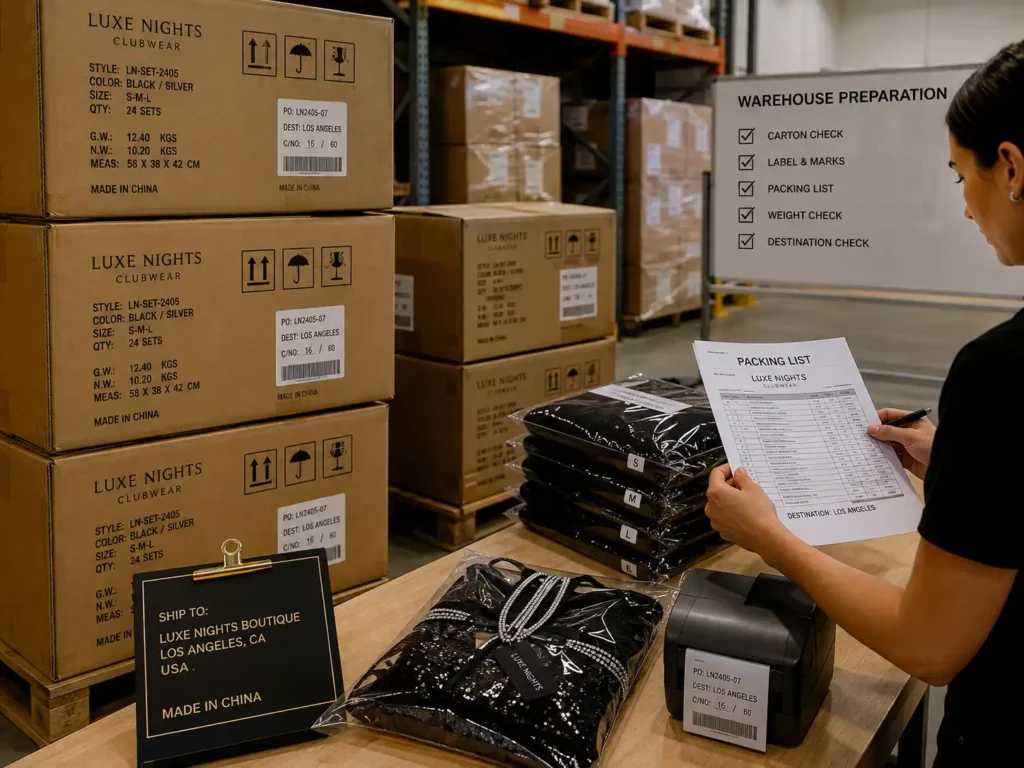
Woven labels, care labels, size labels, hangtags, barcodes, SKU labels, polybags and carton marks need the same level of version control as garment details. QC checklists should reflect product-specific risk rather than rely on one generic inspection list for every style.a
Manage Multi-Style Bulk Production Without Losing Control
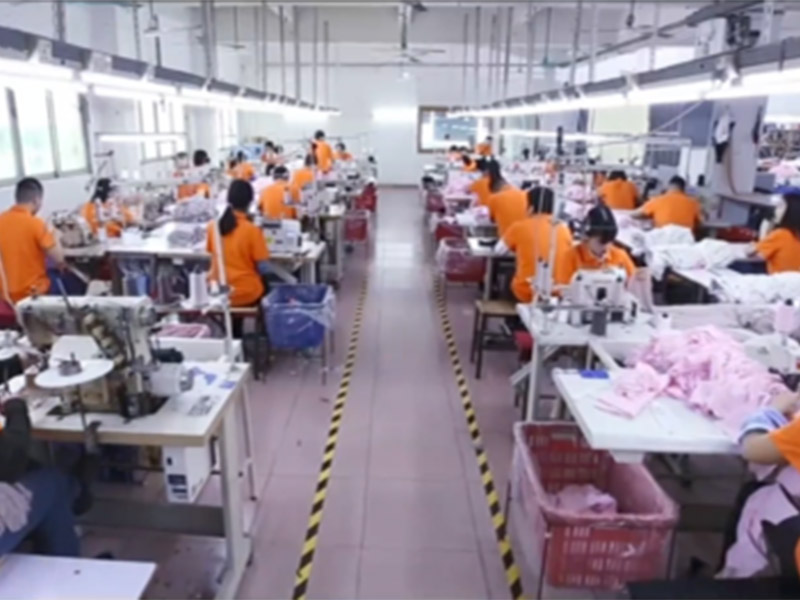
A seasonal eventwear order can contain different fabrics, size ratios, colors, trims and levels of complexity. Jinfeng manages multi-style production by grouping styles around material behavior and production risk, then allocating them to suitable production units. Progress and QC are followed by style group so one delayed trim or difficult construction does not hide the status of the rest of the collection.
Fabric and Complexity Groups
Satin, chiffon, mesh, lace, sequin, stretch knit and structured woven styles are not scheduled as if they behave the same.
Material arrival, cutting method, sewing difficulty, pressing and packing needs influence the sequence. Complex styles are kept visible in the schedule because they usually require more process control than straightforward commercial dresses.
Launch Priority and Production Allocation
Hero styles, campaign pieces or early-launch colors can receive higher scheduling priority when materials and approvals are ready. Production allocation considers whether a style is woven, stretch, evening, party, lace, sequin or repeat-order work. Jinfeng’s owned factories and long-term production partners are coordinated under common project and QC standards rather than used as an uncontrolled overflow system.
Production Progress Tracking
Key programs can be followed through material arrival, cutting, sewing, inline inspection, finishing, packing and shipment preparation. When a problem appears, the affected style can be isolated and corrected before the same issue spreads across the full order. Revision and approval records help merchandising and product teams understand whether a delay comes from material, fit, trim or production execution.
Multi-Color and SKU Control
Seasonal eventwear often includes several colors and size breaks. Fabric batches, shade references, size labels, barcode data, SKU lists and carton marks should remain linked to the correct style/color combination. The production plan should therefore treat color and packing control as part of the collection system, not as an afterthought at the end of sewing.
Allocate Eventwear to the Right Production Strength

Woven Occasion and Satin
Party, Mesh and Sequin

Stretch and Coordinated Products
Apply Product-Specific QC Across the Entire Collection

Satin Surface and Color
QC reviews shade consistency, snagging, shine direction, seam impression, zipper flatness, pressing and packing creases.Satin garments should be protected through handling because defects can appear after sewing even when incoming fabric looked acceptable.

Mesh, Lace and Transparency

Sequin and Embellishment

Fit and Measurement

Construction and Finishing
Inline checks look for seam balance, ruching symmetry, zipper position, lining exposure, slit construction, neckline stability and left-right consistency.
Pressing is reviewed according to fabric behavior so formal and satin styles do not leave the finishing area with unwanted shine or marks.

Packing and Shipment Readiness
Final checks can include labels, barcodes, SKU stickers, polybags, carton marks, size/color breakdown and shipment documentation.
Packing methods are adjusted for long hems, sequins, satin and other surfaces that can crease or damage under pressure.
Prepare Eventwear for Private Label and Retail Delivery

Brand Labels

Ecommerce SKU Packing
Retail and Warehouse Cartons

Brand File Protection
Keep Seasonal Launches Moving With Planned Shipping Options
Planned Bulk Shipment
Priority and Split Shipment
Seasonal Eventwear Programs Managed at Collection Scale

US Occasionwear Seasonal Program

UK Wedding Guest and Cocktail Collection
An anonymous UK premium ecommerce brand developed a 14-style wedding guest and cocktail collection of around 26,000 pieces.
The assortment combined matte satin, lace, crepe and soft lining across midi, one-shoulder, slip and structured cocktail silhouettes.
Main development issues included lace motif placement, lining color, satin drape, shoulder stability, slit height and consistent midi proportions across sizes. First samples moved into revised samples and PP approvals with separate comments for fit, fabric behavior and photo appearance. Jinfeng matched lining colors, adjusted lace positioning, corrected shoulder and waist balance, and transferred final measurement and construction notes into bulk. Barcode, SKU and packing files were coordinated for ecommerce receiving.
Stronger-selling silhouettes were kept on record for new-color development after the first season.

US Multi-Style Private Label Eventwear Program
An anonymous US large private-label apparel program combined 24 eventwear styles and approximately 58,000 pieces across satin, mesh, jersey, lace, sequin and crepe.
The project required several production paths because a stretch bodycon style could not be controlled in the same way as a sequin mini or a satin evening dress. Sample approvals, fabric batches, trim readiness, size ratios, barcode data and packing files all needed synchronized tracking. Jinfeng organized styles by fabric group, complexity and launch priority, then allocated bulk production according to product strength. Mesh and sequin groups received stronger hole, stretch and embellishment checks; satin groups focused on shade, zipper and pressing; fitted stretch styles focused on recovery and measurement stability. The collection was packed under one private-label system and prepared for phased shipment, allowing priority styles to move first while the remaining bulk followed the planned schedule.
Plan MOQ, Colors and Repeat Orders as One Program
Multi-Style Quantity Planning
Color Story Planning
Size Ratio Planning
Bulk quantities can be distributed across multiple sizes according to the approved size chart and size ratio. Size planning should consider target-market demand, fit risk and carton requirements. Fitted eventwear needs especially careful grading so neckline, bust, waist, hip and length relationships remain balanced across sizes.
Repeat and Bestseller Expansion
Seasonal Eventwear Collections Frequently Asked Questions
Jinfeng Apparel’s standard MOQ starts from 200 pcs per style/color. A multi-style program can be developed as one coordinated project, but the total order is not treated as one combined MOQ across unrelated styles and colors. Special fabrics, custom dyeing, printing, trims or packaging may have separate supplier requirements.
Yes. Multi-style projects can be grouped by fabric, construction difficulty, launch priority, trim group and sample status. The exact number of styles moving in parallel depends on material readiness, sample complexity, approval speed and the requested launch calendar.
Brands can provide a line sheet, tech pack, reference image, original sample, sketch, size chart, BOM, fabric direction, label artwork and packing requirements. An initial review can identify missing information, style risk, sample priority and the next development step.
Regular dress samples are commonly planned around 10-15 days after workable development details and materials are confirmed. Complex corset, mesh, lace, sequin and heavily detailed styles may require around 15-25 days or project-specific timing. Additional revisions, custom materials or special trims can extend the schedule.
Yes. Depending on the program, sample stages can include first sample, fit sample, revised sample, photo-ready sample, salesman sample and PP sample. Photo samples focus on launch appearance, while PP samples lock the bulk production standard for fabric, construction, measurements, trims, labels and packing.
Styles can be grouped into satin, chiffon, mesh, lace, sequin, stretch knit or other material families. Each group receives material-specific controls for cutting, sewing, pressing and QC. Shared fabric groups can improve coordination, but each style still retains its own fit and construction standard.
Yes. Jinfeng supports mini, midi, maxi and floor-length dresses together with jumpsuits and matching sets. Lengths are managed according to their own fit and QC risks, including mini length safety, midi proportion and slit position, and maxi hem balance and packing.
Yes. Projects can include woven labels, size labels, care labels, hangtags, barcode stickers, SKU labels, polybags, carton marks and warehouse labels. Packaging artwork and data should be confirmed early enough to match the production and receiving schedule.
Bulk control can include incoming material checks, cutting checks, sewing and inline inspection, garment measurement, finishing, pressing, packing QC and client inspection support. Inspection points are adjusted to style-specific risks such as satin snagging, mesh holes, lace placement, sequin loss or fit measurements.
Yes. Pattern files, measurement records, fabric references, trim details, production notes and packing requirements can be retained for repeat programs. New colors, new fabrics or design changes are reviewed again before production so later orders remain controlled rather than relying only on old records.

Start Your Next Seasonal Eventwear Collection
A useful project review starts with enough information to understand the assortment, not with a generic request for a unit price. Send the collection brief, line sheet or reference styles together with the intended quantities and launch window. Jinfeng can then review product groups, fabric direction, style risk, sample priority, MOQ fit, private-label requirements and the production path needed to move the collection toward approval and bulk.
Please include where available:
- Line sheet, tech pack, sketches, reference images or original sample photos
- Estimated quantity per style/color and planned number of styles
- Fabric direction, color story and special trim requirements
- Brand size chart and expected size ratio
- Photo-ready or salesman sample requirements
- Label, barcode, SKU, polybag and carton instructions
- Target launch date and preferred delivery arrangement
- QC manual, measurement tolerance or inspection requirements for established programs


