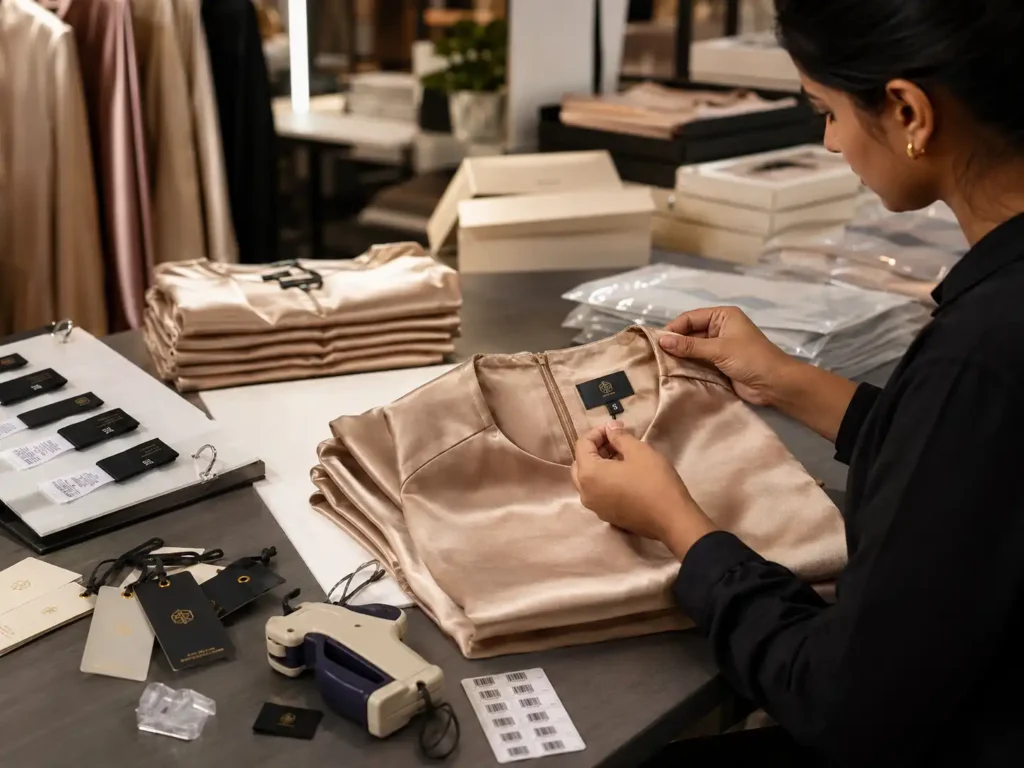
Satin Top Manufacturer for Occasionwear Brands

Custom Satin Tops Developed for Refined Occasionwear Collections

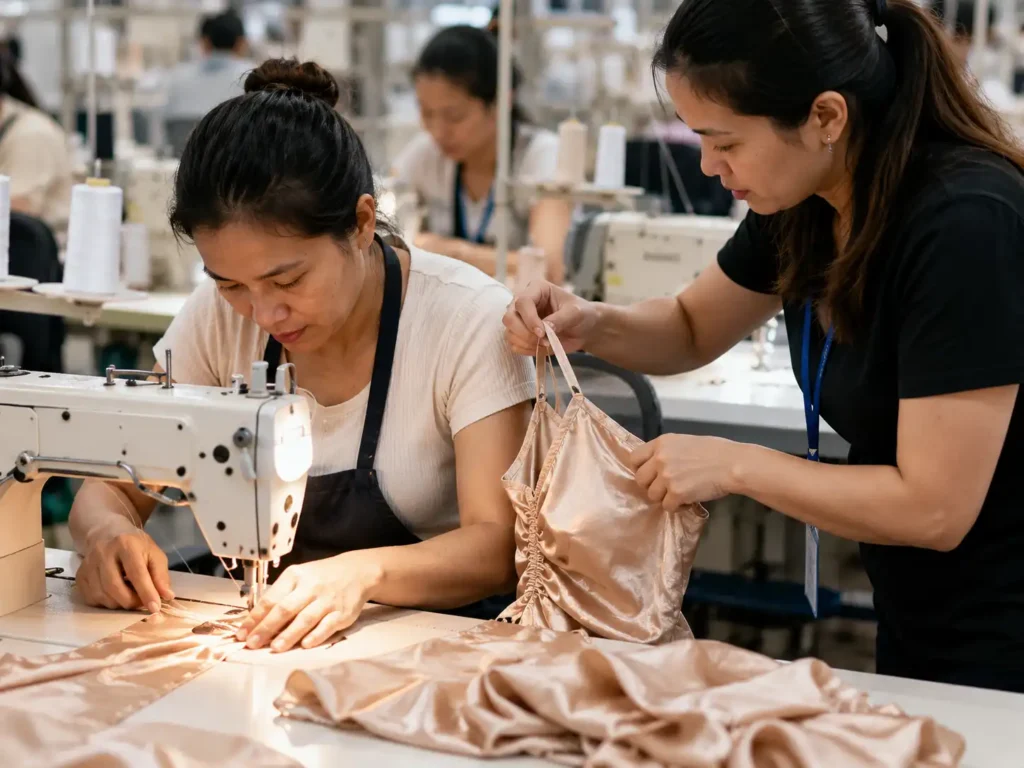
Jinfeng Apparel develops draped, fitted, corset-inspired, halter, strapless, and asymmetric satin tops for established occasionwear labels and multi-style womenswear programs. Development covers fabric direction, pattern correction, structured support, sample revision, PP approval, bulk production, satin-specific quality control, private-label packing, and export coordination.

  • Since 2008, with 6 owned women’s fashion factories and 10+ long-term production partners.
  • 2 sample rooms, 7+ senior pattern makers, and 20+ sample machinists support complex top development.
  • 100,000+ pieces of monthly capacity across women’s fashion categories.
  • MOQ starts from 200 pieces per style and color, subject to fabric, trims, construction, and packing requirements.

Manufacturing Capacity Behind Your Satin Top Program

A satin top program needs more than a sewing line. Product development, fabric control, pattern engineering, inline checking, pressing, packing, and delivery records must work as one system. Jinfeng Apparel assigns each project according to style structure, satin type, order scale, color plan, launch timing, and quality requirements.

Development Team

Two sample rooms, 7+ senior pattern makers, and 20+ sample machinists support style review, fabric trials, first samples, revised samples, fit samples, photo-ready samples, PP samples, and Golden Sample control. Complex necklines, internal cups, boning, narrow straps, tie backs, bias-cut panels, and asymmetric constructions are evaluated before bulk production.

Production Network

Six owned women’s fashion factories and more than 10 long-term production partners support dresses, tops, skirts, jumpsuits, matching sets, occasionwear, and private-label programs. Production allocation depends on fabric behavior, construction difficulty, order quantity, repeat-order history, required finishing, and delivery schedule rather than a one-line-fits-all approach.

Quality Management

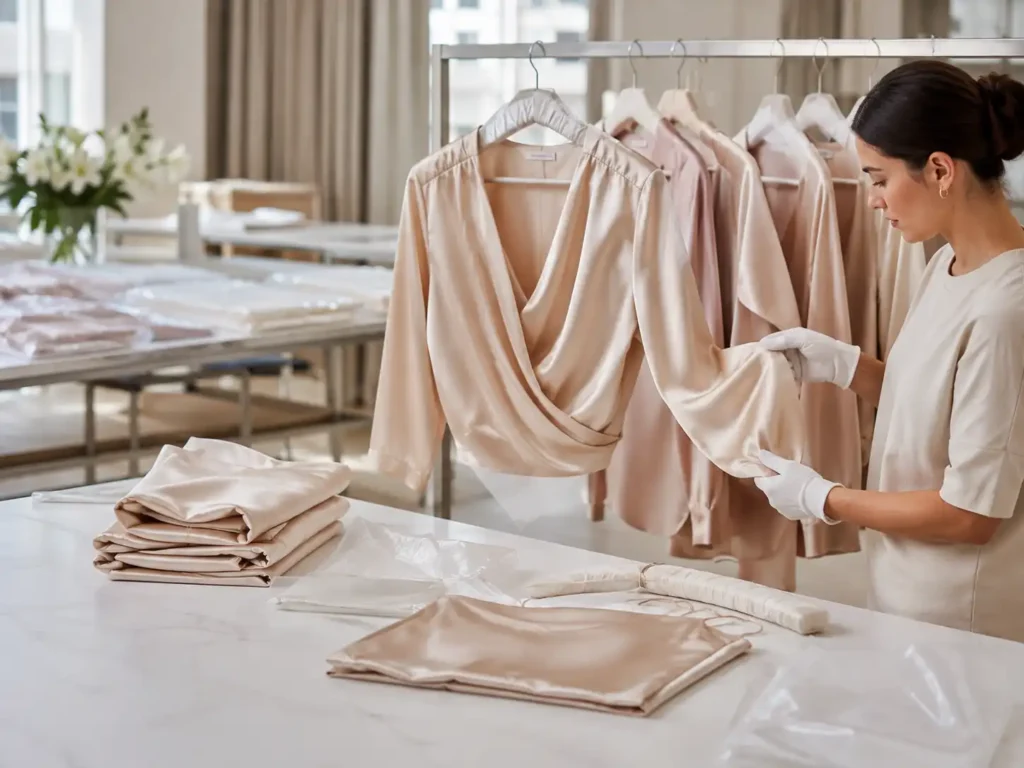
A 15+ member QC team supports material inspection, cut-panel review, inline checks, key measurement control, final appearance inspection, packing verification, and inspection coordination. Satin-specific checkpoints cover shine direction, shade variation, snagging, seam puckering, needle marks, zipper flatness, pressing marks, stains, and crease-safe packing.

Built for Established Occasionwear Product Teams

Jinfeng Apparel is structured for brands with clear product direction, professional sampling requirements, and planned bulk production. The strongest fit comes from teams developing coordinated evening, cocktail, wedding guest, holiday, party, or event-led collections rather than ready-stock sourcing.

Best-Fit Programs

Suitable programs usually include a tech pack, reference sample, line sheet, design sketch, or defined product brief. The production model works well for occasionwear labels, premium ecommerce fashion brands, sourcing teams, product developers, private-label programs, regional fashion groups, and retailers planning multi-style seasonal assortments with controlled branding and delivery requirements.
  • Clear launch calendar and target market
  • Defined style, color, and size plan
  • Professional sample budget
  • Bulk production plan
  • Private-label or retail-ready packing needs
  • Potential for seasonal repeats or color extensions

Production Boundaries

Jinfeng Apparel does not operate as a ready-stock wholesaler, dropshipping source, single-piece fulfillment service, or no-MOQ supplier. The manufacturing process is designed around custom development, sample confirmation, production planning, controlled bulk execution, brand packing, and shipment coordination. Projects focused only on the lowest unit price, without clear product specifications or production planning, are not a suitable match.
  • MOQ starts from 200 pieces per style and color
  • Multiple styles do not combine into one 200-piece MOQ
  • Custom dyeing and special trims may require higher supplier MOQ
  • Sample development is charged separately
  • Bulk production starts after required approvals

Where Satin Top Programs Commonly Lose Quality

Satin exposes small production errors immediately. A strong design can lose its retail value through the wrong weight, uncontrolled shine direction, unstable bust fit, rough pressing, or poor packing. Jinfeng Apparel identifies the main risk points during fabric selection, pattern development, sample review, and pre-production preparation.

Wrong Satin Choice

A fabric selected only from a screen image may look too bright, too thin, too stiff, or too fluid once made into a garment. Weight, surface, stretch, transparency, drape, color depth, lining interaction, and construction requirements must be reviewed together. A structured bustier top and a fluid cowl-neck top normally need different satin directions.

Collapsed Necklines

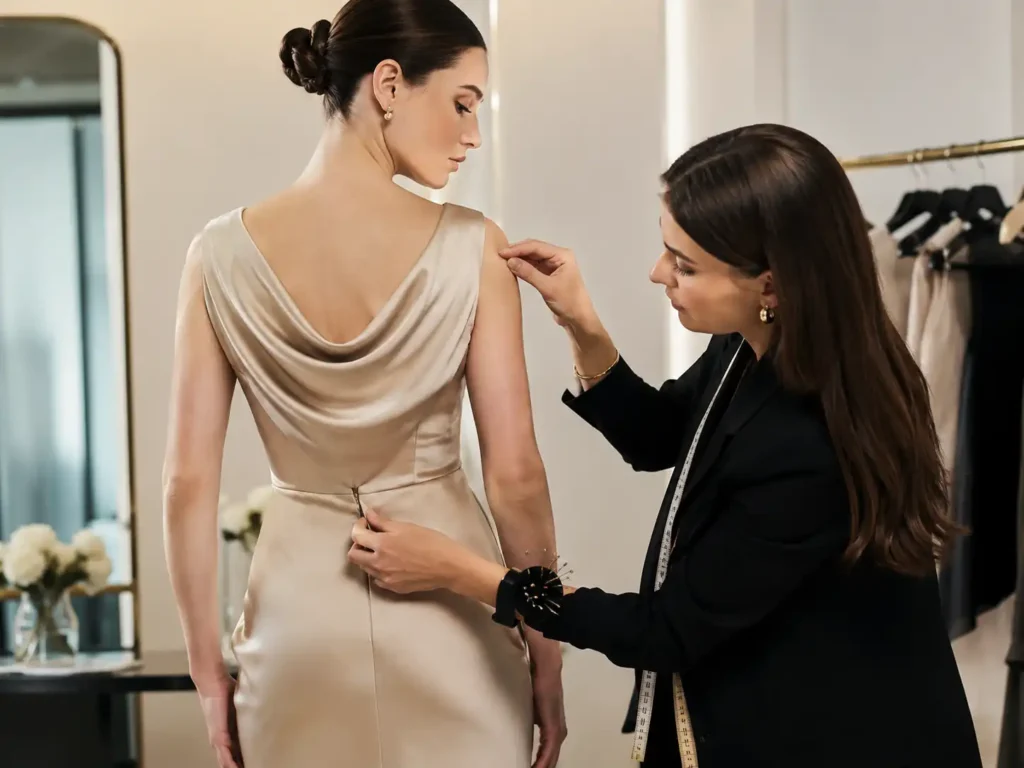
Cowl necklines can collapse, gape, twist, or expose too much when bias direction, neckline depth, facing, strap placement, and fabric weight are not balanced. Jinfeng Apparel reviews the drape on the body, not only on a hanger, then adjusts pattern shape, grain direction, internal support, and finishing before approval.

Unstable Bust Fit

Strapless, corset, bustier, halter, and cut-out tops need controlled upper bust, underbust, cup position, side seam, armhole, strap length, and closure tension. A visually attractive sample still fails when support changes across sizes or movement causes gaping. Fit comments are converted into revised patterns and measurement controls.

Puckered Seams

Lightweight satin can shift during cutting and react badly to unsuitable needle size, thread tension, seam allowance, feed control, or pressing. Puckered side seams, rippled zippers, twisted hems, and visible needle holes lower perceived value. Sewing trials and inline review help establish the correct method before full-line production.

Sample-Bulk Differences

Bulk failure often begins when the approved sample is not translated into final pattern, fabric reference, trim record, measurement chart, sewing instruction, and packing standard. Jinfeng Apparel controls the transition through PP approval, Golden Sample reference, production instructions, inline checking, and recorded corrective action.

Missed Launch Windows

Occasionwear calendars are sensitive to wedding season, graduation, holiday, party, and campaign dates. Delays can begin with late fabric booking, unresolved color approval, repeated fit changes, custom trim development, or incomplete packing files. Project schedules are built around approvals, material readiness, QC windows, packing time, and shipment planning.

Satin Top Styles for Occasionwear Collections

Jinfeng Apparel develops satin tops as collection pieces rather than isolated basics. Each style is reviewed for visual impact, body coverage, support, fabric behavior, size grading, closure, lining, and pairing potential with skirts, trousers, or matching sets.

Cowl-Neck Satin Tops

Cowl-neck tops depend on controlled drape rather than excess fabric. Development focuses on neckline depth, bias direction, chest coverage, strap position, side seam balance, and hem weight. Lightweight or medium-weight satin is selected according to the desired fold definition. Sample review includes front movement, side view, bra visibility, and neckline recovery after wear.

Halter Satin Tops

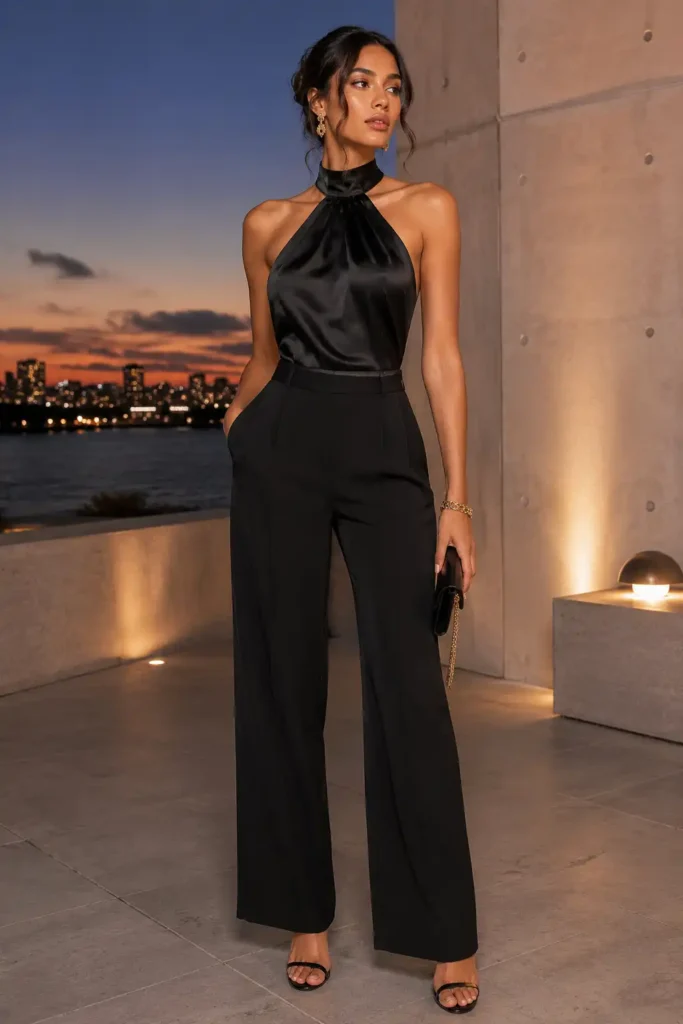
Halter tops require a stable neckline, suitable neck tension, secure back closure, and controlled armhole coverage. Pattern work checks strap length, neck drop, upper bust, underarm exposure, and back shape. For heavier satin or structured designs, support may be distributed through wider ties, internal tape, lining, cups, or reinforced closures to reduce neck pressure.

Corset Satin Tops

Corset satin tops combine outer appearance with internal engineering. Key elements include cup position, boning length, boning channel placement, waist shaping, side seam control, lining strength, zipper flatness, and top-edge stability. Satin must remain smooth over structured layers without showing excessive ridges, seam impressions, or pulling around the bust and waist.

Bustier Satin Tops

Bustier tops normally use shorter structured lines than full corsets while still requiring bust support and secure fit. Development may include fixed cups, removable pads, underwire by project, flexible boning, hook-and-eye reinforcement, elastic support, or silicone grip. Fit is reviewed for upper-bust contact, cup volume, center-front position, comfort, and size-to-size stability.

Strapless Satin Tops

Strapless designs need enough hold to remain secure without excessive compression. Jinfeng Apparel reviews top-edge shape, anti-slip options, internal support, side seam tension, underbust position, zipper placement, and hem level. Sample testing includes arm movement, sitting, standing, and repeated dressing to check slippage, gaping, and visible distortion.

One-Shoulder Satin Tops

One-shoulder tops require controlled asymmetry. The pattern must balance neckline angle, shoulder tension, bust level, armhole shape, side seam position, and hem line. Satin can magnify twisting or uneven drape, so sample measurements and left-right visual checks are recorded carefully before grading and bulk production.

Draped Satin Blouses

Draped blouses may use gathers, pleats, wrap panels, scarf ties, batwing sleeves, or soft peplum shaping. Construction needs enough internal stability to preserve the intended line while keeping a fluid appearance. Jinfeng Apparel reviews fold placement, gather distribution, sleeve balance, neckline facing, closure access, and how the garment returns after packing.

Asymmetric Satin Tops

Asymmetric hems, cut-outs, angled necklines, side drapes, and uneven strap arrangements create strong occasionwear silhouettes but reduce tolerance for pattern imbalance. Development focuses on anchor points, weight distribution, body coverage, closure position, and finished edge control. Bulk checking compares key visual points against the approved sample rather than relying only on standard measurements.

Build Coordinated Satin Occasionwear Collections

Satin tops create more value when designed as part of a coordinated assortment. Jinfeng Apparel can align fabric, color, structure, fit, labels, and packing across tops, skirts, trousers, jumpsuits, and occasion dresses while keeping each garment commercially usable on its own.

Top and Skirt Sets

A satin top can pair with mini, midi, maxi, bias-cut, draped, or slit skirts. Development controls waistline placement, exposed midriff distance, top length, skirt rise, color-batch consistency, zipper appearance, size pairing, and set packing. Tops and skirts can be sold as one coordinated SKU or as separate pieces with a shared color story.

Evening Separates

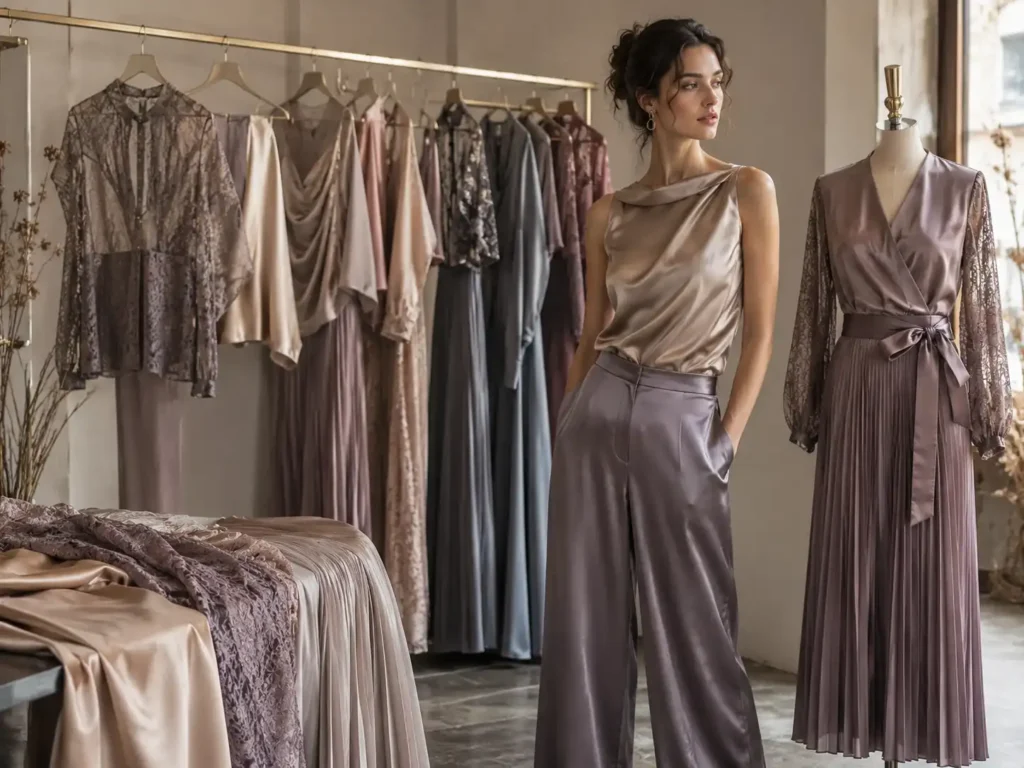
Evening separates allow brands to build multiple outfits from fewer core fabrics. Satin tops can be paired with wide-leg trousers, tailored skirts, crepe bottoms, sequin pieces, or layered mesh. Fabric contrast, hem proportion, body coverage, and styling flexibility are considered during sample review so the collection works in campaign imagery and real wear.

Mixed-Fabric Capsules

Satin can be combined with lace, mesh, crepe, sequin, chiffon, jersey, or suiting. Material mixing needs careful control of weight, stretch, shrinkage, surface friction, lining, seam allowance, and pressing temperature. The goal is a coherent collection without creating avoidable bulk-production risk at each fabric transition.
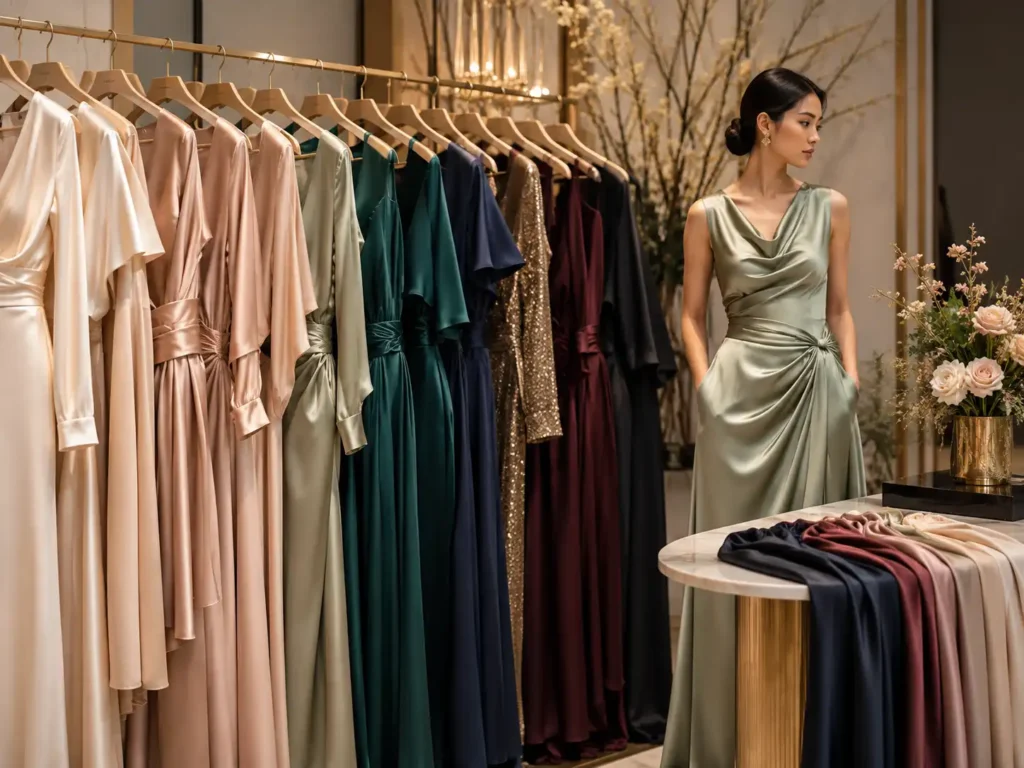
Seasonal Color Stories

Occasionwear often relies on black, ivory, champagne, chocolate, navy, burgundy, jewel tones, soft pastels, and holiday metallic effects. Satin reflects light differently across colors, so Pantone references, physical swatches, lab dips, lighting conditions, lining color, and bulk dye-lot approval are reviewed before production. Core colors can be prioritized before extending into additional seasonal shades.

Satin Selection Guide for Occasion Tops

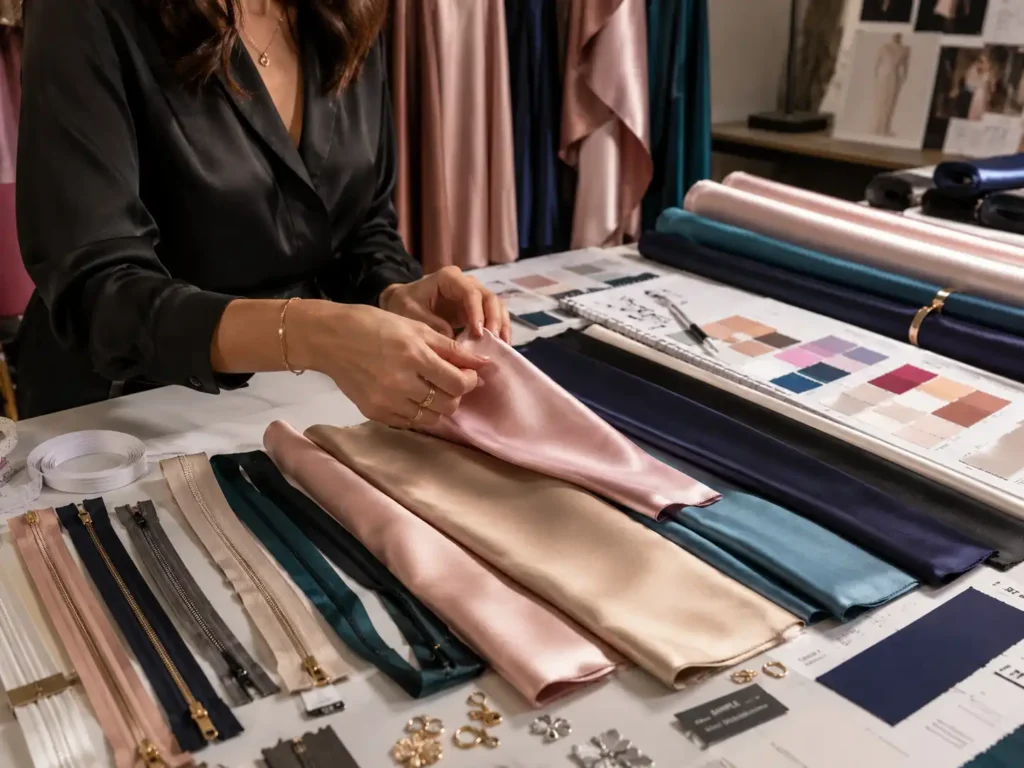
Satin selection starts with the garment structure and end use. Surface appearance alone is not enough. Jinfeng Apparel reviews composition, weight, width, stretch, recovery, transparency, hand feel, shine, drape, dye-lot risk, supplier MOQ, lead time, lining choice, and pressing behavior before recommending a development direction.

Satin DirectionBest UseDrape and SupportMain Production RiskDevelopment Focus
Matte SatinRefined blouses, one-shoulder tops, wedding guest separatesMedium drape with controlled shinePress marks, shade variation, seam impressionColor approval, seam flatness, pressing test
Stretch SatinFitted corset, bustier, strapless, body-skimming topsMedium support with stretchRecovery loss, seam tension, zipper ripplingStretch direction, pattern reduction, recovery check
Heavy SatinStructured bustier, sculpted neckline, premium evening topsHigh body and shape retentionBulk, stiffness, visible seam ridgesInternal structure, seam grading, pressing pressure
Lightweight Drapey SatinCowl neck, halter, wrap, fluid blouseHigh drape and movementSlippage, transparency, puckering, twistingGrain direction, lining, cutting control, hem balance
Satin-Back CrepeReversible design ideas, structured drape, cleaner matte contrastBalanced drape with textured reverseSurface mismatch, press response, edge controlFace-side confirmation, seam finish, styling intent
Charmeuse-Like SatinPremium camisoles, fluid evening separatesSoft hand and fluid drapeSnagging, needle marks, seam puckeringFine sewing method, handling protection, crease-safe packing

Control Satin Before Problems Reach Bulk Production

Prevention begins before cutting. Jinfeng Apparel sets fabric, pattern, sewing, pressing, and handling controls according to the approved satin and garment structure. Each risk has a defined inspection point and corrective route.

Shine Direction

Satin panels can appear as different colors when face direction or grain orientation changes. Marker planning and cut-panel control keep visible panels aligned according to the approved direction. Fronts, backs, sleeves, ties, peplums, and matching-set components are checked before bundling so reflected light remains consistent across the finished garment.

Shade Consistency

Color approval considers Pantone references, physical standards, lab dips, dye lots, lighting conditions, surface shine, lining color, and bulk fabric rolls. Roll-to-roll variation is identified before cutting, and panels are grouped to reduce visible shade difference within one garment. Multi-color programs use separate approval and tracking records for each color.

Snag Prevention

Fine satin can catch on rough tables, damaged tools, jewelry, sharp trim edges, or uncontrolled material movement. Handling areas, bundles, work-in-process transfer, and finished garments require surface protection. Inspection looks for pulled yarns, scratches, abrasions, pin damage, and small surface lines before pressing and packing.

Seam Puckering

Puckering is controlled through fabric trials, needle selection, thread choice, stitch length, tension, seam allowance, feed balance, and pressing method. Side seams, darts, princess lines, zipper seams, necklines, armholes, and narrow hems receive focused review. Corrective action is taken during production rather than leaving defects for final inspection.

Needle and Press Marks

Needle holes, shine marks, seam impressions, water spots, and crushed surfaces are highly visible on satin. Sewing and pressing tests establish a safe method. Pressing uses controlled temperature, pressure, moisture, support surface, and cooling time based on the approved fabric. Sensitive areas are checked under directional light.

Crease-Safe Handling

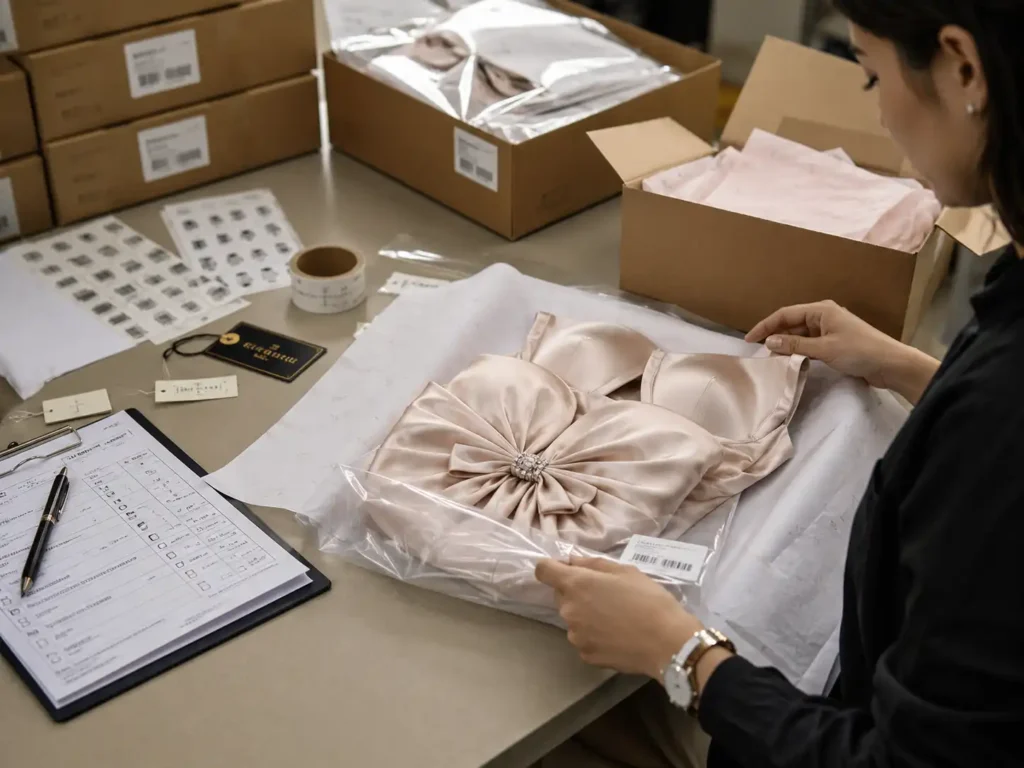
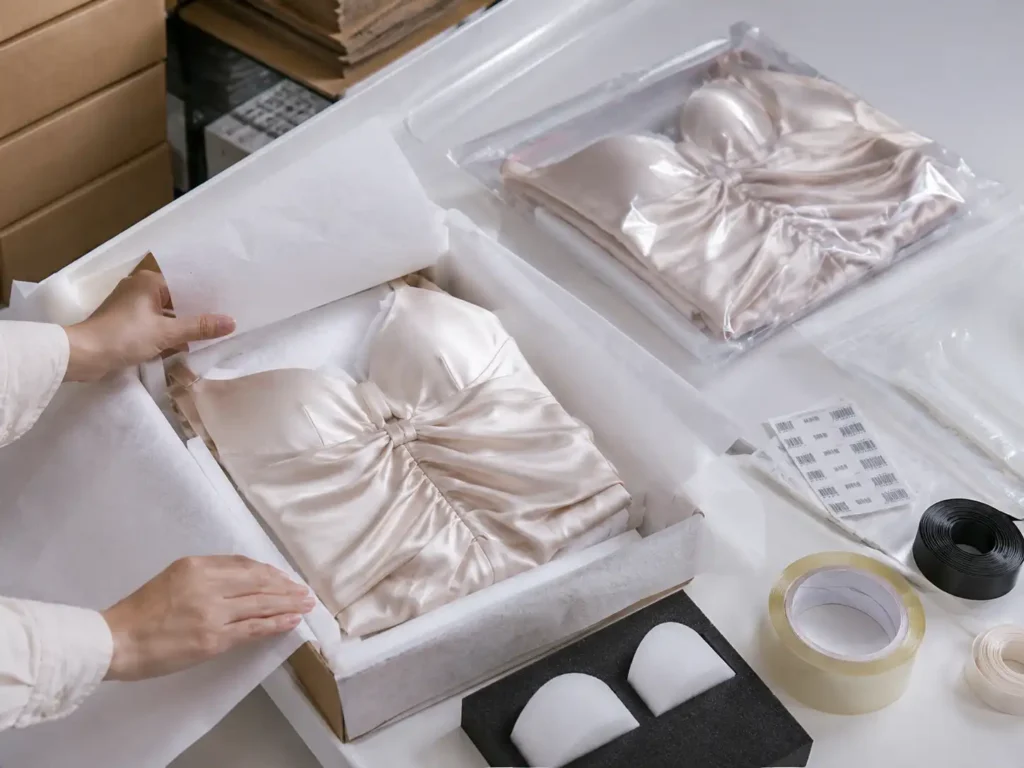
Garments can leave production in good condition and arrive with permanent fold lines if packing is too tight or performed before full cooling. Fold positions, tissue or protective layers, polybag size, carton pressure, garment count per carton, and transit mode are considered. Structured cups, bows, drapes, and statement details receive additional shape protection.

Custom Details for Distinctive Satin Occasion Tops

Design details shape visual identity, but every detail also changes pattern, sampling, labor, material use, QC, and packing. Jinfeng Apparel reviews appearance and production feasibility together so signature features remain controlled in bulk.

Cowl Depth

A shallow cowl reads polished and wearable; a deep cowl creates stronger evening impact but needs more coverage control. Pattern shape, bias direction, facing, internal stay, strap position, and garment length influence the final drape. Sample photos and body movement are reviewed before locking the neckline.

Adjustable Straps

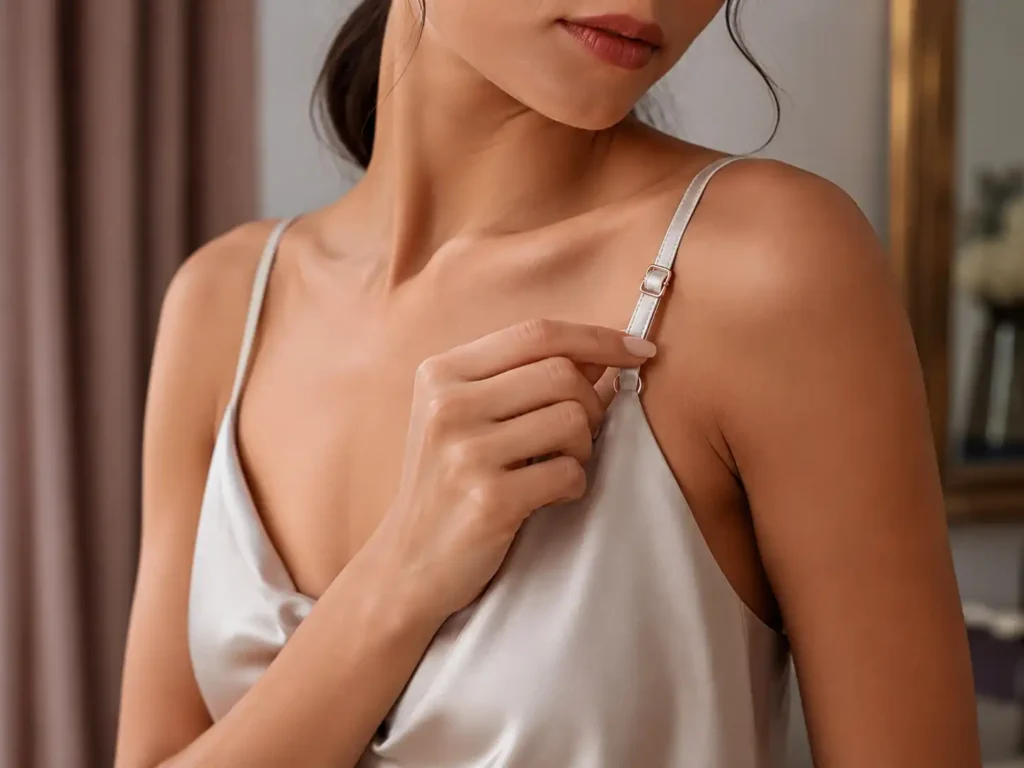
Adjustable straps improve fit flexibility but introduce slider quality, strap width, strap stretch, attachment strength, and skin-contact considerations. Strap length range is tested against the intended size chart. Metal or plastic hardware is selected by weight, finish, comfort, color, and bulk availability.

Cups and Boning

Fixed cups, removable pads, flexible boning, structured channels, underwire by project, and supportive lining can be added according to the design. Cup position, boning end protection, left-right symmetry, bust coverage, comfort, and pressure points are confirmed during sample fitting before grading.

Ruching and Gathers

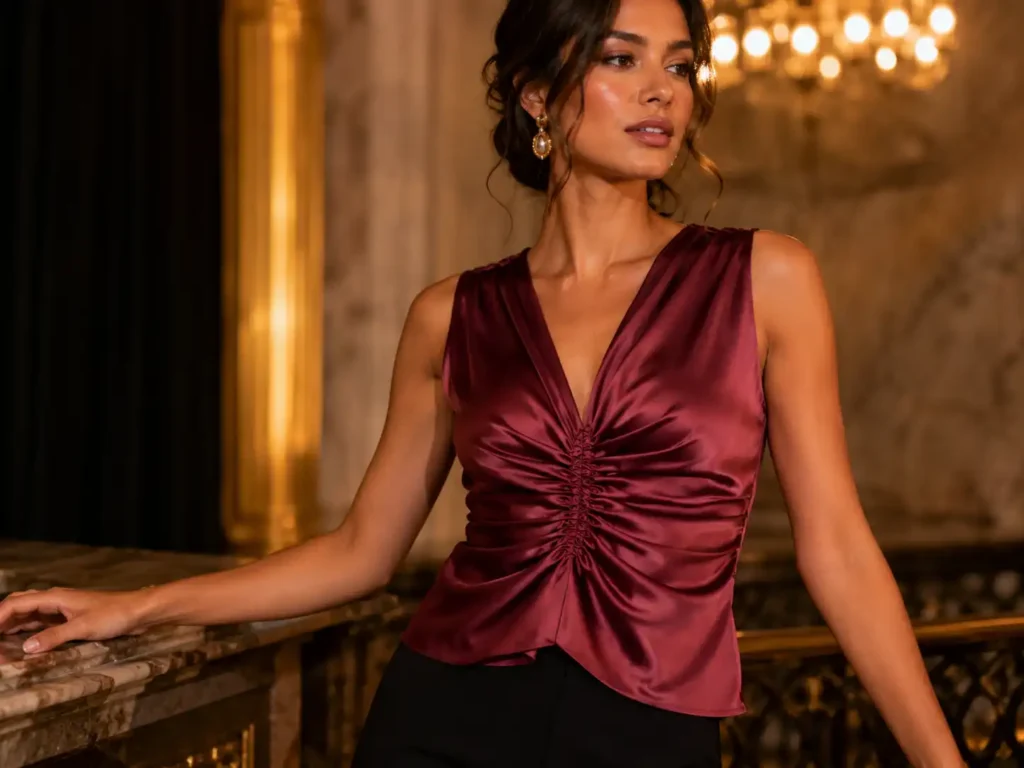
Ruching can shape the bust, waist, side seam, or center front while adding visual texture. Bulk quality depends on stitch control, elastic tension where used, gather distribution, panel length, and left-right symmetry. Approved gather placement is recorded so volume does not vary across production.

Tie-Back Structures

Tie backs allow fit adjustment and create an occasion-led visual feature. Tie length, width, reinforcement, turning quality, edge smoothness, knot volume, and back coverage are reviewed. Heavy satin may create bulky knots, while light satin may need stabilization to avoid twisting or collapse.

Bows and Statements

Large bows, scarf ties, rosettes, draped panels, and sculptural details need controlled shape, attachment, direction, and packing support. The approved appearance is translated into placement measurements and construction notes. Shape retention is checked after folding and transit simulation where required.

Cut-Out Details

Cut-outs must remain stable across movement and size grading. Pattern development controls opening position, edge reinforcement, lining exposure, stretch, body coverage, and symmetry. The final shape is checked on-body, because a flat pattern can appear balanced while shifting significantly during wear.

Closure Options

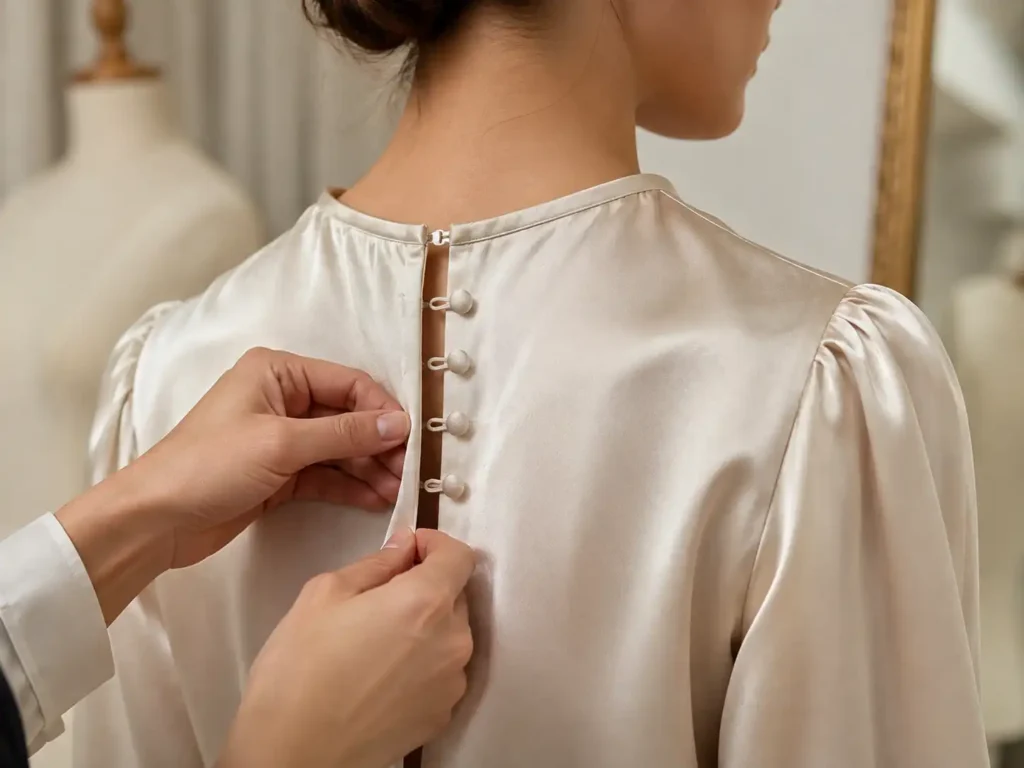
Invisible zippers, exposed zippers, hooks and eyes, covered buttons, tie closures, and pull-on constructions affect fit and appearance. Zipper color, length, tape weight, smoothness, top closure, seam flatness, and skin comfort are reviewed. Light satin requires particular care to avoid zipper bulging or back-seam distortion.

Engineer Fit Around Bust, Neckline, and Support
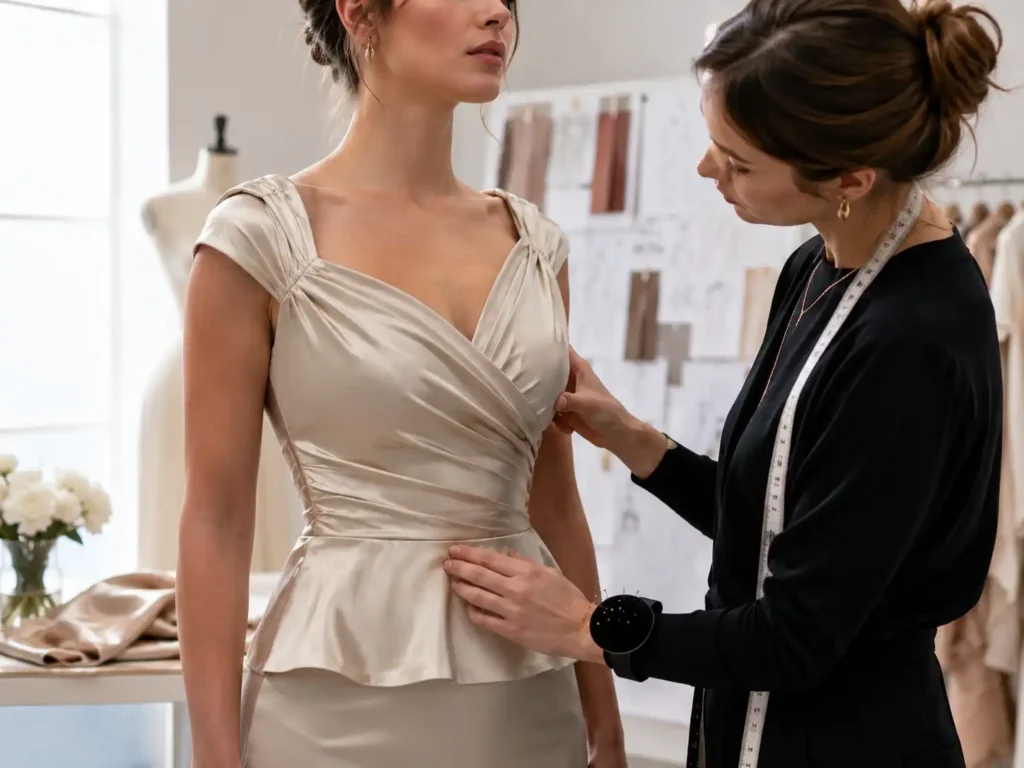
Occasion tops carry fit risk in a concentrated area. Bust coverage, neckline stability, strap position, armhole shape, underbust control, and hem placement must work together across the size range. Jinfeng Apparel uses sample fittings, measurement review, pattern correction, grade rules, and production checks to turn visual intent into repeatable fit.

Bust Coverage

Upper bust, full bust, underbust, cup position, center front, and side coverage are reviewed according to the intended neckline. Structured styles may need cups, boning, stable lining, or anti-slip support. Fluid styles may need internal stays or adjusted drape depth. Coverage is evaluated in front, side, and movement views.

Neckline Stability

Cowl, halter, one-shoulder, strapless, sweetheart, and asymmetric necklines behave differently in satin. Neck drop, edge stretch, facing, lining, stay tape, strap tension, and closure placement are checked during sample review. Stability should preserve the intended line without creating pulling, gaping, or uncomfortable pressure.

Underbust Position

The underbust line controls support and visual proportion in corset and bustier designs. Incorrect placement can flatten the bust, lift the garment, distort the waist, or create pressure. Pattern correction considers cup volume, body length, boning, seam shaping, and the relationship between underbust and hem.

Strap Length

Strap length affects neckline height, bust support, armhole coverage, and overall balance. Fixed straps require accurate measurement and grading; adjustable straps need a suitable adjustment range. Sample review includes slippage, twisting, hardware position, pressure, and whether straps remain visually aligned after movement.

Armhole Coverage

Low armholes can expose undergarments or create side-bust gaping, while high armholes can restrict movement or cut into the body. Armhole depth, shape, binding, facing, lining, and strap position are reviewed together. Key measurements are recorded for sample approval and bulk control.

Waist and Hem Placement

Crop length, waist shaping, peplum position, and hem level determine how the top works with skirts or trousers. Jinfeng Apparel checks exposed midriff distance, body length, side seam balance, front-back hem level, and size grading. Matching sets are reviewed as complete outfits rather than separate flat garments.

Workmanship That Keeps Satin Clean and Refined

Fine workmanship on satin is visible in the way surfaces remain smooth, edges stay controlled, and internal structure does not disturb the outer face. Production instructions are built around the approved fabric and sample rather than generic sewing methods.
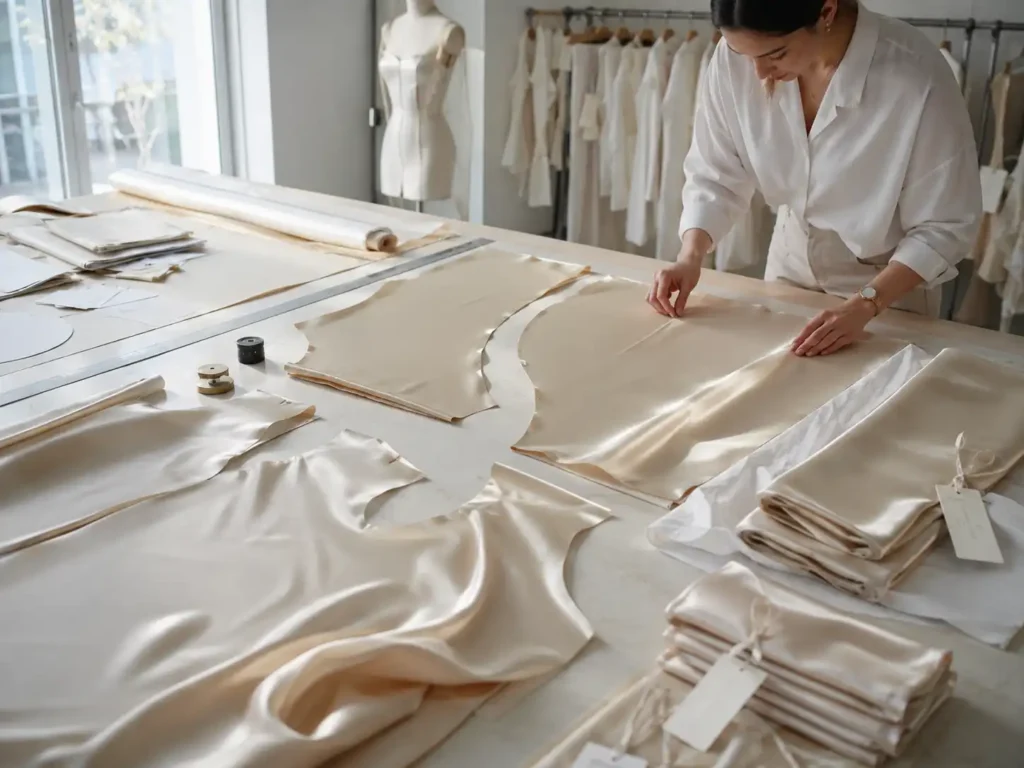
Directional Cutting and Panel Control

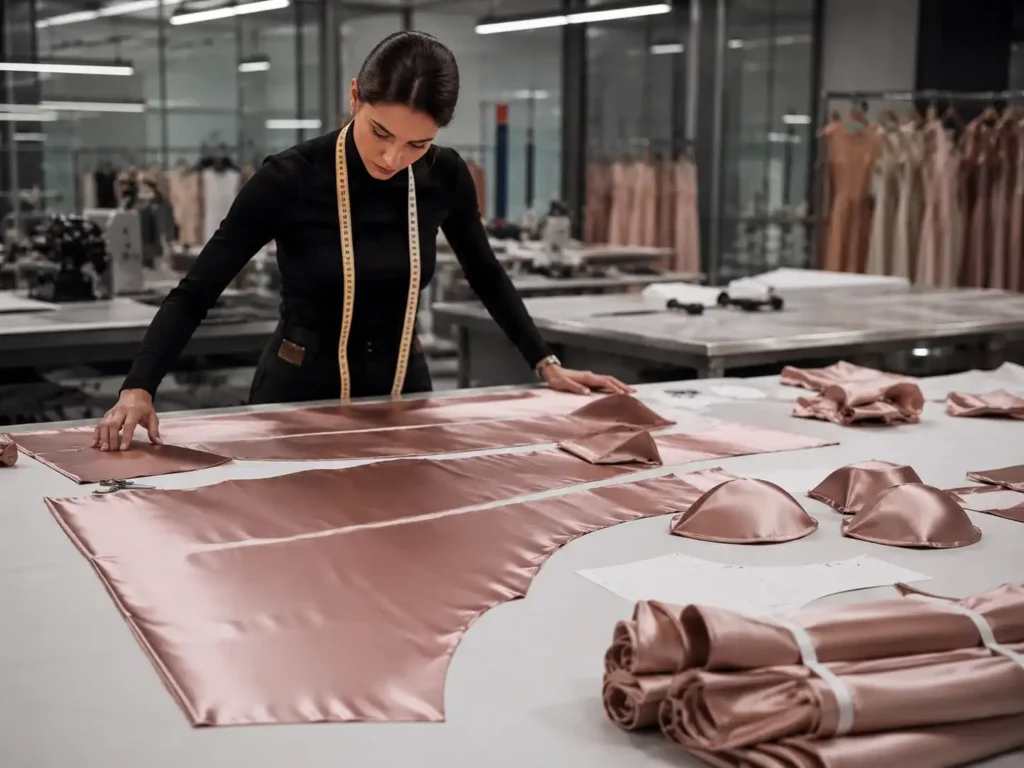
Visible panels are cut with planned grain and shine direction. Fronts, backs, sleeves, straps, ties, collars, peplums, and matching-set components are identified and grouped. Cut panels are reviewed for surface damage, shade, direction, notches, and distortion before sewing. Sensitive satin is handled in protected bundles to reduce abrasion and edge fraying.
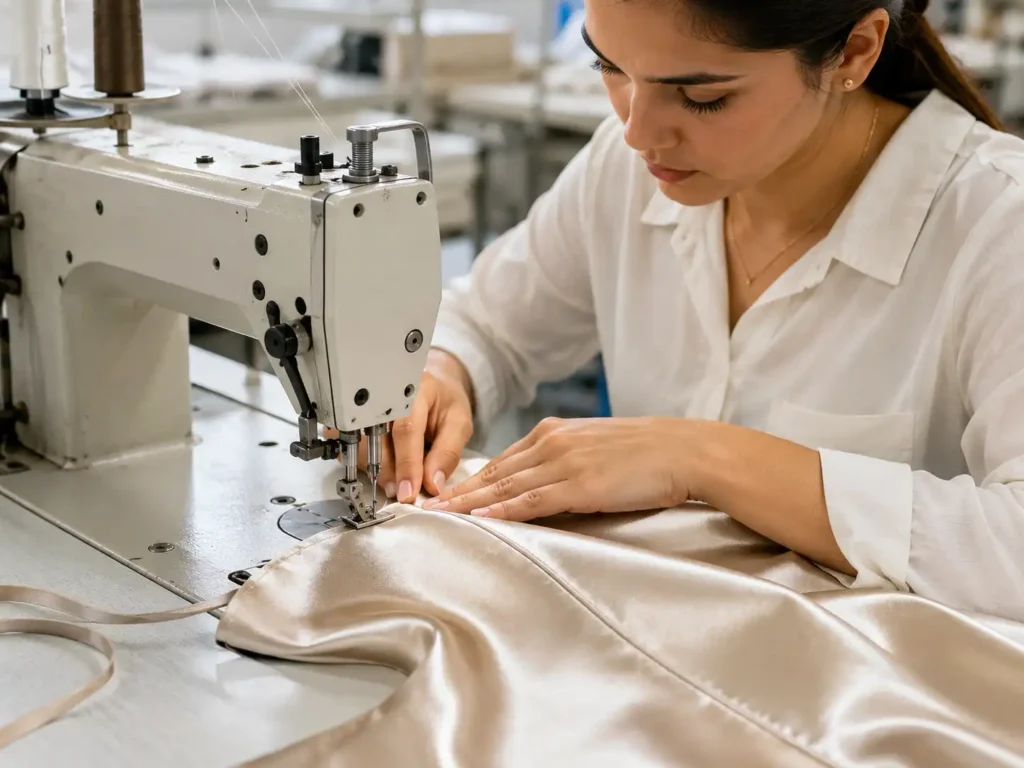
Seam Engineering and Flat Construction

Seam type, allowance, stitch length, tension, thread, needle, pressing sequence, and internal grading are selected to reduce puckering and ridges. Curved bust seams, darts, zipper seams, bias seams, necklines, armholes, and narrow hems require different handling. Inline checks focus on flatness, symmetry, smooth feeding, and stitch security before defects spread through a production batch.
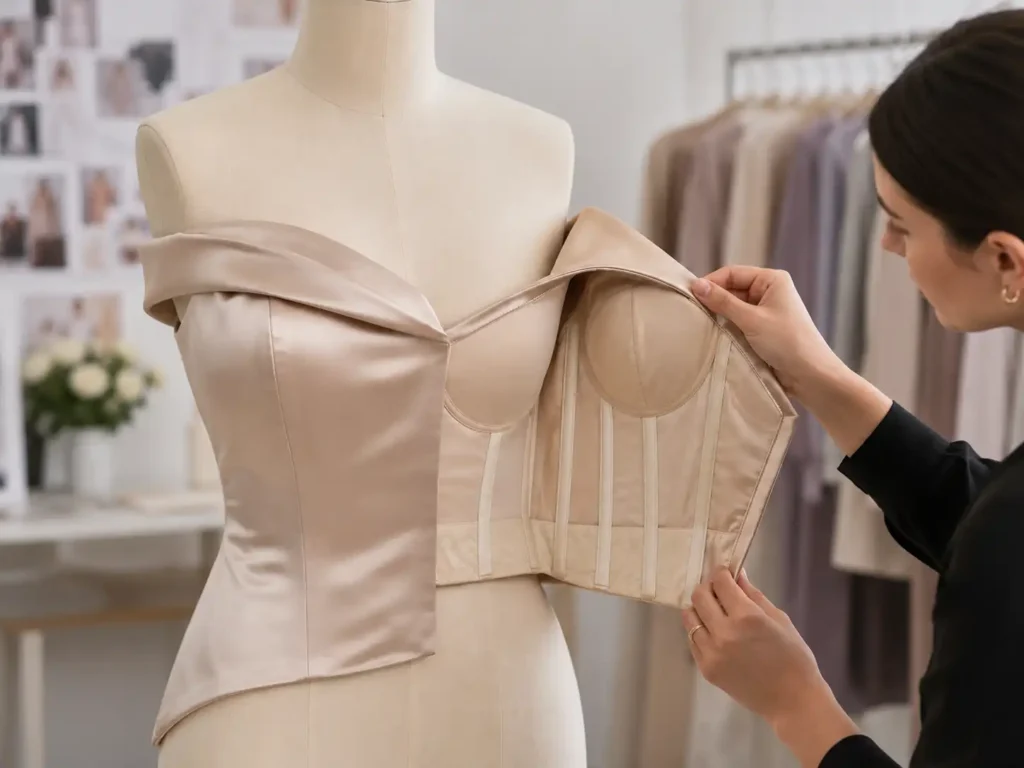
Lining and Internal Support

Lining is selected according to opacity, stretch, hand feel, static behavior, support, and intended wear. Structured tops may need supportive layers, cups, boning channels, reinforcement tape, or elastic. Fluid tops may need partial lining, facing, or lightweight stabilization. Internal construction is checked for twisting, exposure, bulk, discomfort, and compatibility with the outer satin.
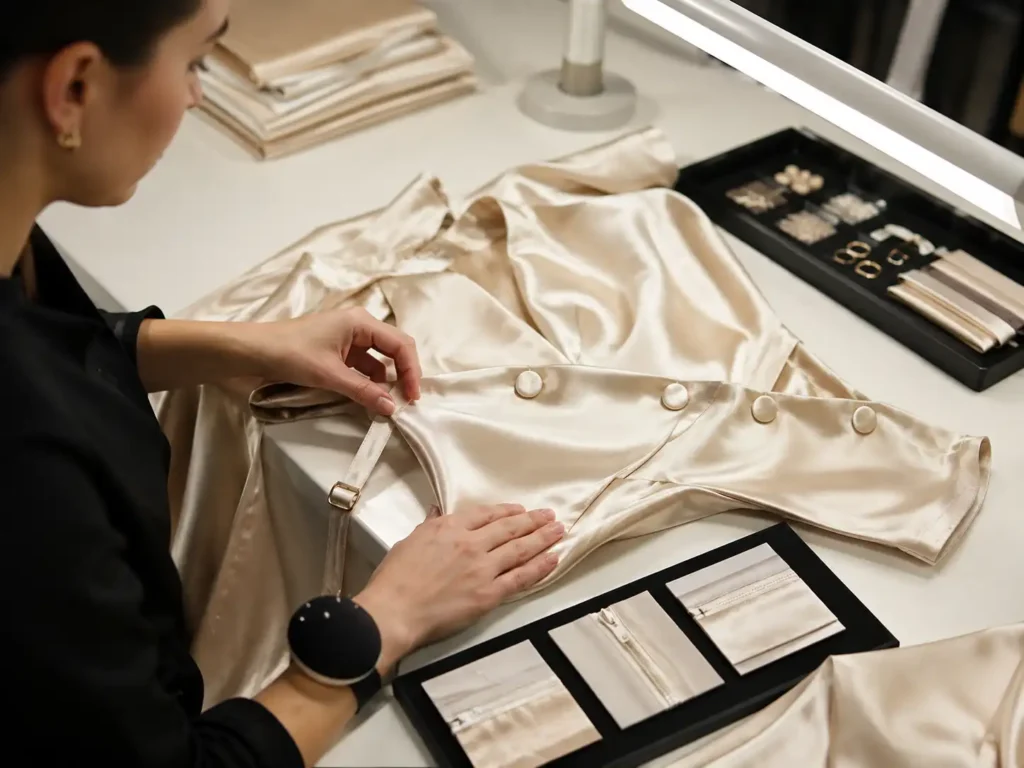
Closures, Edges, and Finishing

Invisible zippers, hooks, covered buttons, ties, strap hardware, binding, facing, narrow hems, and clean-finished edges are checked for smooth operation and visual alignment. Zipper bulging, top-edge waviness, uneven binding, exposed lining, loose threads, stains, and rough corners are corrected before final pressing. Finished garments are reviewed under lighting that reveals surface and seam defects.

From Design Reference to Approved Satin Top Sample

Sampling is a controlled development process rather than a single garment request. Each stage answers a different question: design feasibility, fabric behavior, fit, appearance, production readiness, or bulk reference. Complex satin tops move forward only after the relevant risks have been resolved and recorded.

Style Review

Jinfeng Apparel can begin from a tech pack, reference image, original sample, line sheet, or design sketch. Initial review covers neckline, body length, bust support, lining, closure, trims, target fabric, color, size range, quantity, private-label needs, and launch date. Missing information is identified before pattern work begins.

Fabric and Trim Direction

Satin options are compared by weight, drape, stretch, transparency, shine, hand feel, surface risk, supplier MOQ, lead time, and price. Linings, zippers, cups, boning, sliders, hooks, elastic, labels, and packing materials are reviewed at the same stage when they affect structure or timing.

Pattern Development

Pattern work translates visual references into measurable garment structure. Bust, underbust, neckline, armhole, straps, side seams, waist, hem, closure, lining, cups, boning, ruching, and drape are mapped according to the base size. Grain and bias direction are considered early for fluid satin designs.

First Sample

The first sample validates design structure, material direction, construction feasibility, general proportion, and cost logic. It is not treated automatically as the final bulk standard. Front, back, side, detail, neckline, strap, closure, lining, and internal support are reviewed through measurements, images, videos, and fit comments.

Revision and Fit Review

Comments are converted into pattern changes, revised measurements, trim updates, and construction notes. Revised samples may address neckline depth, chest coverage, strap length, armhole, cup position, boning, side seam, body length, hem, drape, or closure. Complex styles can require more than one controlled revision before production approval.

PP and Golden Sample

The PP sample confirms production fabric, approved color, trims, pattern, measurements, construction, labels, and packing direction. A Golden Sample can serve as the physical reference for bulk appearance and workmanship. Any later change requires documented review because uncontrolled changes after approval can affect price, timing, and quality.

MOQ, Cost, and Production Feasibility

MOQ starts from 200 pieces per style and color. Final feasibility depends on satin availability, dyeing, trims, lining, construction, size ratio, color count, private-label materials, packing, and production schedule. Accurate quotation requires a complete view of the garment rather than a reference image alone.

Cost and MOQ DriverWhat Must Be ConfirmedEffect on Production
Satin FabricComposition, weight, width, stretch, stock color or custom dye, supplier MOQAffects drape, fit, consumption, color control, lead time, and unit cost
ConstructionCowl, ruching, cups, boning, cut-outs, lining, zipper, hand detailsChanges pattern work, sample rounds, sewing time, QC points, and loss allowance
Color PlanNumber of colors, quantity per color, lab dips, dye lotsMOQ is normally calculated per style and color; each color needs separate control
Size RangeBase size, XS-XL or wider range, grade rule, size ratioAffects grading, cutting ratio, measurement control, labels, and carton breakdown
Private LabelWoven labels, care labels, hangtags, barcodes, polybags, cartonsPackaging suppliers may have separate MOQ and development time
Delivery PlanApproval date, material booking, production window, inspection, freightRush timing is reviewed only after materials, PP status, capacity, and logistics are known

From PP Approval to Controlled Bulk Delivery

Bulk production begins after the required pattern, fabric, trim, measurement, workmanship, label, and packing approvals are in place. Every stage creates a record for the next team so approved details are not lost during handover.

PP Sample Approval

Production fabric, color, trims, construction, measurements, fit, labels, and packing direction are confirmed. Open comments are closed or documented before release. The PP sample and associated files become the reference for production planning, QC, and final inspection.

Material Confirmation

Fabric and trims are checked against approved references. Key points include composition, weight, width, stretch, color, shine, surface condition, lining match, zipper specification, cups, boning, hardware, labels, and packaging. Variance is reviewed before cutting or sewing begins.

Incoming Inspection

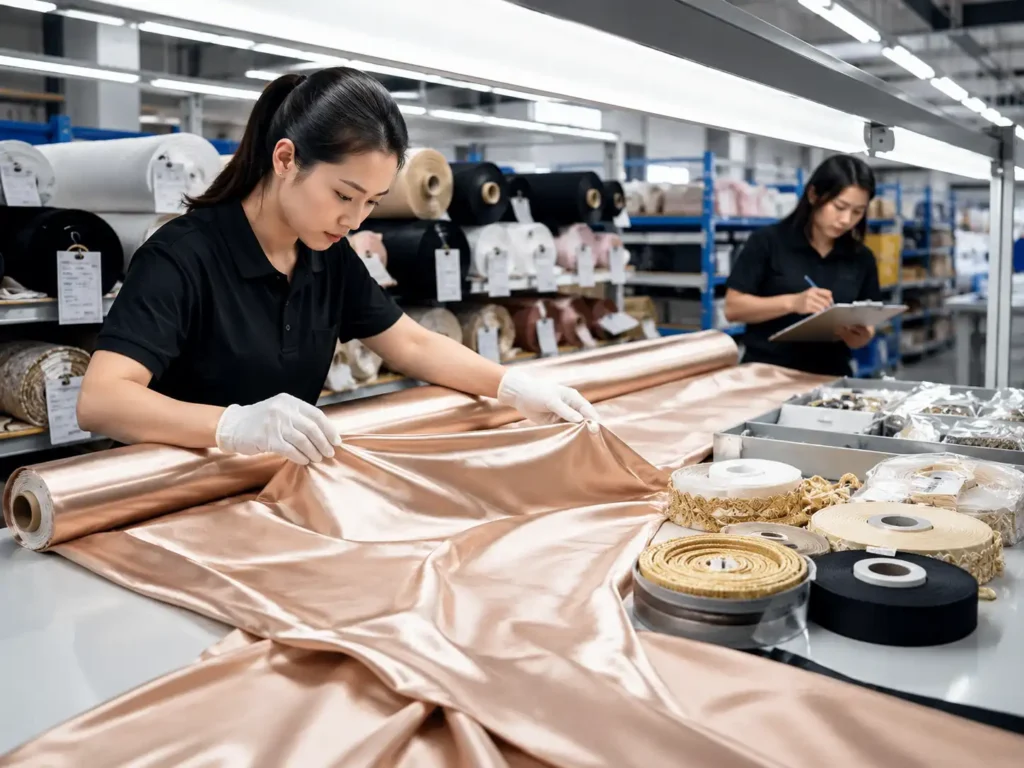
Fabric rolls and relevant trims are checked for visible defects, shade variation, surface damage, width, quantity, and project-specific requirements. Satin issues identified at incoming inspection are separated before they can become cut-panel or finished-garment defects.

Cutting Control

Marker direction, fabric face, shine direction, grain, notches, stripe or print orientation where applicable, and panel grouping are controlled. Cut panels are checked for distortion, damage, shade, and missing components. Structured parts, lining, cups, and reinforcement pieces are bundled according to style and size.

Sewing and Inline Checks

Production follows the approved sample and sewing instruction. Inline checks review seam flatness, neckline shape, bust structure, strap attachment, ruching, symmetry, closure, lining, measurements, and surface condition. Problems are corrected at the operation level before moving deeper into production.

Final Appearance Review

Finished garments are measured and inspected for fit-sensitive dimensions, workmanship, cleanliness, shade, shine direction, snagging, puckering, zipper flatness, symmetry, pressing, and label placement. Required repairs are completed and rechecked before packing.

Packing Verification

Folding, protective layers, polybags, labels, barcodes, size stickers, SKU information, carton marks, assortment, quantity, and carton data are checked against approved requirements. Sensitive details such as cups, bows, and drapes receive shape protection where needed.

Shipment Coordination

Commercial invoice, packing list, carton data, carton marks, forwarder instructions, and shipment method are coordinated according to project terms. Samples normally move by express; bulk orders may use air, sea, split shipment, or a nominated forwarder depending on timing, volume, destination, and warehouse requirements.

Satin-Specific Quality Control from Fabric to Packing

Satin quality cannot be protected by final inspection alone. Jinfeng Apparel uses stage-based control so material, cutting, sewing, fit-sensitive structures, pressing, and packing are reviewed before defects become expensive or difficult to correct.

Fabric Surface Check

Inspection focuses on snags, pulled yarns, scratches, abrasions, stains, weaving faults, oil marks, shine inconsistency, and visible roll variation. Approved fabric references and bulk rolls are compared under suitable lighting. Damaged sections are marked or removed before cutting.

Shade and Shine Review

Dye lot, roll shade, face direction, and reflected appearance are checked. Satin can appear different even when color measurements are close, so physical comparison remains important. Garment panels are grouped by roll and direction to reduce visible variation within one piece.

Cut-Panel Direction

Fronts, backs, sleeves, ties, peplums, collars, facings, and set components are reviewed for correct orientation and complete parts. Cut-panel inspection also checks edge distortion, notch position, surface marks, and shade grouping before bundles enter sewing.

Sewing Tension Check

Side seams, bust seams, darts, neckline edges, armholes, zipper seams, bindings, and narrow hems are reviewed for puckering, skipped stitches, loose stitches, needle damage, twisting, and uneven feeding. Sewing settings are corrected during production when fabric behavior changes across batches.

Key Measurement Control

Measurements can include bust, upper bust, underbust, waist, body length, strap length, armhole, neck drop, hem width, cup position, boning position, and closure length. Tolerances are set according to garment structure and risk. Size grading is checked against the approved grade rule.

Fit-Sensitive Review

Structured and revealing styles receive focused checks on bust coverage, cup symmetry, boning, anti-slip support, side-bust exposure, neckline stability, strap balance, armhole, closure tension, and comfort. Visual fit references and measurements support the inspection process.

Pressing and Appearance

Inspection looks for shine marks, seam impressions, water spots, crushed surfaces, wrinkles, uneven drape, distorted edges, stains, loose threads, asymmetry, and poor shape recovery. Garments cool fully before packing so heat and pressure do not lock in new creases.

Packing Protection

Fold lines, tissue placement, bag size, garment orientation, pressure, units per carton, hardware protection, and structured-detail support are reviewed. Barcodes, labels, SKU stickers, size ratios, carton marks, and carton quantities are checked alongside garment condition.

Pressing, Private Labels, and Surface-Safe Packing
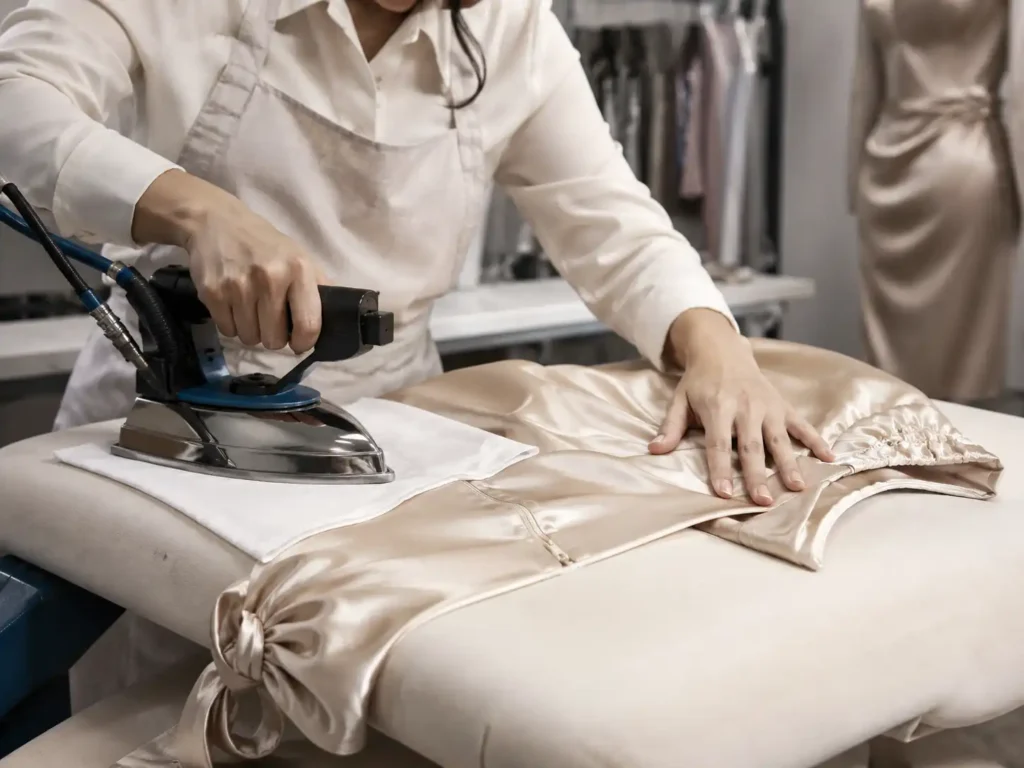
Satin can lose its premium appearance after sewing if pressing and packing are treated as routine finishing. Jinfeng Apparel aligns finishing, labeling, and packing with the approved fabric, construction, retail channel, and shipment method.

Controlled Pressing

Pressing tests establish suitable temperature, pressure, moisture, support surface, sequence, and cooling time. Operators avoid uncontrolled shine, seam impressions, water marks, crushed texture, and distorted drape. Structured bust areas, zippers, ruching, bows, peplums, and bias panels are handled according to their construction.

Cooling and Handling

Freshly pressed satin needs full cooling before folding, stacking, or bagging. Work-in-process movement uses clean, protected surfaces. Garments are checked for renewed wrinkles, surface contact marks, and shape collapse after cooling. Hanging or flat-resting methods can be selected according to garment structure and packing plan.

Private Label Application

Jinfeng Apparel supports woven labels, size labels, care labels, hangtags, hang strings, barcode stickers, SKU labels, polybags, stickers, thank-you cards, cartons, carton marks, and warehouse labels. Placement, attachment, print accuracy, fiber content, care instructions, size information, and barcode readability are confirmed before bulk packing.

Protective Packing

Packing can include controlled fold positions, tissue, foam or shape support where needed, suitable polybag dimensions, carton pressure control, size and color assortment, and retail or warehouse labels. Cup shapes, large bows, statement drapes, delicate hardware, and light-colored satin receive added protection based on shipment risk.

Manage Multi-Style Launches and Repeat Satin Orders

Occasionwear programs often involve 10-30 styles, several fabric groups, multiple colors, launch samples, bulk approvals, and staged delivery. Jinfeng Apparel manages each style as a controlled file while also coordinating shared fabric, trim, labeling, packing, and shipment requirements across the collection.

Style Grouping

Styles can be grouped by satin type, construction, color, factory allocation, sample priority, or launch date. Fluid tops, structured corset tops, matching sets, and mixed-fabric pieces may follow different development and production paths. Grouping improves material booking, sample sequence, production planning, and risk visibility.

Fabric Grouping

Shared satin across several styles can improve color consistency and material planning, but each style still needs separate consumption, pattern, and fit review. Fabric records include supplier, composition, weight, width, stretch, hand feel, drape, transparency, color, dye lot, MOQ, price history, lead time, and bulk issues.

Sample Priority

Campaign samples, key launch styles, complex structures, and high-volume styles can be prioritized instead of releasing every style at once. Priority planning helps protect photography dates, fit review capacity, material decisions, and PP approvals. Revised samples are scheduled according to risk and commercial importance.

Revision Records

Pattern revisions, measurement updates, fit comments, fabric changes, trim changes, sewing instructions, label files, and packing decisions are stored by style and version. A clear revision trail reduces repeated discussion and prevents old comments from returning during PP or bulk production.

Repeat-Order Records

Confirmed projects retain pattern, grading, fabric reference, trim record, measurement file, sewing instruction, label and packing information, and QC notes. Repeat orders can begin faster, but new dye lots, replacement fabrics, changed stretch, new colors, altered trims, or revised fits still require review.

Multi-Batch Delivery

Large collections may use phased production or shipment according to launch priority, warehouse needs, inspection windows, or freight planning. Style, color, size, carton, and document control is maintained across batches. Split shipment is evaluated against cost, urgency, material readiness, and receiving requirements.

Protect Unreleased Designs and Brand Information

Jinfeng Apparel supports NDA-based cooperation and controlled handling of project files. Confidentiality covers development, production, private-label, and commercial information throughout the working relationship.

Design Protection

Tech packs, original samples, patterns, size charts, line sheets, reference images, fabric directions, trim plans, sample comments, and unpublished designs are treated as confidential project materials. Client names, logos, unpublished sample photos, and original files are not used publicly without authorization.

Private Label Confidentiality

Woven labels, care labels, hangtags, barcodes, SKU structures, packaging artwork, carton marks, warehouse labels, order quantities, pricing, launch dates, and commercial documents are protected. Anonymous case descriptions focus on manufacturing challenges and solutions rather than exposing brand identity or proprietary files.

Compliance and Inspection Support

Audit documents, material certificates, restricted-substance requirements, third-party testing, and client inspection needs are reviewed according to the actual production factory, fabric supplier, product, market, and current documentation. Claims are confirmed by applicable scope and validity rather than presented as automatic coverage for every order.

Occasionwear Programs Managed from Sample to Delivery

The following anonymous cases show how Jinfeng Apparel controls satin, multi-style coordination, private-label execution, and repeat-order records without exposing brand names, logos, tech packs, unpublished designs, prices, or order numbers.

US Satin Occasionwear Program

An anonymous US occasionwear brand developed a 12-style satin mini and midi dress program of around 20,000 pieces. The main risks were satin color consistency, invisible-zipper flatness, lining comfort, and bulk stability across several colors. Jinfeng Apparel confirmed satin weight, shine direction, lining color, zipper specification, fit corrections, PP sample approval, and Golden Sample standards before bulk production. Inline QC focused on color, zipper seams, pressing, and surface condition. The wedding guest and cocktailwear launch moved into follow-up color repeats. Although the program centered on dresses, the same satin controls apply directly to coordinated tops and separates.

US Private-Label Program

An anonymous US large apparel client worked with Jinfeng Apparel on an 18-style womenswear program of around 28,000 pieces, covering satin, mesh, jersey, lace, and crepe products. Multi-style coordination, fabric variation, sample version control, SKU accuracy, private-label consistency, inspection support, and phased shipment were the main management challenges. Jinfeng Apparel used a project schedule, style-level fabric and trim tracking, sample records, approved hangtags, barcodes, polybags, carton marks, packing lists, and shipment documents. The program demonstrates the management system required for satin tops sold within a broader occasionwear assortment.

UK Wedding Guest Collection

An anonymous UK premium ecommerce brand developed a 10-style lace, satin, and wedding guest midi collection of around 12,000 pieces. Key issues included lace placement, lining color, satin drape, one-shoulder balance, midi proportion, and photo-sample appearance. Jinfeng Apparel adjusted motif placement, matched lining colors, corrected asymmetric structure, and separated photo-sample objectives from PP production standards. New color development followed after the initial program. The project supports Jinfeng Apparel’s ability to coordinate satin with lace, crepe, lining, and occasion-led construction.

Satin Top Manufacturing Frequently Asked Questions

Yes. Jinfeng Apparel develops custom satin tops from tech packs, reference images, original samples, line sheets, or design sketches. Services can include fabric sourcing, trim sourcing, pattern development, first samples, revisions, fit review, PP samples, bulk production, satin-specific QC, private-label packing, and export coordination. Product directions include cowl-neck, halter, corset, bustier, strapless, one-shoulder, draped, ruched, asymmetric, and matching-set tops.
Suitable options can include matte satin, stretch satin, heavier structured satin, lightweight drapey satin, satin-back crepe, and charmeuse-like satin. Selection depends on neckline, support, drape, opacity, stretch, hand feel, surface shine, color, lining, target price, supplier MOQ, and lead time. A fluid cowl top normally needs a different satin direction from a structured bustier or corset top.
MOQ starts from 200 pieces per style and color. MOQ is calculated by style and color rather than total quantity across several designs. Custom dyeing, special satin, certified fabric, custom printing, special trims, cups, underwire, hardware, labels, or packaging may have separate supplier MOQ. A line sheet with quantities by style and color allows a more accurate review.
Yes. Structured development can include fixed cups, removable pads, flexible boning, boning channels, supportive lining, underwire by project, hook-and-eye reinforcement, anti-slip support, invisible zippers, and size grading. Sample review focuses on upper bust, underbust, cup position, boning comfort, neckline stability, side coverage, zipper flatness, and size-to-size consistency.
Control begins with incoming fabric review, roll and dye-lot tracking, face and shine direction, protected handling, cut-panel grouping, work-in-process surface protection, and inspection under suitable lighting. Snags, scratches, pulled yarns, abrasions, stains, shade variation, and surface differences are identified before packing. Garment panels are grouped to reduce visible variation within one piece.
Lining depends on fabric opacity, stretch, garment structure, support, seam finish, comfort, and desired appearance. Structured tops may need full lining or supportive internal layers. Fluid tops may use partial lining, facing, or lightweight stabilization. Lining color, hand feel, stretch, static behavior, and interaction with the satin are reviewed during development.
Yes. Jinfeng Apparel can develop satin tops with mini, midi, or maxi skirts, wide-leg trousers, coordinated shorts, or mixed-fabric bottoms. Development controls color-batch consistency, top and bottom proportion, exposed midriff distance, waistline, size pairing, SKU structure, labels, and set packing. Tops and bottoms can also be prepared for separate retail sale.
Development normally moves through style review, fabric and trim direction, pattern making, first sample, fit comments, revised sample where needed, and PP sample approval. Photo-ready or salesman samples can be planned separately when required. Timing is quoted after reviewing style complexity, fabric availability, trim development, sample priority, and the number of revisions.
Yes. Private-label support can include woven labels, size labels, care labels, hangtags, hang strings, barcode stickers, SKU labels, polybags, stickers, thank-you cards, cartons, carton marks, and warehouse labels. Packaging suppliers can have separate MOQ and development lead time, so artwork, quantities, materials, and delivery requirements should be submitted early.
Yes. Jinfeng Apparel supports NDA-based cooperation and protects tech packs, original samples, patterns, size charts, fabric directions, trim plans, unpublished designs, labels, packaging artwork, barcodes, SKU information, pricing, quantities, and launch details. Anonymous cases do not disclose brand identity, logos, proprietary files, or unauthorized product images.

Start Your Satin Top Development Program

Send Kelly and the Jinfeng Apparel team enough information to evaluate structure, fabric direction, sampling requirements, MOQ, production feasibility, and the next development step.

A complete brief allows faster review and reduces avoidable revisions before pattern work begins. Files can be submitted by email or discussed through WhatsApp, followed by formal confirmation through project documents.

Please include:

  • Reference image, tech pack, original sample, sketch, or line sheet
  • Target satin, hand feel, shine level, stretch, or approved swatch
  • Style quantity and quantity per color
  • Base size, size range, grade rule, and planned size ratio
  • Bust support, lining, cups, boning, strap, closure, and trim requirements
  • Main label, care label, hangtag, barcode, SKU, and packing requirements
  • Target sample purpose, launch date, delivery date, and preferred shipment method
  • Target market and any testing, inspection, or warehouse-receiving requirements

Tell Us About Your Dress Project

Share your product details, estimated quantity and development requirements. Our team will review your project and provide practical OEM/ODM production feedback.

Premium Women’s Apparel Production for Fashion Brands

From dress sample development to bulk production, JF Apparel supports fashion brands with confidential OEM/ODM manufacturing, reliable quality control and scalable production support.

START YOUR DRESS PROJECT

Ready to Develop Your Next Dress Collection?

Share your design concept, product requirements or sourcing plans with our team. We’ll review your project and provide practical feedback on development, materials, MOQ and production.

7-10 Days

Sample Development

200 PCS

Starting MOQ

Fast Response

Professional Follow-Up