Satin Skirt Manufacturer for Occasionwear Brands
Custom satin skirts developed for wedding guest, cocktail, evening and partywear collections, from fabric direction to retail-ready bulk delivery.
- Satin programs can be developed across 80-220 gsm conventional satin and 120-250 gsm stretch satin, selected around drape, structure, opacity and target price.
- Simple skirt samples are commonly planned in 7-10 days; structured, draped or coordinated styles normally require 12-18 days before review.
- MOQ starts from 200 pcs per style/color, subject to fabric availability, custom color, trims, construction and packing requirements.
- Since 2008, Jinfeng Apparel has built a 6-factory womenswear system supported by 10+ long-term production partners, 2 sample rooms and 15+ QC inspectors.
Manufacturing Capacity Behind Every Satin Skirt Program
Since 2008
6 Owned Factories
10+ Production Partners
2 Sample Rooms
7+ Pattern Makers
15+ QC Inspectors
Built for Established Occasionwear Product Teams
Best Program Fit
- Seasonal collections with 10-30 coordinated styles
- Multi-color programs with controlled dye lots
- Skirt and matching-top capsules
- Repeat orders requiring archived patterns and fabric records
- Retail-ready or ecommerce-ready private-label packing
Professional Project Inputs
- Style image, sketch, original sample or tech pack
- Quantity per style/color rather than one combined total
- Satin direction, color plan and target hand feel
- Base size, grade rule and planned size ratio
- Main label, care label, barcode and packing brief
One Manufacturing System from Brief to Delivery
OEM Development
ODM Support
Fabric Sourcing
Pattern Engineering
Sample Development
Bulk Production
Quality Control
Private Label Delivery
Satin Skirt Styles We Develop for Occasionwear

Satin Mini Skirt
- Best for party, birthday and holiday capsules
- Common control points: waist, hip, back length and lining
- Suitable details: side slit, lace trim, drape or bow accent

Satin Midi Skirt
- Best for wedding guest and cocktail collections
- Common control points: hip shaping, side-seam balance and hem level
- Suitable details: bias cut, slit, drape or clean waistband

Satin Maxi Skirt
- Best for evening, formal and destination-event ranges
- Common control points: total length, sweep, slit and packing folds
- Suitable details: godets, draped panels or clean bias lines

Bias-Cut Slip Skirt
- Best for satin separates and elevated capsule collections
- Common control points: grain angle, seam twist and length growth
- Suitable details: elastic waist, clean waist facing or lace trim

Draped Satin Skirt
- Best for cocktail, wedding guest and evening programs
- Common control points: fold depth, tack location and side balance
- Suitable details: asymmetric waist, waterfall panel or side knot

Ruched Satin Skirt
- Best for partywear and fitted event collections
- Common control points: gather ratio, stretch recovery and symmetry
- Suitable details: side drawcord, fixed ruching or asymmetric hem

Slit Satin Skirt
- Best for cocktail, evening and formal ranges
- Common control points: slit height, reinforcement and lining opening
- Suitable details: front, side or back slit placement

Pleated Satin Skirt
- Best for refined eventwear and coordinated separates
- Common control points: pleat consistency, waist bulk and pressing
- Suitable details: knife pleats, box pleats or partial pleating
Occasionwear Skirts Planned Around Selling Moments

Wedding Guest

Cocktail Events

Evening Occasions

Graduation Season

Holiday Party

Date Night
Select Satin by Drape, Structure and Risk
Satin is a weave effect rather than one fixed material. Fiber, gsm, finish and stretch change the garment’s shine, movement, opacity and production behavior. Fabric selection begins with the desired skirt result, then checks commercial availability and bulk risk.
| Satin Direction | Common Weight | Best Skirt Uses | Main Advantage | Main Production Risk | Control Focus |
| Light Polyester Satin | 80-120 gsm | Bias midi, slip skirt, fluid maxi | Soft movement and accessible color range | Transparency, seam waviness, crease marks | Lining, needle choice, seam tension, final hem leveling |
| Medium Polyester Satin | 120-180 gsm | Midi, draped skirt, A-line mini | Balanced drape and easier bulk handling | Shade difference and zipper bubbling | Fabric lot control, zipper application, pressing test |
| Heavy Satin | 180-220 gsm | Structured maxi, formal midi, pleated skirt | Shape, opacity and richer visual weight | Waist bulk and pressing impressions | Interlining, seam allowance grading, controlled pressing |
| Stretch Satin | 120-250 gsm | Fitted mini, ruched skirt, body-skimming midi | Movement and closer fit | Recovery variation, side-seam twist, unstable measurements | Stretch direction, relaxation, grade rule, measurement QC |
| Matte Satin | Project-specific | Wedding guest midi, understated evening separates | Refined surface with reduced glare | Batch hand-feel or shade variation | Approved swatch, bulk shade review, lot separation |
| Crepe-Back Satin | Project-specific | Draped midi, evening maxi, reversible design concepts | Controlled body with two usable surfaces | Cutting the wrong face or direction | Face identification, cutting markers, bundle control |
| Silk-Like Satin | 80-160 gsm | Premium capsule and elevated slip skirts | Soft hand feel and fluid appearance | Snagging, needle marks and cost variation | Surface handling, fine needles, packing protection |
Pattern Engineering for Stable Satin Skirt Fit
Satin reveals fit problems quickly. A slight side-seam swing, tight high hip or uneven hem becomes obvious under light. Pattern development therefore connects measurements with grain direction, drape and movement rather than treating each point independently.
Waist, High Hip and Full Hip Balance
A satin skirt can match the stated waist measurement and still fit poorly. Waist position, high-hip curve, full-hip depth and front-to-back distribution determine whether the garment sits level or pulls toward one area. The base pattern starts from the intended rise and silhouette, then distributes shaping through darts, seams, waistband contour and ease.
For fixed-waist skirts, the waistline must remain secure without creating a hard ridge under a satin top. A curved waistband often follows the body better than a straight strip, while clean-finish facings reduce visible bulk. Interlining is tested for stiffness, adhesion and edge marking. Elastic-back constructions need enough recovery to hold shape without gathering the front.
High hip and full hip are checked separately. Tightness near the upper hip can push the skirt upward, causing side-seam swing and a shorter back length. Excess ease can collapse into diagonal folds. Fit comments record exact areas and amounts rather than vague notes such as “make looser.”
Typical bulk measurement references, unless a tech pack defines another standard, are around +/-1 cm at the waist, +/-1.5 cm at the hip and +/-1 cm for skirt length. Stretch satin, bias cuts, long skirts and complex structures require project-specific tolerances.
Bias Grain, Extension and Side-Seam Control
Bias-cut skirts gain movement because the fabric stretches diagonally. The same diagonal stretch changes during cutting, sewing, hanging and pressing. Pattern pieces need a confirmed grain angle, balanced panel shape and consistent marker placement. Mirrored pieces cannot be rotated freely simply to save fabric because the satin sheen may appear different.
Cut panels are bundled carefully to avoid stretching along unsupported edges. Long bias seams may need controlled handling before sewing, while the garment should rest before final hem leveling.
Side seams are checked on a dress form and during fitting; twisting usually points to grain, panel balance, sewing feed or uneven extension rather than a single measurement error.
A bias skirt often grows in length after hanging. The final hem is therefore completed after the garment settles under controlled conditions. For multi-size production, hem growth and side-seam behavior are reviewed across more than one size before the grade is released.
Length, Slit and Hem Proportion
Mini, midi and maxi lengths create different functional risks. A mini must remain secure while sitting and moving. A midi needs a visually balanced break point against the calf. A maxi needs enough clearance for footwear, a level hem and an appropriate sweep for the intended event.
Slit height is confirmed from the waist or hem according to the tech pack, then checked on-body rather than only flat. Reinforcement at the slit top prevents stress opening, and the lining opening is positioned to stay hidden during movement. A front slit requires stronger attention to walking exposure; a back slit needs enough ease to prevent strain.
Hem method is matched to fabric weight and silhouette. Narrow double-turn hems suit many light satins. Baby hems create a refined edge on fluid styles but demand stable tension. Blind hems suit heavier or structured satin when stitch impressions remain controlled. Wider facings may support formal shapes but can alter drape.
Size Grading and Wear Testing
Jinfeng Apparel can develop brand-defined ranges such as XS-XL, XS-XXL, US 0-14, UK 6-18 or comparable regional systems when a base size, grade rule and fit direction are supplied or approved. Grading is not a simple percentage enlargement. Waist, high hip, full hip, length, slit position and hem sweep need separate rules.
Fitted minis require careful hip and hem growth so larger sizes retain movement and coverage. Bias skirts may need size-specific balance adjustments because diagonal stretch behaves differently with increased panel area. Draped styles require controlled fold depth so the drape does not become too small in larger sizes or too bulky in smaller sizes.
Fit review includes standing, sitting, walking and turning. Comments are transferred into the pattern, measurement chart and sample revision log. Final bulk production follows the approved grade rule and tolerances rather than relying on operator judgment.
Construction Details That Shape the Finished Skirt

Contoured Waistband
- Confirm finished width and rise position
- Test fusible adhesion and stiffness
- Match hook-and-eye and zipper placement
- Check waist tolerance across the size run

Clean Waist Facing
- Control facing depth and internal bulk
- Prevent rolling at the upper edge
- Match lining attachment to skirt movement
- Keep internal stitches invisible from outside

Invisible Zipper
- Select tape and slider color carefully
- Stabilize the opening before insertion
- Check flatness on-body and on hanger
- Inspect top alignment and zipper base
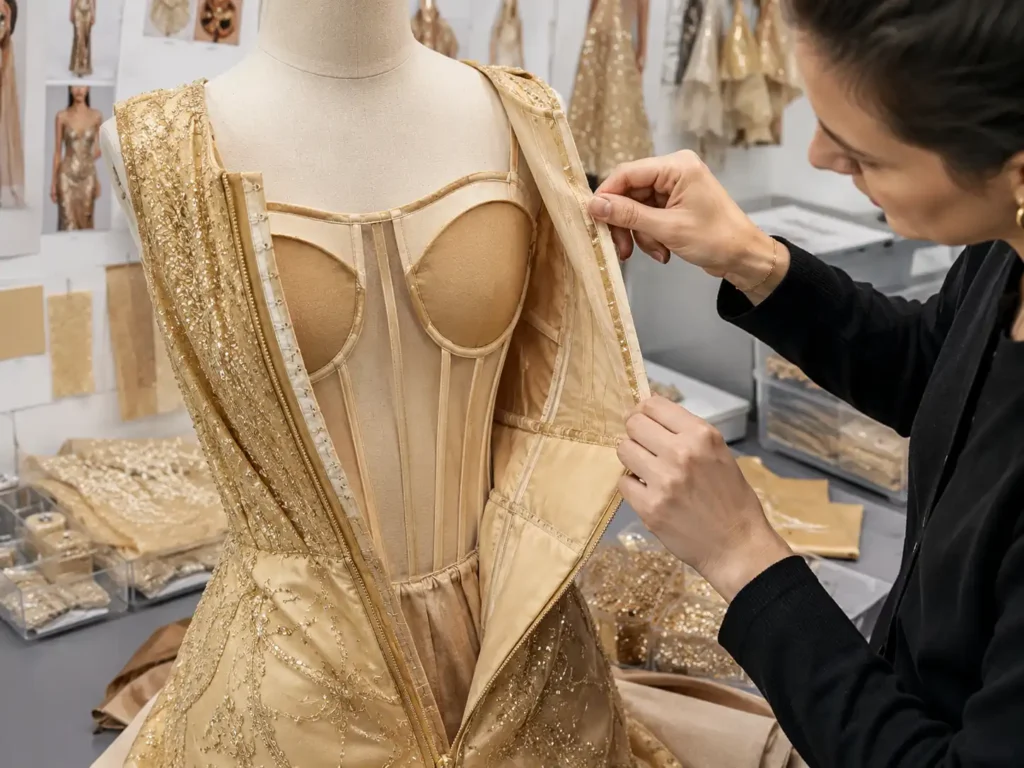
Lining Construction
- Match opacity to pale satin colors
- Add suitable ease through hip and stride
- Keep lining length clear of outer hem
- Secure lining without distorting the waist
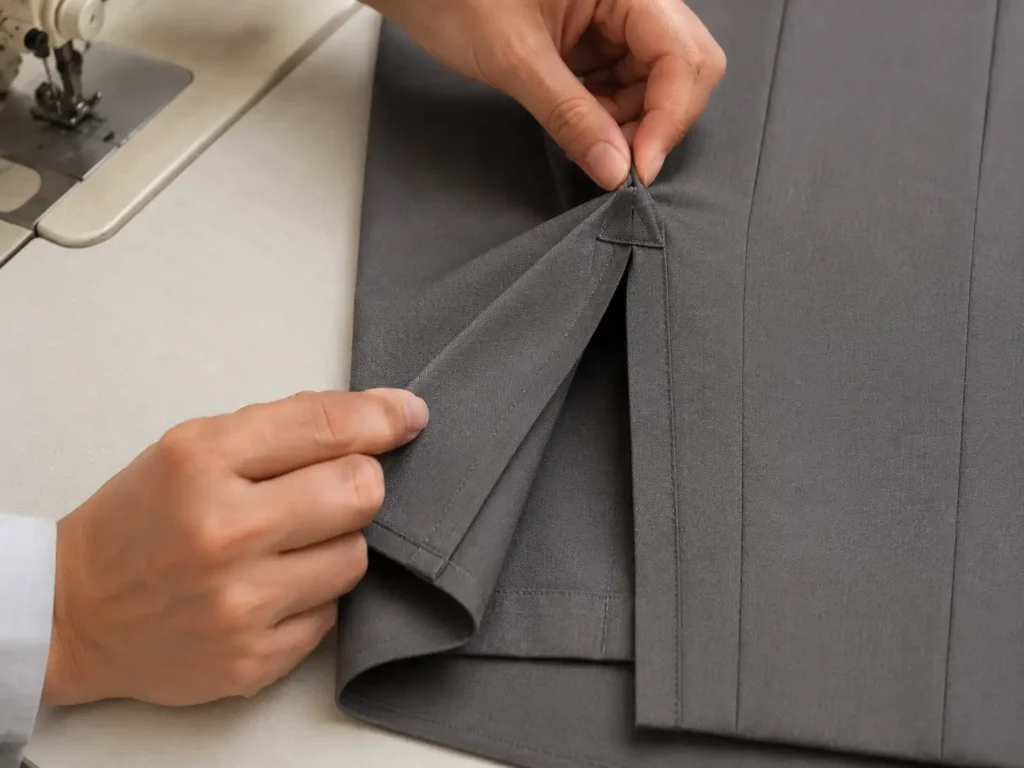
Slit Reinforcement
- Confirm opening height in every size
- Reinforce without creating a hard lump
- Align outer and lining openings
- Test walking and sitting movement

Refined Hem Finish
- Choose baby, narrow, blind or faced hem
- Check level after hanging and pressing
- Prevent stitch tunneling and edge shine
- Protect the hem during packing
Control Satin Risks Before Bulk Production
Satin defects often develop early and become expensive when discovered after sewing or packing. Risk control begins with material approval and continues through handling, cutting, stitching, pressing and shipment preparation.
Surface Snagging, Pulls and Needle Marks
Smooth satin faces can be damaged by rough tables, exposed hook-and-loop tape, sharp jewelry, broken needles, metal edges or contact with embellishments. Fine pulls may appear minor under factory light but become obvious in product photography. Clean work areas and controlled garment movement reduce avoidable marks.
Needle size, point type and replacement frequency are tested against the selected fabric. A needle that is too large can leave permanent holes; a damaged point can pull yarns or create white stress marks. Seam removal is especially risky because previous stitch holes remain visible. Operators therefore receive clear instructions before production begins rather than correcting construction repeatedly on finished panels.
Bundles are separated by style and color, with face sides protected from rough contact. Finished pieces are not piled under heavy pressure. Inspection uses directional light to reveal pulls, oil spots, needle marks and abrasion that may disappear under flat overhead light.
Shade Difference and Shine Direction
Satin reflects light differently according to weave direction, surface finish and viewing angle. Two panels cut from the same roll can appear different when one is rotated. Cutting markers must therefore preserve approved nap or shine direction across fronts, backs, waistbands, facings and draped panels.
Incoming fabric is checked against the approved color standard and grouped by dye lot. Rolls with visible shade or hand-feel variation are separated rather than mixed within one garment or shipment assortment. Lining, zipper, thread and labels are matched against the bulk fabric, not only the initial swatch.
Color approval may include lab dips, cuttings, roll headers or a bulk shade band depending on the project. Dark satin needs checks for rub marks and contamination; pale satin needs checks for transparency, yellowing and visible internal components. Multi-color programs receive separate records so one approved color cannot be assumed to represent the behavior of another.
Seam Puckering and Zipper Bubbling
Puckering can come from incorrect thread tension, needle damage, differential feeding, unstable seam allowances, excessive handling or fabric distortion during pressing. Satin cannot always be “pressed flat” after sewing because extra heat may add shine or damage the surface. Prevention is more reliable than correction.
Seam construction is tested during sample development. Stitch length, thread type, needle, presser-foot pressure and feeding method are adjusted to the fabric. Long bias seams receive extra attention because diagonal stretch can feed unevenly. Curved hip seams and waist joins are clipped, graded or stabilized according to the construction.
Invisible zipper areas need balanced support. Too little stabilization allows bubbling; too much creates a rigid strip. Zipper length, tape, top closure and seam allowance are confirmed before bulk ordering. In-line inspectors check flatness early so the same error does not continue across hundreds of units.
Pressing Marks, Creases and Packing Damage
Satin finishing requires controlled temperature, pressure, steam and contact surface. Excess heat can change sheen, flatten texture or leave a polished outline from seam allowances. Water droplets and dirty pressing equipment can create marks that are difficult to remove. Test press settings are recorded before bulk finishing.
Garments are pressed from the correct side with suitable protection. Seam allowances may need soft support to prevent edge impressions. Pleats, ruching and drapes are shaped according to approved samples rather than flattened for packing convenience. Finished skirts cool before folding so heat and moisture are not trapped.
Packing plans consider fold position, zipper contact, embellishment contact and carton pressure. Tissue, protective layers or alternative folds can be evaluated for delicate programs. Final packing QC checks surface condition again because a clean garment can still be damaged between pressing and polybag sealing.
From Development Files to Approved Samples
Sampling turns visual direction into a measurable garment standard. Each sample version has a defined purpose, and comments remain linked to pattern, fabric, trims and production documents.
Project Review and Material Direction
Development can begin from a tech pack, original sample, sketch, line sheet or reference image. The team first identifies silhouette, grain, construction, lining, closure, slit, hem and size information. Missing details are listed before pattern work begins so assumptions do not become hidden production risks.
Fabric review considers composition, gsm, shine, stretch, opacity, color availability, MOQ and lead time. A skirt intended for soft bias drape should not be developed in a heavy structured satin simply because the color is available. Zipper tape, lining, thread, waistband support and labels are checked as connected components.
Simple satin skirts are commonly planned for a first sample in 7-10 days after workable materials and development information are ready. Medium-complex styles such as draped, lined, coordinated or structured skirts are normally planned in 12-18 days. Special fabric, custom color or complex trims can extend development to 20-35 days according to supplier timing.
First Sample and Fit Review
The first sample checks whether the design has been interpreted correctly. Pattern balance, waist position, hip shape, grain direction, slit, lining, zipper and hem are reviewed before cosmetic refinement. A first sample is not treated as the final bulk standard; its value lies in finding issues early.
Measurements are recorded against the agreed chart. Fit review covers standing, sitting and walking, with close attention to side-seam swing, back rise, waistband gaping and hem level. Photo-ready appearance can be improved for campaign use, but the team still confirms whether photo-sample materials and workmanship match final bulk requirements.
Comments should name the exact location, amount and intended result. “Improve fit” is replaced by measurable instructions such as “reduce back-waist gap by 1 cm” or “lower front slit by 2 cm.” Clear comments reduce repeated sampling and protect the development calendar.
Revised Sample, PP and Golden Standard
A revised sample confirms pattern and construction changes. Common revised-sample timing is 7-15 days, depending on the modification and material availability. Medium-complex satin skirts often need one or two revisions; significant changes to fabric, waistband, drape or size direction may require a new development round.
The PP sample uses final or approved-equivalent fabric, color, lining, zipper, labels and construction. Before approval, the team closes measurements, grade rules, tolerances, seam finish, pressing, packaging and bulk quantity. Changes after PP approval are documented because they can affect cost, lead time and production risk.
The Golden sample becomes the physical reference for sewing, finishing, QC, repeat orders and dispute review. It works together with the production order, BOM, size chart, sewing instruction, approved fabric and packing instruction. Bulk production does not rely on memory or photographs alone.

Transfer Approved Samples into Repeatable Bulk Production
A stable bulk result depends on disciplined transfer. Final patterns, approved materials and written workmanship standards must reach cutting, sewing, finishing and packing teams without losing the decisions made during sampling.
Production File Lock
The production pack separates each style, color and size. It contains the final pattern version, measurement chart, grade rule, tolerance, BOM, fabric approval, trim approval, construction notes, label artwork, packing method and shipment plan. Old sample comments and superseded pattern files are removed from active use.
Critical satin instructions are easy to identify: approved face and shine direction, grain position, fabric lot separation, panel orientation, zipper specification, lining color, waistband support, slit height, hem method and pressing limits. A pre-production review checks whether every department is using the same version.
Quantity plans are built by style/color/size rather than one overall order number. The system supports multi-style programs, but each style/color still needs a workable production quantity and material plan. Size ratios are reviewed against cutting and carton requirements before materials are issued.
Cutting and First-Output Control
Incoming satin rolls are inspected for shade, width, surface marks, stretch, hand feel and visible defects. Approved rolls are grouped by lot. Cutting markers preserve nap or shine direction, and sensitive panels are handled to prevent edge stretching or surface abrasion.
First output is reviewed before the line reaches full speed. Inspectors check waist level, hip shape, side-seam balance, zipper flatness, slit, lining, hem and surface condition. Measurement issues or construction drift are corrected at the source rather than relying on final repair.
For bias or draped skirts, handling instructions may include controlled resting, bundle support and special inspection positions. Operator methods are aligned with the approved sample so individual shaping preferences do not change the intended silhouette.
In-Line Control and Repeat-Order Records
In-line QC checks are scheduled around high-risk operations rather than random timing alone. Waistbands, invisible zippers, draped sections, side seams, slits and hems are reviewed before the next operation hides or magnifies a defect. Findings are recorded and followed through to correction.
Finished measurements are compared with the approved chart and tolerance. Internal reference tolerances commonly used for planning include about +/-1 cm at the waist, +/-1.5 cm at the hip, +/-1 cm for skirt length and slit height, and +/-1.5 cm for maxi length or hem circumference, unless the approved tech pack states otherwise.
After delivery, final patterns, measurement files, fabric references, trims, workmanship notes, labels, packing instructions and QC findings are archived. Repeat colors or replenishment runs can begin from a controlled reference rather than restarting development.

Quality Control Points for Satin Skirt Production
QC follows the product from fabric receipt to sealed cartons. The matrix below shows what is checked, why the check matters and which record supports the final decision.
| Control Stage | Main Checks | Satin-Specific Risk | Typical Record |
|---|---|---|---|
| Incoming Fabric | Composition, gsm, width, shade, surface, stretch, hand feel, defects | Dye-lot difference, pulls, contamination, inconsistent sheen | Fabric inspection report, approved swatch, lot record |
| Fabric Relaxation | Roll conditioning, stretch recovery, bias behavior | Dimension change after cutting or sewing | Relaxation note, test cutting |
| Cutting QC | Grain, shine direction, panel orientation, notches, pair matching | Mixed sheen, twisting, stretched edges | Marker approval, cutting checklist |
| Sewing Start-Up | First output, stitch balance, seam tension, zipper, waistband | Puckering, needle marks, zipper bubbling | First-piece report, line instruction |
| In-Line Inspection | Key operations, workmanship, measurement trends | Repeated defects across the line | In-line QC report, correction record |
| Finished Measurement | Waist, hip, length, slit, hem, grade consistency | Fit inconsistency and uneven proportions | Measurement report, tolerance chart |
| Appearance Review | Surface, stains, pulls, symmetry, lining, loose threads | Visible marks under directional light | Final inspection checklist |
| Pressing Review | Temperature result, seam impressions, fold control | Shine change, water marks, edge impressions | Pressing standard, approved sample |
| Packing QC | Labels, barcode, size/color, folding, protection, assortment | Creases, abrasion, SKU mixing | Packing instruction, carton checklist |
| AQL / Client Inspection | Sampling plan, major/minor defects, measurements | Shipment release risk | AQL report or nominated inspection report |
Plan Production Around the Occasionwear Launch Calendar

Development Window
- First sample reference: 7-10 days for simple skirts
- Medium-complex reference: 12-18 days
- Revised or PP sample: commonly 7-15 days
- Special fabrics or trims: supplier lead time applies
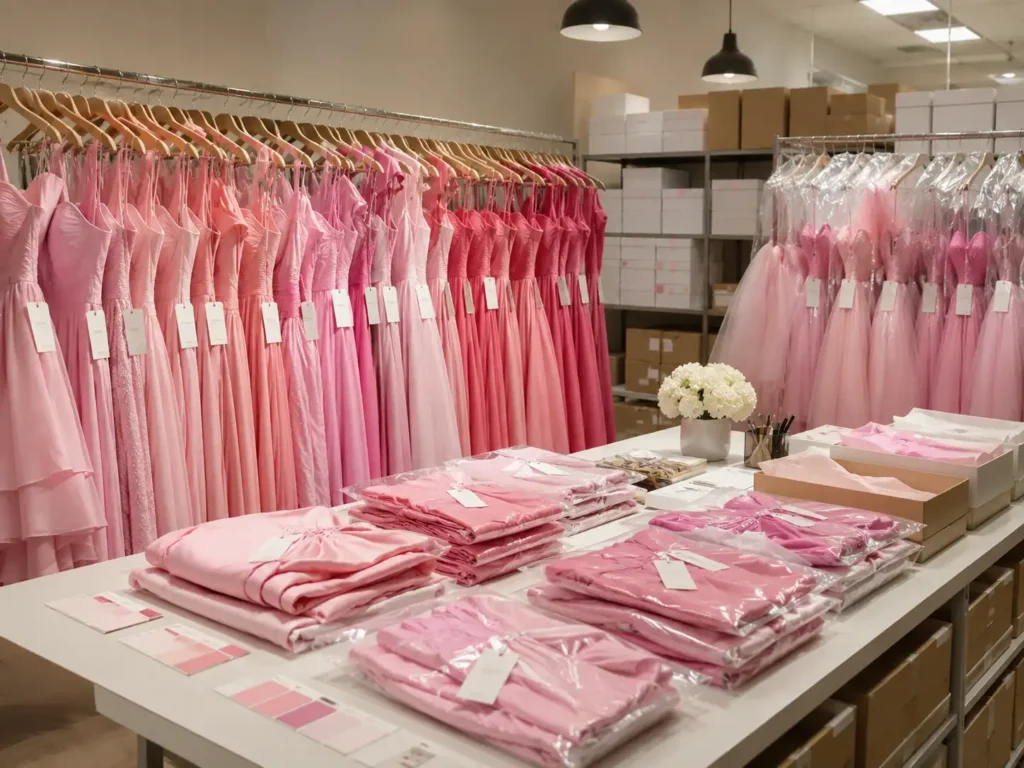
Bulk Window
- Confirm style/color/size quantities before material booking
- Separate campaign priority from main bulk quantity
- Allow inspection and correction time before ex-factory date
- Confirm split shipment only after carton and SKU planning

Delivery Window
- Lock warehouse address and routing guide early
- Confirm barcode and carton labels before packing
- Reserve time for client or third-party inspection
- Track ex-factory, handover and shipment milestones separately
Extend One Satin Skirt into a Commercial Capsule

Wedding Guest Capsule
- 4-8 coordinated styles
- 2-4 core colors
- Shared satin and lining groups
- Separate and matching-set selling options

Cocktail Capsule
- Mini and midi length balance
- Fitted and fluid silhouette mix
- Core dark colors plus one seasonal accent
- Coordinated tops using matching dye lots

Holiday Capsule
- 6-12 launch styles
- High-visual colors and textures
- Skirts designed for outfit building
- Repeat-color plan after sales review
MOQ and Quotation for Satin Skirt Programs
Single Style Program
- MOQ reference: from 200 pcs per style/color
- Suitable for one core silhouette
- Include base size and size ratio
- Confirm labels and packing before final quotation
Multi-Color Program
- Submit quantity for every color
- Start with 1-3 commercial core colors
- Approve bulk shade by color
- Keep dye lots separated in production
Multi-Size Program
- Provide size chart and grade rule
- Confirm tolerance and fit model size
- Avoid extremely small quantities in isolated sizes
- Match size labels and barcode data
Multi-Style Collection
- Send line sheet and quantities by SKU
- Identify shared satin and lining groups
- Mark campaign and delivery priorities
- Confirm repeat-order expectations
Private Label and Retail-Ready Satin Skirts
Brand delivery begins before the garment reaches packing. Label placement, care information, barcode logic, fold direction and carton assortment are linked to the approved SKU plan and warehouse requirement.
Labels, Artwork and SKU Accuracy
Main labels, size labels, care labels and hangtags are reviewed against approved artwork and the finished garment. Care content should match the confirmed fabric composition and construction rather than a generic satin instruction. Placement, stitch method and label direction are documented to prevent visible distortion or inconsistency.
Barcode and SKU data are checked by style, color and size. A correct garment with the wrong barcode creates inventory and fulfillment problems after arrival. Packing instructions therefore connect garment identification with polybag sticker, carton assortment, packing list and warehouse label.
Artwork files, unpublished styles and commercial information can be handled under NDA. Brand names and labels are not used in public marketing without authorization.
Satin-Safe Folding and Surface Protection
Satin skirts are folded around the silhouette and fabric behavior, not only carton efficiency. Hard folds across the front panel, drape or waistband can create marks that remain visible in ecommerce photography. Zippers, hooks, rhinestones and metal trims must not press against the satin face.
Packing trials can compare fold position, tissue use, internal protection and polybag size. Garments cool after pressing before sealing, reducing trapped moisture and unwanted creases. Delicate or embellished programs may require added separation between garments or components.
Packing QC checks surface condition, fold accuracy, label visibility and size/color identity immediately before sealing. Carton pressure and assortment are reviewed so protection remains effective during transport.
Carton, Warehouse and Export Coordination
Carton marks, carton numbers, style/color/size assortments and gross/net weight data follow the confirmed packing list. Warehouse routing labels and retailer-specific instructions are added when supplied. Split shipments require separate SKU and carton planning to avoid incomplete size runs at either destination.
Commercial invoice, packing list and shipment information are coordinated with the agreed trade term and forwarder. Client-nominated forwarders can receive carton data and handover information according to the shipping plan.
Repeat-order packing records are archived alongside the garment standard, allowing future color or replenishment orders to maintain the same label positions, fold method and carton configuration.

Compliance, Design Protection and Repeat-Order Control
Compliance Support
- Project-specific document review
- Third-party test and inspection coordination
- Material certificate verification by batch
- Agreed defect and measurement standards
NDA and Style Protection
- Controlled access to development files
- No public use of brand names without approval
- Protected pattern and sample records
- Confidential order and launch information
Repeat-Order Records
- Faster restart from approved records
- Consistent fit and workmanship references
- Color and fabric history by program
- Multi-batch and replenishment support
Anonymized Satin Skirt Programs at Brand Scale
Commercial figures below are rounded to protect confidential information. Each program reflects the current scale of established brand cooperation: 10-30 styles and approximately 20,000-80,000 total pieces per order cycle.

US Wedding Guest Satin Skirt Launch
An anonymous US occasionwear brand developed 18 satin skirt styles across bias midi, draped midi, slit maxi and fitted mini silhouettes. The rounded order volume was 43,200 pieces in six colors, graded from XS to XL. Several tops used the same satin dye lots, so skirt and top color matching became part of the production standard rather than a separate visual check.
The main risks were bias extension, zipper bubbling, pale-color transparency and inconsistent drape between sizes. Fabric review separated light, medium and stretch satin routes. Pattern development corrected back-waist gaping and side-seam swing, while pale shades received adjusted lining colors. Two sample rounds closed fit and construction comments before PP approval.
Bulk was planned over a 58-day production window after final materials and PP approval. Cutting followed one-way shine direction; dye lots were separated by color; first output checks focused on waist, hip, side balance and zipper flatness. Final delivery was divided into a campaign-priority portion and the main warehouse shipment, with consistent barcodes and carton assortments across both releases.

UK Cocktailwear Midi Collection
A UK occasionwear label placed a rounded 31,500-piece program covering 14 satin midi and maxi skirt styles in five core colors. The size range followed UK 6-18, with stronger volume in middle sizes. Designs included clean-waist bias skirts, draped side seams, front slits and one pleated satin style for a formal capsule.
Development focused on calf proportion, slit exposure, hem level and the difference between photo-ready appearance and bulk-repeatable construction. The first samples used approved-equivalent satin for shape review, followed by final-fabric PP samples. One draped style was simplified internally so the outer look remained unchanged while fold placement became repeatable across sizes.
The bulk window was 52 days after final approvals. In-line QC concentrated on long seams, slit reinforcement, lining openings and hem consistency.
Each color was inspected against its own bulk shade standard. Packaging used controlled fold positions to avoid front-panel creases, while hangtag and barcode placement followed the retailer’s warehouse instructions.

Australian Partywear Co-Ord Program
An anonymous Australian partywear brand developed 22 coordinated styles: 14 satin skirts and eight matching tops. Rounded volume reached 68,400 pieces across seven colors and AU sizes 6-16. The range combined ruched minis, asymmetric midis, bias maxis, satin camis and structured tops intended for both separate and matching-set sales.
The key challenge was keeping color, size pairing and finish consistent across two different garment categories. Shared fabric lots were allocated across skirt and top styles before cutting. SKU files linked each color and size to its labels, barcodes and packing configuration. Stretch satin styles received separate grade and recovery checks from non-stretch bias products.
Two revision rounds and final PP samples were completed before a 63-day bulk window. Production was grouped by satin type and color rather than style sequence alone. In-line inspection checked gather ratios, waist fit, side seams and surface condition. Two scheduled shipments supported launch priorities while preserving complete size runs for the main warehouse intake.
Frequently Asked Questions About Satin Skirt Manufacturing

Start Your Satin Skirt Manufacturing Program
Send Kelly a tech pack, line sheet, original-sample photo, sketch or reference image for an initial review. Include quantities by style and color rather than one combined total, because satin procurement, color control, cutting, labels and QC are planned separately for every SKU group. A clear delivery window also helps the team work backward through fabric approval, sampling, PP confirmation, bulk production and inspection.
Useful project information includes:
- Style files and satin direction, including gsm, sheen, stretch or opacity
- Quantity per style/color, color list, size range and size ratio
- Lining, zipper, waistband, slit, drape and hem requirements
- Main label, care label, barcode and packing artwork
- Campaign date, warehouse date and shipment priority
- Inspection, testing, compliance or NDA requirements