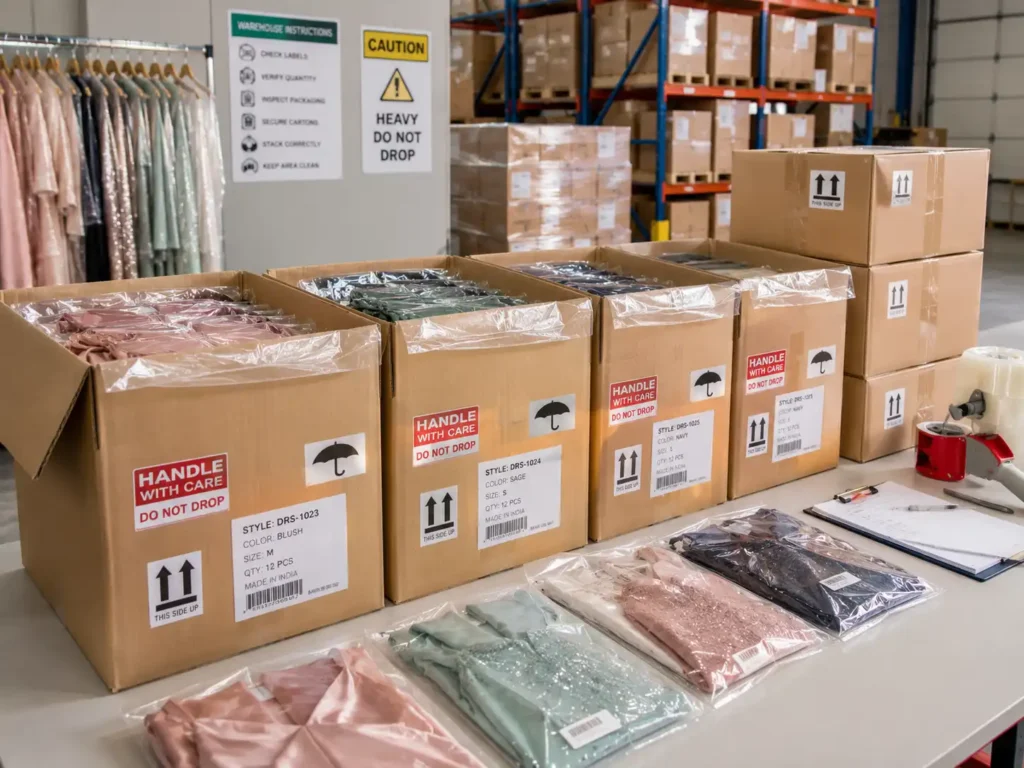
Satin Occasion Dress Collection Manufacturer

Develop commercial satin occasionwear collections from line sheet and fabric direction to approved samples, controlled bulk production and retail-ready delivery.

  • Collection programs commonly cover 10-30 styles, with mini, midi, maxi, slip, corset, wedding guest and evening silhouettes developed under one coordinated schedule.
  • Satin options commonly range from 80-220 gsm, selected by shine, drape, opacity, stretch, lining need and garment structure rather than appearance alone.
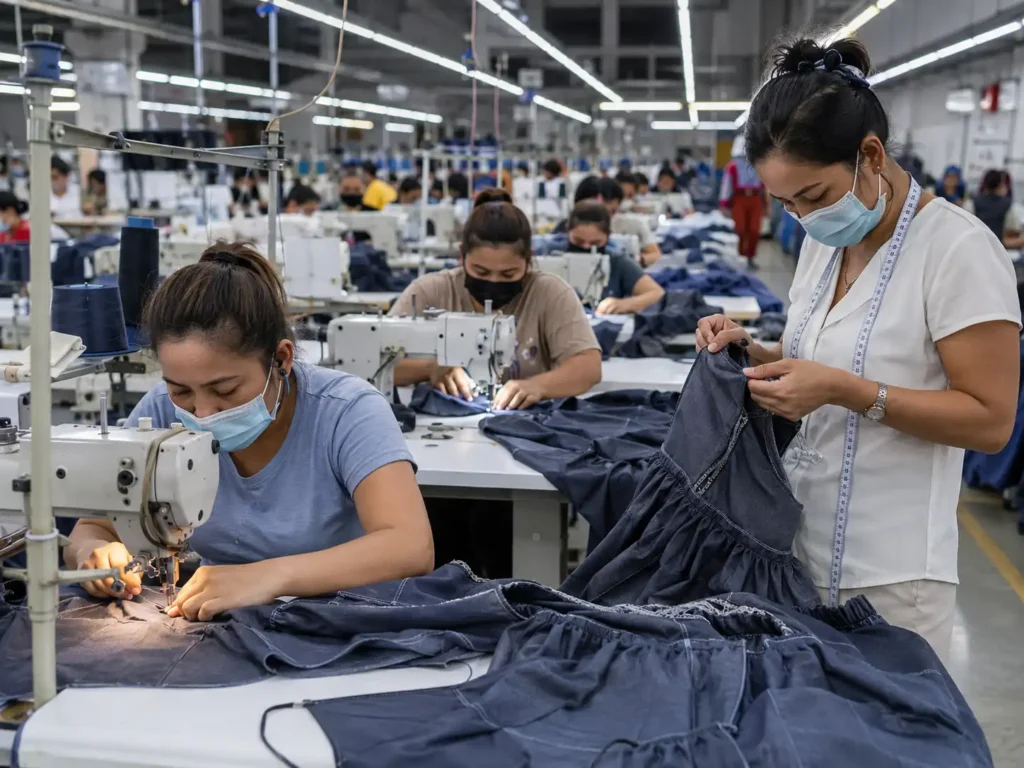
  • Jinfeng Apparel supports projects through 2 sample rooms, 7+ senior pattern makers, 20+ sample machinists, 6 owned factories and 10+ long-term production partners.
  • MOQ starts from 200 pcs per style/color, with fabric, dyeing, trims, special finishes and branded packaging assessed before the production plan is locked.

Satin Collection Capacity at a Glance

A coordinated collection needs development depth, pattern control, material planning and production capacity. The figures below describe the working system behind Jinfeng Apparel rather than an isolated sewing workshop.

Since 2008

Long-term womenswear manufacturing experience supports product development, sampling, production planning, quality control and export coordination for fashion-led dress programs.

6 Owned Factories

Owned production resources provide direct control over selected core styles, quality standards, line allocation and production records across dresses, skirts, jumpsuits and matching sets.

10+ Production Partners

Long-term satellite partners extend category and capacity coverage when a collection includes different fabrics, structures, quantities or phased delivery requirements.

2 Sample Rooms

Dedicated sample rooms handle pattern development, first samples, revisions, photo-ready samples, PP samples and Golden sample support before bulk production.

20+ Sample Machinists

Sample machinists work with pattern makers to test satin sewing behavior, lining attachment, zipper flatness, ruching, drape and structured bodice construction.

200 Pcs Style/Color

Standard MOQ is calculated by style and color. Special dyeing, trims, printed packaging or exclusive materials may carry separate supplier minimums.

Built for Structured Occasionwear Collection Programs

Jinfeng Apparel works best with established product teams managing defined collections, launch dates, sampling standards and bulk production plans. Each role receives information aligned with its own decisions.

Global Fashion Brands

Multi-style collections require reliable standards across design, material, fit, quality and delivery. Jinfeng Apparel coordinates the development records, PP approvals, production files, QC checkpoints and private-label instructions needed to move a large program from approved concept to repeatable bulk production.

Occasionwear Labels

Occasionwear labels need more than attractive satin. The range must balance wedding guest, cocktail, party and evening occasions while controlling bust support, lining, slit height, hem balance, shine direction and presentation after packing. Development decisions are made around wearability as well as visual impact.

Merchandising Teams

Merchandising teams usually manage style count, price architecture, color story, size spread and launch priority. Jinfeng Apparel groups styles by fabric, construction and complexity, helping teams identify hero SKUs, shared materials, cost-sensitive details and production sequences before the assortment becomes difficult to manage.

Product Developers

Product developers need clear communication on fabric behavior, pattern changes, sample versions and approval status. Feedback is converted into updated patterns, measurements, BOM details and sewing instructions rather than left in separate email or messaging threads.

Sourcing Departments

Sourcing teams evaluate MOQ, capacity, production allocation, material readiness, QC and delivery risk. Jinfeng Apparel provides project-level review instead of offering a unit price without understanding satin type, lining, construction, color count, size ratio, packaging or shipment requirements.

Private Label Programs

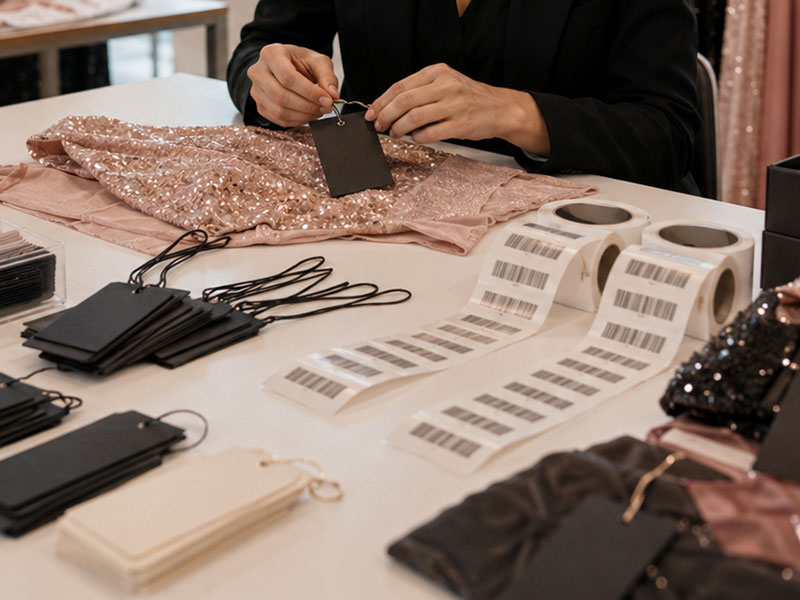
Private-label programs need garment development and brand execution to move together. Labels, care information, hangtags, barcodes, polybags, carton marks and warehouse instructions are confirmed as production items, not added at the last minute after sewing is complete.

Where Satin Occasion Collections Commonly Break Down

Strong concepts can lose value during development when satin, fit, sample control and bulk execution are treated as separate tasks. The following risks are addressed before they spread across every style and color.

Wrong Satin Direction

A satin chosen only from a screen image may be too bright, too thin, too stiff or too weak for the intended silhouette. Jinfeng Apparel reviews composition, weight, surface shine, drape, stretch, opacity and lining need before sampling so slip, draped, bodycon and structured dresses are not forced into one fabric solution.
  • Review weight and hand feel
  • Confirm shine under light
  • Check lining and stretch

Unstable Fit

Satin reflects tension lines clearly. Small errors at the bust, waist, hip, zipper or side seam can make a polished design look strained. Pattern review focuses on body proportion, coverage, movement, strap length, slit position and lining behavior before the style is released for production.
  • Measure key fit points
  • Record sample corrections
  • Lock final grade rules

Shade Variation

Gloss and fabric direction can make one dye lot appear different under studio, retail and natural lighting. Bulk color approval must consider physical standards, lab dips or approved swatches, roll batches, lining color and cutting direction, especially when a collection uses pale neutrals, jewel tones or bridal-adjacent shades.
  • Approve physical color
  • Separate dye lots
  • Track fabric batches

Delayed Samples

A 10-30 style collection cannot be sampled effectively when every style is treated as equally urgent. Hero styles, photo samples, technically complex designs and shared fabric groups need clear priority. Sample timing also depends on fabric availability, custom trims and the speed of consolidated feedback.

  • Set hero SKU priority
  • Group shared materials
  • Consolidate feedback

Multi-Style Confusion

Similar colors, repeated silhouettes and multiple revision rounds create errors when style numbers, sample versions and approvals are unclear. Jinfeng Apparel uses style grouping, revision records, approval status and production instructions to keep one style change from being copied into another design by mistake.
  • Assign style references
  • Track sample versions
  • Confirm approval status

Bulk Inconsistency

A strong sample does not automatically guarantee stable bulk. Final pattern files, size charts, fabric references, trim cards, sewing instructions, PP approval, Golden sample standards and QC measurements must be transferred to production. Without a controlled handover, fit and details drift during line execution.
  • Transfer approved standards
  • Check production early
  • Compare against Golden sample

Build a Commercial Satin Occasionwear Assortment

A balanced collection needs distinct roles for each silhouette. Jinfeng Apparel develops each dress around its selling occasion, fabric behavior, fit priority, production risk and place within the wider assortment.

Satin Mini Party Dress

Mini party dresses deliver strong visual impact and faster trend response, but short lengths make proportion control unforgiving. Development focuses on bust stability, waist placement, sitting coverage, lining length and zipper flatness. Stretch satin can support closer silhouettes, while matte or medium-weight woven satin suits structured mini shapes.
  • Best for party and event drops
  • Control hem and slit safety
  • Check lining under movement

Satin Midi Cocktail Dress

Midi dresses sit at the commercial center of many occasionwear collections because they serve cocktail events, wedding guests and evening dining. The style needs a balanced waist-to-hem proportion, clean side seams, stable slit height and a hem that remains level after hanging. Matte satin and crepe-back satin often support a refined look.
  • Suitable for broad occasion use
  • Review midi length by market
  • Control drape and hem balance

Wedding Guest Dress

Wedding guest dresses often rely on color variety, flattering movement and photography-ready finishes. Jinfeng Apparel reviews light-color opacity, lining shade, neckline security, sleeve or strap comfort, size grading and dye-lot consistency. Multi-color programs also require accurate SKU, barcode and carton breakdown by style, color and size.
  • Plan seasonal color groups
  • Check light-color opacity
  • Separate shade batches

Satin Maxi Evening Dress

Maxi evening dresses demand controlled drape, stable bust support, safe slit placement and a level floor-length hem. Bias or fluid panels may relax after cutting and hanging, so the sample must confirm length before bulk. Pressing, fold position and carton pressure also affect the final presentation at arrival.
  • Confirm floor-length balance
  • Protect shine during packing
  • Check slit under movement

Satin Slip Dress

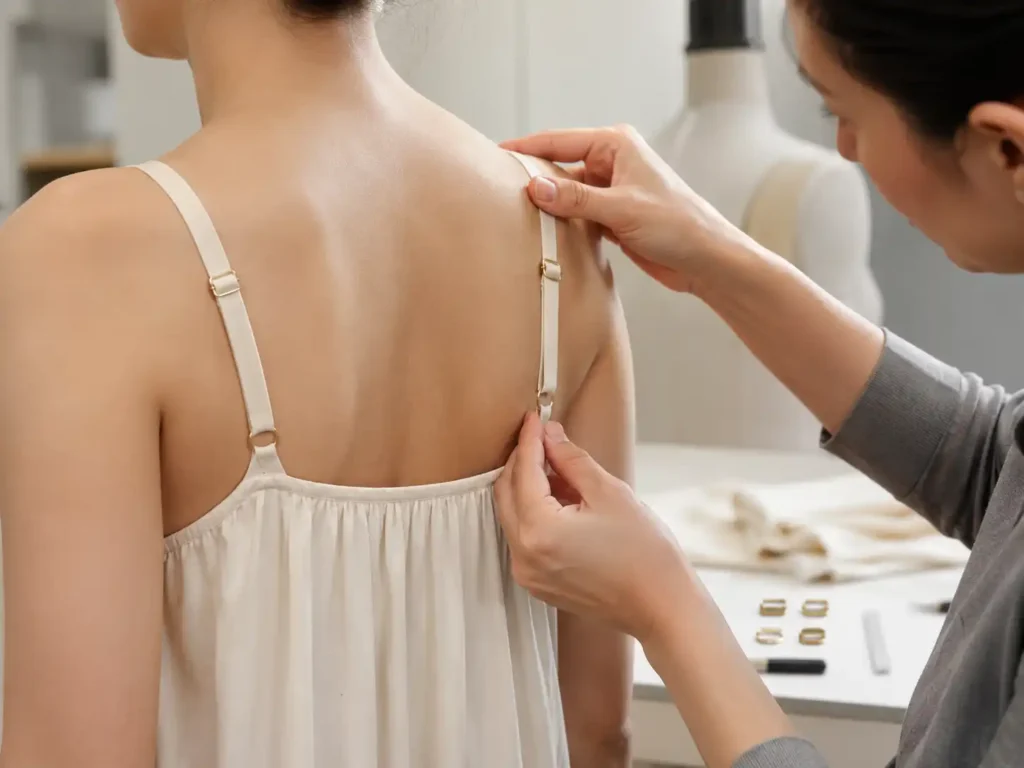
Slip dresses look simple but expose every pattern and sewing decision. Cowl depth, strap adjustment, neckline coverage, side-seam smoothness and bias behavior need close review. Lightweight satin may require selective lining or a double layer, while adjustable sliders help manage shoulder and bust variation across the size range.
  • Control cowl and neckline
  • Match strap hardware
  • Test bias growth

Satin Corset Dress

Corset styles combine a smooth satin surface with internal support. Bra cups, boning channels, lining, zipper placement, waist shaping and top-edge security must work together without visible ridges or discomfort. Sample development normally takes longer because the outer appearance and inner structure need separate adjustment before PP approval.
  • Review cup and boning
  • Protect top-edge security
  • Confirm internal comfort

Satin Bridesmaid Dress

Bridesmaid programs usually involve coordinated colors, extended size requirements and multiple lengths. Shade approval, lining color, size grading and repeat availability matter as much as the design. Jinfeng Apparel records fabric batches, approved measurements, trims and packing standards to support multi-color programs and later color extensions.
  • Coordinate shade standards
  • Plan size and length
  • Retain reorder records

Draped Occasion Dress

Draped dresses use gathers, cowls, side ruching or twisted panels to create movement. The amount and position of fabric must be controlled through pattern marks and sewing instructions so every garment follows the approved sample. Uneven drape, excessive bulk and distorted side seams are checked during sampling and inline production.
  • Mark drape positions
  • Control left-right balance
  • Check gathering in bulk

Choose Satin by Weight, Shine and Structure

Satin selection starts with garment structure and market position. Weight, composition, weave, stretch and surface finish influence drape, opacity, sewing stability, pressing and cost. Swatches and sample garments remain the final approval standard.

Satin DirectionTypical WeightStretchVisual CharacterBest ApplicationsPrimary Control Points
Lightweight satin80-120 gsmUsually lowFluid, brighter surface, light handSlip dresses, soft cowl dresses, summer occasion stylesTransparency, seam show-through, bias growth, creasing and lining need
Matte satin120-180 gsmLowControlled shine, refined and less reflectiveWedding guest, cocktail, bridesmaid and premium midi dressesShade consistency, drape, lining color and pressing marks
Stretch satin140-220 gsmMediumSmooth surface with closer fit potentialBodycon, corset-inspired and fitted occasion dressesRecovery, zipper waviness, side-seam tension and measurement stability
Heavy satin180-220 gsmLowStructured drape and fuller bodyEvening gowns, sculpted skirts and structured bodicesBulk at seams, pressing pressure, hem balance and packing creases
Crepe-back satinProject-basedLow to limitedSofter shine with a more textured reverseRefined cocktail dresses and polished occasionwearFace/reverse direction, shade, seam finish and drape
Silk-like satinProject-basedUsually lowHigh visual softness and premium handElevated capsule styles and photo-led dressesSnagging, cost, stable sourcing, care labeling and bulk shade

Construction Details That Define the Collection

Satin makes workmanship visible. Clean results depend on controlling the relationship between pattern, fabric direction, internal support, trims and sewing method rather than adding decorative details after the sample is approved.

Bias-Cut Panels

Bias cutting creates fluid movement but can also grow, twist and produce uneven hems. Pattern direction, cutting rest, hanging time and final hem confirmation need to be planned. The approved sample establishes the drape target, while bulk cutting keeps grain direction and panel orientation consistent.
  • Confirm grain direction
  • Allow fabric relaxation
  • Recheck hem before finishing

Cowl Necklines

A cowl neckline depends on controlled volume, neckline anchoring and suitable satin weight. Too little fabric loses softness; too much can expose the bust or collapse unevenly. Strap placement, facing or lining and underarm coverage are reviewed together during fitting.
  • Set cowl depth
  • Check bust coverage
  • Stabilize neckline edges

Ruched Waistlines

Ruching changes visual proportion and can hide or create fit problems. Gathering amount, placement marks, elastic or fixed construction and seam balance are recorded in the pattern and sewing instructions. Bulk checks compare left-right symmetry and waist position against the approved sample.
  • Mark gathering points
  • Control fullness ratio
  • Inspect symmetry inline

Corset Bodices

A corset bodice must provide support without allowing boning, cup edges or seam channels to show through the satin. Bra cup shape, boning length, lining, top-edge stability and waist tension are tested in the sample room before production standards are locked.
  • Coordinate cup and boning
  • Protect skin contact
  • Prevent surface ridges

Controlled Slits

A slit must support movement while maintaining coverage in standing, walking and sitting positions. Height, overlap, reinforcement, lining opening and seam allowance are measured during fit review. Bulk QC checks slit height by size and verifies that pulling does not distort the satin surface.
  • Approve slit height
  • Reinforce stress points
  • Check every size

Adjustable Straps

Adjustable straps help regulate neckline height and bust coverage across a size range. Slider material, strap width, attachment strength and adjustment range need to suit the fabric and garment weight. Hardware edges are checked for snagging and discomfort against skin.

  • Match slider to strap
  • Test adjustment range
  • Inspect attachment strength

Stable Linings

Lining controls opacity, comfort, static, body contact and internal finish. A suitable lining should not pull against the shell, show below the hem or create color distortion. Stretch level, color, length and attachment method are approved together with the satin shell.

  • Match stretch behavior
  • Approve lining color
  • Control lining length

Flat Invisible Zippers

Invisible zippers are highly visible when they wave or bulge against satin. Zipper length, tape color, seam stabilization, stitch position, waist crossing and top hook placement are selected for the garment structure. Inline checks catch distortion before it spreads through the full order.
  • Match zipper color
  • Stabilize seam area
  • Check smooth operation

Fit Control for Satin Occasion Dresses

Satin highlights tension, imbalance and exposed lining under light. Pattern review therefore focuses on visible proportions and movement, using sample measurements, fit comments and revised patterns to establish a stable bulk standard.

Bust Coverage

Bust fit is assessed through upper-bust, full-bust and under-bust relationships rather than one circumference alone. Cowl, strapless, deep-V and corset designs need specific coverage and support checks. Gaping, compression, cup mismatch and visible pull lines are corrected before PP approval.
  • Review upper and full bust
  • Check neckline security
  • Confirm support structure

Waist Placement

The waistline controls the apparent body proportion and the fall of the skirt. High, natural and dropped waists require different pattern balance. Sample feedback is translated into pattern changes rather than adjusting only the side seam, which can distort ruching and zipper alignment.
  • Set intended waist level
  • Match bodice and skirt
  • Record pattern changes

Hip Balance

Fitted satin dresses need enough hip shaping and movement ease without losing the intended silhouette. Side-seam pull, zipper distortion, diagonal drag lines and excessive back rise indicate imbalance. Measurements and pattern shape are corrected before grading into the full size range.
  • Check ease and contour
  • Inspect side-seam position
  • Verify sitting comfort

Strap Length

Strap length affects bust height, armhole exposure, neckline depth and overall comfort. Fixed straps require accurate grading, while adjustable straps need a suitable adjustment range. Attachment points are reinforced and checked for symmetry to prevent the neckline from twisting.
  • Measure strap length
  • Control armhole exposure
  • Reinforce attachment points

Slit Safety

Slit position is reviewed during walking and sitting, not only on a mannequin. Height, overlap, lining opening and reinforcement must remain appropriate across sizes. A slit that is acceptable in a sample size may require graded positioning to preserve coverage in larger sizes.
  • Test movement coverage
  • Grade slit position
  • Inspect reinforcement

Hem Balance

Satin maxi and bias styles can relax after cutting or hanging, creating uneven hems. Front, back and side lengths are assessed after the garment settles. Final hem standards are recorded for bulk finishing so the finished line remains level rather than following an unstable early sample.
  • Allow garment to settle
  • Measure around hem
  • Confirm finish method

How We Manage Multi-Style Satin Collections

Programs of 10-30 styles need a visible control structure. Jinfeng Apparel separates fabric, complexity, priority, sample status, production allocation and packing data so one change does not disrupt the entire launch.

Style Grouping

Styles are grouped by silhouette and construction, such as slip, draped, fitted, corset and maxi structures. Shared development risks become easier to identify, while patterns and sewing methods remain style-specific. Grouping also helps the merchandising team see where the assortment is over-concentrated or missing an important length or occasion.
  • Group by silhouette
  • Identify shared risks
  • Keep style-specific records

Fabric Grouping

Satin programs may use matte, stretch, lightweight and heavy qualities. Styles sharing the same approved fabric are tracked together for swatches, colors, consumption and bulk arrival. Fabric grouping reduces unnecessary fragmentation but never assumes one satin is suitable for every silhouette.
  • Track approved qualities
  • Plan color and consumption
  • Separate different dye lots

Hero SKU Priority

Photo samples, campaign styles and high-volume hero SKUs are identified early. Their fabric, pattern and fit decisions are moved ahead of supporting styles so photography and sales planning are not delayed by a less important design. Priority is agreed before the sample room is overloaded.
  • Set campaign deadlines
  • Advance hero styles
  • Protect launch milestones

Revision Tracking

Each sample round records changes to pattern, measurements, fabric, trims, construction and approval status. Consolidated comments reduce contradictory instructions and repeated explanations. Updates affecting bulk are transferred into formal files before the next sample is made.

  • Record every revision
  • Consolidate comments
  • Update production files

Approval Status

A style is not treated as approved because one photo looks acceptable. Fabric, color, fit, measurements, trims, construction, labels and packing can have different approval states. Jinfeng Apparel tracks the remaining open points before PP and Golden sample stages are confirmed.

  • Separate approval categories
  • Close open issues
  • Avoid premature production

Production Allocation

Production units are matched according to satin behavior, construction complexity, order volume, line capability and launch priority. A simple slip dress and a boned corset dress should not be assigned under the same execution assumptions. Unified QC standards remain linked to the approved sample and production file.
  • Match line to product
  • Balance volume and complexity
  • Apply one QC standard

Sampling Stages from Concept to Production Approval

Sample development verifies design, material, fit, construction and production readiness. Ordinary dress first samples commonly require about 10-15 days; complex corset, strapless, lace, mesh, sequin or evening structures commonly require about 15-25 days, subject to material readiness.

Project Review

Development begins with reference images, sketches, line sheets, original samples or tech packs. Product structure, target quantity, satin direction, color plan, size range, trims, labels, packaging and launch date are reviewed before sampling. Missing information is listed so decisions are not buried in later revision rounds.
  • Confirm style scope
  • Review MOQ and materials
  • Build development checklist

Fabric Direction

Swatches are reviewed by weight, composition, shine, stretch, opacity, drape, care and bulk availability. The chosen quality must fit the silhouette and price target. If an exact fabric is not available, substitute options are explained with their effect on pattern, lining, cost and timing.
  • Compare physical swatches
  • Check bulk availability
  • Document approved fabric

Pattern Development

Pattern makers translate the design into production-ready structure while controlling bust, waist, hip, length, neckline, armhole, strap, slit, lining and support. Complex satin styles may require internal construction tests before the first complete garment is assembled.
  • Develop key measurements
  • Resolve structural risk
  • Prepare sample pattern

First Sample

The first sample tests silhouette, fabric direction, construction feasibility and basic cost logic. Its purpose is not to act as the final bulk standard. Internal measurement and workmanship checks are completed before photos, video or the physical sample are sent for review.
  • Validate design structure
  • Check fabric behavior
  • Identify revision points

Fit Review

Fit feedback may come from a live model, dress form, measurement report, photos or written comments. Concerns are classified by fit, design, fabric or workmanship. Bust-waist-hip balance, length, strap, neckline and slit are reviewed before a revised pattern is issued.
  • Collect consolidated comments
  • Measure key points
  • Translate feedback to pattern

Revised Sample

A revised sample verifies the agreed changes. Revised samples commonly require about 7-15 days, with complex alterations confirmed separately. Changes are recorded by version so approved corrections are not lost when other parts of the collection continue developing.
  • Apply documented changes
  • Recheck affected details
  • Confirm approval status

PP Sample

The PP sample confirms the production standard after final fabric, color, trims, measurements, construction, labels and packing are ready. PP is not intended for unrestricted redesign. Material or construction changes after PP approval may affect price, MOQ and delivery planning.
  • Lock production inputs
  • Confirm label and packing
  • Approve bulk standard

Golden Sample

The Golden sample becomes the physical reference for production, QC, finishing, packing and repeat orders. It supports comparison of measurements, construction, trims, label placement and presentation. Fabric batches and future reorders still require fresh confirmation where supply conditions change.
  • Retain physical reference
  • Support QC comparison
  • Archive reorder standards

Transferring Approved Samples into Bulk Production

Bulk consistency depends on a formal handover. Approved decisions are converted into production files and inspection points so the sample room, production team, QC and packing team work from the same standard.

Final Pattern

Approved pattern corrections are consolidated into the final pattern rather than left as manual sewing adjustments. Grain direction, notches, ruching marks, slit position, lining shape and internal support locations are verified. The final pattern becomes the basis for grading and cutting.
  • Consolidate all corrections
  • Verify pattern markings
  • Release controlled version

Confirmed Size Chart

The final size chart identifies required garment measurements, measurement methods and tolerances. Bust, waist, hip, length, strap, neckline, armhole, slit and hem points are linked to the pattern and QC checklist. Grade rules are reviewed so proportions remain stable across sizes.
  • Define measure points
  • Confirm tolerance method
  • Approve grade rules

Fabric Reference

The production team receives the approved satin quality, color standard, lining reference and batch instructions. Face direction, shine orientation, defects, roll shade and cutting direction are communicated before cutting. Substitute fabrics cannot enter production without renewed approval.
  • Identify approved quality
  • Control face direction
  • Separate roll shades

Trim and BOM Card

Zippers, hooks, sliders, bra cups, boning, lining, labels and packaging are listed by specification, color, size and placement. Special trim MOQ and lead time are checked before production. A BOM prevents an approved premium component from being replaced by a visually similar but weaker option.
  • List every component
  • Confirm color and placement
  • Check bulk availability

Sewing Instructions

Construction instructions translate the approved sample into repeatable operations. Stitch type, seam allowance, zipper method, lining attachment, ruching distribution, support placement, label position and finishing details are communicated to production and checked during inline inspection.
  • Define key operations
  • Link to approved sample
  • Inspect early production

QC and Packing Standard

Inspection criteria cover fabric appearance, measurements, workmanship, pressing, labels, barcodes, folding and cartons. The packing method is approved before full completion so satin is protected from pressure, abrasion and avoidable creasing. Shipment files are prepared from verified packing data.
  • Set product-specific checks
  • Approve fold method
  • Verify carton information

Production Allocation for Complex Collection Programs

Jinfeng Apparel coordinates 6 owned women’s fashion factories and 10+ long-term production partners. Allocation is based on product structure, satin type, quantity, complexity, schedule and required quality standard.

Owned Factory Control

Selected core styles, complex structures and programs requiring close coordination can be assigned within owned production resources according to available line capability. Production files, approved samples and QC checkpoints travel with the style, allowing pattern, merchandising, quality and packing teams to work from the same confirmed requirements.

  • Match line capability
  • Control core standards
  • Track production records

Specialist Production Matching

A lightweight bias slip dress, stretch satin bodycon style and boned corset gown create different sewing and finishing demands. Styles are allocated according to woven or stretch behavior, lining structure, support construction, drape and order volume rather than placed on any open line without technical review.
  • Match fabric behavior
  • Separate complex structures
  • Verify trial execution

Flexible Capacity Support

Eighteen-plus sewing lines and 6+ flexible production lines support multi-style, multi-color and phased programs when materials and PP standards are confirmed in advance. Flexibility refers to production organization and line matching, not a reduction of the standard MOQ or removal of material planning requirements.

  • Plan multi-style loading
  • Coordinate phased delivery
  • Confirm materials early

Control Colors, Sizes and SKUs Across the Collection

Occasionwear collections often carry more colors and size combinations than casual programs. Physical color approval, grading, identification and carton data must remain connected from fabric receipt through warehouse delivery.

Color Swatch Approval

Pantone references are useful, but satin color should be approved against a physical swatch or lab dip under agreed lighting. Shine can shift the visual reading of color. Shell fabric, lining, zipper and visible trims are assessed together so the completed garment does not show mismatched undertones.
  • Approve physical standard
  • Compare lighting conditions
  • Match lining and trims

Dye Lot Separation

Fabric rolls are identified by batch or dye lot. Shade bands can be prepared where variation requires review. Cutting and sewing records keep different lots separated to reduce visible shade mixing within one garment or packed color group.
  • Identify fabric batch
  • Separate shade groups
  • Record cutting allocation

Lining Color Match

Lining can change the appearance of pale or lightweight satin. A lining that is too bright, dark or cool may alter the shell color and appear at openings. Color, opacity, hand feel, stretch and length are approved before bulk material is released.
  • Check color through shell
  • Match stretch and hand
  • Approve lining length

Size Grading

Extended size ranges require more than adding equal increments. Bust support, waist position, hip ease, strap width, armhole coverage, slit height and length proportion may need separate review. Grade rules and sample measurements are connected to bulk QC by size.
  • Review proportion changes
  • Protect support and coverage
  • Link grading to QC

SKU Identification

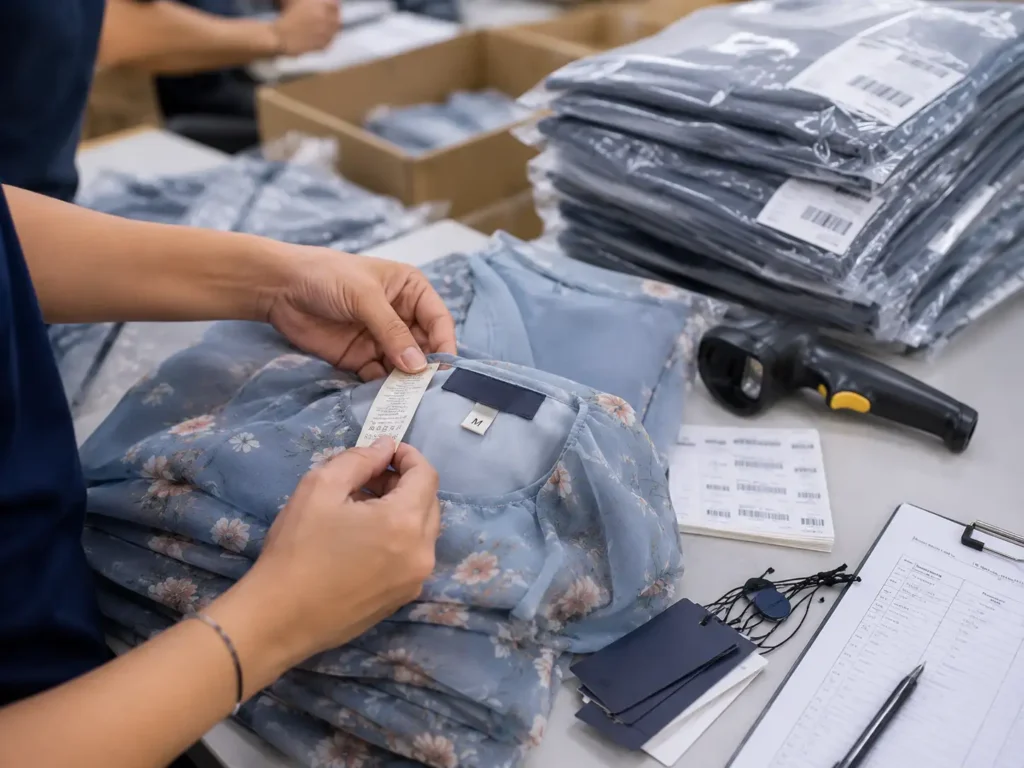
Style, color and size are identified through agreed labels, stickers, barcodes or SKU codes. Packing checks verify that the garment, hangtag, barcode and polybag information match. Clear SKU control reduces warehouse receiving errors and incorrect ecommerce fulfillment.
  • Match garment and barcode
  • Verify size-color labels
  • Check before sealing

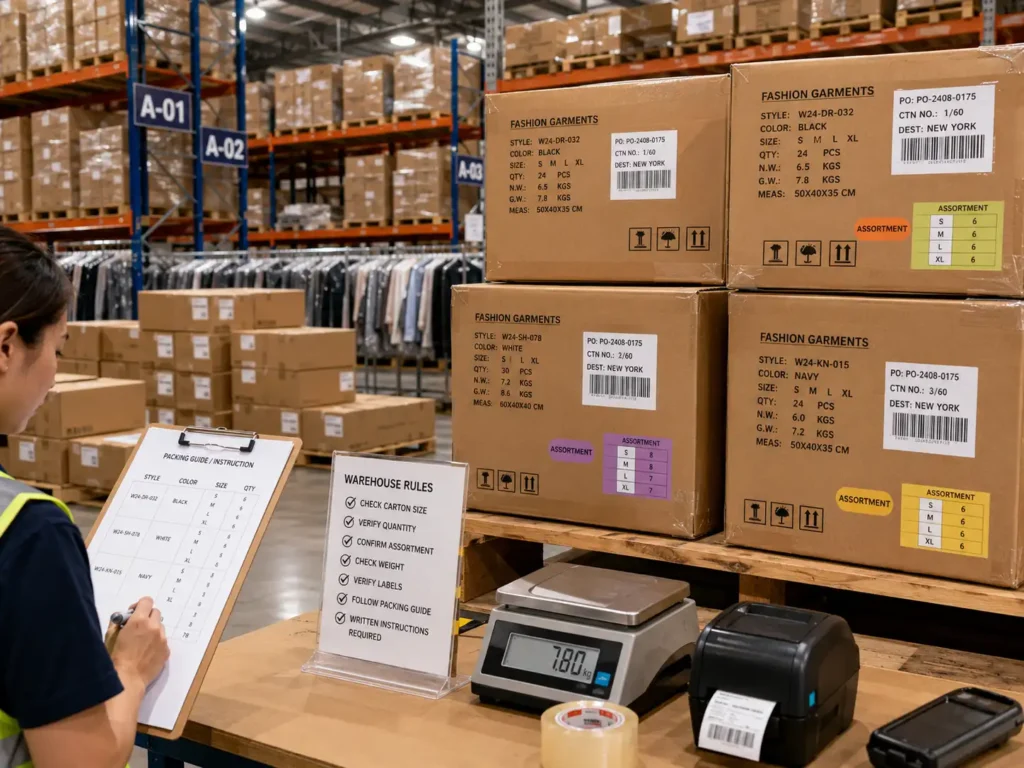
Carton Breakdown

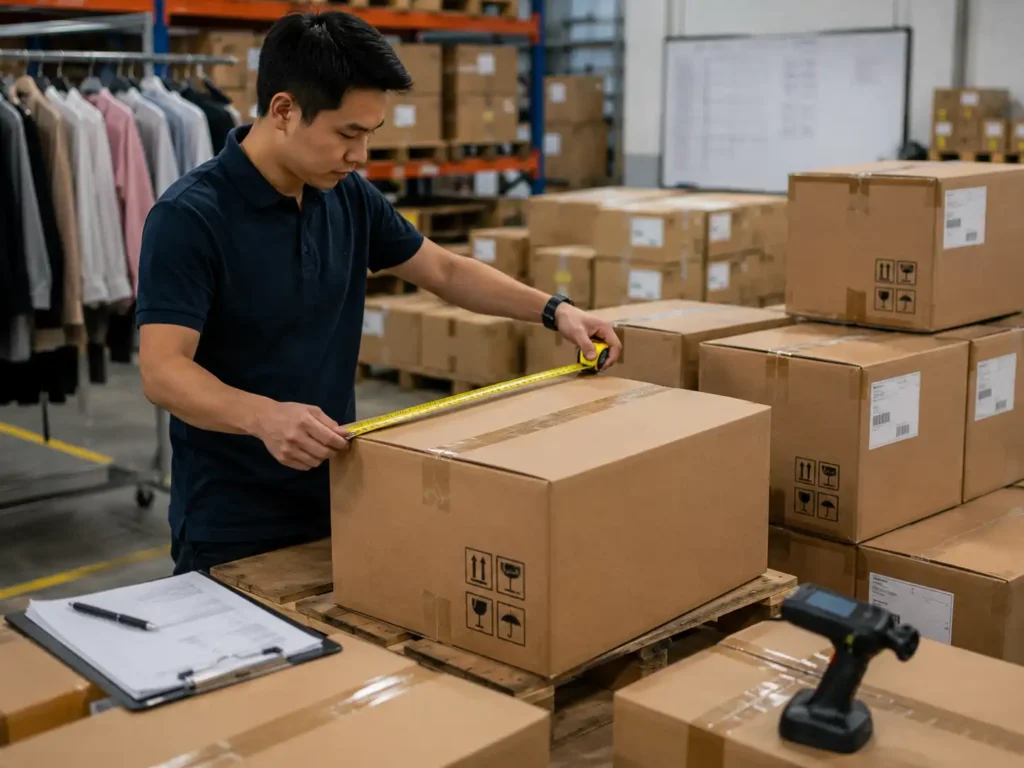
Cartons are organized by approved style-color-size ratios and warehouse instructions. Packing lists record carton number, quantity, dimensions, gross weight and net weight. Split shipments or multiple warehouses require separate carton marks and document sets.
  • Confirm packing ratio
  • Prepare carton marks
  • Separate shipment documents

Satin-Specific Quality Control from Fabric to Packing

Quality is controlled through material, cutting, sewing, measurement, finishing and packing stages. Fifteen-plus QC inspectors support product-specific checks rather than relying on a final visual review alone.

Fabric Appearance

Incoming satin is reviewed for visible defects, stains, pulls, holes, uneven finish and roll condition. Width, color and face direction are checked against the approved reference. Defects found before cutting can be marked or separated before they become repeated garment faults.
  • Inspect roll appearance
  • Mark visible defects
  • Confirm approved quality

Shade and Shine

Color and shine are checked by batch, direction and lighting. Satin panels cut in opposite orientations can appear as different shades even from the same roll. Cutting instructions therefore identify face and directional requirements before bundles move to sewing.
  • Check shade by batch
  • Control panel direction
  • Compare under light

Cutting Direction

Cut parts are checked for size, quantity, face/reverse, grain direction and visible defects. Bias panels, draped sections and long skirts require careful handling because slippage or direction errors affect balance. Bundles are separated by style, color and size.
  • Verify grain direction
  • Inspect cut quantity
  • Bundle by SKU

Sewing Tension

Thread tension and feeding need to suit the satin weight and construction. Puckering, seam shine, skipped stitches, drag lines and damaged surfaces are checked during sewing rather than after all units are finished. Corrections are made before the error spreads.
  • Check early units
  • Control seam puckering
  • Protect fabric surface

Zipper Flatness

Invisible zipper seams are checked for waviness, bulging, color mismatch, smooth operation and accurate alignment through the waist. The top closure and lining finish are inspected because zipper problems are particularly visible on fitted or high-shine satin.
  • Inspect seam flatness
  • Test zipper movement
  • Align waist seam

Garment Measurement

Measurements are compared with the approved size chart at defined points. Bust, waist, hip, length, strap, neckline, armhole, slit and hem are checked according to style. Out-of-tolerance results trigger correction and review of the related operation.
  • Follow defined measure points
  • Record tolerance results
  • Correct production cause

Pressing Review

Pressing is checked for shine damage, seam impressions, water marks, flattening, distortion and uneven hems. Heat, pressure and contact method are adjusted to the satin quality. Finished garments cool and settle before final appearance approval and packing.
  • Control heat and pressure
  • Avoid seam impressions
  • Recheck after cooling

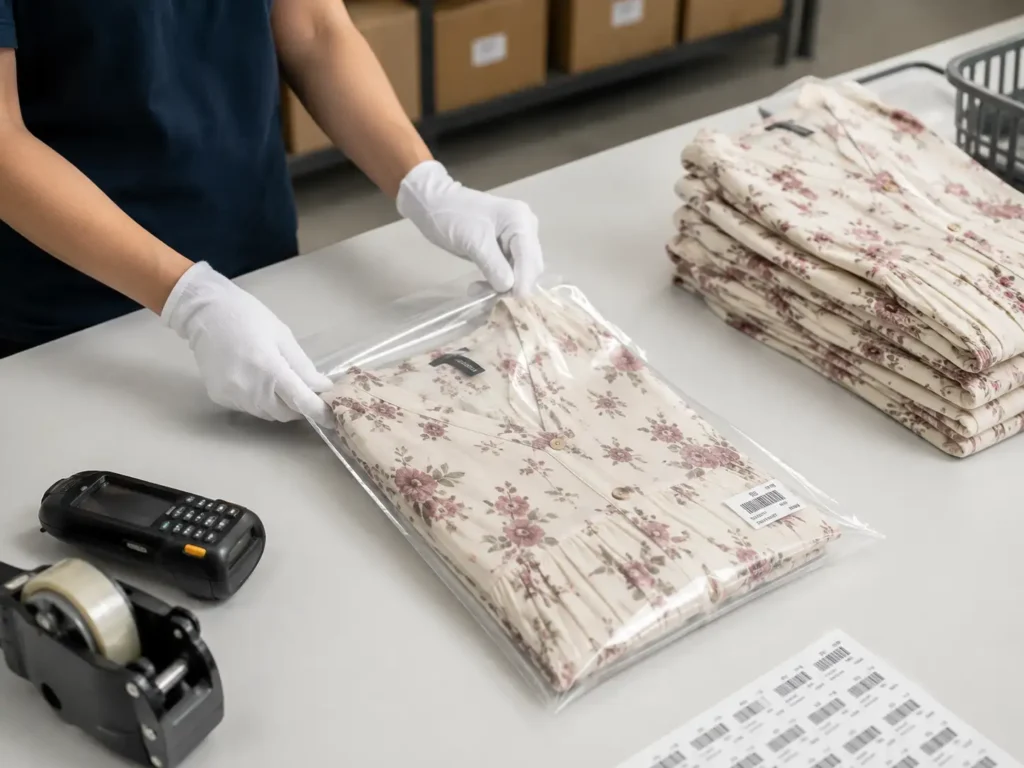
Packing Inspection

Labels, hangtags, barcodes, polybags, fold position, protective layers, carton quantity and carton marks are checked before shipment. Satin garments are assessed for fold creases, surface abrasion and pressure risk so retail presentation is not damaged in transit.
  • Verify brand information
  • Protect satin surfaces
  • Confirm carton data

Pressing and Packing That Protect Satin Presentation

Satin can leave the factory correctly sewn and still arrive with pressure marks, abrasion or deep folds. Finishing and packing standards are matched to fabric weight, dress length, structure and shipment method.

Controlled Pressing

Pressing settings are selected according to the approved satin quality. Low or controlled heat, reverse-side pressing and protective cloth methods may be used where appropriate. Operators avoid over-pressing seam allowances and boning channels because permanent shine or ridges can reduce the garment’s visual value.
  • Match heat to fabric
  • Protect visible face
  • Check seam impressions

Surface Protection

Zippers, hooks, sliders, beaded trims and sharp garment components are kept from rubbing directly against satin surfaces. Tissue, protective sheets or garment positioning can be used according to the approved packing plan. Clean handling reduces pulls, scratches and transfer marks.
  • Cover sharp components
  • Keep surfaces clean
  • Avoid garment-to-garment abrasion

Fold Management

Fold lines are planned away from focal areas where possible. Long dresses, corset styles and light satin may need different folds or additional support. Packing trials help confirm whether the chosen method creates unacceptable front-panel or skirt creases after compression.
  • Choose fold positions
  • Test structured styles
  • Review creasing after pack

Carton Pressure Control

Carton quantity is balanced against transport efficiency and garment recovery. Overfilled cartons can crush cups, boning, gathers and high-shine surfaces, while underfilled cartons allow movement. Final carton data records quantity, dimensions, gross weight and net weight for shipment planning.
  • Set suitable carton quantity
  • Protect garment structure
  • Record final carton data

Private Label and Retail-Ready Collection Delivery

Brand materials are managed as production components with their own specifications, approval points, MOQ and lead time. Artwork and wording remain subject to final brand and market confirmation.

Woven Labels

Main labels are developed by approved artwork, size, color, fold and placement. Material and edge comfort matter for occasion dresses with close skin contact. Bulk checks verify correct brand, orientation and attachment before the garment proceeds to packing.
  • Approve artwork and size
  • Check skin comfort
  • Verify attachment position

Size Labels

Size labels must match the garment measurement, hangtag, barcode and polybag. Mixed size errors can create warehouse and return problems even when the garment is well made. Size labels are checked during sewing and again during final packing.
  • Match garment size
  • Cross-check barcode
  • Prevent mixed packing

Care Labels

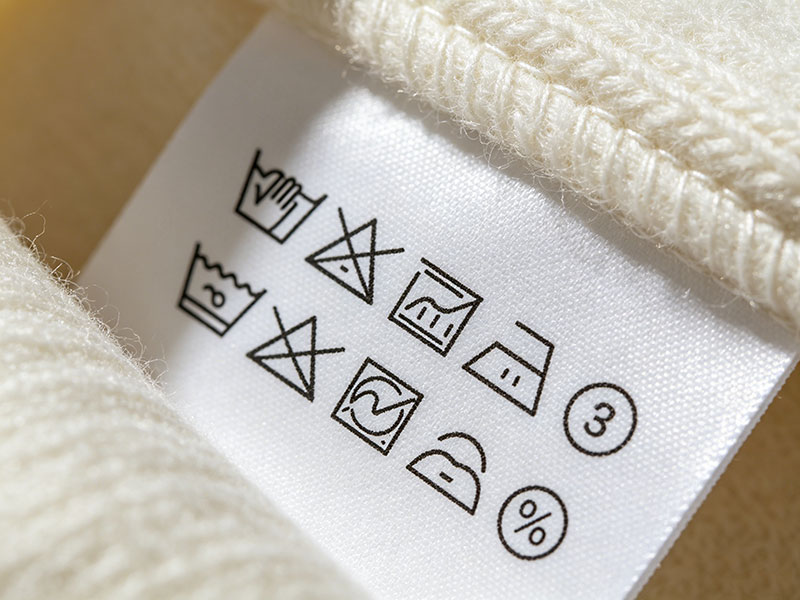
Care labels include fiber content, care instructions, country-of-origin information and other required details supplied or approved by the brand. Jinfeng Apparel can produce labels, while final legal wording should be confirmed by the importer or qualified compliance adviser for the target market.
  • Confirm fiber content
  • Approve market wording
  • Check placement and durability

Hangtags

Hangtags are reviewed by artwork, paper, color, hole position, string or fastener and attachment location. Occasionwear hangtags should not scratch satin or distort a delicate strap. Bulk quantities and spare ratios are planned with the order.
  • Approve print and paper
  • Protect garment surface
  • Verify attachment method

Barcode Stickers

UPC, EAN or internal SKU barcodes are printed from approved data. Scan tests and visual checks help confirm readability. Style, color, size and barcode information must match across the garment, hangtag, polybag and packing list.
  • Use approved data file
  • Test barcode scanning
  • Match all SKU fields

Branded Polybags

Polybags are selected by size, thickness, print, warning text and closure method. Satin garments need enough space to avoid hard folds and excessive compression. Bag printing, warning language and recycling marks are confirmed according to brand requirements.
  • Select suitable dimensions
  • Approve print and warning
  • Control fold pressure

Carton Marks

Carton marks identify consignee, purchase order, style, color, size ratio, carton number and destination as required. Multiple warehouses or regions need separate marking instructions. Packing and shipping teams verify marks against the final packing list.
  • Confirm destination data
  • Match carton number
  • Separate warehouse instructions

Warehouse Labels

Retail and ecommerce warehouses may require routing labels, ASN references, carton barcodes or pallet instructions. Requirements are collected before packing materials are printed. Late changes can delay shipment or create relabeling work after garments are complete.
  • Collect routing rules early
  • Confirm label format
  • Validate before shipment

MOQ and Cost Planning for Satin Collections

MOQ starts from 200 pcs per style/color. Final cost is built from fabric, trims, pattern work, construction, cutting, sewing time, pressing, QC, packaging, wastage, testing where required and delivery terms.

Cost DriverWhat ChangesEffect on MOQ, Cost or Timing
Satin type and weightComposition, finish, width, drape, stretch and bulk availabilityChanges material cost, consumption, pattern behavior, pressing and supplier MOQ
Color countStock color, lab dip, custom dye or repeated shade groupEach color is planned separately; dyeing and shade approval may add MOQ and lead time
Lining structureNo lining, partial lining, full lining or double layerAffects opacity, comfort, consumption, sewing time and finishing
Garment constructionSlip, ruched, draped, corset, boned, layered or bias-cutChanges pattern time, sample rounds, sewing minutes and QC intensity
Trim developmentSpecial-color zippers, sliders, cups, boning, labels and hangtagsMay introduce separate supplier MOQ, tooling or development lead time
Size rangeStandard, extended, petite or tall proportionsInfluences grading, consumption, fit review, size ratio and measurement control
Packaging standardBasic export pack, branded pack, barcode or warehouse routingAdds material, approval, labor and data-management requirements
Delivery planSingle shipment, split shipment, air/sea combination or multiple warehousesAffects production sequence, packing breakdown, documentation and logistics cost

The Team Behind Your Satin Collection

Collection execution depends on coordinated responsibility. Product, fabric, pattern, sampling, merchandising and quality roles work from shared approvals and project records rather than isolated conversations.

Product Development

Product development reviews the assortment, structure, target effect, material direction, price target and commercial role of each style. Risks are identified before sampling so decorative concepts are translated into garments that can be fitted, produced, packed and repeated.
  • Review assortment logic
  • Identify development risk
  • Connect design to production

Fabric and Trim

Material teams source satin, lining, zippers, cups, boning, sliders and branded components according to approved specifications. Bulk availability, MOQ, color, lead time, comfort and cost are reviewed before final choices are released into samples and production.
  • Source approved materials
  • Track MOQ and lead time
  • Confirm bulk availability

Pattern Making

Seven-plus senior pattern makers develop and correct womenswear patterns around bust, waist, hip, length, straps, necklines, slits, lining and internal support. Pattern corrections from fittings are documented for revised samples, grading, bulk production and later reorders.
  • Control body proportion
  • Document corrections
  • Prepare production patterns

Sample Making

Two sample rooms and 20+ sample machinists support first, fit, revised, photo-ready, PP and Golden sample work. Satin sewing, drape, lining, zipper and structured bodice details are tested before production standards are confirmed.
  • Build sample versions
  • Test construction methods
  • Prepare PP standards

Merchandising

Twelve-plus merchandisers coordinate requirements, fabric and trim status, sample versions, approvals, bulk progress, packaging and shipment preparation. Key changes are captured in records so responsibilities and next actions remain clear across a multi-style program.
  • Track project timeline
  • Coordinate approvals
  • Report key milestones

Quality Control

Fifteen-plus QC inspectors support incoming material, cutting, sewing, inline, garment, pressing, packing and final inspection. Product-specific checkpoints for satin, corset, draped and occasion styles are linked to approved samples and measurement standards.
  • Inspect by production stage
  • Apply satin-specific checks
  • Record quality findings

Protect Designs and Prepare Successful Reorders

Confidentiality and production continuity are managed through documented controls. Brand information stays protected, while approved standards are retained to support seasonal extensions and repeat production.

Collection Confidentiality

Jinfeng Apparel supports NDA-based cooperation and protects tech packs, line sheets, original samples, patterns, size charts, fabric plans, trims, labels, packaging, unreleased designs, quantities and launch information. Client names, logos, unpublished styles and purchase-order details are not used publicly without authorization. Anonymous cases may describe the market, product type, production challenge and manufacturing solution without exposing proprietary identity.
  • NDA support available
  • No unauthorized design disclosure
  • Anonymous case use only

Repeat-Order Continuity

Pattern records, size charts, fabric references, color records, trim cards, sewing instructions, Golden samples, QC notes, label requirements and packing methods can be retained for future orders. Reorders often move faster because the development history already exists, but fabric availability, dye lot, price, trims, packaging and delivery dates still require fresh confirmation. A same-style new color or fabric change may need renewed swatch or sample approval.
  • Retain approved standards
  • Reconfirm new material batches
  • Update price and delivery

Frequently Asked Questions About Satin Occasion Collections

Yes. Jinfeng Apparel can develop coordinated mini, midi, maxi, slip, corset, wedding guest, cocktail and evening styles from line sheets, reference images, sketches, original samples or tech packs. The project is reviewed by style count, fabric group, color plan, size range, construction, sample priority, MOQ, packaging and launch timing before development begins.

Common directions include polyester satin, acetate satin, polyester-spandex satin, matte satin, stretch satin, heavier structured satin and silk-like satin. Typical weights range from about 80-220 gsm. Final selection depends on silhouette, shine, drape, stretch, opacity, lining, bulk availability, cost and care requirements. Physical swatch approval is recommended before sampling.

MOQ starts from 200 pcs per style/color. MOQ is calculated by individual style and color, not only by total order quantity. One style in two colors normally requires 200 pcs per color. Special dyeing, exclusive satin, custom trims, printed packaging or supplier-controlled materials may have higher minimum requirements.

An ordinary dress first sample commonly requires about 10-15 days. Simpler styles may require about 7-10 days. Corset, strapless, lace, mesh, sequin or evening structures commonly require about 15-25 days. Custom fabric or special trims can extend the schedule. Revised and PP samples are confirmed according to the required changes and material readiness.

Yes. Reference images can start a structural review, but accurate development also needs information on target quantity, satin direction, color, size range, target market, preferred fit, labels, packaging and launch date. A final bulk quotation cannot be locked from one image alone because fabric, construction, trims, measurements and packing affect cost and production feasibility.

Color control uses approved physical swatches or lab dips, fabric batch identification, dye-lot separation, shade review, lighting comparison, shine direction and lining color approval. Cutting direction is controlled because opposite satin orientations can appear as different shades. New reorder batches are reviewed again instead of being assumed to match automatically.

Many pale, lightweight or formal satin dresses need lining, but the answer depends on fabric weight, color, silhouette and desired hand feel. Lining is reviewed for opacity, color, stretch, static, comfort, length and attachment. A lining that is too heavy or has different stretch can distort the shell and change the intended drape.

Bulk timing is confirmed after PP approval, final fabric and trims, production allocation, size-color breakdown, QC window, packing method and shipment plan are ready. Material arrival is a major factor. Complex styles, custom dyeing, special trims, split shipments or multiple warehouse requirements may add time. A project timeline is issued around confirmed milestones rather than an unsupported fastest-date promise.

Yes. Jinfeng Apparel supports woven labels, size labels, care labels, hangtags, barcode stickers, branded polybags, carton marks and warehouse labels. Artwork, wording, market information, SKU data and placement must be approved before production. Final regulatory wording should be confirmed by the importer or qualified adviser for the destination market.

Yes. NDA-based cooperation can cover tech packs, line sheets, samples, patterns, fabric plans, trims, labels, packaging and unreleased designs. Pattern, measurement, material, QC and packing records can be retained for repeat production. New dye lots, materials, colors, prices and delivery dates still require fresh confirmation for each reorder.

Start Your Satin Occasionwear Collection

Send Kelly the files and commercial details needed for a focused project review. A line sheet, tech pack, original sample, sketch or reference image can begin the discussion. Please include the number of styles, quantity per style/color, preferred satin direction, color plan, size range, target market, private-label requirements, sample deadline and intended bulk delivery window.

Jinfeng Apparel will review product structure, fabric and trim direction, MOQ fit, sampling sequence, major production risks, packaging needs and the information required for an initial quotation. Final production price and timing are confirmed after fabric, trims, construction, measurements, PP standard, packaging and delivery terms are approved. 

  • Line sheet, tech pack, original sample, sketch or reference images
  • Style count and quantity per style/color
  • Preferred satin type, colors and size range
  • Labels, hangtags, barcode and packaging requirements
  • Sample deadline, launch date and delivery window
  • Target market, warehouse or forwarding instructions

Tell Us About Your Dress Project

Share your product details, estimated quantity and development requirements. Our team will review your project and provide practical OEM/ODM production feedback.

Premium Women’s Apparel Production for Fashion Brands

From dress sample development to bulk production, JF Apparel supports fashion brands with confidential OEM/ODM manufacturing, reliable quality control and scalable production support.

START YOUR DRESS PROJECT

Ready to Develop Your Next Dress Collection?

Share your design concept, product requirements or sourcing plans with our team. We’ll review your project and provide practical feedback on development, materials, MOQ and production.

7-10 Days

Sample Development

200 PCS

Starting MOQ

Fast Response

Professional Follow-Up