 Skip to content
Satin Dress Quality Control
Jinfeng Apparel supports established fashion brands, sourcing teams, product developers, and quality managers with a structured satin dress quality-control program. The process begins before cutting and continues through sample approval, bulk sewing, measurement, pressing, packing, and pre-shipment review.
- 10-stage satin quality-control path from fabric approval to dispatch
- 8 core satin risks monitored across surface, color, seams, fit, and finishing
- 3 production references aligned before bulk release: approved fabric, PP sample, and Golden sample
- 15+ QC inspectors supporting fabric, inline, final garment, packing, and shipment checks
Satin Quality Control Built for Brand Programs
Different teams read mesh dress risk from different angles. Development focuses on appearance and fit, sourcing controls materials and timing, while quality and operations protect bulk consistency, labeling accuracy, and warehouse acceptance.
Since 2008
6 Owned Factories
18+ Sewing Lines
2 Sample Rooms
7+ Pattern Makers
15+ QC Inspectors
What Is Satin Dress Quality Control?
Satin dress quality control is a stage-based system for managing fabric shade, shine direction, surface damage, seam appearance, measurements, pressing, finishing, and packing from material approval through final shipment. Effective control uses approved references, documented inspection points, corrective action, and production records instead of relying only on a final random check.
A Ten-Stage Control Path
The working sequence begins with fabric direction and color approval. Pattern and sample development then establish fit, construction, lining, trim, and visual standards. A PP sample confirms the final production specification before bulk cutting. Fabric QC, cutting QC, sewing checks, measurement inspection, finishing review, packing verification, and pre-shipment checks then protect the approved standard through each production stage.
Quality Is Defined Before Bulk Production
Satin quality is not limited to visible defects. A commercially successful dress also needs the correct drape, fit, lining coverage, zipper behavior, color consistency, pressed appearance, label accuracy, and unpacking condition. Every element must be converted into an executable production reference. Approved fabric swatches, revised patterns, measurement charts, BOM details, sewing notes, packing instructions, and the Golden sample create a shared standard for production and inspection teams.
Quality Decisions Follow Product Structure
A bias-cut slip dress requires different controls from a structured satin corset dress. A fitted mini dress needs close attention to bust, waist, hip, zipper, and stretch recovery, while a satin maxi dress requires hem balance, lining length, drape, and anti-crease packing. Inspection criteria are therefore adjusted by satin type, silhouette, construction, color plan, size range, and sales channel.

Eight Satin Dress Defects Brands Must Prevent

Shade Variation
Shine Direction Error
Snagging and Surface Damage

Seam Puckering
Zipper Bulging

Lining Exposure

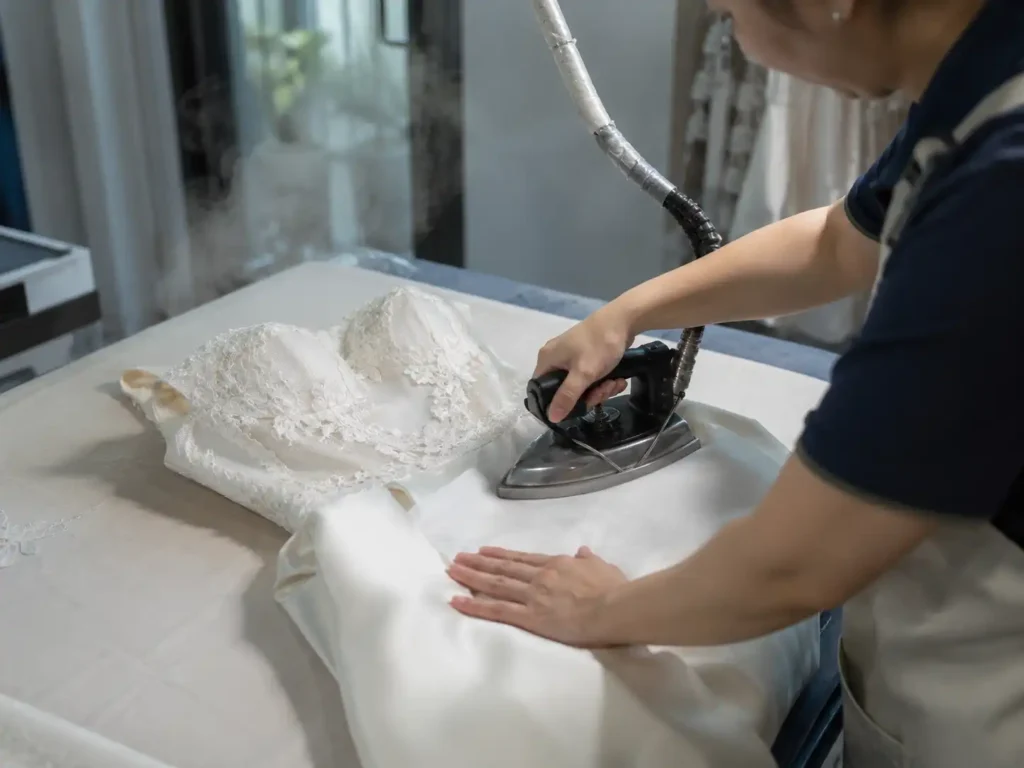
Pressing Marks

Packing Creases
Quality Control by Satin Type and Dress Style
Different satin constructions produce different drape, stretch, shine, seam behavior, and pressing response. Fabric direction should be selected together with the dress silhouette and target wearing occasion. Bulk controls are then defined around the actual fabric and structure rather than a generic satin checklist.
| Satin Direction | Suitable Dress Styles | Main Quality Risks | Priority Control Points |
|---|---|---|---|
| Regular polyester satin | Slip, midi, party, bridesmaid, occasion dresses | Snagging, shade difference, seam puckering, visible needle marks | Shine direction, surface inspection, seam appearance, lining, pressing |
| Matte satin | Cocktail, occasion, office-to-evening, structured midi dresses | Batch variation, flat appearance, pressure marks, uneven hem | Color approval, fabric weight, zipper flatness, hem balance, finishing |
| Stretch satin | Bodycon, corset, fitted mini, club and party dresses | Stretch-direction errors, poor recovery, tight fit, zipper waves | Recovery test, bust-waist-hip fit, seam tension, zipper, measurement stability |
| Heavy satin | Evening, formal, structured maxi and statement dresses | Thick seams, pressing impressions, heavy hem, shape loss in packing | Support construction, seam bulk, lining, pressing method, shape-protective packing |
Satin Fabric, Shade, and Batch Approval
Fabric approval is the first quality gate. Satin problems become expensive when color, shine, surface, stretch, weight, or drape differences are discovered after cutting. Jinfeng Apparel reviews the selected material against the dress structure, approved visual direction, size range, order quantity, and production plan before releasing bulk cutting.
Fabric Direction Review
The review covers fabric composition, weight, width, stretch, recovery, hand feel, drape, opacity, shine, surface sensitivity, lining requirement, shrinkage risk, pressing response, and supplier availability. A fabric selected for a fluid slip dress may not provide enough support for a corset dress, while a heavy satin suitable for eveningwear may create excessive seam bulk in a minimal mini dress.
Color Reference and Lab Dip
For custom colors, the brand should provide a Pantone reference, approved swatch, or other agreed standard. Lab dips are reviewed before bulk dyeing when applicable. Color approval should consider the satin surface under relevant lighting because reflective fabrics can appear different between daylight, studio lighting, store lighting, and photography.
Bulk Fabric and Shade Band Review
Bulk material should be compared with the approved reference before cutting. Shade bands or roll swatches help identify visible variation across rolls and dye lots. Rolls are labeled and separated when necessary so visually connected panels do not combine noticeably different shades.
Lining, Thread, Zipper, and Trim Matching
Color control extends beyond the outer fabric. Lining, sewing thread, zipper tape, zipper teeth, hooks, straps, labels, and decorative trims may be visible through or beside the satin. Matching standards should be confirmed before purchase and recorded in the BOM or trim approval file.
Repeat-Order Color Control
Saved references improve repeat-order efficiency but do not eliminate the need for a new material review. The original fabric may no longer be available, and new dye lots can differ. Repeat orders should compare the new bulk shade, lining, zipper, thread, and approved Golden sample before production release.
Fabric Arrival Inspection
Incoming satin is checked for visible flaws, stains, holes, pulled yarns, shade differences, usable width, quantity, and roll identification. Project-specific checks may also cover shrinkage, colorfastness, stretch, recovery, or third-party testing according to the brand requirement and fabric risk.
Sample, PP, and Golden Sample Control

First Sample
Fit Sample

Revised Sample

Photo-Ready Sample

PP Sample

Golden Sample
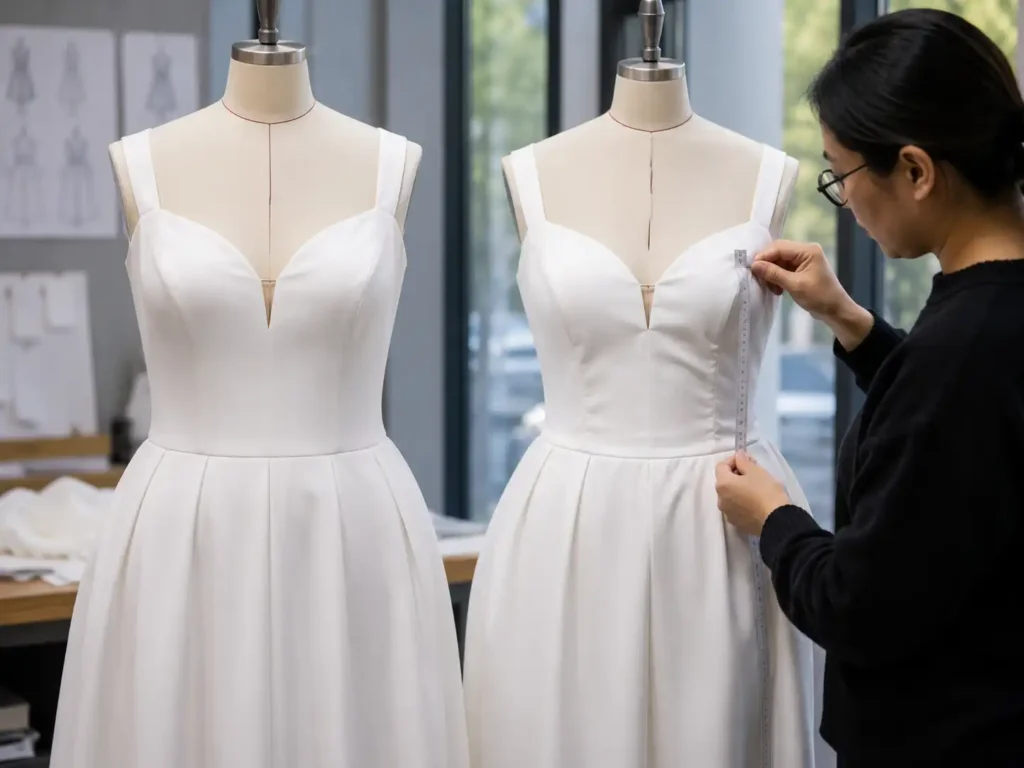
Pattern, Fit, and Measurement Control
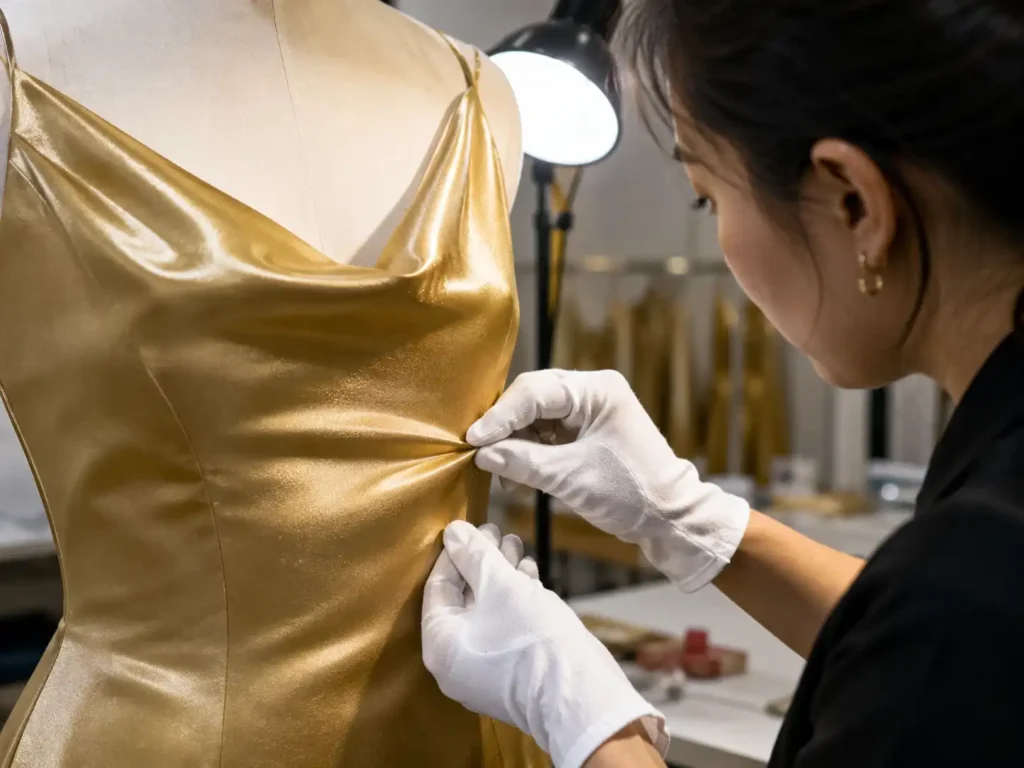
Satin highlights fit and balance more strongly than many matte fabrics. Light reflection draws attention to pulling, twisting, uneven hems, tight seams, poor bust shaping, and zipper distortion. Pattern and measurement control therefore needs to follow the selected satin type, silhouette, size range, and intended wearing occasion.

Slip Dress Control Points
Strap length, neckline depth, bust coverage, armhole shape, side-seam balance, back shape, bias behavior, hem level, and lining coverage determine whether a slip dress appears refined or unstable. Minimal construction leaves little room to hide fit or sewing errors.

Bodycon and Fitted Dress Control Points
Bust, waist, hip, stretch direction, recovery, zipper position, side-seam alignment, slit opening, lining tension, and movement allowance should be assessed together. Size measurements alone do not confirm fit when fabric recovery changes after sewing or wear.

Corset and Strapless Control Points
Upper-bust and underbust balance, cup position, boning length, waist placement, anti-slip support, back closure, zipper strength, neckline stability, and lining are critical. Structured elements must hold the dress without becoming visible as harsh ridges through the satin.

Maxi Dress Control Points
Front length, back length, lining length, slit height, waist position, hem sweep, panel balance, and fabric growth affect walking and visual symmetry. Long satin dresses should be allowed to settle before the final hem decision when the cut and fabric behavior require it.

Size Grading and Tolerance
One approved sample size does not guarantee consistent fit across XS–XL or extended size ranges. Grade rules should define how bust, waist, hip, straps, armholes, neckline, length, slit, and lining change between sizes. Measurement tolerances follow the brand standard, product structure, and fabric behavior. Zero tolerance should not be assumed for bulk garment production.

Bulk Measurement Records
Bulk checks compare selected garments with the approved measurement chart and tolerance. Results should identify style, color, size, inspected quantity, measurement point, actual result, tolerance, status, and corrective action. Repeated out-of-tolerance findings require production correction rather than isolated repair alone.
Satin Cutting Direction and Bundle Control
Final Pattern Check
Face and Reverse Identification
Shine Direction Control
Shade Separation
Defect Marking
Bundle by Size and Color
Sewing, Zipper, and Inline Quality Control
Satin sewing quality depends on preparation, machine settings, handling discipline, and early correction. A finished-garment inspection can identify puckering or zipper distortion, but it cannot efficiently remove defects that have already spread through hundreds of units. Jinfeng Apparel uses trial sewing, first-piece review, inline checks, and corrective action to control bulk workmanship while production is active.

Trial Sewing Before Line Release
Trial pieces use the approved satin, lining, thread, needle direction, seam construction, and stabilizing method. The team reviews seam appearance, stitch balance, feeding, needle marks, fabric damage, pressing response, and recovery after handling. Machine settings are adjusted before continuous production where required.
A smooth seam requires more than a short stitch length. Needle size, point type, thread, upper and lower tension, presser-foot pressure, feed balance, seam allowance, stabilizing, operator handling, and pressing can all influence the final surface. The approved method should be documented so multiple operators and lines can reproduce the same appearance.

First-Piece and Line Setup Review
The first completed pieces are compared with the PP or Golden sample before volume sewing continues.
Review points include silhouette, seam location, zipper insertion, lining position, strap length, neckline, armhole, slit, hem preparation, label placement, and visible symmetry.
Production should pause when the first pieces do not match the approved standard.
Correcting the setup before volume output is faster and more reliable than sorting and repairing a large quantity later.
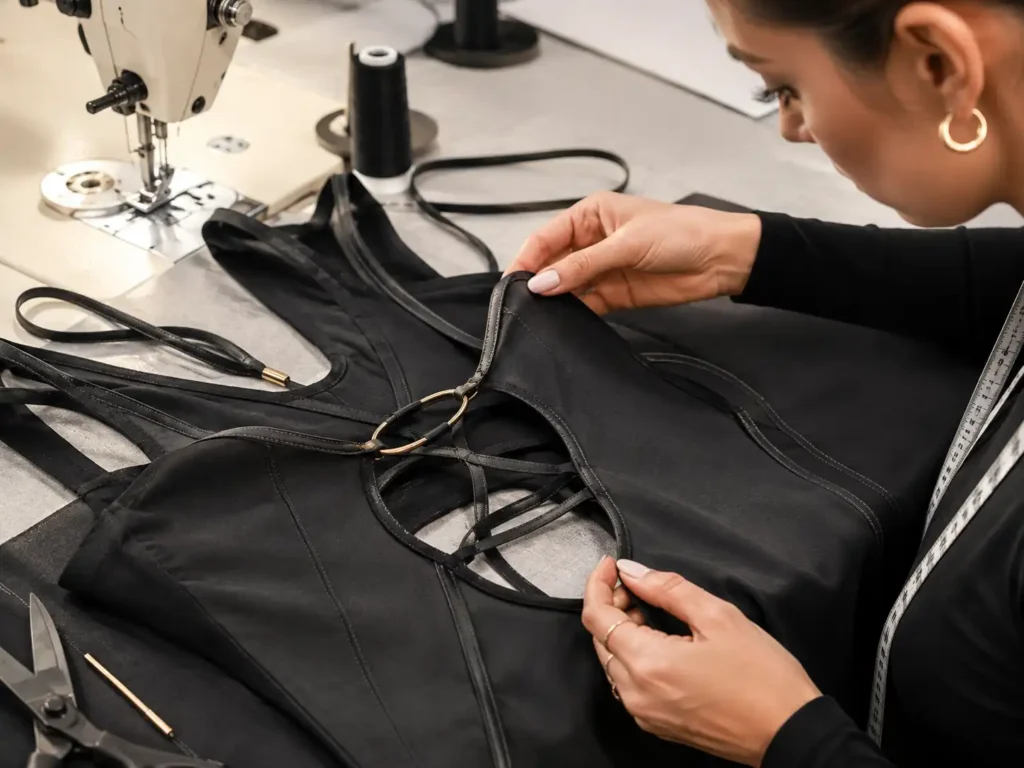
Seam Appearance and Puckering Control
Inline inspectors check long seams, curved seams, waist joins, bust seams, side seams, center-back seams, darts, princess seams, and hems under suitable lighting. Waviness, skipped stitches, loose stitches, tight stitches, open seams, seam slippage, needle holes, and uneven topstitching are recorded and corrected.
Satin often looks different when held flat, worn on a body, and viewed under directional light. Inspection should include both close surface review and overall garment appearance so technically small ripples do not damage the commercial presentation.

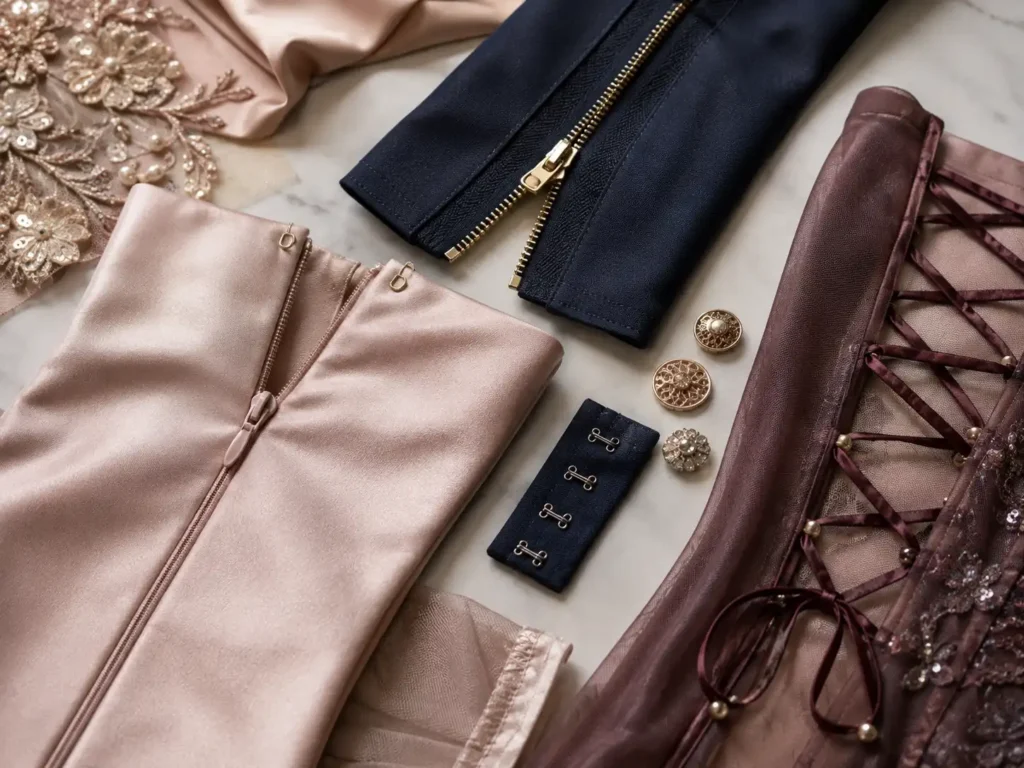
Zipper Flatness and Closure Control
Zipper length, tape, teeth color, seam reinforcement, fabric stretch, stabilizing, attachment method, and pressing affect zipper appearance.
Inline checks review whether the zipper opens smoothly, closes securely, lies flat, matches the center or side seam, and avoids waves or sharp ridges.

Lining, Strap, and Internal Construction
Inspectors confirm lining color, coverage, attachment, hem length, slit alignment, neckline position, armhole finish, cups, boning, elastic, anti-slip tape, and strap hardware where applicable.
Internal components should support fit and comfort without showing through the satin surface.

Corrective Action and Reinspection
When repeated defects appear, the team identifies the operation, machine, material, bundle, operator, or method involved. Affected pieces are separated, the production method is corrected, repaired pieces are reinspected, and later output is monitored to confirm the problem has not returned. Changes should be added to the production and QC record for repeat orders.
Satin Dress Quality Control Workflow
The workflow below connects material, production, garment, and packing controls. Exact inspection frequency, tolerance, sampling plan, and release criteria follow the brand’s quality manual, order structure, product risk, and agreed project plan.
| Control Stage | Main Checks | Working Reference | Action When Nonconforming |
|---|---|---|---|
| Fabric QC | Shade, shine, surface defects, width, quantity, stretch or shrinkage where required | Approved swatch, lab dip, bulk fabric approval | Segregate rolls, replace material, revise cutting plan |
| Trim QC | Zipper, lining, thread, labels, cups, boning, hooks, packaging items | BOM, trim card, artwork, color standard | Hold or replace incorrect trims before production |
| Cutting QC | Pattern version, face direction, shine direction, shade group, cut quantity, size bundle | Final pattern, marker, cutting instruction | Recut affected parts and correct bundle data |
| Inline QC | Seam appearance, puckering, zipper, lining, straps, symmetry, construction | PP sample, Golden sample, sewing notes | Stop repeated defects, correct operation, repair, reinspect |
| Measurement QC | Bust, waist, hip, length, straps, neckline, slit, lining, tolerance | Approved size chart and grade rule | Correct pattern or operation, segregate out-of-tolerance pieces |
| Final Appearance | Snags, stains, needle marks, wrinkles, pressing marks, loose threads, shape | Golden sample and defect standard | Repair where acceptable, reject or replace when required |
| Packing QC | Labels, barcode, size-color sticker, fold, polybag, ratio, carton mark | Packing instruction, SKU list, artwork | Repack, relabel, recount, correct carton data |
| Pre-Shipment Review | Quantity, inspection result, packing list, cartons, documents, client requirements | PO, inspection plan, shipping instruction | Hold shipment until agreed release conditions are met |
Pressing and Final Appearance Release
Pressing Method Approval

Surface and Shape Review

Packing Release
Anti-Crease and Retail-Ready Satin Packing
Satin presentation can deteriorate between the finishing table and the warehouse. Folding, friction, pressure, unsupported cups, twisted straps, compressed hems, unsuitable polybags, and excessive carton loading may create creases or surface damage. Packing should preserve the garment while keeping every SKU identifiable for warehouse receiving.
Garment Preparation Before Folding
The packing team confirms that the dress is clean, dry, cooled after pressing, correctly labeled, and free from unresolved surface defects. Straps, belts, detachable parts, cups, boning, zippers, hooks, and embellishments are positioned to avoid pressure or abrasion against the satin face.
Fold Direction and Internal Support
Fold direction follows the silhouette and fabric behavior. Long satin skirts may require controlled folding at low-pressure points. Structured busts, cups, boning, shoulder areas, and statement details may need tissue, inserts, or other agreed support. Packaging material must not have rough edges that can snag the fabric.
Polybag and Label Verification
Polybag size should allow the garment to sit without excessive compression. Size sticker, color sticker, barcode, SKU, style number, care label, brand label, and hangtag are checked against the approved artwork and packing file. Label placement should not create visible marks on delicate satin.
Size-Color Ratio and Carton Control
Packers follow the approved ratio by style, color, and size. Carton quantity, mixed-carton rules, carton number, gross weight, net weight, carton dimensions, and carton marks are reconciled with the packing list. Errors at this stage can delay warehouse intake even when garment quality is acceptable.
Carton Pressure and Transport Planning
Carton loading should protect garment shape without wasting transport space. Heavy compression can create deep creases, crushed cups, bent boning, damaged hangtags, or zipper impressions. Air and sea shipments may require different packing decisions according to delivery urgency, garment value, carton volume, and unpacking expectations.
Pre-Shipment Packing Review
Selected cartons are opened to verify garment identity, fold, labels, quantity, ratio, internal protection, and carton information. Photo records can be provided according to the project. Final shipping release also checks the packing list and shipment instructions against the actual packed goods.
Brand Standards, AQL, and Third-Party Inspection
Established fashion brands often maintain quality manuals, defect classifications, measurement tolerances, label rules, packing instructions, and inspection plans. Jinfeng Apparel can review those requirements before sampling or bulk production and convert applicable standards into production notes, QC checkpoints, inspection records, and shipment-release conditions.
Client Quality Manual Integration
Brands may provide measurement tolerance, critical-major-minor defect definitions, workmanship limits, testing requirements, label placement, packaging standards, carton instructions, approved inspection levels, and photo-record expectations. Early submission helps the development, production, QC, and packing teams work from the same standard.
Internal Inspection and Corrective Action
Internal quality checks can cover fabric, trims, cutting, sewing, measurements, final appearance, packing, and cartons. Findings are evaluated against the approved reference and project standard. Repeated issues require corrective action at the process level, followed by repair and reinspection of affected goods.
AQL Inspection
AQL is a sampling and acceptance method, not a guarantee that every unit is defect-free. The applicable sampling level, AQL limit, defect classification, sample size, and acceptance criteria should follow the brand requirement, order quantity, product risk, or appointed inspection standard. Internal AQL checks or client-requested pre-shipment inspections can be arranged by project.
Third-Party Testing and Inspection
Jinfeng Apparel can cooperate with SGS, Intertek, BV, ITS, or a client-appointed laboratory or inspection company for fabric tests, garment tests, AQL inspection, packing checks, or pre-shipment review. Scope, standard, sample selection, timing, cost, and final conclusions are determined by the brand and the independent service provider.
Compliance Documentation Boundaries
ISO-related quality management references, SMETA, Sedex, BSCI-related support, and OEKO-TEX, GOTS, organic, recycled, or GRS fabric resources are confirmed according to the relevant factory, supplier, material, color, batch, MOQ, certificate scope, and current documentation. Certification should never be assumed for every fabric or every production order.

Quality Evidence Available for Project Review

Fabric Inspection Record

Approved Shade Reference

PP Sample Approval

Inline QC Photos

Measurement Report

Packing and Pre-Shipment Checklist
Scalable Execution for Multi-Style Satin Orders
A quality system must work beyond the sample room. Jinfeng Apparel combines six owned women’s fashion factories, more than ten long-term satellite production partners, 18+ sewing lines, 6+ flexible lines, 2 sample rooms, 7+ senior pattern makers, 20+ sample machinists, 12+ merchandisers, 15+ QC inspectors, and 30+ finishing and packing workers within a coordinated womenswear manufacturing structure.
Factory Allocation by Product Risk
Satin slip dresses, fitted minis, structured corset dresses, occasionwear, and maxi dresses do not always belong on the same production line. Allocation considers fabric type, seam sensitivity, structure, trims, order size, color-size breakdown, quality standard, and schedule. Complex styles receive development and QC involvement appropriate to their risk.
Merchandising and File Control
Merchandisers connect approved samples, fabric and trim status, BOM updates, measurement files, revision records, production schedule, packing instructions, inspection requirements, and shipment documents. Version control reduces the risk of one team working from outdated comments or artwork.
Quality Coverage During Production
QC inspectors support incoming materials, cutting, inline sewing, measurements, final garments, packing, and shipment review. Inspection intensity can be adjusted according to style difficulty, first-order risk, defect history, client manual, order quantity, and appointed inspection plan.
Capacity With Product-Specific Limits
Regular monthly capacity exceeds 100,000 womenswear pieces across the owned and coordinated production system. Actual output for a satin program depends on fabric behavior, style complexity, sewing time, handwork, size-color structure, inspection requirements, and confirmed production schedule. Complex evening and corset styles require more production time than regular slip or midi dresses.
Repeat-Order Readiness
Patterns, measurement charts, BOM details, approved fabric references, color records, trim records, sewing notes, QC findings, packing requirements, and Golden samples can be retained for repeat orders.
New fabric batches, colors, size extensions, or construction changes still require review before production release.

Satin Dress Quality Control Frequently Asked Questions

Start a Satin Dress Quality Review
- Reference images, sketches, original sample, or tech pack
- Target quantity for each style and color
- Preferred satin type, composition, weight, stretch, or visual direction
- Color plan, Pantone reference, or approved swatch where available
- Size range, size chart, grade rule, and measurement tolerance
- Lining, zipper, cups, boning, trims, and construction requirements
- Quality manual, defect list, AQL, testing, or third-party inspection needs
- Brand labels, care labels, hangtags, barcode, SKU, and packing instructions
- Target sample date, launch window, and requested delivery window

