 Skip to content
Satin and Lace Dress Manufacturer
Custom satin-and-lace dress development for fashion, occasionwear and private-label collections requiring controlled fit, fabric pairing and repeatable bulk production.
- Satin direction reviewed across a common 80-220 gsm range, while lace is assessed across approximately 60-250 gsm according to structure, transparency and motif density.
- Six core product directions cover lace-trim slip dresses, satin mini dresses, corset styles, cocktail midis, occasion maxis and coordinated private-label collections.
- Eight high-risk points are addressed before bulk: shine direction, lace placement, stretch compatibility, bust coverage, lining, zipper balance, pressing and packing protection.
- MOQ starts from 200 pcs per style/color, subject to fabric availability, lace source, color development, construction complexity, private-label materials and production schedule.
Manufacturing Scale for Multi-Style Dress Programs
Since 2008
Six Owned Factories
Ten-Plus Partners
Two Sample Rooms
Seven-Plus Pattern Makers
Twenty Sample Machinists
Built for Established Fashion and Occasionwear Programs
The strongest fit is a brand or sourcing team with a defined collection direction, paid sample development, planned bulk quantities and a need for controlled private-label delivery across seasonal launches, repeat orders or multi-style dress programs.
Fashion Brand Collections
Product Development Teams
Product developers gain a manufacturing partner able to discuss more than appearance. Development reviews cover satin weight, lace type, stretch balance, lining, neckline security, bust support, zipper construction, hem behavior, sample revisions and the documents required to carry an approved sample into bulk.
Sourcing and Retail Programs
Three Risks That Decide Bulk Dress Quality
Satin Surface Risk
Lace Placement Risk
Mixed-Fabric Bulk Risk
Satin and Lace Dresses Built Around Selling Scenarios

Lace-Trim Slip Dresses

Corset Satin Minis

Cocktail Midi Dresses

Evening and Maxi Dresses

Wedding Guest Collections

Private-Label Dress Lines
Select Satin by Structure, Drape, and Retail Positioning
Satin is not a single standard fabric. A common 80-220 gsm range can produce very different results depending on weave, fiber blend, stretch, surface shine and garment structure. Selection should follow the approved silhouette and selling level.
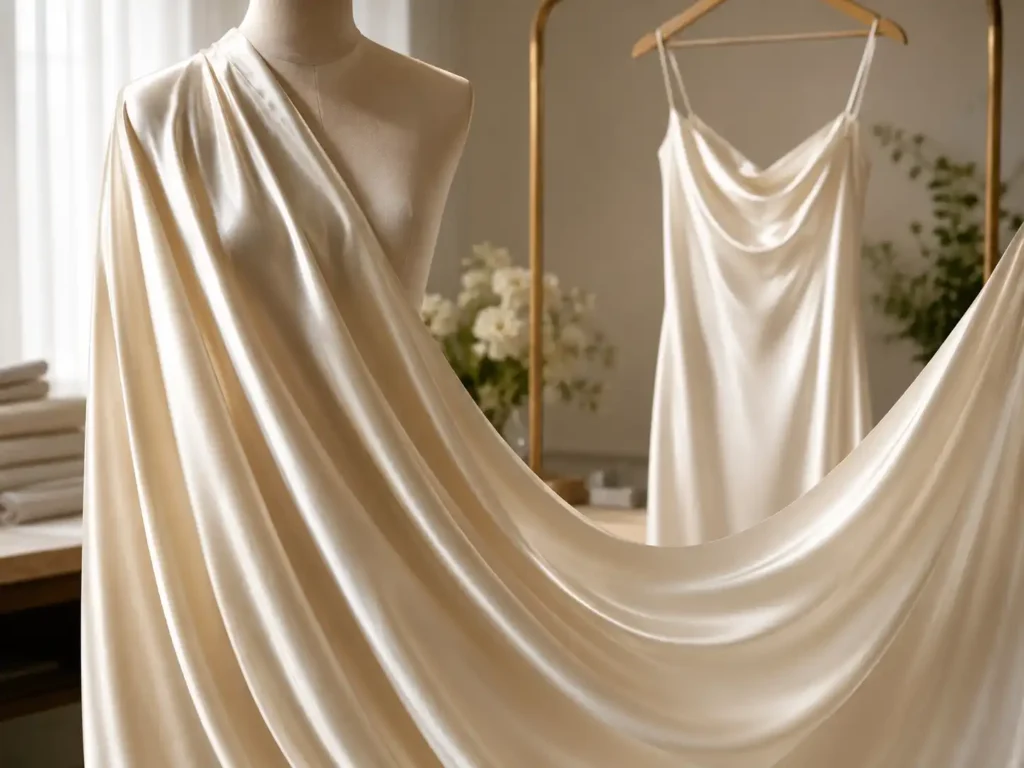
Lightweight and Silk-Like Satin for Fluid Dresses
Lightweight satin works well for slip dresses, soft bias cuts, summer occasionwear and lingerie-inspired fashion because it creates movement without heavy structure. The same fluid quality also exposes every weak decision around lining, seam tension and body coverage.
Jinfeng evaluates opacity under light, face and reverse appearance, diagonal stretch, snag sensitivity and the way the fabric hangs after twenty-four hours on the pattern or sample.
Material direction: silk-like polyester satin can deliver a refined surface with more stable sourcing than natural silk, while acetate or specialty blends require separate availability and care review.
A soft hand is valuable only when the fabric remains controllable during cutting and sewing. Very light qualities may need a compatible lining, cleaner internal finishing or a revised seam position to prevent visible ridges.
Bulk control: all panels must follow the approved shine direction. Mixed orientation can make identical dye lots look like different colors. Cutting bundles should also remain protected from rough tables, pins, sharp trims and dirty handling areas. Before bulk approval, the samp

Stretch Satin for Bodycon and Corset Silhouettes
Stretch satin supports bodycon, corset, fitted mini and sculpted party dresses when the stretch level and recovery are compatible with the pattern.
A fabric may feel elastic by hand but still recover poorly after sitting, wearing or seam loading. Development therefore checks stretch direction, recovery, surface whitening, seam grin and whether the lace has a comparable extension range.
Pattern impact: a non-stretch block cannot simply be reused for stretch satin. Bust, waist, hip and zipper tension need adjustment according to fabric behavior. Corset structures may combine stretch satin with stable lining, cups and boning, creating different tension layers across one garment. The sample must verify support, comfort and neckline security rather than relying only on flat measurements.
Sewing impact: excessive feeding can create rippled seams, while tight thread tension can leave visible tracks on a glossy surface. Lace inserts also require controlled stabilization so the seam does not stretch unevenly. Bulk inspection focuses on side seams, princess seams, zipper areas, underbust curves and hem openings after the garment has rested, because distortion can appear after sewing rather than immediately at the machine.

Matte and Heavy Satin for Structured Occasionwear
Matte satin and heavier satin qualities are suitable for cocktail, bridesmaid, evening and structured occasion dresses where the fabric must hold cleaner lines. Higher weight can improve coverage and reduce cling, but it also increases pressure around curved seams, gathers, corset edges and invisible zippers. A heavy fabric is not automatically more premium; the right choice depends on drape, silhouette and desired movement.
Visual control: matte surfaces often appear more refined in daylight and photography, while high-shine satin creates stronger party and evening impact. Color approval should be reviewed under at least natural and indoor lighting because surface reflection can shift the perceived tone. Lining color also matters, especially in ivory, champagne, blush, pale blue and other light shades.
Production control: pressing temperature, pressure and contact time must suit the selected satin. Aggressive pressing can create shine marks, seam impressions or water spotting. Finished dresses require smooth internal seams, protected zippers, controlled hanger support and packing that avoids sharp folds. Material cards, approved swatches and production references stay linked to the style so repeat orders can be compared against the original standard.
Choose Lace by Motif, Stretch, Coverage, and Finish
Lace commonly ranges from about 60-250 gsm, yet weight alone does not define quality. Motif scale, yarn, density, stretch, edge form, transparency and color response determine whether the lace works as full fabric, panel, appliqué or trim.
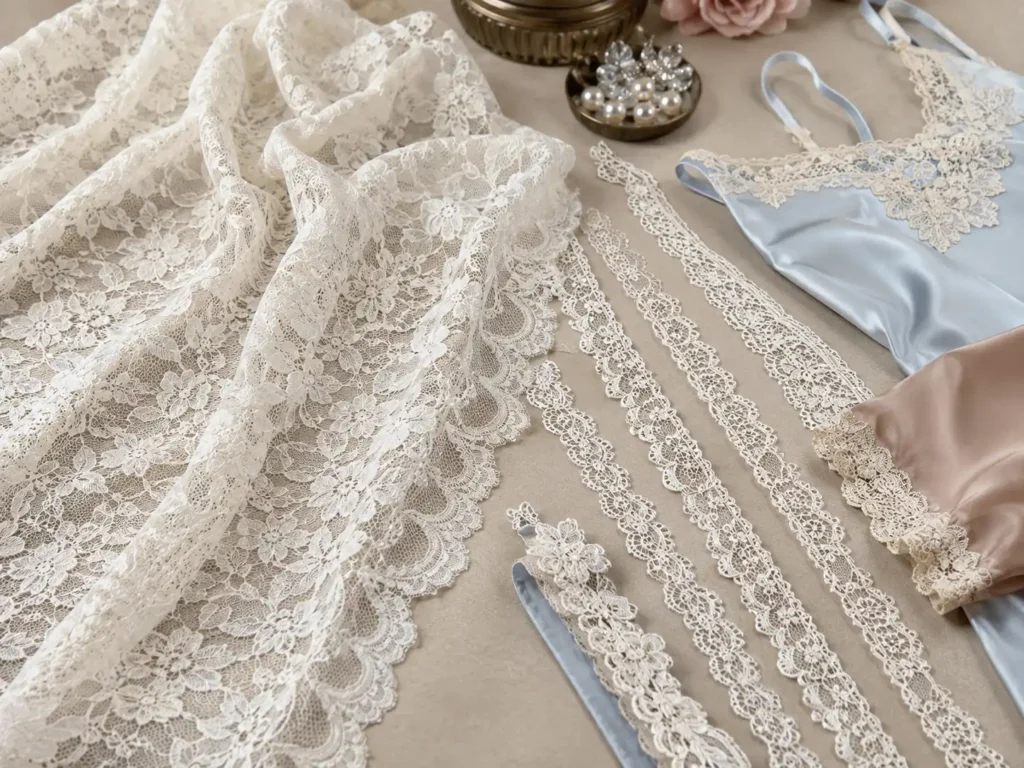
Lace Fabric and Lace Trim Serve Different Jobs
All-over lace fabric creates full bodices, sleeves, skirts or overlays and therefore needs pattern planning across larger areas. Lace trim is narrower and usually used along necklines, cups, straps, openings or hems. Confusing the two can lead to poor cost estimates, weak coverage or an edge that cannot follow the intended curve.
Full-fabric review: Jinfeng checks usable width, motif repeat, scallop position, density, transparency, yarn softness and the amount of waste created by placement. Large motifs can overwhelm a small mini dress, while very fine motifs may disappear beside high-shine satin. Directional lace may require every pattern piece to face the same way, increasing consumption.
Trim review: trim width, edge shape, flexibility and seam allowance must match its application. A stiff trim may stand away from a curved neckline; a soft trim may collapse at a structured cup edge. The sample confirms whether the trim should be inserted, topstitched, appliquéd or caught into a seam. Bulk documents record exact placement and finished exposure so different operators reproduce the same visual line.
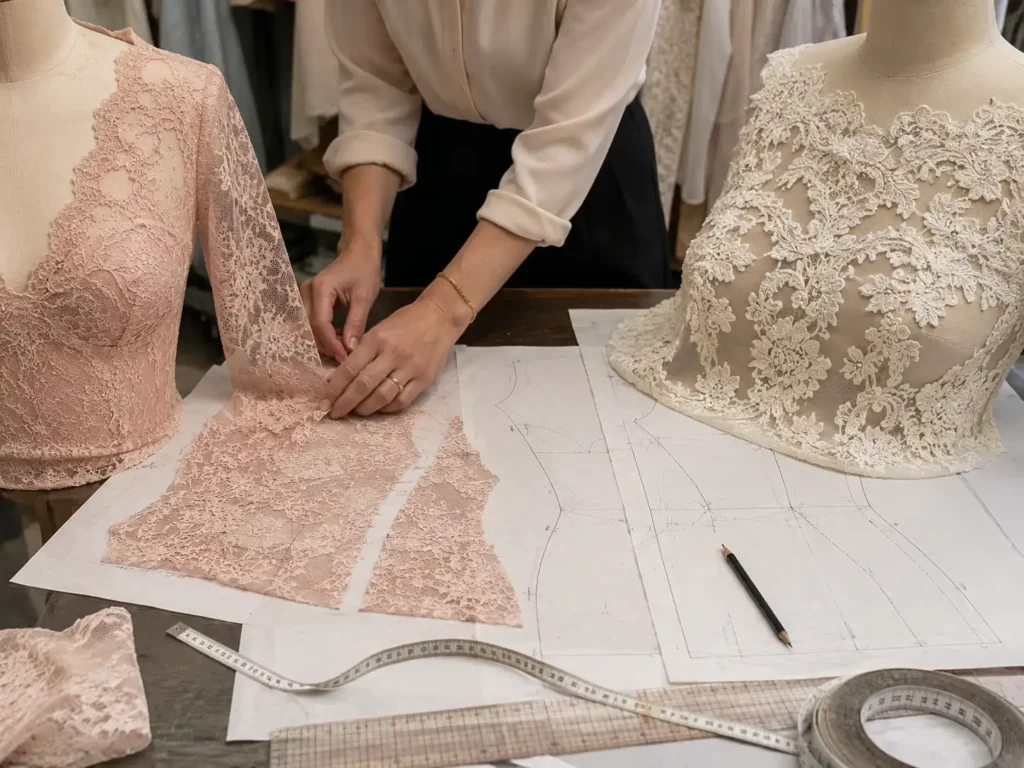
Stretch and Non-Stretch Lace Need Separate Patterns
Stretch lace is useful for fitted bodices, bodycon panels, close sleeves and lingerie-inspired details. Non-stretch lace suits structured bodices, overlays and stable appliqué. The two types cannot be exchanged without reviewing fit, seam construction and lining because tension changes immediately affect bust, waist, armhole and zipper balance.
Compatibility: stretch lace should be compared with the satin, lining and elastic components in the same direction of use. A lace panel that extends farther than the satin can create waves; one that extends less can restrict movement or pull the seam. Recovery also matters because a panel may fit during the first try-on but remain stretched after wear.
Stability: non-stretch lace needs enough seam support to avoid tearing at narrow joins, deep necklines or zipper edges. Dense embroidery can make seam intersections bulky, while open lace may not give enough surface for conventional stitching. Sampling determines reinforcement, seam width, backing, lining connection and whether strategic hand securing is needed. Final review checks symmetry, edge security and comfort against the skin.
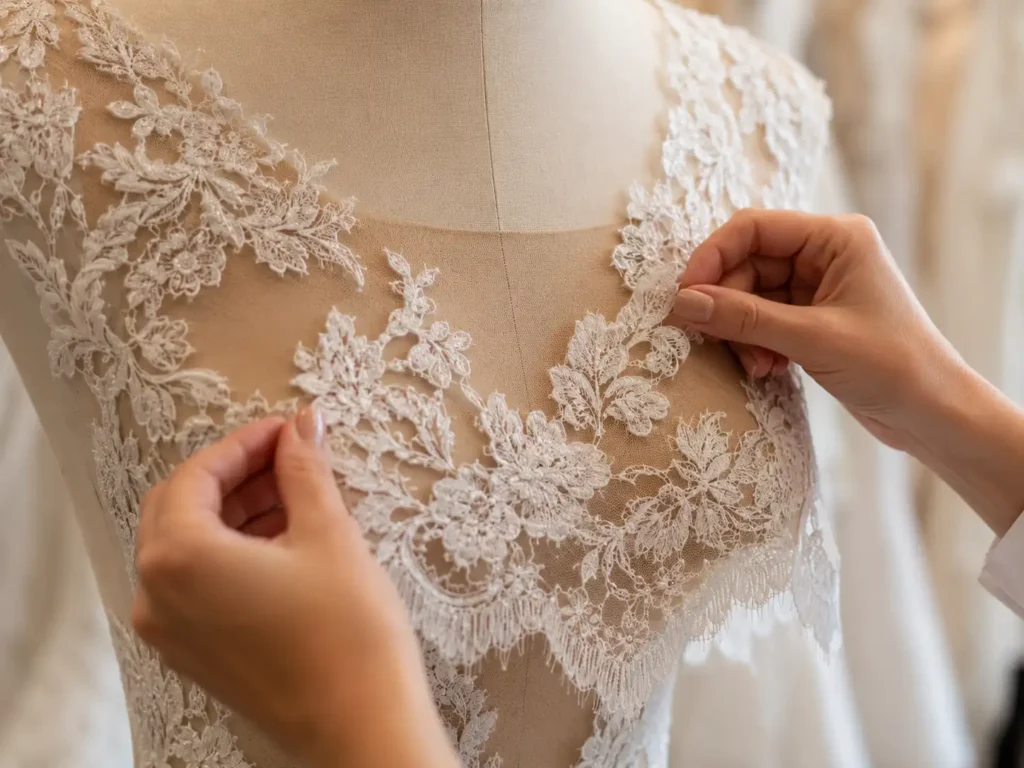
Motif Placement and Edge Finish Define the Garment
Premium lace dresses look deliberate. Motifs should frame the neckline, balance across cups, meet cleanly at center front or back, and finish at hems without accidental cut-off shapes. Jinfeng maps prominent motifs during pattern planning, especially for corset fronts, symmetrical bodices, one-shoulder necklines and scalloped hems.
Placement control: reference photos alone are not enough when the exact lace repeat differs from the inspiration. The actual lace is placed on the pattern or sample and photographed for approval. Center lines, cup positions, side seams and waist joins become control points. For appliqué, approved positions and attachment methods are recorded so bulk pieces do not drift.
Edge control: scalloped or eyelash edges may be used as visible finishing, but they require clean alignment and protection from fraying. Cut edges may need narrow binding, lining turn-back, appliqué finishing or controlled seam enclosure. Quality review checks broken yarns, holes, loose embroidery, uneven scallops, color variation and exposed lining. The goal is a refined border that remains secure through handling, fitting and retail use.
Match Satin and Lace to the Dress Structure
A strong pairing connects visual effect with fit, lining and production risk. The matrix below provides a development starting point; final selection still depends on physical swatches, sample fit, target price, color plan and bulk availability.
| Dress Structure | Satin Direction | Lace Application | Lining Direction | Main Control Point |
|---|---|---|---|---|
| Bias slip dress | 80-120 gsm fluid or silk-like satin | Neckline, back or hem trim | Lightweight woven lining or partial lining | Bias distortion and trim weight |
| Corset mini dress | 130-200 gsm structured or stretch satin | Cup panels, bodice overlay or appliqué | Support lining with cups and boning | Bust fit, seam puckering and zipper tension |
| Cocktail midi dress | 120-200 gsm matte or crepe satin | Sleeves, side panels, neckline or waist | Soft woven lining matched to shell color | Placement balance and hem proportion |
| Bodycon party dress | 120-190 gsm stretch satin | Stretch lace panels or fitted sleeves | Stretch lining with compatible recovery | Recovery mismatch and seam waving |
| Evening maxi dress | 150-220 gsm fluid-heavy or structured satin | Bodice, overlay, shoulder or skirt detail | Full lining selected for drape and opacity | Weight, floor balance and packing folds |
| Wedding guest dress | 100-200 gsm matte, fluid or structured satin | Motif lace, trim or selective overlay | Color-matched lining with coverage review | Shade consistency and occasion-level finish |
Engineer Satin and Lace Details Before Sewing
Design details decide whether a dress looks refined on the body and remains controllable in bulk. Each neckline, seam, closure and trim position should have a defined visual target, construction method and inspection point before production release.

Necklines, Straps, and Bust Support
Satin-and-lace dresses often concentrate visual detail around the upper body, where fit tolerance is smallest. A deep neckline, scalloped lace cup, narrow strap or strapless edge can look correct on a hanger yet fail during movement. Development begins with upper bust, full bust, underbust, cup position, neckline depth, armhole exposure and strap angle.
Support choices: soft slip dresses may use adjustable straps and stable neckline tape; corset styles may require fixed cups, boning, underbust shaping and anti-slip support; lace bodices may need skin-tone mesh or lining behind open motifs. Each support element must remain visually discreet and comfortable. Cup thickness, cup shape and boning firmness are confirmed through fitting rather than selected from a generic component list.
Lace integration: scallops or motifs should follow the neckline proportion and remain balanced left to right. Stitching must secure the edge without flattening the texture or causing satin ripples. During sample review, front, side and back fitting photos help identify gaping, compression, strap slippage or insufficient coverage. Bulk checks then focus on cup position, strap length, neckline symmetry, lace exposure and support consistency across sizes.
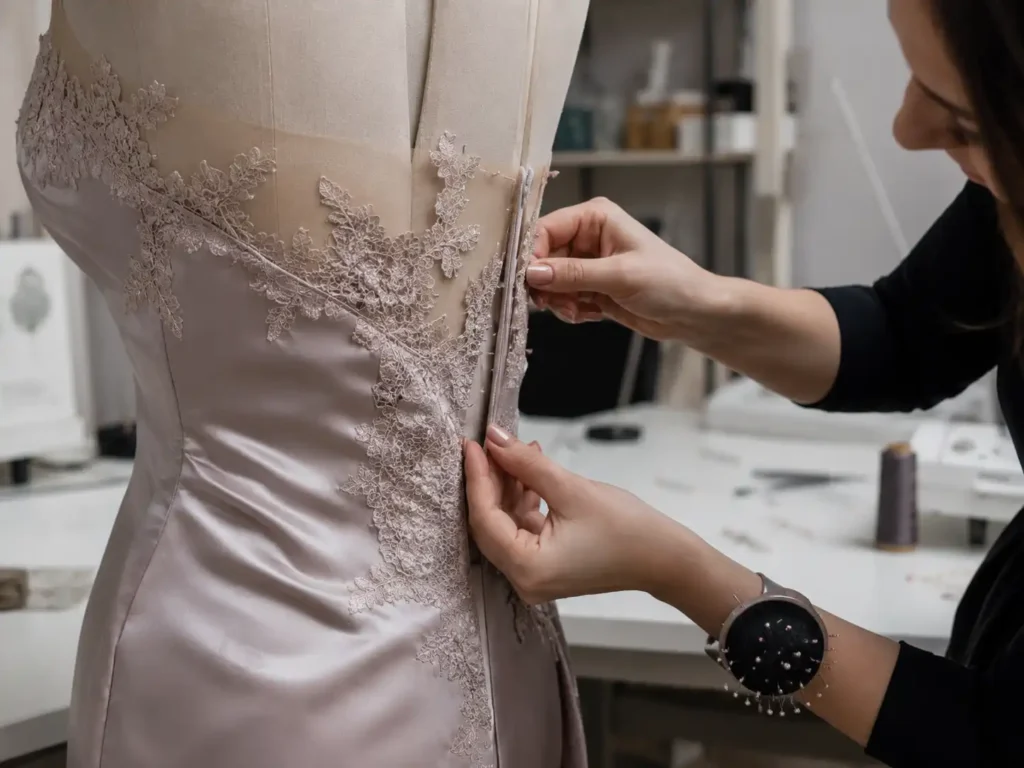
Zippers, Seams, and Controlled Lace Placement
Invisible zippers are a frequent failure point on satin dresses because seam tension and fabric shine reveal even small distortion. The zipper tape, seam allowance, lining attachment and waist intersection must remain balanced. Dense lace at the zipper can create extra thickness, while open lace may need backing so the chain does not catch or remain visible.
Seam planning: princess seams, side seams and waist joins should follow the body without pulling the satin or breaking the lace pattern. Curved seams may need clipping, controlled pressing and internal stabilization. Where lace meets satin, the sewing method is selected according to stretch and edge form: enclosed seam, applied panel, top-appliqué or stabilized insertion. A single method cannot suit every material pair.
Placement records: center-front motifs, cup motifs, side inserts and appliqué positions are photographed and marked on pattern or production documents. Operators need a clear reference for the finished lace exposure, not only the raw placement. Inline review checks symmetry, seam flatness, zipper movement, waist alignment and whether any lace edge catches against the zipper. Those controls protect both visual quality and wearability.
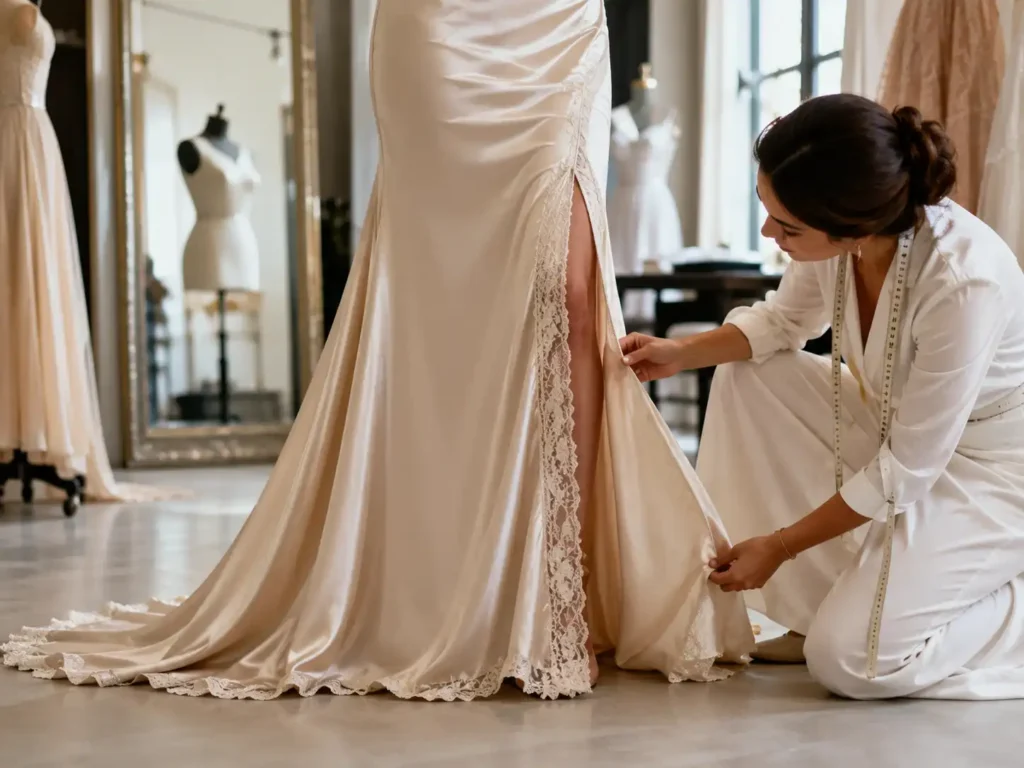
Slits, Hems, and Bias-Cut Balance
Slits and hems combine movement, proportion and safety. A slit may appear elegant in a static photo but open excessively when walking or sitting. The correct height depends on garment length, lining, hip ease, fabric drape and intended occasion. Satin can show strain lines around a slit, while lace edges may tear if the opening is not reinforced.
Bias-cut balance: slip and fluid midi dresses can lengthen unevenly after hanging because diagonal grain relaxes. Pattern development, sample resting and hem rebalancing are required before a finished hem is approved. Lace trim adds weight and may pull the hem farther, so trim application should be tested on the real fabric, not evaluated separately.
Finishing: narrow hems, blind hems, faced edges, scalloped lace borders and lined hems all produce different visual results. Jinfeng reviews hem width, stitch visibility, lace join location, lining length and side-seam balance. Maxi and floor-length pieces receive extra attention around sweep and floor clearance. Final pressing and packing method are considered during development because long satin garments can arrive with permanent fold impressions when folded without a planned support method.
Control Coverage, Lining, and Wear Comfort
Coverage Control
Lining Compatibility
Skin Comfort
Control Fit Across Bust, Waist, Hip, and Length
Fit is the bridge between a strong design and a repeatable SKU. Satin-and-lace styles concentrate risk around the upper body, waist shaping, hip movement, slit opening and finished length, requiring measured sample feedback and controlled grading.
Build the Base Size from Body and Garment Measurements
Development begins by separating body measurements from finished garment measurements. The difference controls ease, compression, movement and intended silhouette. Ten common high-risk points are reviewed for satin-and-lace dresses: upper bust, full bust, underbust, waist, high hip, full hip, strap length, neckline depth, slit height and total garment length. Corset, bodycon and slip styles may require additional cup, boning, armhole or back-opening measurements.
Reference alignment: a brand size chart, fit model data, original sample or approved block provides the starting point. When only a reference image exists, Jinfeng requests more information about target market, size range, fit preference and intended fabric before locking the pattern direction. A visually similar image can hide very different stretch, support and ease requirements.
Measurement control: the pattern maker creates the base pattern, while the sample team records finished measurements and compares them with the target chart. Any deliberate deviation – such as reduced waist ease, higher cup placement or revised slit height – is documented. The approved measurement file becomes a production reference rather than allowing each operator to interpret fit from the sample alone.
Correct High-Risk Areas on the Fitting Sample
A fitting sample is evaluated from front, side and back, both standing and moving.
Bust gaping, cup position, neckline stability, strap angle, side-seam direction, waist height, hip drag lines, zipper bulging, slit opening and hem balance reveal different pattern issues. Satin reflection often exaggerates drag lines, while lace motifs can make asymmetry more visible.
Feedback method: clear fitting photos, measured differences and marked detail images produce faster correction than general comments such as “make it tighter.” Jinfeng records each revision by area, priority and pattern action.
A neckline may need reshaping rather than simple tightening; a zipper may bulge because of seam tension or lining length rather than excessive width.
Material effect: fit comments are interpreted together with fabric behavior. Changing from non-stretch satin to stretch satin, or from soft lace to dense embroidered lace, can require pattern revision even when the silhouette remains unchanged. The revised sample confirms whether support, comfort and appearance have improved without creating a new issue elsewhere. Approval is based on the garment worn on the intended fit body, not only on flat measurements.
Grade Approved Fit Across the Planned Size Range
Grading expands or reduces the approved base size while preserving design proportion. A common commercial range may begin with XS-XL, with extended sizes developed according to the brand’s block, fit model strategy and product structure. Complex corset and fitted styles may need separate fit checks because cup position, neckline coverage and boning length do not always scale well through simple numeric increments.
Proportion control: strap length, neckline depth, armhole shape, waist position, slit height and lace motif placement may need non-linear grading. A scalloped motif that fits the center front of one size can shift on another if the pattern is enlarged without placement planning. Similarly, a fixed lace trim width changes visual proportion across sizes.
Bulk control: graded patterns, size charts and style-specific tolerances are released together. Measurement checks focus on critical points rather than only total length and width. Packing teams also verify size labels, barcode labels and size-ratio assortments so the physical garment and retail identification remain aligned. Pattern and measurement records are retained for repeat orders, but any change in fabric stretch, weight or lining requires a new review before the old pattern is reused.
Start with a Structured Development Review
Design and Fit Files
Material Direction

Move from Design Files to an Approved Production Sample
Style Review
Material Approval
Pattern Development
First Sample
Revised Fit Sample
PP and Golden Sample
Translate the Approved Sample into Repeatable Bulk Standards
A good sample does not protect bulk quality by itself. Materials, measurements, construction and packing must be converted into controlled references that production, merchandising and QC teams can follow without personal interpretation.
Lock Materials and Approved Physical References
Before bulk release, shell satin, lace, lining, zipper, cups, boning, straps, hardware, labels and packaging are linked to approved references.
Material records cover supplier, composition, weight, width, stretch, hand feel, color, dye lot, MOQ, price record and lead time where available. The goal is to prevent a visually similar but functionally different substitute from entering production.
Color control: satin and lace may react differently to the same color target. Bulk shade is compared with the approved swatch or physical standard under controlled viewing conditions.
Shine direction and lining color are also reviewed because they can alter perceived tone. Any change in supplier, batch, stretch or weight is escalated before cutting.
Lace control: the approved motif, usable width, direction and scallop position are recorded. Where placement is critical, approved photos or pattern markings show the intended motif location. Material consumption accounts for placement waste rather than relying only on fabric area. Those controls reduce unexpected shortages and visual inconsistency across a large order.
Translate Sample Details into Production Documents
The production package brings together the approved pattern, graded size set, measurement chart, tolerance sheet, BOM, trim references, sewing instructions, lace placement, cup and boning positions, label locations, packing instructions and Golden Sample. Each document answers a specific production question and reduces the risk of “copying by eye.”
Construction notes identify seam type, finished exposure, reinforcement, stitch visibility, lining connection and pressing-sensitive areas. Special attention is given to zipper intersections, scalloped edges, narrow straps, underbust curves, slits and bias hems. When a detail cannot be explained clearly in text, annotated photos or a physical reference are used.
Version control matters across multi-style collections. File names, dates and approval status help the merchandising and production teams distinguish first-sample information from PP-approved standards. When a brand changes color, lace, label or packing after PP approval, the update is recorded and circulated rather than handled through an isolated message. A clear package supports more accurate costing, scheduling, inline inspection and repeat orders.
Run a Pre-Production Handover Before Cutting
A pre-production handover aligns merchandising, factory management, line leaders, QC and packing teams before bulk cutting. The meeting or briefing reviews material status, approved samples, critical measurements, construction risks, lace placement, pressing limits, private-label details, carton requirements and delivery milestones. High-risk operations receive named control points rather than general instructions to “be careful.”
First-piece verification: early cut or sewn pieces are checked against the approved pattern and Golden Sample. Satin face direction, lace motif alignment, zipper balance, cup position, seam flatness and lining length can be corrected before the full quantity passes through the same operation. The cost of fixing ten early pieces is far lower than repairing thousands after final inspection.
Production release also confirms quantity by style, color and size, fabric allocation by dye lot, bundle identification and shipment split. For programs with several delivery waves, packing and carton plans are linked to each wave. The handover creates a shared working standard and keeps design approval connected to production reality.
Protect Satin and Lace Through Every Production Stage
Workmanship quality depends on controlled handling as much as visible sewing. Satin surfaces, open lace, scalloped edges and structured bodices need protection from cutting through finishing, with operation-specific checks built into the production flow.
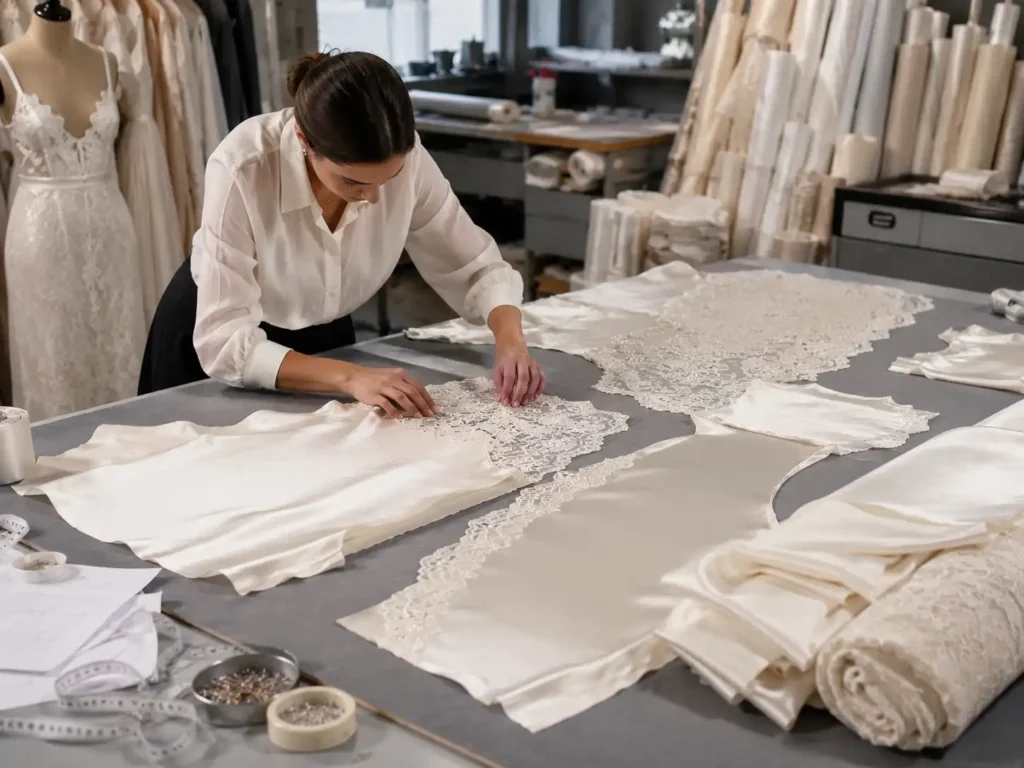
Controlled Cutting and Lay Direction
Satin panels must follow the approved face and shine direction.
Even one reversed panel can appear darker or lighter under retail lighting. Cutting plans identify direction, nap-like shine behavior, bias orientation and dye-lot grouping. Fabric is inspected for stains, pulls, shade variation and surface marks before the full lay is cut.
Lace cutting adds motif and width considerations. Symmetrical bodices, cups, center fronts and scalloped hems may require placement cutting, increasing material consumption. Pattern markers must balance efficiency with approved visual positions. Open lace is handled to avoid distortion, and bundles are protected so loose embroidery or eyelash edges do not catch during movement.
Bundle control keeps shell, lace, lining and size components together. Clear style, color, size and lot identification reduces mixing across multi-style programs. For bias-cut pieces, panels may require resting before final alignment or sewing. Early cut-piece checks compare direction, motif, notch, length and pairing before production volume advances.
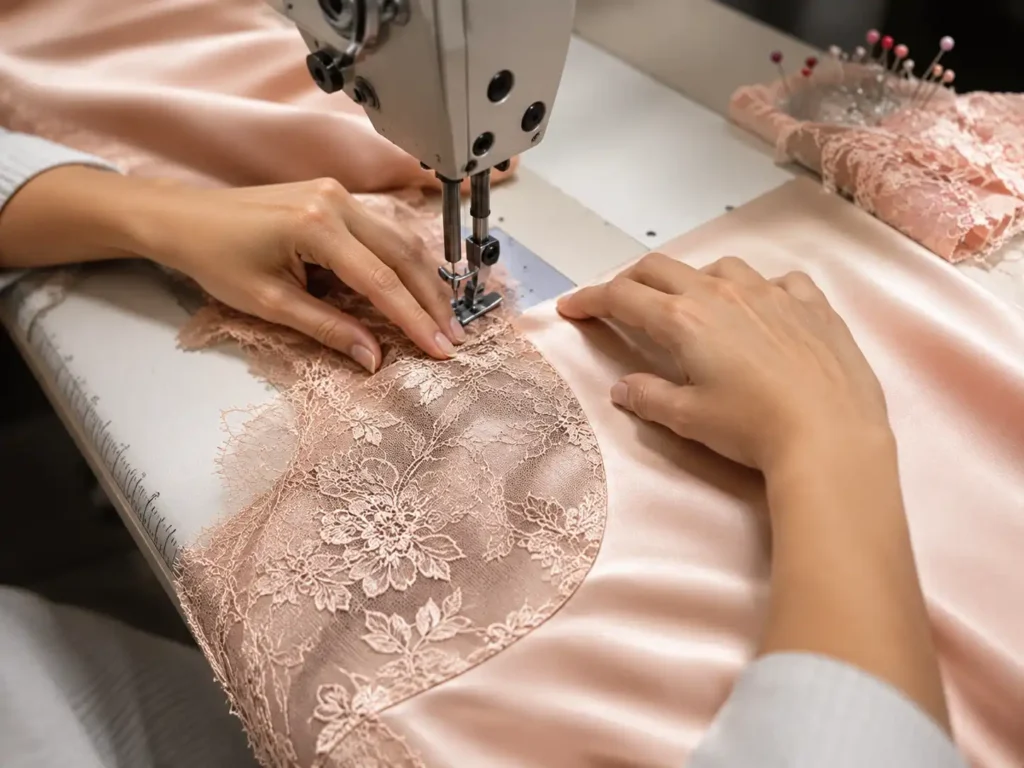
Sew Without Puckering or Stretch Distortion
Satin reveals seam tension, feeding differences and needle damage more clearly than most woven fabrics. The operation method is adjusted to the selected fabric rather than copied from another style. Seams are monitored for puckering, pull lines, shine damage, needle tracks and inconsistent seam allowance. Curved areas receive careful shaping and controlled pressing between operations.
Lace-to-satin joins are tested according to stretch and edge structure. Stabilization may be needed around zippers, necklines, cup edges and narrow inserts. Dense lace can create bulk at seam intersections; open lace can lack enough structure for secure stitching. The selected method must remain flat, strong and visually clean on both the face and inside.
High-risk areas include princess seams, underbust curves, waist joins, zipper ends, strap attachments, slits and scalloped edges. Inline checks review early pieces for symmetry and tension before the operation continues. Where a hand-secured appliqué or delicate edge is required, workmanship standards define attachment spacing and loose-thread control so results remain consistent across the order.
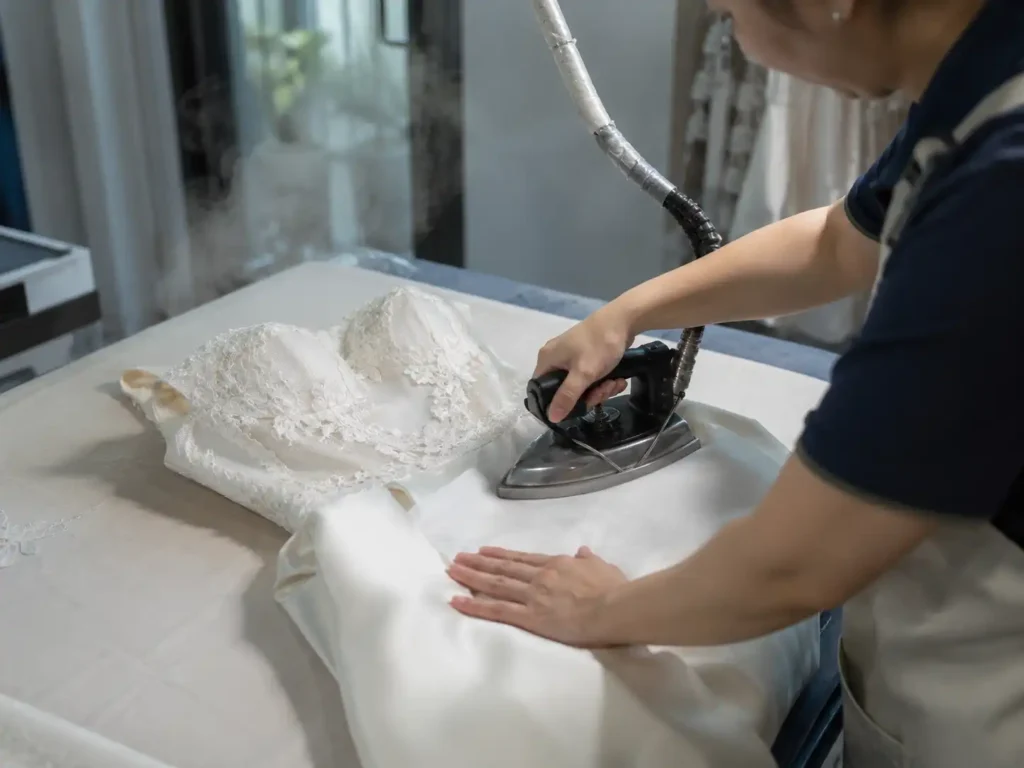
Press Without Leaving Shine, Watermarks, or Impressions
Pressing gives occasion dresses their final shape, yet incorrect heat or pressure can permanently damage satin.
The pressing method is confirmed according to fiber blend, weight, surface finish, seam structure and decoration. Protective cloth, reduced pressure and controlled contact are used where needed, while lace is protected from flattening or heat distortion.
Sequence matters. Curved seams, darts and waist joins may need shaping before the garment is fully assembled. Waiting until final pressing can leave seam impressions or fail to correct puckering. Lining and shell are checked together so the lining does not pull the hem, expose at the neckline or create internal ridges.
Appearance review examines water spotting, excessive shine, crease lines, zipper impressions, seam marks and flattened lace. Dark colors reveal dust and shine; pale colors reveal stains and lining shadows. Pressed garments should rest before packing so heat and moisture do not become trapped in the polybag. The approved finish is compared with the Golden Sample under consistent lighting.
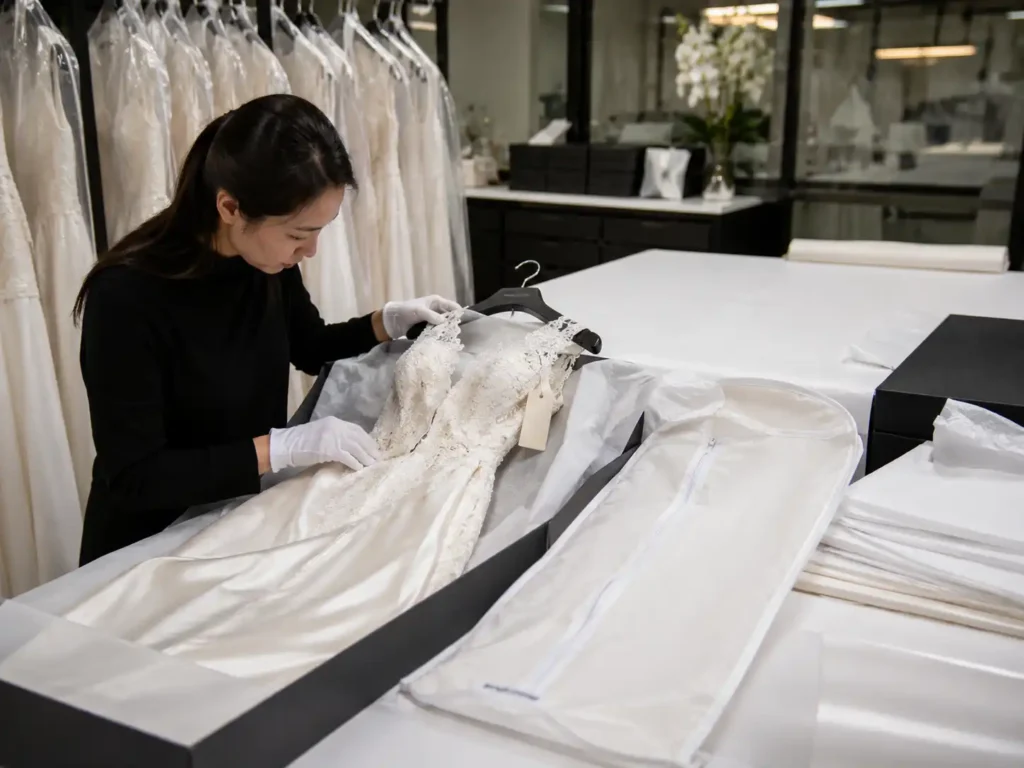
Finish and Pack Without Re-Damaging the Dress
Finishing removes loose threads, surface lint and temporary marks while protecting the fabric from sharp tools, rough tables and metal trims. Satin surfaces are checked from multiple angles because snags and press marks can disappear under one light direction and become obvious under another. Lace is checked for broken yarns, open holes, loose appliqué and uneven scallops.
Private-label details are verified by style, color and size: woven label, size label, care label, hangtag, barcode and any SKU sticker. Hardware or hangtag strings are positioned so they do not rub against satin during transport. Where necessary, protective tissue or garment support is added around delicate surfaces or structured bodices.
Folding follows garment length, lace position, cup shape and the brand’s warehouse method. Heavy carton pressure can set unwanted creases, while loose packing can allow movement and abrasion. Carton quantity, size ratio, marks and packing list are checked before shipment release. A good dress should arrive in a condition that supports photography, retail presentation and efficient warehouse handling.
Quality Checks Designed for Satin and Lace Dresses
Incoming Materials
Cutting Direction
Lace Placement
In-Line Sewing
Fit and Measurements
Finishing and Packing
Capacity Managed by Product Complexity and Delivery Window
Eighteen-Plus Sewing Lines
Six-Plus Flexible Lines
Twelve-Plus Merchandisers
Thirty-Plus Finishing Staff
100,000+ Monthly Capacity
Multi-Batch Delivery
Satin and Lace Collection Program
The following anonymized structure reflects the scale and coordination required in a mature brand program. Brand identity and proprietary design details remain protected, while order data illustrates how style, material, fit and delivery controls work together.

Case 1: Luxury Occasionwear Satin and Lace Collection
Project Scope
A premium occasionwear brand developed a seasonal satin and lace dress collection for wedding guest, evening and formal event markets.
- Collection size: 24 dress styles
- Product categories: satin midi dresses, lace-trim slip dresses, evening maxi dresses and cocktail styles
- Materials: silk-like satin, matte satin, stretch lace, embroidered lace and soft lining
- Construction details: lace bodices, lace sleeves, neckline inserts, waist details and elegant back openings
- Requirement: premium appearance with stable repeat production quality
Development Challenges
The collection required strong control over fabric interaction and visual consistency.
Key challenges included:
- Maintaining satin shine direction across production
- Matching lace color with satin and lining
- Preventing lace from pulling satin seams
- Controlling transparency and coverage
- Maintaining elegant drape after packing and transportation
Manufacturing Approach
The development team created material and construction standards before bulk production.
Key controls included:
- Satin and lace compatibility review
- Physical fabric and lace approval
- Pattern adjustment around bust, waist and hip areas
- Lining selection based on coverage and movement
- PP sample and Golden sample confirmation
Manufacturing Value
The program achieved a consistent luxury appearance by connecting material selection, pattern engineering, workmanship control and quality inspection into one production system.
Case 2: Ecommerce Brand Satin Lace Dress Launch Program
Project Scope
A fast-growing ecommerce fashion brand required a seasonal satin lace collection with short development cycles and retail-ready presentation.
- Collection size: 16 dress styles
- Product direction: party dresses, date-night dresses and premium ecommerce styles
- Development input: reference images, product concepts and target market requirements
- Materials: satin, lace trims, mesh, stretch fabrics and lightweight lining
- Requirement: quick sampling with reliable bulk reproduction
Development Challenges
The brand needed to transform creative ideas into commercial products within a limited launch schedule.
Main challenges included:
- Converting images into production-ready patterns
- Selecting satin and lace combinations within target costs
- Preventing fit issues that could increase online returns
- Maintaining appearance between samples and bulk production
- Preparing private-label packaging requirements
Manufacturing Approach
The project followed a structured development process:
- Design feasibility review
- Satin and lace selection
- First sample development
- Fit correction and detail adjustment
- PP approval before bulk production
Additional controls included:
- Measurement confirmation
- Size range review
- Label and packaging preparation
- Production tracking by style
- Final appearance inspection
Manufacturing Value
The brand successfully moved from design concept to retail production with fewer revision cycles and stronger control over product consistency.

Case 3: Complex Corset Satin and Lace Dress Engineering Program
Project Scope
A designer fashion label developed high-detail satin and lace dresses requiring advanced structure and craftsmanship.
- Collection type: premium partywear and statement occasion dresses
- Key styles: corset dresses, lace overlay dresses and structured evening gowns
- Materials: stretch satin, embroidered lace, mesh, lining, cups and boning
- Requirement: strong silhouette with comfortable wearing experience
Development Challenges
The project involved multiple technical challenges:
- Combining structured satin with delicate lace
- Maintaining bust and waist shaping
- Controlling zipper pressure and seam thickness
- Supporting lace panels without distortion
- Keeping proportions consistent across sizes
Manufacturing Approach
The production team focused on detailed engineering before bulk release.
Technical controls included:
- Bust, waist and hip fitting analysis
- Corset structure development
- Cup and boning positioning review
- Lace placement mapping
- Seam reinforcement planning
- Size grading evaluation
Additional attention was given to:
- Invisible zipper construction
- Lining attachment
- Anti-slip support
- Pressing protection
- Packing methods for structured dresses
Manufacturing Value
The program demonstrated that complex satin and lace dresses require more than sewing capability. Successful production depends on combining fabric knowledge, pattern development, craftsmanship and documented quality control.
Planning Ranges for Sampling, MOQ, and Bulk Production
The ranges below support early scheduling, not a fixed promise. Final timing is confirmed after style count, materials, color development, sample scope, order quantity, private-label requirements, production loading and shipment method are reviewed.
| Planning Stage | Indicative Range | Required Input | Main Variables |
|---|---|---|---|
| Project file review | 1-3 business days | Tech pack or reference, quantity, fabric, size range and delivery target | Missing construction details, unclear BOM or incomplete quantity plan |
| Stock fabric and lace sourcing | 5-12 business days | Satin and lace direction, color, hand feel and target cost | Stock availability, supplier response, special motif and courier time |
| First sample | 10-18 business days after materials and details are confirmed | Approved development direction and sample payment | Corset structure, appliqué, complex lining, special trims and fitting requirements |
| Revised sample | 7-12 business days | Consolidated fitting photos, measurements and written comments | Pattern change level, new material, new color or replacement trim |
| PP sample | 7-12 business days | Approved fit, fabric, lace, trims, labels and packing direction | Bulk material readiness and final construction confirmation |
| Bulk production | 35-55 days after PP and material confirmation | PO, deposit, approved PP standard and complete packing files | Style count, quantity, complexity, peak season, private label and QC plan |
| Regular MOQ starting point | 200 pcs per style/color | Quantity by style, color and size | Custom dye, special lace, certified materials, trim MOQ and production schedule |
| Shipment planning | Confirmed by route and destination | Ship-to details, forwarder, delivery window and carton requirements | Air or sea routing, split shipment, booking, customs and warehouse rules |
Private-Label Packing and Export Delivery Coordination
Branding and SKU Control
Packing and Warehouse Rules
Export and Multi-Batch Delivery
Satin and Lace Dress Frequently Asked Questions
Yes. Jinfeng develops satin dresses using lace panels, overlays, appliqué, scalloped edges and narrow trims. Feasibility depends on satin weight, lace stretch, motif, transparency, edge form and the intended structure. Physical material approval and a fitted sample are required before bulk production.
Satin commonly falls within an 80-220 gsm range. Lightweight qualities suit fluid slips, midweight qualities suit fitted and cocktail styles, and heavier qualities suit structured occasionwear. The correct weight also depends on lining, stretch, lace density, drape and target retail appearance.
Color is reviewed through physical swatches, Pantone references when supplied, lab dips for custom color, dye-lot records, shine direction and lighting comparisons. Shell, lace and lining are evaluated together because different surfaces can make the same target color appear different.
The method depends on material stretch, density and edge structure. Jinfeng reviews seam position, stabilization, feeding, thread tension, seam allowance and pressing. Early-piece inspection checks whether the lace pulls the satin or creates waves before the same operation continues across bulk quantities.
Many styles need full or partial lining, especially light colors, lightweight satin, open lace, fitted silhouettes and formal dresses. Lining is selected by weight, stretch, color, hand feel and attachment method so it provides coverage without restricting movement or hanging below the shell.
Yes. Development can cover cups, boning, underbust shaping, anti-slip support, lace panels, structured lining and zipper control. Corset fit is confirmed through sampling around upper bust, full bust, underbust, waist, cup position, neckline security and comfort.
Approved motifs or scallop positions are shown through pattern marks, annotated photos and physical references. Cutting and in-line inspections check symmetry, center placement, cup position, side panels, appliqué location and edge exposure. Placement-sensitive lace also receives adjusted consumption planning.
MOQ starts from 200 pcs per style/color. Final MOQ depends on satin and lace availability, custom dye, motif or embroidery requirements, trims, construction complexity, private-label materials and production schedule. Quantity should be provided by style and color for evaluation.
A schedule is issued after complete files, materials, sample scope, quantity, private-label requirements and delivery target are reviewed. Complex corset, appliqué, custom-color or special-lace programs require more development time than a straightforward lace-trim slip dress.
Yes. Jinfeng can coordinate woven labels, size and care labels, hangtags, barcode stickers, SKU packing, polybags, carton marks and packing lists. Artwork, wording, placement, supplier MOQ and warehouse requirements should be provided before PP approval.

Send Your Satin and Lace Dress Brief
Send your design files to Kelly for a structured review of fabric direction, lace application, pattern risk, sample route, MOQ, quotation requirements and production timing. A complete brief allows the team to distinguish between a fluid slip dress, a fitted corset style, a cocktail midi or a structured evening dress before recommending satin weight, lace type, lining and construction.
Quotation becomes more accurate after style details, materials, quantity, size range, private-label requirements and delivery window are clear. Jinfeng Apparel supports global fashion brands and mid-to-large apparel programs from sample development and PP approval through bulk production, quality control, branded packing and export coordination. NDA-based cooperation is available for tech packs, original samples, patterns, labels and unpublished designs.
- Reference image, sketch, original sample or complete tech pack
- Target quantity per style/color and planned size range
- Preferred satin weight, shine, stretch and color direction
- Lace image, swatch, motif, trim or appliqué requirement
- Lining, cups, boning, zipper and other construction details
- Woven labels, care labels, hangtags, barcode and packing files
- Target delivery window, shipment destination and forwarder details


