Skip to content
Ribbed Dress Manufacturer for DTC Brands
Fit-correct ribbed dress development for repeatable online fashion programs.
Jinfeng Apparel helps DTC womenswear brands develop ribbed dresses with controlled fit, fabric behavior and production consistency. From reference images, samples or tech packs, our team supports fitted silhouettes, rib fabric selection, sampling, small test orders, repeat production and scale-ready delivery for online dress collections.
- 4-factory setup: 3 women’s fashion factories, 1 casual and print facility.
- 2 sample rooms: 7 pattern makers, 20 sample makers.
- 18 production lines: about 300,000 pcs monthly capacity.
- Orders: 300–500 pcs tests, 5,000+ pcs scale runs.
- Manufacturing partner for globally recognized women’s fashion brands



Why Ribbed Dresses Stay Commercially Relevant
Natural Body Shaping
Strong Visual Texture
Easy Color Expansion
Flexible Styling Range
Repeat Purchase Potential
Clear Fit Feedback
Lower Branding Dependence
Suitable For Test And Scale
DTC Brand Types And Their Ribbed Dress Requirements
DTC brands do not use ribbed dresses in the same way. Some need fast visual drops, some need repeat basics, some need sculpting fit, and some need occasion-ready construction. Each brand type has different requirements for fabric, fit, sampling, MOQ, and repeat production.
Established DTC Womenswear Brands
Established DTC womenswear brands usually have clear product direction, stable online sales, and regular launch calendars. Their ribbed dress programs need consistency from sample approval to repeat production, especially when one style expands into multiple colors or replenishment batches.
- Stable fit across repeat orders
- Consistent fabric hand and recovery
- Accurate grading for full size ranges
- Clear production records for repeat colors
Social-Led Fashion Brands
Social-led fashion brands depend on campaign images, short videos, influencer content, and fast customer feedback. Ribbed dresses for these brands need strong visual impact, clean body shape, and fast development speed for seasonal or campaign-led drops.
- Photo-ready fit on body
- Clear texture and color expression
- Fast sample approval for launch timing
- Controlled test orders before scale-up
Bodycon And Sculpting Dress Brands
Bodycon and sculpting dress brands focus on close-to-body silhouettes with stronger fit expectations around bust, waist, and hip. Their ribbed dresses need support, recovery, and shape control without feeling overly restrictive.
- Strong stretch recovery
- Balanced bust, waist, and hip shaping
- Smooth seam tension on fitted areas
- Stable silhouette after sitting and washing
Premium Basics Brands
Premium basics brands use ribbed dresses as clean daily wardrobe pieces rather than short-term trend items. Their product value depends on fabric quality, comfort, opacity, and reliable wear after repeated washing.
- Soft and refined hand feel
- Good opacity in core colors
- Controlled shrinkage after wash
- Smooth seams for daily comfort
Lounge And Comfort-Led Brands
Lounge and comfort-led brands need ribbed dresses that feel relaxed, soft, and easy for home, travel, weekend dressing, or casual citywear. The dress should feel comfortable without becoming loose, thin, or unstable after wear.
- Gentle stretch without tight compression
- Breathable fabric with soft touch
- Shape retention after long wear
- Low-irritation seams and labels
Occasionwear And Party Dress Labels
Occasionwear and party dress labels often use ribbed dresses with cut-outs, slits, ruching, metallic surfaces, velvet ribs, or sharper necklines. These styles need visual appeal, but construction must still protect comfort, coverage, and fit security.
- Reinforced cut-outs and slit areas
- Lining or backing when needed
- Surface durability for metallic or velvet effects
- Secure fit around bust, waist, and openings
Capsule Collection Brands
Capsule collection brands often build a small product story around one fabric, color direction, or seasonal concept. A ribbed dress may need to connect with ribbed tops, skirts, jumpsuits, or matching sets in the same collection.
- Fabric continuity across related styles
- Color consistency across the capsule
- Pattern adaptability for future extensions
- Repeat sourcing for seasonal updates
Mature Repeat-Order Brands
Mature repeat-order brands need ribbed dress production that can move from test orders to mid-size runs and larger replenishment programs. Their main concern is not one sample, but keeping fit, fabric, packing, and delivery stable across batches.
- Approved sample records for repeat runs
- Measurement consistency across batches
- Fabric and shade control for replenishment
- Scalable production from 300–500 pcs to larger orders
DTC Brand Types That Need Ribbed Dress Manufacturing
Social-Led Fashion Brands
Social-led fashion brands depend on Instagram, TikTok, short videos and fast visual campaigns. Ribbed dresses work well for these brands because fitted silhouettes, body shape, texture and color are easy to show on camera. These brands usually need fast sampling, clean photo-ready fit and controlled first orders that can move into repeat colors after campaign testing.
Premium Basics Brands
Premium basics brands focus on clean silhouettes, soft hand feel and daily wear value. Ribbed dresses help these brands offer texture, comfort and shape without relying on heavy logos or decorative details. Fabric hand, opacity, seam smoothness, shrinkage and recovery need to stay stable because small differences can affect reviews, returns and repeat purchase behavior.
Bodycon And Sculpting Dress Brands
Bodycon and sculpting dress brands focus on close-to-body silhouettes with stronger fit expectations around bust, waist and hip. Ribbed dress manufacturing for these brands needs pattern balance, stretch recovery and seam tension control from the first sample. The goal is a dress that feels supportive, keeps shape after wear and stays consistent across repeat batches.
Occasionwear And Partywear Brands
Lounge And Comfort-Led Brands
Lounge and comfort-led brands need ribbed dresses that feel soft, relaxed and easy to wear for home, travel, casual citywear or weekend dressing. These brands care about hand feel, seam softness, shrinkage control and long-wear comfort. The fabric should not feel too tight, too thin or unstable after washing and repeated wear.
Capsule Collection Brands
Capsule collection brands often build a small product group around one fabric story, color direction or seasonal concept. A ribbed dress may sit beside ribbed tops, skirts, jumpsuits or matching sets. These brands need fabric continuity, color consistency and pattern adaptability so one approved rib fabric can support several related styles without creating unnecessary production risk.
Athleisure-Inspired Brands
Athleisure-inspired brands want ribbed dresses that feel comfortable, flexible and body-aware without looking like gymwear. The style often sits between casual, lounge and light movement. Fabric selection needs the right balance between stretch and recovery, because too much compression feels restrictive while weak recovery can create bagging at the waist, hip or seat.
Mature Repeat-Order Brands
Mature repeat-order brands already know which products can sell and need suppliers who can support replenishment, color expansion, size consistency and production scale-up. These brands care less about one sample and more about repeat control. Approved patterns, fabric notes, measurement charts, trim details and packing standards should stay consistent across batches.
Ribbed Dress Drop Planning For Mature Direct Sales Fashion Programs
A ribbed dress program works better when the first order is planned as a product system, not a single SKU. The right structure helps brands test demand, protect fit quality and scale into repeat colors without creating unnecessary development risk.
| Program Type | Typical First Order Logic | Development Priority | Risk To Control |
|---|---|---|---|
| New Style Test | 300–500 pcs per style | Fit, fabric hand, opacity, content appeal | Weak recovery, late fit changes |
| Core Color Launch | 1,000–3,000 pcs total | Color range, size grading, fabric stability | Shade variation, size imbalance |
| Repeat Color Program | 1,000–5,000 pcs per run | Batch consistency, approved pattern control | Fabric lot difference, shrinkage drift |
| Hero Product Scale-Up | 5,000+ pcs | Line planning, QC checkpoints, delivery schedule | Production inconsistency, delayed replenishment |
| Capsule Extension | 3–6 related SKUs | Fabric platform, silhouette adaptation | Too many fabrics, fragmented costing |
| Seasonal Occasion Drop | 2–4 statement styles | surface effect, fit security, lining comfort | Decoration damage, body discomfort |
Ribbed Dress Styles Built For DTC Sales Programs

Ribbed Bodycon Mini Dress
A strong style for social-led drops, party collections and fast visual testing. The shorter length makes fit issues easier to identify, but the garment still needs firm recovery around bust, waist and hip.
- Suggested length: 78–86 cm from shoulder
- Fabric window: 240–320 GSM rib knit
- Stretch target: 35–55% crosswise stretch
- Complexity level: 3 / 5
- Key control: side seam balance and hem stability
- Common bulk risk: riding up, twisting hem, uneven hip tension
- Commercial value: fast content impact and strong color testing potential

Ribbed Midi Bodycon Dress
A core style for mature DTC dress programs because it can move from casual styling to evening wear. The longer body requires better fabric recovery and more disciplined grading across waist, hip and lower hem.
- Suggested length: 112–128 cm from shoulder
- Fabric window: 260–340 GSM rib knit
- Stretch target: 40–60% crosswise stretch
- Complexity level: 4 / 5
- Key control: hip recovery, back rise tension and hem opening
- Common bulk risk: seat bagging, walking restriction, length variance
- Commercial value: repeat color potential and strong wardrobe use

Ribbed Tank Dress
A clean silhouette for summer drops, basics programs and capsule collections. The style looks simple, but neckline recovery, armhole tension and fabric opacity decide whether the final garment feels premium or thin.
- Suggested length: mini, midi or ankle length
- Fabric window: 220–300 GSM cotton or modal rib
- Stretch target: 30–50% crosswise stretch
- Complexity level: 2 / 5
- Key control: armhole shape, neckline binding and shoulder strap stability
- Common bulk risk: loose neckline, stretched armhole, visible undergarment lines
- Commercial value: easy color expansion and low styling barrier

Long Sleeve Ribbed Dress
A reliable option for fall, winter and transitional drops. The sleeve adds perceived value, but it also creates more tension points at shoulder, armhole, elbow and cuff, especially in close-fitting styles.
- Suggested length: mini to midi
- Fabric window: 250–350 GSM rib knit
- Stretch target: 35–55% crosswise stretch
- Complexity level: 4 / 5
- Key control: sleeve pitch, cuff recovery and armhole comfort
- Common bulk risk: tight upper sleeve, twisting cuff, shoulder drag
- Commercial value: seasonal depth and stronger average order value

Ribbed Maxi Dress
A strong choice for resort, lounge, maternity-friendly styling and elevated basics programs. Longer length gives a clean vertical line but requires careful fabric weight selection to avoid sagging, dragging or uneven side seams.
- Suggested length: 135–150 cm from shoulder
- Fabric window: 240–320 GSM rib knit
- Stretch target: 30–50% crosswise stretch
- Complexity level: 4 / 5
- Key control: fabric drop, side seam straightness and bottom sweep
- Common bulk risk: length growth, hem waving, heavy lower body drag
- Commercial value: strong lifestyle imagery and travel styling potential

Cut-Out Ribbed Dress
A style for partywear, vacation drops and statement capsule launches. Cut-outs increase visual value, but they also create structural stress around the waist, bust, side body or back opening.
- Suggested length: mini or midi
- Fabric window: 260–340 GSM rib with stable recovery
- Stretch target: 40–60% crosswise stretch
- Complexity level: 5 / 5
- Key control: cut-out reinforcement, binding tension and body coverage
- Common bulk risk: gaping openings, weak edges, distorted fit after wear
- Commercial value: higher visual differentiation and campaign strength

Ribbed Dress With Side Slit
A practical style for midi and maxi programs where movement matters. The slit improves walkability and styling, but placement, height and reinforcement need to be controlled before production.
- Suggested slit height: 25–45 cm depending on length
- Fabric window: 240–330 GSM rib knit
- Stretch target: 35–55% crosswise stretch
- Complexity level: 3 / 5
- Key control: slit reinforcement, seam strength and opening balance
- Common bulk risk: slit tearing, uneven side seams, excessive exposure
- Commercial value: better movement and stronger styling flexibility

Ribbed Halter Dress
A strong summer, resort and occasion style. The neckline creates a clean upper-body frame, but weight distribution is concentrated around the neck, bust and back, so the fabric cannot be too heavy or too weak.
- Suggested length: mini to midi
- Fabric window: 220–300 GSM modal, rayon or nylon rib
- Stretch target: 35–55% crosswise stretch
- Complexity level: 4 / 5
- Key control: neck tension, bust coverage and back opening stability
- Common bulk risk: neckline stretching, bust pulling, uncomfortable neck pressure
- Commercial value: strong campaign imagery and vacation positioning

Ribbed Shirt Dress
A more polished option for casual office, citywear and daily styling collections. The button placket adds structure, but rib fabric movement can distort buttons and front opening if tension is not balanced.
- Suggested length: mini or midi
- Fabric window: 240–320 GSM rib knit
- Stretch target: 25–45% crosswise stretch
- Complexity level: 4 / 5
- Key control: placket stability, button spacing and front body tension
- Common bulk risk: button gaping, placket waving, uneven front length
- Commercial value: wider daily-wear usage and cleaner merchandising story

Ribbed Two-Piece Dress Set
A strong category extension when a brand wants more styling flexibility. The set may include a cropped top and skirt, or a layered dress look. It allows different size combinations but increases measurement control needs.
- Suggested setup: cropped top + midi skirt or overlay set
- Fabric window: 240–330 GSM rib knit
- Stretch target: 35–55% crosswise stretch
- Complexity level: 4 / 5
- Key control: waistband recovery, top length and set proportion
- Common bulk risk: mismatch between top and skirt fit
- Commercial value: higher basket value and more styling content

Ribbed Ruched Dress
A useful style for sculpting, maternity-friendly edits and body-forgiving collections. Ruching can improve visual fit, but the gathering must be engineered rather than added casually at the sewing stage.
- Suggested length: mini to midi
- Fabric window: 230–320 GSM soft rib knit
- Stretch target: 35–55% crosswise stretch
- Complexity level: 5 / 5
- Key control: ruching placement, elastic tension and side seam symmetry
- Common bulk risk: uneven gathers, bulky seams, distorted side body
- Commercial value: stronger fit confidence and broader body-shape appeal

Ribbed Lounge Dress
A commercial option for comfort-led DTC programs and premium basics. It should feel soft and easy, but still retain shape after sitting, washing and repeated wear.
- Suggested length: midi to maxi
- Fabric window: 220–300 GSM modal, cotton or brushed rib
- Stretch target: 30–50% crosswise stretch
- Complexity level: 2 / 5
- Key control: hand feel, shrinkage and seam softness
- Common bulk risk: knee bagging, surface pilling, excessive shrinkage
- Commercial value: repeat color programs and year-round wearability
Ribbed Dress Fabric Options For Fit, Feel And Repeat Orders

Cotton Spandex Rib
A familiar option for daily ribbed dresses, tank dresses and basics programs. It gives a natural hand feel and clear rib texture, but shrinkage and color consistency need careful control before repeat production.
- GSM range: 220–300 GSM
- Stretch ratio: 30–50% crosswise
- Recovery target: medium to strong
- Opacity target: 4 / 5 for mid to dark colors
- Shrinkage control: usually within 3–6% after pre-testing
- Color fastness target: Grade 4 for core colors
- Production risk: shrinkage, twisting and lighter-color transparency

Rayon Nylon Spandex Rib
A strong option for bodycon, sculpting and occasion ribbed dresses. It provides smoother hand feel, better drape and stronger recovery than many basic cotton ribs, making it useful for fitted silhouettes.
- GSM range: 250–340 GSM
- Stretch ratio: 40–65% crosswise
- Recovery target: strong
- Opacity target: 4–5 / 5 depending on color
- Shrinkage control: usually lower than cotton-based ribs
- Color fastness target: Grade 4 for dark shades
- Production risk: shade variation, heat sensitivity and seam tension marks

Modal Spandex Rib
A soft fabric choice for lounge dresses, premium basics and comfort-led DTC collections. Modal rib feels smooth against the skin and drapes well, but it needs recovery support to prevent bagging.
- GSM range: 220–300 GSM
- Stretch ratio: 30–55% crosswise
- Recovery target: medium to strong with elastane support
- Opacity target: 3.5–4.5 / 5
- Shrinkage control: 3–5% target after testing
- Color fastness target: Grade 4 for washable colors
- Production risk: seat bagging, soft structure and seam growth

Viscose Nylon Rib
A polished option for elevated ribbed dresses, citywear capsules and refined daily styling. The fabric can look cleaner and smoother than basic cotton rib, but it requires careful cutting and tension control.
- GSM range: 240–330 GSM
- Stretch ratio: 35–60% crosswise
- Recovery target: medium to strong
- Opacity target: 4 / 5 for most shades
- Shrinkage control: 3–5% target after pre-test
- Color fastness target: Grade 4 for commercial shades
- Production risk: fabric growth, pressing marks and seam waviness

Polyester Spandex Rib
A practical choice for price-sensitive programs, sharper color ranges and styles needing stronger shape retention. It can support fitted dresses well, but hand feel should be reviewed carefully to avoid a plastic touch.
- GSM range: 220–320 GSM
- Stretch ratio: 35–60% crosswise
- Recovery target: strong
- Opacity target: 4–5 / 5
- Shrinkage control: usually lower than natural fibers
- Color fastness target: Grade 4–5 for many colors
- Production risk: static, heat marks and lower breathable comfort

Brushed Rib Knit
A good option for fall, winter, lounge and soft-touch ribbed dress programs. The surface feels warmer and more tactile, but brushing can affect pilling, shade depth and long-term appearance.
- GSM range: 260–360 GSM
- Stretch ratio: 30–50% crosswise
- Recovery target: medium to strong
- Opacity target: 4–5 / 5
- Shrinkage control: 3–6% target after testing
- Color fastness target: Grade 4 for seasonal colors
- Production risk: pilling, surface flattening and brushed-lot variation

Stretch Velvet Rib
A statement fabric for evening drops, holiday capsules and richer visual content. It gives stronger surface depth, but cutting direction, nap control and seam pressure must be managed carefully.
- GSM range: 250–350 GSM
- Stretch ratio: 30–50% crosswise
- Recovery target: medium to strong
- Opacity target: 5 / 5
- Shrinkage control: usually low to moderate
- Color fastness target: Grade 4 for dark tones
- Production risk: nap direction mismatch, shine marks and seam bulk

Metallic Rib Knit
A suitable option for partywear, holiday launches and event-led collections. The surface creates stronger light reflection, but metallic yarns or finishes can reduce softness and elasticity if not selected correctly.
- GSM range: 240–330 GSM
- Stretch ratio: 25–45% crosswise
- Recovery target: medium
- Opacity target: 4–5 / 5
- Shrinkage control: fabric-dependent, must be tested
- Color fastness target: Grade 4 with surface review
- Production risk: scratchy hand feel, surface breakage and reduced stretch

Heavyweight Rib Knit
A strong choice for premium basics, sculpting midi dresses and colder-season drops. The weight creates a more substantial hand feel, but pattern and seam tension must prevent heaviness from pulling the garment down.
- GSM range: 320–420 GSM
- Stretch ratio: 25–45% crosswise
- Recovery target: strong
- Opacity target: 5 / 5
- Shrinkage control: 3–5% target after pre-test
- Color fastness target: Grade 4 for core colors
- Production risk: heavy hem drag, seam thickness and slower sewing speed
Surface And Fabric Treatments For Ribbed Dress Programs
Garment Wash Softening
Garment wash softening gives cotton, modal or blended rib dresses a softer hand feel for lounge, daily wear and premium basics. The wash should be checked with shrinkage and recovery to avoid weak body tension after wear.
Silicone Soft Finish
A silicone soft finish makes ribbed fabric feel smoother and more refined. The finish should stay moderate, as too much silicone may create a coated touch, reduce breathability or affect recovery after washing.
Brushed Surface Finish
A brushed surface adds warmth, softness and a more tactile look for fall and comfort-led collections. Brushing should be checked for rib definition, pilling risk and shade consistency between fabric lots.
Foil Or Metallic Surface
Foil or metallic finishing gives ribbed dresses stronger partywear and holiday appeal. Since rib fabric stretches on body, the finish should be tested under tension to avoid cracking, peeling or uneven shine.
Placement Print On Rib
Placement print adds a graphic or limited-drop feeling while keeping the dress shape simple. Because rib fabric expands when worn, artwork should be checked on a fitted sample for distortion and ink cracking.
Embroidery On Rib Fabric
Embroidery can add refined brand detail on the chest, hem or sleeve. Dense embroidery may cause puckering or stiffness, so small tonal embroidery, patches or low-density stitching are usually safer.
Sequin Or Appliqué Surface
Sequin and appliqué treatments add reflection, texture and occasionwear value. These treatments add weight and may reduce comfort, so backing, edge finish, lining and reinforcement should be reviewed before production.
Contrast Trim
Contrast binding or rib trim sharpens necklines, armholes, cut-out edges and hems. The trim must match the main fabric’s stretch behavior to avoid waving, pulling or shape distortion after washing.
Production Engineering For Fit-Sensitive Ribbed Dresses

Pattern Engineering
A ribbed dress pattern must follow body shape and fabric movement together. Bust, waist, hip and hem tension need to stay balanced after stretching, sitting and washing. For fitted silhouettes, a good pattern prevents twisting, riding up and uneven side seams.
- Bust, waist and hip balance
- Side seam position
- Hem opening and body length

Stretch Direction Control
Rib fabric must be cut with a consistent stretch direction across all panels. Front body, back body, sleeves, trims and bindings should follow the approved direction. Poor stretch control can make the same size feel different across production pieces.
- Crosswise body stretch
- Rib direction alignment
- Fabric relaxation before cutting
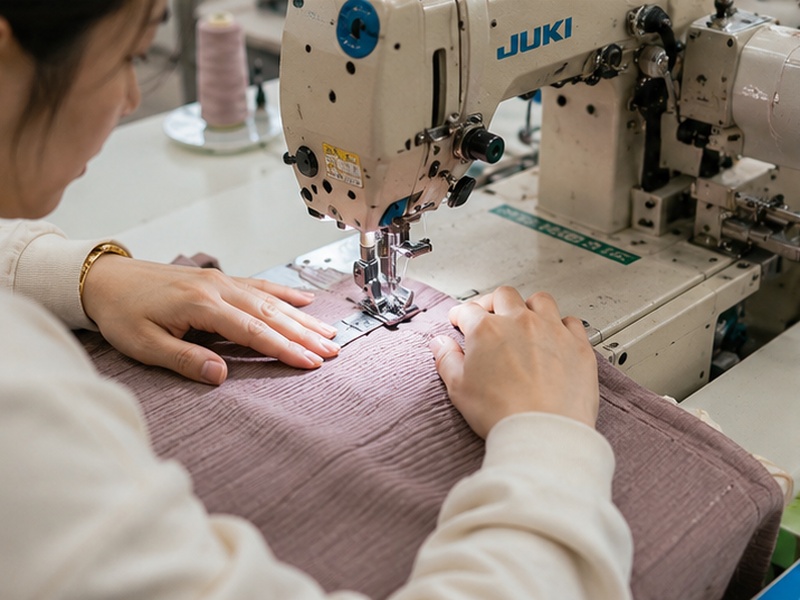
Seam Tension Management
Seam tension affects comfort, appearance and durability. A tight seam can restrict stretch, while a loose seam can wave, curl or break after wear. Ribbed dresses need machine settings that protect recovery without making seams feel hard.
- Side seam smoothness
- Neckline recovery
- Slit and hem strength

Lining Compatibility
Some ribbed dresses need lining for opacity, comfort or special surfaces. The lining must move with the outer fabric instead of fighting it. A poor lining match can create pulling, twisting or extra tightness during wear.
- Shell and lining stretch
- Inner comfort
- Opacity support

Cut-Out Reinforcement
Cut-out ribbed dresses need support around high-stress openings. A clean cut-out on a hanger may open or curl on body if the edge is not reinforced. Structure should be planned during sampling, not corrected after bulk starts.
- Edge stability
- Hidden support
- Body coverage
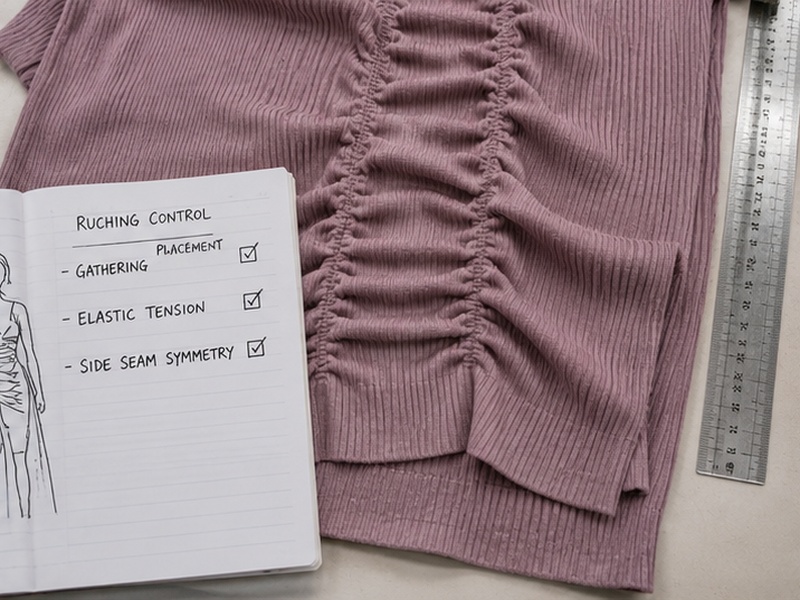
Ruching Control
Ruching adds shape and visual softness, but it must stay consistent across sizes. Gathering density, elastic tension and seam balance should follow the approved sample. Uneven ruching can make bulk pieces look different from each other.
- Gathering placement
- Elastic tension
- Side seam symmetry

Closure Construction
Zippers, buttons, hooks and plackets must work with stretch fabric. If a closure area is too rigid, the dress may gape, pull or distort. Fitted ribbed dresses need enough support without breaking the clean body line.
- Placket stability
- Zipper support
- Button gap control

Pressing And Finishing
Finishing gives the ribbed dress its final shape and touch. Heat, steam and pressure should match the fabric type. Cotton rib, modal rib, viscose rib, velvet rib and metallic rib should not use the same finishing method.
- Rib texture protection
- Clean seam appearance
- No shine or flattening
Private Label Details For Ribbed Dress Programs

Main Label
The main label creates the first inside-garment brand impression. For ribbed dresses, label material and placement should match the neckline, garment weight and skin contact area. A soft label keeps the garment comfortable and refined.
- Soft woven or printed label
- Clean neckline placement
- Smooth edge finishing

Size Label
Size labels help customers and warehouse teams identify garments quickly. Ribbed dresses often carry close-fit expectations, so size information should stay clear across all colors, sizes and repeat orders.
- Readable size mark
- Consistent size code
- Placement away from irritation

Care Label
Care labels protect garment performance after purchase. Ribbed dresses may include elastane, dark shades, brushed surfaces, metallic finishes or delicate trims. Washing guidance should match real fabric behavior, not generic care wording.
- Fiber content
- Wash and heat guidance
- Destination market language

Hangtag
Hangtags can express fabric quality, fit story or collection tone. A ribbed dress program often works better with restrained materials and clean layouts. The tag should support brand value without feeling oversized or crowded.
- 300–400 gsm card
- Matte or soft-touch finish
- QR code for care or sizing

Barcode And SKU Sticker
Barcode and SKU stickers support fulfillment accuracy when one ribbed dress expands into several colors and sizes. Clear SKU logic helps warehouse teams receive, sort and ship products with fewer mistakes.
- Style and color code
- Size and barcode
- Visible polybag placement
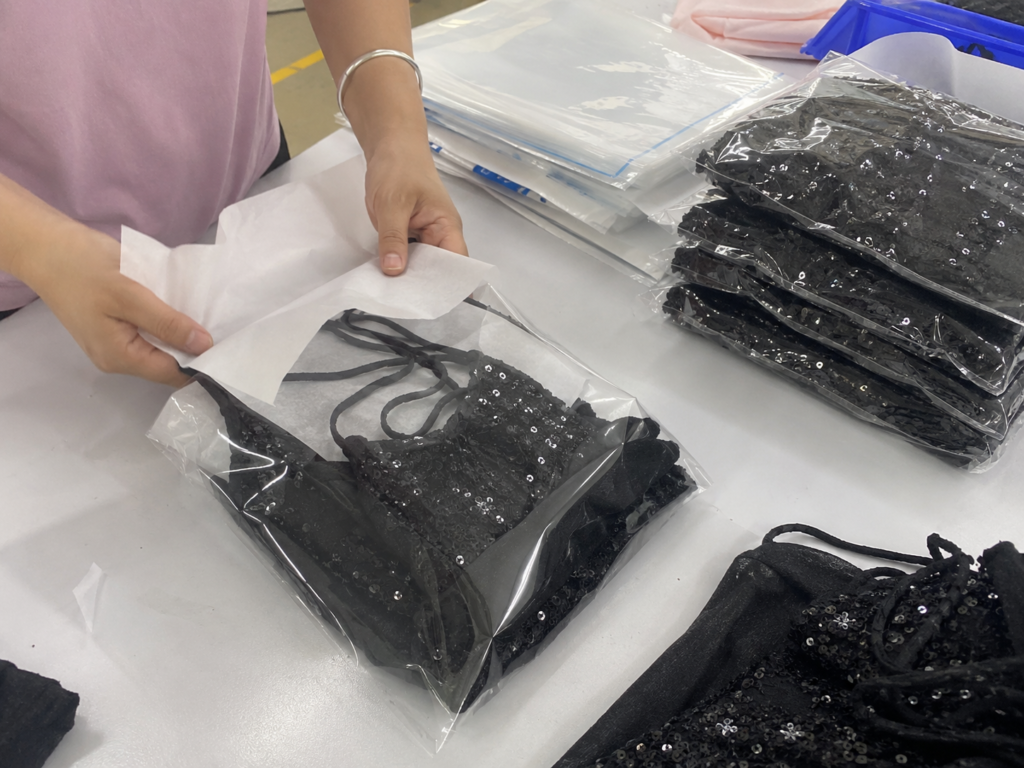
Polybag
Polybags protect garments during transport and storage. For ribbed dresses, bag size should prevent heavy compression, especially for brushed, velvet, metallic or heavyweight rib fabrics. Packing should keep presentation clean after long shipping.
- Correct bag size
- Visible SKU area
- Warning text when required
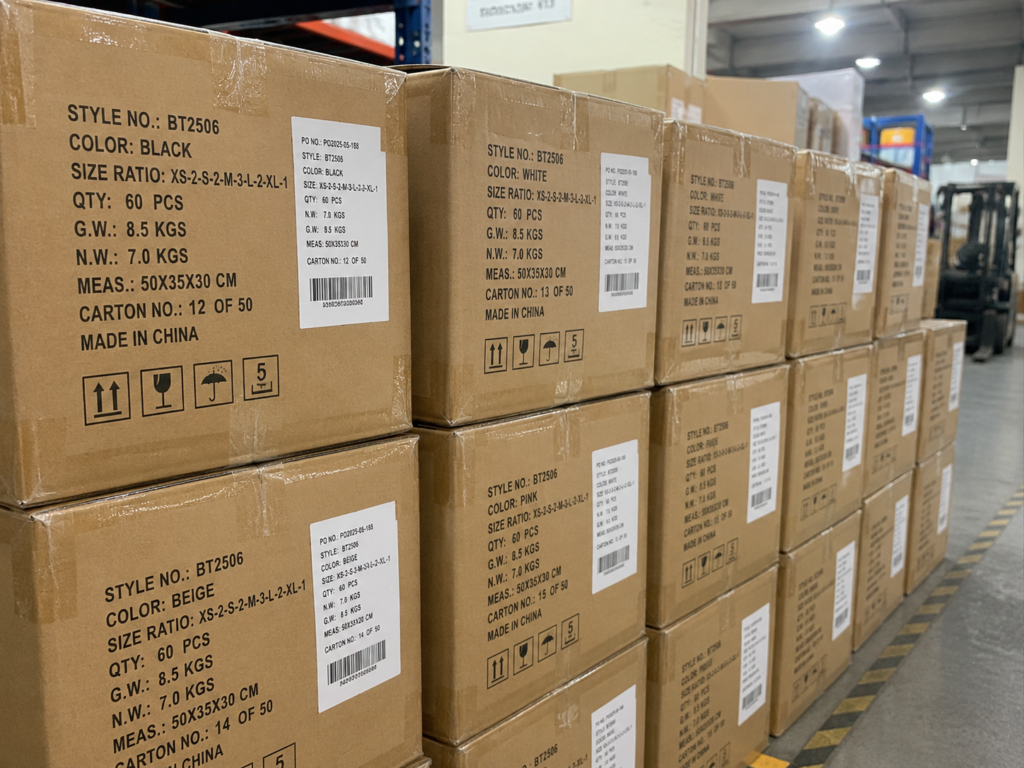
Carton Mark
Carton marks help receiving teams manage bulk delivery. Clear carton information becomes important when several colors, sizes or repeat orders ship together. Consistent carton logic reduces sorting errors at warehouse level.
- Style and color
- Size ratio
- Carton number

Folding Or Hanger Packing
Packing method should match the garment type and fabric surface. Most tank, midi and lounge ribbed dresses can be folded. Occasion styles, velvet ribs and metallic finishes may need hanger support or tissue protection.
- Folding for basic styles
- Hanger support for delicate surfaces
- Lower pressure for heavy ribs
Sample Development Process For Ribbed Dress Projects
Project Review
Development starts with product direction. Reference images, size chart, target fit, color plan, fabric idea and expected quantity should be reviewed before pattern work. For ribbed dresses, the intended selling scene affects every technical decision.
- Reference image or tech pack
- Target size range
- Expected order quantity
Fabric Direction
Fabric direction decides hand feel, body support and photo effect. Cotton, modal, viscose, nylon, polyester and spandex ribs can create very different results. Fabric should match the selling scene, not only the reference image.
- GSM and hand feel
- Stretch and recovery
- Opacity and shrinkage
Pattern Development
Pattern development turns the style into a workable garment structure. Ribbed fabric follows the body closely, so bust shape, waist curve, hip tension and hem opening must be considered from the beginning.
- Body proportion
- Stretch allowance
- Size grading direction
First Sample
The first sample checks silhouette, fabric behavior and construction direction. Standard ribbed dress samples usually take 5–10 days. More complex styles with cut-outs, lining or special surfaces may take 7–15 days.
- Overall fit
- Fabric behavior
- Construction method
Fit Comments
Fit comments should be specific and measurable. Vague comments slow down development. Clear notes such as adjusting hip ease, neckline height, slit placement or sleeve comfort help the next sample move closer to approval.
- Measurement change
- Comfort issue
- Visual correction
Revised Sample
The revised sample applies approved comments and confirms direction. When design and fabric are clear, many ribbed dress projects should aim to confirm the main fit within the first two rounds.
- Corrected fit
- Confirmed fabric
- Refined construction
Pre-Production Sample
The pre-production sample should represent the final garment before bulk. Fabric, color, trims, labels, measurements, stitching, finishing and packing method should stay close to production condition.
- Final measurements
- Final trims
- Final packing method
Sample Approval
Sample approval creates the production reference. Approved sample, measurement chart, fabric details, trim placement and packing notes should stay connected before bulk starts. These records also support repeat colors and replenishment orders.
- Approved sample record
- Measurement standard
- Production notes
Bulk Production Flow For Ribbed Dress Orders

Order Confirmation
Production starts after style number, quantity, size ratio, color ratio, approved sample, fabric direction, trims, packing method and delivery terms are confirmed. For ribbed dresses, stretch and shrinkage standards should also be aligned.
- Quantity and ratio
- Approved sample
- Delivery term

Material Preparation
Fabric, labels, trims and packaging are prepared according to the confirmed order. Rib fabric should be checked for width, GSM, color, hand feel, stretch and recovery before cutting approval.
- Main fabric
- Labels and trims
- Polybags and cartons

Fabric Inspection And Relaxation
Rib fabric may need relaxation before cutting because stretch materials can shift after opening from rolls. Inspection helps identify holes, stains, oil marks, shade variation or uneven rib texture.
- Surface defects
- Shade consistency
- Fabric tension
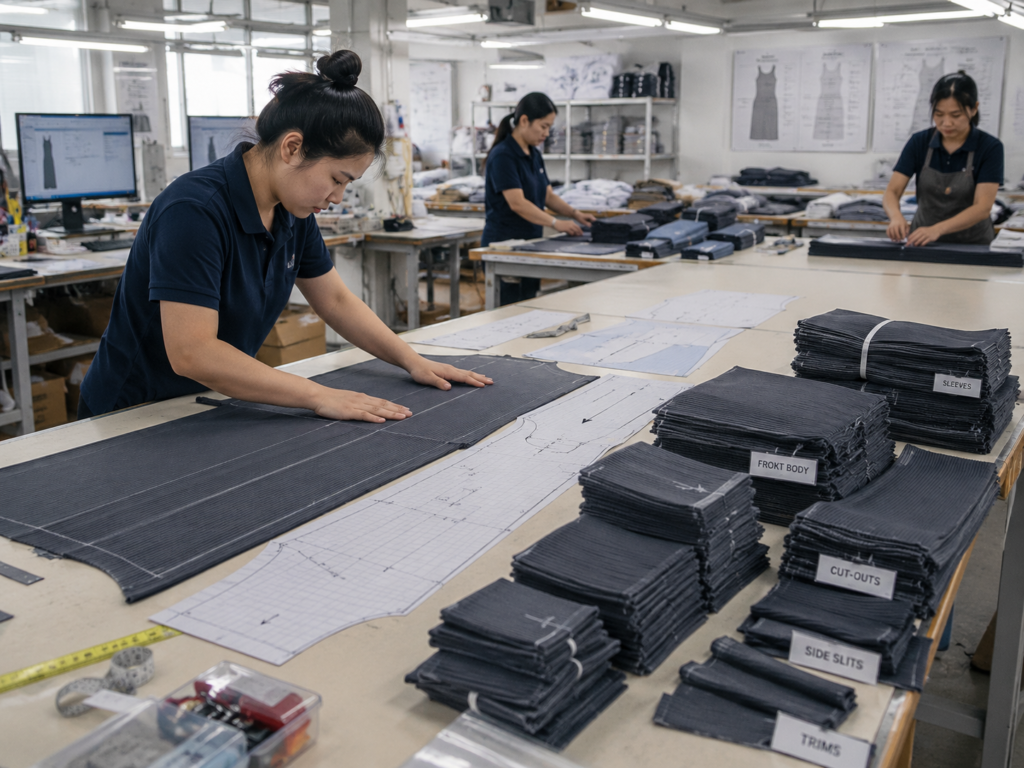
Cutting Preparation
Cutting should follow approved marker direction and rib alignment. Front body, back body, sleeves, cut-outs, slits and trims need consistent placement. Small cutting deviations can become visible after sewing.
- Rib direction
- Panel accuracy
- Bundle control
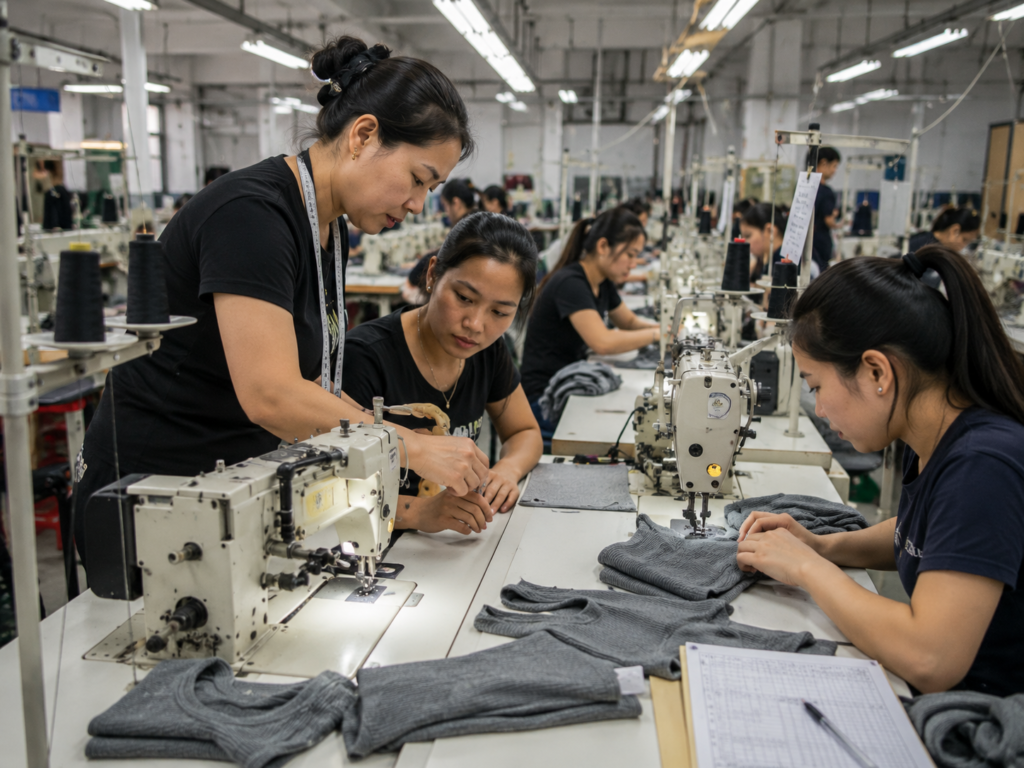
Sewing Line Setup
Before full production, the line should confirm machine type, stitch type, thread, needle, seam tension and handling method. A short pilot run helps prevent seam waving, curling or broken stitches.
- Machine setting
- Seam tension
- Operator handling

Inline Checking
Inline checking catches issues during production instead of after all garments are complete. Measurements, seam quality, neckline shape, armhole tension, hip recovery and hem balance should be reviewed during sewing.
- Measurement control
- Seam appearance
- Body shape

Finishing And Pressing
Finishing prepares the garment for final inspection and packing. Heat, steam and pressure should match fabric type and surface treatment. The goal is clean shape without flattened ribs or shine marks.
- Seam smoothness
- Rib texture
- Final hand feel

Packing And Shipment
After final inspection, garments move into folding, hanger packing, polybagging, carton packing and shipment preparation. Packing should protect fit, surface and presentation during transport.
- Packing method
- Carton mark
- Shipping documents
MOQ, Lead Time And Shipping For Ribbed Dress Orders
Quantity, timing and shipment method should match the stage of the ribbed dress program. A new style may start with a controlled test order, then move into repeat colors, mid-size runs or larger scale production after sales validation.
| Item | Typical Range | Suitable Use |
|---|---|---|
| Test Order MOQ | 300–500 pcs | New silhouette, new fabric or first market test |
| Mid-Size Order | 1,000–5,000 pcs | Confirmed style, seasonal drop or color expansion |
| Scale Order | 5,000+ pcs | Repeat style, hero product or replenishment run |
| Standard Sampling | 5–10 days | Tank, midi, lounge or basic bodycon styles |
| Complex Sampling | 7–15 days | Cut-outs, lining, metallic finish or special trims |
| Simple Bulk Production | 15–25 days | Basic ribbed dress with ready fabric |
| Regular Bulk Production | 25–35 days | Standard order with multiple sizes and colors |
| Complex Bulk Production | 35–45 days | Special surface, complex construction or higher checks |
| Standard Payment | 50% deposit + 50% before shipment | Common cooperation structure for production orders |
| Flexible Arrangement | Case by case | Small quick-start orders, repeat programs or split shipments |
Shipping Options
| Shipping Method | Typical Time | Suitable Use |
|---|---|---|
| Express Shipping | 5–7 days | Samples, urgent small shipments or time-sensitive approval pieces |
| Air Shipping | 7–15 days | Launch-driven orders, smaller bulk shipments or tight delivery windows |
| Sea Shipping | 20–35 days | Planned bulk orders, replenishment runs or cost-controlled delivery |
Quality Inspection For Ribbed Dress Production
Fabric Inspection
Fabric inspection happens before cutting. Color, GSM, rib texture, width and surface defects should be checked against the approved standard, since weak recovery, uneven rib lines or unexpected transparency can affect the final wearing result.
Shrinkage And Hand Feel Review
Shrinkage affects garment length, body width and final fit. Hand feel should remain close to the approved sample, especially for cotton, modal, viscose, brushed and blended rib fabrics used in fitted dress programs.
Measurement Check
Measurement control is essential for fitted ribbed dresses. Bust, waist, hip, body length, sleeve length, hem opening and slit height should follow approved tolerance without pulling the fabric out of shape during inspection.
Seam And Stitch Check
Seams must stretch with the body without breaking, waving or creating discomfort. Side seams, shoulder seams, armholes, necklines, slit openings, cut-outs and hems should be checked with light stretch.
Fit And Appearance Check
Fit review compares production pieces with the approved sample. Side seam straightness, neckline shape, sleeve position, hip tension, hem balance and overall body line should stay consistent across bulk pieces.
Surface And Trim Check
Surface treatments, labels, hangtags, buttons, zippers, embroidery, printing and metallic finishes should match the approved standard. Cracking, peeling, puckering, rubbing or uneven shine should be handled before packing.
Packing Check
Packing inspection protects garments during shipment and warehouse handling. Folding method, polybag size, SKU sticker, barcode, carton ratio and carton mark should match the approved packing plan.
Repeat Order Comparison
Repeat orders should be compared with earlier approved samples and production records. Fabric hand, shade, measurements, seam method, trim placement and packing standard should remain consistent across batches.
Factory Structure And Compliance Support For Long-Term Programs
Factory Structure
Development Team
Production Follow-Up
Equipment Support
Process Records
Delivery Support
Why Jinfeng Fits Ribbed Dress Programs For DTC Brands
Womenswear Production Background
Jinfeng focuses on women’s fashion manufacturing, including dresses, sets, fitted knit styles and occasionwear. Ribbed dress programs fit this production background because they require both dress development and stretch fabric understanding.
Sample Development Strength
Ribbed dresses depend on accurate sampling before bulk production. Jinfeng’s 2 sample rooms, 7 pattern makers, 20 sample makers and sourcing support help turn images, samples or tech packs into workable garments.
Fit And Fabric Judgment
Ribbed dresses are sensitive to GSM, stretch, recovery, opacity and shrinkage. Jinfeng connects fabric matching with pattern adjustment to reduce neckline stretching, hip bagging, hem twisting and weak recovery.
Small Test To Scale Production
Jinfeng can support 300–500 pcs test orders, 1,000–5,000 pcs mid-size orders and 5,000+ pcs scale production. This helps brands test silhouette, color and fabric before moving into repeat or larger runs.
Multi-Factory Coordination
Jinfeng operates 4 coordinated factories, including 3 women’s fashion factories and 1 casual, hoodie and print-focused facility. This structure supports focused dress production and related product extensions.
Repeat Order Consistency
Repeat ribbed dress programs need stable fit, fabric hand, color and construction. Jinfeng keeps approved samples, measurement charts, fabric notes, trim details and packing methods connected across production batches.
Delivery Planning Support
Jinfeng supports express, air and sea shipping, with FOB, CIF, DDP, DAP, split shipment and overseas warehouse coordination. This helps match production delivery with launch calendars and replenishment needs.
Category-Specific Production Thinking
Ribbed dress production needs attention to body line, stretch, seams, opacity, surface behavior and packing. Jinfeng’s process keeps sample direction, fabric behavior and bulk execution aligned through the order.
Common Development Mistakes In Ribbed Dress Programs
Choosing Fabric By Look Only
Treating Bodycon Like Basic Knitwear
Approving Samples Without Wash Review
Ignoring Light Color Opacity
Adding Cut-Outs Too Late
Using Generic Packing
Ribbed Dress Manufacturing Case Studies
Real production value appears when a style moves from sample to repeat orders. These case examples show how ribbed dress programs can be planned around fit, fabric control, test quantity and scale-up potential.
Case 1|A U.S. DTC Womenswear Brand
- Product: Ribbed tank midi dress
- Market: United States
- Sales channel: Direct online store
- Starting point: Tech pack + reference sample
- Initial order: 500 pcs per color
- Scale order: 2,800 pcs across 4 colors
- Key service: Fabric matching, fit correction, grading, repeat color control
Challenge
The brand needed a clean ribbed tank dress for a summer capsule. The first supplier sample looked acceptable on hanger, but the neckline stretched after fitting and the lighter color showed more transparency than expected.
Solution
Jinfeng reviewed the fabric weight, neckline binding and size grading before sample revision. A slightly heavier rib was selected, the neckline tension was adjusted, and the approved pattern was recorded for later color expansion.
Result
The first order started at 500 pcs per color and expanded into 4 colors after launch. Neckline shape stayed cleaner, lighter colors had better coverage, and the brand kept the same base pattern for later repeat production.


Case 2|A U.K. Occasionwear Label
- Product: Cut-out ribbed bodycon dress
- Market: United Kingdom
- Sales channel: E-commerce + social campaigns
- Starting point: Reference images + size chart
- Initial order: 300 pcs per style
- Scale order: 1,500 pcs after campaign testing
- Key service: Cut-out reinforcement, seam control, sample revision, bulk inspection
Challenge
The label wanted a fitted ribbed dress with waist cut-outs for a partywear drop. The design needed strong visual appeal, but the cut-out edges had to stay close to body without curling, gaping or feeling too stiff.
Solution
Jinfeng adjusted the cut-out edge structure, tested reinforcement options and reviewed the dress on body before approval. Seam tension and edge finishing were checked during sample revision to protect both comfort and appearance.
Result
The approved sample moved into a controlled 300 pcs launch order. After the campaign performed well, the style was repeated at higher quantity with the same cut-out structure, fabric direction and inspection standard.
Case 3|An Australian DTC Fashion Brand
- Product: Sculpting midi bodycon dress
- Market: Australia
- Sales channel: Direct online store
- Starting point: Reference images + size chart
- Initial order: 300 pcs per style
- Scale order: 3,500 pcs per style within 3 months
- Key service: MOQ planning, fabric consistency, grading, production scale-up
Challenge
The brand wanted to test a new bodycon style with a controlled first order, but also needed a supplier that could scale quickly if sales performed well. Previous suppliers could handle small quantities, but struggled with repeat consistency when volume increased.
Solution
Jinfeng supported a step-by-step production plan. The first batch stayed at 300 pcs per style for market testing. After the style showed sales potential, Jinfeng maintained the approved pattern, fabric direction and fit notes, then allocated additional production capacity for scale-up.
Result
The order scaled from 300 pcs to 3,500 pcs per style within 3 months. Fit remained consistent across repeat batches, production errors were reduced during scale-up, and a longer-term plan was established for multiple fitted dress styles.

Custom Ribbed Dress Manufacturing FAQ
Common questions about custom ribbed dress production usually focus on MOQ, samples, fabrics, fit, stretch recovery, private labels, production time, inspection, and shipping. Clear information helps prepare a smoother development request.
Jinfeng can support ribbed tank dresses, bodycon dresses, midi dresses, maxi dresses, long sleeve dresses, cut-out dresses, ruched dresses, lounge dresses and related fitted dress styles. Development can start from reference images, physical samples or tech packs.
Typical test orders start around 300–500 pcs. Mid-size orders usually range from 1,000–5,000 pcs, while scale orders can reach 5,000+ pcs depending on style, fabric, color plan and production schedule.
Standard ribbed dress samples usually take 5–10 days. More complex styles with cut-outs, lining, metallic surfaces, special trims or construction details may take 7–15 days depending on material readiness and development requirements.
Yes. Jinfeng can work from reference images, physical samples or tech packs. For image-based development, clear notes on fit, length, fabric feel, color and target size range help improve sample accuracy.
Yes. Jinfeng can support fabric matching and sourcing for cotton rib, modal rib, viscose rib, nylon rib, polyester rib, spandex blends, brushed rib, velvet rib and other stretch dress fabrics based on product direction.
Lighter colors need better opacity control. Fabric GSM, fiber blend, rib density, lining option and garment tension should be reviewed during sampling. On-body checking is recommended before approving cream, white or pastel shades.
Yes. Main labels, size labels, care labels, hangtags, barcode stickers, polybags, carton marks, folding and hanger packing can be arranged according to brand requirements and destination market needs.

Develop Ribbed Dresses With A Factory Built For Fit
A successful ribbed dress program needs more than basic sewing. Fit balance, fabric stretch, recovery, opacity, seam tension, pattern grading, and repeat production all need to be controlled from the first sample.
Jinfeng supports custom ribbed dress development, private label production, and bulk manufacturing from Dongguan. Send a reference image, sample garment, size chart, or tech pack to start a clear development plan.
- Tank, bodycon, midi, maxi, ruched, cut-out, and long sleeve ribbed dresses
- Cotton rib, modal rib, viscose rib, nylon blends, brushed rib, and stretch fashion fabrics
- Core collection, seasonal drop, loungewear, occasionwear, and fitted fashion programs
- Small test orders, repeat production programs, and scalable bulk delivery
- Private label, SKU packing, and shipment support