...

Rhinestone Top Manufacturer for Partywear Brands

Custom partywear tops engineered around rhinestone placement, fashion fit, material behavior, bulk consistency and retail-ready private-label delivery.

  • 6 core product structures: crop, corset, bustier, mesh, halter and bodysuit tops.
  • Complex first samples generally require 15-25 days after materials and development details are confirmed.
  • MOQ starts from 200 pcs per style/color; special rhinestones, chains, custom colors and packaging may carry separate supplier minimums.
  • Multi-style programs can be organized across 10-30 styles by fabric group, trim group, launch priority and production complexity.

Development Capacity Behind Every Partywear Program

Rhinestone tops demand more than decorative application. Jinfeng Apparel combines women’s fashion development, pattern work, sample execution, production coordination and QC resources for structured partywear programs.

Since 2008

Long-term women’s fashion manufacturing experience supports product decisions beyond surface decoration. The team evaluates garment structure, material behavior, trim weight, fit, assembly sequence, bulk repeatability and private-label delivery before production standards are locked.

6 Owned Factories

Owned women’s fashion factories provide production options for woven, stretch, mesh, corset-inspired and embellished garments. Factory allocation follows fabric type, construction difficulty, finishing requirements, order volume and launch timing rather than placing every style on one general line.

10+ Production Partners

Long-term satellite production partners extend capacity for multi-style programs and seasonal demand. Allocation remains tied to approved patterns, production files, trim cards, measurement standards and QC checkpoints so added capacity does not remove technical control.

2 Sample Rooms

Two sample rooms support product review, pattern development, sample sewing, revision and PP preparation. Complex rhinestone tops are assessed for fabric compatibility, neckline security, bust support, trim positioning, skin contact and packing risk before bulk planning.

7+ Pattern Makers

Senior women’s pattern makers work around bust, upper bust, under-bust, waist, strap angle, armhole, neckline depth and hem balance. Their role is especially important for corset, bustier, halter and bodycon tops where trim weight can change fit.

15+ QC Inspectors

QC personnel cover materials, cutting, sewing, measurement, finished appearance, rhinestone placement, missing stones, label accuracy and packing. Product-specific checkpoints are defined before inspection rather than relying only on a final visual check.

Built for Established Partywear Product Programs

Jinfeng Apparel is structured for fashion teams with defined product direction, formal development requirements, bulk quantities and repeat-order potential.

Best Project Fit

A strong fit includes partywear, clubwear, occasionwear, premium ecommerce and private-label programs with a clear style list, target market, size range, quantity plan and launch calendar. Tech packs, original samples, sketches, reference images or line sheets can begin the review. The most productive partnerships involve structured sampling, measurable approvals, brand files, bulk production standards and future collection planning.

Manufacturing Scope

The production model centers on custom development, sampling, PP approval, bulk manufacturing, QC, branded packing and export delivery. Ready-stock purchasing, single-piece fulfillment and casual decoration-only requests fall outside the core service model. Clear boundaries protect product development time and allow project teams to focus on garments requiring fit control, trim management and production accountability.

Where Rhinestone Party Tops Commonly Fail

A rhinestone top can look convincing in a sketch yet fail after stretching, fitting, packing or repeated handling. Early risk review prevents decorative choices from damaging wearability and bulk consistency.

Stone Retention

Hotfix temperature, adhesive quality, fabric surface, stretch direction and wear zones all affect retention. Weak attachment can create missing stones during fitting, packing or retail handling, while excessive heat can mark delicate satin or distort mesh.

Fabric Mismatch

Light mesh, soft jersey, stretch satin, velvet and structured woven fabrics respond differently to rhinestone weight and heat. A layout suitable for stable woven fabric may crack, sag or shift when transferred to a highly elastic base.

Unstable Bust Fit

Corset and bustier tops require correct cup position, under-bust shaping, boning direction, neckline tension and closure support. Decoration cannot compensate for a weak pattern; heavy placement may pull the neckline lower or change cup balance.

Uneven Placement

Misaligned motifs, inconsistent spacing, left-right imbalance and placement drift become visible under photography and event lighting. Placement artwork, reference points and first-piece approval are needed before repeated application.

Skin Contact

Rhinestone chains, prong settings, crystal fringe and rough backings can scratch the neck, underarm, shoulder or bust area. Lining, backing, edge finishing and placement distance must be evaluated during sample fitting.

Packing Damage

Folding pressure, stone-to-stone contact, loose fringe and unprotected chains can mark fabric, snag mesh or create scratches. Protective layers, controlled fold lines and carton pressure are part of product quality, not an afterthought.

Rhinestone Top Styles for Partywear Collections

Each silhouette carries a different engineering requirement. Product development starts with fit, support and material behavior, then moves into rhinestone layout and visual impact.

Rhinestone Crop Tops

Designed for party capsules, birthday drops, festival edits and matching sets. Common bases include stretch jersey, double-layer mesh, ponte, stretch satin and structured woven fabrics. Key controls include bust coverage, hem tension, side-seam balance, stretch recovery and stone spacing across moving areas. Dense motifs are kept away from fold points unless sample testing proves stable. Retail value increases when crop proportions coordinate with skirts or trousers.

Rhinestone Corset Tops

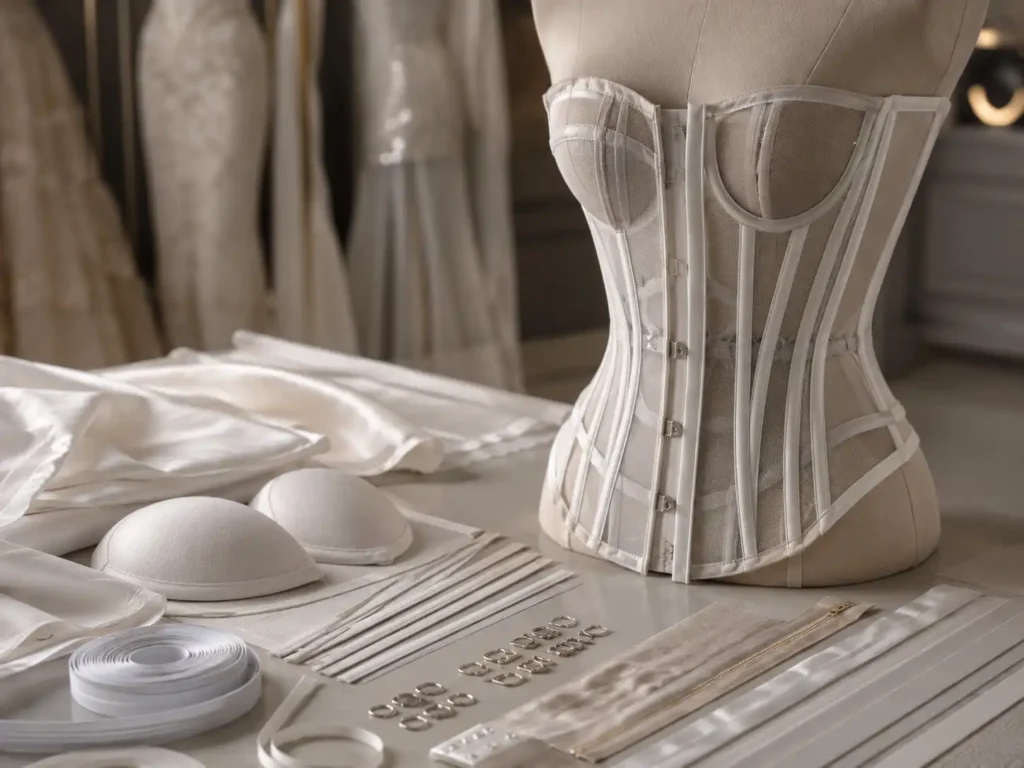
Corset tops need a stable internal structure before decoration is approved. Bra cups, boning, panel seams, hook-and-eye, zipper position, lining and under-bust shape are developed together. Rhinestone weight is mapped across the front panel so the neckline does not collapse and the waist remains balanced. Sample fitting checks cup position, center-front height, side coverage, comfort and movement before PP approval.

Crystal Mesh Tops

Stretch mesh and power mesh create a light, body-revealing partywear look, but transparency and recovery must be controlled. Development covers mesh type, double-layer areas, skin-tone or self-color lining, neckline binding and seam reinforcement. Crystal spacing is reviewed under relaxed and stretched conditions. All-over placement requires careful density planning because the distance between stones changes when the garment is worn.
Rhinestone Mesh Top

Rhinestone Halter Tops

Halter structures concentrate load around the neck and upper back. Strap width, tie length, closure strength, neckline depth and bust support must match the decoration weight. Rhinestone straps or chains may deliver a strong visual effect, yet skin contact and pull strength need close review. Sampling includes shoulder and neck movement to reduce sliding, twisting and pressure during extended wear.

Embellished Bustier Tops

Bustier tops combine close fit, cup shape, front-panel precision and structured support. Sewn-on stones, mixed-size rhinestones, chains and fringe can be integrated across stable zones. Construction plans define where decoration is attached before or after assembly, how lining hides backing threads, and how cup symmetry is checked. Bulk QC compares cup position, panel alignment, trim location and closure performance against the approved standard.

Rhinestone Bodysuit Tops

Bodysuits support clubwear, stage-inspired fashion and high-impact evening styling. Fit must balance torso length, bust support, leg opening, snap closure and stretch recovery. Rhinestone layouts avoid high-friction areas and must remain stable when the torso extends. Size grading requires more than widening the pattern; body length, armhole, neckline, strap and closure position are reviewed across the size range.

Build Rhinestone Tops Into Complete Partywear Collections

Statement tops become more commercially useful when they connect with coordinated skirts, dresses and evening separates instead of standing alone as isolated styles.

Hero Statement Tops

Campaign-focused tops can carry denser rhinestone placement, crystal straps, fringe or corset structure. Their role is to create photography value and a recognizable launch image. Development places visual impact on areas that remain stable when worn, while controlling weight, skin contact and production time.

Matching Party Sets

Crop tops, corset tops and bustiers can pair with mini skirts, maxi skirts, fitted trousers or mesh overlays. Fabric batch, color, waist proportion, hem length and size pairing are planned together. Coordinated SKU logic helps brands sell garments separately or as a higher-value set.

Collection Coordination

Rhinestone tops can share fabric, trim color and design language with party dresses, sequin minis, mesh dresses and jumpsuits. Shared materials reduce visual fragmentation across a collection, while controlled variation prevents every style from looking identical. Line sheets can be grouped by hero style, commercial style and replenishment style.

Rhinestone Applications Selected for Design and Wearability

Decoration method determines shine, weight, labor, comfort and durability. Jinfeng Apparel reviews each option against fabric structure, placement area and intended retail appearance.

Hotfix Rhinestones

Hotfix stones suit stable zones on jersey, mesh, satin blends and woven fabrics when temperature, pressure and dwell time are compatible with the base material. Samples verify surface marking, adhesive spread and retention after controlled stretching. Heat-sensitive fabrics require cautious testing because excess temperature can create shine marks, flatten velvet or distort lightweight mesh.

Sewn-On Stones

Sewn-on stones provide stronger mechanical attachment for larger crystals, shaped stones and high-value focal points. Stitch location, backing thread, lining coverage and skin contact are planned before application. The method adds labor and weight but can be more suitable for structured corset panels, bustier fronts, shoulder details and areas where hotfix adhesion is unreliable.

Rhinestone Chains

Rhinestone chains create clean lines along necklines, straps, side seams and panel edges. Chain weight, link strength, end fixing and contact with delicate fabric require close control. Attachment points may need reinforcement so the chain does not pull through mesh or distort a soft neckline. Packing keeps chains separated from unprotected fabric surfaces.

Crystal Straps

Crystal straps can transform halter, bustier and evening tops, yet they carry both visual and structural responsibility. Pull strength, connection hardware, strap length, edge smoothness and shoulder comfort are checked during fitting. For adjustable designs, metal components must move smoothly without cutting the chain or creating sharp contact against skin.

Crystal Fringe

Fringe delivers movement under party lighting and works well along hems, bust lines and shoulder details. Length consistency, anchor strength, swing clearance and snag risk influence the design. Fringe requires protective packing and enough spacing from closures or neighboring embellishment. Sample movement checks reduce tangling and uneven hanging before production.

Mixed-Size Layouts

Mixed sizes create depth and a richer reflective surface without covering every area at one density. Placement artwork identifies stone size, spacing, direction and transition zones. Larger stones are positioned on stable areas; smaller stones can follow curves or gradients. Bulk inspection compares the finished motif with an approved placement reference rather than relying on visual memory.

Rhinestone Placement Must Support the Garment Structure

A strong layout follows the pattern, body movement and support zones. Decorative placement is reviewed as part of garment engineering, not as a separate graphic layer.

Neckline and Bust Placement

The bust area combines shape, exposure control and visual focus. Dense rhinestone placement near a deep neckline can add weight and pull the edge away from the body. Corset and bustier styles require cup position, upper-bust tension, center-front height and under-bust support to be stable before decoration begins.

Placement lines should follow panel seams and bust curves without crossing areas that need high stretch. Large stones sit better on stable panels, while small stones can follow curved transitions. Sewn-on stones may require lining coverage to hide thread and backing. A first sample checks symmetry from front, side and three-quarter views.

Fit review also considers bra compatibility, movement, armhole exposure and skin contact. A visually strong motif loses value if the neckline gaps, the cup shifts or the edge scratches during wear.

Straps, Shoulders and Halter Lines

Straps carry tension, and rhinestone chains or crystal straps add weight. Connection points need reinforcement based on the base fabric and strap construction. Narrow mesh edges, soft satin and lightweight jersey cannot carry the same load as structured woven panels.

Halter tops require neck comfort, tie security or hardware strength, while shoulder straps require correct angle and length across the size range. Decorative components are checked for sharp edges, twisting and sliding. Adjustable sliders must work without damaging the rhinestone chain or changing the intended appearance.

Bulk standards identify strap length, attachment position, reinforcement method and left-right symmetry. Random manual placement is avoided because a few millimeters of variation can change neckline balance.
All-Over Surface Placement

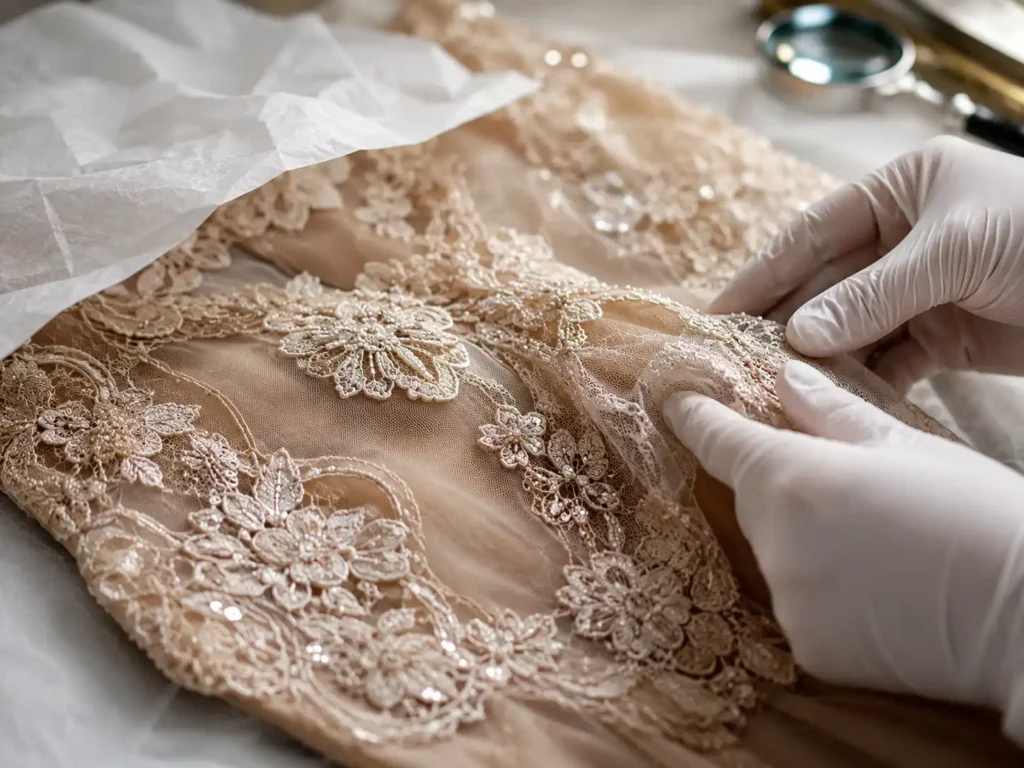
All-over rhinestone surfaces need density planning under both relaxed and stretched conditions. On mesh or jersey, stone distance expands when worn; an attractive flat layout may look sparse or uneven on body. Too much coverage can also reduce stretch, increase stiffness and create adhesive stress.

Development starts with the expected stretch direction, garment ease and body zone. High-motion areas receive smaller stones, lower density or flexible spacing. Stable center panels can carry stronger motifs. Placement artwork and physical approval are both used because digital spacing alone cannot predict every fabric response.

Production inspection checks alignment, missing stones, adhesive residue, surface marks, stretch behavior and overall weight. The approved sample remains the visual benchmark.

Hem, Fringe and Edge Placement

Hem and edge decoration influences movement and packing. Crystal fringe must hang evenly, avoid closures and remain clear of neighboring garments. Rhinestone chains along hems need enough flexibility to follow the line without turning, buckling or pulling the fabric downward.

Placement near side seams, zippers or hook-and-eye closures requires extra space for sewing and finishing. Decorative ends are secured so they do not detach during wear. Edge binding or lining may be added where backing could touch skin.

Packing instructions define fold lines, protective tissue and fringe direction. Garments are not compressed in a way that forces stones into delicate surfaces or traps fringe under heavy folds.

Match Rhinestones With the Right Partywear Fabrics

Material choice controls drape, stretch, transparency, support, heat tolerance and packing behavior. The same rhinestone artwork can produce very different results when moved from stable woven fabric to mesh, satin or jersey.

Fabric DirectionSuitable Top StructuresRhinestone FocusMain Production RiskSample Check
Power MeshMesh tops, bodysuits, corset insertsLightweight spacing, gradient layoutsStretch separation, transparency, edge damageStone distance under stretch; lining coverage
Stretch MeshBodycon crops, sheer party topsSmall hotfix stones, mixed-size layoutsRecovery loss, adhesive stress, hole riskMulti-direction stretch and neckline stability
Stretch JerseyCrop tops, fitted halters, bodysuitsFlexible spacing and smaller stonesTwisting, poor recovery, cracked adhesiveSide-seam balance and recovery after wear
Stretch SatinCorset, bustier and halter topsLocalized motifs, straps and panel linesHeat marks, snagging, crease pressureHeat trial, shine direction and zipper flatness
VelvetWinter party tops, structured cropsHigh-contrast stones and focal placementPile crushing, pressure marks, shade directionSurface recovery and low-pressure packing
Sequin FabricHoliday tops and matching setsSelective rhinestones, crystal chainsWeight, needle damage, scratching, lossSeam clearing, lining comfort and trim balance
Structured WovenCorset and bustier topsSewn-on stones, chain and dense motifsPanel distortion and pull-throughReinforcement, cup support and attachment strength

Fit Engineering for Structured Rhinestone Party Tops

Fit is developed before decoration density is finalized. Rhinestone weight and placement can change neckline tension, cup balance, strap load and garment recovery.

Bust Coverage

Upper-bust and side-bust coverage are checked against the intended styling and target market. Deep or open shapes need enough internal control to stay stable during movement. Rhinestone placement remains clear of edges that must flex closely to the body.

Cup Position

Cup width, height, spacing and projection must align with the pattern and size chart. Decorative lines can emphasize asymmetry, so cup position is measured rather than judged only by appearance. Lining and backing keep attachment threads away from skin.

Strap Balance

Strap length, angle, width and attachment point influence neckline position and shoulder comfort. Crystal straps require pull-strength review and secure end fixing. Size grading adjusts strap dimensions instead of simply widening the body pattern.

Neckline Stability

Neckline depth, edge tension, binding and internal support are tested during movement. Heavy placement near a neckline may require structural adjustment. Strapless and halter styles may use boning, elastic, grip tape or back structure according to the design.

Waist and Hem

Corset and crop-top hems need level balance across front, side and back. Waist shaping should follow the intended silhouette without rolling or cutting into the body. Decoration near the hem is spaced to prevent stiffness and folding damage.

Closures and Support

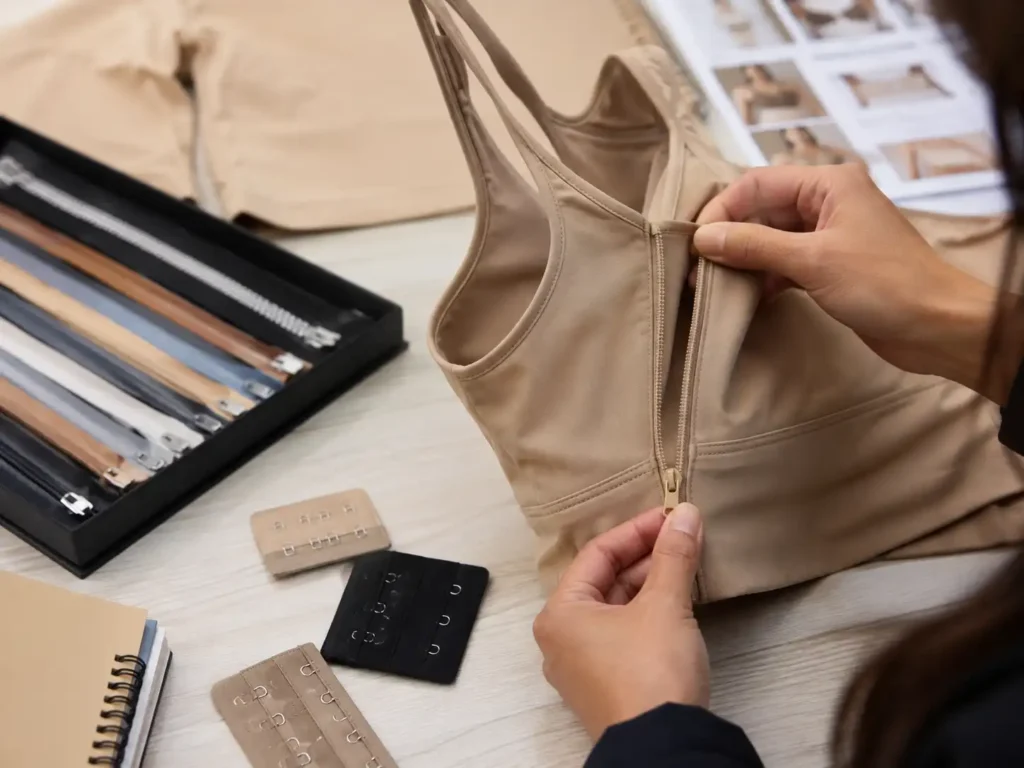
Zippers, hooks, snaps, lacing, elastic and boning are matched to construction load. A visually delicate closure must still withstand dressing and movement. Bulk QC checks opening function, flatness, alignment and surrounding rhinestone safety.

Control Weight, Skin Contact and Party Movement

Partywear must perform beyond a standing photo. Garments are reviewed for comfort, movement and repeated handling during events, campaign shoots and retail use.

Skin Contact

Necklines, underarms, shoulders, side seams and inner bust areas are checked for rough backing, sharp prongs, chain ends and exposed stitching. Lining, soft tape, backing layers or placement adjustments can reduce scratching without hiding the intended design.

Weight Distribution

Total trim weight is considered across front, back, straps and hem. Concentrated weight can pull a neckline, twist a side seam or collapse soft mesh. Placement may be redistributed or supported with a more stable fabric, lining or internal structure.

Movement Performance

Samples are reviewed during arm lift, torso rotation, sitting and walking. Stretch zones, fringe swing, strap tension and bodysuit length are observed. Movement review helps identify gaps, pressure points, loose stones and shifting motifs before bulk approval.

Develop the Rhinestone Top Before Scaling Production

Sampling turns a visual concept into a measurable garment standard. Each stage answers a different question, from structural feasibility to final production approval.

Design Review

Reference images, tech packs, sketches, original samples or line sheets are reviewed for silhouette, construction, trim position, target quantity, size range and launch timing. Missing details are identified before pattern work begins.

Material Direction

Fabric, lining, cups, boning, closures, rhinestones, chains and labels are shortlisted by performance, appearance, MOQ, lead time and cost. Substitute options can be compared when the original direction creates production risk.

Pattern Development

Pattern makers translate the design into garment structure around bust, under-bust, waist, strap, armhole, neckline and hem. Decoration zones are marked so application does not interfere with seams, closures or high-stretch areas.

First Sample

The first sample verifies proportion, construction, material response and decoration feasibility. Its purpose is to expose issues early, not to serve automatically as the final bulk standard. Measurements and visual notes are recorded.

Revision and Fit

Fit comments, photos, videos and measurement feedback are converted into pattern changes, trim changes and sewing updates. Revised samples can confirm major changes before PP preparation. Each approved point is carried into the next version.

PP Approval

The PP sample locks fabric, color, rhinestones, construction, size chart, label placement and packing direction before bulk production. Changes after PP approval require a formal impact review because materials, cost and schedule may already be committed.

Sampling Timelines for Complex Rhinestone Tops

Timelines depend on material readiness, pattern difficulty, trim development and feedback speed. Complex products are scheduled by stage instead of being promised under one generic number.

First Sample: 15-25 Days

Corset, strapless, lace, mesh, sequin and rhinestone-heavy styles generally require 15-25 days after key materials and construction details are confirmed. Custom-developed fabrics or special trims can extend the window to 20-35 days or follow supplier timing.

Revised Sample: 7-15 Days

Revision timing depends on the scope of changes. Pattern corrections, new cups, different boning, revised rhinestone placement or replacement fabrics can require a longer review than a simple measurement adjustment.

PP Sample: 7-15 Days

PP timing begins when final bulk-intent fabric, color, trims, labels and measurements are available. A PP sample cannot be treated as a freely changing development sample because it establishes the production reference.

Multi-Style Priorities

Programs covering 10-30 styles are grouped by hero SKU, launch date, material readiness, pattern family and trim family. Priority styles can move first for campaign, sales or PP review while later groups continue development.

Size Range Planning

XS-XL is a common grading direction, with plus-size, petite or tall adjustments evaluated by project. Bust support, strap width, armhole, torso length and neckline proportions are reviewed instead of applying a simple proportional enlargement.

Production Calendar

Bulk scheduling is confirmed after PP lock, material arrival, color approval, packaging confirmation and production allocation. A reliable calendar includes cutting, sewing, inline inspection, finishing, packing, final inspection and shipment preparation.

Approve Every Rhinestone Detail Before Bulk Production

A trim approval system converts decorative choices into repeatable specifications. Physical references and written records prevent substitutions, density changes and placement drift.

Build a Controlled Trim Specification

Every approved rhinestone component should have an identifiable specification: stone type, size, color, finish, backing, attachment method, supplier reference and intended placement. Chains, straps and fringe also require length, width, link structure, end hardware and color confirmation.

A visual image alone is not enough because lighting can change the perceived color and shine. Physical swatches or approved sample references provide a stronger standard. For mixed-size layouts, placement artwork defines the distribution and transition between sizes.

Special colors, large stones, custom chains and packaging components may carry separate supplier minimums and development time. These conditions are reviewed before final quotation and PP preparation.

Lock BOM and Placement Records

The bill of materials connects the approved fabric, lining, cups, boning, closures, rhinestones, labels and packing materials to the style. Placement records identify motif dimensions, distances from seams, left-right symmetry points and decoration sequence.

Production teams need to know whether stones are applied before assembly, after panel construction or after full garment completion. The sequence affects seam access, heat exposure, lining, inspection and repair. Approval records also state where substitution is not allowed.

A change in rhinestone grade, chain weight or backing can alter appearance, comfort and cost. Any proposed change returns to review before bulk use.

Keep Approval Traceable

Revision records capture material replacement, pattern change, trim adjustment, sewing method, measurement update, client comment and approval status. Traceability is especially important across multi-style collections where several similar trims may be used in different positions.

Approved trim cards and sample references support incoming material inspection and bulk comparison. The same records can be retained for repeat orders, new colors or future collection extensions, while new fabric batches and trim batches still require confirmation.

NDA-based handling protects brand names, unpublished designs, placement artwork, labels and packaging files throughout development and production.

Transfer Approved Samples Into Repeatable Bulk Standards

The handover from sample room to production determines whether approved details survive at scale. Final patterns, material references and inspection criteria move together.

Lock the Production Reference

Bulk production begins from an approved PP sample, final pattern, size chart and confirmed grade rule. Fabric color, stretch direction, lining coverage, cup shape, boning position, closure specification and rhinestone layout are included in the reference package.

A Golden sample can support production, QC, packing and repeat-order comparison. It gives pattern makers, sewing teams, finishers and inspectors one physical benchmark instead of relying on separate messages or photographs.

Changes after production lock are reviewed for material, cost, schedule and quality impact. Uncontrolled late changes create mismatched materials and inconsistent garment versions.

Build the Production File

The production file covers construction sequence, seam details, stitch requirements, reinforcement points, trim application, measurement tolerances, label position and packing instructions. Rhinestone-specific notes identify placement reference points, attachment method, repair rules and surface protection.

Cutting and sewing teams receive clear instructions for stretch direction, mesh handling, satin protection, sequin clearing, panel matching and closure installation. A production file reduces variation between sample makers and bulk operators.

For multi-style programs, files are separated by style and color while shared fabric or trim groups are coordinated centrally.

Connect Production and QC

QC checkpoints are defined before the first bulk pieces are completed. Inspectors compare materials, measurements, decoration, symmetry, closures, lining and finished appearance against the approved references.

First-piece review and inline inspection identify drift before the entire quantity is completed. Missing stones, wrong spacing, heat marks, neckline changes or size deviations can then be corrected earlier.

Packing standards are added to the same control system so surface protection, labels, barcodes and carton information remain consistent with the garment standard.

Workmanship Details That Protect a Premium Finish

Partywear quality is visible at close range. Sewing, lining, closures and finishing must support the rhinestone design without creating bulkiness, distortion or rough contact.

Clean Neckline Edges

Binding, facing or lining must sit flat around open necklines and mesh edges. Uneven tension creates rippling, gaping or exposed lining. Rhinestone placement is kept clear of turning points and sewing allowances so edges remain controllable.

Stable Corset Panels

Panel seams, cup seams and boning channels need consistent width and symmetry. Bulky seam allowances under rhinestones can create raised lines. Internal structure is trimmed and finished to support shape without creating uncomfortable pressure.

Balanced Stretch Seams

Stretch mesh, jersey and satin require compatible seam tension and thread selection. Over-tight stitching can wave the edge; loose stitching can open under wear. Side seams are checked for twisting after decoration and handling.

Flat Closures

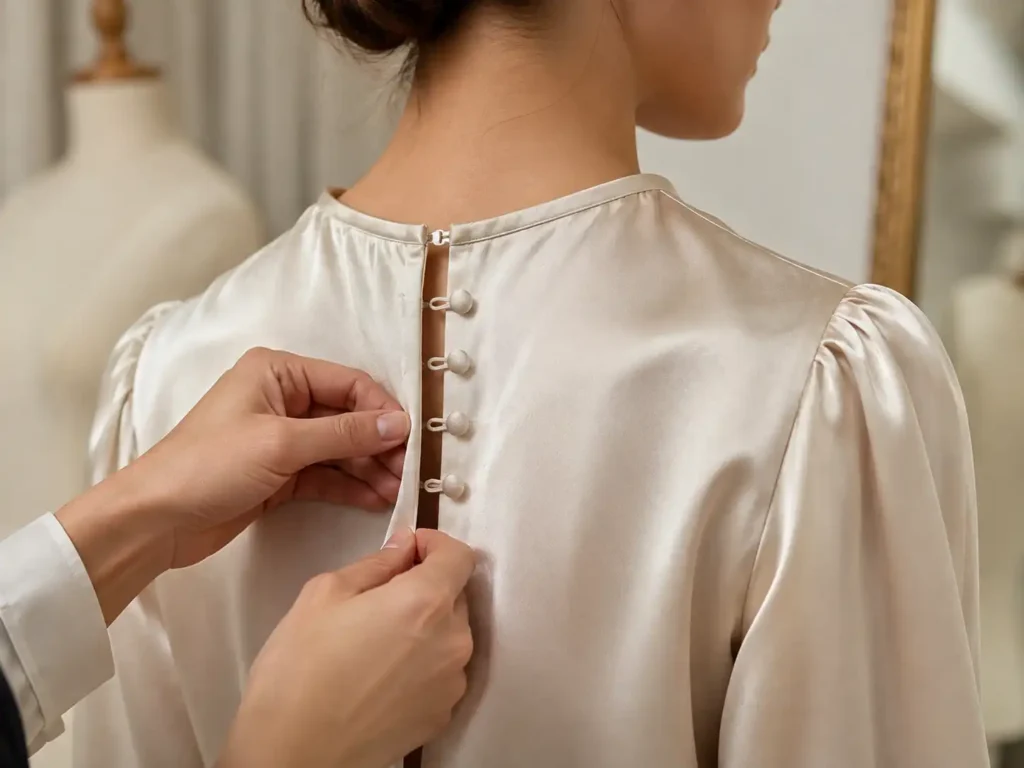
Invisible zippers, hooks and snaps must open smoothly and lie flat. Rhinestones near closures need enough clearance for operation and repair. Reinforcement prevents chains or heavy decoration from pulling the closure area out of shape.

Protected Backing

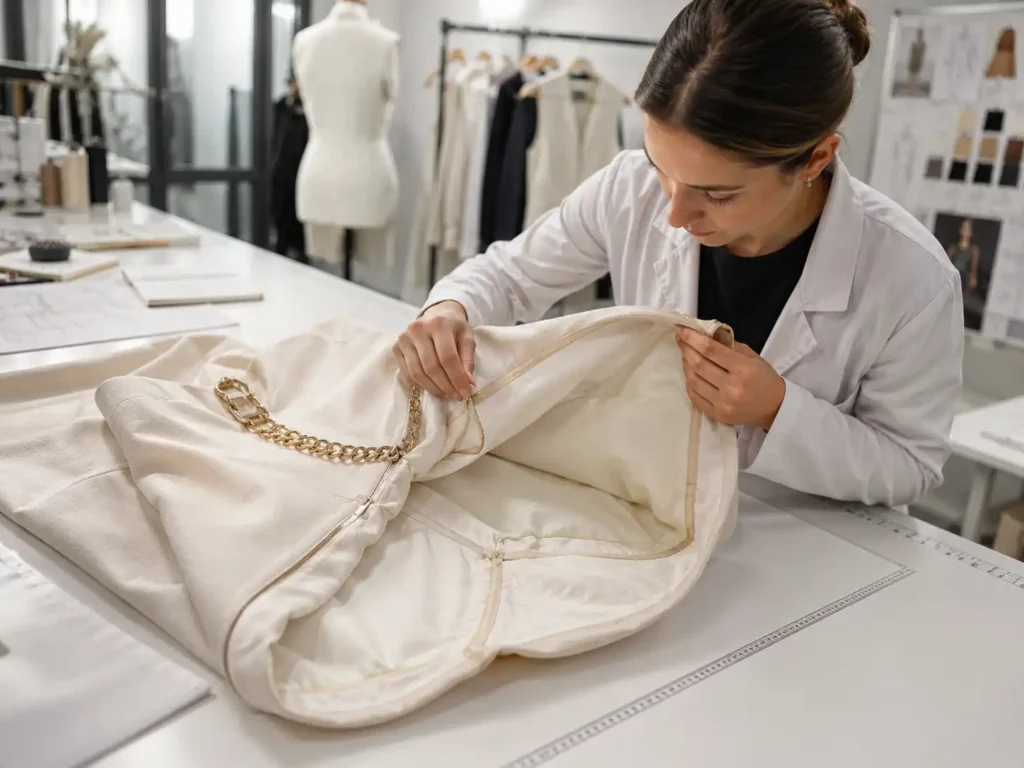
Sewn-on stones, chains and fringe can leave thread, knots or hardware on the inside. Lining, soft tape or backing panels are used according to the contact zone. The finish should remain clean without adding unnecessary bulk.

Controlled Pressing

Pressing is adapted to satin, velvet, mesh, sequin fabric and rhinestone components. Direct heat or pressure can flatten pile, mark satin or loosen adhesive. Protective layers, lower pressure and targeted finishing reduce surface damage.

Quality Control From Materials to Packed Garments

Quality is controlled through the production chain. Rhinestone tops require product-specific checks alongside normal fabric, sewing, measurement and packing inspection.

Fabric Inspection

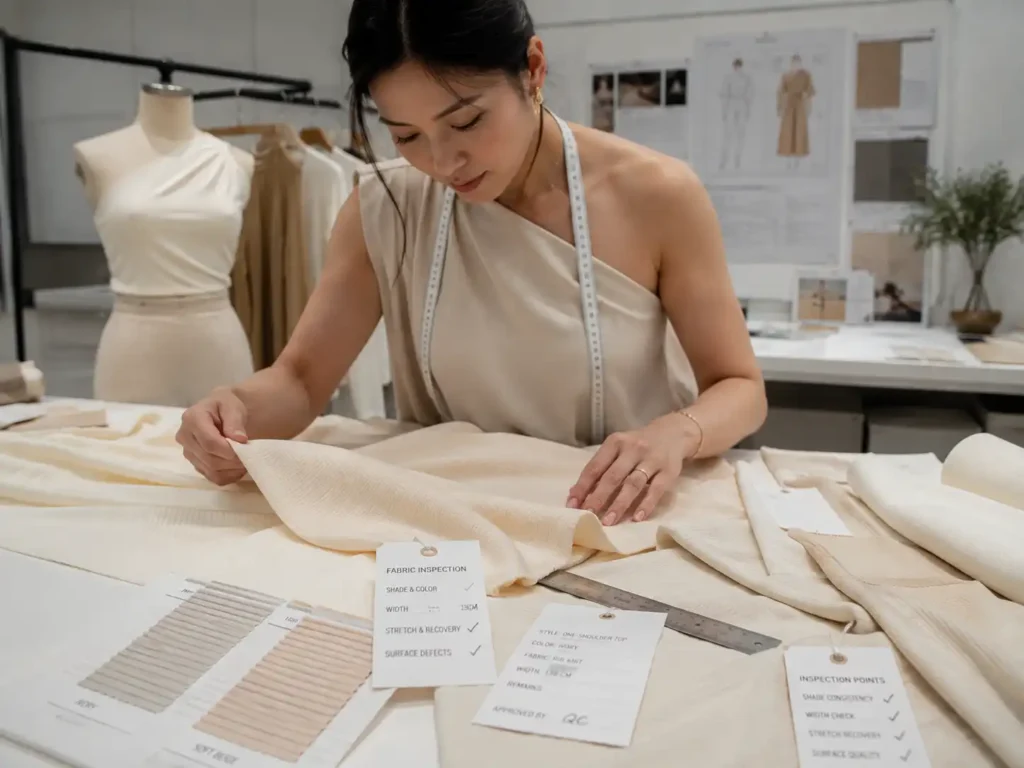
Fabric is reviewed for color, hand feel, stretch, recovery, width, surface marks, snagging, transparency and batch consistency before cutting. Sensitive satin, mesh, velvet and sequin materials receive fabric-specific handling instructions.

Trim Batch Check

Rhinestones, chains, straps, cups, boning, closures and labels are compared with approved references. Inspectors check color, size, finish, quantity, sharp edges and obvious damage before materials reach production.

Cutting Inspection

Grain direction, stretch direction, panel accuracy, notches and size bundles are reviewed. Mesh and patterned placement need careful separation, while structured corset panels require accurate matching to maintain symmetry.

Placement Alignment

Motif dimensions, distances from seams, neckline balance, left-right alignment and size distribution are checked against placement artwork and the approved sample. First-piece approval helps prevent repeated drift.

Attachment Review

Hotfix adhesion, sewn-on security, chain ends, fringe anchors and repair points are checked. Inspectors also look for glue residue, heat marks, missing stones, loose components and fabric distortion.

Inline Measurement

Bust, under-bust, waist, hem, strap, armhole, neckline and torso measurements are checked during production. Size bundles and labels remain separated to reduce mixing across XS-XL or wider ranges.

Finished Garment

Final inspection covers fit-related appearance, seam quality, closure operation, lining exposure, stone count, symmetry, cleanliness and pressing. Product-specific defects are classified before packing.

Packing Inspection

Labels, hangtags, barcodes, size stickers, color stickers, fold direction, protective tissue, polybags, carton marks and carton breakdown are checked before shipment. AQL inspection and client-appointed inspection can be coordinated by project.

Private-Label Packing Built Around Rhinestone Protection

Retail presentation and surface protection are managed together. Branded packaging should preserve the visual finish while meeting ecommerce, retail and warehouse identification requirements.

Brand Labels

Woven labels, size labels and care labels are developed from approved artwork and placement instructions. Softness, fold type, edge comfort and sewing position matter on fitted tops where labels can touch the neck or side body.

Hangtags and Strings

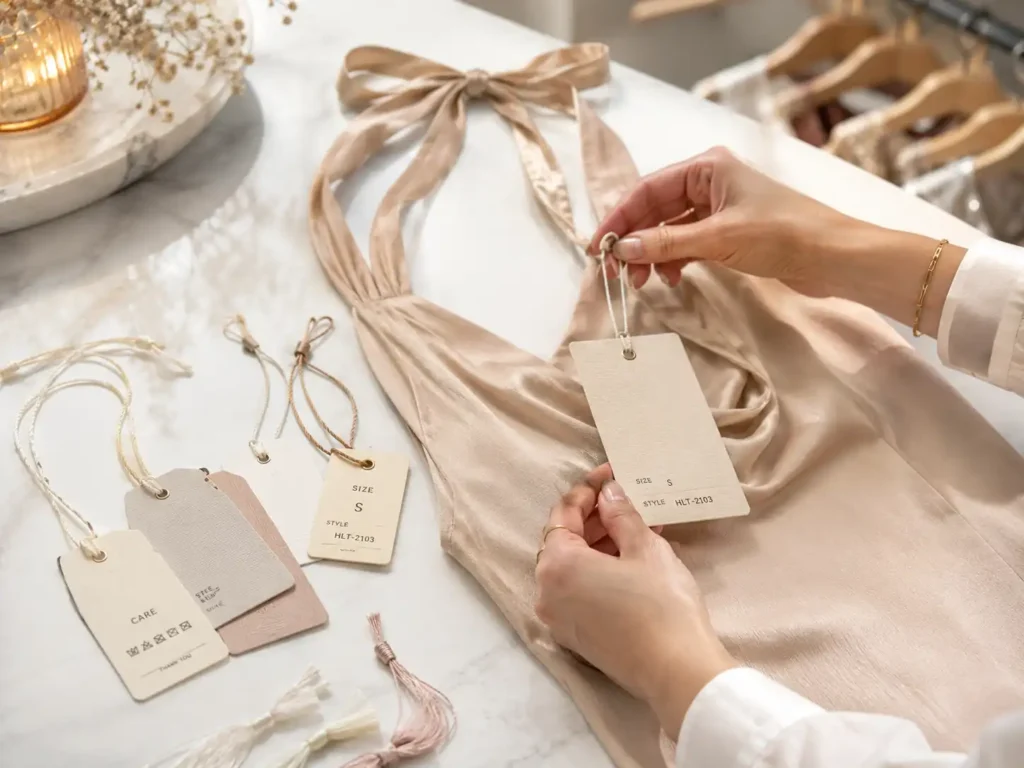
Hangtag paper, print, hole position, string and attachment location are confirmed before production. Tags are positioned away from rhinestone surfaces and delicate mesh so handling does not create scratches or snags.

Barcode and SKU

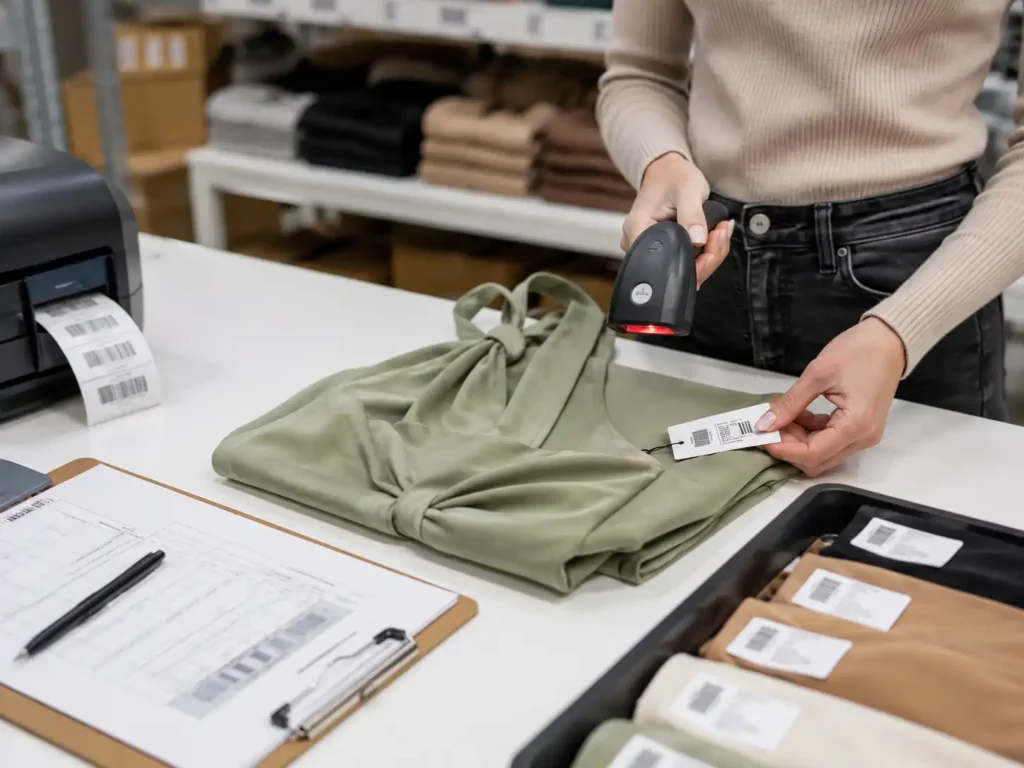
Barcode stickers, SKU labels, size stickers and color stickers connect the garment to warehouse and channel requirements. Files are checked against the size chart, color list and packing breakdown to reduce scan and receiving errors.

Protective Folding

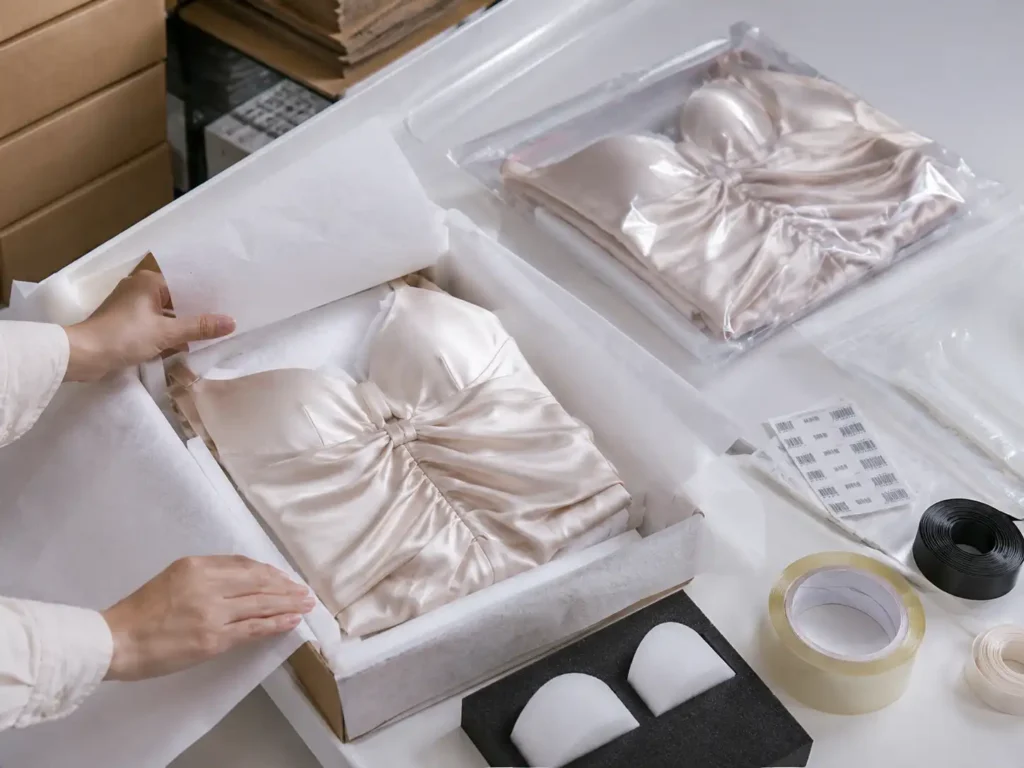
Fold lines avoid concentrated rhinestone areas, cups, boning and fringe. Tissue, sleeves or protective layers can separate decorated surfaces. Crystal straps and chains are secured so they do not press into mesh or satin during transit.

Individual Polybags

Polybag size, thickness, print, warning text, ventilation and seal method follow the garment and market requirement. Over-tight bags are avoided because compression can mark the fabric or force stones against one another.

Carton Control

Carton size, weight, quantity, size-color breakdown and marks are confirmed against packing instructions. Heavy compression is avoided for structured or heavily decorated tops. Shipment files support client-nominated forwarders, warehouse receiving and phased delivery.

Plan MOQ, Size and Timing With Clear Variables

Project planning is strongest when quantity, color, size, sample stages, bulk schedule and shipment method are reviewed together. One number cannot represent every rhinestone program.

Planning VariableReference DirectionMain EffectConfirmation Point
MOQFrom 200 pcs per style/colorFabric, trim, color and packaging minimums may increase requirementsBefore formal sampling and quotation
Size RangeCommonly XS-XL; wider ranges by projectGrade rules affect bust, strap, armhole, torso and closure positionsBefore pattern grading and PP approval
Complex First SampleTypically 15-25 daysMaterial readiness and structural difficulty drive timingAfter key fabric, trim and design details are confirmed
Special Material Sample20-35 days or supplier timingCustom rhinestones, chains, colors or fabrics add development timeBefore committing to launch dates
Revised / PP SampleTypically 7-15 daysScope of change and final material readiness affect timingAfter feedback and final material decisions
Bulk CalendarProject-specific after PP lockStyle count, total quantity, materials, QC and packing define scheduleBefore material booking and factory allocation
Multi-Style Program10-30 styles can be groupedPriority, fabric family, trim family and complexity guide sequencingAt line-sheet and launch-calendar review
Delivery StrategyExpress, air, sea or air-sea splitLaunch urgency, carton volume, cost and warehouse date guide methodBefore final packing and booking

Production Resources for Multi-Style Partywear Programs

Large programs require coordinated development, factory allocation and production follow-up. Capacity is organized around product groups rather than treated as one undifferentiated volume figure.

Development Resources

Two sample rooms, 7+ senior pattern makers and 20+ sample machinists support first samples, fit revisions, PP samples and multi-style priorities. Styles can be grouped by fabric, pattern family, trim requirement and campaign importance so key looks move first without losing revision control.

Production Network

Jinfeng Apparel operates 6 owned women’s fashion factories and works with more than 10 long-term satellite production partners. More than 18 sewing lines and 6+ flexible production lines support custom womenswear programs, with factory allocation based on construction, fabric, trim density, volume and delivery sequence.

Project Coordination

12+ merchandisers and order follow-up specialists, 15+ QC inspectors and 30+ finishing and packing workers support material tracking, production updates, inspection, label control, packing confirmation and shipment preparation. Complex programs can receive milestone updates from material arrival through final packing.

Frequently Asked Questions About Rhinestone Top Manufacturing

Jinfeng Apparel supports rhinestone crop tops, corset tops, bustier tops, mesh tops, halter tops, bodysuit tops and coordinated partywear sets. Feasibility depends on fabric, structure, trim type, placement density, target size range and intended order quantity.
Power mesh, stretch mesh, jersey, stretch satin, velvet, sequin fabric and structured woven fabrics can all be considered. The correct choice depends on stretch, recovery, heat tolerance, transparency, support, surface sensitivity and decoration weight.
Retention is managed through material selection, sample testing, compatible attachment methods, placement planning, incoming trim checks, first-piece approval, inline inspection and finished-garment review. No method removes every risk, so product-specific standards are defined before bulk production.
Yes. Corset and bustier development can include bra cups, boning, lining, hook-and-eye, zippers, panel seams and rhinestone placement. Cup position, bust support, neckline stability, waist shape, comfort and attachment sequence are reviewed through sampling.
Yes. Reference images, sketches, original samples, tech packs and line sheets can begin review. Accurate quotation and sampling become easier when quantity, size range, fabric preference, color plan, rhinestone direction, labels, packing and launch timing are also provided.
MOQ starts from 200 pcs per style/color. Special fabrics, custom colors, rhinestones, chains, private-label materials and packaging may have separate supplier minimums. Quantity is reviewed by style and color rather than only by total program volume.
Complex corset, mesh, sequin and rhinestone-heavy first samples generally require 15-25 days after key details and materials are confirmed. Special custom materials can require 20-35 days or supplier timing. Revised and PP samples commonly require 7-15 days.
Yes. Support includes woven labels, size labels, care labels, hangtags, barcode stickers, SKU labels, polybags, cartons, carton marks and retail or ecommerce packing. Brand files and warehouse instructions should be confirmed before PP approval and bulk packing.
Jinfeng Apparel supports NDA-based cooperation and protects tech packs, patterns, samples, trim plans, labels, packing files, launch information and unpublished designs. Client identities and project files are not publicly disclosed without written authorization.
Send reference images or tech packs, style list, quantity per style/color, target size range, fabric direction, rhinestone or trim reference, label and packing requirements, target price direction and required launch or delivery window.

Start Your Rhinestone Top Project

  • Reference image, sketch, original sample or tech pack
  • Style list and quantity per style/color
  • Fabric, lining and rhinestone direction
  • Target size range and size ratio
  • Private-label, barcode and packing requirements
  • Target launch date or delivery window

Send Jinfeng Apparel the product information needed to assess structure, materials, trim requirements, MOQ, sampling and production planning. Kelly coordinates initial review with the relevant development and production teams, then returns with feasibility points, missing information and the proposed next step. A complete brief reduces repeated clarification and makes fabric sourcing, rhinestone selection, pattern development and quotation more accurate. Files remain protected under NDA-based handling throughout development and production.

Tell Us About Your Dress Project

Share your product details, estimated quantity and development requirements. Our team will review your project and provide practical OEM/ODM production feedback.

Premium Women’s Apparel Production for Fashion Brands

From dress sample development to bulk production, JF Apparel supports fashion brands with confidential OEM/ODM manufacturing, reliable quality control and scalable production support.

START YOUR DRESS PROJECT

Ready to Develop Your Next Dress Collection?

Share your design concept, product requirements or sourcing plans with our team. We’ll review your project and provide practical feedback on development, materials, MOQ and production.

7-10 Days

Sample Development

200 PCS

Starting MOQ

Fast Response

Professional Follow-Up