Rhinestone Dress Manufacturer
Custom Rhinestone Dress Manufacturing for Global Fashion Brands
Jinfeng Apparel develops rhinestone mini dresses, bodycon dresses, mesh dresses, corset dresses, party dresses and occasionwear from reference images, original samples or complete tech packs. Fabric behavior, stone weight, stretch, placement, fit and packing are reviewed together so a visually strong sample can be converted into a repeatable bulk standard.
- MOQ starts from 200 pcs per style/color, subject to fabric, stone, trim and packing requirements.
- Three approval controls can be used for embellishment consistency: approved trim record, PP sample and Golden sample.
- Two sample rooms, 7+ senior pattern makers and 20+ sample machinists support complex dress development.
- Six owned factories, 10+ production partners, 15+ QC inspectors and 100,000+ pcs monthly capacity support multi-style programs.
Manufacturing Facts Behind Rhinestone Dress Programs
Since 2008
6 Owned Factories
10+ Production Partners
2 Sample Rooms
7+ Pattern Makers
15+ QC Inspectors
Built for Established Fashion Brands and Sourcing Teams
Partywear Brands
Occasionwear Labels
Premium Ecommerce
Sourcing Teams
Product Developers
Private Label Programs
Is Jinfeng the Right Manufacturing Fit?
Best Fit For
Established labels, brand groups, sourcing offices and apparel teams with a reference image, original sample, line sheet or tech pack. Strong-fit programs normally include a defined quantity by style and color, an intended size range, a launch calendar and willingness to validate complex details through sampling.
- Custom development from 200 pcs per style/color.
- Multi-style collections and repeat programs.
- Paid sampling, fit review and PP approval.
- Private-label and export packing requirements.
Not Designed For
The manufacturing model is not built around stock purchasing, single-piece fulfillment or fragmented quantities spread across many styles. Accurate development also requires more than a picture and a request for the lowest possible price.
- No-MOQ or one-piece requests.
- Ready-stock or dropshipping programs.
- Orders split below standard style/color quantities.
- Projects without product files, budget or bulk plan.
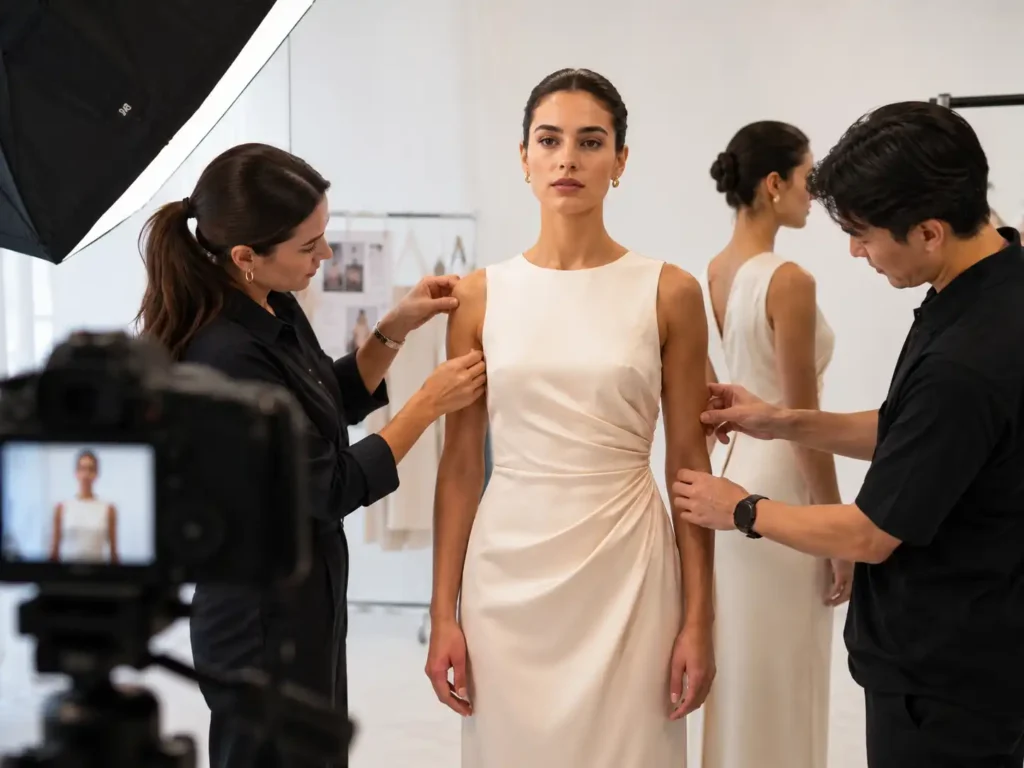
Why Rhinestone Dresses Fail in Bulk Production
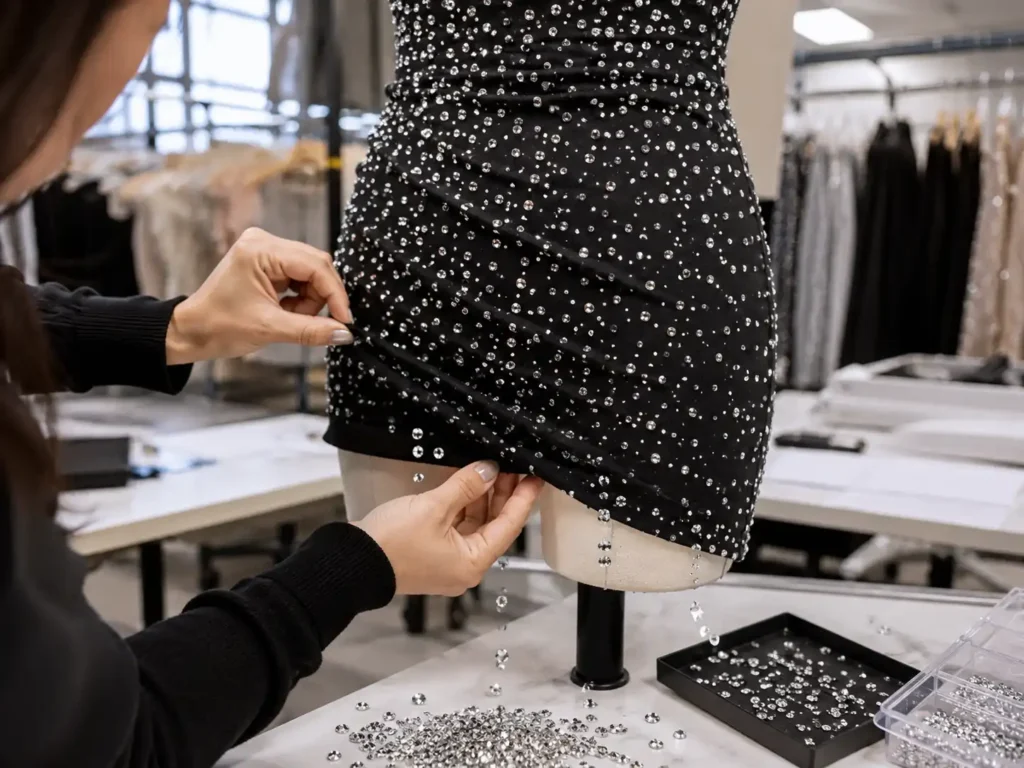
Falling Stones
- Confirm attachment method by area.
- Review movement, rubbing and tension zones.
- Keep approved stone and supplier references.
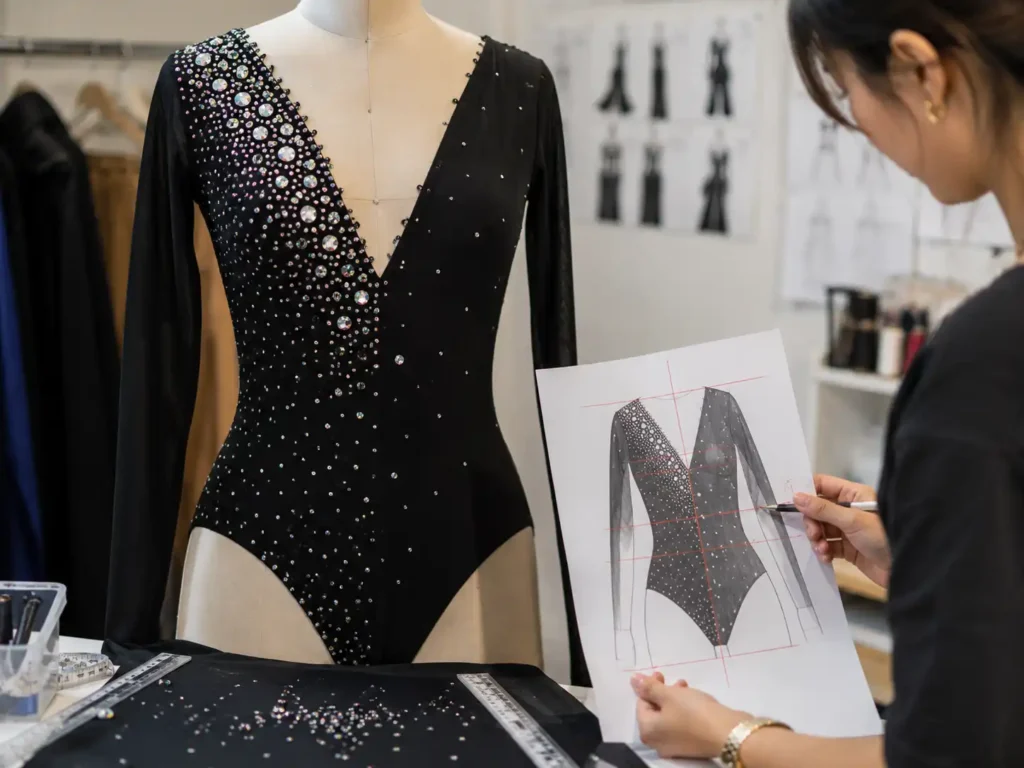
Uneven Placement
- Mark center lines and key coordinates.
- Compare left and right panels.
- Use an approved visual reference.
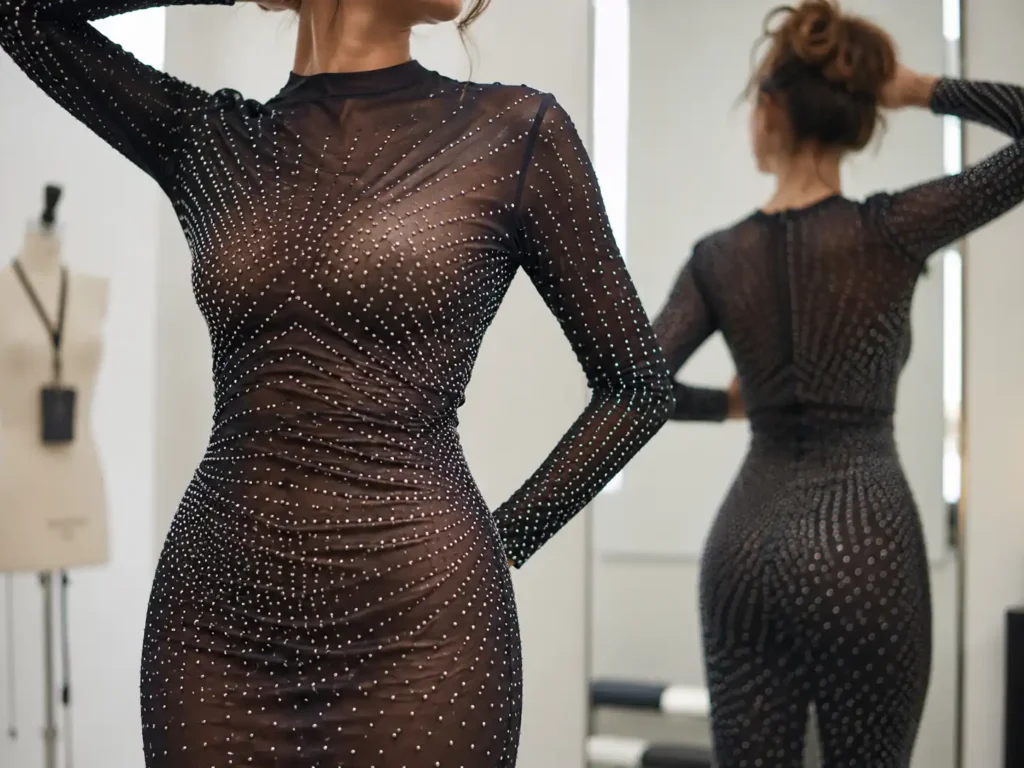
Stretch Distortion
- Check stretch direction before placement.
- Assess spacing at target body measurements.
- Protect recovery around seams and openings.
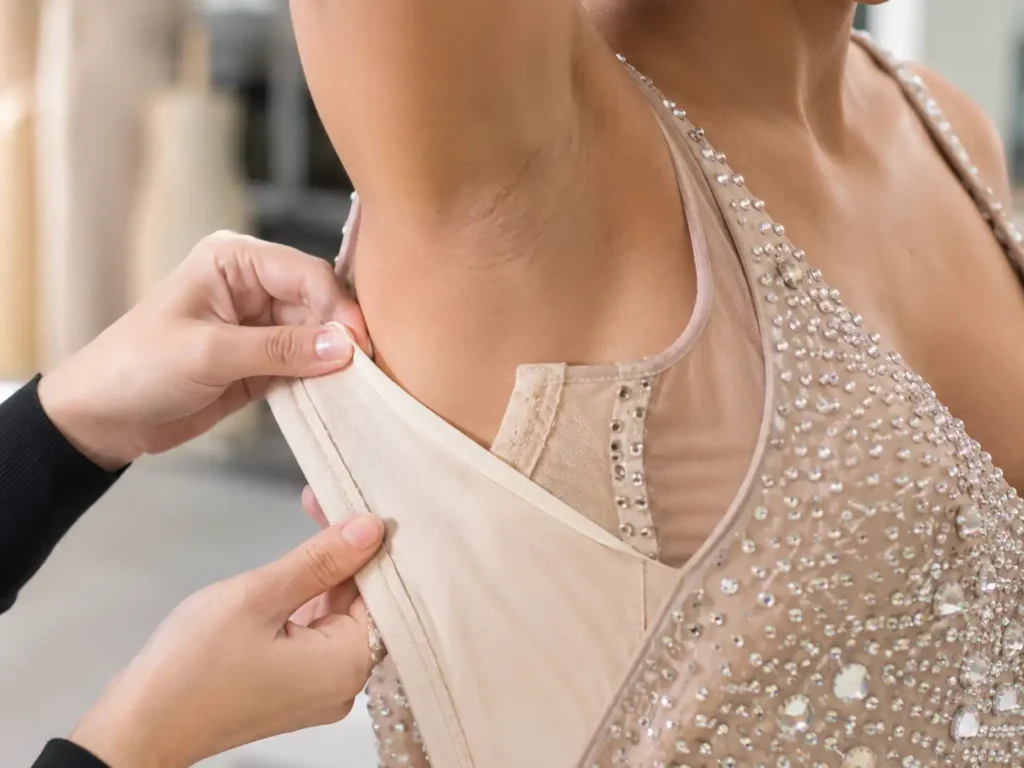
Skin Irritation
- Identify direct-contact areas.
- Use lining or internal shielding where needed.
- Review movement while sitting and walking.
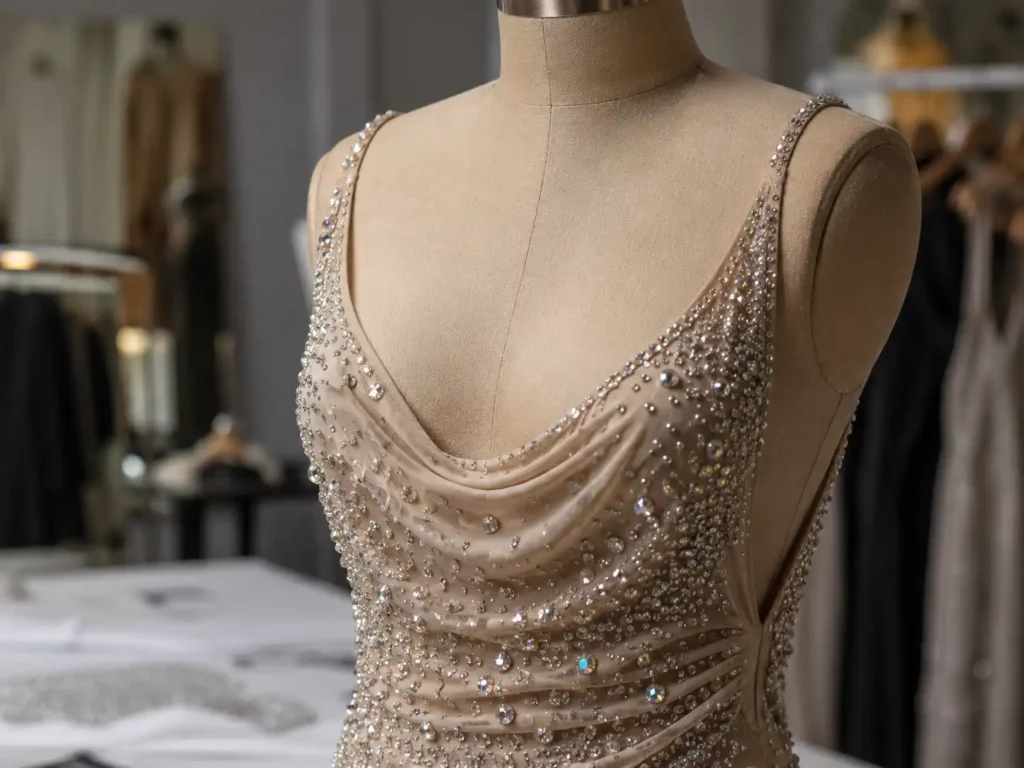
Fabric Sagging
- Review weight concentration by panel.
- Reinforce straps, necklines and stress points.
- Check hanging balance before approval.
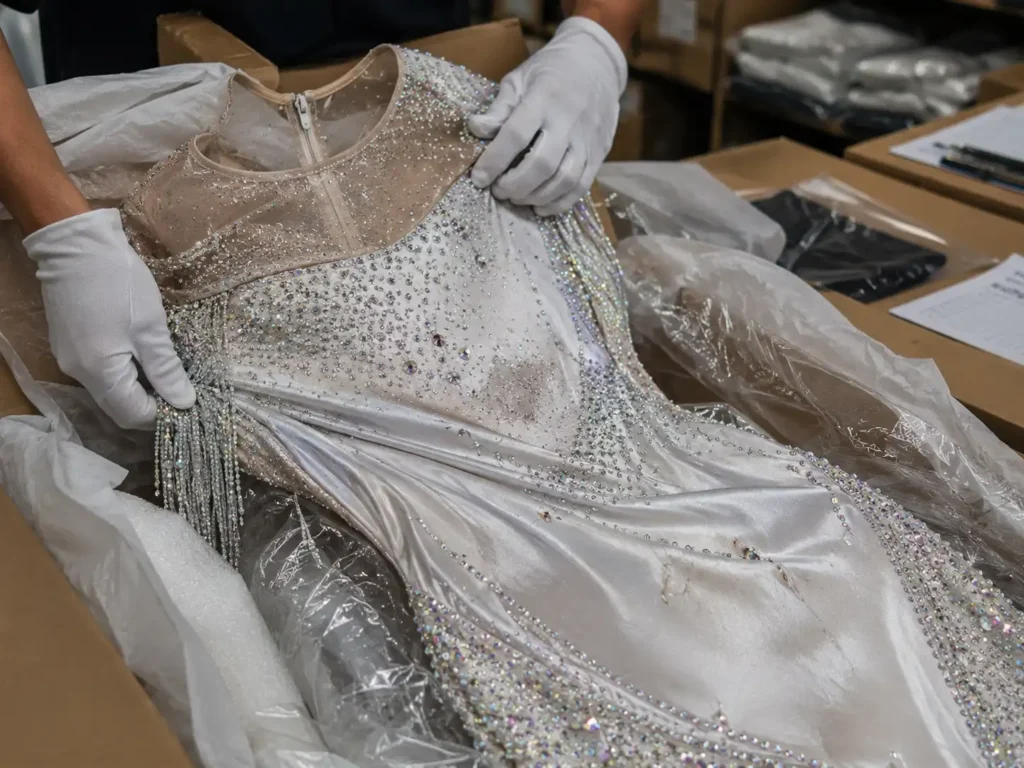
Transit Damage
- Separate embellished surfaces.
- Protect chains, straps and sharp edges.
- Limit compression based on structure.
Custom Rhinestone Dress Styles We Develop
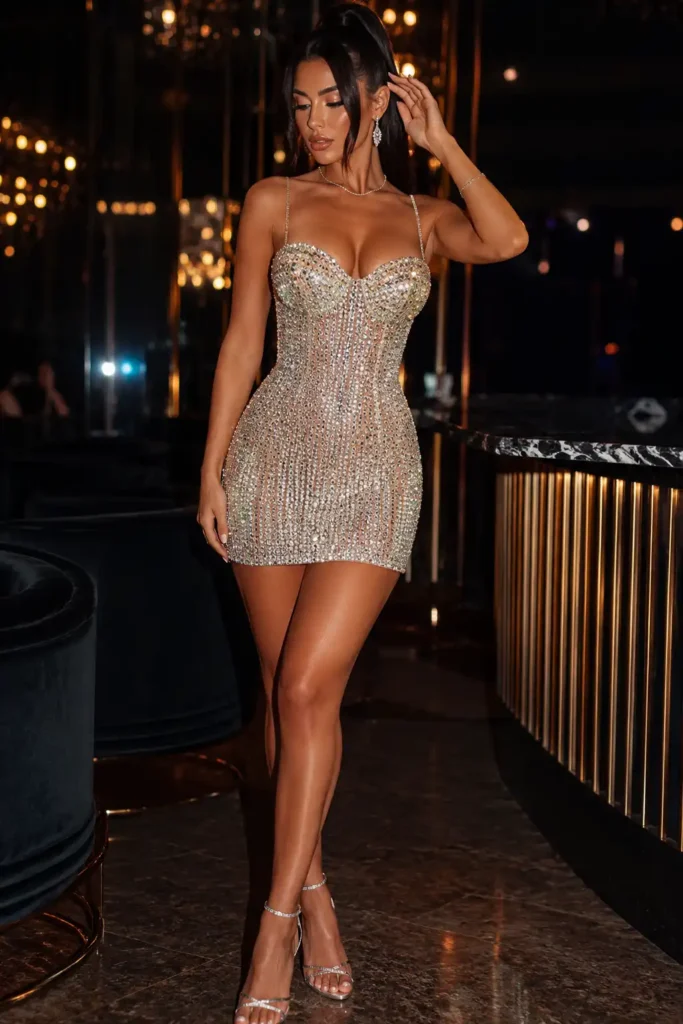
Rhinestone Mini Dress
- Best for birthday, club and holiday drops.
- Key checks: hem level, hip stretch, lining coverage.
- Packing focus: avoid surface-to-surface rubbing.
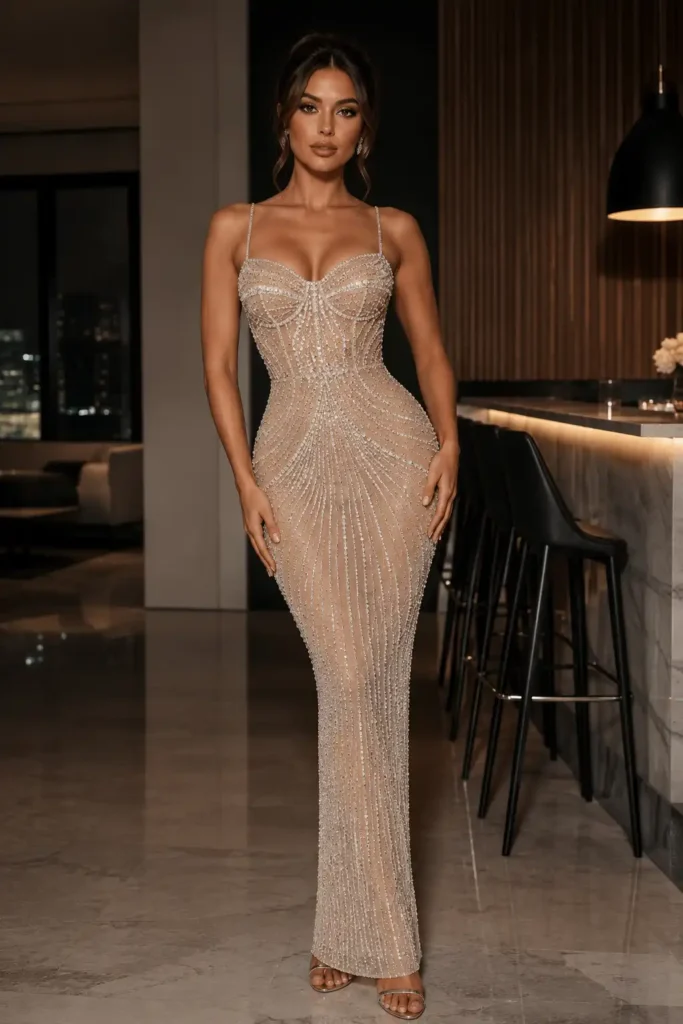
Bodycon Crystal Dress
- Best for fitted party and social-media styles.
- Key checks: recovery, seam stretch, placement expansion.
- Fit focus: bust-waist-hip proportion and dress ride-up.
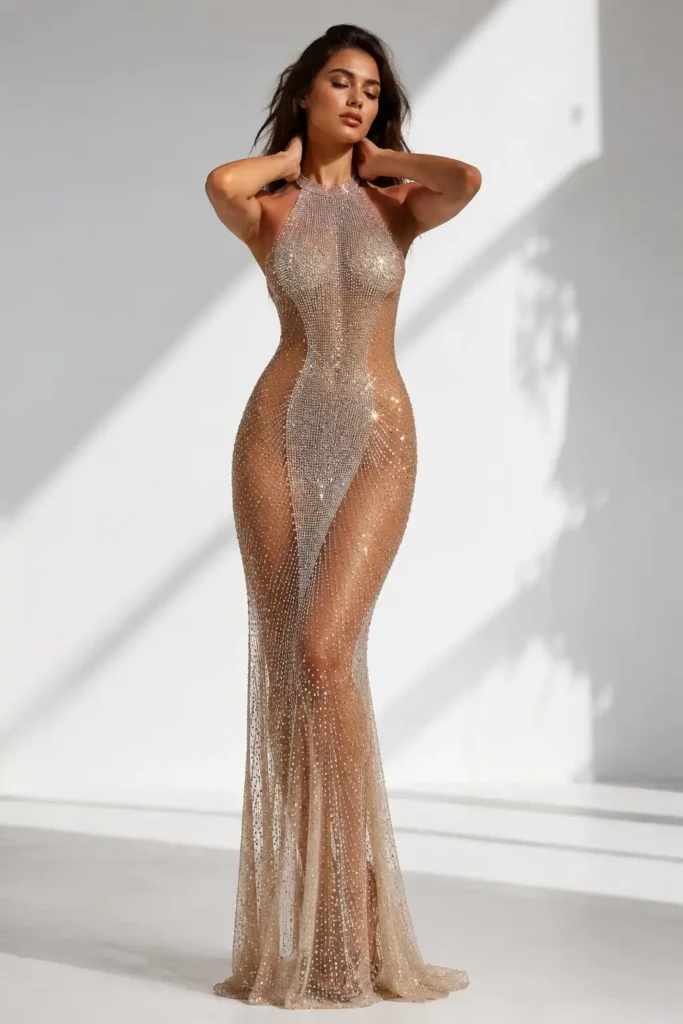
Rhinestone Mesh Dress
- Best for sheer, illusion and contour designs.
- Key checks: mesh gauge, transparency, stretch direction.
- Structure focus: lining, bindings and reinforced openings.
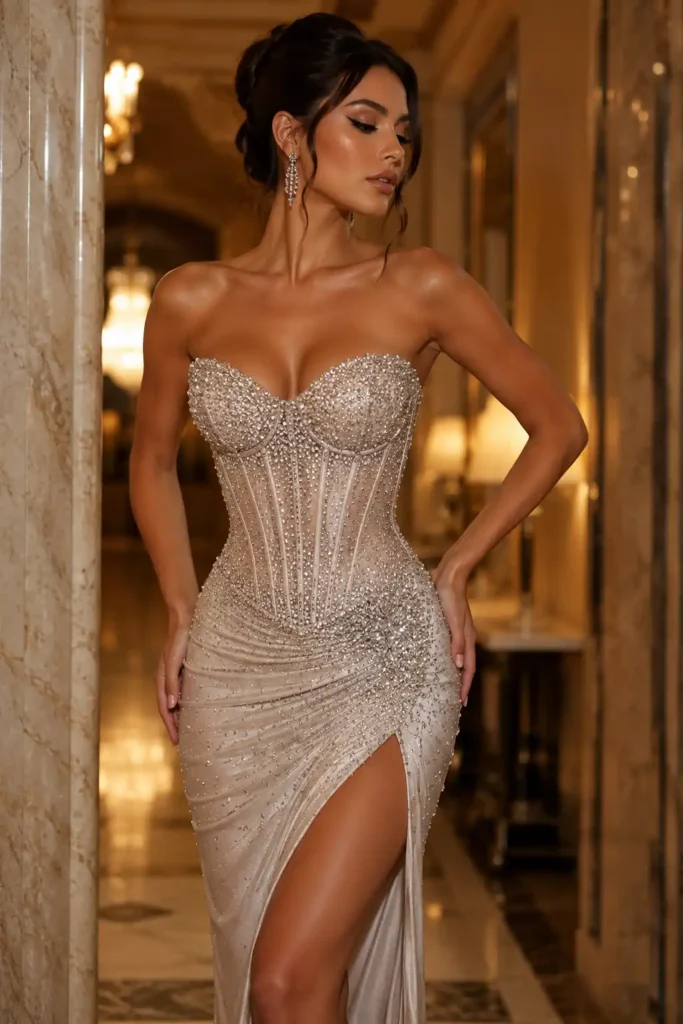
Rhinestone Corset Dress
- Best for occasion, birthday and evening capsules.
- Key checks: cup position, boning, neckline security.
- Comfort focus: inner seams and stone-backed panels.
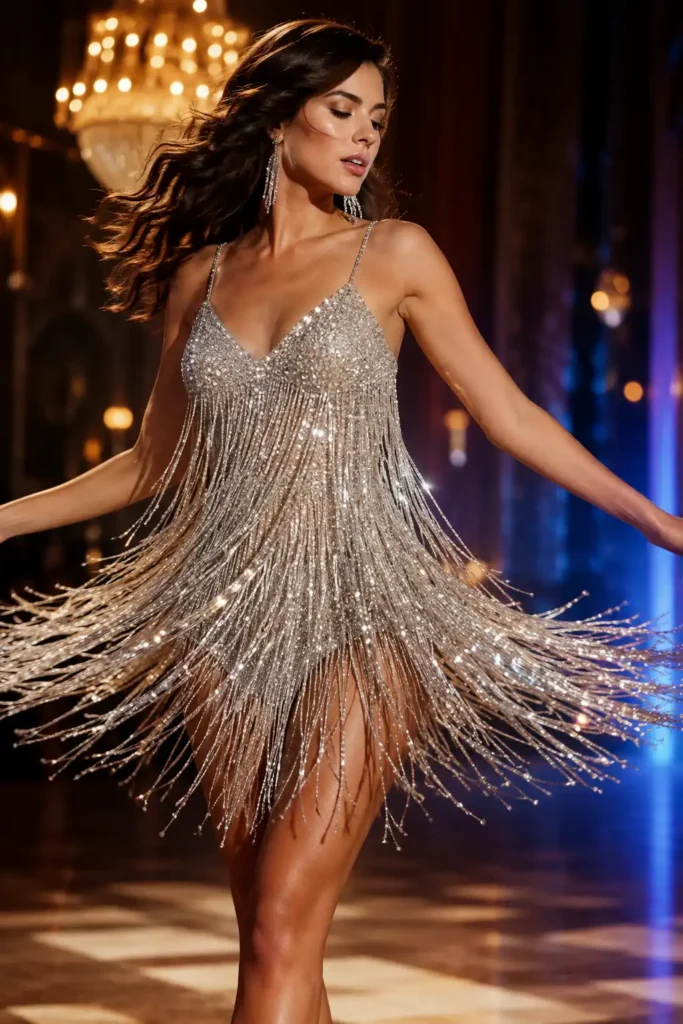
Crystal Fringe Dress
- Best for statement party and performance looks.
- Key checks: fringe length, pull strength, alignment.
- Packing focus: isolated chains and reduced compression.

Rhinestone Strap Dress
- Best for slip, halter and backless silhouettes.
- Key checks: strap load, connector security, symmetry.
- Fit focus: neckline height and shoulder balance.
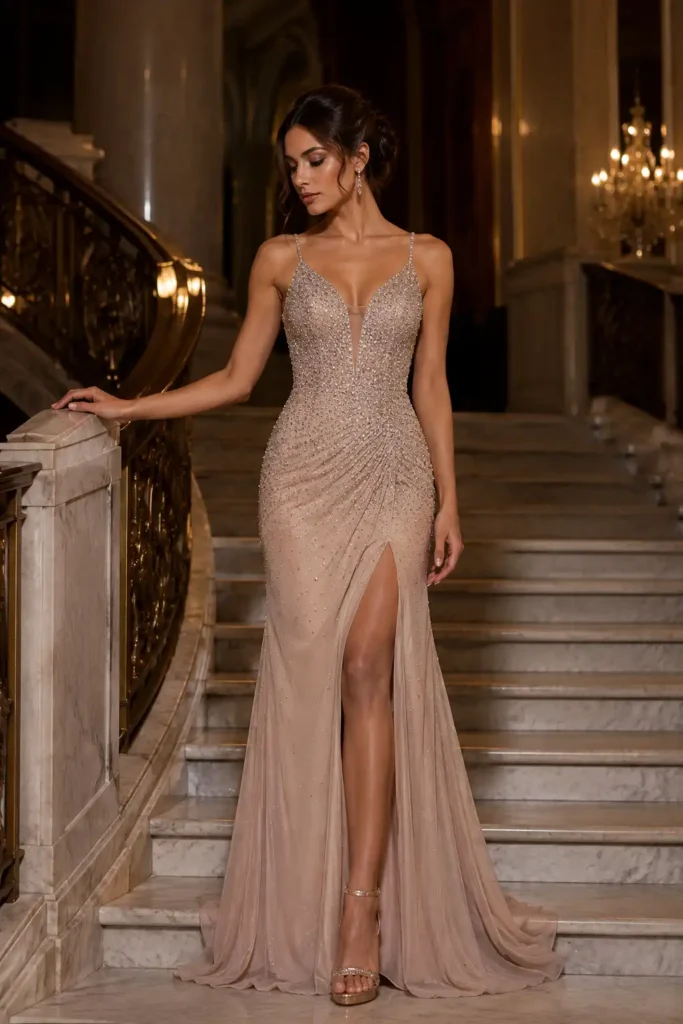
Rhinestone Evening Dress
- Best for formal events and premium occasionwear.
- Key checks: hanging balance, slit control, hem level.
- Production focus: panel handling and protected pressing.
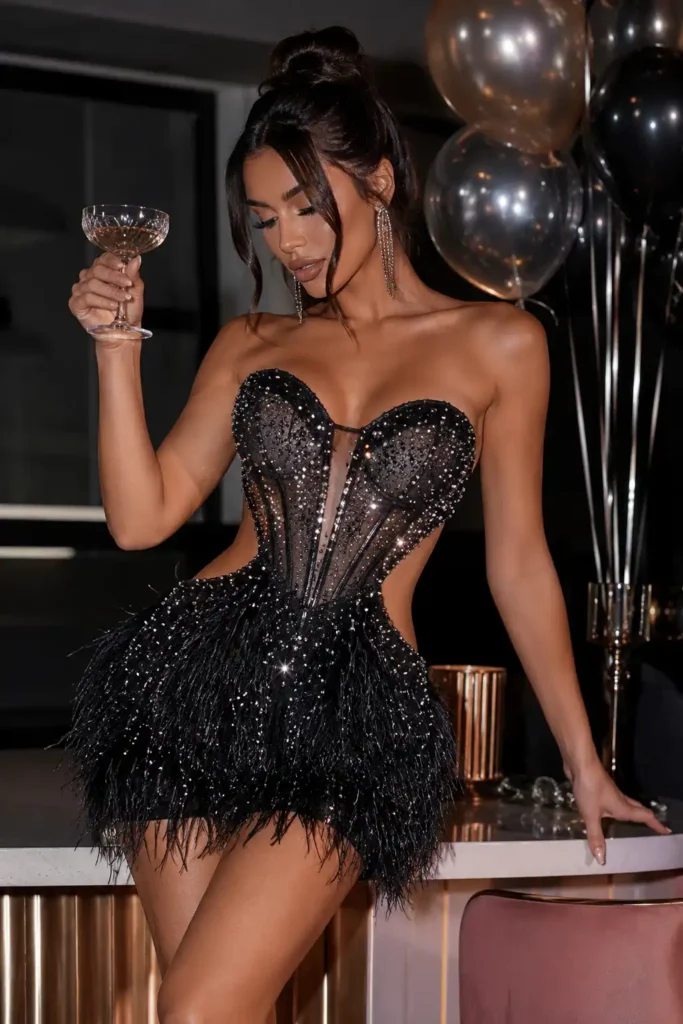
Birthday Statement Dress
- Best for hero styles and high-visibility drops.
- Key checks: feature hierarchy and photo impact.
- Cost focus: stone density, handwork and packing.
Rhinestone Dresses for High-Impact Collections

Birthday Collections

Party and Clubwear

Holiday Drops

Festival Collections

Prom and Graduation

Evening Occasionwear
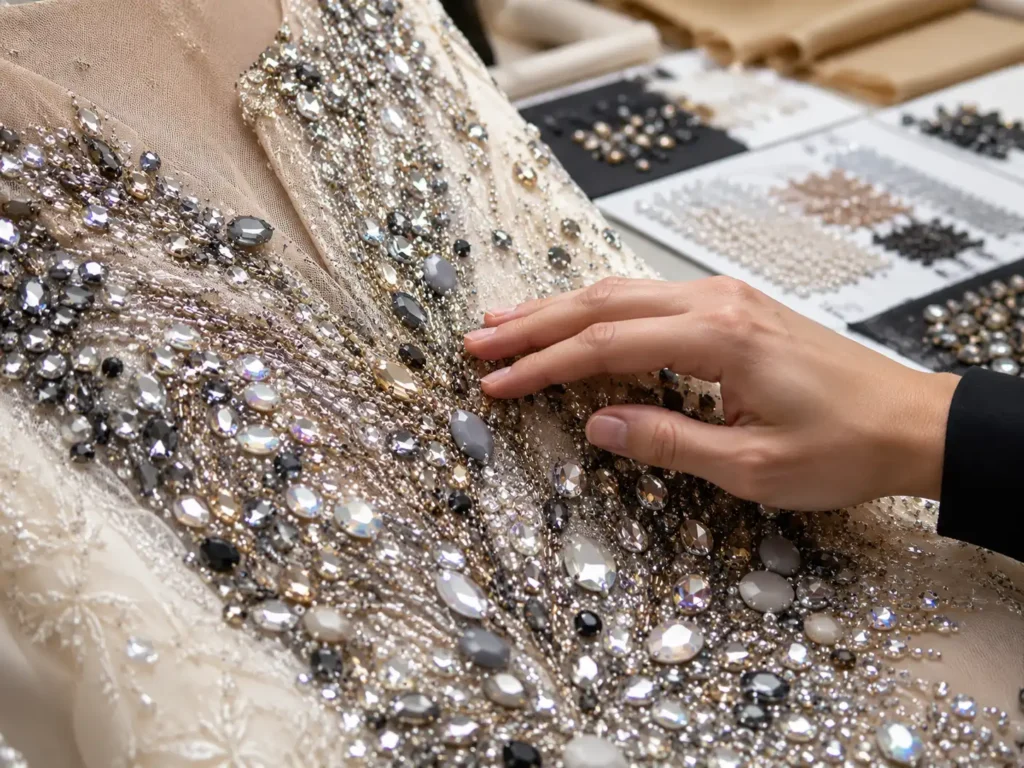
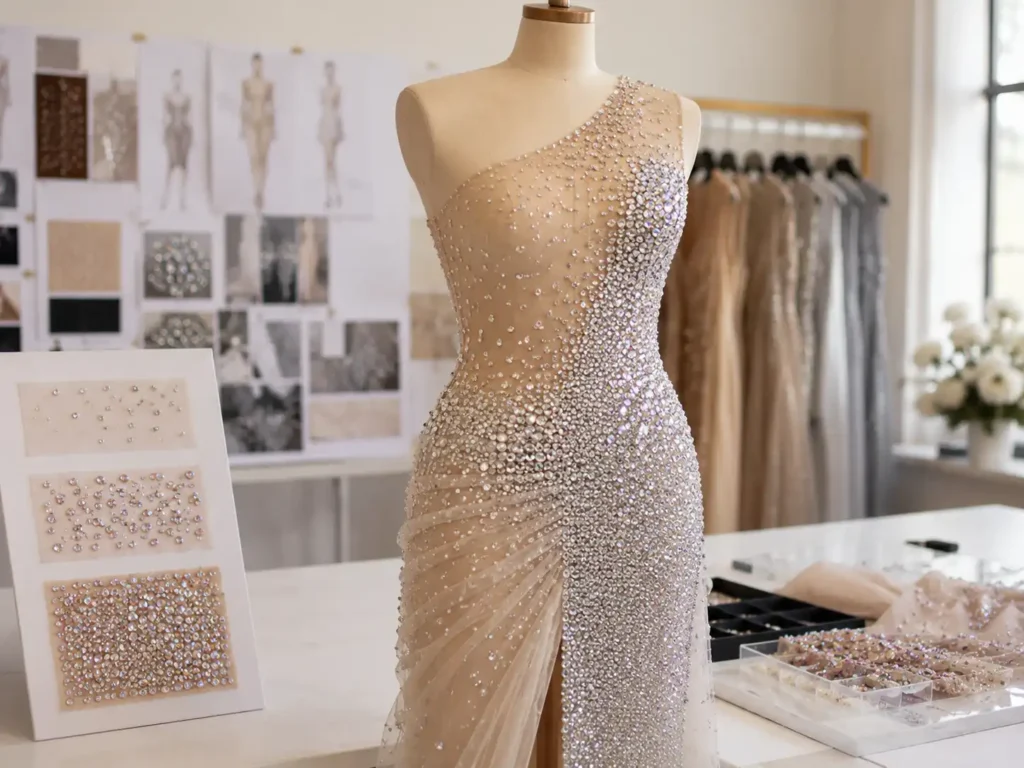
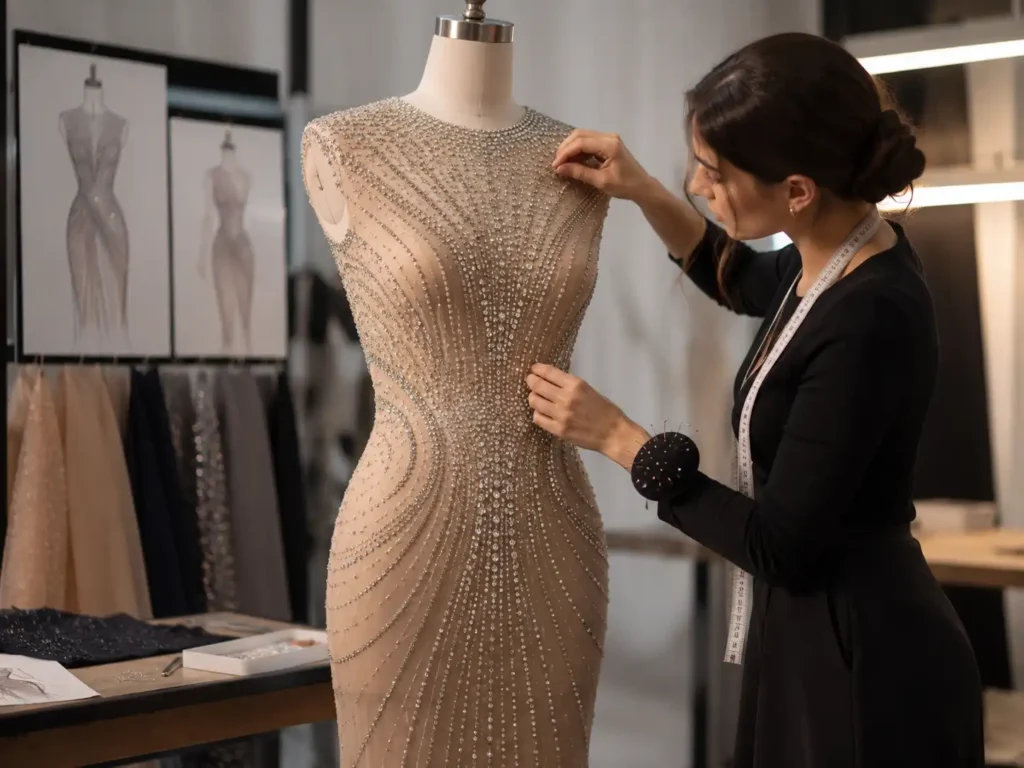
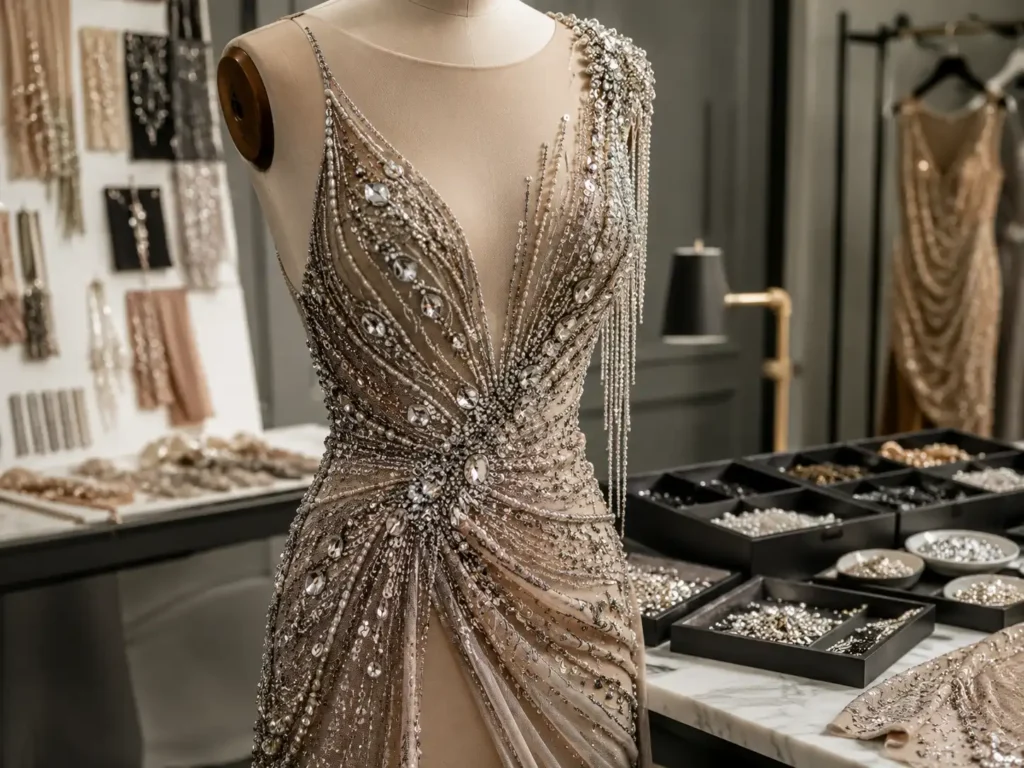
Custom Stone Size, Color, Density and Placement
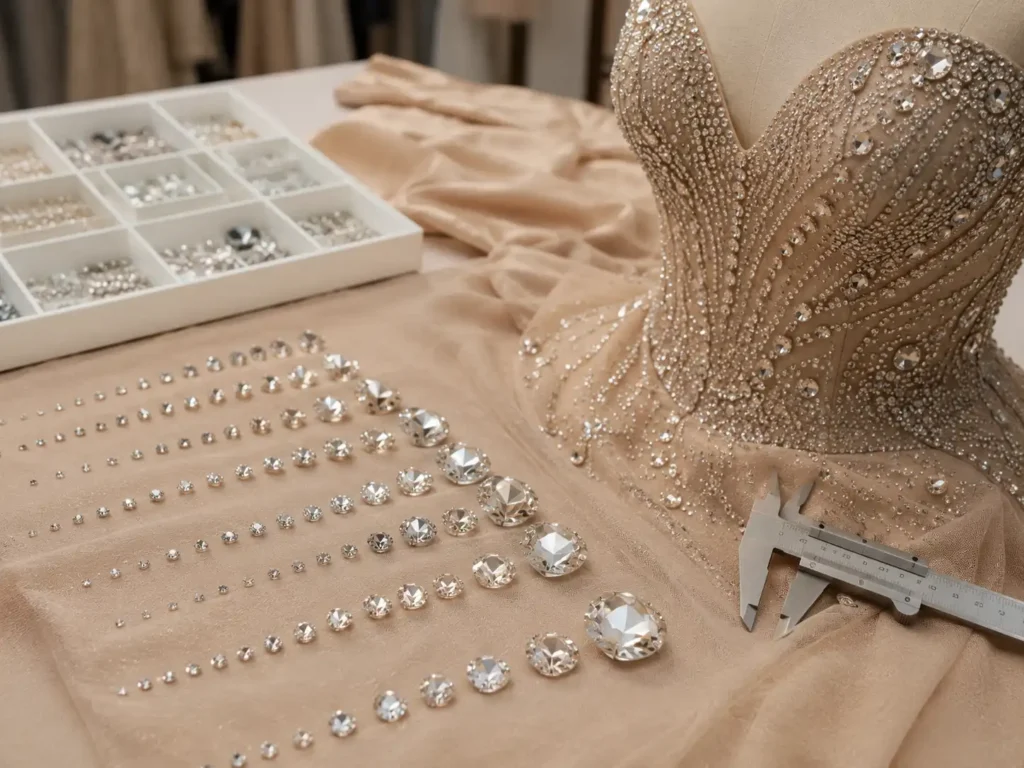
Stone Size
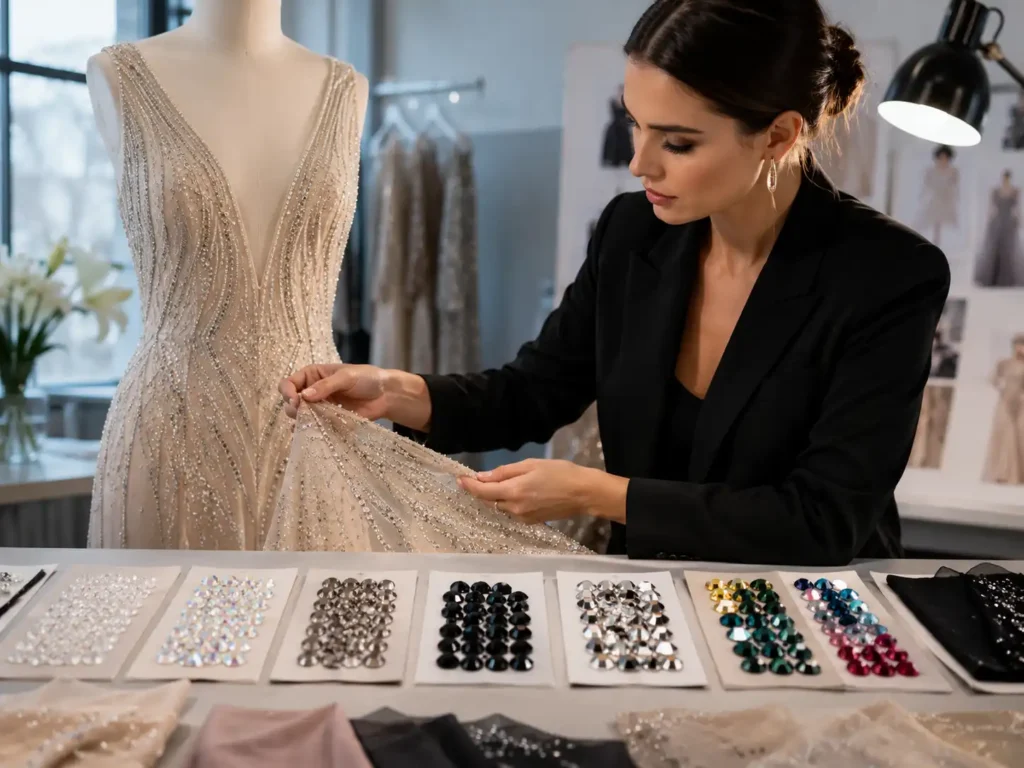
Stone Color
Surface Finish
Placement Density
Pattern Direction
Mixed Layouts
Choosing the Right Fabric for Rhinestone Dresses
Fabric selection determines how well a dress carries stone weight, stretches, recovers, drapes, feels against skin and survives production handling. Availability, color, width and batch consistency are confirmed by project.
| Fabric Direction | Suitable Applications | Main Risk | Control Focus |
|---|---|---|---|
| Stretch Mesh | Bodycon, illusion panels, contour layouts | Motif distortion, tearing, transparency | Stretch direction, recovery, lining coverage, reinforced openings |
| Power Mesh | Structured fitted dresses, support panels | Excess tension, restricted movement | Weight, recovery, panel direction, seam stretch |
| Jersey | Soft bodycon and draped party styles | Surface movement, edge curling, growth | GSM, recovery, stabilization, placement under stretch |
| Stretch Satin | Corset, mini and evening dresses | Snagging, shine marks, heat sensitivity | Pressing test, needle marks, lining, stone application trial |
| Velvet | Winter evening and premium partywear | Pile crushing, direction variation | Nap direction, pressure test, handling protection |
| Tulle | Overlays, skirts and floating embellishment | Holes, tearing, skin contact | Mesh strength, reinforcement, inner finish |
| Sequin Fabric | Maximum-impact party collections | Surface interference, scratching, bulk at seams | Sequin direction, seam cleaning, combined trim plan |
| Rhinestone Fabric | Full-sparkle mini and evening dresses | Weight, edge finishing, cutting loss | Usable width, motif repeat, lining, seam and packing plan |
Balancing Sparkle, Stretch, Weight and Comfort
Weight Distribution
- Check neckline and strap load.
- Compare front and back hanging balance.
- Review long hems before approval.
Stretch Performance
A rhinestone layout must survive real body expansion. Bust and hip zones stretch more than waist or side panels, and different fabric directions can behave differently within one dress. Fit sessions should examine spacing, seam tension and recovery after wear.
- Review the intended size range.
- Assess high-tension zones on body.
- Recheck recovery after removal.
Wearing Comfort
Luxury appearance is weakened when hard backs, chain ends or rough seam allowances touch skin. Underarms, necklines, shoulders, side seams and upper thighs deserve focused review. Inner shielding, soft lining, binding and repositioned decoration can preserve comfort without losing visual impact.
- Inspect the inside as closely as the outside.
- Check sitting, walking and arm movement.
- Keep repair points accessible.
Lining and Support Behind Rhinestone Dresses
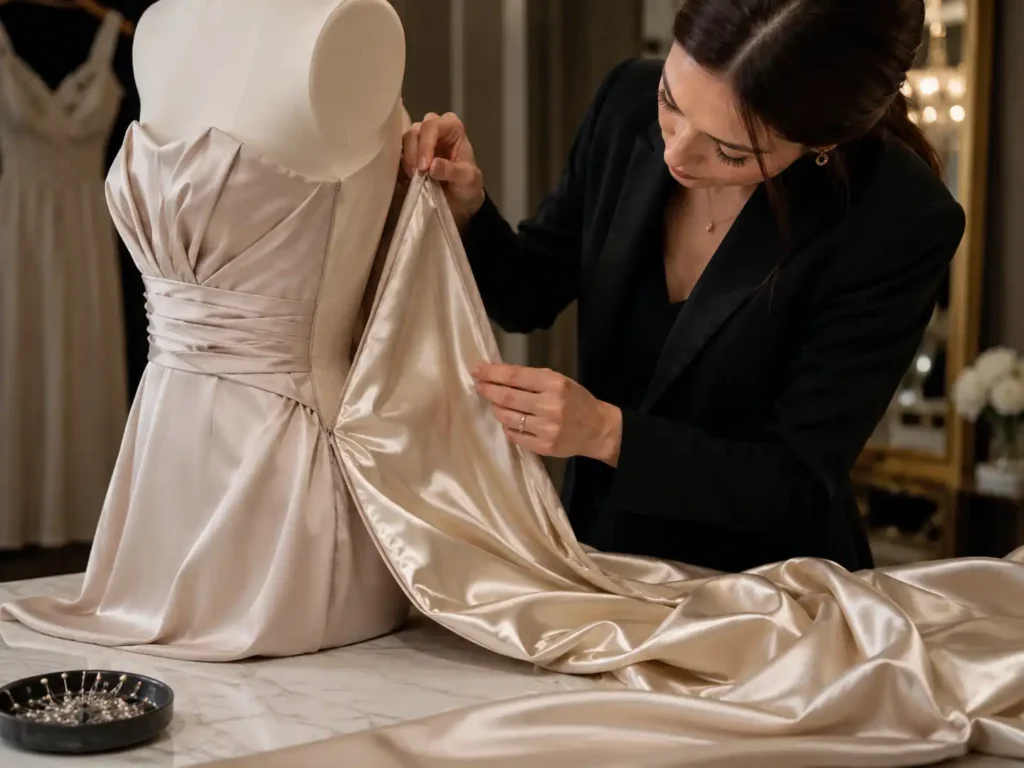
Stretch Lining

Soft Woven Lining
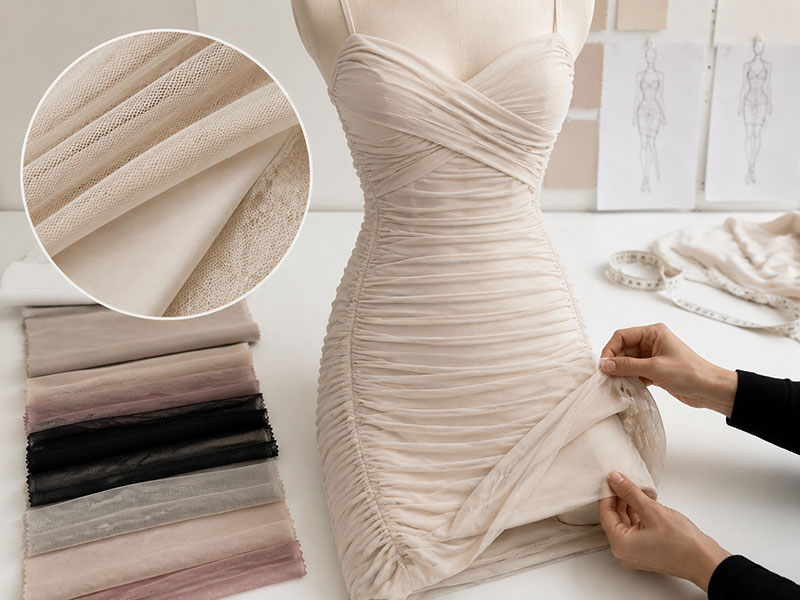
Double Mesh
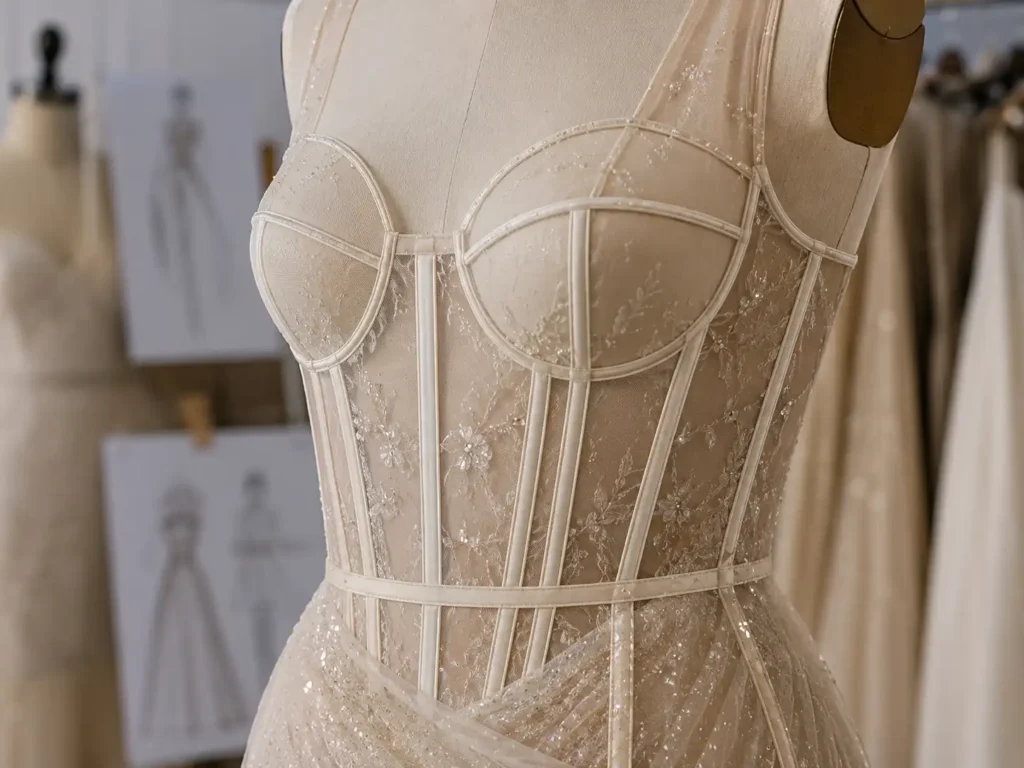
Bra Cups

Boning Support
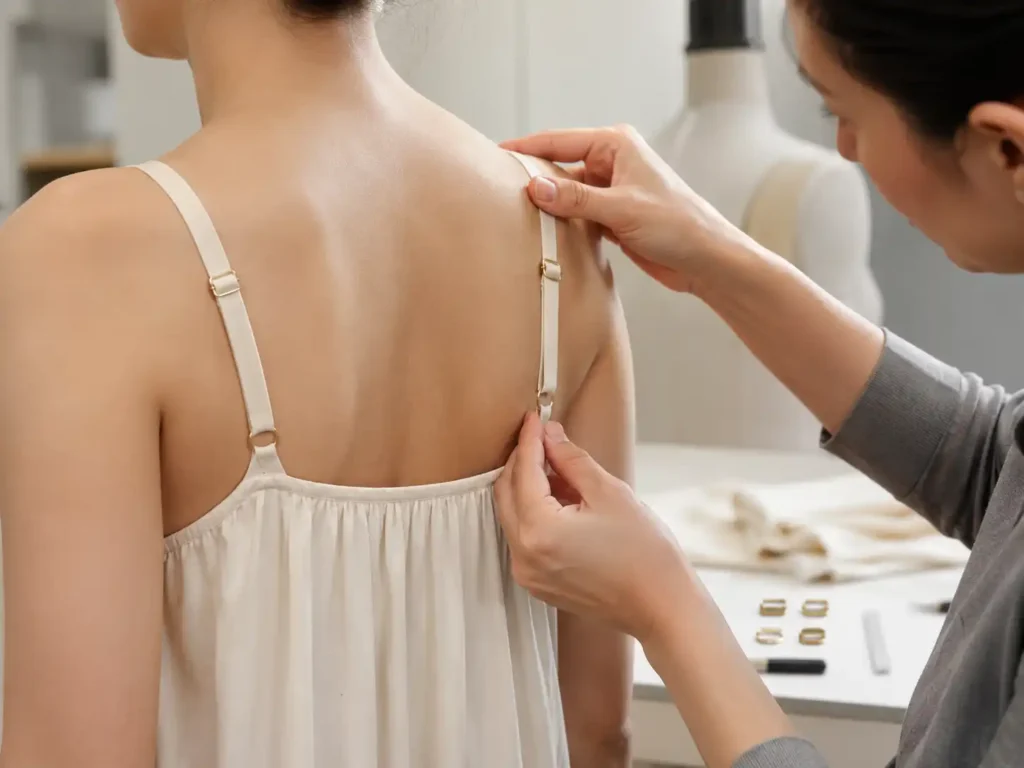
Reinforced Straps
Turning Rhinestone Concepts into Production-Ready Dresses
Project Inputs
Structure Review
Fabric Direction
Stone Layout
Pattern Assessment
Cost Review
Sample Plan
Bulk Feasibility
Rhinestone Dress Sampling and Approval Process

Project Review
Fabric and Trim

Pattern Development

First Sample

Fit Review

Rhinestone Revision

PP Sample

Golden Sample
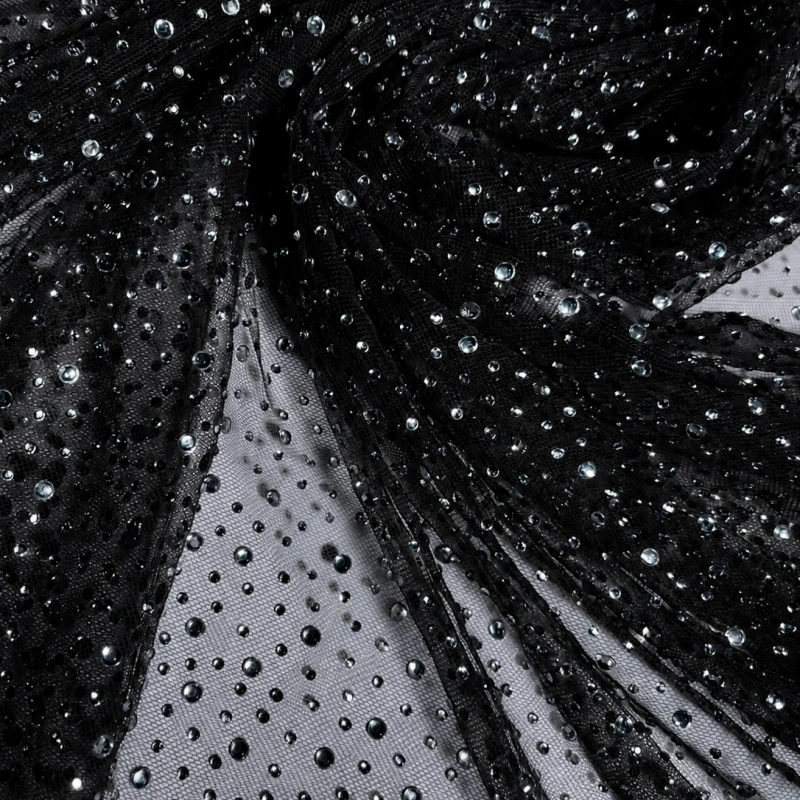
Approving Rhinestones Before Bulk Production
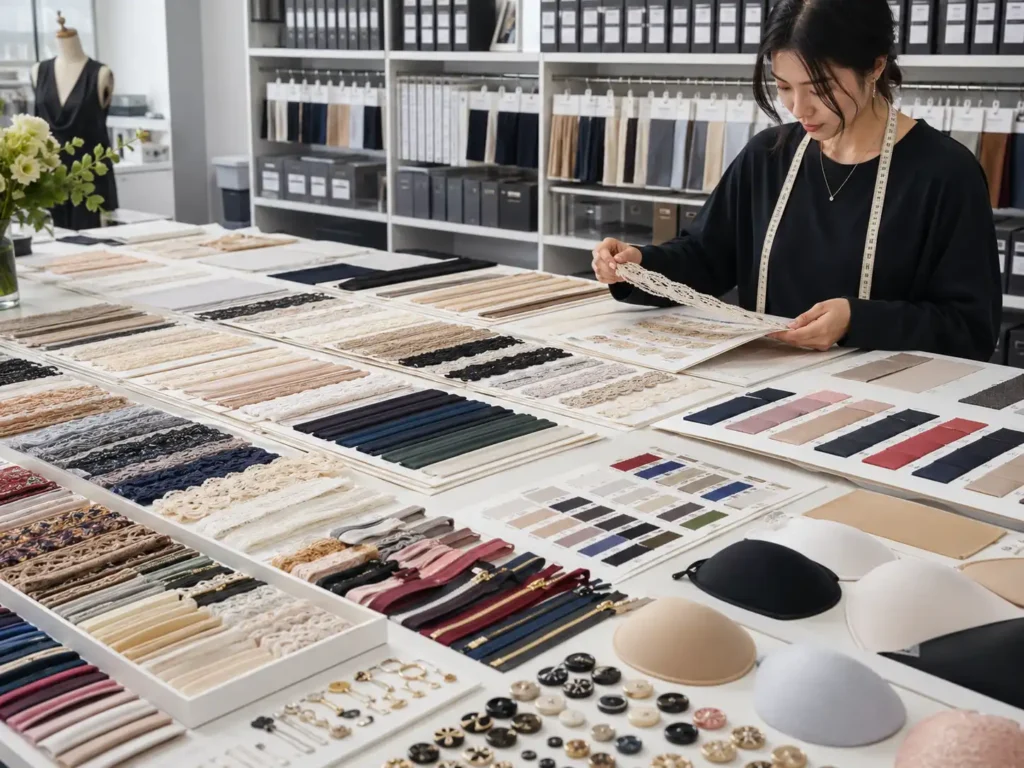
Stone approval should create a traceable record. A physical trim card, placement reference and approved garment reduce disagreement between design, production and inspection teams.
Physical Stone and Trim Approval Record
A trim approval record identifies stone type, size, color, surface finish, backing, supplier reference and intended placement. Chains, straps, connectors, beads or mixed decoration should appear on the same record or in linked records.
Physical approval matters because screen images do not show true reflection, scale or color against fabric. The record should also note the sample version and approval date so later substitutions cannot enter production without review.
Placement Map and Reference Coordinates
A placement map converts creative direction into repeatable positions. Useful references include center front, neckline edge, waist seam, side seam, slit point, strap end and hemline. Curved motifs may need both coordinate points and a full approved visual.
For stretch garments, the map should state whether placement is checked flat, on a form or at a specified measurement. Without a defined condition, different teams may judge spacing differently.
PP Sample as the Bulk Combination
The PP sample brings approved fabric, color, stone, lining, structure, measurements, labels and packing together. It should be checked as a complete selling product, including interior comfort and packaging presentation.
Any major change after PP approval can affect costing, material booking, pattern, production schedule and inspection. Changes should be controlled rather than treated as informal comments.
Golden Sample and Repeat-Order Records
A Golden sample supports production comparisons and future repeat orders. Linked records may include final pattern, graded measurements, stone specification, placement map, sewing instructions, label files, packing method and QC notes.
Repeat orders still require fabric-batch, color, stone-batch and availability confirmation. Historical records accelerate review but do not remove the need to verify new materials.
How Sample Revisions Become Bulk Standards
Pattern Updates
Stone Records
Fabric Changes
Construction Notes
Measurement Control
Packing Updates
How Rhinestone Dresses Move Through Production

Material Inspection
Pattern and Marker

Cutting Control
Base Garment Sewing

Stone Application
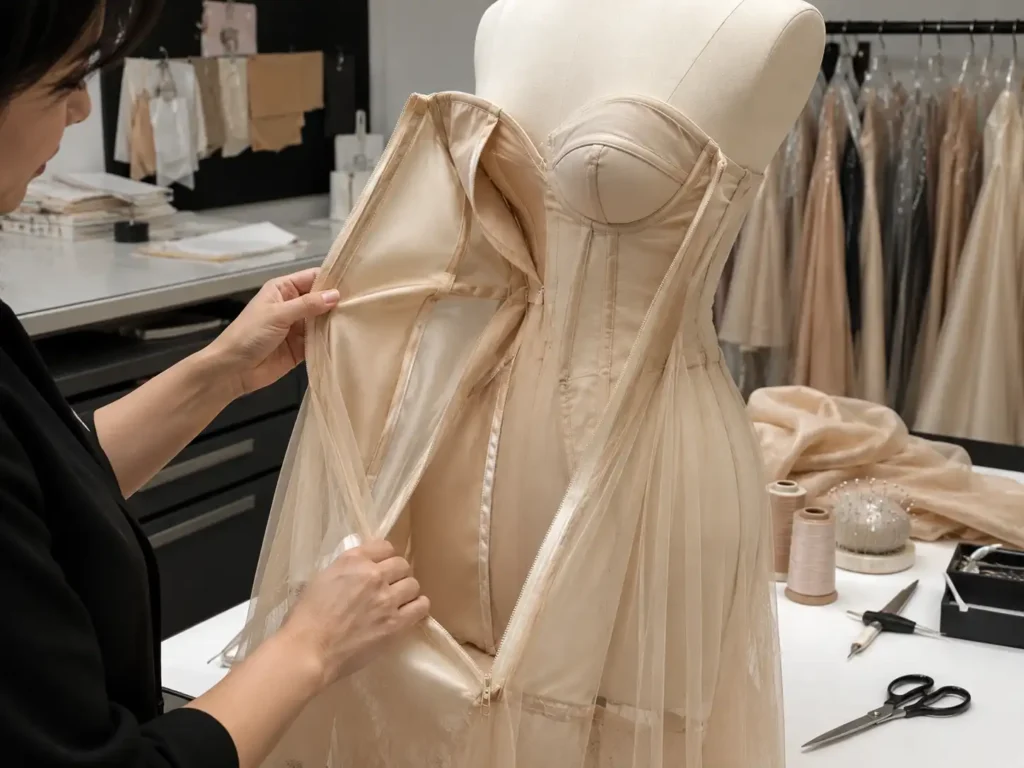
Structure Finishing
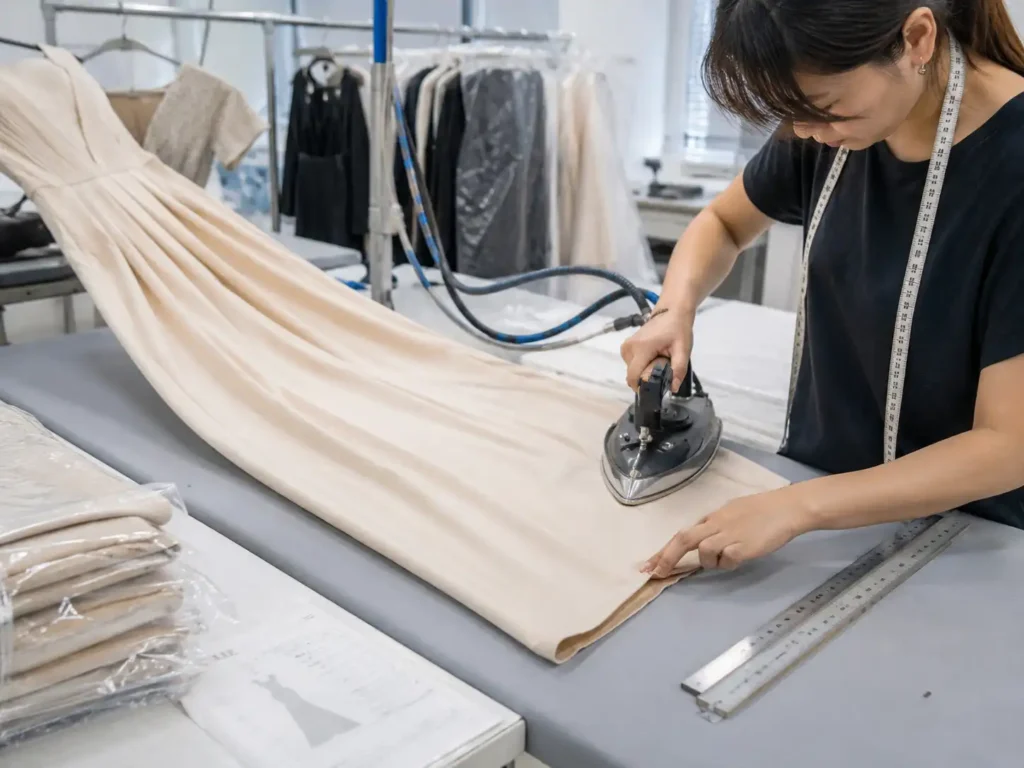
Pressing and Cleaning
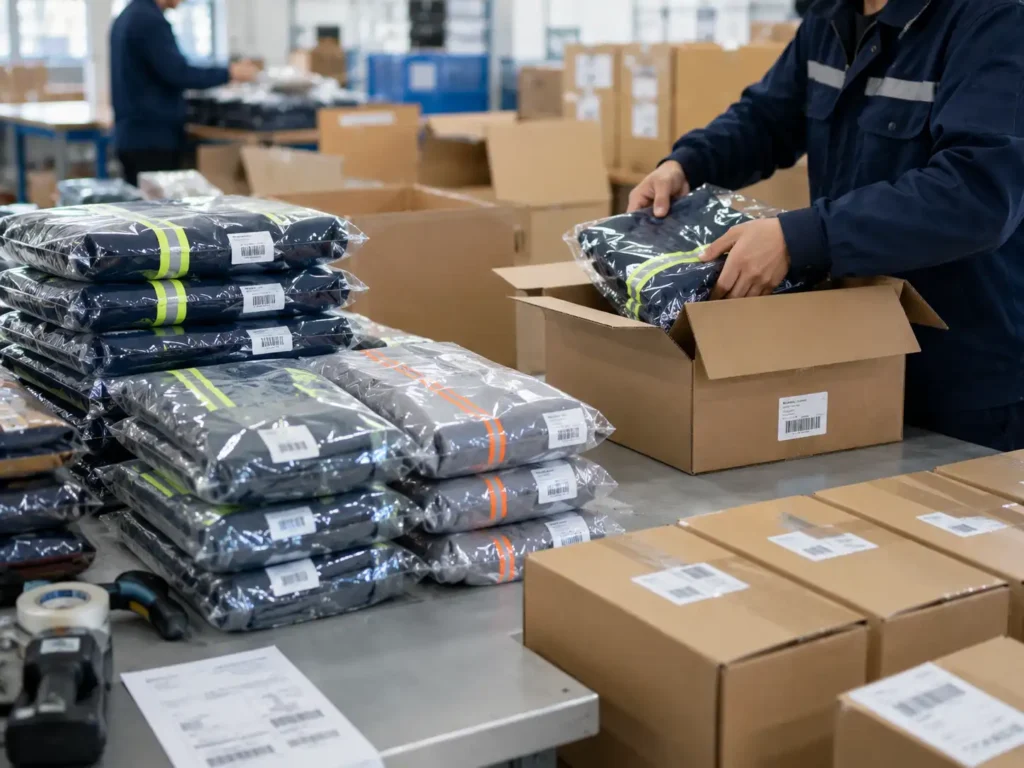
Final Inspection
Keeping Rhinestone Placement Consistent in Bulk
Approved Layout Map
Golden Sample
Trim Batch Control
Positioning References
Inline Comparison
Final Visual Check
Quality Control for Rhinestone Dress Production
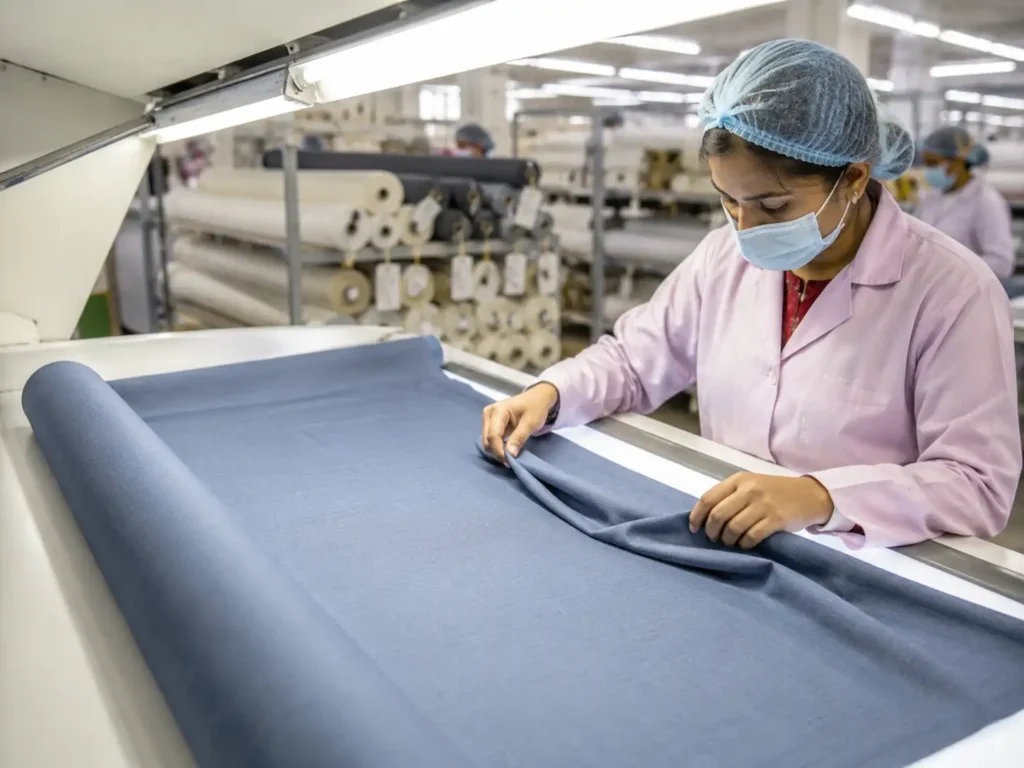
Fabric Inspection
- Compare against approved swatch.
- Separate visible shade variation.
- Record defects affecting usable width.

Rhinestone Inspection
Review stone color, size, finish, surface damage, backing and batch consistency. Chains and straps are checked for link direction, connector quality and length.
- Compare physical references.
- Check missing or damaged pieces.
- Protect approved lots from mixing.
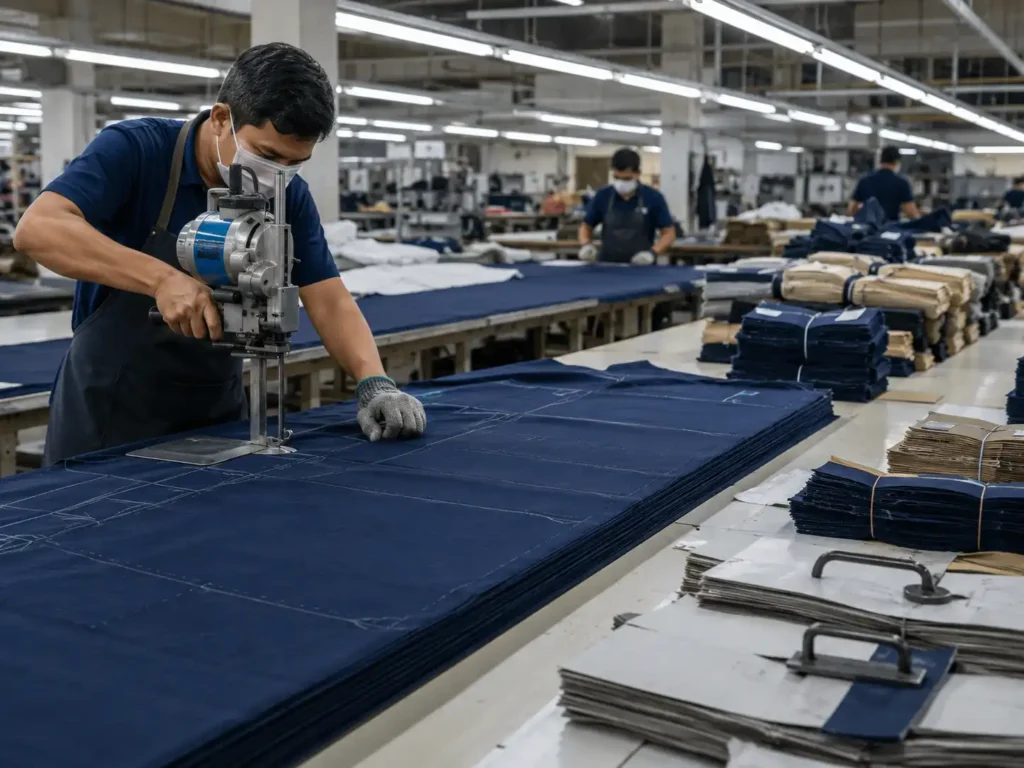
Cutting Inspection
- Check directional fabrics.
- Confirm left-right panel pairs.
- Protect cut edges and surfaces.
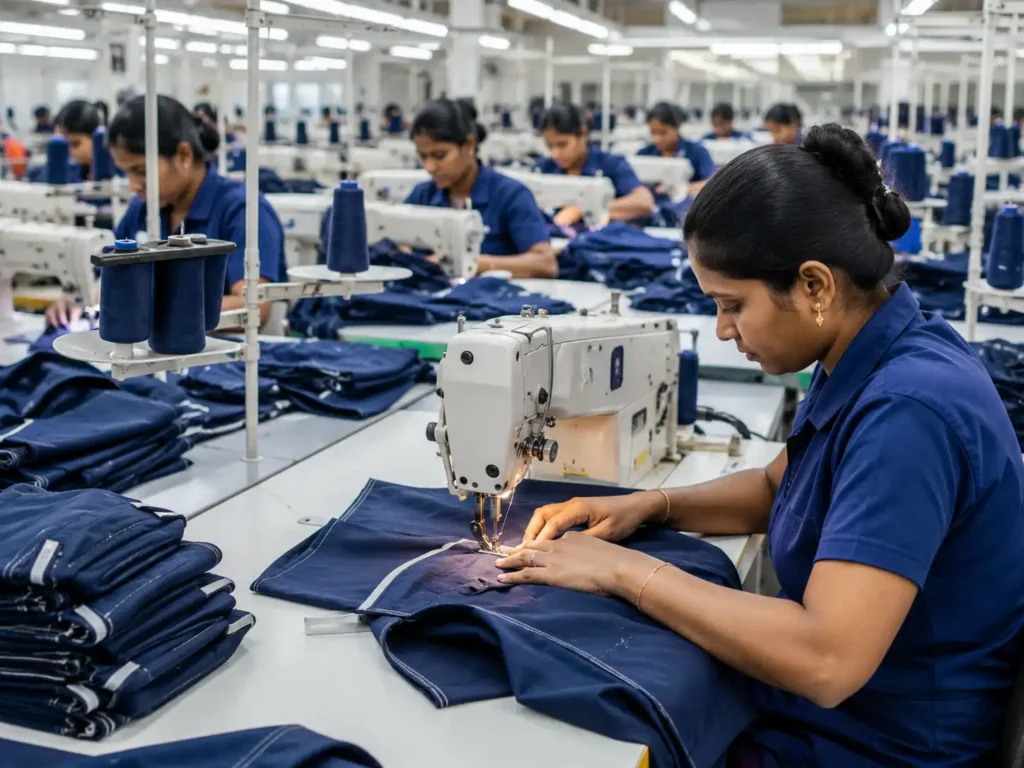
Sewing Inspection
- Inspect stress points.
- Compare seam and lining tension.
- Keep decoration zones clean.
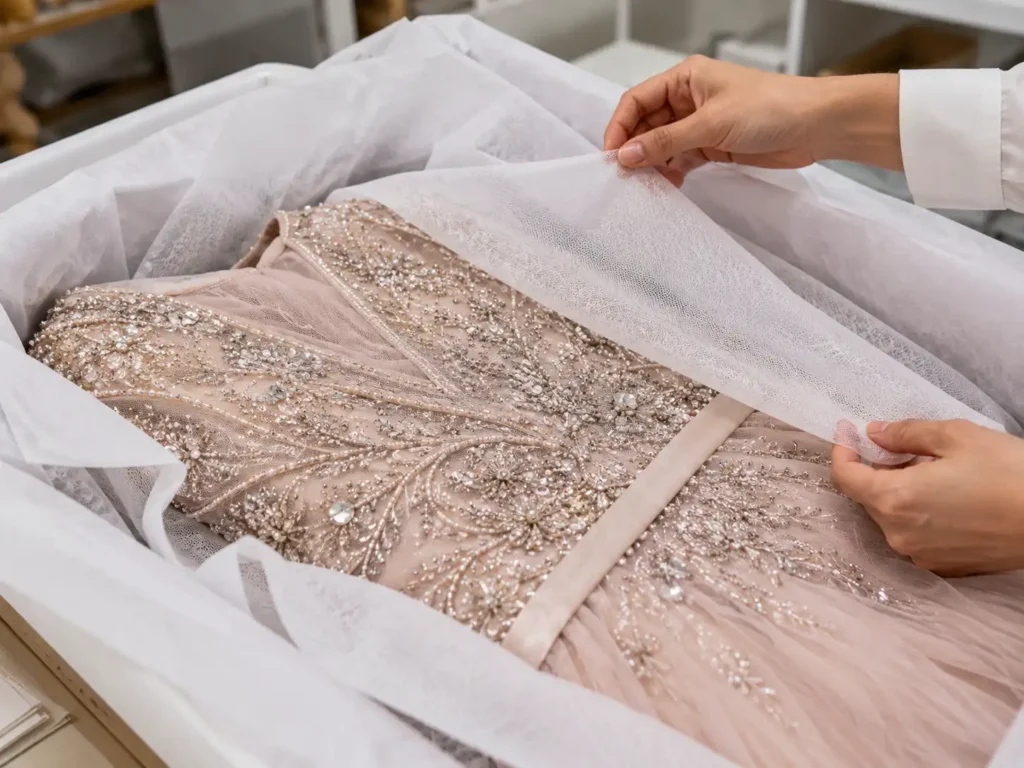
Embellishment Inspection
- Use approved map and sample.
- Check under suitable lighting.
- Review high-tension zones.
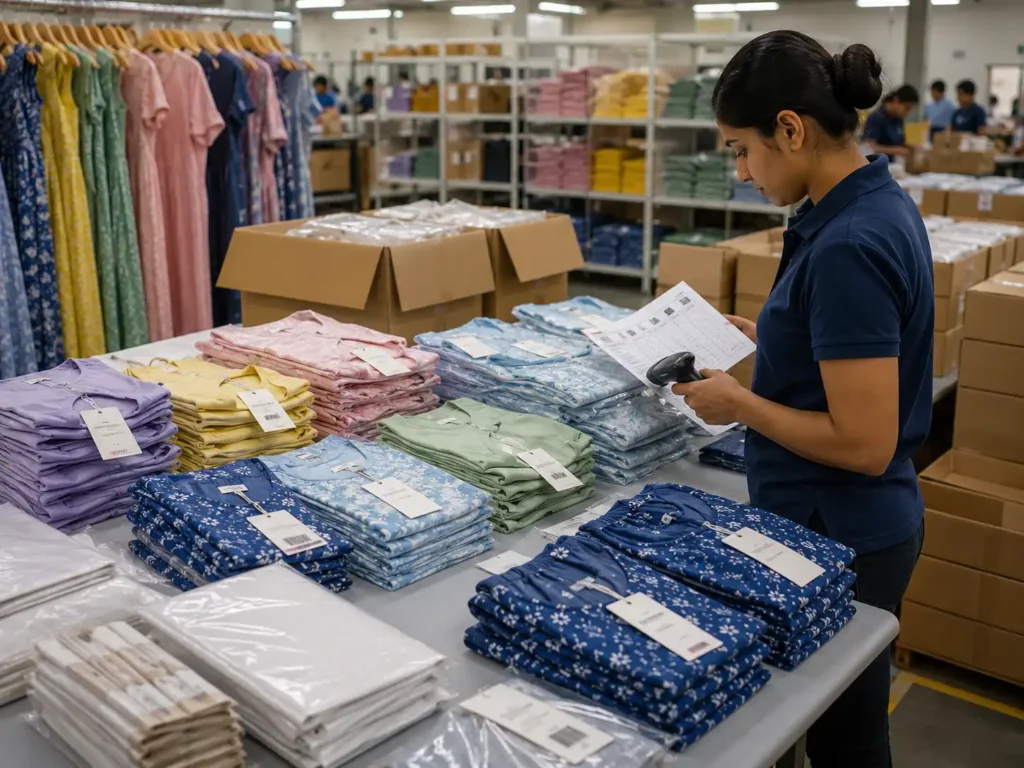
Packing Inspection
- Protect chains and raised stones.
- Separate vulnerable surfaces.
- Photograph approved packing when required.
Fit and Measurement Control Beyond Stone Placement
Bust and Underbust
Waist and Torso
High Hip and Full Hip
Dress Length
Straps and Necklines
Slits and Hem Openings
MOQ Planning for Rhinestone Dress Orders
Standard Style and Color
- Quantities are calculated by style and color.
- Size ratios can be planned within the color quantity.
- Stock status remains subject to confirmation.
Special Stone Programs
Custom stone colors, large mixed-size layouts, special chains, pre-embellished fabrics or supplier-specific components may require higher material commitments. Material wastage and replacement stock also affect planning.
- Approve the stone route before confirming MOQ.
- Check supplier pack quantities and lead time.
- Plan spare materials for repairs and QC.
Private Label Materials
Garment MOQ and label or packaging MOQ are separate. Woven labels, care labels, hangtags, printed polybags, boxes and inserts may have their own minimums and plate or setup costs.
- Consolidate labels across compatible styles when possible.
- Confirm barcode and SKU counts early.
- Align packaging orders with the collection plan.
What Determines Rhinestone Dress Manufacturing Cost?
Base Fabric
Rhinestone Type
Stone Quantity
Application Method
Dress Structure
Packing and Delivery
Private Label Packing for Retail-Ready Dresses
Packing design should protect the most vulnerable surface, not merely fit the garment into a standard polybag. Dense stones, chains, fringe, satin and mesh require different folding and carton decisions.
Surface Separation and Anti-Scratch Protection
Raised stones can mark satin, snag mesh or rub against another decorated garment. Tissue, protective film, soft interleaving or individual separation can be selected by surface and embellishment. The protective layer should not shed fibers, transfer color or leave pressure marks.
Garments may be folded with embellished surfaces isolated, and some styles may benefit from inside-out protection when construction allows. The approved route is recorded so packing teams follow the same method.
Chains, Straps and Fringe Control
Hanging chains and rhinestone straps can tangle or pull during handling.
They may need wrapping, attachment to a support card, placement inside a protected fold or a separate pocket. Fringe should lie in a controlled direction rather than being compressed randomly.
Packing review also checks whether metal or crystal components can press into the fabric during carton stacking. Any hard component contacting a soft panel needs shielding.
Folding, Polybag and Carton Density
A fitted mini dress may tolerate a compact fold, while a corset, long evening dress or heavy fringe style may need more space. Polybag dimensions should avoid forcing hard folds through cups, boning or dense stone areas.
Carton quantity is set around garment weight, structure and compression risk. Lower carton density can protect product value even when it increases carton count. Gross weight, carton measurement and warehouse rules are considered together.
Packing Inspection and Shipment Preparation
Before sealing, teams check cleanliness, missing stones, loose components, labels, barcode, color-size identification, folding and protective layers. Carton marks, quantities and packing lists are matched with the order plan.
Shipment photos or packing references can be retained for project records. Air, sea or split delivery can be coordinated with the brand or appointed forwarder after cargo details are confirmed.
Why Brands Choose Jinfeng for Rhinestone Dresses
Anonymized U.S. Partywear Program
- Program profile: 18 styles, 42,000 pcs total, three color families and six sizes per style. Product mix included bodycon mesh dresses, rhinestone-strap minis, birthday corset dresses and two crystal-fringe hero styles.
- Development challenge: The initial bodycon layouts looked balanced flat but opened too widely at full hip. Rhinestone straps also pulled two necklines lower than the approved design.
- Manufacturing response: Pattern and placement reviews were completed together. Hip-zone spacing was revised, stable neckline supports were added, and strap lengths were locked by size. Hero styles moved through a focused revised-sample and PP sequence.
- Production control: Early units were checked against layout references before full output. Packing used isolated straps and protective interleaving. Delivery was divided into a launch batch and a main warehouse batch.
Anonymized U.K. Occasionwear Program
- Program profile: 12 styles, 24,000 pcs total, two to four colors per style and a size range from UK 6 to UK 18. The collection included corset minis, long-sleeve mesh dresses, draped satin styles and rhinestone neckline treatments.
- Development challenge: Dense bodice decoration affected cup shape and created rough internal contact near the underarm. Several satin colorways also reacted differently to pressing.
- Manufacturing response: Cup and boning structure were corrected before final placement approval. Internal shielding was added at contact zones, and fabric-specific pressing trials were used for satin colors.
- Production control: PP samples combined final fabric, decoration, labels and packing. Measurement checkpoints focused on bust, underbust, waist, neckline and strap positions. Each garment received protective surface separation before carton packing.
Anonymized Australian Ecommerce Program
- Program profile: 26 styles, 68,000 pcs total, four coordinated color stories and multi-batch delivery. Products included rhinestone mesh minis, crystal-trim slips, sequin-and-stone combinations and holiday occasion dresses.
- Development challenge: Photography samples, high-volume commercial styles and complex hero pieces all had different deadlines. One pre-embellished mesh direction also created higher cutting loss than the original cost plan.
- Manufacturing response: Styles were segmented by sample priority, base fabric and complexity. Photo samples moved first, while the mesh layout was adjusted around motif repeat and usable width. Commercial styles retained visual direction with a more efficient cutting plan.
- Production control: SKU and packing records were managed by style, color and size. Priority styles were prepared for earlier air delivery, while the main quantity followed the planned sea schedule.
Rhinestone Dress Manufacturing Frequently Asked Questions
MOQ starts from 200 pcs per style/color. One style in two colors normally requires 200 pcs per color. Special stones, chains, custom colors, pre-embellished fabrics, labels and packaging may carry separate supplier requirements.
Yes. Jinfeng Apparel can begin from reference photos, sketches, original samples, line sheets or tech packs. Accurate evaluation also needs quantity, size range, fabric direction, color plan, target market and launch date.
Common directions include stretch mesh, power mesh, jersey, stretch satin, velvet, tulle, sequin fabric and rhinestone fabric. Selection depends on silhouette, stretch, stone weight, opacity, comfort and packing risk.
Custom size, color, finish, density, motif direction and placement can be reviewed by project. A physical trim reference, placement map and approved sample are recommended before bulk production.
Control begins with compatible fabric and attachment selection, approved material records, sample validation, production references, inline inspection and project-specific checks. No attachment route should be judged from appearance alone.
Yes, subject to style review. Stretch direction, recovery, stone spacing, seam tension, lining and body measurements are evaluated together. Bodycon and mesh styles often need on-body review before placement is locked.
Yes. Support can include main labels, size labels, care labels, hangtags, barcode stickers, SKU labels, polybags, protective layers, carton marks and warehouse-specific packing instructions.
Send a tech pack or clear reference, quantity by style/color, size range, fabric preference, stone direction, color plan, label and packing needs, target price, launch date and shipping destination.
Approved feedback is transferred into updated patterns, measurements, fabric or trim records, sewing instructions, QC checkpoints and revised samples. PP and Golden samples establish the final bulk reference.
Yes. Pattern, fabric, trim, measurement, sewing, label, packing and Golden sample records can support repeat programs. New material batches, colors, availability and production schedules still require confirmation.

Start Your Rhinestone Dress Development
Send your project files to Kelly for an initial manufacturing review. Complete information allows the team to assess silhouette, fabric direction, stone specification, fit risk, MOQ, sampling route, production feasibility, private-label requirements and delivery planning with fewer back-and-forth messages.
A strong inquiry usually includes the information below. A complete tech pack is welcome, while a clear reference image plus the core commercial details can also support an initial review.
- Reference image, sketch, tech pack, line sheet or original sample details.
- Target quantity for every style and color; standard MOQ starts from 200 pcs per style/color.
- Fabric preference, stone color, density, placement direction and supporting trim requirements.
- Size range, measurement chart and intended selling market.
- Brand labels, barcode, SKU, packaging and warehouse requirements.
- Target price, launch date, shipping destination and preferred delivery route.
- Any required testing, compliance review, NDA or supplier-audit documentation.