 Skip to content
Resortwear Production for Global Fashion Brands
Jinfeng Apparel develops and produces women’s resortwear collections for established fashion brands that need more than a single garment supplier. Resort programs often combine lightweight dresses, coordinated sets, tops, skirts and jumpsuits across several fabrics, colors, prints and fit directions. Our production model connects fabric sourcing, pattern engineering, sample development, pre-production control, bulk manufacturing, quality inspection, private-label packing and shipment preparation in one managed workflow.
- Since 2008 in women’s fashion manufacturing
- 2 sample rooms with 7+ senior pattern makers and 20+ sample machinists
- 18+ sewing lines and 6+ flexible production lines for multi-style programs
- 100,000+ pieces of monthly production capacity across assigned production resources
- Brand programs commonly span 10-30 styles and 20,000-80,000 pieces per order
- Standard garment MOQ starts from 200 pcs per style/color, subject to fabric and trim requirements
Built for Structured Resortwear Collection Programs
Product Development Teams
Merchandising Teams
Sourcing and QA Teams
Resortwear Styles Developed as One Commercial Collection

Resort Maxi Dresses
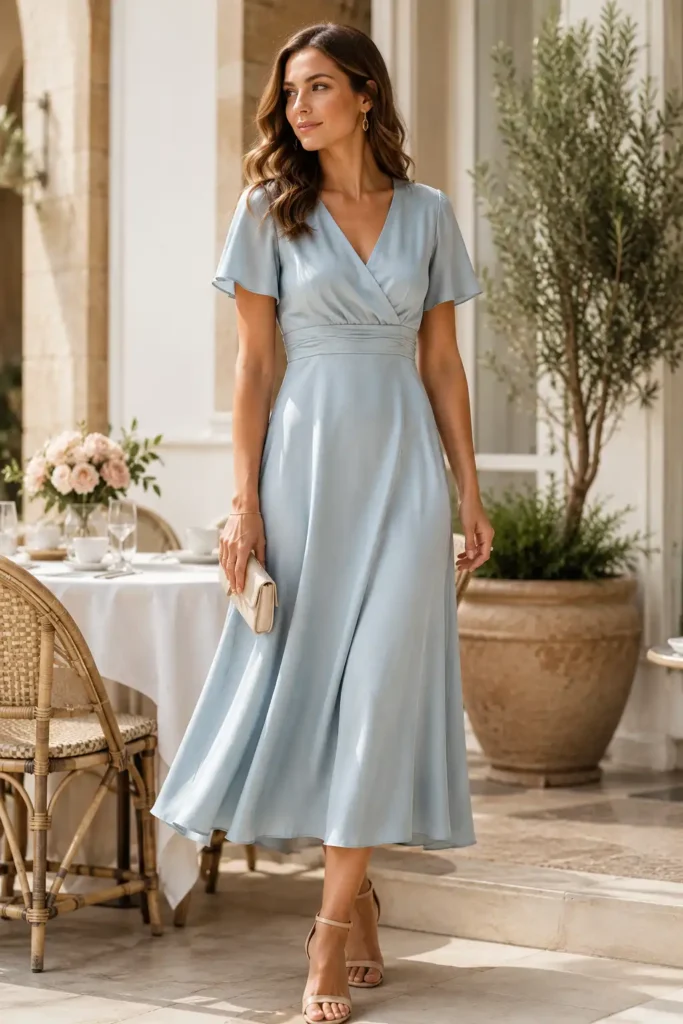
Resort Midi Dresses

Resort Mini Dresses
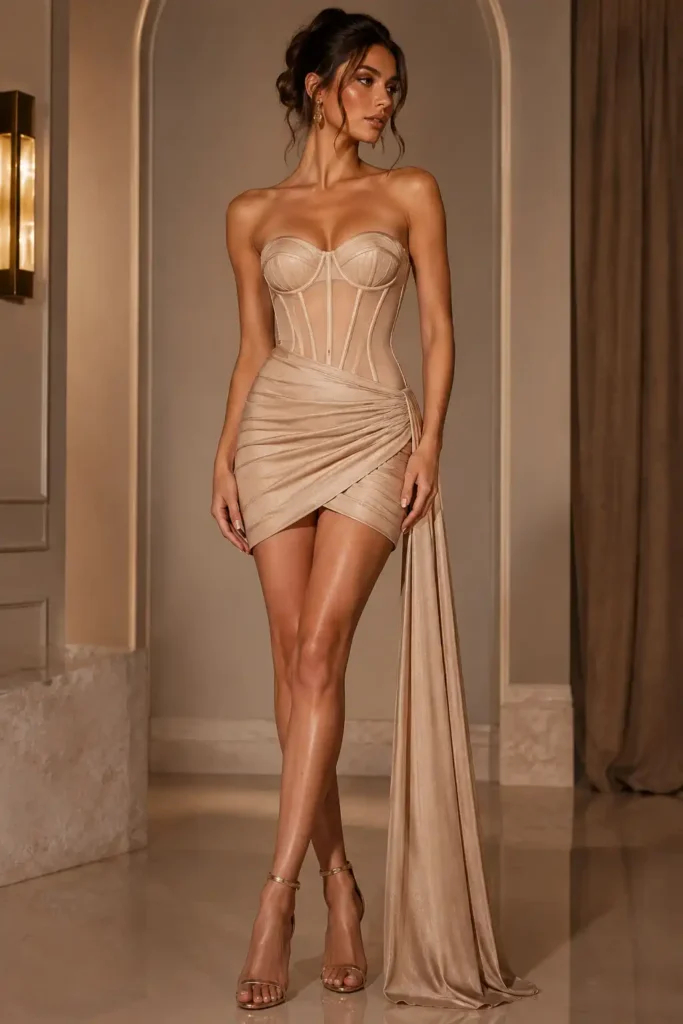
Coordinated Resort Sets

Resort Tops

Resort Skirts

Resort Jumpsuits

Travel-Ready Cover Pieces
Plan the Collection Before Sampling Starts
Multi-style resortwear orders become difficult when every style is developed independently. Jinfeng reviews the assortment as a system, grouping styles by fabric, print, construction and launch priority so sample work, material decisions and factory allocation can move in a controlled sequence.
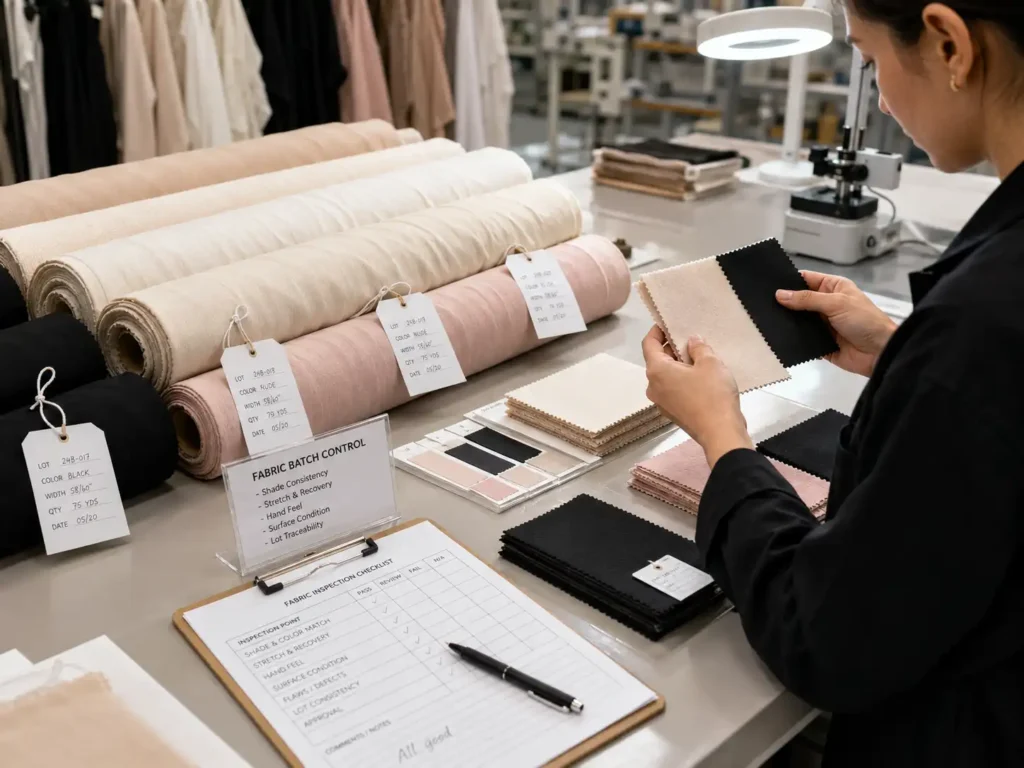
Build Fabric Families Across Styles
A 20-style line does not need 20 unrelated fabric decisions. Shared fabric families can connect dresses, skirts, tops and sets while reducing unnecessary variation in handfeel, shade and sourcing. The development team reviews which silhouettes can share a base fabric, where lining or weight changes are necessary, and which statement pieces need separate materials. Fewer uncontrolled material variables make bulk approval clearer and help the final collection look intentionally connected.

Separate Hero Styles From Supporting Styles
Most resort collections have a small group of visually important pieces used for campaign photography, retail windows or seasonal promotion. Those styles often need earlier sample approval because print, fit, construction or finishing takes longer to resolve. Supporting styles can follow once shared fabric and color directions are confirmed. Prioritizing hero pieces reduces the risk of a delayed complex style holding back the entire launch calendar.

Coordinate Color and Print Stories
Prints, solids and accent colors should be planned across the assortment before purchase quantities are committed. A print may appear on a maxi dress and a matching set, while a coordinating solid is used on a second dress and skirt. Jinfeng reviews how print scale, base cloth, shade and trim colors interact so the collection is not fragmented by small sourcing decisions made at different times.

Match Production Resources to Complexity
A lightweight printed dress, structured jumpsuit and elasticated set do not belong on the same production path simply because all three are resortwear. Jinfeng allocates styles according to fabric type, construction difficulty, order volume, approval timing and QC requirements. Production capacity is managed through 6 owned women’s fashion factories, 10+ long-term production partners, 18+ sewing lines and 6+ flexible lines rather than assuming every line is interchangeable.
Resortwear Fabric Development Based on Garment Behavior
Fabric choice controls drape, opacity, movement, comfort, print clarity, wrinkle response and finished price perception. Jinfeng evaluates fabrics against the intended silhouette instead of selecting by fiber name alone. A fluid maxi dress, fitted halter and relaxed matching set may all sit in one resort collection but require different weight, structure and surface behavior.
| Fabric Direction | Best Use in Resortwear | Main Development Checks | Production Risk to Control |
|---|---|---|---|
| Viscose / Rayon Wovens | Fluid dresses, skirts, relaxed sets | Drape, shrinkage, color, handfeel, print response | Excess shrinkage, distortion, shade variation |
| Linen / Linen Blends | Dresses, shirts, sets, trousers | Weight, opacity, wrinkle character, seam stability | Excess creasing, open weave, dimensional change |
| Cotton / Cotton Voile | Day dresses, tops, skirts, easy sets | Breathability, transparency, softness, shrinkage | See-through areas, stiffness, wash change |
| Chiffon / Lightweight Sheers | Layered dresses, sleeves, overlays | Transparency, lining, seam finish, hem control | Puckering, uneven hem, snagging, exposure |
| Satin-Look Wovens | Dinner resort dresses, slips, elevated sets | Surface, drape, shade, pressing, seam appearance | Snagging, seam impression, shine variation |
| Printed Wovens | Statement dresses, sets, skirts | Repeat, scale, direction, base shade, panel matching | Misaligned motifs, color shift, inconsistent direction |
Print and Color Development for Resort Collections
Resortwear often carries more visual information through print and color than ordinary wardrobe basics. A print must work across scale, silhouette, fabric base and multiple SKUs, while colors need enough consistency for sets and coordinated stories. Jinfeng treats artwork and color as production specifications, not decoration added after sampling.
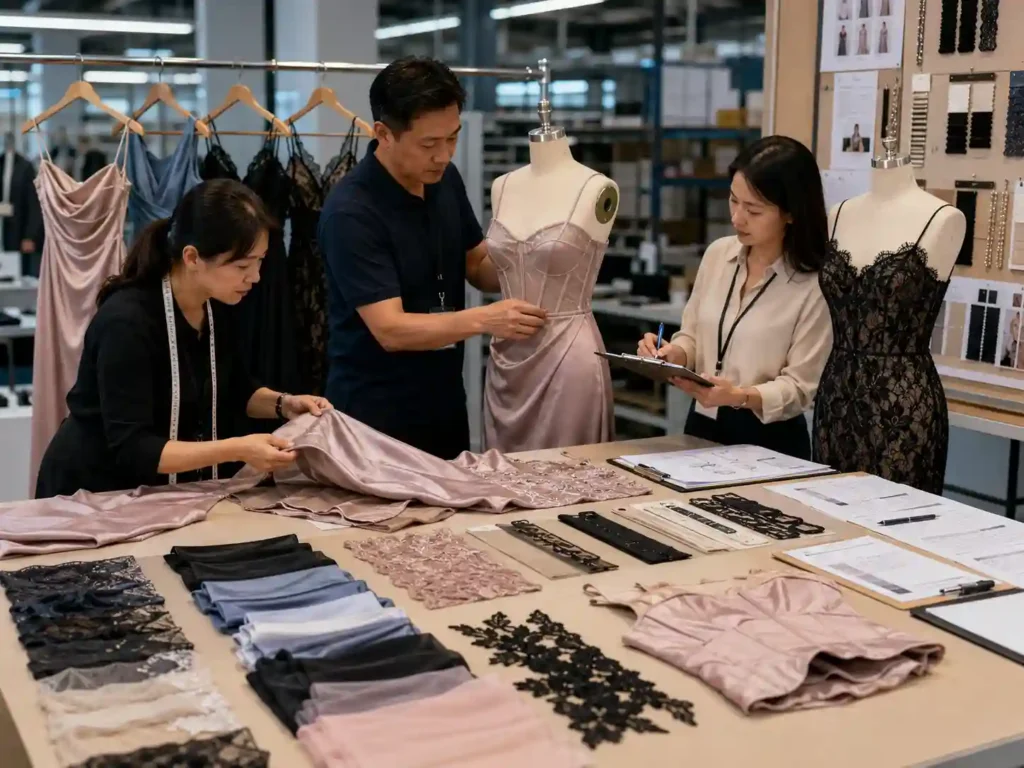
Control Repeat Scale Across Garments
A floral repeat that looks balanced on a maxi skirt can become oversized on a crop top or disappear on a narrow strap. Before bulk artwork is fixed, repeat size and motif scale should be reviewed against garment dimensions. Sets need special attention because a print may be shared by two pieces with different panel sizes. Keeping the same artwork file without scale review can make coordinated items look unrelated even when the colors match.

Manage Print Direction Before Cutting
Directional motifs, borders, stripes and asymmetric artwork need a clear cutting rule. The team confirms whether the design should run one way, mirror across panels, align at center front, or remain intentionally random. Direction decisions affect fabric consumption and cutting efficiency, so they must be made before costing and bulk planning are treated as final. A visual rule approved during sampling is easier to reproduce than an instruction added after cutting starts.

Match Color Across Coordinated Pieces
A resort set may use the same solid color on different constructions or pair a printed top with a solid skirt taken from the artwork palette. Base fabric composition and finishing can change how a shade appears. Color evaluation therefore considers the final fabric, not only a digital reference. When garments are sold together, visual coordination should be checked under the same lighting and approval standard.

Protect Print Quality in Bulk
Bulk print control involves artwork version, base fabric, color approval, lot consistency and cutting direction. Changes introduced after sample approval should be documented because even a small artwork update can alter placement or repeat. For large resort programs, print control becomes especially important when the same design appears across several styles and total quantities extend into tens of thousands of pieces.
Pattern Engineering for Resortwear Fit and Movement
Relaxed resortwear still needs precise pattern work. Loose silhouettes can twist, pull or expose the body when neckline balance, strap length, wrap overlap or torso proportion is wrong. Jinfeng’s 7+ senior pattern makers convert design intent and fit comments into controlled pattern adjustments before grading and bulk release.

Neckline, Bust and Armhole Balance
Halter, plunge, wrap, tie-front and sleeveless resort styles place more responsibility on the pattern because coverage is reduced. Pattern review checks neckline depth, bust shaping, armhole position, strap angle and movement. A garment should hold its intended line while standing, walking and sitting. Fit corrections are translated into pattern changes, not hidden through sewing adjustments that cannot be repeated consistently in bulk.

Waist, Hip and Wrap Control
Wrap dresses and skirts need enough overlap to remain secure without becoming bulky. Elastic waists need recovery without excessive pressure. Fitted resort pieces must keep waist and hip proportions balanced after fabric behavior is considered. Pattern adjustments may include overlap width, dart or seam shaping, elastic length, rise and side-seam position. The objective is stable wear combined with the relaxed visual language expected from resortwear.

Maxi Length and Hem Balance
Long resort dresses are sensitive to body proportion, fabric weight and bias movement. Hemlines can drop unevenly after hanging, especially in fluid fabrics or circular constructions. Sample review considers center front, side and back balance, lining length, footwear assumptions and movement. Final pattern and finishing instructions should reflect how the fabric behaves after sewing and pressing, not only the paper measurement.

Jumpsuit Torso and Rise
Jumpsuits require integrated control of bodice and lower-body fit. Torso length, waist level, rise, crotch depth and leg volume must work together. A measurement chart can look acceptable while the garment still pulls during sitting or movement. Fit review therefore includes functional wear, with corrections carried into the final pattern before grading. For multi-size production, proportion changes are reviewed so the original silhouette does not become distorted at larger or smaller sizes.
Resortwear Sampling Built for Bulk Approval
Sampling is where design language becomes a repeatable production standard. Jinfeng operates 2 sample rooms supported by 7+ senior pattern makers and 20+ sample machinists. Sample stages are selected according to project complexity, and every revision should move the style closer to a locked production specification rather than creating endless visual changes without control.
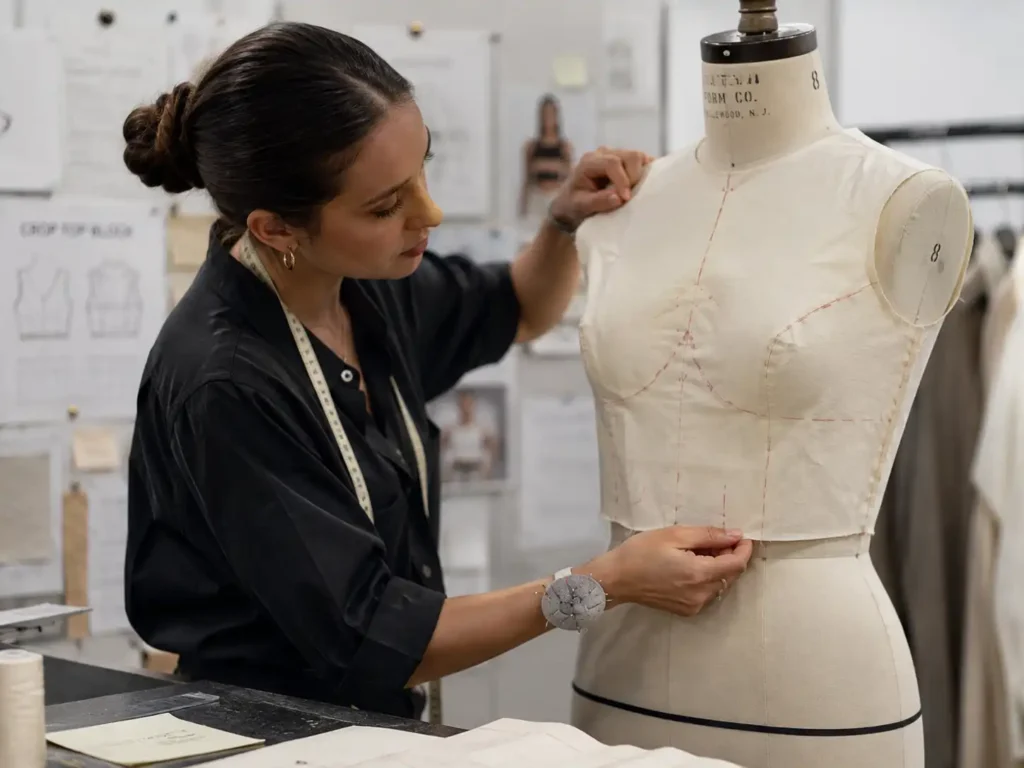
First Development Sample
The first sample verifies whether fabric, silhouette and construction can reproduce the intended design. The team reviews major proportion, seam placement, neckline, length, lining approach, closure and special details. Early samples are also the right stage to identify material conflicts. If the selected fabric cannot deliver the required drape, opacity or stretch, changing it before repeated pattern revisions saves time and prevents false fit conclusions.
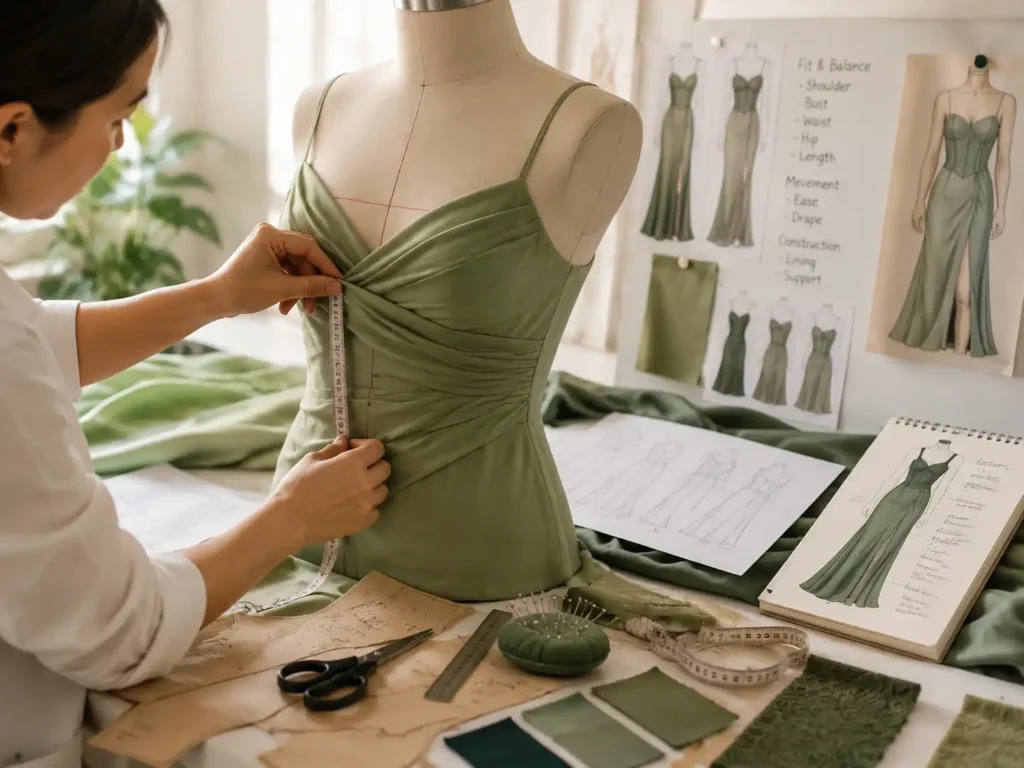
Fit and Revised Samples
Fit comments should be specific enough to become pattern actions. Instead of notes such as “make it better” or “too loose,” revisions should identify bust, waist, hip, armhole, strap, rise, length or overlap changes. Jinfeng records corrections against the sample and pattern so the next version can be evaluated objectively. When a fabric changes materially, fit is reviewed again because the same pattern may behave differently.

Photo-Ready and Sales Samples
Resort collections are highly visual, and sample garments may be used for ecommerce photography, campaign shoots, line reviews or sales meetings before bulk production is complete. Photo-ready samples require attention to drape, pressing, print direction, hem balance and finishing because visual defects become amplified on camera. Production decisions approved on a photography sample are still transferred into the formal PP specification before bulk release.

PP and Golden Sample Control
The PP sample is the key bridge into bulk production. Fabric, color, trims, measurements, construction, labels, hangtags, polybag method, carton marks and packing direction should be clear before production starts. When an approved golden sample is maintained as a reference, inline and final inspection teams can compare bulk garments against an agreed physical standard instead of interpreting scattered comments from earlier development rounds.
Workmanship Built for Lightweight Resortwear Construction
Resortwear often looks effortless because the construction is visually quiet. Lightweight fabric, narrow hems, ties, gathers and open necklines leave little room for uneven sewing. Jinfeng focuses on workmanship choices that preserve drape and comfort while remaining repeatable across commercial quantities.
Narrow Hems and Lightweight Seams
Fine hems and lightweight seams must lie cleanly without excessive puckering, twisting or visible tension. Stitch balance, seam allowance and handling method should suit the fabric rather than follow one factory default. Chiffon, viscose, lightweight cotton and satin-look wovens behave differently under the same seam construction. Sample approval establishes the method before bulk operators reproduce it across the line.
Gathers, Tiers and Soft Volume
Gathered bodices, tiered skirts and soft sleeve volume are common in resortwear. Uneven gathering can make a style look inexpensive even when the fabric is good. Construction review defines where fullness begins, how evenly it is distributed, and how seam bulk is controlled. On long skirts, tier proportions also affect total weight and hem movement, so appearance and production efficiency need to be balanced together.
Straps, Ties and Adjustable Details
Halter straps, shoulder ties, waist ties and adjustable components influence both fit and durability. Length, attachment reinforcement, turning quality and symmetry are checked during sampling. When ties carry decorative ends, hardware or special trims, the attachment method must survive packing and repeated wear. Bulk inspection should confirm positioning and pair matching rather than checking only whether the component exists.
Lining and Transparency Control
A lining should solve coverage without destroying the airy character of resortwear. Full lining may be unnecessary on some silhouettes, while partial lining can create visible transition lines if poorly placed. Development considers color, length, stretch, handfeel and attachment method. White and pale colors require particular attention under strong light. Lining decisions approved during sampling are included in the material and construction specification for bulk.
Lock Every Production Detail Before Bulk Cutting
A correct sample is not enough unless the approved decisions are transferred into one production standard. Jinfeng uses the pre-production stage to align pattern, material, construction, labels, packing and inspection requirements before bulk cutting begins.
Final Pattern and Measurement Control
The approved pattern becomes the reference for grading and bulk cutting. Measurement points, tolerances and size relationships should match the final fit decision. Any correction made after an earlier sample needs to be reflected in the pattern, not left only in email comments. Special attention goes to resortwear points such as strap length, wrap overlap, maxi length, jumpsuit rise, lining coverage and elastic dimensions.
BOM, Trims and Color Confirmation
Fabric, lining, zippers, buttons, elastic, labels, cords, hardware and decorative trims are organized in the final bill of materials. Color references and supplier information are checked before bulk use. If a trim or fabric source changes after sample approval, the replacement should be reviewed for appearance, function and MOQ impact rather than substituted silently.
Sewing and Finishing Standard
Construction details are translated into production instructions covering seam type, edge finish, gathering, elastic attachment, lining method, zipper placement, pressing and other style-specific controls. Complex resort styles may need close visual references for neckline, cut-out, tie, slit or print direction. Clear standards reduce operator interpretation and make inline QC more objective.
Label and Packing Lock
Main labels, size labels, care labels, hangtags, barcode stickers, polybags, folding method and carton marks are reviewed before packing materials are released. A garment can pass sewing inspection and still create warehouse problems if SKU, size ratio or carton information is wrong. Locking packing details during pre-production keeps retail preparation connected to garment manufacturing rather than treated as a last-minute task.
Bulk Resortwear Production for Multi-Style Programs
Jinfeng manages resortwear bulk production through 6 owned women’s fashion factories, 10+ long-term production partners, 18+ sewing lines and 6+ flexible production lines, with overall monthly capacity of 100,000+ pieces. Resources are assigned according to style complexity, fabric behavior, quantity, approval status and QC requirements rather than moving every style through the same line.

Allocate Styles by Construction Difficulty
A simple elasticated skirt can move differently from a lined maxi dress, tie-front top or fitted jumpsuit. Separating styles by construction needs helps keep line setup, operator skill and inspection focus aligned. Complex garments may require a slower production rhythm and more frequent inline checks, while straightforward companion styles can be scheduled on lines optimized for consistency and volume.
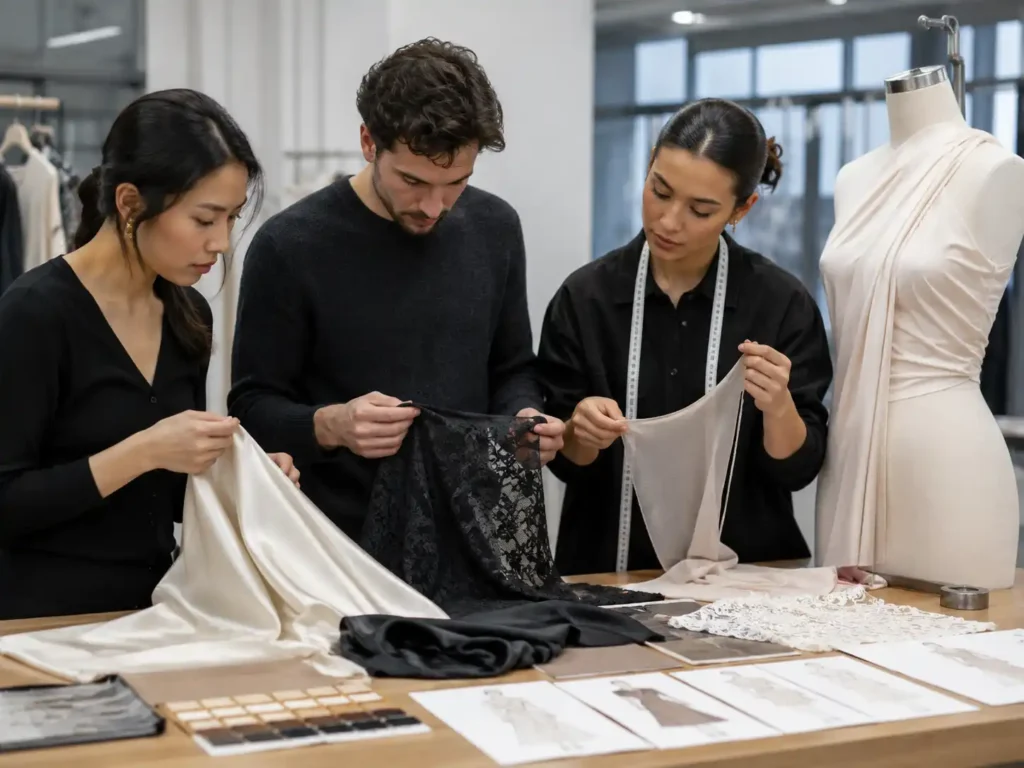
Group Materials Before Production Release
Multi-style resort programs often share fabric families, colors or prints. Material readiness should be tracked across the whole assortment so one late component does not create unnecessary line interruption. Styles can be released by approved material group and launch priority when appropriate. Clear status control also makes it easier to identify which garments are ready for cutting, which are waiting for trim approval and which still require final PP confirmation.

Use Flexible Lines for Assortment Complexity
Jinfeng’s 6+ flexible production lines support projects with multiple SKUs, fabrics and color combinations. Flexibility describes production organization, not an unlimited small-order model. Standard garment MOQ remains 200 pcs per style/color, and production still depends on material minimums, confirmed specifications and line scheduling. Flexible allocation is most valuable when a structured collection needs several styles to move through production without losing coordination.
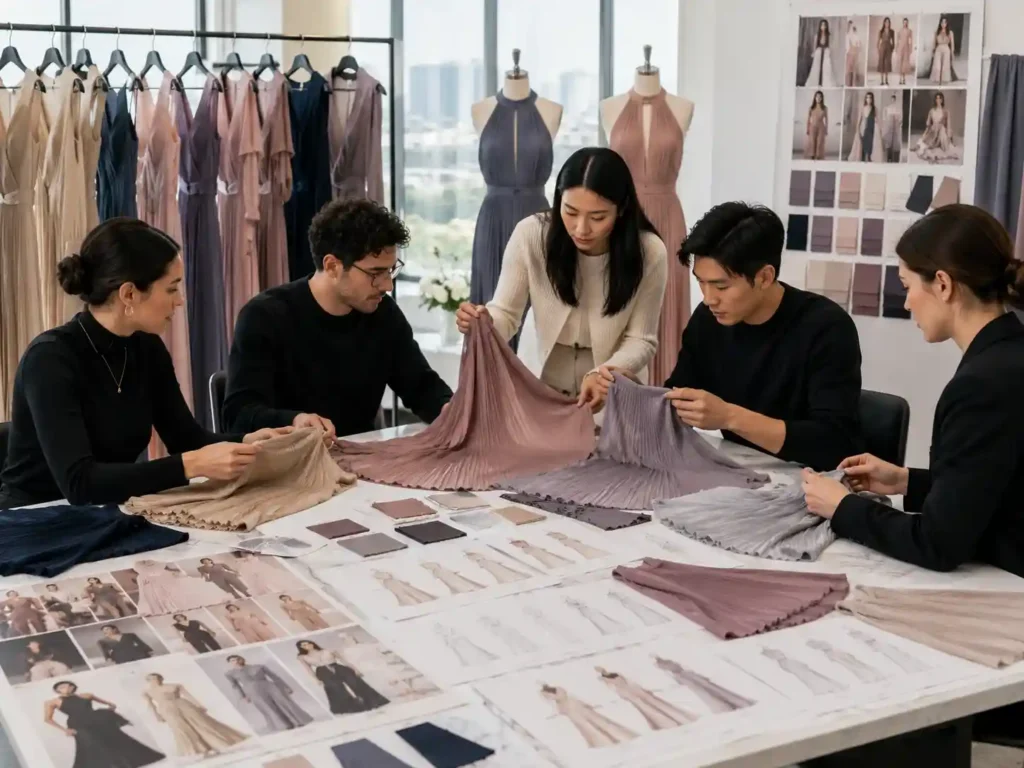
Scale Around Real Brand Order Profiles
Current brand programs commonly include 10-30 styles with total order quantities of 20,000-80,000 pieces. At this scale, management matters as much as sewing capacity. Each style carries its own fabric, color, size ratio, approval status and packing data. Jinfeng coordinates production status across the assortment so a large order is controlled as a collection rather than a pile of unrelated purchase orders.
Resortwear Quality Control From Fabric to Packing
Fabric and Shade Control
Cutting Accuracy
Inline Sewing Checks
Measurement and Fit Points
Finishing and Visual Review
Packing and SKU Accuracy
Private Label Packing Ready for Retail Operations

Garment Labels

Hangtags and Barcodes
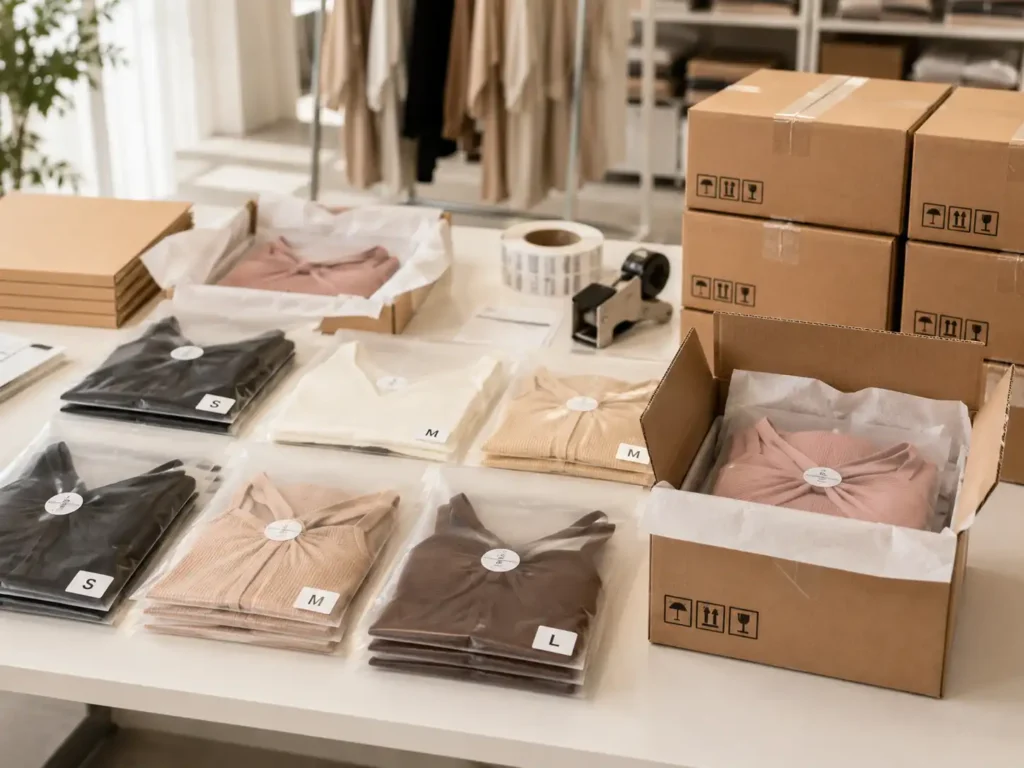
Polybag and Folding
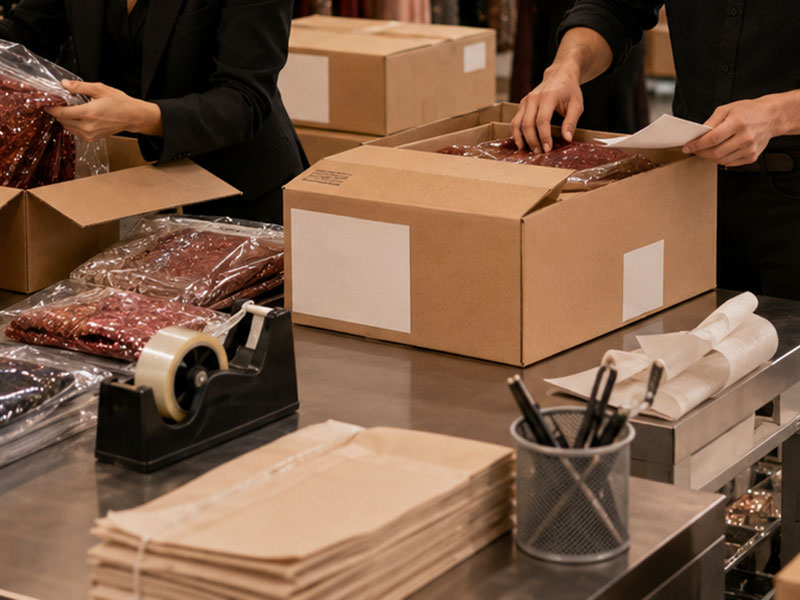
Carton and Ratio Packing
MOQ Planning for Commercial Resortwear Programs
Jinfeng’s standard garment MOQ begins at 200 pcs per style/color. The garment minimum is only one part of the commercial plan: fabric, custom print, color development, trims and private-label materials may carry separate minimums. Clear quantity planning before sampling helps avoid designs that cannot be commercialized at the intended assortment size.
| Planning Situation | Commercial Direction | Main Point to Confirm |
|---|---|---|
| 1 style / 1 color / 200 pcs | Fits the standard garment starting point | Fabric stock and trim minimums |
| 1 style / 2 colors / 400 pcs total | 200 pcs per color can fit the standard starting point | Color availability and fabric lot |
| Multi-style resort capsule | Plan 200+ pcs per style/color while grouping shared materials | Fabric family, print minimum, color story |
| Custom-dyed fabric | May require a higher material commitment | Dye lot MOQ, color approval, lead planning |
| Exclusive custom print | Material/printing MOQ may exceed garment MOQ | Artwork, base fabric, repeat and print method |
| Special or certified material | Requires project-by-project review | Supplier scope, documentation, MOQ and availability |
Seasonal Production Planning Around Launch Milestones
Resort collections are tied to selling windows, campaign shoots, travel seasons and warehouse dates. Production planning works best when milestone dates are agreed before bulk begins, allowing development, materials, PP approval, manufacturing, inspection and packing to be sequenced backward from the required delivery window.

Development Deadline
Reference images, tech packs, fabric direction, artwork and initial size information should arrive early enough for technical review before sampling starts. Missing construction details or late print files can shift every later milestone. Jinfeng identifies open questions during development so unresolved decisions are visible before material commitments are made.
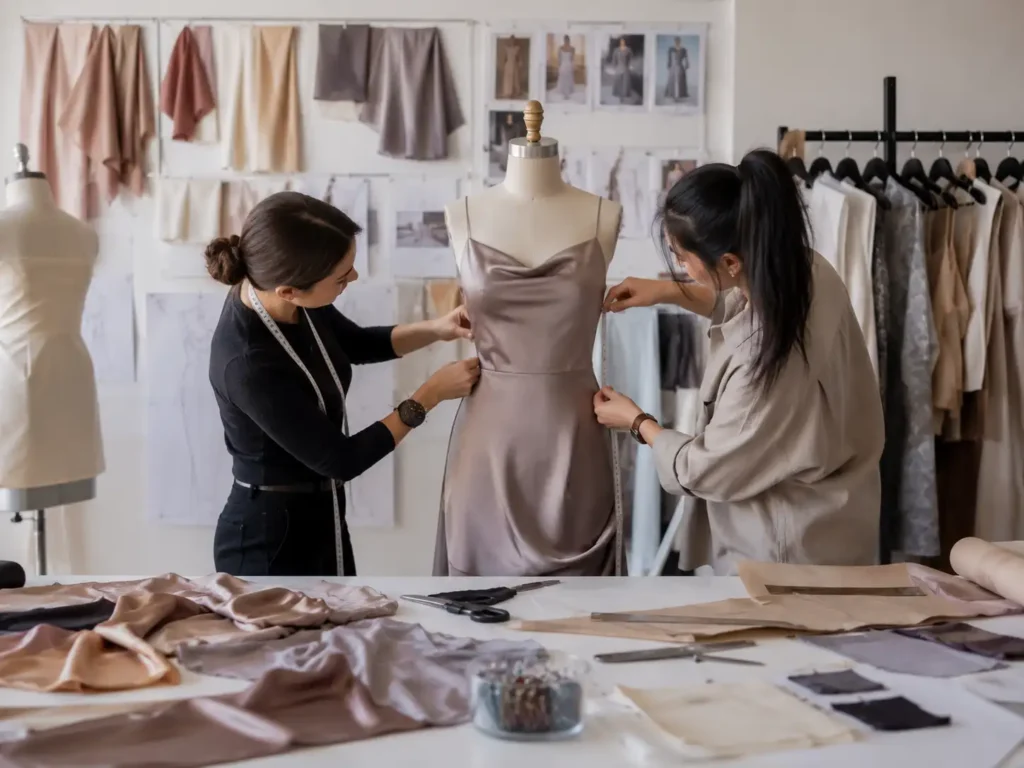
Sample and Photo Approval
Sample timing depends on material readiness, construction complexity and revision requirements. Rather than promising one universal number for every style, the team builds a sample plan around the collection. Hero pieces required for photography can be prioritized, while supporting styles follow the same approved fabric and color direction where appropriate.

PP and Material Release
Bulk scheduling becomes more reliable once PP samples, materials, trims and packing requirements are confirmed. Styles should not enter production with major fit or construction questions still open. If the collection has different readiness dates, approved groups can be planned separately instead of waiting for every SKU to reach the same stage.

QC and Shipment Preparation
Inspection windows, packing work and export preparation need room in the production calendar. Final garments should not be rushed directly from sewing into shipment because late-stage packing or measurement corrections can create avoidable risk. Large orders may also require staged production or shipment planning according to approved commercial arrangements.
Compliance Support Without Blanket Certification Claims
Factory and Quality Documentation
Certified Material Resources
Third-Party Testing Support
Resortwear Production Cases Across Multi-Style Orders
Large resortwear programs are won or lost in coordination. The representative projects below use Jinfeng’s current brand-order profile – typically 10-30 styles and 20,000-80,000 pieces per order – to show how fabric, sampling, approval and bulk-control decisions can be organized without exposing confidential brand identities.

24-Style US Resort Collection - 52,800 Pieces
A US fashion brand planned a 24-style seasonal assortment combining maxi dresses, midi dresses, coordinated sets, skirts and tops.
The program used several lightweight woven fabric groups, including printed and solid directions, with shared colors across related styles.
The main production challenge was not individual garment construction; it was keeping 24 styles aligned through fabric approval, fit comments, print decisions and bulk packing.
Jinfeng grouped styles by fabric family and complexity before production allocation. Hero printed dresses and fit-sensitive styles moved through sample approval first, while companion items followed shared fabric and color decisions. PP control covered final patterns, measurements, print direction, trims, labels and packing references. Bulk production was then scheduled across appropriate lines according to construction and readiness rather than releasing every style at once.
For packing, styles were separated by SKU, color and size ratio with carton information prepared from the final assortment plan. The production structure allowed the 52,800-piece order to remain traceable as one collection while each style retained its own technical and QC requirements.

16-Style Premium Ecommerce Drop - 28,600 Pieces
A premium ecommerce program required 16 resortwear styles built around fluid dresses, matching separates and travel-friendly silhouettes.
Visual consistency mattered heavily because the collection was designed for campaign photography and coordinated online merchandising. Fabric drape, opacity, print scale and pressing quality therefore carried as much importance as basic measurement compliance.
Development focused on fabric-family decisions first. Print artwork was reviewed against garment scale, while lighter colors were checked for lining and transparency. Photo-ready samples were evaluated for drape, hem balance and overall presentation before PP details were locked. Fit comments were converted into pattern revisions so production instructions did not rely on visual interpretation at sewing stage.
The 28,600-piece bulk order was released after style-specific PP confirmation. Inline inspection concentrated on seam quality, strap and tie placement, gathering, measurement and visual consistency. Packing requirements were coordinated for ecommerce fulfillment with SKU and size identification controlled before cartons were closed.
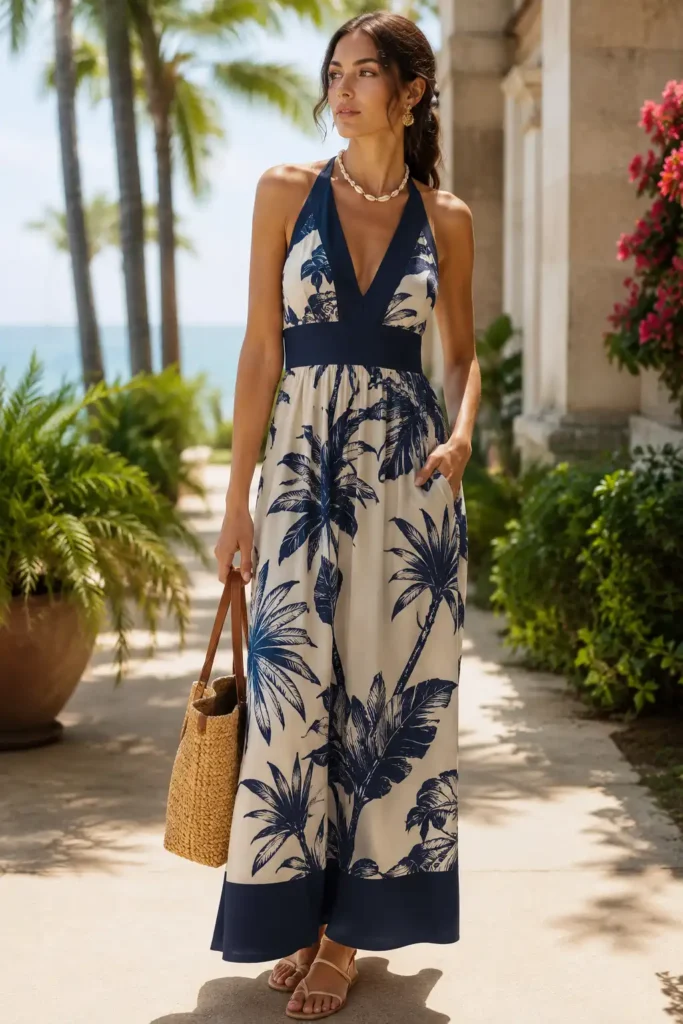
30-Style Multi-Channel Resort Program - 76,200 Pieces
A larger multi-channel resort program covered 30 styles and 76,200 pieces across several color groups. Dresses, sets, tops, skirts and jumpsuits had different construction requirements, while the commercial calendar required coordinated warehouse readiness. The key risk was capacity allocation: pushing every garment onto the same production path would have created unnecessary bottlenecks and inconsistent QC focus.
Jinfeng divided the program according to fabric, construction complexity, order volume and approval status. Fit-sensitive jumpsuits and long dresses received dedicated pattern and measurement attention. Simpler companion styles moved through lines suited to their construction. Shared materials were tracked as groups so the team could see which SKUs were ready for cutting and which remained dependent on color, trim or PP confirmation.
Quality control followed material, cutting, inline sewing, measurement, finishing and packing checkpoints. Final packing used approved style-color-size information to reduce SKU mixing across the large assortment. The production approach was built around controlled release and visibility rather than treating 76,200 pieces as one undifferentiated volume order.
Prepare a Clear Resortwear Production Brief
Design Files
Fabric Direction
Assortment Plan
Branding Files
Target Market
Delivery Milestones
Resortwear Production Frequently Asked Questions
Jinfeng supports women’s resort dresses, coordinated sets, tops, skirts, jumpsuits and related lightweight fashion pieces, subject to construction and material review. Multi-style collections can be developed under shared fabric, print, color and branding standards rather than managed as isolated garments.
The standard garment MOQ starts from 200 pcs per style/color. Fabric, custom print, dyeing, special trims, certified materials and private-label components may have separate minimums, so final MOQ is reviewed against the complete material and branding plan.
Yes. Tech packs can be reviewed together with reference images, fabric direction, measurement requirements and construction details. Open technical points are clarified before sampling so the development team does not mechanically reproduce instructions that conflict with fabric behavior or garment construction.
Reference samples can support pattern, construction, fabric and finishing analysis. The team still confirms target measurements, material direction, branding and any design changes because a physical sample alone may not contain the commercial specifications needed for repeatable bulk production.
Jinfeng can support fabric sourcing across common resortwear directions such as viscose/rayon wovens, linen blends, cotton, chiffon, satin-look fabrics and printed wovens. Availability, color, MOQ, documentation and performance are reviewed according to the project.
Custom print programs can be reviewed according to artwork, repeat scale, base fabric, color direction and quantity. Printing minimums may be different from the garment MOQ, so artwork and projected volume should be discussed before bulk fabric is committed.
Development focuses on drape, opacity, shrinkage, seam behavior, print quality, pressing and dimensional stability. QC then carries style-specific checks into fabric inspection, cutting, inline sewing, measurement, finishing and packing.
Before bulk release, the final pattern, measurement chart, fabric, color, trims, construction, labels, hangtags, packing method and QC references are confirmed. A PP or golden sample can serve as the physical benchmark for production and inspection.
Yes. Jinfeng’s production structure includes 6 owned women’s fashion factories, 10+ long-term production partners, 18+ sewing lines and 6+ flexible lines. Styles are allocated according to fabric, construction, quantity, approval status and QC needs.
Send available tech packs or reference images, fabric direction, colors, size range, quantity per style/color, private-label requirements, target market and required delivery window. More complete information allows a more accurate material, MOQ and production assessment.

Start Your Resortwear Production Review
A resortwear collection is easier to control when the production partner can see the whole program before individual styles move too far.
Send your current line plan, tech packs, reference images, fabric direction and expected quantities. Jinfeng will review the collection from product-development and manufacturing perspectives, identify material or construction points that need clarification, and assess how sampling, production allocation, QC and packing can be organized around the commercial program. For multi-style orders, include priority styles and any fixed launch or warehouse milestones so the review can focus on the areas most likely to affect execution.
- Tech packs, sketches or reference samples
- Style list and priority SKUs
- Fabric, print and color direction
- Size range and quantity per style/color
- Private-label and packing requirements
- Target market and inspection needs
- Launch, warehouse or delivery milestones
- Any existing fit, quality or supplier issues to solve


