 Skip to content
Resortwear Product Development
From seasonal direction to production-ready resortwear for established fashion brands, retail programs and multi-style womenswear collections.
Jinfeng Apparel develops resortwear around the commercial realities of lightweight fabrics, fit, print direction, long lengths, packing and repeatable bulk execution.
- 2 dedicated sample rooms support parallel product development.
- 7+ senior pattern makers handle fit, proportion and structural correction.
- 20+ sample machinists support first, revised, photo-ready and PP samples.
- 6 owned womenswear factories plus 10+ long-term production partners support collection-scale production.
- 100,000+ pieces regular monthly capacity across coordinated production units.
- MOQ starts from 200 pcs per style/color, subject to fabric, trims and project structure.
Development Capacity Built for Multi-Style Resortwear Collections
Since 2008
Jinfeng Apparel has focused on custom women’s fashion development and production since 2008. The experience is most relevant where style execution depends on more than a reference image: fabric drape, transparency, lining coverage, waist placement, strap length, print direction and long-hem balance all need to be translated into measurable garment standards. Resortwear programs can move from early design references into structured sample development, PP approval, bulk production and repeat-order records without treating every season as a completely new start.
2 Sample Rooms
Two sample rooms support development work before production lines are committed. Resortwear programs often contain several silhouettes at once, so maxi dresses, matching sets, jumpsuits, skirts and tops may need different pattern priorities and sample rounds. Dedicated sample capacity allows first samples, revisions, photo-ready samples and PP samples to be organized by launch priority rather than pushed through one bottleneck. Development status, material status and revision records can be tracked style by style before bulk allocation begins.
7+ Pattern Makers
20+ Sample Machinists
More than 20 sample machinists support sewing development across woven and fashion womenswear structures. A resort style may combine bias-cut panels, gathered sections, elasticated details, concealed zippers, adjustable straps, lining, soft ties, ruffles or printed fabric requiring controlled panel direction. Sample machinists work with pattern and merchandising teams to test whether construction can deliver the intended appearance repeatedly, not only whether one presentation sample can be made successfully.
6 Owned Factories
15+ QC Inspectors
What Resortwear Product Development Needs to Cover
Collection Direction
- Too many silhouettes competing for the same fabric.
- Too many colors creating unnecessary MOQ fragmentation.
- Repetitive shapes without a clear hero style.
- Products that photograph well but do not form a balanced collection.
Fabric Direction
Fabric decisions are made alongside silhouette decisions because drape, transparency, stretch, surface texture and shrinkage change the garment itself.
Chiffon, rayon, viscose, linen blends and printed woven fabrics can all work in resortwear, but they behave differently during pattern development, cutting, sewing and packing. Jinfeng evaluates fabric direction around:
- Intended movement and body coverage.
- Lining requirement and opacity.
- Print and color behavior.
- Shrinkage and dimensional stability.
- MOQ, sourcing lead time and cost effect.
A fabric is only useful when it supports both the visual direction and the planned production structure.
Pattern Development
- Base pattern and fit direction.
- Measurement points and tolerances.
- Lining and internal structure.
- Grade considerations for the planned size range.
- Construction details that must be validated in sample form.
Sample Development
- Simple first samples: often around 7-10 days.
- Regular dresses: often around 10-15 days.
- Medium-complex dresses, sets or jumpsuits: often around 12-18 days.
- Complex structures or special materials: commonly 15-25 days or by project.
Production Readiness
Repeatability
Resortwear Styles We Develop Across Seasonal Collections

Resort Maxi Dresses

Resort Midi Dresses

Printed Dresses

Matching Sets

Resort Jumpsuits

Resort Skirts

Resort Tops

Easy Layering Pieces
Lightweight layering pieces such as overshirts, kimono-inspired cover layers, loose tunics and semi-sheer woven styles can extend a resort range without introducing heavy construction. Their quality is often judged through fabric hand feel, edge finishing, print consistency and how cleanly the garment hangs. Directional prints add another cutting-control point before bulk. Jinfeng reviews seam finishing, sleeve balance, front opening, hem line and packing behavior while keeping the silhouette intentionally relaxed. For sheer or delicate fabrics, seam type and edge treatment are selected during development so the final garment feels light without appearing unfinished or unstable.
Build a Resortwear Collection Around Commercial Product Roles
A strong resortwear range needs product hierarchy, not a random stack of styles. Jinfeng can help organize development around hero pieces, supporting silhouettes, fabric stories and repeatable constructions so sampling resources and production capacity are used where they create the most value.
Balance Hero Styles With Repeatable Commercial Silhouettes
A collection usually needs a small number of high-impact pieces and a larger group of styles that can carry color, print or fabric variation. Developing every SKU as a completely unique construction increases sampling pressure, fabric fragmentation and production risk. Jinfeng reviews the assortment with a focus on how patterns, fabrics and details can work together across the range.
- Hero products may use stronger silhouettes, deeper neckline engineering, complex gathers, distinctive print placement or long flowing shapes. They deserve early sampling because fit and production risk can affect photography and launch timing.
- Commercial support styles can share proven pattern logic, similar fabric behavior or repeated trim standards. A maxi dress, midi dress and matching skirt may use related print stories without requiring identical construction.
- Reusable fit blocks are valuable when a brand wants consistent bust, waist, strap or neckline proportions across several related silhouettes. Pattern records allow later styles to start from a known base while still being re-evaluated for fabric and design differences.
- Color and print allocation should follow product role. Placing every style in every color can create unnecessary MOQ and SKU complexity. A more controlled color story can protect margin while keeping the range visually complete.
The development target is not maximum SKU count. It is a collection where each style has a clear reason to exist, a defined approval path and a realistic route into production.
Plan Fabric Tiers Before Sampling Expands
Resortwear often combines several material positions inside one collection: fluid printed woven fabrics for high-visual dresses, commercial solids for repeatable volume, textured linen blends for daytime styles and lighter semi-sheer fabrics for layering pieces.
If fabric decisions happen after patterns are already built, development can move backward because drape, stretch, thickness and shrinkage may force pattern or lining changes.
Jinfeng prefers to connect fabric direction with style role early.
A hero maxi may justify a more distinctive surface or print, while a repeat set may benefit from a fabric with stronger replenishment potential.
Fabric evaluation can compare hand feel, weight, width, drape, transparency, shrinkage, color options, MOQ and expected lead time.
The same visual concept can sometimes be achieved through more than one material route, but the tradeoff should be clear before the sample is approved.
Collection-level planning also helps limit uncontrolled fabric proliferation.
When several styles can share one fabric base, sourcing and color management become easier.
When a special print or fabric is essential, the range can be structured so enough volume sits behind it to support commercial ordering.
Cost control comes from design and material choices working together, not from forcing a finished design into the cheapest available fabric.
Connect Launch Priority to Sample and Production Priority
Resortwear calendars are often tied to campaign shoots, showroom dates, seasonal drops, holiday travel periods or retail delivery windows. Development should therefore have a priority order. Treating every style as equally urgent can slow the entire range when complex pieces occupy the same sample resources as simple support styles.
Jinfeng can organize development by style priority, sample purpose and production dependency. Photo-critical hero styles may move first into fabric confirmation and sample review. Styles using the same material can be grouped so color and print decisions are made together. Revised samples should be prioritized according to launch risk rather than sample number alone. PP approval then becomes the gateway to factory allocation, material purchase and production planning.
For a multi-style order, project tracking can include style number, product type, fabric status, trim status, sample version, PP status, color, size range, quantity and packing requirement. The schedule is built after material availability and sample approval are understood rather than promising one fixed bulk lead time before the collection is technically ready. Mature development planning protects both the launch calendar and the production standard. Sample and material priorities are connected to the commercial launch sequence rather than handled as independent factory tasks. A clear priority list also helps the brand decide where revised samples or special materials deserve extra development time.
Fabric Direction for Lightweight Resortwear Product Development
Fabric determines movement, opacity, wrinkle behavior, print quality, packing and fit. Resortwear material selection should be reviewed as an engineering decision as well as a visual one, especially when long silhouettes and travel-ready presentation are part of the range.
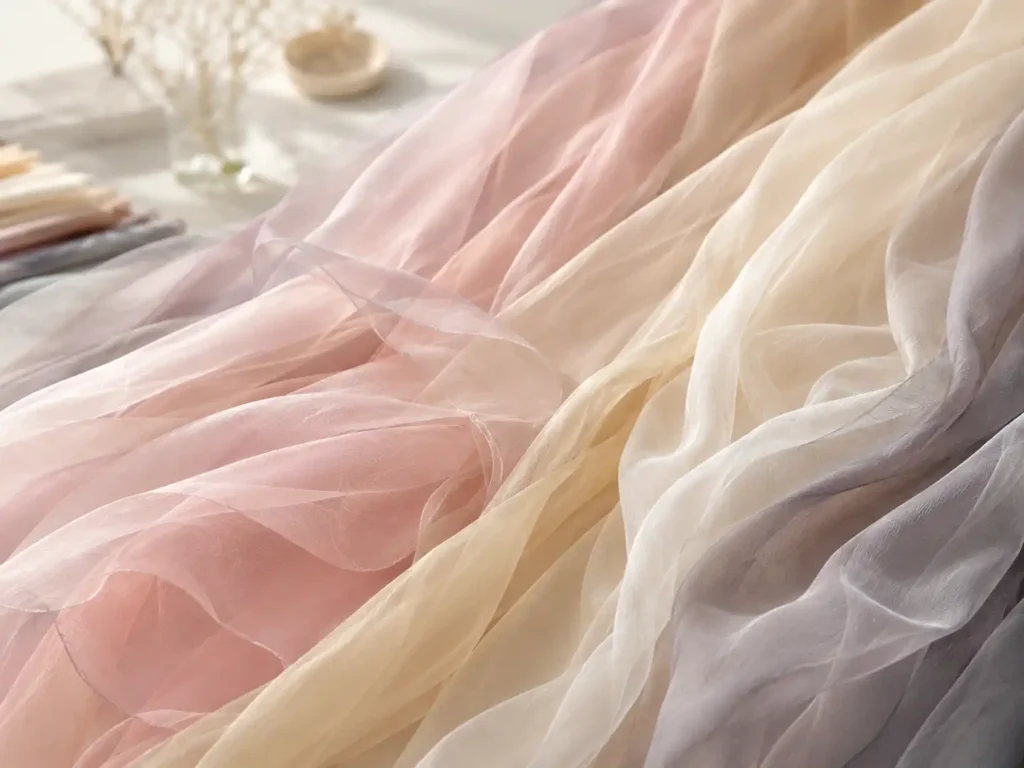
Chiffon for Fluid Maxi and Layered Resort Styles
Chiffon is useful when the collection needs movement, softness and a visually light silhouette, but it introduces several development controls that cannot be left until final inspection. Transparency is the first issue. Shell color, lining color and lining length must work together so the garment remains light without exposing internal construction. A lining that is too heavy can destroy drape; one that is too short or too contrasting can become obvious under bright light or photography.
Cutting stability is another concern. Chiffon can shift during spreading and cutting, which affects panel accuracy, seam balance and long hems. Jinfeng reviews grain direction, panel shape and whether the design includes gathers, pleats, bias sections or multiple layers. Long maxi styles may need hanging and re-checking before the final hem is locked because lightweight fabrics can settle unevenly.
Sewing and pressing also require controlled handling. Stitch tension, seam finish and zipper installation must avoid puckering. Excessive pressing can flatten texture or create shine, while poor pressing leaves a garment looking unfinished. For printed chiffon, panel direction and motif orientation are checked during cutting. Packing is planned to reduce deep folding marks, especially for long dresses intended for ecommerce photography or retail presentation after unpacking.

Rayon and Viscose for Soft Drape and Commercial Volume
Rayon and viscose are widely used in resortwear because they can deliver fluid movement, soft hand feel and strong print performance at commercial scale. Their main development risks are dimensional change, fabric movement and garment distortion after washing or hanging. A style that looks balanced in an untreated sample can change after shrinkage if material behavior is not reviewed early.
Jinfeng evaluates weight, width, hand feel, drape, shrinkage and color or print route before locking the pattern. The relationship between fabric and silhouette is important: gathered dresses, wrap styles and wide-leg jumpsuits need enough fluidity, while fitted waist sections may require stability or internal support. If the fabric is especially soft, zipper areas, waist seams and necklines may need reinforcement so the garment does not collapse or stretch during wear.
For printed rayon or viscose, artwork scale and fabric movement affect cutting efficiency and visual consistency. Directional prints need clear panel orientation. Large motifs may require additional planning to avoid awkward placement at bust, waist or seam joins. Bulk approval should compare fabric lot, shade and print result against the development reference. Resortwear made from rayon can perform very well commercially, but the production standard needs to account for shrinkage and drape rather than treating the material like a stable plain weave.
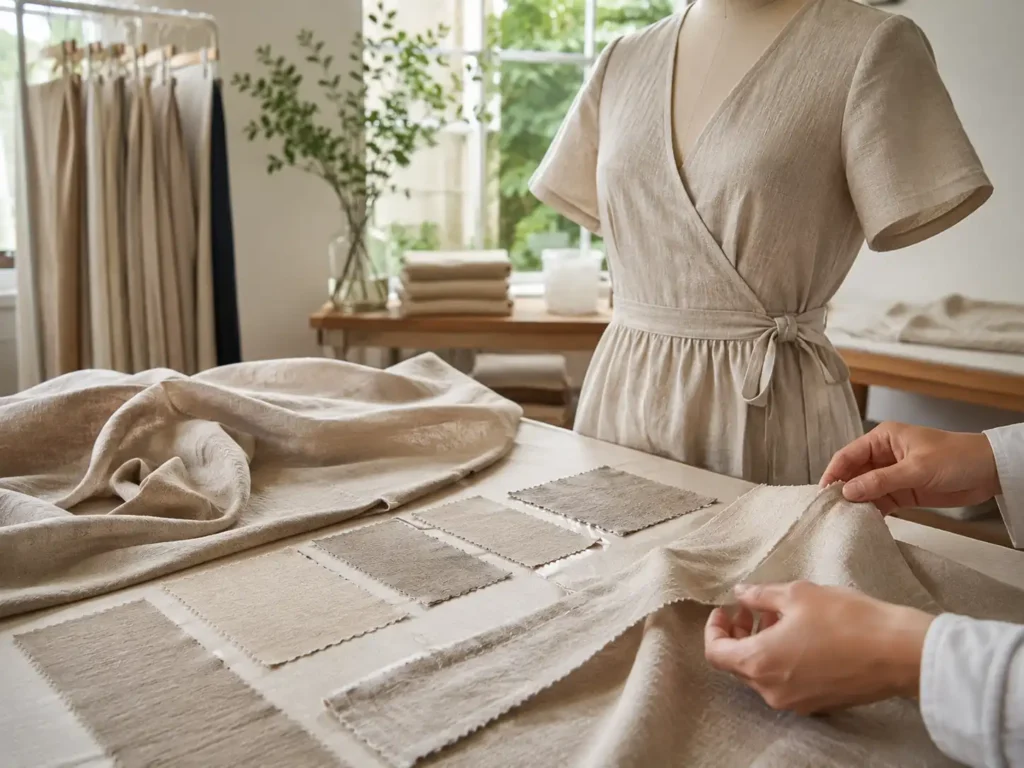
Linen Blends for Structured Natural Resortwear
Linen and linen blends give resortwear a dry hand feel, natural texture and relaxed visual identity, but “natural” does not mean uncontrolled. Pure linen and blend ratios can vary significantly in wrinkle behavior, shrinkage, opacity, weight and recovery. Development should decide whether the brand wants crisp structure, soft washed movement or a middle position that can travel and pack more easily.
Jinfeng reviews the fabric together with seam construction, lining requirement and intended silhouette. A structured mini or midi dress may need a different linen blend from a flowing maxi. Matching sets require special attention to shade consistency because tops and bottoms are often viewed side by side. The pattern should also reflect limited stretch; a waist, hip or armhole that is comfortable in rayon may feel restrictive in a firmer linen blend.
Pre-production review can include shrinkage direction, hand feel, garment washing requirements if applicable, seam puckering risk and pressing response. Natural-texture fabrics should still have controlled finishing. Uneven hems, twisting side seams or distorted closures are not part of a relaxed aesthetic. Packing method also matters because linen will crease, but unnecessary hard fold lines can be reduced through folding strategy, polybag size and carton pressure control.
The approved point is recorded so later sample and bulk teams can check the same requirement consistently.

Printed Wovens for Strong Seasonal Visual Stories
Printed woven fabrics often carry the visual identity of a resort collection. Development therefore has to connect artwork, fabric behavior, pattern pieces and cutting layout before the garment enters bulk production. Print direction should be defined clearly. A one-way botanical, border print or engineered placement requires different cutting logic from a non-directional scattered motif.
Jinfeng reviews print scale against garment size and key body zones. A motif that looks balanced on a flat artwork file can fall awkwardly across bust darts, center-front seams, waist joins or ruffles. Placement rules may need to be documented for hero styles, while commercial all-over prints may use direction controls that reduce waste without making garments look inconsistent.
Color approval is linked to fabric base because the same artwork can appear different on chiffon, rayon, viscose or linen blend. Lining color must also be considered under lighter grounds. During bulk cutting, panel direction, print orientation and size bundling become QC points. Sewing must preserve the intended visual flow where major seams meet. Packing then protects the surface from transfer, abrasion or severe creasing. Strong resort prints create value only when the development standard survives from artwork to finished garment. Approved print references can also support replenishment or related silhouettes using the same artwork family, provided the fabric base and production batch are rechecked before reuse.
Print and Color Development for Cohesive Resortwear Collections

All-Over Prints
- Best suited to multi-style print stories.
- Check repeat scale against garment length.
- Confirm lining color under pale grounds.
- Control panel direction during cutting.

Directional Prints
- Define top/bottom orientation before sampling.
- Review additional fabric consumption.
- Lock panel direction in cutting instructions.
- Check finished garment from front, side and back.

Placement Prints
- Tie artwork position to pattern landmarks.
- Recheck after fit or length changes.
- Confirm acceptable placement tolerance.
- Approve a production reference before bulk.

Solid Color Stories
- Coordinate shell, lining and trims.
- Review color by fabric base.
- Check lot-to-lot shade consistency.
- Keep approved references for repeats.

Lining Color Control
- Match opacity to intended wear.
- Avoid heavy lining that kills drape.
- Check under stronger light conditions.
- Record shell/lining color pairing.

Color Expansion for Reorders
- Reuse approved pattern records where suitable.
- Recheck fabric batch and shade.
- Confirm lining and trim colors again.
- Update packing and SKU files for new variants.
Turn Design References Into a Controlled Development Brief
Resortwear concepts may arrive as tech packs, sketches, reference images, original samples or line sheets. Jinfeng turns available inputs into a development brief covering structure, material, fit, color, size, trims, sample purpose and production risk before the sample room starts work.

Review the Input Before Pattern Work Starts
A strong development process begins by identifying what information is confirmed and what is still open.
A detailed tech pack may define measurements, construction and materials clearly, while a reference image may communicate only appearance.
Jinfeng reviews the source material before pattern work so missing decisions do not become accidental factory decisions.
The review can include intended product category, target market, size range, fabric preference, color plan, print direction, lining, closure, trims, target quantity, private-label requirement and launch timing. For reference-image development, the team separates visible design features from assumptions. A neckline may look simple in a photo but still require a decision on depth, support, facing or lining. A flowing maxi silhouette may need clear waist position, sweep and length measurements before the pattern can be built.
Input quality directly affects sample accuracy. Jinfeng can start from incomplete information, but open points are identified for confirmation instead of being hidden. The goal is to create a workable development brief that tells pattern, sample, fabric and merchandising teams what the garment is meant to achieve and which points must be validated before moving forward.
A short pre-sample checklist reduces preventable interpretation around lining, closure, size range, label position and garment length, especially when the starting reference is visual rather than technical.

Convert Visual Design Into Technical Decisions
Resortwear often relies on appearance rather than heavy internal engineering, yet small technical choices control whether the finished product looks intentional.
Jinfeng converts design direction into measurable decisions around panel shape, seam location, neckline, strap, waist, slit, hem, lining and closure. Fabric choice is considered at the same time because a soft rayon can support shapes that a firmer linen blend cannot reproduce in the same way.
For printed styles, artwork direction and pattern pieces are reviewed together. For semi-sheer garments, lining coverage is defined.
For tie or elastic details, the team considers length, width, tension and attachment method. For long dresses, front-back balance and hem sweep are reviewed against fabric drape.
For jumpsuits, the brief must also address torso and crotch balance.
The development brief becomes more specific after each sample round. Client feedback is translated into updated measurements, pattern changes, material decisions and sewing instructions. Instead of relying on long message threads, the approved information becomes part of the working files used for the next sample and eventually for bulk production.
Material and construction notes are kept specific enough for costing, sample machining and later factory handover to work from the same product definition instead of separate assumptions.

Define Commercial Boundaries Before Samples Multiply
A collection can become expensive quickly when style count, color count, special fabrics and custom trims expand without a clear production plan. Jinfeng reviews commercial boundaries during development so creative decisions are connected to order structure. MOQ starts from 200 pcs per style/color, but special prints, custom fabrics, trims and packaging can have separate supplier requirements.
The development team can therefore compare options before the brand commits to a complex route. A custom print may be retained for hero products while commercial solids support volume. A construction detail may be simplified if it does not add enough visual value. Several colors may be consolidated when fabric minimums create disproportionate cost. Size ratios and packing structures can also be planned before final quotation.
Cost control is not treated as removing quality after the garment is designed. It comes from making better development decisions while the product is still flexible. Fabric substitution, construction adjustment, trim replacement and collection-level quantity planning can protect brand appearance while making the assortment more realistic to produce and repeat. When several styles share a fabric or trim family, collection-level quantity planning can improve purchasing efficiency without forcing unrelated products into the same construction or visual standard. Development choices are reviewed before quotation is locked, while the product still has room to change intelligently.
Pattern and Fit Engineering for Resortwear Silhouettes
Relaxed resortwear still needs disciplined proportion. Jinfeng develops patterns around body balance, garment movement, fabric behavior and the intended size system so fluid silhouettes remain controlled across photography, fitting, bulk production and repeat orders.

Control Proportion Before Chasing a Loose Fit
A relaxed silhouette can fail when the waistline drops too low, armholes open too far, straps sit incorrectly or a maxi length overwhelms the body. Jinfeng reviews proportion rather than equating resortwear with added ease. Key checkpoints can include bust, waist, hip, shoulder, strap, neckline depth, armhole, slit height, dress length and sweep. For jumpsuits, torso length and crotch measurements are added because soft fabrics can make imbalance more visible.
Fabric behavior is linked to the pattern. A viscose dress may drop and move more than a linen-blend version, so the same nominal measurements can create different visual proportions. Lining can also affect the fit if it is tighter, shorter or less flexible than the shell. During sample fitting, the garment is reviewed from front, side and back to see how seams, gathers and lengths fall on the body.
The approved direction becomes a pattern and measurement standard rather than a subjective note such as “make it more relaxed.” Pattern correction records specify where ease changes, how much a neckline moves or how a waist shifts. Clear corrections reduce the risk of fixing one area while unintentionally changing another.
Fit review also considers movement and photography: a garment may measure within range yet still pull, collapse or expose too much when the wearer walks, sits or turns.

Build Size Rules Around the Intended Market
Jinfeng can work with US, UK, EU and AU size systems, alpha sizing such as XS-XL, extended ranges and client-defined grade rules. The base size is only the starting point. Resortwear details often need proportional grading rather than simple width increases. Strap length, neckline depth, armhole coverage, slit height and garment length may need controlled rules so the style keeps the same visual intent across sizes.
Size planning begins by confirming the target range, base size and key points of measure. For fitted or semi-fitted dresses, bust-waist-hip balance carries more weight. For loose maxi dresses, length and upper-body proportion may be more sensitive. Matching sets also need top and bottom sizing logic that works commercially, especially if the pieces are sold separately.
Fit approval should be connected to the final size chart and grade rule before bulk cutting. Jinfeng uses measurement records and PP sample review to establish the production reference. Extended size ranges or petite/tall adjustments are evaluated according to the brand’s own standards rather than assuming every market uses one universal proportion system.
Brands can provide their own size chart and tolerance policy, allowing grading and sample review to follow established commercial standards rather than generic factory assumptions.

Correct the Pattern Before Bulk Standards Are Locked
Sample comments must lead to an updated pattern when the fit issue is structural. Jinfeng reviews fitting notes, garment measurements, images and client comments to determine whether the change affects pattern shape, grade rule, sewing method or material. Common resortwear corrections include waist placement, strap length, neckline depth, armhole coverage, slit height, skirt balance, lining length and overall garment length.
Once a correction is approved, the related files are updated. Changes can flow into the final pattern, size chart, measurement record, BOM, sewing instruction and QC checklist. A revised sample may be required when the change is large enough to affect the garment visually or technically. PP sampling then checks whether the intended fabric, trims, measurements and construction are ready to become the bulk standard.
Jinfeng does not treat a close-enough sample as permission to start production. The purpose of correction is to remove known fit risk before thousands of garments are cut. Approved fit information also becomes valuable for later colorways, repeats and related silhouettes built from the same development foundation. Fit records support later related silhouettes because the team can distinguish proven body proportions from details that must be re-engineered for a different fabric, neckline or skirt shape. The record also gives QC a clearer reference when the style returns in another production batch.
Resortwear Design Details That Need Early Production Control
Small design details can create large bulk problems when lightweight fabrics, long silhouettes and travel-ready presentation are involved. Jinfeng validates high-risk details during sampling so appearance and construction are aligned before production quantities increase.
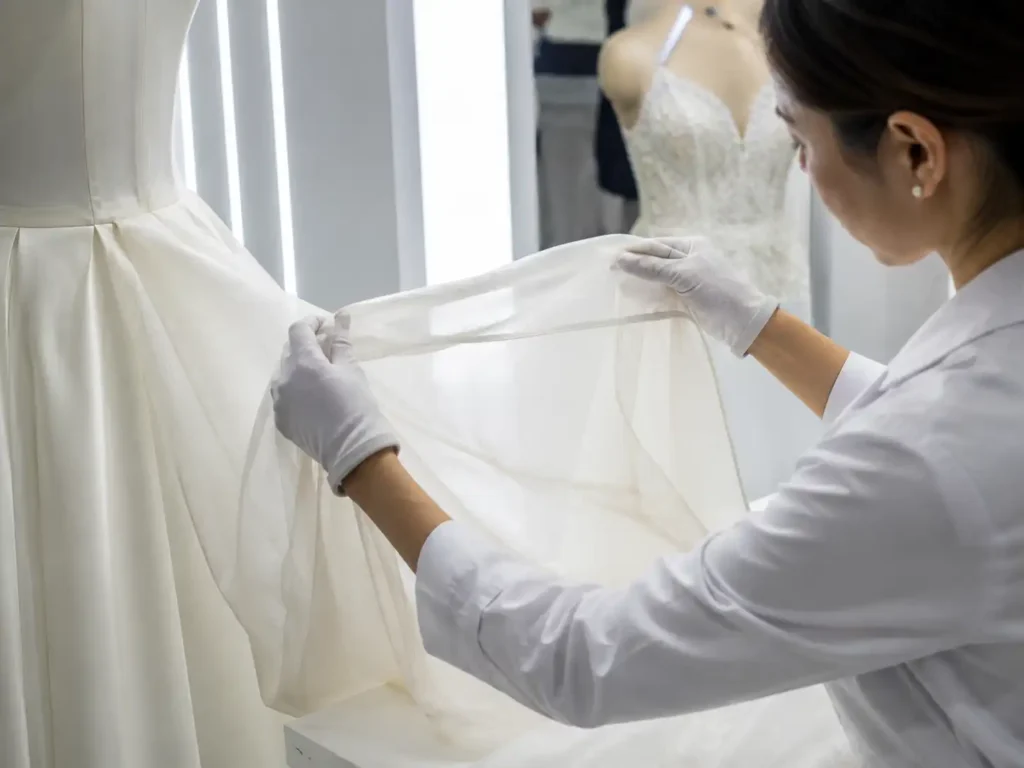
Transparency, Lining and Coverage Must Work Together
Transparency is one of the most common resortwear development issues because lightweight fabric is often desirable but unintended exposure is not. Jinfeng reviews shell fabric, color, print density, lining color, lining length and seam placement as one system. White, pale, chiffon and loosely woven fabrics can behave very differently under strong daylight or photography compared with indoor fitting conditions.
The sample is used to determine where lining is necessary and where reducing layers helps preserve movement. Full lining may be appropriate for a dress with a fitted upper body, while a partially lined skirt can keep the garment lighter. Necklines and armholes need clean internal finishing because exposed seam allowances or facing edges become visible through thin fabrics. Labels and care labels are also positioned so they do not show through the shell in an undesirable area.
Coverage is checked together with fit. A lining that is too tight can pull the shell; one that is too short may rise during movement. Slits need enough overlap to remain wearable. The approved lining specification, attachment method and length become part of the production standard rather than being left to line-level interpretation.
For pale or semi-sheer garments, coverage can also be reviewed under stronger lighting so internal seams, labels and lining edges are evaluated before bulk rather than discovered during campaign photography.

Straps, Necklines, Slits and Ties Need Measurable Standards
Resortwear often uses minimal construction details that carry most of the fit responsibility.
Thin straps, deep necklines, side slits, halter ties, back ties and elastic channels look simple but can produce major fit variation if their dimensions are not controlled. Jinfeng converts visible design intent into measurements and construction instructions during sampling.
Strap length is checked for garment position and bra coverage where relevant. Neckline depth is measured from fixed pattern points rather than judged only by eye. Slit height is reviewed for movement, coverage and grade behavior. Ties need defined finished length and width, plus consistent attachment strength. Elastic sections require controlled length and tension so one production batch does not fit tighter than another.
The sample stage also tests whether lightweight fabric can support the detail. A very soft shell may need reinforcement at strap joins or zipper areas. A gathered neckline may require stabilizing to stop stretching. When the detail changes during revision, measurements and sewing instructions are updated together. Resortwear feels effortless only when the hidden controls behind those details are precise.
Bulk QC can then measure critical lengths and positions instead of relying only on visual judgment at final inspection, which is especially important when small dimension changes alter coverage.
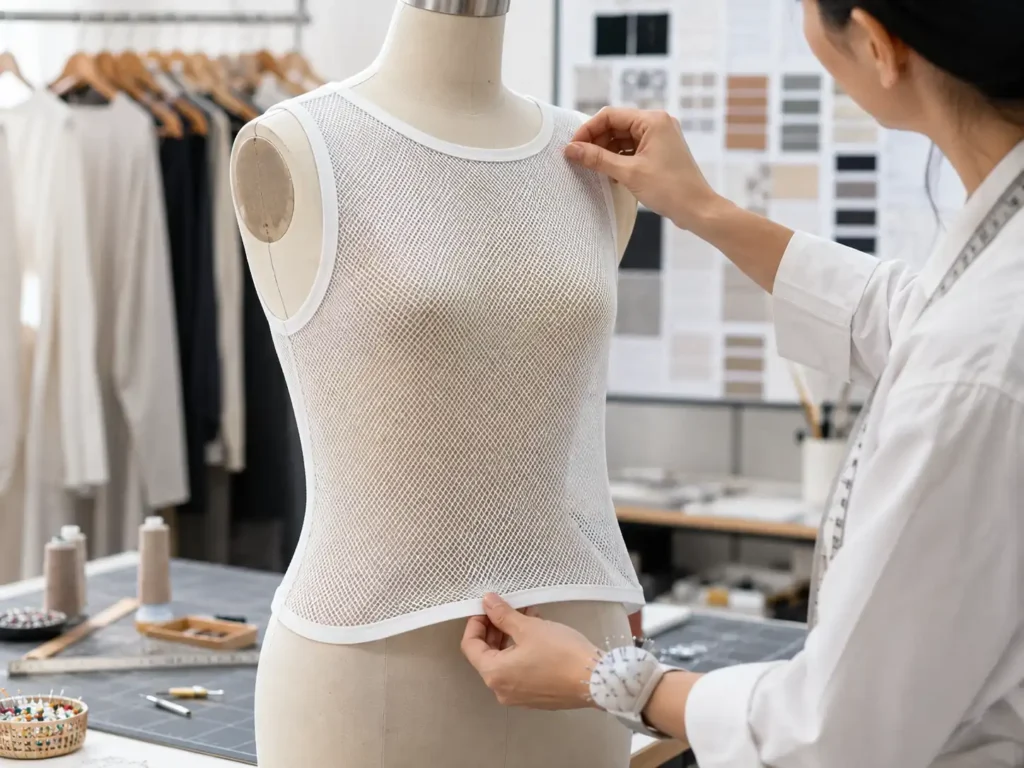
Long Hems, Ruffles and Gathered Sections Need Balance
Long resort dresses, tiered skirts, ruffles and gathered panels create movement, but they also increase the risk of uneven lengths and distorted seams. Fabric can shift during cutting, stretch during sewing or settle after hanging. Jinfeng plans panel direction, seam sequence, gathering distribution and hem finishing during development so the garment hangs evenly before final pressing and packing.
For maxi styles, front, side and back length are reviewed rather than relying on one center measurement. Bias or highly fluid sections may need time to settle before hemming. Ruffles should have controlled fullness so left and right sides remain visually balanced. Tiered constructions need seam lines that stay level around the body. Printed fabrics add another layer of control because gathering can change the visual density of motifs.
Hem finishing is chosen according to fabric weight and desired appearance. A heavy or wide hem can change drape; an overly narrow finish may wave or twist. Final inspection checks hem balance together with lining length and pressing. Packing method is then selected to reduce hard fold lines across long or delicate skirt sections. Approved hem and ruffle references can be photographed or retained physically so sewing and finishing teams have a visual benchmark during production and final inspection. For long dresses, measurement records can also include front, side and back length points rather than one center length alone.
Resortwear Sampling From First Prototype to Golden Sample
Sampling creates the production standard in stages. Each sample type has a different job, so approvals should be tied to specific questions about structure, fit, materials, appearance, production readiness and bulk repeatability rather than one general “sample approved” message.

First Sample
The first sample establishes whether the design can work as a garment. For regular dresses, first-sample timing is commonly around 10-15 days; simpler styles may be around 7-10 days, while more involved dresses, sets or jumpsuits often need around 12-18 days. Timing depends on material availability, pattern complexity and trim development. The first sample checks silhouette, fabric direction, neckline, waist, length, lining and construction feasibility. It is not treated as the final production standard.
- Validate design structure.
- Review initial fit and proportion.
- Confirm fabric direction.
- Identify construction risk early.
Sample timing is confirmed after the material route is reviewed.

Fit Sample
A fit sample focuses on how the garment sits and moves on the intended body or fit standard. Resortwear may be relaxed, but neckline position, armhole coverage, waist balance, strap length, slit height and garment length still need measurable review. Fit comments should separate subjective styling changes from structural corrections. Jinfeng records measurement and pattern impact so changes are not lost in messages. A fit sample becomes especially useful when several related styles are planned around one base silhouette or shared fit block.
- Check bust-waist-hip balance where relevant.
- Review lengths and opening positions.
- Confirm shell and lining relationship.
- Record pattern changes clearly.

Revised Sample
A revised sample confirms whether agreed changes solved the original issues without creating new ones. Revised samples commonly require around 7-15 days, depending on the scale of pattern, fabric, trim or construction changes. Jinfeng updates the relevant pattern, measurement, material and sewing information before the new version is made. A major fabric change may require more than a cosmetic revision because drape, shrinkage, transparency or stretch can affect the pattern itself.
- Recheck corrected areas.
- Compare against prior comments.
- Confirm cost or lead-time impact.
- Move only approved changes forward.
Larger material or pattern changes can require a longer revision window.

Photo-Ready Sample
Photo-ready samples are developed for lookbooks, ecommerce photography, campaigns, showrooms or internal line reviews. Their visual standard may be higher than an early fit sample, but the material and construction status must be understood clearly. Jinfeng identifies whether the photo sample uses final bulk fabric and trims or temporary development substitutes. The distinction prevents a strong campaign sample from being mistaken for the confirmed production standard when materials still need approval.
- Prioritize visual presentation.
- State final versus substitute materials.
- Confirm fit before campaign use.
- Keep production approval separate.
Campaign approval remains separate from bulk approval.

PP Sample
The PP sample is the key production approval stage. It should use the intended fabric, trims, measurements, construction, labels and packing direction as closely as possible. PP sample timing is often around 7-15 days once final materials are available. Jinfeng uses PP approval to connect development with bulk production. Any late change after PP approval can affect material purchasing, cost, production timing and consistency, so the locked points should be documented before the production order is released.
- Confirm final materials.
- Confirm measurements and construction.
- Confirm label and packing direction.
- Release bulk only after approval.

Golden Sample
A Golden Sample provides a physical reference for bulk production, QC, repeat orders and later comparison. It is most valuable when the approved garment captures the intended fit, fabric, trims, workmanship and overall appearance. Jinfeng can retain the reference together with pattern, measurement, material and packing records. A Golden Sample does not eliminate the need to review new fabric lots or colorways, but it gives production and inspection teams a clear benchmark when evaluating whether later garments still match the approved development standard.
- Physical bulk reference.
- QC comparison standard.
- Useful for repeat orders.
- Supports dispute and revision review.
Turn Sample Comments Into a Bulk-Ready Production Standard
A sample revision only creates value when the approved change is transferred into production files. Jinfeng records fit, material, construction and packing updates so the next sample and the bulk team work from the same decision set.
Classify the Problem Before Choosing the Revision
Not every sample issue requires the same response. Jinfeng first identifies whether the concern comes from fit, fabric, workmanship, color, trims, design interpretation, measurements, packing or a newly added requirement. The cause determines whether the team should change the pattern, source another fabric, adjust sewing, replace a trim or simply correct execution.
Fit concerns can involve bust-waist-hip proportion, strap length, neckline, armhole, slit or total length. Fabric concerns may require comparison of weight, hand feel, drape, transparency, stretch, shrinkage, cost, MOQ and lead time. Workmanship concerns can involve zipper installation, lining attachment, seam finish, ruffles, gathering, hems or reinforcement. If the design itself changes after the sample is complete, the revision is treated as new development work rather than being mixed with factory correction.
Clear classification prevents endless sample rounds where every comment is addressed with a vague “we will improve it.” Each issue should lead to a defined action, an owner and an approval point before the next version is started.
The revision record can also state whether the change affects cost, lead time, fit approval or another sample, giving both sides a clear reason for the next action.
The same control point is carried into the next approval stage so a visible sample decision becomes a measurable production requirement rather than an informal reference.
Update the Files That Control Bulk Execution
Important changes cannot remain only in chat history. Jinfeng transfers bulk-relevant approvals into updated working files. Depending on the issue, the revision can affect the pattern, size chart, measurement record, BOM, fabric approval, trim approval, sewing instruction, label file, packing instruction, QC checklist or PP sample comments.
A pattern change may alter grade rules or fabric consumption. A fabric change can alter lining choice, drape and shrinkage. A new trim can affect cost, attachment method and supplier MOQ. A packing update can change polybag size, folding method, barcode position or carton plan. Each change is reviewed for cost and lead-time effect before production release.
The value of written revision control becomes greater as style count grows. A resortwear order with 15 or 20 styles may have multiple versions active at the same time. Style-level records prevent comments from one garment being applied incorrectly to another and give merchandising, sample, production and QC teams one clearer reference path.
For larger collections, version dates and approval status help prevent an old pattern, packing file or measurement sheet from being used after a later correction has already been approved.
The same control point is carried into the next approval stage so a visible sample decision becomes a measurable production requirement rather than an informal reference.
Lock the PP Standard Before Factory Allocation
PP approval should be the point where development decisions become production instructions. Jinfeng reviews final pattern, measurements, fabric, trims, construction, labels, packing method and QC checkpoints before allocating the order to production. The factory team then receives the approved standard rather than a mix of old tech packs, sample photos and informal comments.
Late changes after PP approval are still possible, but they need controlled review because material may already be ordered and production planning may already be assigned. A new color can require updated shade and lining approval. A fabric replacement can require another fit or shrinkage check. A changed label or polybag can affect packing timing. Treating PP as a real lock point reduces avoidable rework and sample-to-bulk inconsistency.
The result is not bureaucratic paperwork. It is a clearer handover from product development into manufacturing. Approved development information becomes measurable in cutting, sewing, garment inspection and packing rather than depending on memory. Before release, merchandising and production teams verify that the latest sample comments, material approvals and packing files all refer to the same approved version. The style is not treated as bulk-ready until those linked records agree. A short release review can therefore prevent an outdated file from reaching cutting or packing teams.

Resortwear Workmanship for Lightweight Woven Garments at Scale
Resortwear workmanship is judged through clean drape, balanced hems, controlled seams and refined finishing. Jinfeng focuses on production points that become highly visible in chiffon, rayon, linen blends and printed woven garments once volume increases.
Cutting Direction Controls Drape, Print and Garment Balance
Cutting is the first bulk stage where an approved design can begin to drift. Lightweight woven fabrics may shift during spreading, directional prints can be rotated incorrectly and long pattern pieces can lose alignment if marker planning is careless. Jinfeng links cutting instructions to the approved pattern and fabric direction so garment panels are prepared consistently before sewing begins.
For printed fabrics, cutting checks include panel orientation, placement requirements and size bundling. For satin-like or directional-surface materials, face and direction control prevent mixed shine. Chiffon and soft rayon require careful handling to reduce slippage and panel distortion. Long maxi panels need enough cutting accuracy to protect the final hem line. If the style includes matched stripes, borders or engineered print positions, the requirement is defined before cutting rather than corrected later in sewing.
Fabric inspection also matters before marker work begins. Shade, defects, width, hand feel and shrinkage can affect whether the lot should be released. Cutting teams should not compensate for an unsuitable fabric lot through uncontrolled adjustments. Stable cutting is the foundation for size consistency and cleaner sewing across several thousand garments.
Cutting inspection can also compare panel quantity and bundling against the order breakdown so size or color mixing is identified before sewing begins.
Sewing Methods Must Protect Lightweight Structure
Soft resort fabrics can show stitch tension, seam puckering and zipper distortion more clearly than heavier garments. Jinfeng reviews seam type, seam allowance, stitch density, lining attachment and reinforcement according to the design and fabric. Areas under stress, such as straps, tie attachments, zipper ends and waist joins, may need support even when the garment is visually light.
Concealed zippers should lie flat without creating waves along the side or center back. Gathered seams should distribute fullness evenly rather than forming heavy clusters. Necklines and armholes need clean finishing that preserves shape without becoming bulky. Lining should move with the shell and should not pull the outer garment upward. Ruffles, tiers and wrap edges require consistent seam and edge handling so left-right balance remains controlled.
During production, in-line inspection focuses on the details most likely to spread across the batch if not corrected early. Fixing stitch tension or zipper handling after final inspection is expensive because hundreds of garments may already contain the same issue. Workmanship control is therefore built into sewing rather than treated as a final clean-up step.
Approved construction samples give operators and in-line inspectors a common reference for seam finish, gathering density, strap attachment and lining behavior.
Pressing and Packing Complete the Product, Not Just the Shipment
A well-developed resort garment can still arrive looking poor if pressing and packing are treated as an afterthought. Rayon, chiffon, linen blends and long dresses respond differently to heat, pressure and folding. Jinfeng reviews pressing method against the fabric so seams are set cleanly without shine, flattening or heat marks. Long hems are checked for balance after pressing because steam and handling can change how soft fabrics hang.
Packing is designed around presentation and protection. Maxi dresses may need folding sequences that reduce hard horizontal creases. Delicate printed surfaces should not be compressed against rough trims or hardware. Polybag size should allow the garment to sit neatly rather than being forced into an undersized bag. Labels, barcode stickers and size marks are verified before carton packing.
For retail-ready or ecommerce programs, final appearance matters at unpacking. Anti-wrinkle packing cannot eliminate the natural behavior of linen or rayon, but good folding, bag sizing and carton pressure can reduce avoidable presentation problems. Finishing is therefore connected to the product standard, not separated from it. Final finishing teams can compare pressing, fold position and garment presentation against the approved reference before cartons are closed, reducing avoidable rework at destination. When a style uses a delicate print or trim, packing protection is also checked against abrasion and pressure risk.

Multi-Style Resortwear Production Without Losing Development Control
Large resortwear orders can contain many silhouettes, fabrics, colors and packing requirements at once. Jinfeng uses style-level project tracking, factory allocation and approval records to keep development decisions connected to each SKU during bulk execution.
Group Styles by Product and Fabric Logic
A 10-30 style resortwear program should not be managed as one undifferentiated order. Jinfeng groups styles according to product structure, fabric behavior, construction difficulty and material dependencies before bulk allocation.
A chiffon maxi dress, linen-blend set and rayon jumpsuit may share a collection story but create different production risks.
Grouping allows similar materials to be monitored together and helps identify which styles depend on custom print, special trims or revised patterns.
Style priority can also reflect launch importance. Hero dresses or campaign pieces may need earlier PP approval, while lower-risk support styles can follow once shared fabric or packing standards are confirmed.
Factory allocation considers production fit rather than only open line capacity. Approved patterns, sample standards and QC points remain linked to the style regardless of production unit.
A shared project schedule gives merchandising and follow-up teams visibility into fabric status, trim status, sample version, PP approval, cutting, sewing, inspection and packing progress.
The grouping also helps purchasing teams see which styles share material dependencies, making delays in one fabric or trim easier to isolate before they affect the whole collection.
The same control point is carried into the next approval stage so a visible sample decision becomes a measurable production requirement rather than an informal reference.
Transfer Development Standards Into Production Packages
Multi-style production becomes unstable when factories receive incomplete or conflicting instructions. Jinfeng prepares production information from the approved development record, including final pattern, size chart, fabric reference, trim details, sewing instructions, label placement, packing requirement and QC checklist. The package is style-specific so one garment’s revised detail does not accidentally appear on another SKU.
For printed collections, the production handover can include direction or placement notes. For lined styles, lining color and length are confirmed. For matching sets, top and bottom color consistency, size ratio and packing method are aligned. For long dresses, hem and folding standards are highlighted. The purpose is to convert design language into repeatable manufacturing instructions.
Production updates are most useful when they are tied to milestones rather than broad statements such as “production is going well.” Material arrival, PP approval, cutting release, sewing status, in-line QC, final inspection and packing readiness create a clearer timeline. Bulk lead time is confirmed by project after quantity, materials, construction, packing and PP status are known.
A style cannot be considered ready merely because the sample is approved visually; the files controlling measurement, materials, workmanship and packing must be ready at the same time.
The same control point is carried into the next approval stage so a visible sample decision becomes a measurable production requirement rather than an informal reference.
Keep One QC Standard Across Multiple Production Units
A multi-factory model only works when the same approval standard travels with the order. Jinfeng uses QC checkpoints and approved references so factories are not allowed to redefine fit, workmanship or packing according to local habits. Incoming fabric, cutting, sewing, garment measurement, pressing and packing each have defined checks linked to the style.
The QC team can compare bulk garments against PP or Golden Sample references and the approved measurement record. Repeated issues identified during in-line inspection are corrected before they spread through more units. Final garment checks review measurements, appearance, color, zipper function, lining, labels and finishing. Packing checks verify hangtags, barcodes, size stickers, polybags, carton marks and packing ratios.
For a collection, consistency is not only about one garment meeting tolerance. Several styles need to arrive with a coherent standard of finishing and packaging. Centralized records and inspection requirements help keep the commercial collection intact even when production is distributed across different units. Inspection records can be reviewed by style and production unit, making recurring issues easier to trace and correct before the same defect pattern spreads across additional quantities. Shared standards also make later replenishment easier to compare against the original approved program. The same records give merchandising teams a clearer history when another season returns to the style.

Resortwear Quality Control From Fabric Arrival to Packing
Resortwear quality problems often begin before sewing and become more expensive later. Jinfeng checks material, cutting, workmanship, garment measurements, finishing and packing against the approved development standard so lightweight fabrics and multi-style programs remain traceable through production.
| QC Stage | Resortwear Risk | Key Control Points |
|---|---|---|
| Incoming Fabric | Shade variation, shrinkage, defects, unstable hand feel | Color, weight, width, hand feel, shrinkage, color fastness, visible defects, print condition |
| Cutting | Wrong direction, print rotation, panel mismatch, size mixing | Pattern version, grain/direction, print placement, panel quantity, size bundling, fabric stretch direction |
| Sewing | Puckering, zipper waves, uneven gathers, lining pull | Stitch density, seam allowance, seam quality, zipper flatness, strap length, gathering, lining attachment, slit height |
| Garment Measurement | Fit drift across bulk | Bust, waist, hip, garment length, strap length, neckline depth, slit height and style-specific points |
| Final Appearance | Uneven hems, stains, holes, loose threads, poor pressing | Overall appearance, fit effect, color difference, hem balance, zipper/button function, pressing and finishing |
| Packing | Wrong SKU, barcode or folding; long-dress creasing | Hangtags, barcode, size stickers, polybag, folding method, carton mark, ratio, carton size and weight |
Private Label and Travel-Ready Packing for Resortwear Programs
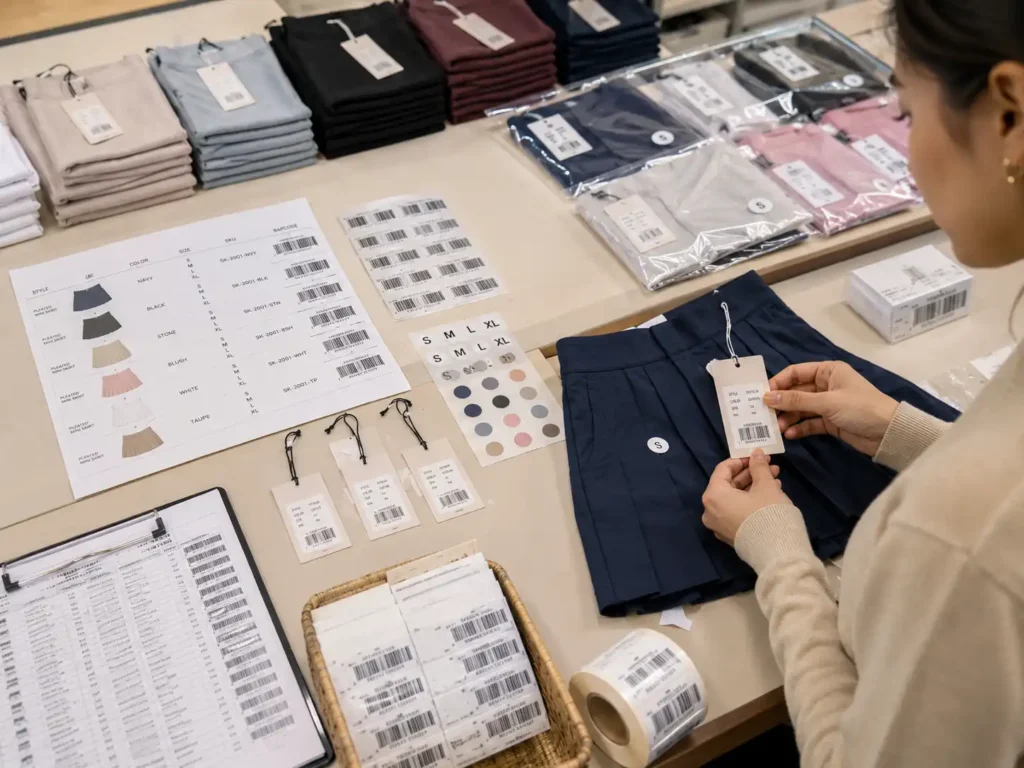
Woven Brand Labels

Care and Size Labels

Hangtags and Barcodes
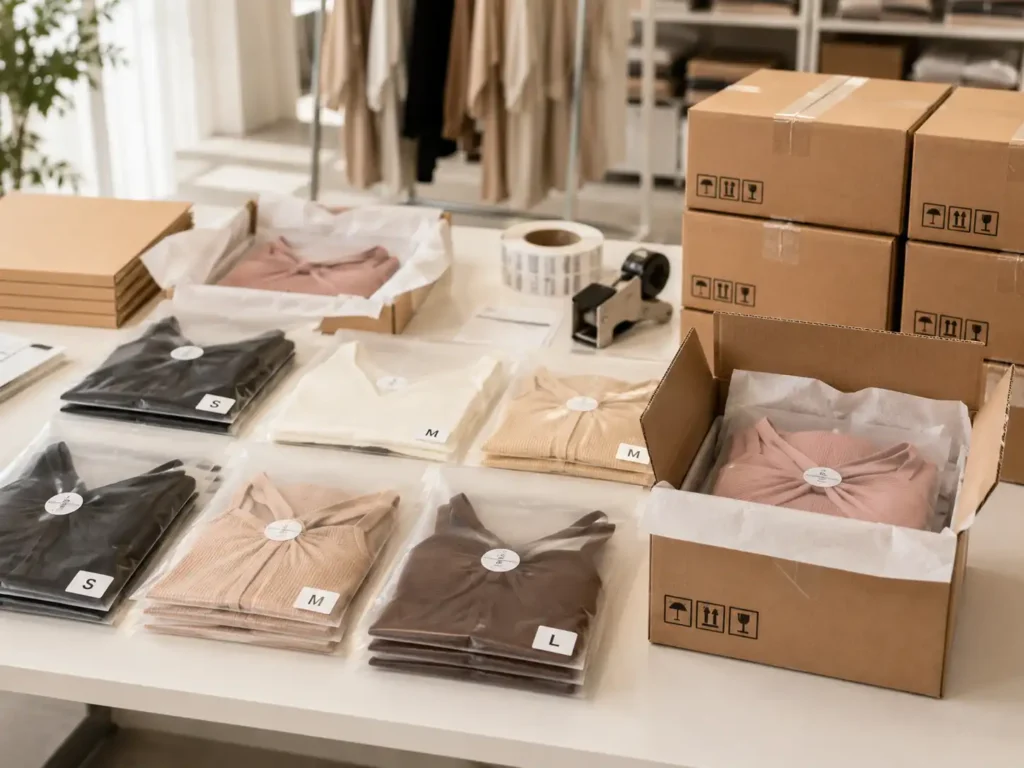
Polybag Presentation

Carton and SKU Control
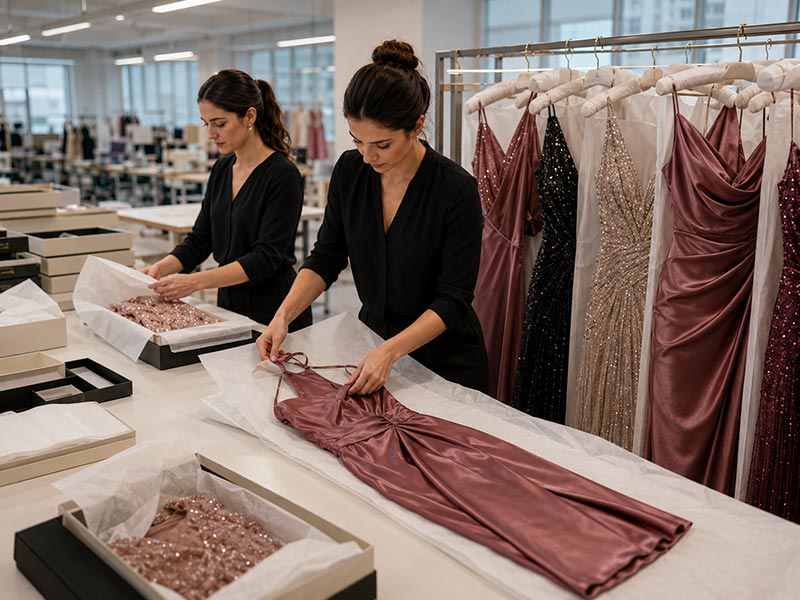
Long-Dress Folding
Resortwear Programs Managed From Development Through Bulk Delivery

European Resort Collection

US Multi-SKU Resort Drop

Australian Vacation Capsule
MOQ and Cost Planning for Resortwear Collection Development
Resortwear costing changes with fabric, print, construction, style count, colors, size range, packing and delivery requirements. Jinfeng builds quotations from the actual product structure and helps brands control collection cost without weakening the intended appearance or production standard.
| Planning Factor | Jinfeng Working Basis | Resortwear Development Impact |
|---|---|---|
| Base MOQ | Starts from 200 pcs per style/color | Quantity should be planned by each style and color, not only total collection volume |
| Stock Fabric | Often easier to support standard development MOQ | Can reduce sourcing complexity and shorten material confirmation |
| Custom Print | Supplier and print-route minimums apply by project | Artwork, strike-off, print scale and fabric quantity need early confirmation |
| Custom Fabric or Color | MOQ and lead time depend on supplier and specification | May affect sample timing, bulk cost and color availability |
| Style Count | Typical brand programs may contain 10-30 styles | More styles require stronger sample, fabric, PP and SKU coordination |
| Size Range | US, UK, EU, AU, XS-XL and extended ranges supported by project | More sizes increase grading, cutting, QC and packing management |
| Construction | Lining, gathers, ruffles, special zippers and complex details add labor | Simplification can reduce cost if brand appearance is protected |
| Packing | Private-label, ecommerce or retail-ready requirements add materials and handling | Artwork, barcode, polybag, carton and warehouse rules should be costed early |
Develop, Launch and Extend Resortwear Beyond One Season
Repeat Approved Bestsellers
A successful resort dress should not need to be reconstructed from old email threads. Jinfeng can retain pattern, measurement, fabric, trim, sewing, packing and Golden Sample references from approved production.
Reorders still require confirmation of fabric lot, color, material availability, quantity and current packing requirements, but the existing record gives the team a defined starting standard. Reorder planning can therefore focus on what changed rather than reopening every approved detail from the previous season.
- Pattern and measurement records remain available.
- Fabric and trim references support recheck.
- Packing standards can be reused or updated.
- New production lots are still inspected against current approvals.
Extend Colors and Prints
New colors and prints can refresh a proven silhouette without rebuilding the entire product.
Jinfeng uses the existing construction and fit record while reviewing the variables introduced by the new material route.
A lighter color may need different lining. A dark print may reveal shade variation differently. A new fabric base may change drape, shrinkage or seam behavior enough to require a revised sample. Color and print expansion is therefore handled as controlled extension rather than blind repetition.
- Retain approved structural fit where suitable.
- Recheck shell, lining and trim color.
- Review new print direction or placement.
- Update SKU, barcode and packing files.
Build the Next Seasonal Range
- Reuse proven fit foundations where suitable.
- Carry forward successful fabric directions.
- Add new silhouettes around known product roles.
- Coordinate repeat production with new development.
Frequently Asked Questions About Resortwear Product Development
Yes. Jinfeng can begin from reference images, sketches, original samples, line sheets or tech packs. The team first confirms product structure, fabric direction, lining, key measurements, trims, color or print requirements, size range and target quantity. More complete information generally reduces sample interpretation and revision rounds. Unclear design points are identified for confirmation before the sample room starts rather than being left as uncontrolled production assumptions.
Development can cover maxi and midi dresses, printed dresses, matching sets, jumpsuits, skirts, tops and lightweight layering pieces. Product planning can also combine several categories in one seasonal collection. Each style is reviewed according to fabric behavior, fit, construction, color or print direction, sample priority and production risk rather than using one standard development method for every garment.
Common directions include chiffon, rayon, viscose, linen blends, crepe and printed woven fabrics. Selection depends on drape, transparency, weight, shrinkage, hand feel, print route, lining requirement, MOQ and lead time. Jinfeng compares material behavior with the intended silhouette before the pattern and sample standard are locked. Special or custom-developed fabrics are confirmed by project and supplier availability.
Timing depends on design complexity and material readiness. Simple first samples may be around 7-10 days, regular dresses around 10-15 days, medium-complex dresses, sets or jumpsuits around 12-18 days, and more complex structures around 15-25 days. Custom fabrics, special trims or print development can extend the schedule. Final timing is confirmed after the style and material route are reviewed.
Jinfeng classifies the issue first, then records the required change in the relevant pattern, measurement, fabric, trim, construction or packing files. Revised samples often take around 7-15 days, depending on the correction scope and material availability. Bulk-relevant changes are transferred into updated working documents before PP approval so production teams do not work from old sample comments or conflicting instructions.
Jinfeng can work with US, UK, EU and AU sizing, alpha sizing such as XS-XL, extended ranges and client-defined grading standards. Development begins by confirming the base size, size range, key measurements and grade rules. Resortwear details such as strap length, neckline depth, armhole coverage, slit height and garment length may require proportional grading rather than simple width increases.
MOQ starts from 200 pcs per style/color. Actual requirements depend on fabric availability, custom colors, print development, trims, construction, packaging and production schedule. A multi-style collection should therefore be planned by style and color instead of relying only on the total order quantity. Custom print, special fabric or packaging suppliers may have separate minimums that need to be confirmed during development.
Jinfeng connects approved development information to final patterns, size charts, fabric and trim approvals, sewing instructions, PP comments, QC checkpoints, label placement and packing requirements. Incoming material, cutting, sewing, garment measurement, finishing and packing are then checked against the approved standard. PP and Golden Sample references provide physical benchmarks when needed during production and later repeat orders.
Yes. Support can include woven labels, size labels, care labels, hangtags, barcode stickers, SKU labels, polybags, carton marks and warehouse-related packing requirements. Packing methods can be adapted for long dresses and delicate fabrics to reduce avoidable creasing or pressure marks. Artwork, barcode data and packing instructions are confirmed before final production packing begins.
Yes. Jinfeng can retain approved pattern, measurement, fabric, trim, packing and Golden Sample records to support repeat-order review. Reorders still require confirmation of current fabric batches, colors, trims, quantity, price, packing and production schedule. New colors, new prints or new fabric bases may require another material or sample review if they change drape, transparency, shrinkage or appearance.

Start Your Resortwear Product Development With Jinfeng Apparel
A useful first review should give the development team enough information to judge silhouette, fabric direction, sample complexity, MOQ fit, production risk and the likely path to a PP-ready garment.
Send a tech pack when available, or start with reference images, sketches, an original sample or a line sheet. Jinfeng will review the available information and identify the points that need confirmation before pattern work and sampling begin.
Collection-scale projects can be organized style by style so fabric, sample, fit, PP, packing and launch priorities remain visible as the program develops.
Please include as much of the following as available:
- Product types and planned style count.
- Reference images, tech packs, sketches or sample photos.
- Quantity per style/color.
- Preferred fabrics, prints or color direction.
- Size range and target market.
- Private-label, barcode or packing requirements.
- Target sample purpose and planned launch timing.
- Any fit, cost or production concerns already identified.


