
Resort Romper Manufacturer
Custom resort romper development for fashion brands building vacation, cruise, beach-to-dinner and summer collections.
- MOQ starts from 200 pcs per style/color, with size ratios distributed inside the confirmed quantity.
- Sample planning follows product complexity: 7-10 days for simple styles, 10-15 days for standard womenswear, and 15-25 days for complex structures after materials are ready.
- Jinfeng Apparel operates 6 owned womenswear factories, works with 10+ long-term production partners and supports 100,000+ pcs monthly capacity across approved programs.
- Resort romper projects are controlled around torso length, crotch depth, waist position, print direction, fabric transparency, shrinkage, private-label packing and launch timing.
Jinfeng Apparel supports OEM, ODM and private-label resort romper programs from fabric direction, pattern development and fit sampling to PP approval, bulk production, product-specific inspection, packing and export coordination. Development starts with a review of the reference image, tech pack, size chart, quantity plan, fabric preference and target delivery window so structural risks are identified before sampling begins.
Built for Structured Resortwear Development
Development Resources
Production Network
Quality Coordination
Who We Manufacture Resort Rompers For
Resortwear Brands
Vacationwear Labels
Ecommerce Fashion Brands
Swimwear Extensions
Boutique Retail Programs
Sourcing Teams
Common Resort Romper Production Risks
Fit and Proportion
- Torso length must connect neckline, waist and crotch positions.
- Bust, waist and hip ease need to suit the fabric and silhouette.
- Shorts length and leg opening require movement review, not only flat measurement.
- Closure placement must allow easy dressing without distorting the neckline.
Fabric and Print
- Light colors may require lining or selective double layers.
- Rayon and viscose need shrinkage and care review.
- Linen blends need controlled expectations for natural creasing.
- Print direction and repeat scale must be defined before marker planning.
Bulk and Launch
- PP approval should lock fabric, color, trims, measurements and construction.
- Key measurements need inline and final control.
- Packing instructions must protect lightweight garments without excessive compression.
- Multi-batch shipment plans require separate SKU and carton documentation.
Resort Romper Styles We Can Develop

Printed Resort Romper

Linen Blend Romper

Halter Neck Romper

Strapless Resort Romper

Wrap Front Playsuit

Button Front Romper

Smocked Waist Romper

One Shoulder Romper
Built for Resort Collection Selling Scenarios
Beach to Dinner
Vacation Capsule
Cruise Collection
Swim to Resort
Boutique Summer Drop
Social Media Launch
Fabrics for Resort Romper Production
Fabric selection determines drape, coverage, wrinkle behavior, fit response, print quality and cost. Final approval should consider the finished garment, not only a hand swatch.
| Fabric Direction | Best Use | Main Strength | Main Risk | Development and QC Focus |
|---|---|---|---|---|
| Rayon / Viscose | Printed, wrap and relaxed rompers | Soft hand and fluid drape | Shrinkage, wrinkle and washing change | Review shrinkage, print clarity, seam stability, care label and finished measurements |
| Linen Blend | Structured resort and premium vacation styles | Natural texture and breathable appearance | Transparency, crease character and batch variation | Confirm composition, hand feel, lining need, pressing standard and seam puckering |
| Cotton Poplin | Button-front, utility and crisp summer styles | Clean structure and stable sewing | Excess stiffness, show-through in light colors and wash shrinkage | Check weight, opacity, pre-production shrinkage, placket flatness and pocket shape |
| Lightweight Crepe | Draped solid-color rompers | Balanced flow with better surface recovery | Grain distortion and seam impression | Control grain, hanging behavior, lining, pressing temperature and hem balance |
| Chiffon | Layered or feminine resort playsuits | Light movement and soft visual effect | Transparency, fraying and seam slippage | Plan lining, narrow finishing, stitch density, edge control and panel symmetry |
| Printed Woven | Tropical, floral and branded seasonal stories | Strong visual identity | Print direction, shade variation and repeat mismatch | Approve strike-off, repeat size, panel direction, bulk shade and cutting markers |
| Lightweight Jersey | Soft travel and pull-on rompers | Stretch comfort and easy movement | Growth, twisting and neckline recovery | Confirm stretch direction, recovery, finished measurements, seam choice and hanging change |
| Satin Viscose | Elevated dinner and occasion resort styles | Fluid shine and premium drape | Snagging, color variation and pressing marks | Control grain, shine direction, handling, seam appearance, pressing and protective packing |
Custom Prints and Color Development
Print and color development connect creative direction with cutting, sewing and bulk repeatability. Artwork approval must be translated into clear material and garment controls before production starts.
Print File and Repeat Review
A production print file needs more than a high-resolution image. The team reviews repeat dimensions, scale, direction, color layers, edge continuity and any placement requirement. Large tropical motifs may look balanced on a flat artwork but become visually heavy on a short romper if the repeat is not tested against the bodice and shorts proportions. Directional florals, stripes and border concepts also affect fabric consumption and cutting layout.
- Repeat scale is reviewed against the finished garment size range.
- One-way artwork may increase marker restrictions and material use.
- Placement prints require panel-level position rules and tolerance.
- Pockets, plackets, waist seams and wrap panels need clear matching expectations.
Strike-Off and Color Approval
A strike-off confirms how artwork performs on the actual or proposed fabric base.
Fiber composition, surface texture and base color influence saturation, edge clarity and contrast. Color approval can reference Pantone information, a supplied color standard, an original sample or an approved strike-off, but screen appearance alone is not a dependable bulk standard. When several garment fabrics or linings are involved, color coordination also covers sewing thread, zippers, buttons and labels.
- Record the approved base fabric and print method.
- Compare color under consistent lighting.
- Note whether the target is an exact standard or an approved commercial range.
- Confirm washing and pressing effects where relevant.
Bulk Print Control
Bulk control starts with batch identification and incoming material review. Shade differences, print streaks, missing color, blurred edges or repeat distortion should be separated before cutting.
Markers need to follow the approved direction, and visible garment panels should be checked for unintended upside-down motifs or severe imbalance. Cutting teams also need rules for pieces where matching is commercially important and pieces where random placement is accepted.
During sewing and final inspection, QC compares the garment against the approved sample and print standard. Front and back orientation, left-right legs, pockets, waist panels and wrap edges receive extra attention. Packing records keep color and SKU separation clear so several prints or colorways do not mix during folding, labeling and carton packing.
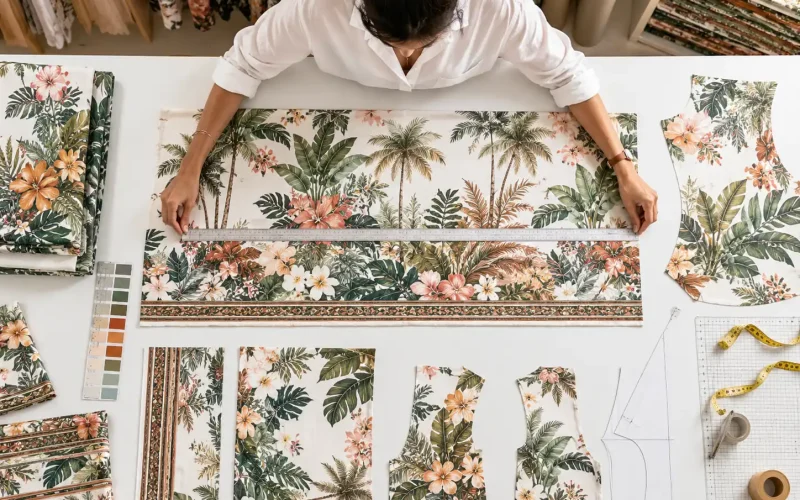
Resort Romper Fit Engineering
A romper is a single connected pattern system. Upper-body length, waist location, hip ease and crotch geometry must work together through standing, sitting and movement.
Torso Length and Crotch Depth
Torso length is measured and evaluated as a vertical relationship rather than treated as a leftover dimension between the bodice and shorts. A short torso pattern can pull the neckline down, lift the shorts, create pressure at the crotch and restrict arm movement. An overly long body can collapse at the waist and create excess fabric at the front or back rise. Pattern review considers the intended waist position, fabric stretch, closure type and wearing ease.
Fit sampling includes standing posture, seated posture, arm lift and normal walking. Comments such as “the crotch feels tight” are broken into possible causes: insufficient body length, shallow rise, tight hip, incorrect waist position or fabric with less give than expected. Revisions are recorded in the pattern, size chart and measurement file before the next sample is made.
Bust and Neckline Stability
Bust fit changes by neckline. Strapless, halter, wrap, deep V, button-front and one-shoulder constructions distribute tension differently, so the pattern cannot rely on one generic chest block.
The team reviews neckline coverage, side exposure, armhole shape, bust point, dart or seam position, support trims and how the garment behaves when the wearer bends or raises her arms.
The goal is not to make every romper tight. A relaxed resort silhouette still needs controlled entry points and balanced ease so the neckline does not gape. Lining, elastic, grip tape, hidden snaps, adjustable straps or shaped seams may be used when the design requires support. Each component is confirmed through the sample rather than added automatically.
Waistline and Hip Ease
The waistline influences body proportion, comfort and the perceived length of the legs.
Natural-waist, high-waist, low-waist, drawstring, elasticated and smocked structures require different pattern and construction decisions. A waist positioned too high can shorten the bodice and increase crotch tension; a waist placed too low can make the silhouette look heavy or interfere with pocket and closure placement.
Hip ease is reviewed together with fabric drape and shorts volume. A fluid rayon style may need more ease to preserve movement, while a structured poplin style may use controlled shaping to avoid excess bulk. Side seam, front rise, back rise and pocket opening are checked during fitting so the garment remains balanced from every angle.
Leg Opening and Coverage
Shorts length on a resort romper cannot be judged only from a standing front photo. Sitting, walking, stair movement and bending can change coverage significantly. The pattern maker reviews inseam, side length, front and back rise, leg opening circumference and hem shape. Curved hems, side slits, ruffles and wide legs need separate rules because each affects exposure and drape.
For relaxed styles, excessive leg width can look uncontrolled in lightweight fabric; insufficient width can restrict movement or cause the shorts to ride upward. Size grading should preserve intended coverage as the hip and rise increase. Final measurement points are defined clearly so inspection teams do not compare different measuring methods.
Closure and Dressing Access
A well-fitted romper still fails commercially if dressing is difficult. Back zippers, side zippers, button fronts, wrap openings, neck ties, shoulder ties, snaps and elastic pull-on constructions each affect the entry opening.
The team reviews whether the wearer can pass the garment over the shoulder and hip without overstressing the fabric, seam or zipper.
Closure selection also affects appearance and cost. An invisible zipper needs flat insertion and sufficient opening length; a button front needs placket support and spacing that avoids gaping; a wrap needs secure inside fastening. Samples are tested for opening range, movement, visual flatness and repeated use before the construction is locked.
Size Grading and Tolerance
Rompers require both horizontal and vertical grading. Increasing only bust, waist and hip circumferences can leave larger sizes short through the torso, rise and inseam. Grade rules therefore consider body length, armhole depth, neckline, waist placement, front and back rise, shorts length, leg opening and strap length according to the brand’s size chart and target fit.
Bulk orders can include multiple sizes within the confirmed quantity for each style/color. A rational size ratio supports cutting, measurement control, labeling and carton planning. Production inspection uses the approved size chart, measurement method and tolerance agreed for the project; zero deviation is not a realistic manufacturing standard, but uncontrolled drift is not acceptable.
Custom Construction and Design Details

Neckline Options

Straps and Sleeves

Waist Construction

Shirring and Elastic

Pockets and Utility

Zippers and Buttons

Lining and Coverage

Hems and Leg Openings
Comfort, Coverage and Travel Performance
Lightweight Without Overexposure
Movement Without Distortion
Movement testing includes walking, sitting, raising the arms and bending.
The review looks for neckline gaping, shoulder pressure, waist migration, crotch pulling, shorts riding and pocket opening. Pattern corrections may involve torso length, rise, hip ease, armhole shape or closure opening rather than simply adding width everywhere. The final sample should preserve the intended silhouette while allowing normal resort and travel activity.
Travel-Ready Presentation
From Design Reference to Approved Sample
Project Review
The starting file can be a tech pack, original sample, line sheet, sketch or reference image.
Jinfeng Apparel reviews silhouette, key measurements, fabric direction, trim requirements, quantity per style/color, size range, private-label needs and launch target. Missing information is identified before pattern work begins so early decisions do not need to be repeatedly reversed.
Fabric Direction
Pattern Development
The pattern maker builds or adjusts the romper as one connected structure.
Torso length, waist level, bust shaping, hip ease, rise, shorts length, leg opening and closure access are defined together. Measurement points and pattern assumptions are recorded so fit comments can later be converted into specific technical revisions.
First Sample
Fit and Revision
PP or Golden Sample
Production Capacity for Multi-Style Programs
Style-to-Factory Matching
Multi-Style Coordination
Each style is separated by style number, color, size, fabric, trim, sample version, BOM, production order,
QC checklist, packing instruction and shipment plan.
Fabric groups and sample priorities help teams avoid treating every style as an unrelated urgent request. Hero SKUs, photo-sample deadlines and material readiness can guide the sequence so critical launch pieces move first while other styles continue through development.
Repeat-Order Support
Resort Romper Bulk Production Process
Bulk production begins only after the PP standard, materials, quantities, size ratios, labels, packing and quality requirements are confirmed. Each stage connects product-specific risks with documented checks.
PP Standard and Production File

The production file combines the approved sample with the BOM, size chart, measurement method, grade rules, fabric and trim approvals, sewing instruction, label placement, packing direction and QC checklist. Resort romper notes identify torso length, waist position, crotch depth, shorts length, leg opening, neckline, strap or sleeve details, closure and print orientation. Production teams receive one controlled standard instead of scattered messages or old sample comments.
Fabric and Print Inspection

Incoming material review checks fabric identity, color, hand feel, width, visible defects, shade grouping, print quality and other confirmed properties. Printed fabrics are separated by batch when needed, and directional designs are clearly marked before marker planning.
Materials with significant defects, shade variation or incorrect print direction are handled before cutting so problems are not multiplied across finished garments.
Cutting and Panel Control

Relaxation, grain direction, marker layout and panel identification affect finished measurements and visual balance.
The cutting team follows one-way print rules, placement requirements and matching expectations defined for the style. Bundles remain separated by style, color and size. Cut-panel checks focus on key notches, waist joins, neckline shape, rise, left-right legs, pockets and any panel where direction or symmetry is important.
Sewing and Inline Inspection

Sewing sequence is set according to the garment structure. Inline inspection reviews seam quality, waist joining, elastic or shirring, neckline, straps, sleeves, closures, pockets, rise and leg openings before defects reach the final stage. Measurements are checked at selected production points so pattern or sewing drift can be corrected while work is still in progress. Issues are classified for repair, recheck and prevention rather than passed forward without action.
Finishing and Measurement

Finishing includes thread cleaning, pressing and shaping according to the fabric. Rayon, linen blends, chiffon, crepe and satin require different handling; one pressing method cannot serve every resort romper. Finished garments are measured using the approved method and compared with the agreed tolerance. Visual review covers symmetry, drape, neckline, waist level, crotch appearance, hems, closures, labels and overall presentation.
Packing and Shipment Review

Approved garments move into private-label packing with the correct main label, size label, care label, hangtag, barcode, SKU label, polybag and carton information. Style, color and size ratios are checked against the packing list. Carton quantity, measurement, net weight, gross weight and carton marks are recorded for shipment coordination. Final inspection, AQL sampling or client-appointed inspection can be arranged according to the agreed project requirement.
Resort Romper Quality Control Standards
Quality control starts with materials and continues through cutting, sewing, finishing, packing and shipment preparation. Product-specific points prevent generic inspection from missing romper fit and construction risks.
| Inspection Point | Main Risk | Control Method | Stage |
|---|---|---|---|
| Fabric identity and batch | Wrong base, hand feel or shade | Compare approved swatch, fabric details and batch records | Incoming material |
| Print quality and direction | Streaks, missing color or upside-down panels | Visual inspection and marker direction rules | Incoming and cutting |
| Shrinkage-sensitive fabric | Finished size change after care | Review pre-production test or approved handling plan | Development and incoming |
| Bust measurement | Tightness, gaping or poor shape | Measure by approved method and compare fit sample | Sample, inline and final |
| Torso length | Crotch pulling or waist migration | Check vertical measurement and on-body fit result | Sample and final |
| Waist position | Distorted proportion or discomfort | Compare seam or casing position with approved pattern | Cutting, inline and final |
| Hip ease | Pulling, pocket opening or restricted movement | Measure and review drape in the approved size | Sample, inline and final |
| Front and back rise | Excess fabric or crotch pressure | Measure separately using the defined method | Sample and final |
| Shorts length | Insufficient coverage or imbalance | Check inseam, side length and left-right balance | Inline and final |
| Leg opening | Riding, restriction or exposure | Measure circumference and inspect hem shape | Sample and final |
| Neckline and armhole | Gaping, uneven edge or exposure | Check shape, symmetry, stretch and lining | Inline and final |
| Strap or sleeve | Uneven length or weak attachment | Measure, pull-check and inspect bartacks or seams | Inline and final |
| Elastic or shirring | Poor recovery or uneven gathering | Check relaxed/stretch measurement and visual distribution | Inline and final |
| Zipper or button front | Bulging, gaping or difficult opening | Operation test, flatness check and attachment review | Inline and final |
| Lining coverage | Lining exposure, twisting or added bulk | Compare lengths, seam joins and movement | Inline and final |
| Hem and pressing | Puckering, shine marks or uneven edge | Visual comparison with approved finish | Finishing |
| Labels and barcode | Wrong size, SKU or placement | Match approved files and packing instruction | Packing |
| Carton breakdown | Mixed style, color or size | Verify ratio, carton mark and packing list | Packing and shipment |
Private Label and Retail Packaging
Main Labels
Care Labels
Hangtags
Barcode and SKU
Polybag Requirements
Carton and Marks
MOQ, Pricing and Cost Drivers
Our MOQ starts from 200 pcs per style/color. Size ratios can be distributed inside the confirmed quantity, while custom materials, prints, trims and packaging may carry separate supplier requirements.
MOQ by Style and Color
MOQ is calculated by style and color, not by the total number of pieces across an unrelated assortment. One style in one color at 200 pieces meets the basic quantity structure for review. One style in two colors normally requires 200 pieces per color. Multiple styles totaling 200 pieces do not represent the standard production structure. A 10-30 style collection can be evaluated as a program, but each style/color must still be planned around material, production and quality requirements.
What Shapes the Quote
A meaningful quote depends on the shell fabric, lining, print or dyeing, zippers, buttons, elastic, support trims, pattern complexity, sewing time, quantity, color count, size ratio, inspection standard, labels, packing, testing if required and delivery terms. Resort romper cost is especially sensitive to print method, directional cutting, lining coverage, internal support, complicated closures and labor required for waist, neckline or ruffle details.
How Cost Can Be Balanced
Cost control should preserve brand-level appearance. Alternatives may include choosing a commercially suitable stock base, reducing excessive color fragmentation, simplifying hidden construction that does not improve wear, adjusting trim specifications, grouping styles by fabric or using different packaging tiers by market. Any change is reviewed for effect on drape, coverage, fit, durability and retail presentation before acceptance. The lowest number is not useful when it creates fit problems, material inconsistency or avoidable returns.
Sample fees are charged separately because development includes pattern work, fabric and trim preparation, single-piece sewing, measurement review, communication and revisions. When the confirmed style moves into a bulk order meeting the required MOQ, sample fees can be deducted according to the agreed project arrangement; they are not an unconditional cash refund.

Seasonal Launch and Export Delivery Planning
Resort collections work against campaign, pre-sale, warehouse and seasonal selling dates. A dependable schedule is built backward from the required delivery rather than promised before materials and approvals are known.
Launch Calendar Planning
The timeline begins with the target photography, sales meeting, PP approval, warehouse receiving and launch dates. Sample priorities are set around hero SKUs, material readiness and construction complexity. Simple samples may be completed in 7-10 days after required materials and information are ready; standard womenswear commonly needs 10-15 days, while complex styles can require 15-25 days. Revisions, custom prints and special trims extend the path and should be planned instead of hidden.
Bulk timing is confirmed after PP approval, material readiness, order quantity, size-color breakdown, packaging and QC requirements are locked. Regular and complex styles do not use one universal production lead time. The production schedule should include material booking, cutting, sewing, inline inspection, finishing, final inspection, packing and shipment preparation.

Photo, Sales and PP Samples
Photo-ready samples support campaign work but do not replace PP approval unless all production details are confirmed. Salesman samples may be required for showrooms or wholesale appointments. PP and Golden samples define the standard for bulk construction, measurement, labels and packing. Separating sample purposes prevents campaign urgency from forcing an incomplete sample into the role of production approval.
Multi-Batch Delivery
Large resort programs can be divided by launch priority, style group, color group, size availability, region or warehouse. An air-and-sea split can move selected hero styles or priority sizes first while the main volume travels by sea, provided packing lists, carton marks and SKU separation remain clear. Jinfeng Apparel can coordinate courier, air freight, sea freight and client-appointed forwarders according to the confirmed terms and destination requirements.
Resort Romper Collection Project
An anonymous U.S. resortwear brand required a coordinated romper and playsuit program for a spring-summer launch. The project used commercial order data aligned with the scale normally handled by established brand programs while protecting confidential identity, artwork, prices and warehouse information.
Project Data Snapshot

- Market: United States
- Product scope: Resort rompers and vacation playsuits
- Style count: 18 styles
- Colorways: 33 style-color combinations
- Size range: XS-XXL with brand-supplied grade direction
- Total order: 48,600 pieces
- Fabric groups: Printed viscose, linen blend, cotton poplin and lightweight crepe
- Sample rounds: Two rounds for 12 styles; three rounds for 6 higher-risk styles
- Main QC focus: Torso length, crotch depth, waist position, print direction, neckline coverage, elastic recovery and carton accuracy
- Delivery plan: Two production batches with priority styles separated for the first shipment
Development Challenge

The line mixed relaxed printed styles with more structured strapless and one-shoulder silhouettes. Initial references looked similar in photography, but the technical requirements differed significantly. Fluid viscose styles needed shrinkage, print and drape control; linen-blend styles needed opacity and wrinkle review; strapless shapes required support and top-edge stability; wrap fronts needed secure overlap. The brand also wanted consistent visual waist placement across several silhouettes even though torso and closure structures varied.
The first review grouped the 18 styles by fabric, pattern complexity and launch priority. Hero styles for campaign photography moved first. Each tech pack was checked against the supplied size direction, and unclear torso, rise and shorts measurements were flagged before pattern development. Print repeats were reviewed against the short garment length so oversized motifs did not dominate the bodice or create severe left-right imbalance.
Sampling and Corrections

Twelve commercial styles reached approval after two sample rounds. Six higher-risk styles required a third round because changes to neckline support, torso length or wrap overlap affected the full pattern.
The most important corrections included adding vertical length without increasing bust volume, repositioning the waist seam, increasing back rise, adjusting leg opening coverage and stabilizing a strapless top edge without making the garment feel rigid.
Revision records separated fit, fabric and construction comments. Updated patterns, size charts, BOM details and sewing notes were issued before PP approval. Photo-ready samples were prioritized for campaign work, while PP samples remained the production standard. The process prevented photography deadlines from bypassing unresolved bulk details.
Bulk Production and Delivery

After PP approval, the program moved into material booking and factory allocation by fabric and construction group. Printed viscose batches were checked for shade and direction before cutting. Inline inspection monitored waist position, rise, neckline and elastic details. Final measurement focused on the approved vertical dimensions as well as bust, waist and hip. Packing teams separated 18 styles, 33 colorways and six sizes through barcode, SKU, polybag and carton records.
The first batch contained priority campaign and launch styles, while the second batch completed the remaining volume. Each shipment used a separate packing list and carton breakdown. The brand retained the approved patterns, Golden samples, material references and packing standards for future color extensions and repeat orders. The project demonstrated how a large multi-style resort program can remain commercially flexible without losing technical control.
NDA, Audit and Compliance Support
Design Protection
Factory and Audit Support
Material and Testing Support
Resort Romper Frequently Asked Questions
Yes. Jinfeng Apparel supports OEM development from tech packs, original samples, line sheets, sketches and reference images. A tech pack is reviewed for construction, measurements, fabric, trims, labels, packing, quantity and delivery requirements before sampling. Missing or conflicting details are clarified so the pattern and sample are based on an agreed direction rather than assumptions.
Yes. A reference image can begin the review, but an image alone does not provide complete measurements, material specifications or internal construction. Jinfeng Apparel evaluates the visible silhouette, proposes fabric and structural direction, confirms the target size and prepares the information needed for pattern development. Original brand designs and protected materials must be respected.
MOQ starts from 200 pcs per style/color, depending on fabric availability, color development, trims, construction complexity, packaging and production schedule. Quantity is not calculated by combining unrelated styles. Multiple sizes can be distributed inside the confirmed style-color quantity according to the approved size ratio.
Common directions include rayon, viscose, linen blends, cotton poplin, lightweight crepe, chiffon, printed woven fabrics, jersey and satin viscose. Selection depends on drape, opacity, wrinkle behavior, stretch, print method, structure and price position. Fabric approval should include the finished-garment effect and risks such as shrinkage, transparency or pressing marks.
Yes, custom print development can be coordinated according to artwork, base fabric, print method, color count and supplier requirements. The process may include repeat review, strike-off, color approval and bulk batch inspection. Custom prints can carry separate MOQ and lead time, so artwork and launch timing should be submitted early.
Fit control covers torso length, bust, waist, hip, front and back rise, crotch depth, shorts length, leg opening, neckline, straps or sleeves and closure access. Sample review includes movement and wearing feedback. Revisions are translated into updated patterns, measurements and construction notes before PP approval.
Planning ranges are 7-10 days for simple styles, 10-15 days for standard womenswear and 15-25 days for complex styles after required information, fabric and trims are ready. Custom printing, special trims, multiple revisions or material sourcing can extend the timeline. A project schedule is confirmed after the design and material direction are reviewed.
Yes. Sample fees cover pattern development, fabric and trim preparation, single-piece sewing, measurement review, communication and revision work. When the approved style enters a bulk order meeting the agreed MOQ, sample fees can be deducted according to the project terms. Fees are not automatically refunded when a project does not proceed to bulk production.
Yes. Private-label support can include main labels, size labels, care labels, hangtags, hang strings, barcode stickers, SKU labels, polybags, stickers, cards, cartons, carton marks and warehouse labels. Files, quantities, placement and supplier MOQ should be confirmed before bulk production.
Yes. NDA-based cooperation protects tech packs, original samples, patterns, print artwork, measurements, labels, packing files, pricing, order information and unpublished designs. Client cases remain anonymous unless written authorization allows brand identification or use of confidential project material.

Start Your Resort Romper Project
Send a reference image, tech pack, original sample or line sheet to begin a structured review. Kelly and the project team will assess the silhouette, fabric direction, fit risk, trims,
MOQ structure, sampling path, private-label needs and target delivery window before confirming the next step. More complete information produces a more useful response and reduces repeated clarification during development.
Please include:
- Style images or tech packs
- Quantity per style/color
- Preferred fabric or target hand feel
- Print artwork or color direction
- Size range and size chart
- Main labels, care labels and hangtag requirements
- Barcode, SKU and packing instructions
- Target photo, launch or delivery date
- Required testing, audit or warehouse documents


