 Skip to content
Repeat Order Dress Manufacturer
Stable dress restock production for fashion brands with approved styles, selling SKUs, private-label needs and multi-batch delivery plans.
Jinfeng Apparel helps fashion brands turn approved dress styles into repeatable production with pattern records, measurement files, fabric references, trim details, QC notes and packing requirements kept for future orders. Since 2008, our Guangdong-based womenswear manufacturing team has supported custom dresses, skirts, jumpsuits, matching sets and private-label collections for global fashion brands needing reliable restocks rather than one-time garment production.
- Approved style restocks— support for bestselling dress SKUs, repeat colors, size-ratio updates and seasonal replenishment.
- 2 sample rooms + 7+ senior pattern makers— reference sample review, fit correction, PP sample approval and repeat pattern control.
- 6 owned factories + 10+ satellite partners— production structure for multi-batch dress programs and urgent replenishment waves.
- MOQ from 200 pcs/style/color— suitable for real repeat production, not micro-order testing or ready-stock resale.
- Anonymous repeat program range: 12–26 styles / 28,000–76,000 pcs— dress restock programs across US, UK and Australian markets.
Production Facts for Repeat Dress Orders
Since 2008
- Custom women’s fashion manufacturing since 2008.
- Dress sampling, production, QC, packing and export support.
- Long-term records help future restocks move with less confusion.
6 Owned Factories
- Owned production support for core dress styles.
- Factory allocation by fabric, construction and delivery timing.
- Stronger control for repeat programs and complex styles.
10+ Satellite Partners
- Seasonal capacity support.
- Production matching by style difficulty.
- Multi-batch planning for urgent or phased restocks.
100,000+ Monthly Capacity
- Capacity for multi-style and multi-batch programs.
- Suitable for planned replenishment and seasonal dress restocks.
- Production schedule reviewed by material status and delivery window.
2 Sample Rooms
- Reference sample and PP sample review.
- Pattern updates and construction risk checks.
- Sample notes connected with repeat production files.
MOQ From 200
- MOQ reviewed by style and color.
- Fabric, trim and packing minimums checked before planning.
- Strong fit for organized reorder programs.

Record-Based Restock Production
Repeat dress production is not stock resale. It is not one-piece fulfillment. It is not a casual copy order. A successful reorder starts from an existing design, approved sample, previous bulk record or confirmed technical file, then moves through material confirmation, pattern check, production planning, quality inspection, packing review and shipment coordination.
For fashion brands selling party dresses, satin dresses, mesh dresses, bodycon dresses, resort dresses, cocktail dresses, club dresses, jumpsuits and matching sets, reorder success depends on repeatability. The second batch should protect the fit, handfeel, color direction, sewing details, label placement, SKU structure and packing standard created during the approved order.
- Approved sample and production records reviewed before restart.
- Fabric, color, trim and packing changes confirmed early.
- Repeat batch judged against saved garment standards.
Built for Brands With Reorder Plans
DTC Dress Brands
- Hero SKU replenishment.
- Size-ratio planning from sales data.
- Private-label packing aligned with previous records.
Ecommerce Fashion Labels
- Product-photo consistency across batches.
- Measurement records retained for repeat SKUs.
- Packing files reviewed before warehouse delivery.
Occasionwear Brands
- Satin, lace, chiffon, mesh and sequin style support.
- Lining, zipper and press finish review.
- Fit balance protected across replenishment waves.
Clubwear Brands
- Stretch recovery and negative ease review.
- Strap, seam and cut-out reinforcement.
- Measurement control for fitted silhouettes.
Resortwear Labels
- Print direction and color continuity.
- Lightweight fabric and shrinkage review.
- Fold method checked for long-distance shipment.
Boutique Chains
- Multi-size and multi-color repeat programs.
- Carton marks and packing ratios aligned with records.
- Replenishment documents prepared by style and color.
Sourcing Teams
- Previous PO and production record review.
- Fabric and trim availability check.
- Delivery timing and production feasibility discussion.
Private-Label Programs
Private-label womenswear programs need consistent labels, care labels, size labels, hangtags, barcodes, polybags, carton marks and packing lists. Jinfeng supports repeat order packing by checking brand files, SKU details, size ratios and carton instructions before shipment.
- Label and hangtag records retained.
- Barcode, SKU and polybag files reviewed.
- Carton marks and packing lists checked before dispatch.
Supplier Fit for Repeat Dress Programs
Best Fit For
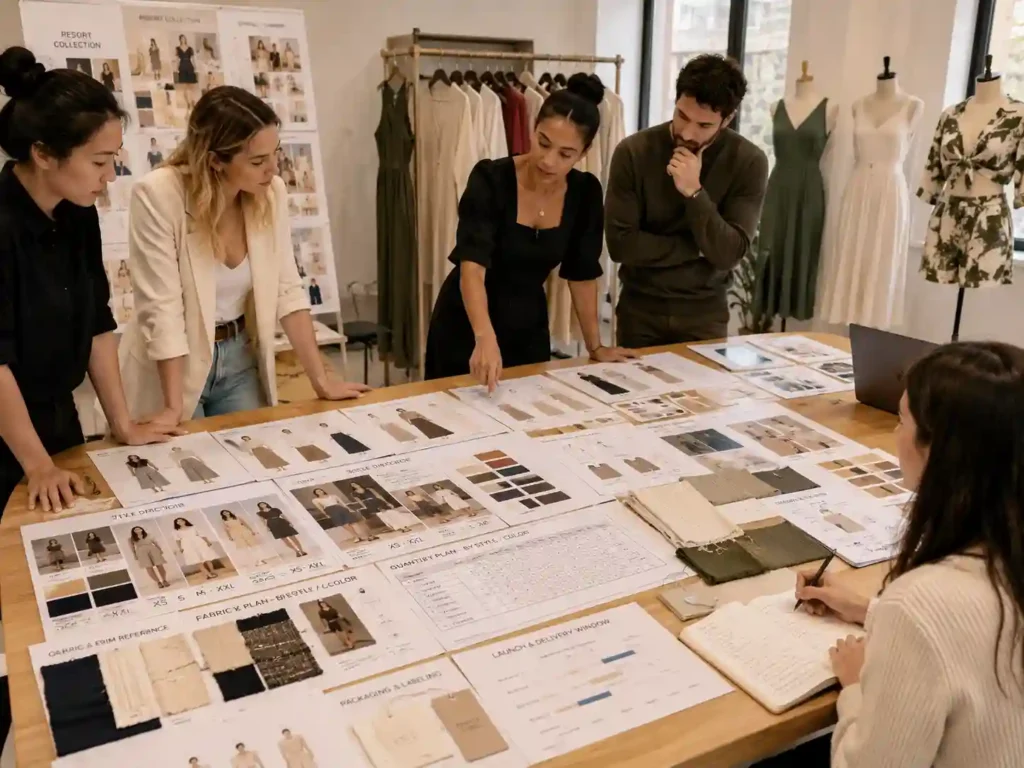
- Approved style or sample reference.
- Target quantity by style and color.
- Size ratio and delivery plan.
- Fabric, trim and packing records.
- Repeat or replenishment intent.
- Private-label file requirements.
Not Designed For

- No-MOQ or one-piece fulfillment.
- Ready-stock wholesale requests.
- Micro test orders.
- No approved style or reference file.
- No sample budget.
- Lowest-price-only comparison.
Where Dress Reorders Usually Fail
Fit Changed
- Measurement files compared with previous records.
- Pattern and fit notes checked before bulk.
- Fit-sensitive styles reviewed before cutting.
Fabric Changed
- Fabric reference and handfeel review.
- Stretch, drape and transparency checked.
- Substitute fabrics confirmed before production.
Color Shifted
- Previous color standard reviewed.
- Dye lot, lining and print risks checked.
- Light and dark colors packed with care.
Trims Replaced
- Zippers, elastics and trims compared with approved records.
- Replacement trims checked before production.
- Label and packing trims reviewed again for new batches.
Packing Errors
- Barcode, SKU and size label verification.
- Polybag and carton mark review.
- Packing list aligned with final carton data.
Timing Pressure
- Material status reviewed before schedule confirmation.
- Urgent styles separated from new-color developments.
- Shipping method planned by launch and warehouse timing.
Records Behind Repeatable Dress Production
Pattern Files
- Pattern structure and revision references.
- Bust, waist, hip and length logic.
- Repeat production based on approved shape.
Measurement Records
- Size chart and tolerance points.
- Fit comments and grading notes.
- Bulk measurement checks by style and size.
Fabric References
- Fabric type, weight and handfeel notes.
- Stretch, drape and shine references.
- Supplier communication supported by past records.
Color Records
- Previous color and shade direction.
- Lining, print and sequin reflection review.
- Color name and SKU record check.
Trim Details
- Zippers, buttons, elastic and linings.
- Lace, straps, hardware and label materials.
- Trim replacements reviewed before bulk.
Sewing Notes
- Seam and edge finishing notes.
- Zipper, strap, slit and lining instructions.
- Pressing requirements by fabric.
QC Notes
- Known defect and risk list.
- Measurement and garment inspection points.
- Packing and label accuracy reminders.
Packing Files
- Label, hangtag and barcode files.
- Polybag and carton mark instructions.
- Size ratio and packing list structure.
Order History
- Previous PO and quantity data.
- Color split and size ratio records.
- Shipment and packing notes retained.

From Approved Style to Repeat Bulk Production
A repeat order should not restart like a completely new style. Jinfeng follows a reorder workflow built around record review, material confirmation, production feasibility and QC continuity.
Repeat Order Workflow
Previous Order Review → Pattern & Measurement Check → Fabric / Trim Confirmation → Quantity & Size Ratio Review → Reorder Quotation → PP / Reference Approval → Bulk Production → Inline Inspection → Final QC → Private-Label Packing → Export Delivery
For a proven dress style, the first review focuses on what must remain unchanged and what has changed. Same style in the same fabric may move faster when fabric and trims remain available. Same pattern in a new color needs color and material confirmation. Same style in a new fabric needs fit, shrinkage, drape and sewing risk review. Same style with updated packing needs label and SKU verification.
Jinfeng helps brands prepare reorder information before production starts, including previous PO details, approved sample photos, tech pack, size chart, target quantity, color split, size ratio, label files, packing method, launch date and delivery destination.
- Previous PO and approved style records reviewed.
- Fabric, trims, color and size ratio confirmed.
- PP or reference approval checked before production.
- QC and packing standards carried into repeat batch.
Pattern and Fit Control for Repeat Dress Orders
Pattern control is one of the most important differences between ordinary dress production and repeatable dress manufacturing. A bestselling dress often succeeds because the proportions are right: neckline depth, bust shape, waist position, hip curve, skirt length, strap balance, sleeve opening, slit height and hem movement all work together.
Repeat Fit Review
If the second batch changes key fit points, the style may no longer photograph, fit or sell in the same way. Jinfeng treats repeat orders as pattern-sensitive production. Our team can review retained pattern information, approved sample reference, measurement chart, size grading, fit comments and production notes before the next batch begins.
For bodycon dresses, stretch recovery and negative ease must be checked carefully. For satin slip dresses, bust ease, bias behavior, strap length and hem drape matter. For corset dresses, cup shape, boning position, zipper stability and waist support require careful repeat control. For jumpsuits, torso length, waist seam, hip ease and rise measurements must be protected.
Recommended reorder files for fit control:
- Approved sample photos from front, side and back.
- Previous measurement chart with tolerance notes.
- Pattern file or sample reference.
- Size range and size ratio.
- Fit comments from previous bulk order.
- Approved adjustment after first production.
- Model fitting notes or photo sample comments.
- Fabric change notice, when applicable.
For repeat orders, Jinfeng does not rely on memory alone. Production should restart through a reviewed reference system so approved proportions can be protected from sample to cutting, sewing, finishing, QC and packing.

Fabric Continuity for Repeat Dress Manufacturing
Fabric continuity affects fit, color, handfeel, sewing difficulty, pressing result and wearing comfort. The same dress pattern may behave differently when fabric weight, stretch, drape, shine or transparency changes. Jinfeng reviews fabric risk before repeat production, especially when a restock follows a selling style after several months.
| Fabric Type | Repeat Order Risk | Jinfeng Review Focus |
|---|---|---|
| Satin | Shine, snagging, dye lot, crease marks, drape shift | Fabric face, weight, color lot, pressing method, seam puckering |
| Mesh | Stretch, transparency, recovery, panel distortion | Elasticity, lining match, seam tension, panel stability |
| Lace | Pattern repeat, edge design, supply continuity | Lace source, motif direction, edge use, lining pairing |
| Sequin | Color reflection, missing sequins, scratch comfort | Sequin density, backing fabric, lining, seam allowance |
| Jersey | Stretch recovery, shrinkage, body fit change | GSM, elastane content, recovery, cutting direction |
| Chiffon | Transparency, static, fraying, color shift | Layering, lining, hem finishing, dye consistency |
| Velvet | Nap direction, shine variation, pressure marks | Cutting direction, pile control, packing pressure |
| Knit | Stretch growth, size stability, handfeel | Yarn feel, gauge, shrinkage, neckline recovery |
| Denim | Wash shade, stiffness, shrinkage | Wash reference, weight, seam bulk, measurement after wash |
| Rayon / Viscose | Shrinkage, drape change, wrinkle behavior | Pre-shrink review, lining, seam stability, packing method |

Color Lot Review Before Dress Restocks
Color consistency is a major concern in dress restocks because online photos, retail displays, influencer campaigns and repeat selling all rely on a stable visual impression. A second batch of satin, mesh, lace, chiffon, velvet or sequin dresses may look different when fabric suppliers change, dye lots shift, print runs vary or lining colors are replaced.
Color Continuity Review
Jinfeng helps brands reduce color risk through previous color references, fabric supplier communication, sample review, lining match checks and pre-production confirmation. For solid colors, shade direction and dye lot should be reviewed. For prints, color placement, repeat scale and base fabric affect the final look. For sequins and metallic fabrics, reflection under light can make two close colors appear very different. For lace and mesh, lining color can change the perceived shade of the finished garment.
Color continuity review may include:
- Original color reference or approved garment sample.
- Fabric swatch or lab dip review.
- Lining color confirmation.
- Print strike-off, where needed.
- Sequin reflection check under light.
- Bulk fabric lot confirmation before cutting.
- Color name and SKU file review.
- Packing separation for light and dark colors.
No professional manufacturer should promise every future fabric batch will be identical without review. Strong repeat order control means checking risk early and confirming acceptable standards before production begins.
Trim Details That Affect Repeat Orders
Zippers
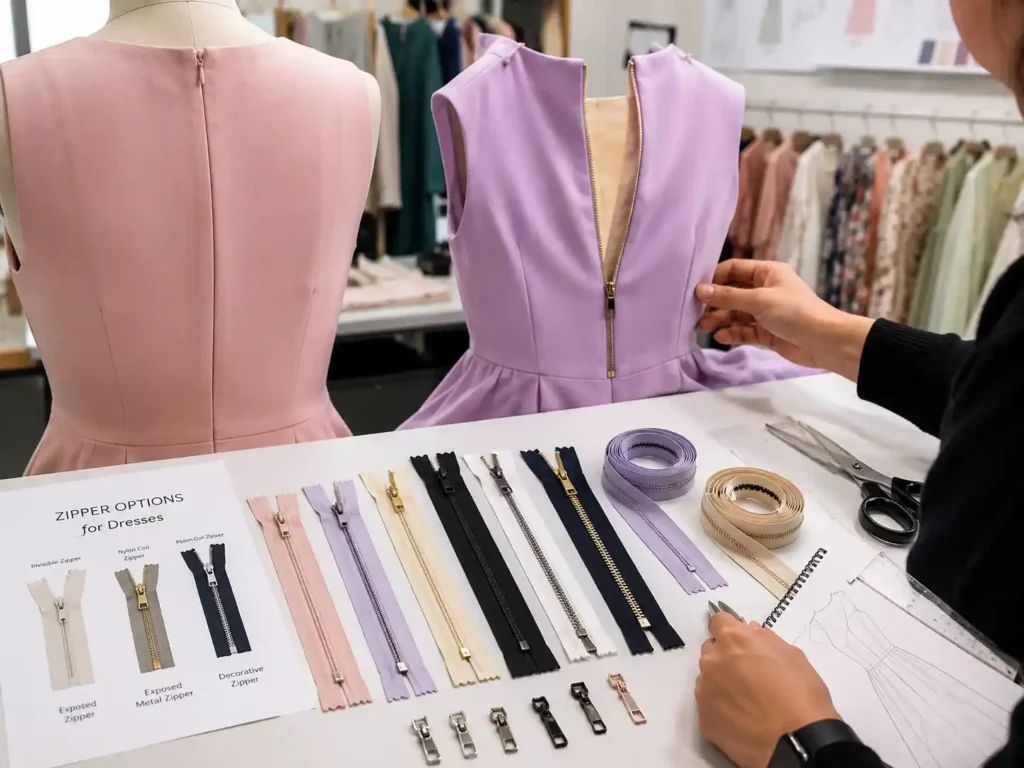
- Zipper length and tape shade.
- Puller type and slider smoothness.
- Supplier availability before bulk.
Buttons

- Button size and material.
- Color, hole type and placement.
- Spare button needs when required.
Elastic

- Elastic width and tension.
- Recovery and stretch behavior.
- Finished measurement impact.
Lace Trims

- Lace width and motif direction.
- Color and edge pattern.
- Supplier stock checked before planning.
Linings

- Lining color and thickness.
- Stretch, softness and anti-static behavior.
- Sewing method and opacity review.
Brand Labels

- Artwork and label placement.
- SKU, color and size updates.
- Packing instructions checked before dispatch.
Dress Styles We Can Support for Reorders

Bodycon Dress
- Stretch, recovery and negative ease review.
- Bust, waist and hip measurement control.
- Seam tension and lining checked before bulk.

Satin Dress
- Satin face, shine and handfeel check.
- Color lot and seam puckering review.
- Pressing and packing method confirmed.

Mesh Dress
- Mesh stretch and panel stability.
- Lining and transparency review.
- Seam tension and recovery checks.

Lace Dress
- Motif, edge and lace width review.
- Lining match and color check.
- Cutting direction confirmed before bulk.

Sequin Dress
- Sequin density and reflection review.
- Backing fabric and lining comfort.
- Missing-sequin checks before packing.

Party Dress
- Fabric, fit and trims reviewed together.
- Zipper and pressing standards checked.
- Label and packing files confirmed.

Club Dress
- Cut-out and strap strength review.
- Stretch fabric and seam tension check.
- Reinforcement at stress points.

Cocktail Dress
- Structure and lining review.
- Zipper quality and measurement control.
- Polished finishing before shipment.

Maxi Dress
- Long length and hem control.
- Print direction and side slit review.
- Folding and packing method confirmed.

Mini Dress
- Mini length and waist placement.
- Hip ease and strap balance.
- Hem control before final inspection.

Resort Dress
- Print color and fabric shrinkage review.
- Halter, ties and elastic checked.
- Travel-ready fold method confirmed.

Jumpsuit and Set
- Waist, rise and leg opening review.
- Top-bottom color match.
- Set pairing and packing ratio control.

Restock Support for Selling Dress SKUs
When a dress SKU starts selling fast, the next decision becomes operational: how many pieces to repeat, which colors to continue, which sizes to adjust, how quickly materials can be sourced and whether the same product standard can be protected. Jinfeng helps brands move from sales signal to repeat production through record-based review and production planning.
Bestseller Restock Planning
A strong restock plan usually includes previous order quantity, selling color, slow color, size sell-through, return comments, model fit notes, warehouse packing requirements and launch timing. A reorder may repeat the same color, add a new color, adjust size ratio, add lining, update label files or change packing. Every change should be reviewed before production because small adjustments may affect fit, cost and timing.
Jinfeng can support reorder planning for:
- Same style, same color replenishment.
- Same style, new color extension.
- Same pattern, changed fabric review.
- Selling style moving from first bulk to larger volume.
- Multiple dress SKUs repeated under one delivery plan.
- Private-label restock with updated barcode files.
- Multi-batch shipment for inventory control.
- Seasonal replenishment for eventwear and resortwear.
For many established brands, repeat orders are where profit stability is built. The first order proves the style. The reorder proves whether the supplier can support growth.
Seasonal Dress Collection Reorder Support
Fashion brands rarely grow through single-product production alone. Strong dress programs often repeat silhouettes, fabrics, fits, colors, trims and brand packing across seasonal collections. Jinfeng supports brands needing ongoing womenswear development rather than one-time cut-and-sew service.
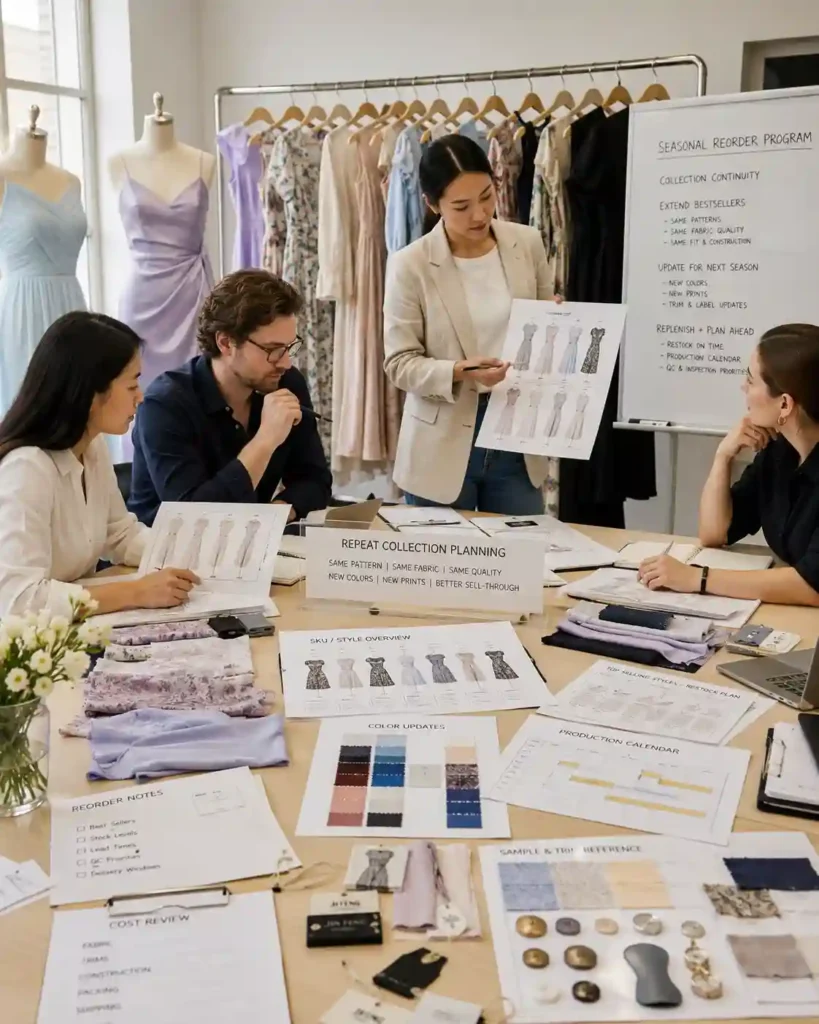
Repeat Collection Planning
A seasonal reorder program may include 10–30 styles across mini dresses, midi dresses, maxi dresses, party dresses, satin dresses, mesh dresses, jumpsuits, tops and matching sets. Total order volume may range from 20,000 to 80,000 pieces per seasonal production round, depending on style count, color plan, size ratio and delivery schedule. For these programs, record keeping becomes a manufacturing advantage.
Jinfeng can help brands extend a successful collection in several ways:
- Same pattern across new colors.
- Same fabric across several dress shapes.
- Same top block extended into dress, jumpsuit or set.
- Bestselling fit carried into new trims or prints.
- Seasonal color update based on previous SKU records.
- Repeat label and packing rules across multiple styles.
- Multi-style production allocated by fabric and construction type.
- Restock and new development managed under one production calendar.
Repeat collection work requires a supplier able to understand style family logic. Jinfeng combines pattern development, sampling, fabric sourcing, production planning, QC and private-label packing to help brands keep continuity from first collection to next season.
Planning Repeat Orders Across Production Batches
Multi-batch production helps brands manage inventory, reduce stock pressure and respond to stronger-selling colors or sizes. Jinfeng supports repeat order planning by reviewing material status, production schedule, style complexity and delivery requirements before confirming timing.
| Production Scenario | Common Quantity Range | Planning Focus |
|---|---|---|
| First bulk after approval | 200–3,000 pcs/style/color | PP sample, material booking, size ratio, QC standard |
| Repeat bulk order | 500–5,000 pcs/style/color | Pattern records, fabric continuity, trims, delivery timing |
| Bestseller restock | 1,000–10,000 pcs/style | Fast material check, size/color ratio, urgent production slot |
| Seasonal collection | 20,000–80,000 pcs total | 10–30 styles, multi-line planning, packing and shipment split |
| Regional shipment | 5,000–30,000 pcs total | Destination rules, carton marks, SKU packing, delivery wave |
| Private-label replenishment | 1,000–20,000 pcs total | Label files, barcode review, polybag, carton, packing list |
QC Continuity for Repeat Dress Production
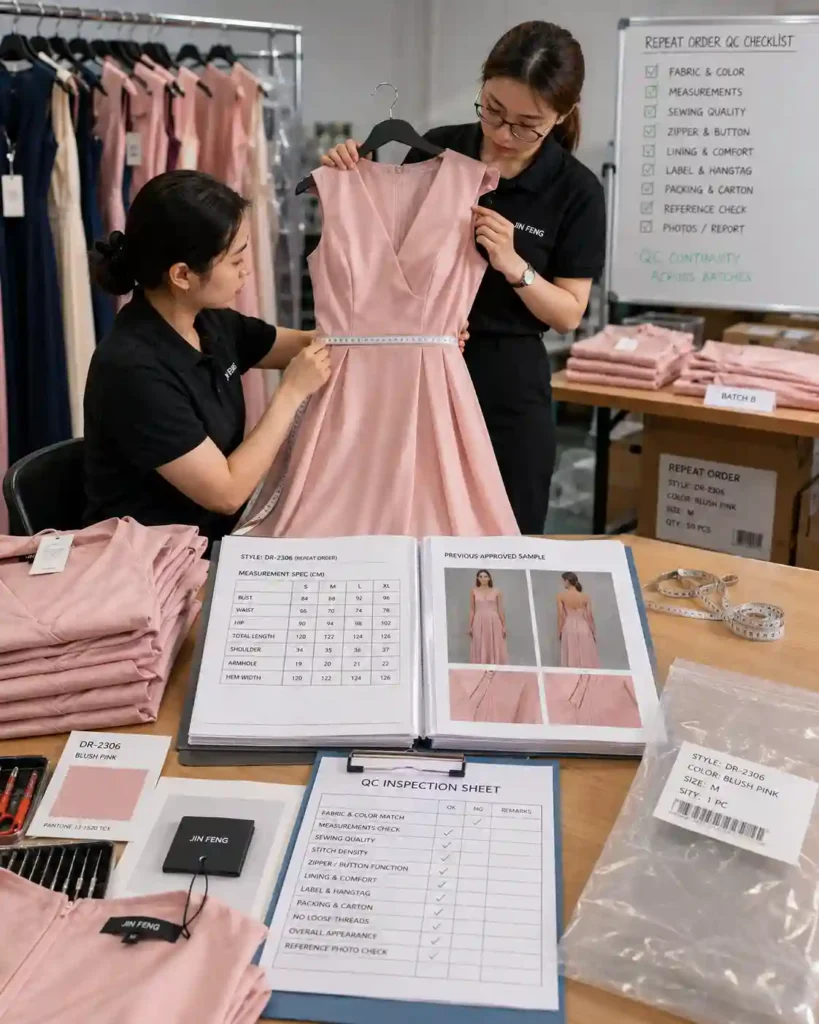
Repeat production needs the same inspection discipline as first bulk production. A reorder may look familiar, but fabric lots, sewing teams, trims, packing files and delivery urgency can change. Jinfeng continues QC review across repeat batches so approved quality standards are not lost after the first order.
Inspection Priorities Across Batches
QC continuity starts before cutting. Fabric condition, color direction, fabric width, shrinkage risk and defect areas should be reviewed. During cutting, pattern placement and size grouping need control. During sewing, inline checks help catch seam tension, zipper setting, lining attachment, strap balance, ruching placement, sleeve opening and hem finishing issues before defects multiply. Final inspection reviews garment measurements, workmanship, stains, loose threads, pressing, label placement, packing, carton marks and quantity.
Key inspection areas for repeat dress orders:
- Fabric inspection before cutting.
- Measurement check by size.
- Sewing quality and seam tension.
- Zipper, button, elastic and strap function.
- Lining comfort and opacity.
- Color and fabric surface review.
- Label and hangtag placement.
- Pressing, folding and polybag packing.
- Carton marks and packing list check.
- Final photos or inspection report when required.
For repeat orders, the most valuable QC file is the known risk list from previous production. If a first bulk batch showed specific issues, those points should become inspection priorities for the next batch.
Reference Samples Used for Reorders
Fit Sample
- Fit history reviewed before changes.
- Bust, waist, hip and length compared.
- Movement and comfort notes checked when available.
Revised Sample
- Approved revision notes reviewed.
- Pattern and construction changes checked.
- Old issues prevented from returning.
Photo Sample
- Photo-facing garment look reviewed.
- Color, drape and neckline checked.
- Finish standards linked with campaign visuals.
PP Sample
- PP approval used as production reference.
- Measurements, trims and labels checked.
- Packing method aligned with approved standard.
Golden Sample
- Approved garment quality reference.
- Visual and measurable standard for QC.
- Useful for repeat and multi-batch programs.
Bulk Reference
- Previous bulk garment comparison.
- Inspection record review.
- Known bulk risks added to QC focus.
Private-label Packing for Repeat Dress Orders
Woven Label
- Artwork, size and color review.
- Placement and sewing method checked.
- Updated files confirmed before use.
Care Label
- Fiber content and care wording review.
- Placement and label version check.
- Material changes linked with care label updates.
Size Label
- Size range and grading alignment.
- Production quantity match.
- SKU and carton data checked.
Hangtag
- Hangtag artwork and string type.
- Placement and naming rules.
- Retail presentation consistency.
Barcode Sticker
- Barcode and SKU file check.
- Color name and size information.
- Sticker placement verified before packing.
Polybag
- Polybag size and warning print.
- Folding method and sticker placement.
- Surface-sensitive garment protection.
Carton Mark
- Style, color and size data.
- Carton number and quantity.
- Destination and split-shipment notes.
Packing List
Packing lists should match final quantity, size ratio, color split, carton count and shipping plan. Jinfeng checks packing information before shipment so brands can prepare warehouse receiving and inventory updates.
- Quantity, size ratio and color split.
- Carton count and shipping plan.
- Packing list checked before dispatch.
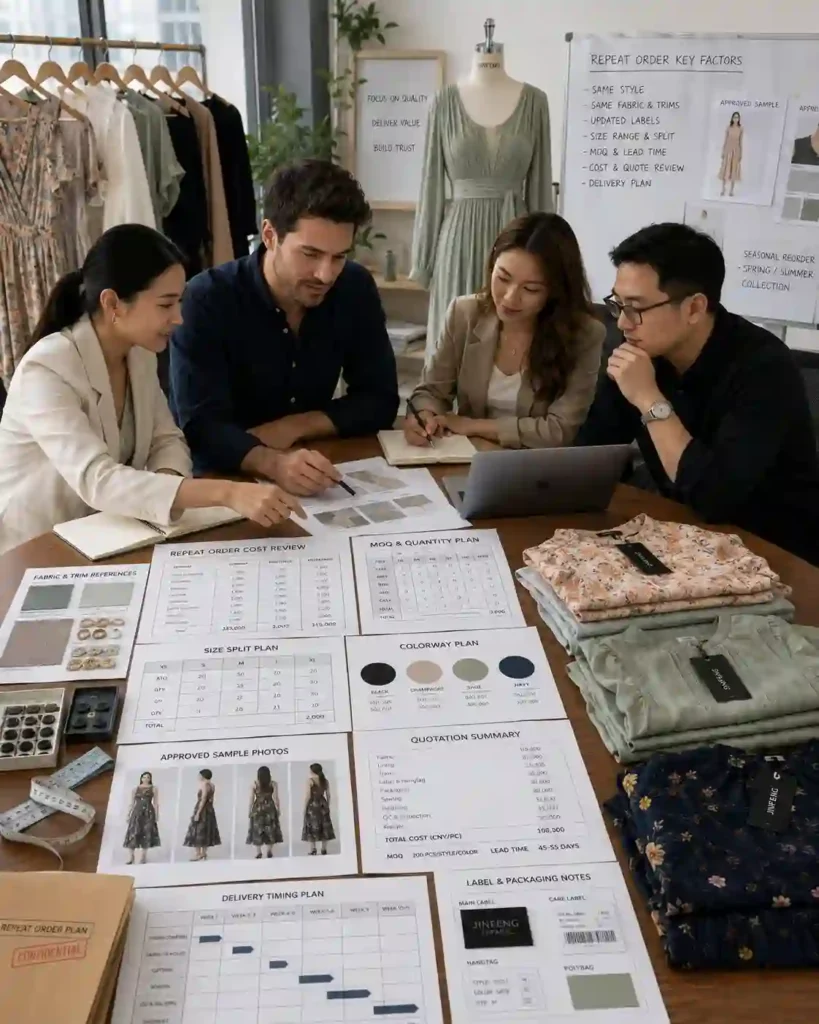
MOQ and Cost Factors for Repeat Dress Orders
Jinfeng Apparel’s MOQ starts from 200 pcs per style/color. Repeat orders may be easier to plan when the same pattern, same fabric, same trims, same labels and same packing method are used. Cost and timing may change when new colors, new materials, updated labels, complex size splits or urgent production windows are added.
Reorder Cost Review
The main cost factors include fabric availability, fabric consumption, garment construction, lining, trims, print or dye requirement, size range, color split, sewing complexity, finishing method, inspection needs, packing method and shipping plan. For fitted dresses, extra construction steps such as boning, lining, ruching, zipper setting, elastic control, slit finishing and strap reinforcement can affect labor cost. For satin, lace, mesh, velvet and sequin dresses, cutting and sewing difficulty may be higher than basic woven styles.
Repeat orders can reduce uncertainty when approved records are complete. Brands should prepare previous style files, approved sample photos, target quantity, color plan, size ratio, delivery date, label files and packing instructions. A reorder quotation becomes more accurate when Jinfeng can compare the new request against previous production records and current material status.
- Same style, same fabric and same trims reduce review uncertainty.
- New colors, new fabric or changed labels require fresh confirmation.
- Urgent production windows may affect allocation and shipping choices.
- Accurate files help create a clearer quotation path.
When a Repeat Dress Order Needs Reconfirmation
A reorder does not always mean automatic production. Professional repeat manufacturing means knowing when a style can move quickly and when a detail must be checked again. Jinfeng reviews changed conditions before confirming bulk production to reduce avoidable fit, color, material or packing problems.
Reconfirmation Triggers
Reconfirmation is recommended when:
- A new color is added.
- Fabric supplier or fabric lot changes.
- Original trim is out of stock.
- Lace, sequin, mesh or print source changes.
- Size chart is updated.
- Label artwork is changed.
- Care label wording changes.
- Packaging method changes.
- Long time has passed since last production.
- Order quantity is much larger than earlier bulk.
- Delivery window is shorter than usual.
- Style adjustment is requested before repeat production.
For example, a satin slip dress repeated in the same black fabric may need limited review if material remains available. The same pattern repeated in a new champagne satin needs color, shine, drape and lining confirmation. The same mesh dress using a new stretch mesh needs fit and recovery review because the body shape may change.
Jinfeng protects repeat order stability by checking risk before production, not after problems appear in finished garments.


NDA and Style Protection for Brand Reorders
Repeat orders often involve sensitive business information: selling SKUs, previous order quantities, launch calendars, fit corrections, tech packs, size charts, private-label files, barcode rules, unpublished colors, fabric references and future replenishment plans. Jinfeng supports NDA-based cooperation and protects brand development information throughout sampling, production, QC, packing and delivery.
Confidential Reorder Handling
Protected materials may include tech packs, original samples, reference images, pattern files, measurement charts, fabric plans, trim details, label artwork, hangtag files, packaging information, order quantities, target costs, new color plans and pre-launch styles. Without written permission, Jinfeng does not use brand names, unpublished designs, private tech packs, order quantities, exclusive materials or packing documents for public promotion.
For long-term cooperation, style protection is not only legal language. It is part of production discipline. A repeat order supplier must respect the product memory of a brand while keeping records organized for future replenishment. Jinfeng supports anonymous project discussion, process-based communication and confidential reorder planning for established womenswear programs.
- NDA-based cooperation supported.
- Tech packs, samples, patterns and records protected.
- Private-label files and barcode rules handled as confidential project materials.
- Anonymous project discussion available when public details are not allowed.
Repeat Dress Production Project Examples

U.S. Party Dress Restock
A U.S. online fashion brand needed repeat production for a group of party and club dress SKUs after several styles sold faster than forecast. The reorder covered bodycon dresses, mesh dresses, ruched mini dresses and cut-out party dresses. The main risk was fit drift because several styles used stretch fabrics, lining, side zippers and strap details.
- 18 styles / 42,000 pcs / 4 dress groups — project data: bodycon, mesh, ruched mini and cut-out party dresses; technical difficulty: stretch fabrics, lining and straps could change fit in the second batch; solution: Jinfeng reviewed previous samples, measurement files, fabric records and sewing notes before production.
- 2 production priorities / urgent replenishment and new-color extension — project data: proven colors needed faster restock while added shades needed review; technical difficulty: new shades could change fabric behavior and color continuity; solution: urgent replenishment styles were separated from new-color development.
- 6 private-label packing items / ecommerce receiving — project data: woven labels, size labels, hangtags, barcode stickers, polybags and carton marks were required; technical difficulty: SKU errors could delay warehouse intake; solution: barcode, size and carton files were checked before shipment.
- 4 fit-risk points / body-focused styles — project data: bust, waist, hip and strap balance were priority points; technical difficulty: small measurement changes could affect model photos and fit feedback; solution: repeat production followed previous measurement records and PP references.

Australia Resort Dress Program
An Australian resortwear label planned a seasonal replenishment round for vacation dresses and warm-weather styles. The project included printed maxi dresses, halter dresses, lightweight midi dresses, tie-strap styles and matching sets. The brand needed repeat production while adjusting color ratios based on store and online sell-through.
- 12 styles / 28,000 pcs / 5 resort groups — project data: printed maxi dresses, halter dresses, lightweight midis, tie-strap styles and matching sets; technical difficulty: lightweight fabrics carried shrinkage, print direction and wrinkle risks; solution: Jinfeng reviewed fabric drape, print direction, strap length, hem finishing and packing method before production.
- Updated color ratio / sales-based adjustment — project data: stronger colors needed higher replenishment share; technical difficulty: color split changes could affect fabric sourcing and SKU packing; solution: color ratio and size ratio were reviewed before material confirmation.
- 2 delivery waves / seasonal timing — project data: early-selling colors needed faster delivery; technical difficulty: one shipment could miss the selling window; solution: production was arranged in two waves so priority colors could reach the warehouse earlier.
- 3 packing controls / vacation garment handling — project data: fold method, carton pressure and polybag size were reviewed; technical difficulty: lightweight fabrics wrinkled easily; solution: folding and carton packing were checked before shipment.

UK Occasionwear Collection
A UK occasionwear brand needed multi-batch production for an established dress collection used across event seasons. The project included satin cocktail dresses, lace midi dresses, sequin mini dresses, formal jumpsuits and evening-inspired silhouettes. The key challenge was keeping garment presentation consistent across different fabric groups.
- 26 styles / 76,000 pcs / 5 product groups — project data: satin cocktail dresses, lace midis, sequin minis, formal jumpsuits and evening silhouettes; technical difficulty: each fabric group needed different fit, sewing and packing control; solution: Jinfeng organized pattern records, fabric references, trim lists and QC notes by style group.
- 3 fabric-risk groups / satin, lace and sequin — project data: satin required seam and pressing control, lace required motif and lining review, sequin styles required lining comfort and missing-sequin checks; technical difficulty: one QC logic could not fit every group; solution: QC focus was separated by fabric behavior.
- Multi-batch schedule / event-season pressure — project data: production had to support ongoing event-season delivery; technical difficulty: high-risk styles could delay lower-risk replenishment; solution: production schedule was divided by construction complexity.
- Private-label packing continuity / repeat standards — project data: labels, barcodes, polybags and carton marks had to match previous programs; technical difficulty: packing drift could disrupt receiving; solution: previous packing files were reviewed against final carton data.
Repeat Order Dress Manufacturing FAQ

Start Your Repeat Dress Order With Jinfeng Apparel
Already have an approved dress style, selling SKU, sample reference or seasonal reorder plan? Send your project details to Jinfeng Apparel for a professional review. Kelly and the merchandising team can help check pattern continuity, fabric availability, trim risk, MOQ, production timing, QC focus, private-label packing and shipment planning before bulk production begins.
Please include:
- Style photos or approved sample photos.
- Previous PO or order reference.
- Tech pack or measurement chart.
- Target quantity by style/color.
- Size range and size ratio.
- Fabric or color reference.
- Trim and label files.
- Packing requirements.
- Delivery date and destination.
- Any changes from previous production.


