Skip to content
Red Dress Manufacturer
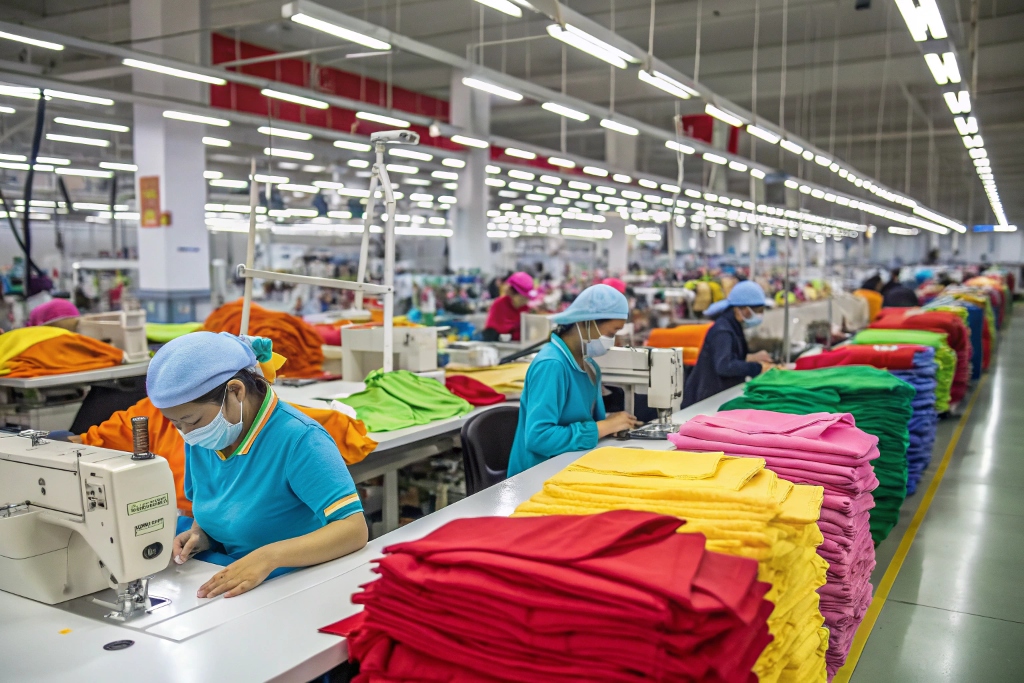
Custom red dress development and bulk production for established fashion brands, sourcing teams, occasionwear labels, and private-label womenswear programs.
- Red color development controlled through approved references, fabric evaluation, lining and trim matching, and bulk shade review.
- 8 core red dress directions: satin, party, bodycon, corset, lace, mesh, sequin, and evening styles.
- MOQ starts from 200 pieces per style/color, subject to fabric, dyeing, trim, construction, packing, and production requirements.
- 2 sample rooms, 7+ senior pattern makers, 20+ sample machinists, and 15+ QC inspectors support development and bulk control.
- 6 owned women’s fashion factories, 10+ long-term production partners, and 100,000+ pieces of regular monthly capacity.
Manufacturing Capacity for Brand-Level Red Dress Programs
Since 2008
Six Owned Factories
Ten-Plus Partners
Two Sample Rooms
Pattern and Sample Team
QC and Order Control
Built for Established Fashion and Private-Label Programs
Strong Program Fit
- Seasonal and multi-style collection development
- Photo, fit, revised, PP, and golden sample workflows
- Brand labels, barcodes, SKU stickers, polybags, and carton marks
- Repeat orders and multi-batch delivery
Commercial Production Model
Jinfeng Apparel is organized for custom development followed by confirmed bulk production. The service is not built around ready-stock sourcing, one-piece fulfillment, or unplanned micro orders. The MOQ starts from 200 pieces per style/color and may change when custom dyeing, special lace, sequins, molded trims, exclusive packaging, or complex construction carries a separate supplier minimum.
- Quantity planned per style and color
- Sample budget aligned with development complexity
- Approved fabric, fit, trims, and PP standard before bulk
- Long-term cooperation, replenishment, and collection continuity
Red Dress Categories Developed for Fashion Brands
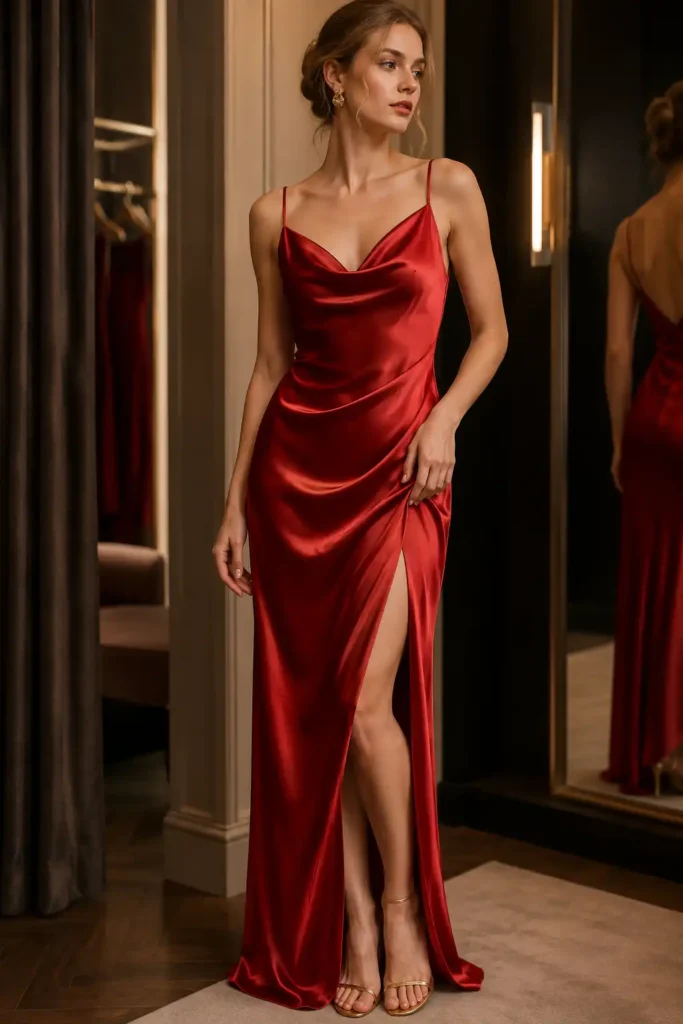
Red Satin Dresses
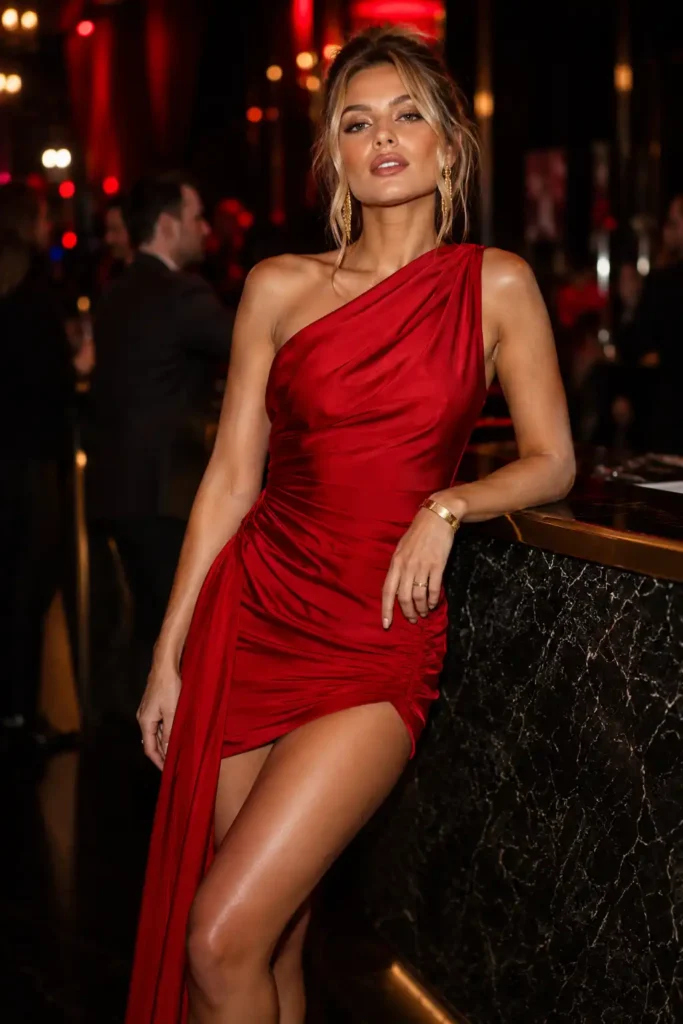
Red Party Dresses

Red Bodycon Dresses
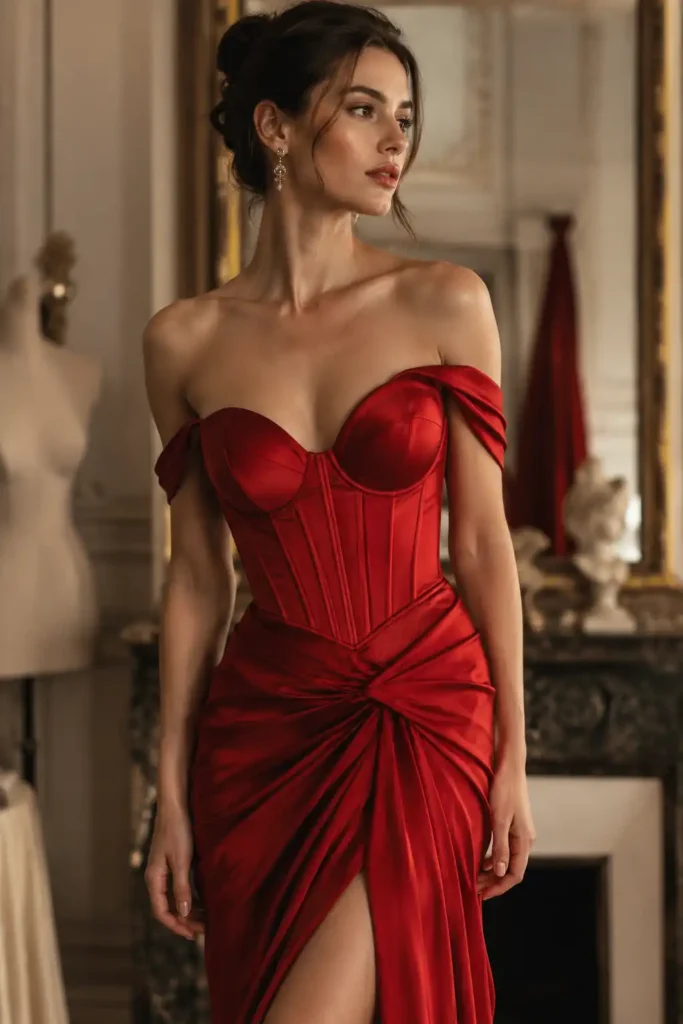
Red Corset Dresses
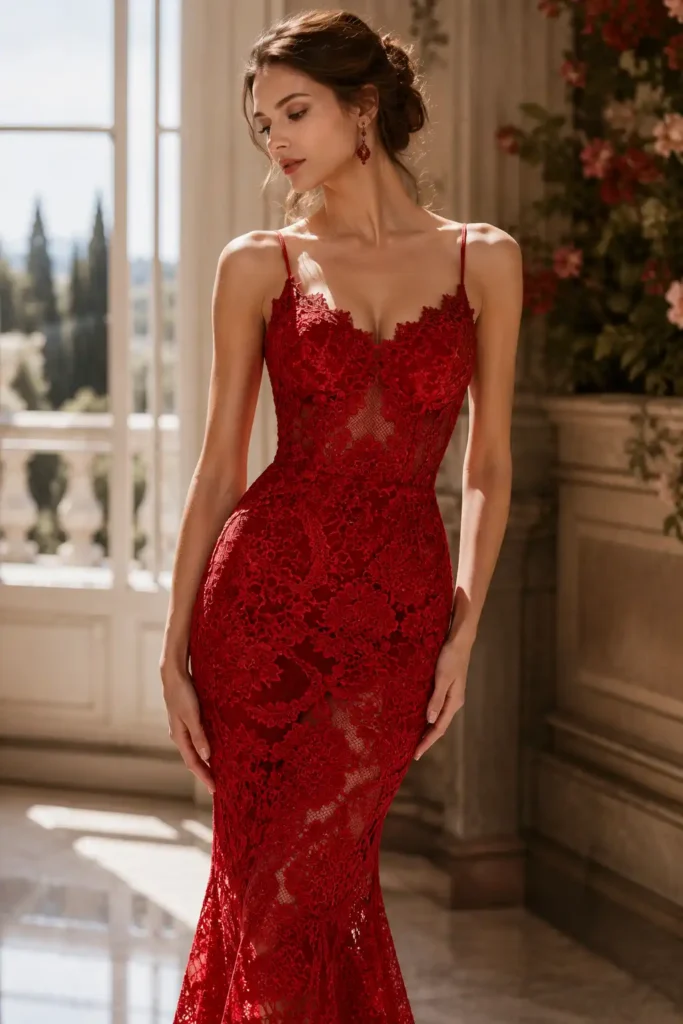
Red Lace Dresses
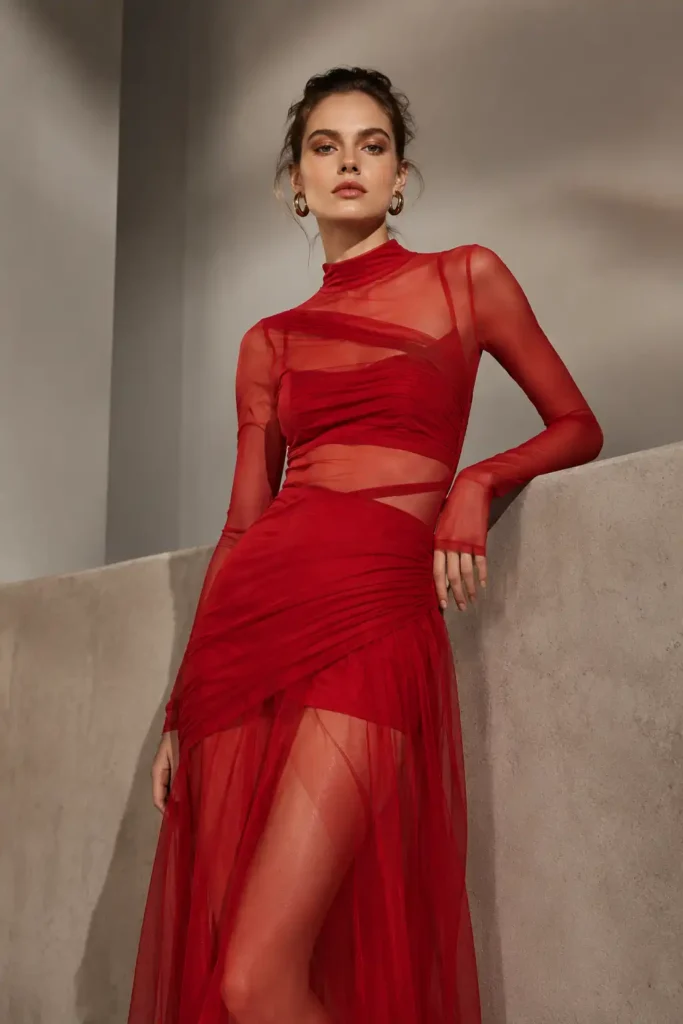
Red Mesh Dresses
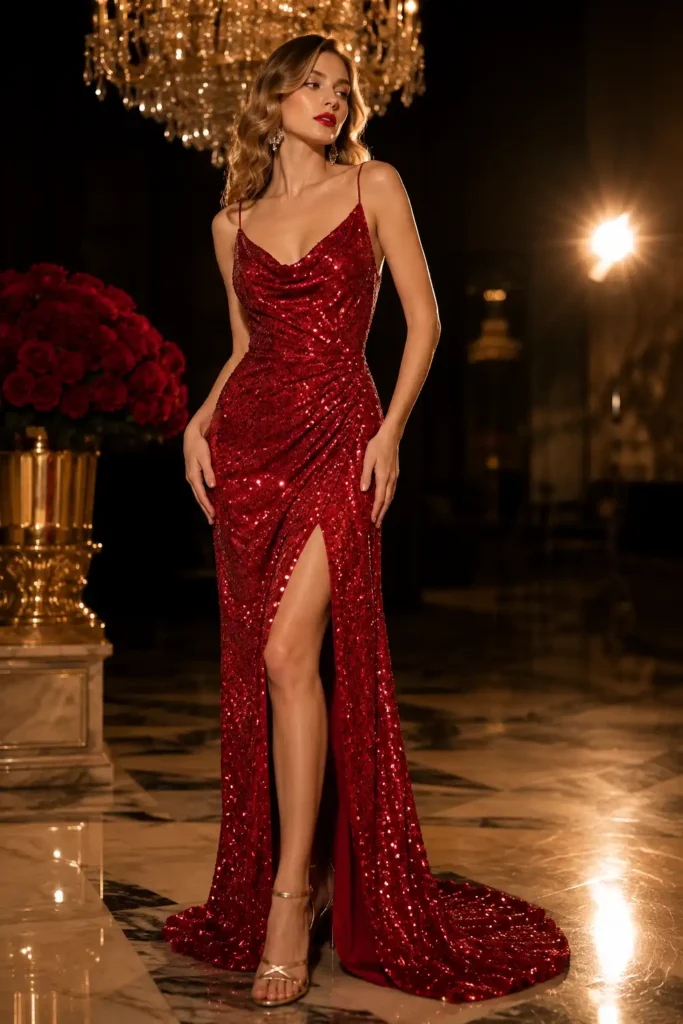
Red Sequin Dresses
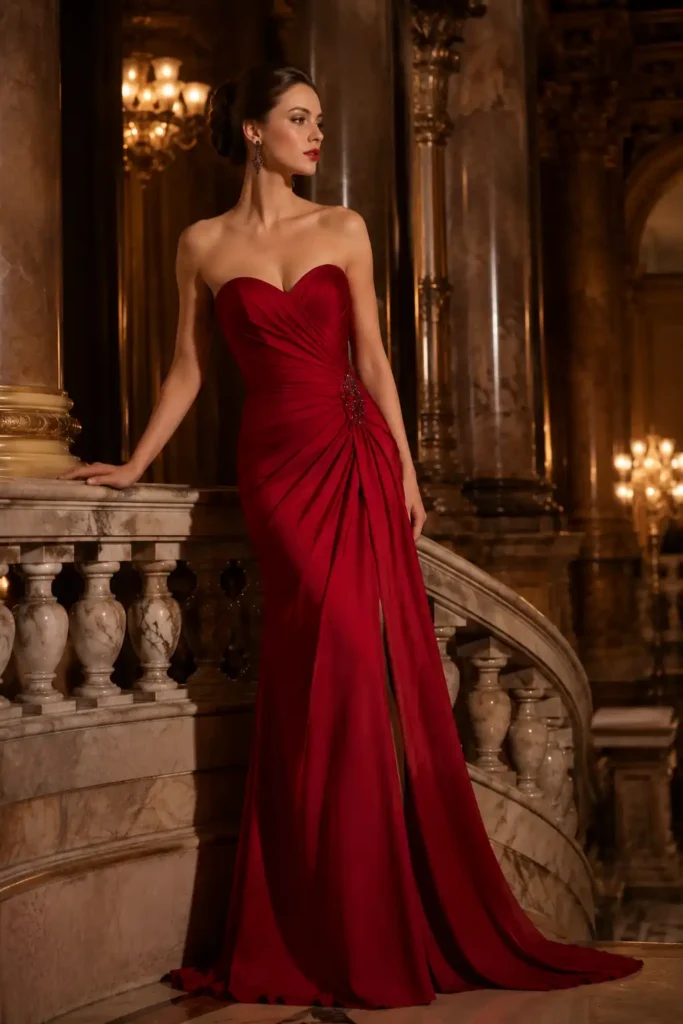
Red Evening Dresses
Red Dresses Developed Around Real Selling Occasions

Holiday Collections
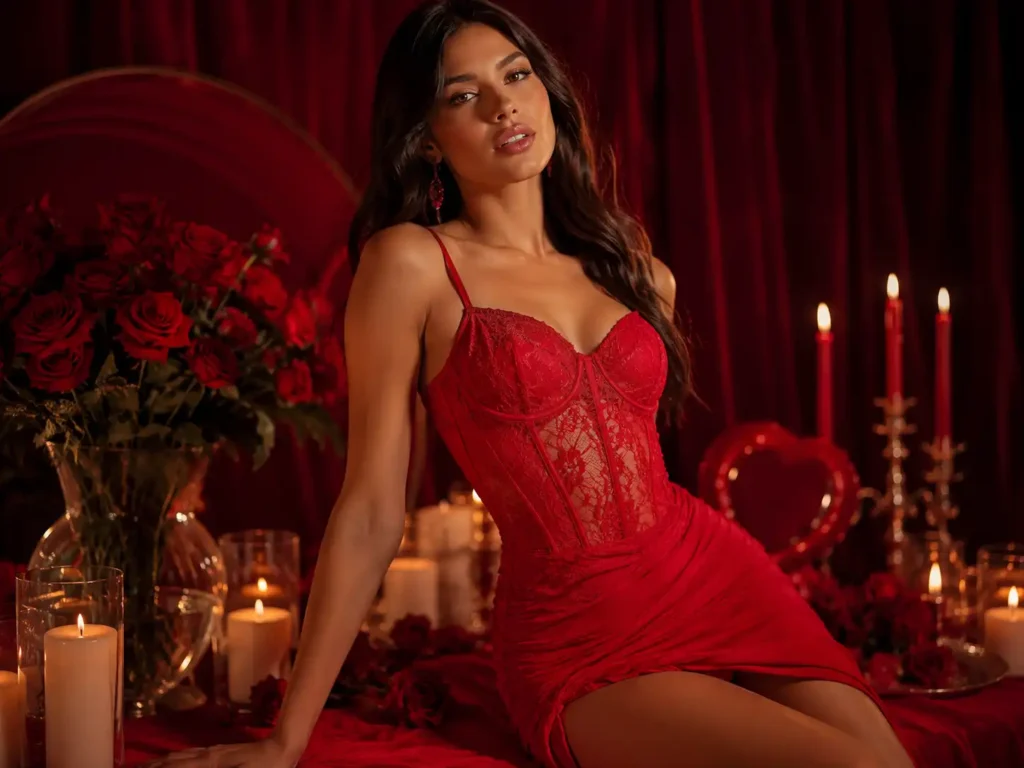
Valentine’s Drops
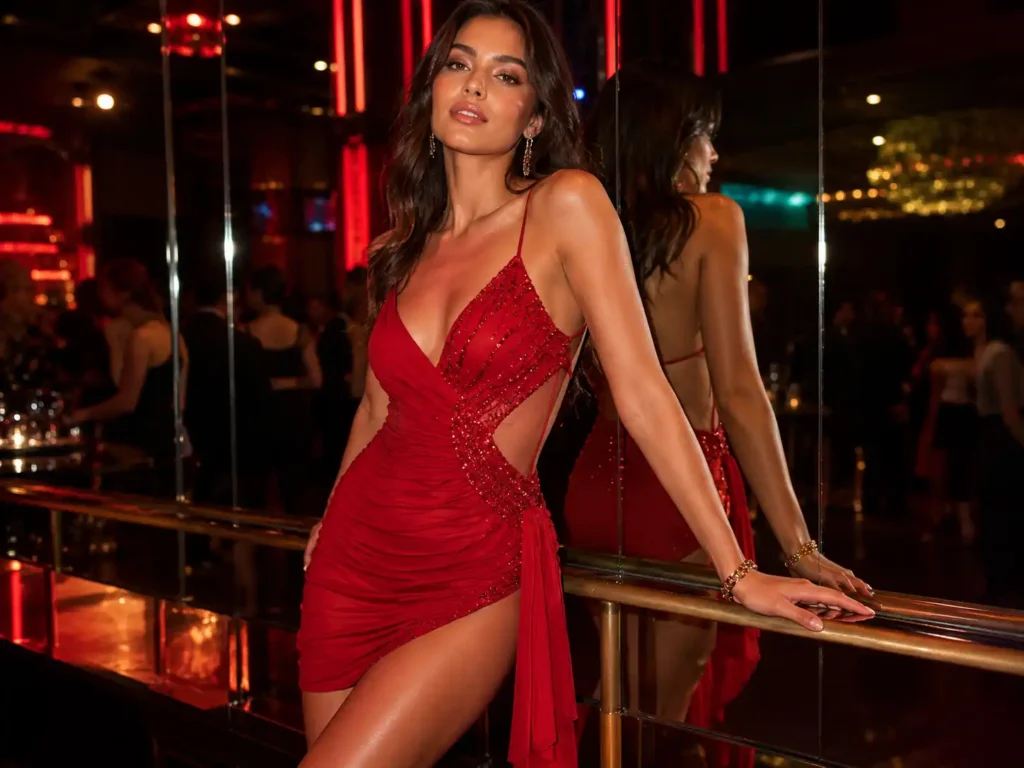
Party and Clubwear

Cocktail Collections
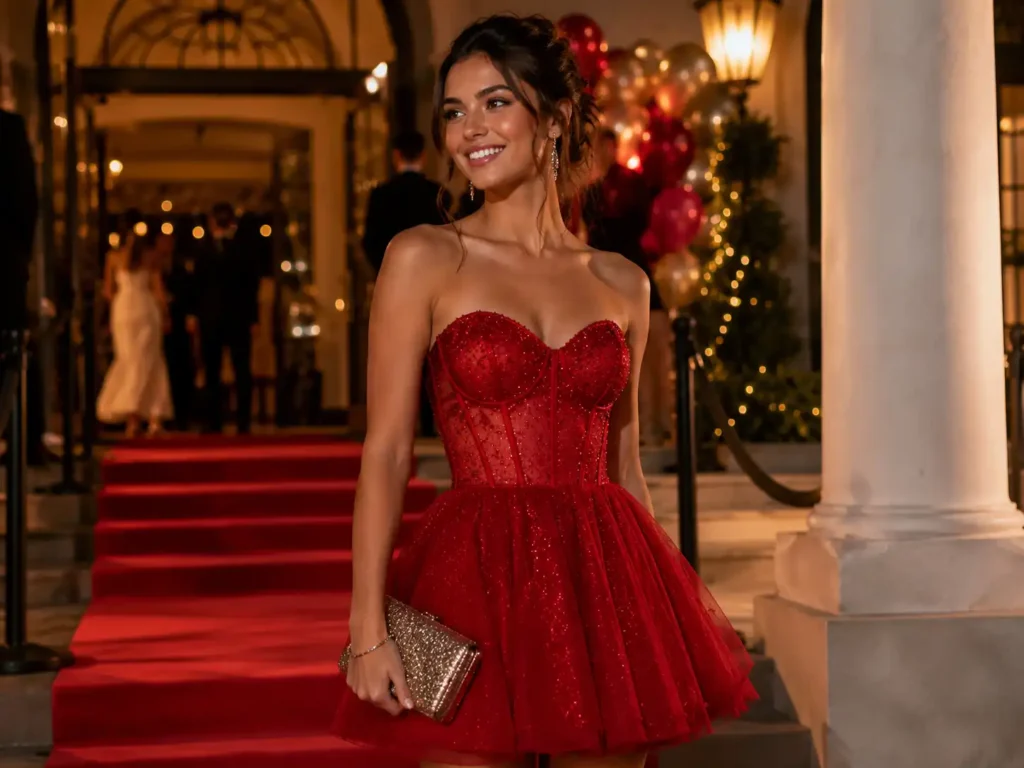
Prom and Homecoming

Date-Night Lines
Fabric Options for Different Red Dress Collections
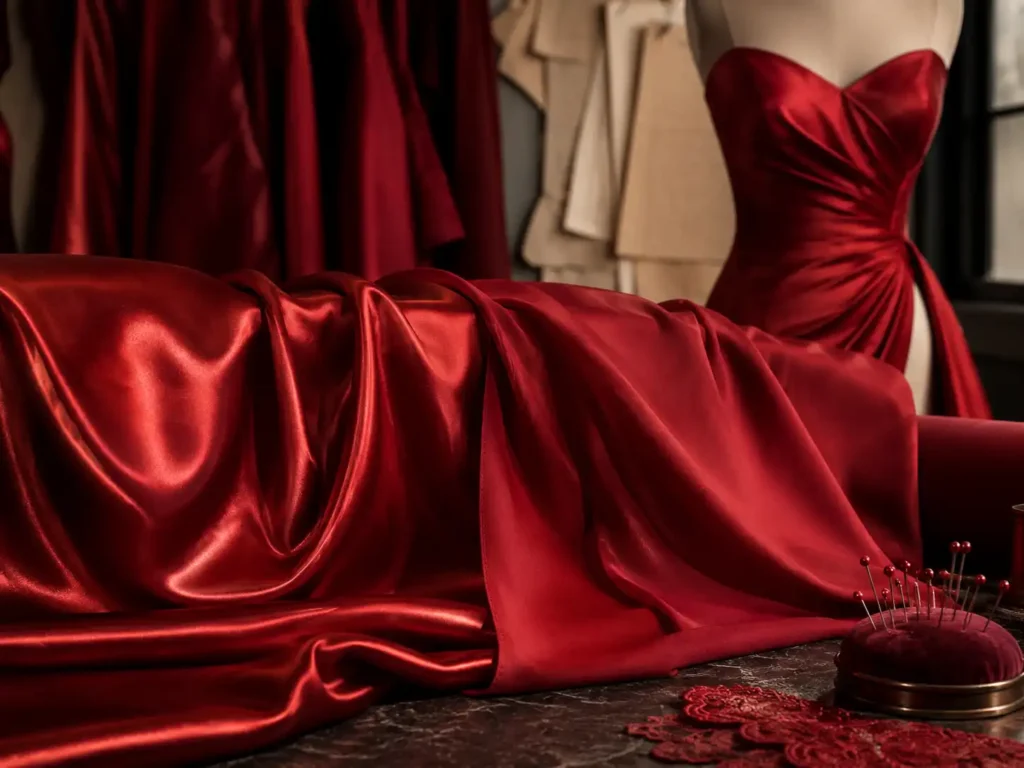
Satin and Stretch Satin
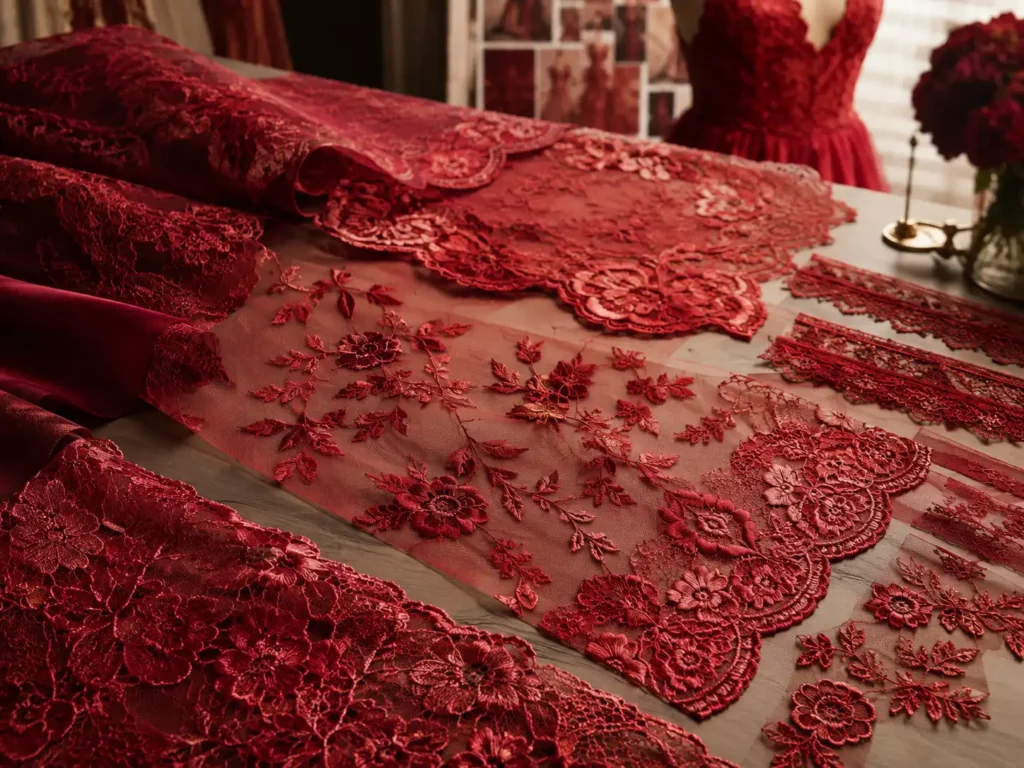
Lace and Embroidered Lace
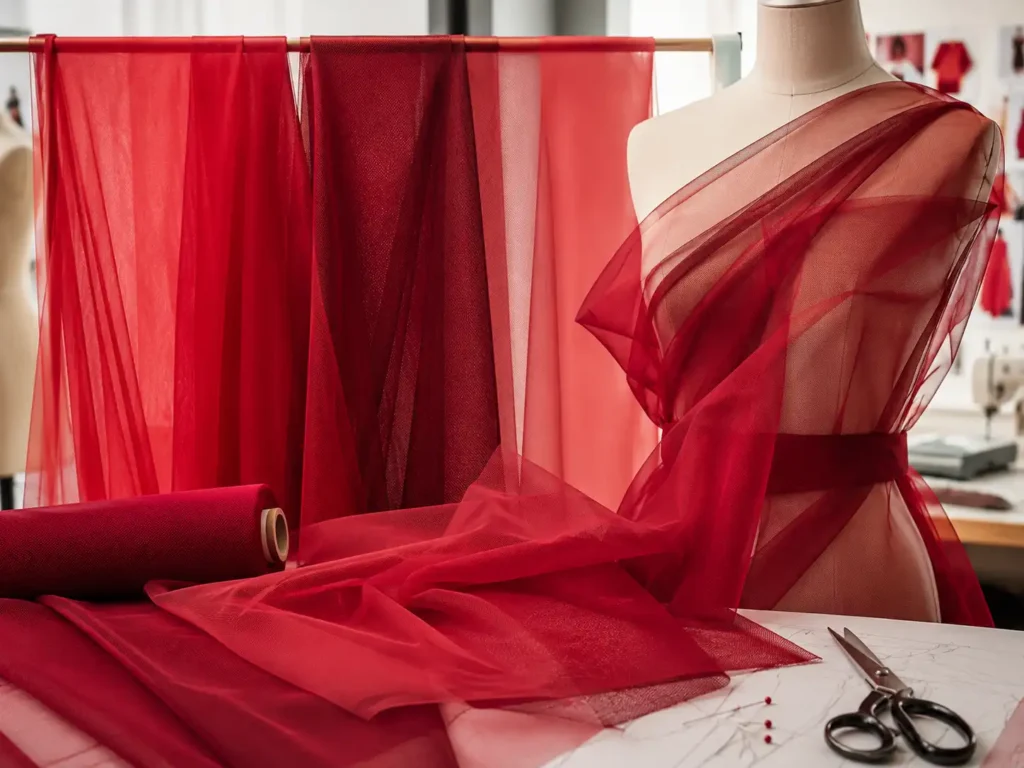
Mesh and Power Mesh
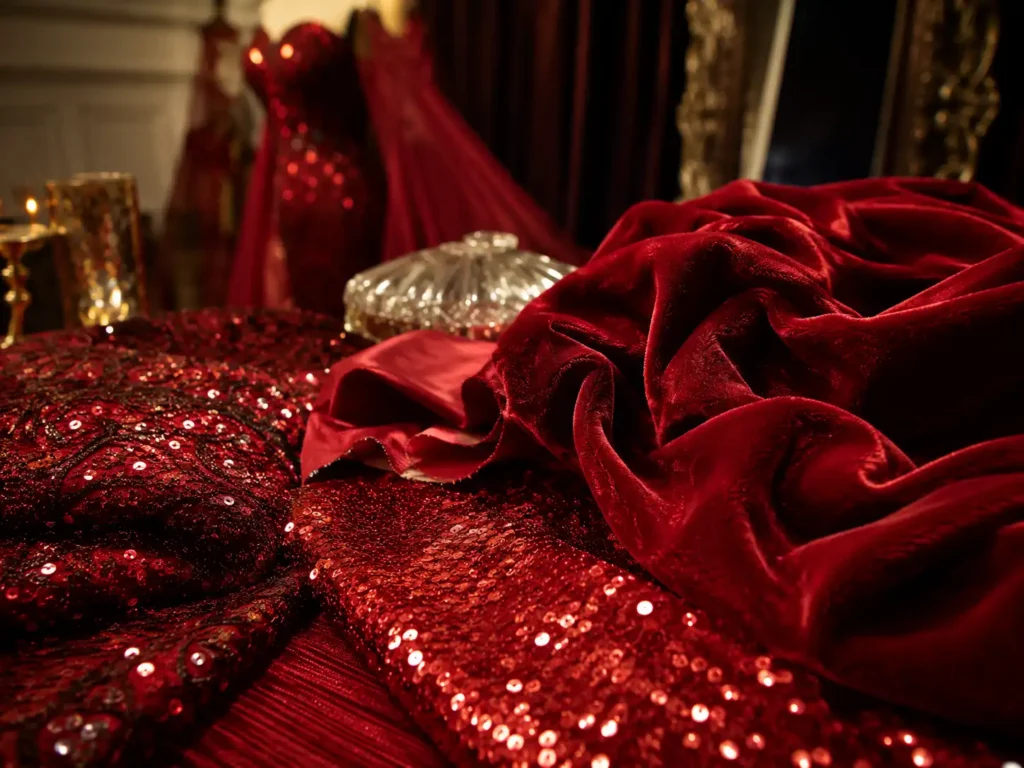
Sequin and Velvet
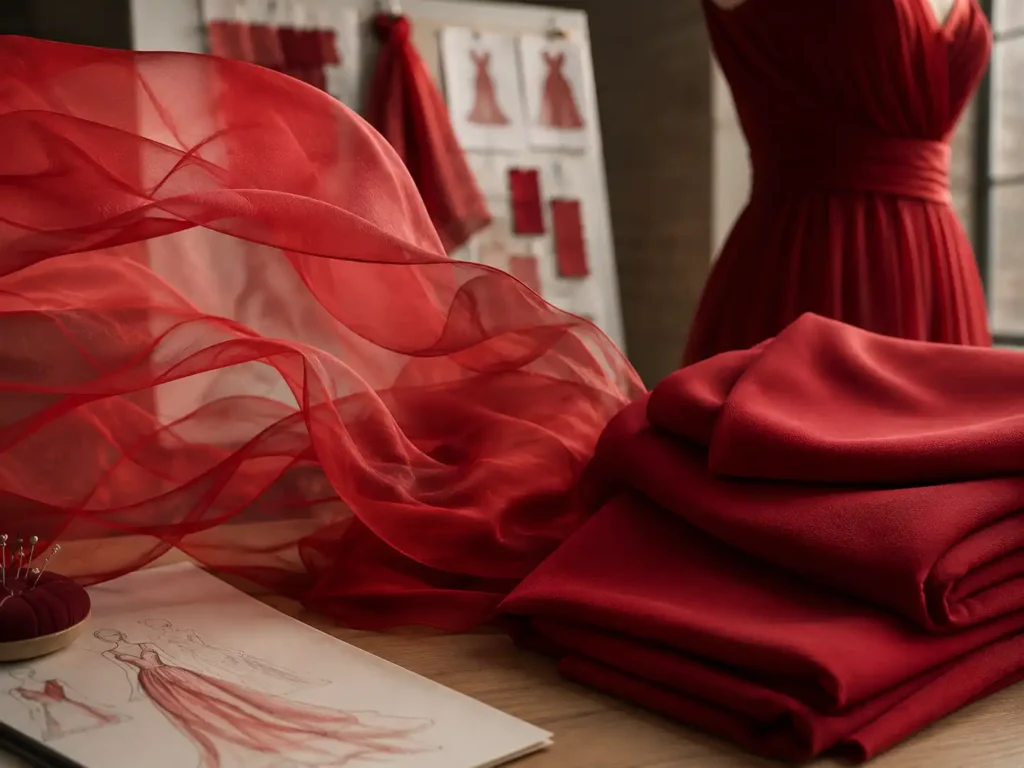
Chiffon and Crepe
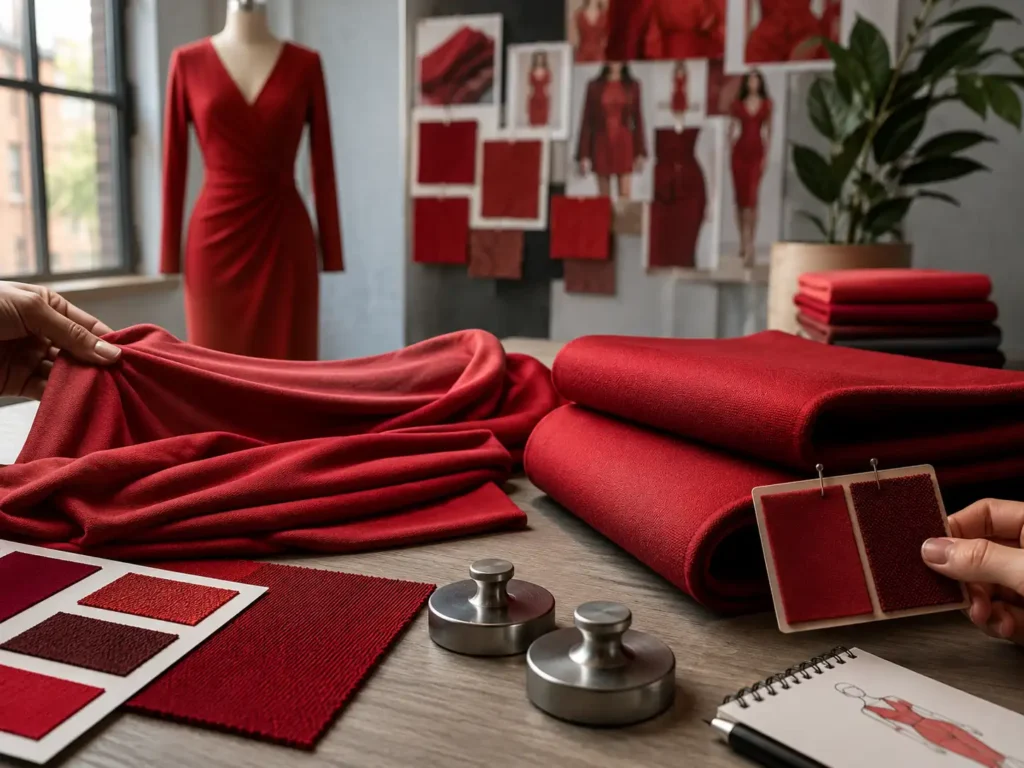
Jersey and Ponte
Red Shade Development from Reference to Bulk Fabric
Red shade approval must connect the design reference with the actual fabric, lining, trims, lighting conditions, dye lot, and finished garment. A color number alone cannot control every material used in one dress.
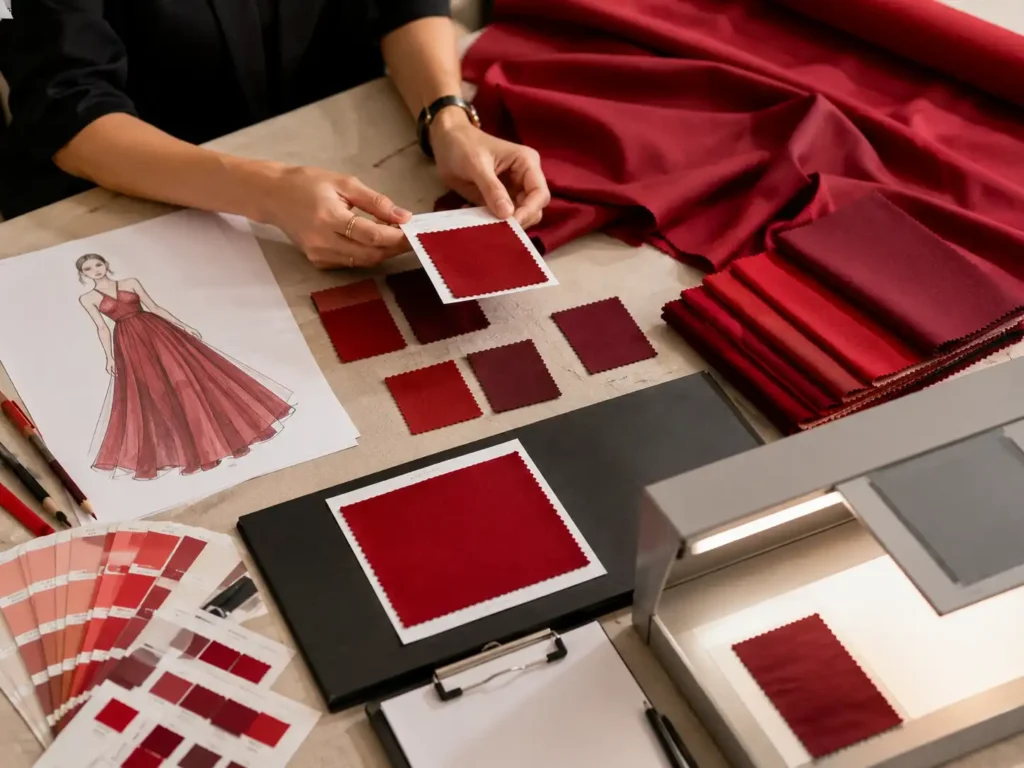
Establishing an Approval Standard Before Sampling
The project can begin from a Pantone reference, an approved fabric swatch, a physical garment, or a client color standard. Screen images are useful for direction but are not reliable as the final approval source because monitor calibration, photography, compression, and ambient light can shift red dramatically. Jinfeng Apparel records the source of the color decision and connects it with fabric type, supplier, composition, weight, width, and intended use.
A stock red may shorten material preparation when sufficient quantity exists in one usable batch. Custom dyeing may be needed when the collection requires a specific scarlet, cherry, crimson, ruby, wine, burgundy, brick, or dark red. Before custom dyeing, the team checks supplier minimums, expected lead time, fabric behavior, and whether lining or trims need separate color development. Lab dips are reviewed by project when dyeing is required.
Approval should consider more than visual closeness. Satin may reflect a brighter highlight and darker shadow; velvet changes with pile direction; lace is affected by the lining underneath; mesh becomes deeper where layers overlap; sequins may shift under warm and cool lighting. A red standard is therefore approved on the intended material, not transferred blindly from one fabric to another.
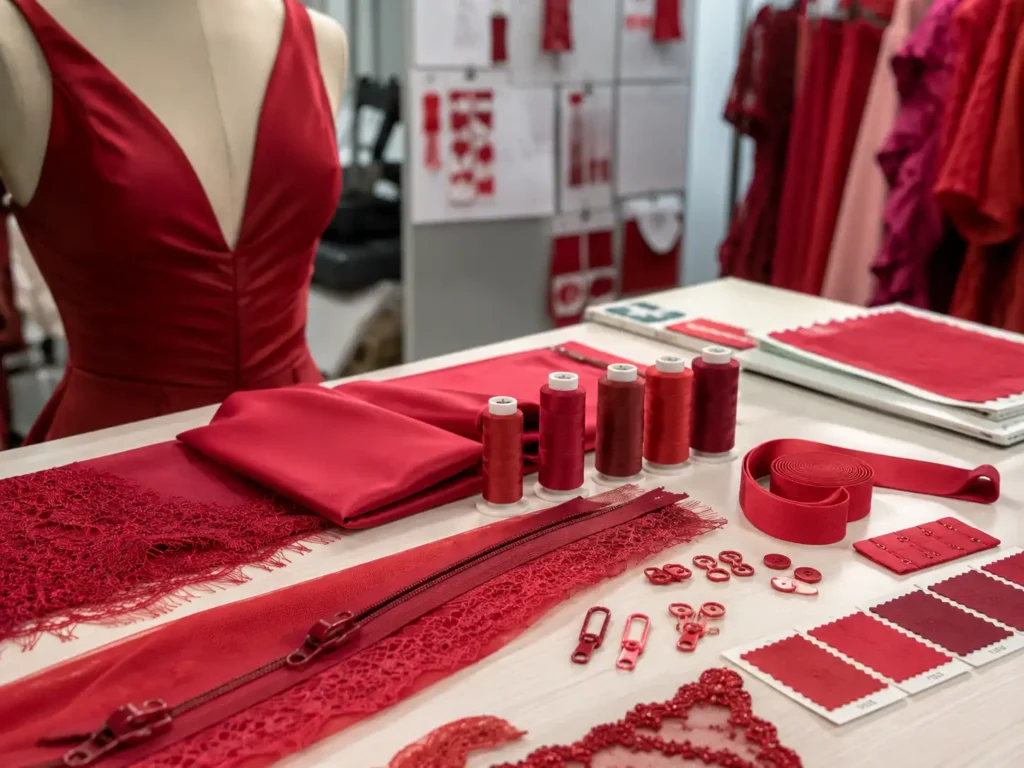
Matching Main Fabric, Lining, Zippers, Thread, and Trims
A red dress can contain five or more visible color components: shell fabric, lining, zipper tape, sewing thread, mesh or lace inserts, covered buttons, elastic, sliders, hooks, decorative trims, labels, and packaging stickers. Exact numerical color matching is not always visually desirable. A lining may need to support the shell without appearing through it, while thread should disappear into the seam rather than creating a contrasting line.
Jinfeng Apparel reviews components together under agreed lighting conditions. For sheer lace or mesh, lining color is evaluated on the body area and at seam overlaps. For satin, zipper tape and thread are checked against both highlight and shadow. For bodycon knit, elastic and lining must not create a dark band. For corset styles, cup, boning channel, underlining, and top fabric should form one coherent red appearance.
Trim approvals are linked to style and color codes. The approved component list enters the bill of materials and production file. Any substitution during sampling or bulk requires a new comparison because a small trim change may alter appearance, cost, MOQ, sewing method, and delivery timing.
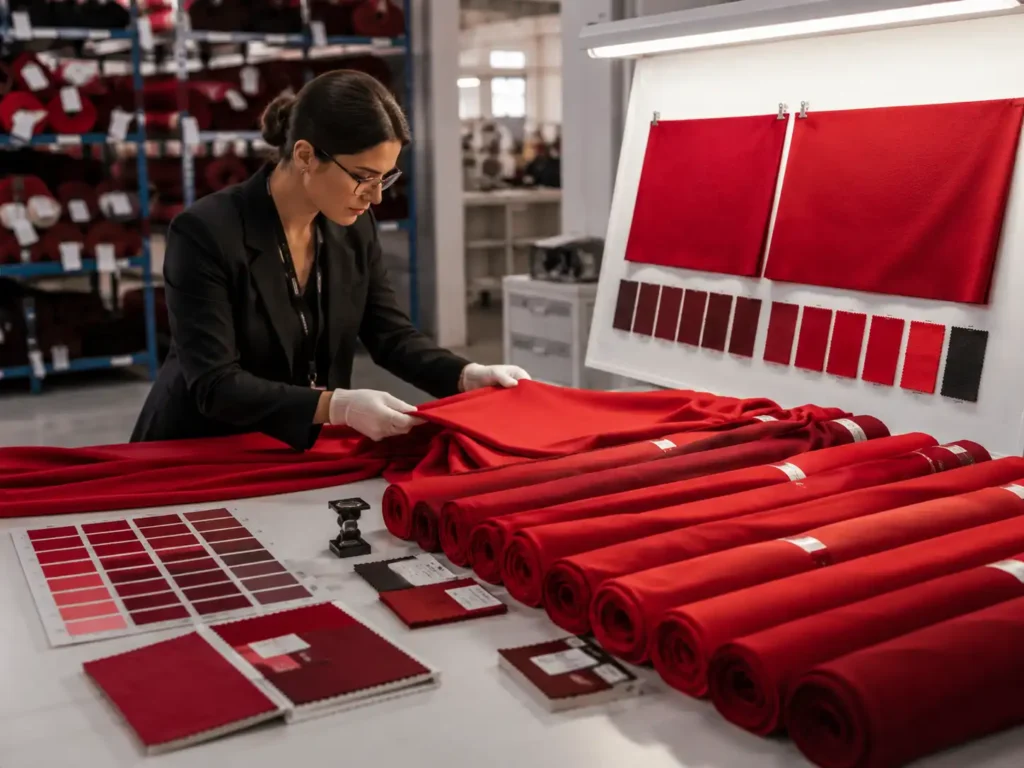
Controlling Dye Lots, Shade Bands, and Color Transfer
Bulk fabric should be reviewed by lot rather than treated as one uniform roll. Jinfeng Apparel records supplier, fabric name, composition, weight, width, color reference, dye lot, quantity, and approval status. Fabric inspection checks visible shade variation, weaving or knitting defects, stains, pressure marks, and surface damage. Rolls with different usable shades are separated and managed so one garment is not assembled from visibly mismatched panels.
Shade-band review may be used when variation needs a controlled visual range. Cutting bundles are identified by roll or lot, especially for satin, velvet, and solid bright colors. Panel direction is marked when shine or pile changes the apparent red. Sewing teams follow bundle control to prevent front and back panels from different shade groups being mixed.
Deep and saturated reds may require project-based checks for rubbing, washing, perspiration, or color transfer, depending on fabric, finish, destination market, and client standard. Packing materials are also reviewed. Light tissue, labels, inserts, or adjacent garments should not be exposed to avoidable transfer risk. Final approval remains connected to the actual fabric batch and product construction rather than a general color promise.
Silhouette and Fit Engineering for Red Dresses
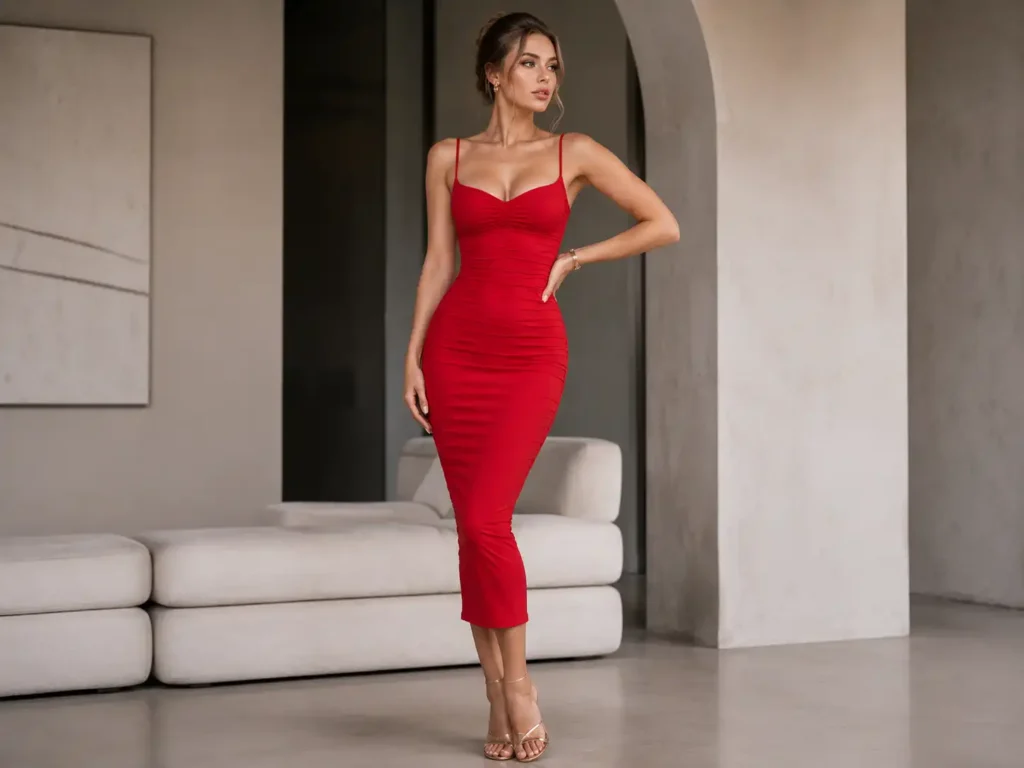
Bodycon Fit
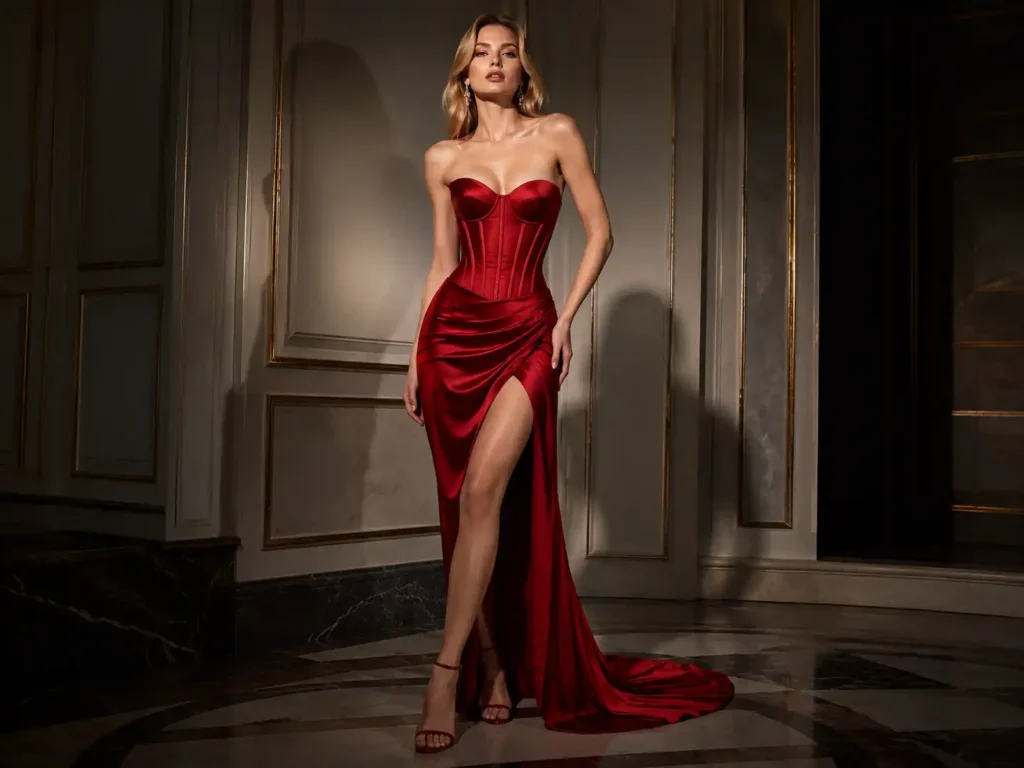
Corset Structure

Slip Silhouette

A-Line Shape
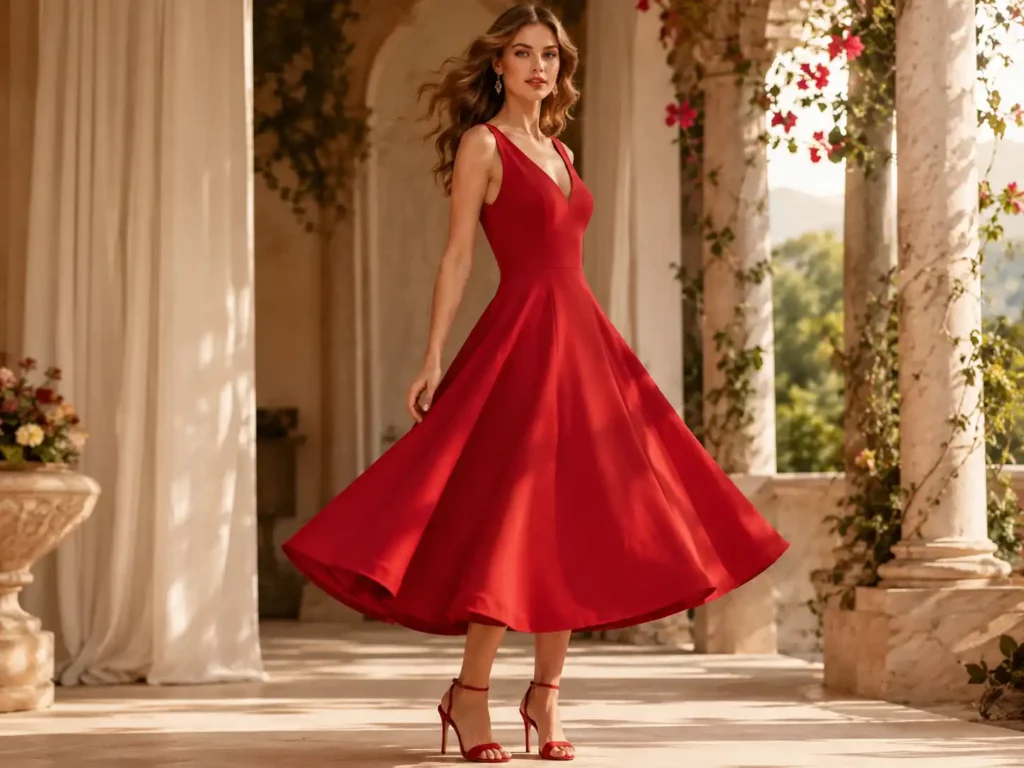
Fit-and-Flare

Mini Proportion

Midi Balance
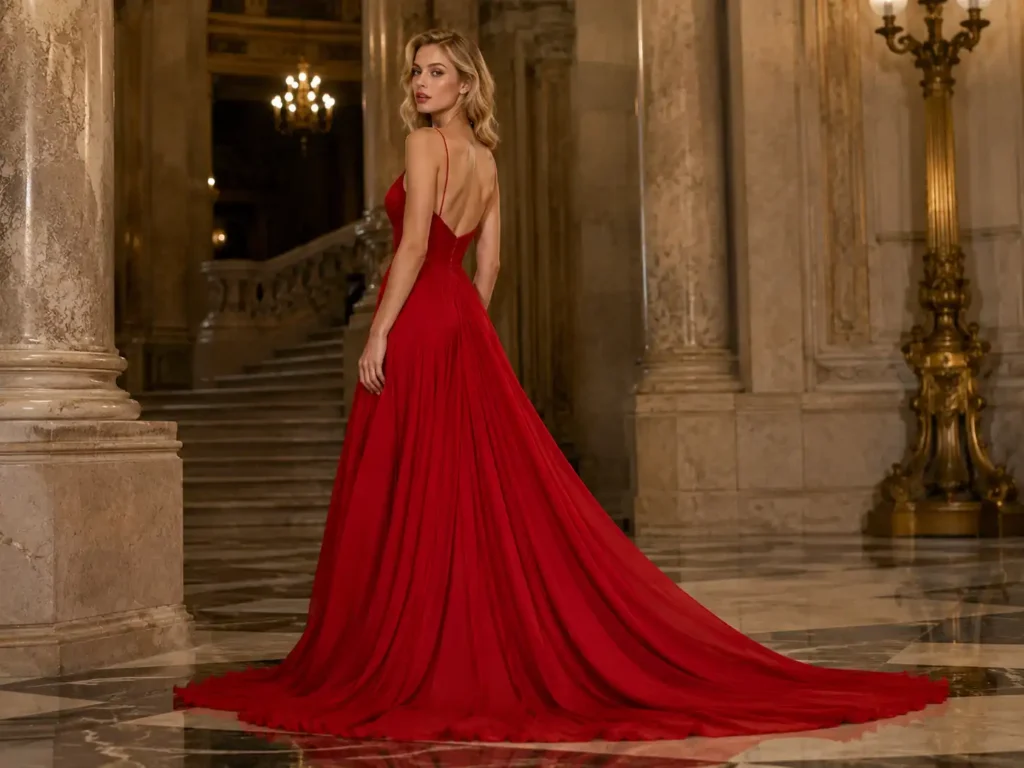
Maxi and Floor-Length
Construction Details Behind a Sellable Red Dress
Lining Coverage
Bust Support
Zipper Control
Adjustable Straps
Ruching and Draping
Slits and Hemlines
Red Dress Sampling Before Bulk Production
Sampling converts a concept into an approved manufacturing standard. Material, shade, pattern, construction, fit, trims, measurements, labels, and packing are reviewed through the sample stages required by the project.
Starting from a Tech Pack, Reference, Sample, or Line Sheet
Jinfeng Apparel can begin an initial review from a tech pack, reference image, original garment, sketch, measurement chart, or line sheet.
The first review identifies product category, silhouette, fabric direction, construction features, red color requirement, lining, trims, size range, quantity per style/color, packing, and target delivery window. Missing information is listed before development begins.
A visual reference is not copied without evaluation. The team reviews whether the proposed fabric can create the intended drape, stretch, shine, opacity, or support.
A red satin corset mini requires different pattern, lining, and sewing decisions from a red jersey bodycon midi, even when the visual mood is similar.
Construction that cannot be repeated reliably in bulk is discussed before sample cost and timing are confirmed.
The initial review also identifies supplier minimums for custom dyeing, special lace, sequins, exclusive trims, labels, or packaging. A preliminary range can be discussed from incomplete information, while a final quotation follows confirmed fabric, trims, construction, packing, quantity, and production conditions.
Using the Correct Sample for Each Approval Decision
A first sample checks design interpretation, pattern direction, fabric behavior, and construction feasibility. A fit sample focuses on body balance and measurements. A revised sample records agreed corrections. A photo-ready sample prioritizes appearance for photography and may not automatically become the production standard. A salesman sample may support sales review or internal presentation. A PP sample confirms the production-ready combination of pattern, material, construction, trims, measurements, labels, and packing. A golden sample may be retained as the visual and workmanship reference when required.
Red dress development often adds color-related approvals. A fabric swatch, lab dip, trim card, color sample, or bulk shade review may be required according to material and dyeing route. The approval record should identify style, color, sample type, date, version, comments, and status. Verbal comments alone are not sufficient for a multi-style program.
Sample timing is confirmed after the team reviews complexity, material readiness, custom dyeing, special trims, pattern work, and the number of styles moving in parallel. A simple stock-fabric dress and a custom-dyed corset sequin gown cannot share one fixed calendar. The project schedule should separate material preparation, first sample, revision, PP approval, and bulk start rather than compressing all stages into one promise.
Turning Fit Comments into Controlled Pattern Revisions
Useful fit comments identify the body area, direction, amount, and desired result. “Too loose” is less actionable than “reduce waist circumference while keeping hip ease and side-seam position.” Jinfeng Apparel records changes to bust, underbust, waist, hip, neckline, armhole, strap, back, slit, length, cup, boning, or hem, then updates the pattern and sample record.
Fabric changes are evaluated separately. Switching from satin to crepe, mesh to jersey, or chiffon to rayon may change stretch, thickness, drape, shrinkage, lining, seam finish, pressing, pattern dimensions, price, MOQ, and timing. A color change can also affect stock availability, custom dyeing, lining, zipper, thread, labels, SKU coding, and packaging stickers. The old pattern or bill of materials is not reused blindly.
Before bulk production, the approved pattern, grading, measurements, material details, trim placements, seam methods, label positions, and packing instructions enter the production file. Significant changes after PP approval require a controlled review because late revisions may affect material consumption, line setup, workmanship, quality risk, cost, and delivery.
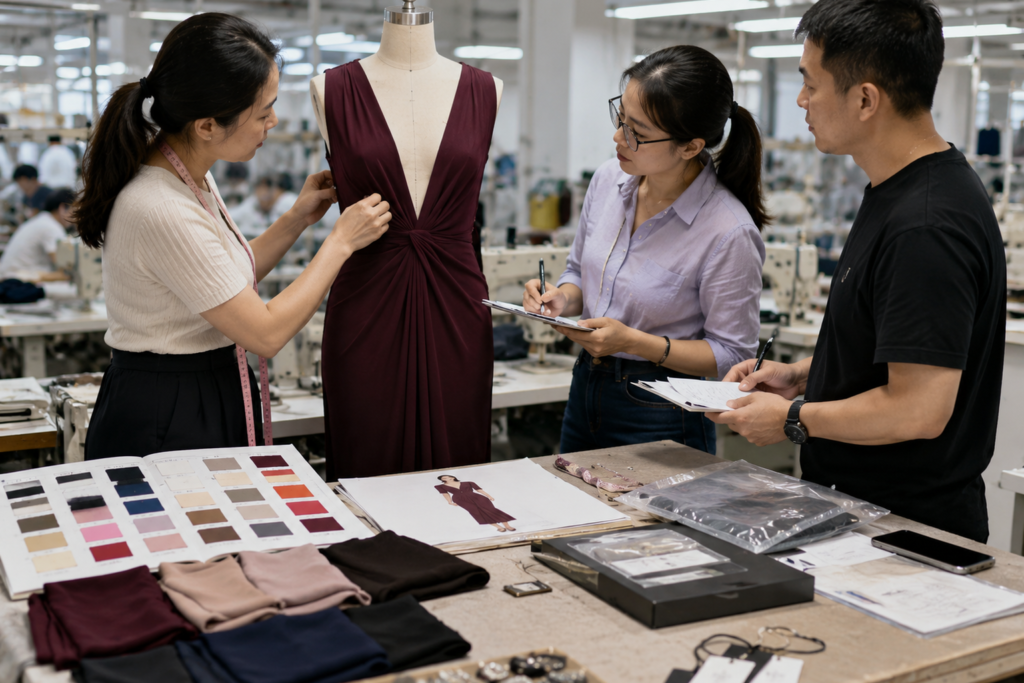
Controlled Production from PP Approval to Delivery
PP Approval
Material Release
Production File
Fabric Inspection
Cutting Control
Sewing Control
Finishing Control
Final Inspection
Packing and Delivery
Quality Control Designed for Red Dress Production
Quality control is planned around material, silhouette, construction, color, and retail requirements. Red fabrics and high-visibility occasion styles receive checks beyond generic stitching inspection.
Fabric, Shade, and Surface Inspection
Red fabric is evaluated for visual consistency before it reaches the sewing line. Inspection may cover dye-lot variation, roll-to-roll shade, face and back, shine or pile direction, width, surface defects, stains, holes, snags, missing sequins, lace damage, mesh deformation, stretch direction, hand feel, and visible pressure marks.
Approved swatches and bulk references are identified by style and color.
Shade-sensitive materials are managed during cutting and bundling. Satin panels must follow one shine direction; velvet follows pile direction; lace and mesh layers are checked against the intended lining; sequin panels follow surface orientation.
When separate lots cannot be mixed visually, cutting bundles remain identified so fronts, backs, sleeves, panels, and facings stay within compatible shade groups.
Project-based testing may be discussed for rubbing, washing, perspiration, or transfer risk, especially with deep reds, velvet, denim-like materials, prints, or close-contact garments.
Testing scope depends on product, material, supplier, destination market, client standard, and current document requirements. No blanket claim replaces batch-specific review.
Cutting, Sewing, and Construction Inspection
Cutting inspection confirms pattern version, size, grain, direction, motif placement, shade group, notches, lining, and bundle identity. Material-specific precautions are applied: protected surfaces for satin, seam clearance for sequins, motif planning for lace, relaxation for knits, and controlled layering for mesh. Errors at cutting cannot be repaired reliably through sewing.
Inline sewing checks focus on the approved style risk. Bodycon dresses are checked for seam twist, stretch recovery, measurement, and ruching balance. Corset dresses are checked for cup and boning position, support, zipper, lining, and top-edge security. Slip dresses are checked for neckline, straps, bias behavior, side-seam movement, and hem. Lace and mesh styles are checked for holes, transparency, joining, symmetry, and lining. Evening dresses are checked for bust support, slit, drape, length, and hem balance.
Inspection frequency and acceptance criteria follow project requirements and production conditions. Defects are identified by type and location, corrective action is communicated, and affected work is rechecked before the line continues. The goal is to control risk during production rather than discover repeated faults only at final inspection.
Measurement, Fit, and Size-Control Inspection
Measurement standards come from the approved client chart and product requirements.
Bust, underbust, waist, high hip, full hip, shoulder, armhole, neckline, strap, sleeve, length, slit, hem, and other points are selected according to style. Woven and stretch dresses require different tolerance logic because fabric elasticity, recovery, relaxation, and construction affect finished dimensions.
The approved sample and measurement chart remain linked. When a fit correction changes one area, related dimensions and pattern balance are reviewed. Red dresses with close fit or strong visual lines expose measurement inconsistency quickly: a shifted waist seam, unequal strap length, uneven slit, twisted side seam, or off-center ruching becomes visible on the body and in photographs.
Size grading is checked against silhouette and construction rather than treated as automatic scaling. Corset cups, boning, neckline depth, cut-outs, slit height, mini length, and strap position may need controlled grade rules. Large programs can include client-defined US, UK, EU, or AU size systems, with label, polybag, assortment, and carton information matched to the same approved chart.
Finishing, Label, Barcode, and Packing Inspection
Final appearance checks cover loose threads, stains, oil marks, damage, pressing, shape, symmetry, zipper, closure, lining, embellishments, hem, and approved presentation. Red satin and velvet are reviewed for pressure marks and surface distortion; sequins for missing pieces and scratches; lace and mesh for holes; long dresses for hem and folding; structured styles for cups, boning, and shape after packing.
Private-label inspection verifies main label, size label, care label, hangtag, string, barcode, SKU, color sticker, price ticket where applicable, polybag, warning text, carton ratio, and carton marks. Codes and size information must match the style-color-size breakdown. Barcode readability and label placement can be checked according to the program requirements.
Packing methods are selected to protect appearance without creating avoidable color transfer, creases, crushed cups, bent boning, flattened drape, or damaged embellishments. Shipment records may include packing list, carton dimensions, gross and net weight, quantity breakdown, and client-appointed forwarder details. Final inspection connects garment quality with warehouse receiving accuracy, not only sewing appearance.
Structured Support for Multi-Style Red Dress Programs
Multi-Style Tracking
Fabric Records
Sample Versions
Production Allocation
QC Reporting
Phased Delivery
MOQ and Cost Factors for Custom Red Dresses
| Project Condition | MOQ / Planning Effect | Main Cost Effect | Required Confirmation |
|---|---|---|---|
| Stock red fabric | Often compatible with the standard starting MOQ when one usable batch is available | More stable material cost; stock quantity and shade may limit reorder continuity | Fabric code, available quantity, batch, width, weight, composition |
| Custom-dyed red | Dye mill minimum may raise the required fabric or garment quantity | Lab dips, dyeing, testing, wastage, and longer material preparation | Pantone or physical standard, fabric type, lab-dip approval, bulk shade |
| Special lace or mesh | Supplier minimum depends on motif, stretch, color, and base quality | Higher cutting loss, placement work, lining, joining, and inspection | Motif, width, stretch, lining color, placement, scallop use |
| Sequin or velvet | Material supplier and color availability may change the starting quantity | Handling, cutting loss, surface protection, sewing time, and packing | Direction, backing, pile, lining, zipper, anti-damage packing |
| Corset construction | Garment MOQ may remain workable, while trim minimums require review | Pattern, cups, boning, lining, sewing time, fit revisions, and QC | Cup, boning, closure, waist structure, size range, PP standard |
| Multiple sizes | Quantity must be planned by style/color and workable size ratio | Pattern grading, cutting ratio, labels, packing, and inspection complexity | Approved size chart, grade rules, ratio, labels, carton breakdown |
| Private-label packing | Labels and packaging suppliers may carry separate minimums | Artwork setup, labels, hangtags, barcodes, polybags, stickers, cartons | Artwork, material, fold, placement, SKU, barcode, warehouse guide |
| Compressed delivery window | Capacity and material feasibility must be reviewed before acceptance | Priority sourcing, line planning, overtime risk, air shipment, added QC pressure | PP date, material date, inspection window, warehouse receiving date |
Private-Label Packing for Retail-Ready Red Dresses

Main and Size Labels

Care Labels

Hangtags
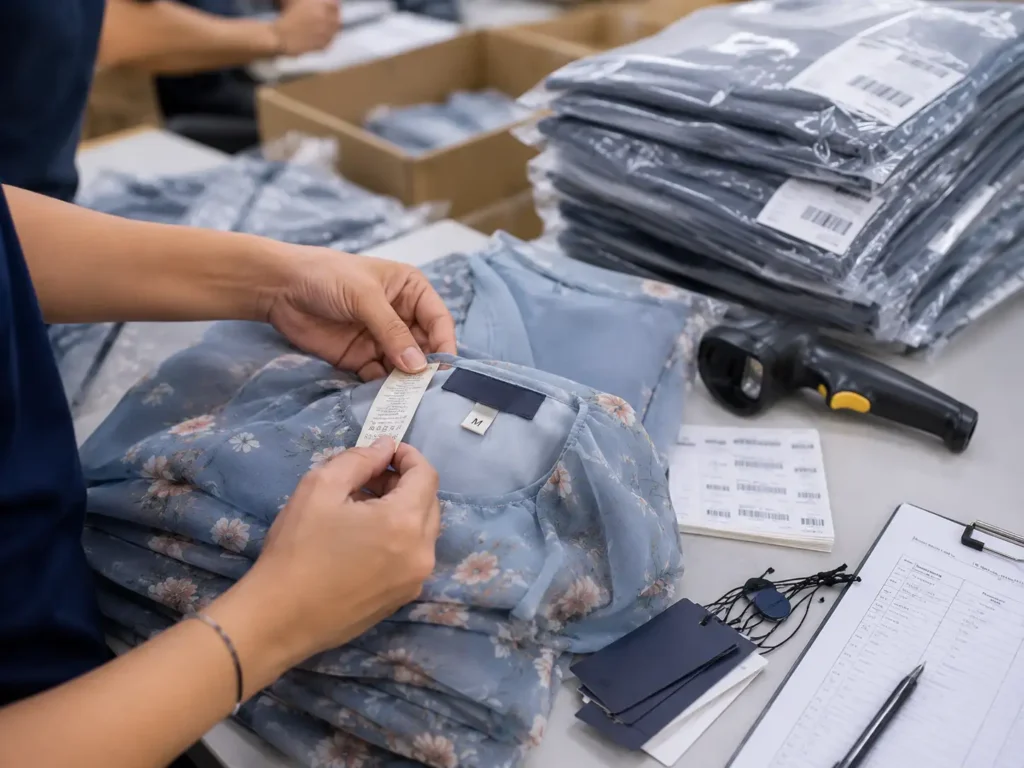
Barcodes and SKU Labels
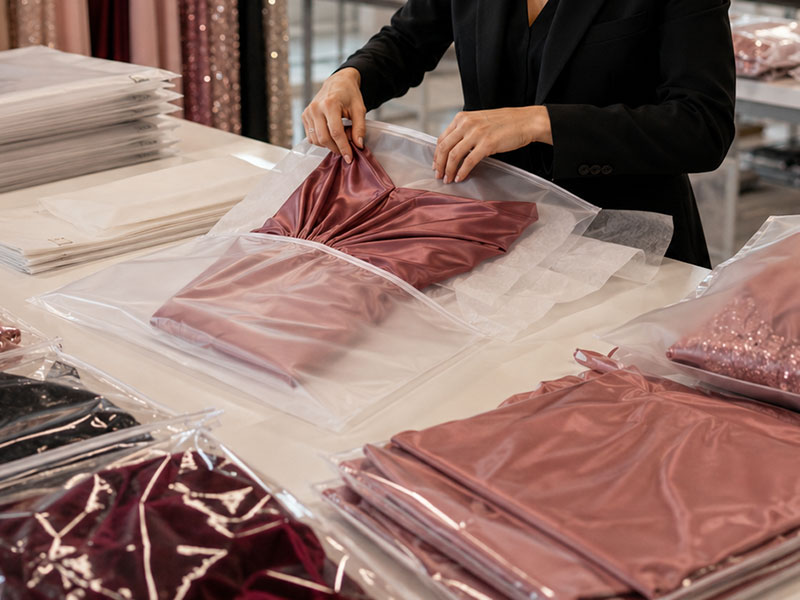
Polybags and Stickers
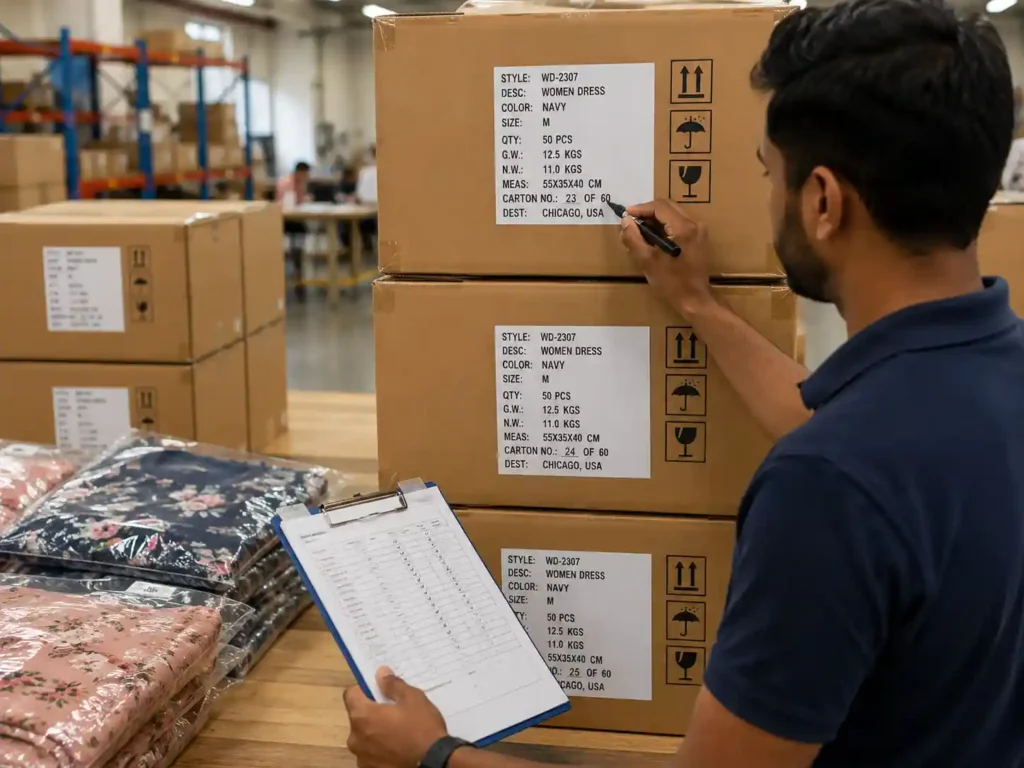
Carton Marks and Ratios
Testing, Inspection, and Design Protection Support
Project-Based Compliance
Client Inspection Support
NDA and Design Protection
A 28,000-Piece Multi-Fabric Dress Program
An anonymous US private-label client developed an 18-style women’s fashion program covering satin, mesh, jersey, lace, and crepe dresses. The project required coordinated development, SKU control, packing consistency, inspection support, and phased shipment.

Program Scope and Manufacturing Risk
The order included approximately 28,000 pieces across 18 dress styles. Multiple fabrics created different risks inside one commercial program: satin required shine direction, zipper, pressing, and surface protection; mesh required stretch, transparency, lining, and hole control; jersey required relaxation, recovery, and measurement stability; lace required motif, joining, lining, and damage inspection; crepe required drape, seam, hem, and pressing control.
The main challenge was not total quantity alone. Every style carried its own sample status, material record, size chart, trim card, label information, barcode, polybag, carton ratio, inspection focus, and delivery sequence. One generic instruction could not control the range. Jinfeng Apparel created a structured project timeline and maintained decisions by style and version.
The program demonstrates the operating model required for a substantial red dress collection. A red-focused line may use fewer fabric families, but color approvals, lining and trim matching, shade management, size data, SKU control, and packing protection add another layer that must remain traceable.

Sample, Fabric, SKU, and Packing Control
Sample versions were managed separately so first, revised, photo, and PP decisions did not become mixed. Material and trim information was recorded by style, with construction and QC comments connected to the relevant fabric. Where a material change could affect pattern, drape, stretch, lining, price, or timing, the style was reviewed again rather than moved forward under the old approval.
Private-label consistency covered main labels, care labels, size labels, hangtags, barcodes, SKU stickers, polybags, carton marks, and size-color assortment. Artwork and code accuracy were treated as production requirements, not final packing decoration. Errors in one digit or color code can create warehouse rejection even when the garment itself is acceptable.
Inspection support was planned alongside production and packing. The team coordinated style status, inspection readiness, corrective work, document preparation, and phased release. The approach reduced the risk of completed garments waiting for missing tags, inaccurate barcodes, unapproved packing, or unresolved sample comments.

Resulting Control Model for Red Dress Collections
For a red dress program of comparable scale, the same framework would begin with style-color-size mapping. Red shade references, stock or custom-dyed fabric, lining, zipper, thread, lace, mesh, sequins, hardware, labels, and packaging would be approved under the corresponding style code. Shade-sensitive fabric lots would be identified before cutting, and visible components would be reviewed together.
Production would then apply product-specific inspection: satin surface and zipper control; bodycon stretch and measurement control; corset support and boning control; lace placement and damage control; mesh transparency and hole control; sequin surface and packing protection; evening-dress length, slit, pressing, and hem control. SKU and packing data would remain linked to the same approved color and size system.
The case confirms Jinfeng Apparel’s ability to coordinate a commercial multi-style program through development, production, QC, private-label packing, client inspection support, shipment documentation, and phased delivery. It does not rely on one simple dress repeated in one fabric.
Red Dress Manufacturer Case Studies
The following anonymized cases represent different red dress development programs, covering occasionwear collections, partywear launches and large private-label seasonal productions. Brand identities, original designs and commercial details remain confidential.
Case 1: Red Occasionwear and Evening Dress Collection
Project Scope
A premium occasionwear brand developed a red dress collection for formal events, cocktail parties and seasonal celebrations.
- Collection size: 20 dress styles
- Product categories: red satin dresses, lace dresses, chiffon gowns, crepe midi dresses and structured evening dresses
- Materials: satin, chiffon, lace, crepe, mesh and premium lining systems
- Construction details: corset bodices, elegant necklines, fitted waists, flowing skirts and statement silhouettes
- Requirement: luxurious appearance with consistent color and finishing quality
Development Challenges
Red occasionwear requires precise control because color and surface details strongly affect the final appearance.
Key challenges included:
- Matching red tones across different fabrics
- Preventing satin shine differences between panels
- Controlling lining visibility
- Maintaining premium pressing quality
- Protecting garments during international transportation
Manufacturing Approach
The development team created a color and construction control system.
Key controls included:
- Red shade approval through physical references
- Matching shell fabric, lining, zipper and trims
- Reviewing fabric behavior before sampling
- Adjusting patterns around bust, waist and hip areas
- PP sample approval before bulk production
Additional attention was given to:
- Corset support
- Lace placement
- Invisible zipper construction
- Hem balance
- Final presentation standards
Manufacturing Value
The collection achieved a premium red occasionwear appearance through coordinated control of color, fabric, fit and workmanship.
Case 2: Red Partywear and Bodycon Dress Collection
Project Scope
A fashion brand developed a red partywear collection focused on fitted silhouettes and high-impact social styles.
- Collection size: 16 dress styles
- Product categories: red bodycon dresses, ruched dresses, mesh dresses, satin mini dresses and cut-out styles
- Materials: stretch jersey, power mesh, stretch satin, lace and lining fabrics
- Construction details: ruching, body shaping, asymmetric cuts and transparent panels
- Requirement: strong visual impact with comfortable wearing performance
Development Challenges
The main challenge was balancing sexy design with reliable fit.
Key risks included:
- Stretch fabric recovery differences
- Transparency after body movement
- Side seam twisting
- Lining movement
- Size grading affecting body proportions
Manufacturing Approach
The project focused on fabric behavior and fit engineering.
Key controls included:
- Testing stretch and recovery
- Developing negative ease according to fabric performance
- Reviewing bust-waist-hip balance
- Testing mesh coverage areas
- Confirming ruching distribution
Production controls included:
- Seam stability checks
- Neckline recovery inspection
- Zipper flatness review
- Measurement control across sizes
- Final appearance inspection
Manufacturing Value
The collection maintained a strong partywear identity while achieving stable fit, consistent sizing and repeatable bulk quality.
Case 3: Large Private Label Red Dress Collection Program
Project Scope
An established fashion brand required a seasonal red dress collection covering multiple silhouettes and retail occasions.
- Collection size: 28 dress styles
- Production scale: 50,000+ pieces
- Product categories: red mini dresses, midi dresses, maxi dresses, corset dresses, satin dresses and evening styles
- Materials: satin, jersey, chiffon, lace, mesh, velvet and sequin fabrics
- Requirement: consistent quality across multiple SKUs, colors and delivery batches
Development Challenges
The program involved different fabrics, structures and selling occasions.
Major challenges included:
- Maintaining consistent red shade direction
- Managing multiple fabric behaviors
- Controlling different lining requirements
- Keeping size grading consistent
- Coordinating private-label packing
Manufacturing Approach
The collection was divided by product risk and construction type.
Satin and Evening Group
Focused on:
- Shine direction
- Surface protection
- Zipper control
- Pressing standards
Stretch and Bodycon Group
Focused on:
- Recovery testing
- Negative ease
- Bust-waist-hip balance
- Seam stability
Manufacturing Value
The program demonstrated that large red dress collections require both production capacity and detailed control of color, fabric, fit, quality and retail delivery.
Delivery and Repeat Production for Seasonal Red Dresses
Launch Planning
Multi-Batch Delivery
Logistics Coordination
Export Documents
Repeat-Order Records
Colorway Extensions
What to Send for a Red Dress Project Review
Style Reference
Red Color Standard
Fabric Direction
Quantity Plan
Size Chart
Label and Packing
Inspection Standard
Delivery Window
Red Dress Manufacturing Frequently Asked Questions
Jinfeng Apparel develops mini, midi, maxi, party, cocktail, evening, prom, date-night, bodycon, corset, slip, lace, mesh, satin, sequin, velvet, chiffon, crepe, jersey, ponte, and private-label red dress collections. Final feasibility depends on fabric, construction, quantity, trims, size plan, packing, and delivery requirements.
Pantone references can guide custom color development. The final approval is made on the intended fabric because satin, velvet, lace, mesh, sequins, jersey, and lining can display the same reference differently. Stock color, custom dyeing, lab dips, trim matching, bulk shade, supplier MOQ, and timing are reviewed by project.
Control may include approved swatches, dye-lot identification, roll inspection, shade-band review, shine or pile direction, cutting-bundle separation, lining and trim comparison, inline checks, and finished-garment review. The exact method depends on fabric type, color depth, supplier batch, style construction, and client standard.
MOQ starts from 200 pieces per style/color. Custom dyeing, special lace, sequins, exclusive trims, molded components, certified material, private-label packaging, or a highly fragmented size-color plan may carry higher supplier minimums. Quantity and cost are confirmed after material and construction review.
Custom dyeing can be reviewed for suitable fabrics and quantities. The process may include a Pantone or physical standard, lab dips, fabric approval, lining and trim matching, bulk dyeing, and shade review. Dye-mill MOQ, preparation time, testing, and batch risk must be confirmed before final quotation.
Yes. Depending on the project, the workflow may include first, fit, revised, photo-ready, salesman, PP, or golden samples. A first or photo sample does not automatically become the bulk standard. Production proceeds from the approved combination of pattern, material, color, construction, measurements, trims, labels, and packing.
Yes, subject to material and project review. Satin requires shine, snagging, zipper, pressing, and packing control; lace requires motif, joining, lining, and damage control; mesh requires stretch, transparency, lining, and hole control; sequins require direction, seam clearance, skin protection, missing-piece inspection, and protected packing.
Jinfeng Apparel can work from a supplied US or internal brand size chart, base size, grade rules, and tolerance standard. Fit and grading are reviewed according to silhouette, fabric stretch, support structure, length, neckline, slit, straps, cut-outs, and other critical points. Labels and packing must match the same approved size system.
Yes. Support can cover main labels, size labels, care labels, hangtags, strings, barcodes, SKU stickers, polybags, warning text, tissue, hangers, carton ratios, carton marks, and warehouse labels. Artwork, data, placement, material, supplier minimums, and packing method are confirmed before bulk packing.
Jinfeng Apparel supports NDA-based cooperation and protection of tech packs, patterns, samples, materials, labels, packaging, order data, and unreleased designs. Client or third-party inspection can be coordinated according to the project, production factory, agreed inspection scope, timing, report, corrective action, and shipment-release process.

Start Your Custom Red Dress Project
Send Kelly the information already available for your red dress collection. A tech pack is helpful, although a clear reference image, original sample, sketch, measurement chart, or line sheet can also support the first review.
Include the intended red tone, preferred fabric, quantity per style/color, size system, labels, packing, inspection needs, destination, and delivery window.
Jinfeng Apparel will review product structure, fabric route, color-development method, lining and trim matching, pattern requirements, sample stages, MOQ, cost factors, production suitability, QC focus, and delivery conditions. When information is incomplete, the team can identify what must be confirmed before an accurate quotation or sample plan is prepared.
Useful files and details include:
- Tech pack, sketch, reference image, or original sample information
- Pantone, fabric swatch, garment reference, or approved red standard
- Fabric preference, composition, stretch, weight, hand feel, or target quality
- Quantity by style and color, size chart, ratio, and intended launch volume
- Main label, care label, hangtag, barcode, SKU, polybag, and carton requirements
- Target PP date, inspection window, warehouse receiving date, and destination