 Skip to content
Prom Dress Manufacturer
Custom prom dress development for fashion brands needing photo-ready samples, controlled fit, private-label packing, and bulk production.
Jinfeng Apparel helps fashion brands, formalwear labels, boutique chains, and premium ecommerce teams develop prom dresses from reference image, tech pack, or original sample into production-ready garments. Our team supports fabric sourcing, trim matching, pattern development, sample revision, PP sample approval, bulk production, QC, private-label packing, and export delivery for seasonal prom collections.
- Since 2008— custom women’s fashion manufacturing experience for overseas apparel programs.
- 6 owned women’s fashion factories— production structure for prom dresses, formal dresses, corset gowns, satin gowns, tulle gowns, sequin styles, and private-label ranges.
- 10+ long-term satellite production partners— flexible support for seasonal prom programs, multi-style orders, and phased delivery.
- 2 sample rooms + 7+ senior pattern makers— fit correction, corset support, long-gown length, grading, and PP sample review before bulk.
- MOQ from 200 pcs/style/color— suitable for organized custom production, not stock resale or micro-order fulfillment.
- Anonymous prom program range: 12–24 styles / 26,000–68,000 pcs— formalwear and prom capsules across US, Canadian, UK, and Australian markets.
Manufacturing Facts for Prom Dress Programs
Since 2008
- Women’s fashion manufacturing experience since 2008.
- Prom, formal, occasion, and private-label dress support.
- Sample records and production files prepared for repeat orders.
6 Owned Factories
Jinfeng Apparel operates 6 owned women’s fashion factories. Prom programs often contain different construction levels: simple satin gowns, corset tulle dresses, sequin styles, lace appliqué pieces, and mini prom dresses. Owned factory resources allow project teams to match styles by fabric, structure, sewing difficulty, and delivery rhythm instead of forcing every garment into one production path.
- Owned production resources for core womenswear programs.
- Style allocation by fabric and construction level.
- Stronger coordination from sample approval to bulk delivery.
10+ Partner Factories
- Capacity support for seasonal formalwear programs.
- Multi-style allocation by fabric group and difficulty.
- Unified production notes, QC focus, and packing standards.
MOQ 200 pcs
- MOQ from 200 pcs/style/color.
- Fabric, color, trim, and packing minimums reviewed separately.
- Quantity planning by style, color, and size ratio.
Private Label Support
- Woven labels, care labels, and size labels.
- Hangtags, barcodes, SKU stickers, and polybags.
- Carton marks and warehouse label support.
NDA-Based Protection
- Tech packs, samples, and patterns protected.
- Label, packaging, and SKU files handled confidentially.
- Anonymous case format available when needed.
Built for Fashion and Formalwear Teams
Prom Dress Brands
Prom dress brands need consistent silhouettes, attractive fabrics, photo-ready samples, and repeatable bulk production. Jinfeng supports corset gowns, satin dresses, tulle gowns, sequin styles, lace designs, and color programs built around prom season. The team reviews fit, fabric direction, trim usage, lining, zipper placement, and packaging before production moves forward.
- Corset, satin, tulle, sequin, and lace styles.
- Seasonal color and size planning.
- Fit, lining, zipper, and packaging review.
Formalwear Labels
- Prom, evening, homecoming, and occasionwear support.
- Fabric group and pattern standard management.
- Structured sample-to-bulk workflow.
Boutique Chains
Boutique chains need garments prepared for store selling, size sorting, and repeat orders. Jinfeng supports multi-style prom programs with label placement, hangtag setup, barcode sticker plans, polybag packing, carton marking, and style-color-size breakdowns. Production files are kept for future reorders, color extensions, and updated seasonal launches.
- Store-ready labeling and packing.
- Style-color-size breakdowns.
- Records for reorders and seasonal updates.
Premium Ecommerce
- Photo-ready sample review.
- Bust support, strap, zipper, and lining checks.
- Movement, sitting, and final pressing control.
Sourcing Offices
- File review before quotation.
- Fabric, trim, and packing requirement checks.
- Development notes for internal alignment.
Private Label Programs
- Label, hangtag, and barcode file review.
- Sample packing and bulk packing confirmation.
- Branded delivery for retail and ecommerce.

Prom Dress Risks Jinfeng Helps Control
Prom dresses sell through visual impact, fit confidence, and seasonal timing. A weak sample or unstable bulk run can affect campaign photography, boutique launch dates, and repeat-order planning.
Photo Sample Looks Strong, Bulk Looks Different
Prom dress programs often begin with an attractive reference image. Risk starts when satin shine, tulle volume, sequin density, lace placement, or bodice shape changes between sample and production. A single fabric substitution can change the whole garment: satin may look dull under studio light, mesh may become too sheer, tulle may collapse after packing, and sequin fabric may lose direction across cut panels.
Jinfeng Apparel reviews the product before sampling, not after problems appear in bulk. The team checks garment structure, fabric handfeel, lining coverage, color direction, trim compatibility, and construction risk. For photo samples, focus stays on camera-facing details such as neckline shape, waist position, skirt volume, front slit balance, and zipper flatness. For PP samples, the team aligns approved fabric, trims, measurements, sewing method, label placement, and packing reference before bulk production starts.
Prom dress quality is not created by one beautiful sample. It depends on whether approved details can be repeated across colors, sizes, and order batches.
Key risk controls include:
- Fabric handfeel, shine, volume, and surface direction.
- Lining coverage and transparency review.
- Neckline, waist, skirt volume, and slit balance.
- Zipper flatness and back closure stability.
- PP sample approval before bulk cutting.
- Style-specific QC notes for complex fabrics.
What to Send for Project Review
Reference Image
- Front, back, and close-up images.
- Neckline, bodice, slit, back, and skirt views.
- Hidden construction areas shown clearly.
Tech Pack
- Sketch, measurements, and construction notes.
- Fabric, trims, labels, and packing details.
- Faster feasibility and quotation review.
Target Quantity
Quantity affects fabric sourcing, color planning, production allocation, and price review.
Prom dress collections often include 10–30 styles and several color groups. Sending planned quantity by style/color/size helps Jinfeng judge MOQ, fabric availability, cutting plan, production rhythm, and delivery feasibility.
- Quantity by style, color, and size.
- Total collection structure.
- MOQ and production planning review.
Fabric Direction
- Fabric type, weight, and handfeel.
- Stretch, transparency, and lining need.
- Layer count and cost impact review.
Color Plan
- Color names, Pantone references, or swatches.
- Lining, zipper, thread, and trim shade review.
- Campaign color consistency.
Size Range
Size range affects pattern grading, bust support, waist shaping, hip allowance, strap length, skirt length, and slit safety.
Jinfeng reviews measurement logic before bulk production so each size remains wearable, not only attractive on one sample size.
- Size chart and grading direction.
- Bust, waist, hip, and strap logic.
- Length, slit, and support review.
Brand Packing
- Label, hangtag, and barcode files.
- Polybag, hanger, and carton mark needs.
- Warehouse receiving instructions.
Launch Date
- Sample, photo, and PP approval deadlines.
- Bulk delivery and launch window.
- Early review for complex fabrics and trims.
Prom Dress Styles Jinfeng Can Develop

Corset Prom Dress
- Boning, cup, and waist shaping review.
- Back closure and zipper flatness.
- Size grading for support consistency.

Satin Prom Gown
- Satin weight, shine, and surface direction.
- Seam smoothness and pressing control.
- Lining and packing method review.

Tulle Ball Gown
- Layer count and tulle stiffness.
- Waistband strength and gathering density.
- Volume, movement, and hem balance.

Sequin Prom Dress
- Sequin density and backing review.
- Lining, seam comfort, and underarm checks.
- Missing sequin and surface protection control.

Lace Prom Dress
- Lace scale and motif direction.
- Lining tone and appliqué position.
- Placement records for bulk consistency.

Mermaid Prom Dress
- Hip shaping and knee position.
- Walking allowance and lining stretch.
- Zipper tension and skirt opening.

A-Line Prom Dress
- Waist placement and skirt sweep.
- Fabric weight and lining length.
- Hem evenness across sizes.

Strapless Prom Dress
- Cup shape and anti-slip support.
- Top edge and front panel reinforcement.
- Sitting, movement, and neckline safety checks.

Halter Prom Dress
- Strap width and tie strength.
- Armhole curve and bust coverage.
- Back opening and fabric stretch review.

One-Shoulder Dress
- Shoulder tension and neckline angle.
- Side seam and skirt alignment.
- Twist and armhole pull review.

Backless Prom Dress
- Strap system and side panel stability.
- Zipper placement and lining.
- Back edge finish across size range.

High-Slit Gown
- Slit height and reinforcement.
- Lining opening and walking allowance.
- Sitting and movement review.

Fit-and-Flare Dress
- Bodice fit and waist seam stability.
- Skirt sweep and lining comfort.
- Zipper alignment and side seam review.

Mini Prom Dress
- Skirt length and coverage.
- Strap tension and movement safety.
- Corset, satin, mesh, sequin, or lace options.

Plus Size Range
- Bust support and waist shaping.
- Strap strength and zipper stress.
- Grading balance and garment comfort.
How Prom Dress Collections Are Built
A strong prom program is usually planned by length, silhouette, fabric, visual detail, and selling scenario. Jinfeng can help organize development files around each factor before sampling.
| Development Layer | Common Options | Manufacturing Focus | Brand Use |
|---|---|---|---|
| Length | Mini, midi, maxi, floor-length | Hem balance, lining length, movement safety, packing fold line | Ecommerce drops, boutique racks, formalwear appointments |
| Silhouette | A-line, mermaid, ball gown, corset, fit-and-flare | Pattern balance, waist position, bust support, skirt volume | Hero styles, core carryover shapes, seasonal campaign looks |
| Fabric | Satin, tulle, lace, mesh, sequin, organza, chiffon, velvet | Drape, transparency, stretch, shine, layer control, defect inspection | Romantic, glamorous, structured, or soft prom ranges |
| Detail | Slit, lace-up back, beading, appliqué, ruching, strapless neckline | Placement marking, seam reinforcement, trim attachment, comfort | Visual differentiation across similar silhouettes |
| Packing | Polybag, hanger, barcode, SKU sticker, carton mark | Label accuracy, size sorting, crease reduction, warehouse receiving | Retail-ready and ecommerce-ready delivery |
Fabric Choices for Prom Dress Manufacturing
Fabric selection shapes the final look, fit, and cost of a prom dress. Jinfeng reviews fabric direction with structure, lining, trim, color, and bulk consistency in mind.
| Fabric | Best Use | Main Risk | Jinfeng Control Point |
|---|---|---|---|
| Satin | Formal gowns, slip styles, corset gowns | Wrinkle, shine variation, snagging, visible seam tension | Check weight, surface direction, lining, pressing, and packing |
| Tulle | Ball gowns, layered skirts, soft volume | Uneven volume, rough edge, collapse after packing | Confirm layer count, stiffness, gathering density, and hem balance |
| Organza | Structured skirts, bow details, formal volume | Creasing, transparency, stiffness variation | Review handfeel, layer plan, edge finish, and steaming response |
| Lace | Romantic prom dresses, appliqué, overlay | Motif mismatch, transparency, seam disruption | Mark placement, lining tone, edge finish, and panel direction |
| Mesh | Illusion panels, bodycon, cut-out styles | Stretch distortion, transparency, seam stress | Check recovery, lining coverage, seam method, and fit tension |
| Sequin | Statement dresses, party prom looks | Missing sequins, scratching, heavy seams | Review backing, lining, panel direction, and final defect inspection |
| Chiffon | Soft gowns, draped overlays, flowy skirts | Slippage, uneven hem, transparency | Check cutting control, lining length, and rolled hem quality |
| Velvet | Rich winter or premium prom looks | Nap direction, pressure marks, color depth variation | Cut in one direction, protect surface, and review packing method |
Fabric Control Before Sampling and Bulk
Prom dress fabric cannot be selected by surface appearance alone. Handfeel, weight, light reflection, stretch, lining compatibility, and packing behavior all affect final garment quality.
Satin, Tulle and Organza

Satin, tulle, and organza are common in prom gowns because they create shine, volume, and formal structure. Each fabric brings a different production risk. Satin shows seam tension, pressing marks, and shade differences quickly. Tulle can lose volume when layer count, stiffness, or gathering density is not controlled. Organza can look premium on a hanger but crease easily if packing and steaming behavior are ignored.
Jinfeng reviews fabric weight, surface direction, lining plan, layer count, color depth, and trim compatibility before sampling. For satin gowns, the team checks whether the fabric supports the intended drape and whether lining hides seam allowances cleanly. For tulle and organza skirts, pattern and sewing teams review skirt fullness, waistband support, hem control, and packing method.
Bulk records keep fabric references, color notes, lining choices, and finishing standards so repeat orders can follow approved direction.
- Satin weight, shine, and seam tension.
- Tulle layer count and gathering density.
- Organza handfeel, stiffness, and steam response.
- Lining, waistband, hem, and packing review.
Lace, Mesh and Sequin
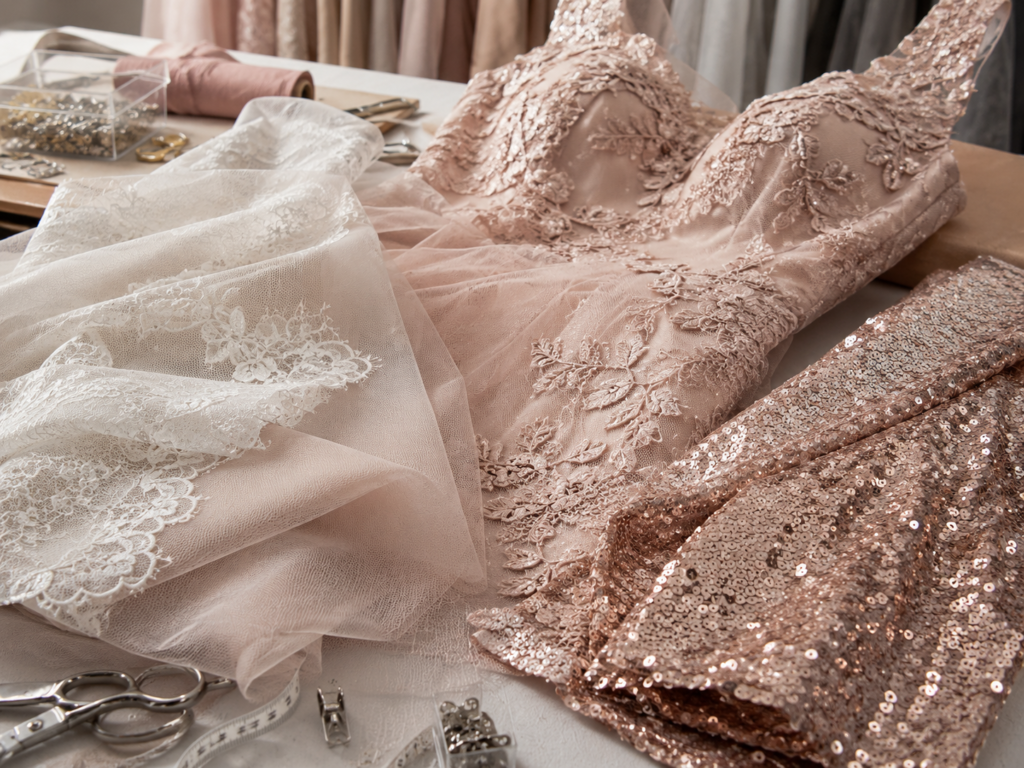
Lace, mesh, and sequin fabrics increase prom dress value, but production tolerance is narrower. Lace requires motif placement and lining tone control. Mesh requires stretch recovery, transparency review, and seam strength. Sequin fabric requires panel direction, cutting loss, lining comfort, and inspection for missing or loose pieces.
Jinfeng checks each decorative fabric against garment structure before confirming a sample plan. Lace appliqué placement can be marked on pattern files. Mesh panels can be reviewed for coverage and tension at bust, waist, hip, and side seams. Sequin dresses need careful sewing sequence, lining protection, and final inspection under light.
Strong visual fabrics should never weaken wearability. A prom dress must look polished in photos, hang well in retail display, and remain comfortable during real event movement.
- Lace motif, lining tone, and appliqué placement.
- Mesh recovery, transparency, and seam strength.
- Sequin direction, cutting loss, and lining comfort.
- Final inspection for loose trims and surface marks.
Color Control for Prom Campaigns
Prom dresses are judged under camera lights, boutique lighting, and event environments. Color planning should account for fabric shine, lining tone, trim matching, and batch consistency.
Color Under Light

A prom dress color can look different across satin, sequin, tulle, mesh, and lace. Champagne may become dull if lining tone is too dark. Blush may look uneven when fabric layers vary. Royal blue and emerald can shift under studio lighting. Silver sequin may reflect strongly in photography but appear heavy in movement. Black lace can lose motif visibility when lining contrast is wrong.
Jinfeng reviews color with fabric behavior. For special colors, swatches or lab dips should be approved before sample development when timing allows. Lining, zipper tape, thread, lace trim, and decorative elements should be checked as part of one color system, not as separate accessories. For multi-color prom programs, color records help reduce confusion between sample approval, bulk fabric preparation, and repeat production.
- Fabric shine and color reflection.
- Lining, zipper, thread, and trim shade.
- Lab dip or swatch review for special colors.
- Color records for multi-color programs.
Photo Sample Readiness

Photo samples need careful attention because they often appear in campaigns, lookbooks, ecommerce galleries, and showroom selling tools. Jinfeng checks front neckline, waist position, skirt volume, side seam balance, back closure, strap symmetry, zipper flatness, and hemline before sample shipment. For light colors, lining coverage and stain prevention need extra attention. For dark colors, lint, pressing marks, and fabric shine changes require inspection.
A photo-ready sample does not mean the garment is ready for bulk without review. After image approval, the PP sample still needs production-standard fabric, trims, measurements, sewing method, label position, and packing method. Jinfeng separates visual review from production approval so style impact and bulk consistency can both be controlled.
- Neckline, waist, skirt volume, and hemline.
- Strap symmetry, zipper flatness, and back closure.
- Light-color lining and stain checks.
- PP sample route after photo approval.
Fit Development for Prom Dress Styles
Prom dress fit must support appearance and movement. Jinfeng reviews bust, waist, hip, length, slit, strap, lining, and size grading before bulk production starts.
A-Line, Ball Gown and Fit-and-Flare
A-line, ball gown, and fit-and-flare prom dresses are widely used because they suit many body shapes and selling scenarios. The main challenge is balance. The waistline must sit correctly, skirt volume must match the design, lining length cannot pull, and hem balance must remain even after packing and steaming.
Jinfeng checks pattern proportion before sampling, then reviews the sample on a dress form or fitting reference according to project needs. For A-line dresses, the team reviews waist curve, skirt sweep, and side seam fall. For ball gowns, the team checks layer support, waistband strength, tulle fullness, and total garment weight. For fit-and-flare dresses, bust-to-waist shaping, skirt break point, and movement comfort are reviewed together.
- Waistline, skirt sweep, and side seam fall.
- Layer support, tulle fullness, and garment weight.
- Bust-to-waist shaping and movement comfort.
- Hem balance after steaming and packing.
Mermaid, Bodycon and Mini Prom Styles
Mermaid, bodycon, and mini prom dresses need tighter fit control. Mermaid gowns require hip shaping, knee position, and flare balance. Bodycon prom styles need stretch recovery, lining control, and seam strength. Mini prom dresses need secure length, movement coverage, and strap stability.
Jinfeng reviews size grading carefully for close-fitting styles because small changes in waist, hip, bust, and length can change how the garment feels on the body. Fabric stretch and recovery are checked before finalizing measurement standards. For high slit or mini styles, movement safety is reviewed during sample correction. For premium ecommerce and boutique programs, fit should support photography while reducing avoidable return risk linked to coverage, tension, or restricted movement.
- Hip shaping, knee point, and flare balance.
- Stretch recovery and seam strength.
- Mini length, coverage, and strap stability.
- Size grading for close-fitting styles.
Corset Bodice Control for Prom Dresses
Corset prom dresses are high-impact styles, but bodice construction decides whether the garment feels premium or unstable. Support, comfort, and clean appearance must be developed together.
Boning, Cups and Waist Shaping
A corset bodice needs correct internal support. Boning position, cup shape, front panel stability, waist curve, and lining strength all influence final fit. If boning is too soft, the bodice can collapse. If too rigid, comfort becomes poor. If cup shape is wrong, neckline tension and bust support fail. If lining does not match structure, seam allowances may show through the outer fabric.
Jinfeng reviews corset construction from both appearance and wearability. The team checks body panel proportion, cup coverage, boning placement, side seam balance, and waist shaping during sample development. For satin corset gowns, seam smoothness and pressing matter. For tulle or lace corset dresses, internal structure must remain clean under sheer or layered fabric. For size grading, bust support and waist shaping need special attention because scaling a corset style is more complex than scaling a loose dress.
- Boning placement and cup coverage.
- Front panel stability and lining strength.
- Side seam balance and waist curve.
- Size grading for bust support and comfort.
Back Closure, Zipper and Lace-Up Details
Back construction can define the whole prom dress. Lace-up backs offer adjustment but require strong loops, balanced spacing, and clean reinforcement. Invisible zippers create a refined look but must remain flat without pulling. Hook-and-eye closures can improve security when used correctly. Strapless or backless corset gowns require extra attention around upper edge stability and side seam tension.
Jinfeng reviews back closure details during sample correction. The team checks whether zipper teeth wave, whether lace-up loops are secure, whether the back panel sits smoothly, and whether the garment can be worn comfortably while sitting and dancing.
In bulk production, back closure positions, stitch density, reinforcement method, and QC checks are aligned with the approved sample file.
- Lace-up loop strength and spacing.
- Invisible zipper flatness.
- Hook-and-eye and upper edge support.
- Sitting, movement, and dancing comfort review.
Design Details That Need Manufacturing Control

Beading
- Motif layout and bead density.
- Sewing method and garment weight.
- Lining comfort and attachment check.

Sequins
- Sequin backing and panel direction.
- Cutting loss and seam comfort.
- Missing sequins and sharp edge inspection.

Rhinestones
- Placement accuracy and attachment method.
- Heat sensitivity and fabric compatibility.
- Packing pressure and surface protection.

Lace Appliqué
- Appliqué reference points.
- Motif balance and lining tone.
- Edge finish and placement consistency.

Lace-Up Back
- Loop strength and spacing.
- Back panel and modesty panel reinforcement.
- Tie length and edge finish.

High Slit
- Slit height and seam reinforcement.
- Lining opening and hem finish.
- Front, side, and movement review.

Train Detail
- Train length and fabric weight.
- Hem balance and lining.
- Pressing and carton packing review.

Ruching
- Fabric stretch and gather density.
- Side seam and lining behavior.
- Symmetry review across sizes.

Strap Placement
- Strap width, angle, and tension.
- Attachment reinforcement.
- Size grading for strap balance.

Zipper Flatness
- Zipper tape and seam tension.
- Lining attachment and pressing method.
- Side-view flatness inspection.
Lining Coverage
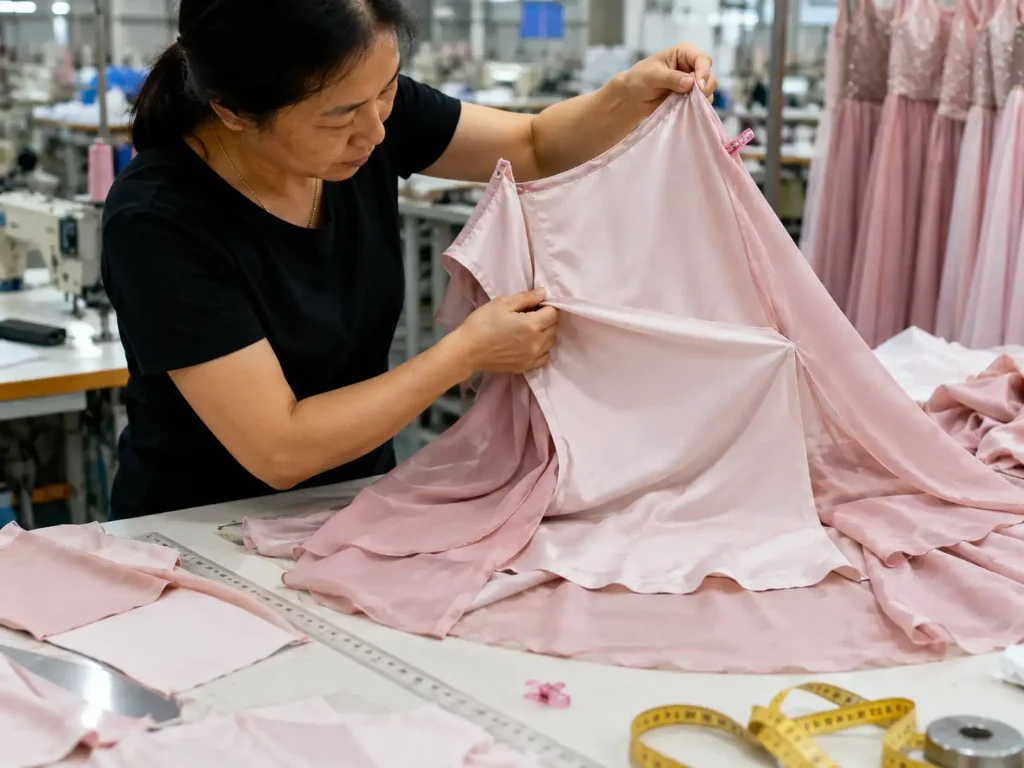
- Lining color and opacity.
- Length, stretch, and attachment method.
- Coverage for mesh, lace, and slits.

Hem Finish
- Hem balance and rolled hem quality.
- Tulle trimming and lining length.
- Pressing and photo appearance.
Fabric and Trim Approval Before Sampling
Prom dress development becomes smoother when fabric, lining, trims, and closure details are reviewed before the first sample is cut.
Step 1|Style Review and Material Direction
Jinfeng starts by reviewing reference images, sketches, tech packs, or original samples. The team identifies garment structure, silhouette, required support, fabric behavior, and decorative details. A corset gown, tulle ball gown, and sequin mini dress may all belong to prom collections, but each style needs a different fabric and trim approach.
After style review, Jinfeng suggests suitable fabric directions: satin for smooth formal shine, tulle for layered volume, organza for structured effect, mesh for illusion panels, lace for romantic texture, sequin for statement looks, chiffon for soft drape, and velvet for rich surface depth. Lining, zipper, boning, cup, thread, lace trim, appliqué, and label placement are reviewed with fabric, not after sampling has already begun.
- Style structure and silhouette review.
- Fabric behavior and decorative detail check.
- Lining, zipper, boning, cups, trims, and label placement reviewed together.
Step 2|Approval References and Production Records
Once fabric and trim directions are selected, approval references should be recorded. Swatch photo, fabric code, weight reference, color name, lining option, zipper type, thread color, trim placement, and packing notes should connect to the style file. For prom programs with 10–30 styles, organized records help avoid mixing similar satins, laces, tulle layers, or color tones.
Jinfeng keeps approved references for production planning, sample revision, and repeat orders. During PP sample approval, fabric and trim records are checked against the approved sample. During bulk production, the same records guide incoming material review, cutting preparation, sewing reference, QC inspection, and final packing.
- Swatch, fabric code, color, and lining records.
- Zipper, thread, trim, and packing notes.
- Approved references for QC and repeat orders.
Sample Development for Prom Dresses
Prom dress sampling should connect design, fabric, fit, and production feasibility. Jinfeng uses a staged workflow to reduce avoidable changes before bulk production.
From Reference to First Sample
The first step is project review. Jinfeng checks the reference image, tech pack, target quantity, fabric direction, color plan, size range, and launch date. The team then reviews fabric availability, construction risk, trim needs, lining requirement, and pattern logic. For corset gowns, internal structure is reviewed early. For tulle dresses, layer count and waistband support are checked before cutting. For sequin styles, fabric direction, cutting loss, and lining protection are reviewed.
Pattern development follows the approved direction. The first sample focuses on silhouette, fit, fabric behavior, and core construction. After sample completion, the team can support review based on photos, measurements, fit notes, brand feedback, or revised files. Changes may involve neckline, bust support, waist position, skirt volume, slit height, color, lining, or decorative placement.
- Project file and fabric availability review.
- Construction risk, trim, lining, and pattern logic.
- First sample for silhouette, fit, and fabric behavior.
- Sample comments converted into revision notes.
From Revision to PP Sample
After first sample feedback, revisions are organized into a clear correction file. Jinfeng updates pattern, fabric choice, trim placement, measurement chart, and sewing notes as needed. The revised sample can be checked again before PP approval. For prom dress programs, PP sample approval is especially important because bulk production must follow the approved structure, fabric, trim, and packing method.
The PP sample becomes the production reference. It confirms garment appearance, measurement tolerance, construction method, label placement, packing method, and QC focus. Once PP approval is complete, bulk production can move forward with clearer standards, reducing confusion between design expectation and factory execution.
- Correction file after first sample feedback.
- Pattern, trim, measurement, and sewing notes updated.
- PP sample confirms garment and packing standard.
- Bulk production follows approved reference.
Common Sample Revisions for Prom Dresses
Prom dress samples often need refinement because fabric, support, color, and movement are hard to judge from a sketch alone. Jinfeng organizes revisions by product risk.
Fit, Support and Movement

Fit-related revisions are common in prom dress development. Bust support may need stronger cups, adjusted boning, better lining, or changed neckline tension. Waistline may need to move upward or downward to match intended body proportion. Hip and thigh areas may need more movement allowance for mermaid or fitted dresses. High slits may require position changes to balance visual effect and coverage.
Jinfeng reviews fit changes with pattern logic. The team avoids correcting one point while damaging another. For example, increasing bust coverage may affect neckline shape; changing skirt volume may affect waistband tension; adjusting slit height may affect lining opening. Revision notes are converted into pattern, sewing, and measurement updates so the next sample becomes a better production reference.
- Bust support, boning, and cup revision.
- Waist position, hip ease, and movement allowance.
- Slit height and lining opening review.
- Pattern and measurement updates after comments.
Fabric, Color and Decoration

Prom dress revisions often involve fabric and decoration. Tulle may need more layers, satin may need a different weight, sequin fabric may feel too rough, lace appliqué may need better placement, and lining may need color adjustment. Campaign colors may also change after brand teams review samples under photography lights.
Jinfeng records fabric and trim changes carefully.
When fabric changes, drape, measurements, seam tension, and cost may change as well. When decoration changes, sewing time, inspection focus, and packing protection may also change. The team helps review revisions with production feasibility, not only visual preference, so the final approved sample remains realistic for bulk production.
- Tulle layers, satin weight, and lining shade.
- Sequin comfort and lace appliqué placement.
- Color review under photography light.
- Updated fabric, trim, and QC records.
Bulk Planning for Multi-Style Prom Orders
Prom dress orders often include 10–30 styles, multiple fabric groups, several colors, and a wide size range. Jinfeng plans production around style complexity and delivery rhythm.
Style Grouping and Factory Matching
Prom collections should be grouped by construction level. Simple satin dresses, corset tulle gowns, sequin mini dresses, lace appliqué gowns, and formal long dresses cannot be planned with the same sewing rhythm. Jinfeng reviews each style by fabric type, pattern complexity, lining, trims, decoration, finishing, and QC difficulty before arranging production.
Factory matching is based on product structure and order rhythm. Owned women’s fashion factory resources and long-term partner resources allow Jinfeng to plan multi-style programs more flexibly. A style with heavy sequin work may need slower handling and stronger inspection. A tulle ball gown may need more space for layer handling. A satin gown may need better pressing and packing control. Planning by garment reality helps reduce delays and quality pressure.
- Style grouping by construction level.
- Fabric, lining, trim, and decoration review.
- Factory matching by style risk and order rhythm.
- Special handling for sequin, tulle, and satin styles.
Color, Size and Production File Control
Prom dress programs require accurate style-color-size records. Before cutting, Jinfeng reviews approved fabric references, color records, size ratio, measurement chart, label files, packing method, and carton mark requirements.
Production files connect each style to approved sample information, material records, and QC focus points.
For orders between 20,000 and 80,000 pcs across a seasonal program, planning must avoid confusion between similar colors, fabrics, and silhouettes. Jinfeng organizes production notes so cutting, sewing, finishing, inspection, and packing teams follow the same approved direction. The goal is not only to make garments, but to deliver a coordinated collection ready for brand launch and repeat planning.
- Style-color-size record control.
- Measurement chart and size ratio review.
- Label, packing, and carton requirements.
- Production notes shared across cutting, sewing, QC, and packing teams.
Workmanship Details Behind Finished Prom Dresses
Prom dresses require visible beauty and hidden structure. Jinfeng checks both outside appearance and internal workmanship during development and production.
Stitching, Seams and Internal Structure

Prom dress workmanship starts with stable sewing. Satin seams must stay smooth. Mesh seams must hold stretch without distortion. Lace seams must avoid damaging motifs. Sequin seams must protect comfort. Corset panels must support bust and waist shaping. Tulle layers must attach evenly without twisting around the waistband.
Jinfeng reviews stitch method, seam allowance, lining attachment, reinforcement points, and internal finishing based on the style. For corset gowns, boning channels and cup placement need clean execution. For strapless dresses, top edge finishing and internal support matter. For high-slit gowns, slit reinforcement and lining opening must be checked. For lace-up backs, loop strength and spacing need consistency. Workmanship standards are confirmed through sample review before bulk production files are finalized.
- Stitch method and seam allowance.
- Lining attachment and reinforcement points.
- Corset channels, cups, and top edge support.
- Slit reinforcement and lace-up loop strength.
Pressing, Cleaning and Packing Preparation

Finishing affects how prom dresses look when opened by the brand, retailer, or warehouse team. Satin can show pressure marks. Velvet can show nap changes. Tulle can flatten if compressed incorrectly. Sequin dresses can rub against neighboring garments if packing lacks protection. White and pastel prom dresses are sensitive to stains and lint.
Jinfeng checks thread trimming, stain control, pressing method, hem balance, zipper flatness, label placement, and packing appearance before shipment. For long gowns, folding method and carton placement need attention. For embellished dresses, protection may be required around decorative areas. Workmanship is not limited to sewing; it includes final garment readiness before export delivery.
- Thread trimming and stain control.
- Pressing, hem balance, and zipper flatness.
- Label placement and packing appearance.
- Protection for embellishment and pale colors.
QC Checks for Prom Dress Production
Prom dress QC must focus on fabric appearance, fit accuracy, decorative stability, clean packing, and brand presentation.
Material, Measurement and Fit Checks
Quality control begins before finished garments are packed. Incoming materials can be checked against approved references, including fabric surface, color, lining, trims, and labels. For prom dresses, material control is important because shade differences, tulle stiffness, lace placement, and sequin defects are highly visible in retail and photography.
Measurement checks cover bust, waist, hip, length, strap length, slit height, neckline, back opening, lining length, and hem balance. For corset and fitted dresses, Jinfeng pays attention to support, seam tension, and zipper behavior. For multi-size programs, measurement review helps keep the garment wearable across the selected size range. Fit and measurement notes are connected to approved samples and production files.
- Fabric surface, color, lining, trims, and labels.
- Tulle stiffness, lace placement, and sequin defects.
- Bust, waist, hip, length, strap, and slit measurements.
- Corset support, seam tension, and zipper behavior.
Decorative, Surface and Packing Checks
Decorative details need special inspection. Beads, rhinestones, sequins, lace appliqué, straps, lace-up backs, high slits, and train details are checked for placement, attachment, and appearance. Surface defects such as stains, oil marks, snags, loose threads, pressing marks, and lint are especially important for light prom colors.
Packing QC covers label accuracy, hangtag placement, barcode sticker, SKU sticker, polybag, carton mark, size sorting, and style-color-size ratio. For ecommerce and boutique programs, wrong labels or mixed sizes create operational problems after delivery. Jinfeng’s QC work aims to protect both garment appearance and launch preparation.
- Beads, rhinestones, sequins, and lace appliqué.
- Strap, lace-up back, slit, and train inspection.
- Stain, oil mark, snag, lint, and loose thread review.
- Barcode, SKU, polybag, and carton mark checks.
Support for Prom Season Launches
Seasonal Planning
- Campaign, boutique, and ecommerce timing review.
- Sample, PP approval, and bulk calendar.
- Fabric readiness and construction difficulty check.
Multi-Style Handling
A mature prom range rarely depends on one style. Programs may include corset gowns, satin dresses, tulle ball gowns, sequin dresses, lace mini dresses, and fitted styles. Jinfeng organizes styles by fabric group, silhouette, and construction level, helping the development team avoid confusion across similar colors, trims, and patterns.
- Fabric group and silhouette planning.
- Construction-level organization.
- Reduced confusion across similar colors and trims.
Color Extension
Prom collections often need color extension after strong style review. Jinfeng keeps fabric records, color notes, lining choices, and trim references so approved styles can be expanded into new colors when fabric availability and MOQ conditions allow. Color extension works best when the original production file is well organized.
- Fabric records and color notes.
- Lining choices and trim references.
- New color review based on approved file.
Repeat Orders
- Pattern and measurement records.
- Fabric, trim, and QC notes.
- Hero style restock and size-ratio updates.
Multi-Batch Delivery
- Delivery by style priority.
- Photo schedule and fabric readiness review.
- Batch planning for complex prom collections.
Project Coordination
- File collection and project communication.
- Sampling and production planning support.
- Coordination from inquiry to export delivery.
Private Label Packing for Prom Dresses

Brand Labels
- Woven, satin, size, and care labels.
- Placement and seam attachment review.
- Compatibility with sheer or light fabrics.
Hangtags
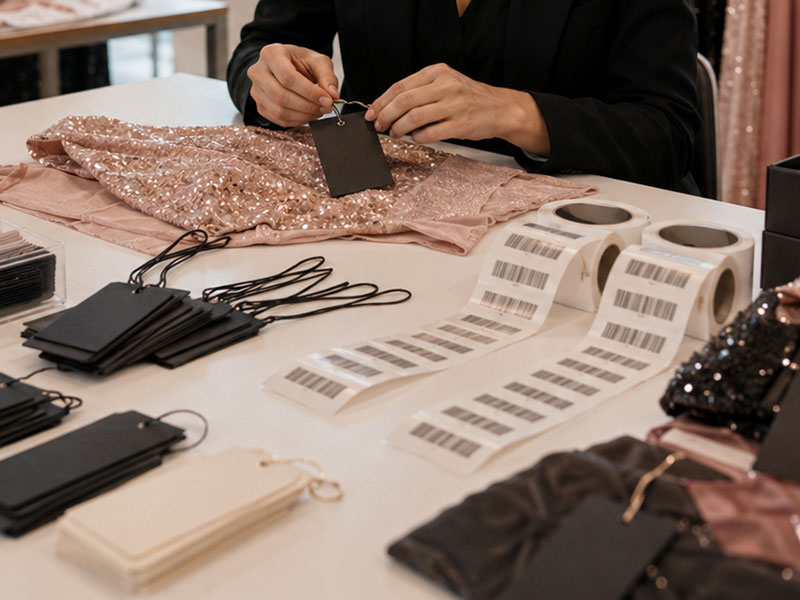
- Hangtag file and string type.
- Attachment point and packing visibility.
- Fabric-safe application for formalwear.
Barcodes and SKU Labels
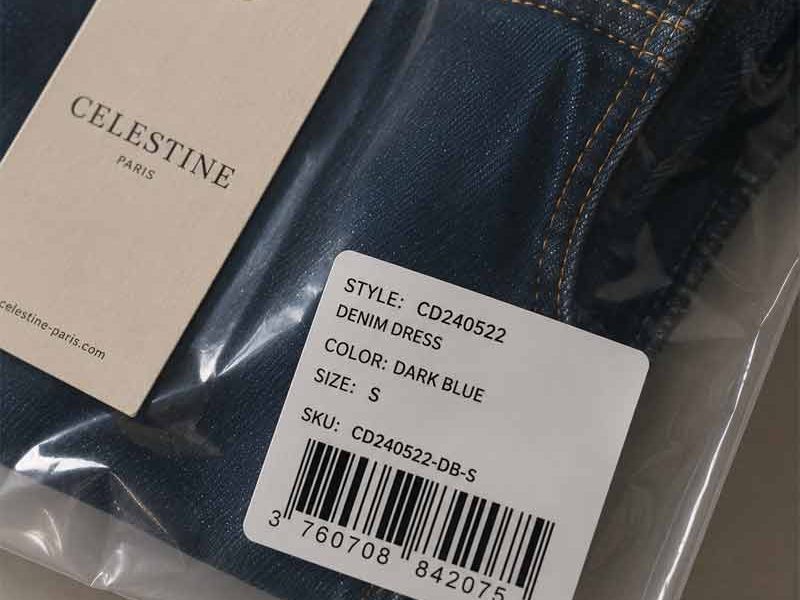
- Barcode stickers and SKU labels.
- Size and color stickers.
- Receiving and warehouse sorting support.

Polybags and Protection
- Polybag size and folding method.
- Pressure and rubbing protection.
- Special handling for sequin, beaded, tulle, and satin dresses.
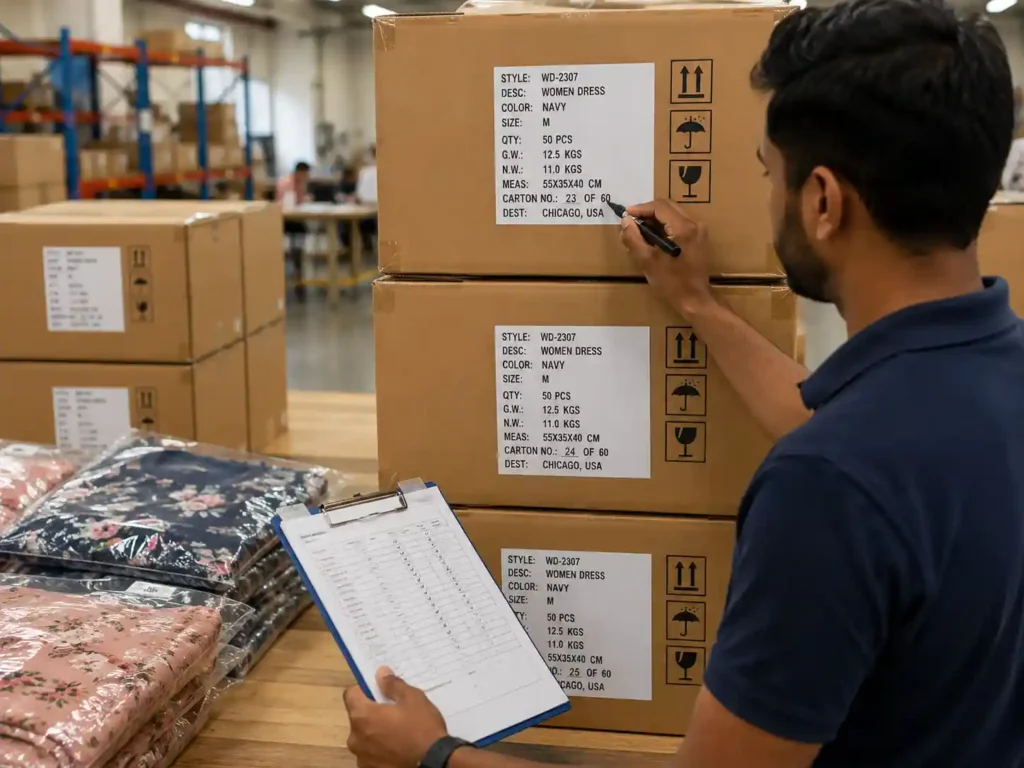
Carton Marks
Carton marks help identify style, color, size ratio, and destination requirements. Jinfeng can follow approved carton mark instructions, packing lists, and shipping references. For multi-style prom orders, clean carton marking helps receiving teams check goods faster.
- Style, color, and size ratio.
- Destination and shipping reference.
- Packing list and carton mark consistency.
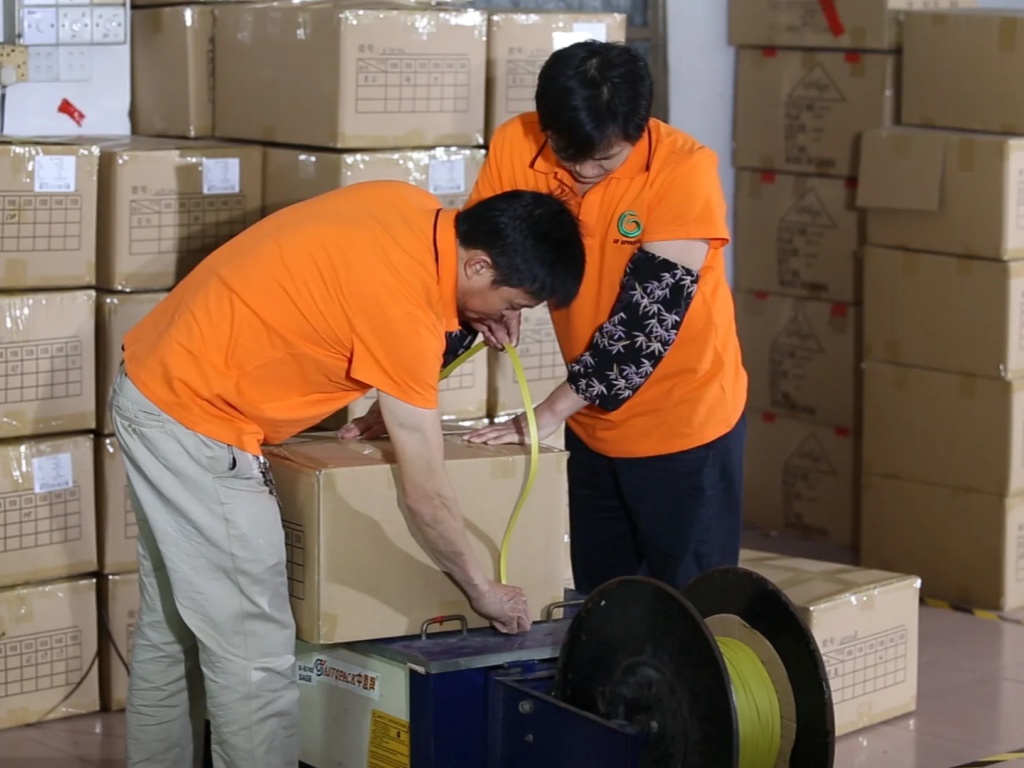
Launch-Ready Delivery
- Branded garment presentation.
- Label, tag, sticker, and carton review.
- Retail, ecommerce, and warehouse readiness.
Prom Dress Case Studies

United States Prom Brand Seasonal Collection
A U.S. prom dress brand planned a seasonal collection with corset gowns, tulle ball gowns, satin dresses, and sequin styles. The program included 18 styles and a total order plan of about 42,000 pcs across selected colors and sizes. The main challenge was sample timing for campaign photography, plus unstable bodice support on several corset styles.
- 18 styles / 42,000 pcs / 4 product groups — project data: corset gowns, tulle ball gowns, satin dresses, and sequin styles; technical difficulty: campaign samples needed speed while corset support needed stronger review; solution: Jinfeng grouped the collection by construction level and prioritized hero styles for photo planning.
- Corset support control — project data: several corset styles showed unstable bodice support; technical difficulty: cup shape, boning position, lining, and back closure affected fit; solution: Jinfeng reviewed each corset style through sample correction and PP approval.
- Tulle and satin standards — project data: tulle gowns and satin dresses had different risks; technical difficulty: tulle needed layer control, while satin needed shine, seam, and pressing control; solution: separate production notes were prepared by fabric group.
- Bulk planning — project data: selected colors and sizes needed coordinated delivery; technical difficulty: similar formal colors could create packing confusion; solution: styles were grouped by fabric, color, and size ratio before production.

Canada Boutique Chain Private Label Program
A boutique chain prepared a private-label prom capsule with 12 styles and around 26,000 pcs total across satin, lace, mesh, and tulle designs.
The pain point was not only garment development but also label, barcode, polybag, and carton mark accuracy.
Their receiving team needed goods sorted by style, color, and size for store allocation.
- 12 styles / 26,000 pcs / 4 fabric groups — project data: satin, lace, mesh, and tulle designs; technical difficulty: fabric variety required different sewing and QC standards; solution: Jinfeng reviewed lining coverage, zipper flatness, lace placement, and mesh transparency during sampling.
- Private-label execution — project data: labels, hangtags, barcodes, polybags, and carton marks were needed; technical difficulty: store allocation required clean SKU and carton data; solution: label file review and packing instructions were confirmed before bulk packing.
- Light-color controls — project data: several styles used pale formal colors; technical difficulty: transparency and stain risk were higher; solution: lining coverage and fabric handling were checked before shipment.
- Receiving support — project data: goods needed sorting by store and SKU; technical difficulty: mixed size or color cartons could slow receiving; solution: packing followed approved style-color-size records.
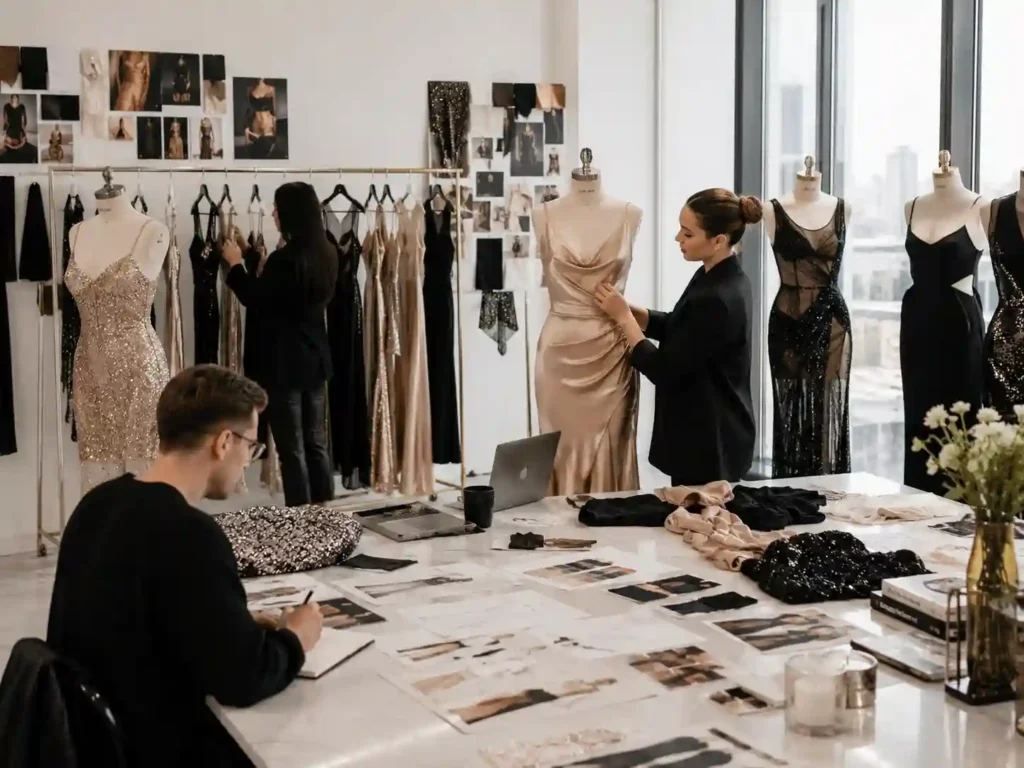
Australia Premium Ecommerce Formalwear Launch
An Australian ecommerce fashion brand planned a formalwear launch with 23 prom and occasion dress styles, totaling about 68,000 pcs across multiple production batches. The collection focused on sequin mini dresses, mesh gowns, satin slip gowns, lace-up backs, and high-slit formal styles. The main concern was visual impact in product photography while keeping wearable comfort and clean delivery.
- 23 styles / 68,000 pcs / 5 product groups — project data: sequin minis, mesh gowns, satin slips, lace-up backs, and high-slit formal styles; technical difficulty: strong photo impact needed to stay wearable and production-ready; solution: Jinfeng reviewed fabric risk before sampling and arranged batches by style priority.
- Sequin and mesh controls — project data: sequin and mesh styles were major visual items; technical difficulty: sequins needed lining protection and surface inspection, while mesh needed transparency and recovery review; solution: QC notes were prepared by material risk.
- Satin and zipper review — project data: satin slip gowns required smooth surface and flat zippers; technical difficulty: shine and pressing problems could affect photos; solution: satin styles received seam, pressing, and zipper flatness checks.
- Repeat and color extension — project data: selected hero styles had repeat potential; technical difficulty: repeat production still required batch confirmation; solution: approved records helped later color extension and selected repeat orders.
Frequently Asked Questions About Prom Dress Manufacturing
[CTA Button: Ask Kelly]
[CTA Button: Send Project]

Start Your Prom Dress Project
Jinfeng Apparel works with fashion brands, formalwear labels, boutique chains, and premium ecommerce teams needing custom prom dress development, sample correction, bulk production, and private-label delivery. Send your project files to Kelly for a first review. The more complete your project information is, the faster the team can check fabric direction, pattern risk, sample needs, MOQ, price factors, production planning, and packing requirements.
Please include:
- Reference images, sketches, original samples, or tech pack.
- Target quantity by style/color and expected size range.
- Preferred fabric direction, color plan, and trim details.
- Private-label files, hangtag files, barcode or packing instructions.
- Expected sample deadline, PP approval date, and launch schedule.
- Destination country and warehouse receiving requirements when available.

