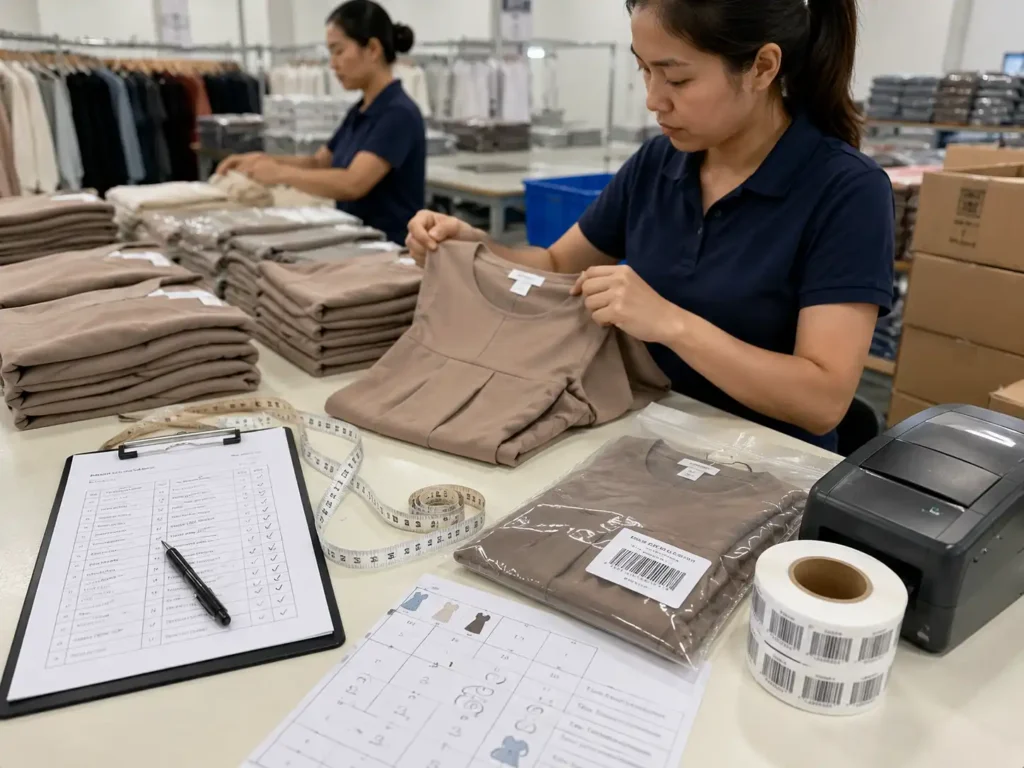
...

Private Label Womenswear Collections

Build coordinated women’s fashion collections from line sheet and sample development through multi-style production, branded packing and repeat-order delivery.

  • Collection programs can cover 10–30 stylesacross dresses, skirts, jumpsuits, matching sets and related fashion pieces.
  • Jinfeng Apparel operates 2 sample roomssupported by 7+ senior pattern makers and 20+ sample machinists for collection development.
  • Standard production MOQ starts from 200 pcs per style/color, with separate supplier requirements possible for special fabrics, trims and packaging.
  • Multi-style programs are supported by 6 owned women’s fashion factories, 10+ long-term production partners and 100,000+ pcs regular monthly capacity.

Manufacturing Capacity for Multi-Style Womenswear Collections

Private label collections require more than garment sewing. Multiple styles, fabrics, colors, size ratios, sample versions and packing instructions must move through one controlled development and production structure. Jinfeng Apparel combines in-house development resources with a multi-factory production network to support seasonal and ongoing womenswear programs.

Since 2008

Jinfeng Apparel has focused on custom women’s fashion development and manufacturing since 2008. Experience covers dresses, skirts, jumpsuits, matching sets and private-label womenswear for international fashion programs where fit, fabric handling and collection coordination matter alongside production capacity.

6 Owned Factories

Six owned women’s fashion factories provide production resources for different garment structures and order schedules. Styles can be allocated according to fabric type, construction complexity, production volume and delivery sequence rather than forcing an entire collection through one production route.

10+ Production Partners

More than ten long-term satellite production partners extend capacity for multi-style and multi-batch programs. Production allocation remains linked to garment requirements so satin, mesh, lace, jersey, structured dresses and other categories can be handled according to their manufacturing characteristics.

100,000+ Pcs Monthly

Regular monthly capacity exceeds 100,000 pieces across the manufacturing network. Capacity planning is reviewed against style count, quantity by color, construction difficulty, material readiness and launch timing before bulk production is scheduled.

2 Sample Rooms

Two sample rooms support pattern development, garment construction, first samples, revisions, PP samples and Golden Sample preparation. Collection programs can prioritize commercially important or technically sensitive styles instead of developing every style in an uncontrolled sequence.

15+ QC Inspectors

More than 15 QC inspectors support material, cutting, sewing, in-line, finished garment and packing inspection. Quality checkpoints are adjusted by product because a satin slip dress, corset mini dress and mesh ruched dress do not carry the same production risks.

Built for Established Womenswear Collection Programs

Jinfeng Apparel works with fashion businesses that already have a defined product direction, launch plan and batch-production requirement. The manufacturing model is especially suited to companies managing multiple styles, seasonal launches, branded packaging and repeat production rather than isolated garment sourcing.

Global Fashion Brands

Seasonal collections often require multiple silhouettes, coordinated fabrics, structured approvals and defined delivery windows. Jinfeng Apparel supports development from technical review and sampling through bulk manufacturing, QC and branded garment delivery.

Sourcing and Buying Teams

Procurement teams need clear factory capability, MOQ boundaries, production files, inspection support and shipment documentation. Collection information can be managed by style, color, size, SKU and shipment batch under one project schedule.

Premium Ecommerce Brands

Online fashion programs often combine launch photography, multiple SKU structures, individual garment packing, barcode requirements and replenishment planning. Development records can be retained for later color extensions and bestseller reorders.

Occasionwear and Partywear Labels

Fit-sensitive and visually detailed products require deeper sampling control. Satin, mesh, lace, sequin, corset, halter, strapless, backless and ruched styles can be evaluated according to fabric behavior, support structure, lining and bulk-production risk.

Build a Collection, Not a Group of Unrelated Styles
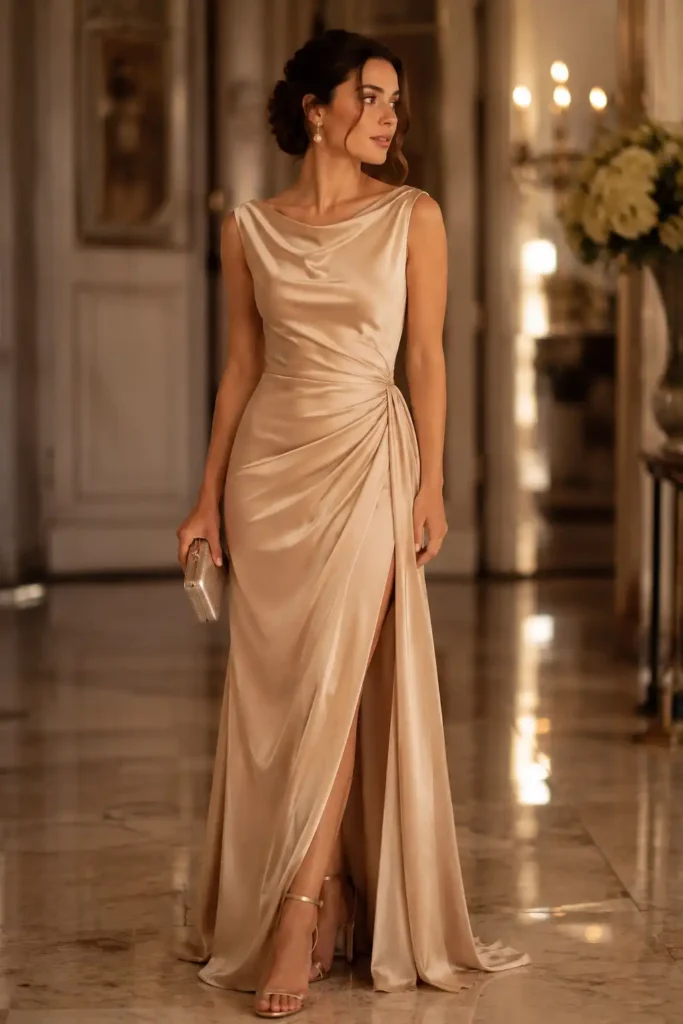
A strong private label collection needs a clear product hierarchy. Instead of treating every garment as an isolated development project, styles can be grouped by commercial role, fabric family, silhouette and production risk. The result is a more coherent assortment and a cleaner route from development to bulk production.

Hero Dresses

Statement minis, midis and maxis can carry stronger design details such as corsetry, cut-outs, draping, mesh panels, sequins or structured necklines. These styles normally receive early sampling priority because they influence campaign imagery and overall collection direction.

Commercial Dresses

Bodycon, slip, ruched, halter, sleeveless and occasion dresses can form the commercial core of a collection. Fabric choice, fit consistency, color planning and repeatability are important when multiple colorways or replenishment orders are expected.

Matching Sets

Coordinated tops and skirts, tops and pants or occasion sets add assortment depth while sharing color and material direction. Pattern balance, shade consistency and correct upper/lower size pairing require specific production and packing control.

Skirts

Mini, midi and long skirts can extend a successful fabric or design direction without developing an entirely new material platform. Waist construction, lining, zipper installation, slit placement and hem balance remain important fit points.

Jumpsuits

Jumpsuits expand a collection beyond dresses but add additional fitting variables, including torso length, waist position, crotch length and movement allowance. Sample fitting is important before grading and bulk production.

Occasionwear

Satin, chiffon, lace, mesh and structured fabrics can support wedding guest, evening, cocktail and event-focused products. Fabric performance, lining coverage and pressing standards become part of collection planning.

Resortwear

Lighter woven fabrics, rayon, viscose, linen blends and printed materials can be planned around travel, drape, opacity and packing performance. Style planning should consider how the assortment will photograph, fold and travel.

Seasonal Extensions

Successful patterns can later support new colors, fabric substitutions or related silhouettes. Collection records help reduce repeated development work while preserving the approved fit and construction direction.

Turn Your Line Sheet Into a Production Plan

A 20-style collection becomes difficult when style priorities, materials and approval stages are managed only through scattered emails. Jinfeng Apparel organizes collection development around style groups, fabric groups, fit risks, sample versions, quantities and launch timing so every approved decision can move into a production file.

Start With the Commercial Structure

Collection review begins with the line sheet, tech packs, sketches, reference garments or approved design direction. Each style is identified by product type, expected colorways, planned quantity, size range, target launch date and any private-label or packing requirements.

The assortment can then be separated into clear commercial groups. Hero pieces may need early development for campaign shoots, while simpler commercial styles can follow a standard sample sequence. Reorder styles may already have usable production records and can be separated from new developments.

Group Styles by Material and Risk

A collection with satin, mesh, lace, jersey and crepe should not be managed as one uniform material program. Fabric grouping helps identify shared sourcing opportunities while protecting styles that require different stretch, transparency, lining or pressing standards.

Technical risk is also grouped early. A simple lined skirt may move through development differently from a corset mini with boning, a strapless satin dress with anti-slip support or a mesh dress with transparency-sensitive lining.

Set Approval Priorities

Sample order is connected to commercial importance and technical uncertainty. Styles required for campaign photography can move earlier. Fit-sensitive garments can be sampled before simpler shapes. Special fabrics or custom trims should be reviewed early because material development may control the whole calendar.

No bulk style moves forward simply because the overall collection looks ready. Each style must reach its required approval stage with final pattern, fabric, trim, measurements and production instructions confirmed.

Grade Off-Shoulder Dresses Without Distorting the Neckline​

Fabric Direction Across the Entire Collection

Fabric decisions affect more than appearance. Weight, drape, stretch, recovery, shine, transparency, shrinkage and wrinkle behavior can change pattern balance, lining construction, sample results, MOQ, unit cost and production timing. Collection-level fabric planning therefore combines aesthetic direction with manufacturing feasibility.

Satin and Crepe Programs
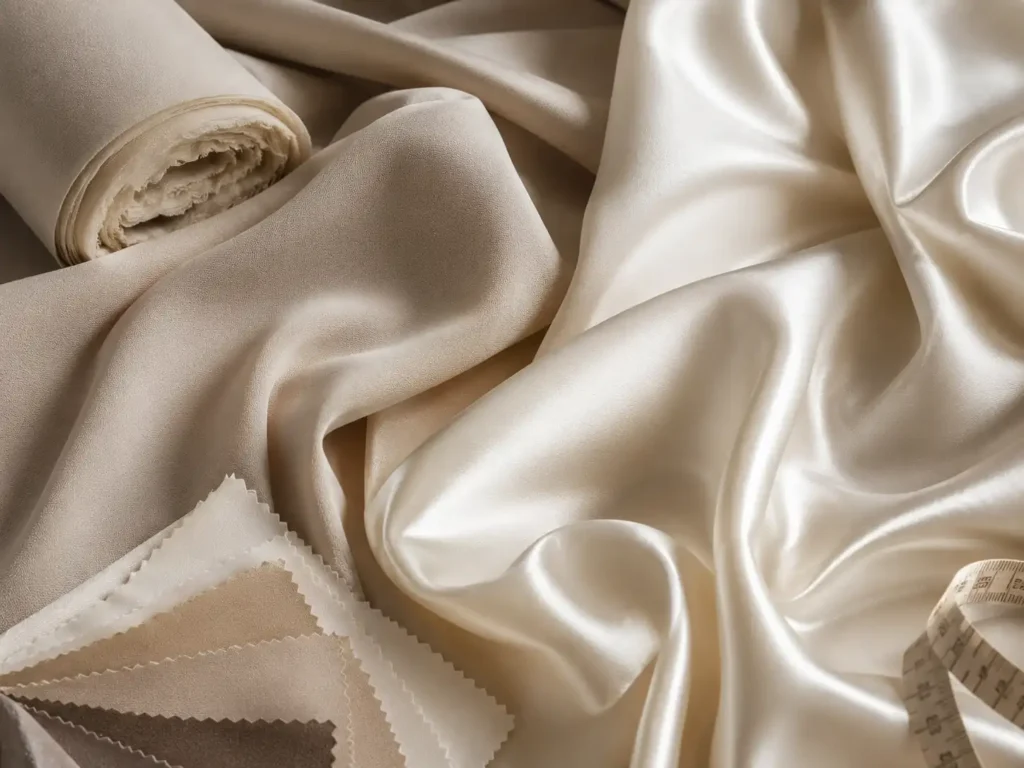
Satin creates strong visual value for slip dresses, occasion dresses, halter styles and evening products, but different weights and finishes behave differently. Shine direction, snagging, zipper flatness, seam appearance, pressing and packing creases all need consideration.

Crepe can provide a softer matte direction with useful drape and structure for dresses, jumpsuits and tailored-looking pieces. Fabric weight and recovery should still be matched to the silhouette.

When several styles use the same base fabric, color and lot planning can become easier. However, a bias-cut slip dress and a structured corset dress may still require different satin specifications even if both sit within the same collection.

Mesh, Lace and Sheer Materials

Mesh and lace introduce transparency, stretch and edge-finishing questions that directly affect wearability.

Lining placement cannot be decided only from a flat sketch.

Bust coverage, neckline stability, seam placement and target market expectations should be verified through samples.

For lace, motif position and seam joining also affect final appearance. For mesh, stretch direction and recovery influence fit.A fabric that appears suitable from a swatch can behave differently once tension is applied to the garment.

Jersey, Ponte and Stretch Fabrics

Bodycon and fitted collections depend heavily on recovery rather than stretch percentage alone. Strong stretch with poor recovery can create bagging, uneven side seams and shape loss after wear.

Pattern measurements are therefore reviewed together with fabric behavior. Jersey, ponte and power mesh may all support fitted garments, but each material produces a different level of compression, structure and movement.

Chiffon, Rayon and Lightweight Wovens

Lightweight collections require attention to drape, opacity, seam choice and hem stability. Chiffon often needs lining decisions and delicate edge finishing. Rayon and viscose can offer soft drape for resort styles but may require shrinkage and wrinkle review.

Printed woven fabrics introduce another variable: print scale and placement must work with pattern pieces, seams and garment proportions.

Fabric Replacement Is a Controlled Decision

A substitute fabric is never treated as “the same material at another price.” Jinfeng Apparel compares composition, weight, hand feel, drape, stretch, recovery, transparency, shine, shrinkage, color, MOQ and lead-time impact before replacement.

A material change may require pattern adjustment, different lining, another sample or a revised cost calculation. Fabric approval records are updated before the changed material moves toward bulk production.

Fabric Source Record​

Fit and Construction Standards Across Multiple Styles

A collection can use different silhouettes without losing fit discipline. Jinfeng Apparel develops and adjusts patterns around the measurements and construction points that most strongly influence how women’s fashion garments sit, move and photograph.

Bust, Waist and Hip Balance

Bodycon dresses, corset styles, fitted minis and jumpsuits need accurate relationships between bust, waist and hip measurements. A single measurement can be within tolerance while the garment still fits poorly if the overall proportion is wrong.

Sample review therefore considers shaping, side-seam position, dart or panel direction, stretch behavior and the intended amount of ease.

Neckline and Bust Coverage

Deep V, halter, strapless, cut-out and low-back garments need careful control of neckline depth, bust exposure and support.


The goal is not simply to reproduce a low neckline from a reference image; coverage and stability must work with the target size range and chosen fabric.

Straps, Armholes and Back Position

Strap length and placement can influence bust position, armhole coverage and neckline stability. Small changes become especially visible in slip, cami, halter and backless dresses.

Armhole depth is checked against movement, underarm coverage and lining position rather than measured as an isolated point.

Corset and Strapless Structures

Boning position, bra cup placement, anti-slip support, lining and zipper construction work together. Strong support with poor comfort creates another problem, so sample fitting must balance shape and wearability.

Ruched and Draped Details

Ruching amount, direction and tension affect visual proportion and bulk consistency. Sewing marks and placement references help control left-right symmetry across production.

Slits and Hem Balance

Slit height changes walking comfort and exposure. Hem balance is also sensitive to fabric drape, bias cutting and pressing, especially on satin and long dresses.

Multi-Style Sampling Before Bulk Production

Sampling turns design direction into measurable production standards. Jinfeng Apparel separates sample stages so fit, materials, workmanship, labels and packing can be corrected before bulk production. Simple styles and complex fashion pieces are not forced into the same development timeline.

First Sample
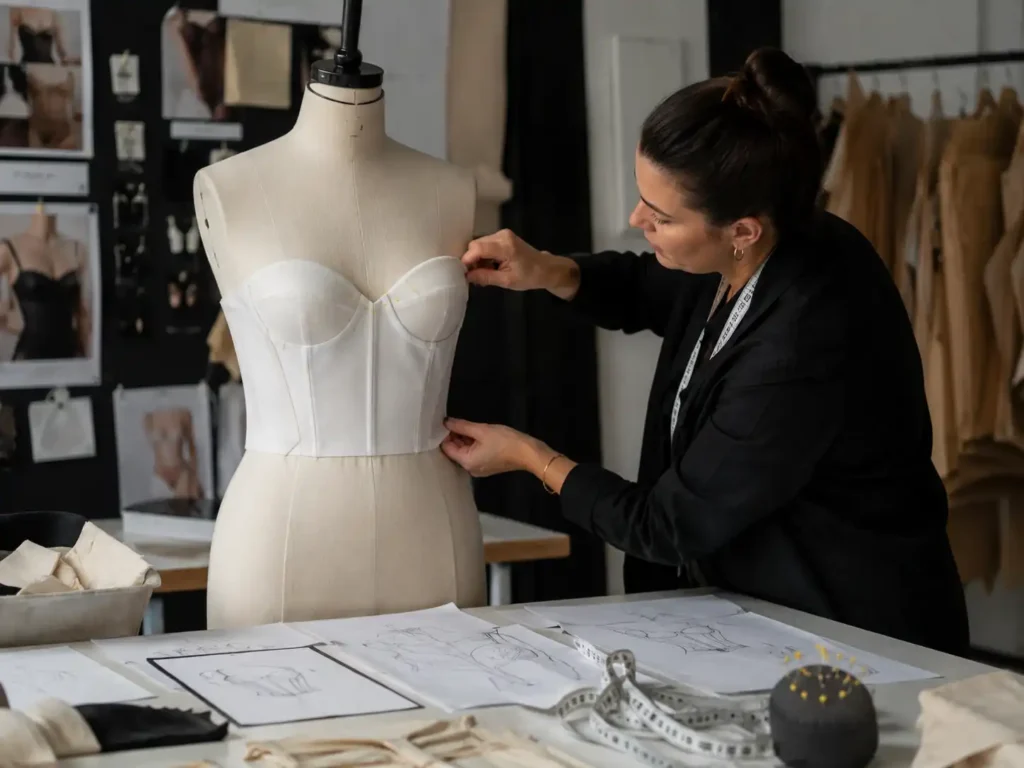
The first sample checks design direction, basic structure, material behavior and the initial pattern. It is not automatically the final bulk standard. Fit comments, construction risks and fabric issues identified at this stage are documented before revision.

Fit Sample

Fit-focused samples can be used when silhouette and measurements require deeper evaluation. Bust, waist, hip, length, strap, armhole, neckline, back position, slit or jumpsuit crotch measurements are reviewed against the approved size chart and fit comments.

Revised Sample

Revision work turns feedback into technical changes. Updates may include a revised pattern, new measurements, adjusted BOM, changed fabric, altered trim, updated sewing instruction or modified QC points. Important changes must enter production files rather than remain only in messages.

Photo or Sales Sample

Photo-ready or salesman samples can be prepared when the project requires them. Their purpose and standard are confirmed separately because a photography sample is not automatically equivalent to the PP sample used for bulk-production approval.

PP Sample

PP sample approval locks the final direction before bulk preparation. Pattern, fabric, color, trims, measurements, construction, labels, packing and quality requirements should be confirmed before production starts.

Golden Sample

The sealed Golden Sample becomes an important reference for bulk production, QC, repeat orders and later comparison. Production documentation and retained records should align with the approved physical standard.

Sample StageTypical Reference TimingMain Variables
Simple first sample7–10 daysFabric availability, pattern simplicity
Standard dress first sample10–15 daysFabric, pattern, trims
Medium-complex dress / set / jumpsuit12–18 daysConstruction and fit
Corset / strapless / lace / mesh / sequin15–25 daysStructure, special workmanship
Special fabric or trim development20–35 days or supplier cycleDyeing, printing, custom trims
Revised sampleUsually 7–15 daysScope of revisions
PP sampleUsually 7–15 daysFinal materials must be ready

Set Sample Priorities Around Your Launch Calendar

A 20-style line rarely needs every sample on the same date. Commercial priority, technical risk and photography deadlines can be used to create a more controlled development sequence.

Campaign Priority

Styles required for campaign photography or launch content can enter development earlier so visual decisions are not delayed by less urgent products.

Fit-Risk Priority

Corset, strapless, jumpsuit, low-back, mesh and other fit-sensitive products may be developed early because pattern revisions can influence final timing.

Material-Risk Priority

Custom-dyed fabrics, special lace, sequins, printed fabrics or custom trims should be evaluated early when supplier lead times may affect the whole collection.

Commercial Core Priority

Simpler products that use approved fabric platforms can follow once key direction has been established, allowing sample-room resources to stay focused on the most important development risks first.

Manage 10–30 Styles Under One Project Structure

Multi-style orders become difficult when approvals, fabric records and packing instructions are stored separately. Jinfeng Apparel supports collection programs with structured follow-up across development, production and delivery, backed by 12+ merchandisers and order follow-up specialists.

Project FieldWhat Is Controlled
Style / SKUStyle number, garment category, priority
FabricSupplier, color, approval, MOQ, arrival status
TrimsZipper, cups, boning, labels, decorative items
PatternPattern version and revision status
SampleFirst / revised / PP / Golden Sample
SizeSize chart, grading and ratio
QuantityStyle, color and size breakdown
CostStyle-specific quotation basis
ProductionAllocation, cutting, sewing and finishing status
QCInspection stage and outstanding issues
PackingLabels, barcode, polybag and carton instructions
DeliveryShipment batch, method and destination

MOQ Planning for a Multi-Style Collection

MOQ should be calculated before a collection becomes over-fragmented. Jinfeng Apparel’s standard production MOQ starts from 200 pcs per style/color, not 200 pieces across the entire collection.

Plan Quantity by Style

Ten styles do not share one 200-piece MOQ. Each selected style needs a commercially workable production quantity so cutting, sewing, QC and packing can be managed efficiently.

Plan Quantity by Color

A style developed in two colors normally requires each color to meet the production MOQ. Splitting a small quantity into many colors can increase material, cutting and SKU complexity.

Size Ratios Sit Inside the Quantity

Multiple sizes can be produced within the confirmed style/color quantity according to an approved size chart and size ratio. Sizes do not normally create an additional 200-piece MOQ individually.

Supplier MOQs Can Differ

Custom dyeing, printing, special lace, sequins, recycled or certified materials, custom labels, hangtags and special packaging may carry separate supplier minimums. These requirements are reviewed before final production planning.

Engineer Collection Cost Without Weakening Brand Appearance

Collection costing is built style by style rather than applying one generic unit price. Fabric, construction and packing decisions can then be reviewed across the complete assortment to find savings without removing the visual features that make the products commercially valuable.

Fabric Cost

Fabric often controls a large part of garment cost. Alternative weights, compositions or sourcing routes can be reviewed where suitable, but hand feel, drape, stretch, opacity and appearance still need approval.

Construction Cost

Corsetry, complex lining, multiple panels, heavy ruching, extensive lace placement, sequin work and detailed finishing increase sewing time and production risk. Construction can sometimes be simplified while keeping the main visual effect.

Trim and Detail Cost

Bra cups, boning, zippers, decorative trims, special buttons and custom hardware can change the cost structure. Equivalent alternatives may be evaluated when they meet the required appearance and performance.

Collection Efficiency

Shared fabric platforms, controlled color counts, sensible size ratios and coordinated packaging can reduce unnecessary fragmentation across the assortment. The goal is cost control without weakening brand-level appearance.

Packing and Logistics

Labels, hangtags, barcode work, polybags, retail packing and split shipments also belong in the cost structure. Quotation therefore reflects the garment as it will actually be delivered rather than only the sewing operation.

Testing and Compliance

Testing or certification requirements are reviewed by market, fabric, supplier and project. Associated cost and timing are confirmed when the scope is known rather than assumed to be included in every garment.

Allocate Multi-Style Production by Garment Requirements

Collection-scale manufacturing is not simply a matter of finding enough sewing capacity. Different products need different handling, production instructions and quality checkpoints. Jinfeng Apparel uses owned factories and long-term production partners to allocate styles according to material, construction and order timing.

Match Production to Construction

A lightweight resort dress, stretch bodycon style, lined satin dress and structured corset should not be treated as identical production work.

Production allocation considers:

  • Garment construction
  • Fabric handling
  • Sewing difficulty
  • Lining and support requirements
  • Decorative workmanship
  • Quantity by style
  • Color and size breakdown
  • Target production window
  • Packing and shipment sequence

Lock Production Files Before Cutting

Bulk preparation starts after required approvals are completed.


Production files can include style information, color, size, quantity, fabric, trims, pattern version, PP sample reference, care-label content, hangtag requirements, packing, delivery and quality requirements.

Complex garments also require a workmanship instruction that translates the approved sample into production details such as seam method, seam allowance, stitch requirements, zipper installation, neckline, armhole, hem, slit, lining, boning, bra cups, anti-slip support,

ruching, lace joining, mesh edge treatment, sequin protection and pressing.

PP Approval Is a Production Gate

Once the PP sample is approved, major changes in design, material, measurement or construction require another evaluation of cost, lead time and production risk.

Keeping approvals disciplined protects the complete collection from late changes that can affect multiple styles, materials and shipment dates.

Cutting Control

Control Workmanship by Style, Fabric and Construction

Fashion workmanship is most visible at the points where fabric behavior meets garment structure. Jinfeng Apparel defines inspection and sewing priorities according to the actual product instead of using one generic workmanship statement across the collection.

Satin Workmanship

Control focuses on smooth seam appearance, zipper flatness, snag prevention, lining, pressing and reduction of visible packing creases.

Mesh Workmanship

Transparency, lining coverage, neckline stability, seam stretch and edge finishing need coordinated control so the finished garment keeps its intended shape.

Lace Workmanship

Lace requires attention to motif placement, seam joining, lining color, edge finishing and damage prevention during sewing and finishing.

Sequin Workmanship

Sequin garments need control of dropped embellishment, abrasive edges, lining, seam-zone handling and protective packing.

Corset Workmanship

Boning, cup shape, cup placement, zipper behavior, anti-slip structure, bust coverage and waist shaping are checked as one support system.

Matching Sets

Color consistency, top-and-bottom fit relationship, correct size pairing and packing accuracy are important when two garments must be delivered and sold together.

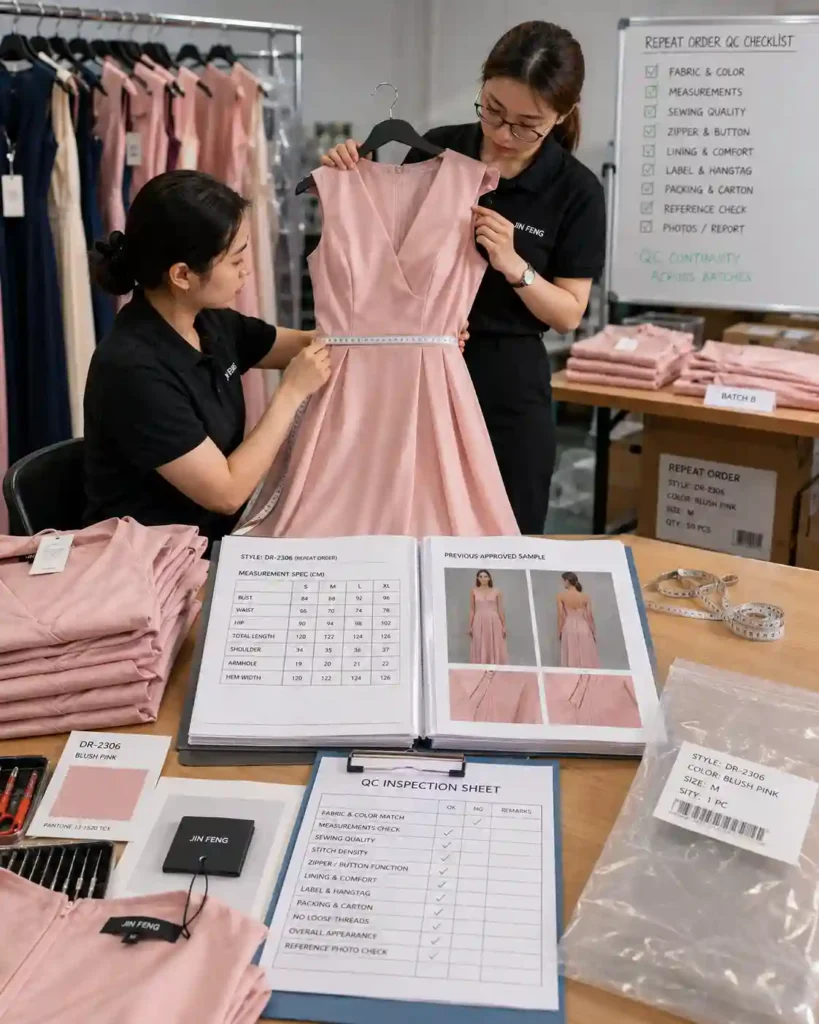
Collection-Level QC From Fabric to Final Packing

Quality control starts before sewing and continues through packing. The purpose is to keep each style aligned with its approved material, measurements, construction and branded delivery standard while allowing different garments to carry different risk checkpoints.

  • Incoming Material QC: Fabric is checked when it reaches the production stage. Color, visible defects, weight or hand-feel differences and material issues can be identified before cutting. Complex materials may require style-specific review because stretch, transparency or surface damage can directly affect the final garment.
  • Cutting QC: Pattern version, grain direction, fabric direction, cut accuracy and component matching are checked before pieces move deeper into production. Satin, prints, lace and other directional materials need additional attention.
  • Sewing and In-Line QC: In-line inspection looks for problems while production is still running. Fit-critical seams, zipper installation, ruching, lining, cups, boning and other construction details can be corrected earlier instead of waiting for final inspection.
  • Measurement Control: Finished measurements are compared against the approved size chart and tolerance. Important points vary by garment but may include bust, waist, hip, garment length, straps, neckline, armhole, slit and jumpsuit crotch length.
  • Finished Garment and Pressing: Appearance, workmanship and pressing are reviewed before packing. Satin shine, seam impressions, lace edges, mesh stability and decorative surfaces can require different finishing standards.
  • Packing QC and AQL: Labels, hangtags, barcode stickers, size stickers, SKU information, polybags, carton marks and packing ratios are checked before shipment. AQL inspection and client or third-party inspection can be coordinated by project; AQL is not presented as a substitute for every earlier QC stage.

Put Your Brand Identity Into Every Garment
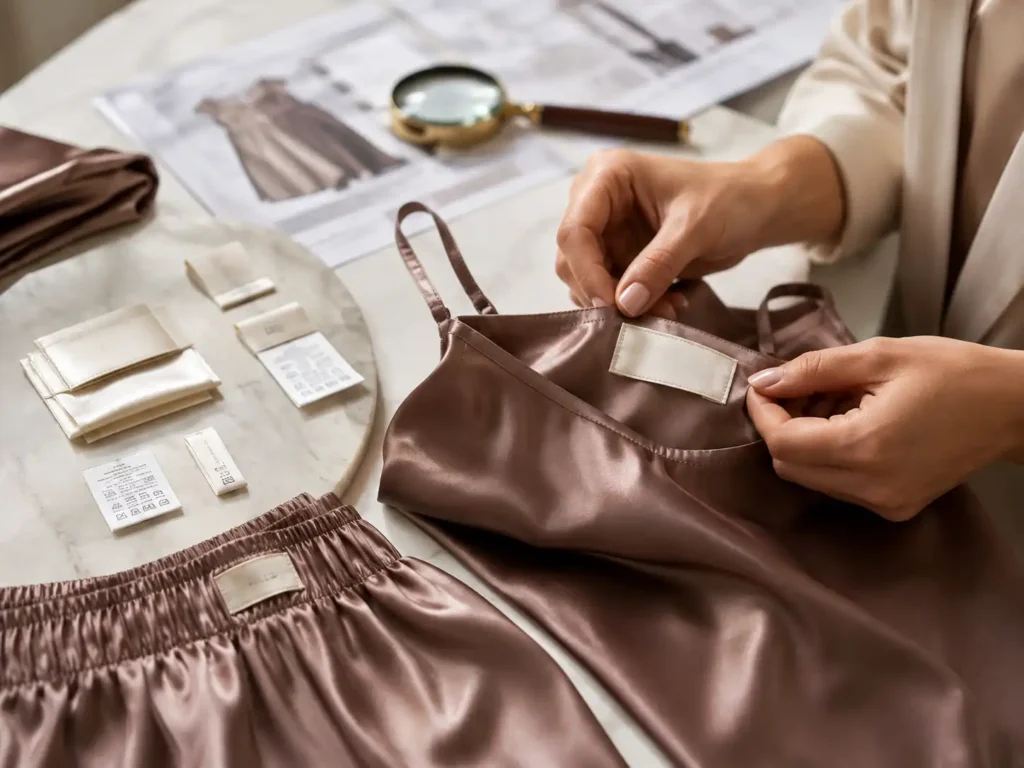
Private label manufacturing goes beyond sewing a main label into finished clothing. Brand files, garment labels, barcode information and packing instructions have to remain accurate across every style, color and size in the collection.

Woven Brand Labels

Main labels can carry the brand identity inside dresses, skirts, sets, jumpsuits and other womenswear. Artwork, dimensions, material and placement are confirmed before bulk application.

Size Labels

Size identification is coordinated with the approved brand size system and garment size chart. Accuracy becomes especially important across multi-style and multi-size programs.

Care Labels

Care labels can include approved fiber composition, care information, size and country-of-origin information according to the files provided and project requirements. Regulatory wording remains subject to final brand or compliance confirmation.

Hangtags

Brand hangtags can be produced according to approved artwork, material, size and attachment instructions. Style-specific information can be coordinated where required.

Barcode Stickers

Barcode files need to match the correct SKU, style, color and size. Barcode accuracy is checked as part of packing preparation rather than treated as a decorative label.

SKU Labels

SKU identification helps multi-style programs stay organized through individual packing, carton packing and warehouse receiving.

Polybags and Brand Packing

Garment bags, warning text, size stickers, color stickers, brand stickers and other packaging details can be applied according to the approved packing instruction.

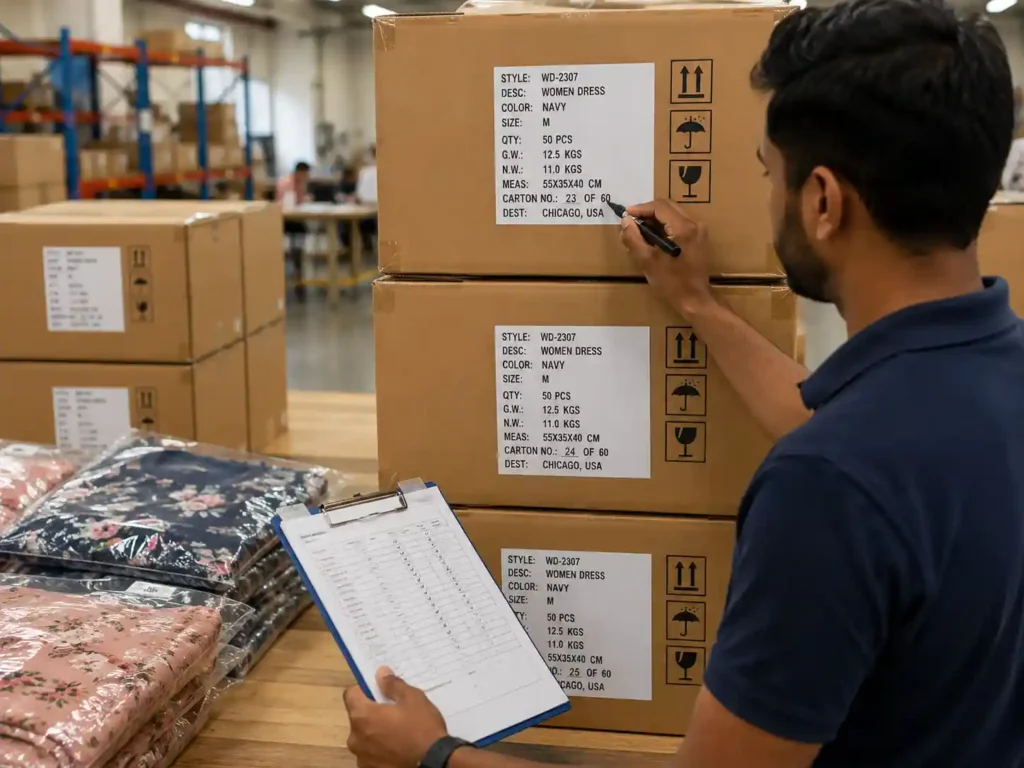
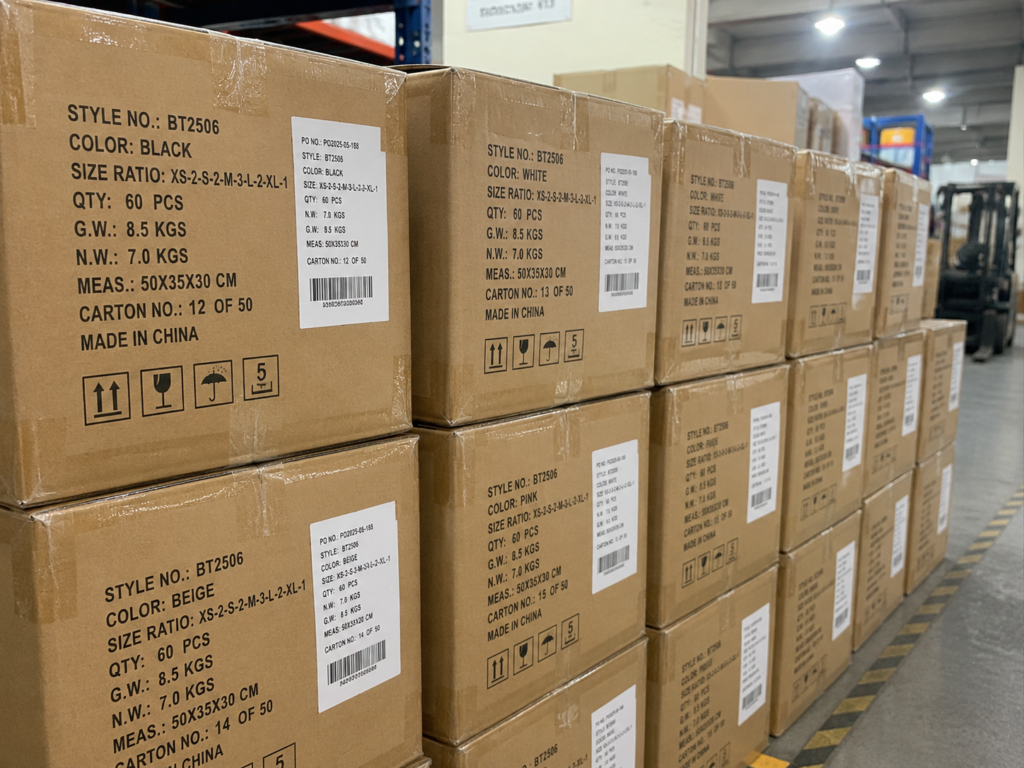
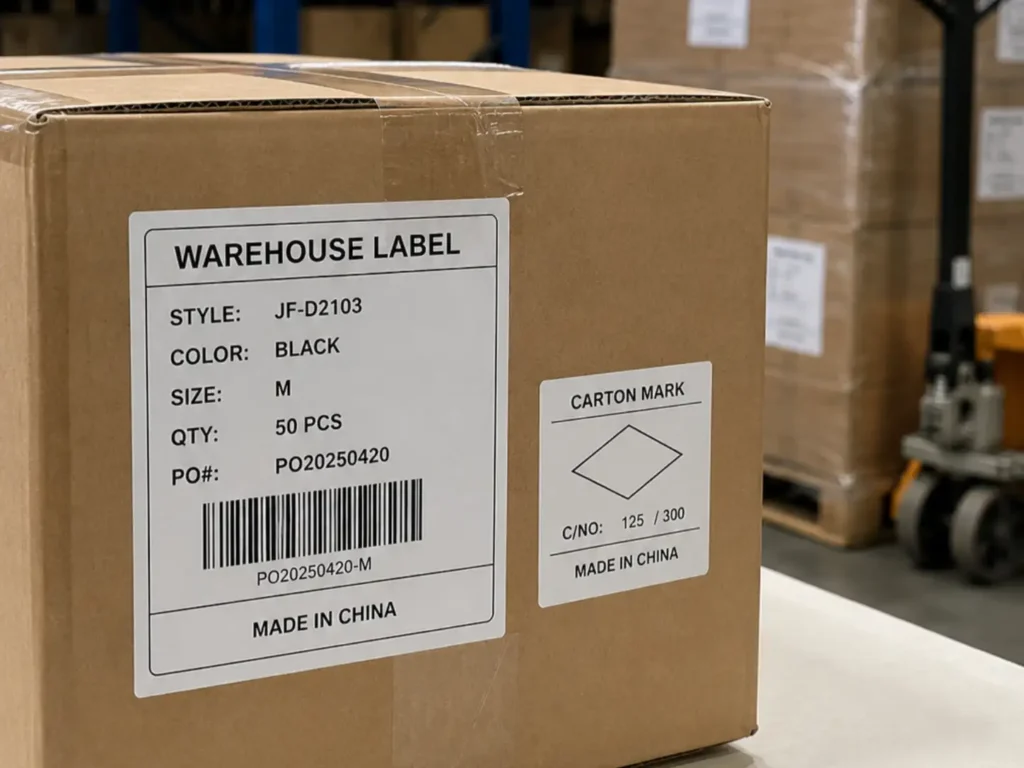
Carton Marks

Outer-carton identification can connect PO, style, color, size or shipment information with the packing list and warehouse receiving requirements.

Prepare Collections for Retail and Ecommerce Operations
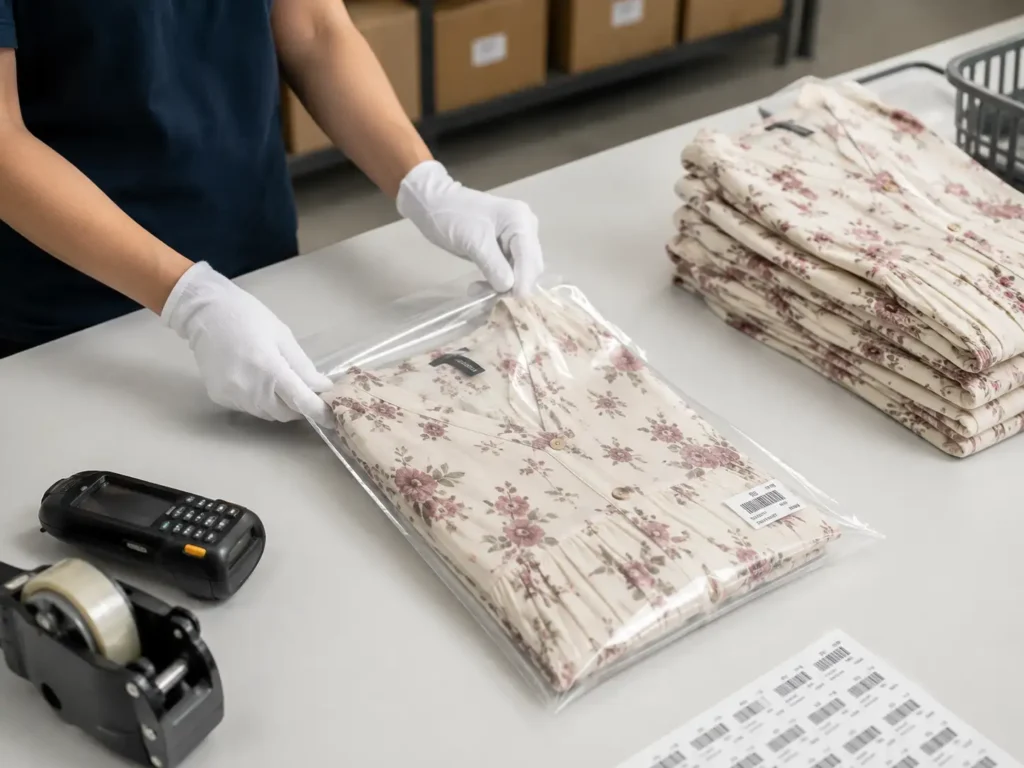
A finished garment still has to reach a warehouse, retail system or ecommerce fulfillment process without losing SKU accuracy. Jinfeng Apparel supports retail-ready and ecommerce-ready packing for multi-style womenswear programs.

Individual Garment Packing

Each garment can be folded, labeled and packed individually according to the approved packing method. Final checks cover garment condition, label accuracy and packaging appearance.

Barcode and SKU Control

Barcode, SKU, style, color and size information must remain aligned. Packing checks reduce the risk of a correct garment being placed into the wrong labeled bag.

Color and Size Ratios

Cartons can be organized around confirmed color and size ratios. Clear breakdowns help production, packing and warehouse teams work from the same structure.

Mixed-Size Cartons

Mixed-size or mixed-color cartons can be prepared when required, but the packing instruction needs to define exactly how the contents should be grouped and identified.

Warehouse Labels

Warehouse receiving labels, carton marks, PO information and packing lists can be coordinated according to the receiving requirements provided for the project.

Packing Records

Packing requirements can be retained for repeat production so future orders do not need to rebuild the complete packaging structure from memory. Jinfeng Apparel supports barcode, SKU, individual packing, color-size packing and warehouse receiving preparation for private-label programs.

Protect Unreleased Collections and Brand Files

Product development often begins months before a collection reaches the market. Tech packs, samples, patterns, label artwork, packaging files and launch information therefore need controlled handling throughout development and production.

NDA-Based Cooperation

Jinfeng Apparel supports NDA-based projects where confidentiality forms part of the working relationship.

Development File Protection

Tech packs, patterns, original samples, size charts, trims and unpublished design information are treated as project information rather than marketing material.

Brand Asset Protection

Label artwork, packaging files and other brand-specific information are not intended for public use without authorization.

Anonymous Case Use

Case studies can describe project size, product category, manufacturing challenge and production solution without identifying the brand, PO, warehouse information or confidential files.

Compliance by Project

Certification and testing claims are confirmed according to actual factory documentation, fabric supplier, batch, color, certificate scope and destination-market requirement. Materials are not described as universally certified when documentation does not support the claim.

Third-Party Inspection

Client inspection and third-party inspection can be coordinated according to project requirements, including SGS, Intertek, BV or ITS support where applicable to the specific order.

18 Styles and 28,000 Pieces for a US Private Label Program

An anonymous US private-label apparel client developed an 18-style womenswear order with Jinfeng Apparel totaling approximately 28,000 pieces. The program combined multiple fabrics, fit-sensitive designs, private-label packing and several operational requirements that had to remain coordinated across one production schedule.

Collection Scope

The order included 18 styles / approximately 28,000 pieces using satin, mesh, jersey, lace and crepe.

Style construction included lined garments, ruched designs, halter silhouettes, backless pieces and zipper-based structures.

The collection therefore could not rely on one fabric standard or one QC checklist.

Development Challenge

Multiple styles progressed through development at the same time. The main risks were not limited to garment sewing.

The project required control of:

  • Fabric differences across styles
  • Sample-version tracking
  • Fit and construction feedback
  • SKU information
  • Private-label packing consistency

Sampling and Approval

The program followed a sequence of First Sample → Revised Sample → PP Sample → Golden Sample.

Sample comments were managed by style rather than as one combined collection note.

Material, fit, construction and private-label information were moved into the approved production records before bulk manufacturing.

Production Coordination

A project schedule was established to track materials, sample stages and bulk progress.


Different fabric and construction requirements were organized by style, while packing standards were unified where the brand required consistent presentation across the collection.

Private Label and Inspection

Private-label requirements were coordinated with SKU and packing information before final packing.


Client inspection was supported as part of the release process, and commercial invoice, packing-list and carton-mark information was prepared for shipment.

Delivery Result

The collection was completed through batch-based shipment planning, and later discussion moved toward continued seasonal collection cooperation.

The project illustrates the difference between producing individual garments and managing a multi-style private-label program: development records, production files, QC, branded packing and delivery all have to remain connected.

Plan Production Backward From the Launch Date

Delivery planning starts with the date garments need to reach photography, launch, retail or warehouse operations. Instead of describing every project as “fast delivery,” the schedule is built around actual approval and production dependencies.

Development Milestones

The timeline can include requirement confirmation, fabric approval, trim approval, pattern completion, first sample, feedback, revised sample and PP approval.

Bulk Milestones

Material arrival, pre-production review, cutting, sewing start, in-line QC, finishing, packing, AQL or client inspection and shipment dates are added after production requirements become clear.

Split Shipment Options

For launch-sensitive programs, part of the order can be evaluated for air freight while the larger balance moves by sea. Styles, colors or warehouse destinations may also be separated into batches when the commercial plan requires it.

Delivery Variables

Timing depends on style complexity, fabric availability, special trims, revision rounds, response time, quantity, color count, size range, packing requirements, inspection, transport method and destination. Jinfeng Apparel uses a project timeline to connect development and shipment milestones instead of making one universal delivery promise.

Choose the Shipping Structure Around Commercial Priorities

International delivery can be organized according to order volume, launch timing and destination requirements. Shipping recommendations remain part of the project plan rather than being separated from production decisions.

Express

Express services are mainly suited to samples, small development items and urgent documents where speed matters more than freight cost.

Air Freight

Air freight can support time-sensitive product quantities, launch requirements or replenishment when the commercial value of earlier delivery justifies the additional freight cost.

Sea Freight

Sea freight is suited to larger bulk shipments where cost efficiency is more important than transit speed.

Air and Sea Split

A split strategy can move launch-priority quantities by air while the main order follows by sea, helping balance timing and logistics cost.

Client-Nominated Forwarder

Established importers can use their nominated forwarder while Jinfeng Apparel prepares the garments, packing information and required shipment documents for handover.

Trade Terms by Project

EXW, FOB, CIF, DAP and DDP can be evaluated according to the order and destination. DDP availability is reviewed by project rather than presented as a universal service for every market.

Build the Next Collection From Approved Production Records

The value of a manufacturing relationship increases when the second and third orders do not restart from zero. Jinfeng Apparel keeps production references that can support repeat orders, new colors, related styles and seasonal continuation.

Pattern Records

Approved pattern information helps future production begin from the established fit rather than rebuilding the garment from a reference image.

Measurement Records

Size charts, measurement comments and fit revisions provide a technical history for repeat production and later extensions.

Fabric and Color Records

Fabric references, approved colors and material notes help identify what was used previously. New fabric lots or availability still need confirmation before repeat production.

Trim and Construction Records

BOM information, trim details and workmanship instructions reduce the risk of losing construction decisions between seasons.

Packing Records

Labels, barcode structure, polybags, folding methods, carton instructions and warehouse information can be retained for future orders.

Golden Sample Reference

The Golden Sample provides a physical quality and construction reference when the approved style enters later production.

Bestseller Replenishment

Repeat styles can be planned alongside new developments so a brand can replenish proven products while preparing the next collection.

Seasonal Extensions

An approved silhouette may support new colors, a new fabric direction or related designs, subject to fresh material, cost and production review.

Frequently Asked Questions About Private Label Womenswear Collections

Yes. Jinfeng Apparel supports multi-style development for private-label womenswear programs and seasonal collections. Collection projects commonly involve 10–30 styles, with style files, fabrics, samples, revisions, PP approvals and production schedules managed by style.
No. Standard MOQ starts from 200 pcs per style/color. Several different styles cannot normally be combined to create one 200-piece MOQ. Special fabrics, trims, printing, dyeing and packaging may also have separate supplier minimums.
Yes. Multiple sizes can be distributed within the confirmed quantity according to the approved size chart and size ratio. Jinfeng Apparel can work with US, UK, EU, AU and brand-specific sizing systems.
A line sheet or style list is useful for a multi-style project. Tech packs, reference images, original samples, size charts, fabric direction, target quantities, color plans, target launch dates and private-label requirements help make the initial review more accurate.
A standard dress first sample is commonly around 10–15 days, while corset, strapless, lace, mesh or sequin styles may take around 15–25 days. Special fabrics and trims can extend development. Revised and PP samples are generally confirmed according to the required changes and material readiness.
Yes. Sample charges cover development work including pattern making, fabric and trim preparation, sewing, measurement checking and communication. When an approved style moves into a qualifying bulk order, the sample fee can be deducted by project.
Private-label support can include woven labels, size labels, care labels, hangtags, barcode stickers, SKU labels, polybags, carton marks and other approved packing elements. Custom packaging materials may have their own supplier MOQ.
Yes. Final inspection, AQL inspection, client inspection and third-party inspection can be coordinated according to the project. Inspection requirements should be confirmed before the shipment stage.
Yes. Multi-batch delivery can be planned around launch dates, style priority, warehouse receiving, shipment method and order structure. Air and sea freight can also be combined when suitable.
Jinfeng Apparel can retain pattern files, measurement records, fabric references, trim information, production notes, packing requirements and Golden Sample references. Repeat production still requires confirmation of current fabric lots, colors, material availability, quantity and delivery timing.

Start Your Private Label Womenswear Collection

A strong collection inquiry gives the development and production teams enough information to evaluate style structure, fabric direction, sample requirements, MOQ, costing, branded packing and launch timing. Send the available project files even when some details are still being finalized; the first review can identify which decisions must be locked before sampling and which can remain open for later development.
For a multi-style program, please include as much of the following information as available:

  • Line sheet or style list
  • Tech packs, sketches or reference images
  • Original samples, if applicable
  • Planned quantity by style and color
  • Target size range and size chart
  • Fabric preferences or swatches
  • Required trims and construction details
  • Label and hangtag artwork
  • Barcode or SKU structure
  • Packaging and warehouse requirements
  • Photo-shoot or sales sample requirements
  • Target launch date
  • Shipping destination

Tell Us About Your Dress Project

Share your product details, estimated quantity and development requirements. Our team will review your project and provide practical OEM/ODM production feedback.

Premium Women’s Apparel Production for Fashion Brands

From dress sample development to bulk production, JF Apparel supports fashion brands with confidential OEM/ODM manufacturing, reliable quality control and scalable production support.

START YOUR DRESS PROJECT

Ready to Develop Your Next Dress Collection?

Share your design concept, product requirements or sourcing plans with our team. We’ll review your project and provide practical feedback on development, materials, MOQ and production.

7-10 Days

Sample Development

200 PCS

Starting MOQ

Fast Response

Professional Follow-Up