Skip to content
Private Label Mini Dress Supplier
Custom mini dress development for fashion labels.
Jinfeng Apparel helps fashion brands develop private label mini dresses from concept, reference image, sample, or tech pack. With women’s fashion production experience, structured sampling, fabric sourcing, pattern control, and scalable bulk manufacturing, we support brands that need reliable mini dress development, consistent fit, and repeatable production quality.
- Manufacturing partner for globally recognized women’s fashion brands
- 4 coordinated factories supporting fashion and casualwear lines
- 18 production lines with about 100,000 pcs monthly capacity
- 2 sample rooms, 7 pattern makers, 20 sample machinists
- Regular samples in 5–7 days, complex styles in 7–10 days



Why Mini Dresses Stay Commercially Relevant
Mini dresses remain strong because they connect visual impact, seasonal flexibility, and fast product testing. For fashion labels, the category supports campaign images, social selling, event dressing, repeat silhouettes, and private label differentiation without requiring overly complex full-garment systems.
Strong Visual Recognition
Frequent Seasonal Refresh
Clear Fit-Based Value
Lower Styling Friction
Fabric-Led Differentiation
Strong Reorder Potential
Campaign-Friendly Product Shape
Mini dresses photograph well for lookbooks, social feeds, model shots, influencer content, and e-commerce product pages.
Flexible Private Label Entry
The category can start with 300–500 pcs per style, then scale after market response, reducing early inventory pressure.
Private Label Mini Dress Development Priorities
A private label mini dress project is not only about producing a short dress. The real work sits in proportion, fabric matching, construction control, branding details, and repeat consistency. Strong development reduces sample changes, protects launch timing, and gives each style a clearer sales role.
| Development Priority | What It Controls | Commercial Value |
|---|---|---|
| Dress Length | Mini proportion, movement safety, market positioning | Reduces fit complaints and styling uncertainty |
| Fabric Weight | Drape, opacity, stretch, price feel | Helps align cost with retail positioning |
| Stretch Direction | Body shaping, comfort, size stability | Improves fit across sizes and repeat orders |
| Pattern Balance | Bust, waist, hip, hem opening | Creates a cleaner product image and better wearability |
| Lining Choice | Comfort, coverage, surface smoothness | Supports occasionwear and lighter fabrics |
| Closure Construction | Zipper, hook, tie, elastic, button stability | Lowers return risk from weak stress points |
| Branding Finish | Label, hangtag, packaging, SKU system | Protects brand presentation after delivery |
| Production Notes | Approved sample rules and fit comments | Keeps repeat batches closer to the first approval |
Who We Serve for Private Label Mini Dress Programs
DTC Women’s Fashion Brands
DTC fashion labels need mini dresses that look strong online, fit clearly on models, and support frequent product drops. Styles often start from reference images, tech packs, samples, or competitor directions.
A sample may look close in photos but fail on the body. Bust lifting, waist twisting, hem riding, or weak stretch recovery can affect images, reviews, and returns.
Jinfeng reviews silhouette, stretch direction, fabric weight, and mini length before sampling. Fit notes cover bust tension, hip allowance, hem opening, and lining needs for safer production.
Boutique Fashion Labels
Boutique labels need private label mini dresses that feel different from market stock. Exclusive colors, fabric changes, custom labels, hangtags, and packaging help protect brand identity.
MOQ pressure is a common concern. High starting quantities increase inventory risk, while ready-made styles can appear in many stores and weaken pricing power.
Jinfeng supports 300–500 pcs small-order ranges for suitable styles. Labels, care labels, hangtags, packaging, and carton marks can be arranged for a complete first drop.
Social-Commerce Fashion Brands
Social-commerce labels need mini dresses that photograph well and move quickly from sample approval to launch. Strong front-view shape, cut-outs, ruching, shine, texture, and color are often important.
Timing is the main risk. Trend-led styles can miss the sales window if sampling takes too many rounds or fabric sourcing starts too late.
Jinfeng can develop from reference images, tech packs, or samples. Common samples take 5–10 days, while complex styles usually need 7–15 days.
Occasionwear and Partywear Brands
Occasionwear labels need mini dresses for party, club, holiday, wedding guest, birthday, dinner, and resort collections. Satin, velvet, sequin, mesh, lining, and sculpting details often add value.
Mini occasionwear is sensitive. Short lining, thin fabric, twisted seams, weak closures, sequin friction, or poor pressing can make a strong design feel less refined.
Jinfeng reviews surface behavior, lining compatibility, zipper stress, seam tension, and finishing methods. The goal is stronger visual value without losing comfort or wearability.
Startup Clothing Labels
Startup labels often need support from concept to sample. Sketches, mood boards, reference images, or early tech packs must become real patterns, fabric plans, MOQ, and timelines.
Early teams may underestimate fabric behavior, grading, trims, or tolerance. A strong-looking mini dress can become hard to produce if structure and fabric do not match.
Jinfeng helps separate design intention from production risk. Fabric range, pattern complexity, construction points, branding needs, and likely sample rounds are reviewed before bulk planning.
Wholesale Fashion Distributors
Wholesale distributors need mini dresses that work across multiple retail accounts. Consistent sizing, stable finishing, repeatable production, carton planning, SKU control, and delivery timing are key.
Batch inconsistency creates risk. A reorder may arrive with different stretch, color, length, or fit, causing complaints from retail partners and reducing repeat confidence.
Approved samples, fabric direction, color references, measurements, packaging rules, and production notes are recorded. Jinfeng’s 18 lines support controlled scale-up for repeat programs.
Active-Inspired Fashion Labels
Active-inspired labels develop sculpting mini dresses between athleisure, lounge, and fashion. These styles need stretch, recovery, body shaping, comfort, and stable performance after wear.
Over-compression or weak recovery can damage the product experience. Poor stretch balance may feel restrictive, lose shape, or create stress around seams, straps, and hems.
Stretch ratio, recovery, fabric direction, seam tension, and grading are checked before bulk cutting. Jinfeng’s fitted fashion and sports-shaping experience supports body-contour development.
Premium Casual Fashion Labels
Premium casual labels need simple mini dresses with better hand feel, stable necklines, clean binding, heavier jersey, rib texture, and refined private label finishing
Minimal styles expose small flaws. Wavy necklines, uneven hems, weak opacity, thin fabric, poor recovery, or rough labels are highly visible in solid colors.
Fabric weight, shrinkage, opacity, neckline construction, seam finish, and label comfort are confirmed early. Jinfeng balances clean fashion fit with everyday fabric handling.
Mini Dress Fit, Length, and Market Control Standards
Mini Length Planning
Bust, Waist, and Hip Balance
Stretch and Recovery Control
Opacity and Lining Decisions
Closure and Stress Point Review
Repeat-Order Measurement Control
Mini Dress Style Grid for Private Label Collections
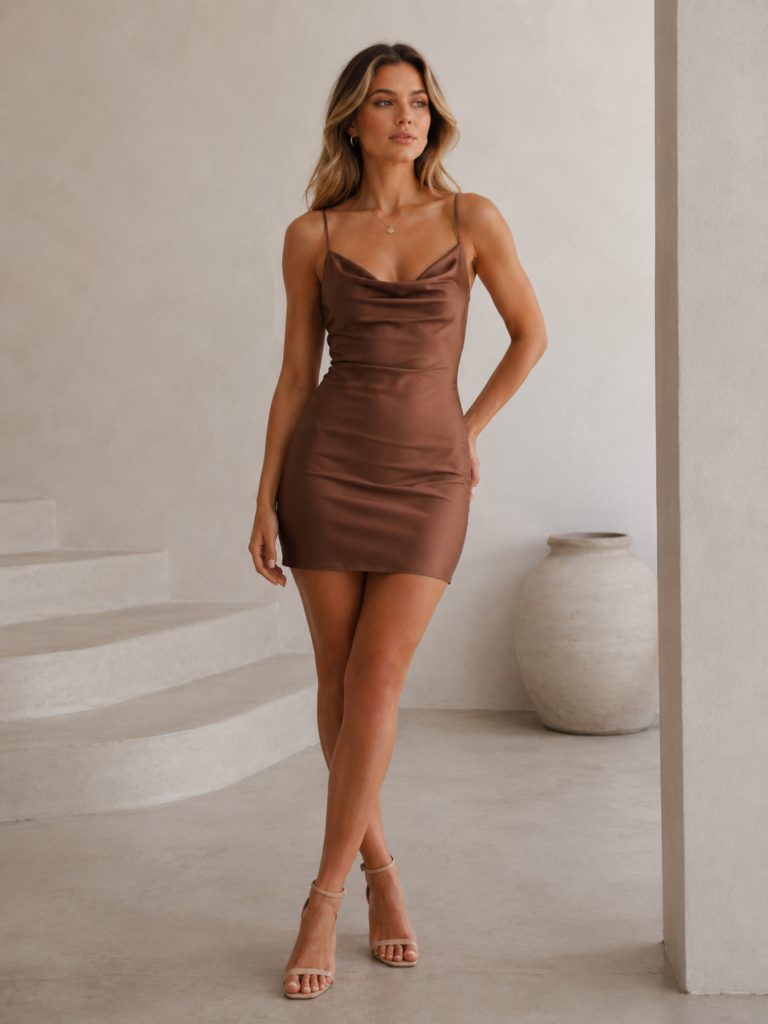
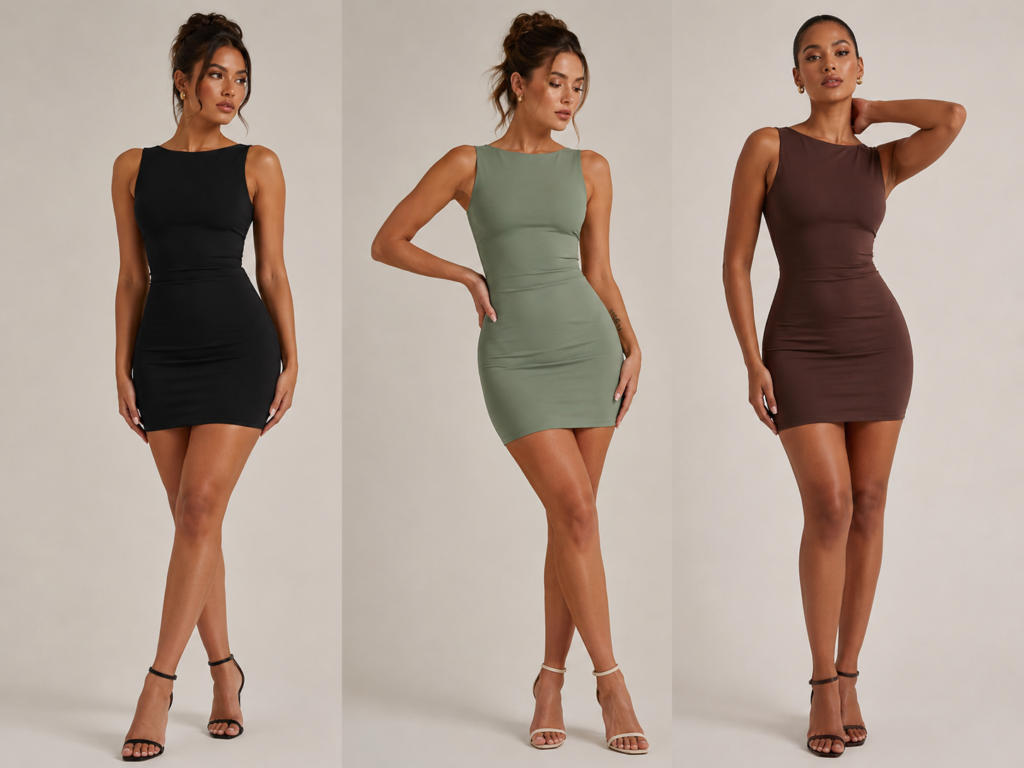
Bodycon Mini Dress
A bodycon mini dress works well for date-night, clubwear, party, and social-commerce drops. The main control point is body balance: bust tension, waist shaping, hip allowance, and hem stability must work together.
- Best for: fitted fashion, party, night-out collections
- Suggested fabric: stretch jersey, ponte, rib knit, nylon-spandex
- Fabric range: 220–320 GSM
- Stretch range: 20–40%
- Complexity: medium
- Production risk: hem riding, side seam twisting, weak recovery
- Commercial value: strong repeat potential in new colors

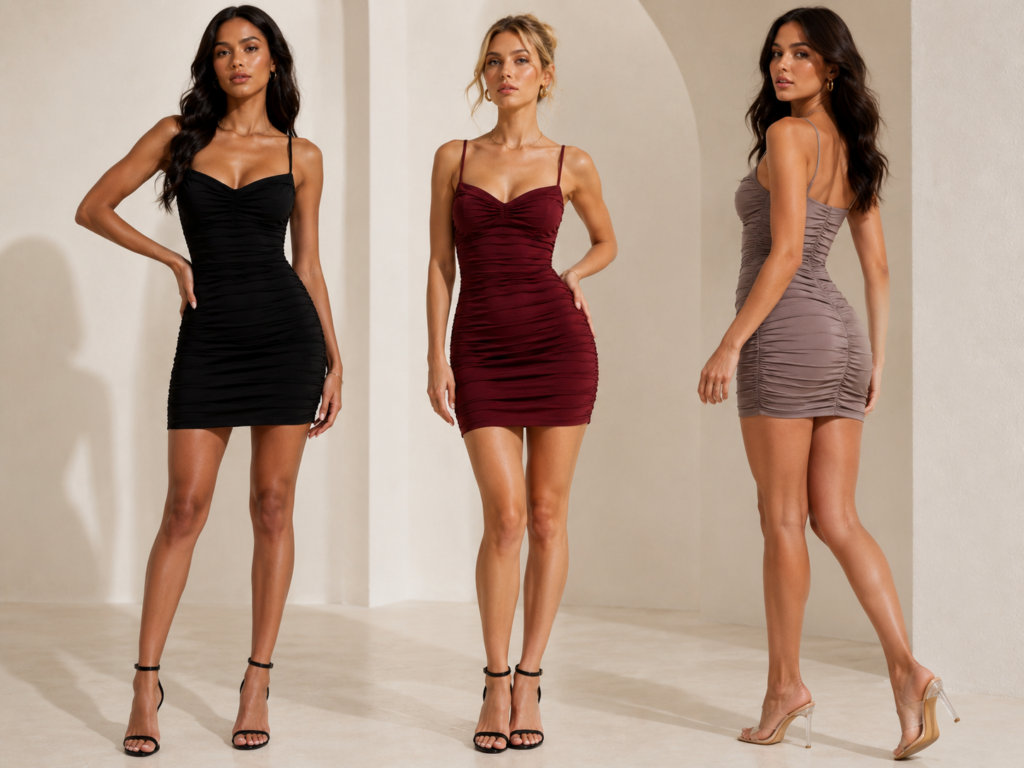
Ruched Mini Dress
A ruched mini dress gives strong visual texture and helps improve body coverage. It is suitable for partywear, vacation drops, birthday edits, and fitted occasion collections.
- Best for: party, resort, date-night, holiday launches
- Suggested fabric: stretch mesh, jersey, slinky knit
- Fabric range: 160–260 GSM
- Stretch range: 25–45%
- Complexity: medium to high
- Production risk: uneven gathering, side seam pulling, length variation
- Commercial value: flattering fit with strong photo appeal
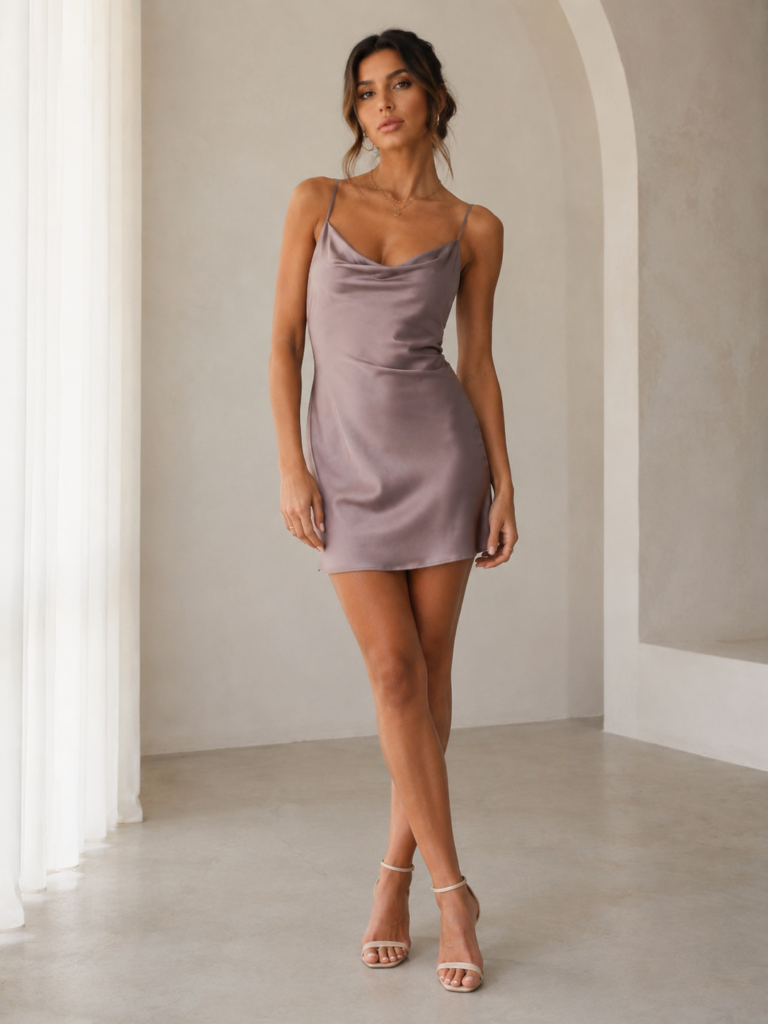
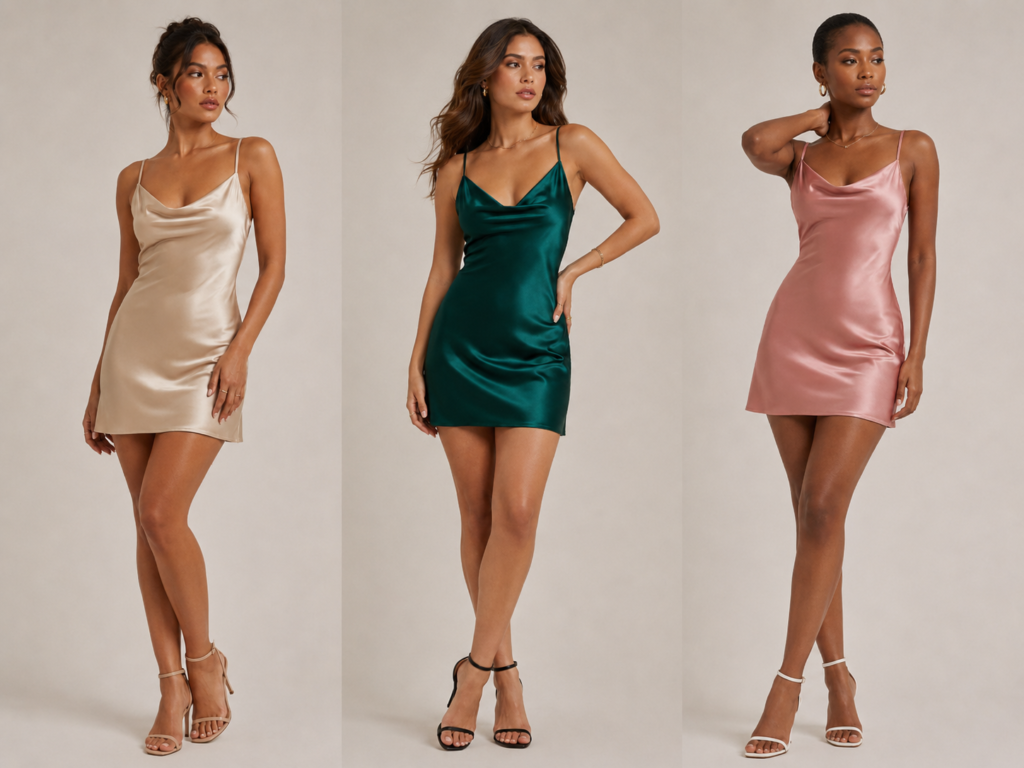
Satin Slip Mini Dress
A satin slip mini dress fits boutique, resort, bridal shower, dinner, and soft occasionwear collections. The key control point is smooth drape without twisting at the side seam or neckline.
- Best for: elegant casual, resort, dinner, occasion drops
- Suggested fabric: satin, stretch satin, charmeuse
- Fabric range: 95–180 GSM
- Stretch range: 0–15%
- Complexity: medium
- Production risk: seam puckering, shade variation, poor pressing
- Commercial value: clean style with higher perceived value

Sequin Mini Dress
A sequin mini dress is built for holiday, party, birthday, festival, and event-led collections. Development should focus on comfort, lining, seam strength, and surface durability.
- Best for: partywear, holiday, club, event collections
- Suggested fabric: sequin mesh, sequin velvet, stretch sequin
- Fabric range: 180–350 GSM
- Stretch range: 5–25%
- Complexity: high
- Production risk: scratching, shedding, broken needles, seam bulk
- Commercial value: strong campaign impact and premium pricing support
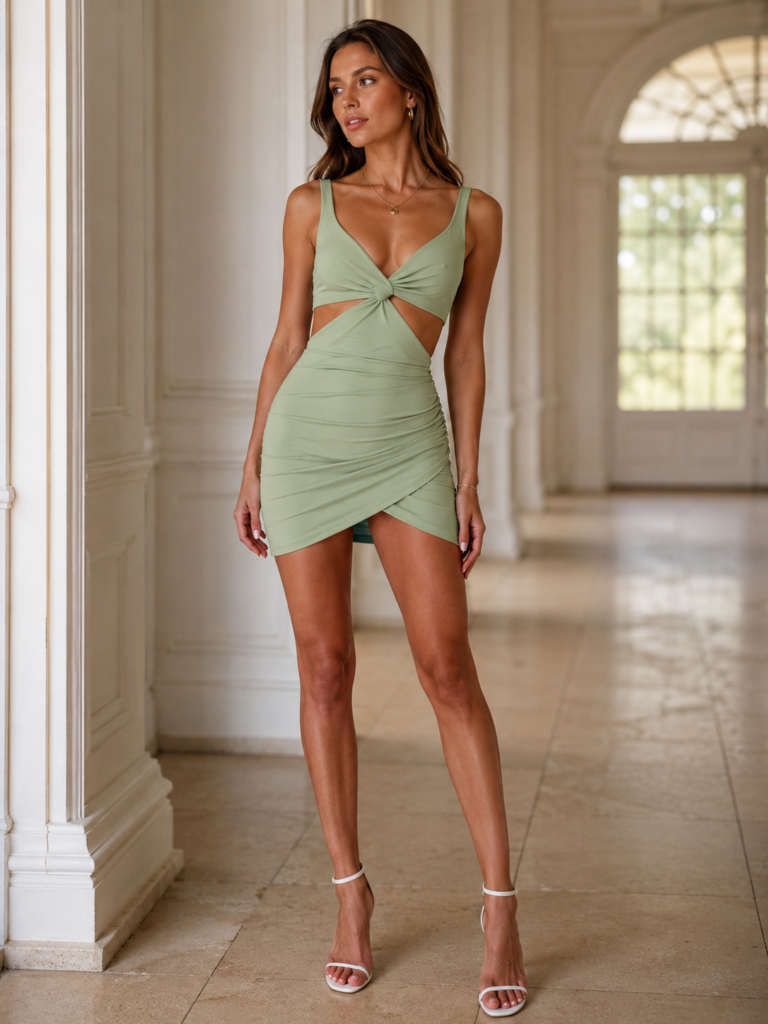
Cut-Out Mini Dress
A cut-out mini dress suits trend-led fashion, clubwear, vacation, and social content drops. Every opening needs balance between visual effect, body security, and production reinforcement.
- Best for: trend drops, night-out, vacation, creator-led collections
- Suggested fabric: stretch jersey, rib knit, double knit
- Fabric range: 200–320 GSM
- Stretch range: 20–40%
- Complexity: high
- Production risk: opening distortion, weak reinforcement, poor coverage
- Commercial value: high visual distinction with strong launch energy
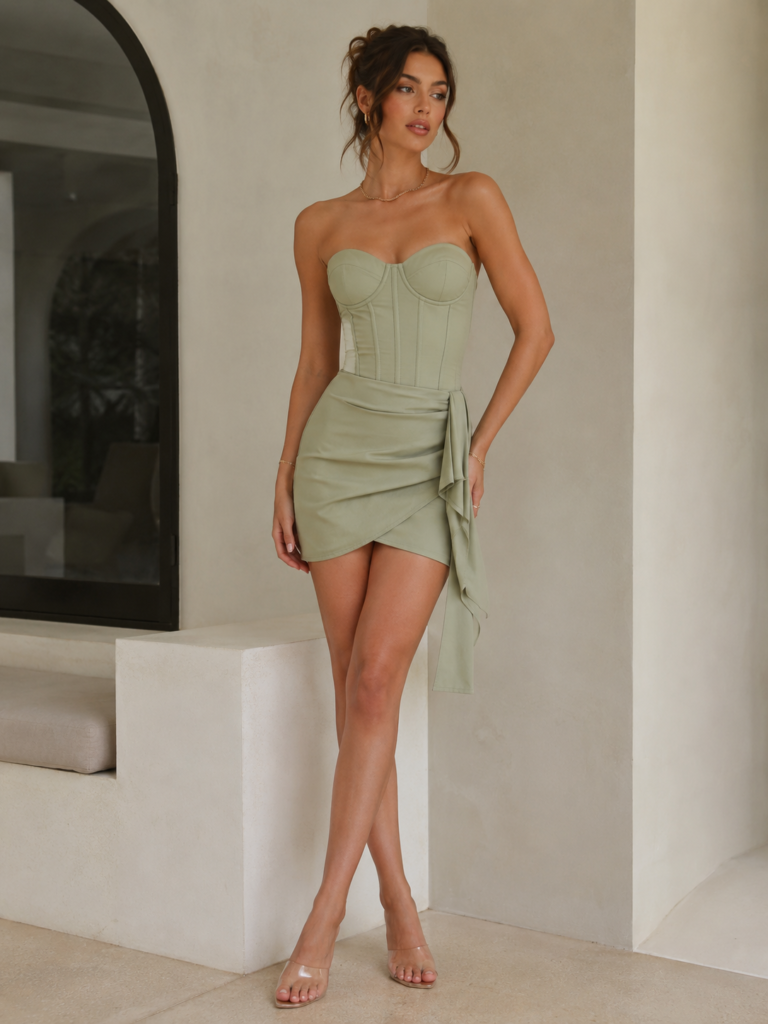
Corset Mini Dress1
A corset mini dress works for occasionwear, partywear, birthday drops, and structured feminine collections. Structure, lining, boning placement, and closure strength matter more than surface styling alone.
- Best for: occasionwear, party, event, premium fashion drops
- Suggested fabric: satin, twill, ponte, stretch woven
- Fabric range: 180–350 GSM
- Stretch range: 0–20%
- Complexity: high
- Production risk: cup imbalance, zipper stress, lining tension
- Commercial value: structured fit with stronger retail value
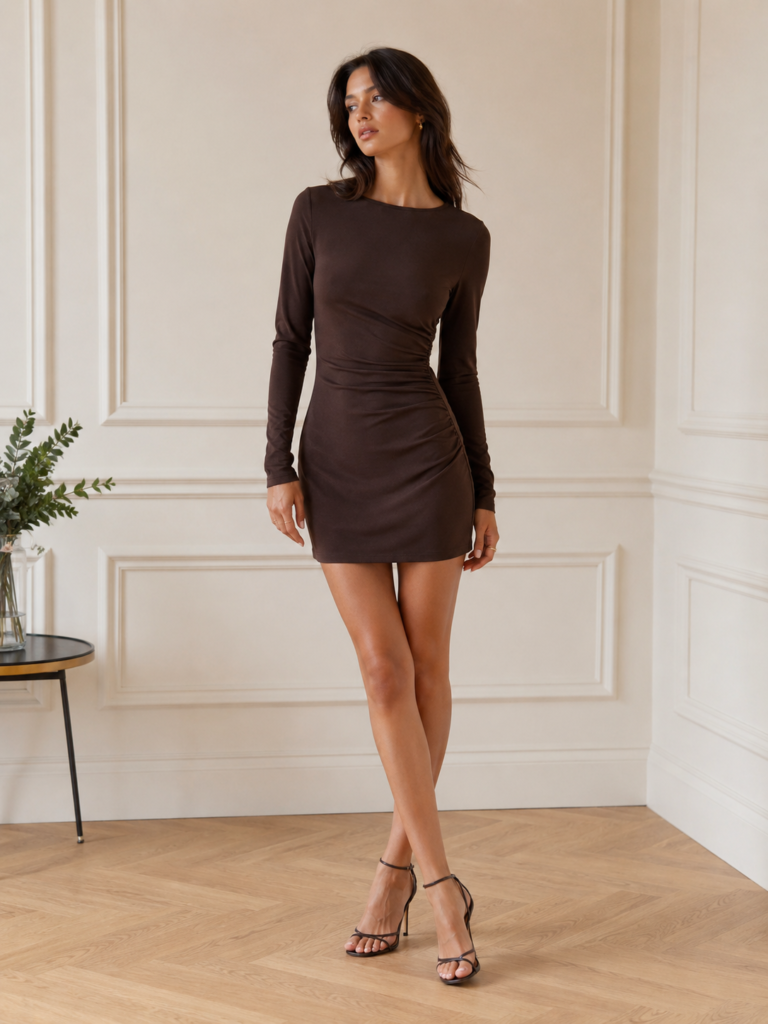
Long Sleeve Mini Dress
A long sleeve mini dress offers more seasonal flexibility for fall, winter, evening, and transitional collections. Sleeve balance, shoulder fit, armhole comfort, and fabric recovery need careful review.
- Best for: autumn drops, winter partywear, evening collections
- Suggested fabric: rib knit, jersey, velvet stretch, ponte
- Fabric range: 220–340 GSM
- Stretch range: 20–40%
- Complexity: medium
- Production risk: sleeve twisting, shoulder pull, neckline waves
- Commercial value: extends mini dress sales beyond summer
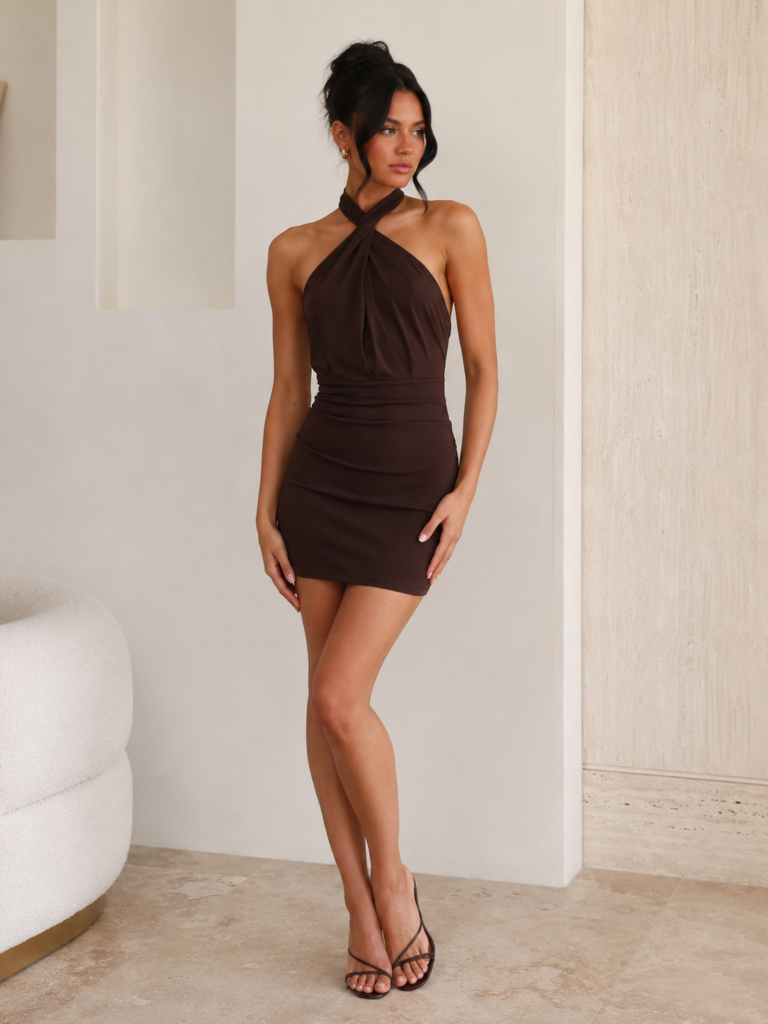
Halter Mini Dress
A halter mini dress is useful for summer, resort, beach club, vacation, and festival-inspired collections. Neck tension, bust coverage, tie strength, and back fit need early sample review.
- Best for: summer, resort, vacation, beach club drops
- Suggested fabric: stretch jersey, slinky knit, rib, mesh
- Fabric range: 160–280 GSM
- Stretch range: 20–45%
- Complexity: medium
- Production risk: neck pressure, bust gaping, tie weakness
- Commercial value: simple structure with strong warm-weather appeal
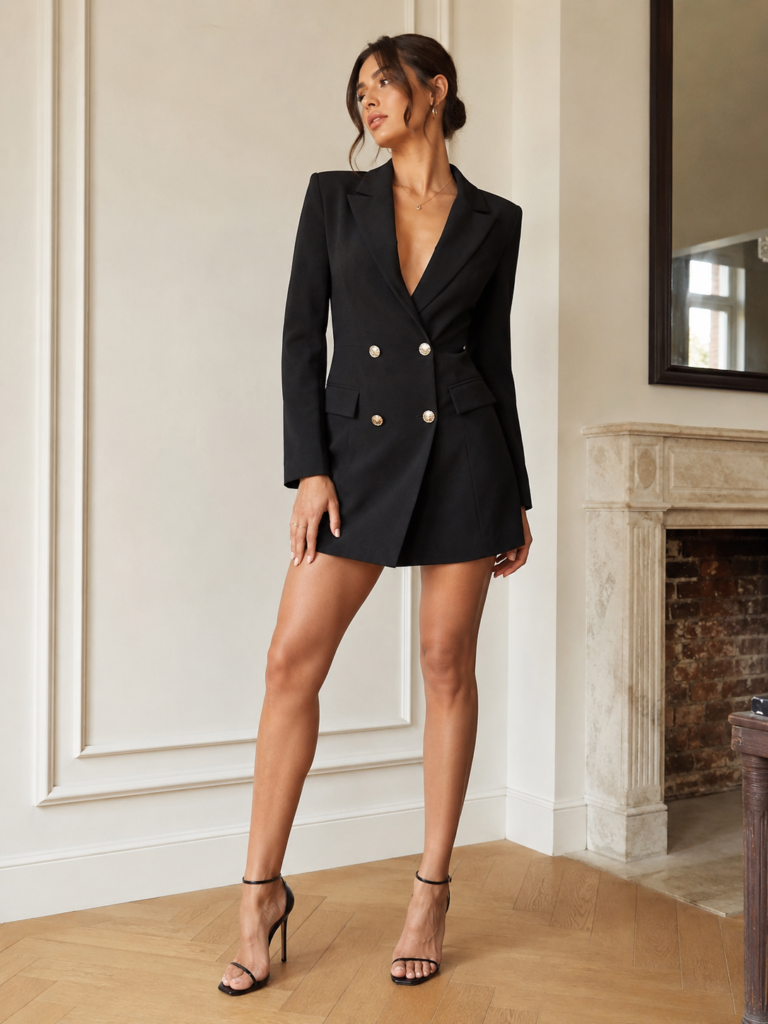
Blazer Mini Dress
A blazer mini dress suits fashion-forward, evening, work-to-dinner, and occasion-led collections. Tailoring balance, shoulder shape, lining, button position, and hem proportion need structured control.
- Best for: fashion drops, dinner edits, occasion styling
- Suggested fabric: suiting, twill, crepe, stretch woven
- Fabric range: 220–380 GSM
- Stretch range: 0–15%
- Complexity: high
- Production risk: lapel imbalance, lining pull, shoulder bulk
- Commercial value: polished silhouette with higher price potential
Fabric Options for Private Label Mini Dresses
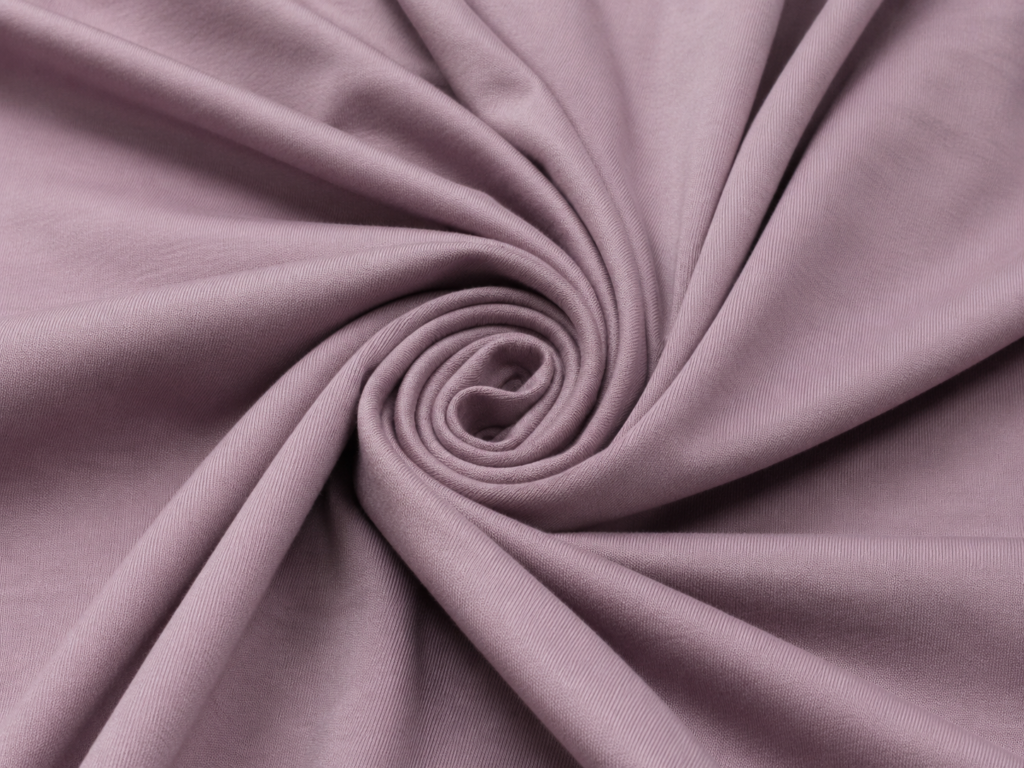
Stretch Jersey
Stretch jersey is a practical choice for bodycon, ruched, halter, and casual fitted mini dresses. It gives comfort, clean recovery, and broad color flexibility for repeat collections.
- GSM range: 180–260
- Stretch ratio: 20–45%
- Recovery: medium to high
- Opacity: medium; lighter colors may need lining
- Shrinkage target: usually controlled within 3–5%
- Color fastness: commonly 3–4 grade after testing
- Production risk: rolling edges, unstable recovery, hem twisting
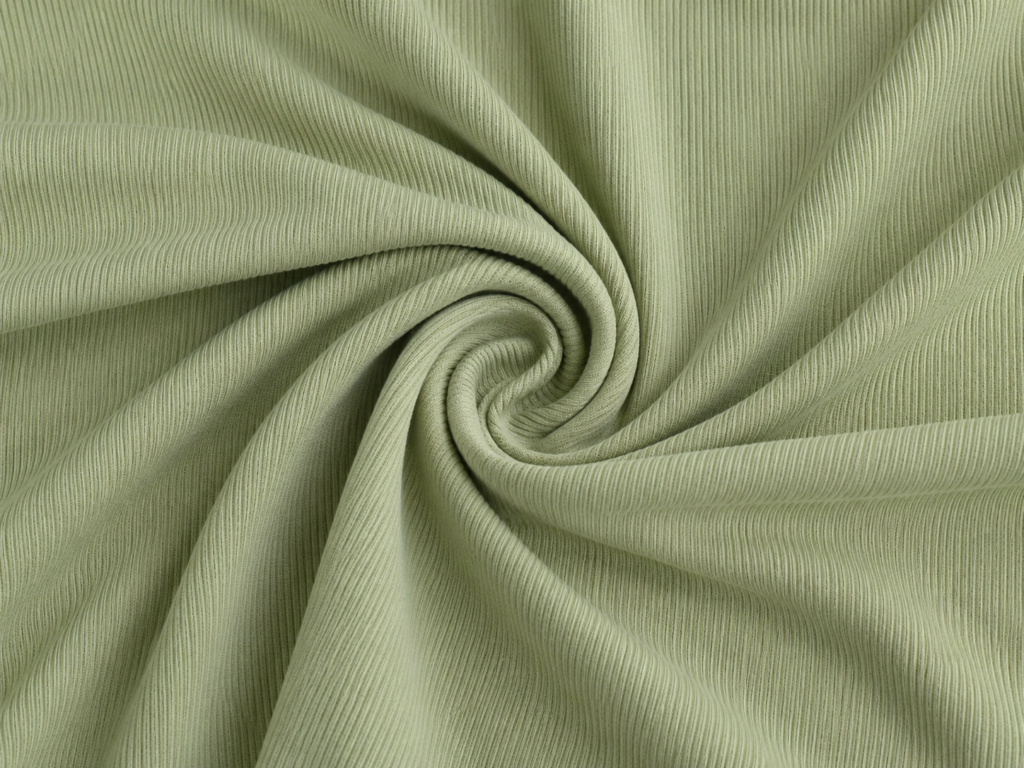
Rib Knit
Rib knit gives texture, body contour, and casual premium value. It suits simple mini dresses, long sleeve styles, active-inspired silhouettes, and fitted everyday collections.
- GSM range: 220–340
- Stretch ratio: 25–50%
- Recovery: high when yarn quality is stable
- Opacity: medium to high
- Shrinkage target: usually controlled within 3–5%
- Color fastness: 3–4 grade depending on dye method
- Production risk: stripe distortion, size growth, neckline waving
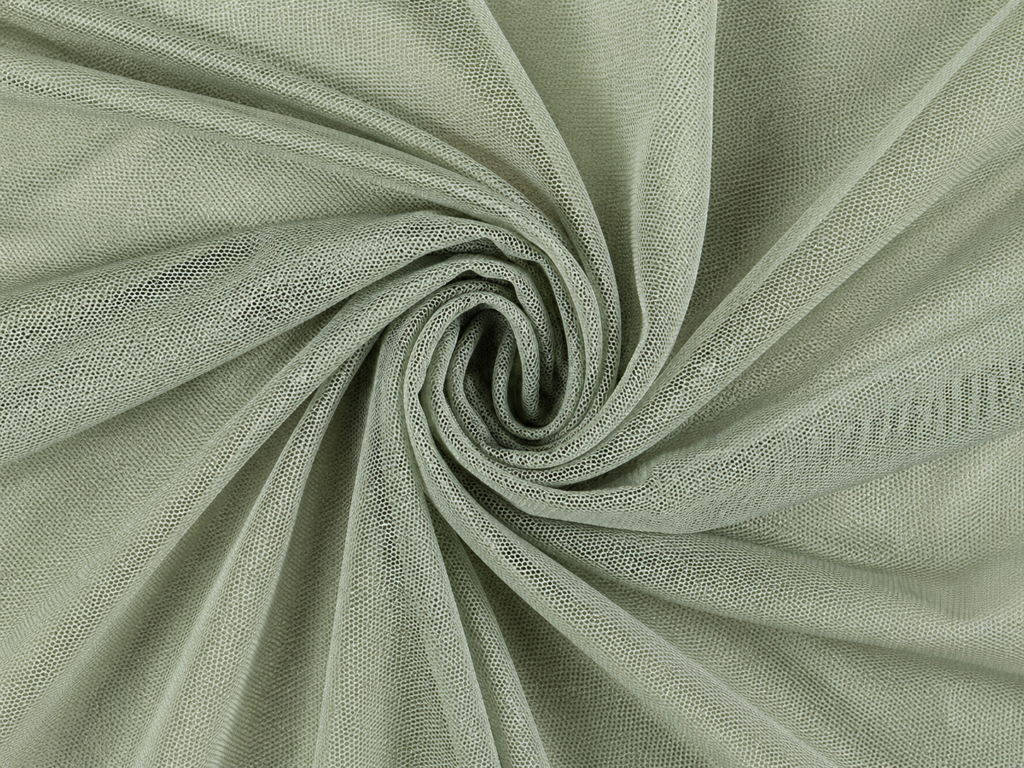
Stretch Mesh
Stretch mesh works for layered, ruched, printed, party, and sheer-effect mini dresses. It creates visual softness but needs lining, careful tension, and clean seam handling.
- GSM range: 80–160
- Stretch ratio: 30–60%
- Recovery: medium to high
- Opacity: low; lining or double layer often needed
- Shrinkage target: usually controlled within 3–5%
- Color fastness: 3–4 grade after print or dye check
- Production risk: snagging, seam stretching, uneven ruching

Stretch Satin
Stretch satin supports slip, dinner, occasion, and soft party mini dresses. It offers shine and drape while giving slightly more movement than non-stretch satin.
- GSM range: 120–220
- Stretch ratio: 5–20%
- Recovery: low to medium
- Opacity: medium; pale colors may need lining
- Shrinkage target: usually controlled within 2–4%
- Color fastness: 3–4 grade depending on shade
- Production risk: seam puckering, shade difference, pressing marks

Velvet Stretch
Velvet stretch gives depth, soft hand feel, and evening value. It works well for holiday, party, long sleeve, fitted, and premium occasion mini dresses.
- GSM range: 220–360
- Stretch ratio: 15–35%
- Recovery: medium
- Opacity: high in darker colors
- Shrinkage target: usually controlled within 3–5%
- Color fastness: 3–4 grade after rubbing test
- Production risk: pile direction, pressure marks, shade variation

Sequin Fabric
Sequin fabric creates high visual impact for event, party, club, and holiday collections. It needs lining, seam allowance control, and careful cutting to reduce discomfort and surface damage.
- GSM range: 180–350
- Stretch ratio: 0–25%
- Recovery: low to medium
- Opacity: medium to high with lining
- Shrinkage target: usually tested by base fabric
- Color fastness: surface finish requires rubbing review
- Production risk: scratching, shedding, needle breakage, bulky seams

Ponte Knit
Ponte knit supports cleaner body shape, better coverage, and stronger structure than many light jerseys. It fits sculpting mini dresses, work-to-evening styles, and minimal fitted silhouettes.
- GSM range: 280–380
- Stretch ratio: 15–35%
- Recovery: high when spandex content is stable
- Opacity: high
- Shrinkage target: usually controlled within 3–5%
- Color fastness: commonly 3–4 grade
- Production risk: thick seams, heavy hem, heat sensitivity
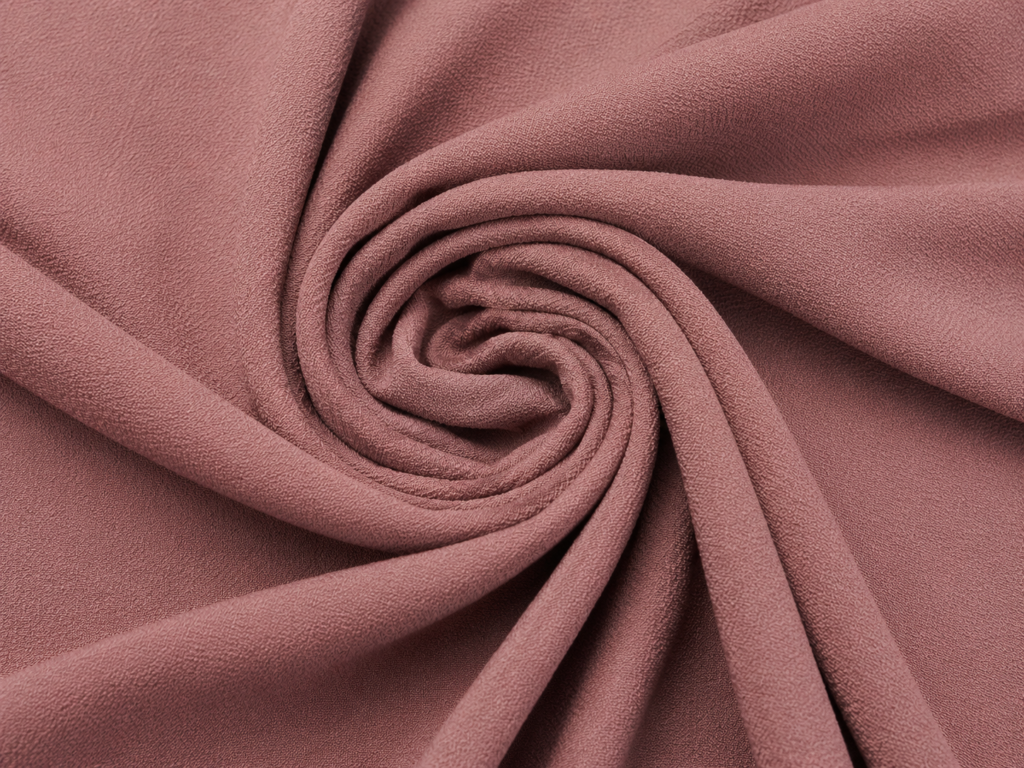
Crepe Woven
Crepe woven is suitable for structured mini dresses, blazer dresses, shift dresses, and cleaner occasion styles. It gives a dry touch, refined surface, and better shape retention.
- GSM range: 160–260
- Stretch ratio: 0–12%
- Recovery: low unless stretch yarn is added
- Opacity: medium to high
- Shrinkage target: usually controlled within 2–4%
- Color fastness: 3–4 grade after testing
- Production risk: seam slippage, pressing shine, tight fit restriction

Nylon-Spandex Double Knit
Nylon-spandex double knit works well for sculpting, contour, active-inspired, and premium fitted mini dresses. It gives a smooth surface, strong recovery, better body hold, and a cleaner studio-photography effect.
- GSM range: 240–360
- Stretch ratio: 30–55%
- Recovery: high when spandex quality is stable
- Opacity: medium to high
- Shrinkage target: usually controlled within 3–5%
- Color fastness: commonly 3–4 grade after testing
- Production risk: heat marks, tight seam tension, size growth if recovery is weak
Fabric Surface and Visual Techniques for Mini Dresses

Ruching and Gathering
Ruching adds body coverage, shape correction, and visual texture. It is often used for fitted jersey, mesh, and slinky mini dresses where a flat surface may feel too plain or revealing.
Production control should focus on gathering ratio, side seam balance, elastic tension, and length consistency. Too much tension can shorten the dress, while loose gathering may look uneven across sizes.

Sequin Embellishment
Sequins create strong holiday and party value. They add shine, campaign impact, and a higher perceived price band, especially for birthday, club, evening, and event-led collections.
The main risk is comfort and durability. Lining is often needed to reduce scratching. Cutting, seam allowance, needle choice, and rubbing checks should be reviewed before bulk production.
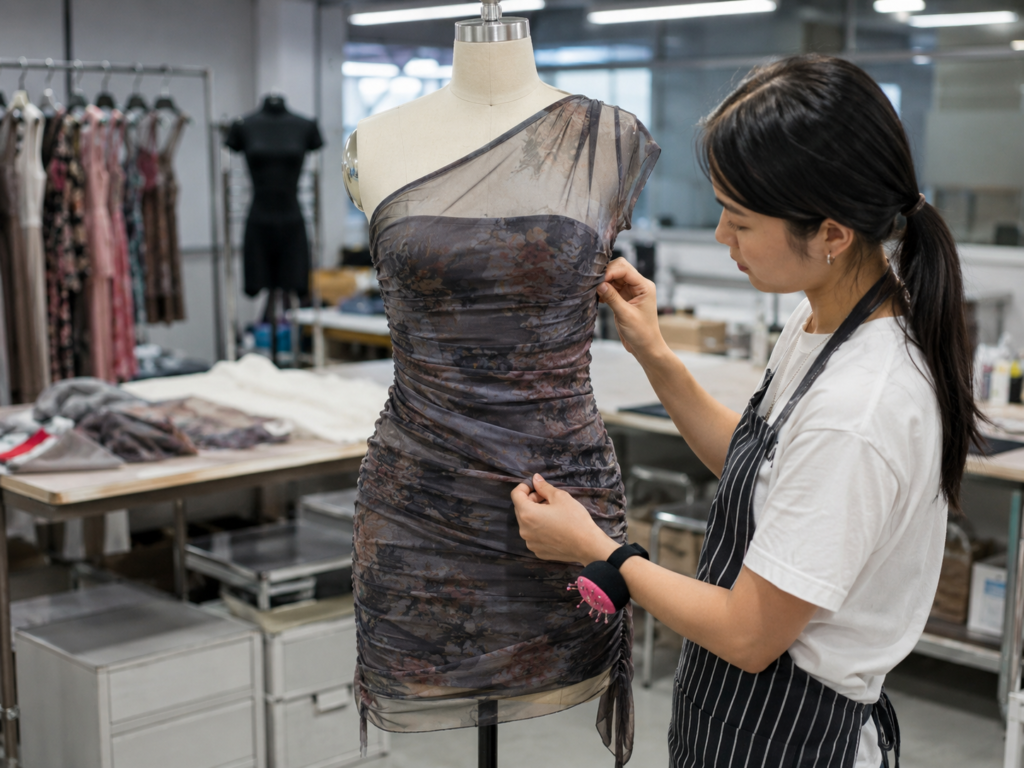
Mesh Layering
Mesh layering creates softness, depth, sheer effect, and print dimension. It works well for ruched dresses, bodycon styles, sleeve panels, cut-outs, and occasionwear details.
Stretch balance matters. Mesh and lining must move together, or the surface may twist, pull, or bubble. Opacity, recovery, seam tension, and edge finish need sample confirmation.

Heat Transfer Print
Heat transfer can support logo details, graphic placement, or small visual elements on casual mini dresses. It gives clear artwork and flexible placement for private label capsules.
Temperature, pressure, and fabric compatibility must be checked. Poor control can make the surface stiff, cracked, shiny, or less elastic, especially on stretch jersey and rib knit.
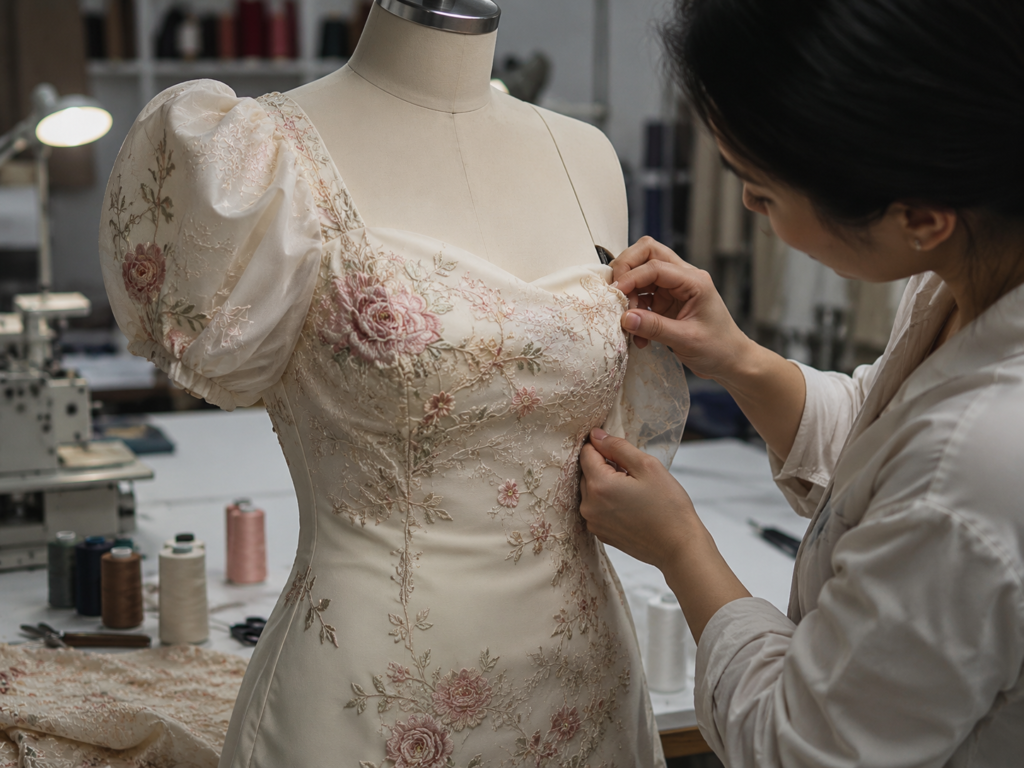
Embroidery Detail
Embroidery adds crafted value to premium casual, resort, or boutique mini dresses. It works for chest logos, hem marks, sleeve details, and small decorative motifs.
Fabric backing, stitch density, thread color, and placement need early testing. Heavy embroidery may affect drape, create stiffness, or pull lightweight fabrics out of shape.

Lace and Trim Application
Lace and trim can lift a simple mini dress into lingerie-inspired, occasion, or feminine boutique styling. It supports neckline, hem, strap, sleeve, or panel details.
The key is comfort and consistency. Trim edges must not scratch skin, curl after washing, or shift during sewing. Color matching with body fabric also needs review.

Cut-Out Binding
Cut-out binding gives clean edge control around waist, neckline, back, and side openings. It can make a trend-led mini dress feel more finished and wearable.
Binding width, stretch, recovery, and seam tension must match the base fabric. Poor binding may ripple, tighten the opening, or lose shape after repeated wear.

Foil or Metallic Finish
Foil and metallic finishes create night-out, festival, and statement styling. They increase surface energy in photography and can support higher-impact capsule launches.
Friction, washing, color migration, and hand feel should be tested. Some metallic finishes reduce fabric softness or stretch, so garment shape may need pattern adjustment.
Production Construction Control for Mini Dress Orders
Pattern Engineering
Pattern engineering defines how the mini dress sits on the body before fabric is cut. Bust, waist, hip, side seam, armhole, back shape, and hem opening must match the intended fit.
For fitted styles, small errors become visible quickly. Pattern notes should record stretch allowance, lining relationship, seam position, dart or panel shaping, and size grading rules.
Stretch Direction Control
Seam Tension Management
Mini dresses often place pressure on side seams, waist seams, sleeve seams, and hem areas. Seam tension must match fabric stretch so the garment feels secure without cracking or pulling.
Thread type, stitch density, seam allowance, overlock tension, and elastic behavior should be checked during sampling. Poor seam tension can lead to wavy edges or broken stitches.
Lining Compatibility
Lining should support comfort, opacity, and surface smoothness. It must not fight against the main fabric, especially in satin, mesh, lace, sequin, and light-colored mini dresses.
Stretch lining should match the movement of stretch shells. Non-stretch lining can restrict comfort or distort the outer layer. Length, attachment method, and hem behavior need checking.
Cut-Out Reinforcement
Cut-outs need reinforcement around openings, corners, and stress points. Without support, the edge may stretch, collapse, or pull away from the intended shape after wear.
Binding, facing, clear elastic, reinforcement tape, or bartack points can be used depending on design. Sample testing should include movement, stretch, and recovery checks.
Ruching Control
Ruching must look intentional across sizes. Uneven gathering can make one side shorter, twist the body line, or create unwanted bulk around the waist and hip.
Development should define gathering ratio, elastic length, placement marks, and final garment length. Production should follow approved markings instead of freehand adjustment.
Closure Construction
Zippers, hooks, buttons, ties, and elastic closures need secure construction. Mini dresses with fitted bodies place more pressure on closure areas than loose silhouettes.
Invisible zippers need correct length, seam allowance, and stress support. Ties and straps need bartacks or reinforcement. Closure review helps reduce wear failure and return risk.
Pressing and Finishing
Finishing decides how the garment looks when unpacked, photographed, and tried on. Satin, velvet, sequin, crepe, and rib all require different heat and pressure control.
Poor pressing can create shine, pile marks, seam impressions, or distorted hems. Final finishing should respect fabric behavior, surface texture, and packing method.
Private Label Branding and Packaging Details
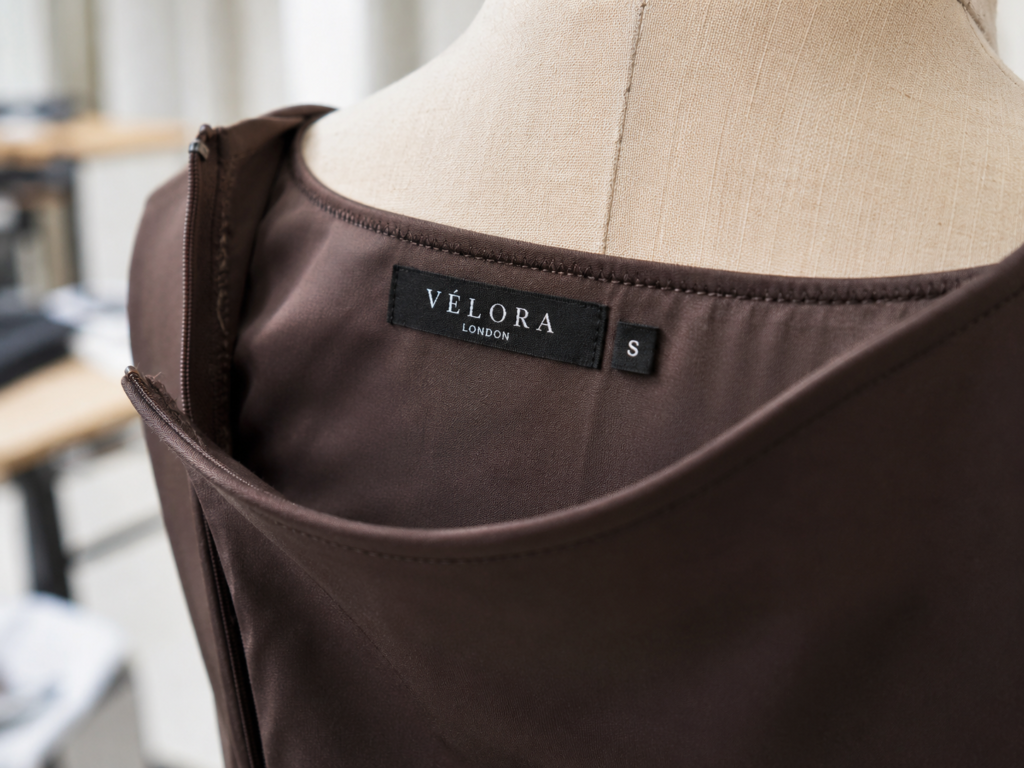
Main Label
- Common placement: back neck, inner facing, or lining
- Suggested texture: soft woven, satin, cotton, or printed label
- Key control: no scratching, no visible bulk, stable stitching
- Brand value: cleaner identity after unpacking and try-on
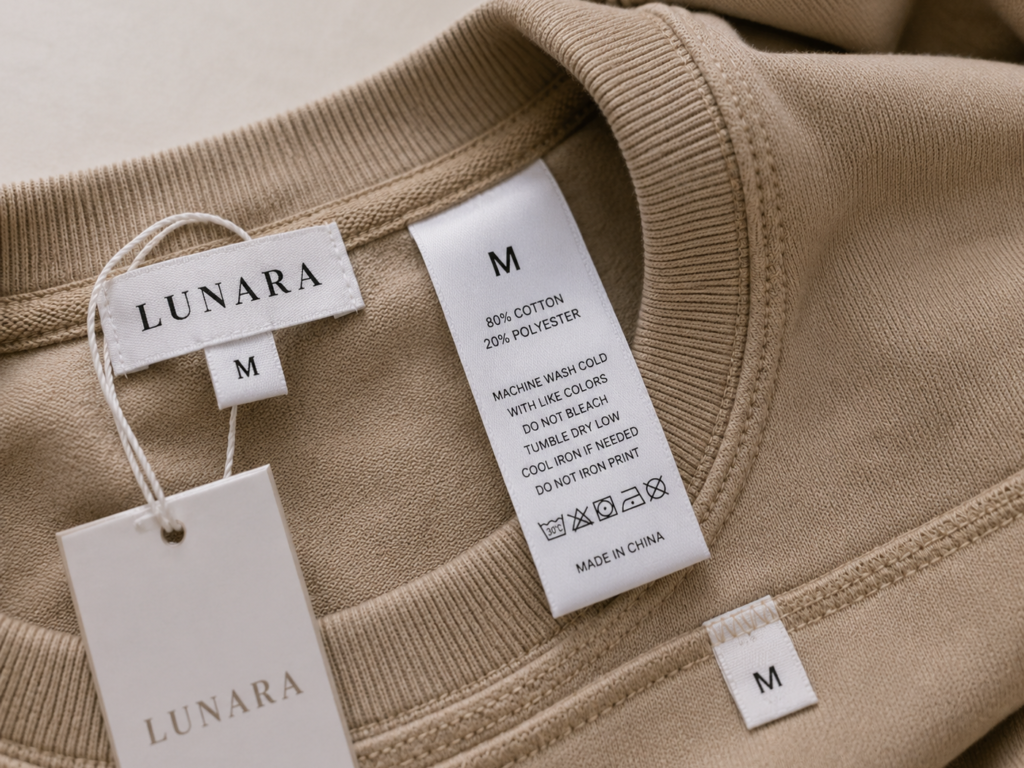
Size Label
- Common formats: XS–XL, numerical sizing, EU / US / UK sizing
- Common placement: side seam, back neck, or care label stack
- Key control: readable size, soft edge, correct size run
- Brand value: smoother warehouse and customer experience

Care Label
- Common content: fiber, washing method, ironing, drying, origin
- Suggested material: soft satin or printed tape
- Key control: legibility after wash, correct garment information
- Brand value: fewer care-related complaints and clearer service support
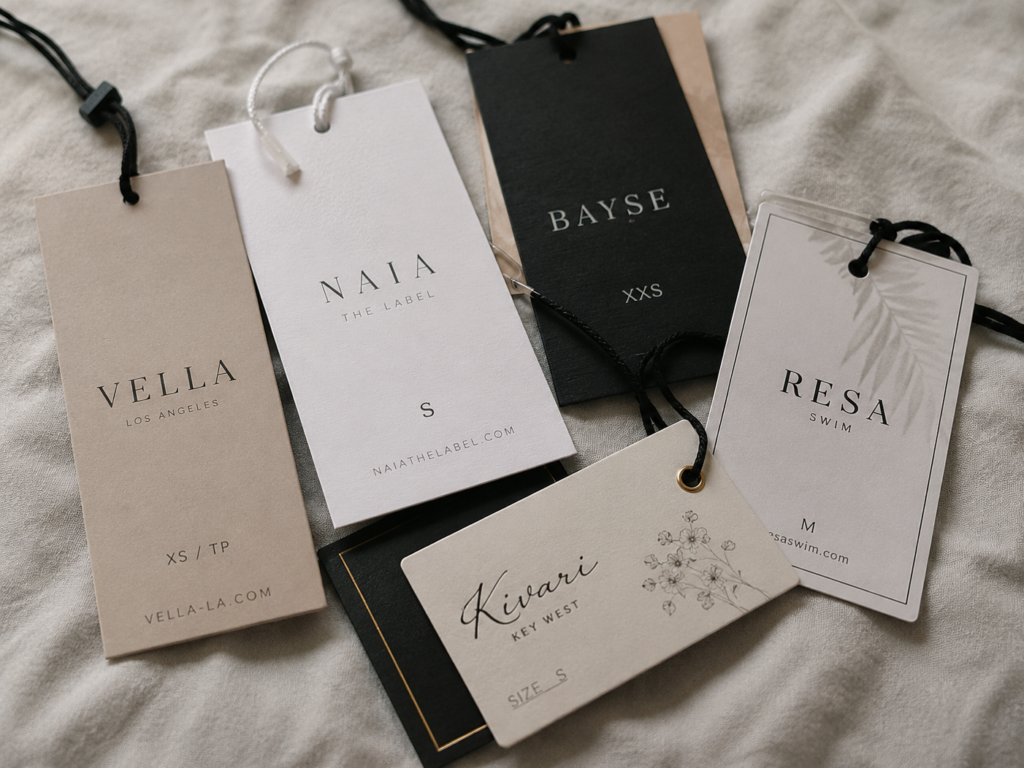
Hangtag
- Common paper weight: 300–600 gsm
- Common finishes: matte, textured, coated, foil, embossed
- Key control: clean print, accurate SKU, secure attachment
- Brand value: stronger retail and boutique presentation
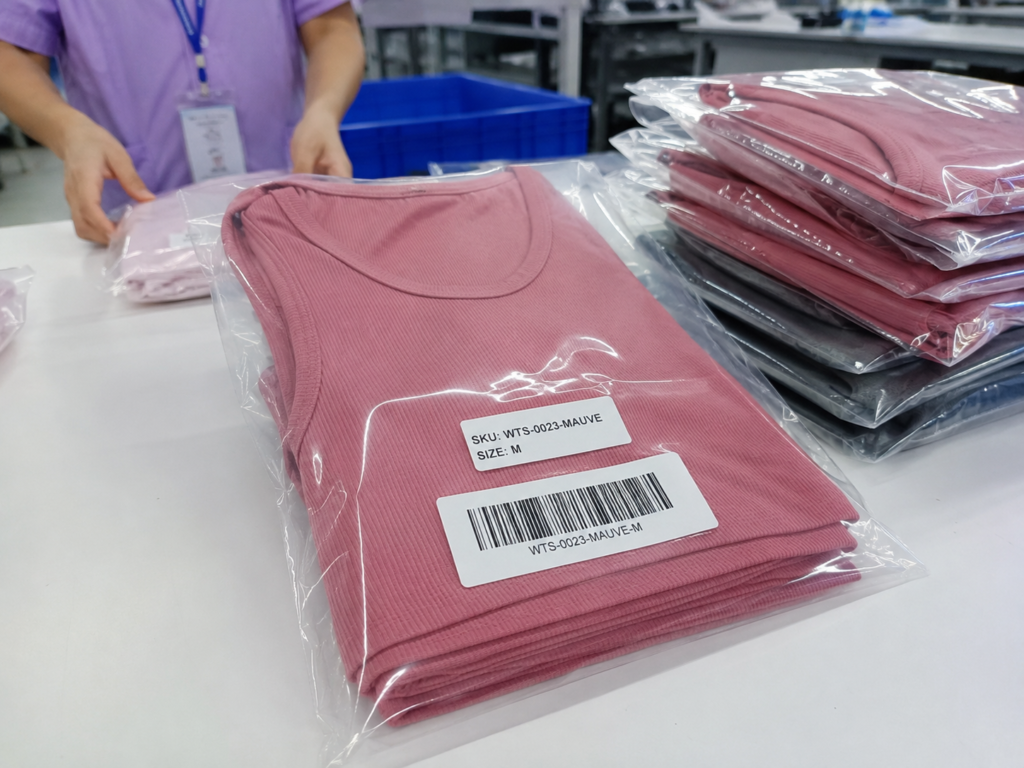
Barcode and SKU Sticker
- Common data: style number, color, size, barcode, SKU
- Common placement: polybag, hangtag, or carton label
- Key control: scan accuracy and correct size-color matching
- Brand value: fewer packing, picking, and receiving errors

Polybag
- Common options: clear bag, frosted bag, logo printed bag
- Suggested thickness: often 35–60 microns
- Key control: garment fit, clean sealing, correct sticker placement
- Brand value: better protection and cleaner unboxing impression
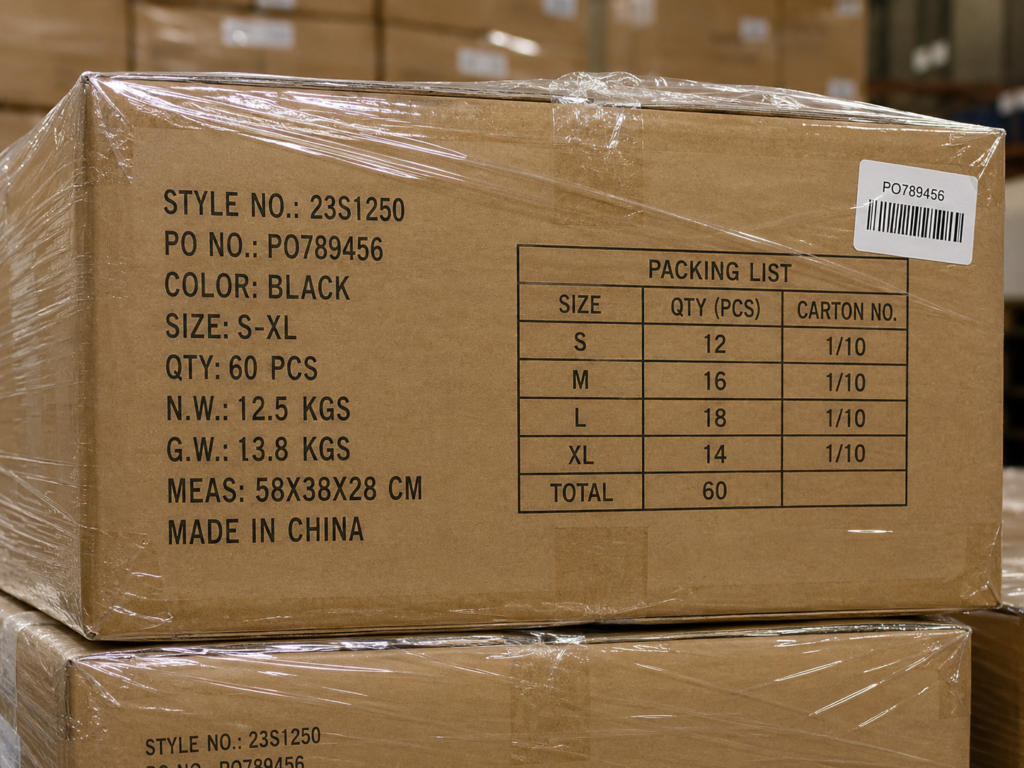
Carton Mark
- Common content: PO number, style, color, size, quantity
- Common format: printed carton mark or carton sticker
- Key control: clear data and carton-to-product accuracy
- Brand value: smoother shipment receiving and warehouse handling

Folding and Hanger Packing
- Common options: flat fold, tissue fold, hanger packing
- Key control: wrinkle control, shape protection, label visibility
- Best for: online stores, boutiques, showrooms, retail delivery
- Brand value: better product condition before photography or sale
Sample Development Process for Private Label Mini Dresses

Design File Review
The process begins with a review of tech pack, reference image, sample garment, sketch, size chart, or fabric idea. Key points include length, neckline, sleeve shape, bust fit, waist shaping, hip allowance, lining need, and closure method.
For mini dresses, early review helps identify risks before pattern work begins. Cut-outs, ruching, sequin surfaces, satin drape, stretch recovery, and short lining are checked against the intended sales scene and target quantity.

Fabric and Trim Direction
Fabric choice shapes the final result. Jersey, rib, satin, velvet, mesh, sequin, ponte, crepe, and nylon-spandex all behave differently in stretch, opacity, recovery, drape, and sewing tension.
Jinfeng’s sourcing team helps match fabric and trims to the style direction. Zippers, hooks, elastic, lining, binding, labels, hangtags, and packaging items can be reviewed together so sampling reflects the full product plan.

Pattern Development
Pattern work sets the body proportion before the first sample. For mini dresses, bust, waist, hip, side seam, front length, back length, hem opening, armhole, strap, sleeve, and neckline all need clear control.
Jinfeng has 7 experienced pattern makers supporting style development. Fitted mini dresses, ruched structures, stretch bodies, cut-outs, and structured occasion styles can be reviewed by pattern and sample teams before sewing begins.

First Sample Making
First sample making checks whether the design direction can become a real garment. Jinfeng has 2 sample rooms and 20 sample makers supporting development across women’s fashion styles.
Common samples usually take 5–10 days. More complex mini dresses with lining, sequin, cut-outs, boning, special trims, or structured details may need 7–15 days, depending on material sourcing and construction.
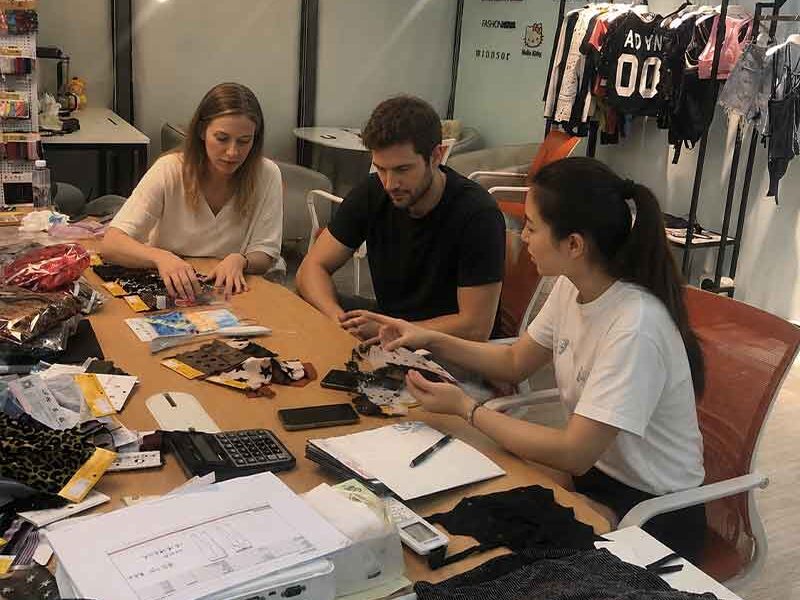
Fit Review and Comments
Fit review checks how the mini dress sits on body. Length, bust tension, waist shape, hip fit, hem movement, neckline stability, zipper comfort, lining length, and surface effect should be reviewed together.
Clear comments help reduce repeated revisions. Jinfeng records fit notes around pattern change, fabric behavior, seam tension, trim adjustment, and sample correction so the next round moves closer to bulk approval.

Pre-Production Sample
After sample approval, a pre-production sample can confirm final fabric, color, trims, label placement, care label, hangtag, packing method, and key measurements before bulk cutting.
The pre-production sample becomes the main reference for production. It protects approved fit, fabric direction, construction method, surface effect, and branding details when the style moves into larger quantity.
Bulk Production Process for Mini Dress Orders
Production Planning
Production planning confirms style quantity, size ratio, color, fabric status, trim readiness, packing method, delivery term, and target shipment time. Mini dress orders often include several colors or style variations.
Jinfeng can plan across 18 production lines with women’s fashion and casual-print factory support. Production allocation depends on style complexity, fabric behavior, order quantity, surface technique, and delivery schedule.
Fabric and Trim Preparation
Bulk fabric should be checked before cutting. Color, width, weight, stretch, recovery, shrinkage, surface defects, and batch consistency all affect mini dress production.
Trims also need confirmation. Zippers, hooks, lining, elastic, binding, labels, hangtags, barcode stickers, polybags, and cartons should match approved sample details and packing requirements.
Pattern and Size Grading
Approved patterns are prepared for production and grading. For mini dresses, grading should protect length, bust fit, waist shape, hip allowance, strap position, sleeve comfort, and hem opening across the full size range.
Fitted and stretch styles need special care. Size grading cannot only enlarge measurements; stretch behavior, recovery, lining tension, and fabric thickness must also stay aligned with the approved fit.
Cutting Control
Cutting accuracy affects length, side seam balance, print placement, stripe direction, surface pile, and garment symmetry. Velvet, sequin, rib, satin, and printed fabrics often need stronger direction control.
Automatic cutting equipment supports cutting efficiency, while manual checks remain important for fabric behavior and marker accuracy. Fabric direction, layer tension, and defective areas should be reviewed before panels move to sewing.
Sewing Line Execution
Sewing turns approved construction into repeatable output. Side seams, neckline, armhole, straps, zippers, lining, hems, cut-outs, ruching, and closures need line instructions based on the approved sample.
Mini dress sewing requires careful tension control. Overlock, coverstitch, lockstitch, elastic attachment, zipper insertion, and binding should match fabric stretch and surface needs to reduce twisting, waving, and seam breakage.
Finishing and Pressing
Cutting accuracy affects length, side seam balance, print placement, stripe direction, surface pile, and garment symmetry. Velvet, sequin, rib, satin, and printed fabrics often need stronger direction control.
Automatic cutting equipment supports cutting efficiency, while manual checks remain important for fabric behavior and marker accuracy. Fabric direction, layer tension, and defective areas should be reviewed before panels move to sewing.
Packing and Shipment Preparation
Packing should protect the garment and match the sales channel. Folded packing, hanger packing, tissue paper, barcode stickers, custom polybags, carton marks, and size-color sorting can be arranged by order need.
Jinfeng supports shipment planning by express, air, and sea, with FOB, CIF, DDP, DAP, split shipment, and warehouse delivery coordination available depending on order plan.
MOQ, Production Time, and Shipping Time
Mini dress orders need a practical starting quantity, clear sample timing, realistic production planning, and delivery options that match launch schedules. Jinfeng supports small tests, repeat orders, and larger production programs with flexible planning based on style complexity.
| Order Item | Jinfeng Reference | Suitable Use |
| Small Test Order | 300–500 pcs | New style launch, boutique drop, market testing |
| Medium Order | 1,000–5,000 pcs | Main collection, repeat style, multi-color run |
| Large Order | 5,000+ pcs | Scaled program, distributor order, proven style |
| Monthly Capacity | About 300,000 pcs | Ongoing production and repeat programs |
| Extra Capacity Range | 50,000–80,000 pcs | Seasonal demand or scale-up planning |
| Sample Timing | 5–10 days | Common mini dress styles with available fabric |
| Complex Sample Timing | 7–15 days | Lining, cut-outs, ruching, sequin, boning, or special surface work |
| Simple Production Timing | 15–25 days | Clean construction after material and sample approval |
| Regular Production Timing | 25–35 days | Standard private label mini dress production |
| Complex Production Timing | 35–45 days | Structured styles, heavy trims, lining, sequin, or special construction |
Shipping, Logistics and Private Label Mini Dress Delivery Process
| Shipping Method | Estimated Time | Suitable For |
|---|---|---|
| Express | 5–7 days | Samples, urgent small shipments, approval pieces, product review |
| Air Freight | 7–15 days | Faster launch schedules, medium quantity orders, urgent replenishment |
| Sea Freight | 20–35 days | Bulk production, larger orders, lower shipping cost planning |
Private Label Mini Dress Project Cases
Mini dress programs often begin with one test style, then grow into repeat orders, new colorways, fabric updates, or full collection planning. The following anonymized project formats show how Jinfeng supports controlled development, fit correction, MOQ planning, and production scale-up.
Case 1|A United States Online Fashion Label
Project Overview
- Customer Role: Founder and Creative Director
- Country: United States
- Name: Emily R.
- Product: Ruched bodycon mini dress
- Sales Channel: Online store and social commerce
- Starting Point: Reference images + fabric direction
- Initial Order: 300 pcs per color
- Scale Order: 2,400 pcs across 4 colors
- Key Service: Fit correction, ruching control, color expansion, repeat production
Challenge
The label wanted a fitted mini dress for a date-night collection. The first reference looked strong in photos, but the expected fit required better bust support, more balanced hip allowance, and cleaner side ruching. The team also needed a first order small enough to test demand before adding new colors.
Solution
Jinfeng reviewed the fabric stretch, recovery, body length, side seam position, and gathering ratio before sampling. The first production started at 300 pcs per color. After sales performance became clear, the approved pattern, fabric direction, and fit notes were kept for color expansion.
Result
- Initial order began with 300 pcs per color
- Scale order reached 2,400 pcs across 4 colors
- Side ruching became more even across sizes
- Fit notes helped protect repeat production
- New colors were developed from the approved base style
Case 2|A United Kingdom Boutique Fashion Brand
Project Overview
- Customer Role: Brand Owner
- Country: United Kingdom
- Name: Sophie M.
- Product: Satin slip mini dress
- Sales Channel: Boutique retail and online store
- Starting Point: Sample garment + color references
- Initial Order: 500 pcs
- Scale Order: 1,800 pcs across 3 colors
- Key Service: Satin sourcing, lining adjustment, label and packaging setup
Challenge
The brand needed a satin mini dress with a soft occasionwear feel. Earlier samples from another supplier had seam puckering, poor pressing marks, and lining that shifted during wear. The brand also wanted the first batch to arrive with complete private label finishing.
Solution
Jinfeng reviewed satin weight, lining length, strap position, seam tension, and pressing method during development. Main labels, care labels, hangtags, polybags, and carton marks were confirmed before production. The approved sample became the reference for the first bulk order.
Result
- First production started at 500 pcs
- Repeat order expanded to 1,800 pcs across 3 colors
- Lining position became more stable
- Pressing marks were reduced during finishing
- Packaging arrived ready for boutique and online handling
Case 3|An Australian DTC Fashion Brand
Project Overview
- Customer Role: Product Manager
- Country: Australia
- Name: Olivia T.
- Product: Sculpting mini dress
- Sales Channel: Direct-to-consumer e-commerce
- Starting Point: Reference images + size chart
- Initial Order: 300 pcs per style
- Scale Order: 3,500 pcs per style within 3 months
- Key Service: MOQ planning, fabric consistency, grading, production scale-up
Challenge
The brand wanted to test a sculpting mini dress with a controlled first order, but also needed a supplier that could scale quickly if the style performed well. Previous suppliers could handle small quantities but struggled with repeat consistency after volume increased.
Solution
Jinfeng supported a step-by-step production plan. The first batch was controlled at 300 pcs per style for market testing. After the style showed sales potential, the approved pattern, fabric direction, stretch notes, and fit comments were kept for scale-up production.
Result
- Order scaled from 300 pcs to 3,500 pcs per style within 3 months
- Fit stayed more consistent across repeat batches
- Fabric direction and recovery notes guided production
- Scaling errors were reduced during larger production
- A longer-term plan was built for fitted dress styles
Why Jinfeng Fits Private Label Mini Dress Programs
Focused Women’s Fashion Manufacturing
Jinfeng’s strongest product direction sits in women’s fashion: dresses, sets, fashion tops, fitted silhouettes, occasionwear, partywear, and selected shaping styles. Mini dress programs naturally fit into that development range.
This focus matters because mini dresses are not simple short garments. Length, bust shape, waist curve, hip allowance, lining, stretch, and surface effect all influence the final product. A supplier familiar with fitted women’s fashion can judge these details earlier.
Sample Rooms Built for Style Development
Jinfeng works with 2 sample rooms, 7 experienced pattern makers, and 20 sample makers. That structure supports development from reference images, tech packs, samples, sketches, and clear product concepts.
For mini dresses, the sample stage helps solve proportion and construction before bulk production. Common styles usually take 5–10 days, while more complex styles may take 7–15 days, depending on fabric, trims, and structure.
Practical MOQ for Market Testing
Many private label mini dress programs need a controlled first order. Starting too large can create inventory pressure, especially for new silhouettes, new fabrics, seasonal colors, or first-time collections.
Jinfeng can support 300–500 pcs small-order ranges for suitable styles. This gives brands room to test demand, review customer response, and plan repeat orders with stronger confidence.
Production Capacity for Repeat Orders
A successful mini dress often becomes a repeat style. Color expansion, fabric updates, restocks, and seasonal changes all need production capacity beyond the first order.
Jinfeng operates 18 production lines with around 300,000 pcs monthly capacity and an additional 50,000–80,000 pcs flexible expansion range. This supports a path from test order to larger production planning.
Fabric and Construction Judgment
Mini dresses depend on fabric behavior. Jersey, rib, mesh, satin, velvet, sequin, ponte, crepe, and nylon-spandex each require different handling in stretch, recovery, opacity, seam tension, pressing, and lining.
Jinfeng reviews fabric choice together with pattern and construction. That reduces common risks such as hem riding, neckline waving, seam puckering, weak recovery, shade variation, lining twist, and uncomfortable trims.
Branding and Delivery Support
Private label orders need complete brand presentation. Main labels, size labels, care labels, hangtags, barcode stickers, polybags, carton marks, folding, and hanger packing can all affect the final selling condition.
Jinfeng also supports express, air, and sea shipping, with FOB, CIF, DDP, DAP, split shipment, and warehouse delivery coordination. This helps match production with launch timing and receiving needs.
FAQ For Private Label Mini Dress Supply
Below are common questions from fashion brands, boutique owners, product developers, and private label sellers looking for a reliable mini dress supplier for sampling, branding, production, and delivery.
For suitable mini dress styles, Jinfeng can usually support 300–500 pcs as a small test order. MOQ depends on fabric availability, color, trim, label requirements, construction complexity, and whether custom dyeing or special surface techniques are needed.
Yes. Development can begin from reference images, tech packs, sketches, original samples, or clear style ideas. Stronger results usually come when length, target fabric, size range, sales scene, and preferred fit are shared at the beginning.
Common mini dress samples usually take 5–10 days. More complex styles with lining, cut-outs, ruching, sequin, boning, structured panels, or special trims may take 7–15 days, depending on fabric and material readiness.
Yes. Main labels, size labels, care labels, hangtags, barcode stickers, polybags, carton marks, folding, and hanger packing can be arranged according to the brand’s sales channel and receiving needs.
Stretch jersey, rib knit, ponte knit, nylon-spandex double knit, stretch mesh, and velvet stretch are common choices. Fabric selection should consider GSM, stretch ratio, recovery, opacity, hand feel, and the intended fit.
Yes. A proven mini dress pattern can be repeated in multiple colors after sample approval. Color consistency, fabric batch control, shrinkage, and stretch behavior should be checked before bulk production starts.
Yes. Sequin mini dresses can be developed for party, club, holiday, and event collections. Lining, seam bulk, needle control, surface shedding, rubbing, and packing protection should be reviewed before production.
Fit review usually covers length, bust tension, waist shape, hip allowance, hem opening, neckline stability, closure strength, lining behavior, and stretch recovery. Approved samples and fit notes guide bulk production.
Simple mini dresses may take 15–25 days after approval. Regular styles often need 25–35 days. Complex styles with lining, sequin, special trims, or structured construction may need 35–45 days.
Express delivery usually takes 5–7 days, air freight usually takes 7–15 days, and sea freight usually takes 20–35 days. FOB, CIF, DDP, DAP, split shipment, and warehouse delivery coordination can be arranged.
Repeat consistency depends on approved pattern records, fabric direction, stretch notes, shrinkage checks, key measurements, finishing method, and packing rules. Jinfeng keeps production references to support repeat mini dress programs.
Useful details include style images, tech pack, target fabric, size range, color plan, quantity, label needs, packaging method, delivery country, and expected launch date. Clearer information helps quotation and timeline planning.

Prepare Your Mini Dress Project Details
A clear mini dress brief helps the development process move faster and reduces unnecessary sample changes. Before starting, prepare the key details that affect fit, fabric choice, MOQ, sample timing, production cost, and delivery planning.
Jinfeng can review your project once the main style information is ready. A reference image, tech pack, sample garment, or size chart is enough to begin the first discussion. The more specific the product direction, the more accurate the quotation and development plan will be.
- Style reference, sketch, tech pack, or original sample
- Target mini dress type: bodycon, ruched, satin, sequin, cut-out, halter, or blazer style
- Preferred fabric, hand feel, stretch level, color, and lining requirement
- Size range, fit preference, and target market
- Estimated order quantity for first production or repeat order
- Label, hangtag, polybag, barcode, and carton mark requirements
- Expected sample date, launch window, and delivery country