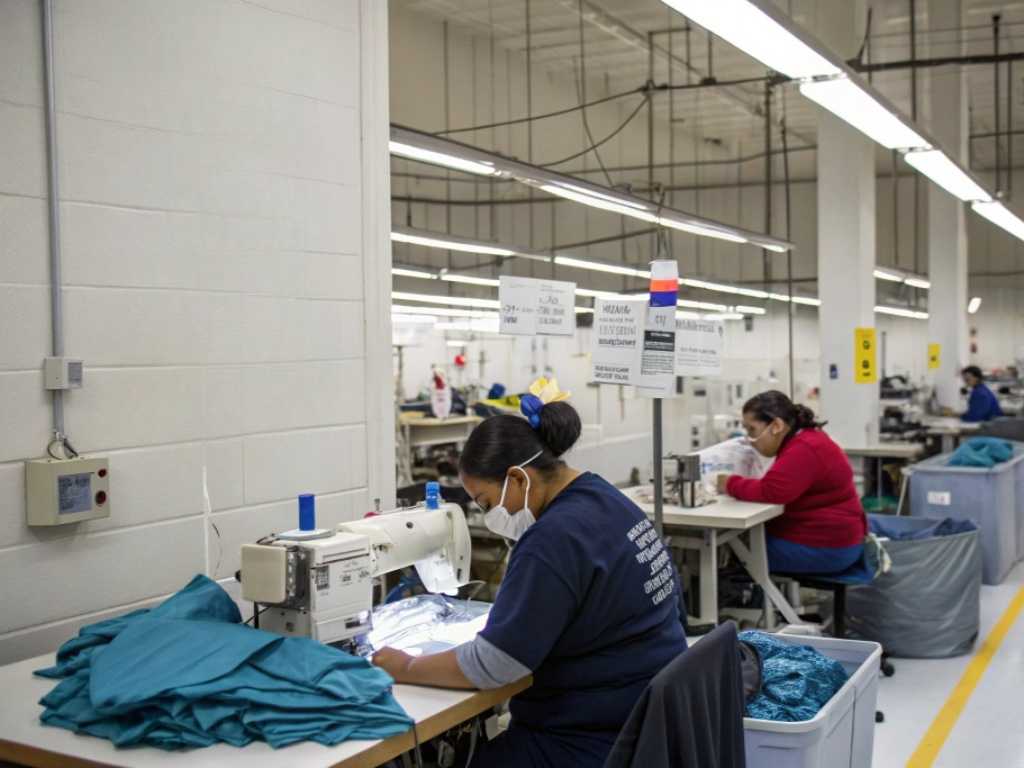
Private Label Dress Manufacturer for UK Brands
Dress development, production control and retail-ready private-label delivery for established UK fashion businesses.
Jinfeng Apparel turns approved dress concepts into production-ready collections through fabric sourcing, pattern development, structured sampling, controlled bulk production, quality inspection and branded packing. Our Guangdong manufacturing network is organised for multi-style programmes, seasonal drops and repeat orders where fit, materials, labels, barcodes and warehouse instructions must remain aligned from sample approval to final cartons.
- 10-30 styles can be managed as one coordinated private-label dress programme, with development priorities set by launch date, material readiness and construction complexity.
- Established brand orders commonly run across 20,000-80,000 total pieces, requiring style grouping, size-colour control, line allocation and staged quality review.
- MOQ starts from 200 pieces per style and colour, subject to fabric, trim, colour development, construction and packing requirements.
- 2 sample rooms, 7+ senior pattern makers and 20+ sample machinists support dress fitting, revisions, photo-ready samples, PP samples and Golden Sample control.
Manufacturing Facts Behind Each UK Dress Programme
Since 2008
6 Owned Factories
10+ Production Partners
2 Sample Rooms
7+ Pattern Makers
15+ QC Inspectors
Built for Established UK Fashion Businesses
Jinfeng Apparel is structured for brands with defined product direction, professional sample approval and genuine bulk plans. The strongest fit is a fashion business that needs dependable dress development rather than open-stock purchasing or simple relabelling.
Womenswear Brands
Premium Ecommerce Brands
Occasionwear Labels
Multi-Channel Retailers
Sourcing Teams

Dress Supply Risks We Control Before They Spread
Sample Misses Direction
Fit Changes in Bulk
Fabric Looks Inconsistent
Labels Create Errors
Collections Lose Control
Delivery Starts Too Late
Choose the Right Private Label Manufacturing Model
Private label can mean anything from adding a brand mark to a standard garment to building a proprietary dress collection from original specifications. Defining the route early prevents mismatched expectations around exclusivity, development work, MOQ and lead time.
| Model | Starting Input | Product Control | Brand Application | Best Use |
|---|---|---|---|---|
| White Label | Supplier catalogue style | Limited changes | Labels and simple packing | Fast launch where product differentiation is not the main objective |
| OEM | Tech pack, size chart or original sample | High control over fabric, fit and construction | Full brand label and packaging system | Defined products managed by an experienced development team |
| ODM | Brand direction, references and target market | Collaborative product development | Full private-label execution | Collections needing fabric, pattern and construction guidance |
| Jinfeng Private Label | OEM or ODM input plus a bulk plan | Custom dress development with PP and bulk control | Labels, barcodes, SKU packing, cartons and delivery records | Established UK dress programmes requiring repeatable production |
Private Label Dress Collections Built Around Real Sales

Party Dresses

Occasion Dresses

Satin Dresses

Mesh and Lace

Bodycon Dresses
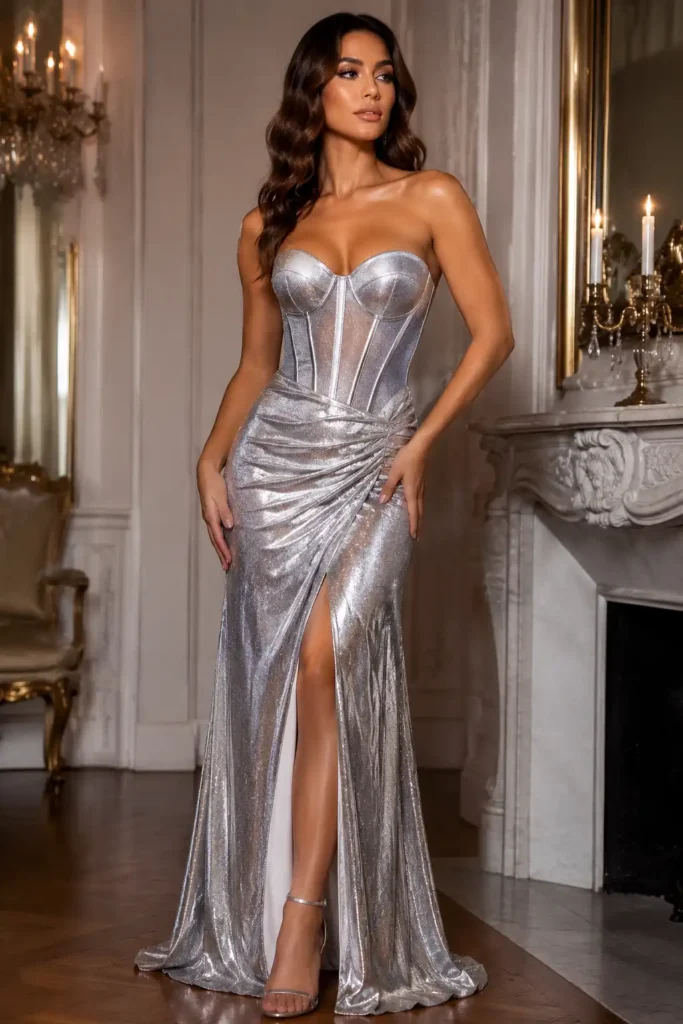
Corset Dresses
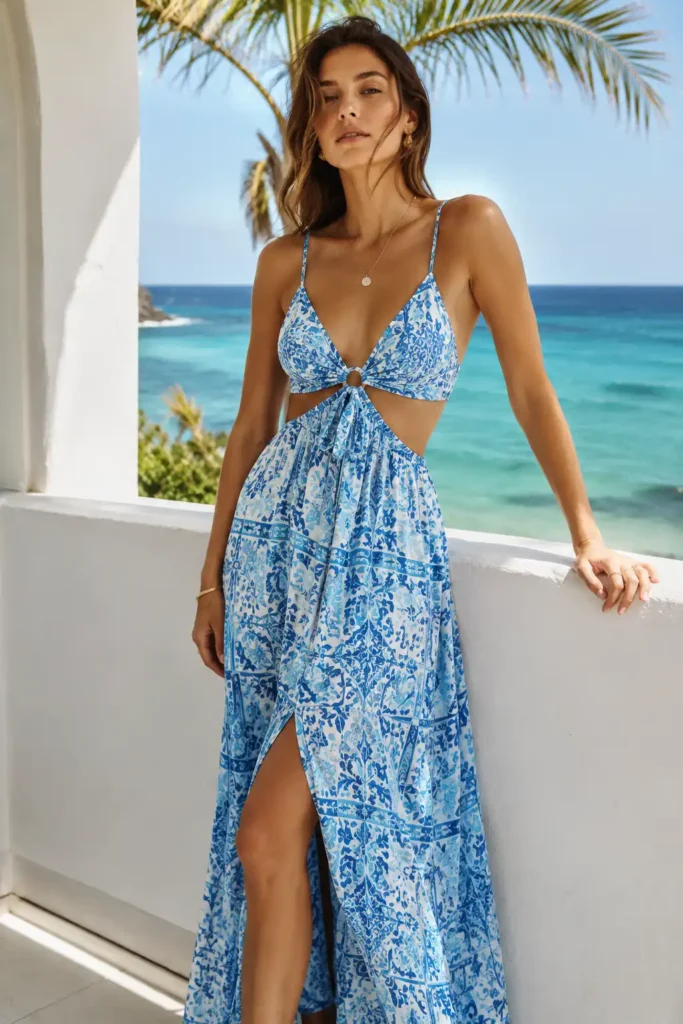
Resort Dresses

Mini to Maxi
Fit and Construction Control for Sellable Dresses
Successful fit is not a single measurement check. Pattern balance, fabric behaviour, internal support, grading and intended styling must work together. Jinfeng develops from brand size charts and fit comments rather than forcing every label into one house block.
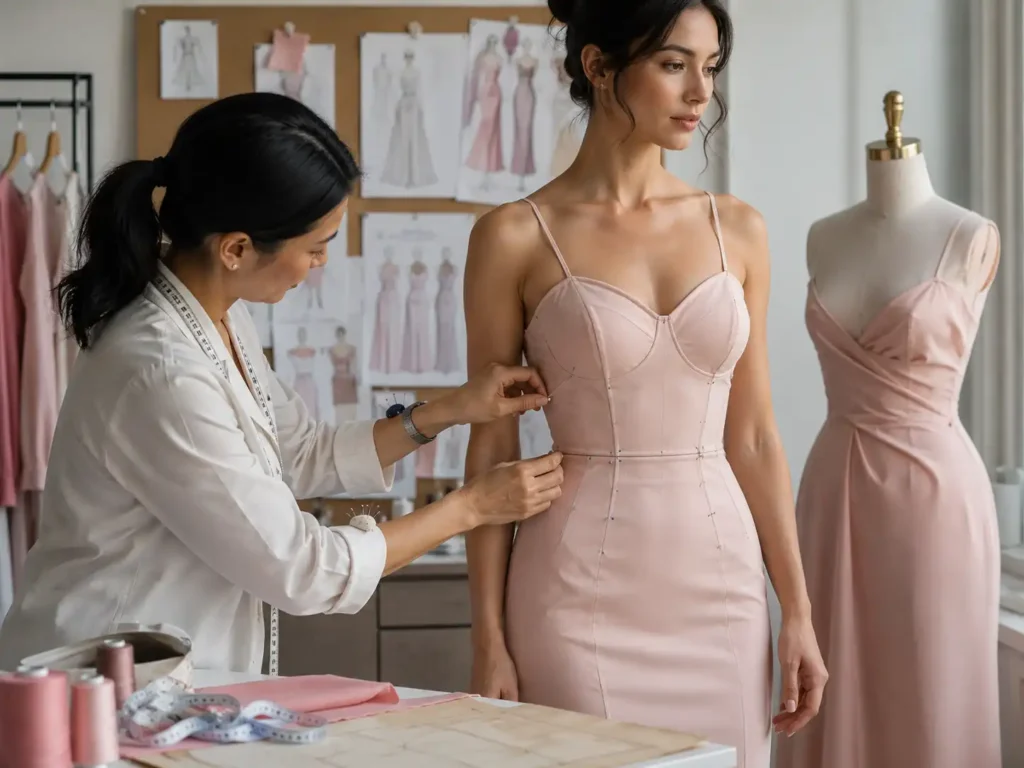
Bust, Waist and Hip Balance
Pattern review begins with the relationship between upper bust, full bust, underbust, waist, high hip and full hip. A bodycon jersey dress may require negative ease and recovery control, while a woven occasion dress needs shaping through darts, seams, panels or internal support.
UK size specifications can be developed from brand charts across alpha sizing such as XS-XL, numerical UK sizing, extended sizes, plus sizes and petite or tall adjustments. Grade rules are reviewed by garment area rather than enlarged uniformly. Neckline width, strap position, waist placement, rise and hem length may need different increments from bust or hip.
Fit comments are converted into measurable actions: move the waist seam, increase cup coverage, reduce back gaping, adjust armhole depth, re-balance side seams, change skirt sweep or refine the ratio between shell and lining. Each approved change updates the pattern version and technical record.

Neckline, Straps and Support
Deep V, halter, one-shoulder, strapless and low-back dresses need security without visible heaviness. Jinfeng reviews neckline depth, shoulder tension, strap length, cup position, underbust support, elastic, boning and closure behaviour on the intended fabric.
A visually clean neckline can fail during movement if edge tension is uneven or the lining is shorter than the shell. The sample is checked in front, side and back views, with attention to gaping, rolling, exposure and distortion around zips or internal support. Adjustable components are positioned for comfort and symmetry.
For structured dresses, the support system is approved as a complete unit. Boning length, cup shape, hook-and-eye placement, zipper movement, seam allowance and lining attachment are not changed independently after PP approval without a new technical review.

Length, Slits and Movement
Mini, midi and maxi dresses create different movement risks. Mini lengths are checked for seated and walking coverage; midi proportions are balanced against waist placement and skirt volume; maxi hems are levelled against fabric drop, footwear direction and size grading.
Slits require more than a measurement from the hem. Their height, reinforcement, lining opening, seam strength and behaviour during walking are reviewed together. Bias-cut or fluid fabrics may continue to drop after hanging, so hem levelling is scheduled only after the fabric has settled sufficiently.
Jumpsuits and fitted dresses add movement points at the rise, thigh, knee and seat. Pattern corrections consider comfort and recovery while protecting the intended silhouette.

Production-Ready Construction
The approved appearance must translate into repeatable sewing instructions. Jinfeng records seam type, seam allowance, stitch direction, zipper position, lining method, cup and boning placement, label location, gathering distribution, slit reinforcement and finishing requirements.
PP and Golden Sample references guide production, but bulk control also depends on fabric relaxation, accurate cutting, bundle identification, inline checks and measurement sampling. A good sample cannot compensate for missing process control.
When a style contains custom hardware, appliques, beading, sequins or complex ruching, the team reviews operation sequence and handling risk before line allocation. Construction may be simplified only with approval and without weakening the brand-level appearance.
Fabric, Lining and Trim Decisions Before Sampling
Fabric changes the silhouette, sewing method, size tolerance, packing result and final cost. Jinfeng reviews the full material system – shell, lining, closures, support, decorative trims and brand components – rather than approving each item in isolation.

Satin and Chiffon Control
Satin is assessed by weight, weave, lustre, colour, snag sensitivity, seam performance and pressing response. The cutting direction must remain consistent because changing grain or surface direction can create visible shade variation even within one dye lot. Lightweight satin may need lining or structural support; heavier satin can restrict drape in ruched or bias-cut styles.
Chiffon requires control of transparency, edge finish, seam slippage, gathering and layered volume. The outer shell and lining must move together without exposing internal seams or creating a short lining line. Printed chiffon adds direction, repeat and colour approval requirements.
For both fabrics, material approval should record supplier reference, colour, handfeel, weight direction, lining choice and bulk batch information. Reorders still require a new batch check because the same fabric name does not guarantee identical performance.
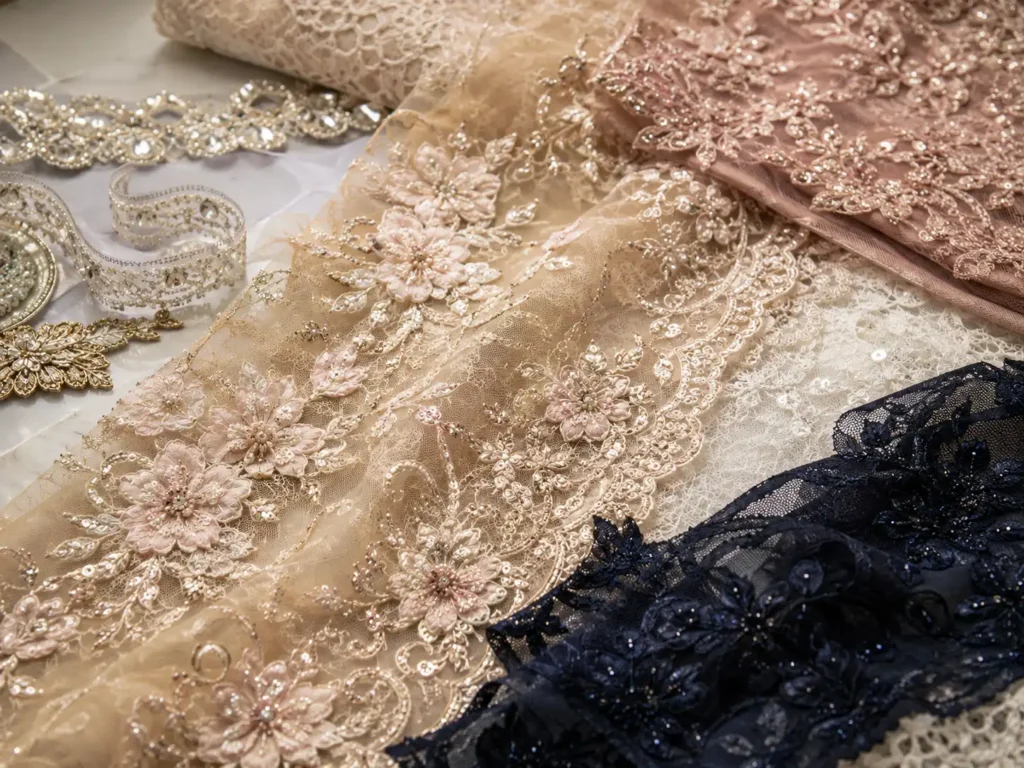
Lace, Mesh and Sequin
Lace development considers motif scale, placement, scallop use, stretch, backing and joining method. A symmetric bodice or border hem can consume more material than a plain fabric because cutting must follow the motif. Damage and mismatched placement are checked before panels reach sewing.
Mesh is reviewed for stretch direction, transparency, recovery, skin contact and seam stability. Lining coverage must follow the brand’s styling intent without creating visible bulk at necklines, cut-outs or sleeves. Elastic mesh and rigid mesh require different pattern assumptions.
Sequin fabrics are assessed for direction, shedding, scratching, seam allowance clearance, needle risk and pressing limitations. Protective handling during production and packing is planned before the order enters the line.
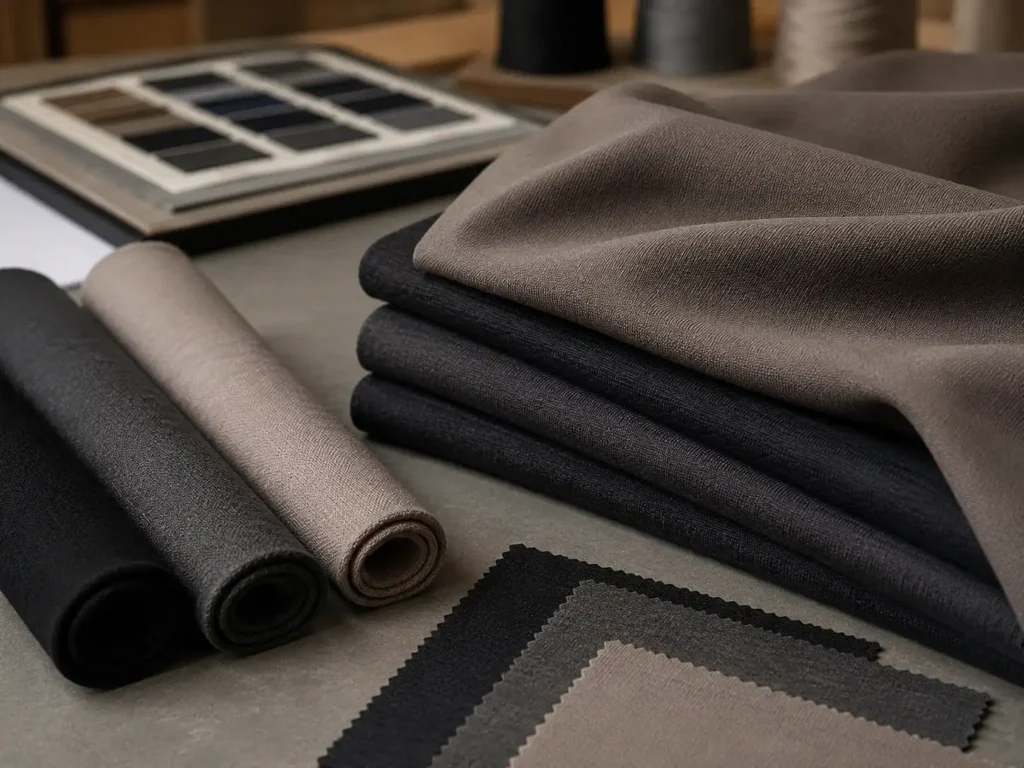
Jersey, Ponte and Stretch Wovens
Bodycon and fitted dresses depend on stretch percentage, recovery, weight, shrinkage, torque and relaxation. A fabric that stretches easily but fails to recover may look correct in the sample and become loose after wear. Jinfeng reviews the fabric with the intended pattern ease and size tolerance.
Ponte and Roma fabrics are selected according to season, support and silhouette. Too much thickness can make a summer style heavy; insufficient weight can expose construction lines or weaken shape. Side seams, hem behaviour and wash risk are considered before grading.
Stretch satin and stretch woven fabrics can combine polished appearance with closer fit, but the direction and percentage of stretch must remain consistent between sample and bulk.

Linings, Closures and Structure
Linings are chosen for opacity, handfeel, stretch compatibility, anti-static performance and length. The lining must support the shell without pulling, twisting or showing through. A stretch shell with a rigid lining can change the fit; a sheer outer layer may require partial, full or strategically placed coverage.
Closures and support components are selected by garment structure: concealed or regular zips, hook-and-eye, bra cups, boning, elastic, strap sliders, buttons, snaps and internal tape. Decorative chains, rhinestones, metal trims and appliques are evaluated for weight, skin contact and secure attachment.
Certified or specially tested materials can be sourced according to the project, supplier documentation, colour availability, MOQ and testing requirement. Certification is confirmed by material and batch rather than presented as a blanket statement.
Every Private Label Element Managed Before Bulk

Woven Main Labels
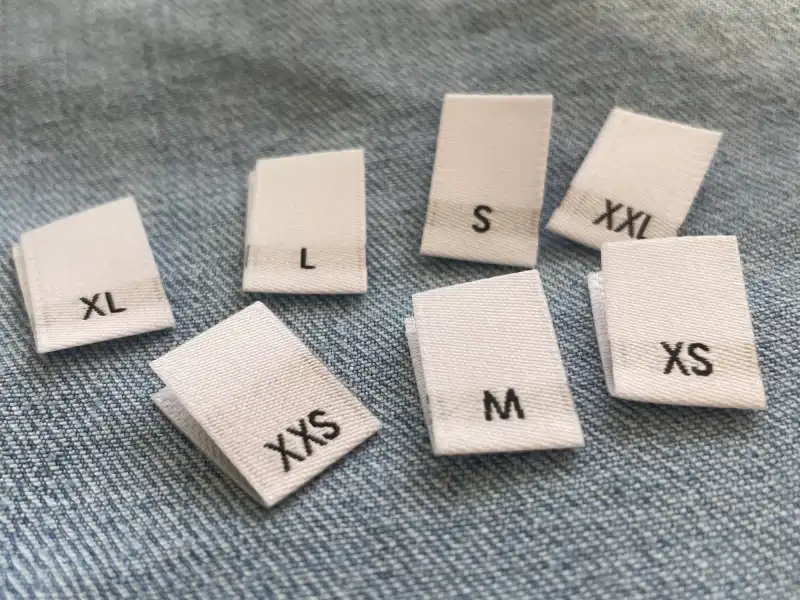
Size Labels
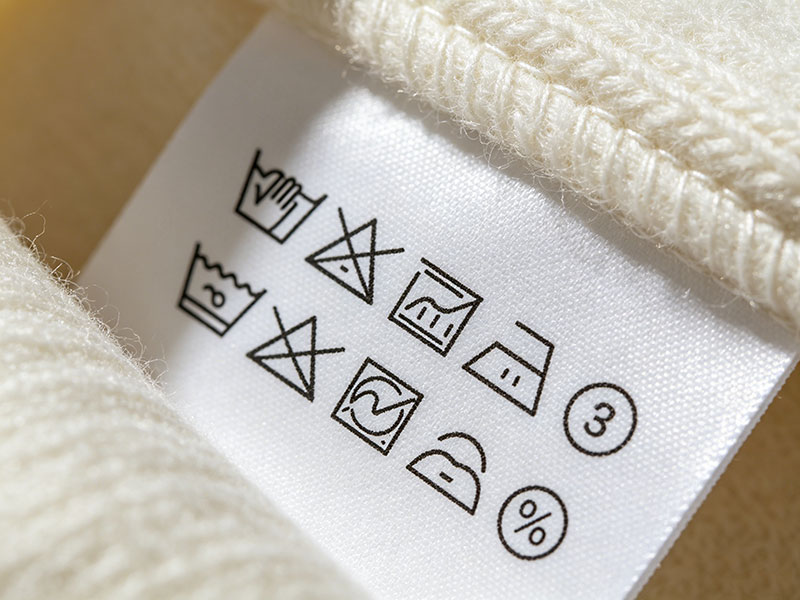
Care Labels

Hangtags and Strings
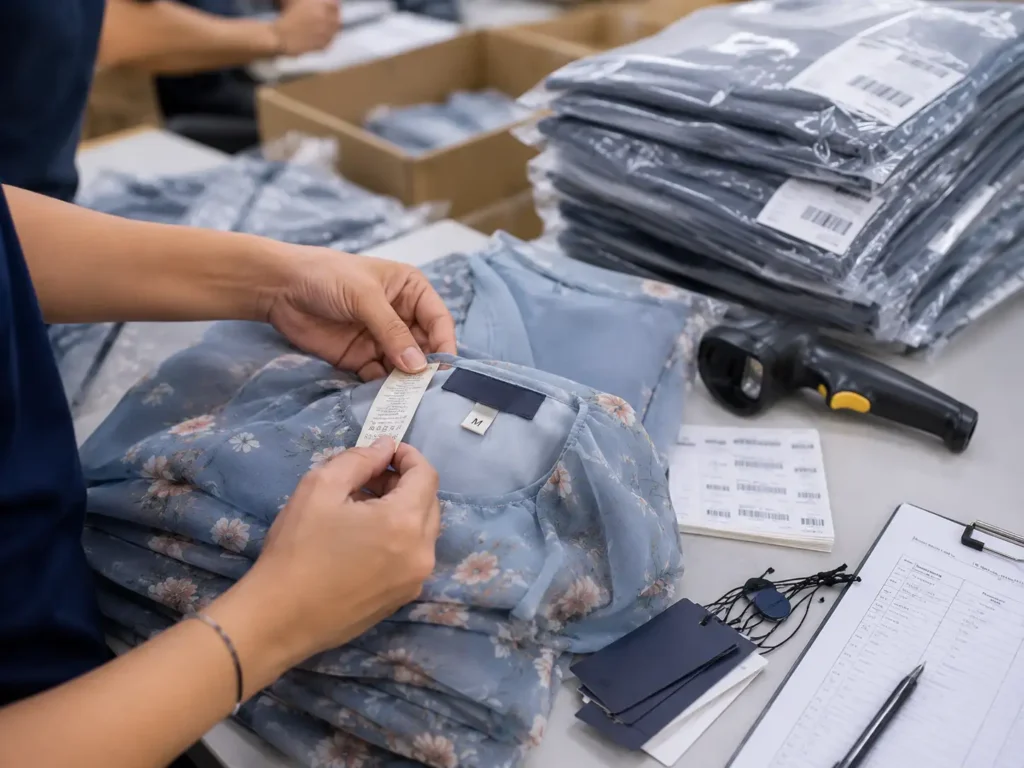
Barcodes and SKU Data

Packaging Artwork
Retail-Ready and Ecommerce-Ready Dress Packing
Packing is part of product control, not a final decorative step. The garment must arrive with the correct presentation, label data, size-colour identity and carton information for the intended UK retail or ecommerce route.
Individual Garment Preparation
Finished dresses are reviewed for loose threads, marks, pressing quality, embellishment security and presentation before folding or hanging. Satin, sequins, corset structures and long hems may need category-specific protection rather than one universal folding method.
Main labels, size labels, care labels, hangtags, barcode stickers and accessories are checked against the style record. Polybag size, ventilation, warning text and sealing method are confirmed by the brand. Tissue, garment boards, dust bags or protective layers are added only where approved and costed.
Presentation is adjusted for the sales channel. Ecommerce garments need compact protection and clear SKU identification; store delivery may require hangers, size rings or a different fold; premium programmes may use tissue, branded stickers or boxes.
Size, Colour and SKU Control
Private-label programmes often contain multiple sizes and colours within each style. Jinfeng uses style-colour-size breakdowns to control labels, barcodes, packing quantities and carton identification. UK numerical sizes, alpha sizes and extended size ranges are maintained according to the approved chart.
Size ratios should be planned before material and packing orders. A standard 200-piece style-colour quantity can be divided across sizes, but extreme fragmentation increases cutting, sorting, measurement and packing complexity. Each colour normally needs its own MOQ because fabric purchasing, production, SKU control and QC are managed separately.
Barcode and SKU data are verified before packing begins. Changes after printed materials are produced can create replacement cost and schedule impact, so approval status is tracked as part of the production file.
Cartons and Warehouse Instructions
Carton packing follows the approved quantity per carton, size-colour assortment, gross and net weight, carton dimensions, shipping mark and warehouse labelling. Mixed cartons are used only when clearly specified and traceable.
For large programmes, packing may be organised by warehouse, launch wave, style family or delivery priority. The packing list, carton marks and physical cartons must carry matching information. Customer-appointed forwarders receive confirmed carton and pickup data before collection.
Jinfeng can prepare or coordinate commercial invoices, packing lists, carton details, quantity breakdowns and shipment documents according to the selected trade term. Final warehouse rules should be provided before bulk packing starts.

From Design Files to Approved Dress Samples

Project Review

Fabric Direction

Pattern Development

First Sample

Fit and Revision

PP and Golden Sample
Capacity Matched to the Dress, Not Just Quantity
Woven Dresses
Stretch Dresses
Occasionwear
Sample Support
Quality Support
Finishing and Packing
Bulk Production Begins After the Standard Is Locked

Material Confirmation

Cutting Preparation

Sewing Instructions

Inline Control

Finishing and Measurement

Packing and Release
Dress-Specific Quality Control Through Every Stage
Quality standards change with the dress. A satin slip, mesh bodycon style, lace occasion dress and corset mini do not share the same failure points. Jinfeng connects general inspection stages with material and construction risks for each product group.

Material and Cutting Control
Incoming fabric is reviewed for colour, surface defects, holes, stains, print direction, stretch, width, handfeel and compatibility with the approved reference. Dye lots are separated where shade variation is possible. Linings and trims are checked for colour and functional match.
Cutting inspection verifies grain, face and reverse, pattern direction, lace or print placement, size identification, quantity and damage. Satin grain direction, lace motifs, sequin orientation and mesh holes are controlled before sewing because correction is more effective at panel stage.
Fabric relaxation and lay planning are used where stretch, shrinkage or torque can affect measurements. Cut bundles remain traceable by style, colour and size.

Inline Sewing Control
Inline inspection focuses on the operations most likely to create repeated bulk defects: neckline gaping, uneven straps, zipper waves, twisted seams, waist mismatch, incorrect gathering, exposed lining, unstable slits, asymmetry, loose sequins or inconsistent lace placement.
Measurements are sampled during production instead of waiting for final inspection. Bust, waist, hip, length, neckline, strap, slit and other key points are checked against the approved tolerance. Corrections are communicated before the next production quantity continues.
Workmanship requirements come from the PP sample and sewing instruction. A visually acceptable garment can still fail if label position, seam allowance, stitch security or internal support is inconsistent.
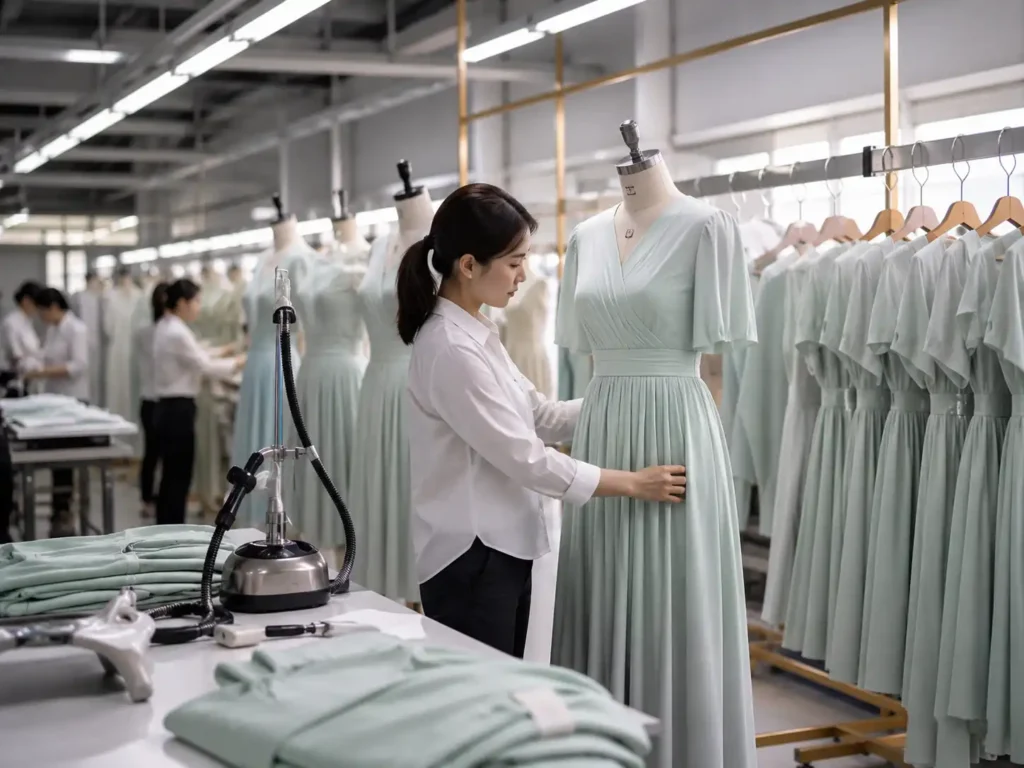
Final Garment Review
Finished garments are reviewed for measurement, appearance, balance, pressing, stains, holes, loose threads, closure function, embellishment security and lining behaviour. Front, side and back appearance are considered for fitted and structured dresses.
Product-specific checks include snagging and puckering on satin; transparency and holes on mesh; motif placement on lace; shedding and skin contact on sequins; ride-up and seam twist on bodycon dresses; hem level on maxi dresses; and support symmetry on corset styles.
AQL or client-defined pre-shipment inspection can be arranged according to the project. Third-party inspection is coordinated when required by the brand.
Label and Packing Inspection
Main labels, size labels, care labels, hangtags, barcodes and SKU stickers are checked against style-colour-size records. Mixed labels can create a larger commercial loss than a visible sewing defect, so data control is included in QC.
Packing review covers garment presentation, correct folding or hanging, accessories, polybag, warning text, size-colour assortment, carton quantity, marks and warehouse labels. Carton data must match the packing list and shipment instructions.
Quality records, PP reference and approved packaging files remain linked for repeat orders, while new materials, colours or packaging changes are reviewed again.
MOQ and Quotation Logic for Private Label Dresses
A reliable quotation separates garment quantity from material and packaging constraints. Price is built from the approved product, not from a photograph alone, and the commercial file should show what is included, excluded and still subject to confirmation.
| Commercial Area | Standard Planning Basis | What Can Change It | Information Needed |
|---|---|---|---|
| Garment MOQ | Starts from 200 pcs per style and colour | Custom dyeing, special fabric, trims, construction, size-colour fragmentation, packing and schedule | Quantity by style, colour and size |
| Fabric MOQ | Stock or regular fabric may support the garment MOQ | Custom colour, print, weaving, lace, sequins, certification or supplier minimum | Fabric reference, colour, weight and target appearance |
| Brand Components | Standard labels and packing assessed by item | Woven label, hangtag, printed bag, dust bag, box, hardware or supplier minimum | Artwork, dimensions, material and quantity |
| Sample Cost | Quoted separately for development | Pattern work, material, structure, trims, revisions and sample type | Tech pack, images, size chart and fabric direction |
| Bulk Unit Price | Confirmed from approved construction and order plan | Fabric use, lining, sewing time, embellishment, QC, packing, quantity and lead time | PP details, size ratio, colours, packaging and trade term |
| Shipping | Quoted or coordinated by route and trade term | Carton volume, weight, destination, urgency, customs route and split delivery | Warehouse address, delivery window and forwarder details |
Delivery Coordination for UK Dress Orders
Courier and Air
Sea Freight
Brand Forwarder
NDA Protection and Repeat-Order Continuity
Development Files
Brand and Packing Data
Repeat-Order Records
Private Label Dress Programme Examples
The following anonymous programmes reflect the order structure Jinfeng is built to manage: 10-30 styles, 20,000-80,000 total pieces, multiple fabric groups, branded packing and coordinated delivery. Brand identities and unpublished designs remain confidential.
Fourteen-Style Occasionwear Launch
Order profile: 14 styles, 28,400 pieces, five fabric groups, seven colours and UK sizes 6-18. The range combined satin midis, mesh mini dresses, lace-panel styles and lined occasion maxis. Quantities were planned by style and colour, with size ratios supplied by the brand.
Development challenge: the initial line sheet used related visual references but did not define lining coverage, slit height, cup structure or fabric weight. Jinfeng grouped the range by construction, presented fabric directions, prioritised four photography styles and recorded fit comments by version. Satin and mesh styles followed different tolerance and packing controls.
Execution: sample approval was managed across a four-week development window, followed by PP lock and an eight-week bulk plan. Production was allocated by fabric and structure. Inline checks focused on neckline security, waist placement, zips, lace symmetry and mesh transparency. Barcode and carton files were approved before packing.
Result: the collection shipped in two coordinated waves, allowing the first launch group to reach the brand’s warehouse before the later formal styles. Pattern, fabric and packing records were retained for repeat consideration.

Twenty-One-Style Ecommerce Programme
Order profile: 21 styles, 52,800 pieces, 11 colours and UK sizes 4-20. The programme included bodycon, corset, satin, ruched and cut-out dresses for a premium ecommerce channel, with individual polybags, barcode stickers and style-colour-size SKU control.
Development challenge: several designs shared a similar look but used different stretch and support systems. A single pattern assumption would have created inconsistent fit. Jinfeng separated stretch jersey, ponte, stretch satin and woven corset groups, then reviewed ease, recovery, lining and internal support for each group.
Execution: hero SKUs received photo-ready sample priority, while lower-risk jersey styles progressed in parallel. PP approval locked measurements, support construction, label position and packing method. Bulk quality control sampled bust-waist-hip measurements, seam twist, hem ride-up, zipper flatness and barcode accuracy.
Result: the order moved through a nine-week bulk window with staged packing by launch priority. The brand used the retained pattern and measurement records to prepare a later colour extension without rebuilding the entire development file.

Twenty-Seven-Style Seasonal Dress Range
Order profile: 27 styles, 74,600 pieces, six material groups, nine principal colours and UK sizes 6-22. The assortment combined wedding guest, holiday party, sequin, chiffon, lace and structured satin dresses with branded hangtags, care labels, barcode files and warehouse carton marks.
Development challenge: material minimums and delivery priorities differed across the range. Special lace and sequin fabrics required earlier approval than regular chiffon and satin. Extended sizes also required selective pattern and support adjustments instead of proportional scaling alone.
Execution: styles were grouped by fabric, trim package, complexity and launch wave. Material booking, sample revision, PP approval and production release were tracked separately. QC plans were category-specific: sequin shedding and skin contact, chiffon seam slippage, lace placement, structured support, maxi hem level and label-pack accuracy.
Result: bulk production ran across a ten-week programme with two shipment waves and separate warehouse packing instructions. The final records connected each style to its approved pattern, material, trim, size chart, QC focus and packing file, supporting future replenishment review.
Frequently Asked Questions for UK Dress Brands

Send Your Private Label Dress Brief
Send Kelly the commercial and technical information already available.
Jinfeng will review style complexity, fabric direction, pattern and sample needs, MOQ fit, brand components, packing, quality requirements and the proposed UK delivery route before recommending the next step. Complete files allow a clearer response, but a line sheet or group of references can also begin a structured assessment when quantities and launch plans are defined.
- Tech pack, line sheet, original sample or reference images
- Quantity by style and colour, plus the planned size ratio
- Fabric, lining, trim and target appearance direction
- Main label, care label, hangtag, barcode and packaging needs
- Quality, testing or warehouse requirements
- Target launch date and UK delivery location