 Skip to content
Printed Vacation Dress Collection Manufacturer
Develop coordinated printed vacation dress collections with controlled artwork, fabric, fit, sampling, production and private-label delivery for established fashion programs.
- Collection programs commonly cover 10-30 coordinated styles, including mini, midi, maxi, halter, wrap, tiered and cut-out silhouettes.
- MOQ starts from 200 pcs per style/color, subject to print method, base fabric, trim, packaging and production schedule.
- 2 sample rooms, 7+ senior pattern makers and 20+ sample machinists support multi-style development and sample revision.
- 6 owned womenswear factories and 10+ long-term production partners support planned bulk allocation, quality control and multi-batch delivery.
Collection Manufacturing Facts at a Glance
Since 2008
Six Owned Factories
Ten Plus Partners
Two Sample Rooms
Twenty Plus Machinists
MOQ From 200
Built for Established Vacationwear Programs
Best Program Fit
Suitable programs include seasonal resortwear drops, printed dress capsules, cruise collections, destination-event edits, premium ecommerce launches and multi-channel retail assortments. A typical brief includes a line sheet, reference garments or sketches, artwork files, target quantities, size range, price architecture and delivery window. Jinfeng Apparel can enter from a complete tech pack or from a structured line sheet that still requires fabric, pattern and construction development.
- 10-30 coordinated styles per development cycle
- Defined launch or warehouse delivery window
- Private-label, barcode and packing requirements
- Bulk order and repeat-order planning
Project Readiness
Efficient development starts when the brand can confirm product direction and decision ownership. Print approval, fabric approval, fit comments and packaging instructions should move through named contacts and recorded versions. Jinfeng Apparel reviews the brief before quoting so unsupported promises are avoided. A clear brief allows the team to separate hero styles from supporting styles, identify custom-print minimums and establish sample priorities before cost is committed.
- Artwork or print direction
- Style count and quantity by color
- Target size range and market
- Sampling and bulk approval contacts
Where Printed Vacation Collections Usually Fail
Wrong Print Scale
- Record repeat in centimeters
- Review motif against pattern panels
- Approve each scale before bulk printing
Unstable Base Fabric
- Confirm fabric batch
- Test shrinkage where required
- Review lining and pressing behavior
Direction Errors
- Mark grain and print direction
- Separate directional panels
- Inspect first cut bundles
Fit Loses Lightness
- Check movement and coverage
- Balance ease with silhouette
- Record final measurement points
Bulk Color Drift
- Keep physical approval standards
- Separate print colorway codes
- Check bulk rolls before cutting
Collection Timing Breaks
- Prioritize hero SKUs
- Book custom materials early
- Plan sample and bulk waves
How We Build a Vacation Dress Collection
A coherent assortment needs visual unity, price balance, size consistency and production logic. Jinfeng Apparel organizes the line before individual samples consume time and material, helping each style play a clear role within the launch.
Build a Commercial Assortment
Collection planning starts with the intended selling structure rather than a random set of attractive dresses. Hero pieces carry the strongest print or silhouette and are often selected for campaign photography. Commercial core styles use easier fits, broader wearability and repeatable construction. Supporting styles extend the print story without competing with the hero pieces. A 16-style program, for example, may contain four hero dresses, eight commercial dresses and four supporting silhouettes or matching pieces. Mini, midi and maxi lengths are balanced against the target channel, climate and price ladder. The goal is not maximum variety. The goal is a collection where each SKU has a clear visual and commercial purpose.
During review, line-sheet gaps are flagged early. Too many similar maxi dresses can create internal competition, while too many complex styles can overload the sample calendar and push average cost above the planned price architecture. Fabric groups are consolidated where possible, but consolidation never forces an unsuitable base fabric onto a silhouette. A fluid rayon may work across wrap and tiered dresses, while a structured mini may need a different woven base. Collection decisions are recorded by style number, length, silhouette, print family, colorway, fabric, lining, trim, target quantity and approval priority.
Create a Print Hierarchy
Printed collections feel stronger when artwork has hierarchy. A main print carries the campaign identity, one or two secondary prints add variety, and solids or subtle coordinates provide visual rest.
The main print may appear on hero maxi and halter styles, while a smaller-scale coordinate supports minis or fitted silhouettes. Border art can be reserved for skirts, hems or sleeves where placement adds value. A separate lining and trim color story prevents the inside of the garment from weakening the outside presentation.
Each print family receives a clear code and approval record. Scale, repeat, direction, background color and intended base fabrics are listed before sampling. When one artwork is used on more than one fabric, color appearance is reviewed independently because chiffon, rayon, cotton and satin reflect and absorb color differently.
A print accepted on a matte rayon cannot automatically become the approval standard for a shiny satin. Physical strike-offs, garment samples and digital records work together, reducing confusion when the same artwork expands into later seasons or repeat orders.
Balance Fit and Price
A vacation collection can look premium without forcing every style into the highest construction cost. More complex elements are concentrated where they create visible value: a shaped bust on a hero halter dress, a controlled border placement on a campaign maxi, or tier volume on a statement silhouette. Commercial styles may use cleaner panels, adjustable straps, elasticized backs or simplified ruffle structures to support broader fit and more efficient production. Cost control focuses on preserving brand-level appearance, not removing every detail.
Size range also influences design. An adjustable wrap, shirred back or tie waist can support fit flexibility, but every flexible feature still needs limits for coverage and garment balance. Extended sizes may require more than proportional grading around bust shaping, armholes, strap strength, waist position and skirt volume. Jinfeng Apparel reviews style roles and size requirements together so the final line does not become visually coherent but technically inconsistent.
Manage the Line Sheet
A working line sheet becomes the control document for development. Recommended fields include style number, product name, front and back reference, print code, colorway code, base fabric, lining, trims, size range, sample type, target quantity, priority, approval status and launch date. Each revision is linked to the correct style and sample version. Comments such as “reduce neckline by 1 cm” or “move motif away from center bust” are not left in informal messages without a style reference.
For 10-30 styles, development is normally split into waves. Wave one covers hero styles and fabrics that require the longest approval path. Wave two covers commercial core styles using confirmed fabrics or related patterns. Wave three can include supporting styles, additional colors or campaign samples. The sequence protects the launch calendar and gives the brand better cost visibility before every SKU reaches the same stage.
Printed Vacation Dress Silhouettes We Develop

Printed Mini Dresses
- Key checks: front length, back length, hem turn, lining length
- Suitable details: halter, tie front, puff sleeve, ruched waist

Printed Midi Dresses
- Key checks: waist seam, side seam, slit opening, hem balance
- Suitable fabrics: rayon, viscose, crepe, satin, chiffon

Printed Maxi Dresses
- Key checks: total length, hem sweep, lining, print direction
- Suitable details: tiers, halter neck, low back, side slit
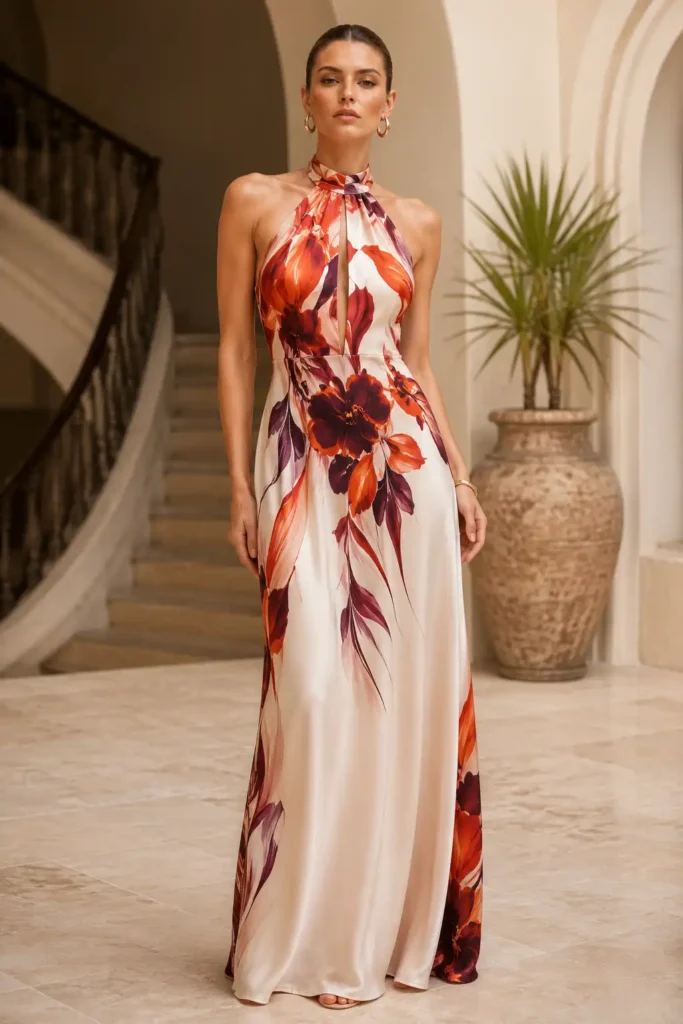
Halter Vacation Dresses
- Key checks: neck comfort, bust support, armhole coverage
- Suitable fabrics: satin, chiffon, rayon, lightweight woven

Wrap Vacation Dresses
- Key checks: overlap, tie length, waist position, movement
- Suitable fabrics: rayon, viscose, crepe, light satin

Tiered Vacation Dresses
- Key checks: gather ratio, tier depth, seam alignment, hem
- Suitable fabrics: cotton voile, rayon, chiffon, light woven

Printed Slip Dresses
- Key checks: strap length, neckline, side seam, zipper flatness
- Suitable fabrics: satin, crepe, viscose, lined chiffon
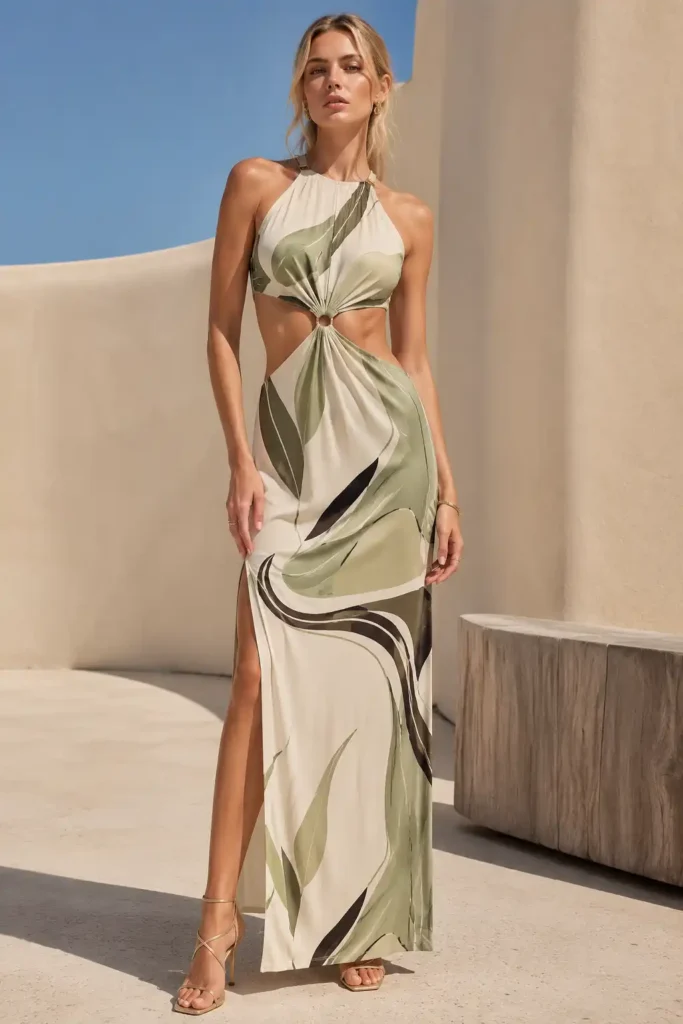
Cut-Out Vacation Dresses
- Key checks: edge stability, coverage, stress points, symmetry
- Suitable fabrics: structured woven, lined crepe, stable rayon blend
Custom Print Development for Vacation Dresses
Exclusive print work is managed as a technical product input, not a decorative afterthought. Artwork quality, repeat engineering, base fabric, color standard and bulk inspection must remain connected from first review to final cutting.

Prepare Artwork for Production
Artwork can begin from original vector files, high-resolution raster files, hand-drawn concepts, archived prints or a clear visual direction. Vector formats are preferred for scalable motifs and clean color separation. Raster artwork should normally be supplied at final intended scale with at least 300 dpi resolution. The file should identify repeat dimensions, motif direction, background color and any fixed placement requirement. When exact production artwork is not ready, Jinfeng Apparel can first review the concept and advise what information the print partner will need before strike-off.
Every artwork receives a print code. A useful naming structure separates artwork, scale, colorway and base fabric, for example P03-S2-C1-Rayon. The same floral may require a small scale for a mini dress and a larger scale for a maxi dress. Separate codes prevent an approved small repeat from being mistakenly used on a different silhouette. Any requested motif position at center front, neckline, waist or hem is marked on the garment drawing and pattern reference, not described only in a message.
Match Print Method to Fabric
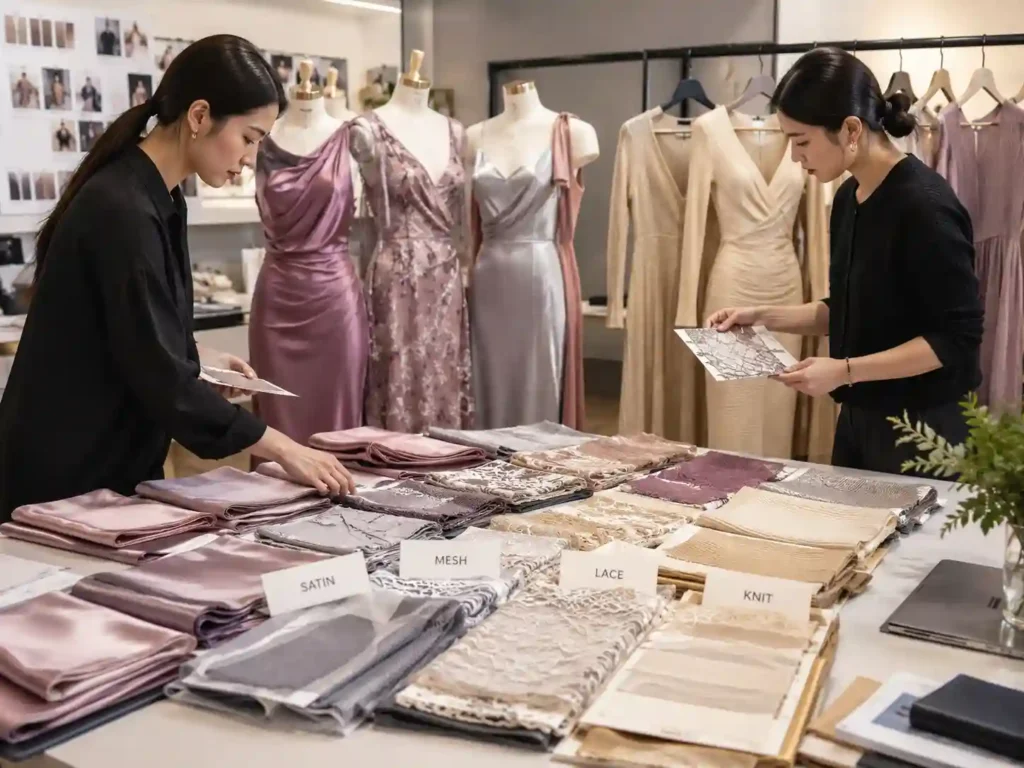
Digital printing suits complex artwork, gradients, photographic detail and lower colorway volumes, while screen printing can suit stronger flat colors and repeated commercial patterns. Placement printing is selected when a motif must sit within a specific garment area. Border printing can create value at hems, sleeves or tier edges but requires accurate pattern planning and fabric width control. The choice depends on base composition, artwork complexity, required hand feel, color depth, quantity, supplier minimum and delivery schedule.
Jinfeng Apparel coordinates print development through qualified fabric and print partners rather than claiming one method is best for every garment. Polyester, rayon, viscose, cotton and blended fabrics respond differently to ink and dye systems. A method that produces sharp color on polyester may not create the desired hand feel on rayon. Fabric selection therefore comes before final print confirmation. Where color fastness, shrinkage, pH, composition or market-specific testing is required, the testing scope is confirmed by project and target market.

Approve Strike-Off and Color
A strike-off is reviewed for motif scale, repeat connection, background color, color relationship, sharpness, hand feel and appearance on the intended fabric. Approval should use a physical standard whenever possible. Pantone numbers can guide color development, but surface texture, shine and transparency can change how color is perceived. Natural light, indoor light and photography lighting may all reveal different results, especially on satin or semi-transparent fabrics.
Comments are specific and measurable. “Make it brighter” is converted into a defined color adjustment or a physical reference. “Reduce the flower” is converted into a new motif size or repeat dimension. After approval, the strike-off code, date, fabric, colorway and artwork version are stored with the style records. Where several fabrics use the same artwork, each fabric receives separate approval because ink absorption and surface reflection can shift the final appearance.
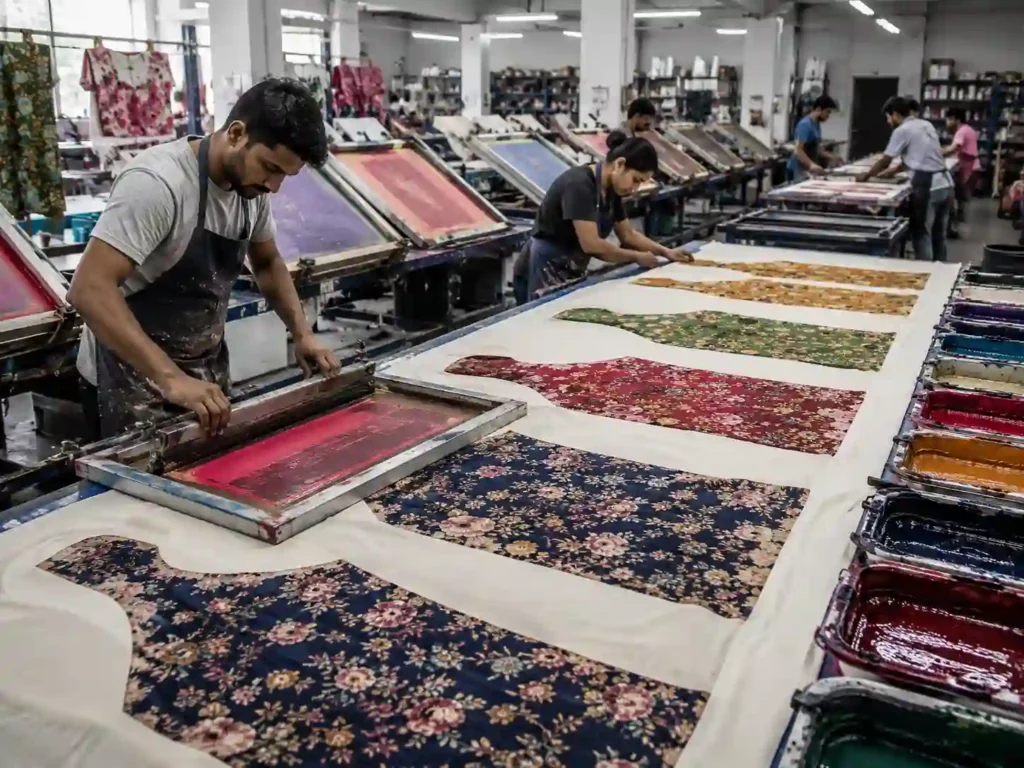
Control Bulk Print Consistency
Bulk rolls are checked before cutting for color variation, repeat defects, streaks, print direction, width, surface faults and obvious contamination. Roll identification is retained so garment issues can be traced to the relevant material batch. One-way or border designs are separated in the cutting instruction. First cut pieces are compared with the approved artwork and sample before full cutting proceeds. If a print family has several colorways, each colorway remains physically and digitally separated throughout storage, cutting and packing.
Repeat orders rely on more than a saved image file. Records include artwork version, repeat size, base fabric, supplier, approved swatch, bulk color reference, print direction, garment photos and any cutting notes. A new fabric batch can still require renewed confirmation because the same print formula may appear different on a new base or dye lot. The record system improves repeatability while preserving the need for batch-level review.
Choosing the Right Base Fabric for Each Print
Fabric determines drape, opacity, color depth, wrinkle behavior, cutting yield and final fit. The ranges below are common planning references for vacation dresses; final weight, width, composition, finish and test requirements are confirmed against the selected mill batch.
| Fabric Direction | Typical Weight | Print Character | Best Silhouettes | Main Controls | Lining Direction |
|---|---|---|---|---|---|
| Chiffon | 50-90 gsm | Airy color, softer edges, layered visual depth | Maxi, tiered, sleeve, overlay | Transparency, seam slippage, shrinkage, snagging, print direction | Usually required for body panels |
| Rayon Challis | 100-140 gsm | Rich color, fluid surface, comfortable hand feel | Wrap, midi, maxi, gathered | Shrinkage, twisting, color batch, pressing, hem drop | Depends on color and style |
| Viscose Twill | 120-180 gsm | Clearer print with stronger drape and body | Shirt dress, midi, wrap, structured maxi | Shrinkage, skew, wrinkle, seam puckering | Often optional |
| Cotton Voile | 60-100 gsm | Crisp print, breathable, slightly dry touch | Tiered, puff sleeve, mini, day dress | Transparency, crease, seam strength, shrinkage | Common for light colors |
| Linen Blend | 120-200 gsm | Natural texture, muted or artisanal print effect | Shift, square neck, resort midi, relaxed maxi | Wrinkle, slub, shrinkage, color penetration | Style and opacity dependent |
| Light Crepe | 100-180 gsm | Balanced color, controlled drape, less shine | Wrap, midi, slip-inspired, event resort | Surface marks, seam tension, pressing, shrinkage | Often optional |
| Light Satin | 90-180 gsm | High color impact and shine, photo-ready surface | Slip, halter, bias-inspired, occasion resort | Snagging, zipper waves, shine direction, pressing | Recommended for many styles |
| Light Woven Blend | 80-150 gsm | Flexible print result depending on composition | Mini, cut-out, gathered, casual resort | Composition, width, recovery, opacity, shrinkage | Confirmed by garment design |
Print Scale, Placement and Cutting Direction
Artwork becomes a garment only after it is translated into pattern panels and cutting instructions. Scale, seam position, grain direction and size grading decide whether the final dress looks deliberate or accidental.
Scale by Garment Area
Print scale is reviewed against visible garment area. A dense floral can create a balanced mini but feel heavy on a full tiered maxi. An oversized motif can create strong campaign imagery, yet random cutting may place one flower directly on the bust or cut a face-shaped motif across a seam. Jinfeng Apparel overlays motif dimensions against key pattern areas and reviews how the visual changes from the smallest to the largest size. When needed, a print family uses two scales rather than forcing one repeat across every silhouette.
Scale approval records include repeat width, repeat height, motif dimensions and direction. Garment mockups can help visual review, but final decisions are checked through physical strike-off and sample cutting. Artwork can move slightly during real fabric production, so designs requiring exact placement need tighter margins and a dedicated placement process.
Control Placement Prints
Placement artwork is linked to a defined pattern panel. Center-front motifs require neckline, bust point, waist and hem references. Border art needs a fixed relationship with the hemline and may require separate pattern lengths for different sizes. Side motifs must account for seam allowance and garment wrap. A placement file without garment dimensions cannot create a dependable production result.
Before bulk printing or cutting, the approved location is marked on the sample and technical file. Pattern revisions after placement approval can change motif position, so any significant change to neckline, length or waist placement triggers a new review. Placement work can increase fabric consumption and handling because panels cannot be nested as freely as all-over prints.
Protect One-Way Direction
Directional florals, palms, stripes, animals, text and border patterns need a one-way cutting rule. Grain line and visual direction are both shown on the cutting marker. Ruffles, sleeves, ties, facings and skirt tiers are included rather than treated as secondary pieces. A garment can look correct from the front and still fail when a sleeve motif is inverted or one tier runs in the opposite direction.
Directional restrictions may add roughly 5-15% planning consumption compared with a flexible all-over layout, depending on repeat size, fabric width, garment length and pattern shape. The percentage is not used as a fixed quote. A marker plan is reviewed after final pattern and fabric width are known. Accurate planning prevents a low initial estimate from becoming a material shortage during bulk cutting.
Check First Cut Pieces
First cut bundles provide an early control point before full cutting volume is released.
Key panels are checked for motif orientation, border height, center placement, repeat defects and fabric surface faults.
Printed long dresses also need front and back length identification so panels are not mixed.
If print behavior or fabric skew changes panel alignment, the issue is corrected before sewing multiplies the defect across the order.
Fit and Construction Details That Protect the Design
A light vacation dress must photograph well, move comfortably and remain secure in real wear. Fit control focuses on coverage, proportion, construction stability and the way printed fabric behaves around the body.

Neckline, Bust and Armhole
Halter, deep-V, square-neck and cut-out styles need clear bust and coverage decisions. Development reviews upper bust, full bust, under-bust, neckline depth, armhole shape, strap position and back opening. A low neckline may look correct on a dress form yet open during movement. A narrow armhole can expose the side bust, while an overly high armhole restricts comfort. Fit samples are assessed from front, side and back, with movement checks rather than a single standing photo.
Support is chosen according to design and fabric. Options can include lining, shaped seams, elastic, adjustable straps, modesty panels, cups or internal stabilization, but unnecessary structure is avoided on intentionally light resort pieces. Print placement is also reviewed around the bust so dominant motifs do not create unintended visual emphasis.

Waist, Hip and Skirt Volume
Waist position changes the entire balance of a vacation dress. High waist, natural waist and dropped waist styles require different bodice lengths and skirt starting points. Wrap styles need enough overlap through the hip. Gathered or tiered styles need controlled volume so smaller sizes are not overwhelmed and larger sizes do not lose movement. Elasticized backs and tie waists can improve flexibility, yet elastic length, recovery and seam security still require defined standards.
Size grading is not treated as simple enlargement. Bust shaping, armhole, waist placement, hip ease, tier depth and skirt sweep may need targeted rules. The approved size chart includes critical measurements and tolerances appropriate to the garment. Final pattern, grade rule, PP sample and QC measurement points form one connected standard.

Lining, Slits and Long Hems
Light colors and open-weave fabrics often require lining, but lining must support the silhouette without adding visible weight. Length, color, stretch and attachment method are selected by style. A lining that is too short can show during movement, while a lining that is too long can catch at the hem. Slit height is checked from both standing and walking positions. Wrap openings and side slits are reviewed together with lining coverage.
Maxi hems need front-to-back balance, side balance and consistent pressing. Rayon and viscose can relax after hanging, so hem timing may need to follow fabric behavior. Tier seams, side seams and center panels should not pull the hem out of level. Bulk inspection checks length against approved measurements and the visual relationship between shell and lining.

Travel Wear and Movement
Vacation dresses are folded, packed, unpacked, photographed and worn across warm environments. Fabric recovery, crease behavior, strap security and seam comfort influence the wearing experience. High-friction trims, exposed seam allowances or rough labels can undermine an otherwise strong design. Long ties and removable belts need packing control so they arrive with the correct garment and do not tangle during warehouse handling.
Movement checks include walking, sitting, lifting arms, turning and light wind exposure where relevant. The objective is not sportswear mobility. The objective is secure coverage and graceful movement for the intended resort, cruise, travel or destination-event setting.
Managing Colors and Prints Across One Collection
Print Family Records
Every artwork is assigned a print family code, repeat version, scale, colorway and base fabric. Physical swatches and garment photos are linked to the same code. When the artwork is reused on a new fabric or at a new scale, a new approval record is created rather than overwriting the original.
- Artwork code
- Repeat dimensions
- Colorway and fabric
- Approval date and version
Color and Trim Links
Shell, lining, zipper, thread, elastic, buttons and labels should support the same color story. Light printed dresses may need lining selected from the background color rather than the dominant motif. Hardware and strap adjusters are reviewed for finish, weight and corrosion risk in warm-weather use.
- Pantone or physical standard
- Lining and zipper reference
- Thread and trim code
- Bulk color approval
SKU and Packing Control
- Style-print-color-size code
- Barcode validation
- Size-ratio packing
- Carton breakdown
Multi-Style Sampling Without Collection Confusion
Collection sampling is managed by waves, records and approval status. The objective is not to make every style at once. The objective is to approve the right styles in the right order while preserving consistent fabric, print and fit decisions.

Group 10-30 Styles
Styles are grouped by base fabric, print family, silhouette, construction complexity and launch priority. A rayon group may include wrap, tiered and gathered dresses. A satin group may include slip, halter and bias-inspired styles. Placement-print or border-print pieces form a separate risk group because artwork and pattern approval are closely linked. Shared materials can move together, but styles with different risk levels do not receive the same sample deadline automatically.
A collection tracker lists style number, fabric status, print status, pattern status, sample type, revision round, approval owner and target date. Hero SKUs and photo samples receive priority based on campaign and selling needs. The approach protects key launch dates while preventing less urgent styles from blocking sample-room capacity.

Use the Correct Sample Type
A first sample checks proportion, construction and material direction. A fit sample focuses on measurement and movement. A revised sample confirms recorded corrections. A photo-ready or salesman sample supports campaign or selling activity but does not replace PP approval. A PP sample verifies the final bulk standard after fabric, print, trims, pattern, construction and labeling are locked. A Golden sample remains the production and QC reference.
Straightforward first samples are commonly planned within about 7-15 working days after suitable fabric and trims are ready. Complex constructions, custom print development, placement work or multi-style waves require individual scheduling. The timing is confirmed after review rather than promised before artwork, material and pattern risk are understood.
Record Every Revision
Fit comments should identify the style, sample version, measurement point and requested change. Photos can support comments, but photos alone do not update the pattern. Pattern makers compare the approved size chart, sample measurements, fit feedback and visual balance before creating a revised pattern. Changes to bust, waist, hip, neckline, strap, armhole, skirt length, slit, lining or print placement are recorded in the revision log.
Once a revised sample is approved, the final pattern and measurement chart are updated together. A change that remains only in email or chat is not considered a stable bulk instruction. Clear version control protects both speed and accountability when several styles move at different stages.

Lock the PP Standard
Bulk production begins after the required approvals are complete. The PP standard includes final pattern, approved material, print code, color standard, trims, construction, measurements, labels and packing direction. Late changes after PP approval can affect material use, cost and schedule, so change requests are reviewed for production impact before acceptance.
The Golden sample, construction sheet, measurement chart, BOM and packing instructions remain available to production and QC teams. The same records support repeat orders, new colorways and related styles. When a later order changes fabric or artwork, the relevant approval path is reopened instead of assuming the original standard still applies.
From Artwork and Line Sheet to Approved Bulk
Line Sheet Review
Artwork Check
Fabric Direction
Strike-Off Approval
Pattern and Sample
Revision and Fit
PP and Golden Sample
Bulk and QC
Packing and Delivery
Production Planning for Multi-Style Dress Programs
Multi-style bulk orders need allocation by fabric, construction and calendar. Jinfeng Apparel uses owned factories as the stable production base and long-term partners for planned category capacity, with shared approval records and quality requirements.

Allocate by Product Risk
Styles are not allocated only by available space. Lightweight chiffon, smooth satin, rayon, structured woven and embellished materials require different sewing and handling experience. Simple commercial dresses can move through a more efficient path, while placement prints, tiered constructions, lined satin or complex cut-outs need additional preparation and process control. Allocation is decided after PP approval and material readiness are visible.
Jinfeng Apparel operates 6 owned womenswear factories and works with more than 10 long-term satellite production partners. The network supports seasonal scaling, but the approved pattern, BOM, construction sheet, measurements, Golden sample and QC checklist remain common control documents. Satellite capacity is selected deliberately, not added without technical review.
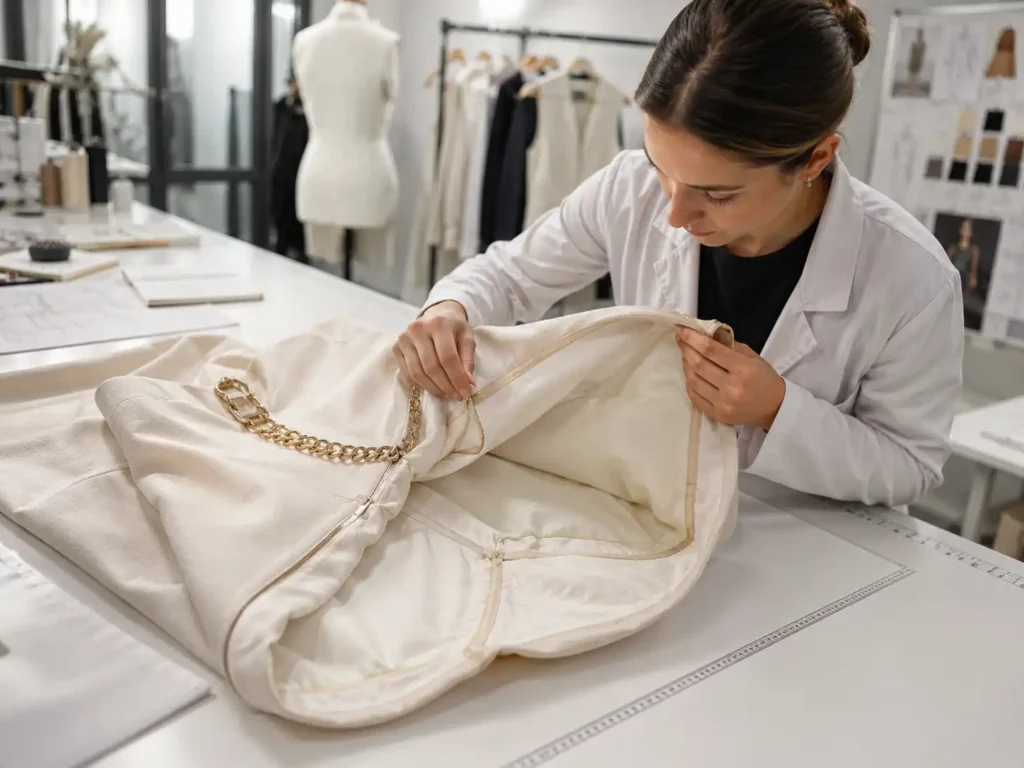
Protect the Material Schedule
Custom print and fabric readiness often decide the true production start. Bulk fabric is booked against approved specifications, colorways and quantities. Roll arrival, inspection, shrinkage review and print acceptance occur before cutting release. Lining, zippers, thread, elastic, labels and packaging are tracked so one missing trim does not stop finished garments at the end of sewing.
A collection can enter bulk in waves when approvals and materials differ. Hero styles may start first, while later colors or secondary prints follow after approval. Split production is coordinated with packing and shipment planning so early garments remain identifiable and do not create mixed cartons or incomplete SKU sets.
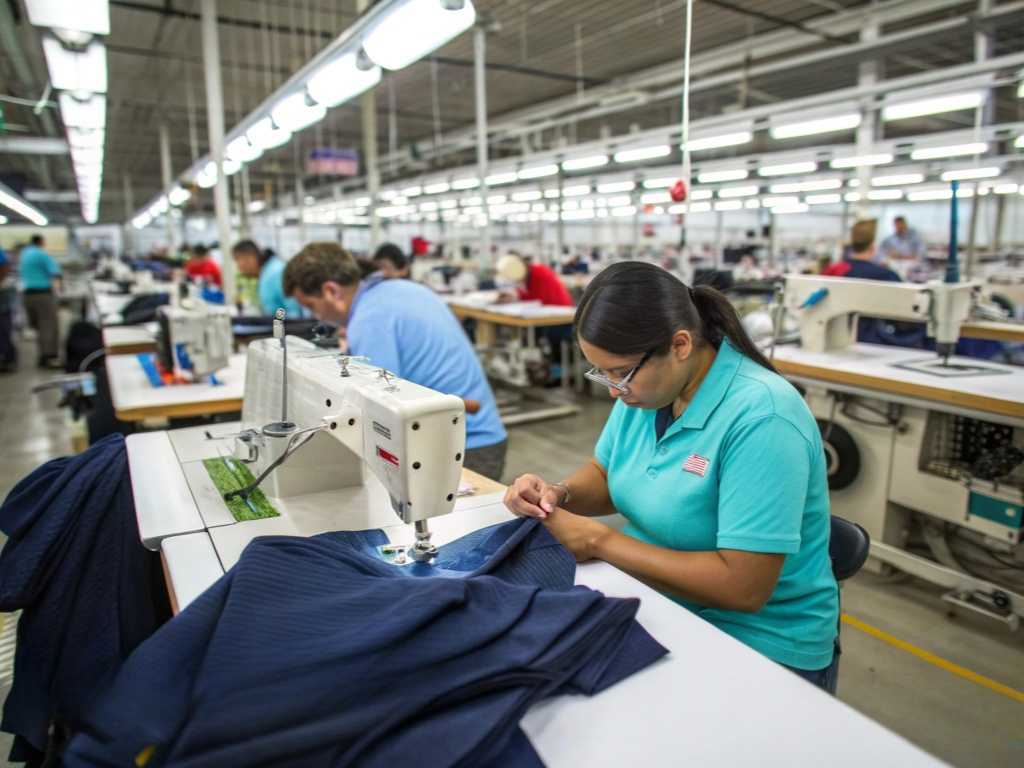
Manage Progress by Milestone
Progress reporting follows milestones such as material arrival, cutting, sewing start, inline inspection, finishing, final inspection, packing and cargo readiness. A percentage without context is less useful than a clear milestone and risk note. If an issue appears, the report identifies affected styles, quantity, corrective action and expected impact.
The production-management system is supported by 12+ merchandisers, 15+ QC inspectors and 30+ finishing and packing workers. Team value comes from assigned responsibility: merchandisers connect approvals with production, QC inspectors verify standards, and finishing teams protect final appearance, labels and packing accuracy.
Printed Vacation Dress Quality Control
Incoming Fabric QC
- Confirm approved swatch
- Separate dye or print lots
- Record roll defects and usable width
Print and Color QC
- Use physical approval standard
- Check each colorway
- Review front, back and key panels
Cutting QC
- Check one-way layout
- Verify panel labels
- Inspect first cut bundles
Sewing and Inline QC
- Compare with Golden sample
- Measure critical points
- Record corrective action
Final Garment QC
- Measurement and appearance
- Movement and coverage
- Pressing and final presentation
Packing and AQL QC
- Barcode and SKU match
- Carton quantity check
- Final inspection record
MOQ, Cost and Lead-Time Logic
MOQ is calculated by style and color, while custom printing, fabric development and branded materials can have independent supplier minimums. The examples below show normal planning logic; final timelines begin only after specifications, approvals and material availability are confirmed.
| Program Example | Quantity Structure | Material and Print | Sample Planning | Bulk Planning | Main Cost Drivers |
|---|---|---|---|---|---|
| Core all-over print dress | 1 style x 1 color x 200 pcs | Available print base or confirmed custom digital print | About 7-15 working days after materials are ready | Often 30-50 days after PP approval and bulk materials | Fabric, print, lining, construction, size range, packing |
| Two-color commercial style | 1 style x 2 colors x 200 pcs each = 400 pcs | Same base fabric with two approved colorways | Colorways may share fit sample; print approvals remain separate | Planned together when both colorways are ready | Two print batches, color control, SKU and packing setup |
| Multi-style collection | 12 styles x 2 colors x 200 pcs = 4,800 pcs minimum structure | Shared fabric groups and 3-4 print families | Sampled in waves by hero style and fabric group | Often 35-55 days after all relevant PP and materials | Style complexity, print groups, pattern work, QC, coordination |
| Placement-print hero maxi | 200-1,000+ pcs per color depending on supplier and method | Placement artwork, dedicated print and cutting control | Additional artwork and placement approval required | Often 40-60 days after approval and material booking | Placement setup, fabric yield, cutting loss, long hem, lining |
| Custom fabric or certified resource | Supplier MOQ may exceed garment MOQ | Custom color, special composition or certificate scope | Material approval may extend development schedule | Production starts after compliant material is secured | Mill minimum, testing, certificate scope, dye lot, lead time |
| Repeat order | Based on stored style and color records | Original or newly confirmed material batch | May use color, revised or PP confirmation depending on change | Can be shorter when records and materials are stable | New batch differences, quantity, packaging, requested delivery |
Private Label and Travel-Ready Packaging
Brand Labels
- Main label
- Size label
- Care and composition label
Hangtags and Trims
- Hangtag file and finish
- Attachment method
- Accessory matching
Barcode Control
- SKU mapping
- Barcode sticker
- Carton identification
Protect Light Fabrics
- Clean packing area
- Surface protection
- Controlled fold lines
Size-Ratio Packing
- Confirmed size ratio
- Pieces per carton
- Carton sequence
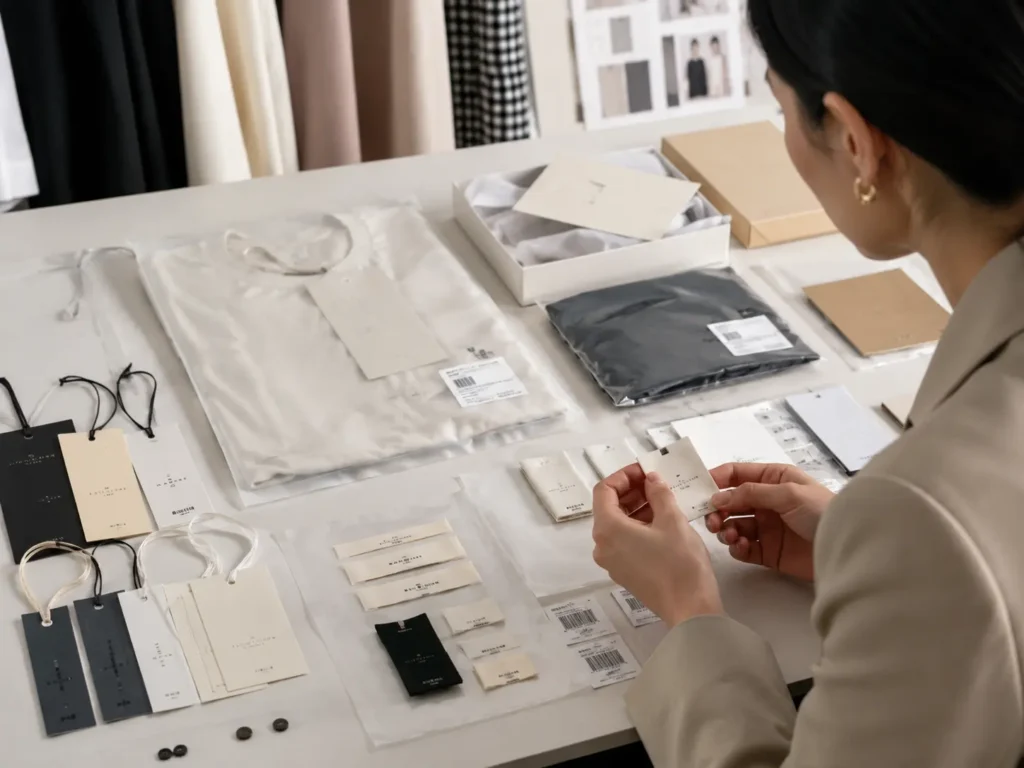
Planning Around Your Resort Launch Calendar
A 14-18 Week Planning Example
Prioritize Campaign and Hero Styles
Plan Air and Sea Together
How Established Brands Should Evaluate a Supplier
Print Process Evidence
- Request artwork checklist
- Review physical approval method
- Confirm bulk print inspection
Resort Product Depth
- Check several silhouettes
- Ask for fabric-specific controls
- Review fit and movement process
Multi-Style Sampling
- Hero SKU priority
- Revision tracker
- PP and Golden sample records
Production Allocation
- Factory allocation
- Milestone reporting
- Corrective-action process
Private Label Accuracy
- Barcode mapping
- Packing audit
- Cargo-document support
NDA and Repeat Records
- NDA support
- Controlled file access
- Repeat-order archive
Printed Resort Collection Case Studies

European Resortwear Program
A European direct-to-consumer resortwear label planned an 18-style vacation collection with a total bulk quantity of 36,000 pieces. The assortment included four mini dresses, seven midi dresses and seven maxi dresses across four print families and two supporting solids. Main materials included rayon challis, chiffon, viscose twill and lightweight printed woven. Sizes ran from XS to XL, with separate campaign samples needed before final PP approval.
The initial risk review found three technical conflicts. One oversized floral was too dense for the mini group, a light-background chiffon required better lining coverage, and two maxi styles showed potential hem imbalance because of tier volume and rayon relaxation. The collection was divided into three sample waves. Hero maxis and campaign halters entered wave one. Commercial wrap and midi dresses entered wave two using shared base fabrics. Supporting minis and second colorways entered wave three after the print scale and lining decisions were confirmed.
The main print was developed in large and reduced scales, each assigned a separate code. Chiffon strike-offs were reviewed independently from rayon because the same colors appeared lighter on the transparent surface. Pattern corrections addressed neckline coverage, underarm exposure, waist position and front-to-back maxi length. Final PP records linked print code, fabric batch, lining, zipper, measurements, care labels and folding method to each style.
Bulk production was allocated by material group and construction difficulty. The order moved through fabric inspection, first-cut print-direction checks, inline construction review, final measurement inspection and barcode packing verification. Delivery was released in two scheduled shipments: campaign and launch-priority styles first, followed by the remaining commercial volume. Pattern, print, color and packaging records were retained for repeat colors and the following resort season.

United States Multi-Channel Program
A United States multi-channel fashion label developed 22 printed vacation dress styles totaling 52,800 pieces for ecommerce, selected retail doors and a seasonal travel edit. The product mix covered halter minis, wrap midis, tiered maxis, cut-out dresses and slip-inspired event-resort styles. Five print families were used across rayon, crepe, light satin and cotton voile. Sizes ranged from XXS to 2XL, with individual barcode and warehouse packing requirements for every style, print, color and size.
The largest challenge was maintaining one visual color story across different surfaces. A coral and teal artwork looked saturated on rayon, softer on cotton voile and brighter on satin. Separate strike-off approvals were created for each base. Two placement-print hero styles also required motif adjustment after the neckline and waist patterns changed during fit review. Jinfeng Apparel linked the updated placement file to the final pattern so the motif remained aligned with the approved garment proportions.
Sample priority followed the campaign calendar. Six hero styles were scheduled first, followed by ten commercial styles and six supporting styles. Straightforward styles moved through first sample and PP approval, while cut-out and placement-print styles required revised samples. Fit review focused on bust coverage, strap strength, wrap overlap, slit height, lining length and grade balance across the wider size range.
Bulk production was separated by fabric and construction group. Satin styles received additional surface and zipper-flatness control. Cotton voile styles received transparency and shrinkage review. Rayon maxis received hanging and hem-balance attention. Packing was split by retail and ecommerce instructions, with barcode mapping, polybag labels, carton marks and packing lists verified before release. The program shipped in planned waves, allowing the launch allocation to move before the full seasonal volume while preserving clear SKU separation.
Frequently Asked Questions

Start Your Printed Vacation Collection
Send a line sheet, reference images, tech packs or original print artwork for a structured project review. Kelly and the Jinfeng Apparel team will assess style complexity, print direction, fabric options, pattern risk, sample requirements, MOQ structure, private-label needs and the proposed launch calendar before recommending the next step.
Complete specifications allow a faster quotation, but a mature collection brief can also begin with selected references and a clear quantity plan. Files are used only for evaluation, development, production, quality control, packing and delivery under the agreed confidentiality arrangement.
- Company name, market and sales channel
- Line sheet or list of 10-30 planned styles
- Print artwork, color references and repeat information
- Quantity by style and color, with intended size range
- Preferred fabrics, lining and design details
- Photo-sample, PP and bulk approval requirements
- Private-label, barcode and warehouse packing instructions
- Target launch date, delivery location and shipping preference


