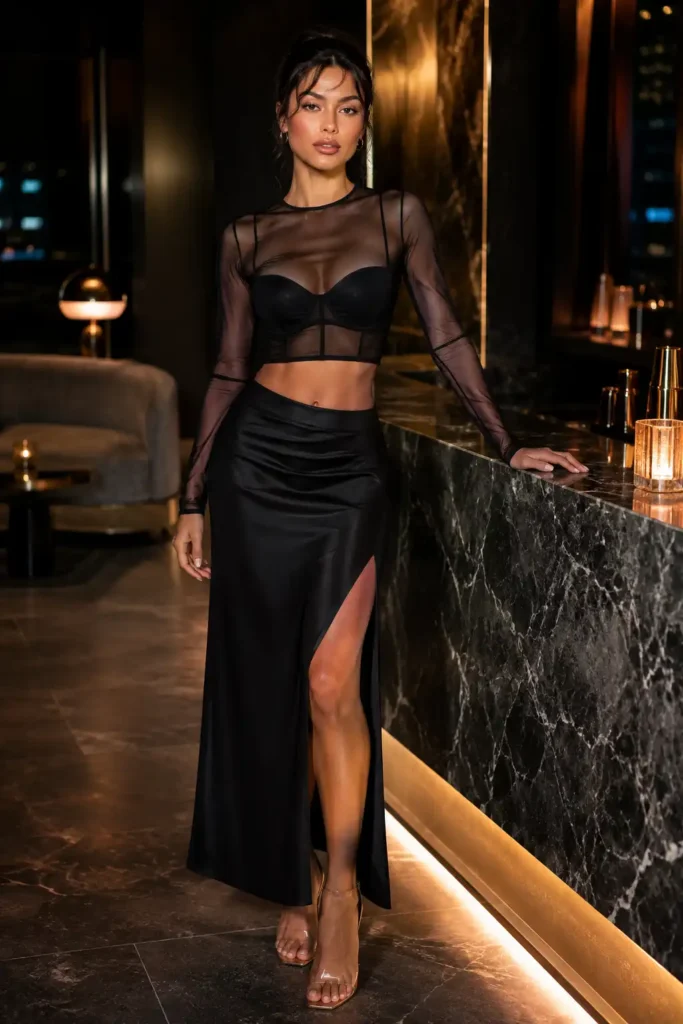
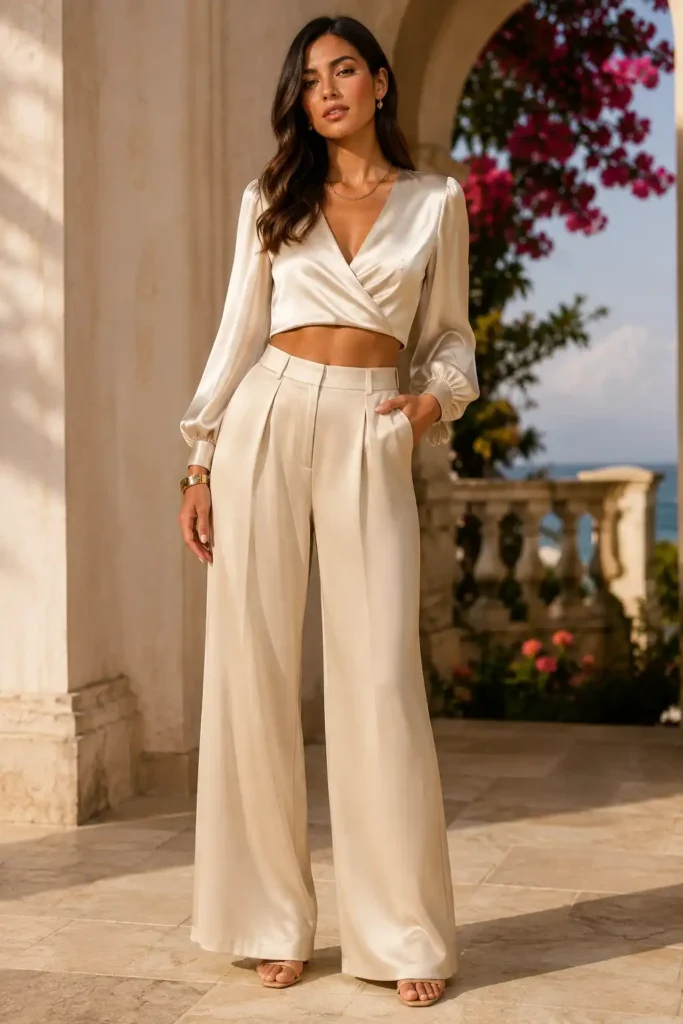
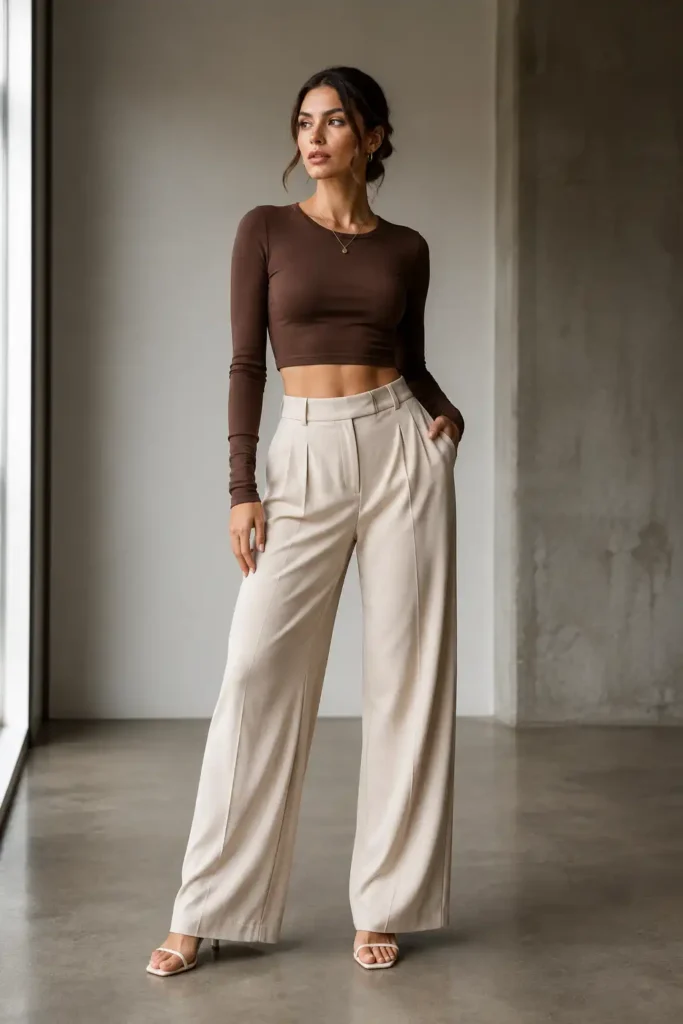
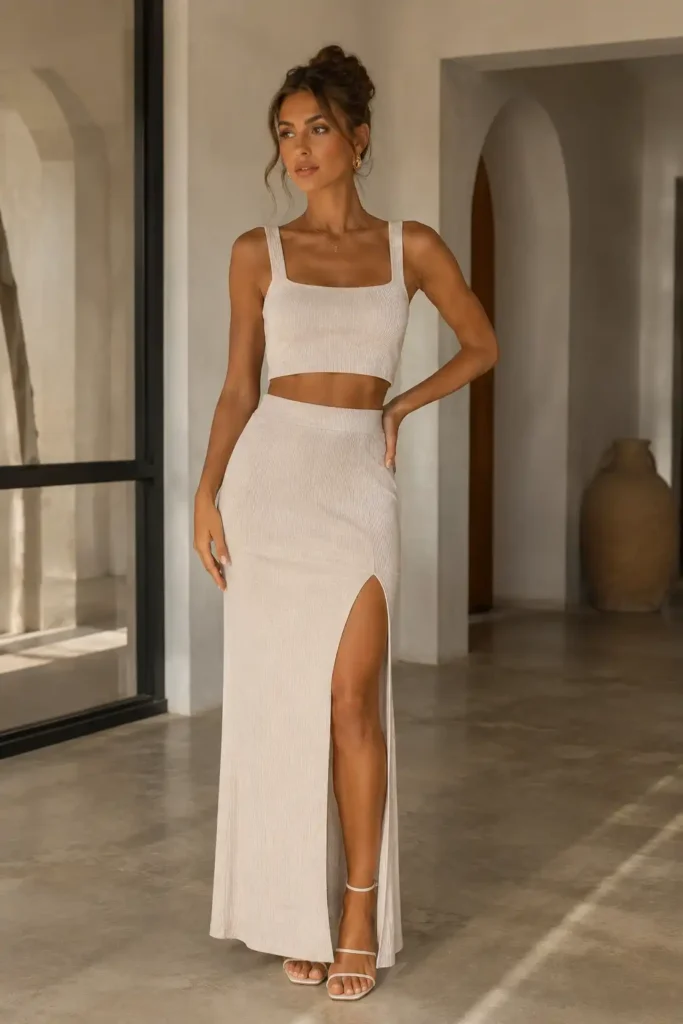
Premium Crop Top Manufacturer for DTC Brands

Develop premium crop tops with stronger fit, cleaner construction, retail-ready presentation and repeatable bulk production for fast-moving womenswear collections.

Jinfeng Apparel supports established DTC fashion teams from fabric direction and pattern development through photo-ready sampling, PP approval, bulk production, quality control, private-label packing and export coordination. Crop top programs can combine fitted knit staples, elevated going-out styles and coordinated sets without losing control of stretch, coverage, measurements, labels or launch timing.

  • 2 sample rooms, 7+ senior pattern makers and 20+ sample machinists support structured style development and fit correction.
  • 6+ flexible production lines help organize multi-style, multi-color and repeat-order programs across knit, woven and mixed-fabric categories.
  • MOQ starts from 200 pcs per style/color, subject to fabric availability, color development, trims, construction and packing requirements.
  • 15+ QC inspectors check fabric, cutting, sewing, measurements, finishing and packing against approved project records.

Built for Established DTC Fashion Brands

Strong crop top programs need more than short lengths and logo labels. Jinfeng Apparel works with fashion teams that manage defined product direction, professional sampling, seasonal launches, multi-size bulk production and repeat-order planning.

Best Fit Programs

The production model suits established womenswear labels, premium ecommerce brands, partywear and clubwear teams, resort labels, regional fashion groups, sourcing offices and product development departments managing regular launches. Projects work best when the team can provide a tech pack, reference garment, line sheet, fit comments, target quantity or clear collection brief, together with realistic sampling and production planning.

Not Our Production Model

Jinfeng Apparel does not operate as a ready-stock wholesaler, one-piece fulfillment service or blank-garment printing shop. The manufacturing system is designed for custom development followed by batch production. Enquiries based only on isolated retail purchases, individual garments or immediate stock dispatch do not match the factory structure, fabric sourcing process, pattern work or private-label workflow used for brand programs.

Manufacturing Facts Behind Crop Top Programs

Development capacity, fit control and production organization matter most when crop tops are sold across several colors, sizes and launch dates. The following facts describe the teams and operating structure supporting Jinfeng Apparel projects.

Since 2008

Long-term womenswear manufacturing experience supports product review, fabric sourcing, pattern correction, sampling, bulk production and export coordination for overseas fashion programs.

2 Sample Rooms

Separate sample resources help manage first samples, fitting revisions, photo-ready samples and PP confirmations without treating development as an informal side process.

7+ Pattern Makers

Senior womenswear pattern makers review bust, underbust, crop length, strap position, armhole shape, neckline depth, hem opening and grading logic.

20+ Sample Machinists

Dedicated sample machinists execute knit, mesh, satin, lined and structured crop top constructions while recording sewing methods for later production.

6+ Flexible Lines

Flexible lines support multi-style drops, mixed color plans, repeat orders and phased production across knit tops, fashion tops, skirts and coordinated sets.

15+ QC Inspectors

Quality inspectors cover incoming material, cutting, in-line sewing, garment measurements, appearance, finishing, packing and project-based AQL requirements.

Where Premium Crop Top Programs Lose Control

A crop top can look simple on a line sheet while carrying high commercial risk. Short proportions, stretch fabrics, exposed necklines and close body fit make small pattern or material changes highly visible in product photography and daily wear.

Weak On-Body Fit

Poor bust shaping, excessive negative ease, wide armholes or unstable straps change coverage and comfort. The garment may photograph well on one model yet generate inconsistent fit across the full size range. Pattern review must connect fabric stretch with bust, underbust, armhole and hem-opening measurements.

Sample-Bulk Gaps

A development sample may use a softer lot, more careful handling or a different sewing setup than bulk production. Without a locked PP sample, BOM, measurement chart and construction notes, neckline shape, garment length, hand feel and transparency can shift after production starts.

Stretch Recovery Loss

Rib and jersey can grow during sewing, steaming, hanging and wear. Weak recovery leads to loose necklines, stretched straps, flared hems and twisting side seams. Fabric direction, relaxation time, washing tests and measurement checkpoints need to be defined before cutting bulk fabric.

Poor Camera Performance

Sheerness, lining edges, surface shine, seam puckering and undergarment visibility are amplified by studio lighting. Photo-ready samples should be reviewed under front, side and back views rather than judged only while lying flat on a table.

Size-Related Returns

A proportional grade rule can make larger sizes too long or smaller sizes too exposed. Crop length, neckline depth, strap length and armhole shape need controlled grade rules, while fitted silhouettes require careful balance between stretch allowance and wearing comfort.

Packing And SKU Errors

A correct garment can still fail warehouse receiving when barcode, style code, color sticker, size label or carton ratio is wrong. DTC programs need packaging files connected to the final SKU list and checked before sealed cartons leave the factory.

Premium Crop Top Styles We Develop

Jinfeng Apparel develops crop tops as part of a fashion collection, not as shortened promotional T-shirts. Each style is assessed through intended occasion, material behavior, body coverage, construction, sample purpose and repeat-order potential.

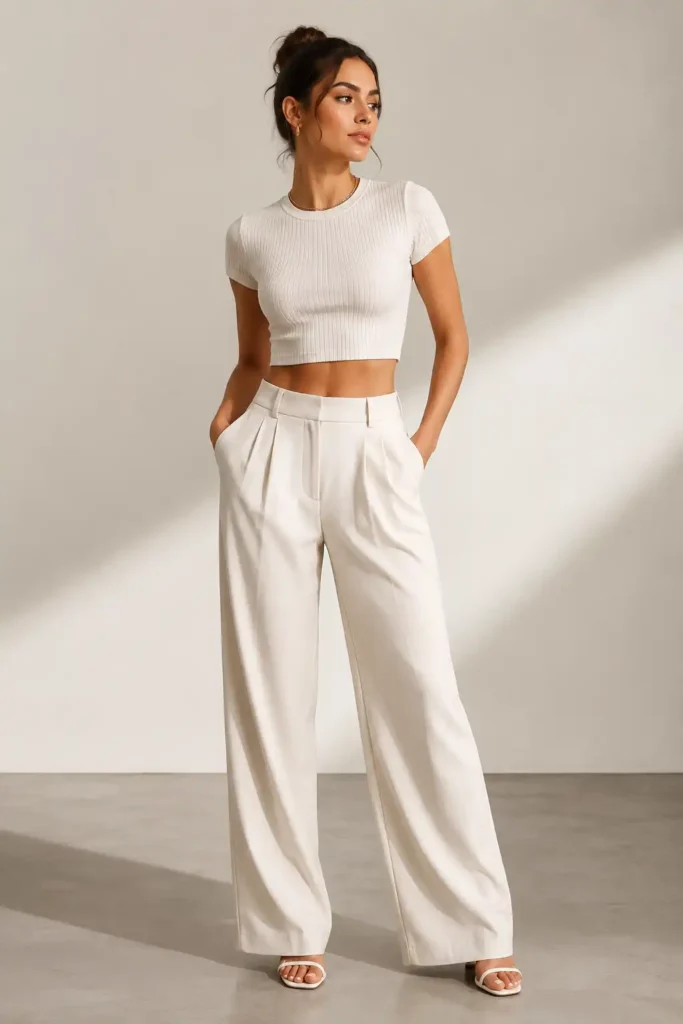
Ribbed Fitted Tops

Ribbed crop tops work well as high-frequency core styles, but the result depends on rib gauge, fabric weight, stretch direction and recovery. Pattern measurements are set around bust compression, underarm coverage, body length and hem opening. Neckline binding or self-fabric finishing must recover after sewing and washing. For multi-color programs, dye-lot hand feel and dimensional change should be checked before every new color enters bulk cutting.

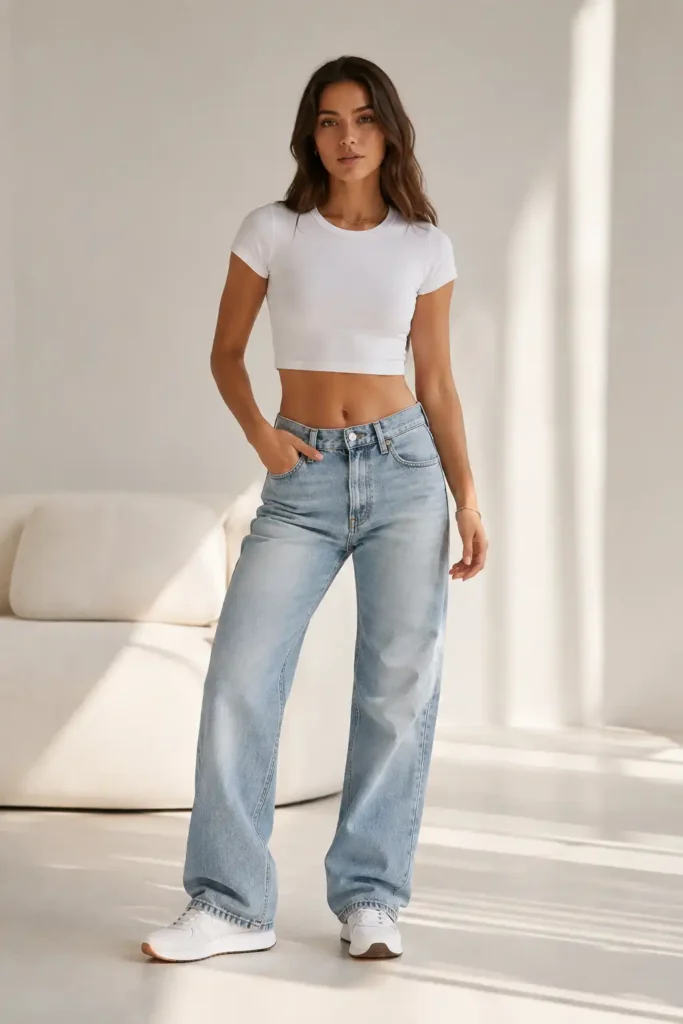
Premium Baby Tees

A premium baby tee needs controlled shoulder width, sleeve angle, neckline shape and cropped proportion. Fine jersey or compact cotton-spandex can create a cleaner surface than loose basic jersey, while heavier fabrics may require modified seam allowance and pressing. Fit review should compare front length, back length and bust ease across sizes so the style remains short without becoming unstable or overly tight.

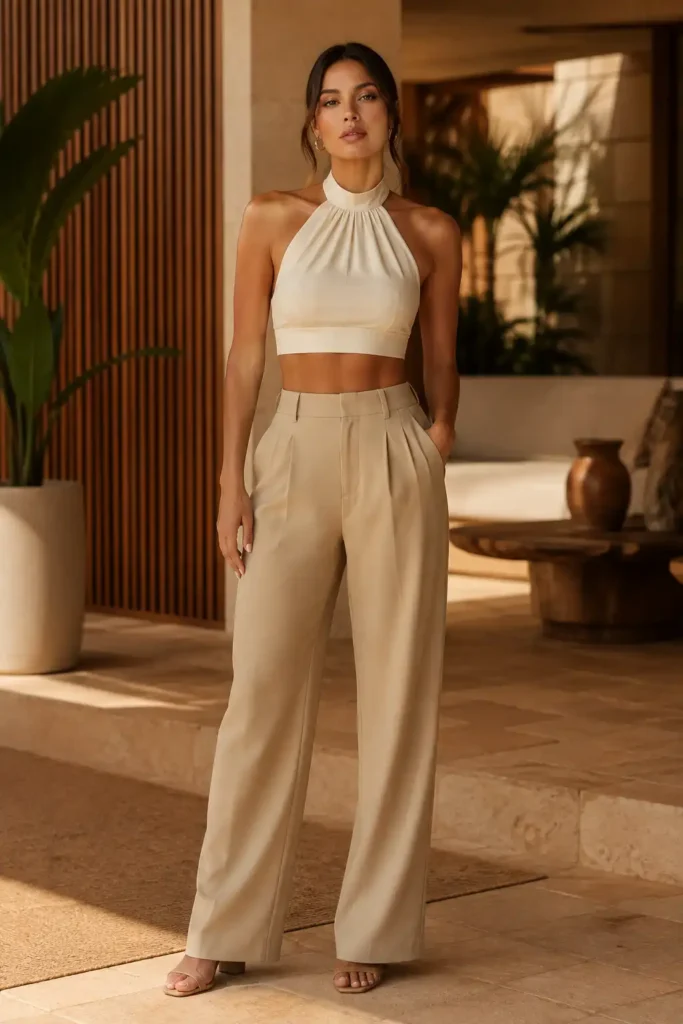
Halter Crop Tops

Halter styles place tension around the neckline and upper bust, making strap width, neck comfort, bust coverage and back opening essential. Options include fixed halter ties, adjustable neck straps, self-fabric loops, elasticated backs and concealed closures. Sample review should confirm whether the garment stays secure during movement and whether the front neckline remains flat without pulling the side seams forward.

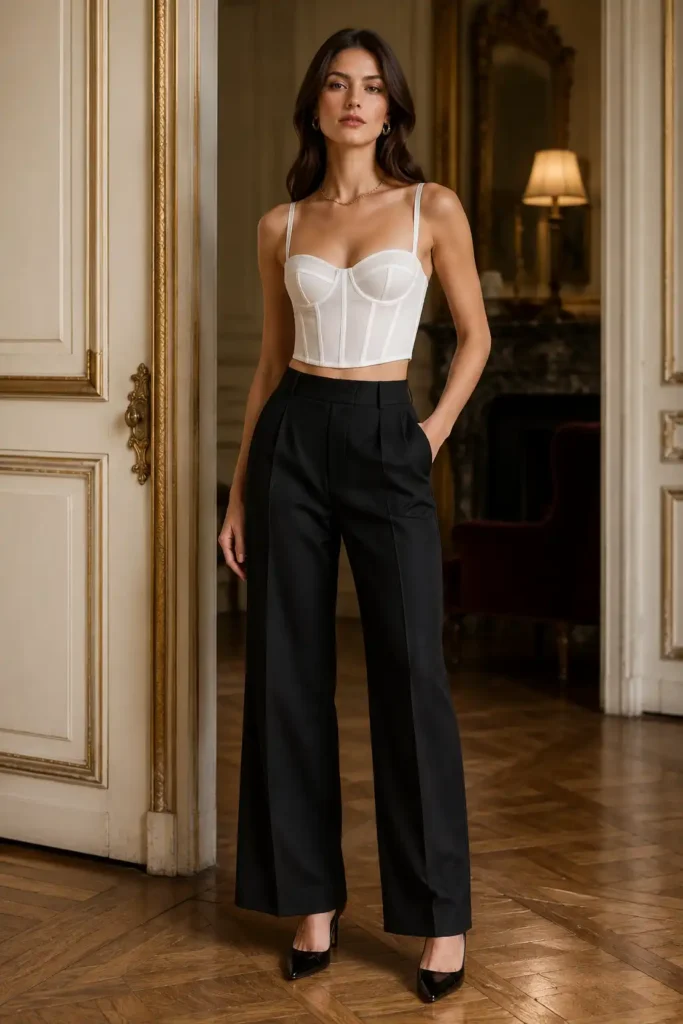
Corset-Inspired Tops

Corset-inspired crop tops may combine boning, cup shaping, lining, hook-and-eye closures, lacing, underwire or structured panels. Development begins with support level, intended cleavage, waist position and closure method. A fashion corset must balance visual structure with wearability; boning length, cup position, seam pressure and lining coverage are checked before a PP sample is approved.

Mesh Going-Out Tops

Mesh crop tops can be single layer, double layer, gathered, lined at the bust or combined with opaque panels. Transparency, seam visibility, elastic recovery and skin comfort determine whether the style looks premium. Power mesh may provide support, while softer stretch mesh creates drape. Cutting direction and lining boundaries require clear marking because small inconsistencies become obvious under flash photography.

Satin Woven Crops

Satin and woven crop tops suit party, resort and occasion capsules where surface appearance carries more weight than stretch. Bias movement, seam puckering, zipper flatness, neckline stabilization and lining are reviewed during sampling. Satin shine direction must remain consistent across panels, while delicate fabrics require controlled handling during sewing, pressing, folding and packing to avoid visible marks.

Long-Sleeve Crops

Long-sleeve crop tops range from fitted jersey styles to mesh layering pieces and structured woven tops. Sleeve pitch, bicep ease, cuff opening, elbow movement and body length need balanced development. Stretch garments require recovery checks at the cuff and armhole, while woven styles may need darts, zippers or back openings to maintain a close silhouette without restricting movement.

Coordinated Crop Sets

Crop tops can be developed with mini skirts, maxi skirts, trousers or shorts to create higher-value capsules. The program must coordinate waist exposure, fabric batch, color, size pairing, labels, SKU structure and packing. Tops and bottoms can be sold separately or together, so each garment needs independent fit and labeling while still maintaining a consistent visual relationship across the set.

Build Crop Tops Around Selling Occasions

Commercial positioning guides material, fit and manufacturing decisions. A reliable core style, an image-led going-out top and a resort capsule should not share the same development assumptions or quality checkpoints.

Premium Essentials

Compact jersey, cotton-spandex and rib knit support repeatable baby tees and fitted crops. Development focuses on wash stability, neckline recovery, balanced grading and color continuity so successful colors can move into replenishment without changing the original fit.

Going-Out Collections

Mesh, lace, satin, cut-out and corset-inspired tops need stronger sample validation. Bust coverage, lining, strap security, closures and studio-light appearance are reviewed before bulk. These styles often carry more trims and sewing steps, so PP approval should lock every visible detail.

Resort And Summer

Halter, printed woven, linen-blend and lightweight crop tops need breathability, travel-friendly packing and controlled transparency. Print direction, bust coverage, strap comfort and wrinkle behavior influence both campaign imagery and final wearing experience.

Coordinated Capsules

A crop top paired with a skirt, trouser or short can raise average order value and create stronger campaign styling. The factory controls proportion, color batch, size pairing, SKU files and packaging so each item works independently and as part of a coordinated set.

Fabric Systems for Premium Crop Tops

Fabric selection determines support, transparency, stretch, visual quality and repeat-order stability. Jinfeng Apparel reviews hand feel, weight, stretch direction, recovery, shrinkage, surface appearance, lining requirements and bulk sourcing risk before a fabric is approved for sampling.

FabricBest UsePlanning ReferenceMain RiskApproval Check
Rib knitFitted staples, tanks, baby tees160-280 gsm commonly reviewed by styleGrowth, weak recovery, neckline openingStretch recovery, wash size, hem stability
Cotton-spandex jerseyBaby tees, fitted short sleeves180-260 gsm commonly reviewed by styleShrinkage, twisting, show-throughWash test, side seam, opacity
Ponte / RomaStructured fitted tops220-360 gsm commonly reviewed by styleBulkiness, heat marks, rigid fitSeam thickness, pressing, ease
Power meshLined or layered going-out topsProject-based weight and compressionTransparency, scratchy seams, stretch lossLayer count, lining, seam comfort
Stretch satinParty and occasion cropsProject-based stretch and surface finishPuckering, snagging, shade and shinePanel direction, lining, zipper flatness
Cotton poplinStructured summer topsLight-to-mid weight by silhouetteWrinkling, tight armhole, shrinkageEase, dart balance, wash change
Rayon / viscose wovenSoft resort stylesLightweight drape selected by styleDistortion, shrinkage, seam slippageRelaxation, cutting direction, seam strength
Linen blendsResort and natural-look capsulesBlend and weight selected by finishWrinkle, shrinkage, shade variationWash test, pressing, lining choice

Fit Development That Protects Sales Performance

Crop top fit influences campaign imagery, comfort, reviews and size-related returns. Jinfeng Apparel builds fit around garment purpose, fabric behavior and market measurements rather than shortening an existing T-shirt pattern.
Define The Intended Silhouette

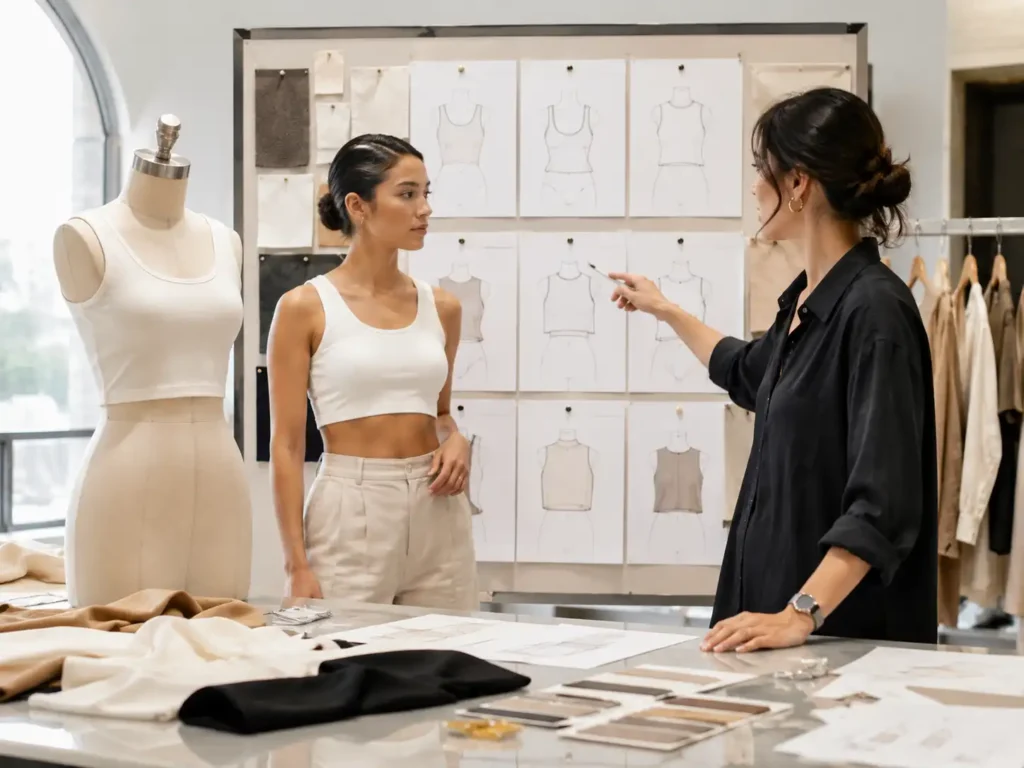
Development begins by classifying the desired fit as compressed, fitted, body-skimming, relaxed, boxy or oversized. The same finished bust measurement produces a different result in rib, compact jersey, mesh or woven poplin. Target stretch, recovery and body exposure are reviewed before the paper pattern is finalized. A fitted rib crop may use controlled negative ease, while a woven crop needs darts, panels, elastic or an opening to create shape without limiting movement.
Control High-Risk Measurements

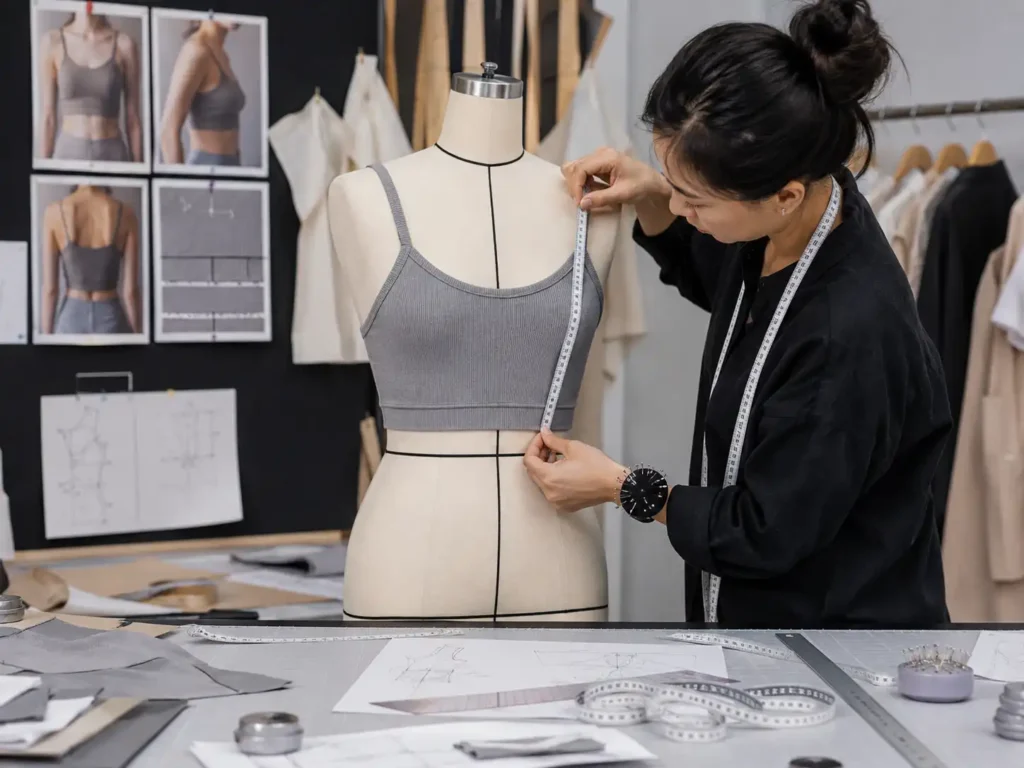
The primary checkpoints include full bust, upper bust, underbust, crop length, front length, back length, hem opening, armhole depth, neckline width, neckline drop, shoulder width and strap length. Structured styles may add cup spacing, cup height, boning length and closure position. Measurement tolerance is set by construction and fabric behavior; a fixed universal tolerance does not suit every crop top category.
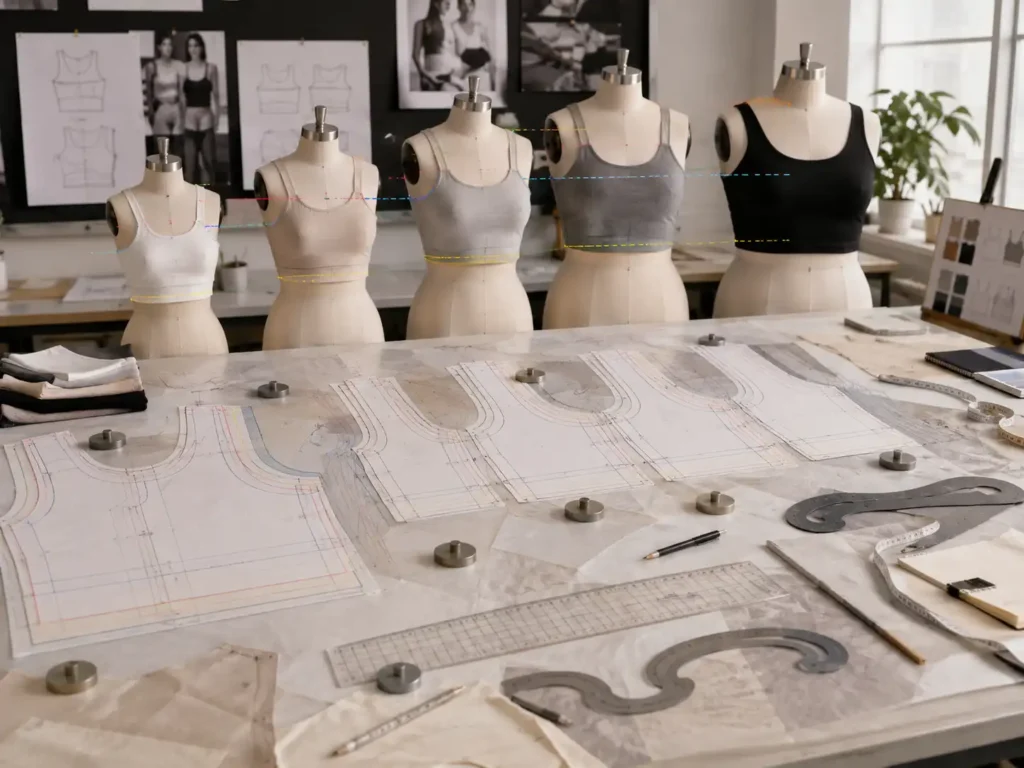
Grade Beyond Simple Proportion

Size ranges can be arranged from XS-XL or extended according to the brand chart, but grade rules need separate review for coverage and proportion. Neckline depth, armhole exposure and strap position should not increase at the same rate as bust circumference. Crop length may need controlled increments so larger sizes do not become disproportionately long. Fitted shapes also require checks on hem opening and waist exposure across the entire range.

Use Fitting Evidence

Fit comments are most useful when supported by front, side and back photographs, garment measurements and clear annotations. Comments such as “make it tighter” are converted into defined changes at bust, underbust, side seam, armhole or hem. Revised samples are compared against the previous version to avoid correcting one area while creating a new problem elsewhere. Approved measurements then move into PP and bulk control records.

Construction Details Separating Premium From Basic

Premium appearance comes from stable edges, balanced seams, secure support and clean internal finishing. Construction is selected around fabric, stretch, exposure and intended wear rather than using one sewing method across every crop top.
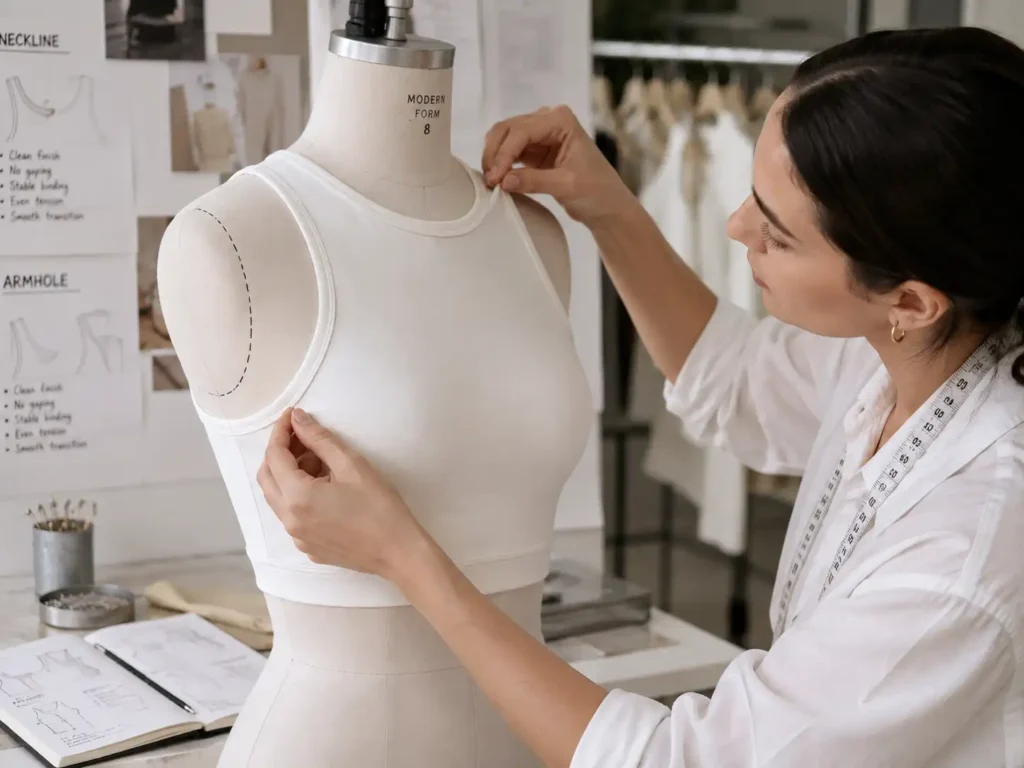
Neckline And Armhole Stability

Bindings, facings, elastic edges and clean-finish linings each produce a different appearance. Jersey bindings need controlled feed and recovery so the neckline sits flat instead of waving. Woven necklines may require stay tape, understitching or interfacing. Armholes are checked for gaping, underarm exposure and seam bulk, especially on sleeveless, halter and square-neck shapes.
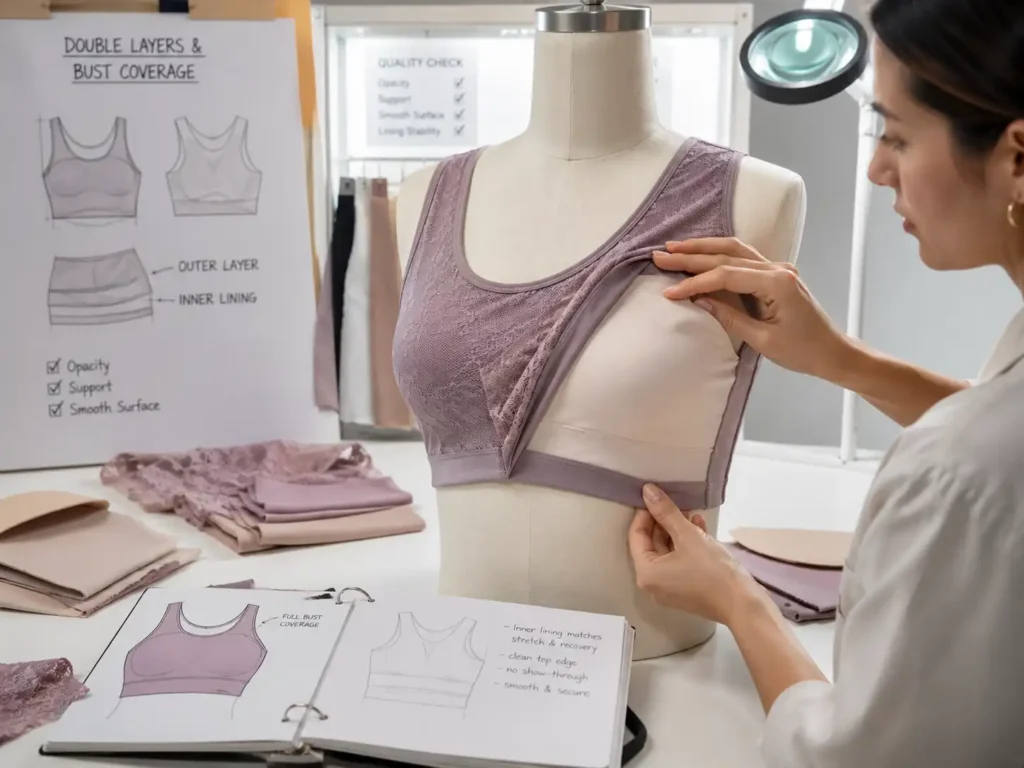
Double Layers And Bust Coverage

Double-layer construction can improve opacity, support and surface smoothness, but the inner layer must match stretch and recovery. If the lining is too stable, the outer layer pulls; if it is too loose, wrinkles and visible edges appear. Mesh and lace tops may use partial bust lining, strategic panels or power mesh. Lining boundaries are marked in the pattern and reviewed under strong lighting.
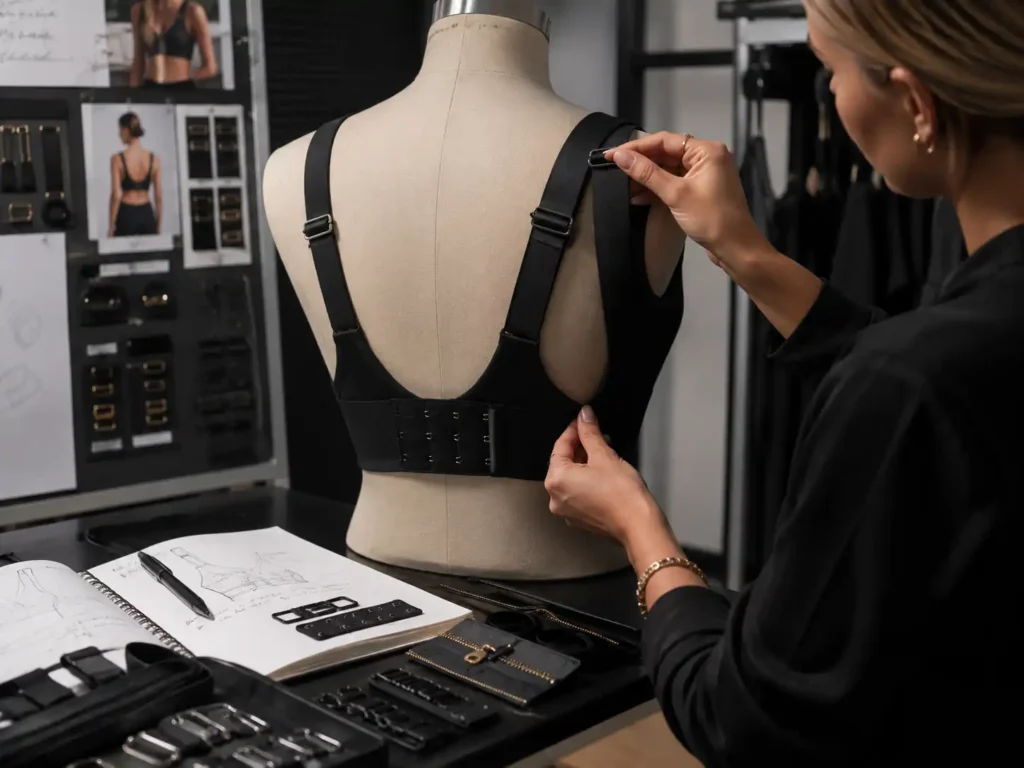
Straps, Elastic And Closures

Strap width, extension, attachment angle and adjustment range influence neckline height and bust security. Adjustable sliders are matched to strap width and checked for skin comfort and color. Elastic bands are selected by width, stretch and recovery, then enclosed or exposed according to design. Zippers, hooks, snaps and hook-and-eye tape are tested for opening function, seam flatness and repeated use.
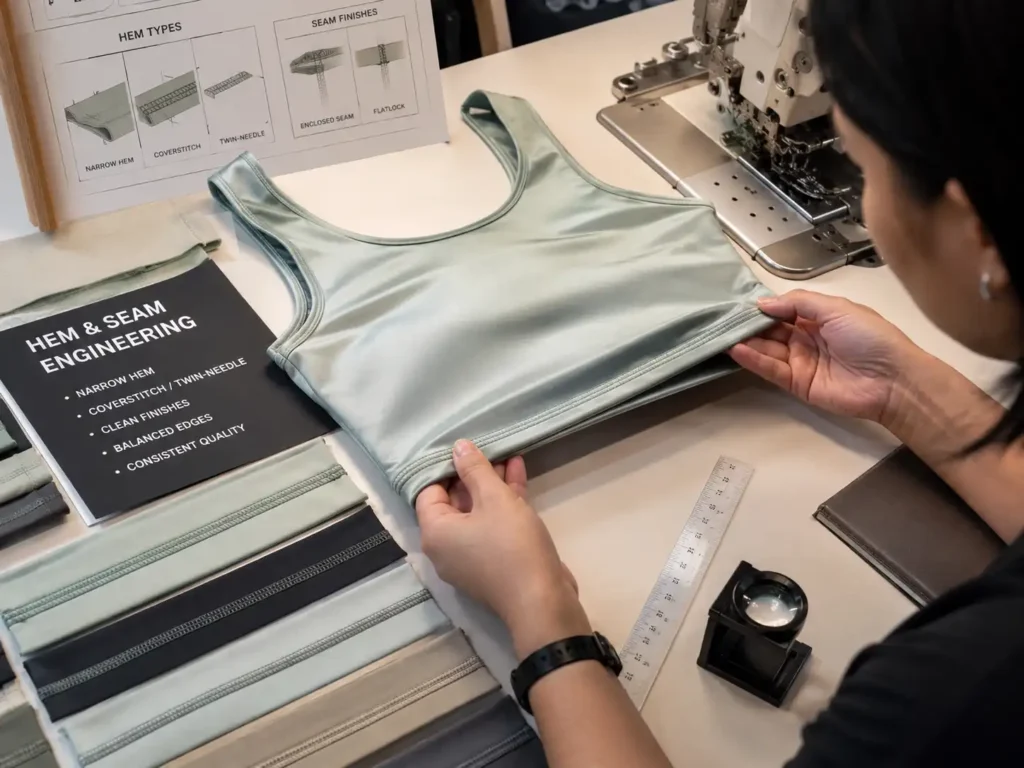
Hem And Seam Engineering

Crop hems are highly visible and can roll or flare when fabric tension is not balanced. Coverstitch, twin-needle, clean-finish lining, narrow hem or binding is selected according to fabric thickness and silhouette. Mesh and lace may require enclosed seams, narrow overlock or bonded-looking finishes. Seam allowance, stitch density, needle type and pressing are recorded for PP approval and bulk production.

From First Sample to Photo-Ready Approval

Sampling converts a design file or reference garment into a production-ready style. Jinfeng Apparel separates fit, appearance, production feasibility and bulk confirmation so a visually attractive sample does not move forward with unresolved manufacturing risk.

Project And Material Review

The team reviews the tech pack, line sheet, reference images, target quantity, size range, fabric direction, trims, labels, packing and launch priorities. Structural risks are identified before pattern work begins. When fabric is not fully specified, alternatives can be compared by hand feel, weight, stretch, transparency and cost level. A preliminary quote remains subject to final material and construction confirmation.
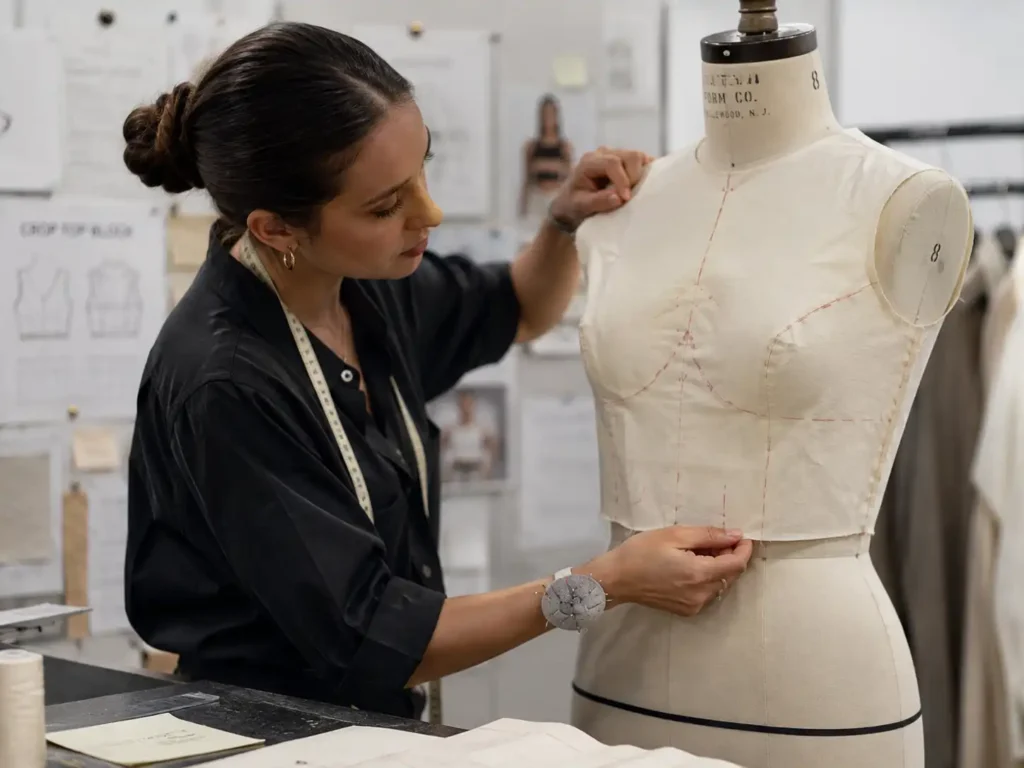
First And Fit Samples

A first sample establishes shape, proportion and sewing approach. Standard knit styles may often be planned around 7-12 working days after material confirmation, while lined mesh, satin, corset-inspired or multi-detail styles may require approximately 12-18 working days. Timing remains project-based because custom fabric, special trims, revised artwork and sample priority can extend the cycle. Fit samples are measured and reviewed on the intended body or form before comments are issued.
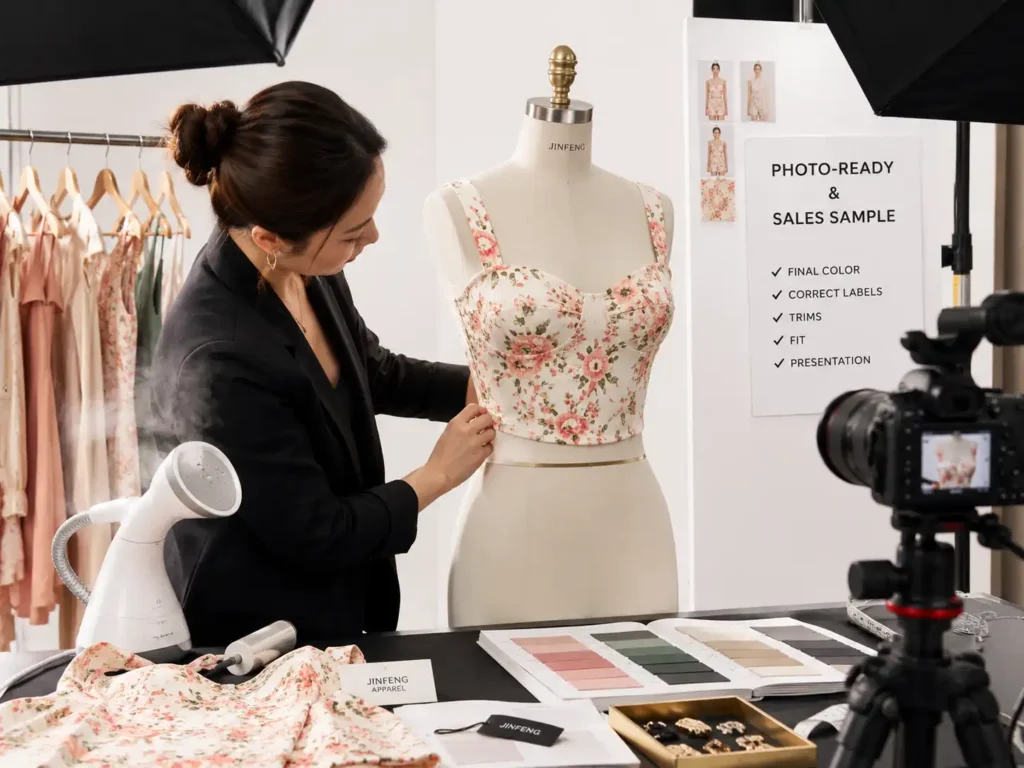
Photo-Ready And Sales Samples

A photo-ready sample may need cleaner pressing, final color, correct labels and camera-facing finish beyond the first fitting sample. Hero SKUs can be prioritized around campaign deadlines while secondary styles continue development. Salesman samples may be produced for internal selling or range review when quantities and timing allow. Approved appearance should still remain connected to the production BOM and measurement chart.
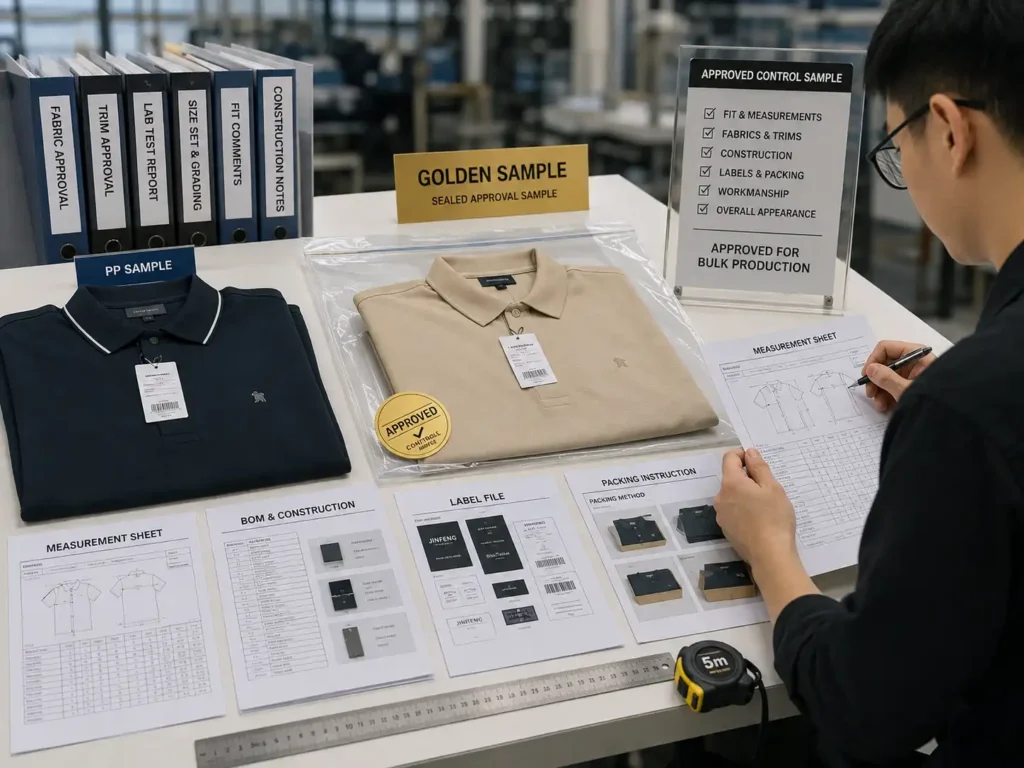
PP And Golden Sample Control

The PP sample confirms production fabric, trims, measurements, workmanship and packing direction before bulk cutting. A Golden Sample or sealed approval record becomes the visual and technical reference for production and QC. Bulk should not rely on memory or informal messages. Any approved deviation is added to the measurement sheet, construction notes, label file or packing instruction before the line starts.

Plan Sampling Around the Launch Calendar

DTC launches connect product development, campaign production, warehouse receiving and sales dates. Jinfeng Apparel plans milestones backward from the required arrival window so sample revisions do not consume the time reserved for bulk QC and packing.

Style Freeze

Confirm hero SKUs, secondary styles, quantities, colors, size range and priority order before sample resources are distributed.

Material Direction

Approve source, weight, stretch, color and trims early enough to avoid rebuilding fit around a late material change.

First Sample

Review shape, coverage, construction and risks before using the garment for campaign or bulk decisions.

Fit Revision

Issue consolidated comments with photos and measurements so each revised sample closes defined problems.

Photo Sample

Prioritize campaign-critical colors and sizes when photography must begin before the entire assortment is complete.

PP Lock

Approve production material, measurements, sewing, labels and packing before bulk cutting and line preparation.

Bulk Window

Standard knit programs are often planned around 30-40 days after material readiness and PP approval; complex mixed-material programs may require about 40-55 days.

Delivery Plan

Express, air, sea or split shipment is selected around quantity, destination, warehouse rules and launch priority; transit estimates remain route-dependent.

MOQ and Quotation Structure for DTC Programs

Jinfeng Apparel starts from 200 pcs per style/color. The unit of assessment is each style in each color because fabric, cutting, line setup, labels, inspection, packing and SKU control are managed separately.

Clear Quantity Examples

One style in black at 200 pieces can be evaluated under the standard structure. One style in black and white at 200 pieces per color creates 400 pieces in total and can also be evaluated. One style split into black 100 and white 100 does not normally meet the per-color structure. Four styles at 50 pieces each do not equal one 200-piece style. Multi-style collections can include 10-30 styles, but each style/color plan still needs review against fabric grouping, construction and production scheduling.

What Shapes The Quote

Pricing is calculated from fabric consumption, material price, lining, trims, pattern complexity, sample requirements, sewing operations, finishing, quantity, color count, size range, private labels, packing, testing needs, delivery terms and production timing. A reference image alone can support a preliminary review, but a more accurate quote requires target material, quantity per style/color, size plan and visible construction details.

How To Prepare The RFQ

Send the tech pack or line sheet, front and back references, target fabric or hand-feel direction, color plan, size range, quantity by style/color, label artwork, packing requirements and expected warehouse date. For a coordinated set, list top and bottom quantities separately and clarify whether they are packed together or as independent SKUs. Clear information reduces revision and re-costing later.

Factory Allocation for Knit, Woven and Set Programs
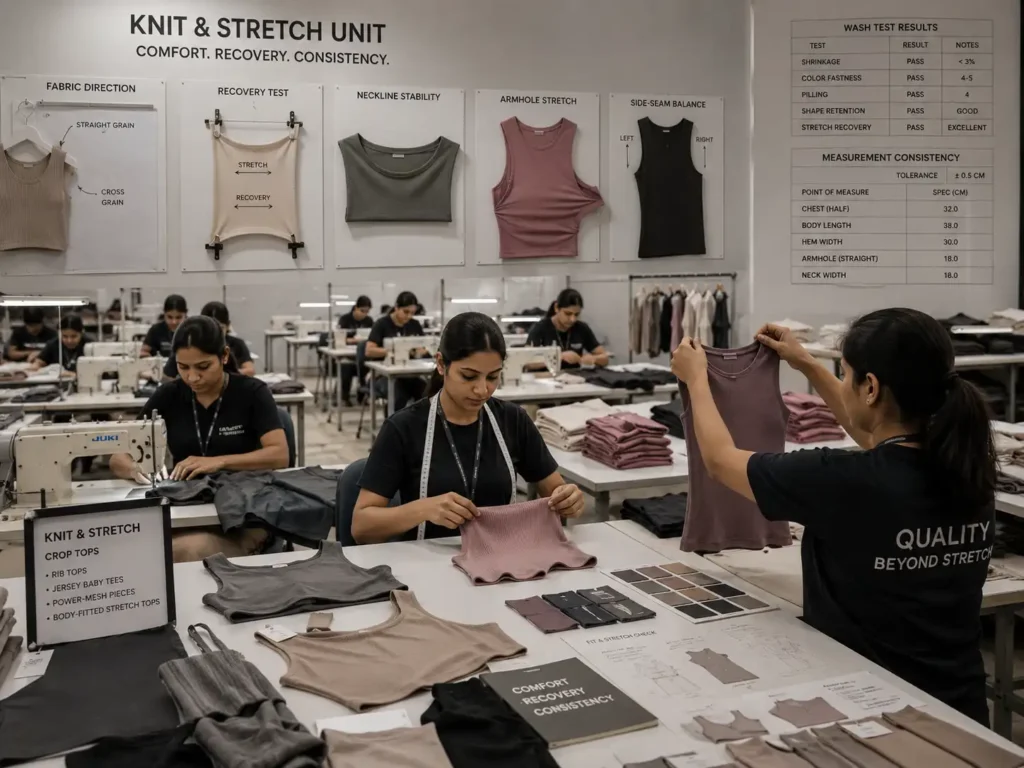
Crop top collections often combine knit staples, fashion fabrics and coordinated bottoms. Jinfeng Apparel assigns production by material behavior, structure, volume, SKU count and delivery priority instead of forcing every style through one generic line.

Knit And Stretch Unit

Dedicated knit and stretch capacity supports rib tops, jersey baby tees, power-mesh pieces, body-fitted crops and stretch matching sets. Production control focuses on fabric direction, relaxation, recovery, neckline stability, armhole stretch, side-seam balance, wash change and measurement consistency. Approved patterns and sewing references are transferred from sampling into line preparation before bulk cutting.

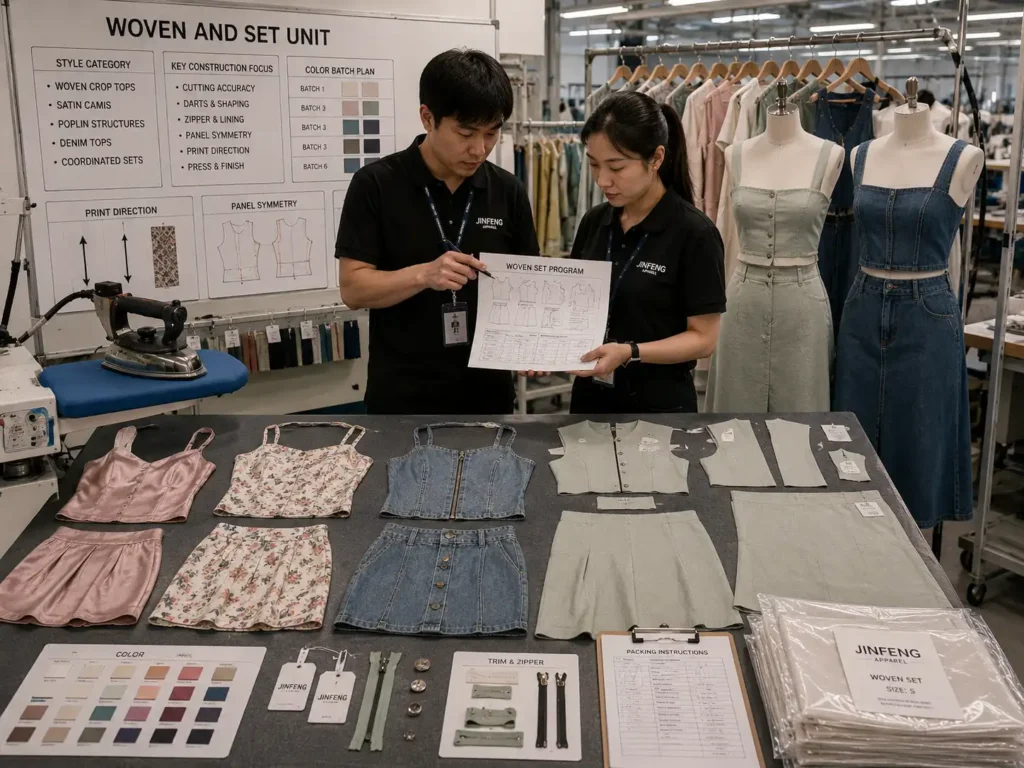
Woven And Set Unit

Woven crop tops, satin camis, poplin structures, denim tops and top-and-skirt capsules require different cutting, shaping and pressing control. Factory allocation considers darts, zippers, lining, panel symmetry, print direction and coordinated color batches. When tops and bottoms form a set, production planning also connects size ratios, paired materials, label files and packing instructions.

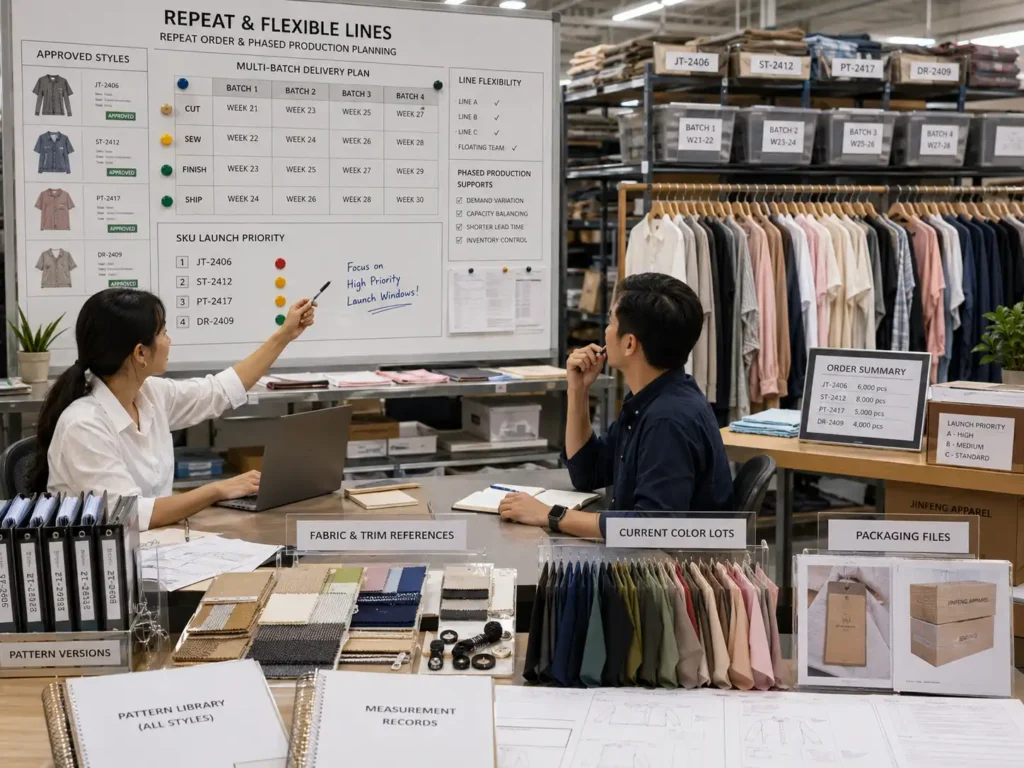
Repeat And Flexible Lines

Approved styles with stable materials can move into repeat-order planning through flexible production lines. Replenishment is reviewed against stored pattern versions, measurement records, previous fabric and trim references, current color lots and packaging files. Multi-batch delivery can be arranged by launch priority, color group, market region or warehouse requirement when the order structure supports phased production.

Bulk Consistency and Crop Top Quality Control

Bulk consistency is managed through approved material, measurements, construction, labels and packing records. Crop tops receive category-specific checks because small changes in stretch, neckline, strap length or garment length are easy to see and feel.

QC StageMain Crop Top RiskControl FocusProject Record
Incoming fabricShade, weight, stretch, recovery, defects and usable widthBatch reference, inspection notes, test records by projectFabric inspection report
Fabric relaxationKnit growth and measurement shift before cuttingRelaxation method and cutting readinessCutting preparation note
CuttingDirection, panel symmetry, notches, layer movementCutting check and bundle identificationCutting and bundle record
In-line sewingNeckline wave, strap attachment, seam stretch, puckeringIn-line inspection and corrective notesIn-line QC feedback
MeasurementsBust, underbust, length, armhole, neckline and hem openingMeasurement sheet and approved toleranceBulk measurement sheet
AppearanceTransparency, lining edge, shine direction, twisting and balanceFront-side-back garment inspectionGarment inspection result
FinishingPressing marks, threads, shape and surface conditionFinishing review and repair recordRepair and finishing check
PackingLabels, barcode, SKU, polybag, carton ratio and carton marksPacking checklist and carton breakdownPacking and carton checklist

Private Label Packing for Ecommerce Fulfillment

Private-label production continues after sewing is complete. Labels, barcodes, polybags, carton ratios and warehouse instructions must match the final SKU list so approved garments can move into fulfillment without rework.

Woven Main Labels

Brand labels are checked for artwork, size, fold, color, placement and sewing method. Label softness matters on close-fitting tops because stiff edges can irritate the neck or side seam.

Care And Size Labels

Fiber composition, care information, country-of-origin details, size coding and required language are reviewed against the approved file. Final legal compliance remains the brand’s responsibility with professional advice where needed.

Hangtags And Strings

Hangtag artwork, style number, price field, barcode position and attachment point are checked before bulk. Metal or plastic attachments must not damage delicate mesh, satin or fine jersey.

Barcode And SKU

Barcode lists are linked to style, color and size. Scan checks, sticker placement and duplicate control reduce warehouse receiving errors and incorrect inventory assignment.

Polybags And Stickers

Bag size, ventilation holes, warning text, suffocation notice, recyclable material requirements and color-size stickers are reviewed by project and destination rules.

Carton Ratios

Solid-size, assorted-size or style-mixed cartons require clear packing instructions. Quantity, gross weight, net weight, carton dimensions and style-color-size breakdown are recorded.

Warehouse Labels

3PL and retail warehouses may require PO labels, ASN labels, carton IDs, routing guides or pallet rules. Files should arrive before packing so cartons are not reopened later.

Shipment Documents

Packing lists, commercial invoices, carton marks and shipping information must reflect the packed goods. Jinfeng Apparel can coordinate with client-nominated or factory-recommended forwarders.

Extend Crop Tops Into Higher-Value Capsules
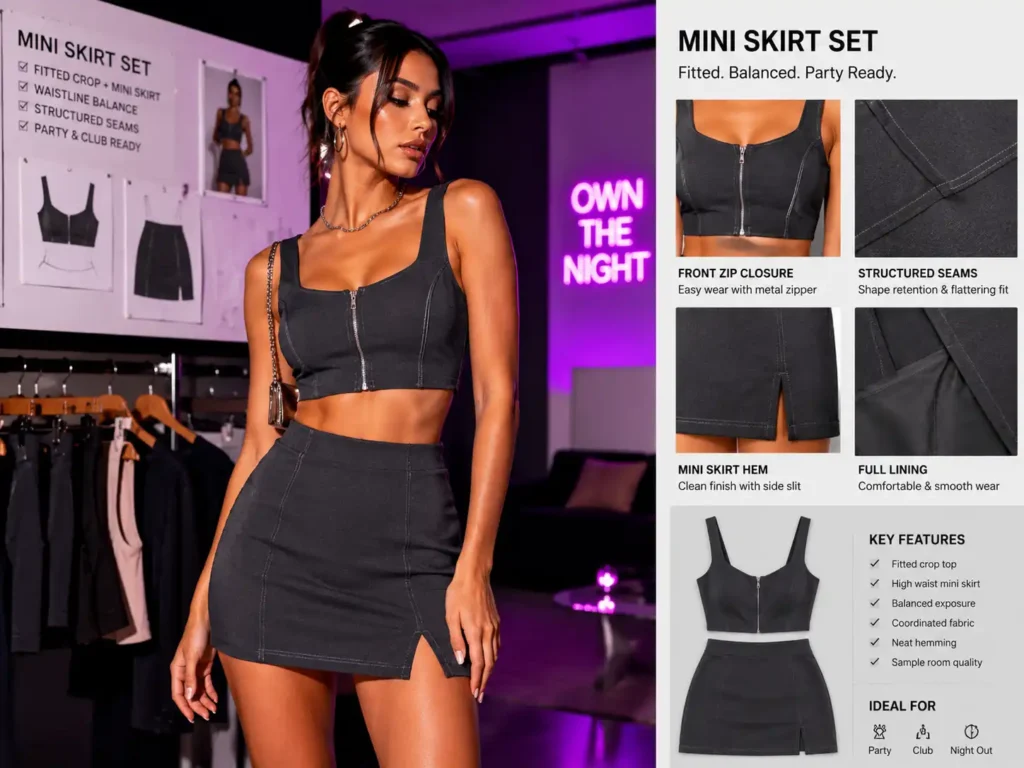
Crop tops become more commercially useful when they connect with skirts, trousers and shorts. Jinfeng Apparel develops coordinated proportions, materials, colors, size ratios and packaging so each garment can sell alone or as a complete look.

Mini Skirt Sets

A fitted crop paired with a mini skirt works well for party, club and seasonal drops. The waistline and top length are reviewed together so the exposed area stays consistent across sizes. Zippers, lining, slit height and skirt hem balance are coordinated with the top’s structure and fabric.

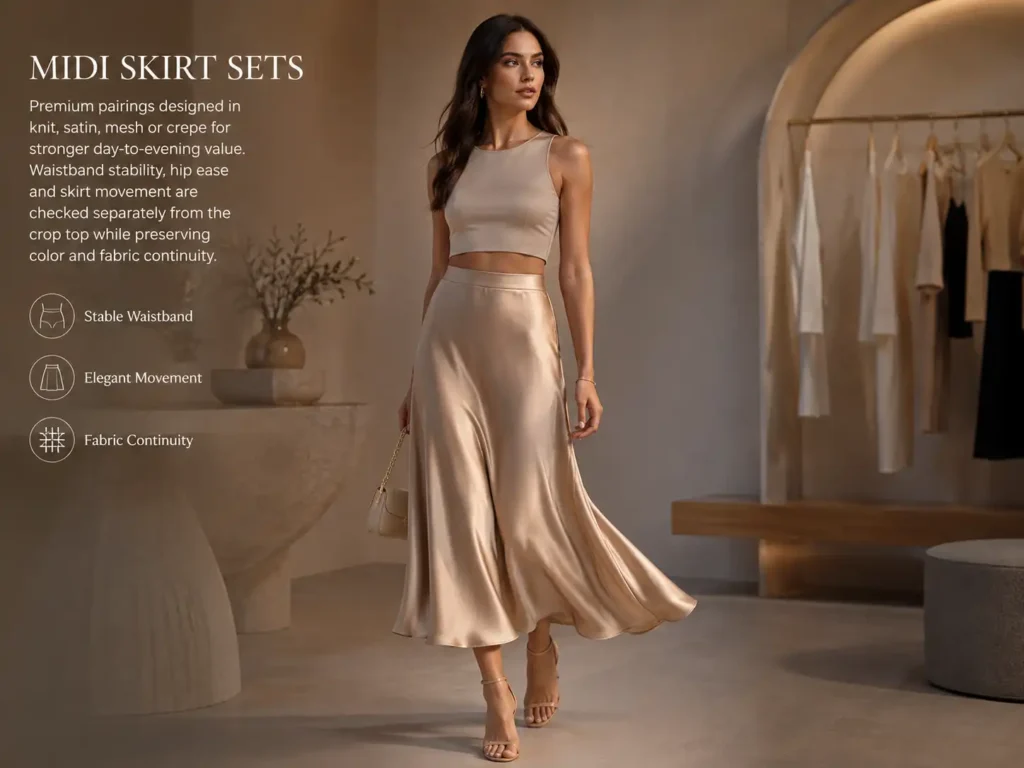
Midi Skirt Sets

Midi pairings allow premium knit, mesh, satin or crepe stories with stronger day-to-evening value. Waistband stability, hip ease and skirt movement are checked separately from the crop top while preserving color and fabric continuity.

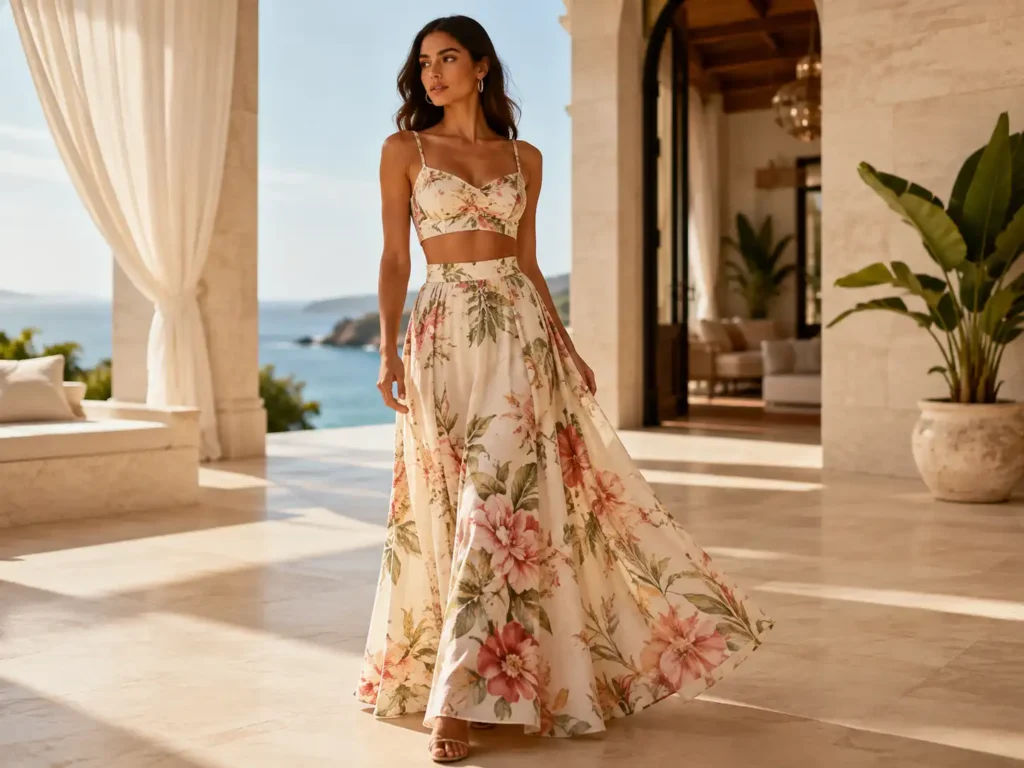
Maxi Skirt Sets

A short top and long skirt create strong visual proportion for resort and occasion collections. The team controls waist placement, skirt length, lining, print direction, color lot and packing creases. Tall or length-specific programs can be evaluated through separate measurements.

Trouser Co-Ords

Crop tops with wide-leg or fitted trousers need balanced rise, waist exposure and torso proportion. Woven sets may share fabric and trim batches, while knit sets require consistent stretch and recovery between top and bottom.

Short Sets

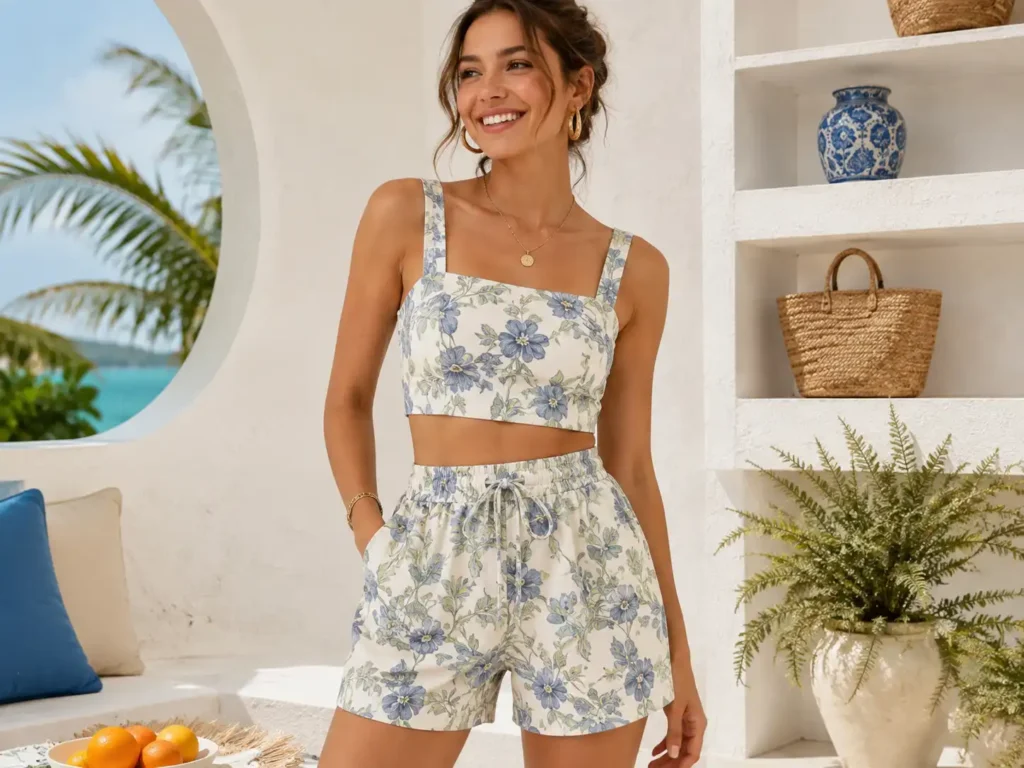
Resort and summer capsules benefit from compact cotton, linen blends, rayon and printed woven fabrics. Pocket shape, waistband, lining, shrinkage and print matching are coordinated with the crop top for a clean launch story.

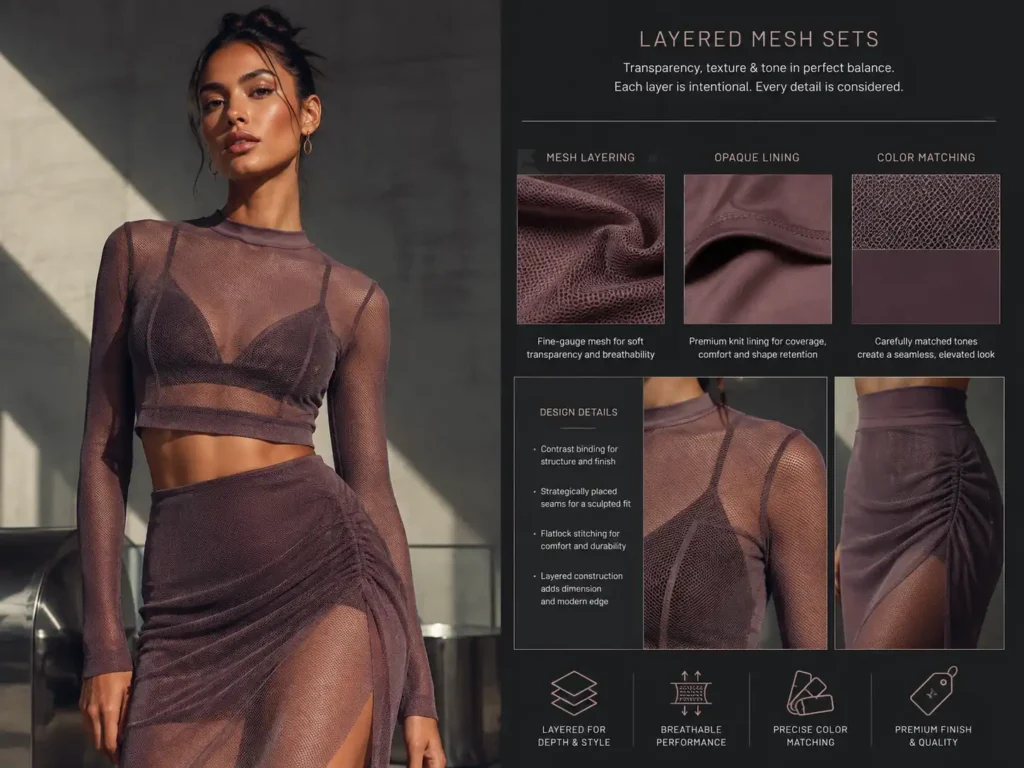
Layered Mesh Sets

Mesh tops combined with opaque or lined bottoms require careful color matching and transparency planning. Each piece receives independent labels and measurements, while the set’s packing method is decided according to sales and fulfillment requirements.

Repeat Orders Without Losing Fit or Color

A successful DTC style needs reliable replenishment. Jinfeng Apparel keeps development and production records so repeat orders can restart from an approved reference rather than rebuilding the garment from memory.

File And Pattern Control

Stored records can include pattern versions, size charts, grade rules, measurement tolerances, BOM files, sewing notes, approved sample photographs and PP comments. The project team confirms which version is active before repeat cutting, especially when several revisions or market-specific size charts exist.

Material And Color Review

Repeat production begins with fabric availability, current price, minimums, color continuity and trim status. The original material may be discontinued or changed by the mill, so replacement lots are compared for weight, hand feel, stretch, recovery, shade and shrinkage. A repeat PP or material confirmation may be required when the source changes.

Phased Replenishment

Reorders can be divided by hero color, core size, market region, warehouse or launch priority when quantity and material structure allow. Packing lists, carton marks and invoice breakdowns are prepared by batch. Urgent quantities may be evaluated for air shipment while the remaining goods move by sea to balance timing and freight cost.

Project Management for International DTC Teams

Multi-style development needs clear ownership, written approvals and visible milestones. Jinfeng Apparel manages style files, materials, samples, bulk progress, QC, packing and shipment through coordinated merchandising and production teams.

Development Tracking

The project record follows tech packs, reference photos, fabric submissions, trim files, patterns, sample versions, fit comments and approval status. Hero SKUs can be prioritized by launch date, campaign importance, material readiness and construction complexity. Revision trackers reduce the risk of old comments returning after a new sample is approved.

Production Updates

Key projects can receive milestone updates covering material arrival, cutting, sewing, in-line inspection, finishing, packing and shipment preparation. Photos, videos, measurement feedback and issue notices can be shared through email, WhatsApp, annotated images, Excel trackers or video meetings according to project needs. Updates focus on decisions and risks rather than repetitive status messages.

NDA And File Protection

Jinfeng Apparel supports NDA-based cooperation and protects tech packs, original samples, patterns, trims, private-label files, unpublished designs, order quantities and launch information. Public case content is anonymized unless written permission is provided. Project files are used for evaluation, sampling, production, QC, packing and delivery, not for public display or unrelated development.

Crop Top Development Case Studies

The following anonymous cases reflect the scale and operating structure of established fashion programs. Brand names and unpublished designs remain confidential; quantities, challenges and controls are presented to show how multi-style crop top orders are organized.

18-Style Rib And Jersey Drop

A United States DTC womenswear brand developed 18 crop top styles across baby tees, fitted tanks, long sleeves and ribbed square-neck shapes. The total order reached 42,600 pieces across five core colors and sizes XS-XL. The development team grouped styles by rib, compact jersey and double-layer jersey so fit comments could be applied consistently without treating every SKU as unrelated. Twenty-four priority samples were developed first for fitting and campaign review. Key corrections covered neckline recovery, sleeve pitch, crop length and hem opening. Bulk production was divided across flexible knit lines, with color-lot inspection, wash-size checks and barcode verification before packing. Core black and white styles were scheduled earlier for warehouse intake, while seasonal colors followed in the second batch.

12-Style Mesh Going-Out Collection

A North American partywear label placed a 28,800-piece program covering 12 mesh, lined mesh and corset-inspired crop tops in four color stories. The main risk came from transparency differences between colors, visible lining edges and inconsistent bust coverage. Development separated outer mesh, power mesh and lining specifications, then recorded layer count and seam finish for each style. Two fitting rounds were completed on hero SKUs before photo-ready samples moved to campaign production. PP confirmation locked cup position, strap length, hook-and-eye details and garment measurements. During bulk, fabric batches were checked by color, and inspection focused on neckline stability, mesh damage, symmetry, lining placement and label softness. Cartons were packed by style-color-size with separate SKU and barcode lists for the brand’s 3PL.

24-Style Resort Capsule

An established online resort brand organized 24 styles across halter crop tops, printed woven crops, linen-blend tops, mini skirts and maxi skirts. Total production reached 64,200 pieces, with the assortment divided into three delivery groups around campaign and regional launch dates. Product development focused on bust coverage, strap comfort, print direction, waist exposure and shrinkage. Crop tops and skirts shared color and print references, but each garment retained an independent SKU and size breakdown. Photo samples for eight hero looks were prioritized while secondary styles continued fitting. Bulk production used separate woven and coordinated-set units, followed by packaging checks for hangtags, care labels, polybag stickers and carton marks. A selected first quantity moved by air, while the main volume followed by sea under separate packing lists and shipping documents.

Premium Crop Top Frequently Asked Questions

Jinfeng Apparel supports ribbed fitted tops, baby tees, halter tops, corset-inspired crops, mesh going-out tops, satin and woven crops, long-sleeve styles and coordinated crop top sets. Final feasibility depends on fabric, structure, trims, quantity, size range and production schedule.

Yes. Reference images, original garment photos, sketches, line sheets or tech packs can enter the review process. The team assesses structure, fabric direction, fit risks, trims, MOQ and sample requirements before formal development. Images alone support preliminary evaluation rather than a final production guarantee.

MOQ starts from 200 pcs per style/color. One style in two colors normally requires each color to meet the quantity structure. Fabric mill minimums, custom dyeing, printing, special trims, packaging and complex construction may increase the required quantity.

Yes. Dedicated capacity supports rib, jersey, ponte, mesh and other stretch styles, while woven units handle satin, crepe, poplin, rayon, linen blends, denim and coordinated sets. Factory allocation is based on material and construction.

A standard knit first sample may often be planned around 7-12 working days after material confirmation. Complex mesh, lined, satin or corset-inspired styles may require about 12-18 working days. Timing varies with sourcing, trims, sample priority and revision needs.

Yes. Photo-ready samples can be prepared after fit, fabric and visible construction are sufficiently controlled. Hero SKUs may be prioritized around campaign dates. Photo samples do not replace PP approval for bulk production unless all production details have also been confirmed.

The team reviews bust, underbust, crop length, armhole, neckline, strap, hem opening and other high-risk measurements across the planned size range. Grade rules are adjusted by silhouette and fabric rather than applying one proportional increase to every measurement.

Yes. Jinfeng Apparel develops crop tops with mini skirts, midi skirts, maxi skirts, trousers and shorts. Development covers waist exposure, color batch, fabric consistency, size pairing, SKU files and packing structure.

Yes. Support can include woven labels, size labels, care labels, hangtags, barcode stickers, SKU labels, polybags, stickers, cartons, carton marks and warehouse labels. Files and legal information must be approved before bulk packing.

Yes. Jinfeng Apparel supports NDA-based cooperation and protects tech packs, samples, patterns, trims, private-label files, unpublished designs, quantities and launch information. Public display requires permission; anonymous process examples are used where appropriate.

Start Your Premium Crop Top Program

Send the available product files to Kelly for an initial project review. A complete tech pack is helpful, but an established product team may also begin with a line sheet, original sample photographs, annotated references or a preliminary assortment plan.

Jinfeng Apparel will review the intended crop top category, fabric direction, fit risks, sampling route, MOQ fit, private-label needs, production structure and likely next steps before formal development begins. Clear information allows the team to separate immediate decisions from items that must be confirmed through sampling.

  • Tech pack, line sheet, sketch, reference image or original sample photographs
  • Quantity per style/color and planned number of styles
  • Target fabric, stretch, weight, hand feel or price direction
  • Color plan, size range, grade rules and size ratio
  • Main label, care label, hangtag, barcode and packaging files
  • Photo sample deadline, bulk arrival window and warehouse requirements
  • Company name, website, sales channels and project contact details
  • NDA request or unpublished design protection requirements

Tell Us About Your Dress Project

Share your product details, estimated quantity and development requirements. Our team will review your project and provide practical OEM/ODM production feedback.

Premium Women’s Apparel Production for Fashion Brands

From dress sample development to bulk production, JF Apparel supports fashion brands with confidential OEM/ODM manufacturing, reliable quality control and scalable production support.

START YOUR DRESS PROJECT

Ready to Develop Your Next Dress Collection?

Share your design concept, product requirements or sourcing plans with our team. We’ll review your project and provide practical feedback on development, materials, MOQ and production.

7-10 Days

Sample Development

200 PCS

Starting MOQ

Fast Response

Professional Follow-Up