Pleated Dress Manufacturer
Custom pleated dress development and bulk manufacturing for established fashion brands, sourcing teams and multi-style womenswear programs.
- Pleat planning covers width, depth, spacing, direction, density and placement before pattern approval.
- First samples for standard dresses are commonly planned in 10-15 days; complex structures are evaluated individually.
- MOQ starts from 200 pieces per style and color, subject to fabric, pleating route, trims and production requirements.
- 6 owned womenswear factories, 10+ long-term production partners and 100,000+ pieces of coordinated monthly capacity support seasonal programs.
Pleated Dress Manufacturing Facts
Since 2008
Six Owned Factories
Coordinated Capacity
Two Sample Rooms
Pattern and QC
Commercial MOQ
Built for Established Fashion Programs

Fashion Brand Teams

Occasionwear Labels

Ecommerce Programs

Sourcing Departments
Where Pleated Dress Programs Commonly Fail
Unstable Pleat Shape
- Review fiber composition and finish
- Approve a pleated swatch or sample panel
- Record the accepted appearance before bulk
Uneven Pleat Spacing
- Specify finished pleat interval
- Check symmetry at center and side seams
- Compare panels against the approved reference
Incorrect Finished Width
- Calculate pre-pleat panel width
- Confirm hip and sweep requirements
- Allow for seam and finishing changes
Poor Waist Connection
- Map pleat starts around the waist
- Control seam bulk and notch points
- Measure the seam after joining
Sample-Bulk Drift
- Freeze approved materials
- Issue one production version
- Use inline checks before finishing
Packing Compression
- Approve the folding method
- Use suitable bag dimensions
- Control carton loading and recovery presentation
Is Jinfeng the Right Manufacturing Fit?
Best Fit Programs
- Reference images, original samples, sketches or tech packs are available
- Target quantities begin from 200 pieces per style and color
- A size range, launch window and approval team are defined
- Sample charges and material development costs are understood
- Long-term seasonal development or repeat production is possible
Not Our Production Model
- No-MOQ requests
- Ready-stock dress purchasing
- Single-piece shipment services
- Orders without a production plan
- Projects driven only by the lowest unit price
One Manufacturing System for Complete Delivery
Product Review
Fabric Sourcing
Pattern Making
Sample Development
Bulk Production
Quality Control
Private Labels
Export Coordination
Repeat Orders
From Design Reference to Bulk Delivery
Project Intake
Feasibility Review
Material Direction
Pattern Development
First Sample
Revision Stage
PP Approval
Bulk Control
Packing Delivery
Pleated Dress Styles We Develop

Pleated Mini Dress
- Best for party and fashion drops
- Common fabrics: chiffon, crepe, satin and lightweight polyester
- Key control: coverage, hem balance and pleat fullness

Pleated Midi Dress
- Best for day-to-evening and occasionwear
- Common fabrics: chiffon, georgette, crepe and satin
- Key control: proportion from waist to calf

Pleated Maxi Dress
- Best for resort, event and formal collections
- Common fabrics: chiffon, georgette and soft polyester
- Key control: vertical alignment and balanced hem

Pleated A-Line Dress
- Best for broad commercial size ranges
- Works with knife, box and soft accordion pleats
- Key control: hip ease and waist distribution

Pleated Shirt Dress
- Best for office and smart casual collections
- Common fabrics: crepe, lightweight woven and printed polyester
- Key control: placket alignment and collar stability

Pleated Halter Dress
- Best for party and resort programs
- Common fabrics: satin, chiffon and soft crepe
- Key control: neckline tension and bust coverage

Pleated Sleeve Dress
- Best for modest, occasion and seasonal ranges
- Common fabrics: chiffon and georgette
- Key control: arm movement and sleeve symmetry

Pleated Cocktail Dress
- Best for event and evening capsules
- Common fabrics: satin, organza, crepe and chiffon
- Key control: bodice support and waist finish

Pleated Evening Dress
- Best for premium occasionwear programs
- Common fabrics: chiffon, satin, organza and mesh
- Key control: structure, drape and finishing

Printed Pleated Dress
- Best for resort and seasonal collections
- Suitable for floral, geometric and abstract artwork
- Key control: artwork distortion and panel direction

Color-Block Pleated Dress
- Best for statement and contemporary ranges
- Can combine matte and lustrous surfaces
- Key control: panel matching and color balance

Pleated Two-Piece Look
- Best for fashion-forward collections
- Supports mixed materials and directional pleats
- Key control: seam placement and style balance
Pleat Structures for Distinct Design Effects

Knife Pleats
- Visual effect: ordered and directional
- Key risk: drifting repeat and seam interruption
- Approval focus: consistent face width

Box Pleats
- Visual effect: architectural volume
- Key risk: uneven center alignment
- Approval focus: symmetry and waist bulk

Accordion Pleats
- Visual effect: fluid expansion
- Key risk: relaxation or width change
- Approval focus: recovery and density

Sunray Pleats
- Visual effect: radial movement
- Key risk: off-center flare
- Approval focus: radial balance

Micro Pleats
- Visual effect: refined texture
- Key risk: seam flattening
- Approval focus: surface consistency

Crystal Pleats
- Visual effect: sharp and delicate
- Key risk: edge distortion
- Approval focus: definition and continuity

Panel Pleats
- Visual effect: targeted movement
- Key risk: inaccurate placement
- Approval focus: start and stop positions

Mixed Pleat Layouts
- Visual effect: high design value
- Key risk: inconsistent transitions
- Approval focus: zone-by-zone records
Pleated Dresses for Commercial Wearing Occasions

Party Collections
- Focus: impact under lighting
- Common lengths: mini and midi
- Key check: movement and coverage

Cocktail Programs
Cocktail styles balance structure with fluidity. Pleated skirts often connect to fitted bodices, requiring stable construction and clean internal finishing.
- Focus: refined silhouette
- Common lengths: knee and midi
- Key check: waist connection

Wedding Guest
- Focus: occasion polish
- Common lengths: midi and maxi
- Key check: comfort and coverage

Resort Collections
- Focus: fluid travel wear
- Common lengths: midi and maxi
- Key check: packing recovery

Office Dressing
- Focus: polished daily wear
- Common lengths: knee and midi
- Key check: controlled volume

Day-to-Evening
- Focus: versatile styling
- Common lengths: midi
- Key check: fit and easy care
Fabrics Used for Pleated Dress Development
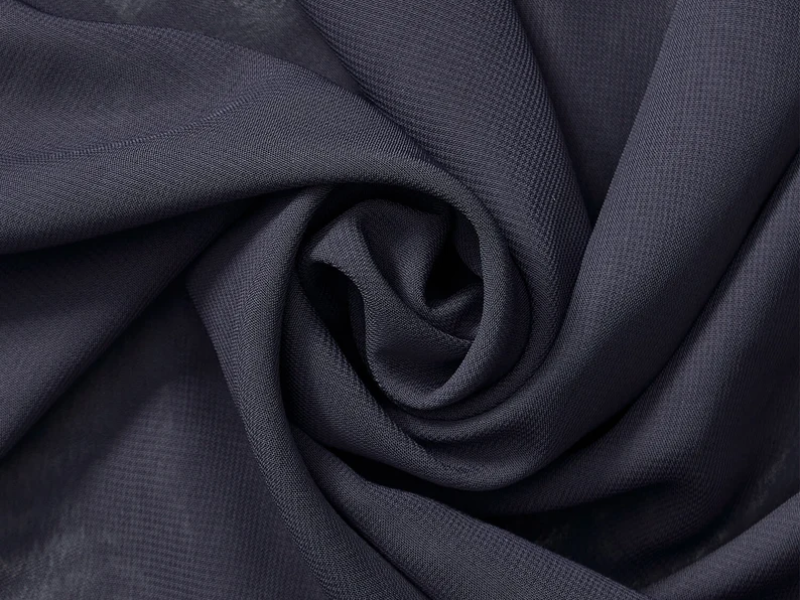
Polyester Chiffon
- Good for: midi, maxi and sleeve styles
- Pleat effect: light and fluid
- Control: opacity, snagging and lining

Georgette
- Good for: day-to-evening and occasion dresses
- Pleat effect: soft with moderate body
- Control: seam smoothness and drape

Polyester Satin
- Good for: cocktail and evening styles
- Pleat effect: luminous and defined
- Control: shine direction and pressure marks

Soft Crepe
- Good for: office, midi and A-line dresses
- Pleat effect: refined and less glossy
- Control: weight and waist bulk

Polyester Organza
- Good for: statement and occasion pieces
- Pleat effect: crisp and architectural
- Control: edge finish and layer volume

Pleated Mesh
- Good for: overlays, sleeves and fashion panels
- Pleat effect: textured and sheer
- Control: stretch, snagging and support

Lightweight Jersey
- Good for: comfort-led and fluid dresses
- Pleat effect: soft and flexible
- Control: recovery and seam stretch

Recycled Polyester
- Good for: responsible material programs
- Pleat effect: depends on yarn and finish
- Control: source consistency and records

Printed Woven Fabric
- Good for: resort and seasonal drops
- Pleat effect: dimensional print movement
- Control: artwork scale and direction
Fabric and Pleat Compatibility Matrix
| Fabric Direction | Pleat Character | Drape | Opacity | Primary Risk | Recommended Approval |
|---|---|---|---|---|---|
| Polyester chiffon | Soft to defined | High | Low | Snagging and transparency | Pleated panel plus lined sample |
| Georgette | Soft with body | Medium-high | Low-medium | Puckering and edge fray | Seam test plus movement review |
| Polyester satin | Defined and reflective | Medium-high | Medium | Pressure marks and shade direction | Pleated swatch under multiple lights |
| Soft crepe | Refined and matte | Medium | Medium-high | Waist bulk on heavier grades | Weight and pleat density comparison |
| Organza | Crisp and sculptural | Low-medium | Low | Stiffness and rough edges | Layering and edge-finish sample |
| Mesh | Textured and sheer | Variable | Low | Snagging and stretch instability | Pleated layer with base construction |
| Light jersey | Soft and flexible | High | Medium | Relaxation and seam stretch | Recovery test and finished garment |
| Recycled polyester | Source dependent | Variable | Variable | Batch and finish variation | Source-specific trial and documents |
| Printed woven | Dimensional artwork | Variable | Variable | Print compression and direction | Printed pleated panel approval |
How Pleat Specifications Are Defined
A production-ready pleat is expressed through measurable values and visual references. Verbal descriptions such as fine pleat or wide pleat leave too much room for interpretation.
Width, Depth and Repeat
Pleat face width describes the visible fold. Depth describes the material turned underneath. Repeat interval defines the distance from one corresponding point to the next. All three values influence fabric consumption, finished width and the visual rhythm of the garment. A small difference repeated across a maxi panel can change the sweep, hip ease and hem width. Jinfeng Apparel records the accepted values in the development file and compares sample panels or garments against the approved reference before releasing bulk instructions.
- Define values in millimeters where possible
- Confirm whether dimensions are measured relaxed or extended
- Record acceptable visual variation for soft pleats
Direction and Orientation
Pleats may run left, right, toward a center line, away from a center line, vertically, diagonally or radially. Direction affects light reflection, print appearance, body proportion and seam matching. Pattern pieces need orientation marks so cutting and sewing do not reverse a panel. For asymmetric garments, left and right pieces require clear naming, images and placement diagrams. Direction is also checked after pressing and packing because incorrect folding can temporarily distort the visual line.
- Mark grain and pleat direction on pattern pieces
- Use front, back, left and right panel identifiers
- Approve center alignment and side-seam transition
Density and Finished Dimension
Pleat density influences opacity, weight, movement and cost. A dense pleat arrangement consumes more fabric and may create bulk at waist seams, while a lower density can look underfilled. Finished panel width should be measured under an agreed condition because accordion and micro pleats expand when handled. The approved condition may be relaxed, lightly extended or positioned on the garment form. A finished-garment measurement remains necessary even when a pleated panel passes its own width check.
- Calculate fabric consumption before final costing
- Measure panel and garment dimensions separately
- Review density across the intended size range
Color, Printing and Surface Approval
Pleats change how light and artwork are perceived. Flat fabric approval alone cannot predict the finished garment appearance.
Solid Color Approval
Color is reviewed on the selected fabric construction and finish. Satin, crepe, chiffon and mesh can show the same dye shade differently because of surface reflection and transparency. Pleats create light and shadow, making a color appear deeper in fold valleys and lighter on fold faces. Lab dips or swatches should be viewed under agreed lighting, followed by approval on a pleated sample when visual sensitivity is high. Lining color is selected to support the outer fabric without changing its apparent shade.
Printed Artwork Control
Artwork scale and repeat direction should be assessed after pleating. Small motifs may disappear inside folds; large motifs may become fragmented; stripes can exaggerate spacing variation. The production file should define print orientation, panel direction and any placement requirements. For engineered prints, the artwork route needs early coordination because pleat consumption changes visible dimensions. A printed pleated panel provides a more reliable approval than a flat strike-off alone.
Surface Protection
Lustrous and delicate fabrics can develop scratches, pressure marks, shine changes or snagging during handling. Cutting tables, bundle movement, sewing, pressing and packing require clean surfaces and controlled pressure. Finished garments are inspected under suitable lighting for visible defects across pleat faces and valleys. Folding direction, bag size and carton loading are approved to protect the surface through transit. Care labels should reflect the actual fabric and pleat treatment.
Construction Details Behind a Finished Pleated Dress

Waist Seam
- Check pleat count around waist
- Control seam bulk
- Measure after assembly

Zipper Setting
- Choose stable opening position
- Avoid trapping pleat folds
- Check zipper under body tension

Lining Connection
- Match lining stretch and drape
- Control length below outer layer
- Avoid pulling the pleated shell
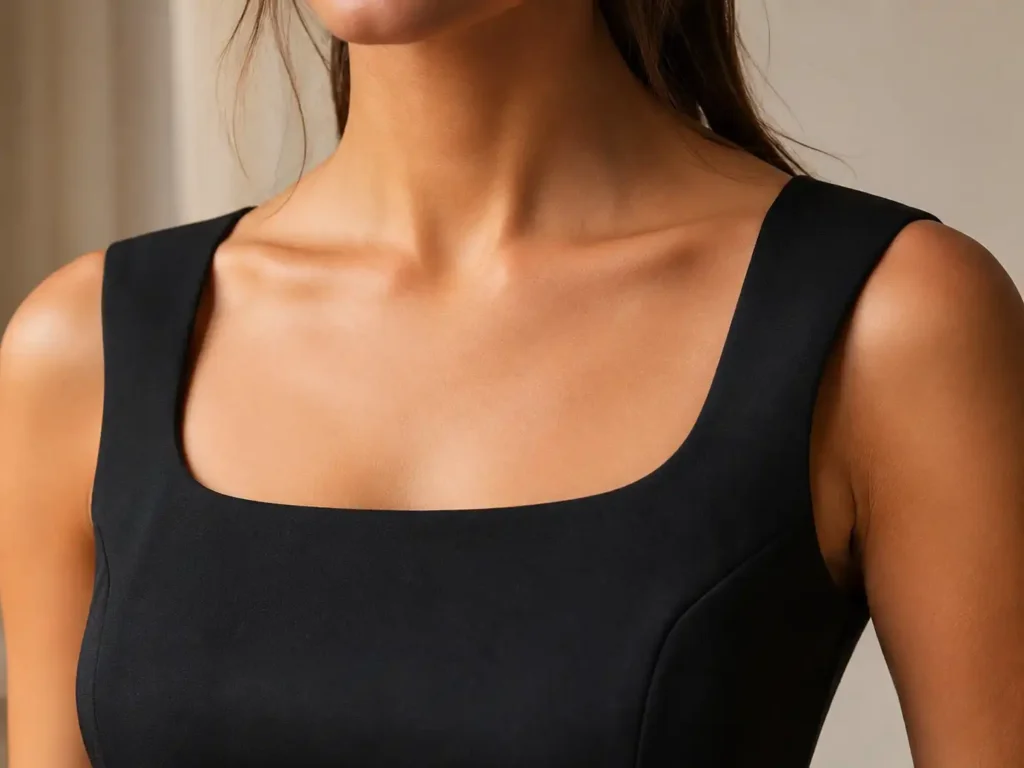
Neckline Finish
- Stabilize without visible stiffness
- Check left-right symmetry
- Confirm coverage and comfort

Armhole Control
- Prevent stretching
- Check side-bust coverage
- Keep lining inside

Sleeve Joining
- Match pleat direction
- Preserve arm movement
- Control cap and cuff symmetry
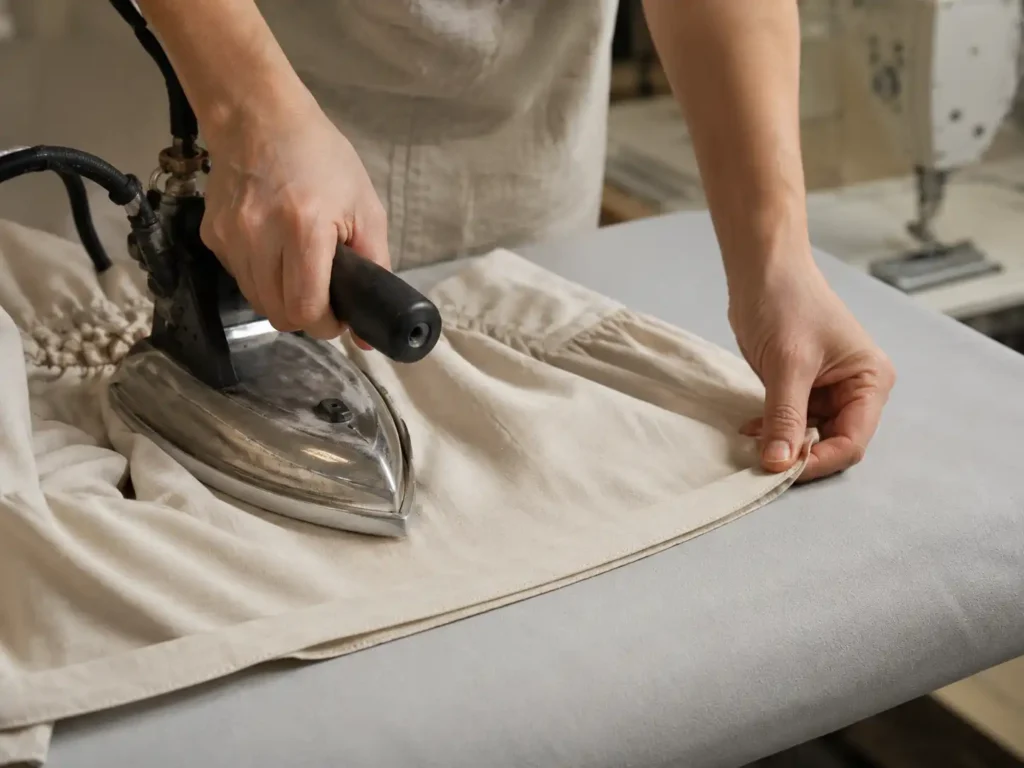
Hem Construction
- Choose fabric-appropriate method
- Check level hem
- Protect fold definition

Panel Joining
- Match repeat at joins
- Control seam direction
- Inspect from full viewing distance

Pattern Development Before and After Pleating
Pleating changes usable width, tension and shape. Pattern sequencing must match the selected fabric and pleating route.
Pre-Pleat Panel Planning
When fabric is pleated before final cutting, the team plans the required expanded width, grain direction, pleat orientation and usable area. The pleated material is allowed to settle before pattern placement when needed. Pattern pieces are positioned to preserve direction and avoid unnecessary distortion. Finished dimensions are verified after cutting because handling can expand or compress the folds. Material consumption is calculated from the pre-pleat requirement rather than the visible finished width.
Cut-Then-Pleat Applications
Some designs require shaped pieces, controlled start points or engineered pleat zones. In those cases, cut-then-pleat development may be evaluated. The route demands accurate reference marks and dimensional allowances because the part must return to the planned finished shape after pleating. Suitability depends on fabric behavior, pleat method and design geometry. A trial piece helps confirm whether shaped edges, notches and seam lines remain usable for assembly.
Bodice and Skirt Integration
The skirt pattern cannot be developed separately from the bodice when waist position, hip fit or asymmetric seams define the silhouette. The upper pattern establishes stable joining points and finished circumference. The pleated panel plan then distributes fullness around those points. A fit sample checks whether the waist remains level, side seams hang vertically and the skirt opens evenly in motion. Any correction is recorded in both the bodice and pleated panel files.

Fit Control for US and Global Size Ranges
Pleated volume does not replace accurate fit. Bodice structure, waist placement, lining and finished length still determine return risk and wearer confidence.
Upper-Body Measurements
Bust, under-bust, shoulder, neckline, armhole and back width are reviewed according to the silhouette and fabric. Halter, strapless and fitted bodices need more control than loose overlays. Stretch properties and lining construction affect the finished measurements. The fit sample is assessed on the intended base size, followed by grade rules for the full range. Key points are measured on a stable garment condition so pleated sections do not distort the reading.
Waist and Hip Balance
Pleated skirts can visually hide fit problems while still feeling tight or unstable. Waist circumference, high-hip ease, full-hip ease and pleat release points are checked together. A fitted waist with a free skirt needs secure construction and a balanced lining. For stitched-down pleats, hip measurement becomes especially important. Size grading must preserve comfort while maintaining the intended pleat density and proportion.
Length and Movement
Garment length is measured from an agreed reference point, such as high shoulder point or waist seam. Lining length, slit position, front-back balance and floor clearance are recorded separately. Movement checks include walking, sitting and turning. Maxi dresses are reviewed for dragging, twisting and seam rotation. Mini dresses are checked for coverage during movement. Length tolerances are selected with fabric behavior and finishing method in mind.
Measurement and Grading Control Points
| Control Point | Measurement Method | Pleat Condition | Development Risk | Bulk Control |
|---|---|---|---|---|
| Bust | Flat circumference at approved position | Pleats arranged naturally | Bodice pull or excess ease | Pattern version and finished measurement check |
| Waist seam | Circumference after skirt joining | Pleats distributed as approved | Uneven bulk or incorrect join | Inline measurement after assembly |
| High hip | Specified distance below waist | Relaxed unless instructed | Restricted movement | Fit sample and grade-rule review |
| Full hip | Widest approved level | Relaxed or lightly extended per spec | Insufficient expansion | Finished garment measurement |
| Dress length | High shoulder point or waist reference | Garment hanging naturally | Uneven hem or incorrect proportion | Settling check before final inspection |
| Lining length | Matching approved reference point | Lining smoothed without stretch | Visible lining or restricted shell | Final check inside garment |
| Pleat face width | Across visible face at defined zone | Approved relaxed state | Inconsistent visual rhythm | Panel and finished garment comparison |
| Pleat start point | From stable seam or body reference | As worn | Incorrect volume placement | Template and sample reference |
| Sweep | Around hem or approved half-width method | Pleats arranged consistently | Low movement or excess volume | Size-set and final measurement |
What We Need to Review Your Project
Style Reference
Tech Pack
Pleat Reference
Fabric Direction
Size Range
Quantity Plan
Private Labels
Launch Window
Pleated Dress Feasibility Review
Style Structure Review
- Clarify construction from images or tech pack
- Identify missing dimensions and details
- Separate visual preferences from measurable requirements
Fabric and Pleat Review
- Check exact source rather than generic fabric name
- Assess color and print after pleating
- Confirm lining and care implications
Commercial Production Review
- MOQ starts from 200 pieces per style and color
- Special materials can require higher minimums
- Bulk timing follows PP and material approval
Sample Types Used Before Bulk Production

First Sample
- Purpose: structure and first fit
- Input: approved development brief
- Output: measured comments and revision list

Fit Sample
- Purpose: fit and proportion
- Input: measurement chart and model standard
- Output: pattern and grade corrections

Revised Sample
- Purpose: verify corrections
- Input: consolidated comment file
- Output: updated version record

Photo-Ready Sample
- Purpose: campaign presentation
- Input: visual and styling standard
- Output: shoot-ready garment

PP Sample
- Purpose: bulk authorization
- Input: final production specification
- Output: signed approval and production standard

Golden Sample
- Purpose: physical production benchmark
- Input: approved PP standard
- Output: retained sealed sample
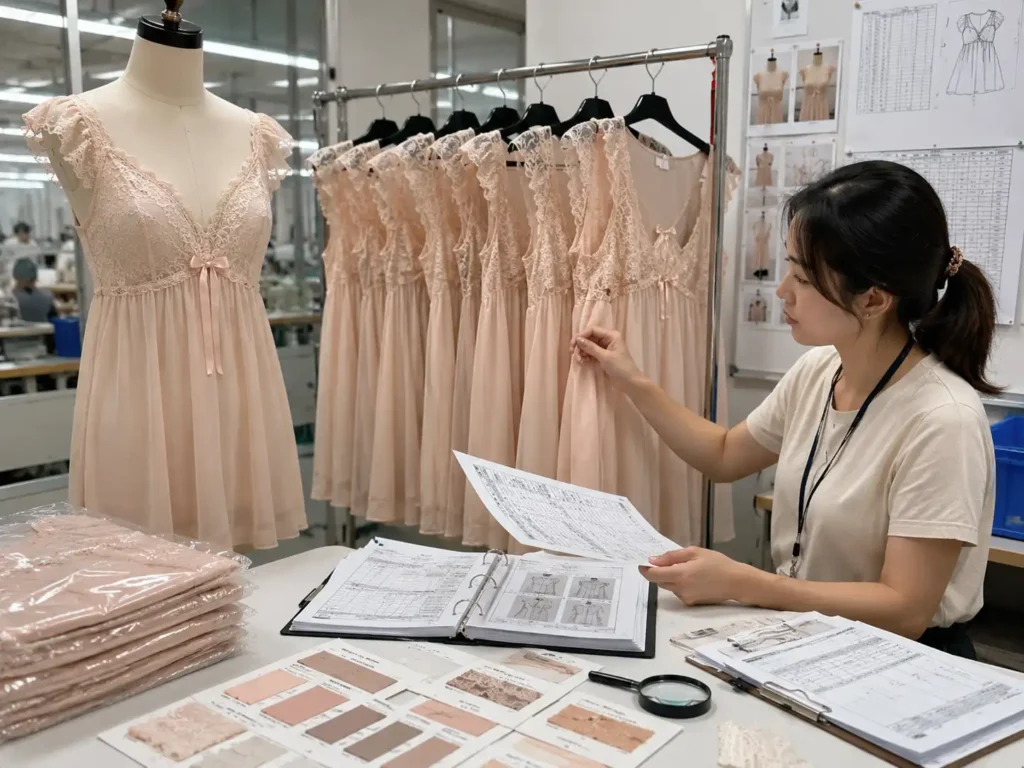
How Sample Corrections Are Recorded
Comments become reliable only after they are converted into controlled production files. Important changes should never remain only in messages.
- Consolidated Comment Review
Feedback is grouped by fit, measurements, pleat appearance, fabric, color, trims, sewing, finishing and packing. Conflicting comments are clarified before work begins. Images are marked with arrows or reference points where needed, and measurement changes include both the old and new values. One approved comment set prevents different team members from following different versions. The project owner records the date, sample version and responsible action for traceability.
- Pattern and Specification Update
Fit or proportion changes are transferred to the pattern and size chart. Construction changes update sewing instructions, seam diagrams or BOM entries. Pleat changes update width, depth, direction, density, start point and sample reference. Material substitutions require a new approval record because they can change drape, color, stretch and pleat behavior. Labels and packing changes are transferred to artwork or placement files rather than treated as final-stage verbal notes.
- Verification on Revised Sample
The revised garment is measured and compared against the latest comment set. Corrected areas are photographed where useful, while full-garment review confirms that one correction has not created another problem. For example, raising a waist seam can change skirt length and pleat proportion; increasing lining ease can affect hem appearance. Approved revisions are carried forward into the PP file. Rejected versions are kept separate to avoid accidental use.

PP Sample and Golden Sample Approval
Bulk production begins only after final materials, construction and commercial details have been aligned in one approved standard.
What the PP Sample Confirms
The PP sample confirms the production fabric, shade, lining, trims, pattern, size measurements, pleat appearance, seam construction, zipper or closure, hem, labels and packing method. Any remaining exception is written into the approval record. Major structural changes after PP approval may require a new sample because they affect pattern, material consumption, sewing sequence and quality checks. The approved garment is reviewed together with the final production file, not as an isolated physical piece.
How the Golden Sample Is Used
The sealed Golden Sample gives production and QC teams a physical benchmark for proportion, pleat density, seam quality, color, trim placement and overall finish. It supports inline comparison, final inspection and future repeat orders. The sample is linked to a version-controlled pattern, BOM, size chart, sewing instruction and packing instruction. When production uses multiple approved units, duplicated references or documented standards are arranged so every unit follows the same decision set.
Changes After Approval
Late changes are evaluated for cost, material availability, pattern effect and delivery impact before acceptance. A label-artwork correction may be manageable without altering the garment; changing fabric or pleat density can require new approval. Written authorization identifies the updated version and affected quantities. Production teams do not rely on unrecorded chat instructions. The goal is controlled change, not inflexible communication.
Pleated Dress Production Workflow
Material Inspection
- Compare with approved swatch
- Separate dye lots where required
- Record exceptions before cutting
Pleat Trial Check
- Check width and direction
- Review recovery and appearance
- Confirm usable finished dimension
Panel Preparation
- Mark panel orientation
- Allow settling where needed
- Protect delicate surfaces
Cutting Control
- Check pattern version
- Verify notches and reference marks
- Audit first cut pieces
Sewing Assembly
- Use approved seam method
- Control waist distribution
- Inspect critical joins early
Inline Measurement
- Use current size chart
- Check more than one size
- Correct root cause before continuation
Finishing Review
- Follow pressing direction
- Inspect shine and pressure marks
- Allow recovery before final check
Final Inspection
- Compare with Golden Sample
- Record defects and rework
- Verify SKU information
Packing Release
- Protect pleat direction
- Control carton pressure
- Prepare packing documents
Sewing Without Damaging the Pleat Structure
Workmanship quality is visible where repeated folds meet seams, zippers, waistlines, linings and hems. Handling must preserve the approved rhythm.
Seam Joining Across Pleats
Pleat faces and underfolds are arranged according to the approved join before stitching. The operator avoids catching an incorrect fold or flattening a wider zone near the seam. Side seams are checked from a normal viewing distance because a technically closed seam can still appear as a visible break in rhythm. Seam allowance and pressing direction are selected to control bulk. For sheer fabrics, internal cleanliness is important because seam shadows can be visible through the garment.
Waistline Assembly
The waist is one of the highest-risk operations. Pleat density, notch positions and front-back distribution are confirmed before joining. Temporary control stitching or preparation may be used according to the fabric and design. The finished seam is checked for lumps, twisting and uneven fullness. Waist circumference is measured after assembly, followed by a hanging check to confirm that side seams remain vertical and the hem does not pull to one side.
Zipper and Closure Quality
Zippers are installed without trapping folds or creating a flat strip that looks unrelated to the surrounding pleats. The opening area is stabilized appropriately, while the lining and seam allowance remain clear of the slider. Top and bottom stops, waist-seam matching and zipper smoothness are checked. Hooks, buttons, ties or concealed closures follow their approved reinforcement and placement. The garment is tested on the body or form under normal dressing tension.
Lining and Internal Finish
A clean lining should support the dress without limiting movement. Attachment points, ease, hem clearance and seam finishing are selected according to outer-fabric transparency and construction. Internal bulk is reduced at waist and zipper areas. Loose threads, rough edges and visible seam shadows are checked before final closure. For occasionwear, inner comfort matters around neckline, armhole and side seams because the dress may be worn for extended periods.
Hem and Edge Control
Lightweight fabrics require stable edge handling so the hem does not wave, twist or become heavy. The method may include narrow hemming, clean finishing, binding or a designed raw effect where approved. Long skirts are checked after hanging or recovery as required. The lining remains shorter by the approved amount and does not become visible during movement. Pleat continuity is reviewed around the entire circumference.

Bulk Production for Multi-Style Programs
Production capacity is not presented as an automatic delivery promise. Every program is scheduled after style mix, approved PP samples, material readiness, color and size breakdown, packing requirements and inspection plan have been confirmed.
Six Owned Factories
Ten-Plus Partners
Eighteen-Plus Lines
Flexible Production
Merchandising Team
Finishing Support
Nine Controls for Sample-to-Bulk Consistency
Approved Fabric
Dye-Lot Control
Pleat Reference
Pattern Version
Measurement Chart
Sewing Instruction
PP Approval
Inline Inspection
Golden Sample
Quality Control for Pleated Dresses

Incoming Fabric
- Compare with approval
- Record defects and shade groups
- Hold unapproved substitution

Pleated Material
- Inspect more than one area
- Check edges and center zones
- Separate inconsistent panels

Cut Components
- Audit first cut pieces
- Check left-right orientation
- Protect prepared panels

Sewing Inline
- Measure critical points
- Check repeat continuity
- Correct process causes early

Finished Measurements
- Use current tolerance file
- Record actual values
- Review recurring drift

Appearance Review
- View close and full distance
- Check front, back and side
- Compare with Golden Sample

Finishing Check
- Avoid over-pressing
- Check delicate surfaces
- Allow recovery before judgment

Label Verification
- Check placement and orientation
- Match size and color
- Reject mixed label sets

Packing Inspection
- Follow packing instruction
- Verify carton count
- Protect long pleated panels
Testing and Third-Party Inspection Options
Dimensional Stability
- Define care method first
- Test exact production material
- Review garment and component effects
Color Performance
- Confirm destination standard
- Evaluate trim and lining interaction
- Record approved results
Surface Durability
- Focus on risk areas
- Use production-equivalent fabric
- Align acceptance with brand standard
Pleat Retention
- Approve baseline appearance
- Define recovery condition
- Avoid universal claims
Needle and Safety
- Confirm required protocol
- Document inspection route
- Apply to packed goods where specified
Third-Party Inspection
- Pre-final or final inspection
- Agreed sampling standard
- Written report from the appointed agency

MOQ, Pricing and Private-Label Delivery
Commercial planning combines style complexity, fabric, pleating, quantity, size range, labels, packing and approval timing. Unit price cannot be separated from the production specification.
MOQ and Quantity Planning
- MOQ starts from 200 pieces per style and color. A style ordered in two colors normally requires planning for each color separately.
- Higher minimums can apply when fabric must be custom dyed, printed or specially sourced, or when trims and packaging have supplier minimums.
- Quantity by size also affects cutting efficiency and material allocation.
- Established multi-style programs can be reviewed as a coordinated order, but every style still needs a viable production quantity and material route.
What Builds the Price
- Cost is influenced by fabric consumption before pleating, pleat density, material yield, lining, bodice complexity, zipper or closure, sleeves, trims, handwork, size range, color split, testing, labels, packing and delivery terms.
- A maxi dress with dense pleating and full lining has a different cost structure from a light midi dress with localized pleat panels.
- Transparent costing discussion begins after the design, material and quantity plan are clear enough to estimate reliably.
Private-Label Packing
- Jinfeng Apparel supports main labels, size labels, care labels, hangtags, barcode stickers, polybags, tissue, inserts and carton marks according to approved artwork and packing instructions.
- SKU data is matched to style, color and size.
- Packing methods consider pleat direction, garment length and surface sensitivity.
- Special retail or warehouse requirements should be provided during development so materials and costs are planned before final production.
Why Global Brands Choose Jinfeng Apparel
Womenswear Focus
Pattern Judgment
Sample Depth
Multi-Style Control
Documented Changes
Process Inspection
Brand Protection
Repeat-Order Records
Pleated Dress Manufacturing Case Studies

US Occasionwear Program
- Project structure: 24 styles, 52,800 pieces
- Development: first samples, fit corrections and PP approval by style group
- Control: unified measurement methods, pleat references and Golden Samples
- Result: styles released in planned production waves with shared label and packing standards

UK Ecommerce Collection
- Project structure: 18 styles, 31,200 pieces
- Development: printed pleated panels approved before full garments
- Control: artwork direction, color review, photo-ready samples and barcode matrix
- Result: campaign samples and production files aligned before bulk release

Australian Resort Range
- Project structure: 30 styles, 78,000 pieces
- Development: grouped fabric directions and shared lining standards
- Control: style allocation, size charts, PP approvals and staged packing plans
- Result: multi-style delivery supported by retained records for repeat colorways
Pleated Dress Frequently Asked Questions
Jinfeng Apparel develops mini, midi, maxi, A-line, halter, sleeve, cocktail, evening, printed, asymmetric and other custom pleated dress directions. Feasibility depends on the design, fabric, pleat structure, lining, trims and required quantity.
Polyester chiffon, georgette, satin, crepe, organza, mesh, selected jersey and recycled polyester can be evaluated. Suitability depends on exact composition, finish, weight and required pleat effect, so source-specific sample review is recommended.
Yes. A reference image can start structural review, but accurate development also needs measurements, fabric direction, color, quantity, size range and construction details. A final bulk price cannot be based on an image alone.
MOQ starts from 200 pieces per style and color. Custom-dyed fabric, printed materials, special trims, responsible-material requirements or complex pleating can increase the minimum according to supplier and production conditions.
A standard dress first sample commonly requires about 10-15 days after specifications and materials are ready. Simple styles may be faster, while complex construction, special fabric or trim development requires additional time.
The approved specification records face width, depth, repeat interval, direction, density, placement and measurement condition. Sample panels or garments are compared with the approved physical and written reference before bulk instructions are released.
Yes. Grading covers bodice measurements, waist, hip, length, lining and pleat distribution. The same pleat count or density is not applied mechanically when it would distort fit or proportion across the size range.
Yes. The PP sample confirms final material, color, measurements, pleat appearance, construction, labels and packing. Major changes after PP approval may require a new approval because they affect cost, pattern and production instructions.
Yes. Main labels, size labels, care labels, hangtags, barcode stickers, polybags, inserts and carton marks can be produced from approved artwork. Packing details should be confirmed during development to avoid late delays.
Pattern versions, size charts, fabric references, trim details, pleat standards, Golden Samples, QC requirements and packing instructions are retained. Material availability and production conditions are rechecked before every repeat order.

Start Your Pleated Dress Development
Useful files include front and back images, a tech pack, an original sample, pleat close-ups, fabric references, size chart, color plan and label artwork. Please state the planned quantity for each style and color, target market, launch window, packaging needs and delivery destination. Kelly will coordinate the initial review with the development, material, pattern and merchandising teams. Feedback will identify missing specifications, likely sample stages, material risks, MOQ considerations and the information required for a dependable quotation. Projects with clear design direction, professional sampling requirements and bulk production plans receive the most accurate response.
- Reference images, sketch, tech pack or original sample
- Pleat width, direction, density or physical reference
- Fabric composition, hand feel, color and lining preference
- Size range and measurement chart
- Quantity by style, color and size
- Main label, care label, hangtag, barcode and packing requirements
- Required sample review date and delivery destination