 Skip to content
Party Capsule Dress Manufacturer
A coordinated partywear collection, developed from capsule brief to retail-ready bulk production.
Jinfeng Apparel supports established fashion brands with multi-style party dress development, fabric and trim coordination, pattern engineering, sample revision, PP approval, bulk production, quality control and private-label packing. Collection programs commonly cover 10-30 styles, with total brand orders commonly ranging from 20,000-80,000 pieces. MOQ starts from 200 pieces per style and color, while sample timing ranges from 7-25 days for standard to complex partywear structures.
- 10-30 coordinated styles per collection program
- 20,000-80,000 pieces in typical brand-level orders
- MOQ from 200 pieces per style and color
- 7-25 day sample range by construction complexity
Built for Multi-Style Partywear Programs
Since 2008
Six Owned Factories
Ten-Plus Partners
Two Sample Rooms
Pattern Development Team
Quality and Follow-Up
Designed for Established Partywear Programs
Partywear Brands
Occasionwear Labels
Premium Ecommerce
Multi-Channel Retail
Product Teams
Sourcing Teams
Where Party Capsules Commonly Lose Control
Disconnected Styles
Fabric Inconsistency
Sample Congestion
Fit Variation
Launch Delays
SKU Packing Errors
Build a Commercial Party Dress Assortment
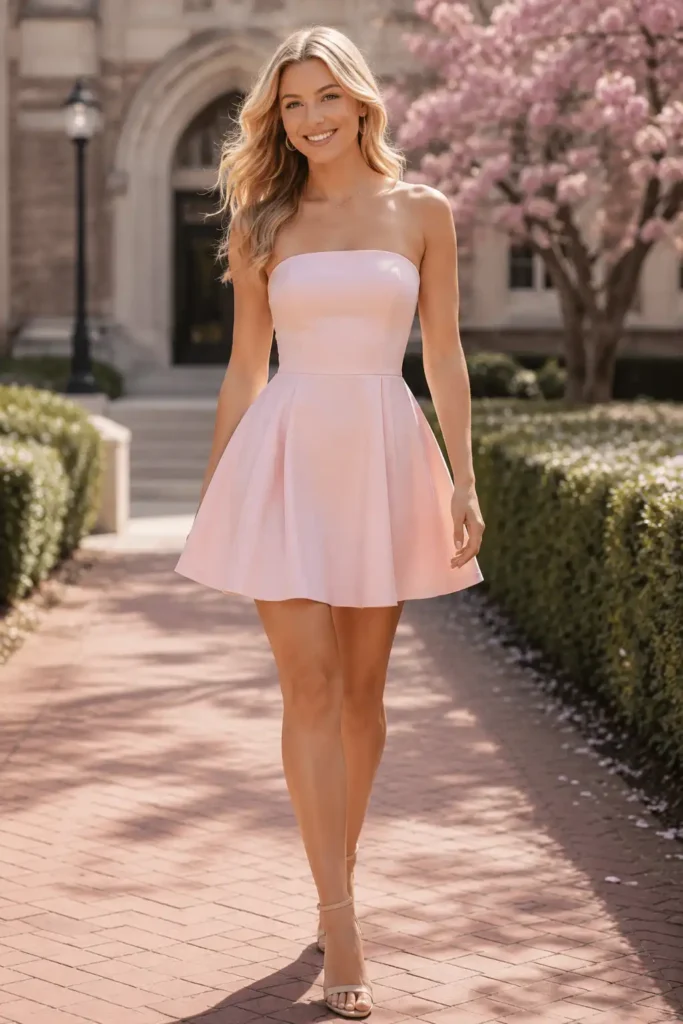
Hero Mini Dress
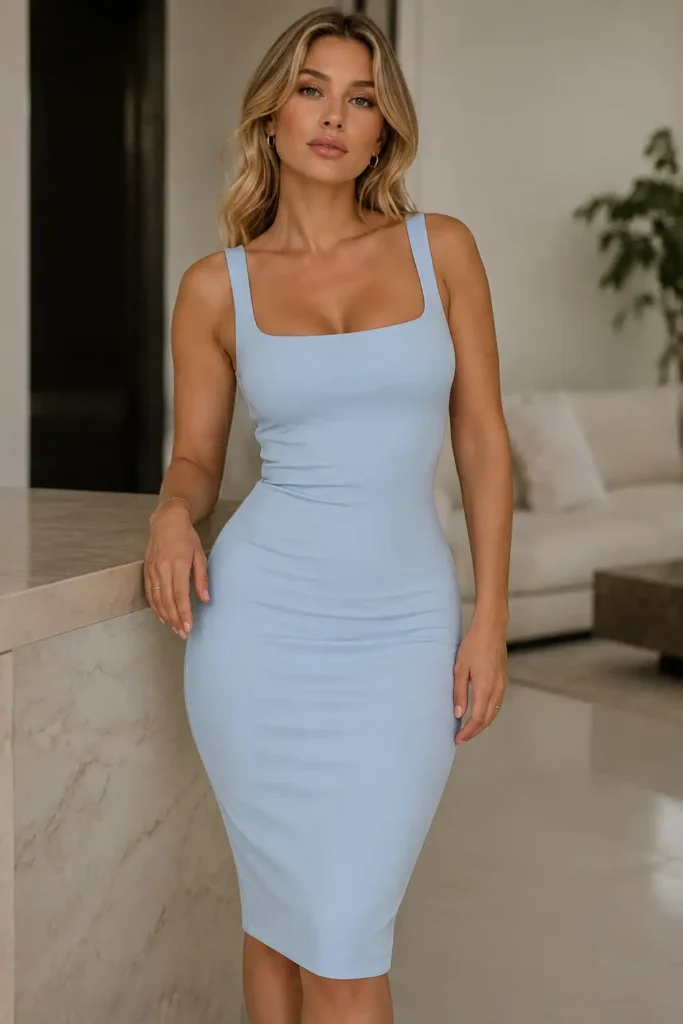
Bodycon Core Style
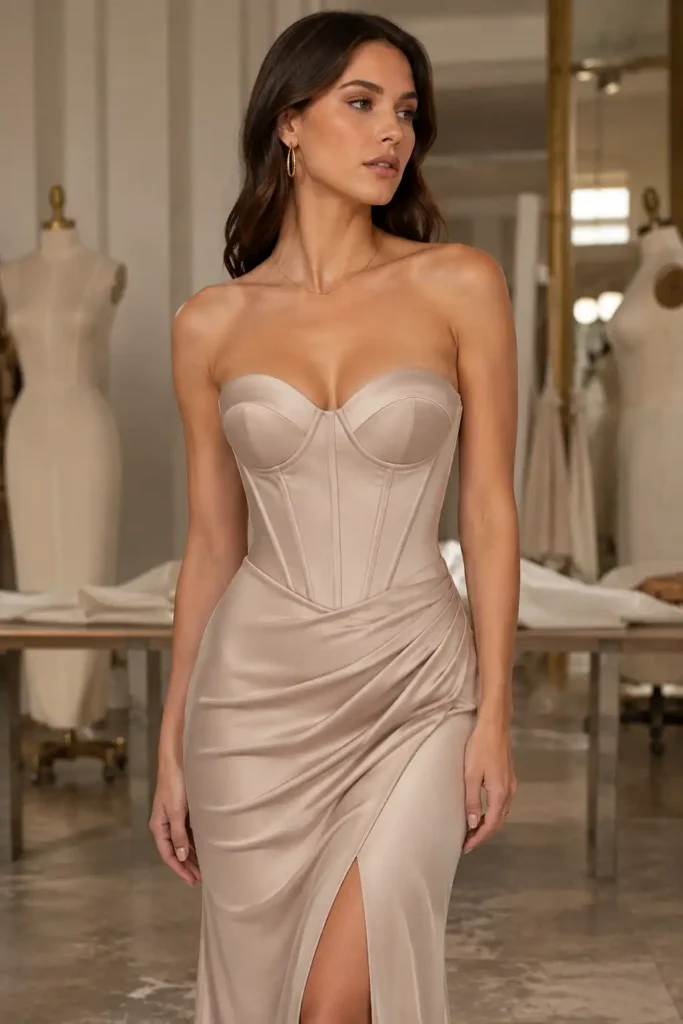
Corset Statement Dress

Satin Slip Dress
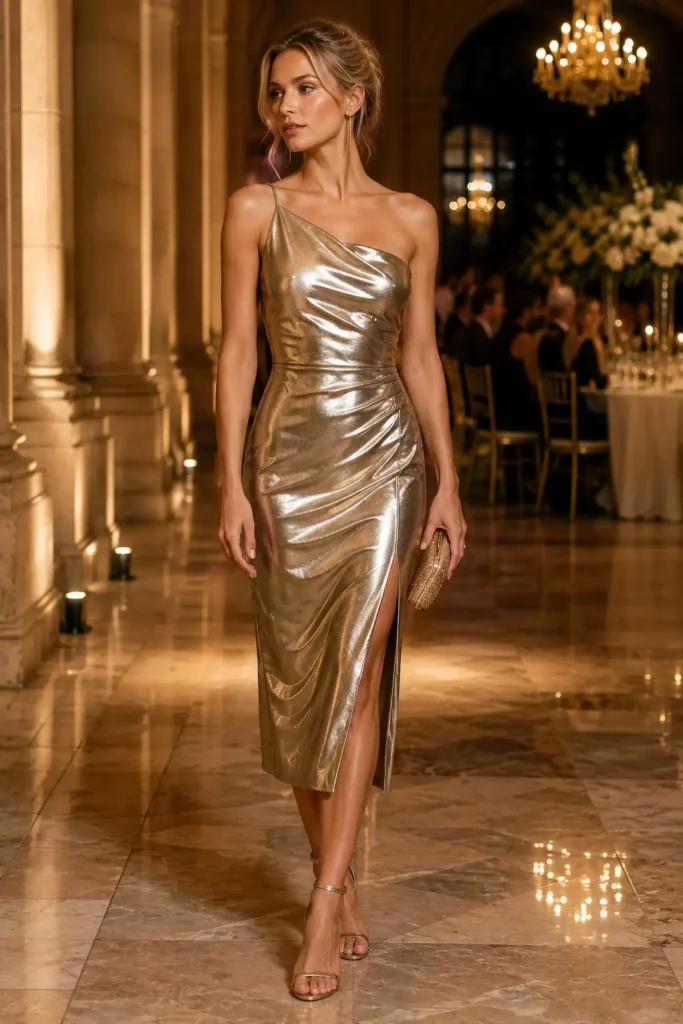
Cocktail Midi Dress

Mesh Cut-Out Dress
Mesh and cut-out styles deliver visual impact with lower material weight, but stability depends on internal construction. Power mesh direction, lining coverage, edge binding, seam recovery and cut-out anchor points must be tested under movement. Transparent sections should remain deliberate across sizes. Reinforcement around joins, straps and openings helps prevent distortion during wear and repeated handling.

Sequin Party Dress
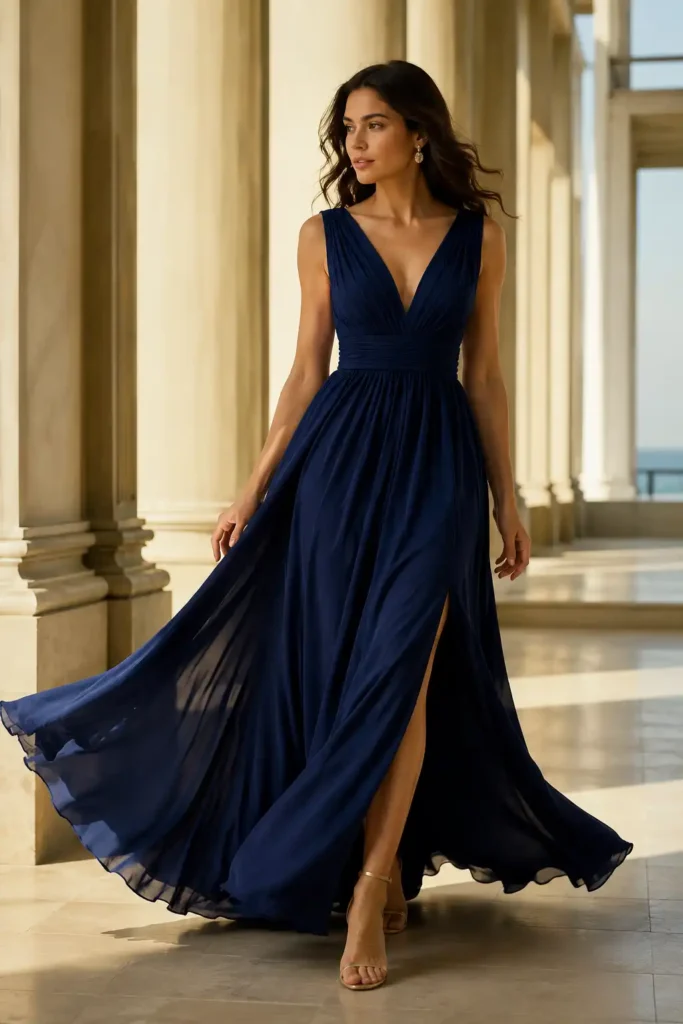
Evening Maxi Dress
Coordinate Fabrics and Colors Across the Capsule
Material planning should create a consistent visual story while protecting fit, cost, MOQ and production stability. Every fabric group needs an approved purpose, matching lining direction and clear handling requirements before bulk allocation.
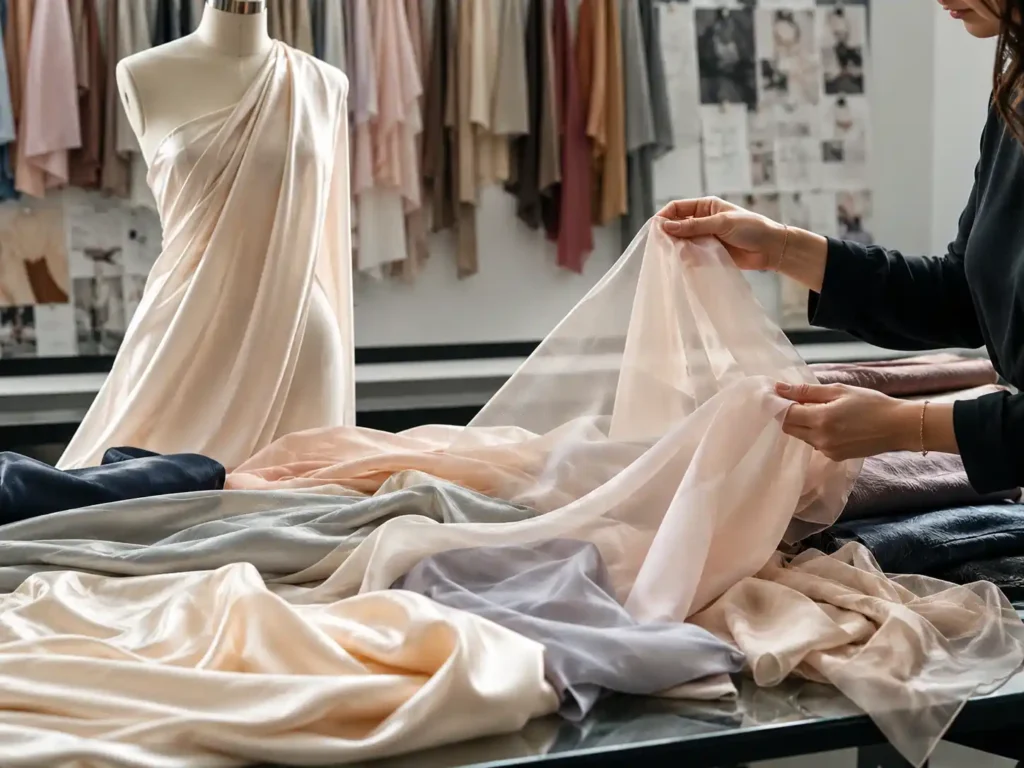
Satin and Stretch Satin for Controlled Shine
Satin is central to many party capsules because it translates color strongly and photographs well. The same visual advantage also exposes technical weaknesses. Surface shine can exaggerate seam puckering, zipper waves, needle marks, pressing shadows and shade differences. Fabric approval should review composition, weight, width, stretch, drape, shine direction, snag sensitivity and bulk availability.
For non-stretch satin, pattern ease and internal support require careful balance. A fitted silhouette cannot depend on fabric recovery, so bust shaping, waist placement and hip allowance must be engineered into the pattern. Stretch satin allows closer fit but needs controlled negative ease and recovery testing. Excessive tension can twist side seams or pull an invisible zipper into waves.
Color approval should connect Pantone reference, lab dip, physical swatch and actual fabric surface. Champagne, ivory, cherry, chocolate and black can appear different under studio lights because shine changes perceived depth. Lining color, thread, zipper tape and trim should be reviewed beside the face fabric. Bulk shade bands and dye-lot records help keep multiple styles within the same color story.
Cutting direction matters because panels cut in opposite directions can reflect light differently. Pressing temperature and contact pressure should be tested before production. Packing may include tissue, controlled folding and garment orientation to reduce hard creases or abrasion.
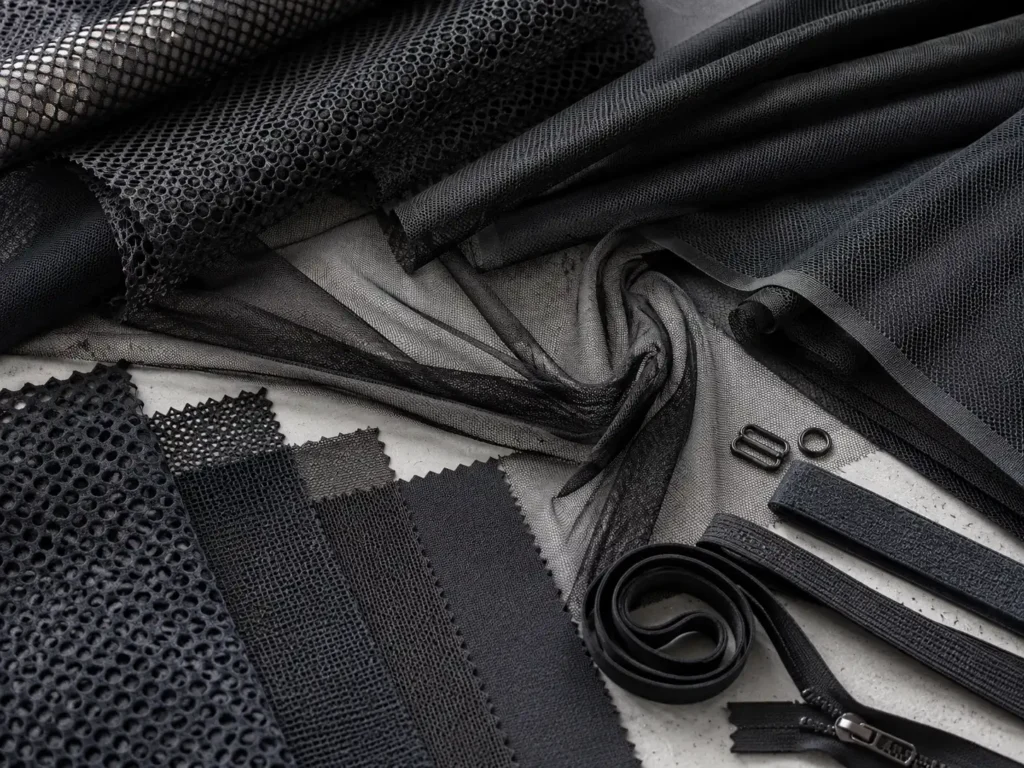
Mesh and Power Mesh for Support and Transparency
Mesh brings transparency, layering and sculpted fit into a party capsule. Standard mesh, stretch mesh and power mesh should not be treated as interchangeable. Each option differs in stretch percentage, recovery, transparency, hand feel and support. The pattern must follow the dominant stretch direction, and lining coverage should be defined for each panel rather than left to sewing interpretation.
Power mesh can support bodycon and corset-inspired shapes, but excessive negative ease may cause edge rolling, seam strain or visible compression lines. Sample review should include standing, sitting, walking and arm movement. Neckline, armhole and cut-out edges need stable finishing. Clear elastic, binding, lining joins or concealed reinforcement may be used according to the design.
Transparency should remain intentional across sizes and skin tones. A panel that looks balanced on the base size may expose more when stretched in larger sizes. The brand’s lining color strategy, opacity requirement and fit preference should be recorded. Mesh holes, runs, distortion and heat damage require incoming and cutting inspection.
When mesh appears beside satin or sequins, edge thickness and seam bulk can affect the garment’s surface. Construction should avoid hard ridges under smooth fabric. Bulk QC should check panel symmetry, recovery, seam stretch, transparency placement and reinforcement at high-tension joins.

Lace and Sequins for Controlled Surface Detail
Lace and sequins provide texture and premium visual value, yet both introduce placement and handling risks. Lace approval should cover motif scale, direction, border availability, base color, softness, transparency, width and supplier continuity. Placement planning is required when large motifs cross bust seams, waistlines, side seams or hems. Symmetry should be defined where the design depends on mirrored placement.
Lining can materially change lace color. Black lining under black lace may deepen the surface, while nude, ivory or tonal lining creates a different retail appearance. Brand teams should approve lace and lining together under consistent light. Seam finish, edge scallop, appliqué placement and loose thread control should be included in the sample standard.
Sequin fabrics require confirmation of base material, sequin type, density, direction, attachment method, stretch and skin contact. Cutting can loosen sequins at seam edges, so controlled clearing and reinforcement may be necessary. Sharp edges should be separated from the body with lining, facing or seam treatment. Zipper areas, underarms and side seams need comfort checks.
Bulk inspection should include missing sequins, loose threads, motif direction, abrasion marks, scratched surfaces and edge protection. Folding and carton compression should be tested because heavy pressure can damage the surface or transfer marks to adjacent garments.
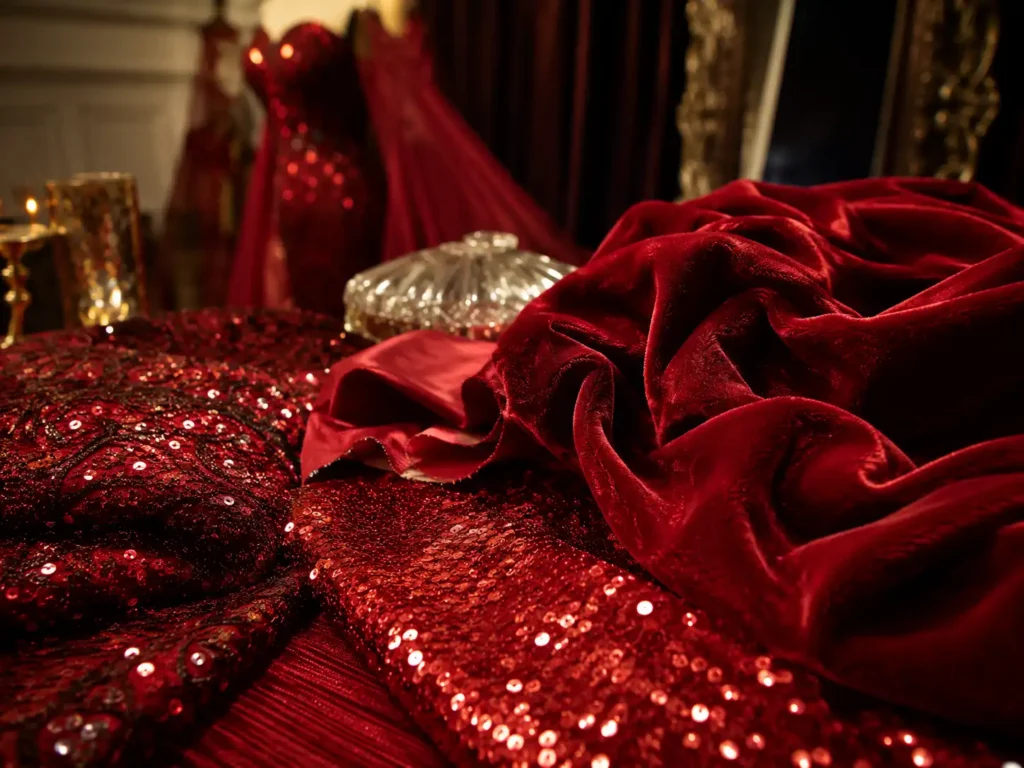
Velvet, Chiffon and Crepe for Range Depth
Velvet brings seasonal richness to holiday party capsules. Pile direction must remain consistent across panels, or the garment will show visible shade changes. Cutting, pressing and packing should minimize pile crushing. Stretch velvet also needs recovery review and seam stabilization. Dark colors can show lint, pressure marks and handling lines, making final finishing especially important.
Chiffon adds movement and softness to layered party or occasion styles. Its transparency, slip and fraying behavior require careful cutting and seam selection. Lining, hem method, gathers and panel direction should be confirmed in the sample. Lightweight layers can shift during production, so bundle control and measurement checks become important.
Crepe offers a more controlled surface for cocktail and structured shapes. Weight, stretch and recovery vary widely across crepe qualities. A stable crepe may support clean waist shaping, while stretch crepe can serve fitted midis and bodycon silhouettes. The material should be evaluated for opacity, pilling, seam impression, pressing response and long-term availability.
A capsule does not need every material family. A disciplined range may use one core satin, one supporting mesh, one surface-detail fabric and one stable commercial base. Fewer well-controlled groups often create stronger color consistency, cleaner costing and easier repeat production.
Engineer Fit for Partywear Silhouettes
Partywear fit must hold its shape under movement, photography and extended wear. Pattern decisions should connect visual proportion, body support, comfort, size grading and fabric behavior instead of relying on a single standard block.
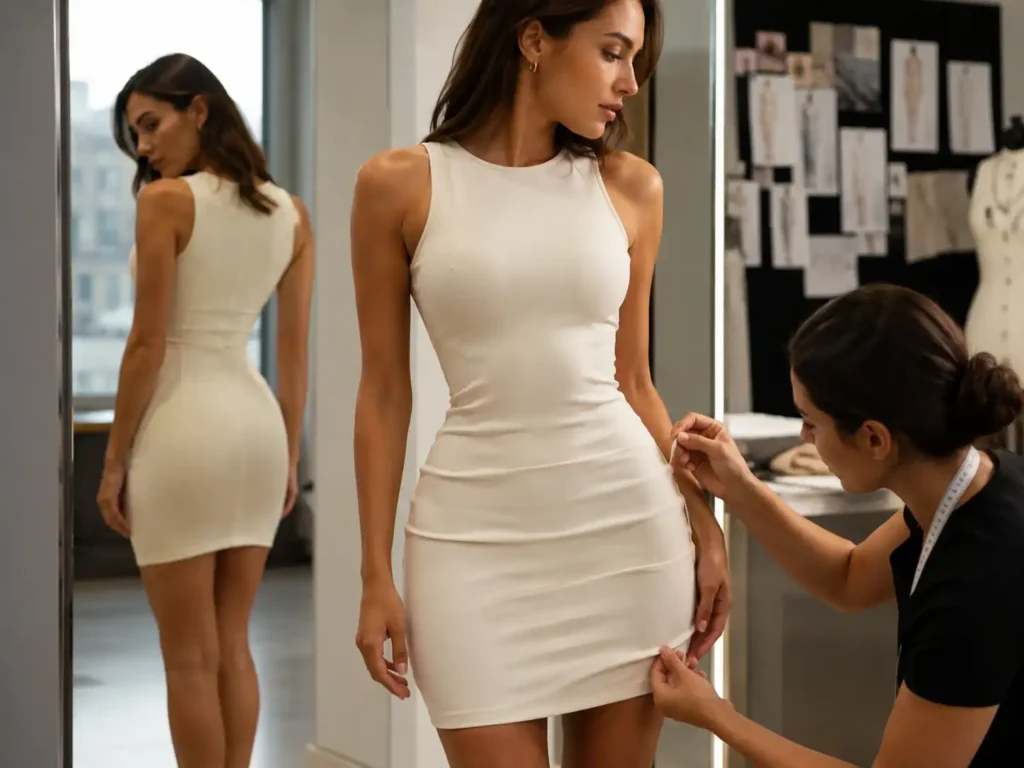
Bodycon and Ruched Fit Across Bust, Waist and Hip
Bodycon fit begins with fabric stretch and recovery. Two fabrics with similar appearance can require different negative ease because one returns quickly while another relaxes during wear. The base pattern should be tested against stretch percentage, lining stretch and intended compression. Bust, waist and hip measurements need a controlled relationship, but side seams should remain vertical and the center front should not pull upward.
Ruching can improve visual shaping, yet uncontrolled gathering creates inconsistent garment lengths and left-right imbalance. Sample instructions should define gathering zones, finished lengths and attachment points. The underlayer must remain smooth, and elastic or gathering threads should hold without creating hard pressure lines. Bulk QC should compare ruching distribution with the Golden sample rather than accepting random variation.
Hem ride-up is a common issue in short fitted dresses. Pattern balance, hip room, fabric recovery and lining tension influence movement. A garment may look correct standing still but rise during walking or sitting. Fit review should include movement and seating. Where needed, hem width, side-seam shape, lining length or fabric tension can be adjusted.
Size grading should follow the brand’s chart, base size and grade rules. Jinfeng Apparel supports US, UK, EU, AU and alpha sizing such as XS-XL, with extended sizes, plus sizes, petite or tall adjustments reviewed from the supplied standard. Plus-size development requires more than proportional enlargement; support, coverage, length and fabric recovery need separate review.
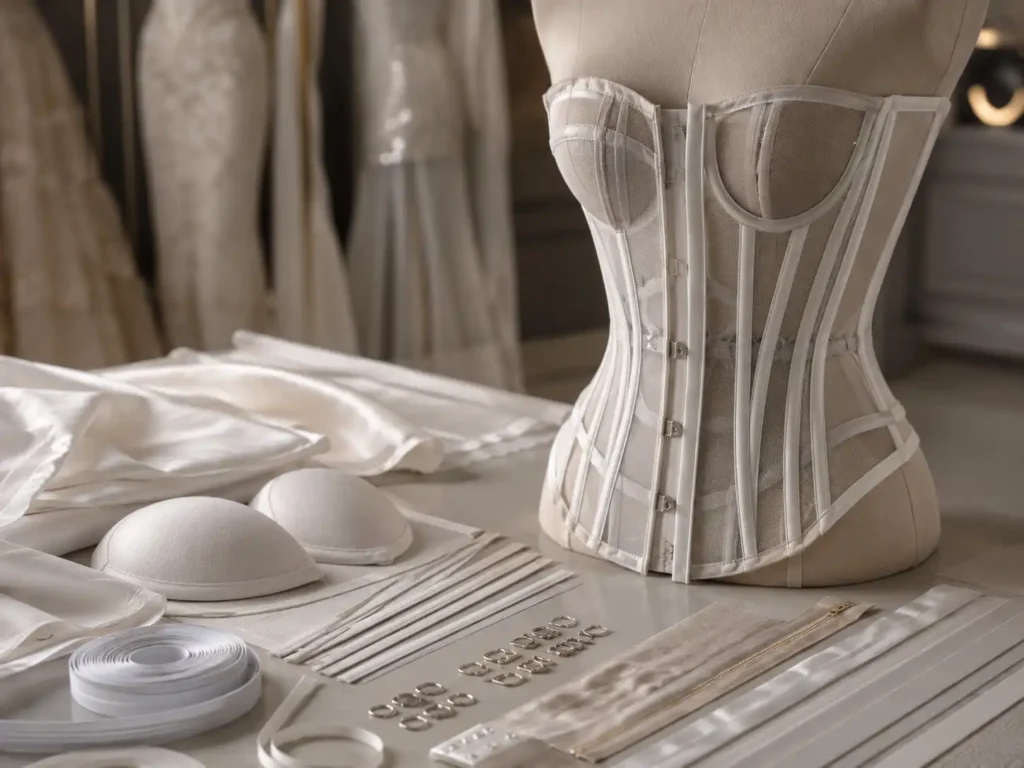
Corset and Strapless Support Without Harsh Structure
Corset-inspired party dresses require coordinated control across upper bust, full bust, underbust, cup position, waist and top edge. Visible boning alone does not create support. Cup shape, lining, channel placement, boning hardness, side coverage, zipper position and anti-slip details must work together. Sample review should assess security, comfort and visual lift without forcing the garment into an unnatural shape.
A strapless neckline should remain stable during movement.
Anti-slip tape may improve grip, but placement and softness matter. Hard or poorly positioned tape can irritate the skin. The back height, side seam, cup position and zipper tension also affect stability. The top edge should sit cleanly without gaping, rolling or cutting into the body.
Boning length and termination points need comfort review. Boning should support the structure without pressing into the underarm, waist or hip.
Foam cups and molded cups should match the intended neckline and target size range. Larger sizes may require wider support, adjusted cup position or modified side coverage rather than a simple grade from the base size.
Bulk control includes cup symmetry, boning alignment, channel consistency, neckline shape, zipper smoothness and lining coverage.
The approved PP and Golden samples should be accompanied by measurements and construction instructions so support details are reproduced across lines and sizes.
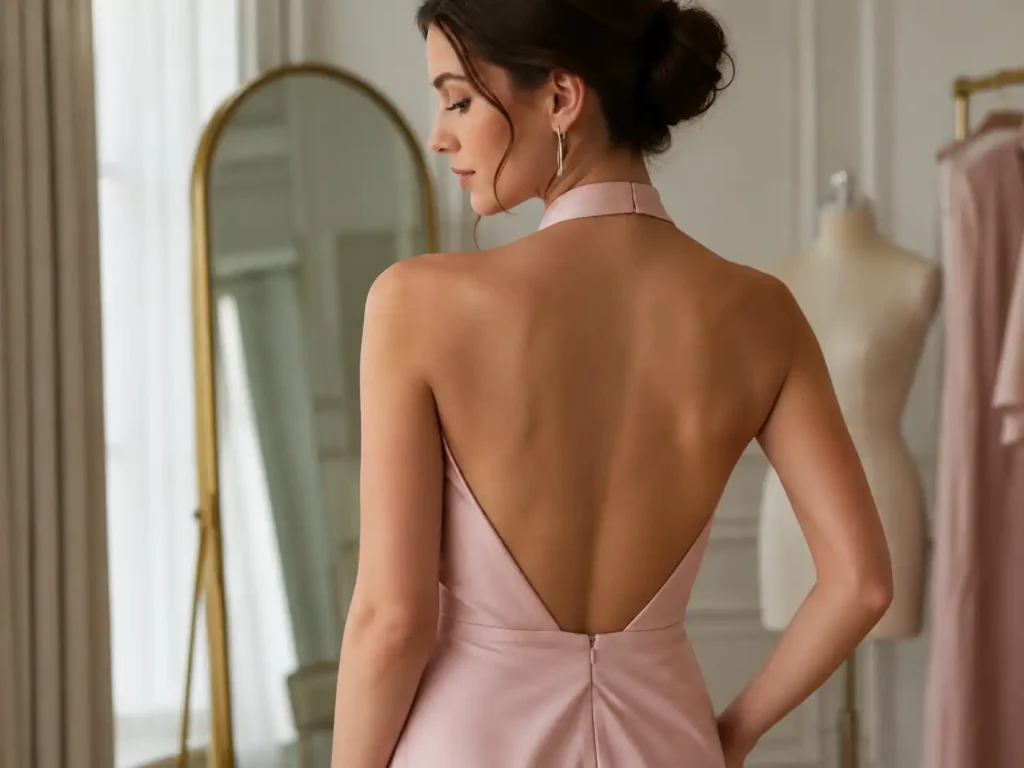
Halter and Backless Balance Under Movement
Halter dresses transfer support toward the neck and upper back. Strap width, attachment strength, neckline depth and bust shaping determine comfort. Narrow straps may create strong visual impact but can concentrate pressure. Adjustable hardware, tie length, elastic inserts or internal support may be reviewed according to the design. Sample fitting should assess neck pressure, bust stability and arm movement.
Backless shapes need a controlled relationship between front support and rear exposure. Lowering the back can reduce the structure holding the bust and side body. Side coverage, internal elastic, concealed support, waist anchoring and strap geometry should be evaluated together. A photo may show the intended exposure but does not reveal how the garment behaves while walking, dancing or sitting.
The back neckline should lie cleanly without lifting or collapsing. Satin and smooth woven fabrics may need stay tape or facing control, while stretch mesh may require recovery support. Zipper placement, hook-and-eye position and lining edge can influence the silhouette. Cut-outs should retain their shape and remain symmetrical across sizes.
Bulk inspection should check strap length, attachment strength, back depth, side coverage, neckline symmetry and reinforcement. Fit comments need clear measurement points because terms such as “slightly lower” or “more secure” cannot be repeated accurately in production without dimensions or construction changes.
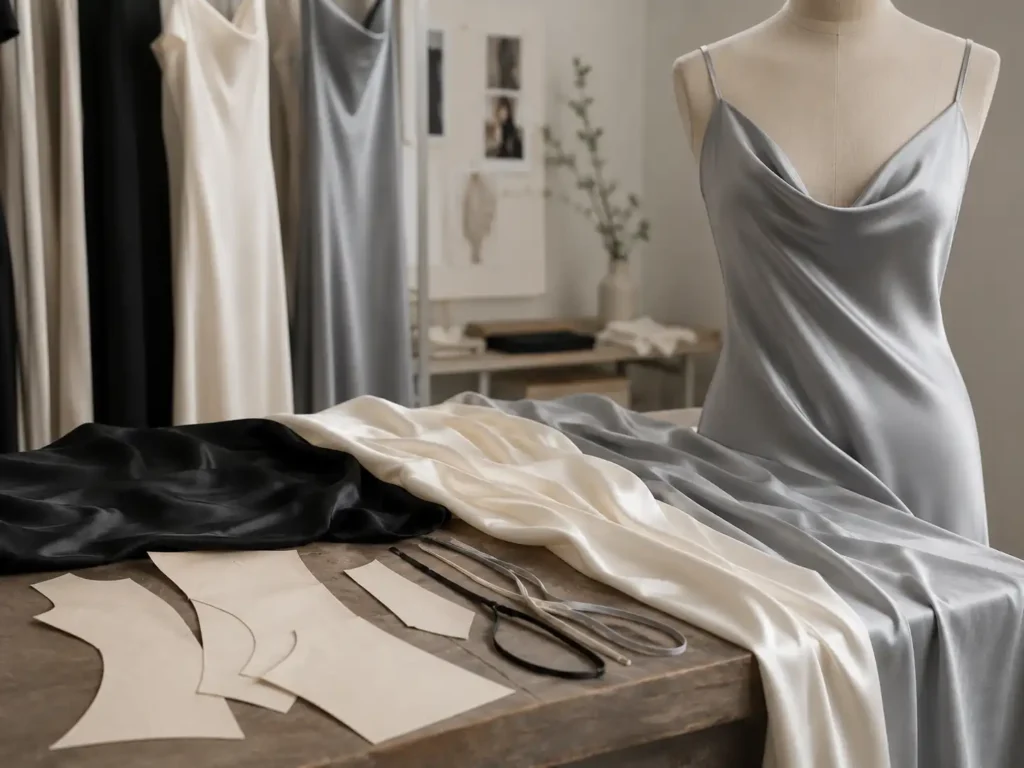
Slip, Cut-Out and One-Shoulder Pattern Balance
Slip dresses rely on clean proportion. Neckline width, cup coverage, strap placement, torso length and fabric drape should align with the intended mood. A low neckline can remain elegant when the pattern controls side exposure and fabric movement. Adjustable straps may support fit flexibility, but hardware size, color and strength should match the garment’s visual level.
Bias-cut or bias-influenced satin can lengthen during hanging and wear. Sample review may require hanging time before final hem confirmation. Side seams, center seams and neckline edges should remain balanced. Lining must move with the shell without pulling or twisting. Pressing and storage also influence final length and surface appearance.
Cut-out dresses need stable anchor points. Openings around the waist, bust or back can distort when the surrounding fabric stretches. Internal tape, binding, lining joins or concealed elastic may control shape. The cut-out should remain deliberate across sizes rather than expanding unpredictably through grading.
One-shoulder styles require left-right balance even though the design is asymmetric. Strap tension, neckline angle, armhole position and side seam length should prevent twisting. Bulk measurements should include shoulder point, neckline drop, underarm height and garment length on both sides where relevant.
Control the Details That Define Partywear Quality
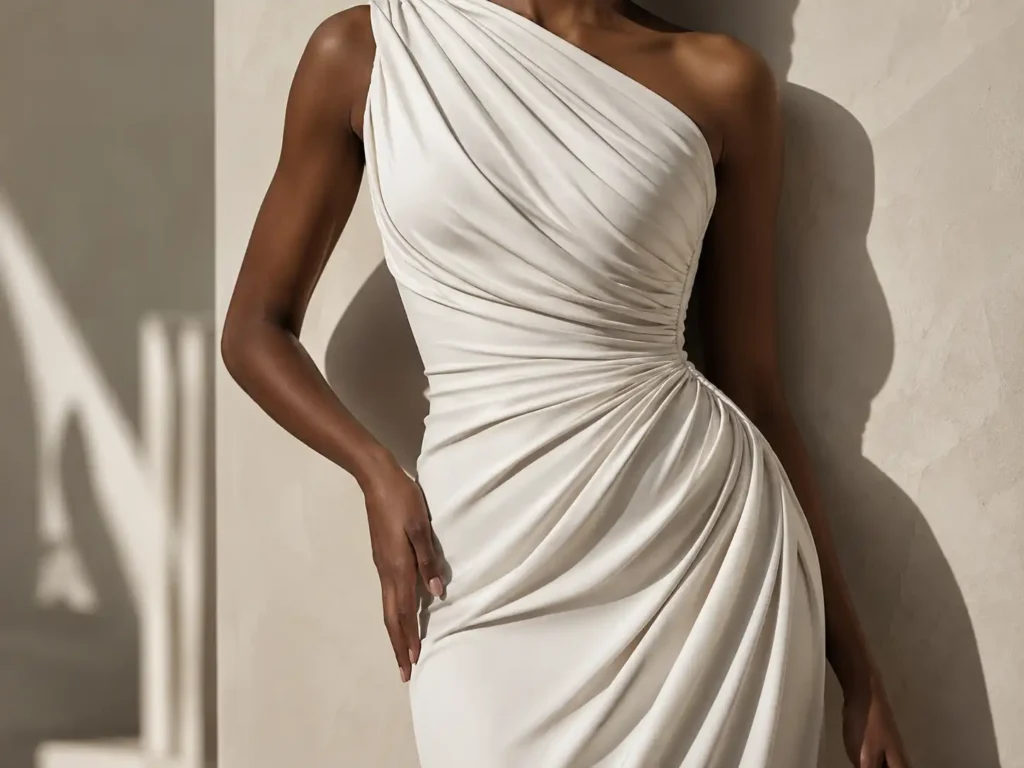
Ruching Symmetry
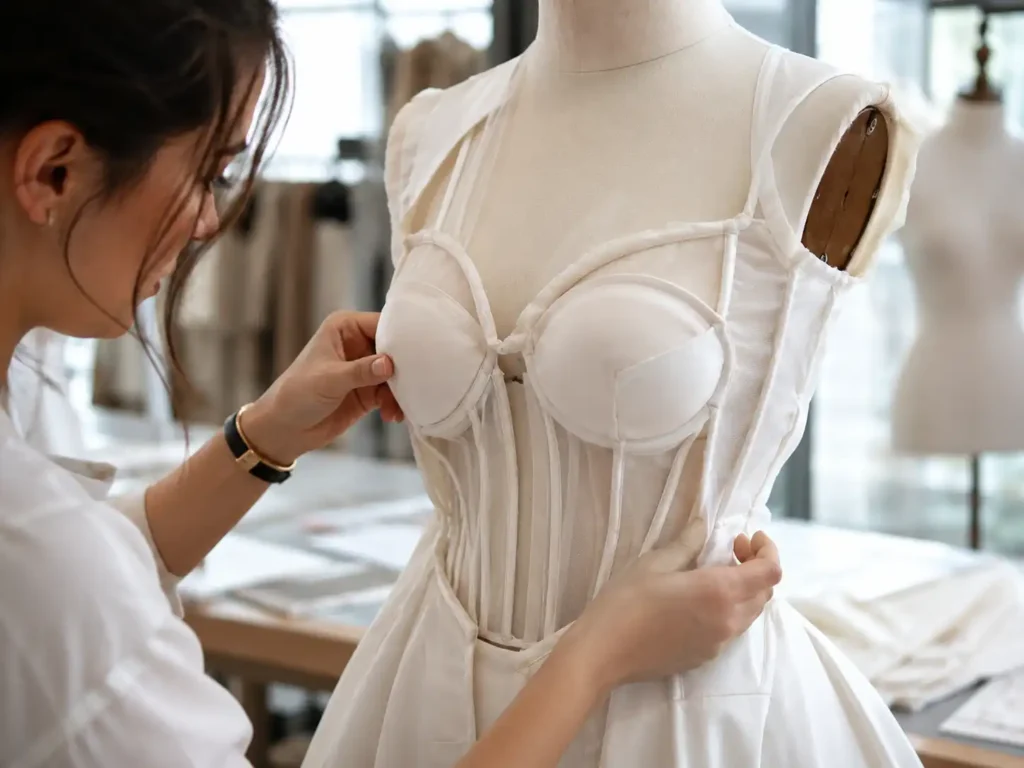
Boning and Cups
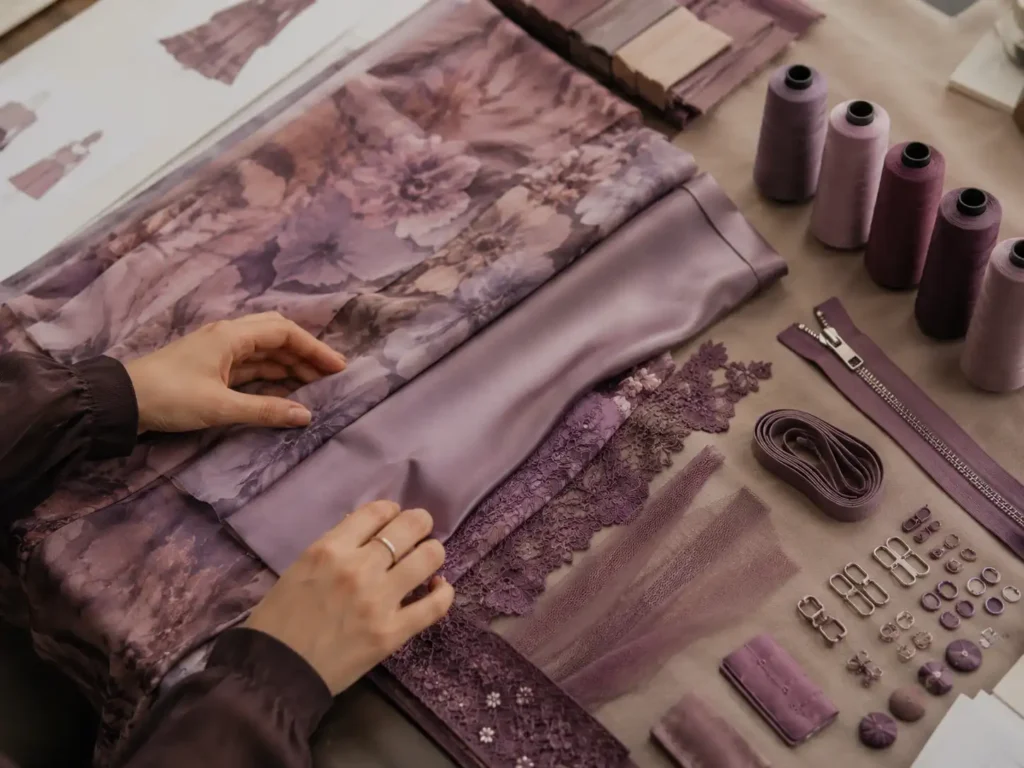
Lining Coverage
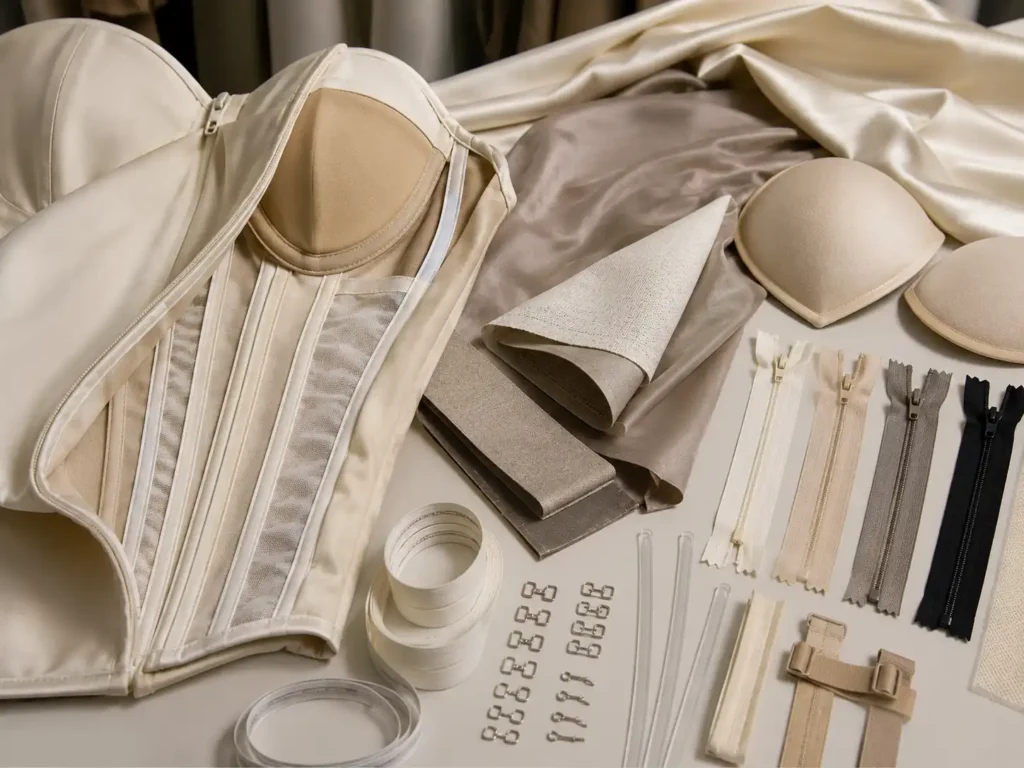
Invisible Zippers

Slit Reinforcement
Lace Placement

Sequin Protection

Pressing and Finishing
Plan Every Style Around a Commercial Role
The following assortment model helps product teams assign a purpose to each garment. Quantities, fabrics and price positions should be adjusted to sales history, launch market and brand identity rather than copied as a fixed formula.
| Style Role | Typical Silhouette | Fabric Direction | Commercial Purpose | Sample Priority | Repeat Potential |
|---|---|---|---|---|---|
| Campaign Hero | Corset mini or sculpted asymmetric dress | Satin, sequins or embellished mesh | Leads campaign imagery and social content | First group | Medium |
| Volume Driver | Bodycon mini or ruched midi | Stretch satin, jersey or power mesh | Carries core volume across colors | First group | High |
| Occasion Core | Cocktail midi or one-shoulder dress | Crepe, lace or double-layer knit | Extends wear into dinners, weddings and events | Main group | High |
| Visual Statement | Mesh cut-out or sequin dress | Mesh, sequins or metallic surface | Adds impact and trend relevance | Photo group | Medium |
| Entry Price Style | Slip mini or clean halter | Satin, crepe or stable jersey | Provides accessible price point and broad appeal | Main group | High |
| Premium Anchor | Evening maxi or structured gown | Satin, velvet, lace or chiffon | Raises perceived value and formal coverage | Complex group | Medium |
| Repeat Extension | Approved shape in a new color | Existing approved fabric group | Supports reorder and seasonal refresh | After sales review | Very high |
Manage Multiple Styles Without Losing Sample Control
Sample management determines whether a capsule becomes production-ready or remains a group of attractive ideas. Jinfeng Apparel separates style review, material status, pattern work, revision records and PP approval so each garment reaches bulk with a clear standard.

Start with a Complete Capsule Intake
Development can begin from tech packs, reference photos, original samples, sketches, line sheets, fabric swatches or mood boards. A useful capsule intake includes style list, target market, launch date, planned quantity, color direction, size range, fabric preference, target price and private-label requirements. Incomplete information can still be reviewed, but final quotation and production timing require confirmed structure, materials and quantities.
The first review identifies shared fabric groups, repeated trims, common fit blocks, complex styles and potential production risks. A 16-style program may be divided into satin, mesh, sequin and structured groups. Hero styles, campaign needs and material-sensitive designs receive priority. Grouping reduces repeated decisions while keeping style-specific requirements visible.
Cost and timing risks are discussed before pattern cutting. Custom dyeing, exclusive lace, special hardware, hand embellishment, custom packaging and certification-related materials can affect MOQ and lead time. Early review prevents a capsule from being approved visually but failing on sourcing or production feasibility.
Build a Controlled Sample Priority Map
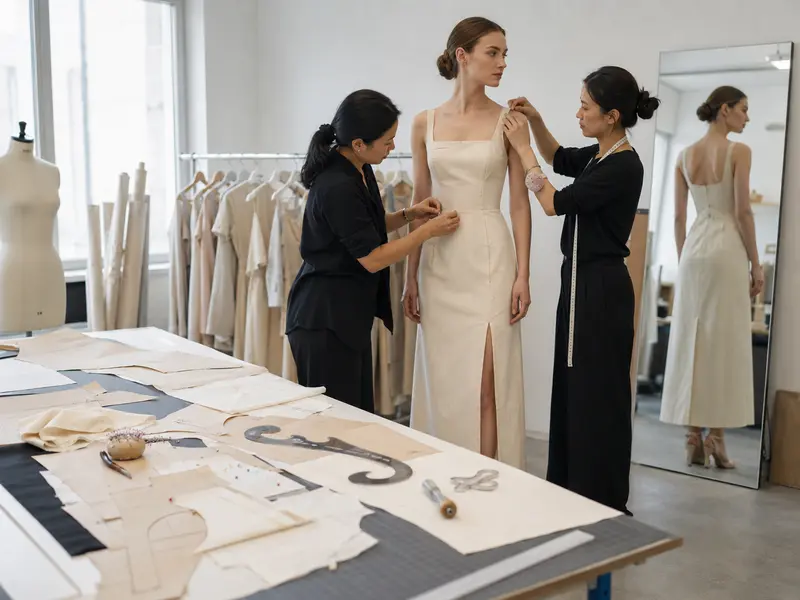
Sample priority should reflect commercial value and risk. Campaign heroes often move first because photography and marketing depend on them. Complex corset, mesh, sequin and cut-out styles also move early because their fit and workmanship may influence final assortment decisions. Stable commercial shapes can follow once shared materials and fit direction are approved.
Jinfeng Apparel’s reference sample timing is 7-10 days for simple first samples, 10-15 days for regular dresses, 12-18 days for medium-complex dresses, sets or jumpsuits, and 15-25 days for corset, strapless, lace, mesh or sequin styles. Custom fabrics or special trims may require 20-35 days or follow supplier timing. Revised and PP samples commonly require 7-15 days, depending on the modification and final material availability.
A priority map should include requested sample type. A photo-ready sample focuses on visual finishing and campaign presentation, while a PP sample must use the final approved fabric, trims, construction, labels and packing standard. The two should not be treated as automatically identical.
Record Every Revision as Production Data
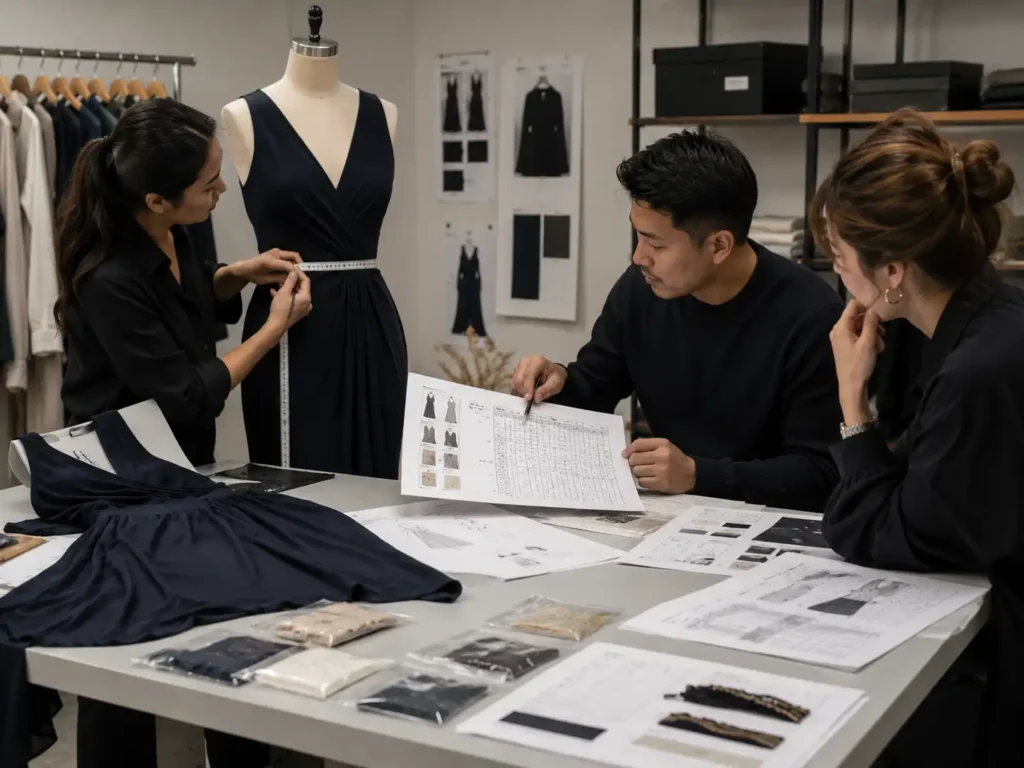
Sample comments need translation into measurable actions. “Raise the neckline,” “make the waist cleaner” or “improve support” are not production instructions until converted into dimensions, pattern changes, trim changes or construction updates. Revision records should identify the issue, requested change, affected pattern area, measurement difference, material impact, cost impact and approval status.
Key fit points may include upper bust, full bust, underbust, waist, hip, strap length, armhole, neckline depth, center-front length, side length, slit height and hem width. Material revisions should record composition, weight, stretch, color, transparency, MOQ and lead-time changes. Workmanship revisions should update stitch type, seam allowance, lining method, boning placement, gathering instruction or zipper installation.
Approved changes move into updated tech packs, size charts, BOMs, sewing instructions and QC checklists. Written version control prevents older comments from returning during bulk production.
Lock PP and Golden Samples Before Bulk
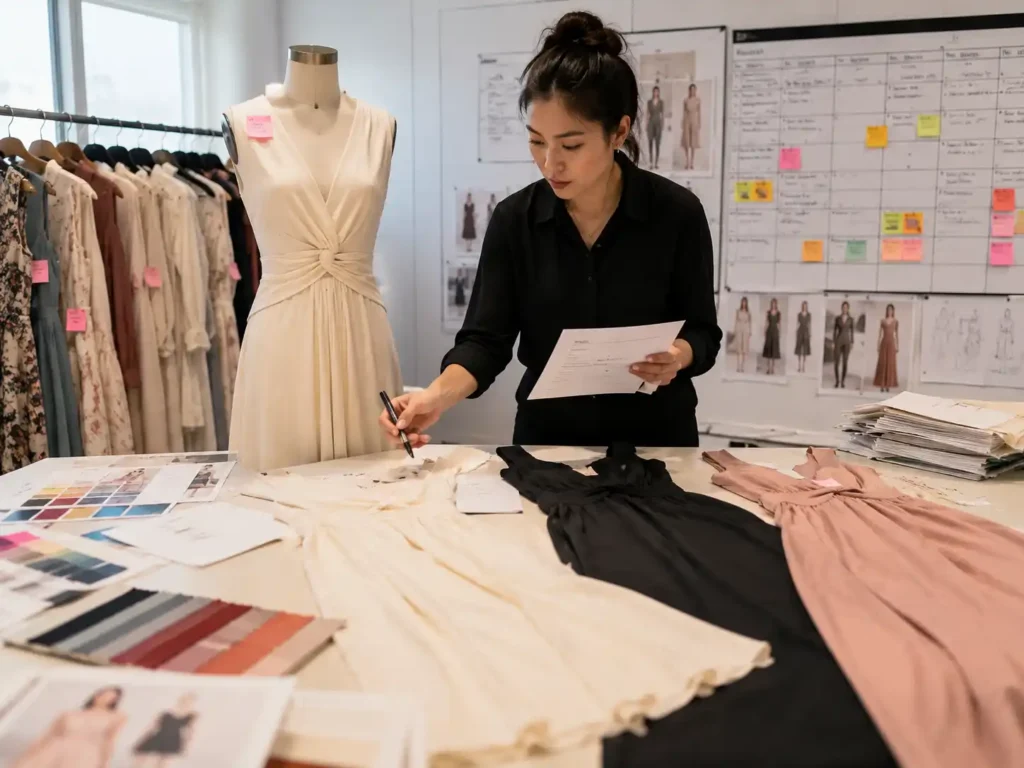
The PP sample is the final pre-production approval standard. It should confirm fabric, color, trims, dimensions, construction, lining, support details, labels, packaging and QC expectations. Major structural or material changes after PP approval require new cost, timing and production-risk review.
A Golden sample is sealed from the final approved standard and supports production, inspection, repeat orders and issue resolution. The physical garment works together with the pattern version, size chart, BOM, sewing instruction, fabric approval, trim approval, QC checklist and packing instruction. No single document can replace the complete standard.
For multi-style programs, each style needs its own PP and Golden status. Bulk release should follow approved style groups rather than waiting for one unresolved style to hold the entire capsule or allowing unapproved styles to enter production.
Connect Development to the Launch Calendar
Capsule Brief
Material Direction
Pattern Development
First Samples
Fit Revisions
Photo Samples
PP Approval
Bulk and Delivery
Understand MOQ Across a Multi-Style Capsule
Jinfeng Apparel’s MOQ starts from 200 pieces per style and color. MOQ is calculated by style and color rather than total capsule quantity. Fabrics, trims, custom dyeing, printing and packaging may carry separate supplier requirements.
| Capsule Plan | MOQ Interpretation | Development and Cost Note |
|---|---|---|
| 1 style x 1 color x 200 pieces | Meets the starting garment MOQ | Final approval depends on fabric, construction and schedule |
| 1 style x 2 colors x 200 pieces each | 400 pieces total | Each color requires material, cutting, SKU and QC control |
| 4 styles x 50 pieces each | Does not equal the standard MOQ | Separate patterns and production setups remain required |
| 12 styles x 2 colors x 500 pieces each | 12,000 pieces total | Suitable for a coordinated capsule with clear style-color planning |
| Multiple styles sharing one satin | Material coordination may improve | Garment MOQ remains per style and color |
| Custom-dyed capsule color | Supplier MOQ applies | Lab dip, dye lot, bulk color approval and added lead time are required |
| Custom lace, sequins or hardware | Separate material MOQ may apply | Cost and availability should be checked before sample confirmation |
| XS-XL size range | Can be divided by an approved size ratio | Excessively fragmented ratios increase cutting, labeling and packing complexity |
Match Each Style to the Right Production Resources
Production allocation should follow product structure rather than a single generic capacity claim. Jinfeng Apparel uses owned factories and long-term production partners to match fabric, workmanship, volume and schedule with controlled documentation and QC.
Allocate by Fabric and Construction Logic
Satin slips, stretch bodycon dresses, structured corset styles, lace midis and sequin minis do not create the same production demands. Fabric handling, machine setup, seam method, operator skill, pressing and inspection points differ. Styles are grouped by fabric family, pattern complexity, support structure, trim requirement and expected output rather than assigned only by available space.
Owned factories provide the main production foundation, while long-term partners support flexible allocation and seasonal peaks. Each production unit receives approved samples, fabric and trim standards, size charts, BOMs, sewing instructions, QC requirements and packing details. Complex work should not be assigned before the responsible line understands construction and quality expectations.
Material arrival and production release are tracked by style. One delayed lace or custom trim should not automatically stop styles with approved stock materials. Controlled style grouping allows approved sections of the capsule to move while unresolved items remain outside production.
Convert Approvals into Production Documents
Bulk consistency depends on documentation. Every style should have a confirmed style number, color list, size ratio, order quantity, fabric specification, trim list, pattern version, size chart, sewing method, label position, barcode file, packing instruction and QC checklist. Verbal approval alone cannot manage thousands of garments across many SKUs.
Production orders identify quantity and delivery requirements. BOMs define approved materials and components. Sewing instructions communicate stitch type, seam allowance, zipper position, lining method, ruching control, boning placement and label location. QC checklists identify measurements, appearance points and workmanship risks.
Merchandisers track materials, production status, comments and approval records. QC inspectors review incoming materials, cutting, sewing, garment measurements, finishing and packing. Clear records allow issues to be traced to a style, size, color, material batch or process rather than treated as a general order problem.
Phase Delivery Around Launch Priority
Multi-style programs may use one delivery or several phases. Campaign leaders and launch-critical colors can be prioritized when materials and approvals are ready. Remaining inventory may follow by sea, while urgent quantities move by air. Split shipment should be planned by exact style-color-size allocation to avoid warehouse confusion.
Shipment planning includes packing lists, commercial invoices, carton marks, gross and net weights, carton dimensions, quantity breakdown and forwarder coordination. Jinfeng Apparel can work with a client-nominated forwarder or provide options for comparison. Available terms may include EXW, FOB, CIF, DAP or DDP by project, depending on destination and forwarder capability.
Peak-season planning should begin early for holiday, graduation, wedding guest and major party launches. Custom dyeing, sequins, lace, private-label packaging and complex corset work need material booking and QC windows before the production calendar becomes compressed.

Control Quality Across Fabrics, Fits and SKUs
Quality control should prevent defects from spreading, not only identify them after every garment is finished. Party capsules need separate controls for materials, cutting, sewing, fit, finishing and packing because one issue can affect several styles sharing the same fabric or trim.
Fabric and Trim Control Before Cutting
Incoming review checks fabric identity, color, width, weight, hand feel, stretch, recovery, transparency, surface damage, shade variation and quantity. Satin is reviewed for snags, shine direction and dye-lot consistency. Mesh is checked for holes and distortion. Lace is reviewed for motif, damage and color. Sequins are checked for direction, attachment and missing areas.
Trims such as zippers, bra cups, boning, anti-slip tape, hooks, strap hardware, labels, hangtags and packaging materials are matched against approvals. Color, size, material, comfort and bulk availability matter. Incorrect components should be identified before cutting and sewing rather than replaced after garments are completed.
Fabric rolls and dye lots may be recorded to support shade management. Lining, thread and zipper tape should be reviewed with the shell fabric. Bulk color approval becomes especially important when the same color appears across satin, mesh and lace because different surfaces reflect light differently.
Cutting and Sewing Control During Production
Cutting inspection checks fabric face and back, direction, pattern placement, lace motif, mesh damage, size bundles and cut quantity. Panels should be bundled by style, color and size to prevent mixing. Satin and velvet require consistent direction. Lace and prints may need placement control. Early detection is more effective than trying to correct visual mismatch after sewing.
Sewing instructions communicate seam allowance, stitch type, stitch density, thread color, zipper position, lining method, ruching length, boning placement and label location. In-line checks focus on neckline shape, straps, armholes, waistlines, zippers, gathers, slits, symmetry, seam tension and fabric damage.
When an issue appears, production feedback should identify the affected operation, quantity and correction action. Stopping a repeated problem early protects the rest of the order and reduces rework.
Fit and Measurement Control by Size
Measurement control uses the approved size chart, grade rules, tolerance and Golden sample. Key points may include upper bust, bust, underbust, waist, hip, shoulder, strap length, armhole, neckline depth, center-front length, side length, slit height, hem width and lining length. Each silhouette receives relevant points rather than one generic measurement list.
Jinfeng Apparel develops US, UK, EU, AU and alpha-size patterns from the supplied brand standard. XS-XL ranges are common, while extended, plus, petite or tall sizes are reviewed by project. Fabric stretch and recovery must be considered during measurement because a garment can meet flat dimensions yet perform poorly on the body.
Size labels, hangtags, barcodes and polybags should match the garment measurement and order file. Measurement QC therefore connects directly with packing QC.
Finishing, Packing and Final Inspection
Final review checks stains, loose threads, seam quality, zipper operation, lining, support components, embellishment security, symmetry, measurements, pressing and overall appearance. Partywear should be viewed under sufficient light because satin marks, mesh damage and missing sequins can be difficult to see in a dim area.
Pressing follows fabric-specific conditions. Velvet pile, sequin surfaces, mesh and satin require different protection. Finished garments are then matched with labels, hangtags, barcode stickers, polybags and size-color sorting. Carton quantities and marks are checked against the packing list.
Inspection can follow project-defined standards, including client inspection, third-party inspection or AQL arrangements. The applicable standard, sampling plan, critical points and reporting requirements should be agreed before final inspection rather than introduced after goods are packed.
Prepare Every Capsule SKU for Retail Delivery
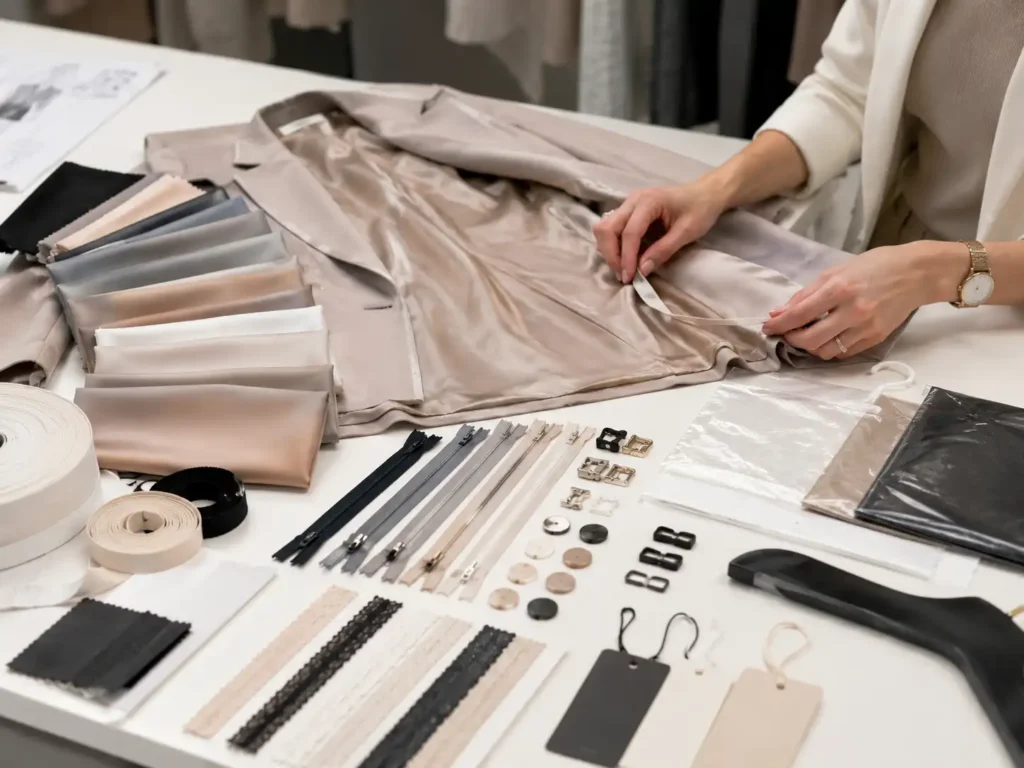
Brand Labels
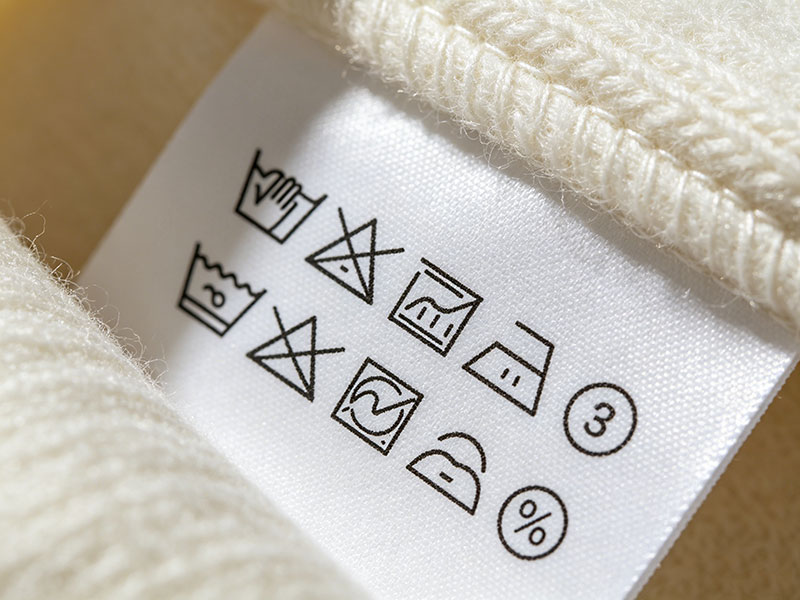
Size and Care Labels

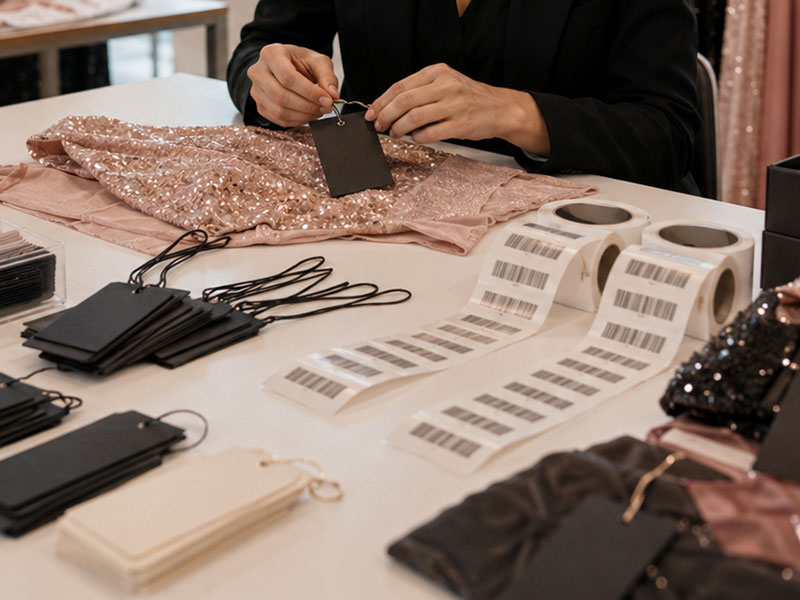
Hangtags and Branding
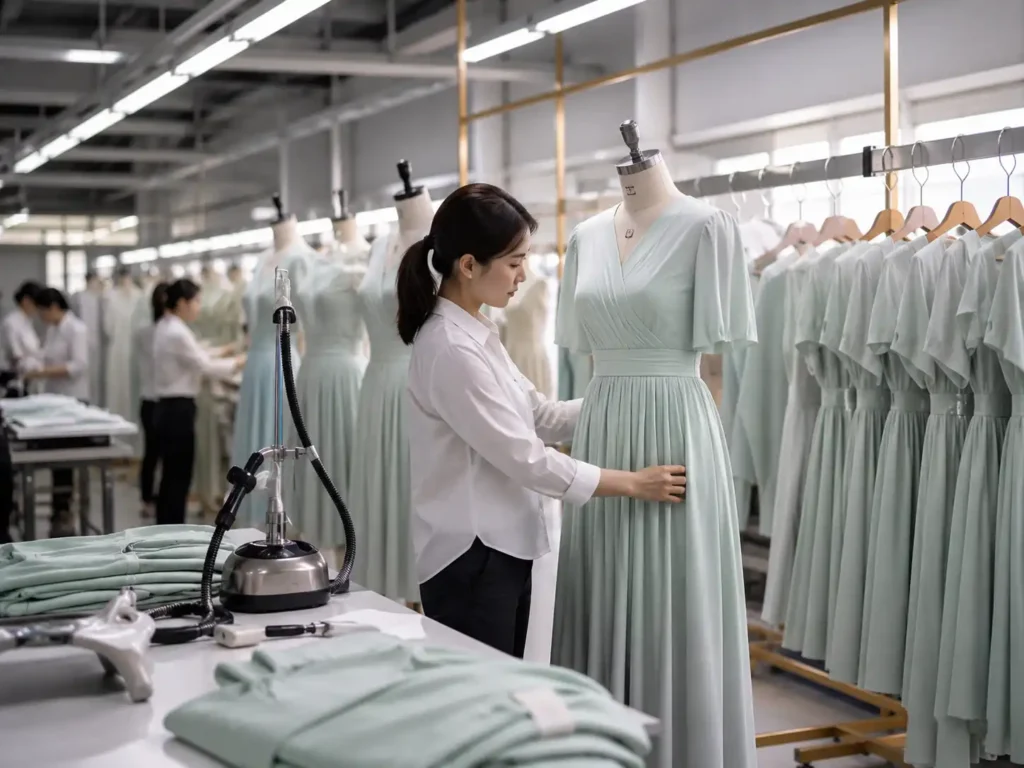
Barcode and SKU Labels
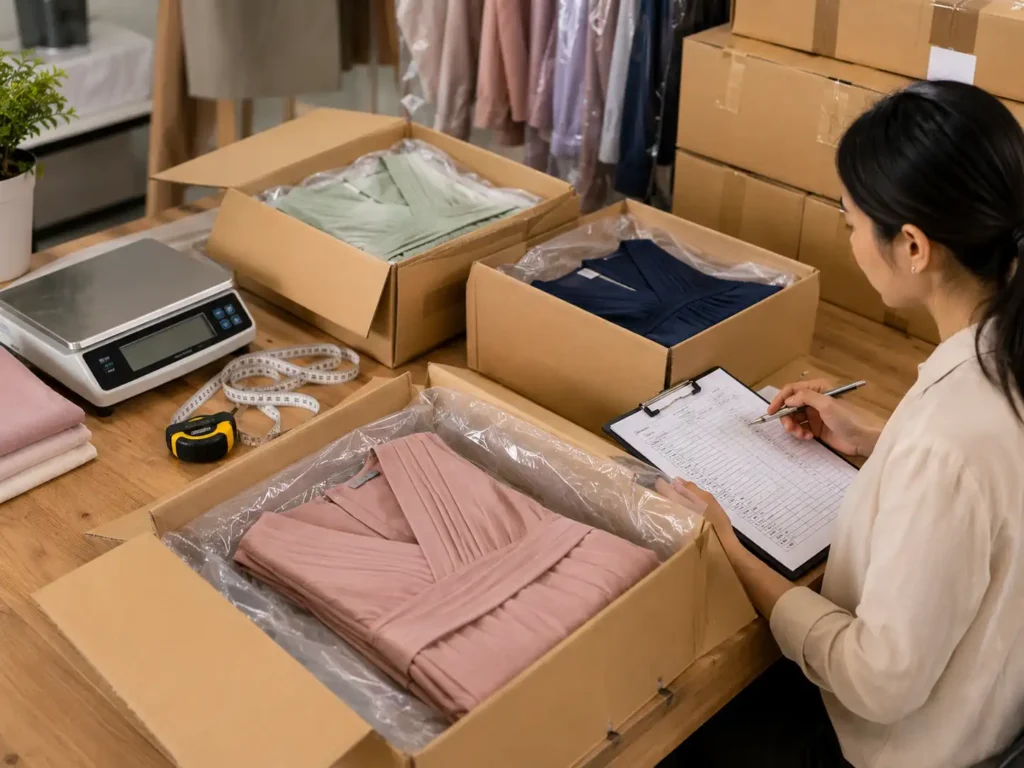
Garment Protection
Cartons and Warehouse Marks
What a Capsule Manufacturing Partner Should Deliver
Collection-Level Planning
Traceable Sample Versions
Material Coordination
Production Documentation
SKU and Packing Control
Repeat-Order Readiness
Protect the Collection Before and After Launch
NDA-Based Review
Design and File Protection
Repeat-Order Records
Party Capsule Manufacturing Frequently Asked Questions
Yes. Jinfeng Apparel can review mood boards, reference photos, sketches, line sheets, original samples or partial tech packs. Early development still requires clarification of neckline, length, fabric, lining, closure, support level, size range, quantity, target price and launch date. Final bulk quotation cannot be confirmed from inspiration images alone because material, pattern, workmanship and packaging details affect cost and timing.
Brand-level collection programs commonly cover 10-30 styles. The exact number should reflect fabric groups, pattern complexity, sample capacity, launch timing and order volume. Styles are grouped by material, silhouette, workmanship and priority. Hero products and complex constructions usually move first, while stable commercial shapes follow once shared material and fit directions are confirmed.
MOQ starts from 200 pieces per style and color. Multiple styles totaling 200 pieces do not equal the standard MOQ, and one style in two colors normally requires 200 pieces in each color. Custom dyeing, lace, sequins, special trims, printing and branded packaging may carry separate supplier MOQ requirements. Final feasibility is reviewed from the complete style-color-quantity plan.
Yes. Shared fabric can improve color consistency, sourcing efficiency and repeat potential across a capsule. Styles may share satin, mesh, lining, zippers or selected trims when performance and construction are compatible. Garment MOQ remains calculated by style and color. Each dress still requires its own pattern, BOM, sample approval, sewing instruction and QC standard.
Simple first samples commonly require 7-10 days, regular dresses 10-15 days, medium-complex dresses 12-18 days and corset, strapless, lace, mesh or sequin styles 15-25 days. Custom fabrics or special trims may require 20-35 days or follow supplier timing. Revised and PP samples commonly require 7-15 days, depending on changes and final material readiness.
Yes. Photo-ready samples can support campaigns, lookbooks, showroom reviews and sales meetings. Finishing focuses on visual appearance, pressing, surface quality and presentation. A photo sample does not automatically replace the PP sample. Final bulk production still requires approved materials, dimensions, construction, labels, packing and QC standards through PP and Golden sample control.
Patterns are developed from the brand’s size chart, base size, grade rules, target market, fabric stretch and fit preference. Bodycon styles focus on bust-waist-hip balance, negative ease, recovery, lining tension and hem movement. Corset styles add upper bust, underbust, cup position, boning, top-edge stability and side coverage. US, UK, EU, AU, XS-XL and extended size standards can be reviewed by project.
Yes. Private-label support can include woven labels, size labels, care labels, hangtags, hang strings, barcode stickers, SKU labels, polybags, stickers, cartons, carton marks and warehouse labels. Artwork, content, position, MOQ and development timing should be approved before bulk packing. Every barcode and label is matched to the correct style, color and size file.
Yes. Client inspections and third-party inspections can be coordinated by project. Inspection timing, sampling plan, critical measurements, appearance requirements, AQL level where applicable, reporting format and access arrangements should be agreed before final packing. Jinfeng Apparel also performs incoming material checks, cutting inspection, in-line checks, garment measurement review, finishing inspection and packing QC.
Yes. NDA-based cooperation can protect tech packs, original samples, patterns, materials, labels, packaging and unreleased designs. Approved patterns, fabric references, trim records, measurements, sewing instructions, QC notes and packing files can be retained for repeats. New dye lots, changed fabrics, new colors or later batches still require approval before production.

Send Your Party Capsule Development Brief
Share the range structure, launch plan and available development files with Kelly.
Jinfeng Apparel will review style complexity, material direction, sample priorities, MOQ fit, private-label requirements and production risks before proposing the next development step. A complete brief allows the team to separate hero looks, commercial styles, complex constructions and shared material groups from the beginning.
Please include:
- Brand or company name and target market
- Planned launch date and required warehouse date
- Number of styles and product line sheet
- Tech packs, sketches, reference images or original sample details
- Target quantity for every style and color
- Fabric, lining, trim and color preferences
- Size chart, base size, grade rules and planned size ratio
- Photo-ready, salesman or PP sample requirements
- Woven labels, care labels, hangtags, barcodes and packaging files
- Target price range and preferred shipping method, where available


