 Skip to content
What Is the Best Organza for Dresses? A Guide to Types, Uses, and Production

Your trusted Women’s Apparel Manufacturer from China

Organza can look almost weightless in the hand and still determine the entire architecture of a dress. A soft satin tends to fall toward the body, chiffon usually moves in loose waves, and tulle creates airy net-like volume, but organza can stay visibly away from the body while remaining sheer. That combination makes it especially useful for puff sleeves, ruffles, layered skirts, bows, overskirts, sculptural hems, and occasion dresses that need volume without the visual heaviness of a dense fabric. It also makes selection more demanding than simply choosing a fiber name or the most expensive swatch on a fabric card.
The best organza for dresses depends on the silhouette, not on one universally superior fabric. Silk organza often suits refined, premium-looking styles, while polyester organza is widely used when structure, color choice, repeat sourcing, and commercial practicality matter. Crystal, mirror, printed, embroidered, and other specialty organzas work best when their transparency, stiffness, surface effect, lining, and construction match the intended dress.
A small swatch can make nearly every organza look promising, yet the real test begins when that fabric becomes a sleeve, a gathered seam, a layered skirt, a zipper opening, or a finished garment under photography lighting. Many disappointing organza dresses do not begin with obviously poor fabric; they begin with a reasonable fabric used in the wrong structure. Looking at organza from the finished dress backward gives designers, sourcing teams, and product developers a much clearer way to choose.
What Is the Best Organza for Dresses?
The best organza is the one that creates the intended shape while remaining compatible with lining, construction, comfort, price position, and production volume. Silk organza can deliver refined transparency and premium character, while polyester organza often offers stronger commercial consistency and structure. The correct choice comes from testing how the specific fabric behaves in the actual dress rather than judging the fiber name alone.
What Makes Organza Work
Organza is useful because it combines transparency with enough resistance to hold three-dimensional shape. A lightweight fabric is often expected to collapse into drape, yet a suitable organza can lift a sleeve away from the arm, keep a bow open, sharpen a ruffle, or build skirt volume while allowing the lining and underlayers to remain visually present. That ability to create volume without dense visual weight is the main reason designers reach for organza when a dress needs to feel airy but still look intentional and architectural.
The same characteristic also exposes weak construction. A bulky seam allowance, uneven gathering, poorly placed lining edge, twisted zipper, or pressing mark can remain visible through the surface. Organza is therefore less forgiving than many opaque fabrics. The design team has to think about the shell, lining, seam finish, internal support, and final pressing as one system. When those decisions are coordinated early, the fabric can look clean and sophisticated; when they are handled separately, the transparency makes every compromise easier to see.
Which Properties Matter
Crispness is usually the first property to judge because it controls how strongly the fabric stands away from the body. Stronger crispness can be excellent for sculptural sleeves, short flared skirts, oversized bows, and pronounced ruffles, while moderate crispness is often easier to manage in longer dresses that need movement. Transparency is equally important because it determines how much of the lining, seam allowances, darts, cups, boning, zipper tape, and other internal construction remains visible in the finished garment.
Surface reflection and handling stability deserve the same attention. Some organzas have a quiet sheen that reads softly in daylight, while others reflect strongly under flash or event lighting. A fabric that looks elegant in a 15 cm swatch can appear much brighter when several meters are gathered into a dress. During development, it is useful to compare one, two, and three layers over the intended lining, then check how the material frays, snags, creases, responds to pressing, and recovers after light compression.
Property | Practical Development Check | Effect on the Finished Dress |
Crispness | Gather or fold a 30-50 cm test piece | Sleeve lift, ruffle projection, skirt volume |
Transparency | Place over the final lining and internal components | Coverage, seam visibility, color depth |
Surface shine | Review under daylight and direct artificial light | Photography response and perceived finish |
Layer buildup | Compare 1, 2 and 3 layers | Opacity, stiffness and color saturation |
Fraying | Cut and handle sample edges before finishing | Seam choice and production handling |
Heat response | Press a scrap before garment pressing | Risk of glazing, distortion or damage |
Recovery | Lightly compress, hang and review | Packing recovery and shape retention |
Is One Type Always Best
There is no single organza that performs best across puff-sleeve minis, floor-length occasion dresses, transparent overlays, embroidered statement pieces, and layered midi skirts. A highly crisp quality may make a short sleeve look impressive but cause a long skirt to feel too rigid. A softer quality may produce graceful movement in an overlay yet fail to hold a dramatic bow. The useful question is not which organza is highest quality in isolation, but which property matters most in the garment being developed.
The most reliable selection process begins with the intended silhouette. Define how far the fabric should stand away from the body, how many layers are planned, which areas touch skin, where transparency is desirable, and how much movement is expected when the wearer walks or sits. Then compare fabric options against those conditions. This prevents a common sourcing mistake: approving an organza because it feels attractive in the hand even though its behavior changes completely once it is gathered, lined, pressed, and worn.
How to Judge Quality
A good organza should be judged by consistency and suitability rather than by a vague idea of luxury. The weave should appear reasonably even for the intended grade, the surface should be free from unacceptable pulls or obvious defects, the hand should stay consistent across the usable width, and the color should match the approved reference closely enough for the project. Transparent fabrics make surface irregularities more visible, so large clean panels generally demand more careful inspection than a heavily printed or textured design.
Production behavior is also part of fabric quality. An organza can look beautiful on the roll but become a poor choice if it snags easily during sewing, changes appearance under normal pressing, varies significantly between lots, or requires so many additional layers that the finished cost rises beyond the original plan. The strongest definition of quality is practical: the fabric should create the approved visual effect and remain controllable through cutting, sewing, finishing, packing, and repeat production.
Which Organza Types Work Best for Dresses?
Silk, polyester, crystal, mirror, printed, embroidered, and other specialty organzas can all work well for dresses, but they serve different purposes. Silk is often chosen for refined structure, polyester for broad commercial use and repeatability, highly reflective organzas for statement effects, and decorative versions when embroidery, print, texture, or motif placement carries the main visual interest of the design.
Silk Organza
Silk organza makes the most sense when the fabric itself contributes visibly to the perceived value of the dress. Its combination of transparency, crisp structure, and more nuanced surface reflection can suit eveningwear, occasion dresses, couture-influenced silhouettes, refined sleeves, overlays, layered skirts, and dimensional details where a highly synthetic shine would work against the intended look. It is particularly effective when the organza covers enough visual area for its fiber character and surface quality to be noticed rather than hidden inside the construction.
Silk should not automatically be interpreted as soft. Organza remains a crisp woven fabric, and silk qualities can range from relatively supple to noticeably firm. Because the material cost is often higher, pattern efficiency and sample accuracy become more important. Before committing to a large order, the team should stabilize the silhouette, lining, seam treatment, and cutting plan. A premium shell does not automatically produce a premium dress if the gathers are uneven, the lining is poorly matched, or the pressing process leaves visible marks.
Polyester Organza
Polyester organza covers a very wide range of commercial applications because it can be produced with different levels of stiffness, shine, transparency, color saturation, print, embroidery, and decorative finishing. It is commonly suitable for party dresses, puff-sleeve styles, tiered skirts, eventwear, statement minis, overskirts, and fashion pieces that need a repeatable shape. For brands developing several colors or repeat orders, sourcing continuity can be as important as the initial fabric price because a successful style may need to return in new seasons or additional colorways.
The name “polyester organza” is still too broad to approve by itself. One quality may feel controlled and refined, while another may be very dry, hard, or glassy. The production record should therefore identify the exact supplier article or approved physical reference, together with color, width, hand, transparency, and shine level. Pressing also deserves a trial before bulk finishing because synthetic fibers can react poorly to excessive heat, and visible glazing or distortion is difficult to correct once it appears on a transparent surface.
Crystal and Mirror Organza
Crystal and mirror organza are useful when stronger light reflection is an intentional part of the design. Naming conventions vary between mills and suppliers, so the physical fabric always matters more than the label, but these categories generally describe organzas with a brighter or more luminous surface than standard plain qualities. They can work especially well for partywear, birthday dresses, evening pieces, oversized sleeves, transparent overskirts, bows, and styles designed to make an immediate visual impact in product photography or event lighting.
Scale changes the effect dramatically. A small swatch may appear pleasantly luminous, while several meters gathered into a skirt can become much more reflective and visually intense. The safest approach is to test the fabric at something close to garment scale, photograph it over the intended lining, and review it under daylight as well as direct artificial light. Maximum shine is not automatically the most premium result. A quieter surface can sometimes make a structured silhouette look more expensive because the fabric supports the design rather than competing with it.
Decorative Organza
Printed, embroidered, jacquard, flocked, appliqued, or otherwise decorated organza can act as the main visual feature of a dress rather than simply as a transparent structural layer. Floral embroidery works well in romantic occasion styles, while printed organza can create depth because overlapping layers change the way motifs and color are perceived. Decorative organza can transform a relatively simple pattern into a statement garment, but the surface treatment also introduces cutting, placement, weight, and consistency issues that plain fabric does not create.
Before bulk cutting, review the full usable width and at least one complete motif repeat rather than relying on a small swatch. Directional florals, borders, engineered prints, or asymmetric embroidery may require left-right sleeve matching, center-front placement, or controlled skirt-panel positioning. Those requirements can increase consumption because pattern pieces can no longer be nested freely. Dense embroidery can also make selected areas much heavier and less flexible than the open base cloth, so the decorated fabric itself should be used for final sample approval whenever possible.

How Do Silk and Polyester Organza Compare?
Silk organza generally offers a more refined fiber character and nuanced appearance, while polyester organza usually provides stronger commercial advantages in color availability, sourcing flexibility, repeatability, and cost control. Both can hold shape effectively. The better choice depends on garment positioning, silhouette, touch requirements, care expectations, production quantity, and how consistently the same fabric must be sourced again for repeat orders.
Drape and Hand Feel
Silk and polyester organza can both be crisp, but they often communicate that crispness differently. A well-selected silk organza may combine structure with a more restrained surface reflection, while polyester can range from soft and controlled to very stiff and glossy. The comparison should therefore happen between actual candidate fabrics, not between abstract fiber categories. A suitable polyester quality can produce a better commercial party dress than an unsuitable silk quality, while the right silk organza can provide exactly the controlled elegance needed for a premium occasion piece.
Touch points matter more than general hand feel. A skirt overlay that rarely touches the body can tolerate more stiffness than an armhole, neckline, cuff, or close-fitting sleeve. During fitting, check where crisp edges contact skin and whether seam allowances create friction. Some comfort issues can be solved with lining, binding, facing, or a different edge finish, but if the entire shell feels excessively rigid, changing the organza is usually more effective than trying to engineer comfort into the garment after the pattern is already established.
Shape Retention
Polyester organza is often selected when a commercial design needs strong, repeatable volume, particularly in puff sleeves, oversized bows, gathered mini skirts, tiered shapes, and pronounced ruffles. Silk organza can also provide substantial structure, but the character may feel less rigid depending on the specific quality. The important point is not which fiber “wins” in a generic comparison, but whether the fabric can maintain the intended shape after sewing, hanging, handling, packing, steaming, and normal wear.
A practical development check is to sew one representative component rather than testing only a folded swatch. Review the piece immediately after pressing, then again after roughly 8 to 24 hours on a hanger, followed by light compression similar to packing and a normal finishing or steaming step. These are not laboratory standards; they are useful garment-development checks. A sleeve that looks perfect only when freshly pressed may perform poorly in ecommerce fulfillment, while a skirt that relaxes slightly overnight may produce the softer movement the designer actually wants.
Care and Finishing
Neither silk nor polyester organza should be handled casually during finishing because transparent surfaces reveal marks easily. Polyester needs disciplined heat control, since excessive temperature can flatten the surface, create unwanted shine changes, distort the fabric, or cause more serious damage. Silk also requires pressing conditions appropriate to the material and construction. The safest approach is to establish pressing settings on scrap production fabric before the finishing team handles completed garments, especially when large flat panels or visible sleeves leave little room to hide mistakes.
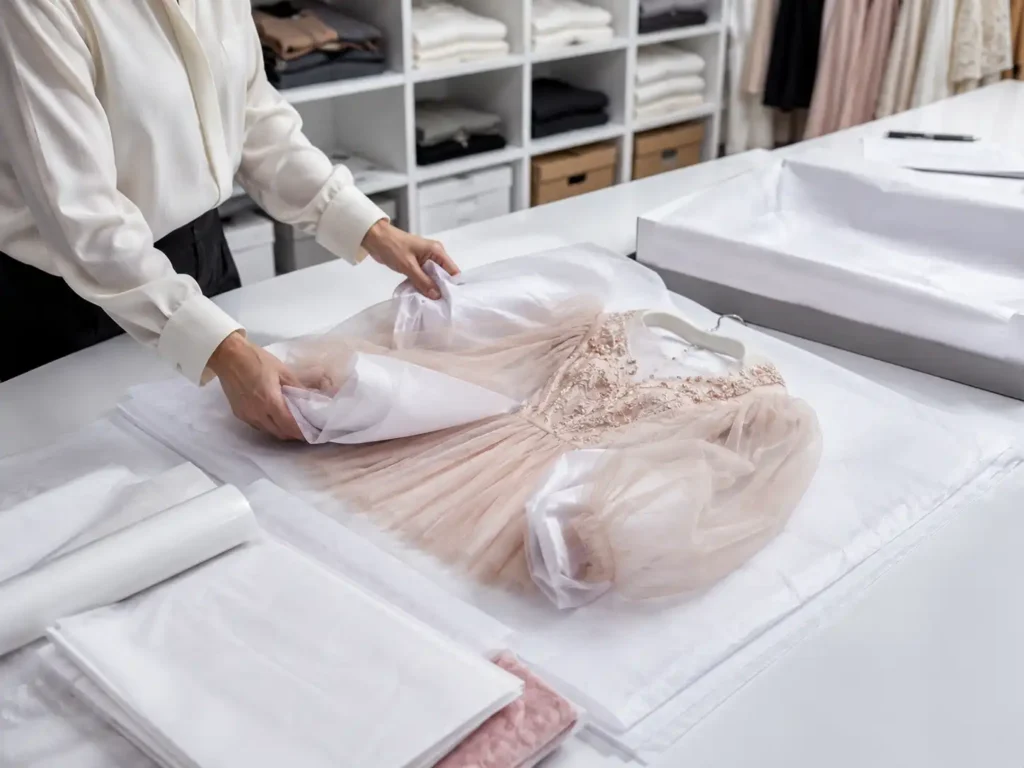
Care instructions should be based on the complete garment rather than the shell fabric alone. An organza dress may combine lining, cups, boning, fusible support, embroidery, sequins, beads, adhesive trims, or metal components, and the most sensitive element can determine the final care recommendation. Packing also matters because crisp transparent fabrics can hold fold lines. A trial pack can show whether tissue support, altered folding positions, garment bags, hanging shipment, or steaming guidance is needed to preserve presentation after transport.
Bulk Production
Polyester organza often integrates easily into larger commercial programs because many suppliers maintain repeatable constructions and wider color selections, while silk can also be produced at scale when the sourcing plan accounts for cost, continuity, shade control, and material utilization. In either case, the bulk fabric should be tied to an approved reference. “Same composition” is not enough because two fabrics with identical fiber percentages can differ materially in stiffness, shine, transparency, usable width, and finishing behavior.
A useful production record includes supplier article, composition, color reference, usable width, approved hand, shine level, intended layer count, lining reference, pressing trial, and a sealed garment sample. This reduces ambiguity when reorders or substitute fabrics are considered. Once thousands of panels have been cut, a fabric difference cannot be inspected out of the garment. Consistency has to be protected before cutting begins, then carried through sewing, pressing, final inspection, and packing.
Production Item | What to Record | Why It Matters |
Composition | Fiber percentage | Labeling and material control |
Supplier article | Exact fabric code or physical reference | Reorder accuracy |
Color reference | Approved swatch or standard | Shade consistency |
Usable width | Actual cutting width | Consumption planning |
Hand and crispness | Approved physical swatch | Prevents unsuitable substitutions |
Shine level | Approved swatch and garment appearance | Controls visual consistency |
Layer count | Final dress requirement | Controls opacity and volume |
Lining reference | Exact approved lining | Maintains final color effect |
Pressing trial | Accepted finishing method | Reduces heat-related damage |
Sealed sample | Final approved garment | Bulk appearance benchmark |
Which Organza Suits Different Dress Designs?
Crisper organza works best for designs that depend on projection and volume, including puff sleeves, bows, structured ruffles, flared minis, and overskirts. Softer qualities are often better when transparency and movement matter more than maximum shape. Long or layered dresses need greater caution because total fabric area multiplies stiffness, shine, weight, and color depth even when each individual layer feels extremely light.
Sleeves and Ruffles
Puff sleeves reveal organza suitability very quickly because the fabric has to carry its own shape. A quality that is too soft may collapse toward the arm, while an overly rigid one can create sharp corners, bulky sleeve-cap gathers, and uncomfortable edges. The pattern and fabric should therefore be developed together. Increasing sleeve volume in a crisp organza can produce dramatic projection with relatively little extra support, whereas the same pattern in softer material may need more fullness or internal structure to reach a similar visual result.
Ruffles follow the same logic. Stronger crispness produces wider, more defined waves, while softer organza forms smaller and more relaxed curves. Gathering ratio also changes the effect, so it is useful to test at least two densities when the sleeve or ruffle is a key selling feature. Side-view fitting matters as much as front-view photography because a sleeve can look excellent from the front and project too far from the body in profile. Narrow hems, bindings, or decorative edge finishes should be tested with the same fabric because each option changes weight and movement.
Layered Skirts
Layering is where organza becomes especially powerful because each additional layer changes several properties at once. One layer may be highly transparent, a second can noticeably deepen the color, and three or more layers may create a much more opaque and structured surface. The change is not only visual. More layers also increase seam bulk, waistband thickness, stiffness, and the amount of material moving around the legs. A good layered skirt therefore depends on balancing the shell with lining, gathering, pattern volume, and the number of layers actually required.
A useful approval method compares one, two, and three flat layers over the final lining, followed by the intended gathered or pleated construction. Flat stacking alone can understate the final effect because gathering concentrates fabric into a smaller visible area. If several layers meet at one waist seam, hidden bulk can become surprisingly large even though every individual layer is thin. Pattern and construction teams can distribute seams, reduce internal fullness, or separate attachment points so that the outside retains volume without making the waist unnecessarily heavy.
Mini, Midi and Occasion Dresses
Mini dresses can often use stronger organza successfully because the shorter length limits total fabric volume. A crisp quality can support dramatic skirts, bubble-inspired shapes, statement bows, puff sleeves, and sculptural hems without the garment becoming excessively large. For party-oriented styles, brighter crystal or polyester organza can also work well because a strong photography effect may be part of the design brief. The challenge is making sure the structure still looks deliberate when the wearer walks and sits rather than appearing rigid only in static images.
Midi and floor-length dresses require more restraint. Once a skirt extends below the knee, stiffness becomes more visible during movement, and several meters of reflective fabric can produce far more shine than a small swatch suggests. Full-length occasion dresses should be reviewed from front, side, and back, then observed while walking and sitting. Hem recovery, train behavior, skirt spread, and lining interaction all matter. A fabric that works perfectly in a bodice sample should not automatically be approved for a large floor-length skirt without a full-scale test.
Organza vs Chiffon or Tulle
Organza is usually the stronger option when transparent fabric needs to hold shape, while chiffon is normally better when softness and flowing movement are the priority. Tulle occupies another role because its open net structure can provide airy volume or internal support without creating the smooth woven surface of organza. These materials may appear similar in photographs, especially when all are light and sheer, but their response to gravity, gathers, seams, and movement is very different once they are sewn into a garment.
Combining materials is often more effective than forcing one fabric to perform every task. A dress can use lining for coverage and comfort, tulle internally for lift, and organza externally for a smooth transparent shell. Another style might rely on chiffon for skirt movement while using organza only in the bow or sleeves. Once every layer has a clear function, fabric selection becomes more logical and the final dress is less dependent on compromises.
Fabric | Surface Structure | Typical Movement | Shape Support | Common Dress Applications |
Organza | Smooth sheer woven | Crisp to moderately soft | High | Puff sleeves, overlays, ruffles, structured skirts |
Chiffon | Fine sheer woven | Soft and fluid | Low | Flowing skirts, draped sleeves, soft overlays |
Tulle | Open net | Airy, varies by quality | Moderate to high | Volume layers, underskirts, transparent support |
Soft Mesh | Knit or net structure | Soft, often stretchable | Low | Fitted sheer panels, body sections, soft sleeves |
How Should Organza Be Tested Before Production?
Organza should be tested with the actual lining, pattern, seams, trims, pressing method, and intended number of layers before bulk production. The most useful checks cover transparency, color buildup, fraying, snagging, seam puckering, shape retention, heat response, comfort, and finished movement. A complete garment sample is especially valuable because many problems do not appear until the fabric becomes a three-dimensional dress.
Sheerness and Lining
Transparency determines what the viewer sees beneath the organza, so it affects construction as much as aesthetics. Dart ends, seam allowances, zipper tape, cup edges, boning channels, pocket bags, facing edges, labels, reinforcement, and even uneven lining transitions can become visible through the shell. A seam that looks perfectly acceptable in opaque satin may look unfinished in organza because every overlap creates a darker line. Internal construction should therefore be reviewed as part of the visible design instead of being treated as something that will automatically disappear inside the garment.
The lining should be checked on a moving body rather than only on a hanger. When the wearer raises an arm, bends a knee, sits, or turns, the distance between shell and lining changes and transparent areas can become more obvious. Photography is useful because direct lighting and camera exposure often reveal internal shadows that are easy to miss during a quick fitting. If transparency is intentional, internal components may remain visible, but they should look controlled and consistent rather than accidental.
Color and Layering
Organza color is optical because the final appearance depends on how many transparent layers overlap and what sits underneath them. A pale outer fabric can become noticeably deeper once it is doubled, gathered, or placed over a saturated lining. For this reason, a single flat swatch is rarely a reliable final color reference for a layered dress. The approval standard should represent the complete shell-and-lining system that will be used in the garment, especially for light colors such as ivory, champagne, blush, pale blue, mint, or nude.
A practical approval board can include a single layer, double layer, triple layer where relevant, the final lining, a gathered sample, a flat sample, and the intended thread and zipper colors. Seams deserve separate attention because overlapping allowances can create dark lines beneath a transparent shell. If those lines are visually distracting, the team may need to change seam direction, width, finishing method, or lining placement rather than trying to correct the effect after bulk sewing has already begun.
Snagging and Fraying
Organza can show edge fraying, pulled yarns, needle marks, and snags clearly, so a useful test should imitate the real production process rather than simply examining the roll. Cut representative pieces, move them through the intended sewing sequence, stitch both straight and curved seams, gather where required, install the closure, press the sample, and observe how the material responds. Raw edges that deteriorate quickly may require faster edge control or a different construction sequence so that panels are not handled repeatedly before they are secured.
Decorative trims can create another risk. Sequins, rhinestones, rough hooks, zipper teeth, metal components, and heavily embroidered panels may catch the organza surface during sewing, finishing, or transport. Packaging should therefore be included in development. A dress that leaves final inspection in perfect condition can still arrive with abrasion or pulled threads if decorative areas are folded directly against a delicate shell. Tissue placement, protective layers, or revised folding positions can reduce that risk without changing the garment itself.
Full Garment Sampling
A full garment sample is one of the most valuable steps in organza development because pattern geometry changes how the fabric behaves. Sleeve volume depends on both crispness and pattern fullness, skirt structure depends on circumference and layer count, and lining placement changes opacity and color. Zipper seams, curved necklines, armholes, and gathered waistlines can also introduce distortion that never appears on a flat swatch. The sample brings all of those interactions together before the financial risk of bulk cutting begins.
Fit should be reviewed dynamically. Ask the fit model to walk, sit, raise both arms, turn, and wear the garment for a longer fitting period so that edge comfort, lining movement, sleeve recovery, and skirt interference become visible. After fitting, hang the sample for several hours or overnight and review it again. The final approved sample should represent not only measurements but also volume, transparency, surface finish, movement, and overall balance. Those qualities are part of the garment specification even when they cannot be reduced to a simple measurement chart.

How Do You Choose Organza for Bulk Dress Production?
Choose bulk-production organza by combining visual approval with repeatability, sewing stability, sourcing continuity, consumption, lining requirements, and total garment cost. Confirm the exact fabric reference and finished sample before cutting, then compare incoming material against the approved color, hand, transparency, and surface appearance. The cheapest fabric is rarely economical if it creates extra layers, cutting loss, difficult sewing, remakes, or inconsistent finished results.
Confirm Before Sampling
Good bulk production begins before the first sample is sewn. The team should define what role the organza plays in the design: main shell, overlay, sleeve, ruffle, underskirt, decorative panel, bow, or structural layer. Each role creates different requirements for stiffness, transparency, touch, and finishing. The development record should then identify composition, supplier reference, color, usable width, surface shine, intended layer count, lining, trim interaction, and the key construction details that influence how the fabric will behave.
It is also useful to separate fixed requirements from flexible ones. The sleeve silhouette may be non-negotiable while the exact fiber composition is open to alternatives, or the premium silk surface may be central to the product positioning while skirt fullness can be adjusted through pattern changes. This distinction makes cost engineering more intelligent because alternative fabrics can be evaluated without accidentally changing the feature that gives the style its commercial identity. The same discipline becomes even more valuable when several dresses share one base organza across a seasonal collection.
Control Sewing Risks
Transparent crisp fabrics expose sewing inconsistencies quickly. Seam puckering creates visible shadows, uneven seam allowances show through the shell, poorly balanced tension can distort long seams, and inconsistent gather distribution makes left and right sleeves appear different even when the pattern is identical. Before bulk sewing begins, the production team should validate needle, thread, stitch formation, seam type, edge finishing, pressing, and operator handling on the actual production fabric. A softer organza and a very crisp organza can react differently even when both are made from polyester.
The most visible areas deserve extra attention, particularly necklines, armholes, zipper seams, curved princess lines, gathered waist seams, sleeve caps, narrow hems, ruffle joins, and transparent center panels. Construction notes and an approved sample can reduce dependence on individual interpretation once multiple operators are involved. The objective is not to make the sewing process complicated; it is to standardize the few details that have the greatest visual effect so that the bulk garment continues to resemble the approved sample.
Keep Bulk Consistent
Incoming fabric control is important because a small change in hand can alter the silhouette even when color appears correct. A softer lot may produce lower sleeves or flatter ruffles, while a brighter finish may change photography and perceived quality. Where multiple fabric lots are supplied, clear lot identification helps prevent uncontrolled mixing. The approved garment should remain available during production so teams can compare sleeve volume, skirt projection, layer count, lining position, seam appearance, zipper flatness, ruffle shape, pressing finish, and overall balance against a physical target rather than relying only on verbal descriptions.
For brands working with a structured custom-manufacturing process, fabric sourcing, pattern development, sampling, PP approval, in-line inspection, final garment review, private-label packing, and repeat-order records are most effective when they are connected rather than treated as isolated departments. Jinfeng Apparel’s confirmed service scope follows that integrated model, covering custom dress development from fabric sourcing and pattern work through sampling, bulk production, quality control, packaging, and export coordination. The company has operated in women’s apparel manufacturing since 2008 and supports development and repeat production for established fashion clients.
Cost-to-Look Balance
Fabric price per meter is only one part of the real garment cost. A cheaper organza may need three layers to achieve the required opacity and structure, while a somewhat more expensive quality may achieve the same look with two layers and handle more cleanly during sewing. Decorative organza may have a higher base price but reduce the need for separate embellishment, while directional embroidery can increase cutting consumption because pattern pieces cannot be nested freely. The relevant comparison is therefore the total cost of producing the approved appearance, not the purchase price of one meter.
When reviewing options, consider usable width, garment consumption, number of layers, cutting loss, motif placement, lining requirement, sewing time, edge-finishing complexity, damage allowance, pressing difficulty, and reorder availability. Visual value should remain part of the calculation. If a dramatic sleeve is the main feature that makes a style recognizable in product photography, spending slightly more on the organza that holds that sleeve correctly may create more commercial value than reducing material cost and losing the silhouette that made the design attractive in the first place.
Conclusion
The best organza for dresses is not a single fiber, finish, or price level. It is the material that does the job the design asks it to do. Silk organza can give refined structure and a premium surface, polyester can deliver strong shape and dependable commercial sourcing, while crystal, mirror, printed, and embroidered organzas can create visual effects that plain fabric cannot. What matters is how the chosen quality behaves with the pattern, lining, layer count, trims, sewing method, pressing, packing, and expected production volume.
A disciplined development sequence keeps the decision practical: define the silhouette, shortlist several organzas, compare them over the real lining, test the intended number of layers, build the full garment, correct sewing and fit risks, seal the approved reference, and control incoming material before bulk cutting. For brands developing custom organza dresses, that process is more valuable than chasing a fabric simply because it sounds luxurious. The strongest result is a dress that looks right in the sample room, survives production, photographs well, feels appropriate on the body, and can be repeated consistently when the style succeeds.
Share This Article :

Jerry Lee
Categories

Latest blogs
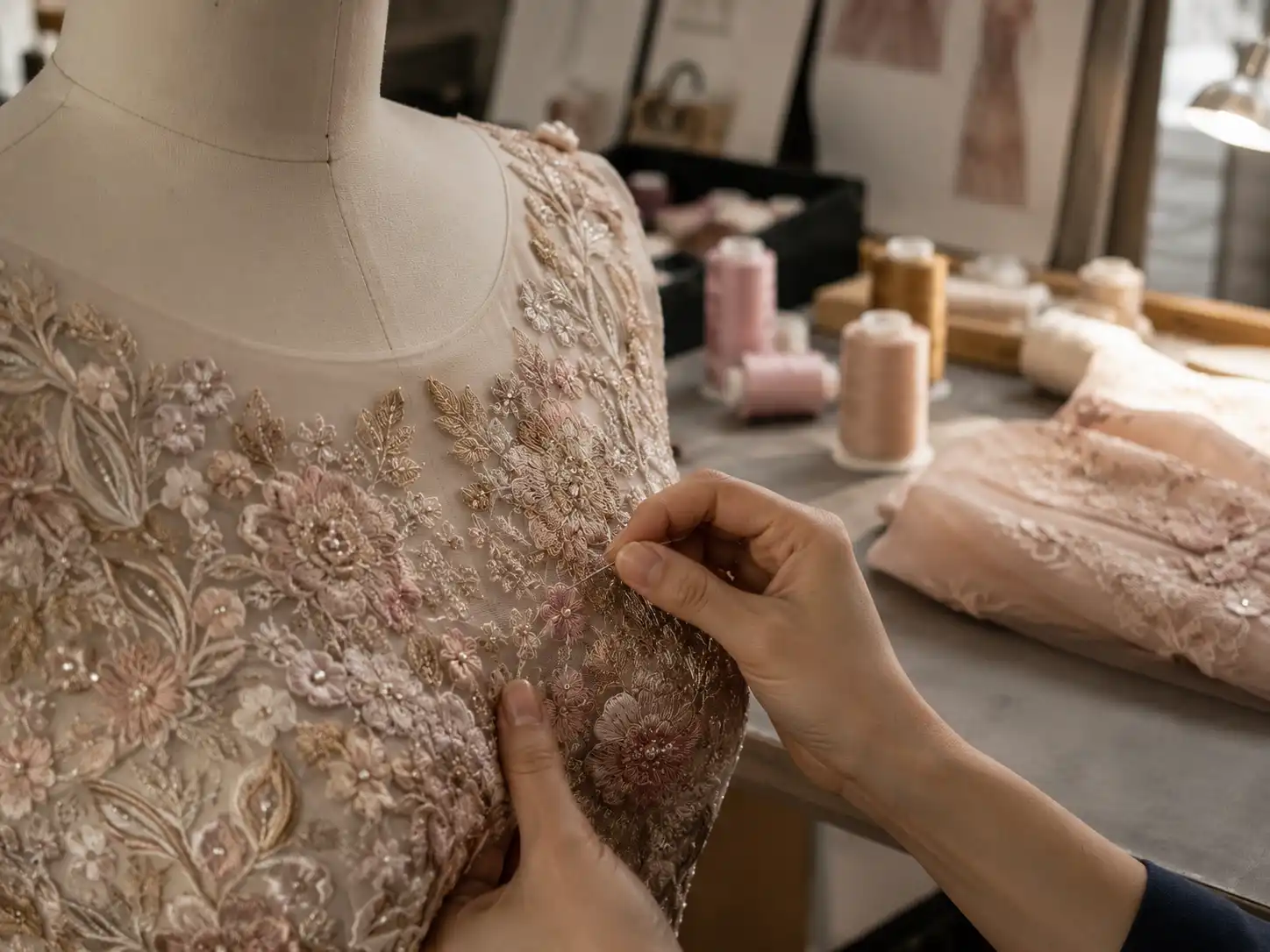
Table of Contents
Here, developing your OEM/ODM private label clothing collection is no longer a challenge—it’s an excellent opportunity to bring your creative vision to life.

