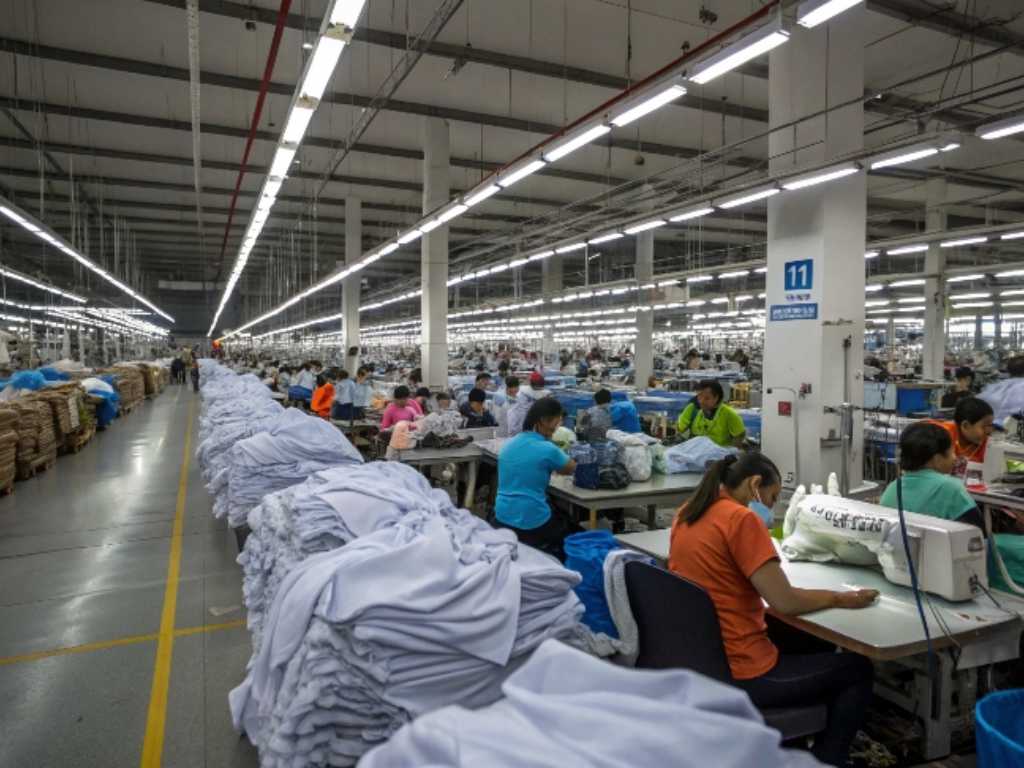
Olive Dress Manufacturer
Custom olive green dresses developed for scaled fashion collections, reliable bulk production, and retail-ready private-label delivery.
- Color-led development: Pantone references, physical swatches, lab dips, fabric-base review, lining coordination, and bulk shade records.
- Collection-level capacity: 6 owned women’s fashion factories, 10+ long-term production partners, 18+ sewing lines, and 100,000+ pieces of regular monthly capacity.
- Dress-focused development: 2 sample rooms, 7+ senior pattern makers, 20+ sample machinists, and structured first sample, revised sample, PP sample, and Golden sample control.
- Commercial order fit: MOQ starts from 200 pieces per style and color, with multi-style programs organized by fabric group, launch priority, size ratio, and delivery window.
Olive Dress Programs Built for Fashion Brand Growth
Seasonal Collection Teams
Sourcing and Product Teams
Use one manufacturing partner for fabric sourcing, pattern development, sample revision, PP approval, bulk scheduling, in-line inspection, private-label packing, and export coordination. Project files can begin from a tech pack, reference image, line sheet, original sample, sketch, or approved fabric swatch.
Three Risks Behind Every Olive Dress Program
Shade Definition
Fabric Appearance
Bulk Consistency
A Complete Olive Dress Manufacturing Capability Chain
Dress Development
Fabric Sourcing
Color Approval
Pattern Making
Bulk Production
Private Label Delivery
Custom Olive Dress Styles for Commercial Collections

Olive Satin Slip Dress
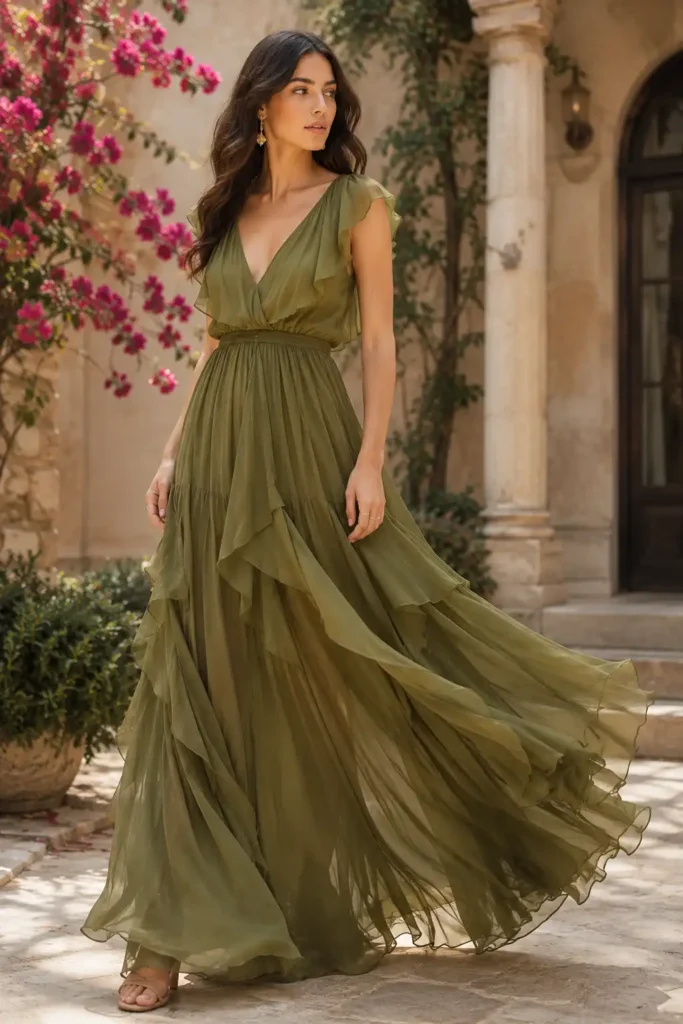
Olive Chiffon Maxi Dress
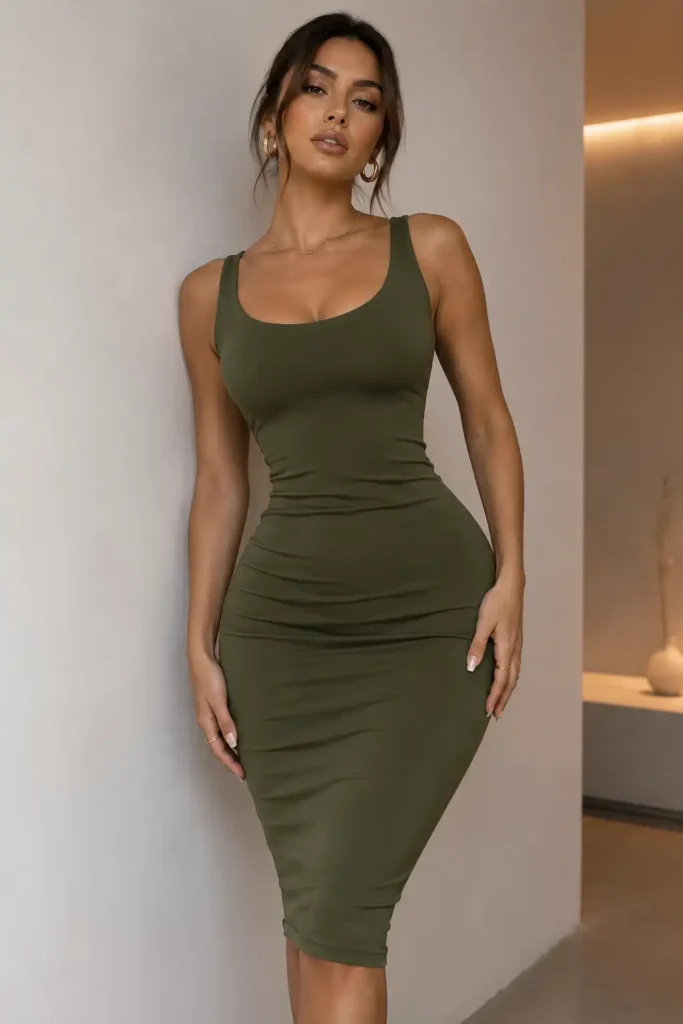
Olive Bodycon Dress
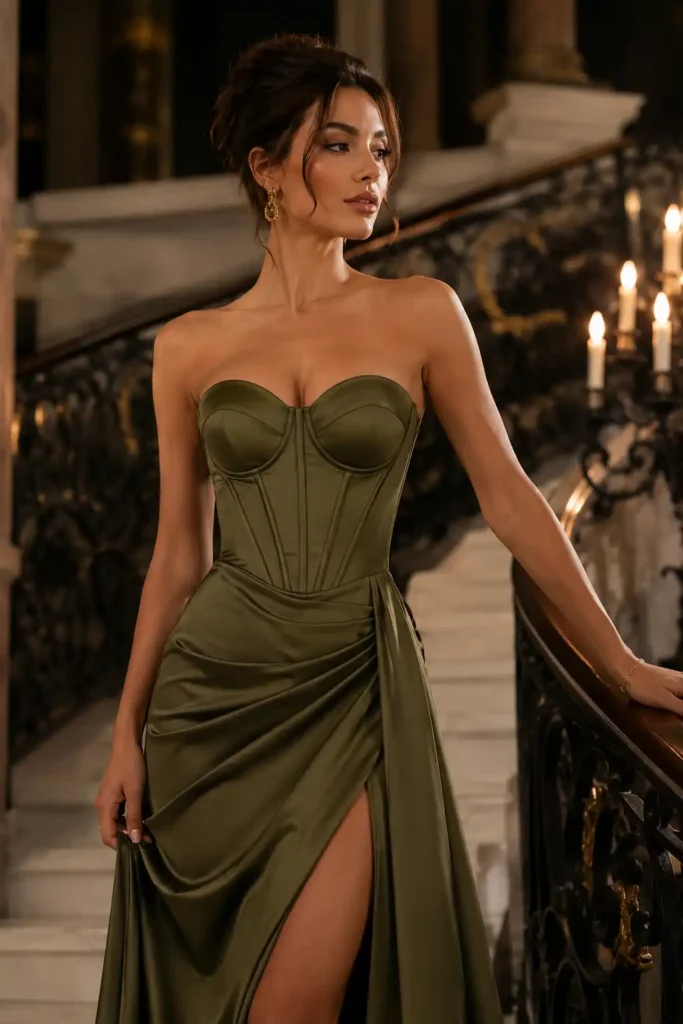
Olive Corset Dress
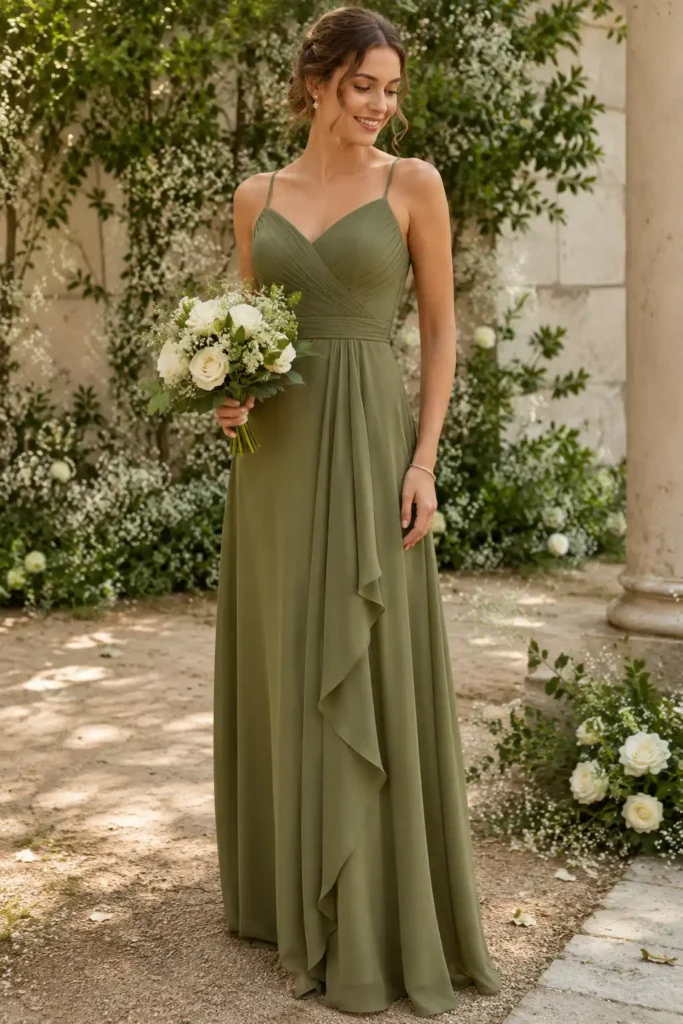
Olive Bridesmaid Dress
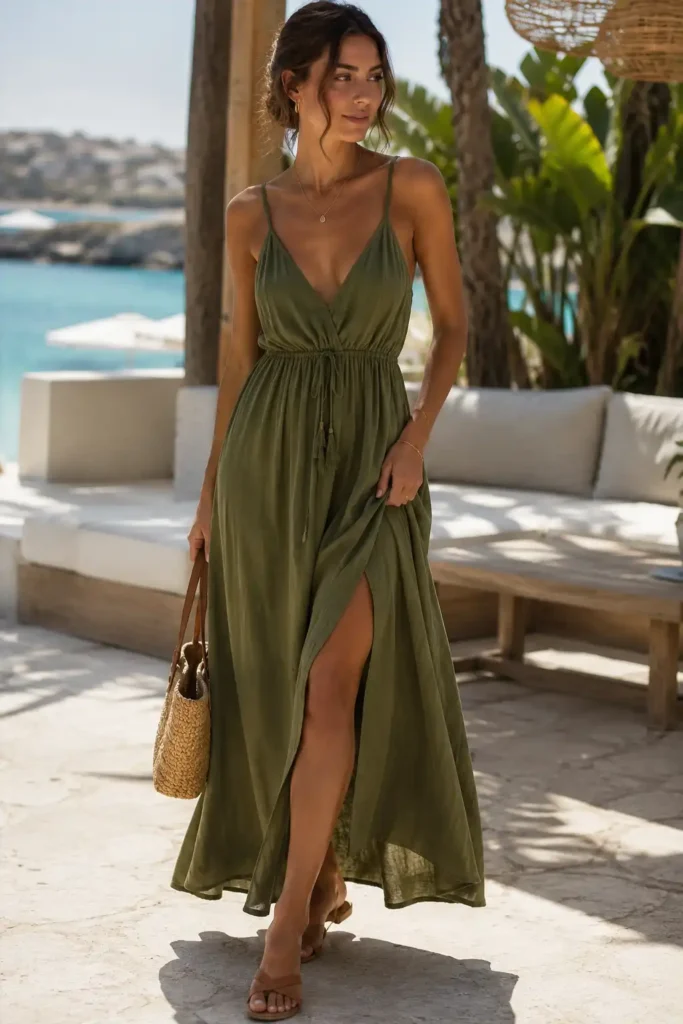
Olive Resort Dress
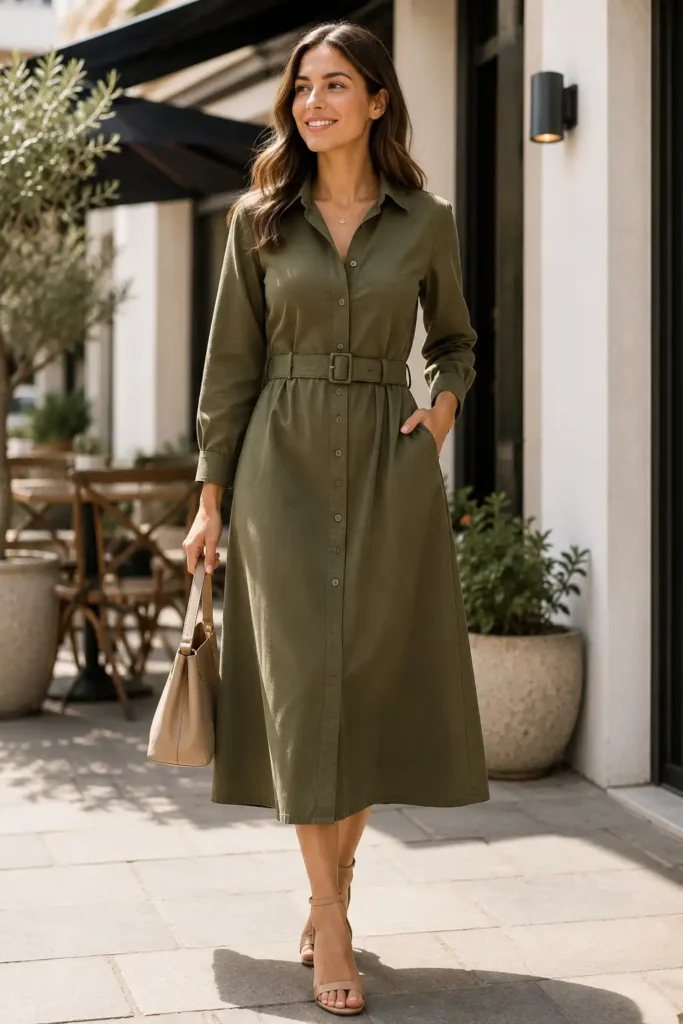
Olive Shirt Midi Dress
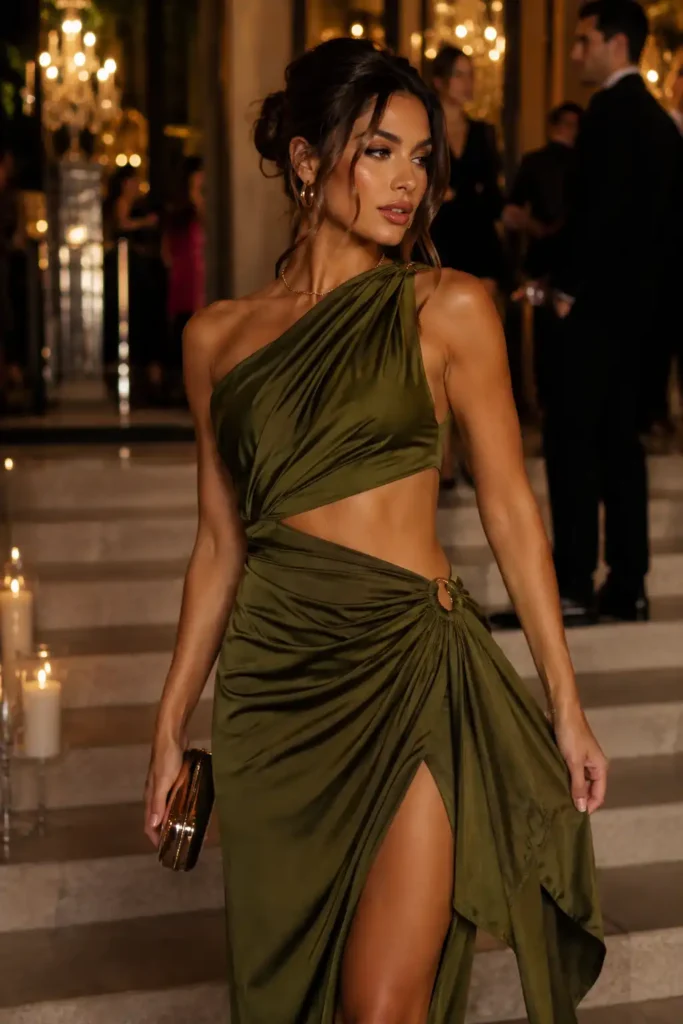
Olive Party Dress
Olive Dress Directions Across Four Selling Seasons
Olive shifts easily between urban, occasion, resort, and autumn assortments. Commercial success depends on pairing the shade with the correct fabric weight, silhouette, trim level, and delivery calendar.
Fall Collection
Occasionwear Line
Resort Capsule
Partywear Drop
Six Olive Shade Directions for Dress Collections
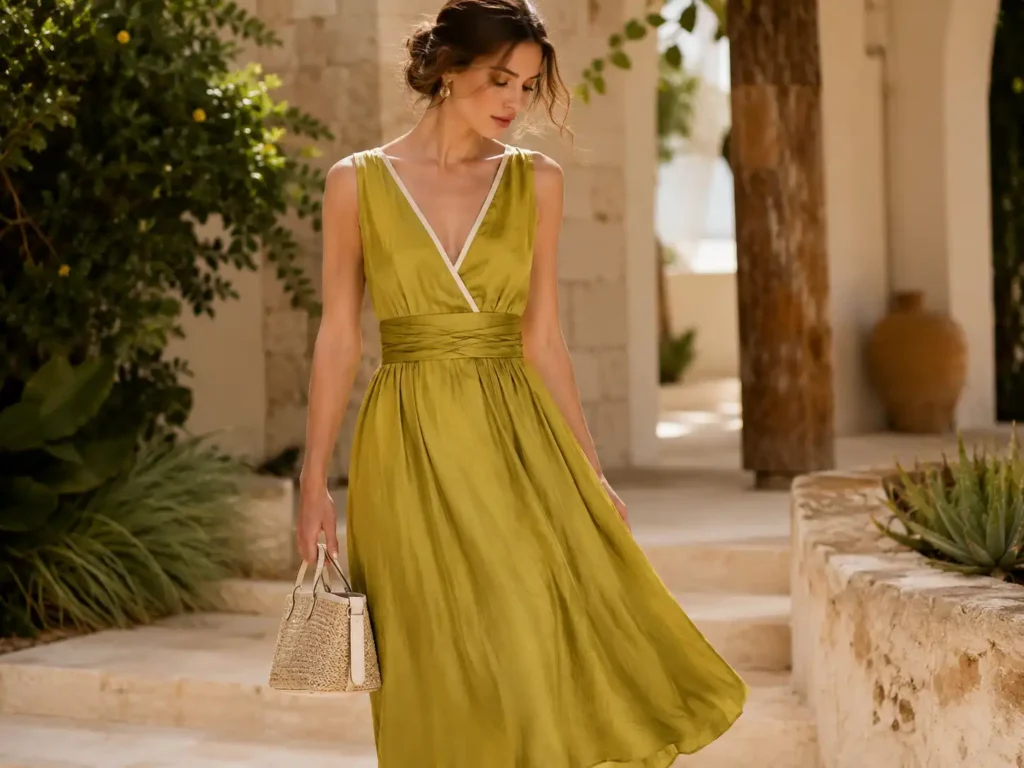
Yellow Olive

Dark Olive
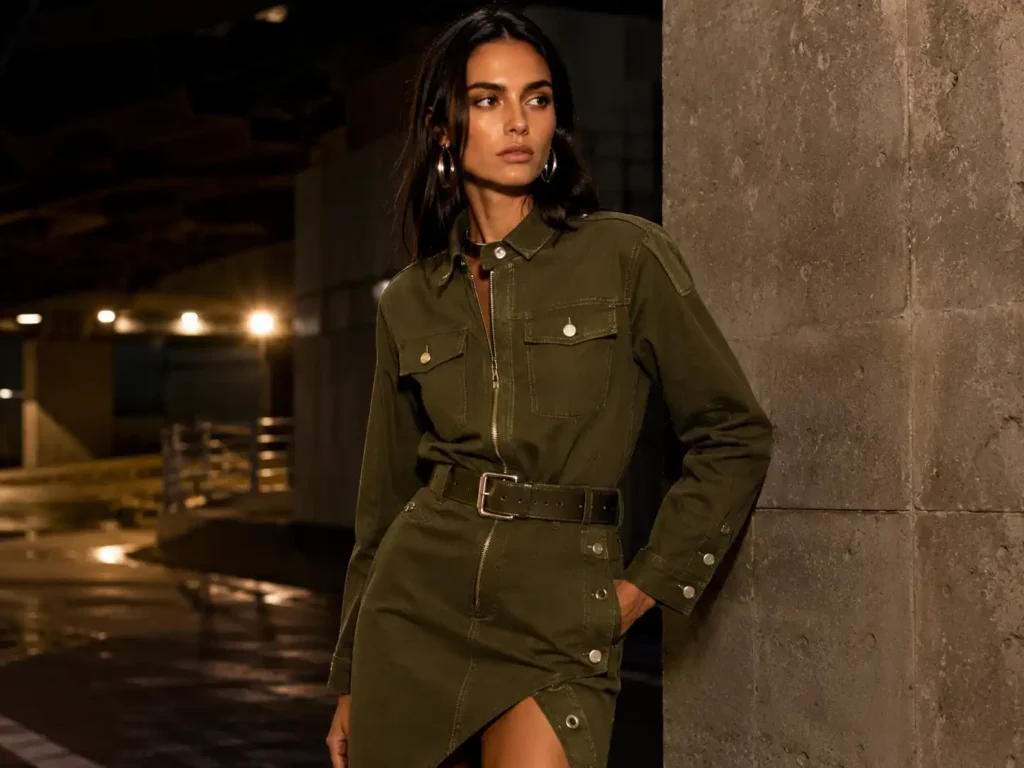
Army Olive
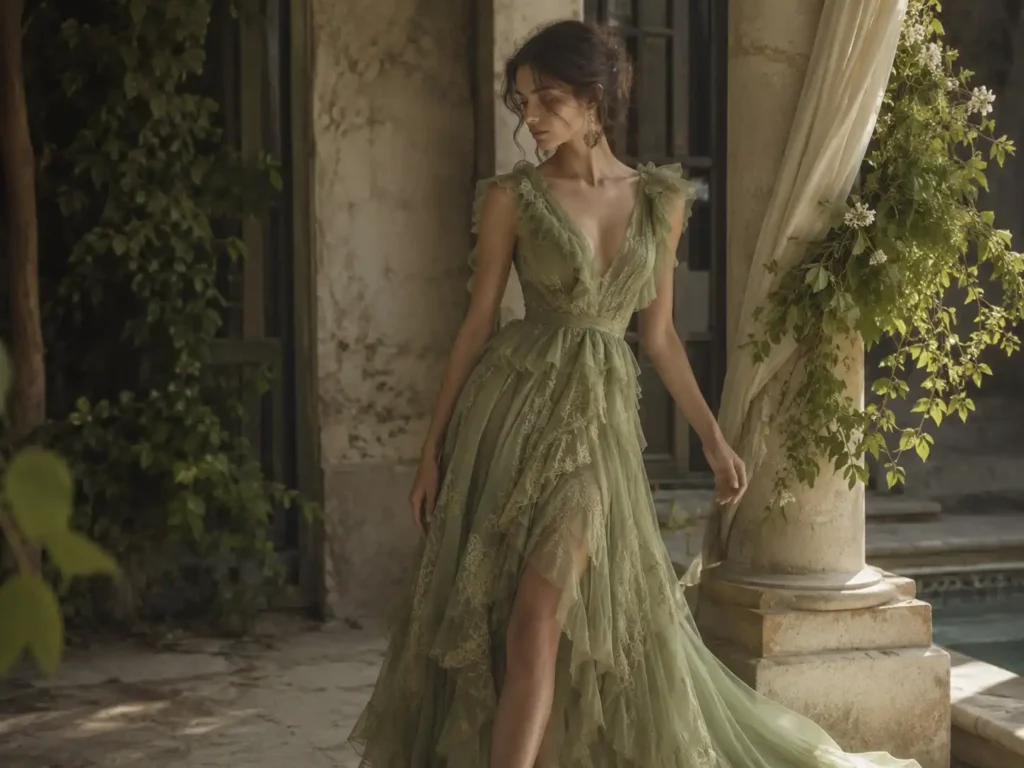
Moss Olive
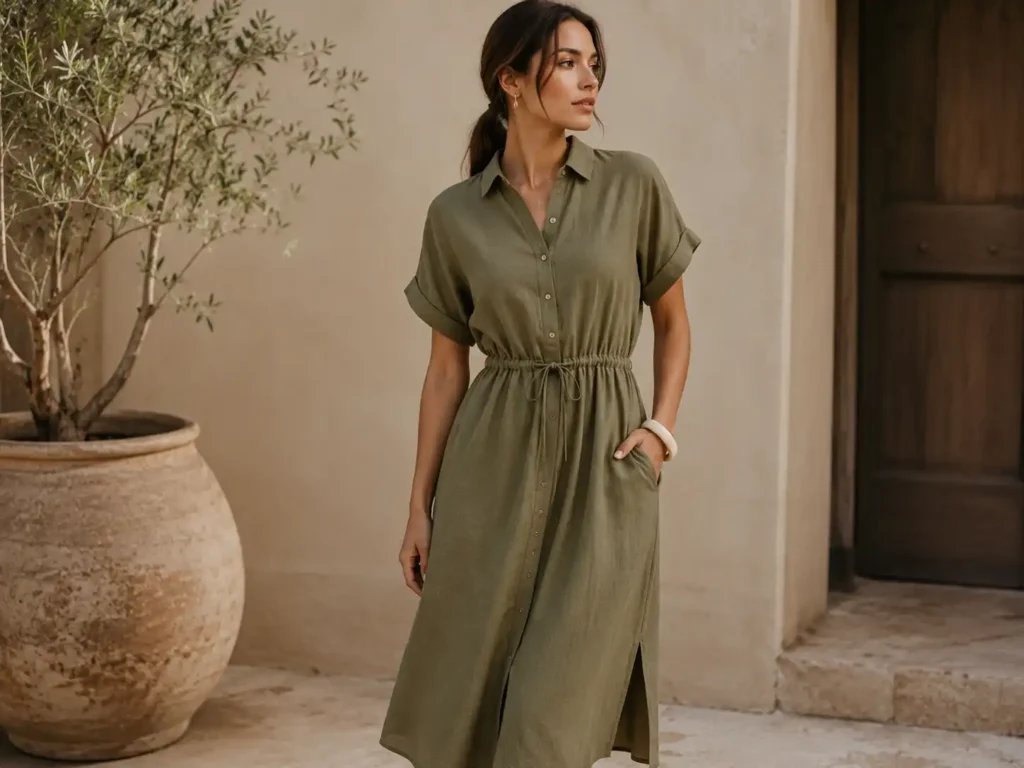
Khaki Olive
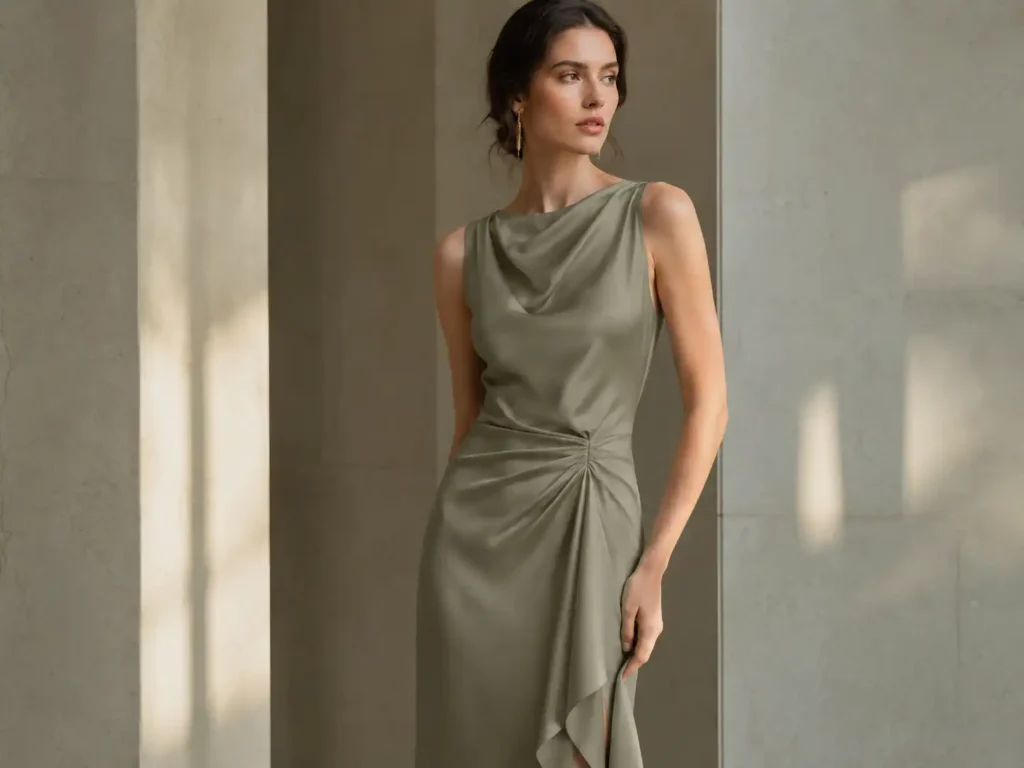
Muted Olive
How Fabric Structure Changes Olive Color and Performance
Olive should be approved on the intended fabric, not only from a screen or paper standard. Surface reflection, transparency, stretch, pile, weight, and texture alter both visual color and garment behavior.
Lustrous Fabrics Need Directional Color Review
Satin and velvet create the strongest visual color movement because light interacts with the surface instead of reflecting evenly. A dark olive satin may look nearly black in shadow and distinctly green under direct lighting. Velvet can show several tones within one garment when pile direction changes between panels. Pattern placement, cutting direction, sewing handling, pressing, and packing therefore become part of color control.
- Satin direction: All visible panels should follow the approved face and grain direction. Mixed direction can create a false shade difference even when fabric comes from one dye lot.
- Needle and seam condition: Fine satin reveals punctures, drag lines, puckering, and uneven tension. Machine settings and handling methods should be confirmed during sample development.
- Pressing control: Excessive heat or pressure may flatten shine, create water marks, or leave seam impressions. Pressing instructions belong in the production file, not only in verbal guidance.
- Packing method: Garment folding, tissue placement, hanger requirements, and carton pressure should be chosen according to fabric sensitivity and destination handling.
Transparent Layers Require Shell-and-Lining Approval
Chiffon, mesh, lace, and organza do not display color independently.
The final shade comes from fiber, weave, layer count, skin tone, lining color, seam allowance, and local overlap.
A chiffon sleeve may look lighter than a lined bodice even when cut from the same roll.
Lace density can create darker motifs, while mesh stretches and becomes visually lighter over the body.
- Layering standard: Color approval should include the real number of shell and lining layers used in the garment.
- Coverage review: Bust, hip, slit, cut-out, and side-seam areas should be checked under front, side, and back lighting.
- Trim coordination: Invisible zipper tape, elastic, bra cups, binding, and sewing thread may become visible through lightweight fabric.
- Bulk separation: Transparent fabrics from different dye lots should not be mixed casually across matching panels or repeated styles.
Stretch and Casual Fabrics Need Wear-State Testing
Jersey, rib, ponte, crepe, viscose, cotton, and linen blends can look stable on a hanger yet change during wear, pressing, washing, or steaming. Stretch fabrics may whiten over high-tension areas. Viscose can relax and lengthen. Linen blends can crease or show slubs. Cotton qualities may shrink or skew. Olive color approval should therefore be paired with fabric behavior tests relevant to the selected silhouette.
- Stretch and recovery: Check widthwise and lengthwise stretch, recovery, opacity, and color change over bust, waist, and hip tension.
- Shrinkage and relaxation: Fabric and garments should be evaluated before final pattern and hem standards are locked.
- Surface texture: Slubs, ribs, brushing, and crepe texture change light absorption and can make one shade appear more muted.
- Repeat-order control: Composition, weight, width, stretch, hand feel, supplier, dye lot, and approval reference should remain in the project record.
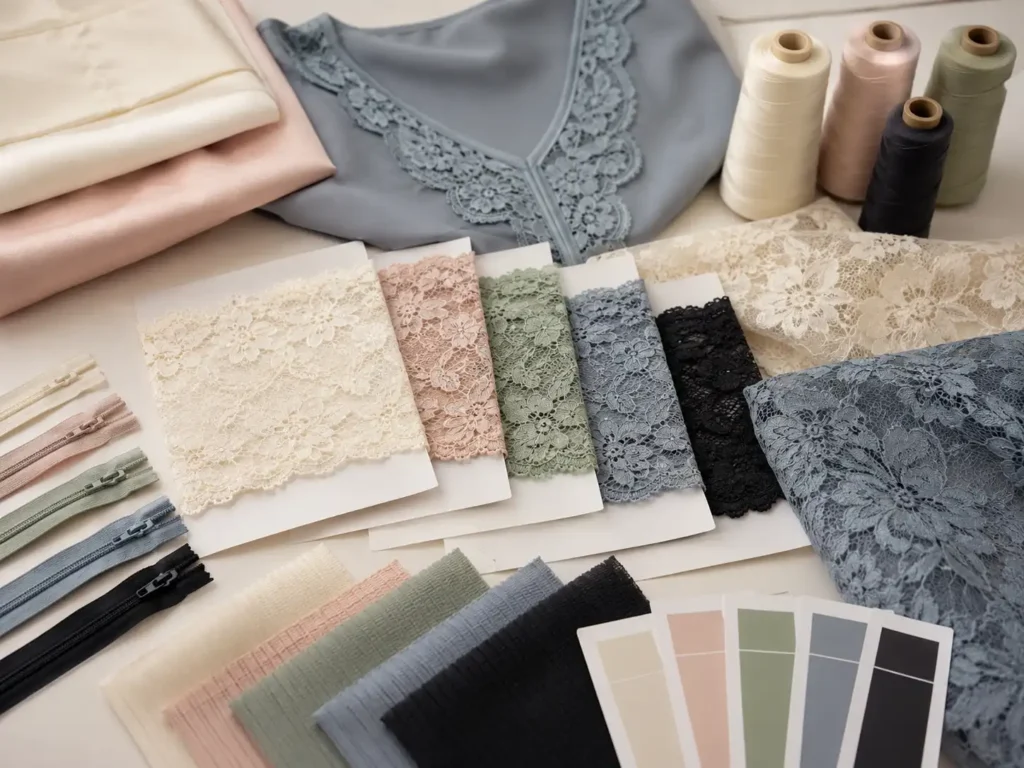
A Traceable Olive Color Development and Approval Process
Color accuracy improves when every approval is connected to fabric, light, garment construction, and a signed project record. Digital images support communication but cannot replace physical standards.
Start With a Usable Color Reference
A reliable color brief may include a Pantone reference, physical textile swatch, approved garment, original sample, or previous bulk cutting. The reference should identify the desired olive direction and allowable movement. A phone screenshot alone is not sufficient because display settings, compression, lighting, and photography create uncontrolled shifts. Jinfeng Apparel first reviews the reference beside the intended fabric category, garment silhouette, and wearing occasion.
- Reference hierarchy: Physical fabric or garment standards carry more production value than digital photographs. Pantone codes provide direction but still require fabric-specific evaluation.
- Color family boundary: Warm olive, gray olive, army olive, moss, and khaki should not be treated as interchangeable. The approved direction needs a clear rejection boundary.
- End-use review: A party dress, bridesmaid dress, shirt dress, and bodycon dress may require different saturation, shine, opacity, and trim coordination even within one olive family.
Develop Color on the Final Fabric Base
Lab dips or supplier color submissions should use the actual composition, structure, and finishing route planned for production whenever possible. Polyester satin, viscose crepe, nylon mesh, cotton woven, and stretch jersey absorb and reflect dye differently. Matching one numerical standard across unrelated fabrics may produce visually different garments, so collection color control may use coordinated shades rather than a false promise of identical appearance.
- Fabric first: Confirm composition, weight, surface, width, stretch, and transparency before final dye approval.
- Multi-fabric sets: Shell, lining, mesh, lace, binding, elastic, zipper tape, and thread should be reviewed as one coordinated group.
- Lighting conditions: Assess under agreed lighting and record visual results. Metamerism can make two components match under one light and separate under another.
- Approval record: Keep the approved swatch, submission number, date, comments, and intended style list tied to the production file.
Transfer Approval Into Bulk Production Records
Once the shade is approved, the standard should move into fabric purchasing, incoming inspection, cutting, sewing, finishing, packing, and repeat-order documentation. Bulk fabric cuttings may be checked against the approved standard before full release. If a shade falls outside the accepted range, production teams need a defined escalation route rather than an informal decision made after garments are finished.
- Bulk submission: Review representative bulk cuttings or shade bands before large-scale cutting when custom dyeing is involved.
- Dye-lot record: Record roll numbers and lots so future investigation can trace garment shade back to source material.
- Repeat order: Reconfirm original approvals, current fabric availability, new dye lots, trim colors, and any changed garment construction before production restarts.

Bulk Shade Control From Fabric Arrival to Packing
An approved lab dip protects only the starting point. Bulk consistency depends on receiving, roll separation, cutting discipline, component matching, garment inspection, and packing records.
Incoming Fabric Inspection Protects the Approved Standard
Fabric arrival should trigger a controlled review before release to cutting. Inspection covers purchase reference, supplier, composition, weight, width, surface condition, roll identification, dye lot, shade, defects, and approved swatch comparison. Satin may show edge-to-center variation. Chiffon can vary between rolls. Stretch jersey may shift after relaxation. A roll accepted by name alone can introduce inconsistencies across finished garments.
- Roll mapping: Maintain roll and dye-lot identification through spreading and cutting.
- Shade grouping: Separate visible differences before garment panels are mixed.
- Defect control: Mark stains, weaving issues, pulled yarns, shine marks, color streaks, and holes according to fabric type.
- Release decision: Questionable fabric should not enter cutting until approval or replacement direction is documented.
Cutting and Sewing Must Preserve Lot Integrity
Olive color differences often become visible only after garment assembly. Bodice, skirt, sleeves, straps, facings, and belts may appear mismatched when cut from separate lots. Cutting plans should preserve lot integrity within each garment and, where needed, within each delivery group. Bundle tickets, style-color-size identification, and production files reduce accidental mixing. Sewing lines also need approved thread, zipper, lining, elastic, and trim references.
- Panel coordination: Keep matching visible components within the same approved shade group.
- Component standard: Approve zipper tape, thread, elastic, lace, mesh, lining, cups, and binding against the garment palette.
- In-line observation: Inspect assembled garments under consistent lighting before production volume becomes difficult to correct.
- Rework limits: Replacement panels should come from a compatible lot to avoid creating new tonal breaks.
Final Garment Review Confirms Commercial Consistency
Finished garment shade review should consider front, back, side, layered sections, stretch areas, lining exposure, and adjacent trims. Pressing can temporarily darken or shine fabric. Polybag reflection can also distort photographs, so final approval should use unpacked garments under controlled light. Delivery records should retain representative bulk references, packing information, and any approved shade range for future replenishment.
- Garment-level review: Compare complete dresses, not isolated fabric pieces only.
- Size-range review: Check whether stretch or layer differences create apparent color changes between sizes.
- Packing sequence: Keep style, color, size, lot, carton mark, and quantity breakdown clear for warehouse receiving.
- Repeat records: Retain bulk fabric references, production notes, quality findings, and Golden sample information for later orders.

American-Market Fit and Size Control for Olive Dresses
Color brings the dress into the assortment; fit determines sell-through, reviews, returns, and repeat orders. Pattern development should follow silhouette, fabric behavior, size chart, and intended wearing occasion.
Bust, Waist, and Hip Balance Drive the Silhouette
Slip, bodycon, corset, shirt, bridesmaid, and resort dresses need different ease and shaping. A bodycon style may require negative ease and strong recovery. A satin slip dress needs controlled bias growth and bust coverage. A corset dress depends on cup, under-bust, waist, boning, and closure balance. A shirt dress requires mobility without losing shape. Pattern review should connect body measurements with finished garment measurements and fabric stretch.
- Base size: Confirm the brand size chart, fit model reference, intended ease, and grading direction before pattern work.
- Measurement points: Bust, under-bust, waist, high hip, low hip, dress length, and sweep should match the silhouette and construction.
- Fabric influence: Changing weight, stretch, drape, or lining can require pattern correction even when style lines remain unchanged.
- Tolerance plan: Measurement tolerance should reflect fabric, seam structure, dress length, and commercial fit risk rather than one generic number.
Necklines, Armholes, and Straps Need Wear Testing
Visual sketches rarely show the full behavior of a neckline or armhole. Strapless, halter, one-shoulder, deep-V, cowl, and square-neck designs can expose fit problems during movement. Sample fitting should review coverage, gaping, neckline stretch, strap placement, underarm height, bra compatibility, and support. Olive shades can make lining or anti-slip components visible when color coordination is weak, so internal and external construction need joint approval.
- Strap length: Check adjustment range, slider position, stability, and symmetry.
- Armhole shape: Review front and back gaping, side coverage, movement, and seam comfort.
- Neckline support: Use suitable interfacing, stay tape, elastic, boning, cups, or anti-slip tape according to style.
- Size grading: Neckline depth and armhole shape should not scale mechanically without fit review across the size range.
Length, Slits, and Hems Affect Movement and Presentation
Mini, midi, and maxi dresses require different controls for body length, sitting comfort, heel options, lining length, slit height, sweep, and hem balance. Chiffon and viscose may relax after hanging. Bias satin can grow unevenly. Stretch dresses can ride upward. Asymmetric hems require clear measurement references. Final hem decisions should follow fabric relaxation, fit approval, and intended footwear or styling direction.
- Mini length: Check movement, coverage, lining position, and side-seam balance.
- Midi length: Review proportion by size and intended footwear, especially for fitted or flared silhouettes.
- Maxi length: Allow for drape, hanging growth, heel expectation, skirt sweep, and transit creasing.
- Slit control: Confirm height, overlap, reinforcement, lining opening, and comfort before PP approval.
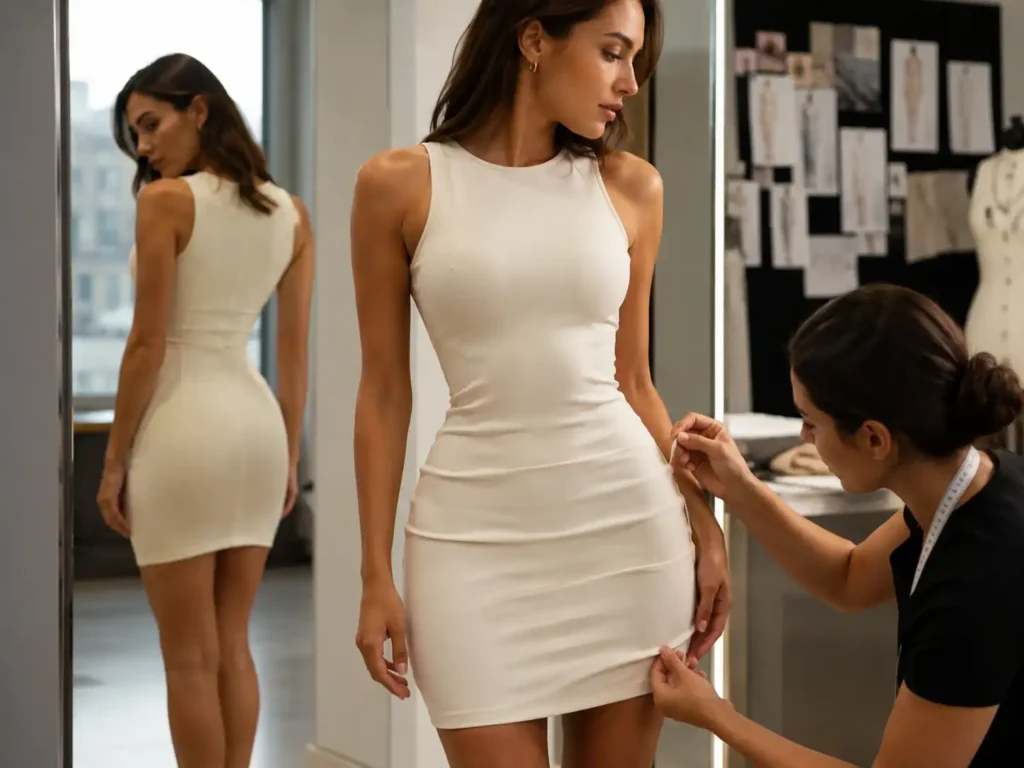
Construction Details Defining a Premium Olive Dress
Premium appearance comes from decisions hidden inside seams as well as visible styling. Olive tones reveal mismatched components, poor pressing, unstable edges, and uneven support quickly.
Lining, Coverage, and Internal Support
Lining should support opacity, comfort, drape, recovery, and garment structure without shifting the approved olive tone. Chiffon, lace, mesh, satin, and bodycon styles often require different lining qualities by panel. An overly pale lining may gray the shell, while an overly dark lining may oversaturate transparent sections. Corset and evening styles also need controlled bra cups, boning, underwire, stay tape, and anti-slip components.
- Coverage map: Define lined, double-layered, sheer, and open sections in the tech pack or sample comments.
- Support placement: Record cup, boning, underwire, tape, elastic, and anti-slip positions on pattern and production files.
- Comfort check: Review seam bulk, sharp edges, cup shape, underwire pressure, elastic tension, and skin contact.
- Color coordination: Approve internal components when they can show through shell fabric or openings.
Closures, Straps, and Adjustable Components
Invisible zippers, metal zippers, buttons, snaps, hooks, shoulder adjusters, elastics, and ties influence fit and durability. Zipper tape should blend with olive shell and lining. Strap sliders should move smoothly without slipping. Hooks need secure placement. Buttons and snaps can shift the style from refined to utility. Hardware finish should suit the garment palette, care method, and intended wear frequency.
- Closure strength: Test zipper movement, seam reinforcement, hook security, and opening length.
- Strap performance: Check adjustment range, elastic recovery, stitch security, and symmetry.
- Hardware finish: Confirm plating, color, edge condition, corrosion risk, and contact with delicate fabric.
- Bulk standard: Keep trim supplier, size, color, placement, and approved sample reference in the BOM.
Ruching, Pleats, Cut-Outs, and Decorative Panels
Fashion details must remain repeatable across sizes and production lines. Ruching density can change garment length and body compression. Pleats require fixed direction and spacing. Cut-outs need edge stability, coverage, and movement testing. Lace and mesh placement must align at seams and remain balanced across sizes. Decorative stitching, rhinestones, sequins, and beadwork should be assessed for durability, weight, snagging, and packing protection.
- Position records: Use pattern marks, placement measurements, and approved photographs rather than visual memory.
- Size adaptation: Scale placement and density with body proportions instead of enlarging every detail equally.
- Attachment method: Confirm stitch, reinforcement, backing, adhesive restrictions, and repair standards during sampling.
- Packing protection: Use suitable tissue, bags, folding, dividers, or cartons to prevent pressure marks and snagging.
Seams, Pressing, and Final Appearance
Seam type, stitch density, thread tension, seam allowance, edge finishing, pressing sequence, and inspection standards shape the final garment.
Satin needs smooth seams without shine marks. Chiffon needs clean narrow finishing. Stretch fabric needs elastic seams without waviness or breakage. Linen blends require controlled pressing without flattening natural texture. Olive thread should blend under normal wear lighting, not only on the spool.
- Seam selection: Choose construction according to fabric fray, stretch, transparency, bulk, and strength.
- Thread and needle: Confirm color, count, needle size, stitch density, and tension during sample development.
- Pressing sequence: Record temperature, pressure, protective cloth, shaping, and cooling needs for production.
- Final standard: Review symmetry, seam smoothness, edge quality, garment shape, shade, measurements, and packing readiness.
From Design Files to a Production-Ready Olive Sample
A structured sample route converts design direction into measurable production standards. Each sample type carries a separate purpose, approval level, and record.
Project Review Before Pattern and Sample Work
Development can begin from a tech pack, line sheet, reference image, sketch, original sample, size chart, BOM, or fabric swatch. The first review covers style structure, fabric direction, olive shade reference, trim requirements, intended fit, size range, quantity per style and color, packaging, and launch window. Unclear elements are identified before pattern work so sampling effort goes toward a feasible commercial garment.
- Style risk: Evaluate corset support, cut-outs, transparency, stretch, long hems, asymmetry, embellishment, and closure requirements.
- Material risk: Check fabric availability, dyeing route, supplier MOQ, shrinkage, color fastness notes, stretch, drape, and lining need.
- Commercial fit: Review MOQ by style and color, size ratio, projected quantity, private-label materials, and delivery sequence.
- Development plan: Confirm first sample purpose, priority styles, sample size, color route, and required approvals.
Sample Stages With Clear Approval Boundaries
First sample, fit sample, revised sample, photo sample, salesman sample, PP sample, and Golden sample should not be treated as interchangeable. A first sample proves the initial pattern, material direction, construction, and visual balance. A fit or revised sample resolves measurements and comments. A photo sample may prioritize campaign timing and visual finish. A PP sample confirms the approved production standard. A Golden sample supports sewing, QC, finishing, packing, and repeat-order comparison.
- First sample: Review silhouette, fabric, shade direction, construction, initial fit, and technical feasibility.
- Revised sample: Record pattern, measurement, fabric, trim, sewing, and styling changes against the previous version.
- PP sample: Lock fabric, color, trims, pattern, size chart, workmanship, labels, and packing before bulk production.
- Golden sample: Seal the reference used by production and inspection teams after final approval.
Multi-Style Sampling for 10-30 Design Collections
Large seasonal programs need sequencing rather than simultaneous uncontrolled sampling. Styles can be grouped by fabric base, shade family, pattern complexity, trim system, launch date, and sales priority. Hero products may move first for photography or market review, while shared fabric groups progress together to reduce repeated sourcing and color work. A revision tracker records sample version, comments, owner, approval status, and next action for every style.
- Priority group: Select campaign, hero, complex, and long-lead styles for early development.
- Shared-material group: Coordinate styles using the same satin, chiffon, jersey, lace, lining, or trim to improve consistency.
- Approval tracker: Maintain sample version, fabric status, color status, fit comments, pattern changes, PP approval, and target bulk date.
- Bulk handover: Move only approved files and references into production, reducing confusion between sample versions.

Olive Dress MOQ and Quotation Factors
MOQ starts from 200 pieces per style and color. Final cost depends on fabric, dyeing, construction, size range, labels, packaging, quantity allocation, and confirmed delivery requirements.
| Quotation Factor | What Jinfeng Reviews | Commercial Impact |
|---|---|---|
| Fabric base | Composition, weight, width, surface, stretch, drape, transparency, shrinkage, supplier availability | Material cost, fabric MOQ, pattern behavior, sewing method, loss allowance |
| Olive shade | Stock color, Pantone direction, physical swatch, lab dip, custom dyeing, coordinated trims | Color-development cost, dyeing MOQ, approval schedule, shade-control requirement |
| Construction | Lining, double layers, corset support, ruching, pleats, cut-outs, lace, mesh, sequins, hand details | Pattern time, sample cost, sewing labor, inspection level, packing protection |
| Size range | Base size, grade rules, measurement chart, extended sizes, length options, size ratio | Pattern and grading work, fabric use, fit review, production allocation |
| Order quantity | Pieces per style and color, style count, repeat potential, delivery split | Unit cost, production route, factory allocation, material booking |
| Private label | Woven label, care label, hangtag, barcode, SKU sticker, polybag, carton mark, inserts | Separate material MOQ, artwork approval, packing labor, warehouse compliance |
| Delivery plan | Target launch, PP approval date, material lead time, QC window, split shipment, destination | Production scheduling, freight choice, packing sequence, document preparation |
Multi-Style Bulk Production for Scaled Olive Collections
Bulk production starts after PP approval and file confirmation. Style allocation, material readiness, production sequence, quality windows, finishing, and packing are coordinated around the collection launch plan.
Factory Allocation Follows Product Structure
Jinfeng Apparel operates six owned women’s fashion factories and works with more than 10 long-term production partners.
Production allocation is based on fabric, silhouette, construction, labor level, order quantity, delivery priority, and quality risk.
A stretch bodycon dress, chiffon maxi dress, corset satin dress, and casual woven shirt dress should not be placed on one line merely because every garment uses olive color.
- Style mapping: Classify products by woven or knit construction, fabric sensitivity, lining, support, embellishment, and sewing complexity.
- Capacity mapping: Use 18+ sewing lines and 6+ flexible production lines according to confirmed production windows and style needs.
- Material readiness: Release production after approved fabric, color, trims, size chart, PP sample, labels, and packing instructions are in place.
- Schedule control: Separate material booking, cutting, sewing, in-line inspection, finishing, packing, and final inspection milestones.
Production Files Turn Approval Into Repeatable Work
Every approved style should move into bulk with a controlled file set rather than scattered chat messages. Production orders, BOMs, size charts, patterns, sewing instructions, color standards, trim references, label artwork, packing instructions, QC checklists, and approval comments give production and inspection teams one operating standard. Changes after PP approval require written review because fabric, pattern, cost, schedule, and already-started work may be affected.
- Version control: Identify the approved pattern, size chart, BOM, sample, color standard, and packaging artwork.
- Workmanship control: Record seam type, stitch, reinforcement, edge finish, pressing, placement, and component requirements.
- Change management: Assess any post-approval update for pattern, material, quantity, cost, and delivery impact before release.
- Line communication: Use approved references during line setup, first-piece review, in-line checks, and final garment comparison.
Collection Scheduling Supports Launch and Replenishment
A 10-30 style order may include different materials, quantities, and launch priorities. Production can be grouped by fabric arrival, shared trims, campaign deadline, hero SKU, sewing complexity, or warehouse sequence. Multi-batch delivery may be planned by style group, color group, market region, warehouse address, or air-and-sea split. Each shipment requires clear quantity breakdowns, carton data, labels, packing lists, and export documents.
- Launch priority: Move approved hero and campaign styles according to the commercial calendar.
- Material group: Coordinate shared fabric and trim booking while preserving dye-lot and style controls.
- QC window: Allow time for in-line correction, final inspection, client inspection support, packing review, and document preparation.
- Replenishment: Use retained pattern, fabric, color, trim, packing, and Golden sample records to evaluate repeat production.

Olive Dress Quality Control at Every Production Stage
Quality control follows product risk. Olive dresses require specific checks for shade, fabric surface, fit, construction, pressing, labels, packing, and repeat-order consistency.
Material and Cutting Quality Control
Incoming material QC confirms fabric identity, color, dye lot, surface, defects, width, weight, stretch, and approved reference before cutting. Trims are checked for specification, color, size, function, and quantity. Fabric relaxation, spreading, grain direction, pile direction, stripe or motif position, and lot separation are handled according to material. Cut panels are checked before sewing so shade, defects, notches, and dimensions do not become finished garment problems.
- Fabric checks: Shade, roll identification, stains, holes, pulls, shine marks, streaks, surface damage, width, and behavior.
- Trim checks: Zippers, thread, elastic, cups, boning, buttons, hooks, labels, and decorative components.
- Cutting checks: Grain, direction, matching panels, lot integrity, notches, cut accuracy, and bundle identification.
- Escalation: Hold questionable material or cut parts until a documented disposition is agreed.
Sewing and In-Line Quality Control
In-line inspection identifies issues while correction remains manageable. First-piece review confirms seam construction, measurements, trim placement, lining, support, color coordination, and pressing direction. Ongoing checks monitor stitch tension, seam smoothness, symmetry, neckline, armhole, straps, zippers, ruching, pleats, cut-outs, slits, hems, and internal finishing. Olive satin and dark smooth fabrics deserve extra attention because needle marks, seam shine, and surface damage are highly visible.
- Measurement: Review critical points against the approved size chart and tolerance plan.
- Workmanship: Check stitch security, seam allowance, edge finishing, reinforcement, lining control, and component placement.
- Color: Watch for mixed lots, mismatched panels, incorrect thread, zipper tape, elastic, lining, or replacement parts.
- Correction record: Document issue, affected quantity, root cause, corrective action, and follow-up result.
Finishing, Pressing, and Final Garment Inspection
Finishing removes loose threads, construction marks, and handling residue before pressing. Pressing follows fabric-specific temperature, pressure, shaping, and protection requirements. Final garment inspection covers appearance, shade, measurements, symmetry, workmanship, closures, labels, cleanliness, odor, and presentation. Long dresses are checked for hem balance. Stretch dresses are checked for waviness and recovery. Satin and velvet are checked for shine, pile direction, and pressure marks.
- Appearance: Shape, drape, shade, surface, symmetry, pressing, and visual balance.
- Function: Zipper, button, hook, strap, elastic, slit, support, and movement.
- Measurements: Critical garment points compared with approved chart and tolerances.
- Inspection support: Project requirements may include AQL inspection, client inspection, or nominated third-party inspection.
Packing QC and Repeat-Order Records
Packing QC confirms labels, hangtags, barcode, SKU, size sticker, folding, polybag, insert, carton quantity, carton mark, and assortment. Sensitive satin, velvet, embellishment, or long hems may need tissue, hangers, protective layers, or adjusted folding. Shipment records should maintain style-color-size breakdown, carton data, packing list, inspection status, and representative bulk references. Repeat production begins with review of the prior Golden sample, pattern, BOM, fabric, shade, trims, measurements, packing, and quality findings.
- Label accuracy: Confirm spelling, size, composition, care, barcode, SKU, and placement.
- Packing accuracy: Check quantity, ratio, folding, protection, polybag, carton, and warehouse marking.
- Shipment evidence: Record approved packed garments, carton details, final inspection, and shipping preparation while protecting confidential brand information.
- Repeat review: Update records when fabric, shade, construction, size range, trim, packing, or delivery requirements change.
Private Label Packing for Retail-Ready Olive Dresses
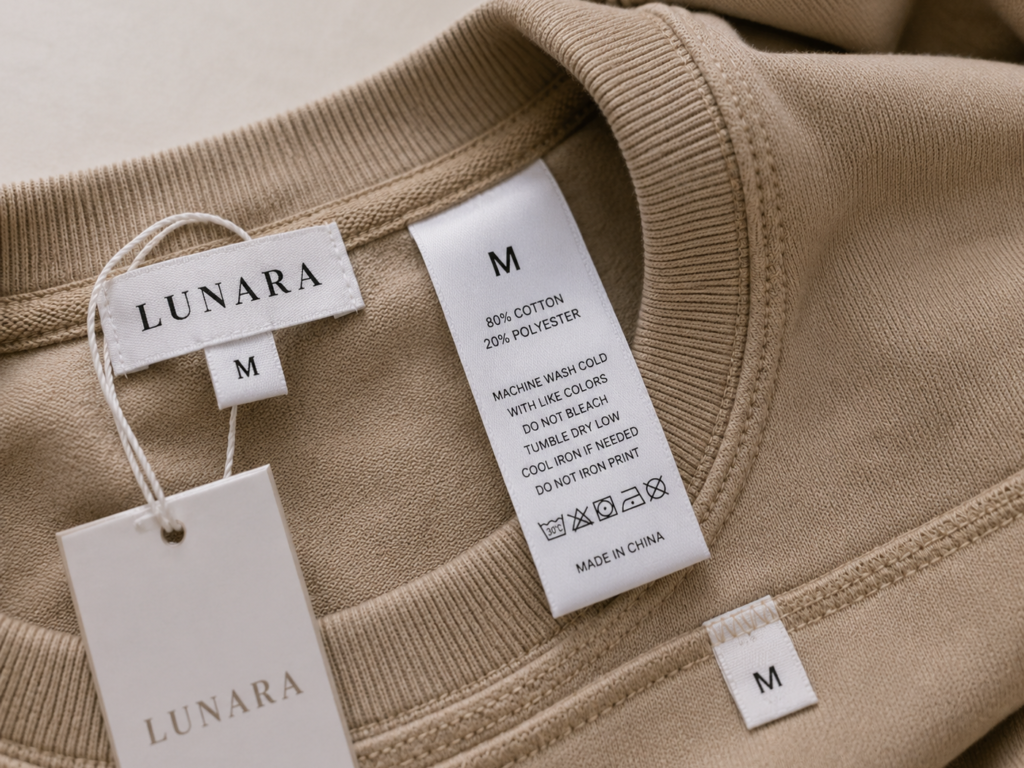
Woven and Size Labels
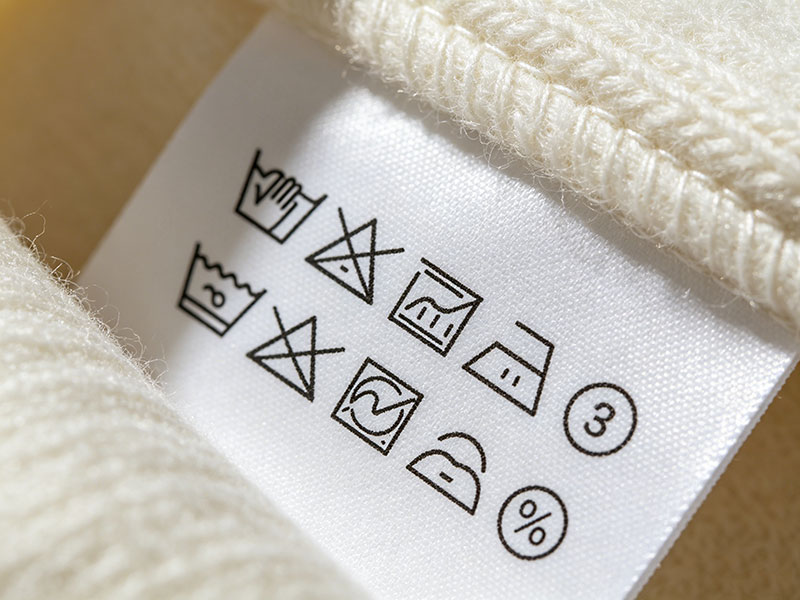
Care Labels

Hangtags
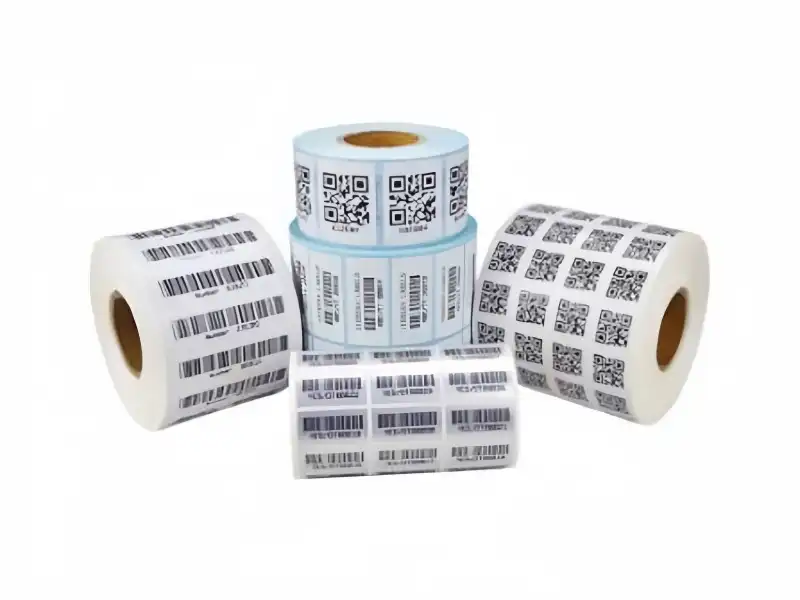
Barcode and SKU Labels
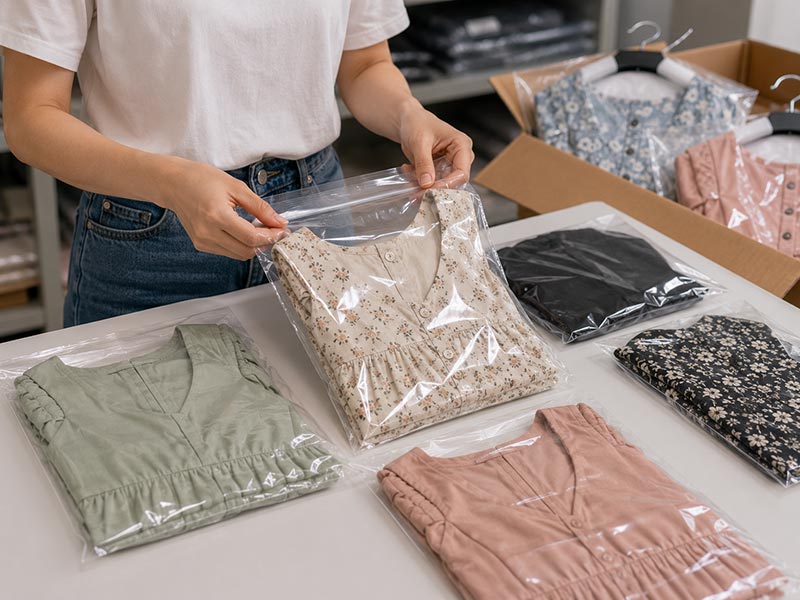
Polybags and Inserts
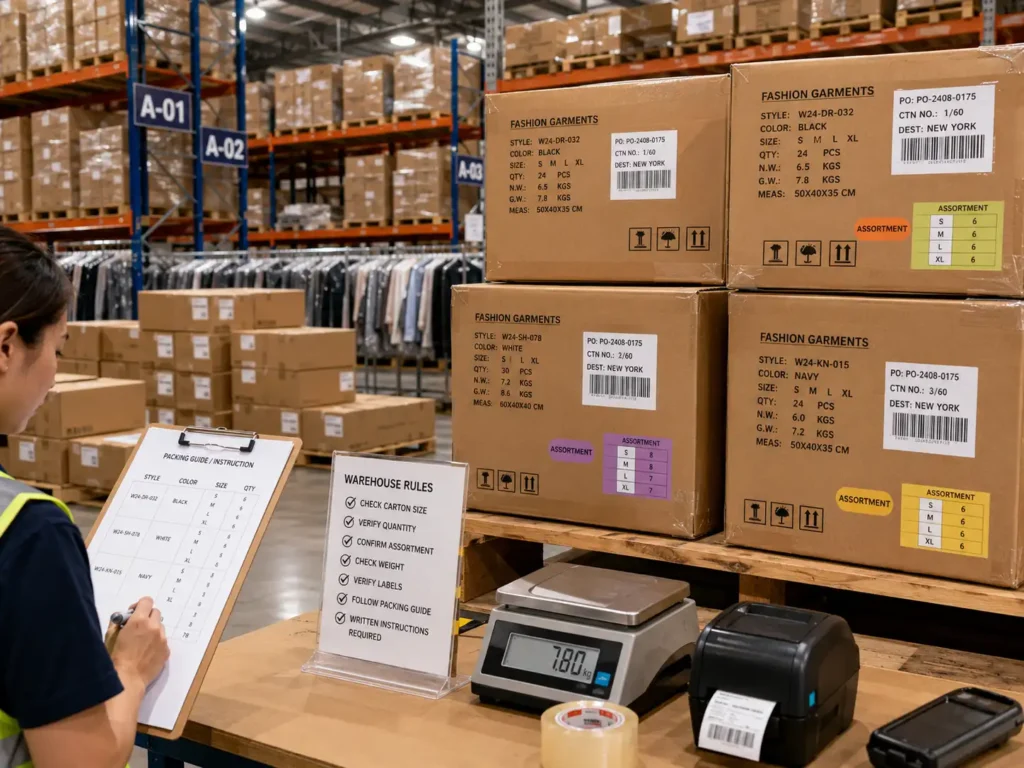
Cartons and Warehouse Marks
Olive Dress Manufacturing Case Studies
The following anonymized cases represent different olive dress development programs, covering bridal occasionwear, contemporary fashion collections and large private-label seasonal productions. Brand identities, original designs and commercial information remain confidential.
Case 1: Olive Bridesmaid and Occasionwear Collection
Project Scope
A premium occasionwear brand developed an olive dress collection for bridesmaid, wedding guest and formal event markets.
- Collection size: 20 dress styles
- Product categories: olive chiffon bridesmaid dresses, satin slip dresses, crepe midi dresses, lace occasion dresses and flowing maxi styles
- Materials: chiffon, satin, crepe, lace, mesh and lightweight lining systems
- Construction details: A-line silhouettes, draped necklines, halter styles, one-shoulder dresses and elegant occasion shapes
- Requirement: consistent olive tone across different fabrics and silhouettes
Development Challenges
The collection required precise coordination because olive changes significantly between materials.
Key challenges included:
- Olive shifting toward grey, yellow or brown depending on fabric
- Chiffon appearing lighter after layering
- Satin reflecting different tones under lighting
- Lace changing appearance through lining color
- Maintaining consistent proportions across sizes
Manufacturing Approach
The development team created a fabric-specific olive approval system.
Key controls included:
- Physical olive reference approval
- Fabric swatch comparison
- Lab dip review when required
- Shell and lining coordination
- PP sample approval before bulk production
Additional attention was given to:
- Bust coverage
- Waist placement
- Strap adjustment
- Hem balance
- Multi-size grading
Manufacturing Value
The collection achieved a refined olive occasionwear identity while maintaining color coordination, comfortable fit and repeatable production quality.
Case 2: Olive Contemporary Fashion and Partywear Collection
Project Scope
A premium ecommerce fashion brand developed an olive collection focused on modern silhouettes, social occasions and commercial fashion positioning.
- Collection size: 18 dress styles
- Product categories: olive bodycon dresses, corset mini dresses, ruched midi dresses, satin party dresses and mesh styles
- Materials: stretch satin, jersey, ponte, power mesh, lace and structured lining
- Construction details: body shaping, ruching, cut-outs, corset panels and fitted silhouettes
- Requirement: strong visual impact with stable commercial fit
Development Challenges
The project required balancing fashion-forward design with production stability.
Key risks included:
- Stretch changing olive appearance across the body
- Mesh transparency under tension
- Corset structures affecting comfort
- Ruching inconsistency between sizes
- Internal components showing through light fabrics
Manufacturing Approach
The development team focused on fit engineering and material performance.
Key controls included:
- Testing stretch direction and recovery
- Reviewing bust-waist-hip balance
- Adjusting negative ease by fabric behavior
- Confirming mesh and lining combinations
- Developing corset support systems
Production controls included:
- Measurement inspection
- Seam stability checks
- Zipper flatness review
- Ruching consistency checks
- Final appearance inspection
Manufacturing Value
The collection delivered a modern olive fashion direction while maintaining stable fit, ecommerce-ready presentation and repeat production capability.
Case 3: Large Private Label Olive Dress Collection Program
Project Scope
An established fashion brand required a complete olive seasonal collection covering multiple silhouettes, fabrics and retail categories.
- Collection size: 30 dress styles
- Production scale: 80,000+ pieces
- Product categories: olive mini dresses, midi dresses, maxi dresses, bodycon dresses, corset dresses, bridesmaid dresses, resort dresses and party styles
- Materials: satin, chiffon, crepe, mesh, lace, jersey, ponte, viscose and linen blends
- Requirement: consistent quality across multiple SKUs, sizes and delivery batches
Development Challenges
The program required coordination across different olive shade directions and fabric systems.
Major challenges included:
- Managing yellow olive, dark olive, moss olive, khaki olive and muted olive directions
- Maintaining visual relationships between fabrics
- Controlling lining requirements
- Managing multiple size ranges
- Coordinating private-label packing
Manufacturing Approach
The collection was divided according to fabric family and production risk.
Soft Olive Occasion Group
Focused on:
- Chiffon and lace dresses
- Bridesmaid silhouettes
- Transparency control
- Lining coordination
Structured Olive Fashion Group
Focused on:
- Corset construction
- Bodycon fitting
- Satin dresses
- Internal support systems
Manufacturing Value
The program demonstrated that large olive dress collections require both production capacity and detailed control of shade, fabric behavior, fit, workmanship and retail delivery.
Launch Planning, Repeat Orders, and Design Protection
Launch Calendar Support
Repeat-Order Records
NDA and Brand Protection
How Brands Should Evaluate an Olive Dress Manufacturer
A capable supplier should prove more than access to green fabric. Evaluation should cover dress specialization, fabric-specific shade control, pattern depth, sample governance, bulk systems, quality records, packing, and long-term support.
| Evaluation Area | Evidence to Request | Jinfeng Apparel Capability |
|---|---|---|
| Dress specialization | Relevant satin, chiffon, bodycon, corset, occasion, resort, and party dress development | Premium dresses, skirts, jumpsuits, matching sets, tops, and private-label womenswear |
| Color development | Pantone or swatch route, lab dip process, bulk cutting review, shade records | Fabric-specific color approval, lining and trim coordination, dye-lot and bulk shade control |
| Fabric capability | Composition, weight, width, stretch, drape, transparency, shrinkage, supplier source | Fabric sourcing and evaluation across woven, knit, sheer, stretch, lustrous, and textured qualities |
| Pattern and fit | Pattern team, size-chart review, grade rules, sample measurement, revision records | 7+ senior pattern makers, 2 sample rooms, structured pattern correction and fit review |
| Sampling | First sample, revised sample, PP sample, Golden sample, version tracking | 20+ sample machinists and staged sample approval before bulk release |
| Bulk production | Factory allocation, line plan, production files, change control, scheduling | 6 owned factories, 10+ production partners, 18+ sewing lines, 100,000+ regular monthly capacity |
| Quality control | Incoming, cutting, sewing, in-line, garment, pressing, packing, AQL support | 15+ QC inspectors and product-specific QC checklists through production and packing |
| Private label | Label artwork, barcode, SKU, polybag, carton mark, warehouse files | Retail-ready private-label packing and export-document coordination |
| Confidentiality | NDA, file handling, photography policy, design protection | NDA-based cooperation and protection of unpublished project information |
| Repeat orders | Pattern, fabric, color, trim, Golden sample, packing, and quality records | Long-term record retention for replenishment, multi-batch production, and seasonal extensions |
Olive Dress Manufacturer Frequently Asked Questions
An olive dress manufacturer develops and produces dresses in approved olive-green directions across silhouettes such as satin slip, chiffon maxi, bodycon, corset, bridesmaid, resort, shirt, midi, party, and occasion styles. Manufacturing should cover fabric sourcing, shade approval, pattern development, sampling, bulk production, QC, labels, packing, and delivery support.
Yes. Development can start from a Pantone reference, physical swatch, original garment, approved fabric cutting, or other controlled standard. Final approval should be made on the intended fabric because satin, chiffon, mesh, jersey, crepe, velvet, and linen blends display olive differently.
A coordinated visual family is achievable, but physically identical appearance cannot be assumed across unrelated fibers and surfaces. Jinfeng develops fabric-specific standards and reviews shell, lining, mesh, lace, zipper, thread, elastic, and other visible components as a coordinated garment palette.
Common directions include satin, chiffon, crepe, jersey, ponte, mesh, lace, velvet, viscose, linen blends, cotton woven, and selected knit qualities. Selection depends on silhouette, season, drape, shine, stretch, opacity, support, target price, care requirements, and launch plan.
Yes. A reference image can start a project review, supported by available details such as fabric direction, target shade, size chart, quantity, labels, packaging, and launch window. A tech pack, original sample, sketch, or line sheet provides stronger control for complex structures.
MOQ starts from 200 pieces per style and color. MOQ is calculated by style and color rather than total collection quantity. Custom dyeing, special fabrics, custom weaving, printing, special trims, certified materials, or custom packaging may carry separate supplier MOQ requirements.
Jinfeng distinguishes first sample, fit sample, revised sample, photo sample, salesman sample, PP sample, and Golden sample. Each stage has a separate purpose. Bulk production begins after approved production references, including material, color, pattern, size chart, trims, labels, workmanship, and packing requirements.
Control includes approved fabric standards, incoming material inspection, dye-lot and roll records, shade grouping, lot-aware cutting, panel matching, coordinated trims, in-line observation, final garment shade review, packing records, and retained bulk references for repeat production.
Yes. Multi-style programs can be grouped by fabric, construction, shade, trim system, sample priority, quantity, production route, launch date, and delivery batch. Approved files and revision trackers keep pattern, color, material, fit, labels, packing, and production status clear for every style.
Yes. Private-label support includes woven labels, size labels, care labels, hangtags, barcode stickers, SKU labels, polybags, inserts, cartons, carton marks, and warehouse labels. NDA-based cooperation protects tech packs, patterns, original samples, unpublished designs, pricing, orders, and brand files.

Send Your Olive Dress Collection for Project Review
A useful project review begins with clear commercial and technical information. Share a tech pack, line sheet, reference image, original sample photos, target olive shade, Pantone code or physical swatch, preferred fabric, quantity per style and color, size range, construction notes, label files, packing requirements, launch date, and destination market.
Jinfeng Apparel will review style complexity, fabric direction, color-development route, pattern and fit risk, trim requirements, MOQ fit, sampling path, production allocation, quality priorities, and delivery planning. Files are used for project evaluation, sample development, bulk production, QC, packing, and delivery coordination under confidential handling.
Brands with incomplete tech packs may still send a reference image and quantity plan for an initial feasibility discussion.
- Reference image, tech pack, sketch, original sample photos, or line sheet
- Target olive shade, Pantone reference, physical swatch, or approved fabric cutting
- Fabric direction, composition preference, lining, stretch, transparency, and trim details
- Quantity per style and color, size range, size ratio, and expected repeat potential
- Woven label, care label, hangtag, barcode, SKU, polybag, carton, and warehouse requirements
- Target sample priority, launch window, delivery destination, and inspection requirements