Skip to content
Nude Dress Manufacturer
Custom nude-tone and illusion dresses developed for global fashion brands, from shade approval and fit engineering to controlled bulk delivery.
- Six commercial nude directions can be developed across beige, blush, peach, taupe, caramel, and mocha families.
- Shell fabric, lining, mesh, thread, zipper, cups, and decorative trims are reviewed as one color system.
- Standard dress samples usually require 10-15 days; complex corset, lace, mesh, sequin, or evening styles usually require 15-25 days.
- MOQ starts from 200 pcs per style/color, subject to fabric, trim, construction, and packing requirements.
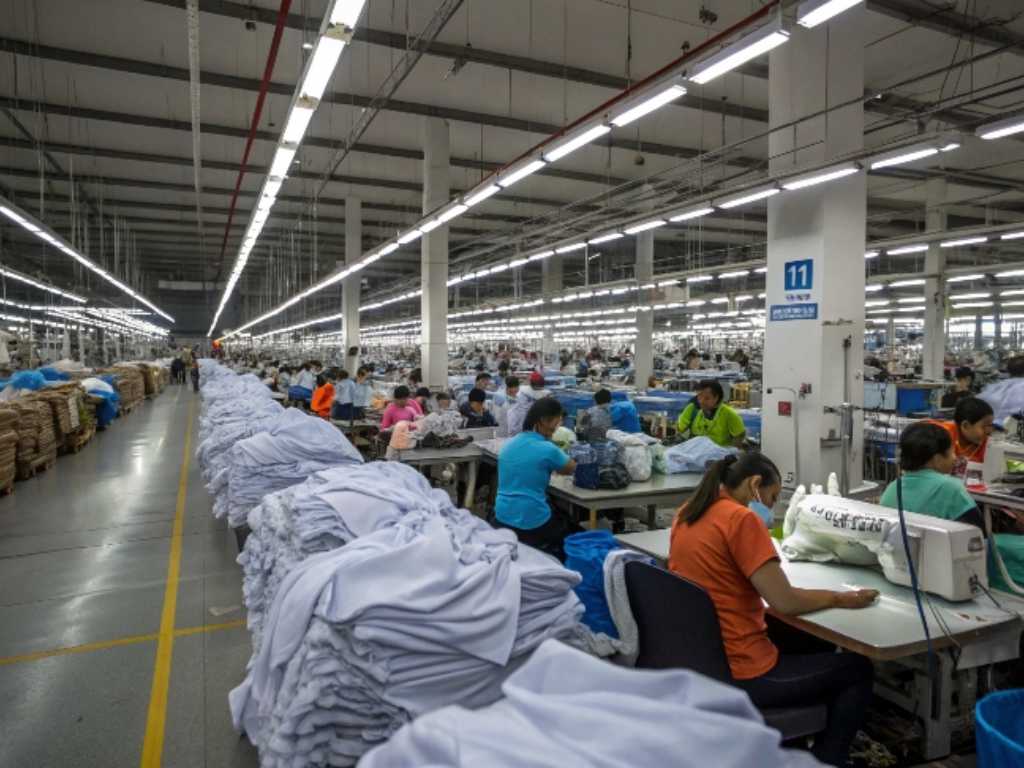
- Six owned factories and 10+ long-term satellite partners support multi-style production.
Manufacturing Capacity Built for Nude Dress Programs
Since 2008
Six Owned Factories
Ten Plus Partners
Two Sample Rooms
Dedicated Pattern Team
Dedicated QC Team
A Manufacturing Fit for Established Fashion Programs
Best Fit Programs
- Custom OEM or ODM development
- Multi-style seasonal collections
- Private-label garment delivery
- Photo sample and PP approval
- Bulk production and repeat orders
- Barcode, SKU, and warehouse packing
Production Boundaries
- No ready-stock wholesale program
- No one-piece dropshipping
- No 1-50 piece production runs
- No mixed styles totaling 200 pieces
- No quotation based only on one image
- No lowest-price-only sourcing model
Nude Dress Can Mean Three Different Products
Nude-Tone Dresses
- Suitable for mini, midi, maxi, slip, bodycon, wrap, and corset styles
- Common fabrics include satin, crepe, jersey, chiffon, lace, and knit
- Key risks include transparency, color cast, stains, and bulk shade variation
Nude Illusion Dresses
- Suitable for party, club, prom, evening, and occasion collections
- Key controls include mesh tone, coverage, support, and decoration placement
- Wear tests should review movement, sitting, lighting, and skin contact
Nude Color Collections
A nude color collection may contain several shades across multiple styles, fabrics, and product categories. One approved beige cannot automatically be transferred from satin to mesh, lace, jersey, or sequin fabric. Each material reflects and absorbs color differently. Collection planning therefore groups styles by fabric source, dye lot, lining system, trim family, and launch priority. The aim is a coherent color story without forcing every component into an unrealistic exact visual match.
- Common directions include light nude, blush nude, taupe, caramel, and mocha
- Shell, lining, mesh, thread, zipper, cups, and trims require coordinated approval
- Reorders still require batch and material availability confirmation
Nude Dress Styles for Commercial Fashion Collections
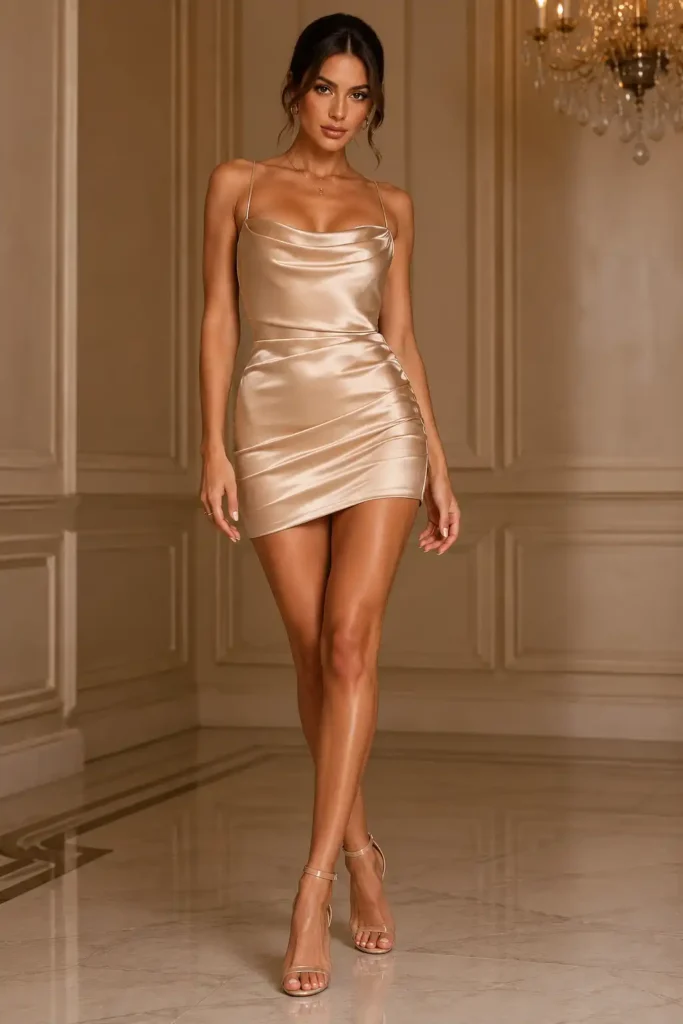
Satin Mini Dresses
- Best for clean, glossy, photo-focused silhouettes
- Review snagging, seam impression, and shade consistency
- Use protective packing to reduce fold and pressure marks
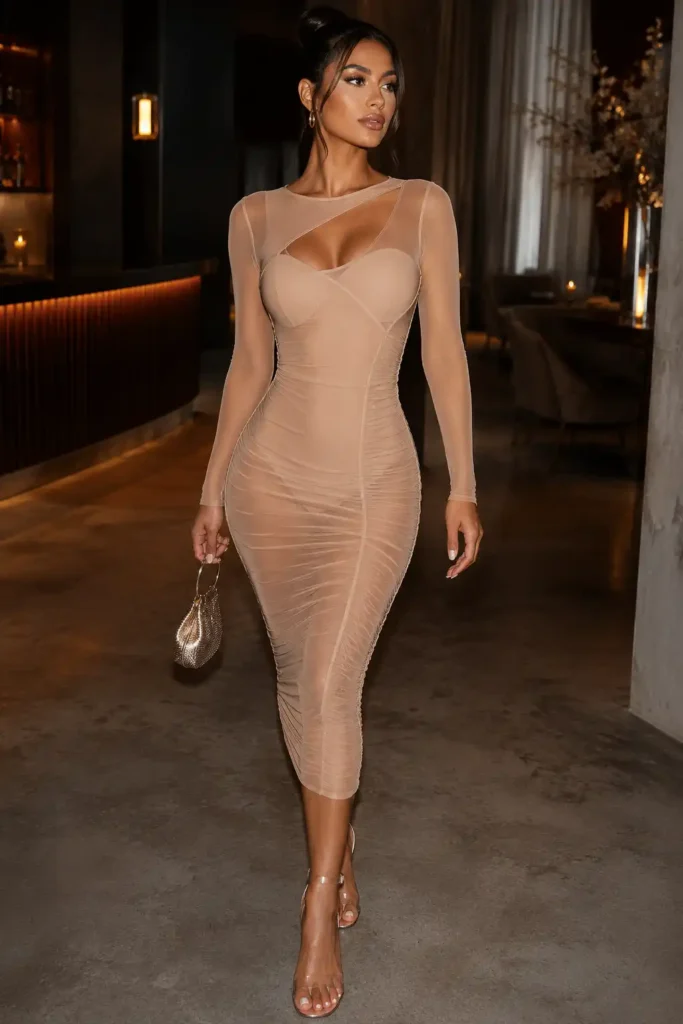
Mesh Bodycon Dresses
- Best for club, party, cut-out, and ruched collections
- Confirm stretch percentage and recovery before pattern finalization
- Inspect holes, seam strain, lining exposure, and color shift when stretched
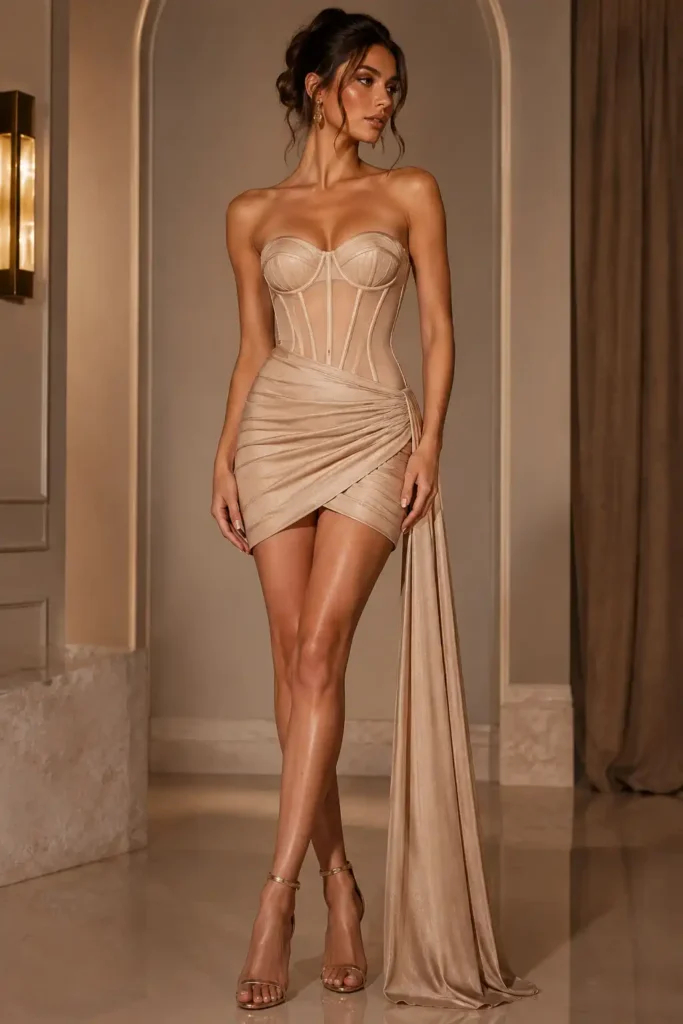
Structured Corset Dresses
- Best for occasion, party, evening, and statement mini styles
- Confirm cup shape, support level, waist shaping, and comfort
- Protect boning ends and skin-contact areas during construction
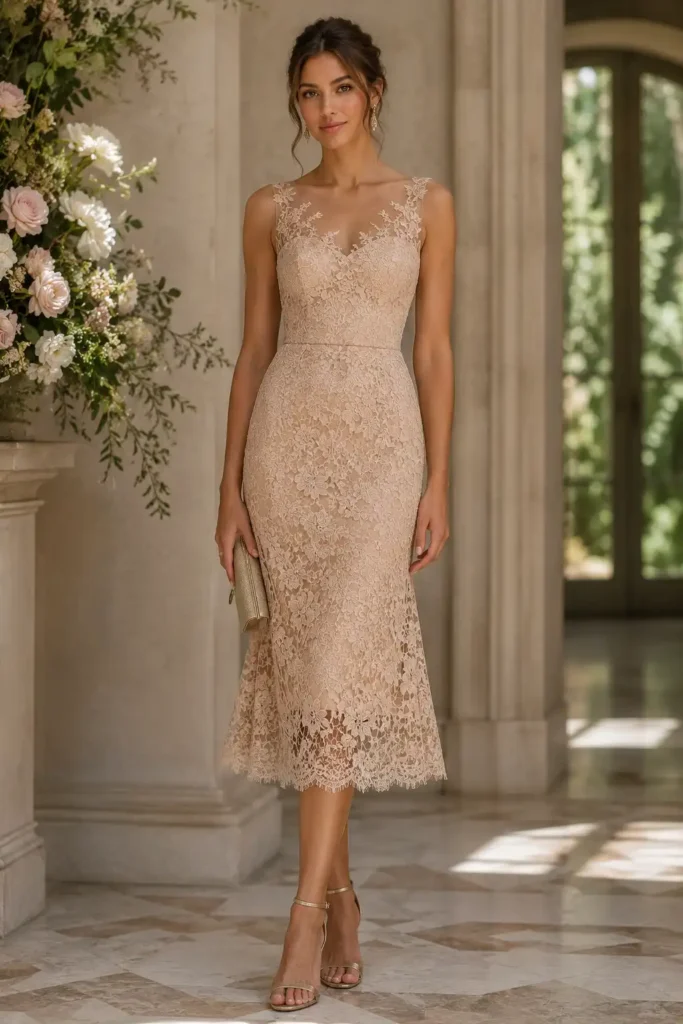
Lace Midi Dresses
- Best for fitted, A-line, panelled, or partially sheer dresses
- Review motif placement at bust, waist, side seams, and hem
- Check holes, fraying, loose embroidery, and lining mismatch
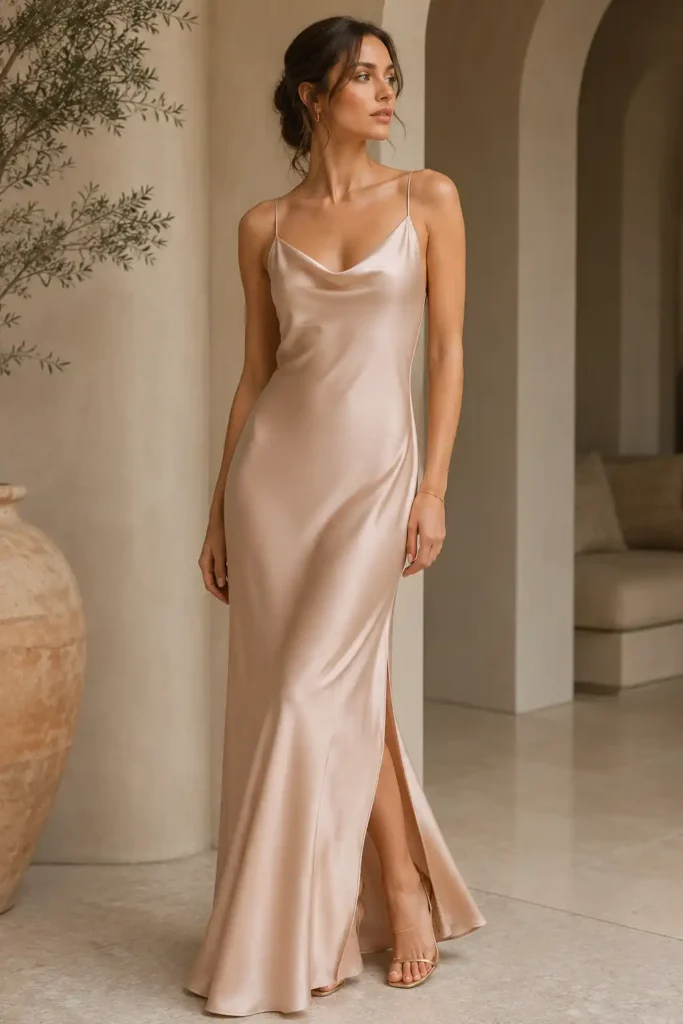
Slip and Bias Dresses
- Best for evening, resort, bridesmaid, and elevated daywear
- Control strap length, neckline depth, bust ease, and slit height
- Recheck garment length after hanging and pressing
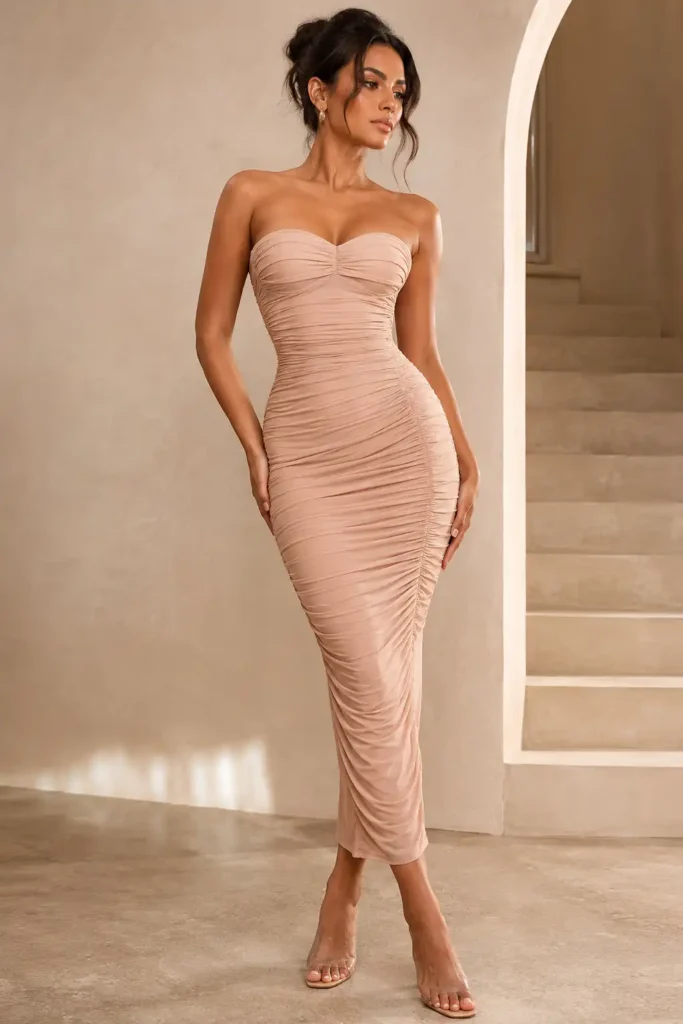
Ruched Midi Dresses
- Best for party, date-night, bodycon, and occasion collections
- Keep left-right balance and gathering density consistent
- Confirm size grading without flattening or overloading the ruching
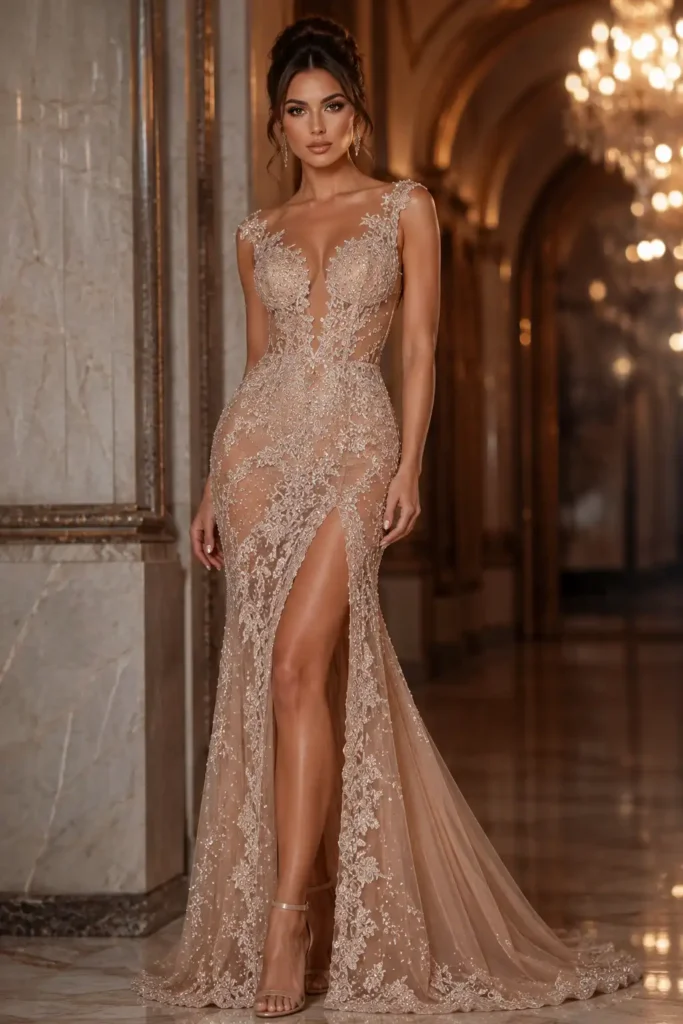
Illusion Evening Dresses
- Best for prom, evening, gala, pageant, and formal programs
- Balance transparency, support, decoration weight, and comfort
- Use reinforcement and protective packing around decorated zones
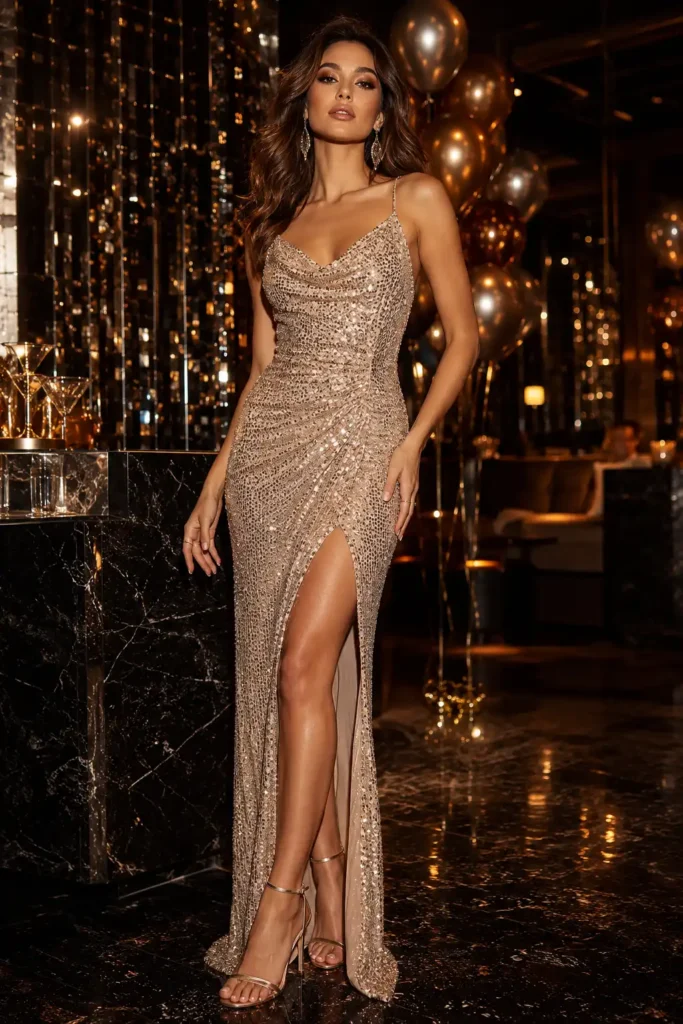
Sequin Party Dresses
- Best for holiday, birthday, party, and statement collections
- Confirm sequin direction and reflective tone under multiple lights
- Inspect skin-contact areas, loss rate, seams, and zipper operation
Developing Nude Shades Beyond One Beige Color
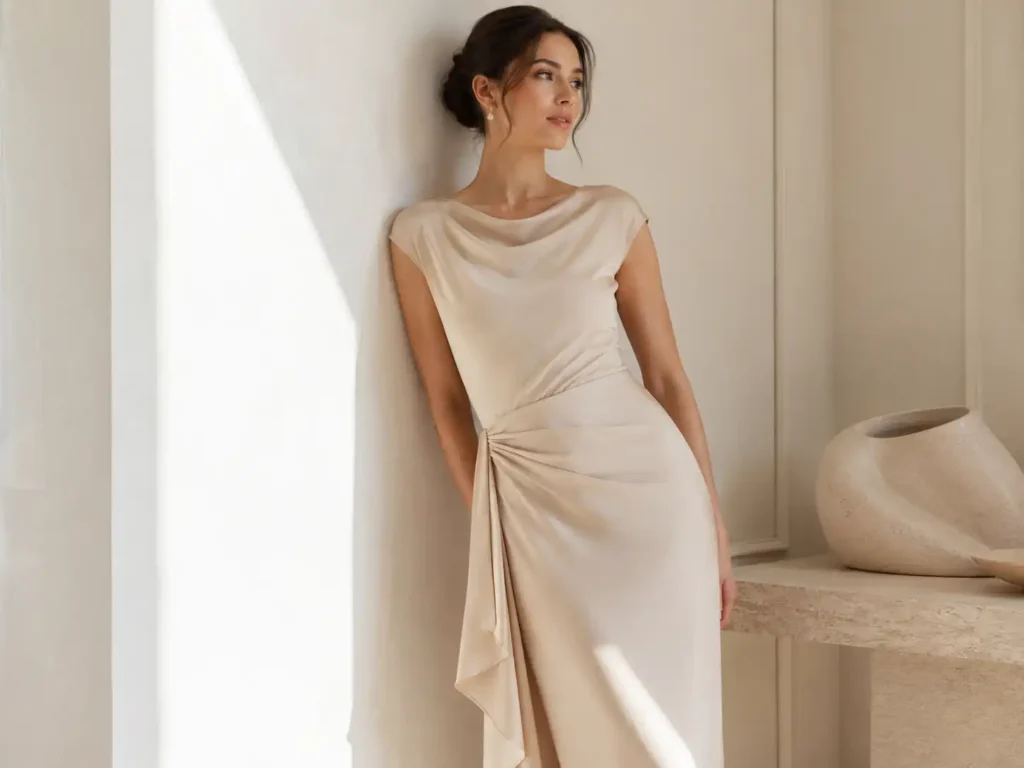
Light Beige Nude
- Review daylight, warm light, and photography lighting
- Confirm shell and lining on a body or dress form
- Check opacity before approving size and consumption
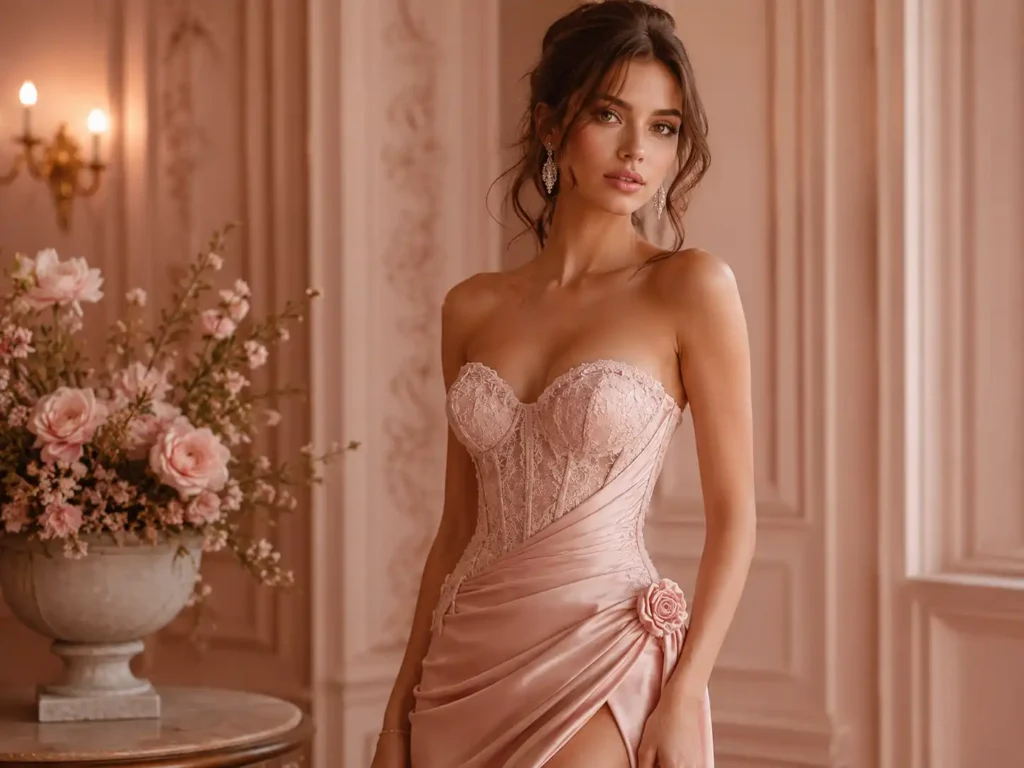
Blush Nude
- Suitable for romantic and feminine color stories
- Avoid overly cool pink or peach drift
- Compare trim color after fabric approval

Peach Nude
- Suitable for warm seasonal collections
- Review skin-tone effect across target markets
- Control saturation between shell, mesh, and lining
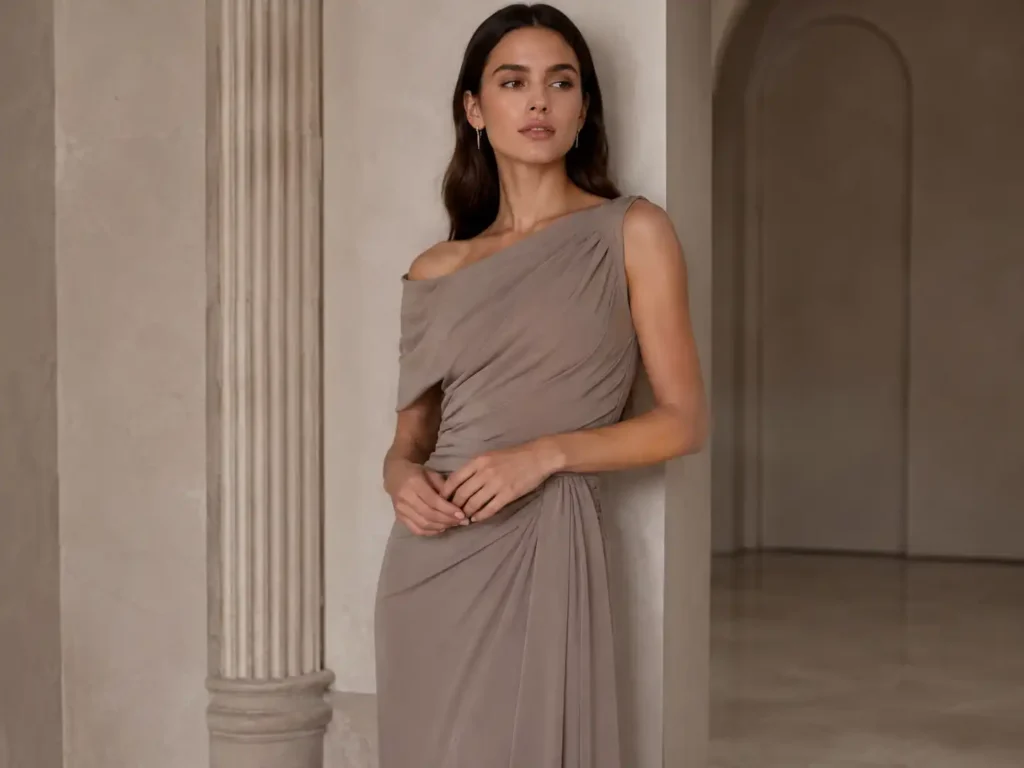
Taupe Nude
- Suitable for refined, muted color stories
- Review grey-brown balance under natural light
- Match thread and zipper after bulk fabric approval

Caramel Nude
- Suitable for medium-depth nude assortments
- Confirm warmth without excessive orange cast
- Coordinate mesh, cups, lining, and decorations
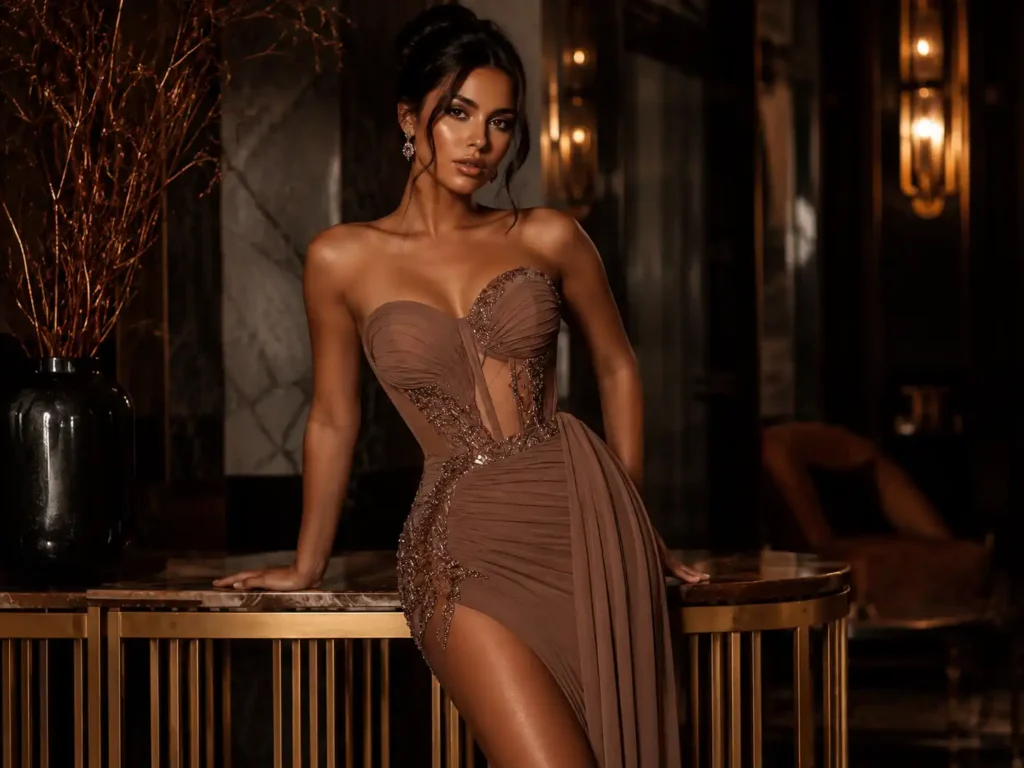
Mocha Deep Nude
- Suitable for deep nude and tonal evening ranges
- Review component contrast instead of chasing one identical color
- Keep approved shade references for repeat orders
How Nude Shades Behave Across Dress Fabrics
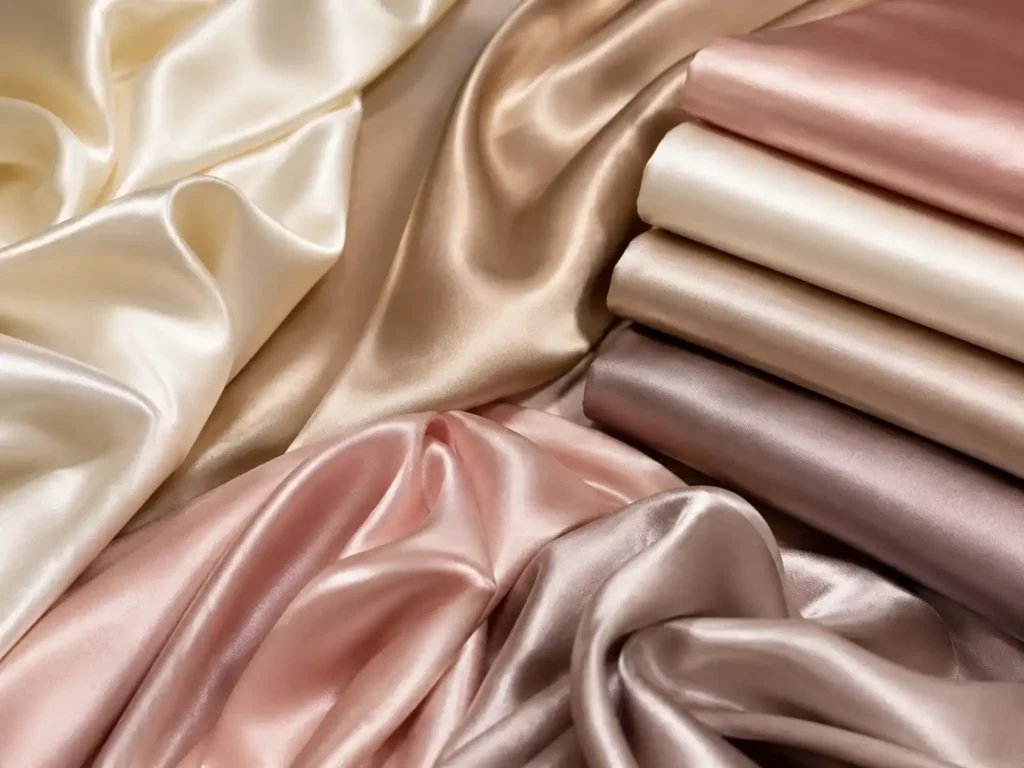
Satin
- Typical weight direction: about 80-250 gsm depending on satin type
- Lining choice depends on opacity, structure, and wearing comfort
- Packing should reduce hard folds and surface rubbing

Mesh
- Typical weight direction: about 15-160 gsm depending on function
- Test single, double, and stretched conditions
- Inspect holes, distortion, neckline recovery, and seam strain

Lace
- Typical weight direction: about 60-300 gsm depending on structure
- Consider motif repeat, border use, and usable width
- Inspect tears, loose embroidery, asymmetry, and lining contrast
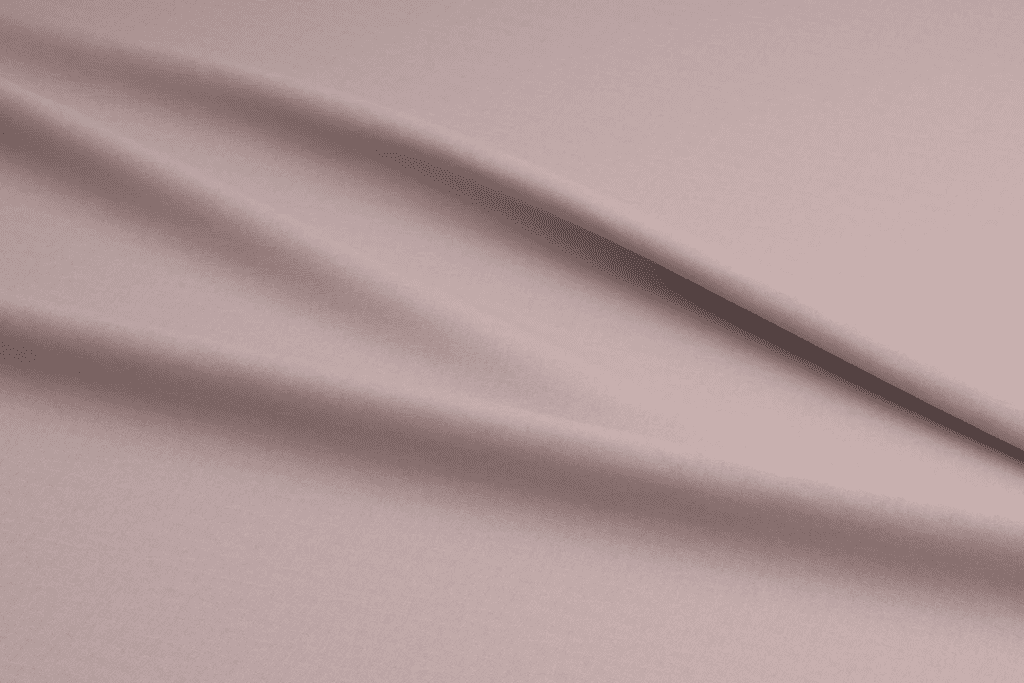
Jersey
- Common direction: about 160-320 gsm for fitted fashion dresses
- Check opacity at target body stretch
- Test recovery, shrinkage, seam stretch, and side-seam stability
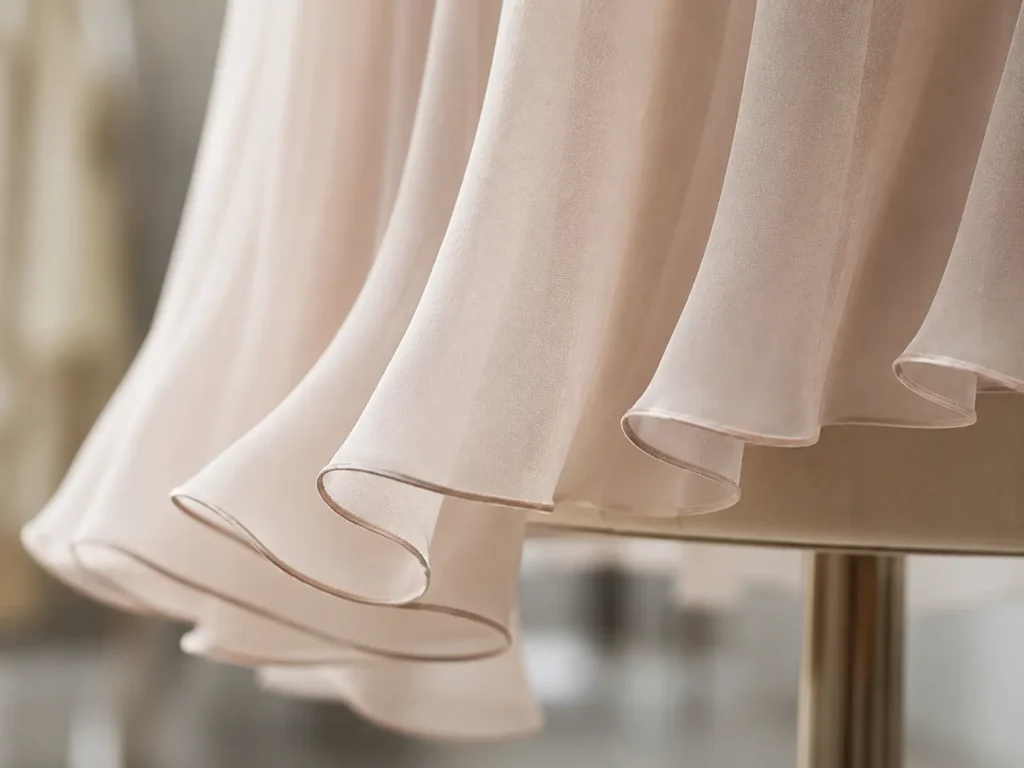
Chiffon
- Typical weight direction: about 30-90 gsm
- Suitable for resort, bridesmaid, wedding guest, and occasion dresses
- Inspect transparency, lining length, snags, and hem balance
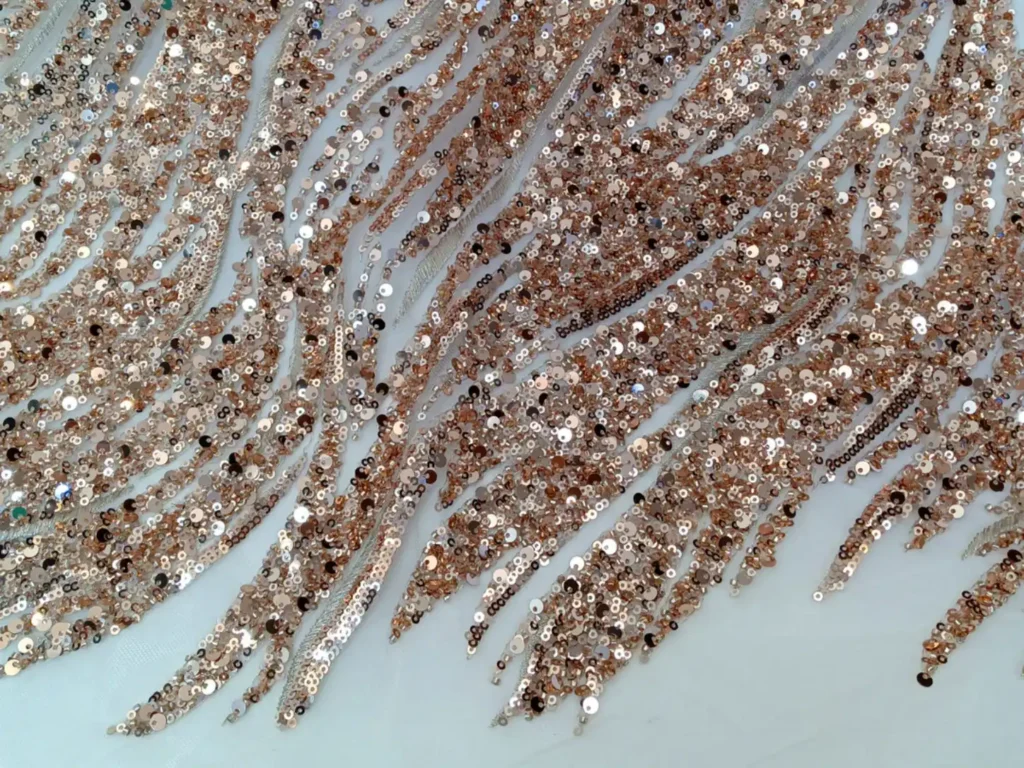
Sequin Fabrics
- Typical weight direction: about 180-450 gsm
- Confirm direction and reflection under multiple light sources
- Inspect loss, scratch points, seam joins, and protective packing
Coordinating Shell, Lining, Mesh and Trims
A nude dress succeeds when every visible and structural component supports one approved color direction. Exact sameness is not always possible or desirable; controlled visual coordination is the real standard.
Main Fabric and Lining Color Strategy
Main fabric and lining should be assessed as a working system. A lining chosen only because its supplier calls it “nude” may look yellow, pink, grey, or too dark beneath the shell. Opacity, shine, weave, weight, and layer count determine how much lining color influences the finished garment. Satin may need a smooth lining that protects drape without adding visible seam bulk. Chiffon often needs deeper coverage, while jersey lining must stretch with the shell.
Color review should use physical materials under at least three conditions: natural daylight, indoor neutral light, and photography lighting. A dress form or fit model gives a more reliable result than a flat table because tension and body shape change transparency. For pale styles, undergarment visibility, cup edges, seam allowances, labels, and pocket bags also need review.
- Shell and lining are approved together, not as unrelated swatches.
- Lining length, edge position, and seam construction must stay hidden.
- Bulk dye lots are compared against the approved physical standard.
- A slightly deeper lining may improve coverage without changing the outside shade.
- Stretch compatibility is essential for fitted mesh, jersey, and bodycon products.
Skin-Tone Mesh and Illusion Panels
Skin-tone mesh selection requires more than finding a close color. Mesh can become lighter when stretched, darker when layered, and more visible along seams or folded edges. Soft mesh provides a delicate hand but may lack support. Power mesh controls the body better but can feel firmer and appear deeper. Tulle holds shape yet may not suit close-fitting movement. Each material serves a different structural purpose.
The target market and intended visual effect should guide the base tone. A brand may want the panel to disappear against several skin tones, or may intentionally use a tonal contrast. In both cases, placement around bust, waist, hip, armhole, neckline, and cut-outs must protect wearing safety. Sample fitting should include arm lift, sitting, walking, and direct lighting.
- Review unstretched, stretched, single-layer, and double-layer conditions.
- Confirm seam allowance visibility and edge finishing.
- Align mesh stretch with garment stress direction.
- Use reinforcement where crystals, appliqué, or heavy lace create load.
- Record approved mesh supplier, shade, width, stretch, and layer count.
Thread, Zippers, Cups and Decorative Trims
Small components can disrupt a refined nude dress even when the main fabric is correct. Thread may look acceptable on a cone but form visible lines after stitching. Invisible zippers can create a contrasting stripe or wave along the back. Bra cups may show through mesh or satin when their color, thickness, or edge shape is unsuitable. Boning channels, elastic, hook-and-eye tape, lace borders, appliqué grounds, and sequin bases all influence the final appearance.
Trim approval should follow fabric approval whenever possible. Custom colors may have separate supplier minimums and lead times, while standard stock colors may require a controlled “closest available” decision. The BOM and trim card should record supplier code, size, color, placement, and acceptable tolerance.
- Thread is checked at seams, topstitching, bartacks, and overlock areas.
- Zippers are reviewed for color, length, puller, flatness, and function.
- Cups are checked for shade, shape, position, symmetry, and show-through.
- Decorative trims are reviewed for tone, weight, comfort, and attachment strength.
- Labels and packing materials remain outside visible garment areas unless specified.

Fit and Silhouette Control for Nude Dresses
Pale, fitted, and semi-sheer dresses expose proportion errors quickly. Fit development must control body balance, support, coverage, movement, and size grading before an approved sample becomes a bulk standard.
Bodycon and Stretch Fit Engineering
Bodycon nude dresses depend on fabric stretch, recovery, weight, and pattern reduction. Too much negative ease creates transparency, seam strain, zipper distortion, and uncomfortable pressure. Too little shaping produces loose waistlines, bagging at the seat, and unstable necklines. Shell and lining must stretch in compatible directions; otherwise the lining can pull the outer layer upward or flatten intended ruching.
Core measurement points include bust, underbust where required, waist, high hip, full hip, dress length, neckline depth, armhole, strap length, slit height, and hem opening. Sample review should record body measurements, garment measurements, fabric stretch, and fit comments together. A visual fit note without measurements is not enough for repeatable grading.
- Common project ranges include XS-XL, XS-2XL, or U.S. numeric 0-16, based on the brand’s approved chart.
- Size grading should protect neckline coverage, slit safety, and ruched proportions.
- Stretch recovery is checked after wearing tension and handling.
- Side seams should remain balanced rather than rotating toward front or back.
- Bulk measurement inspection follows the approved size chart and tolerance.
Corset and Structured Fit Engineering
Corset nude dresses need controlled interaction between outer fabric, lining, cups, boning, seam channels, zipper, elastic support, and neckline edge.
Cup position must align with the brand’s size chart rather than simply scaling every component equally.
Boning should support the garment without ending at uncomfortable pressure points. The waistline must shape the body while allowing breathing, sitting, and movement.
Pale satin and mesh can reveal internal construction. Cup edges, boning channels, seam allowances, interfacing, and reinforcement may show through unless thickness and placement are planned early. Sample fitting should cover front, side, and back views, plus movement tests. Strapless versions require upper-bust stability, anti-slip support where appropriate, and secure zipper or closure performance.
- Cup shape, thickness, color, and position are approved in the sample.
- Boning placement follows support lines and avoids skin pressure.
- Neckline height and side coverage are checked across planned sizes.
- Lining and seam bulk are controlled to reduce visible ridges.
- PP approval locks structure, trims, measurements, and closure method.
Slip, Midi and Maxi Balance
Slip, midi, and maxi nude dresses rely on proportion, drape, and hem control. Bias-cut fabrics can grow after hanging, while slippery satin and chiffon can shift during cutting. Shoulder straps affect neckline height, bust coverage, waist position, and overall length. A small strap change can therefore alter several fit points at once.
Long dresses require balanced front, back, and side lengths. Slits need enough movement without exposing lining or undergarments. Lining should follow the shell without twisting, pulling, or appearing below the hem. For soft fabrics, the PP sample may need a resting period before final hem measurement and pattern confirmation.
- Check strap length, neckline depth, bust ease, waist position, and slit height.
- Confirm hem level after hanging, pressing, and movement.
- Review lining length in standing, walking, and sitting positions.
- Grade long lengths without changing intended silhouette.
- Record finished garment measurements and construction notes for bulk QC.

Engineering Nude Illusion Without Losing Wearability
Illusion styling should look light and daring while remaining stable, comfortable, and repeatable. Coverage mapping, support structure, decoration weight, and skin-contact finishing require early sample validation.
Illusion Placement and Visual Balance
Illusion panels, cut-outs, lace appliqué, embroidery, and crystals must follow the body rather than float randomly across a flat pattern. Placement at bust, side body, waist, hip, neckline, and back affects coverage, support, and visual proportion. Decorative maps should account for seam allowances, zipper zones, darts, boning, and size grading. A motif placed safely on the base size may shift into an exposed area after grading if the rule is not planned.
During sampling, placement is reviewed on body from front, side, and back. Photography lighting is also useful because seams and mesh edges can disappear in normal room light but become obvious under flash. Brand feedback should distinguish between color changes, placement changes, and construction changes so revisions remain traceable.
- Define protected coverage zones before decoration placement.
- Keep heavy embellishment away from unsupported mesh areas.
- Review motif movement across sizes.
- Avoid decorations that block zipper operation or alteration points.
- Lock approved placement through marked pattern and production artwork.
Coverage, Support and Wearing Safety
A nude illusion dress may require bra cups, bust lining, power mesh, gussets, modesty panels, elastic support, silicone grip, or partial body lining. The right solution depends on neckline, back depth, side exposure, fabric stretch, intended use, and target market. Support should not create visible internal lines that weaken the illusion effect.
Wear tests should include walking, sitting, bending, arm lift, and normal movement. Bust edges, side seams, cut-out corners, and slit points need stress review. Skin-facing seams should be smooth, and labels should be positioned away from transparent zones. For eventwear, garment weight must be distributed so decoration does not drag the neckline downward.
- Review bust support and coverage in all intended sizes.
- Use compatible stretch between mesh, lining, and elastic.
- Reinforce cut-out corners and heavy decoration zones.
- Check gusset width, slit security, and side-body exposure.
- Confirm comfort during movement, not only standing photos.
Embellishment Stability and Comfort
Beads, sequins, crystals, embroidery, and appliqué create visual value but add weight, abrasion, and handling risk. Attachment method should match decoration size, fabric strength, wash or care instructions, and expected wear. Mesh may require backing or local reinforcement. Sequin edges near armholes, neckline, or side body can scratch skin unless covered, trimmed, or repositioned.
Bulk inspection should include decoration count or visual density standards, attachment strength, missing parts, sharp edges, loose threads, staining, and symmetry. Packing must prevent decorated surfaces from rubbing against each other. Tissue, protective film, garment bags, or controlled folding may be used according to style.
- Establish approved decoration map and density.
- Protect skin-contact and high-friction zones.
- Check attachment strength without damaging delicate fabric.
- Inspect symmetry, missing parts, loose ends, and color variation.
- Use packing that protects both embellishment and nude fabric surface.
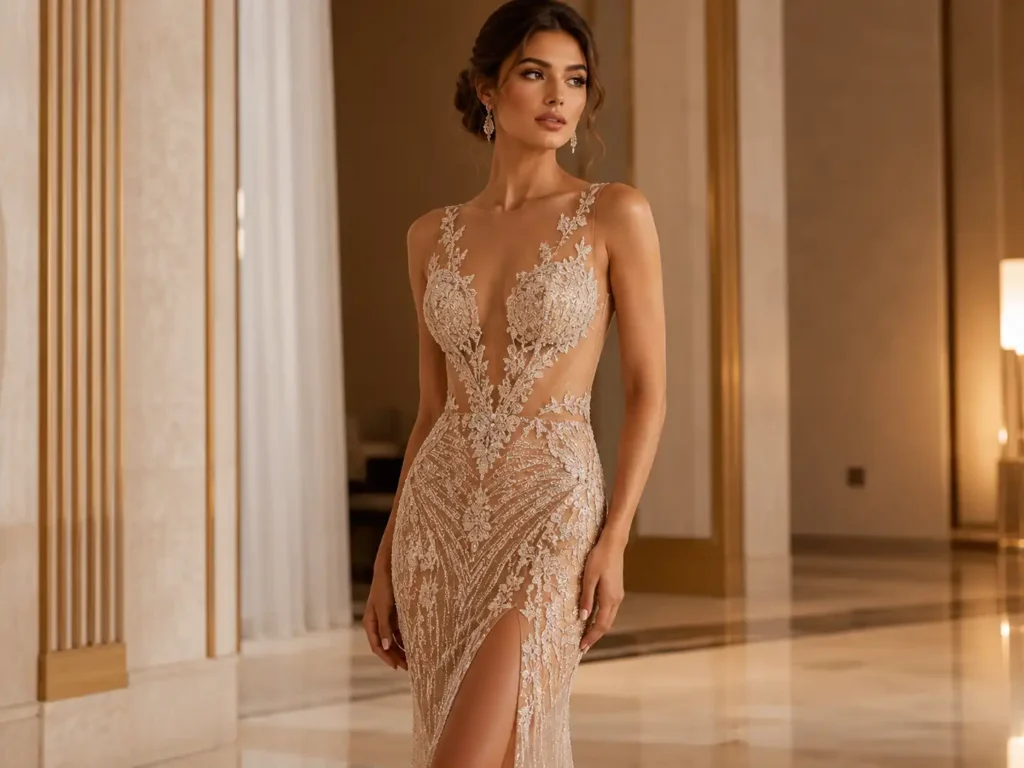
Design Details That Define Nude Dress Quality

Invisible Zippers
- Match after fabric approval
- Test repeatedly before packing
- Inspect flatness on body
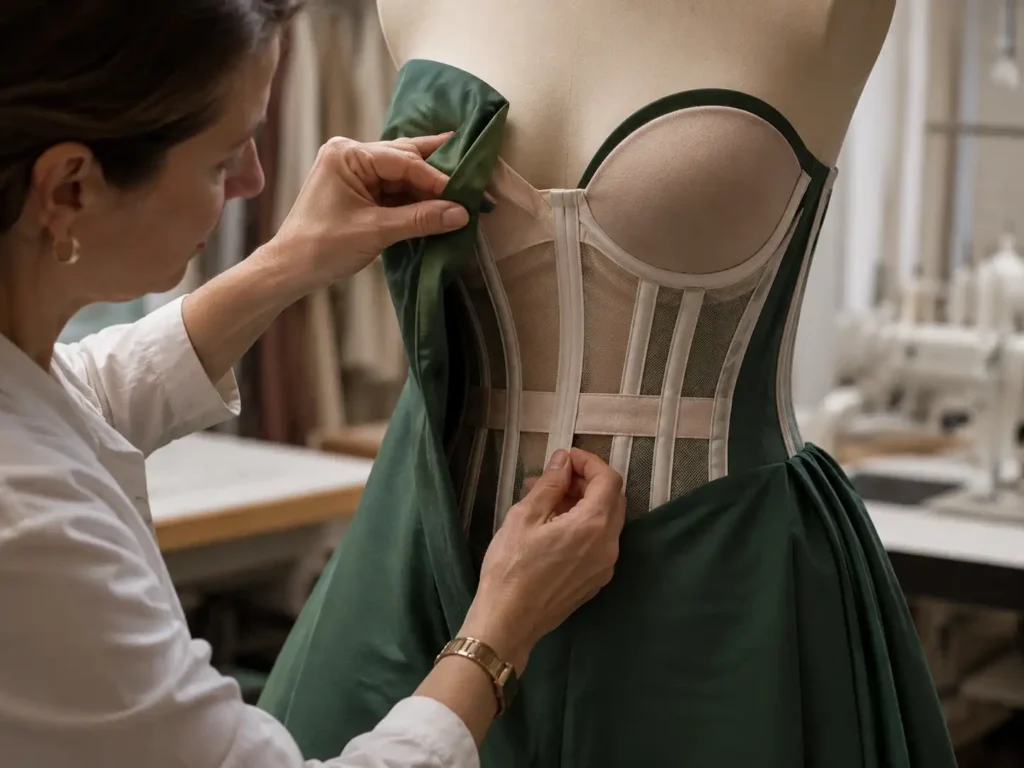
Bra Cups and Boning
- Review size-specific cup placement
- Protect boning ends
- Check visible ridges

Ruched Construction
- Define anchor points
- Control density by size
- Inspect seam rotation
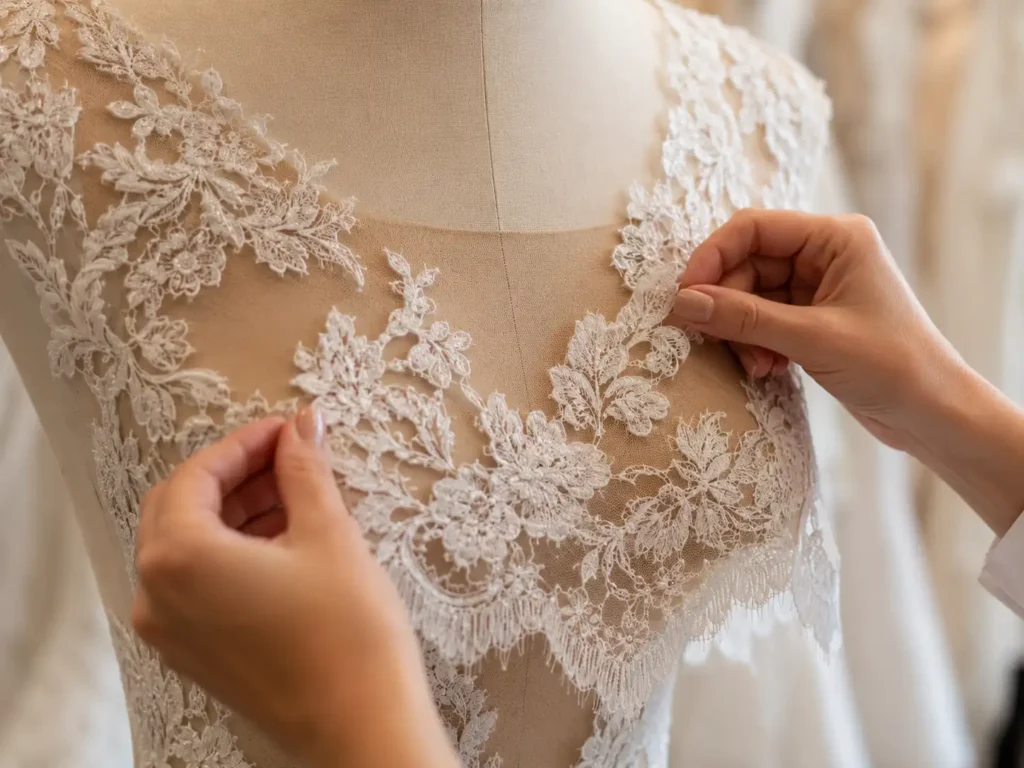
Lace Placement
- Plan usable width and repeat
- Match critical motifs
- Protect delicate edges
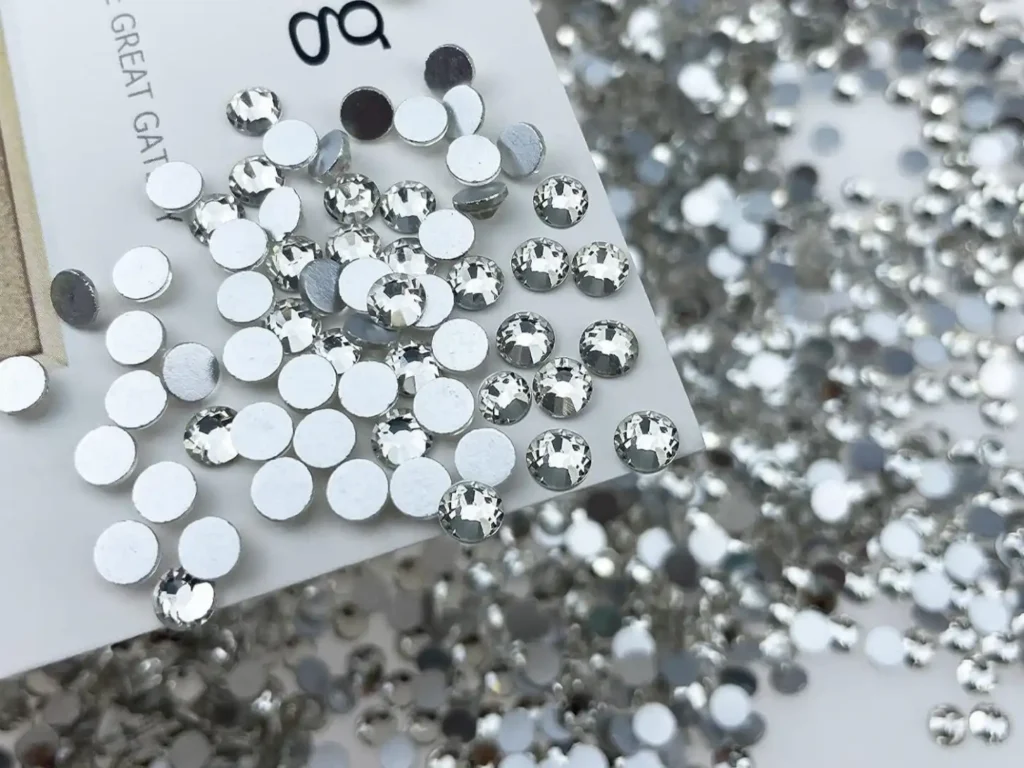
Crystal and Beading
- Reinforce heavy zones
- Protect skin contact
- Check missing pieces

Hem and Slit Control
- Recheck after pressing
- Test walking and sitting
- Control lining exposure
From Color Reference to Approved Nude Dress Sample
Project Review
- Confirm style and intended sales use
- Identify exposed or structured zones
- Review quantity by style/color
- Set sample priority for key SKUs
Fabric Direction
- Approve shell, lining, and mesh together
- Record supplier code and usable width
- Confirm special material minimums
- Review color under several lights
Pattern and First Sample
- Measure against the supplied chart
- Inspect internal construction
- Review fit on body where required
- Record all deviations and open questions
Fit and Color Revision
- Separate fit, material, and styling comments
- Update pattern and measurement files
- Replace rejected components
- Track approval status by version
PP Sample Approval
- Lock fabric and dye-lot direction
- Lock measurements and construction
- Lock labels and packing method
- Prepare QC checklist and handover files
Golden Sample Control
- Store approved physical reference
- Link it to pattern, BOM, and size chart
- Use it during finishing and final inspection
- Review again for repeat colors or new fabrics
Locking Nude Dress Details Before Bulk Production
Fit Approval
- Approved size chart and tolerances
- Final pattern and grading rule
- Fit photos or comments where permitted
- Required measurement points for bulk QC
Material Approval
- Fabric and trim card
- Color and dye-lot references
- BOM with consumption basis
- Care and composition information
Production Handover
- PP lock confirmation
- Sewing and finishing standard
- Label, barcode, and packing files
- Inspection and shipment requirements
Scaling Nude Dress Orders Across Controlled Production Lines
Multi-style nude programs require careful grouping. Fabric type, construction complexity, delivery priority, decoration workload, and QC risk guide factory allocation and project management.
Production Allocation by Product Risk
Jinfeng Apparel operates six owned women’s fashion factories, 18+ sewing lines, 6+ flexible production lines, and works with more than 10 long-term satellite partners. Capacity is allocated by product family rather than only by available space. Stretch bodycon styles, slippery satin dresses, structured corsets, mesh illusion garments, lace placement styles, and sequin products need different sewing, handling, and inspection plans.
A 10-30 style collection may be grouped by common fabric, lining, trim, pattern complexity, launch priority, and shipment window. Key styles can enter sampling and material confirmation first, while later styles follow an approved sequence. Complex products are not promised unlimited speed; material readiness and skilled labor must match the schedule.
- Group styles by fabric and construction
- Assign production route after PP approval
- Protect QC time instead of compressing every stage
- Rebalance lines when repeat orders or urgent SKUs arise
- Keep style/color/size records separated for packing
Merchandising and QC Coordination
Twelve or more merchandisers and 15+ QC inspectors support timeline tracking, fabric status, sample versions, bulk updates, inspection records, packing confirmation, and shipment preparation. Multi-style orders become difficult when comments, color approvals, and packaging files are mixed across SKUs. Project tracking therefore separates each style, color, size range, PP status, material status, production stage, QC issue, and packing instruction.
Production updates focus on meaningful milestones: material arrival, cutting release, sewing progress, in-line findings, finishing, final inspection, packing, and shipment readiness. Issues are recorded with action owners and correction status. For repeat orders, saved patterns, measurements, BOM, color records, trims, sewing instructions, packing requirements, and QC notes reduce restart risk while still allowing batch revalidation.
- Dedicated style and color tracking
- Revision and approval records
- In-line issue correction before final inspection
- Packing and export data reconciliation
- Multi-batch and repeat-order planning
Nude Dress Quality Control Checkpoints
Pale shades, sheer structures, and reflective fabrics reveal defects quickly. Inspection standards must identify the risk, inspection method, and production stage instead of relying on a generic final check.
| Inspection Area | Common Risk | Control Method | Key Stage |
|---|---|---|---|
| Nude shade | Dye-lot variation, yellow/pink/grey cast, shell-lining mismatch | Approved swatch, shade band, multiple-light comparison, bulk color record | Fabric arrival and before cutting |
| Satin surface | Snags, pressure marks, water marks, wrong direction, seam puckering | Surface inspection, direction marking, pressing trial, protected handling | Incoming, cutting, sewing, finishing |
| Mesh transparency | Excess exposure, color shift when stretched, visible seams | Single/double layer review, stretch test, fit check, edge review | Sampling, PP, bulk start |
| Lace placement | Motif imbalance, broken ground, poor joins, lining conflict | Marked placement, mirrored cutting, seam matching, damage inspection | Cutting, sewing, final |
| Fit and measurement | Bust instability, waist mismatch, hip tightness, slit risk | Size chart measurement, fit review, tolerance check, graded-size audit | Sample, PP, in-line, final |
| Cups and boning | Visible edges, poor support, asymmetry, discomfort | Position check, symmetry check, wear test, end protection review | Sample, PP, sewing |
| Zipper and seams | Zipper waves, thread mismatch, seam strain, lining exposure | Function test, flatness check, seam appearance, inside review | Sewing, finishing, final |
| Embellishment | Missing stones, loose beads, sharp edges, mesh distortion | Visual map, attachment check, skin-contact review, reinforcement | In-line, final, packing |
| Pressing and finishing | Shine damage, hard creases, uneven hem, stains | Pressing standard, resting, surface inspection, hem measurement | Finishing and final |
| Labels and packing | Wrong SKU, size, barcode, fold, warning, carton breakdown | Scan test, packing list check, carton reconciliation | Packing and pre-shipment |
MOQ and Cost Drivers for Custom Nude Dresses
MOQ starts from 200 pcs per style/color under suitable material and production conditions. Color development, special fabrics, structure, trims, packing, and delivery requirements can change the final production arrangement.
| Project Variable | MOQ or Cost Impact |
|---|---|
| Stock nude fabric | More likely to support the standard 200 pcs/style/color starting point, subject to available batch, width, quantity, and shade |
| Custom-dyed nude shade | Requires Pantone or physical standard, lab dip, dyeing minimum, bulk shade approval, added lead time, and possible higher MOQ |
| Special skin-tone mesh | Depends on shade, stretch, recovery, transparency, width, supplier stock, and layer requirement |
| Lace or sequin fabric | Motif, border, direction, usable width, damage allowance, color, and supplier minimum affect consumption and price |
| Corset construction | Adds pattern work, cups, boning, lining, support trims, fitting, sewing time, and inspection points |
| Beading or crystals | Adds decoration labor, reinforcement, material loss, comfort review, inspection time, and protective packing |
| Multiple nude colors | MOQ is calculated per style and per color; two colors normally require a production quantity for each color |
| Extended size range | May require added fit development, graded-size verification, consumption changes, and size-ratio planning |
| Private-label packing | Labels, hangtags, printed bags, barcode stickers, boxes, and warehouse labels may carry separate supplier minimums |
| Urgent launch date | May restrict fabric choice, require priority scheduling, split shipment, air freight, or other project-specific measures |
Private Label Nude Dresses Ready for Sales Channels
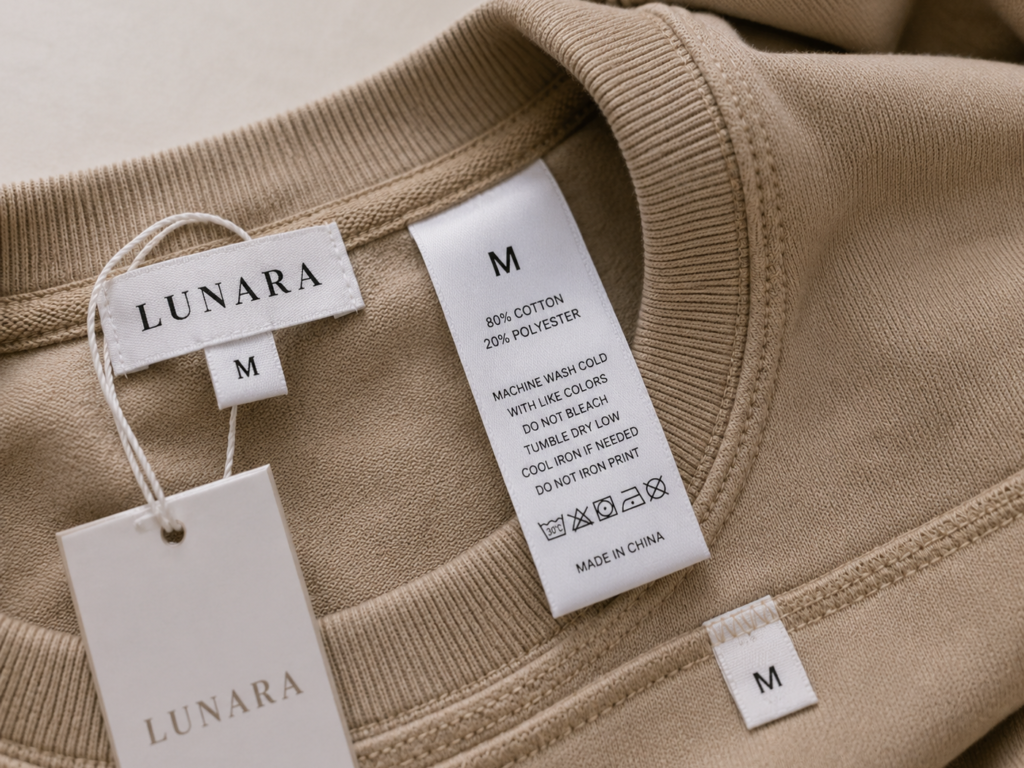
Brand and Care Labels
- Main label and care label
- Size and origin information
- Placement and attachment method
- Content check against approved files

Hangtags and Brand Details
- Artwork, paper, finish, and string
- Style/color/size information
- Attachment point and quantity
- Protection from rubbing or staining

Barcode and SKU Control
- Barcode scan verification
- Style/color/size matching
- SKU placement control
- Carton and packing list reconciliation
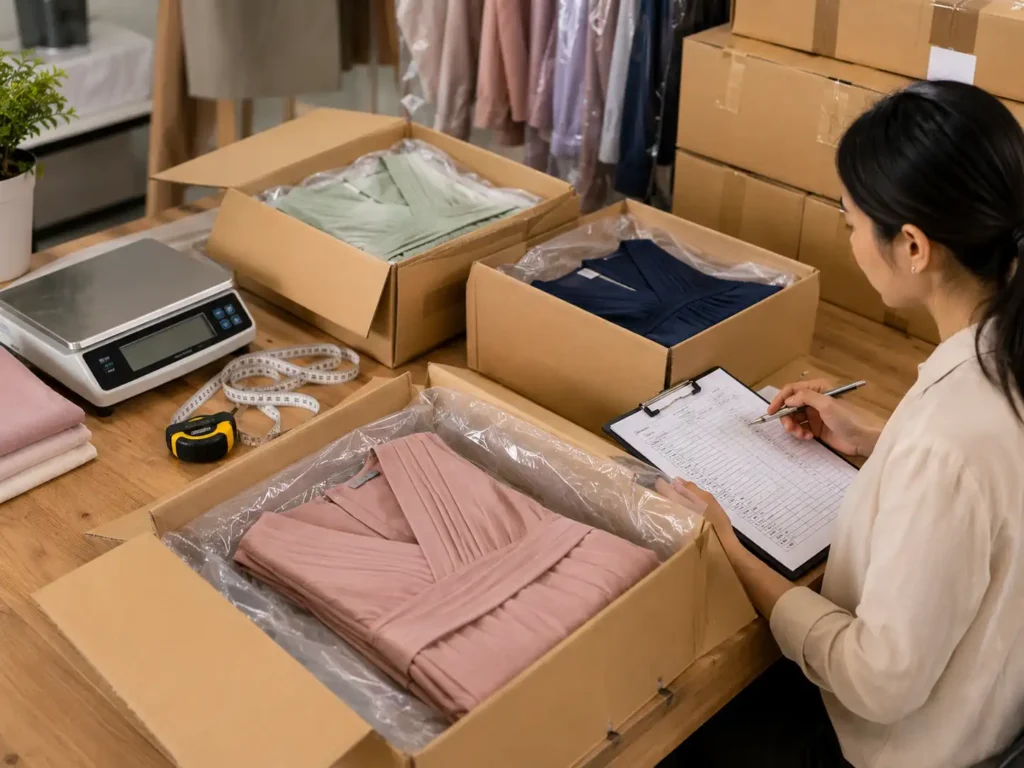
Polybags and Carton Packing
- Folding or hanging method
- Warning text and bag thickness
- Carton assortment and marks
- Warehouse receiving requirements
Production Timing Built Around Brand Launch Calendars
Sample and Photo Schedule
Bulk and QC Window
Export and Warehouse Delivery
Nude Dress Manufacturing Case Studies
The following anonymized cases represent different nude dress development programs, covering illusion partywear, occasionwear collections and large private-label seasonal productions. Brand identities, original designs and commercial information remain confidential.
Case 1: Nude Illusion and Partywear Collection
Project Scope
A fashion brand developed a nude illusion collection focused on partywear, evening events and statement fashion styles.
- Collection size: 18 dress styles
- Product categories: nude mesh bodycon dresses, illusion corset dresses, sequin party dresses, crystal evening dresses and cut-out styles
- Materials: skin-tone mesh, power mesh, lace, sequin fabric, stretch satin and structured lining
- Construction details: transparent panels, corset bodies, decorated mesh, fitted silhouettes and sculpted shapes
- Requirement: high visual impact with controlled coverage and reliable wearing comfort
Development Challenges
The main challenge was creating an illusion effect while maintaining production stability.
Key risks included:
- Mesh tone changing after stretching
- Transparency differences between single and double layers
- Decoration weight affecting mesh structure
- Visible seam lines around illusion panels
- Comfort issues from crystals, sequins and internal support
Manufacturing Approach
The development team treated illusion construction as a complete garment system.
Key controls included:
- Testing mesh shade in relaxed and stretched conditions
- Reviewing skin-tone effect under different lighting
- Confirming lining, cups and support layers
- Mapping lace and decoration placement
- Reinforcing high-stress areas before bulk production
Additional attention was given to:
- Bust coverage
- Corset support
- Cut-out reinforcement
- Sequin edge protection
- Individual protective packing
Manufacturing Value
The collection achieved a balance between visual transparency, structural support and commercial repeatability.
Case 2: Nude Bridesmaid and Occasionwear Collection
Project Scope
A premium occasionwear brand developed a nude-tone collection for bridesmaid, wedding guest and formal event markets.
- Collection size: 22 dress styles
- Product categories: blush nude chiffon dresses, beige satin dresses, taupe lace dresses, mocha crepe midis and soft occasion styles
- Materials: chiffon, satin, lace, crepe, mesh and lightweight lining systems
- Construction details: A-line dresses, slip silhouettes, draped necklines, halter styles and flowing maxi designs
- Requirement: coordinated nude shades across different fabrics and silhouettes
Development Challenges
The collection required strong shade coordination because different materials created different nude effects.
Key challenges included:
- Matching nude tones between satin, chiffon and lace
- Preventing pale fabrics from becoming transparent
- Controlling lining influence on final color
- Maintaining hem balance on long dresses
- Keeping multiple silhouettes visually consistent
Manufacturing Approach
The project followed a shade and fit control workflow.
Key controls included:
- Physical nude shade reference approval
- Shell and lining comparison
- Fabric-specific transparency testing
- Size grading review
- PP sample approval before production
Additional controls included:
- Lace motif placement
- Chiffon layer management
- Strap adjustment
- Waist positioning
- Retail-ready packing
Manufacturing Value
The collection created a unified nude color story while allowing different fabrics to maintain their own texture, drape and commercial positioning.
Case 3: Large Private Label Nude Dress Program
Project Scope
An established fashion brand required a complete nude dress assortment covering multiple shades, fabrics and retail categories.
- Collection size: 30 dress styles
- Production scale: 80,000+ pieces
- Product categories: nude mini dresses, midi dresses, maxi dresses, bodycon dresses, corset dresses, illusion dresses and occasionwear styles
- Materials: satin, mesh, lace, jersey, chiffon, crepe, tulle and sequin fabrics
- Requirement: consistent quality across multiple SKUs, sizes and delivery batches
Development Challenges
The program required coordination across multiple nude directions and production structures.
Major challenges included:
- Managing beige, blush, peach, taupe, caramel and mocha nude shades
- Maintaining visual consistency between different fabrics
- Controlling different lining systems
- Managing size grading across silhouettes
- Coordinating private-label packing and warehouse requirements
Manufacturing Approach
The collection was divided according to material and product risk.
Soft Nude Occasion Group
Focused on:
- Chiffon and lace dresses
- Bridesmaid silhouettes
- Transparency control
- Lining coordination
Structured Nude Fashion Group
Focused on:
- Corset construction
- Bodycon fitting
- Cups and boning
- Internal support systems
Manufacturing Value
The program demonstrated that large nude dress collections require both manufacturing capacity and detailed control of shade, transparency, fit, workmanship and retail delivery.
Built for Repeat Orders and Nude Color Extensions
Repeat Order Records
- Pattern and grading records
- Fabric, shade, and trim references
- Measurement and QC files
- Label, barcode, and packing records
New Nude Shade Expansion
- Reconfirm physical shade
- Review lining and mesh relationship
- Check trim availability
- Update BOM, price, and schedule
NDA and Design Protection
- Confidential development files
- Protected unpublished designs
- Controlled internal access
- Anonymized public references
Nude Dress Manufacturing Frequently Asked Questions
No. Nude is a family of beige, blush, peach, taupe, caramel, mocha, and other skin-adjacent or muted tones. Fabric shine, transparency, texture, stretch, and lighting change the final appearance. A physical swatch, Pantone reference, lab dip, or approved garment gives a more reliable standard than a screen image.
Yes, subject to fabric and dyeing feasibility. A Pantone number, physical fabric swatch, original garment, or approved color standard can guide sourcing or custom dyeing. Pantone alone does not guarantee identical appearance across satin, mesh, lace, lining, and trims, so each material needs coordinated review.
Yes. Controlled coordination often works better than forcing one identical shade across materials with different shine, transparency, and texture. Lining may be slightly deeper for coverage, while illusion mesh may be chosen for skin effect rather than shell matching. The complete garment effect is reviewed during sampling.
Yes. Jinfeng Apparel can develop mesh, lace, appliqué, embroidery, sequin, bead, crystal, corset, and partially lined illusion styles. Development reviews mesh tone, stretch, coverage, cups, boning, support, decoration weight, skin comfort, and bulk repeatability before PP approval.
Common options include stretch jersey, ponte, rib knit, power mesh, double-layer mesh, and stretch satin. Selection depends on compression, opacity, recovery, handfeel, drape, and intended price level. Pale fitted fabrics should be tested under target stretch because transparency can increase significantly on body.
Control begins with an approved physical reference, supplier and dye-lot records, incoming fabric inspection, shade comparison, lining and trim coordination, and bulk color approval before cutting. Natural light and controlled indoor light may both be used. Repeat orders still require confirmation because new batches can vary.
MOQ starts from 200 pcs per style/color. One style in two colors normally requires a suitable quantity for each color. Custom dyeing, special mesh, lace, sequins, trims, branded packaging, and complex construction may carry separate supplier minimums or project conditions.
Simple styles may require about 7-10 days, standard first samples about 10-15 days, and complex corset, strapless, lace, mesh, sequin, or evening styles about 15-25 days. Timing depends on information completeness, fabric sourcing, special trims, pattern complexity, and revision scope.
Yes, project review can begin from reference images, sketches, a line sheet, or an original sample. Additional information will be needed for measurements, fabric, lining, closure, color, quantity, size range, target price, labels, packing, and delivery. A final bulk quotation cannot be based on one image alone.
Yes. Support can include main labels, care labels, size labels, hangtags, barcode stickers, SKU control, polybags, garment protection, carton marks, packing lists, and warehouse labels. Artwork, content, placement, supplier minimums, and destination requirements are confirmed by project.
Start Your Nude Dress Manufacturing Project
Send a tech pack, line sheet, reference image, original sample details, or collection brief for an initial project review.
A useful submission includes product type, quantity per style/color, nude shade reference, fabric direction, size range, target market, private-label requirements, target delivery date, and warehouse or packing instructions.
Clear information helps the team assess shade development, material sourcing, fit risk, sample timing, MOQ suitability, bulk production route, QC requirements, and quotation structure.
Please include:
- Reference image, tech pack, line sheet, or original sample photos
- Planned quantity for every style and color
- Pantone, physical swatch, or preferred nude direction
- Fabric, lining, mesh, lace, or decoration requirements
- Size chart and planned size range
- Main label, care label, hangtag, barcode, and packing needs
- Target sample date, launch date, warehouse date, and destination
- Testing, compliance, inspection, or nominated-forwarder requirements