Neutral Color Dress Manufacturer
Custom neutral color dress development for established fashion brands, from palette definition and fabric selection to bulk shade approval and private-label delivery.
- 12 core neutral color directions can be developed across mini, midi, maxi, bodycon, slip, corset, occasion, and resort dress programs.
- MOQ starts from 200 pcs per style/color, with final requirements confirmed by fabric availability, dyeing, trims, construction, packaging, and production schedule.
- 2 sample rooms, 7+ senior pattern makers, and 20+ sample machinists support multi-style development before bulk production.
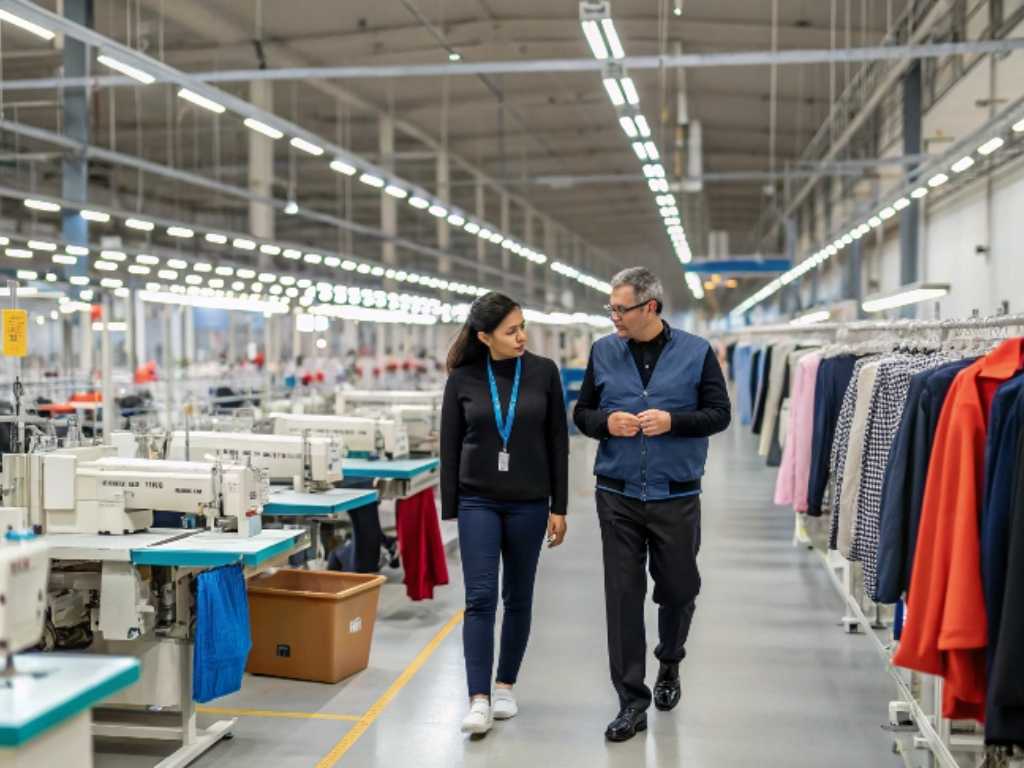
- 6 owned women’s fashion factories, 10+ long-term production partners, and 100,000+ pcs monthly capacity support coordinated collection orders.
Manufacturing Scale for Color-Led Dress Programs
Since 2008
6 Owned Factories
10+ Production Partners
100,000+ Monthly Capacity
2 Sample Rooms
15+ QC Inspectors
Neutral Color Dresses Are a Product System
A neutral dress program is not limited to beige garments. It combines a controlled color palette with fabric behavior, silhouette, lining, trims, fit, sales occasion, packaging, and repeat-order records. Every decision affects how the final shade looks and performs in bulk production.
Color Names Alone Are Not Production Standards
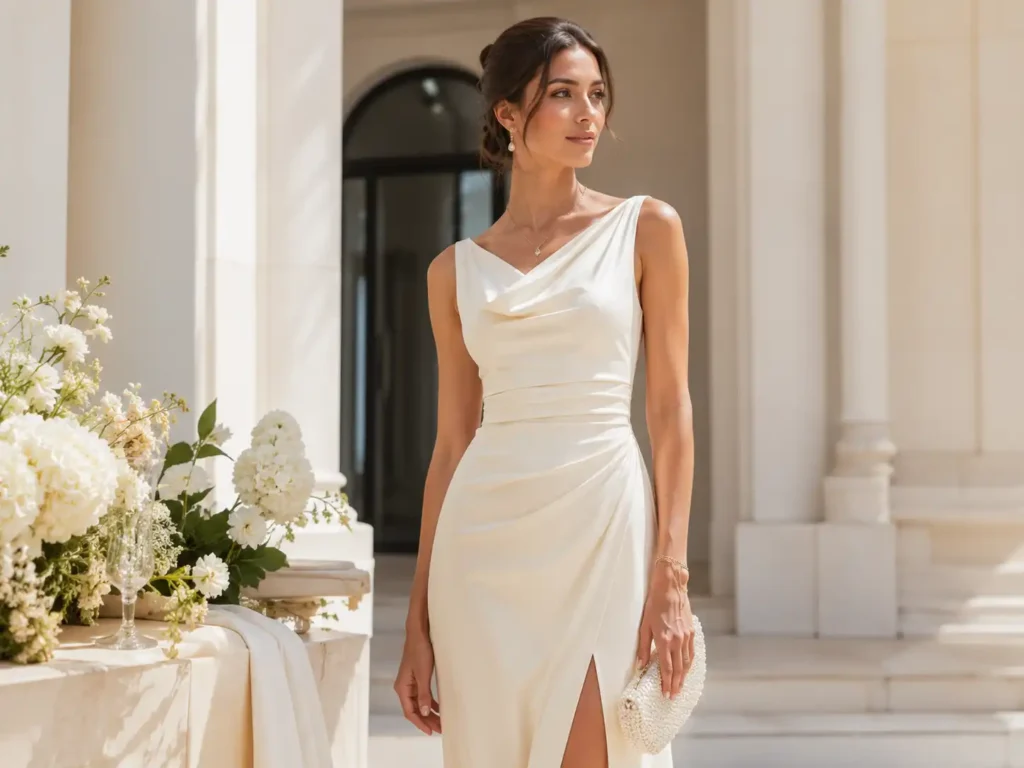
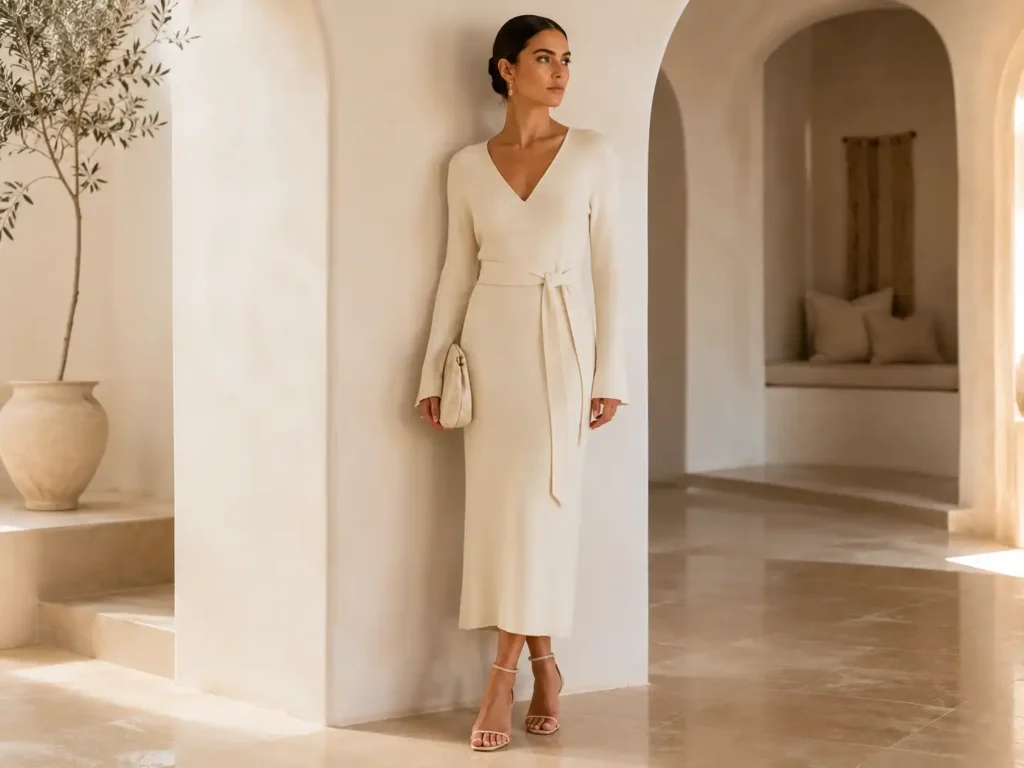
Commercial names such as ivory, sand, nude, stone, greige, taupe, camel, mocha, chocolate, and warm gray are useful for merchandising, but they are not accurate enough for bulk production. Two suppliers may use the same color name for visibly different undertones. A taupe can lean pink, gray, brown, or purple. An ivory can appear creamy, yellow, clean, or slightly gray. A stone shade can shift green under one light source and appear neutral under another.
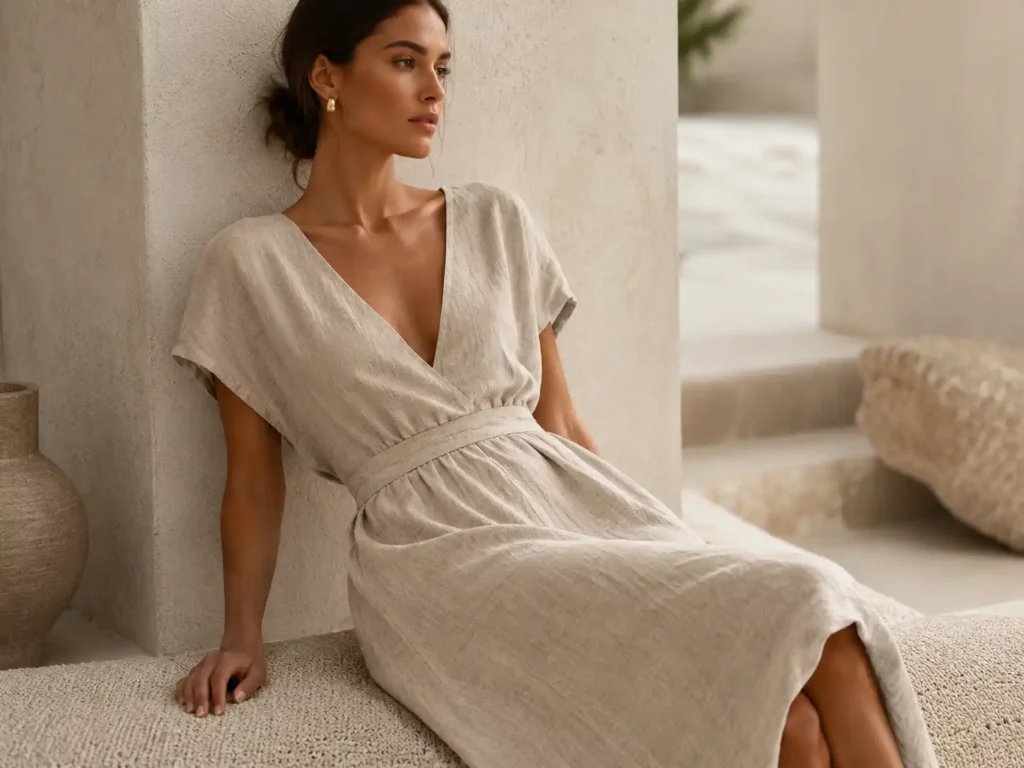
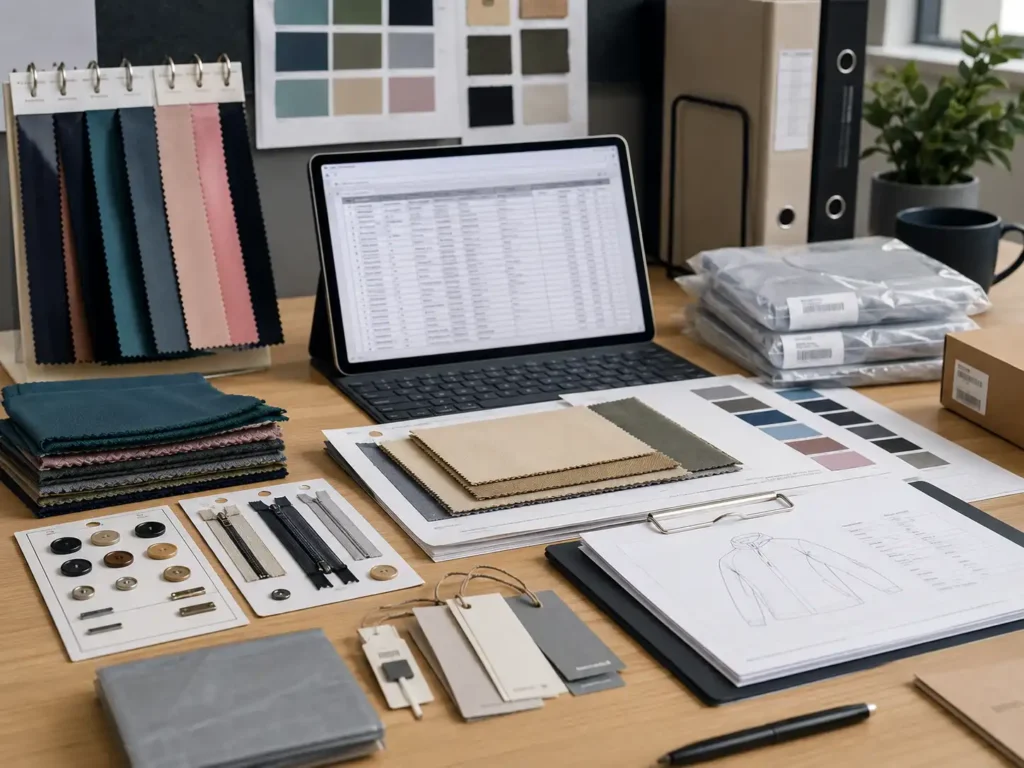
Jinfeng Apparel develops color direction from a more complete reference set. A project may begin with a Pantone number, physical fabric swatch, approved garment, color board, or brand-specific standard. The reference is then reviewed against the selected fabric because fiber content, yarn structure, surface texture, weight, transparency, and shine can all change the visible result. Satin reflects light and often appears lighter in photographs. Chiffon builds depth when layers overlap. Jersey can look lighter when stretched. Linen blends may show natural slubs or uneven visual texture.
Color approval therefore follows a sequence rather than a single verbal confirmation. The sequence may include stock swatch review, lab dip review, lining comparison, sample approval, bulk fabric approval, shade-band review, and production comparison against the approved standard. Clear records also help future reorders, although every new dye lot still requires review.
Neutral Means Color-Led Womenswear
Neutral color dresses refer to women’s fashion built around muted, natural, earth-inspired, or softly balanced shades.
The category is separate from gender-neutral apparel. Product direction can include minimalist occasion dresses, quiet-luxury midi dresses, understated party styles, soft wedding guest dresses, natural resort pieces, tonal bodycon dresses, and refined private-label capsules.
Strong programs usually combine several commercial layers.
A core color layer can include black, ivory, beige, and chocolate. A seasonal layer may add sand, clay, mushroom, espresso, warm gray, or muted olive.
A fabric layer determines whether each color should appear matte, lustrous, transparent, structured, fluid, or tactile.
A silhouette layer defines whether the palette is used for slips, corsets, bodycon shapes, soft maxi dresses, fitted midi dresses, or relaxed resort styles.
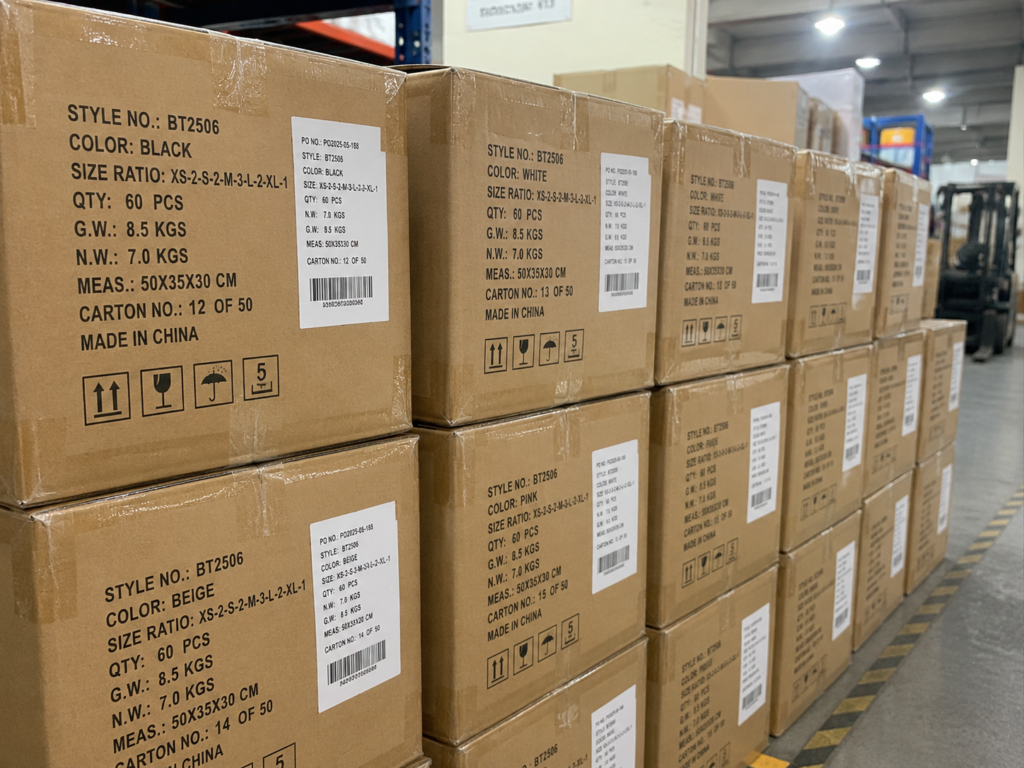
Jinfeng Apparel treats the palette as a collection system. Color codes, style numbers, fabric groups, lining references, zipper colors, thread colors, care labels, barcodes, polybag stickers, and carton marks are connected before production. The result is easier to sample, inspect, pack, replenish, and extend into new seasons.
Built for Established Fashion Programs
Global Fashion Brands
Premium Ecommerce Brands
Occasionwear Labels
Resortwear Collections
Private Label Programs
Sourcing Teams
Color Risks Hidden Inside Simple Palettes
Undertone Drift
- Confirm a physical standard or Pantone reference.
- Review warm, cool, pink, yellow, gray, and green undertones.
- Record approved color under agreed lighting conditions.
Cross-Fabric Mismatch
The same target shade will not look identical on satin, chiffon, crepe, jersey, lace, and linen blends. Fiber absorption, transparency, surface texture, and reflectivity change the result. Jinfeng groups fabrics by visual behavior and confirms whether the goal is an exact match or a coordinated tonal relationship.
- Compare shell, lining, lace, mesh, and trim together.
- Review color on flat fabric and finished garment.
- Approve acceptable tonal differences before bulk production.
Dye-Lot Variation
- Check roll-to-roll shade before cutting.
- Separate visibly different lots.
- Maintain bundle identity through sewing and inspection.
Lining Show-Through
- Compare lining under the shell fabric.
- Check opacity under natural and indoor light.
- Confirm lining length and edge visibility on the sample.
Surface Contamination
Ivory, cream, beige, and pale gray show oil, dust, chalk, machine marks, and floor contact more easily than darker garments. Clean handling, protected work surfaces, controlled pressing, individual inspection, and suitable packing are included in the quality plan for light neutral production.
- Inspect stains before and after pressing.
- Protect light garments during transfer and finishing.
- Use clean polybags and controlled packing areas.
Reorder Inconsistency
- Retrieve the original approved references.
- Compare new fabric against the prior bulk standard.
- Reconfirm shade, lining, trims, and packing codes.
Twelve Neutral Color Directions for Dress Collections
Ivory
Cream
Oatmeal
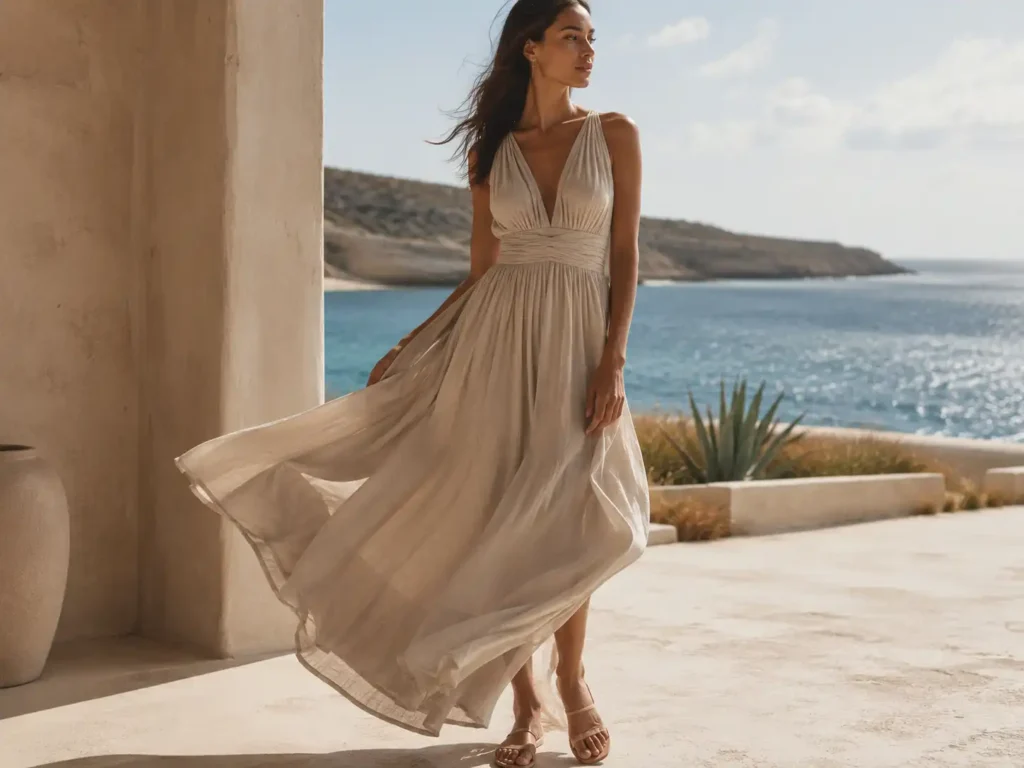
Sand
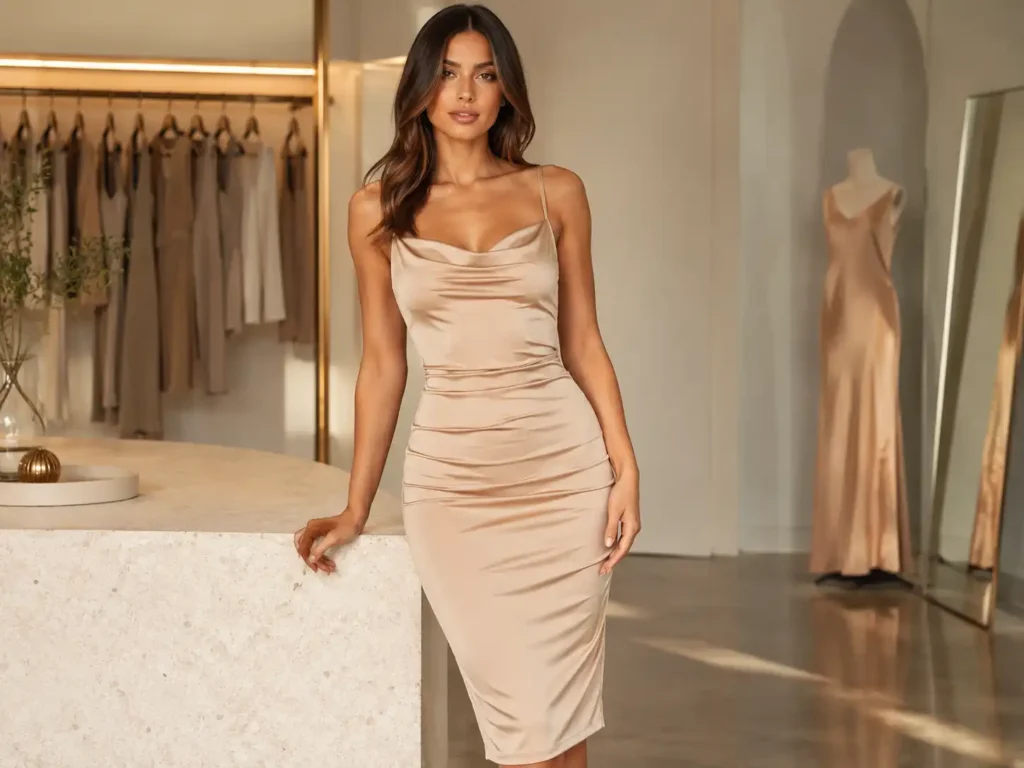
Beige
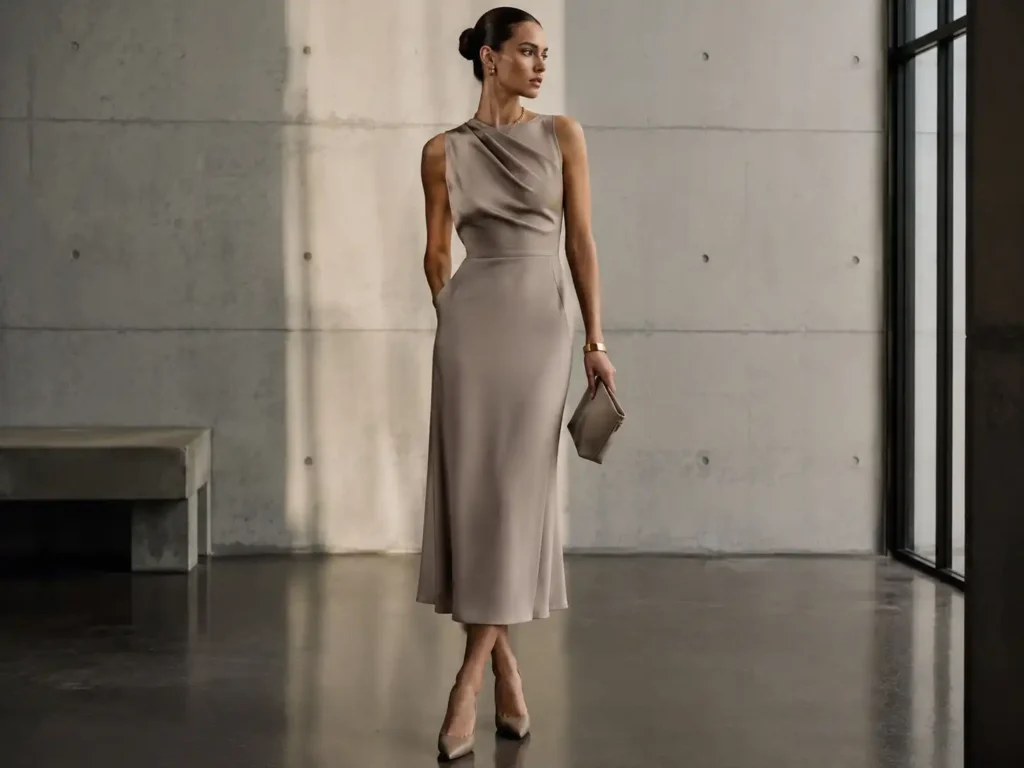
Greige
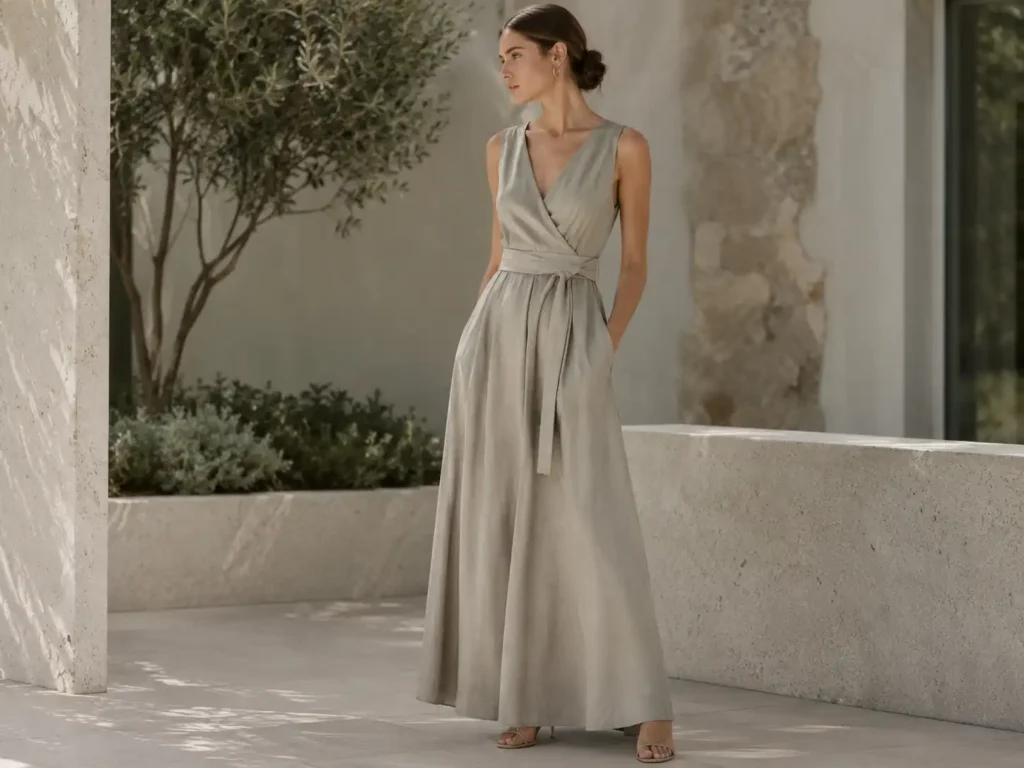
Stone
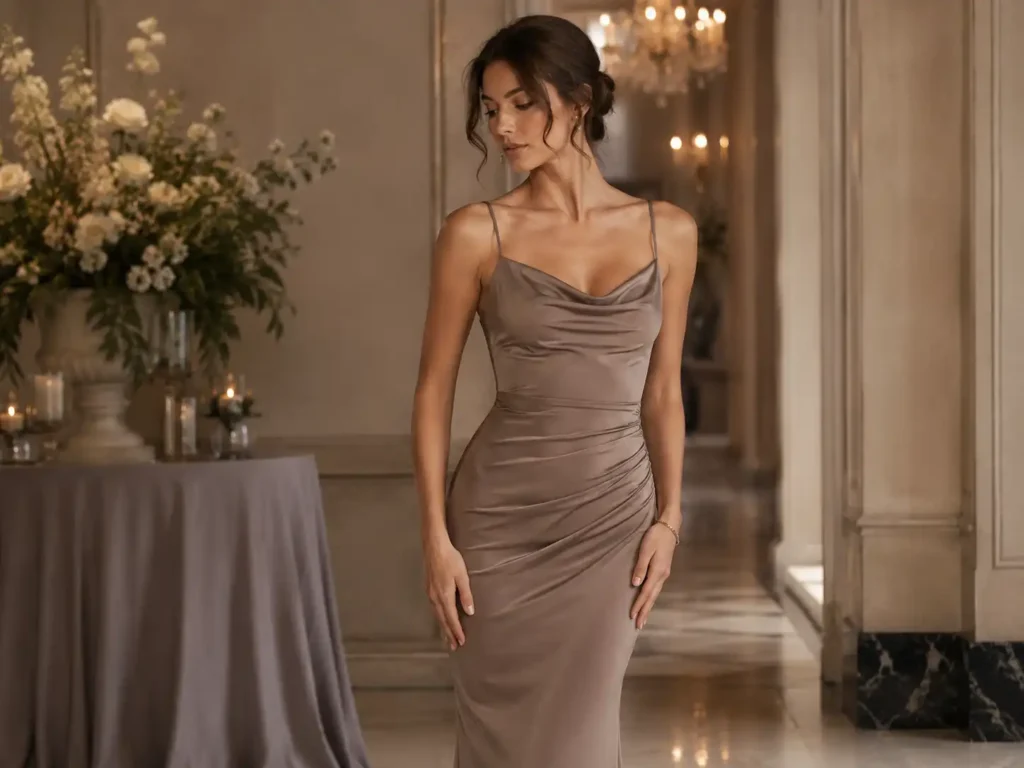
Taupe
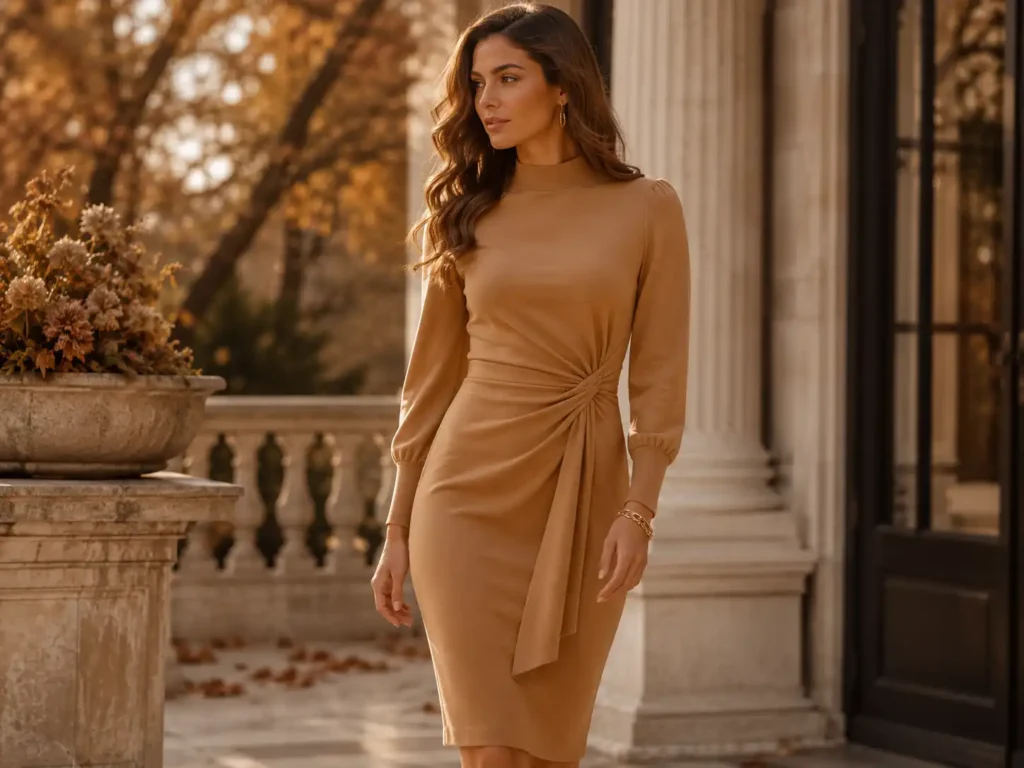
Camel
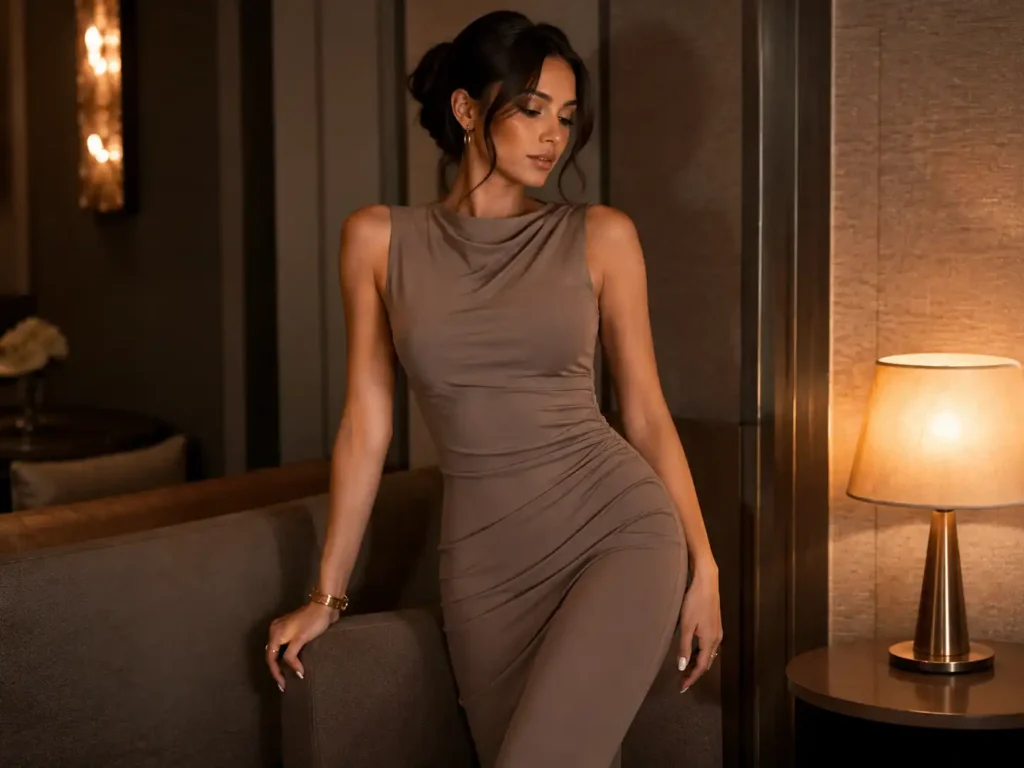
Mocha
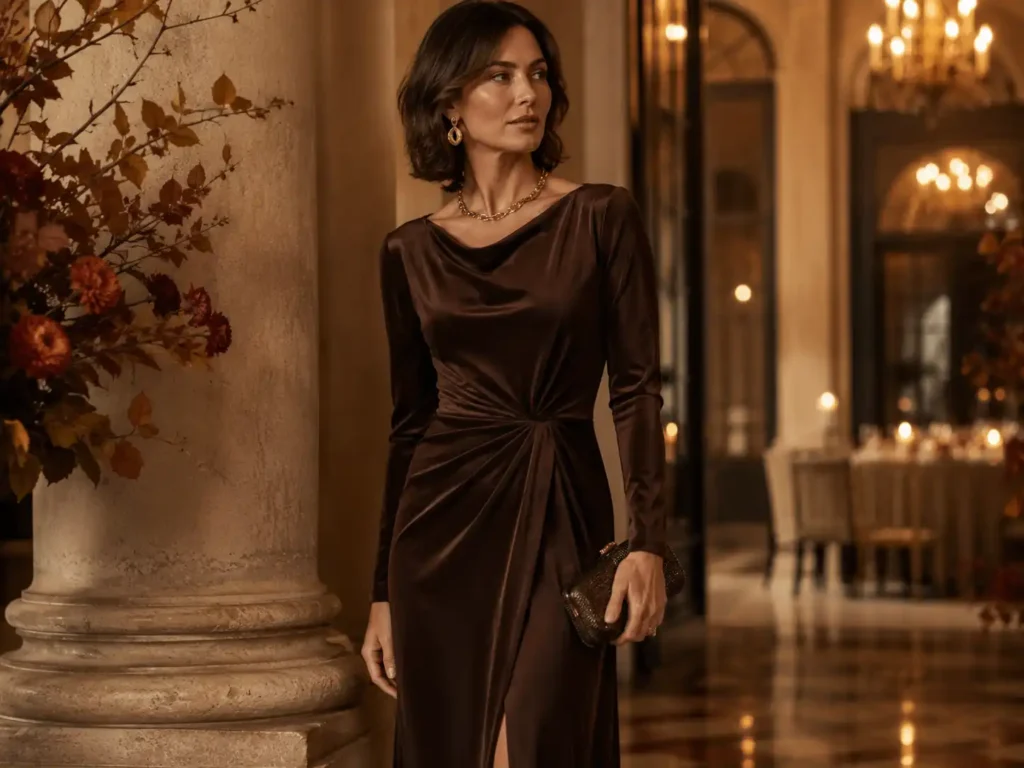
Chocolate
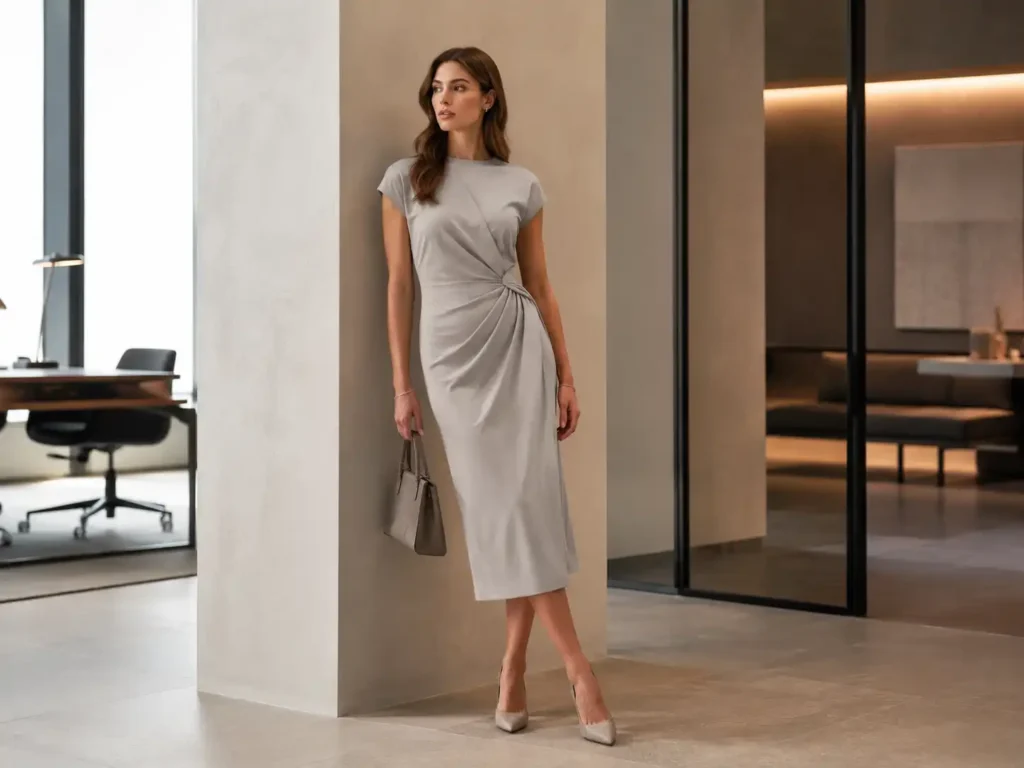
Warm Gray
Dress Categories Built Around Neutral Palettes
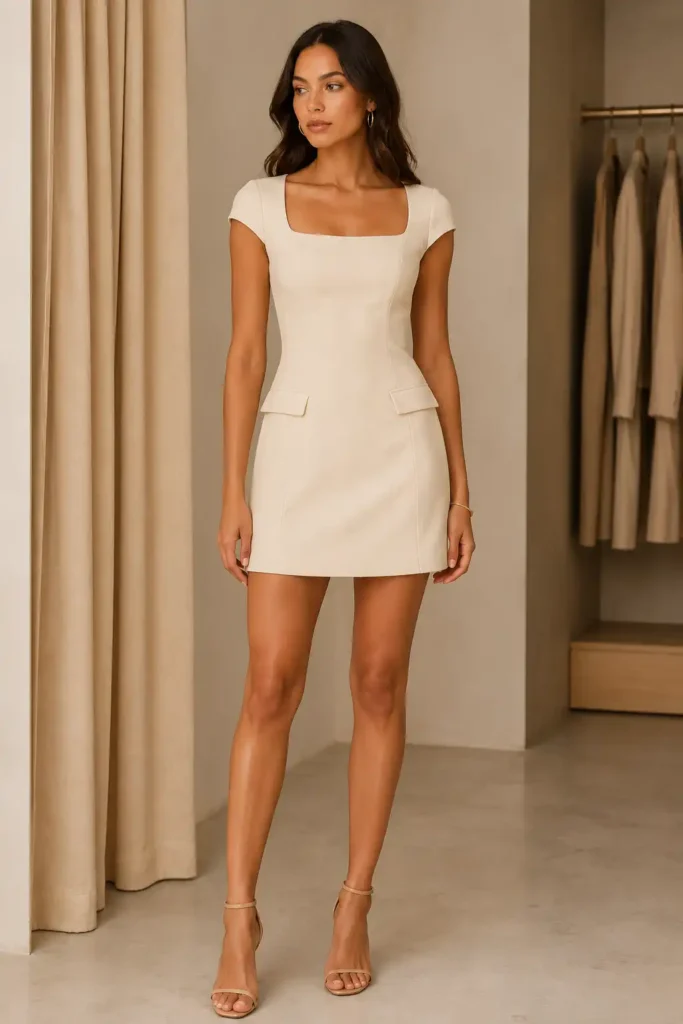
Neutral Mini Dresses
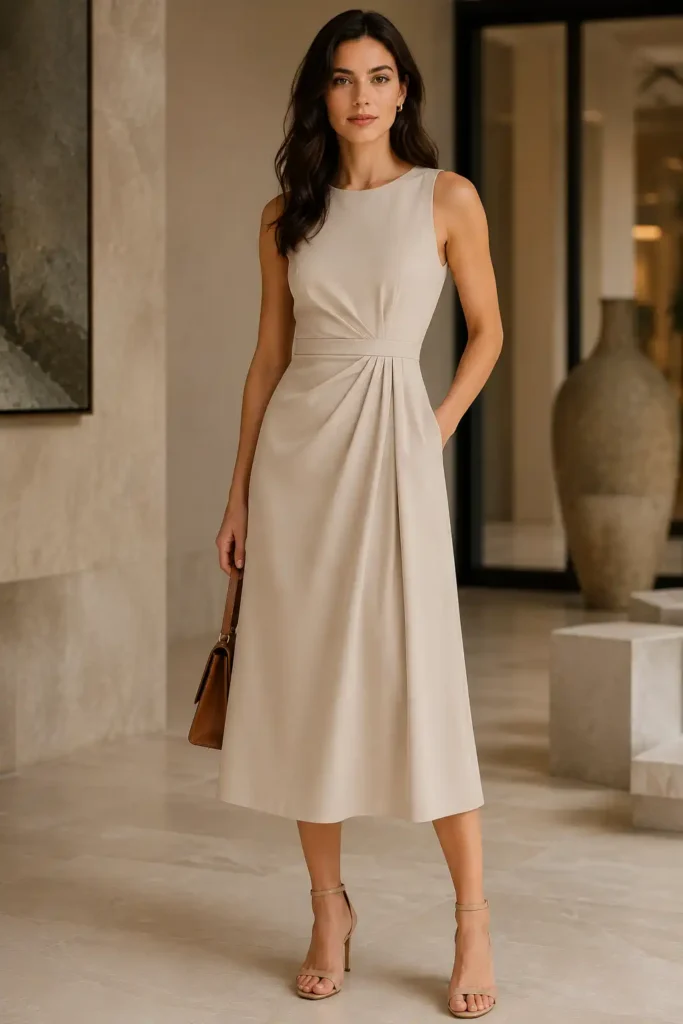
Neutral Midi Dresses
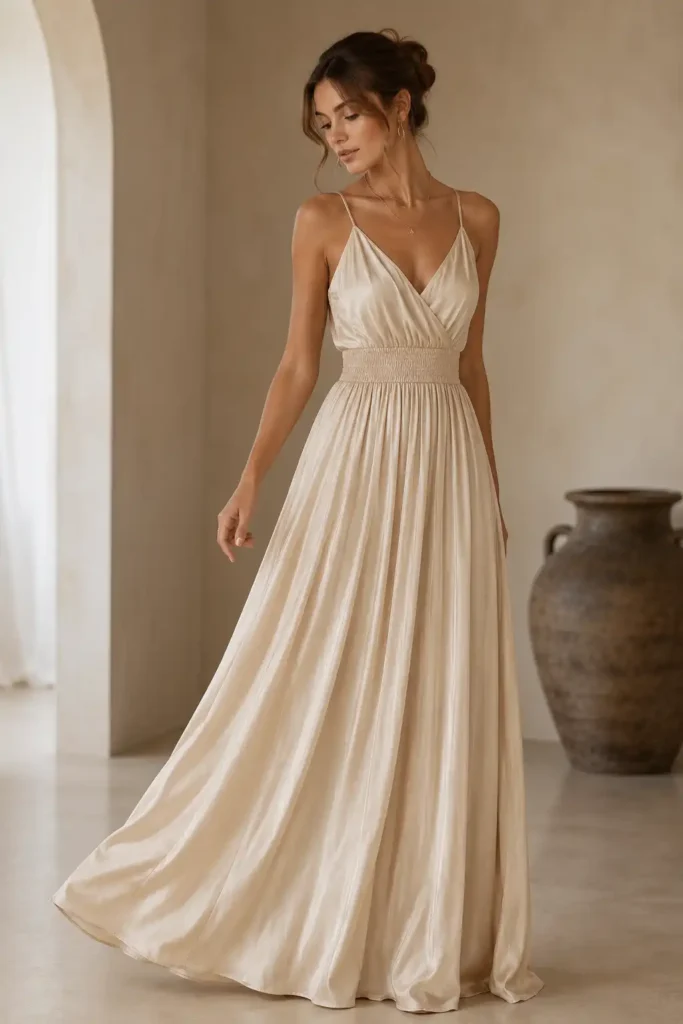
Neutral Maxi Dresses
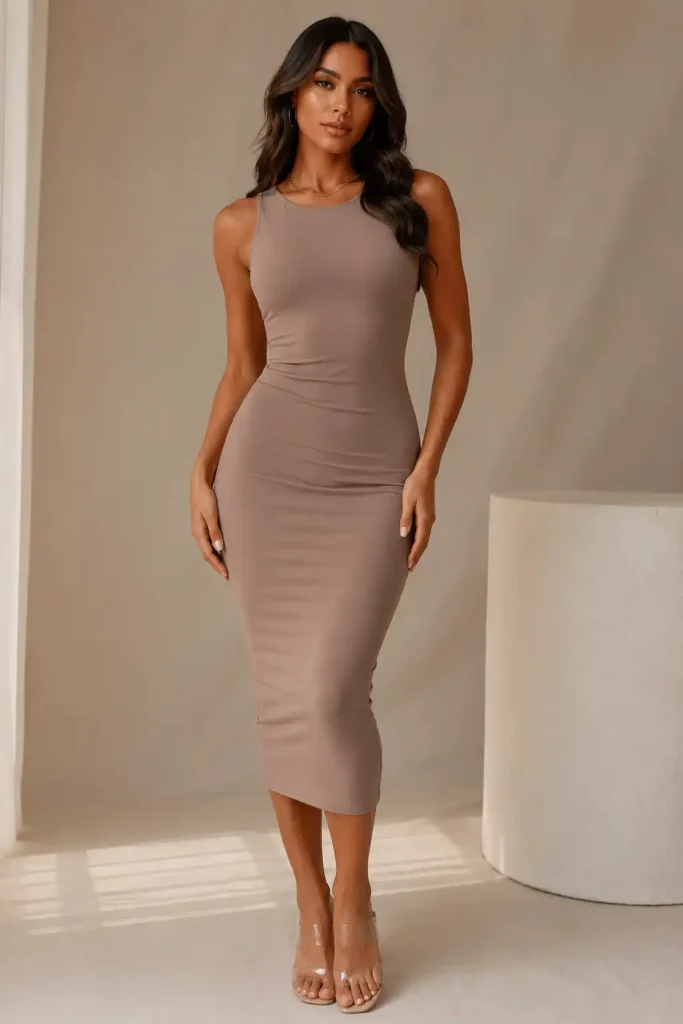
Neutral Bodycon Dresses
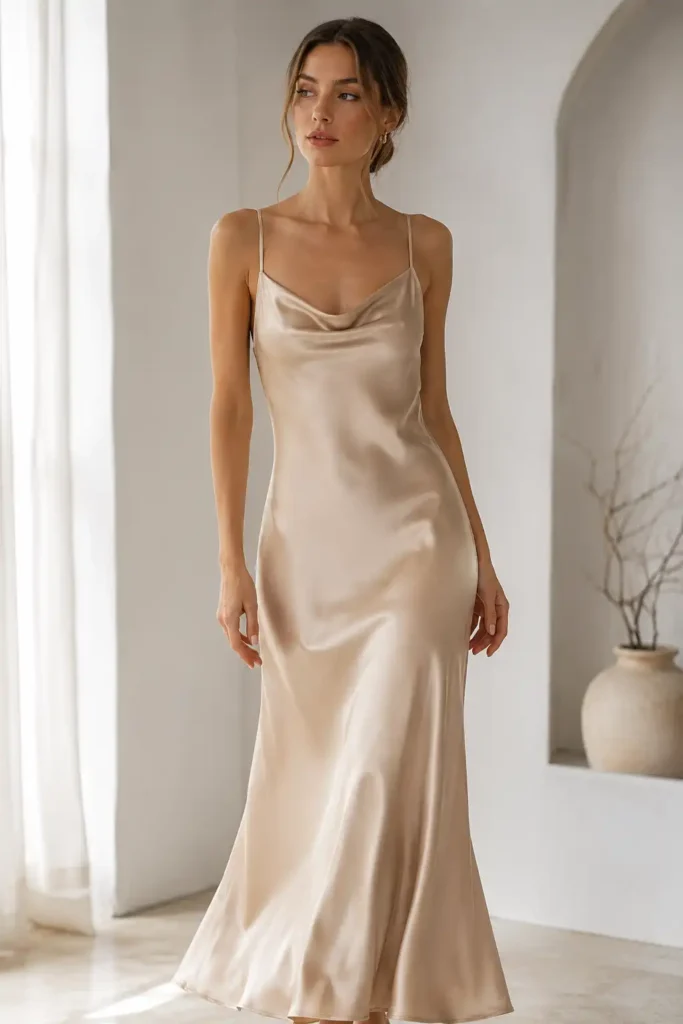
Neutral Slip Dresses
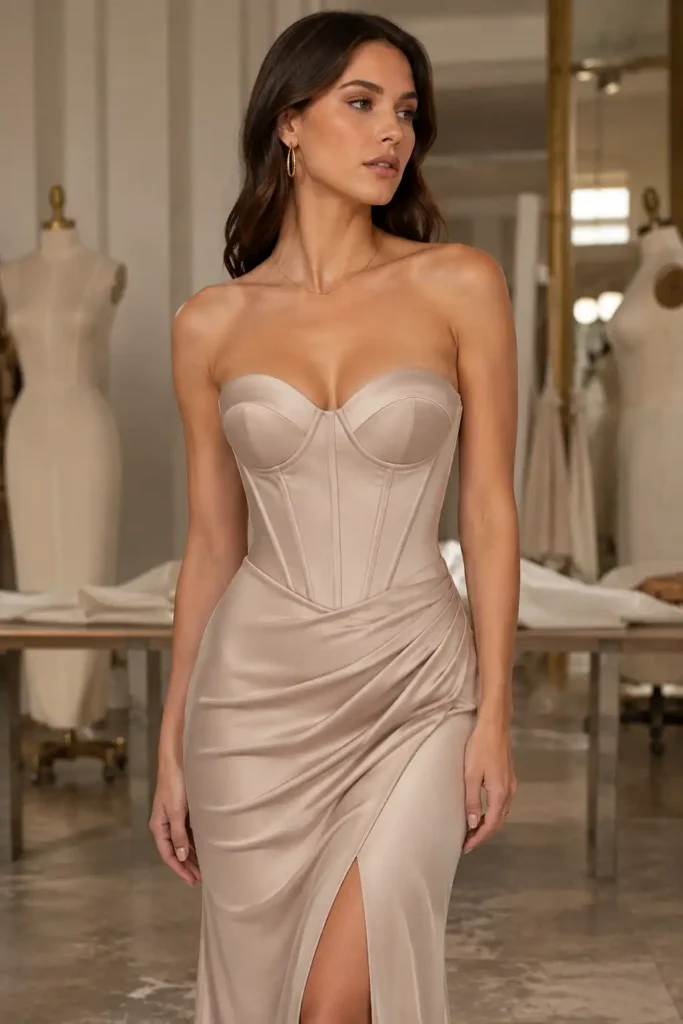
Neutral Corset Dresses
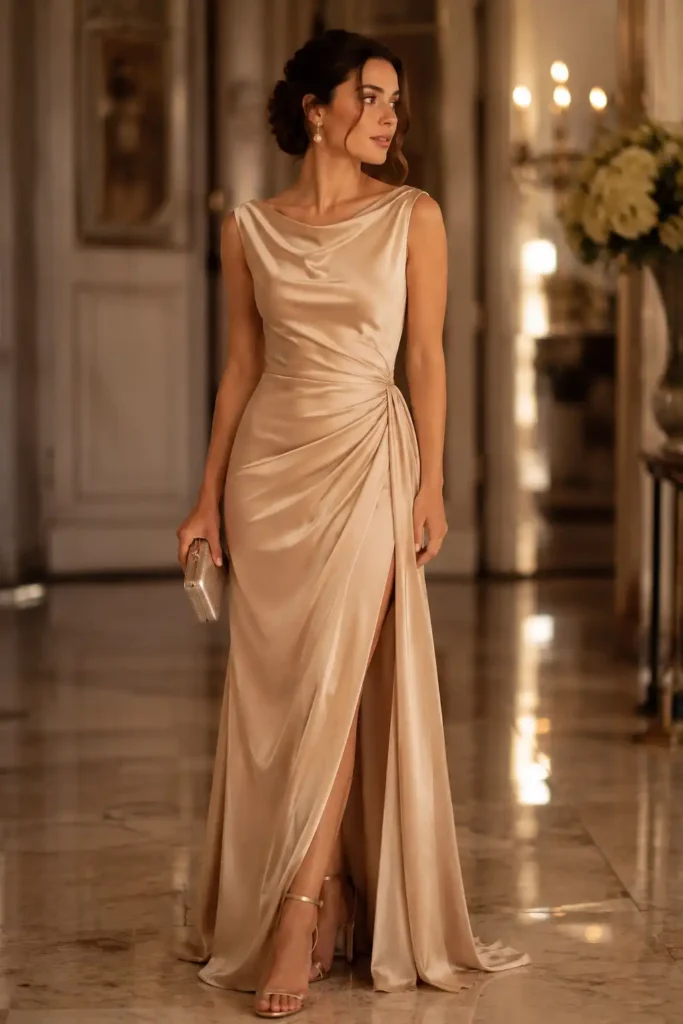
Neutral Occasion Dresses
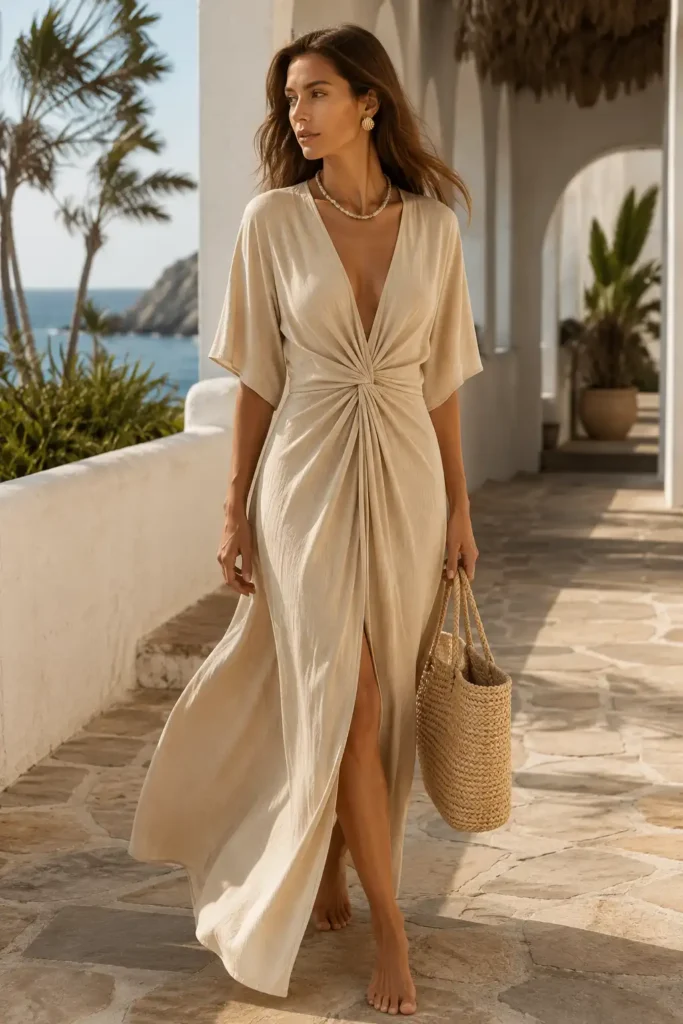
Neutral Resort Dresses
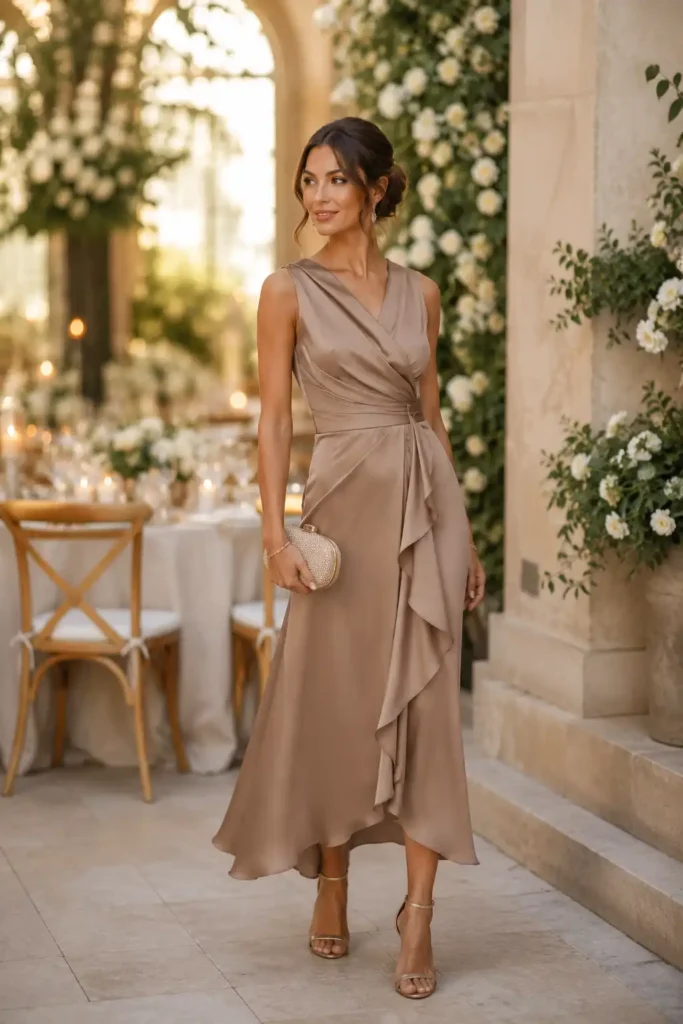
Neutral Wedding Guest Dresses
How Fabric Changes Every Neutral Shade
Fabric structure changes color perception, garment behavior, and production risk. The same neutral target may need separate approval across satin, chiffon, crepe, jersey, lace, mesh, linen blends, and velvet.
| Fabric | Visual Color Effect | Main Production Risk | Key Control Point |
|---|---|---|---|
| Satin | Reflective and angle-sensitive; often photographs lighter | Shine direction, snagging, shade difference, pressing marks | Approve surface direction, bulk shade, pressing, and crease-resistant packing |
| Chiffon | Transparent; color deepens through overlapping layers | Shell-lining mismatch, layer variation, edge distortion | Approve layer count, lining shade, transparency, and hem method |
| Crepe | Matte with relatively stable visual color | Texture variation, weight difference, seam impression | Confirm texture, GSM, drape, shrinkage, and pressing response |
| Jersey | Color changes when stretched over the body | Stretch batch variation, recovery, opacity, twisting | Test stretch direction, recovery, bust-waist-hip fit, and wash stability |
| Ponte | Dense, smooth, and structured | Surface shine, heavy seams, size inconsistency | Confirm weight, recovery, seam construction, and measurement tolerance |
| Linen Blend | Natural texture softens the shade | Slubs, shade movement, shrinkage, wrinkle behavior | Approve natural variation, shrinkage, hand feel, and packing method |
| Lace | Motif and open areas alter visible color | Motif placement, holes, fraying, lining mismatch | Match lace and lining, approve placement, inspect edges and damage |
| Mesh | Transparency and stretch change color depth | Over-transparency, lining movement, holes, deformation | Confirm mesh density, layers, lining coverage, stretch, and edge finish |
| Velvet | Pile direction changes darkness and reflection | Nap direction, crushing, shade difference, packing marks | Control cutting direction, steaming, inspection angle, and protective packing |
Choose Stock Colors or Custom Dyeing
Stock Fabric Colors
- Best for faster development when suitable stock exists.
- Requires stock quantity and lot confirmation before final planning.
- Reorders may need a new shade review if the original lot is unavailable.
- Color names from suppliers must be replaced by approved physical references.
Custom-Dyed Colors
Custom dyeing supports brand-specific Pantone standards, coordinated collections, and long-term color strategies. It also introduces supplier MOQ, lab dip timing, bulk dyeing lead time, shade-band review, and possible color differences between fabric types. Jinfeng confirms the target standard, fabric base, color approval path, bulk quantity, lining, zipper, thread, and trim matching before the project enters production planning.
- Best for controlled brand palettes and repeated seasonal use.
- Lab dips may need more than one review round.
- Dyeing MOQ and lead time vary by fabric, supplier, and color.
- Bulk fabric approval remains necessary after lab dip approval.
Color Approval from Brief to Bulk

Review Color Brief
The project begins with the brand’s palette, style plan, target market, launch season, and color naming system. Jinfeng checks whether the requested shades are core colors, seasonal colors, cross-fabric matches, or tonal relationships. The review also identifies colors with high transparency, stain, undertone, or photography risk.
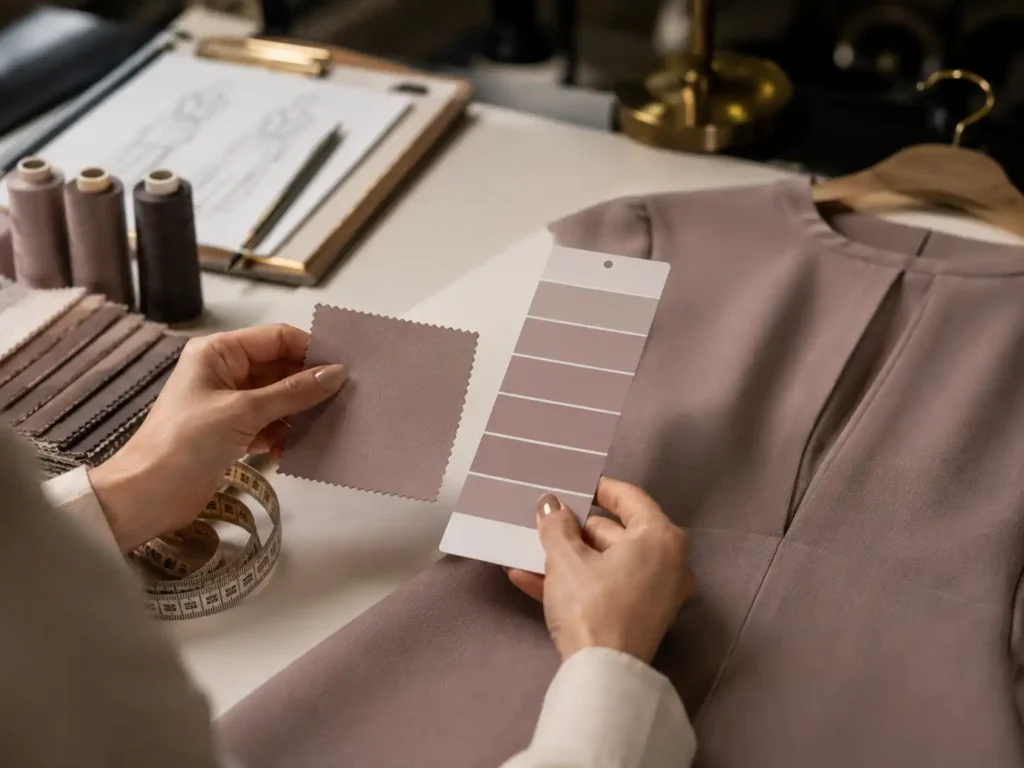
Confirm Reference Standard
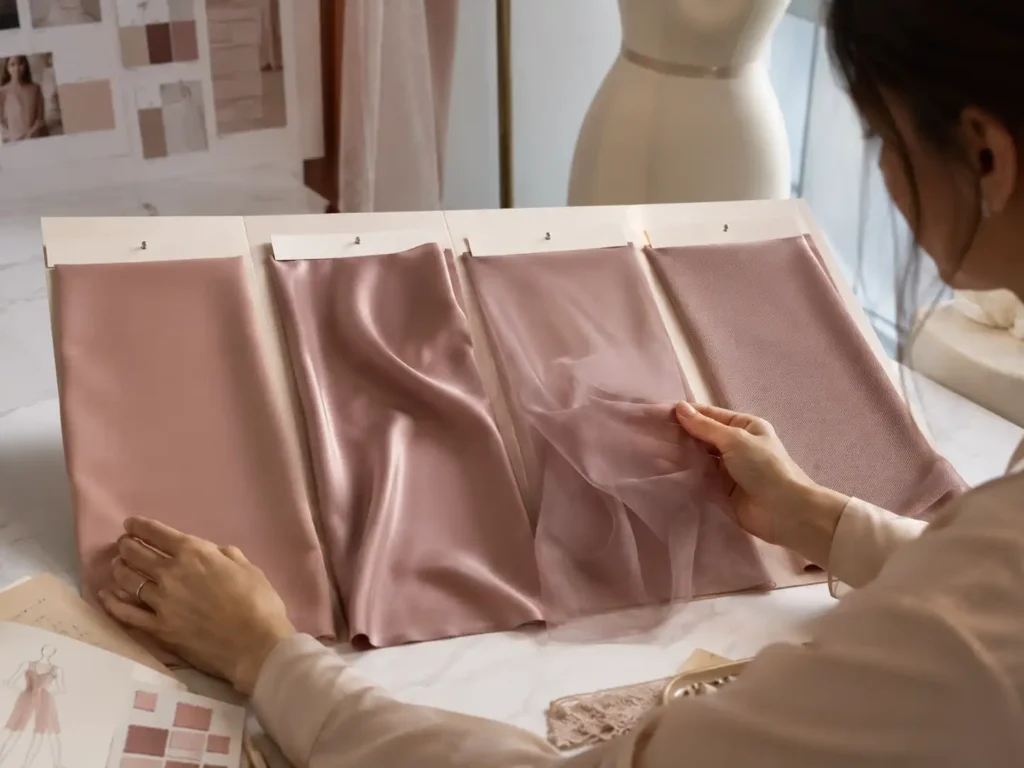
Select Fabric Base
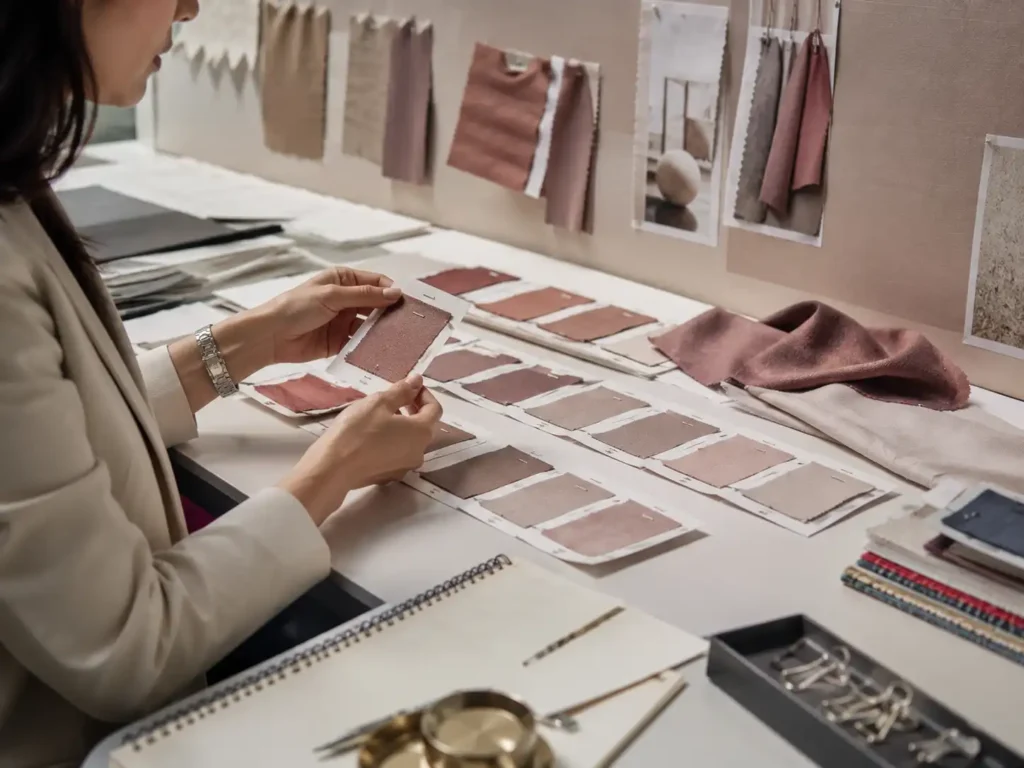
Review Swatch or Lab Dip
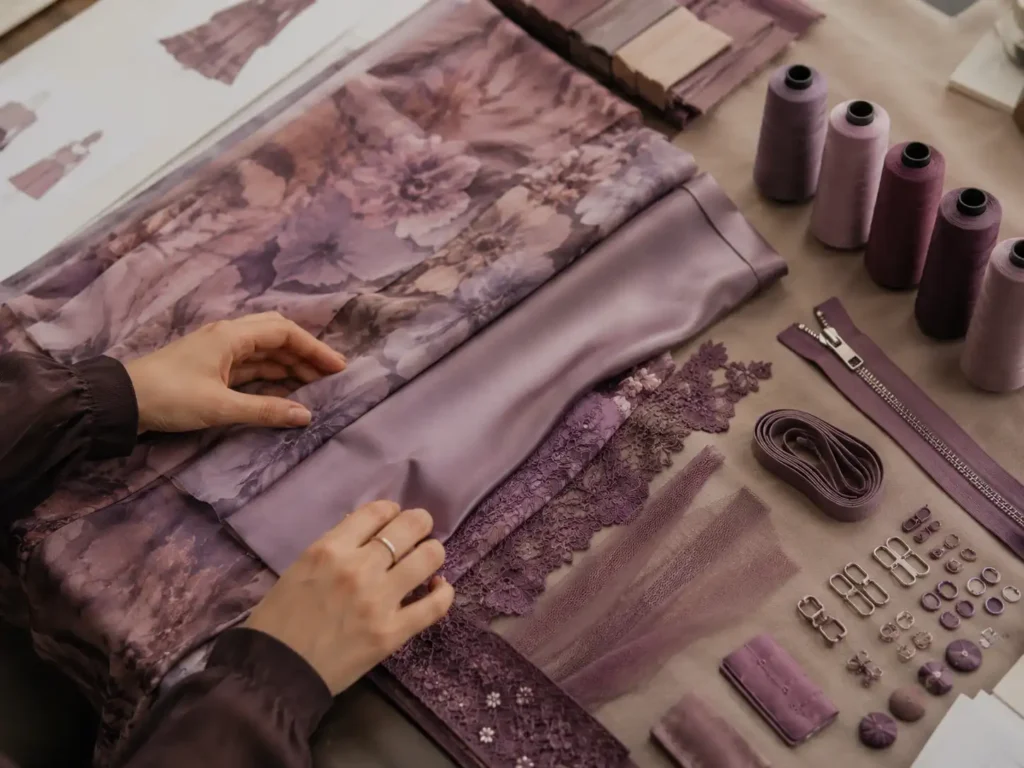
Match Lining and Trims
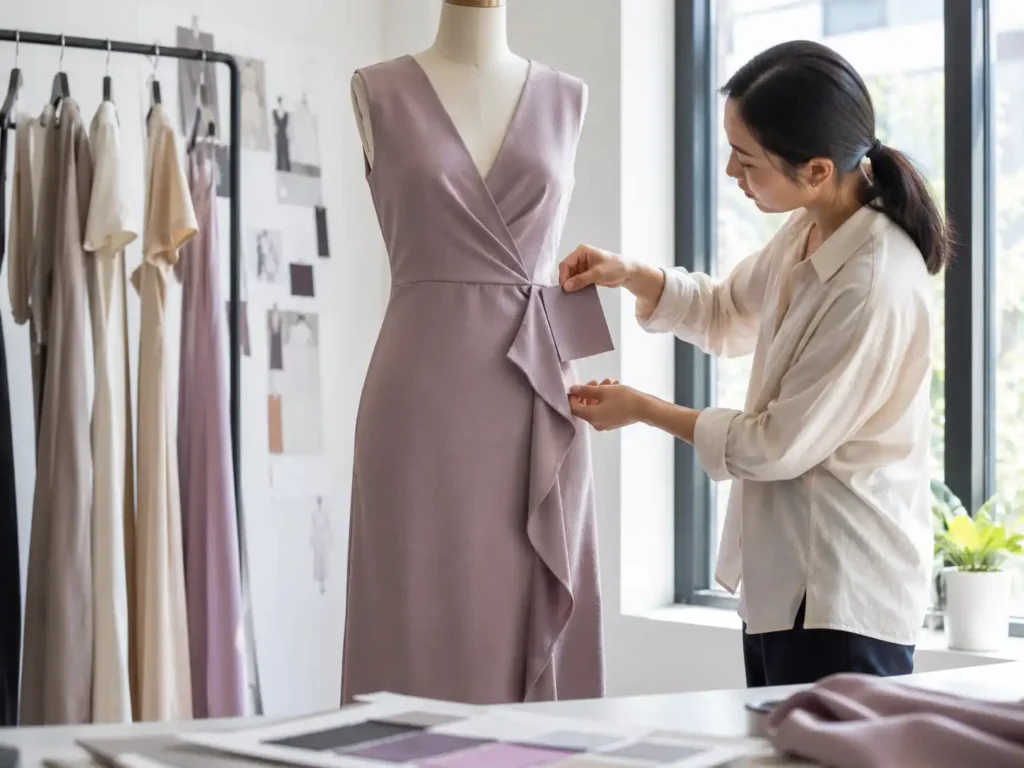
Approve Sample Color
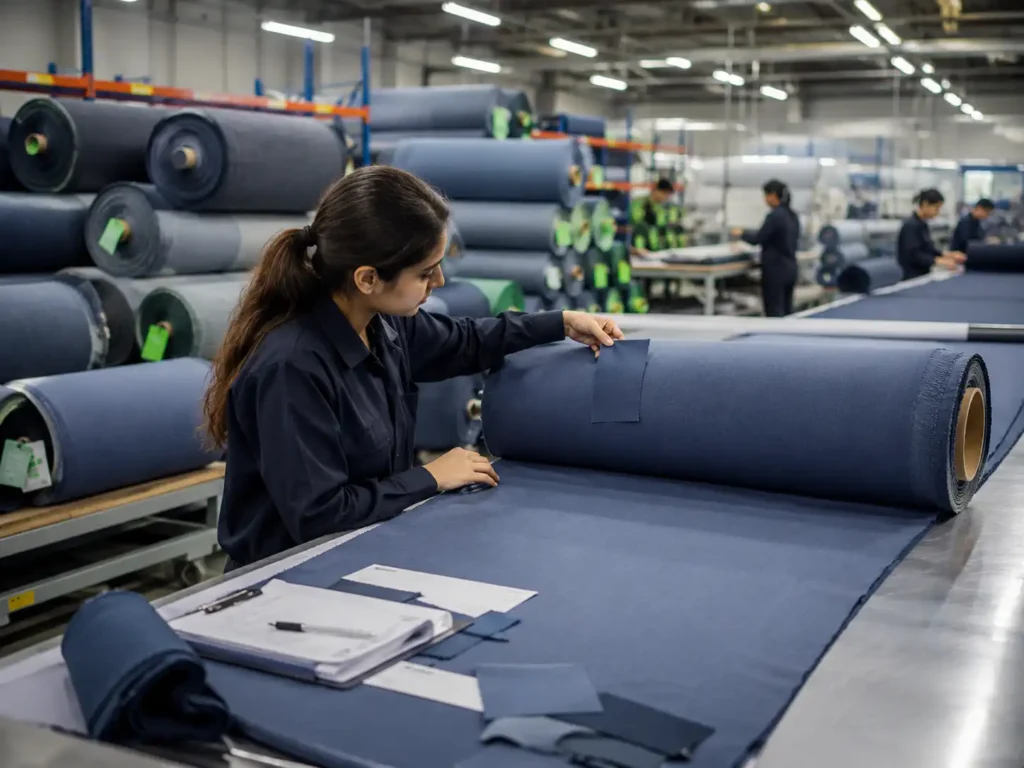
Approve Bulk Fabric
Lock Production Records
Bulk Shade Control Across Fabric Rolls
Fabric Lot Identification
- Record supplier, batch, roll, and color code.
- Flag visible shade groups.
- Keep approved reference accessible to cutting and QC teams.
Roll-to-Roll Review
- Compare multiple points across each roll when risk is high.
- Separate rolls with visible variation.
- Escalate unacceptable material before cutting begins.
Directional Cutting Control
- Mark surface or nap direction on production files.
- Check marker layout before bulk cutting.
- Inspect finished garments from consistent viewing angles.
Bundle Separation
- Use bundle tickets and color identifiers.
- Separate dye lots through sewing and finishing.
- Reconcile quantities before packing.
Inline Shade Checks
- Compare first output against approved sample and bulk reference.
- Inspect high-risk seams and layered areas.
- Record corrective actions for the line.
Pressing and Finishing Control
- Test pressing before full production.
- Protect delicate surfaces.
- Inspect marks after cooling, not only while warm.
Final Color Inspection
- Compare garments within cartons and across production groups.
- Check color labels against physical garments.
- Isolate questionable pieces for review.
Packing Identification
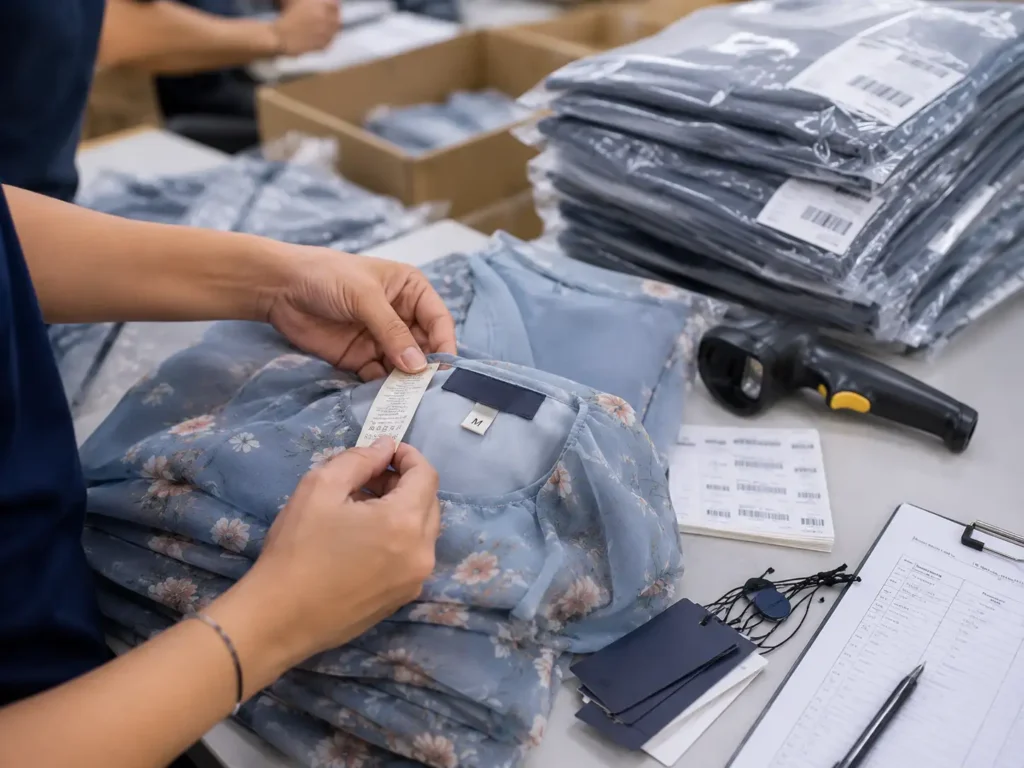
Color names, style numbers, barcodes, SKU labels, polybag stickers, and carton marks must match the approved matrix. Beige, stone, sand, taupe, mushroom, and greige cannot be managed by visual guessing during packing.
- Use approved color codes and barcode data.
- Check size-color ratios by carton.
- Reconcile packing lists with finished quantities.
Match Linings, Zippers, Threads, and Trims
Neutral dresses gain or lose quality through the components placed behind and beside the main fabric. A shell color can be correct while the finished garment still looks wrong because the lining, zipper, thread, cup, elastic, or label creates an unwanted contrast.
Build One Coordinated Color System
Jinfeng reviews visible and semi-visible components together before PP approval. The process begins with the outer fabric, then checks lining, zipper tape and teeth, sewing thread, elastic, bra cups, boning channels, hook-and-eye, strap hardware, lace trims, mesh inserts, and decorative elements. Each component is classified by visibility and function. A concealed zipper still becomes visible when the tape is too dark beneath pale satin. A bright white lining can cool an ivory shell. A nude bra cup can show through cream mesh if its undertone is too pink.
Lining selection considers more than color. Weight, stretch, hand feel, coverage, recovery, opacity, and seam behavior affect the final dress. A fitted jersey dress may need stretch lining that follows the shell. A chiffon maxi may need a lightweight woven or knit lining with enough coverage but limited bulk. A lace or mesh dress may require a planned skin-tone effect rather than an exact shell match. Corset dresses need lining and support components that maintain structure without showing through.
Thread selection also changes appearance. Topstitching, hems, gathering, darts, and visible seam areas need suitable thread color and tension. Even when thread is mostly hidden, poor matching can make seams look dirty or harsh on cream, beige, or warm gray fabrics.
Confirm Trims Before Bulk Booking
Trim approval should happen early enough to protect production timing.
Special zipper colors, coated hardware, custom elastic, molded accessories, lace trims, rhinestones, sequins, woven labels, and packaging materials may carry separate MOQ and lead time. A color-led collection can be delayed when the shell fabric is approved but a matching invisible zipper or lining is unavailable in the required quantity.
Jinfeng prepares a trim direction or trim card according to project complexity. The record can include material type, supplier, specification, size, color, finish, position, MOQ, lead time, and cost effect. Sample trims are tested for operation, comfort, durability, appearance, and bulk availability. Zippers are checked for smoothness and flatness. Bra cups and boning are checked for support and comfort. Elastic and strap hardware are checked for recovery and movement. Decorative trims are checked for snagging, skin contact, attachment security, and packing protection.
Final PP approval locks the selected trim set. Changes after PP approval may affect price, production timing, color matching, and workmanship instructions, so every revision needs a controlled update rather than an informal message.
Develop Samples from Brand-Level Inputs
Jinfeng can begin from a tech pack, reference image, original sample, sketch, line sheet, fabric swatch, or color board. The development route changes according to the quality and completeness of the input.
Convert Creative Direction into a Production File
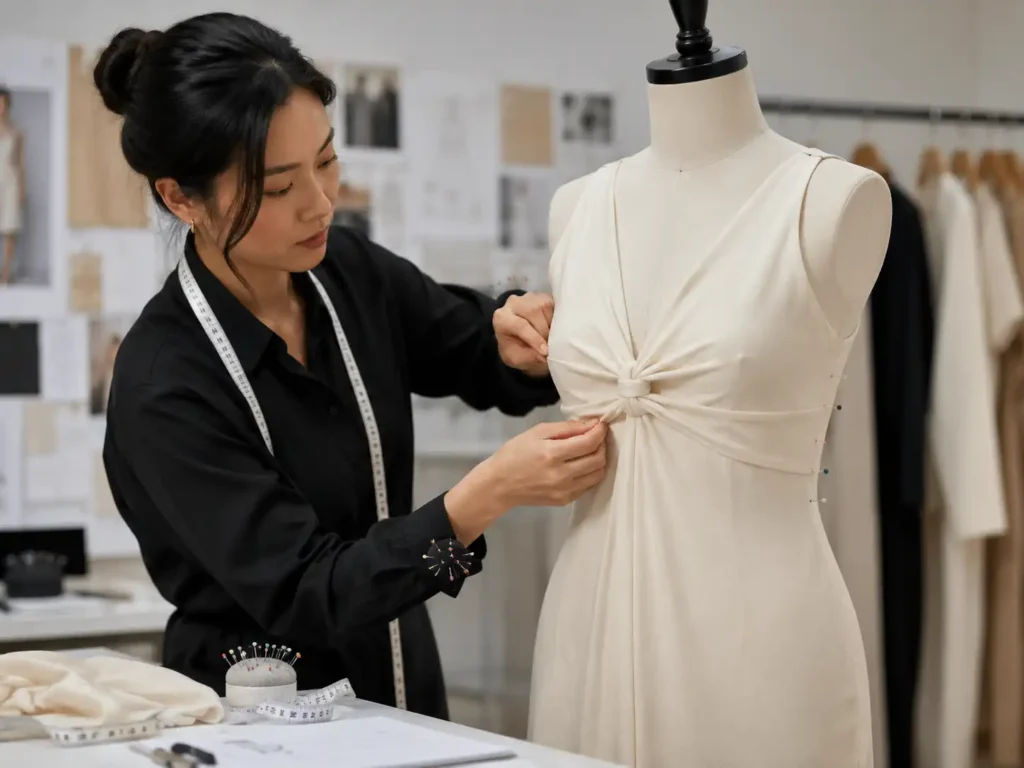
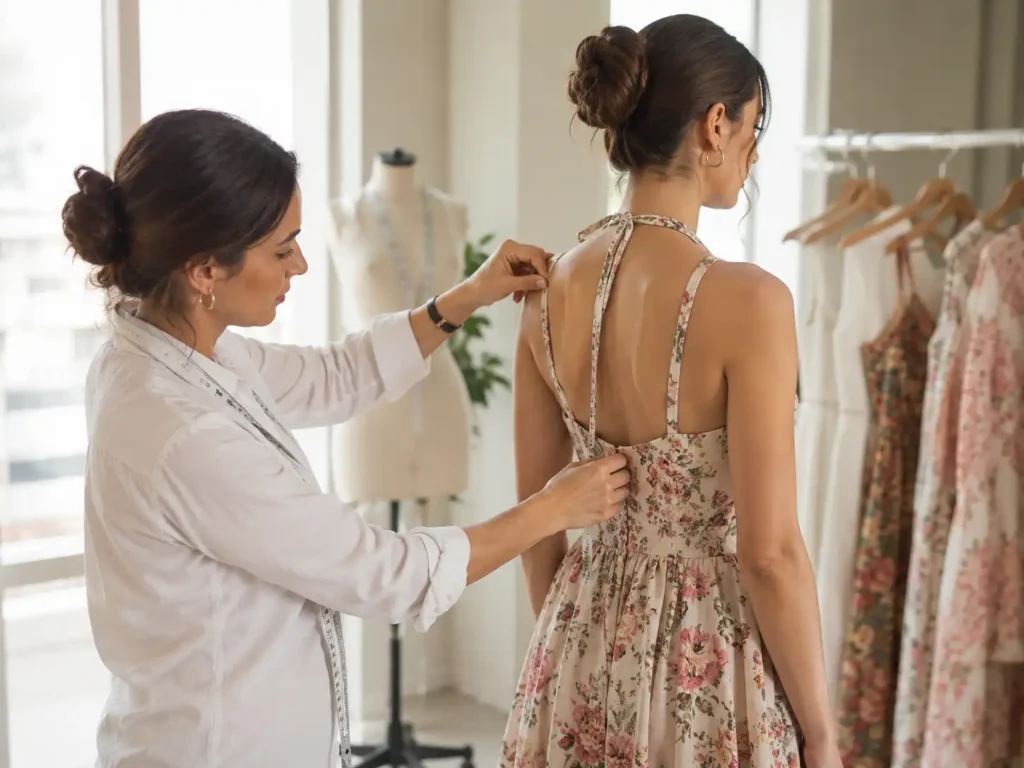
A reference image communicates visual direction, but it rarely contains enough information for accurate production. Jinfeng reviews silhouette, construction, seam placement, lining, closures, bust support, stretch, drape, garment length, and likely fabric behavior before pattern work starts. Questions are raised before sampling when the image leaves major decisions unclear. For example, a neutral satin slip dress may need confirmation of bias or straight grain, neckline depth, strap adjustability, lining coverage, zipper, hem method, and desired ease.
A tech pack allows a more direct review, but it is not followed mechanically when a specification conflicts with fabric behavior or production feasibility. Measurements, construction notes, BOM, artwork, grading, label placement, and packaging instructions are checked together. Jinfeng may suggest fabric alternatives, seam changes, lining adjustments, or trim substitutions when the original request risks poor fit, unstable bulk production, excessive cost, or material shortage.
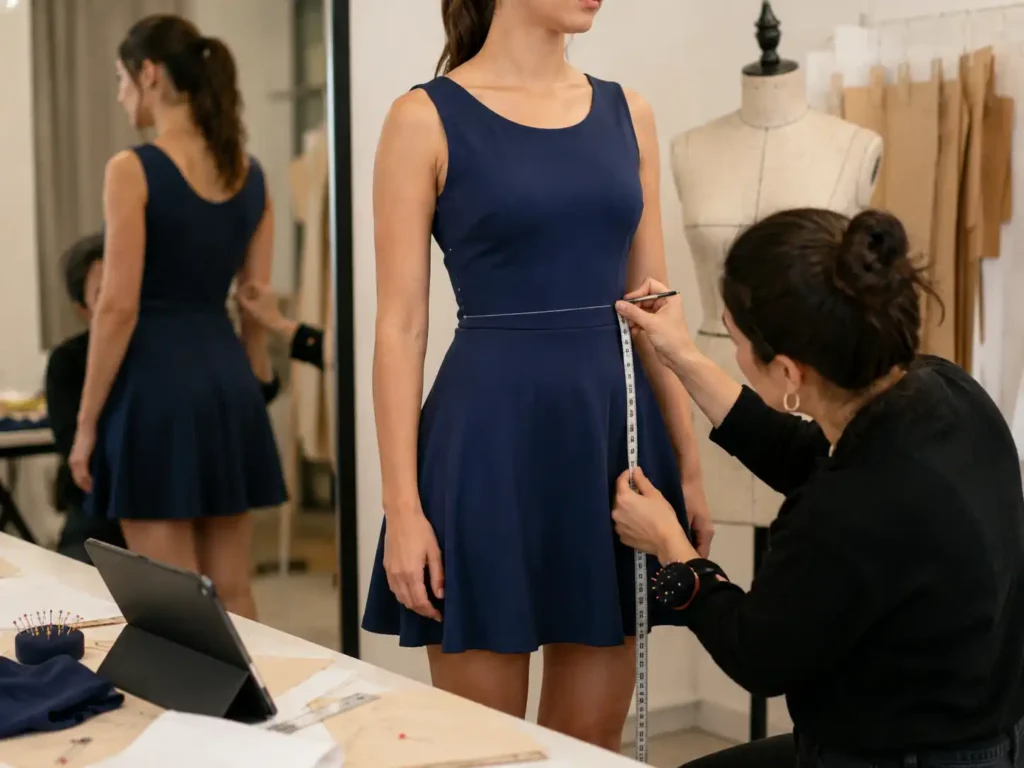
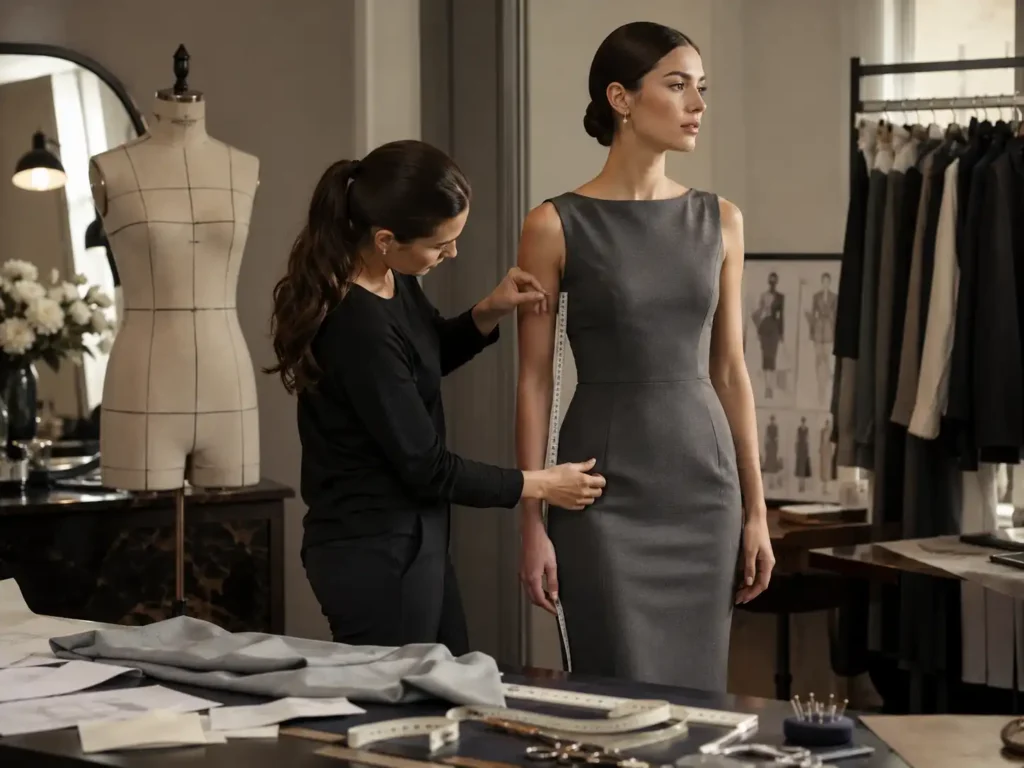
The first sample establishes shape, construction, and material direction. A fit sample checks body measurements, balance, movement, and comfort. Revised samples address recorded feedback. Photo samples prioritize camera-ready appearance but do not replace PP approval. The PP sample locks bulk standards after fabric, trims, measurements, workmanship, labels, and packaging are confirmed. A Golden sample and supporting files remain the reference for production and repeat orders.
Plan Sample Time by Style Complexity
Sample timing is confirmed by project rather than promised as one fixed number.
A straightforward dress using available fabric and regular trims may move faster than a corset dress, sequin style, layered chiffon maxi, custom-dyed satin dress, or multi-fabric occasion piece.
Timing also depends on reference clarity, fabric sourcing, lab dips, special trims, pattern complexity, fitting feedback, and the number of revisions.
A typical development plan separates stages clearly.
Fabric and trim direction are reviewed first. Pattern development follows once major construction decisions are known. The sample is cut, sewn, pressed, measured, photographed, and internally checked before dispatch or digital review. Feedback is logged by sample version so comments are not lost between emails, calls, and files.
Changes affecting fabric, structure, measurements, lining, or trims are evaluated for cost and production impact before the next sample begins.
Large collections benefit from development waves. Priority hero styles can enter sampling first, followed by secondary styles that share fabrics or patterns.
Grouping related styles reduces repeated sourcing work and helps the brand review color relationships across the collection before bulk commitments are made.
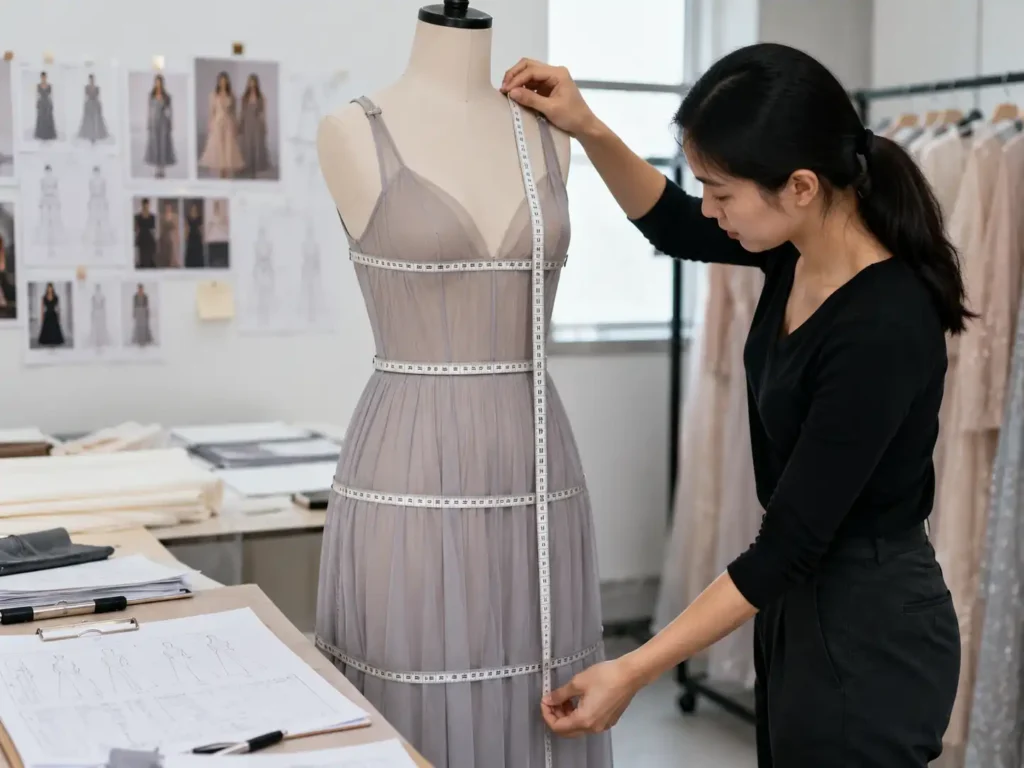
Fit Details Matter More in Minimal Dresses
Bust Coverage
Waist Position
Hip Balance
Strap Stability

Slit and Hem
Size Grading
Manage Multi-Style Neutral Collections Clearly
Style Matrix
Fabric Grouping
Color Matrix
Sample Tracker
Launch Priority
Revision Control
Allocate Factories by Fabric and Construction
Woven Dress Lines
Stretch Dress Lines
Complex Dress Units
Flexible Production Lines
Production Scheduling
Central Project Control
Quality Control for Neutral Color Dresses
Fabric Inspection
- Compare against approved color reference.
- Identify dye lots and roll numbers.
- Record defects and usable quantity.
Cutting Inspection
- Verify pattern version and size.
- Maintain shade and bundle identity.
- Check directional surfaces and motif placement.
Inline Sewing Check
- Compare workmanship against PP and Golden standards.
- Check high-risk operations first.
- Reinspect corrected output.
Measurement Check
- Use the latest approved measurement file.
- Review key points by size.
- Escalate pattern or sewing trends early.
Final Appearance Check
- Inspect under suitable lighting.
- Review front, back, side, and interior.
- Protect delicate surfaces after approval.
Packing and SKU Check
- Match garment, label, barcode, and polybag.
- Check carton color-size breakdown.
- Support third-party inspection by project when required.
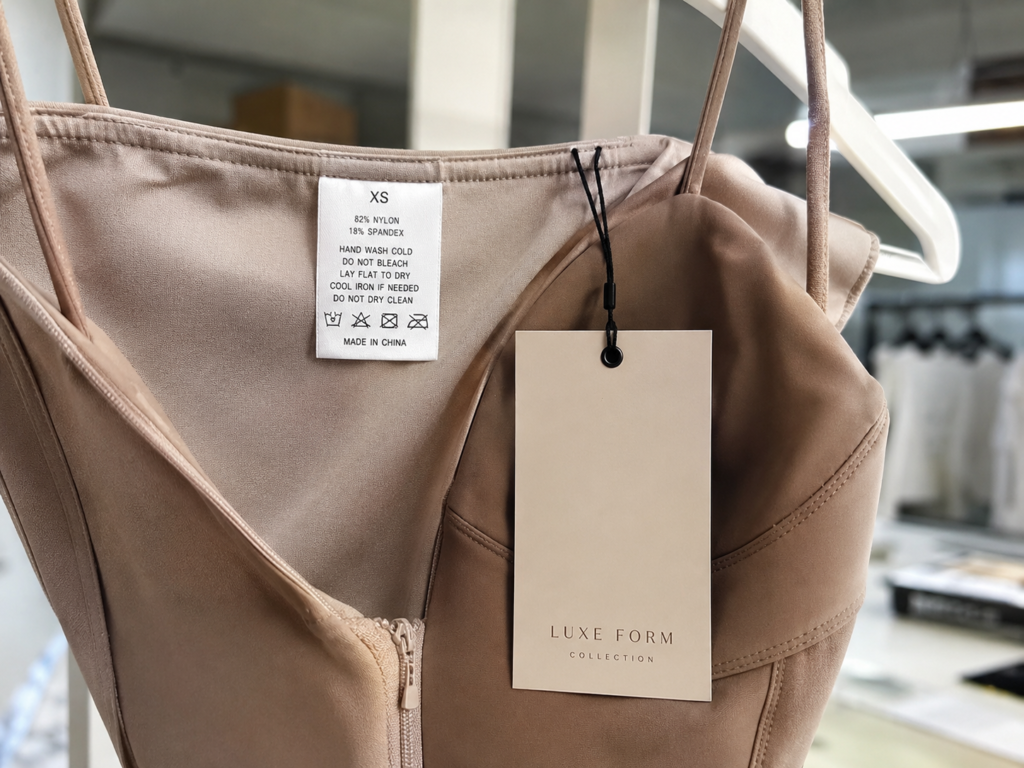
Private Label and SKU Accuracy by Color

Main Labels

Care Labels
Hangtags
Barcode and SKU

Polybag Identification
Carton Control
MOQ, Cost, and Lead-Time Planning
MOQ starts from 200 pcs per style/color. Final requirements and timing depend on material availability, color development, trims, construction, packaging, testing, size range, launch date, and production schedule.
| Planning Factor | How It Affects the Program | Information Needed for Review |
|---|---|---|
| Style and Color MOQ | MOQ is calculated by style and color, not by total collection quantity | Style count, color count, quantity per style/color |
| Stock Fabric | Suitable stock can shorten sourcing, but quantity and dye lot must be confirmed | Fabric reference, composition, weight, target shade |
| Custom Dyeing | Adds lab dip review, dyeing MOQ, bulk shade approval, and material lead time | Pantone or physical standard, fabric base, quantity |
| Construction | Corset, ruching, lace placement, layered chiffon, sequins, and complex lining add labor and inspection | Tech pack, reference sample, workmanship details |
| Size Range | Wider size ranges can require additional grading, fitting, support, and size-ratio planning | Size chart, target market, order ratio by size |
| Private Label | Labels, hangtags, barcodes, polybags, and cartons may carry separate MOQ and timing | Artwork, label specs, barcode data, packing rules |
| Testing and Compliance | Fabric or garment testing is confirmed by project, supplier, batch, color, destination, and latest documents | Market, test list, material source, required reports |
| Lead Time | Sample, PP, bulk, packing, and shipment timing is confirmed after project review | Launch date, approval deadlines, delivery method |
| Cost Control | Fabric substitution, construction optimization, color consolidation, and size-ratio planning can reduce cost without weakening brand-level appearance | Target price, non-negotiable design points, quantity plan |
Neutral Color Dress Development Case Studies
Different brands require different solutions when developing neutral dress collections. Jinfeng Apparel supports ecommerce brands, premium womenswear labels, and emerging fashion companies with color control, fabric development, sampling, production management, and repeat-order planning.
Case Study 1: 24-Style Neutral Collection for a North American Ecommerce Brand
Brand Background
A North American online fashion brand planned a neutral dress collection focused on high-conversion commercial styles. The collection needed to balance trend appeal, production efficiency, and consistent color presentation across multiple fabrics.
The assortment included:
- Satin slip dresses
- Rib knit bodycon dresses
- Crepe midi dresses
- Corset mini dresses
- Resort maxi dresses
The collection used eight neutral shades:
- Ivory
- Sand
- Beige
- Taupe
- Mocha
- Chocolate
- Warm Gray
- Stone
The total production quantity reached 62,000 pieces across 24 styles.
Development Challenge
The main challenge was maintaining a consistent neutral color story across different fabric categories.
The same commercial color name created different visual effects:
- Ivory satin appeared brighter because of surface reflection.
- Ivory chiffon required lining adjustment because of transparency.
- Mocha jersey became lighter when stretched.
- Taupe mesh showed different undertones after layering.
The brand needed a supplier who could manage color approval beyond digital references.
Jinfeng Solution
Jinfeng created a complete color-control system:
- Physical fabric reference approval
- Fabric-specific shade evaluation
- Lining and trim color matching
- Bulk fabric shade inspection
- Production color coding
- SKU and packaging identification
Production was divided according to garment structure:
- Stretch lines for jersey and bodycon styles
- Woven specialists for satin and crepe dresses
- Complex garment teams for corset and layered designs
Result
The collection was delivered according to the planned launch schedule with:
- 24 styles developed
- 62,000 pieces produced
- Multiple fabric categories controlled under one color system
- Repeat color extensions planned for the next season
The brand continued expanding neutral colors into later collections.
Case Study 2: Premium Occasionwear Brand Developing Luxury Neutral Dresses
Brand Background
A European occasionwear brand wanted to develop a premium neutral dress capsule focused on elegant silhouettes and refined finishing.
The collection included:
- Satin evening gowns
- Structured corset dresses
- Lace overlay dresses
- Draped midi dresses
- Asymmetric occasion dresses
Target colors:
- Champagne
- Soft Ivory
- Mushroom
- Warm Beige
- Deep Mocha
Development Challenge
The brand required a luxury appearance where small imperfections could not be hidden.
Main concerns included:
- Satin surface marks
- Uneven draping
- Lining visibility
- Corset structure stability
- Shade differences between shell and trims
Because the collection used minimal colors and clean silhouettes, workmanship quality became the main selling point.
Jinfeng Solution
The development process focused on:
Fabric Selection
Satin, chiffon, lace, and crepe were tested for:
- Weight
- Shine level
- Drape behavior
- Transparency
- Wrinkle recovery
Pattern Development
Senior pattern makers adjusted:
- Bust shaping
- Waist positioning
- Draping balance
- Corset support
- Skirt volume
Production Control
Quality checkpoints included:
- Fabric inspection
- Shade comparison
- Pressing control
- Seam inspection
- Final appearance review
Result
The final collection achieved:
- Premium visual consistency
- Stable fit across size ranges
- Controlled luxury finishing
- Repeat production capability
The brand used the developed patterns and color standards for future seasonal collections.
Case Study 3: Emerging Fashion Brand Building Its First Neutral Dress Collection
Brand Background
A growing womenswear brand planned its first commercial dress collection and needed support transforming creative ideas into production-ready styles.
The initial concept included:
- Minimal everyday dresses
- Resort dresses
- Soft feminine silhouettes
- Neutral seasonal colors
The brand provided:
- Reference images
- Mood boards
- Color inspiration
- Basic design ideas
Development Challenge
The brand had strong creative direction but lacked:
- Technical specifications
- Fabric knowledge
- Production planning
- Color management experience
Several designs required professional evaluation before sampling.
Jinfeng Solution
Jinfeng supported the complete development process:
Design Evaluation
Reviewed:
- Silhouette feasibility
- Fabric suitability
- Construction methods
- Production risks
Sample Development
Created:
- First prototypes
- Fit samples
- Revised samples
- PP samples
Commercial Optimization
Adjusted:
- Fabric alternatives
- Construction methods
- Production cost
- Packaging requirements
The final collection included:
- Slip dresses
- Midi dresses
- Bodycon dresses
- Resort styles
Result
The brand successfully launched its first neutral collection with:
- Production-ready patterns
- Approved fabric standards
- Complete private-label packaging
- Reliable repeat-order foundation
The collection became the base for future seasonal drops.
Frequently Asked Questions About Neutral Dress Manufacturing
Start Your Neutral Dress Collection Review
Send Jinfeng Apparel the available project files for a structured review of product fit, color direction, fabric options, sampling, MOQ, production planning, private-label requirements, and delivery timing.
A useful brief does not need to be perfect, but clearer inputs allow faster identification of color risks, material constraints, cost drivers, and development priorities.
Please include as many of the following items as available:
- Tech pack, reference images, sketches, original samples, or line sheet
- Planned styles and target quantity per style/color
- Pantone numbers, physical swatches, color board, or approved garments
- Preferred fabrics, composition, weight, stretch, transparency, or hand-feel direction
- Size range, measurement chart, fit model information, and target market
- Main labels, care labels, hangtags, barcodes, polybags, and carton requirements
- Launch date, PP approval target, warehouse date, and preferred shipping method
- Testing, inspection, audit, documentation, or destination-market requirements