 Skip to content
Neckline Fit Development for Women’s Dresses
Jinfeng Apparel supports fashion brands with neckline fit development across structured, fitted and occasion-led womenswear. Our pattern and sample teams review the neckline together with the upper bust, shoulder, strap, armhole, support structure and fabric behavior before an approved fit moves into production.
- 7+ senior womenswear pattern makers working across fit-sensitive dress categories
- 2 sample rooms + 20+ sample machinists supporting fit development and revision
- Development control across neckline depth, shoulder width, strap length, armhole, upper bust and lining
- Experience with deep-V, square-neck, halter, strapless, corset, slip and backless dresses
- Fit comments can be transferred into revised patterns, PP samples, Golden samples and bulk QC standards
Built for Teams Managing Fit-Sensitive Womenswear
Technical Design Teams
Product Development Teams
Fit Approval Teams
Sourcing Teams
Occasionwear Brands
Multi-Style Fashion Programs
Neckline Development Capacity Behind Every Fit Review
7+ Pattern Makers
2 Sample Rooms
20+ Sample Machinists
15+ QC Inspectors
18+ Sewing Lines
6+ Flexible Lines
Common Neckline Fit Problems We Diagnose
A neckline can look correct on the table and still fail on the body. Pulling the neckline inward is not always the correct answer because an apparent neckline defect may begin at the bust, shoulder, strap, armhole, bodice balance or fabric. Diagnosis therefore comes before correction.
Gaping at the Front Neckline

A front neckline that opens away from the body often appears to be an excess-neckline problem, yet reducing the neckline edge alone can distort the intended shape. The pattern team first reviews upper-bust volume, bust shaping, front bodice length, shoulder position and fabric recovery.
For fitted dresses, the neckline must follow the body without creating unwanted tension through the bust. When the bust requires more shaping but the pattern does not provide it correctly, excess fabric may migrate toward the neckline. On stretch styles, a neckline may initially appear stable while poor recovery allows the opening to relax after wear.
Development review can include:
- Neckline edge length and curve
- Upper-bust and full-bust relationship
- Front bodice length
- Shoulder position and angle
- Strap direction, where applicable
- Fabric stretch and recovery
- Lining or internal support
- On-body appearance during movement
Neckline Standing Away

A neckline that stands away from the neck or chest may result from pattern balance, insufficient shaping or unsuitable construction.
High necklines, scoop necks, structured square necks and lined dresses can all show the problem differently.
Shoulder slope deserves close attention because a shoulder line that does not follow the intended body angle can alter how the neckline sits.
Back balance can also influence whether the front neckline is being pulled away from its intended position. Heavy or unstable lining may add another source of tension.
The review focuses on how the garment hangs from the shoulder through the upper torso.
Pattern correction is then tested through a revised sample rather than assumed to be correct on paper.
Neckline Too Low or Unstable

Deep-V, plunge, halter, corset and backless designs often depend on visual exposure, but a low neckline still needs controlled coverage. A neckline can match a reference image while becoming unstable when the wearer moves, turns or sits.
Relevant development points include:
- Front neck drop
- Bust coverage
- Upper-bust stability
- Cup position
- Boning or internal support where required
- Lining structure
- Strap load
- Armhole relationship
- Movement safety
For deep-V styles, simply raising the lowest point can change the intended look. Fit development aims to preserve the brand’s visual direction while improving stability through pattern, support and construction.
Distorted or Uneven Necklines

Square-neck corners that curl, asymmetric necklines that twist, one side sitting higher than the other, or neckline edges that ripple may originate from multiple production variables.
Pattern symmetry is reviewed first where symmetry is intended. Fabric direction, stretch direction, seam tension, lining attachment, stay construction and pressing can then be evaluated.
For asymmetric designs, balance is judged against the intended design rather than mirror symmetry.
Approved construction changes need to become written sewing and QC instructions before production. Jinfeng records workmanship changes that affect neckline finish, lining attachment, boning placement, cup position and other structural details.
Neckline Fit Starts With Upper-Bodice Balance
A stable neckline is part of a connected fit system. Bust shape, shoulder angle, strap position, armhole depth and front-to-back balance can change where the neckline sits even when the neckline curve itself has not changed.
Bust and Upper Bust

The neckline sits close to one of the most three-dimensional areas of a fitted dress. Upper-bust volume, full-bust volume, under-bust shaping and cup structure can change how fabric travels toward the neckline.
A pattern with insufficient bust shaping may release excess toward a scoop or V-neck. A corset dress with a poor cup position may create unwanted tension at the upper edge even if the neckline measurement matches the specification. Slip dresses need enough coverage without forcing the neckline inward and disturbing drape.
For fit-sensitive styles, bust review can include upper bust, full bust, under bust, cup position, neckline depth and front bodice balance.
Shoulder and Neck Point

Shoulder width and shoulder position determine where many necklines begin.
A small shoulder-balance error can shift a square neck, widen a scoop, change a V opening or cause one shoulder area to pull differently from the other.
Neck point, shoulder length and shoulder angle are reviewed together when comments indicate neckline gaping, standing away or uneven positioning.
Correction should preserve armhole and sleeve relationships on styles where those areas share the same shoulder geometry.
Strap and Armhole

Straps are structural on slip, halter, backless and many party dresses. Strap length changes more than strap comfort: it can raise or lower the neckline, alter bust coverage and change armhole exposure.
Strap angle matters as much as strap length. Moving the strap attachment inward or outward changes the direction of force across the upper bodice. Adjustable sliders can add wearing flexibility but do not remove the need for a correct base pattern.
Armholes are reviewed simultaneously because reducing neckline looseness by pulling harder through the strap can create underarm exposure or discomfort.
Front and Back Balance
A neckline can move because the whole bodice is moving. Front and back lengths, shoulder balance, back coverage and waist placement all affect how the garment settles vertically.
Fit photos from front, side and back help reveal whether the neckline itself is incorrect or whether the bodice is rotating, dropping or pulling.
Jinfeng’s pattern development process works across bust, neckline, strap, armhole, back coverage and overall proportion rather than treating fit as a size-chart-only exercise.
Neckline and Strap Development by Style

V-Neck

Deep V

Square Neck
Scoop Neck
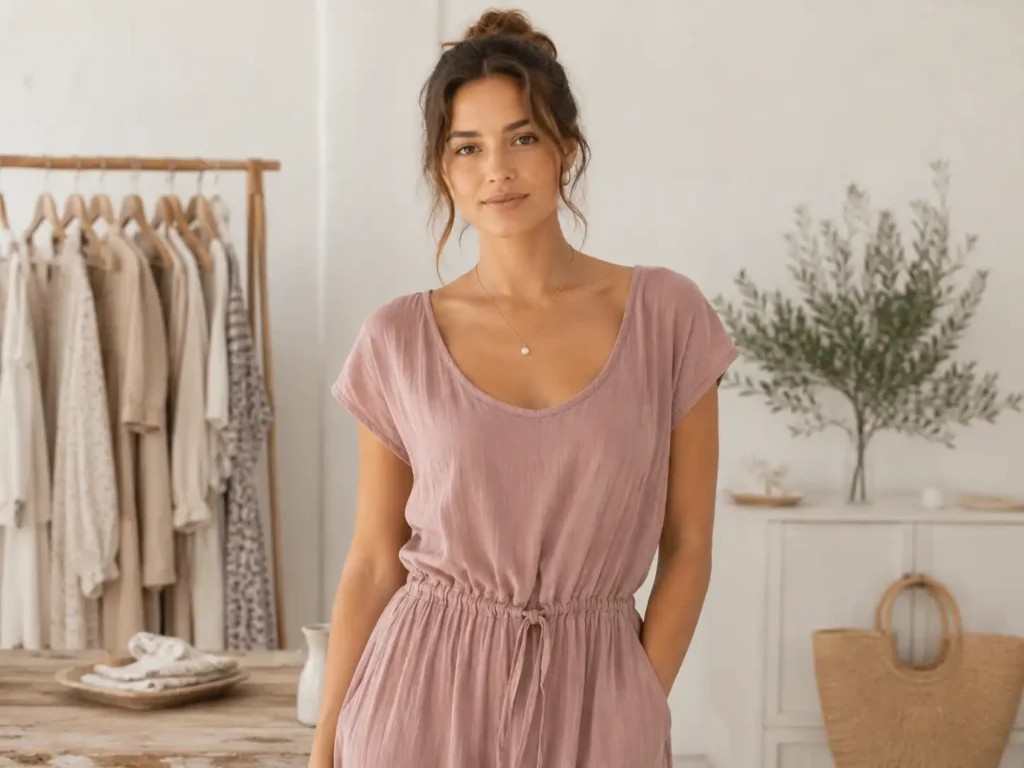
A scoop neckline contains a longer curved edge that may stretch during sewing or wear.
Excessive edge length, poor recovery or an unstable fabric can create rippling and gaping. Pattern shape, stay method, lining or binding construction and handling during sewing all contribute to the finished result.

Halter Neck

Strapless

Spaghetti Strap
Narrow straps visually expose more of the neckline and armhole area, making small length errors easy to see.
Strap length, angle and attachment point need to work with bust coverage and armhole shape. Adjustable sliders can be used where suitable, while the underlying pattern still needs correct proportions.

One-Shoulder and Asymmetric
Neckline Fit Changes With Dress Construction
Silhouette changes the forces acting on the neckline. A stretch bodycon dress, structured corset and fluid slip dress may use similar neckline shapes, yet each requires a different fit-development approach. Jinfeng’s pattern team works across bodycon, corset, slip, halter, strapless and backless dress structures, with category-specific attention to stretch, bust support, straps, armholes and wearing safety.

Bodycon Dresses

Corset Dresses

Slip Dresses

Halter Dresses

Strapless Dresses

Backless Dresses
Fabric Behavior Can Change the Neckline
A neckline pattern approved in one material should not automatically be copied into another. Stretch, recovery, weight, drape, thickness and lining behavior can change the position and stability of the upper bodice even when the garment dimensions remain similar.
Stretch and Recovery

Stretch tells the pattern team how far a fabric can extend. Recovery tells us how well it returns after extension. Both matter for neckline development.
A stretch jersey may hug the upper bust with less shaping than a stable woven, but poor recovery can allow the neckline to relax after repeated wear. A high-recovery fabric may require a different negative-ease balance. Power mesh, soft mesh, jersey, ponte and stretch satin therefore cannot be treated as equivalent simply because all contain elastane.
Before a neckline is approved, stretch direction and recovery behavior should match the material intended for production.
Weight and Drape

Fabric weight can pull the bodice downward, especially on long dresses, halters or garments with fluid skirts. Drape changes how the fabric follows the chest and neckline edge.
A lightweight satin slip dress may respond differently from a heavier structured satin even when the fiber composition appears similar. Chiffon and lightweight mesh may need controlled lining or edge construction. Crepe may sit more securely than a highly fluid satin but can change the visual softness of the neckline.
The fit decision therefore considers both appearance and structural effect.
Transparency and Lining

Sheer fabrics create an additional neckline decision: coverage must be managed through both outer fabric and lining.
Mesh, lace and chiffon may use full lining, partial lining or strategically placed support depending on the design. A lining that is too tight can pull the neckline inward, while a lining with excess length can appear above the outer edge or create bubbling.
Lining must be developed as part of the pattern rather than added after the outer shell fit is already approved.
Fabric Substitution

Changing fabric after the first sample may require pattern re-evaluation.
Jinfeng compares composition, weight, stretch, recovery, drape, transparency, shrinkage behavior, hand feel, color, MOQ, price and lead-time impact when a material changes. The team also reviews whether lining, pattern or sampling needs to be updated.
The same base pattern can therefore remain useful as a reference without being copied mechanically into a materially different fabric.
From Fit Comment to Corrected Neckline Pattern
Fit development becomes reliable when comments are converted into controlled pattern actions. Verbal instructions alone are not enough for production. Each meaningful change needs a reason, a pattern response and a new approval point.
Start With the Original Intent
Development begins by reviewing available materials such as:
- Tech pack
- Reference image
- Original sample
- Size chart
- Existing pattern information
- Fabric direction
- Fit comments
- Target market and size range
The first question is not “how many centimeters should be removed?” The team first identifies what the neckline is intended to look like and how much coverage, support and movement are required.
Diagnose the Source
A comment such as “neckline is too loose” can have several causes.
The team may review:
- Front neck drop
- Neck width
- Upper-bust fit
- Bust volume
- Shoulder position
- Strap length
- Armhole relationship
- Front-to-back balance
- Fabric recovery
- Lining tension
Apply Pattern Changes
Once the root cause is identified, correction may involve neckline geometry or another connected pattern area.
Common actions supported within Jinfeng’s development process include adjusting neckline depth, raising chest coverage,
shortening or repositioning straps, adjusting armholes, changing upper-bust shaping, modifying back coverage, adding support or revising lining.
Significant changes are recorded before another sample is produced.
Validate Through a Revised Sample
Major neckline, support, fabric or structural changes generally require renewed sample confirmation. A revised sample allows the team to check whether the correction solved the original issue without creating a new one.
The review should compare:
- Original comment
- Pattern change
- New measurement
- Front / side / back fit
- Movement
- Fabric response
- Construction
- Next approval stage
Convert Approval Into Production Data
Fit approval is valuable only when it survives transfer to production.
Important revisions can be reflected in the revised pattern, size chart, measurement record, BOM, fabric approval, trim approval, sewing instruction, QC checklist and PP sample comments.
Jinfeng’s documented revision system requires production-impacting changes to move beyond informal chat records.

Measurements Used to Review Neckline Fit
A neckline is both visual and measurable. Fit approval combines the brand’s intended appearance with defined measurements, sample observations and movement checks. Exact tolerances remain project-specific because construction, fabric and size standards differ.
| Measurement / Control Point | What It Helps Control | Typical Fit Risk |
|---|---|---|
| Front Neck Drop | Depth and front coverage | Too low, too high, unstable V |
| Back Neck Drop | Back neckline position | Standing away, poor back balance |
| Neck Width | Opening and shoulder relationship | Too open, too narrow |
| Shoulder Width | Neckline starting position | Neckline shift, uneven balance |
| Strap Length | Vertical position of bodice | Low neckline, armhole exposure |
| Strap Position / Angle | Direction of upper-bodice support | Slipping, neckline distortion |
| Upper Bust | Fit above full bust | Front gaping, loose upper edge |
| Full Bust | Bust volume and tension | Pulling, compression, distortion |
| Under Bust | Support and shaping | Weak corset or fitted bodice control |
| Armhole | Side coverage and upper-bodice balance | Underarm exposure or pulling |
| Front / Back Bodice Length | Vertical body balance | Neckline rotation or drag |
Fit Photos That Help Us Diagnose Faster

Front View

Side View

Back View

Movement View
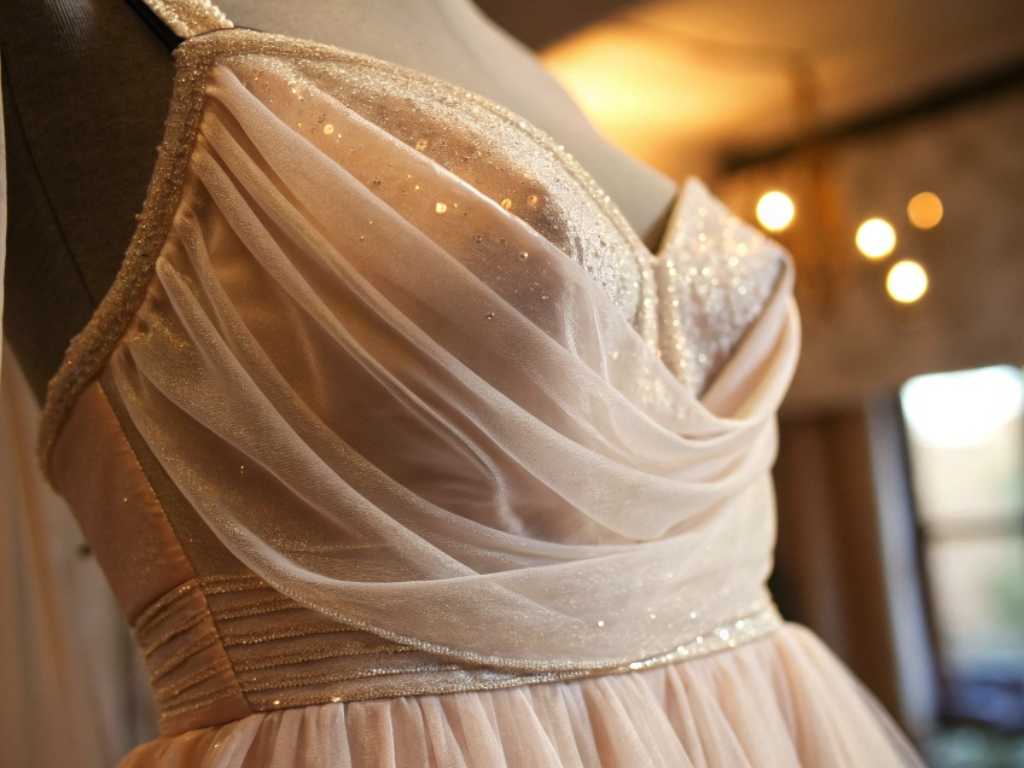
Close-Up Details

Measurement Notes
Neckline Fit Through the Sampling Stages
Sampling is not one attempt followed by production. Fit-sensitive dresses often need distinct sample stages with different approval goals. Timing is confirmed by style complexity, fabric availability, trims, pattern changes and the amount of revision required rather than promised as one fixed number for every project.
First Sample
The first sample checks whether the proposed design can become a workable garment.
For neckline development, the team looks at:
- Basic neckline shape
- Initial chest coverage
- Upper-bust relationship
- Shoulder and strap position
- Armhole balance
- Fabric direction
- Construction feasibility
The first sample is not automatically the production standard. Its value is to expose fit and construction issues early.
Fit Sample
A fit sample concentrates on on-body proportion and key measurements.
Neckline-related checks may include:
- Neckline depth
- Upper bust
- Full bust
- Under bust
- Strap length
- Armhole
- Cup position
- Boning position
- Lining
- Movement stability
Revised Sample
The revised sample validates agreed corrections.
Possible revisions include raising chest coverage, changing neckline depth, shortening straps, adjusting armholes, changing bust shaping, modifying lining, replacing fabric or revising support components.
A successful revised sample should solve the original fit issue without creating a new imbalance elsewhere.
Photo or Sales Sample
Photo-ready and salesman samples serve visual or commercial purposes where needed.
They may support campaign shoots, lookbooks, internal selling or showroom activity.
A photo sample does not automatically replace PP approval when alternative materials or photography-specific adjustments have been used.
PP Sample
The PP sample is used to confirm the production standard after pattern, size, fabric, color, trims, construction, lining, branding and packing decisions have been controlled.
PP is not the ideal stage for major neckline redesign. Major fit issues should be resolved earlier. Jinfeng’s development rules require critical confirmations before a project moves into PP.
Golden Sample
A Golden sample provides a retained approved reference for production and future repeat-order comparison.
Pattern, measurement, fabric, construction and other approved details can be referenced against the sealed standard when the style moves into bulk or returns in a later season.
Neckline Fit Across the Full Size Range
US Size Development
UK / EU / AU Sizes
XS–XL Alpha Sizing
Extended Sizes
Petite / Tall Adjustments
Size-Set Review
Lock the Corrected Pattern Before Bulk Production
A corrected neckline only creates value when the final correction is captured in production-ready information. Moving to bulk with unresolved fit comments introduces avoidable variation and makes later troubleshooting more expensive.
Consolidate Fit Feedback
Fit photos, measurement notes, written comments and sample observations are consolidated so the technical team is not working from several conflicting versions of the same request.
The approved direction should distinguish between visual preference, dimensional change and structural change.
Update the Pattern
Confirmed fit actions are transferred into the working pattern.
Relevant changes can include:
- Neckline geometry
- Bust shaping
- Shoulder position
- Strap position or length
Update the Size Chart and Grade Rule
Where a fit change affects measurable dimensions, the size chart and grading logic need to reflect the final decision.
Changing neckline depth in the base sample without reviewing how it progresses through larger and smaller sizes can reproduce the same problem at another size.
Confirm Revised or PP Sample
The corrected garment is checked against the approved direction.
If neckline or structural changes remain significant, another physical sample is safer than assuming a paper correction will translate perfectly into the final garment.
Freeze Production Inputs
Before bulk starts, relevant inputs are controlled around:
final pattern
approved measurements
fabric
trims
construction

Transfer Approved Neckline Fit Into Production
Final Pattern
Size Chart and Grade Rule
Fabric Reference
Trim and Support Record
Sewing Instructions
QC Checklist
Bulk Neckline Quality Control Checkpoints
Neckline QC should protect the approved visual line, garment stability and size consistency. Inspection therefore combines dimensions, workmanship, materials and appearance rather than checking only whether the seam is sewn.
| QC Checkpoint | What We Review | Risk Being Controlled |
|---|---|---|
| Neckline Depth | Approved measurement and visual position | Too low or too high |
| Neckline Width | Opening relative to approved pattern | Gaping or compressed neck area |
| Symmetry | Left/right shape where symmetry is intended | Uneven neckline |
| Square-Neck Corners | Angle, shape and stability | Curling or distortion |
| Strap Length | Measurement and placement | Low bodice or underarm exposure |
| Strap Attachment | Position and security | Twisting or uneven neckline |
| Upper-Bust Fit | Garment shape and measurement | Loose front edge or pulling |
| Lining Attachment | Alignment and tension | Lining showing or bubbling |
| Support Components | Cup, boning, anti-slip where used | Strapless or plunge instability |
| Neckline Finish | Binding, facing, stitching, pressing | Wavy edge or poor appearance |
| Size Consistency | Approved grade and measurement | Fit shift across sizes |
| Final Appearance | Front, side and back presentation | Sample-to-bulk visual mismatch |
Pattern Development Backed by Manufacturing Execution
Pattern Development
Sample Development
Fit Correction
Production Control
QC Support
Repeat-Order Records
Anonymous Neckline Fit Development Program
A representative U.S. premium fast-fashion womenswear program involved 18 dress styles and approximately 42,000 pieces, with a neckline mix spanning square-neck minis, deep-V party dresses, halter dresses, corset-inspired styles, strapless silhouettes and narrow-strap occasion dresses.
Program Profile

Market: United States
Style Count: 18 styles
Total Order: Approx. 42,000 pieces
Main Fabrics: Stretch satin, structured woven, mesh, jersey, lace and lining
Fit-Sensitive Details: Square necks, plunge fronts, cups, boning, narrow straps, halters and strapless upper edges
Sample Path: First Sample → Fit Review → Revised Sample → PP Sample → Golden Sample
The main challenge was not one identical neckline defect across the collection. Each product created a different upper-bodice risk.
Square-neck dresses needed cleaner corner control and more stable shoulder relationships. Deep-V styles needed stronger bust coverage without losing the intended plunge. Strapless styles required upper-bust stability and support. Narrow-strap silhouettes needed better coordination between strap length, neckline position and armhole exposure. Stretch styles added recovery risk that did not exist in the structured woven group.
Pattern and Fit Actions

The development team grouped fit comments by cause instead of applying the same correction to all 18 styles.
Actions included:
- Revising neckline depth where visual coverage was outside the approved direction
- Adjusting upper-bust shaping where front-edge looseness originated above the bust
- Correcting strap length and attachment points on selected narrow-strap styles
- Reviewing armhole exposure after strap and neckline corrections
- Repositioning cups and support elements on structured styles
- Rechecking fabric stretch and recovery before finalizing fitted patterns
- Updating revised measurements before PP approval
The objective was to protect each silhouette rather than standardize every neckline into one geometry.
Sample-to-Bulk Control

Approved changes moved into revised patterns, updated measurement records and PP samples. Neckline depth, strap length, upper-bust appearance, lining and support details became style-specific checkpoints for production.
The 42,000-piece program was organized by style, color and size rather than treated as one homogeneous order. Styles with structured upper bodices followed different sewing and QC controls from fluid slip and jersey groups.
Production Result

Once PP standards were approved, the collection progressed into bulk with neckline checkpoints linked to each construction group. Pattern and Golden sample records provided references for future color extensions and repeat styles.
The value of the program came from connecting fit diagnosis → pattern correction → sample validation → production handover → bulk QC, keeping design intent visible while making the approved fit repeatable.
Frequently Asked Questions About Neckline Fit Development

Send Us Your Neckline Fit Development Files
- Tech pack or reference images
- Current sample photos, preferably front, side and back
- Close-up neckline and armhole photos
- Fit comments showing what needs to change
- Size chart and target size range
- Fabric composition or fabric reference
- Strap, cup, boning, lining or support requirements
- Style and color quantity plan
- Target launch or delivery requirement


