Skip to content
Navy Dress Manufacturer
Custom Navy Blue Dress Manufacturing for Established Fashion Brands
Jinfeng Apparel develops navy blue dresses from color reference and fabric selection through pattern making, sampling, bulk production, private label packing, and export coordination.
- Navy shade control covers approved swatches, lab dips when required, shell and lining coordination, bulk shade review, and repeat-order records.
- 2 sample rooms, 7+ senior pattern makers, and 20+ sample machinists support structured dress development and revision work.
- 6 owned women’s fashion factories and 10+ long-term production partners support a regular monthly capacity of 100,000+ garments.
- MOQ starts from 200 pcs per style/color, subject to fabric, dyeing, trims, construction, and packing requirements.
Built for Structured Navy Dress Programs
Development Capacity
Two sample rooms, 7+ senior pattern makers, and 20+ sample machinists support first samples, fit samples, revised samples, photo samples, PP samples, and Golden samples. The team can begin from a tech pack, original garment, sketch, reference image, line sheet, or approved fabric swatch. Each style receives a structure review before pattern work begins, covering fabric behavior, lining, neckline, straps, closures, shaping, hem balance, and production risk.
Production Scale
Project Control
Designed for Established Fashion Programs
Suitable Brand Profiles
The service structure fits occasionwear labels, partywear brands, premium ecommerce fashion companies, boutique chains, retail programs, sourcing companies, and regional fashion groups. Projects may involve a single navy hero style, a coordinated navy capsule, or a 10-30 style seasonal collection covering mini, midi, maxi, bodycon, cocktail, evening, office, and wedding guest dresses.
- Clear product direction or approved references
- Planned bulk quantities by style and color
- Professional sample and fitting process
- Defined launch date or delivery window
- Private label and packing requirements
- Repeat-order or seasonal development potential
Information for Review
A useful project brief includes reference images or tech packs, target quantity, navy color reference, preferred fabric, size range, target market, label files, packing requirements, and launch date. Quantity matters because MOQ is calculated by style and color rather than by total collection volume. Custom dyeing, exclusive lace, special sequins, logo hardware, printed packaging, and extended size ranges may create separate material or trim minimums.
- Style count and priority sequence
- Quantity per style and color
- Pantone or approved physical swatch
- Target fabric and lining direction
- Size chart and grade rules
- Label, barcode, and carton requirements
Where Navy Dress Programs Commonly Fail
Navy Shade Drift
Fabric Color Shift
Sample-to-Bulk Variation
Custom Navy Dresses Across Key Fashion Categories

Navy Mini Dress
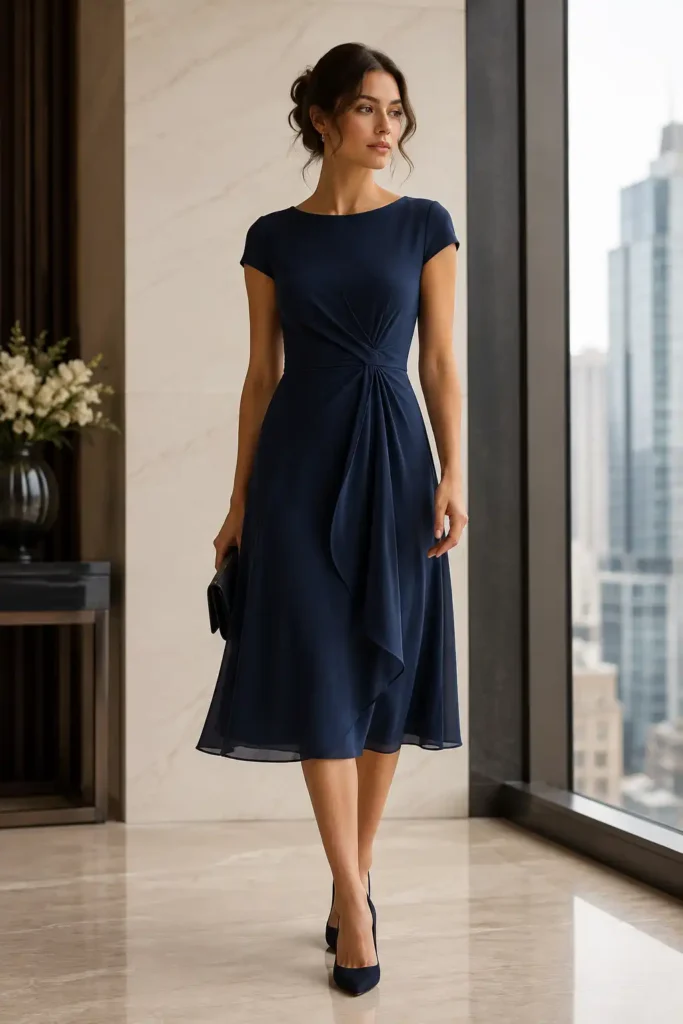
Navy Midi Dress
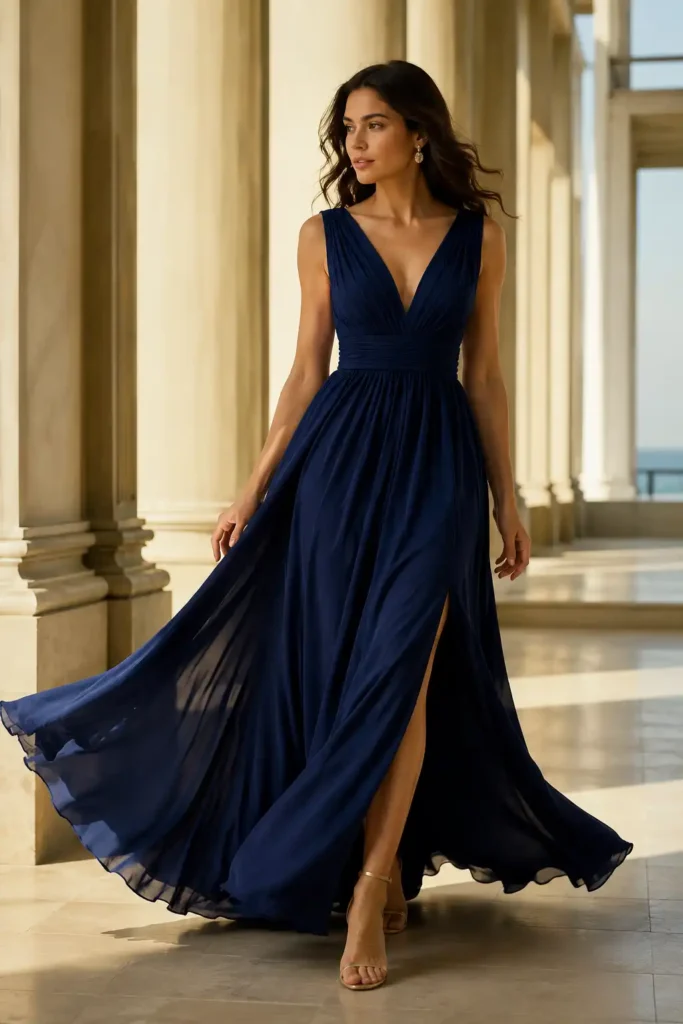
Navy Maxi Dress
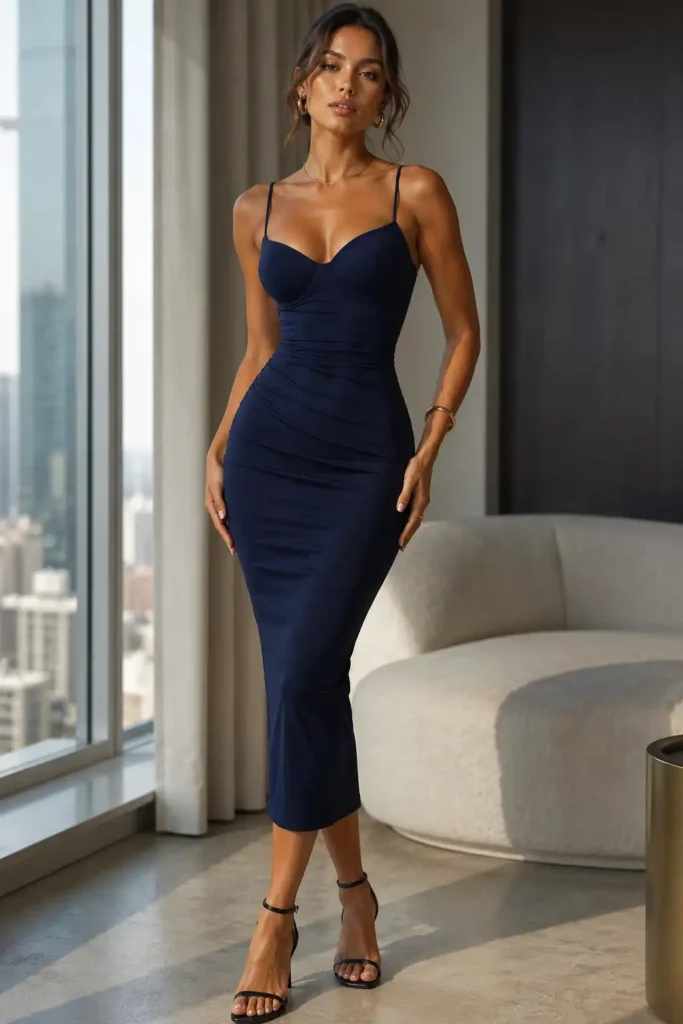
Navy Bodycon Dress
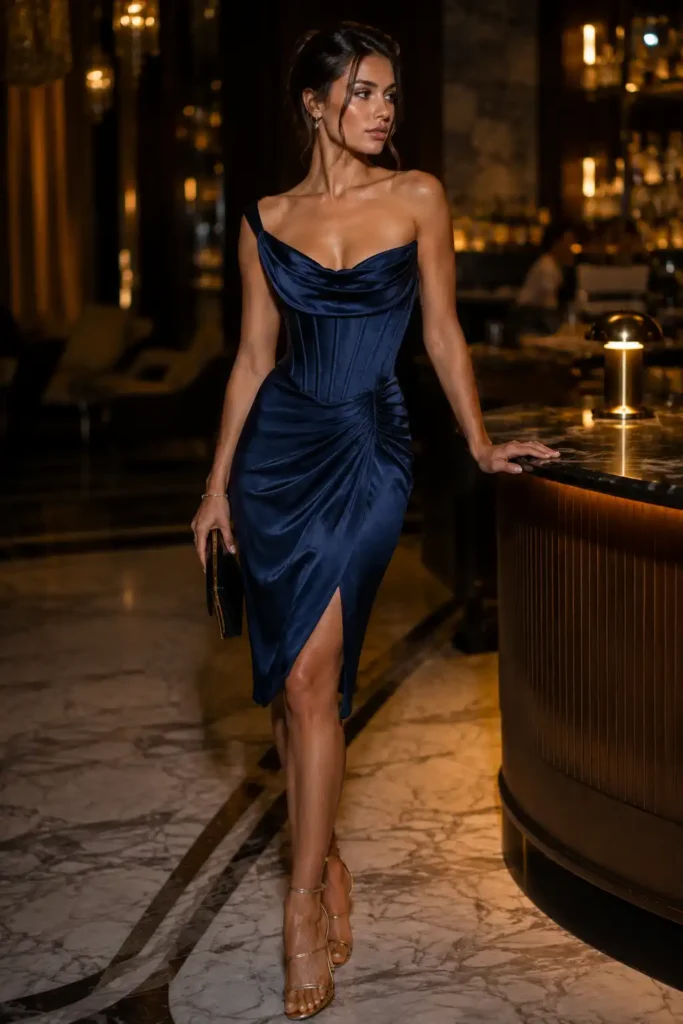
Navy Cocktail Dress
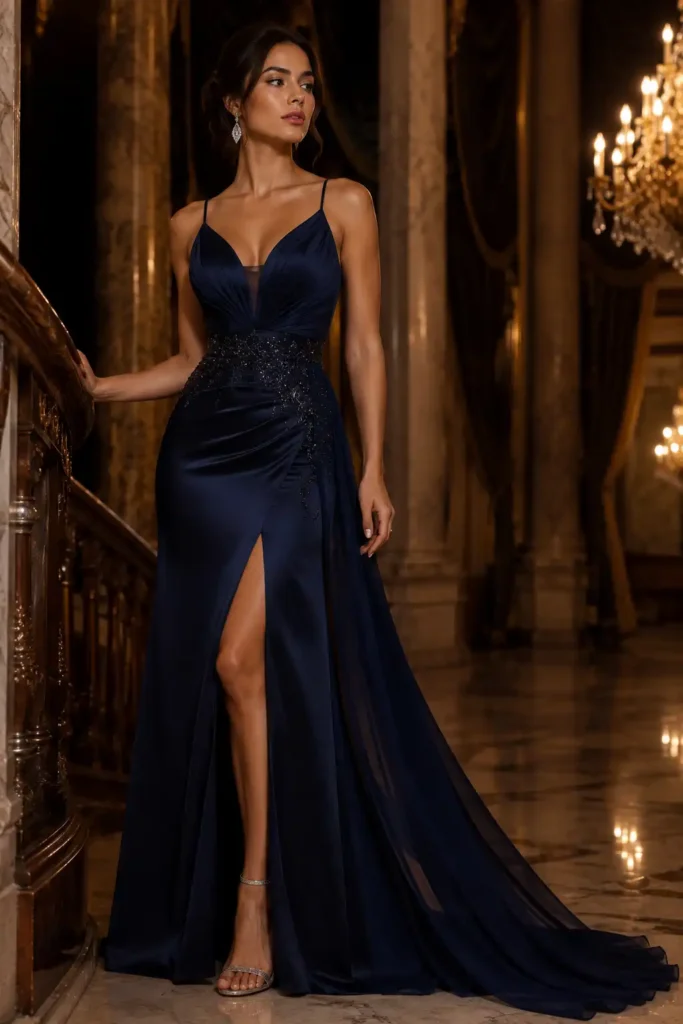
Navy Evening Dress
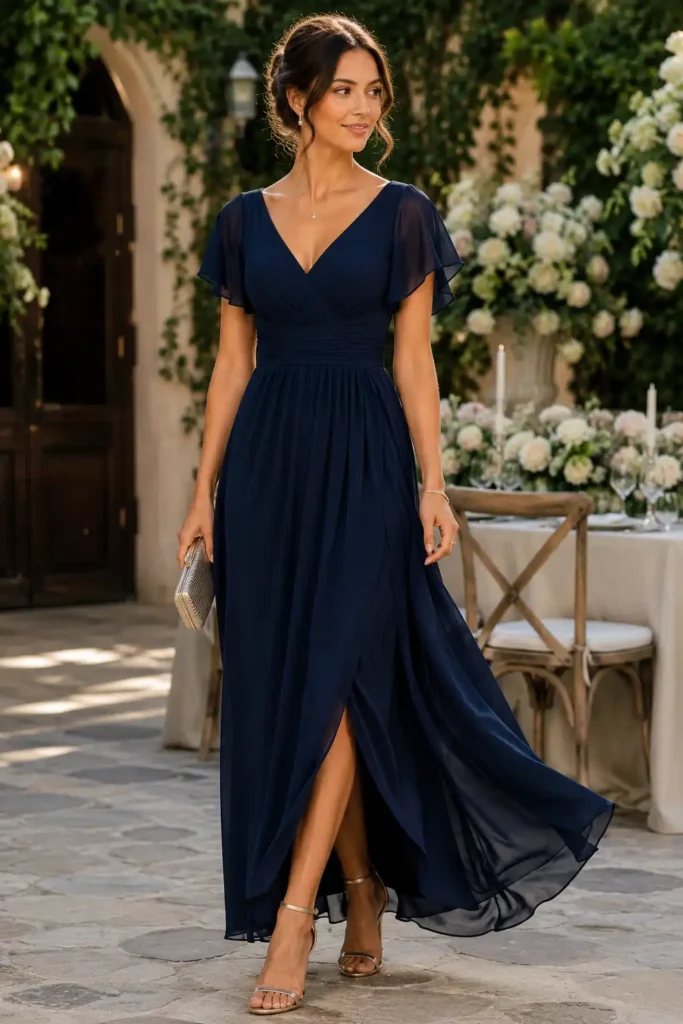
Navy Wedding Guest Dress
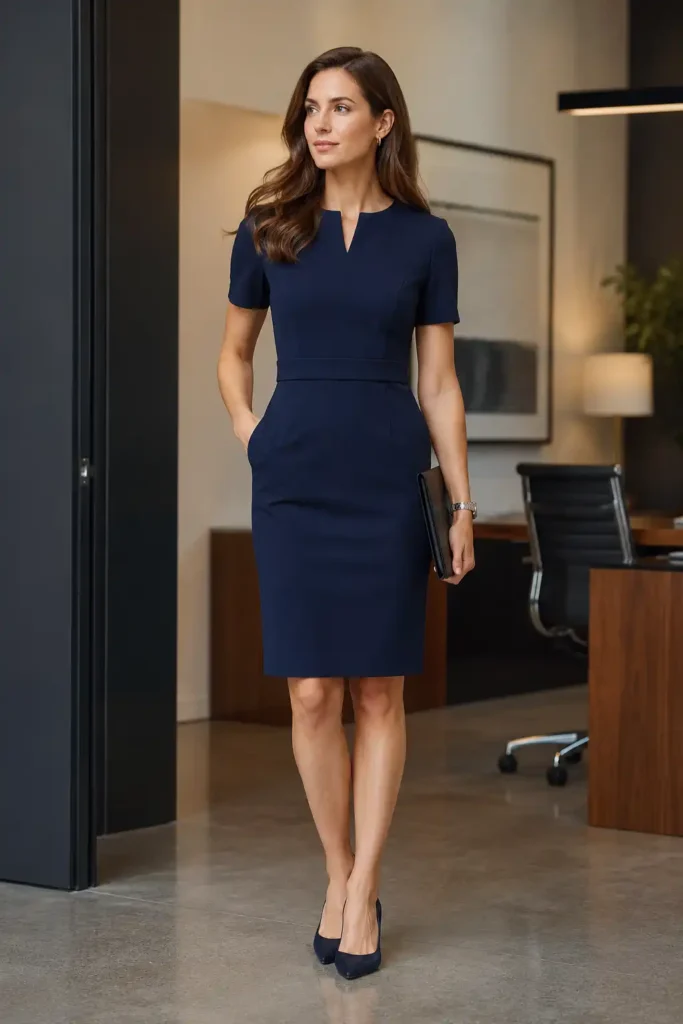
Navy Office Dress
How Navy Changes Across Dress Fabrics
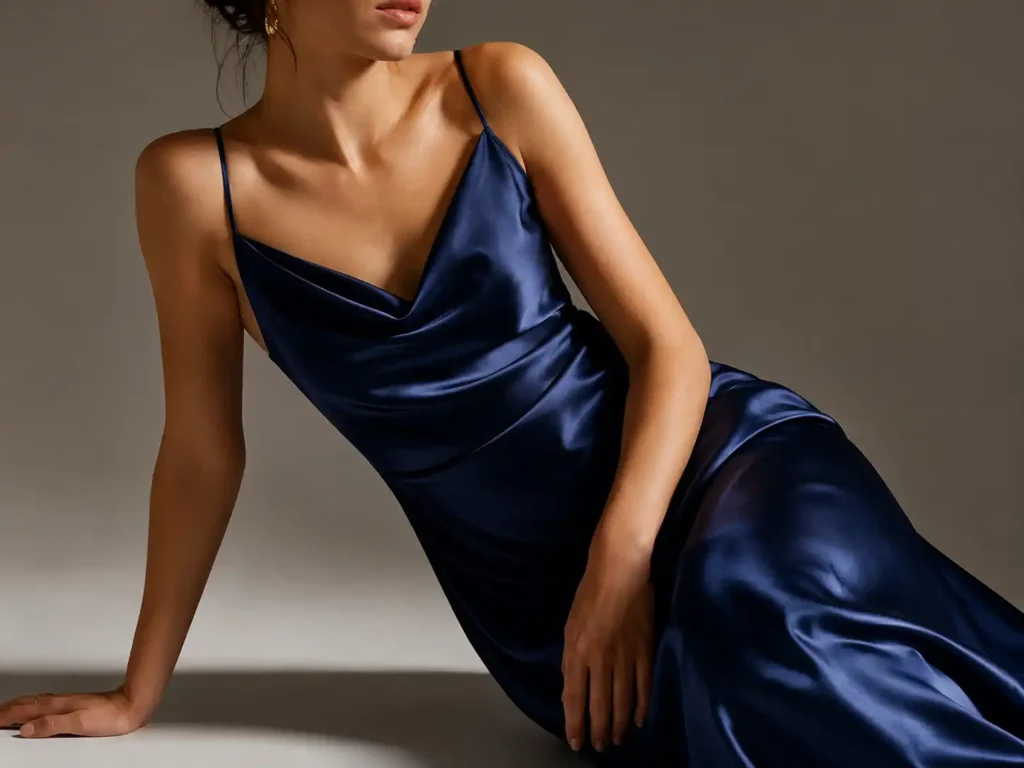
Satin Navy
- Best for: cocktail, slip, draped, evening, and wedding guest dresses
- Main risks: shine mismatch, snagging, pressure marks, zipper bulging
- Approval focus: face direction, lab dip, lining, pressing, packing
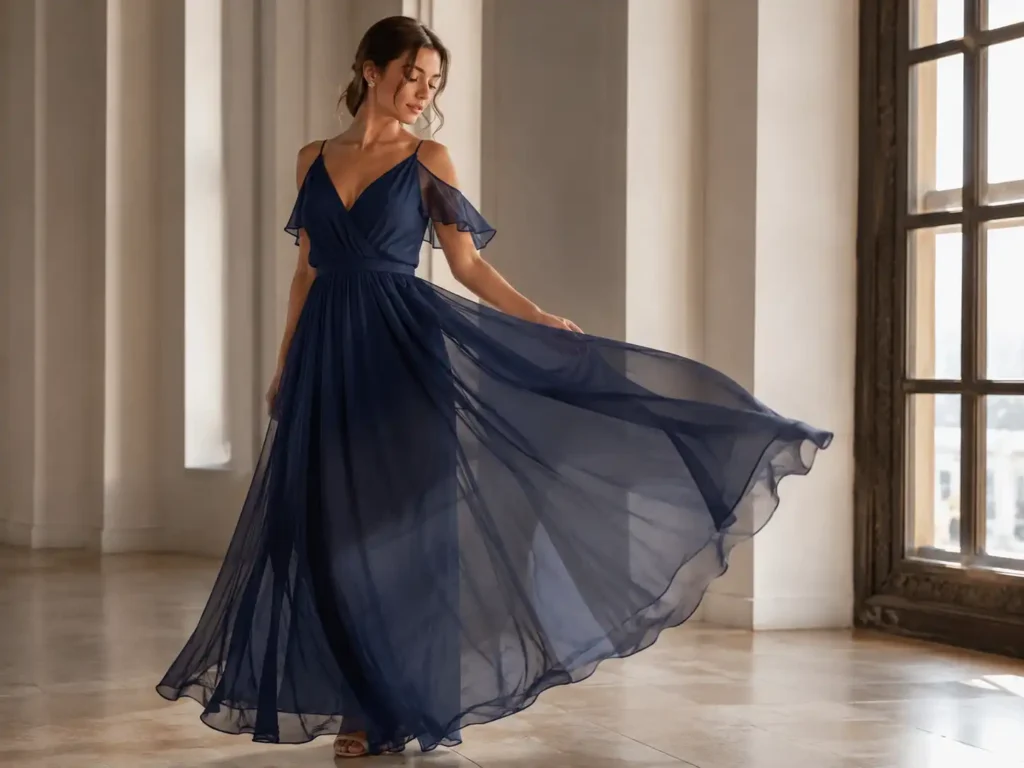
Chiffon Navy
- Best for: maxi, bridesmaid, occasion, sleeve, and layered dresses
- Main risks: visible seams, uneven layers, color lightening, pulled hems
- Approval focus: shell over lining, layer count, seam finish, hem balance
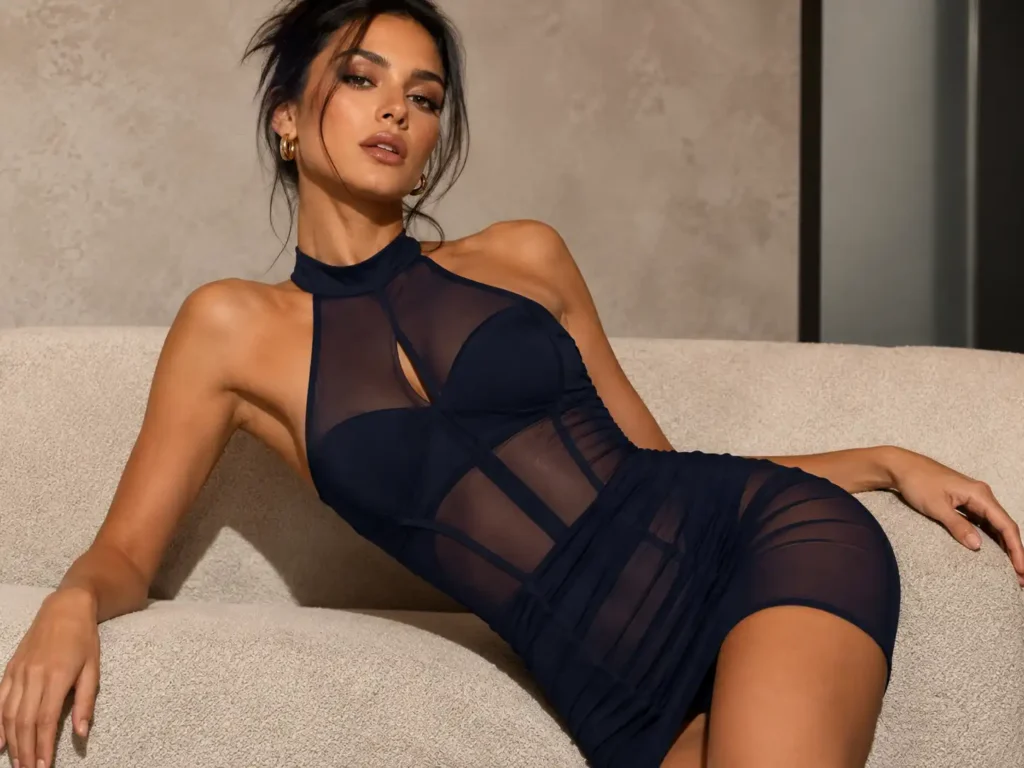
Mesh Navy
- Best for: bodycon, cut-out, corset, illusion, and party dresses
- Main risks: transparency mismatch, shade under tension, seam waviness
- Approval focus: stretch, recovery, coverage, lining edge, thread color
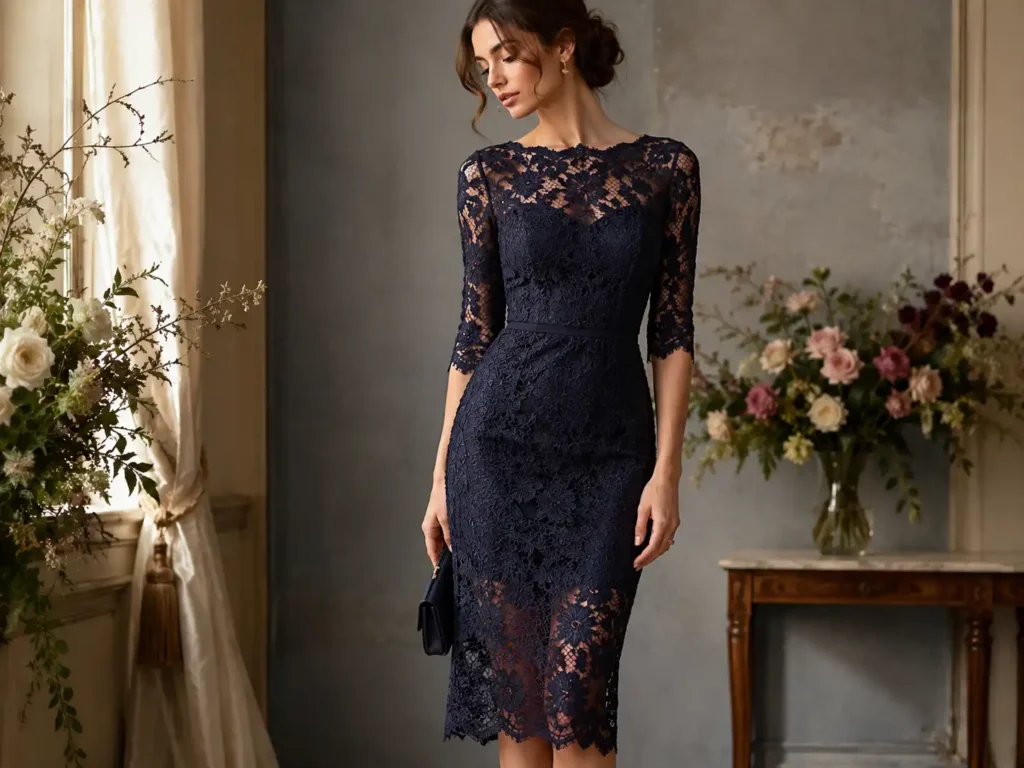
Lace Navy
- Best for: cocktail, evening, fitted midi, sleeve, and overlay dresses
- Main risks: lining conflict, motif mismatch, visible joins, edge distortion
- Approval focus: lace-lining pair, motif direction, placement, seam finish
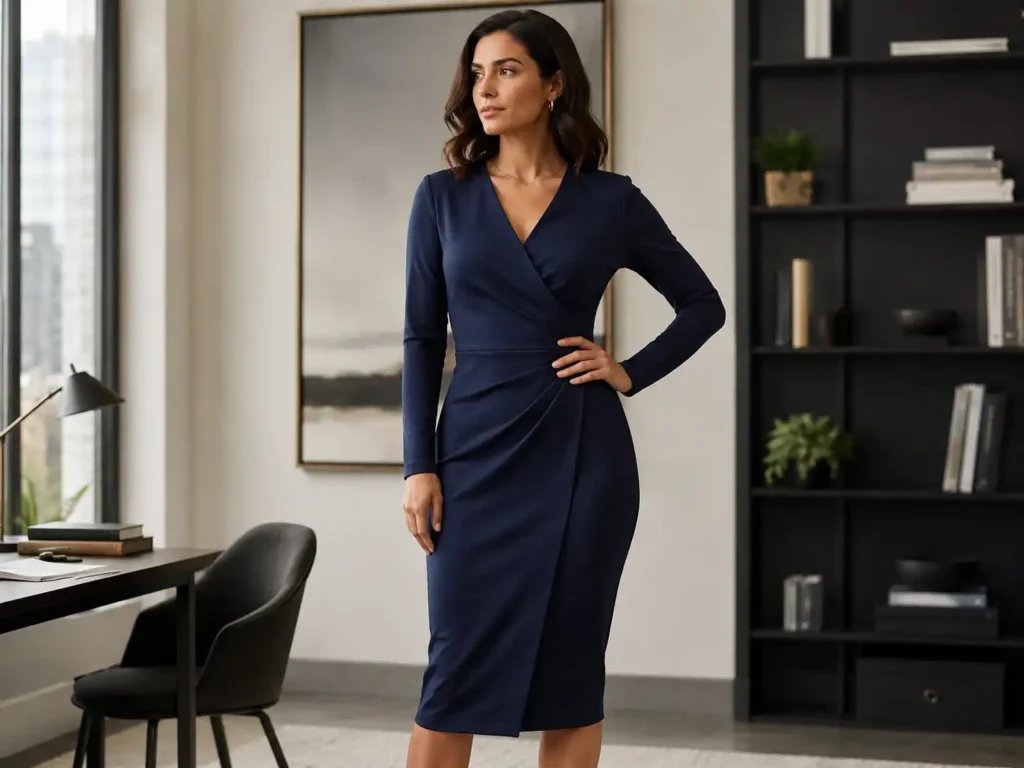
Jersey Navy
- Best for: bodycon, office, casual midi, ruched, and wrap dresses
- Main risks: shade under stretch, growth, twisted seams, measurement drift
- Approval focus: weight, stretch, recovery, shrinkage, grading
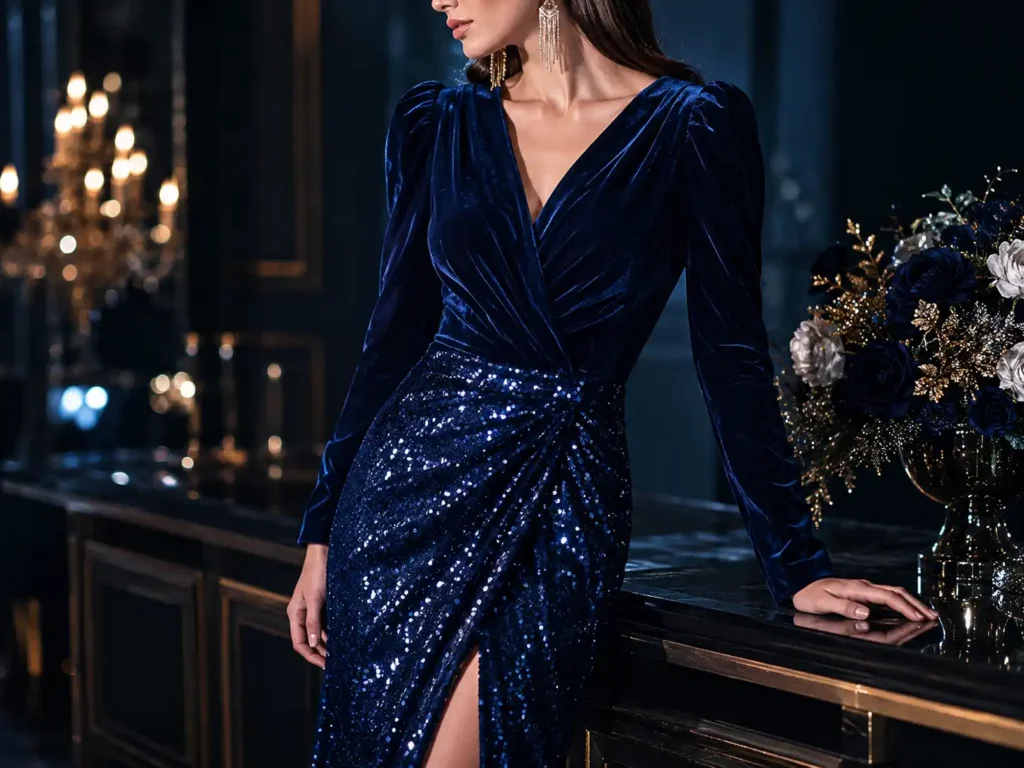
Velvet and Sequin Navy
- Best for: holiday, evening, party, statement, and formal dresses
- Main risks: pile reversal, crushed surface, sequin loss, scratchy seams
- Approval focus: direction, placement, lining, handling, packing
From Navy Reference to Approved Bulk Color
Reliable navy production begins with a physical target and ends with a controlled bulk standard. Color work should connect reference selection, lab dip review, component matching, fabric approval, dye-lot management, cutting separation, and repeat-order records.
Defining the Target Navy Shade
“Navy” can describe many different color positions. One brand may prefer a clean blue navy with visible saturation, while another may require midnight navy, ink navy, blue-black navy, or a softer greyed navy. The first development step is therefore a defined physical reference rather than a color name alone.
Preferred starting references include a Pantone TCX or TPG number, an approved fabric swatch, an original garment, a prior production cutting, or a brand color standard. Screen images can support communication but should not become the final approval basis because display settings, photography, compression, and ambient light alter appearance.
Fabric structure also matters. The same dye direction will not look identical on satin, chiffon, lace, mesh, jersey, velvet, or sequins. Each fabric group should receive its own approval standard while staying inside the brand’s overall navy color story. For mixed-fabric styles, the shell, lining, mesh, lace, zipper, thread, elastic, and decorative trims should be placed together during review.
Project records should identify the approved reference name, Pantone code when used, fabric supplier, composition, weight, swatch date, approval status, and intended style numbers. A clear record prevents later confusion when several navy options are discussed during sampling.
Lab Dip and Swatch Approval
Custom-dyed fabric usually begins with lab dip development. Several options may be prepared around the target direction, allowing the brand team to compare undertone, depth, saturation, and metamerism. Review should take place under agreed lighting, commonly daylight-equivalent lighting, store lighting, and normal indoor light when retail presentation matters.
Approval should examine more than whether a swatch looks “dark enough.” A strong assessment checks whether navy moves purple under warm light, turns flat grey under cool light, becomes nearly black in low light, or appears too bright beside trims and lining. Satin requires angled viewing because shine changes apparent depth. Chiffon and mesh should be reviewed over the intended lining and in the planned number of layers.
Once a lab dip is approved, the physical swatch becomes part of the project record. The approval note should identify fabric, color reference, supplier, date, style allocation, and any acceptable shade boundary. A photograph alone is not sufficient for precise repeat production. Physical retention allows later comparison with bulk fabric and future reorders.
Stock fabric can shorten development time, but stock navy still needs shade and availability confirmation. A first sample made from available navy fabric should not automatically be treated as the final bulk color unless the same fabric batch can support production or a later approval process confirms the bulk material.
Bulk Shade and Dye-Lot Control
Bulk fabric review compares production material against the approved standard before cutting. Checks include shade, undertone, fabric face, width, weight, hand feel, stretch, shrinkage, surface defects, and batch information. Where multiple rolls or dye lots are involved, roll mapping and shade grouping help reduce visible variation within one garment or shipment.
Cutting plans should avoid mixing visibly different shade groups inside one dress. Long maxi panels, matching bodice and skirt sections, sleeves, waistbands, and self-fabric straps can reveal even small differences. Velvet and satin also need direction control because orientation can look like a color mismatch.
During sewing and finishing, thread, zipper tape, lining, elastic, lace, and decorative trims should remain linked to the approved trim card. Final inspection compares garments under consistent light, checking front-to-back balance, panel consistency, lining influence, and style-to-style coordination across the collection.
Repeat orders require a fresh material check rather than blind reuse of an old color name. Jinfeng Apparel retains approved swatches, fabric references, dye-lot notes, trim details, production observations, and packing records. When the original fabric is unavailable, a replacement comparison should cover composition, weight, stretch, hand feel, color, cost, and any effect on pattern or sampling.
Coordinating Every Navy Component
A polished navy dress depends on coordinated shell fabric, lining, zippers, thread, elastic, structural materials, labels, and packing identification. Each component influences appearance, function, size control, and warehouse accuracy.
| Component | Approval Standard | Main Risk | Control Point |
|---|---|---|---|
| Satin shell | Approved physical swatch and face direction | Shine creates false shade variation | Review flat and angled under consistent light |
| Chiffon shell | Layered over intended lining | Color appears too light or uneven | Approve shell and lining as one combination |
| Lace overlay | Motif density plus lining shade | Lace reads purple, black, or washed out | Review full overlay panel before sample approval |
| Mesh panels | Shade under expected stretch | Lined and unlined zones look disconnected | Test on-body stretch and coverage areas |
| Lining | Coordinated depth and opacity | Show-through changes shell color | Check inside, outside, and under strong light |
| Zipper tape | Close match to shell or seam zone | Visible contrast at center back or side seam | Approve tape, teeth, and puller together |
| Sewing thread | Match under stitch tension | Contrast becomes visible along seams | Review topstitch, overlock, and bartack areas |
| Elastic and tapes | Match where exposed or semi-visible | Light elastic shows through mesh or lining | Confirm color, width, recovery, and placement |
| Bra cups and boning channels | Covered or coordinated with lining | Internal structure becomes visible | Test under movement and direct light |
| Labels and stickers | Correct color name, SKU, and size | Warehouse and packing mix-ups | Check artwork, placement, and scan data |
| Polybags and cartons | Style-color-size identification | Wrong navy SKU reaches the wrong carton | Use controlled barcode and carton mark review |
Design Details for Distinctive Navy Dresses
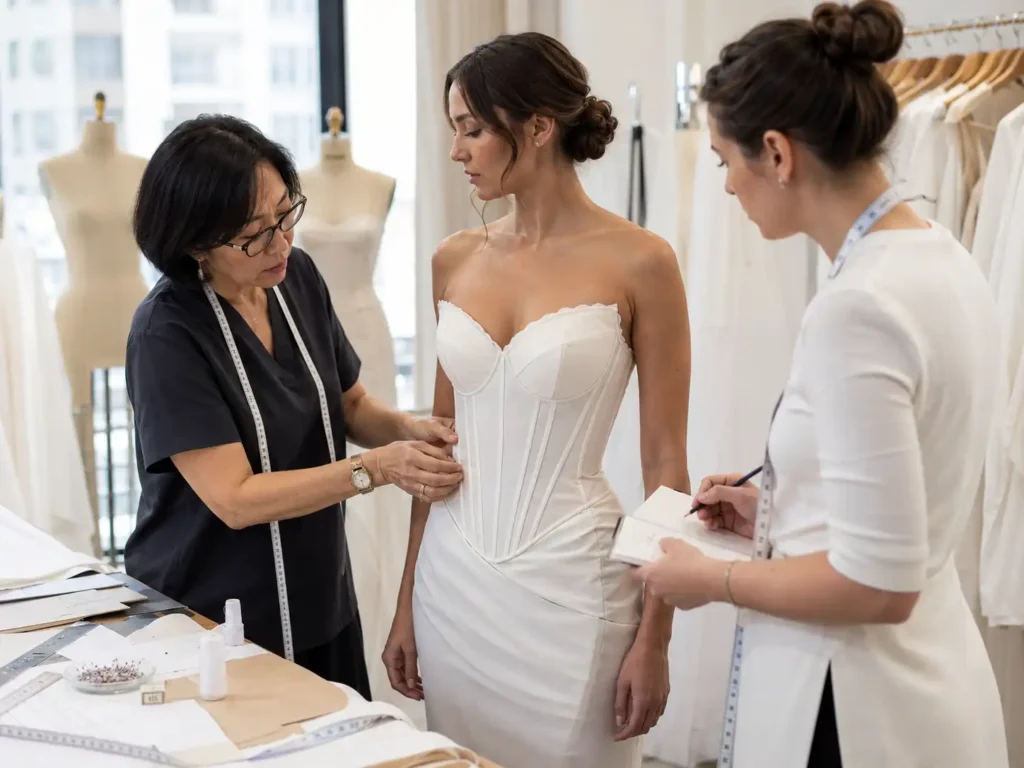
Corset and Boning
- Review: cup spacing, neckline height, waist position, back closure
- Bulk focus: symmetry, boning placement, seam smoothness, lining tension
- Best use: party, cocktail, mini, evening, and structured midi dresses

Ruched Construction
- Review: gathering ratio, left-right balance, body stretch, lining support
- Bulk focus: consistent fold density, seam alignment, secure endpoints
- Best use: bodycon, midi, mini, asymmetric, and maternity-inspired shapes

Slits and Draping
- Review: slit height, overlap, drape anchor, waist pull, hem balance
- Bulk focus: consistent opening height, clean corners, stable stitching
- Best use: evening, maxi, wedding guest, cocktail, and fitted midi dresses
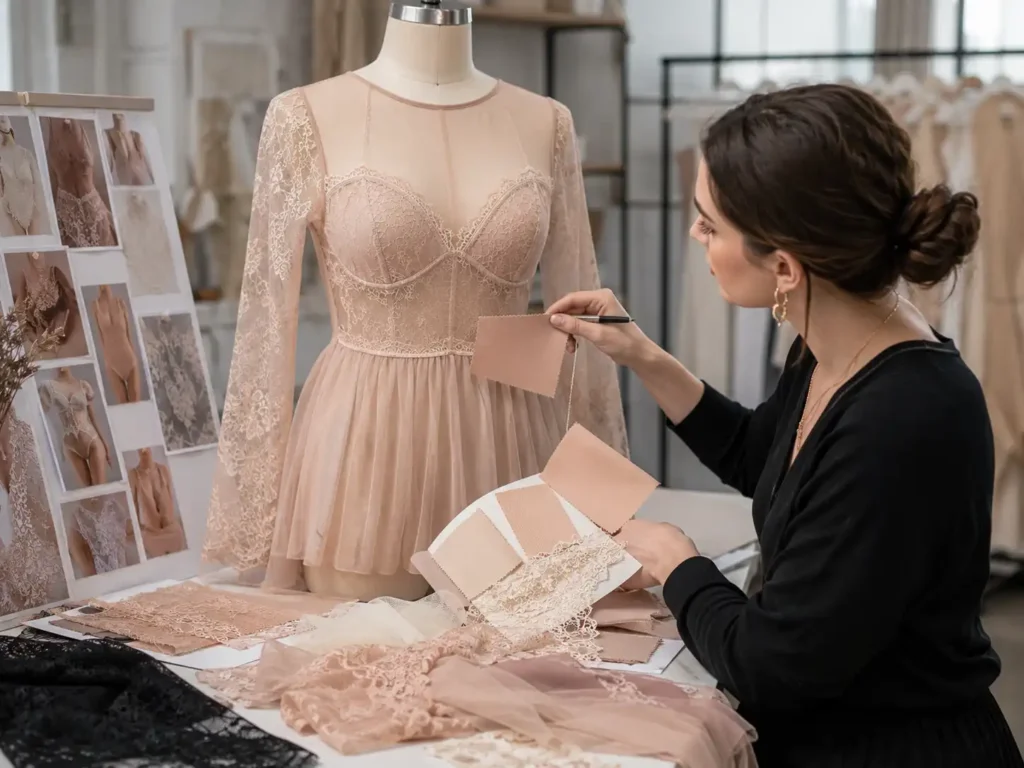
Lace and Mesh Panels
- Review: transparency, lining edge, motif position, seam strength
- Bulk focus: panel symmetry, clean joins, thread match, edge recovery
- Best use: illusion necklines, sleeves, corsets, cut-outs, and evening styles
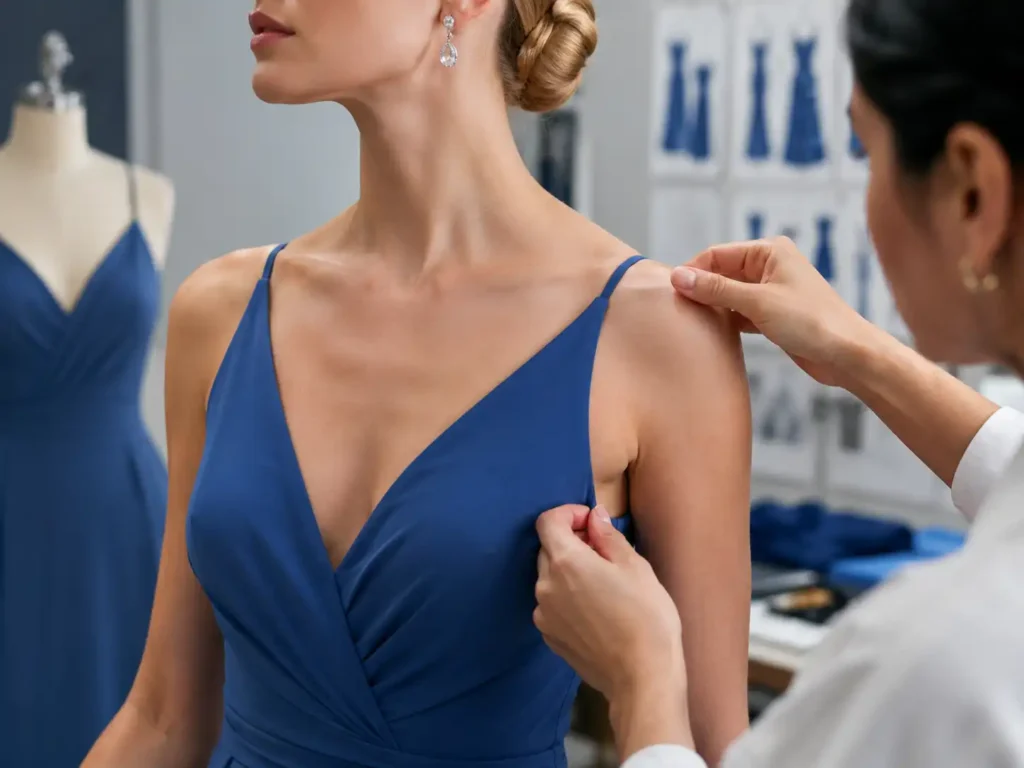
Straps and Necklines
- Review: strap length, neckline depth, armhole, bust coverage, stability
- Bulk focus: left-right consistency, reinforcement, slider direction, clean edges
- Best use: slip, halter, strapless, one-shoulder, and cowl dresses
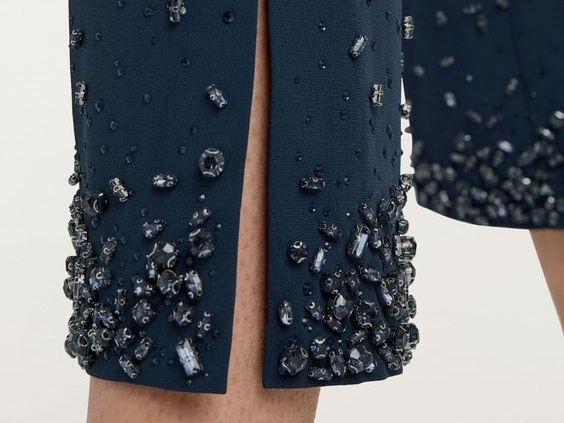
Sequin and Rhinestone Details
- Review: placement map, color, density, lining, skin-contact areas
- Bulk focus: missing pieces, loose threads, seam damage, packing protection
- Best use: holiday, party, cocktail, evening, and statement dresses
Pattern Engineering Behind Better Navy Dress Fit
Dark dresses often look simple in photographs, yet fit depends on fabric behavior, structure, grade rules, and intended wearing occasion. Jinfeng Apparel converts fit comments into updated patterns, measurements, construction notes, and bulk QC points.
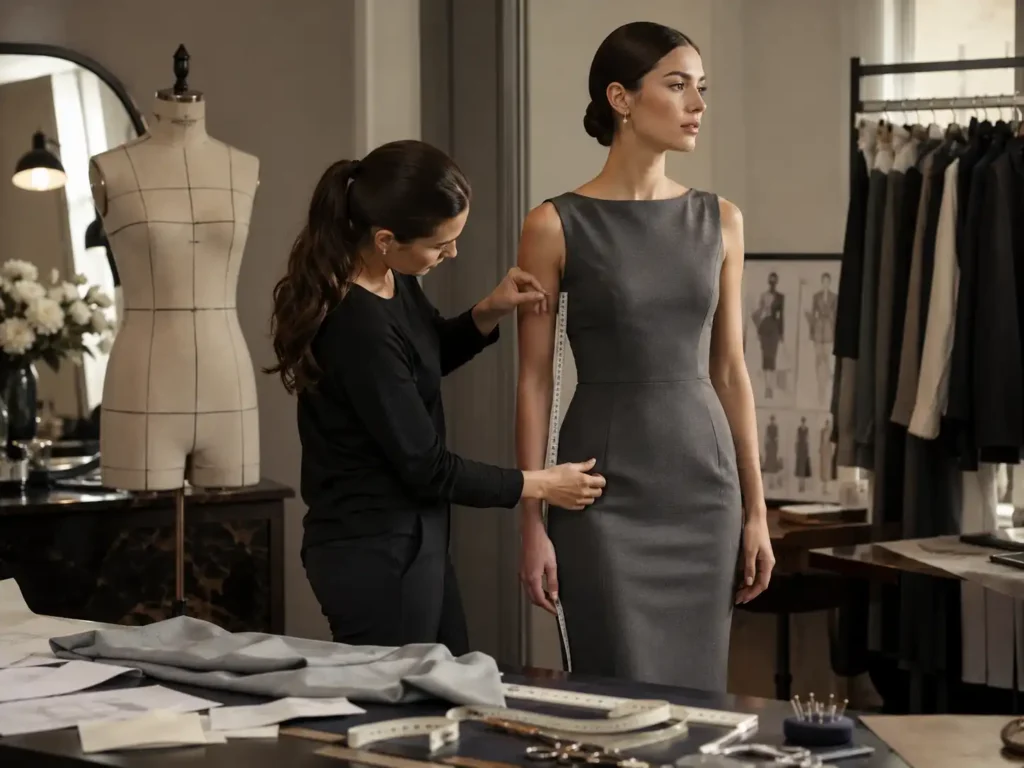
Bust, Waist, and Hip Balance
A fitted navy dress needs more than matching three circumference measurements.
Bust shaping depends on cup position, dart or princess-line placement, neckline, fabric stretch, lining, and support. Waist position affects torso length and visual proportion. Hip ease controls movement, seam tension, and skirt fall.
Bodycon jersey may require negative ease, while woven satin, crepe, lace, and suiting fabrics need positive ease and controlled shaping. Corset dresses add internal structure, making cup spacing, under-bust level, boning, back opening, and waist compression equally important. Fit review should record both garment measurements and on-body observations.
Key measurement points commonly include bust, under-bust, waist, high hip, full hip, shoulder width, front length, back length, and dress length. A base-size approval should then move into grade-rule review. Larger and smaller sizes may need adjusted neckline depth, strap length, cup position, slit height, and shaping rather than simple proportional enlargement.
Sample comments should be converted into pattern revisions and measurement updates. Photo notes alone can leave room for interpretation, so comments are strongest when linked to exact points of measure, target values, and visible fitting references.

Neckline and Strap Stability
Necklines and straps carry both visual and structural responsibility. A slip dress may look correct on a hanger but sit too low once worn. A halter can pull the front neckline upward. A strapless corset can collapse without suitable support. An off-shoulder edge may rise during movement. Each design requires its own balance between pattern, fabric stretch, lining, elastic, cups, boning, and fastening.
Measurement review may include strap length, neckline depth, neckline width, armhole depth, shoulder slope, across-front width, across-back width, and bust-point position. For adjustable straps, slider direction and strap extension also need control. For deep V designs, center-front stabilization and modesty requirements should be agreed before bulk.
Movement testing should include arm lift, walking, sitting, turning, and normal dressing. Mesh, jersey, and satin respond differently under tension. A neckline with acceptable coverage in one fabric may open or stretch in another. Fabric changes during sampling therefore trigger a fit and pattern review rather than a direct substitution.
Bulk QC should measure critical strap and neckline points against the approved size chart. Visual inspection should also check twisting, asymmetry, gaping, puckering, exposed lining, and reinforcement at high-stress points.
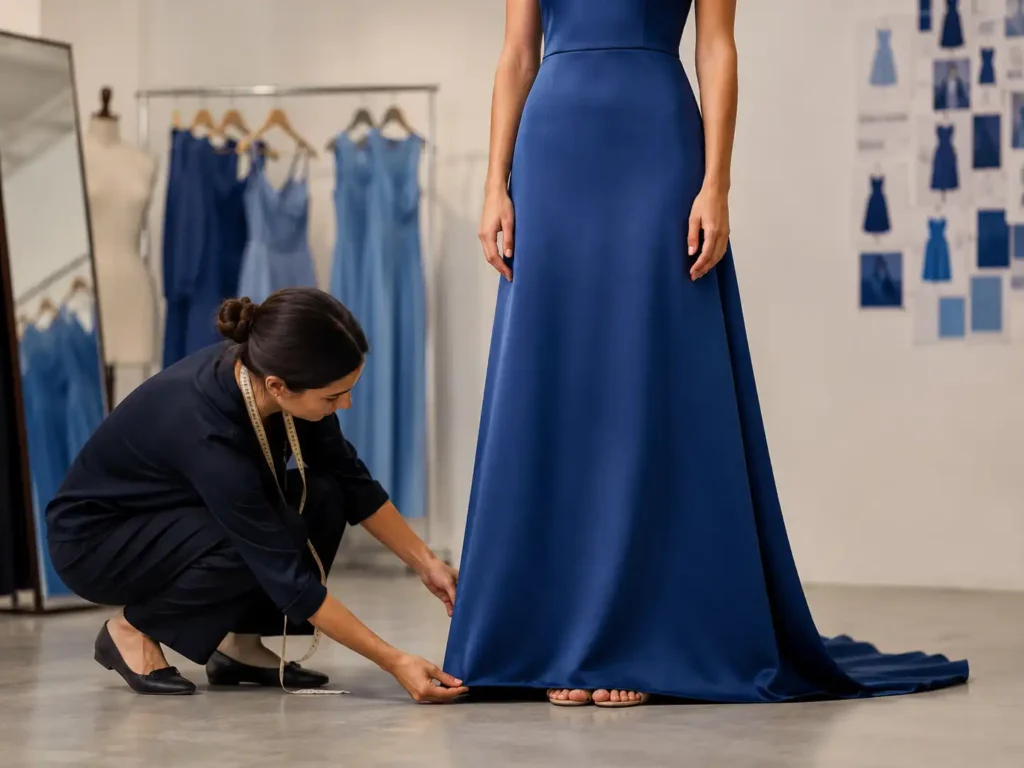
Length, Slits, and Movement
Mini, midi, and maxi dresses require separate proportional standards. Dress length should connect to target market, footwear, occasion, size grading, skirt shape, and hem construction. A mini dress needs seated coverage and stable hems. A midi dress needs a balanced position between knee and ankle. A maxi dress needs floor clearance, heel allowance, and controlled sweep.
Slit height should be measured from a fixed point and reviewed across the size range.
Grading can unintentionally make a slit appear higher or lower relative to body proportion. Overlap, facing, reinforcement, and lining opening also affect security and movement.
Common points of measure include high-point shoulder to hem, center-front length, center-back length, side seam length, slit height, hem width, skirt sweep, and train length when used. Fitted styles may also need walking ease through stretch, vent, pleat, or slit design.
Before PP approval, the final pattern, grade rule, sample measurements, and on-body comments should agree.
Bulk inspection then checks selected critical measurements by size, along with hem level, left-right balance, slit consistency, lining length, and movement-related construction.
Developing a Production-Ready Navy Dress Sample
Sampling establishes color, fabric, fit, construction, workmanship, and cost before bulk commitment. A clear sequence separates first development work from final production approval and keeps every revision traceable.
Project Review and Sample Planning
Development begins with available project inputs: tech pack, reference image, sketch, original garment, line sheet, fabric swatch, trim card, label artwork, target quantity, size range, target price, and launch date.
The team reviews style complexity, fabric direction, navy reference, lining, trims, pattern requirements, MOQ, packing, and known bulk risks.
Styles in a 10-30 piece collection should be prioritized rather than released at once without order. Hero styles, campaign samples, complex structures, shared fabrics, and long-lead trims usually receive early attention. Grouping styles by fabric and construction helps reduce repeated material approval while keeping sample comments organized.
A first sample is commonly planned within 7-15 working days after fabric direction, trims, and construction requirements are sufficiently confirmed. Corset structures, custom-dyed fabrics, exclusive lace, sequins, hand-applied details, or extensive pattern correction need a project-specific schedule. Timing begins from confirmed inputs rather than from the first inquiry date.
Before cutting a sample, pattern and material assumptions should be documented. A visually similar fabric used for early structure testing must be identified clearly if it is not the final bulk-equivalent material.
First Sample, Fit Review, and Revision
The first sample validates design structure, fabric direction, proportion, workmanship route, and initial cost logic. It should not be treated automatically as the final bulk standard. Review may cover color, hand feel, drape, transparency, lining, bust-waist-hip balance, neckline, straps, zipper, sleeves, skirt length, slit, hem, and internal finishing.
Fit feedback works best when supported by measurements, photos from several angles, and precise comments. Jinfeng Apparel records pattern changes, measurement changes, fabric replacements, trim adjustments, sewing-method updates, and approval status. Each revision should become an updated pattern, size chart, material record, or construction note rather than remaining only in chat messages.
A revised sample may be required when changes affect fit, structure, fabric behavior, coverage, or workmanship. Small non-structural comments may sometimes move directly into a later approval stage, but any change affecting bulk risk should be verified before production.
Photo samples and salesman samples can serve launch, campaign, showroom, or sales presentation needs. Their purpose should remain separate from PP approval unless all production materials, measurements, construction, and packing requirements are also locked.
PP Sample and Golden Sample Approval
The PP sample represents the intended bulk standard. Approval should cover final pattern, size chart, fabric, navy shade, lining, trims, construction, labels, packing, and critical QC measurements. Changes after PP approval can affect cost, material availability, schedule, production files, and already prepared components, so late revisions need formal review.
A Golden sample provides a sealed physical reference for production and inspection. Supporting files should include final pattern, grade rule, BOM, approved color reference, trim card, sewing instructions, label placement, packing details, and QC checklist. Production, merchandising, and QC teams should work from the same approved version.
Bulk scheduling is confirmed after PP approval, material readiness, order details, and packing requirements are settled. Regular production planning often falls within a 25-45 day working window, while complex workmanship, custom dyeing, special trims, high style counts, and peak-season allocation require individual review. Shipment timing is then planned around the agreed freight route and destination.

What Gets Locked Before Bulk Production
PP Sample Lock
Material and Color Lock
Golden Sample Handover
Managing Complex Navy Dress Collections
Multi-Style Development
Multi-Color Production
A navy style may also run in black, burgundy, emerald, ivory, or seasonal colors. Every color requires separate material, trim, label, SKU, barcode, and packing control.
MOQ remains calculated by style and color. Color names should match purchase orders, labels, ERP data, barcode files, polybag stickers, carton marks, and packing lists to avoid warehouse errors.
Multi-Size Production
Size management begins with an approved base size and grade rule. Critical measurements, neckline depth, strap length, cup position, slit height, and dress length may need non-linear grading.
Cutting bundles, size labels, polybag stickers, carton ratios, and packing lists should follow the same size code. Extended size ranges may require separate fit review and pattern adjustment.
Bulk Production Organized by Fabric and Construction
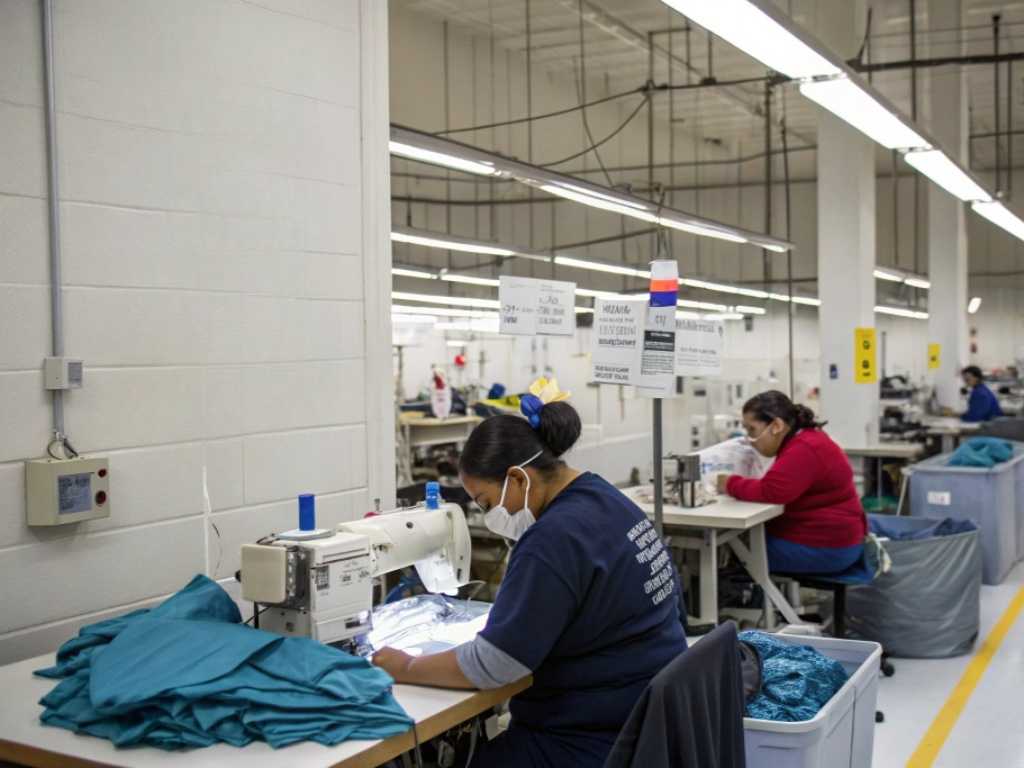
Jinfeng Apparel allocates production by dress structure, material behavior, workmanship level, quantity, and schedule. The aim is not to place every style on one line, but to match approved standards with suitable production experience and controlled QC.
Factory Allocation by Product Risk
Navy satin occasion dresses need production experience in surface protection, grain direction, zipper flatness, pressing, and crease-sensitive packing. Stretch bodycon styles need control over fabric recovery, seam elasticity, measurements, and ruching. Lace and mesh dresses require transparency, motif, lining, and delicate-edge management. Office dresses rely on clean tailoring, stable measurements, pockets, vents, and pressing.
Jinfeng Apparel operates 6 owned women’s fashion factories and works with 10+ long-term production partners. Allocation follows style structure, fabric, workmanship, order volume, and delivery plan. First-time complex styles remain with units experienced in the required construction. Repeat programs can scale after patterns, materials, workmanship, and QC standards have been validated.
Satellite production partners are used as part of a long-term capacity system rather than as uncontrolled temporary outsourcing. Production files, approved samples, material records, and QC requirements remain coordinated through Jinfeng Apparel. Complex risk, material sensitivity, and launch priority determine which styles should not be moved between production units.
Production Preparation Before Cutting
Production preparation confirms purchase order details, quantity by style-color-size, PP approval, final fabric, trims, size chart, label set, packing method, delivery window, and inspection requirements. Material arrival is checked for quantity, shade, hand feel, width, weight, defects, shrinkage risk, stretch, and batch information according to the product.
Fabric relaxation is planned where material behavior requires it. Cutting instructions identify face direction, pile direction, print or motif position, shade groups, and panel matching.
Bundle control keeps style, color, size, and shade information together before sewing.
The production file should include final pattern, grade rule, BOM, sewing method, trim placement, measurement chart, label position, pressing notes, packing instructions, and QC checkpoints.
A dress should not enter bulk merely because fabric has arrived; the technical and commercial records must agree first.
Sewing, Finishing, and Packing Execution
Sewing follows the PP and Golden sample standard. In-line checks review construction, measurements, seam quality, alignment, tension, closures, lining, and product-specific risks before large quantities move forward. Corrections made early reduce rework at final inspection.
Finishing includes thread cleaning, shape review, pressing, appearance inspection, and measurement confirmation. Navy satin, velvet, sequins, and structured dresses need product-specific handling to avoid shine marks, crushing, pressure lines, or decoration damage. Dark fabrics also require close review for lint, chalk, thread contrast, and visible handling marks.
Packing follows approved labels, barcodes, polybag markings, folding method, tissue or protection when required, size-color ratios, carton marks, and warehouse instructions. Final inspection may use AQL sampling, full checks on selected points, client inspection, or nominated third-party inspection according to the project agreement.

Navy Dress Quality Control Checkpoints
Quality control begins with materials and continues through cutting, sewing, measurements, finishing, packing, and shipment review. Navy-specific checks are added to the construction and fit standards of each dress type.
| QC Stage | Navy-Specific Check | Dress Construction Check | Records |
|---|---|---|---|
| Incoming fabric | Shade, undertone, dye lot, roll variation, face direction | Width, weight, defects, stretch, shrinkage risk | Fabric inspection and approval reference |
| Cutting | Shade grouping, satin or velvet direction, panel consistency | Pattern, grain, motif, notches, size bundle | Cutting and bundle control record |
| Sewing in-line | Thread, zipper, lining, elastic color coordination | Seam quality, symmetry, tension, lining, closures | In-line inspection notes |
| Measurement | Size-to-size consistency and approved grade | Bust, waist, hip, length, straps, neckline, slit | Measurement report |
| Garment appearance | Panel shade, lining influence, surface marks | Ruching, drape, hem, pressing, balance | Final garment inspection |
| Private label | Correct navy color name and SKU data | Label content, placement, barcode, size mark | Label and scan verification |
| Packing | Color-size identification and carton separation | Fold, protection, quantity, carton marks | Packing list and carton record |
| Pre-shipment | Bulk shade against approved reference | AQL, client standard, count, documents | Inspection report and shipment files |
Private Label Packing for Navy Dress Collections

Woven Brand Labels
- Files: logo artwork, dimensions, color reference, placement guide
- Risks: wrong shade, reversed logo, visible stitching, inconsistent position
- Control: label sample, PP placement, bulk spot checks
Care and Size Labels
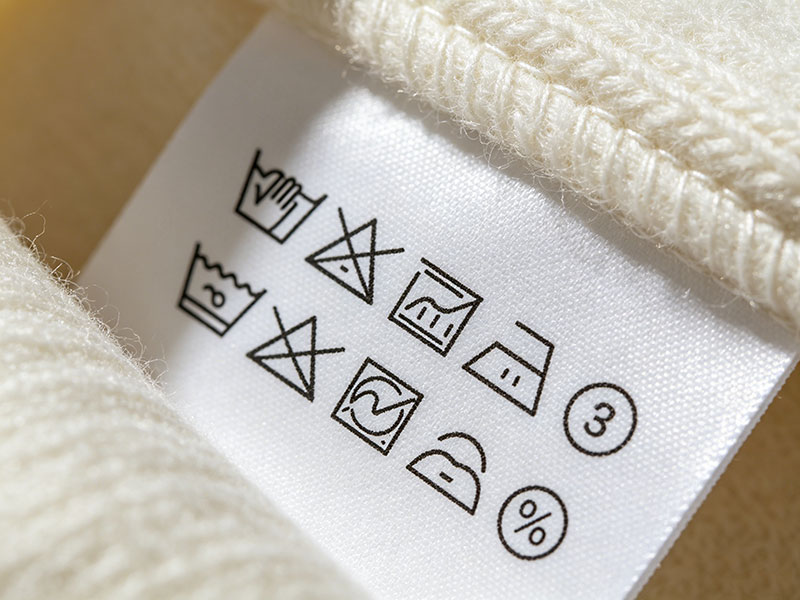
- Files: composition, care symbols, language, size codes, legal text
- Risks: wrong fiber content, wrong size, poor wash durability, mixed labels
- Control: artwork approval, sample wash review when needed, packing checks

Hangtags and Tickets
- Files: print artwork, stock, finish, cord, barcode, placement
- Risks: color error, missing tags, puncture damage, incorrect retail data
- Control: print proof, attachment guide, count verification
Barcode and SKU Control
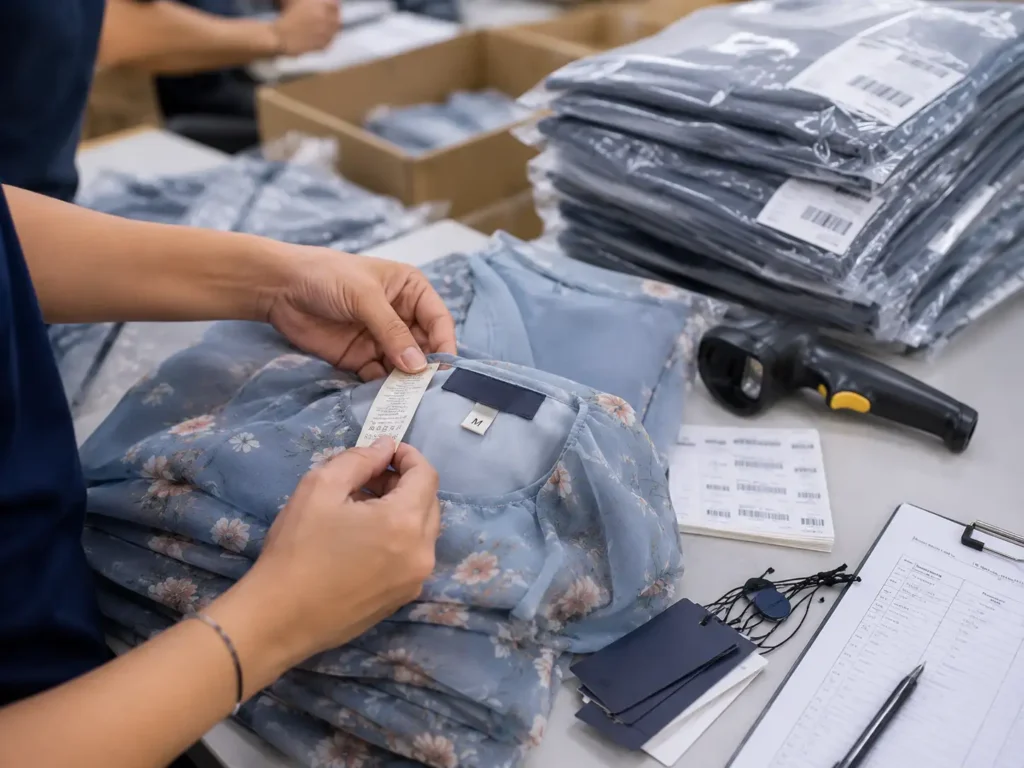
- Files: SKU master, barcode type, product title, color code, size code
- Risks: wrong scan data, repeated code, navy color naming mismatch
- Control: master-data check, scan test, carton reconciliation
Polybag Identification
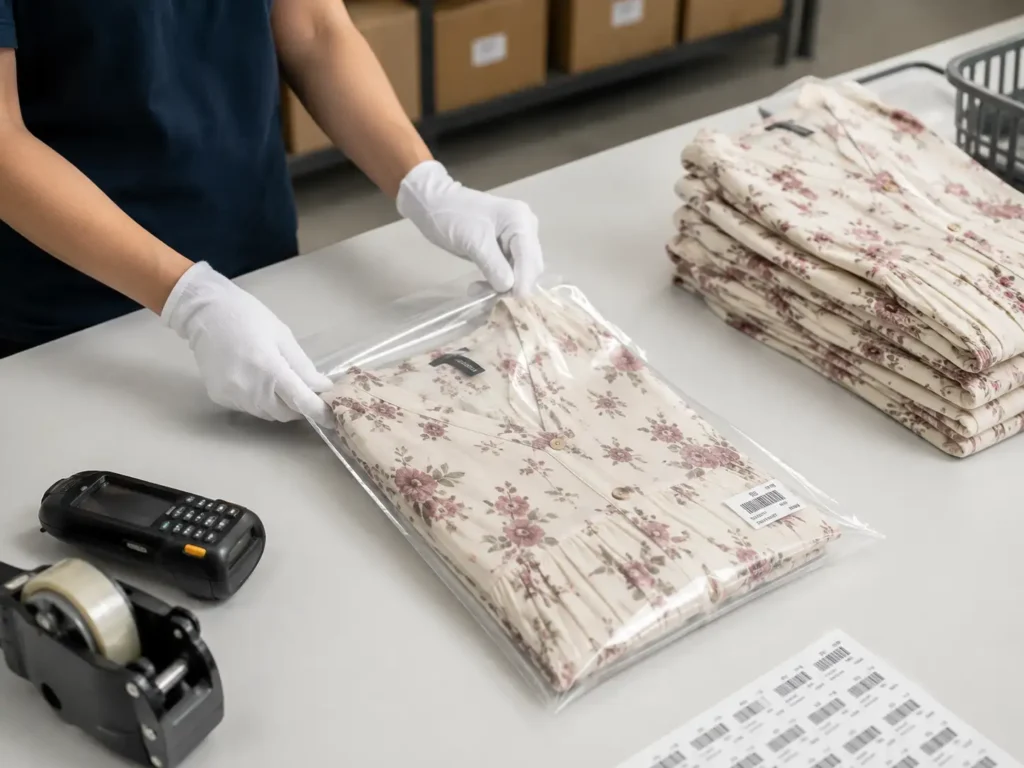
Polybags protect garments and carry receiving information. Size, thickness, warning text, ventilation, recycled-content requirements, sticker position, and folding method should be confirmed. Satin, velvet, sequins, and embellished dresses may require tissue, protective layers, or adjusted folding to reduce pressure marks and surface damage.
- Files: bag size, artwork, warning, sticker, fold guide
- Risks: bag too small, hard creases, wrong sticker, decoration damage
- Control: packing sample, drop or compression review when required

Carton and Export Packing
- Files: carton mark, ratio, warehouse label, destination, shipment split
- Risks: wrong ratio, unclear marks, excessive compression, rejected delivery
- Control: carton sample, packing list check, pre-shipment verification
See Navy Dress Projects Move Through Production

Sample Room Review
- Show navy swatches beside lining and trims
- Show measurement points on a dress sample
- Show pattern corrections or revision notes
- Avoid exposing confidential brand files or unreleased designs

Cutting and Sewing
- Show fabric direction on satin or velvet
- Show style-color-size bundle identification
- Show in-line workmanship inspection
- Keep client names and private labels protected

QC and Packing
- Show approved swatch against bulk garment
- Show size and barcode verification
- Show protective packing for sensitive surfaces
- Show carton and packing-list reconciliation
Material Verification and Export Coordination
Fabric Verification
Project-Based Testing
Export and Freight Support
Protecting Your Navy Dress Designs
Tech Pack Protection
Pattern and Sample Protection
Launch and Order Privacy
Built for Repeat Navy Dress Production
Repeat orders depend on retained records and fresh material verification. Jinfeng Apparel keeps approved patterns, measurements, fabric references, color records, trims, workmanship notes, labels, packing, and QC requirements to support replenishment and seasonal continuation.
Repeat Orders With Controlled References
A reorder begins by confirming style number, prior production standard, quantity, size ratio, required delivery, material availability, and any requested changes. Saved records may include final pattern, grade rule, size chart, fabric supplier, composition, weight, width, stretch, approved navy swatch, dye-lot notes, trim card, sewing instructions, Golden sample, packing method, and QC checklist.
Previous records shorten repeated explanation, but they do not remove the need for verification. Fabric suppliers may change dye lots, price, stock, composition, finish, or minimums. Bulk material should therefore be compared against retained references before production. A replacement fabric may affect drape, stretch, lining, pattern, measurements, cost, and sample requirements.
Quality records from earlier production also support better planning. Recurring issues, measurement observations, packing comments, and warehouse feedback can become updated QC checkpoints for the next order.
Same Style in New Colors
Expanding a navy bestseller into burgundy, emerald, black, ivory, or seasonal colors requires a complete color review. Shell fabric, lining, zipper, thread, elastic, lace, mesh, labels, SKU, barcode, polybag stickers, carton marks, and packing lists must move together.
New color approval may use lab dips, stock swatches, printed references, or physical standards. A new color can alter transparency, shine, visible seam contrast, and even perceived fit. Light colors may require different lining and opacity control, while vivid colors may need stronger colorfastness review. A color change should therefore be treated as a controlled product update rather than a simple data edit.
When fabric remains unchanged apart from color, the existing pattern may be reusable after material confirmation. When composition, weight, stretch, finish, or lining changes, fit and sample status should be reviewed again.
Seasonal Collection Continuation
Long-term programs often grow from one navy hero style into coordinated seasonal collections. A mature planning route may include 10-30 styles, shared fabric groups, repeat silhouettes, new colorways, complementary skirts or sets, campaign samples, sales samples, and split delivery dates.
Collection management can group styles by fabric, production risk, price level, launch priority, and expected reorder potential. Shared approved materials may improve color coordination and sourcing efficiency, while separate construction tracks protect complex styles from oversimplified production planning.
Jinfeng Apparel supports multi-style development, multi-batch delivery, bestseller replenishment, same-pattern color extensions, same-pattern fabric updates, and quarterly collection continuation. Each new season begins with a review of retained records, current material availability, revised commercial goals, and updated delivery dates.

Navy Dress Manufacturing Case Studies
The following anonymized cases represent different navy dress development programs, covering occasionwear collections, fitted fashion projects and large private-label seasonal productions. Brand identities, original designs and commercial information remain confidential.
Case 1: Navy Occasionwear and Wedding Guest Collection
Project Scope
A premium occasionwear brand developed a navy dress collection for wedding guest, formal dinner, cocktail and evening markets.
- Collection size: 22 dress styles
- Product categories: navy satin dresses, chiffon maxi dresses, lace midi dresses, velvet evening dresses and elegant cocktail styles
- Materials: matte satin, stretch satin, chiffon, lace, velvet and structured lining
- Construction details: slip silhouettes, draped necklines, one-shoulder dresses, fitted waists and flowing skirts
- Requirement: refined navy appearance with consistent color across multiple fabrics
Development Challenges
The collection required careful control because navy changes visually depending on fabric surface.
Key challenges included:
- Maintaining navy consistency between satin, chiffon, lace and velvet
- Preventing lining from changing the final shade
- Controlling satin reflection under photography lighting
- Managing velvet pile direction
- Maintaining elegant proportions across multiple sizes
Manufacturing Approach
The development team created a fabric-specific navy approval system.
Key controls included:
- Physical navy reference approval
- Fabric swatch comparison
- Lab dip review when required
- Shell and lining coordination
- PP sample approval before bulk production
Additional attention was given to:
- Draped neckline stability
- Hem balance
- Lace motif placement
- Velvet surface protection
- Final garment presentation
Manufacturing Value
The collection achieved a premium navy occasionwear identity through coordinated control of color, fabric, pattern and finishing.
Case 2: Navy Bodycon and Premium Ecommerce Fashion Collection
Project Scope
A premium ecommerce fashion brand developed a navy collection focused on fitted silhouettes, partywear and contemporary fashion positioning.
- Collection size: 18 dress styles
- Product categories: navy bodycon dresses, ponte midi dresses, mesh dresses, corset minis and fitted satin styles
- Materials: jersey, ponte, power mesh, stretch satin, lace and structured lining
- Construction details: body shaping, ruching, cut-outs, corset panels and fitted silhouettes
- Requirement: strong photo performance with reliable commercial repeatability
Development Challenges
The main challenge was maintaining a clean navy appearance while controlling fitted construction.
Key risks included:
- Stretch changing the visible navy tone
- Transparency appearing in mesh areas
- Side-seam twisting
- Lining restricting movement
- Corset structures showing internal shadows
Manufacturing Approach
The project focused on fit engineering and material performance.
Key controls included:
- Testing stretch direction and recovery
- Reviewing bust-waist-hip balance
- Confirming mesh coverage under tension
- Developing corset support systems
- Adjusting negative ease according to fabric behavior
Production controls included:
- Measurement inspection
- Seam stability checks
- Zipper flatness review
- Ruching consistency checks
- Final appearance inspection
Manufacturing Value
The collection delivered a modern navy fashion direction while maintaining stable fit, comfort and bulk production quality.
Case 3: Large Private Label Navy Dress Collection Program
Project Scope
An established fashion brand required a complete navy dress assortment covering multiple silhouettes, fabrics and retail occasions.
- Collection size: 30 dress styles
- Production scale: 80,000+ pieces
- Product categories: navy mini dresses, midi dresses, maxi dresses, bodycon dresses, corset dresses, office dresses, wedding guest dresses and evening styles
- Materials: satin, chiffon, lace, mesh, jersey, ponte, velvet and sequin fabrics
- Requirement: consistent quality across multiple SKUs, sizes and shipment batches
Development Challenges
The program required coordination across different navy fabric systems.
Major challenges included:
- Maintaining consistent navy direction across materials
- Managing different fabric surface effects
- Controlling lining requirements
- Maintaining size grading across silhouettes
- Coordinating private-label packing
Manufacturing Approach
The collection was divided according to product structure and production risk.
Navy Satin and Formal Group
Focused on:
- Satin slip dresses
- Evening silhouettes
- Shine direction control
- Pressing protection
Navy Soft Occasion Group
Focused on:
- Chiffon and lace dresses
- Wedding guest styles
- Lining coordination
- Transparency control
Manufacturing Value
The program demonstrated that large navy dress collections require both production capacity and detailed control of color, fabric, fit, quality and retail delivery.
Frequently Asked Questions About Navy Dress Manufacturing
MOQ starts from 200 pcs per style/color. The quantity applies to each style and each color rather than the total collection quantity. Custom dyeing, special lace, sequins, logo hardware, exclusive trims, printed packaging, or extended size ranges may carry separate supplier minimums.
Yes. A Pantone TCX or TPG reference, approved fabric swatch, original garment, or previous production cutting can guide development. Physical references are preferred for final approval because screen colors vary. Custom-dyed fabric may require lab dips and bulk shade review.
Lab dips can be arranged when the selected fabric and supplier support custom dyeing. Timing, cost, and minimums depend on fiber, fabric construction, color, supplier, and quantity. Stock navy fabrics follow swatch and batch approval rather than a custom lab dip route.
Approved physical swatches, bulk fabric comparison, dye-lot records, roll or shade grouping, cutting separation, component matching, garment review, and retained reorder records form the main control route. A reorder receives a fresh material check because a repeated color name alone cannot guarantee an identical result.
Yes. Components can be reviewed together through a trim card or approval set. Satin, chiffon, lace, mesh, jersey, and velvet often need different navy depths, so coordination aims for a balanced finished garment rather than forcing every component to look identical in isolation.
Common options include satin, stretch satin, chiffon, lace, mesh, power mesh, jersey, rib knit, ponte, crepe, velvet, sequin fabric, organza, tulle, rayon, viscose, linen, denim, suiting fabric, cotton blends, polyester blends, and spandex blends. Selection depends on silhouette, structure, drape, stretch, transparency, care, cost, and launch season.
Yes. Reference images can support style analysis, but stronger briefs also include target fabric, quantity, size range, navy reference, target market, label requirements, and launch date. Complex structures may need additional measurements, an original garment, or construction details before accurate sampling.
A first sample is commonly planned within 7-15 working days after fabric direction, trims, and construction requirements are sufficiently confirmed. Custom dyeing, corsetry, lace placement, sequins, hand-applied details, or several linked revisions require a project-specific schedule.
Yes. Private label support can cover woven labels, size labels, care labels, hangtags, barcode stickers, SKU labels, polybags, carton marks, size-color ratios, warehouse labels, and packing lists. Artwork, data, placement, and packing requirements should be approved before bulk.
Bulk timing is confirmed after PP approval, material readiness, order quantity, size-color breakdown, trims, labels, packing, inspection requirements, and factory allocation are settled. Regular production planning often falls within a 25-45 working day window, while complex materials, high style counts, and peak-season schedules require individual review.
Yes. Jinfeng Apparel supports multi-style development and production. Each style keeps its own pattern, size chart, sample status, fabric, trim, quantity, packing, and QC record while sharing an agreed navy color story where suitable.
Approved patterns, grade rules, measurements, fabric references, navy swatches, trim cards, sewing instructions, Golden samples, packing details, and QC records are retained. Before reordering, current bulk fabric and components are rechecked against retained standards, and any material change is assessed for fit, color, cost, and sample impact.

Start Your Navy Dress Manufacturing Project
Send Jinfeng Apparel the information already available, even when the project is still moving through internal approval.
Kelly will organize the files for an initial review covering style complexity, navy color direction, fabric and lining, pattern requirements, MOQ, sample route, private labels, packing, production risk, and likely next steps. More complete information leads to a more accurate development and quotation plan.
Please include:
- Reference images, tech packs, sketches, line sheets, or an original sample
- Target quantity for each style and each color
- Pantone reference or approved physical navy swatch
- Preferred fabric, lining, trims, and design details
- Size range, base-size measurements, and grade rules when available
- Brand labels, care labels, hangtags, barcodes, and packing requirements
- Target market, launch date, delivery destination, and freight preference
- Any inspection, testing, NDA, warehouse, or retailer requirements