
Multi-Style Womenswear Manufacturer for Global Brands
Coordinated development and production for diverse dress collections, multi-category assortments, seasonal launches, and repeat-order programs.
- Program scale: Structured for 10-30 styles and 20,000-80,000 pieces per brand order, subject to style mix, materials, color count, and delivery plan.
- Product breadth: Dresses, skirts, jumpsuits, matching sets, fashion tops, occasionwear, partywear, resortwear, and private-label collections.
- Production network: 6 owned women’s fashion factories, 10+ long-term satellite partners, 18+ sewing lines, and 6+ flexible production lines.
- Development depth: 2 sample rooms, 7+ senior pattern makers, and 20+ sample machinists for parallel style development.
- Execution control: 12+ merchandisers, 15+ QC inspectors, and 30+ finishing and packing workers support project tracking through shipment.
A Manufacturing System Built for Multi-Style Programs
Portfolio Scope
Program Scale
Flexible Allocation
Development Capacity
Quality Ownership
Global Delivery
Who Gains the Most from Multi-Style Production
Global Fashion Brands
Brand Groups
Seasonal Merchandising Teams
A Product Range Designed for Complete Womenswear Collections

Mini and Midi Dresses

Maxi and Occasion Dresses

Party and Evening Dresses

Bodycon and Corset Styles

Satin and Slip Dresses

Mesh and Lace Dresses

Sequin and Embellished Styles

Jumpsuits and Rompers

Matching Sets

Skirts and Fashion Tops

Resort and Vacation Styles

Private Label Capsules
Build One Collection Without Losing Product Discipline
A successful mixed assortment begins with commercial structure, not production speed. Style architecture, technical risk, and launch priority are defined before patterns and materials start moving in different directions.
Start With a Style Architecture
Every program begins by separating the assortment into product families, construction levels, fabric groups, color plans, size ranges, and commercial priorities. A 20-style collection may contain six fitted woven dresses, four satin occasion styles, three mesh or lace pieces, two jumpsuits, three matching sets, and two fashion tops. Treating all twenty styles as one technical group creates inaccurate costing, sample congestion, and poor production routing.
The line sheet is converted into a working style matrix. Each style receives a clear reference for silhouette, target fabric, lining, closure, trims, size range, color count, order quantity, target launch, sample priority, and known risk. Shared components are identified where they genuinely reduce complexity. Several styles may use one lining quality, zipper family, care-label format, or carton standard, while patterns and sewing instructions remain style-specific.
Commercial importance also enters the matrix. Hero styles for campaign photography or pre-sale need earlier samples. Core commercial styles may deserve larger size-set review because they carry more units. Experimental fashion pieces can remain in a controlled development path until fit, material, and construction risks are resolved. The result is not a rigid template; it is a visible production map that prevents one difficult style from obscuring the rest of the collection.
Separate Risk Before Sampling
Risk grouping protects time and cost. A simple knit skirt with stock fabric does not belong in the same sample schedule as a boned corset dress using custom-dyed satin, a lace overlay, underwire, and special hardware. Jinfeng Apparel reviews structure, fabric availability, trim dependency, pattern complexity, grading difficulty, finishing sensitivity, and likely bulk risks before sample priorities are assigned.
High-risk styles may require fabric swatches, lining trials, trim samples, or a partial construction test before a full sample. Mesh transparency may need layered combinations. Satin can require a grain and pressing review. Sequin fabric may need seam testing and skin-contact protection. Jumpsuits may require torso and rise review before decorative details are finalized. Early technical decisions reduce repeated full-sample cycles.
Risk separation also improves quotation accuracy. Fabric consumption, trim minimums, sewing time, pressing, inspection, wastage, and packing protection vary widely across a mixed assortment. A line sheet with one average target price cannot replace style-level cost analysis. Where budget pressure exists, Jinfeng Apparel can review fabric substitutes, construction simplification, trim alternatives, color consolidation, or order-ratio changes without weakening the collection’s intended appearance.
Lock Commercial Priorities
Launch dates, photography, market appointments, pre-sale windows, retail delivery, and warehouse cutoffs shape the development calendar. Jinfeng Apparel works backward from those milestones. Photo-ready samples can be prioritized for campaign styles, while fit-critical pieces receive more review time. PP approval must remain ahead of bulk material release and production loading.
Priority is documented rather than handled through scattered messages. A working calendar identifies style review, fabric direction, first sample, fitting, revision, PP sample, bulk material arrival, cutting, sewing, QC, packing, inspection, and shipment. When a fabric is delayed or a style requires an extra revision, the effect on launch and production can be evaluated immediately. Lower-risk styles may continue while the affected style remains in development.
A global collection may also require two shipment waves. Campaign and hero SKUs can move first by air, while the main stock follows by sea. Another program may send all goods together after one final inspection. Decisions depend on volume, sales timing, freight budget, and warehouse requirements. Clear commercial priorities allow production and logistics to support the assortment strategy rather than simply react to the last urgent message.

Design Control Across Different Silhouettes and Constructions
Design intent can disappear when pattern logic, internal structure, seam engineering, and material behavior are not controlled separately. Each silhouette needs its own route from reference to approved production standard.
Pattern Logic Changes by Product
A pattern is not a flat copy of a reference image. It translates visual proportion into bust shaping, waist placement, hip balance, neckline depth, armhole shape, strap position, rise, crotch length, hem sweep, and movement allowance. Those decisions change with every product type.
A bodycon dress relies on negative ease, stretch percentage, recovery, and seam tension. A satin slip dress may require bias behavior, bust coverage, neckline stability, and strap adjustment. A corset dress needs cup placement, under-bust proportion, boning channels, closure tension, and waist shaping. A jumpsuit combines upper-body and lower-body balance, so torso length and rise become as important as bust and hip measurements. A matching set must retain proportion between two independently graded garments.
Seven or more senior pattern makers support style allocation by product structure. Initial review identifies the base size, body measurements, finished-garment measurements, fabric behavior, and brand fit preference. Pattern corrections are recorded after fitting rather than left in informal chat. The approved pattern is linked to the final sample, measurement chart, grade rule, and sewing instruction before bulk. Such discipline protects both the creative silhouette and the reproducibility required for thousands of garments.
Construction Details Need Separate Standards
Construction creates the difference between a garment that only looks good in a photo and one that performs through fitting, production, packing, transport, and wear. Each product receives a construction review covering seam type, seam allowance, edge finish, lining attachment, closure, reinforcement, pressing, and visible symmetry.
Light chiffon may need narrow hems, controlled seam handling, and careful tension. Satin requires low-mark handling, clean zipper installation, controlled pressing, and smooth lining attachment. Mesh needs reinforcement at stress points and attention to seam visibility. Lace may require motif placement or edge use. Corset styles may combine bra cups, boning, underwire, hook-and-eye, gripper tape, or structured lining. Sequin pieces need protected seam allowances and surface handling. Jumpsuits need reinforced crotch and closure areas without adding bulk.
A technical pack can define many details, but factory review still matters. Materials and construction can conflict. A requested seam may show through a transparent mesh. A heavy zipper can distort a lightweight satin. A rigid trim can reduce comfort at a fitted neckline. Jinfeng Apparel flags such conflicts during development and proposes alternatives for approval. The goal is not to redesign the brand’s idea; it is to make the intended result stable enough for repeatable production.
Design Intent Must Survive Bulk Production
The approved sample becomes useful only when its decisions are transferred into production. Before bulk, Jinfeng Apparel confirms the PP sample, pattern, measurement chart, grade rule, fabric and lining, colors, trims, BOM, sewing method, pressing standard, labels, packing, and inspection requirements. Unconfirmed elements remain outside formal production.
Critical design points are translated into production checkpoints. A ruched dress may require consistent gathering length and side-seam matching. A one-shoulder style needs neckline stability and strap placement. A high slit requires a defined height and reinforcement. A corset bodice needs cup symmetry and boning position. A printed dress needs placement and panel matching rules. A set needs color-batch and component pairing control.
Inline inspection checks whether the line is reproducing the approved standard before large quantities are completed. Measurement or appearance drift is corrected at the production stage, not discovered only after packing. Final inspection then compares garment appearance, measurements, labels, and packing against approved references. Design control is therefore a chain of recorded decisions rather than a promise to “make it like the picture.”

Fabric Control Across a Mixed Womenswear Collection
Fabric choice changes fit, construction, cost, sample behavior, QC, and packing. Jinfeng Apparel reviews each material family against the intended silhouette and sales use before bulk material approval.
Fabric Group | Typical Styles | Main Control Points | Common Bulk Risk |
Satin / Stretch Satin | Slip, corset, occasion, evening | Shine direction, grain, shade, snagging, seam puckering, pressing, lining | Dye-lot difference, needle marks, crushing |
Chiffon / Soft Wovens | Layered dresses, sleeves, skirts | Transparency, drape, narrow hems, seam tension, lining coverage | Fraying, seam slippage, uneven hems |
Mesh / Power Mesh | Bodycon, cut-out, lined dresses | Stretch direction, recovery, transparency, reinforcement, edge finish | Runs, holes, distorted panels, exposed seams |
Lace | Occasion, evening, corset, overlays | Motif placement, edge use, lining color, seam visibility, hand feel | Motif mismatch, broken yarns, shade mismatch |
Sequin Fabric | Party, evening, statement pieces | Sequin direction, seam clearance, skin protection, repair method, packing | Missing sequins, abrasion, crushing, weight distortion |
Jersey / Rib Knit | Bodycon, casual, tops, sets | GSM, stretch, recovery, shrinkage, torque, seam tension | Growth, twisting, measurement instability |
Ponte / Crepe | Structured dresses, skirts, office styles | Weight, recovery, drape, crease behavior, pressing | Panel distortion, shine marks, shade variation |
Velvet | Evening, party, seasonal | Pile direction, shade, marking, seam handling, pressing | Crushing, directional color change, pressure marks |
Rayon / Viscose / Linen | Resort, vacation, relaxed dresses | Shrinkage, wrinkle, drape, colorfastness, seam support | Dimensional change, deep creasing, seam slippage |
Denim / Suiting | Structured skirts, dresses, sets | Weight, wash or finish, topstitching, shrinkage, pressing | Color transfer, stiffness variation, seam bulk |
Fit, Grading, and Size Consistency Across Styles
A multi-style range cannot rely on one generic grading rule. Base fit, finished measurements, fabric stretch, silhouette, and wearing ease are reviewed at product level before the size range is released.
Build the Base Size Before Extending the Range
The base size establishes proportion and brand fit. Jinfeng Apparel reviews body measurements, finished-garment measurements, preferred ease, fabric stretch, lining, closure, and intended wearing occasion. The same bust measurement can behave very differently in a woven satin corset dress, a power-mesh bodycon style, a loose chiffon maxi, and a tailored jumpsuit.
Fit review checks more than bust, waist, and hip. Depending on the garment, measurements can include shoulder, armhole, neckline depth, under-bust, cup position, front and back length, strap length, waist placement, high hip, low hip, slit height, skirt sweep, torso length, rise, crotch depth, inseam, thigh, sleeve length, and hem width. Garment balance and movement are reviewed alongside numerical measurements.
Any correction is linked to the pattern and sample record. Moving a waist seam, changing a cup, shortening a torso, or adjusting a slit can affect several connected measurements. Recording those links prevents a fit correction from disappearing when a revised sample or PP sample is made. Base-size approval therefore creates the reference point for grading, production measurement, and repeat-order continuity.
Apply Product-Specific Grade Rules
Grading extends the approved base without flattening the design. A fitted dress may need controlled increments through bust, waist, and hip while preserving neckline, cup, strap, and length relationships. A relaxed maxi may require more attention to shoulder, armhole, body width, and sweep. A jumpsuit needs coordinated changes through torso, rise, inseam, and leg shape. A two-piece set requires separate grading for top and bottom, plus a clear size-pairing rule.
Jinfeng Apparel can work with a brand-provided grade rule or assist with development from the approved base size and intended market. Size ranges are confirmed per style rather than advertised as one universal limit. Extended sizing may require additional fit samples, separate blocks, pattern adjustments, or material review because stretch, support, and visual proportion do not always scale evenly.
Grade approval is connected to measurement tolerance. Tolerances can differ by point of measurement and fabric behavior. A narrow strap, cup position, slit height, or fitted waist may require tighter attention than a wide sweep. Final tolerances are agreed through the tech pack, quality manual, or project-specific measurement chart before bulk inspection begins.
Measure Samples and Bulk Against One Standard
Sample measurement verifies whether pattern changes produced the intended result. Each sample is measured against the active size chart and version. Out-of-tolerance points are reviewed alongside fit comments so the correction addresses the cause rather than only changing one number.
Before bulk, the approved measurement chart, grade rule, tolerance, PP sample, and pattern version are released together. Cutting and sewing checks focus on high-risk points for the product. Inline measurement identifies drift early, especially on stretch garments, bias-cut pieces, fitted waists, jumpsuit torsos, and styles with complex internal structure.
Final inspection confirms selected garment measurements by size, color, and production batch according to the agreed inspection plan. Measurement records also support repeat orders. A reorder still requires fabric-batch and construction review, but retained pattern and measurement files reduce unnecessary rebuilding. Consistency comes from controlled references, not from assuming that an old style will automatically reproduce itself.
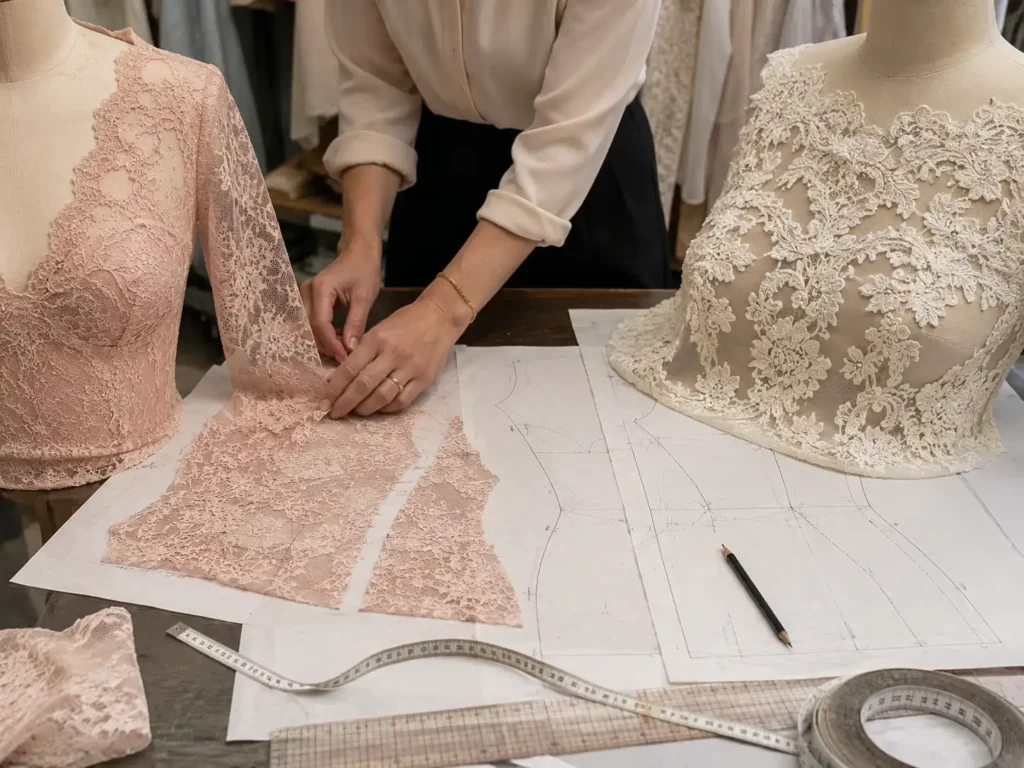
A Realistic Multi-Style Development and Production Calendar
Program timing depends on style complexity, material availability, trim development, revision rounds, quantity, packing, and freight. The ranges below are planning references used after the assortment has been reviewed, not fixed promises for every style.
| Stage | Planning Range | Main Dependency |
|---|---|---|
| Style and risk review | 3-5 working days | Line sheet, tech packs, quantity, colors, size plan, launch date |
| Fabric and trim direction | 5-12 working days | Stock status, swatches, lab dips, custom development, supplier minimums |
| First sample – standard style | 10-15 working days | Materials available and pattern direction confirmed |
| First sample – complex style | 15-25 working days | Corset, lace, mesh, sequin, cut-out, or complex jumpsuit construction |
| Revision sample | 7-15 working days per round | Comments consolidated and required materials available |
| PP / size-set approval | 7-12 working days | Final pattern, measurements, fabric, trims, workmanship, labels |
| Bulk material booking | 10-25 working days | Can overlap with late development when risk is controlled |
| Bulk production | 30-50 days | Starts after required approvals, materials, BOM, and line booking |
| Final QC and packing | 5-10 working days | AQL or agreed inspection, label and carton verification |
| Freight | Route-dependent | Express, air, sea, split shipment, or client-appointed forwarder |
Sampling Control for Ten to Thirty Style Programs
Priority Matrix
First Sample
Fit Review
Revision Record
PP Approval
Golden Sample
Workmanship Standards That Change With Every Garment
Workmanship is not one generic quality level. Lightweight fabrics, fitted structures, decorative surfaces, and retail presentation each require a different set of sewing, finishing, pressing, and handling rules.
Clean Finishing for Lightweight and Fluid Fabrics
Chiffon, satin, rayon, viscose, organza, tulle, and other lightweight materials reveal uneven tension, distorted seams, bulky edges, and poor pressing. Construction begins with the correct seam allowance, needle and thread choice, feeding control, edge finish, lining method, and hem technique for the selected fabric.
Chiffon may require narrow hems, clean internal seams, stable shoulder or neckline areas, and careful control of seam slippage. Satin requires smooth zipper insertion, balanced side seams, controlled pressing, and minimal needle marking. Bias-cut styles need hanging and balance review because the fabric can grow and twist after sewing. Transparent materials require deliberate seam placement and lining coverage rather than relying on later finishing to hide construction.
Inspection focuses on pucker, skipped stitches, seam grin, visible thread tension, uneven hems, twisted panels, shine marks, stains, snags, and lining distortion. Pressing is treated as part of workmanship, not a cosmetic last step. Packing also follows the material: satin and embellished surfaces need protection from abrasion and hard folds, while soft layered dresses need folds that preserve the intended drape.
Structural Control for Fitted and Engineered Styles
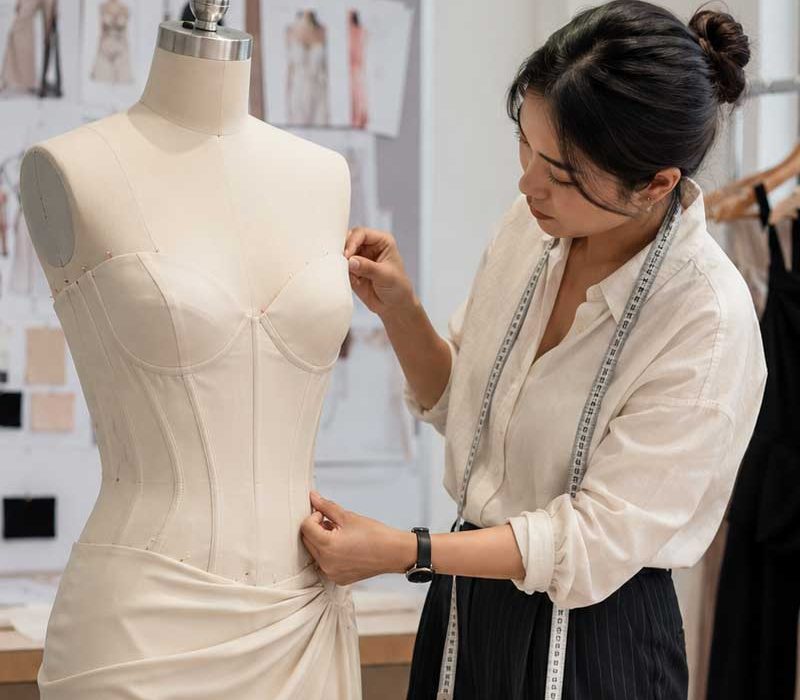
Corset, bodycon, strapless, cut-out, one-shoulder, and fitted occasion styles depend on internal engineering. Bra cups, boning, underwire, gripper tape, elastic, hooks, zippers, structured lining, and reinforcement need to work together without creating discomfort, asymmetry, or visible distortion.
Sampling verifies cup shape, under-bust placement, boning position, waist tension, neckline security, zipper flatness, and movement. A stronger component is not always better. Excessively rigid boning can distort the shell, an unsuitable cup can change the neckline, and a heavy zipper can pull lightweight fabric. Material, construction, and fit are reviewed as one system.
Bulk workmanship checkpoints include left-right symmetry, seam alignment, cup consistency, boning length, closure quality, elastic recovery, strap security, and clean internal finishing. Fitted garments also require measurement discipline because small deviations can create visible fit problems. Inline review catches tension or alignment drift before a large quantity is completed. The approved sample and construction notes remain available to sewing and QC teams throughout production.
Surface Protection for Lace, Sequin, and Embellishment
controlled joins, and matching between shell and lining. Sequin fabric may need clear seam allowances, local sequin removal, hand repair, reinforcement, and protective backing. Rhinestones, bead chains, and trims require approved placement, attachment, and repair standards.
Workmanship review checks missing decoration, loose thread, sharp edges, uneven placement, exposed adhesive where applicable, damaged motifs, seam abrasion, and distortion caused by decoration weight. Skin-contact areas may require lining, binding, or local protection. A beautiful surface that scratches, sheds, or breaks during packing is not production-ready.
Packing is part of the technical solution. Decorated panels should not rub directly against each other. Fold positions avoid heavy embellishment where possible. Tissue, protective bags, or individual wrapping can be reviewed by project. Carton compression and garment weight are considered so the surface remains presentable when goods reach a warehouse, studio, retail location, or fulfillment center.
Production Allocation Without Mixing Standards
Owned Factories
Satellite Partners
Sewing Lines
Flexible Lines
Style Routing
Capacity Planning
Quality Control From Fabric Arrival to Packed Cartons
Quality control starts before cutting and continues through sewing, finishing, labels, packing, and shipment files. Inspection points are tied to the approved product and the brand’s own quality requirements where provided.
Incoming Material and Cutting Control
Bulk risk begins with materials. Main fabric, lining, color, weight, stretch, transparency, surface condition, batch, and shrinkage considerations are reviewed before cutting according to the project. Trims such as zippers, cups, boning, underwire, buttons, lace, elastic, hardware, labels, and packaging are checked against approved references.
Fabric relaxation or preparation is arranged where the material requires it. Cutting plans account for grain, nap, shine direction, print placement, lace motif, sequin direction, and shade grouping. Cut-panel inspection identifies visible defects, wrong direction, incorrect placement, mismatched pairs, and major measurement problems before sewing adds more value to a defective component.
For mixed assortments, incoming and cutting checks are style-specific. A satin slip dress needs directional consistency; a velvet style needs pile control; a printed dress may require placement rules; a corset needs accurate paired components; a set needs shell and lining batches that remain coordinated. Early control prevents material errors from spreading through multiple lines and thousands of garments.
Sewing, Inline, and Measurement Control
Production teams work from the approved PP sample, pattern, measurement chart, BOM, sewing instruction, label requirement, and critical QC points. Inline inspection looks at workmanship and measurements while correction is still possible. Problems can include seam puckering, skipped stitches, zipper bulging, lining exposure, asymmetric cups, incorrect slit height, loose embellishment, distorted gathering, or measurement drift.
Findings are classified, communicated to production, corrected, and rechecked. The objective is a feedback loop rather than a final report after completion. High-volume styles and technically sensitive styles can receive focused checkpoints according to the agreed plan. Brand quality manuals, defect classifications, tolerances, and inspection requirements can be reviewed before production.
Fifteen or more QC inspectors support material, process, garment, and packing checks across the manufacturing system. The team size is not a substitute for standards; each inspector needs an approved reference and clear check points. Records help identify recurring causes and protect later batches or repeat orders from the same issue.
Final Inspection and AQL Control
Final inspection reviews garment appearance, measurements, workmanship, color, fabric surface, trims, labels, pressing, and packing against the approved standard. AQL or another agreed inspection method can be applied according to the brand requirement, order structure, defect classification, and inspection level. Third-party inspection by a nominated organization can also be coordinated by project.
Final inspection does not erase the need for process control. It confirms whether the completed production is ready for release and identifies any rework, sorting, replacement, or documentation needed before shipment. Sensitive products may require additional attention to snagging, sequins, lace damage, cup symmetry, stretch recovery, or crease condition.
The inspection approach is agreed in advance whenever possible. Brands can share a quality manual, measurement tolerance, defect list, packing standard, warehouse requirement, or third-party protocol. Jinfeng Apparel reviews how those standards will be converted into production and final inspection checkpoints.
Packing and Shipment Verification
A correct garment can still fail at the warehouse when labels, barcodes, sizes, colors, quantities, carton marks, or packing ratios are wrong. Packing QC links the finished garment to the style-color-size SKU and the applicable label, hangtag, barcode, polybag, insert, carton, and shipping mark.
Mixed-size or mixed-color cartons are checked against the approved ratio and carton-level packing list. Sets are checked for complete components and correct size pairing. Barcode readability, visible size marking, hangtag information, care-label content, polybag warnings, carton dimensions, gross and net weight, and shipment quantities can be verified according to the packing instruction.
Thirty or more finishing and packing workers support pressing, thread cleaning, folding, labeling, bagging, and carton preparation. Export coordination includes packing lists, commercial invoices, carton details, forwarder communication, pickup timing, and shipment tracking. Release occurs after garment, packing, and shipment information agree.
Private Label, SKU, and Warehouse-Ready Packing
Woven Labels
Care and Size Labels
Hangtags
Barcodes and SKU
Polybags and Cartons
Mixed-Size Packing
One Project Team With Clear Ownership Across Every Style
Project Lead
Merchandising
Pattern and Sampling
Production Management
Quality Control
Packing and Logistics
Case: Eighteen-Style Occasionwear Program for the United States
Anonymous program data is used to protect brand identity. The order reflects a typical established-brand structure with multiple silhouettes, material families, sizes, colors, private labels, and two launch waves.

Program Structure and Commercial Target
The United States program contained 18 styles and 44,800 total pieces across party dresses, satin occasion dresses, corset silhouettes, mesh dresses, and two jumpsuits. Order quantities ranged from 1,600 to 3,600 pieces per style, with three to four colors on key commercial styles. The approved range covered six sizes from XS through XXL.
The merchandising team identified six campaign styles, eight core commercial styles, and four fashion-risk styles. Campaign pieces required photo-ready samples first. Core styles carried the largest units and received early size-set attention. Fashion-risk styles included corset structure, mesh cut-outs, and sequin panels, so they were kept on a separate technical path until fit and workmanship were stable.
The collection used several shared elements – care-label format, zipper family, selected lining qualities, polybag format, and carton-mark structure – without forcing identical construction across products. Shared elements reduced avoidable complexity, while patterns, measurements, sewing instructions, pressing, and QC remained style-specific. The result was a manageable assortment structure rather than eighteen isolated development projects.

Development and Risk Control
Development was prioritized in three groups. Photo styles entered pattern and sample work first. Core commercial styles followed with material confirmation and initial fit review in parallel. High-risk styles began with targeted fabric, trim, and construction checks before full samples were finalized.
Satin styles were reviewed for grain and shine direction, seam appearance, zipper flatness, and pressing. Corset pieces required cup, boning, under-bust, waist, and closure review. Mesh styles needed transparency, lining coverage, reinforcement, and stretch-direction control. Jumpsuits were fitted for torso length, waist position, rise, and movement.
Comments were consolidated by style and version. Measurement, pattern, material, trim, and workmanship changes were separated so one correction did not overwrite another. PP approval locked the production standard, labels, and packing. The program calendar included estimated ranges of 10-20 working days for first samples depending on complexity, 7-15 working days for revision rounds, and 35-50 days for bulk production after required approvals and material readiness. Final timing was confirmed by style group rather than promised as one date before review.

Bulk Allocation and Delivery Execution
Bulk was allocated according to product structure and material sensitivity. Complex corset and mesh styles remained with production units experienced in fitted occasionwear. Stable satin and woven dress styles were distributed according to line loading and approved workmanship. Jumpsuits were kept with a unit able to control torso, rise, inseam, and closure consistency.
QC checkpoints covered incoming fabric, cutting direction, paired components, seam appearance, measurement, cup symmetry, boning position, zipper behavior, slit height, lining coverage, embellishment security, labels, barcodes, and carton ratios. Packing followed style-color-size SKU data, with mixed-size cartons prepared only where the warehouse instruction required them.
The launch used two shipment waves. Campaign and selected commercial quantities moved first by air to support photography and early sales activity. The remaining stock followed by sea with separate packing lists and carton marks. Splitting the program reduced the cost of flying the full order while protecting the first launch window. All brand names, artwork, prices, and unpublished designs remained confidential.
Case: Twenty-Six-Style Collection for Multiple Markets
A second anonymous program combined dresses, sets, jumpsuits, skirts, and fashion tops for different regional channels. Market packing and size ratios were separated while development and production standards remained centrally managed.

Assortment and SKU Structure
The collection included 26 styles and 73,200 total pieces. Product mix covered 12 dresses, four matching sets, three jumpsuits, four skirts, and three fashion tops. Five fabric families were used: satin, stretch woven, mesh, ponte or crepe, and lightweight resort fabrics. Style quantities ranged from 1,800 to 4,800 pieces.
Size and color plans were not uniform. Core dresses used seven sizes, selected fashion pieces used five sizes, and sets required approved top-bottom pairing. Market allocation covered the United States, United Kingdom, and Australia, with different size ratios, barcode structures, care-label versions, and carton instructions. Shared style numbers were supported by market suffixes so label and packing data remained distinct.
A master assortment file connected style, color, size, quantity, market, fabric, trim, label, barcode, packing, and shipment information. Such structure reduced the risk of applying a United Kingdom label to a United States SKU or mixing an Australian size ratio into another market’s cartons. Commercial and technical files were reviewed together before bulk packing instructions were released.

Parallel Development and PP Lock
The 26 styles were divided into four development groups according to launch priority and risk. Core dress and set styles moved first because they represented the largest volume. Satin and mesh styles received material and surface-control review. Jumpsuits required additional fit attention. Resort styles depended on print or color confirmation and wrinkle-sensitive packing decisions.
Two sample rooms supported parallel work, while senior pattern makers were assigned by structure rather than simply splitting the style count evenly. Review meetings focused on active decisions: fit correction, fabric change, trim confirmation, cost impact, and approval status. Consolidated comments replaced fragmented messages from different brand departments.
Before PP lock, each style required the final pattern, measurement chart, grade rule, fabric and lining, trim, sewing instruction, label set, packing method, and critical QC points. Changes after PP approval were evaluated for cost and calendar impact rather than inserted informally. The disciplined lock protected production routing across several factories and prevented old sample versions from re-entering the program.

Quality and Packing by Market
QC standards combined common brand requirements with style-specific and market-specific checks. Common requirements covered workmanship, measurement, appearance, pressing, labels, and packing. Satin, mesh, fitted, set, and jumpsuit styles carried additional checkpoints based on material and construction. Market packing checks covered barcode, size display, care label, polybag marking, carton ratio, carton marks, and packing-list consistency.
The program shipped in two major waves. The first wave included hero dresses, high-volume sets, and selected market launch quantities. The second wave carried the remaining range after final inspection and carton reconciliation. Packing lists and commercial documents were separated by destination and shipment, while style records remained connected for repeat-order planning.
Pattern files, measurement records, material references, trims, labels, packing instructions, and QC notes were retained for future production. Reorders would still require current material-batch and schedule review, but the brand would not need to rebuild every technical and packing decision from zero.
Repeat Orders Without Rebuilding Every Detail
Pattern Files
Measurement Records
Fabric References
Trim Records
QC Notes
Packing Records
NDA, Audit Support, and Compliance by Project
Design Protection
Documents and Testing
Inspection Support
Frequently Asked Questions About Multi-Style Manufacturing

Send Your Collection Plan for a Structured Review
Share the assortment before requesting a single blended quotation. Jinfeng Apparel will review product mix, style complexity, materials, trims, size and color structure, order quantity, sample priorities, private labels, quality requirements, packing, launch dates, and shipment direction. The review is used to identify missing information, separate standard and complex styles, confirm MOQ fit, outline a development path, and prepare a more accurate quotation and schedule.
For a useful first review, include the files and commercial information already available. Tech packs are preferred, but a line sheet, original samples, sketches, reference images, size chart, or fabric direction can also be assessed. Confidential materials can be handled under NDA-based cooperation. Kelly coordinates the initial review and routes the program to the relevant development and production teams.
- Style list or line sheet
- Tech packs, sketches, reference images, or original sample details
- Target quantity by style and color
- Size range and intended market
- Fabric, lining, trim, and finish direction
- Private labels, barcode, polybag, and carton requirements
- Quality manual, tolerance, AQL, or inspection needs
- Launch date, delivery window, destination, and freight preference


