 Skip to content
Multi-Size Dress Development for Fashion Brands
Build production-ready dress size ranges through controlled base-fit approval, pattern grading, size-set validation, and bulk measurement management.
Jinfeng develops multi-size dresses for established fashion labels whose collections require repeatable fit, documented specifications, and dependable production transfer.
- 7+ senior pattern makers and 2 sample rooms support base patterns, grading review, and fit corrections.
- Standard dress samples usually require 10–15 days; complex corset, lace, mesh, or sequin styles usually require 15–25 days.
- 15+ QC specialists and 18+ sewing lines support measurement control from pilot output through packed goods.
- Regular monthly capacity exceeds 100,000 pieces across 6 owned factories and 10+ satellite partners.
Development Capacity Built for Multi-Size Dress Programs
7+ Pattern Makers
2 Sample Rooms
18+ Sewing Lines
15+ QC Specialists
100,000+ Pieces Monthly
12+ Merchandisers
What Multi-Size Dress Development Must Control
Base-Fit Architecture
Controlled Pattern Grading
Grading distributes size growth through selected pattern points according to the brand’s body assumptions and dress construction. Bust, waist, hip, shoulder, armhole, neck, length, dart intake, and panel lines rarely grow at one uniform rate. Curves must remain sewable, matched seams must retain compatible lengths, and design details must preserve their intended position. Grade rules are therefore reviewed as an engineering system, with special attention at the upper and lower ends of the requested range.

Where Multi-Size Dress Programs Commonly Lose Consistency
Uniform Enlargement
Fabric Behavior Ignored
Details Drift
Ends Go Untested
Versions Become Mixed
Bulk Drift Appears
Inputs Needed Before Pattern and Grading Work Begins
Design Source
A technical pack, construction sketch, original sample, reference garment, or annotated image establishes the style direction. The file should identify front and back views, closure, lining, pockets, internal support, seam treatment, hem finish, and visible design details. If source information conflicts, Jinfeng lists the discrepancy before pattern work begins so the brand can decide which instruction governs.
- Supply clear front, back, and detail views.
- Mark fixed features and areas open to engineering adjustment.
- Identify any reference garment measurements that must be retained.
Include closure direction, finished edges, and any hidden structure that influences fit.
Target Size Range
State the complete commercial range and the labeling system, such as US numeric sizes, alpha sizes, EU sizes, or a brand-owned chart. Also identify the intended base size and any planned fit blocks for standard, plus, petite, or tall divisions. A label alone cannot define body assumptions; corresponding finished-garment or body measurements are required for reliable pattern interpretation.
- Confirm smallest, base, and largest sizes.
- Note regional labels and conversion rules.
- Identify breakpoints where grade logic may change.
State whether adjacent labels follow equal intervals or a brand-defined progression, and confirm whether the same range applies to every style in the collection.
Measurement Framework
- Include a code for every point of measure.
- Distinguish body dimensions from finished-garment dimensions.
- Mark critical measurements requiring tighter review.
Fit Standard
Reference-body information, fit-model measurements, desired ease, coverage expectations, and silhouette language define the intended result. Terms such as slim, fitted, relaxed, bodycon, or oversized need numeric and visual context. For established blocks, supply an approved carryover style or master pattern reference when available so new development aligns with the existing product family.
- Record fit-model bust, waist, hip, and height.
- State bra or foundation requirements for fitted styles.
- Identify mobility and coverage expectations.
Add reference photos or approved carryover garments when written silhouette language could be interpreted in more than one way across product teams.
Material Package
Fabric and trim information should cover composition, construction, usable width, weight when known, stretch direction and percentage, recovery, shrinkage, color, lining, fusible, boning, cups, elastic, zippers, and decorative components. Fit approval made in a substitute material remains provisional when the production fabric behaves differently.
- Send swatches, supplier references, or approved test data.
- Flag directional nap, print placement, lace repeats, or sequin fields.
- Define wash, care, and pressing restrictions.
Record whether samples may use substitutes and which properties must match production material before fit can be approved. Include color-dependent finishing differences when dark, light, coated, or embellished versions may behave differently.
Commercial Calendar
Development timing must connect sample reviews, material booking, pre-production approval, bulk cutting, inspection, packing, and shipment. Standard first samples generally require 10–15 days after usable inputs and materials are available; higher-complexity dresses generally require 15–25 days. Custom fabrics or trims can extend development to 20–35 days, so required launch and delivery dates should be shared before material and sample routes are confirmed.
- Provide review windows and decision owners.
- Identify photo, showroom, salesman, and pre-production needs.
- State requested bulk delivery window and destination.
Reserve decision time for size-set and pre-production review rather than placing all approval work immediately before the bulk start.
Size Architecture Decisions Before Grading Starts
Every range needs a written architecture linking labels, fit blocks, grade intervals, samples, and release evidence. The structure below shows the decisions Jinfeng confirms before building production-ready graded patterns.
| Decision | Required Definition | Engineering Action | Approval Evidence |
|---|---|---|---|
| Size labels | Full selling range and regional naming | Map each label to one pattern size and specification column | Approved label map and size chart |
| Base size | Size used for first fit approval | Build or adapt the master pattern and balance the garment | Signed fit comments and approved base sample |
| Grade interval | Growth between adjacent sizes by measurement area | Assign rules for width, length, depth, and position | Grade-rule sheet or nested-pattern review |
| Breakpoint | Size where body assumptions or support needs change | Introduce a new rule set or secondary base pattern when required | Approved breakpoint rationale and comparison sample |
| Fit division | Standard, plus, petite, tall, or market-specific block | Separate body proportions and length logic instead of relabeling | Division-specific chart and fit reference |
| Size-set plan | Sizes selected for physical validation | Sample endpoints and high-risk sizes before release | Measured size-set report and fit approval |
| Tolerance plan | Allowed production variation by point of measure | Set achievable limits based on construction and material behavior | Final specification with signed tolerances |
| Bulk checkpoints | Sizes and measurements inspected during production | Confirm early output before continuing full volume | Inline and final inspection records |
Dress Categories Requiring Different Grading Logic

Bodycon Dresses

Corset Dresses

Slip Dresses

Shirt Dresses

Wrap Dresses

Ruched Dresses

Cutout Dresses

Occasion Dresses
Fabric Behavior Changes Fit Across Every Size

Stable Wovens
- Confirm shrinkage and dimensional stability before bulk cutting.
- Check seam puckering, needle marking, and pressing response.
- Protect armhole, neckline, waist, and hip mobility through measured ease.

Stretch Wovens
- Record stretch percentage by warp, weft, or both directions.
- Recheck recovery after extension and pressing.
- Confirm zipper, lining, fusible, and thread compatibility.
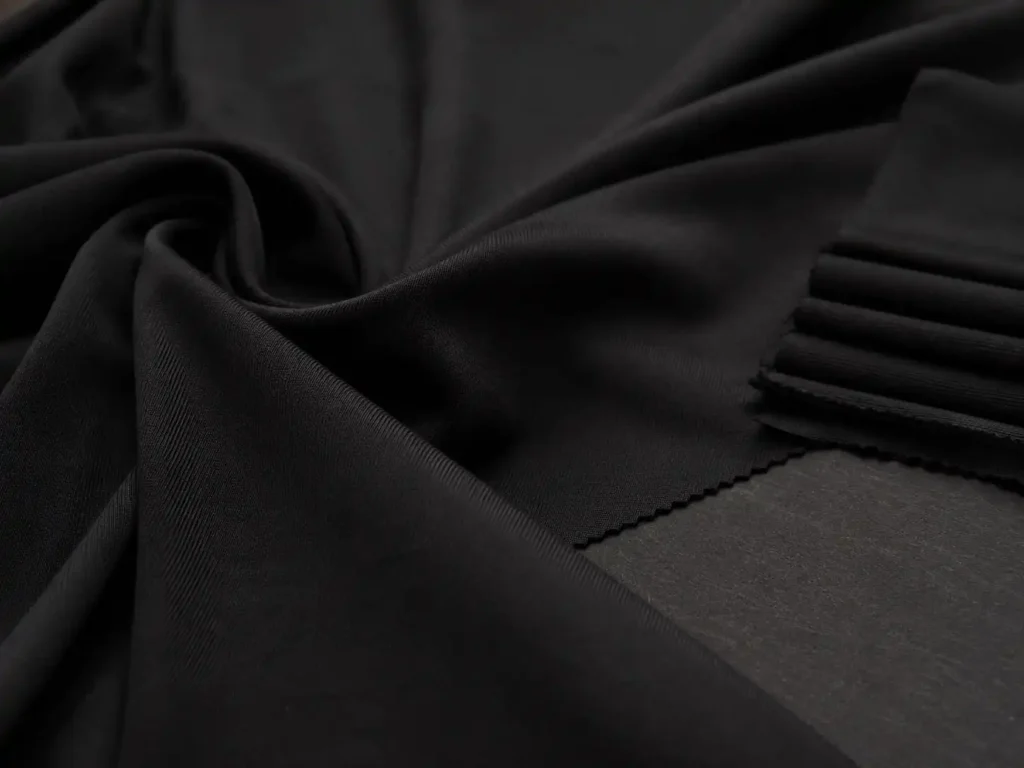
Jersey Knits
- Set negative or positive ease by body zone, not one global ratio.
- Stabilize openings only where the design and hand feel allow.
- Control cutting direction, lay tension, feeding, and pressing.

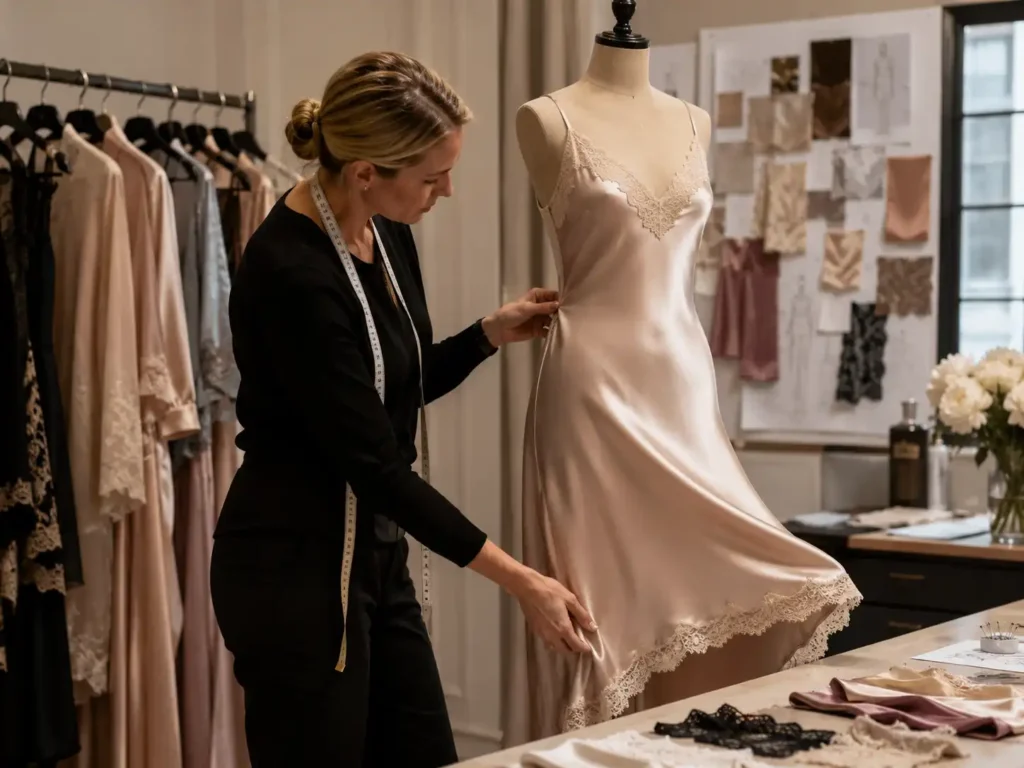
Mesh and Lace
- Map motif anchors, scallop edges, and splice rules before cutting.
- Test elastic, binding, and lining tension as a complete system.
- Review seam strength and visibility under expected extension.
Bias-Cut Fabrics
- Mark grain direction and mirrored panel requirements clearly.
- Allow agreed relaxation before hem assessment.
- Check side-seam hang and length balance on selected sizes.

Sequined Fabrics
- Define sequin removal, seam cleaning, and restoration standards.
- Protect skin-contact areas and closure paths.
- Confirm placement, panel matching, reinforcement, and pressing limits.
Base-Fit Approval and Pattern Grading as One System
Reliable grading begins with a stable master pattern. Jinfeng separates fit causes from cosmetic symptoms, documents every approved correction, and checks whether each rule remains valid at the range endpoints.
Establish the Base Pattern Before Size Growth
The base sample is evaluated as a three-dimensional structure, not a flat list of target measurements. Pattern makers review shoulder slope, front and back balance, bust shaping, waist position, hip distribution, side-seam direction, neckline contact, armhole shape, skirt hang, hem level, and the interaction between shell, lining, fusible, elastic, cups, or boning. Fit comments identify both the visible issue and the likely pattern cause. For example, a gaping neckline may come from excess neckline length, insufficient bust shaping, incorrect shoulder angle, or unstable fabric handling; taking width from the neckline without finding the cause can create pulling elsewhere.
Measurements are taken using the agreed point-of-measure method and compared with the active specification revision. Visual findings, movement findings, and numeric differences are recorded together. Pattern corrections are then made in a controlled sequence so one adjustment does not hide the effect of another. When a fit block or approved carryover dress is supplied, the team compares balance and ease against the reference instead of rebuilding brand fit from generic assumptions.
Base approval normally confirms:
- Silhouette and wearing ease at bust, waist, hip, and sweep.
- Shoulder, neckline, armhole, waistline, side seam, and hem position.
- Mobility for sitting, walking, reaching, and dressing.
- Coverage and support under the intended foundation garment.
- Compatibility among shell, lining, closure, and internal structure.
Build Grade Rules Around Body and Design Logic
Once the master pattern is stable, Jinfeng maps required size growth to individual pattern points. Circumference, vertical length, depth, curve shape, and feature position are handled separately. Bust growth may be divided among side seam, princess seam, dart, center panel, or back panel depending on the design. Shoulder and neck growth are usually more controlled than torso circumference, while skirt sweep can follow silhouette goals rather than body growth alone. Dart legs, panel seams, facings, linings, waistbands, collars, sleeves, and decorative components must remain compatible after grading.
Nested patterns are reviewed for smooth progression and unexpected jumps. Matched seams are compared, not assumed. Curve quality matters because an uneven armhole or neckline becomes harder to sew consistently even when endpoint measurements are correct. For wide ranges, the team evaluates whether a single rule set is credible. A secondary base, breakpoint grade, or localized correction can be introduced when body proportions, support requirements, or detail placement change materially.
Grade review includes:
- Growth distribution at critical bust, waist, hip, shoulder, and length points.
- Seam matching between shell, lining, facing, sleeve, waistband, and inserts.
- Consistent notches, drill points, grainlines, and construction references.
- Detail position relative to apex, waistline, center lines, and finished hem.
- Pattern perimeter and shape changes at the smallest and largest sizes.
Approve Endpoints Before Production Pattern Release
A visually smooth nested pattern does not prove the garments will fit. Jinfeng selects representative size-set samples based on range width, product risk, and material behavior. The base size confirms the master silhouette; smaller and larger sizes test whether grade distribution preserves proportion and function. Extended-size, petite, tall, strapless, corseted, bias-cut, wrap, and high-stretch dresses may require additional checkpoints because support, length, coverage, or recovery can change outside the center of the range.
Each selected sample is measured flat according to the approved method and assessed on a suitable form or body. Review covers balance, movement, opening security, closure function, seam location, design-detail placement, and fabric response after wearing or hanging where relevant. A failed endpoint does not automatically require changing every size. The pattern maker determines whether the issue comes from the master pattern, grade rule, breakpoint, local pattern shape, material behavior, or sewing method, then limits the correction to the affected source.
Pattern release requires a linked set of evidence:
- Approved base-fit comments and sample status.
- Final measurement chart with methods and tolerances.
- Confirmed grade rules or nested-pattern review.
- Approved size-set findings for selected sizes.
- Matching shell, lining, support, and trim pattern versions.
- Pre-production or Golden Sample reference before bulk cutting.

Design Details Must Scale Without Losing Their Purpose

Necklines
- Anchor width to center front, shoulder point, or strap position.
- Define finished depth from a consistent anatomical or pattern landmark.
- Check facing, lining, elastic, tape, and seam length after grading.

Bust Cups
- Control apex position, cradle length, cup seam compatibility, and neckline edge.
- Coordinate cups with foam, lining, underwire, boning, and closure tension.
- Validate support and coverage on representative endpoint sizes.

Straps and Sleeves
- Grade armhole and sleeve-cap shapes as matched curves.
- Preserve strap angle and distance from the neck and armhole.
- Confirm bicep ease, cuff opening, reach, and underarm comfort.

Darts and Panels
- Track dart points relative to the bust apex and waist.
- Match adjoining panel seams after every grade adjustment.
- Review seam curves for sewability, not only nested-pattern appearance.

Cutouts and Slits
- Define opening edges from stable seams or finished landmarks.
- Set minimum bridge width, overlap, reinforcement, and slit height.
- Test sitting, walking, and arm movement at selected sizes.

Pockets and Closures
- Anchor pockets to waist, side seam, center line, or finished hem.
- Confirm opening dimensions, entry angle, bag capacity, and reinforcement.
- Check closure length, overlap, spacing, and load at endpoint sizes.

Ruching and Draping
- Specify gather ratio, elastic length, drawcord travel, or pleat intake by size.
- Mark start, stop, and balance points on the pattern.
- Review distribution after wearing, hanging, and pressing.
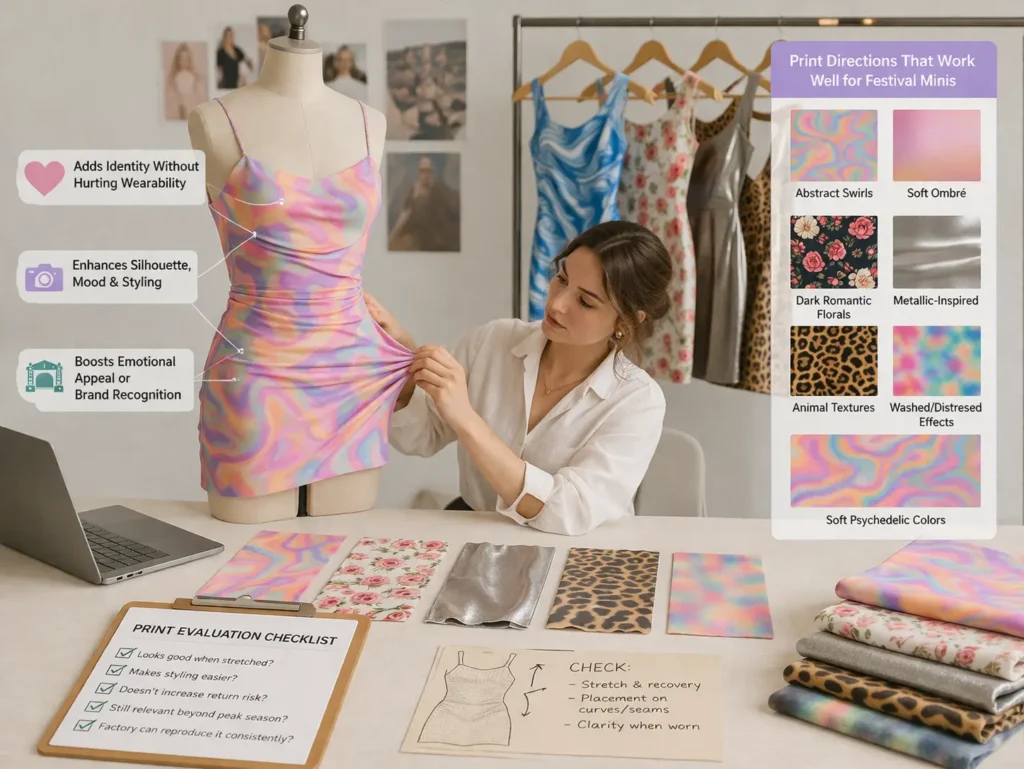
Prints and Embellishment
Prints, lace motifs, sequins, beads, and appliqués must remain centered on the intended body or pattern landmark. Grade growth can drive artwork into seams, darts, closures, or cutouts. Placement rules also need to accommodate material repeat and cutting efficiency without losing the design focus.
- Provide artwork coordinates and acceptable placement tolerance.
- Define mirrored, centered, engineered, or random-placement rules.
- Approve size-specific templates where one placement cannot serve the range.
Separate Fit Blocks for Distinct Body Proportions
Standard and Core Sizes
Core sizes usually establish the primary brand block and most familiar fit language. Development still requires a defined base, measurement method, ease standard, and endpoint review. The core range becomes a reliable reference only when shoulder, bust, waist, hip, length, and design position progress smoothly.
- Use an approved carryover block when continuity matters.
- Select endpoint samples according to range width and construction risk.
- Record final rules so repeat styles inherit controlled logic, not memory.
Plus and Extended Sizes
- Review coverage, support, mobility, and closure load at the upper range.
- Reposition cups, darts, pockets, waistlines, cutouts, and embellishment anchors.
- Validate internal structure and fabric recovery, not circumference alone.
Petite and Tall Sizes
Petite and tall development changes vertical relationships, not only finished hem length. Shoulder-to-bust, bust-to-waist, waist-to-hip, armhole depth, sleeve length, rise, slit position, pocket height, and artwork placement may all require adjustment. Shortening or lengthening only at the hem leaves the design attached to the wrong body zones.
- Establish vertical adjustment lines before grading.
- Preserve silhouette while redistributing bodice, sleeve, and skirt lengths.
- Check seated and standing balance, movement, and focal-detail position.
Size-Set Samples Prove the Grade in Garment Form
Size-set sampling converts nested patterns into measurable evidence. Jinfeng selects checkpoints by risk, tests construction in production-equivalent material, and resolves failures at their source before full cutting begins.
Select Samples to Expose the Highest-Risk Changes
The sample plan is built around the full size architecture rather than a fixed formula. A narrow, stable woven range may be represented by the base and two endpoints. A wider range, a breakpoint grade, or a dress with cups, boning, strapless support, high stretch, wrap coverage, bias hang, or asymmetric details can require more physical sizes. The objective is to observe where proportional or structural behavior changes, not to create samples that merely repeat known information.
Jinfeng and the brand agree which sizes require full fit review and which can be verified through measurement, pattern nesting, or selected component checks. The smallest and largest sizes are strong candidates because they expose accumulated grade growth. Additional samples may sit immediately above and below a breakpoint or within a division such as plus, petite, or tall. Material readiness is also considered; a size-set made in fabric with different stretch or drape cannot close the fit risk for production material.
The agreed plan records:
- Size labels, fit division, and sample purpose.
- Fit-model or form measurements for each physical review.
- Garment measurements and critical tolerances.
- Required movement, coverage, and support checks.
- Components or details needing separate approval.
Review timing and responsible approvers are assigned before samples are dispatched, keeping technical decisions aligned with the production calendar.
Measure and Fit Every Selected Size Consistently
Each garment is conditioned and measured using the same approved method. Curved openings, elasticized sections, adjustable straps, asymmetric lengths, pleats, and bias panels receive specific instructions so different reviewers do not produce incompatible results. Findings are entered against the active specification revision, with photos or marked diagrams used when a location cannot be described unambiguously. Numeric compliance and fit approval remain separate decisions: a garment can measure within tolerance yet look unbalanced, and an attractive fit can still conceal an out-of-spec construction risk.
Fit review covers standing and movement. Depending on the style, the wearer may sit, walk, raise arms, fasten closures, adjust ties, or test wrap and slit security. Jinfeng checks whether design lines stay positioned, the hem hangs evenly, seams remain vertical, and internal support works without visible distortion. Stretch and bias garments may be reassessed after wearing or hanging to reveal growth that is absent during the first flat measurement.
Review evidence includes:
- Completed point-of-measure results and variance notes.
- Front, side, and back observations at rest and in movement.
- Closure, coverage, support, recovery, and comfort findings.
- Construction issues that affect fit repeatability.
- Clear pass, revise, or conditional status for each sampled size.
All approved changes identify the affected pattern pieces and measurement rows before the next sample is authorized.
Correct the Source and Revalidate the Affected Range
When a sample fails, the team traces the issue to the master pattern, grade rule, local pattern shape, construction method, material behavior, or measurement instruction. A correction is not automatically spread across all sizes. If only the upper range shows insufficient cup support, for example, a breakpoint rule or size-specific structure may be more accurate than changing the base. If every size shows the same waist position error, the master pattern or fit standard is the more likely source.
Revalidation follows the correction path. Pattern edits are applied to all connected pieces, including lining, facings, internal support, and placement templates. Revised measurements and comments receive a new version, and any size whose outcome could change is rechecked. The approved pre-production or Golden Sample, final specification, graded pattern set, bill of materials, and sewing instructions must then carry one aligned revision before bulk cutting.
Release is blocked until:
- Affected sample sizes meet agreed fit and measurement status.
- Related pattern pieces and construction documents are synchronized.
- Material substitutions or trim changes receive required reapproval.
- Open comments are closed or formally accepted with a defined limit.
- Production checkpoints reflect the final risk profile.
Final status is recorded by size so a passed center sample cannot conceal an unresolved endpoint condition.

Nine Controlled Stages from Brief to Bulk Release
1. Brief Review
2. Material Assessment
3. Base Pattern
4. First Sample
5. Fit Correction
6. Pattern Grading
7. Size-Set Validation
8. Pre-Production Lock
9. Bulk Control
Version Control Protects Fit from Sample to Bulk
An approved fit can be lost when one connected file remains outdated. Jinfeng links sample status, pattern revision, specifications, materials, construction, and production references before cutting authorization.
One Approval Record for Every Development Decision
Every review should identify the style, sample type, sample size, material status, pattern revision, specification revision, comment date, and approval status. Verbal or isolated messaging is converted into an actionable record before patterns are changed. When comments conflict, the newest instruction does not silently replace an earlier approved standard; the team flags the conflict and confirms which decision governs. A revised neckline, for example, may affect shell patterns, lining, facing, elastic length, strap position, grading, and the measurement method, so the change is treated as a connected update rather than one pattern edit.
Sample labels and digital files use recognizable revision identifiers. Approved, conditional, revise, and rejected states remain distinct. Conditional approval records the exact condition and deadline instead of allowing open risk to disappear during handoff. Superseded files are retained for traceability but removed from the active production packet. The result is a clear answer to four questions at any time: which garment was reviewed, which files produced it, which changes were accepted, and which revision is authorized next.
Required links include:
- Sample identity and fit-comment record.
- Pattern and grade revision.
- Measurement chart and measurement method.
- Fabric, lining, trim, color, and construction status.
- Approval owner, date, conditions, and next action.
Production Packet Matches the Approved Garment
Before bulk cutting, the merchandiser and technical team compare the final pattern set with the approved pre-production or Golden Sample and all supporting instructions. Shell, lining, facing, fusible, support, pocket, artwork, and placement pieces must share the intended revision. The bill of materials confirms fabric and trim identity, while sewing instructions describe operations that influence fit, such as stay tape, elastic application, cup placement, boning channels, seam allowance, gathering, and pressing. Labels and packaging are checked separately so size identity cannot be lost after sewing.
Production release also includes risk-based checkpoints. A stretch neckline may require an early opening measurement; a corset dress may require cup, waist, boning, and closure checks; a bias dress may require controlled relaxation and hem leveling. The packet states who checks each point and what reference governs the decision. When a production material or construction change is proposed, the affected sample or test must be approved before the replacement is released.
The locked packet contains:
- Final graded patterns and marker instructions.
- Approved specification with tolerances and measurement diagrams.
- Pre-production or Golden Sample reference.
- Bill of materials, colorways, labels, and packaging instructions.
- Sewing, pressing, and finishing standards.
- Inline and final inspection plan.
Bulk Findings Return to the Style Record
Inline control does more than accept or reject garments. Findings show whether approved fit logic is being reproduced under bulk conditions. Measurement drift can come from lay tension, cutting, seam allowance, feeding, elastic application, pressing, or fabric relaxation. The team compares early output across selected sizes, identifies the operation causing the shift, and records corrective action. Corrected garments are rechecked before the affected operation continues at volume.
Final inspection results, approved concessions, and production lessons are added to the style record. For repeat orders, Jinfeng can retrieve the active pattern, sample history, approved material references, workmanship points, and prior risk controls instead of rebuilding knowledge from memory. Reuse remains controlled: a new fabric, fit target, size range, construction change, or design modification is assessed for renewed sampling even when the style number is familiar.
The repeat-order record preserves:
- Final production pattern and specification revisions.
- Approved material and trim references.
- Inline corrections and final inspection findings.
- Size-specific risks, concessions, and prevention notes.
- Conditions requiring new sample or fit approval.
Retained evidence also shows which approved tolerances were consistently achievable and where future patterns, methods, or checkpoints should be strengthened. The record supports faster repeat planning without treating past approval as permanent approval for changed inputs.

Measurement and Quality Controls for Bulk Dress Sizes
Specifications become useful only when methods, tolerances, sampling points, and release rules are explicit. Jinfeng connects measurement control with fabric handling and sewing operations so variation can be corrected near its source.
| Checkpoint | Control Method | Recorded Evidence | Release Rule |
|---|---|---|---|
| Incoming fabric | Inspect identity, appearance, usable width, lot condition, and agreed test status | Fabric inspection record and lot trace | Only released lots enter cutting |
| Relaxation and spreading | Follow material-specific relaxation, grain, direction, lay, and tension instructions | Lay record and cutting authorization | Cutting begins after required conditions are met |
| Cut components | Verify pattern revision, bundle size, notches, matching points, and selected dimensions | Cut-panel check | Incorrect bundles are isolated before sewing |
| Pilot output | Measure selected sizes and review high-risk operations at early line output | Pilot measurement and workmanship record | Line continues after corrective actions close |
| Inline production | Check critical measurements, seam handling, closure, support, detail position, and labeling | Inline inspection findings by size and operation | Drift triggers source correction and recheck |
| Pressing and finishing | Control shape, temperature, pressure, handling, thread cleaning, and final appearance | Finishing review | Garments remain within approved shape and measurements |
| Final garment | Measure sampled sizes using approved methods and inspect workmanship | Final inspection report | Lot evaluated against agreed specification and acceptance level |
| Packing | Verify size label, color, assortment, barcode, hangtag, folding, and carton marks | Packing audit | Shipment identity matches approved order instructions |
An 18-Style US Dress Range Prepared for Production
An established US occasionwear label required one development system for 18 dresses, 48,000 total pieces, and a US 0–16 range. The assortment combined fitted, structured, stretch, and layered constructions.

Order Architecture and Development Risk Were Mapped First
The program contained 18 styles and 48,000 pieces, placing style quantities inside the normal scale of an established collection rather than a test order. Products included satin slip and cowl dresses, stretch fitted dresses, mesh-overlay styles, and corset-led occasion dresses. The commercial size range ran from US 0 to US 16, with US 6 used as the primary base size. Because the styles did not share one fit mechanism, Jinfeng divided them into four construction families before sample work. Each family received its own material, fit, grading, and production-risk review.
The label supplied design packs, a size chart, fit comments from earlier collections, and selected reference garments. Jinfeng reconciled differences among garment measurements, reference fit, and new design proportions. A size-set route using US 0, 6, 12, and 16 was chosen for the higher-risk styles, while lower-risk carryover constructions used a narrower physical sample plan supported by graded-pattern and measurement review. Pattern makers also identified where a common grade rule would be insufficient, particularly around bust cups, neckline coverage, corset support, and stretch recovery.
Program controls included:
- 18 styles grouped into 4 construction families.
- 48,000 total pieces across the confirmed order.
- US 0–16 commercial range with US 6 base development.
- Risk-based size-set checkpoints rather than one identical sample plan.
- Separate review for stable satin, stretch, mesh, and corset structures.

Pattern Corrections Focused on Cause Rather Than Circumference
Base-fit review found different causes behind visually similar problems. On a cowl slip dress, neckline instability was linked to bias behavior and strap position rather than simple excess width. The correction redistributed the front neckline, adjusted strap anchors, aligned the lining, and preserved the approved drape through grading. On a stretch fitted dress, upper-size side-seam distortion came from tension distribution and recovery; the team revised ease allocation across panels and confirmed the production material before locking the grade.
Corset-led styles required coordinated work among cup pieces, cradle, side panels, boning channels, lining, back closure, and neckline edge. Wider side seams alone would have moved the cups away from the intended bust position. Jinfeng reviewed the nested patterns, introduced localized upper-range adjustments, and rechecked support and coverage on selected sizes. Mesh-overlay dresses received separate shell and overlay logic so the fitted foundation controlled body dimensions while the outer layer retained its intended drape and seam alignment.
Key interventions covered:
- Bias relaxation, strap anchor, neckline edge, and lining compatibility.
- Stretch ease distribution and recovery in production-intended fabric.
- Cup position, internal support, closure load, and upper-range coverage.
- Separate grading for fitted foundations and decorative overlays.
- Detail anchors for slits, seams, and focal design lines.

Approved Decisions Were Locked into the Bulk Control Packet
After size-set review, Jinfeng synchronized the graded patterns, measurement chart, bill of materials, construction notes, and sample approvals for each style. Final documents identified the active material, size labels, points of measure, tolerances, detail placements, and size-specific concerns. The pre-production or Golden Sample served as the physical reference, while the document packet explained how the fit was to be reproduced. Obsolete sample comments and patterns were removed from active production use before cutting authorization.
Bulk lines were allocated by construction family so operators and quality staff could focus on a stable operation sequence. Pilot output included selected sizes and high-risk checkpoints: neckline opening and strap position for slips, waist and recovery for stretch styles, cup and closure alignment for corsets, and layer matching for mesh constructions. Inline findings were traced to cutting, sewing, pressing, or material handling and corrected before remaining volume advanced. Final inspection evaluated sampled garments against the approved specifications and acceptance plan rather than relying on the center-size sample alone.
The production handoff preserved:
- One active revision for every approved style and size range.
- Size-specific pilot and inline measurement checkpoints.
- Construction-family line allocation and workmanship references.
- Label and packing verification linked to garment size identity.
- Repeat-order records for patterns, materials, risks, and corrections.
What Established Brands Should Verify in a Development Partner
Pattern Capability
- Request an explanation of base-fit correction and grade review.
- Confirm whether endpoint failures can trigger breakpoint logic.
- Verify how pattern revisions are identified and released.
Sample Depth
- Confirm which sample closes fit risk and which approves production.
- Ask how material substitutes are disclosed.
- Review the revalidation route after a size-set correction.
Material Engineering
- Request the intended material status on every sample.
- Confirm lot identity and incoming inspection records.
- Ask how cutting, pressing, and finishing rules are material-specific.
Production Transfer
- Verify how superseded documents leave active use.
- Ask which operations receive pilot or inline checks.
- Confirm how a late construction change is approved and distributed.
Size-Level Quality
Final inspection alone cannot detect every source of size drift. A qualified partner measures selected sizes during pilot and inline production, then connects findings to fabric relaxation, cutting, seam allowance, feeding, elastic, or pressing. Jinfeng’s 15+ QC specialists support staged control across production.
- Review measurement methods and achievable tolerances.
- Confirm selected sizes and critical points before line start.
- Ask how corrected output is rechecked before volume continues.
Request examples of how an early variance is traced to an operation, corrected, and rechecked before the remaining order continues. Records should identify both affected sizes and bundles.
Program Capacity
Capacity should match the complexity and calendar of a multi-style collection, not only the aggregate unit count. Jinfeng operates 6 owned women’s fashion factories, works with 10+ satellite partners, maintains 18+ sewing lines including 6+ flexible lines, and regularly supports more than 100,000 pieces per month.
- Match styles to lines by construction family and skill requirement.
- Confirm fabric, sample, approval, and line dates as one calendar.
- Review finishing, packing, and shipment capacity alongside sewing.
Protected Development Records Support Reliable Repeat Orders
NDA-Controlled Development
Traceable Style History
Controlled Repeat Release
Frequently Asked Questions About Multi-Size Dress Development
It is the controlled conversion of one design into a coordinated size range. Work includes base-fit approval, pattern grading, size-set sampling, measurement methods, tolerance planning, production transfer, and bulk size control. The goal is consistent silhouette, proportion, movement, coverage, and construction across the selling range rather than a uniform enlargement of the base garment.
Grading creates systematic size progression across an approved pattern range. Alteration changes a garment or pattern for a specific fit need. A grade rule distributes growth through many pattern points while preserving seam matching, curves, balance, and detail position. An alteration may adjust only one body, sample, or localized issue and should not automatically become the rule for every size.
Grading should begin after the base pattern, intended material behavior, measurement framework, and core fit are approved. Starting earlier multiplies unresolved balance or ease problems through every size. Some programs can run preliminary grade review during development, but physical size-set release should refer to a stable master pattern and a clearly identified specification revision.
Yes. Jinfeng can work from a brand-owned body chart, finished-garment specification, grade rule, approved block, reference garment, or combined package. Points of measure and methods must be clear. The team flags conflicts among chart values, reference fit, construction, and fabric behavior before pattern approval rather than silently replacing the supplied standard.
Selection depends on range width, breakpoint rules, silhouette, fabric, and construction. The base plus smallest and largest sizes often provide useful evidence. Additional sizes may be needed around a breakpoint or for plus, petite, tall, corseted, strapless, stretch, wrap, bias-cut, or asymmetric designs. The sample plan targets changing risks instead of using one fixed formula.
Yes, when the required body or garment charts and fit direction are available. Plus, petite, and tall divisions need proportion-specific blocks or rules; they are not created by relabeling standard patterns. Development can adjust bust shaping, shoulder balance, vertical lengths, armhole depth, sleeve length, waist and hip position, support, and detail placement for the intended division.
Often. Stretch, recovery, shrinkage, drape, weight, bias behavior, lining, and internal support affect usable ease and finished balance. A grade approved in one material may need renewed validation when production fabric behaves differently. Jinfeng records sample material status and evaluates substitutions before final pattern or pre-production release.
Standard first samples usually require 10–15 days; medium-complexity styles usually require 12–18 days; corset, strapless, lace, mesh, or sequin styles usually require 15–25 days. Custom fabric or trim can extend development to 20–35 days. Revised and pre-production samples usually require 7–15 days, depending on change scope and material readiness.
MOQ starts from 200 pieces per style and color. The workable quantity depends on fabric and color minimums, trim sourcing, construction complexity, packaging, capacity, and schedule. Multi-style collection orders are reviewed as a full program so material allocation, line planning, finishing, inspection, and shipment needs can be evaluated together.
Send the design source, full size range, base size, measurement chart, point-of-measure method, fit reference, fabric and trim information, colorways, target quantities, and required dates. A technical pack is ideal, but Jinfeng can also develop from an original sample, sketch, reference garment, size chart, fabric swatch, and trim card when the intended fit is clear.

Start a Production-Ready Multi-Size Dress Program
Send Jinfeng the style package for an engineering review before sampling begins. The team will compare design intent, size architecture, fit references, material behavior, construction, quantity, and calendar, then identify the base-size route, grading risks, size-set checkpoints, and production evidence needed for release.
Programs can cover single styles or coordinated collections, with development records carried from first pattern through bulk inspection.
For an efficient first review, include:
- Technical pack, sketch, original sample, or approved reference garment.
- Complete size range, base size, measurement chart, and measuring method.
- Fit-model or block information, including intended ease and coverage.
- Production fabric, lining, trim, colorway, label, and packaging requirements.
- Style quantities, total program volume, approval dates, and delivery window.
- Any NDA, testing, inspection, or market-specific compliance requirements.


