Skip to content
Multi-Panel Dress Pattern Development
Engineering Complex Dress Panels From Design Into Production-Ready Patterns
A multi-panel dress succeeds when every seam contributes to fit, proportion, movement and visual balance—not simply when multiple pieces can be sewn together.
- 7+ senior women’s pattern makerssupporting complex dress development
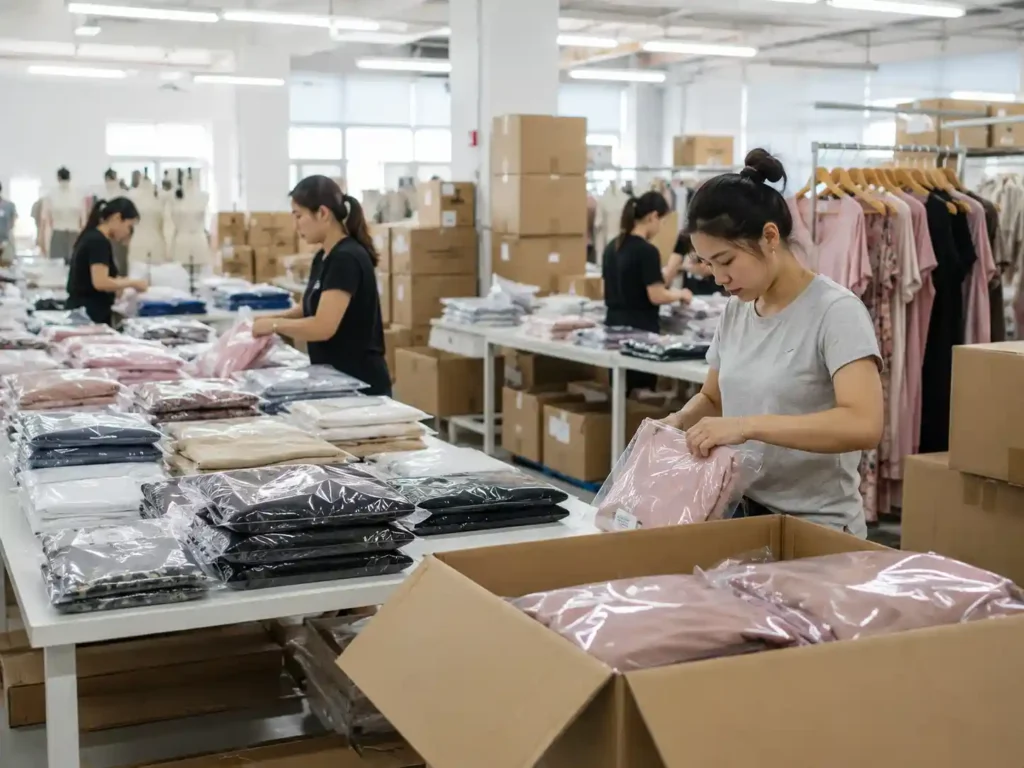
- 2 sample rooms + 20+ sample machinistsfor pattern-to-garment verification
- Typical complex dress first samples: 12–25 days, depending on structure and materials
- Development supports princess seams, asymmetric panels, shaped bodices, flare panels, cut-outs and multi-layer constructions
- Pattern changes are carried through to sample revisions, size charts, production instructions and QC references
Pattern Development Built for Complex Dress Programs
Product Development Teams
Sourcing and Production Teams
Fit-Focused Fashion Brands
Fitted dresses often use panel seams as shaping tools.
A princess seam, curved waist panel or contoured side panel may replace or absorb conventional darts while creating a cleaner silhouette.
The pattern maker must therefore control where shaping volume is removed or added instead of treating panel lines as decorative graphics.
Multi-Panel Dress Structures We Develop

Princess Seam Dresses
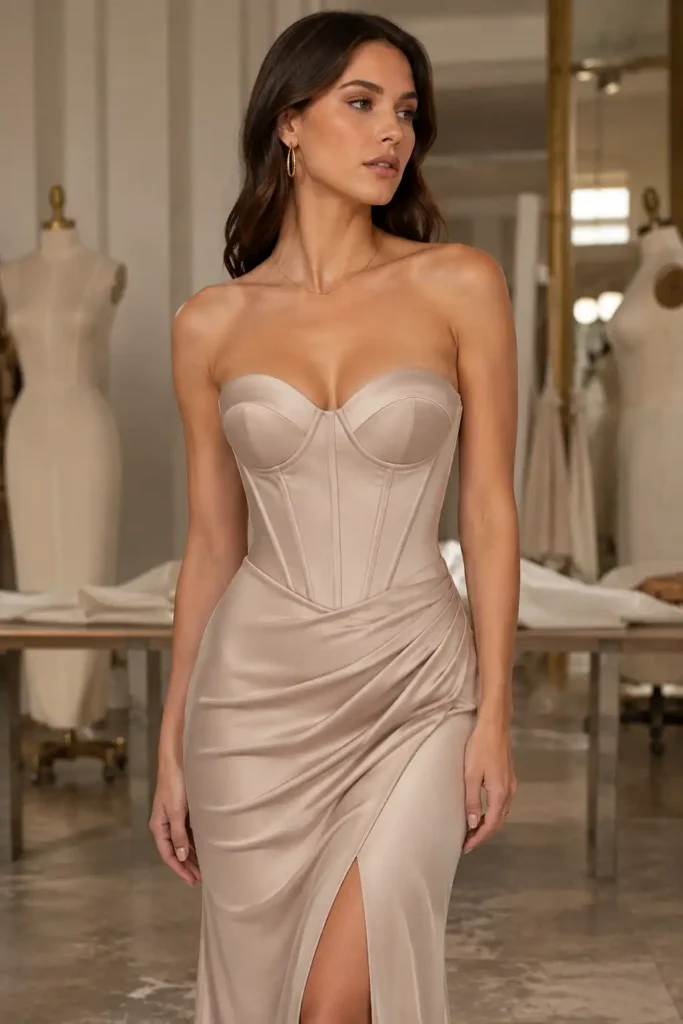
Corset-Inspired Panel Dresses
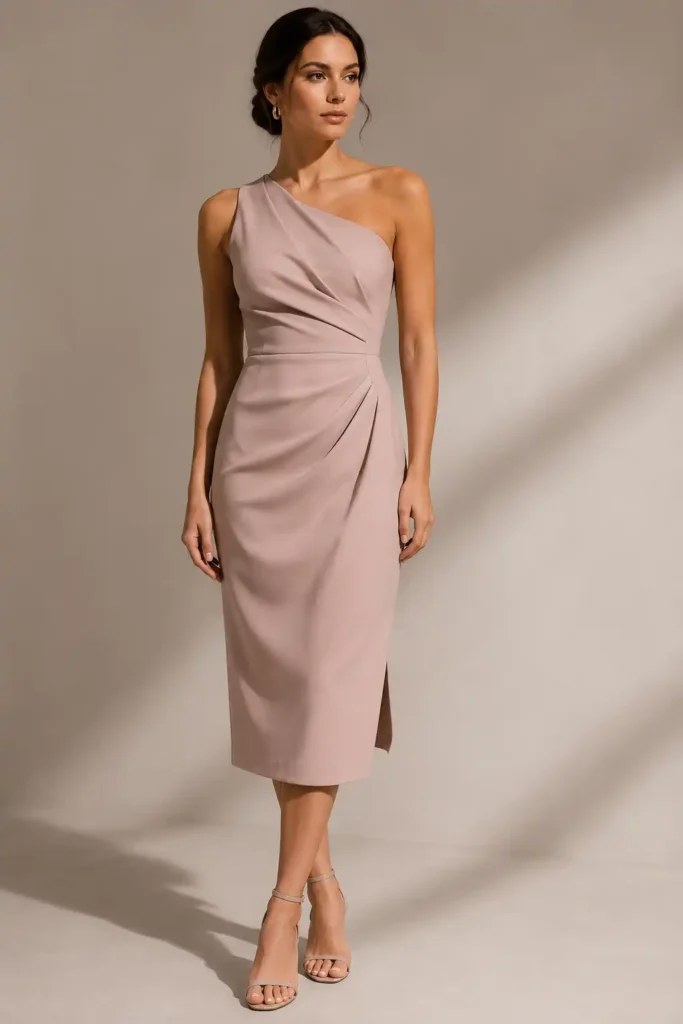
Asymmetric Panel Dresses
Flared Panel Dresses
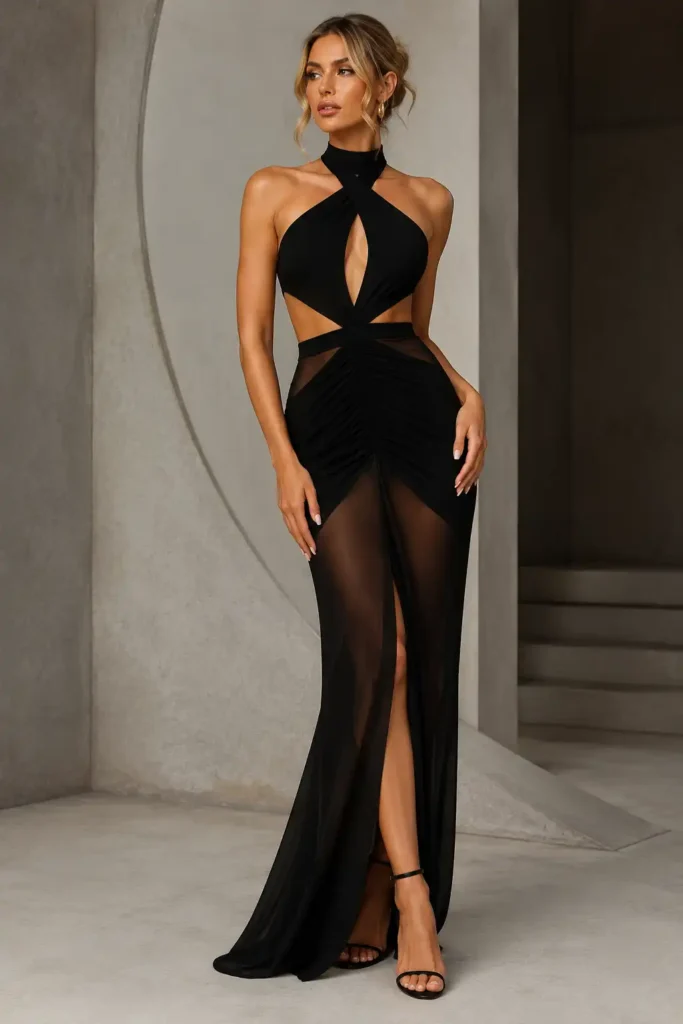
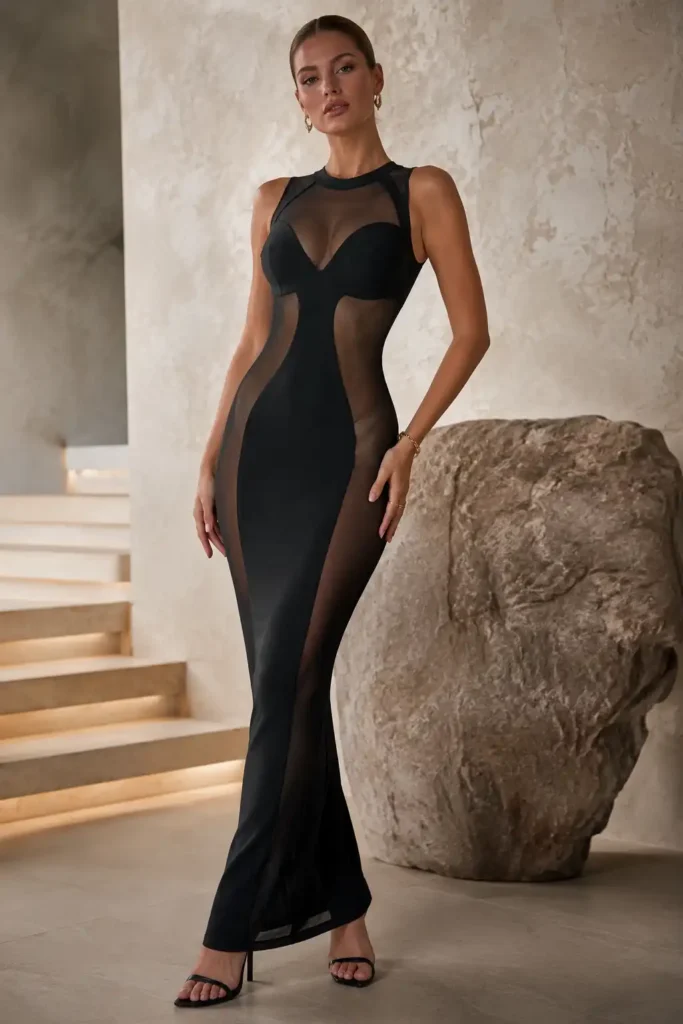
Cut-Out Panel Dresses

Contrast and Color-Block Panels
How Panel Architecture Controls the Final Silhouette
A multi-panel pattern is a three-dimensional shaping system translated into flat pieces. Every panel takes responsibility for part of the garment circumference, contour and movement. Changing one seam can affect several neighboring pieces, which is why isolated corrections often create new problems elsewhere.
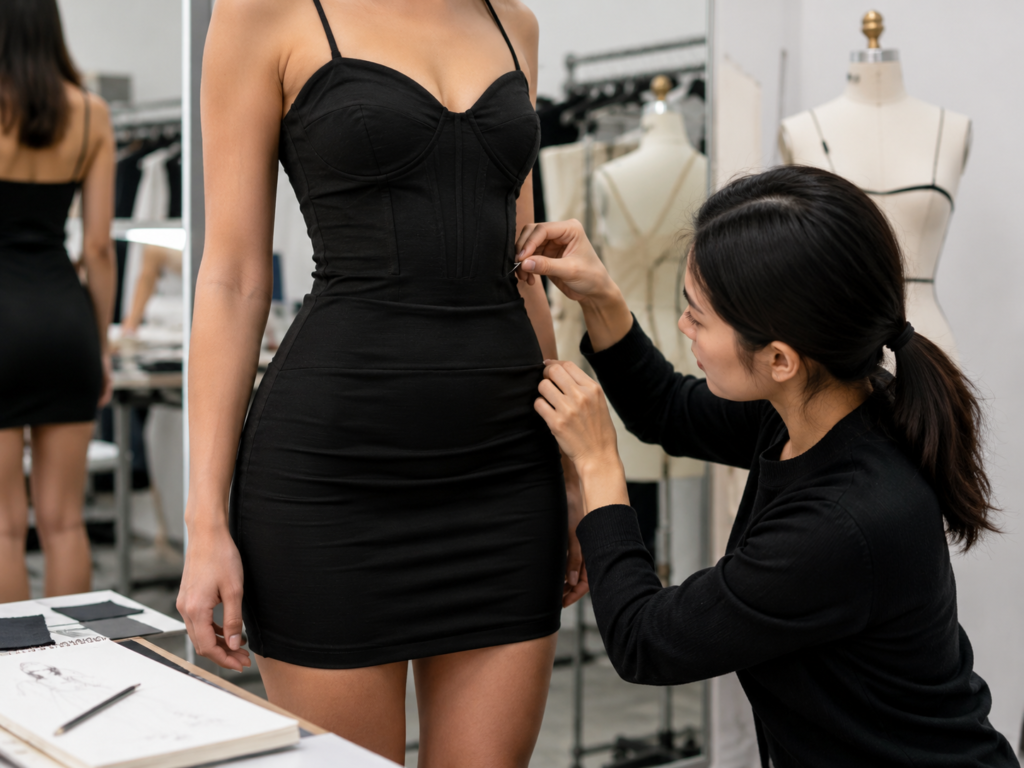
Bust Shaping Through Panel Seams
For fitted bodices, shaping can be transferred from conventional bust darts into princess or curved panel seams. The objective is not simply removing the visible dart.
The pattern maker evaluates:
- bust apex position relative to the seam
- volume distribution between center and side panels
- neckline and armhole stability
- transition from bust to waist
- seam curvature that can be sewn smoothly
- compatibility with lining or internal support
Too much curvature concentrated in one short seam may create puckering. Too little shaping can flatten the bust or produce excess fabric near the armhole.

Waist and Hip Contouring
Vertical panels offer more shaping points than a basic side-seam dress.
Waist suppression can be distributed between several seams, allowing the silhouette to follow the body without forcing excessive curvature into one location.
Fit review considers the relationship between bust, natural waist, high hip and full hip.
Altering only one measurement can shift panel lines away from their intended visual position.

Hem and Sweep Distribution
For midi and maxi silhouettes, lower panels affect both appearance and movement.
A narrow fitted upper section may transition into controlled flare below the hip, while a dramatic occasion dress may distribute substantially more volume through selected seams.
Instead of adding flare randomly, pattern development reviews where volume should begin, how neighboring seams meet and whether the finished hem remains balanced after hanging.
Panel Decisions That Change Fit and Production Risk
Multi-panel construction creates more control points than a simple dress, but every additional control point also creates another possible source of mismatch. Development therefore evaluates each seam according to its function rather than maximizing the number of panels.
| Panel Decision | Main Purpose | Development Risk | Sample Check | Bulk Control |
|---|---|---|---|---|
| Center-front panel | Symmetry and vertical shaping | Distorted center line | CF hang and neckline | Cutting orientation |
| Side-front panel | Bust and waist contour | Puckering near bust | Bust curve and seam smoothness | Notch matching |
| Side-back panel | Waist and back shaping | Excess or tightness | Back balance | Seam allowance consistency |
| Diagonal panel | Visual direction | Grain distortion | Twist and drape | Cutting direction |
| Waist panel | Defined waist position | Horizontal seam shift | Waist placement | Cross-panel alignment |
| Flare panel | Hem volume | Uneven sweep | Hang and hem level | Panel length control |
| Contrast panel | Visual blocking | Misaligned seam points | Color-line alignment | Bundle and matching control |
| Lined panel | Support and coverage | Shell/lining conflict | Layer balance | Lining length and attachment |
Fabric Behavior Changes Every Panel Decision
The same multi-panel pattern cannot be assumed to behave identically in satin, crepe, mesh, stretch woven or lightweight viscose. Material direction, stretch, surface friction, transparency and recovery affect how adjoining panels hang and how seams appear after sewing.

Satin and Smooth Wovens
Satin makes panel accuracy highly visible because light reflects differently across curved surfaces and seam lines. A seam that is technically sewn but slightly distorted can show immediately under directional lighting.
Pattern and sample review should pay particular attention to grain orientation, seam smoothness, zipper areas, pressing response and whether panel shaping creates unwanted rippling. When several panels meet around bust or waist, small differences in sewing tension may become visually obvious.
Changing satin quality after pattern approval can also change drape and seam behavior, so material substitution should trigger another fit and construction review rather than automatically reusing the previous standard.

Crepe and Stable Dress Fabrics
Stable woven fabrics generally provide more predictable pattern behavior, but curved panel seams still require accurate joining lengths and controlled shaping.
For fitted dresses, excessive reduction through several seams may create stress around waist or hip even when flat measurements appear correct.
Sample fitting remains essential for assessing three-dimensional balance.

Stretch Wovens and Body-Following Fabrics
Stretch changes how circumference should be distributed across panels. Recovery, stretch direction and lining compatibility influence whether the garment feels supportive or restrictive.
The outer shell and lining cannot be treated independently when their stretch characteristics differ. Panel seam tension also needs attention because multiple vertical seams may behave differently under body movement.

Mesh, Lace and Layered Constructions
Transparent or open materials often require lining, underlayers or strategically positioned opaque panels. Lace placement may make seam positioning part of the visual design, while mesh can expose internal construction that would remain hidden in an opaque dress.
Pattern development therefore considers coverage, seam visibility, lining edges and reinforcement around stress areas before bulk production.
Fit Control Across Bust, Waist, Hip and Hem
Multi-panel dresses offer exceptional control over silhouette, but only when panel seams remain correctly positioned on the body. A dress can match the measurement chart and still look wrong if shaping is distributed through the wrong seams.

Bust and Upper-Body Balance
Fitted panel dresses are reviewed around bust circumference, bust point, neckline, shoulder, armhole and upper torso balance.
A princess seam should visually follow the intended body line rather than drift toward the armhole or center front. When the bust curve changes, neighboring panel edges usually require corresponding adjustments so sewn lengths continue to match.
For strapless or low-neckline styles, pattern stability becomes even more important because the upper edge has fewer points of suspension.

Waist and Hip Balance
waistline can change both visual proportion and the position where hip shaping begins.
For body-conscious silhouettes, insufficient hip allowance may pull panel seams sideways.
Excess allowance can create vertical folds and weaken the intended contour.
Fit corrections therefore review the complete relationship between bust, waist and hip rather than changing isolated measurements.
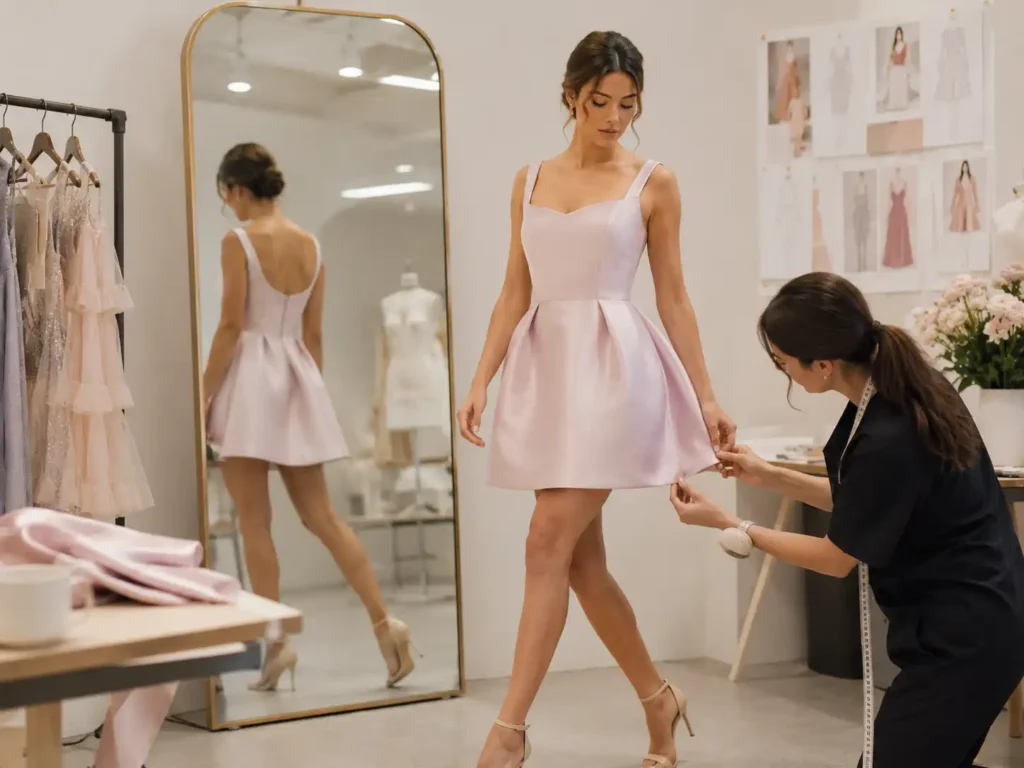
Length, Slit and Hem Balance
Long dresses introduce another variable: gravity.
Bias-influenced sections, flared panels and lightweight materials may relax differently after hanging. Slits also interrupt panel continuity and can alter how the lower garment opens during movement.
Final review checks front, side and back length balance together with slit position, seam direction and hem sweep.
Sampling Turns Pattern Theory Into Garment Evidence
A multi-panel pattern can look technically correct on paper while behaving differently once fabric, seam tension, lining and body movement enter the equation. Sampling is therefore the main validation stage between pattern engineering and production.

First Sample
The first sample answers fundamental questions:
- Does the overall silhouette match the concept?
- Are panel lines positioned correctly?
- Does the bust-to-waist-to-hip relationship work?
- Are curved seams sewable without distortion?
- Does the chosen fabric support the intended shape?
- Are neckline, armhole, straps, zipper and lining stable?
- Does the hem hang correctly?
Fit concerns are separated from sewing issues so the correct part of the development process is changed.

Revised and Fit Samples
Feedback should be specific enough to become measurable pattern corrections.
“Make the waist better” is not a useful production instruction.
Effective comments identify where excess appears, how the seam should move, which measurement changes and whether the silhouette should become closer or more relaxed.
Jinfeng converts approved feedback into updated pattern information, size chart details, construction references and revised samples where required.

PP and Golden Sample Control
Before bulk production, the PP sample is used to confirm final production details including pattern, measurements, fabric, color, trims, construction, lining, labels and packaging requirements.
A Golden Sample can then serve as a physical comparison standard for production, QC and repeat orders.
The goal is to prevent a common failure: an attractive development sample moving into bulk while critical modifications remain only in emails or chat messages.
Size Grading Without Losing Panel Proportion
Circumference Must Be Distributed Intelligently
When bust, waist or hip circumference increases, the total increment has to be distributed across multiple seams. Equal distribution is not automatically correct.
A center-front panel, princess panel and side panel may each have different shaping roles.
Excessive widening of one section can move a seam away from the intended body line even when the total garment measurement remains correct.
Vertical Proportions Also Change
Width is only one grading consideration. Depending on the brand size specification, review may include:
- bust level
- waist position
- armhole depth
- neckline depth
- strap length
- dress length
- slit height
- hip level
- lining length
Approved Grade Rules Become Production References
Jinfeng follows the brand’s approved size chart and grade rules rather than imposing one generic size system.
After grading, measurement control becomes part of production QC so pattern logic continues into cut-and-sew execution.
Sample Timing Based on Pattern Complexity
Multi-panel dresses are assessed according to structural complexity, fabric availability, trims and the amount of pattern engineering required. Development timing should reflect the actual work rather than applying one fixed promise to every dress.
| Development Stage | Typical Jinfeng Reference Time | Main Variables |
|---|---|---|
| Simple first sample | 7–10 days | Standard construction and available materials |
| Regular dress first sample | 10–15 days | Fit, fabric and normal pattern development |
| Medium-complex dress | 12–18 days | Multiple panels, fitted shaping, lining or additional construction |
| Complex dress | 15–25 days | Corset, mesh, lace, sequin, strapless or highly engineered structure |
| Special-material sample | 20–35 days or supplier schedule | Custom fabric or special trim development |
| Revised sample | Usually 7–15 days | Scope of pattern and construction changes |
| PP sample | Usually 7–15 days | Final materials and production details must be available |
Sewing Control Starts With the Approved Pattern
Pattern engineering loses value when production teams receive incomplete construction information. Multi-panel dresses create many seam intersections, orientation points and matching relationships, making the transition from sample room to production particularly important.

Seam Matching and Notch Control
Several neighboring panels may look similar when laid flat, especially in symmetrical fitted dresses.
Clear matching references help prevent:
- incorrect panel sequence
- reversed components
- mismatched curved seams
- shifted waist intersections
- uneven seam endpoints
- left-right assembly errors
Cutting and sewing instructions need to preserve the logic established during pattern development.
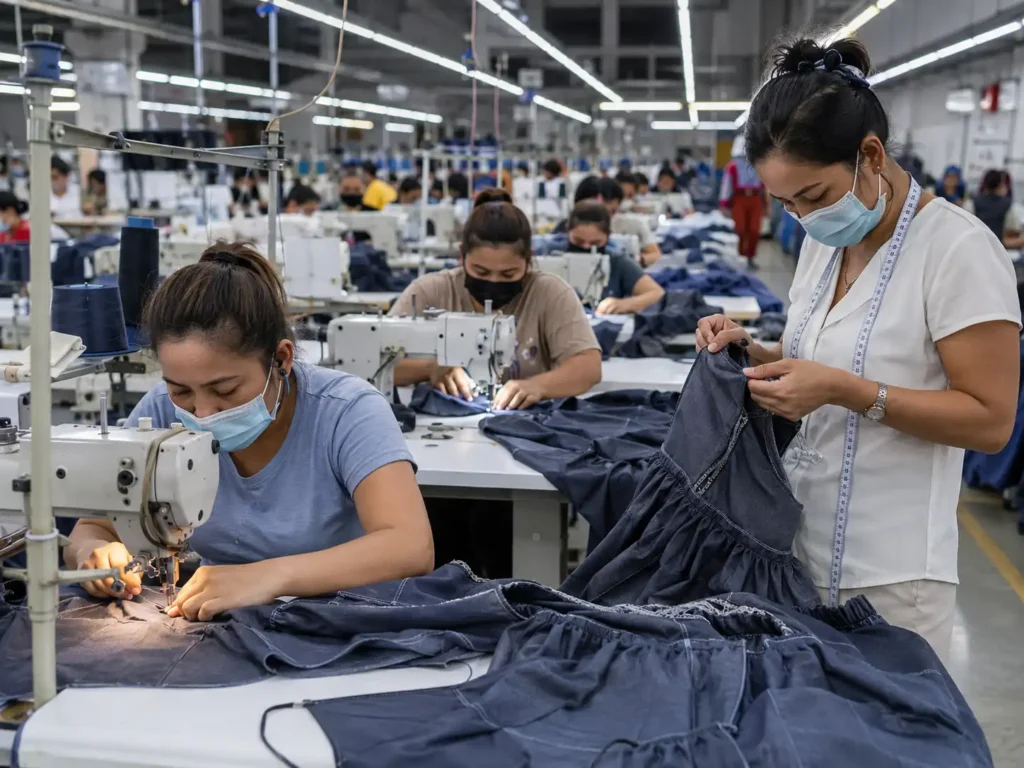
Sewing Sequence Matters
Some structures must be assembled in a controlled order.
For example, a fitted bodice with multiple shell panels, lining and zipper construction may require selected seams to be stabilized or joined before other operations.
Changing the sequence can make pressing difficult or alter seam shape.
Production review therefore considers not only what must be sewn, but how the approved appearance will be consistently achieved.
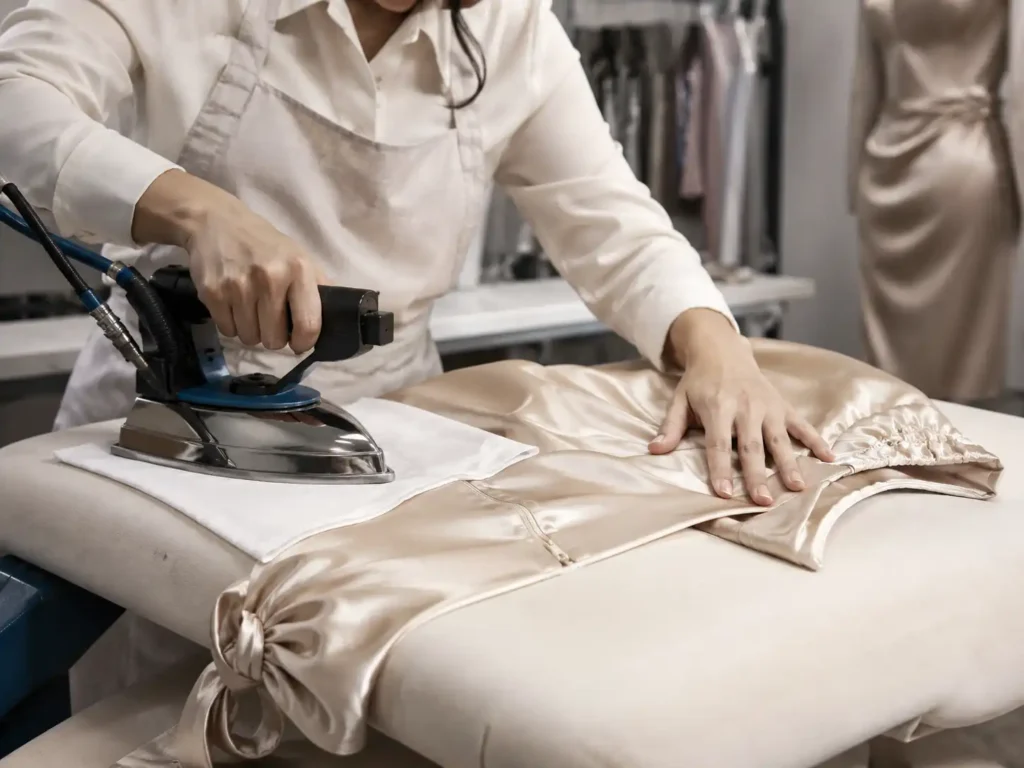
Pressing and Seam Appearance
Curved seams often require careful pressing to settle into a three-dimensional shape.
Satin, lightweight fabrics and layered constructions can expose poor seam handling immediately.
Bulk evaluation focuses on seam smoothness, panel symmetry, matching points and garment shape rather than relying only on final circumference measurements.
Pattern Corrections Must Reach the Production Floor
Final Pattern
Size Chart and Grade Rules
Sewing Instructions
PP Sample
QC Reference
Bulk Quality Control for Multi-Panel Dresses
Complex dresses need quality control throughout production because panel mistakes become increasingly expensive to correct after several sections have already been assembled.
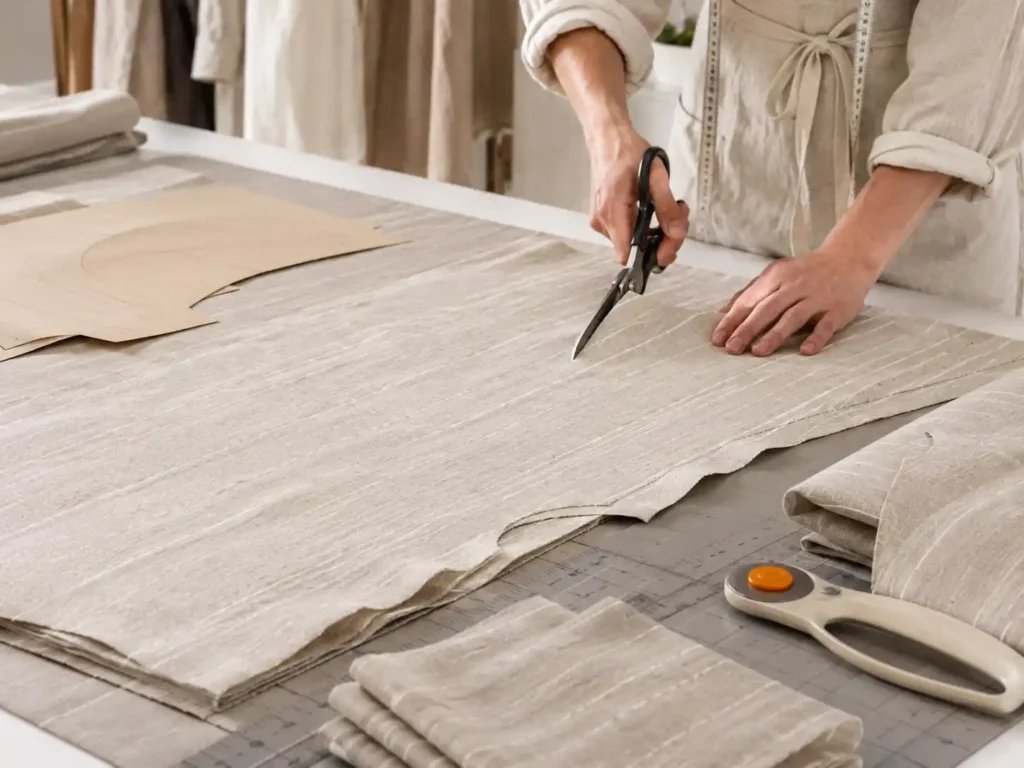
Cutting Control
Cutting inspection focuses on pattern version, panel orientation, quantity, fabric direction and damage.
Directional materials require particular attention because reversing one panel can alter sheen or visual texture even when the piece is geometrically correct.

Inline Sewing Checks
Inline review catches structural problems while correction is still manageable.
Inspection can focus on:
- panel alignment
- seam smoothness
- matching points
- waist-line continuity
- zipper behavior
- lining attachment
- symmetry
- measurement deviations
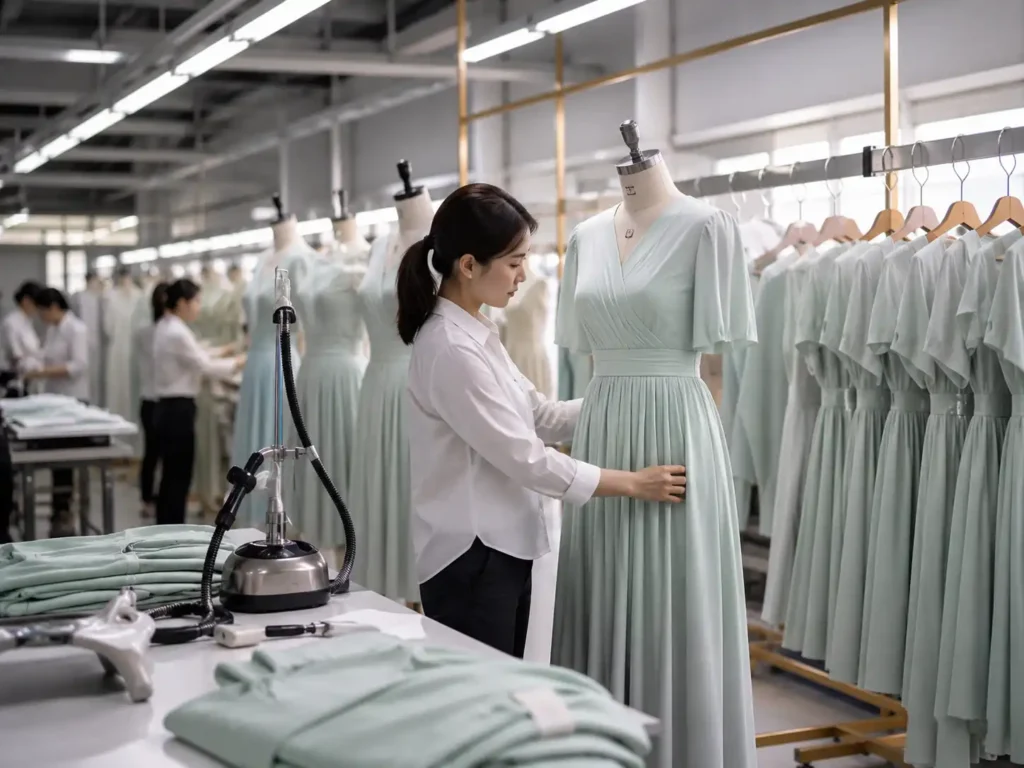
Final Garment Review
Finished dresses are checked against approved requirements for measurements, appearance, construction and packaging.
Jinfeng can also support internal AQL sampling or coordinate third-party inspection according to project requirements.
AQL is treated as a sampling method rather than a substitute for process control.
Development Resources Behind Every Approved Pattern
7+ Senior Pattern Makers
2 Sample Rooms
20+ Sample Machinists
18+ Sewing Lines
6+ Flexible Production Lines
15+ QC Inspectors
Frequently Asked Questions About Multi-Panel Dress Patterns
There is no ideal fixed number. Panel count depends on silhouette, shaping requirements, seam design, fabric behavior, lining, construction and visual direction. A simpler six-panel structure can sometimes achieve better fit than a twelve-panel structure if extra seams do not serve a clear function.
Yes. Sketches can be reviewed together with measurements, reference images, fabric direction and construction expectations. More complete information helps reduce interpretation differences during first-sample development.
Yes. Tech packs can be reviewed for size chart, construction, materials, panel structure, trims, labels and other production requirements before pattern and sample development.
A physical reference garment can be used to understand measurements, silhouette, structure, fabric behavior and sewing details. Brand-owned designs and reference materials are handled according to project confidentiality requirements.
Typical timing depends on complexity. Regular dress first samples often require around 10–15 days, medium-complex dresses around 12–18 days, while highly complex structures may require 15–25 days. Special fabrics or trims can extend the schedule.
Often, yes. Drape, stretch, recovery, thickness and surface behavior can change how panel seams sit on the body. A previously approved pattern should not automatically be assumed suitable for materially different fabric.
Yes. Grading follows the approved size chart and grade rules. Panel position, bust-waist-hip distribution, length and other proportional points are reviewed rather than simply enlarging every pattern piece equally.
Jinfeng Apparel’s standard MOQ starts from 200 pcs per style/color, depending on fabric availability, color development, trims, construction complexity, packaging and production scheduling.
Yes. PP samples are used to confirm final production requirements before bulk manufacturing. Golden Samples can serve as physical references for production, QC and repeat orders.
Yes. NDA-based cooperation is supported. Tech packs, patterns, samples, private-label information and unpublished designs can be handled confidentially throughout development and production.

Send Your Multi-Panel Dress Project for Review
A strong development review starts with enough information to understand the silhouette, structure and commercial production requirements.
Send the material you already have; the development team can identify missing information before pattern work begins.
For a more accurate review, include where available:
- Design: tech pack, sketch, line sheet or reference images
- Pattern: existing pattern information or original garment if applicable
- Measurements: target size chart and intended size range
- Fabric: composition, stretch direction, swatch or preferred material
- Construction: lining, zipper, boning, cups, cut-outs or special seam requirements
- Program: number of styles, colors and planned quantity
- Timing: sample requirement and target production schedule
- Confidentiality: request an NDA before sharing unreleased files when needed