Skip to content
Multi-Layer Dress Manufacturer
Custom tiered, tulle, organza, chiffon, mesh and lace dresses engineered from pattern development through bulk production.
- Layer architecture is reviewed through 8 core controls: visible layer length, support layer length, tier spacing, gathering ratio, hem sweep, lining coverage, waist thickness and finished garment weight.
- Development support includes 2 sample rooms, 7+ senior pattern makers and 20+ sample machinists for complex skirt structures, fitted bodices, lining systems and revised samples.
- Bulk quality is managed by 15+ QC inspectors across fabric inspection, cutting, sewing, measurement, finishing, packing and shipment preparation.
- MOQ starts from 200 pcs per style/color. Multi-style programs commonly involve 10-30 styles and 20,000-80,000 pcs across an approved collection plan.
Layered Dress Manufacturing Capacity Built for Brand Programs
Since 2008
- Custom dresses
- Occasionwear
- Private-label womenswear
6 Owned Factories
- Factory allocation by style
- Production planning by complexity
- Multi-batch support
10+ Production Partners
- Long-term cooperation
- Program-based allocation
- QC standards carried forward
2 Sample Rooms
- Parallel development
- Revision tracking
- PP preparation
7+ Pattern Makers
- Fit correction
- Layer engineering
- Grading review
15+ QC Inspectors
- Inline checks
- Final inspection
- Packing verification
Multi-Layer Dress Production for Established Fashion Brands
Fast Fashion Brands
Trend-led programs often require several related silhouettes, shared fabric groups and coordinated launch dates. Jinfeng groups styles by tier structure, fabric behavior, trim package and sample priority so key SKUs can move first without losing control of the wider collection.
- Multi-style line planning
- Hero SKU priority
- Repeatable bulk standards
Occasionwear Labels
Occasion dresses require clean volume, controlled transparency, refined lining and strong visual balance. Special attention goes to organza stiffness, chiffon flow, lace placement, tulle support and hem finishing across mini, midi and floor-length silhouettes.
- Elegant structure
- Lining control
- Event-ready finishing
Premium Ecommerce
Online fashion relies on photo-ready samples, stable fit and accurate product details. Layered garments are reviewed for front, side, back and movement views so photography, product descriptions and bulk specifications refer to the same approved structure.
- Photo-ready samples
- Measurement stability
- SKU packing accuracy
Prom Dress Programs
Prom and homecoming collections often combine fitted bodices with tulle, organza, sequin mesh or layered skirts. Pattern support, cup placement, boning, zipper flatness, skirt volume and activity comfort are reviewed as one complete garment system.
- Bodice support
- Volume control
- Decorative fabric handling
Resortwear Collections
Resort layered dresses need movement, lightness and packability. Chiffon, rayon, printed woven and soft mesh layers are balanced to avoid excessive bulk, uneven tiers and severe creasing during folding or travel.
- Lightweight construction
- Print direction
- Travel-aware packing
Sourcing Teams
Sourcing and development teams need clear specifications, sample version control, production updates and inspection evidence. Jinfeng follows approved files through pattern, PP, bulk, QC, private-label packing and shipment coordination.
- File-based approvals
- Project tracking
- Brand protection
A Manufacturing Fit for Structured Dress Programs
Best Fit For
- Tech pack, reference image, sample or line sheet available
- MOQ from 200 pcs per style/color
- Clear fabric, size and launch direction
- Sample development budget and approval process
- Bulk, repeat or seasonal production plan
Project Boundaries
- No ready-stock wholesale program
- No one-piece fulfillment
- No 1-50 pcs testing model
- No unverified lowest-price promise
- No bulk release without PP approval
Why Multi-Layer Dresses Fail During Bulk Production
Uneven Layer Lengths
- Measure each visible layer
- Compare front and back balance
- Check after pressing and hanging
Uncontrolled Volume
- Control gathering ratio
- Match stiffness to silhouette
- Test movement and recovery
Twisted Side Seams
- Mark grain direction
- Pair left and right panels
- Inspect hanging balance
Heavy Waist Seams
- Reduce stacked allowances
- Sequence layer attachment
- Check zipper area thickness
Exposed Lining
- Confirm coverage seated and standing
- Match stretch behavior
- Inspect under strong light
Sample-Bulk Drift
- Lock fabric and trims
- Use approved PP reference
- Record revisions in production files
Custom Multi-Layer Dress Styles We Manufacture

Tiered Mini Dress
- Control safe length
- Balance tier depth
- Keep waist and hip clean

Tiered Midi Dress
- Plan vertical proportion
- Control hip volume
- Measure every tier line

Layered Maxi Dress
- Protect grain direction
- Check hanging length
- Control seam twisting

Tulle Party Dress
- Select tulle stiffness
- Control layer count
- Test packing recovery

Organza Layered Dress
- Manage stiffness
- Finish edges cleanly
- Protect shape in packing

Chiffon Tiered Dress
- Control fraying
- Stabilize gathers
- Match lining and outer color

Ruffle Layered Dress
- Define ruffle geometry
- Calculate consumption
- Align attachment positions

Mesh Overlay Dress
- Check stretch direction
- Inspect holes
- Lock lining placement

Lace Overlay Dress
- Place motifs deliberately
- Match key seams
- Protect delicate edges

Asymmetric Layer Dress
- Mark reference points
- Check motion balance
- Measure angled edges

Corset Layered Dress
- Support the bust
- Distribute skirt weight
- Control zipper flatness

Layered Evening Gown
- Lock material hierarchy
- Approve decoration position
- Protect formal finishing
Layered Dresses Designed for Distinct Selling Occasions

Party and Going Out
- Photo-ready shape
- Secure neckline
- Lightweight movement

Prom and Homecoming
- Bodice engineering
- Skirt volume
- Event durability

Wedding Guest
- Balanced elegance
- Lining harmony
- Clean finishing

Bridesmaid Programs
- Color batch control
- Size consistency
- Repeatable styling

Resort and Vacation
- Travel-aware design
- Soft movement
- Print alignment

Evening and Formal
- Floor balance
- Surface protection
- Formal presentation
Layer Proportions for Mini, Midi and Maxi Dresses
Dress length changes how volume, movement, lining and hem balance should be planned. A proportion matrix helps product teams compare the main construction risks before sample work begins.
| Dress Length | Recommended Layer Logic | Main Production Risk | QC Focus |
|---|---|---|---|
| Mini | Compact tiers, graduated overlays or short tulle support with controlled waist bulk. | Exposure, heavy waist seams and inconsistent short layer lengths. | Lining coverage, safe finished length, left-right balance and movement test. |
| Midi | Balanced tier spacing with moderate sweep and a clean transition through hip and lower skirt. | Unflattering tier placement, excessive hip volume and uneven circular hems. | Waist-to-tier measurements, total length, hem sweep and hanging balance. |
| Maxi | Flowing full layers, long overlays or soft tiers with stable grain and controlled weight. | Twisting, stretch during hanging, dragging hems and packing distortion. | Front/back length, side seam position, floor clearance and pressed recovery. |
| Floor Length | Structured support layers under decorative outer layers with exact shoe and event length. | Uneven floor contact, excessive weight and damaged shape during transport. | Finished height reference, hem leveling, structure recovery and protective packing. |
| High-Low | Defined front and back references with asymmetric overlays or graduated circular layers. | Unequal left-right angles and uncontrolled transitions around side seams. | Reference point measurement, diagonal edge consistency and motion balance. |
How a Multi-Layer Dress Is Structurally Built
A successful layered dress uses each layer for a defined function. Clear hierarchy prevents unnecessary weight, uncontrolled volume and confusion during cutting, sewing and inspection.
Five Functional Layers in One Garment
A multi-layer dress may contain a skin-contact lining, a shape-control layer, a volume-building layer, a visible outer layer and a decorative overlay. Not every design needs all five.
A lightweight resort dress may use lining plus two chiffon tiers, while a prom style may combine satin lining, net support, several tulle layers and a decorated mesh surface. The development team identifies the purpose of every layer before fabric consumption and sewing time are calculated.
A layer without a defined function often adds cost, weight or seam bulk without improving the silhouette.
Full Layers, Partial Layers and Attached Tiers
Full layers extend around the garment and usually require independent length control. Partial layers may appear only at the front, side or back, often creating asymmetric volume or a waterfall effect.
Attached tiers are joined along defined horizontal or curved seam lines; tier depth, gathering ratio and seam position determine the final silhouette. Overlay panels may float from a waist, yoke or side seam and need stable anchor points so they do not rotate during wear. Pattern files must clearly identify every component, cut quantity, grain direction, attachment line and finished edge method. Layer names used in the tech pack, pattern, sewing instruction and QC checklist should match exactly.
Construction Mapping Before Quotation
Accurate quotation requires a layer map rather than a single front image. The map records fabric type, cut quantity, panel shape, finished length, hem method, joining seam, lining relationship and any decoration.
A four-layer skirt with clean raw tulle edges has a different cost structure from a four-layer chiffon skirt requiring rolled hems on every edge. A full-circle organza layer consumes and behaves differently from a gathered rectangular tier.
Early mapping reduces later price changes, prevents missing materials and gives sample makers a clear route from design concept to finished garment.
Pattern Development for Balanced Layered Silhouettes
Layered dresses require independent control of bodice fit, skirt geometry, tier depth, grading and fabric behavior. Jinfeng Apparel uses 7+ senior pattern makers and two sample rooms to convert design direction into production-ready patterns.
Bodice and Skirt Must Work Together
The bodice establishes the anchor point for every lower layer. Waist position, torso length, bust shape and zipper placement determine where skirt weight sits and how the finished silhouette reads. A fitted corset bodice may need a stable internal base, while a loose resort bodice may need a lighter seam and softer transition. Pattern makers review bust, upper bust, under bust, waist, hip, front length, back length, neckline depth, shoulder or strap position and waist seam shape before finalizing the skirt attachment. A visually strong skirt cannot compensate for a bodice that slips, gaps or twists.
Tier Depth, Panel Shape and Gathering
Each tier can be rectangular, flared, circular, spiral or irregular. Rectangular gathered tiers are efficient but can create concentrated seam bulk. Flared tiers distribute fullness more smoothly. Circular panels produce movement with less visible gathering yet consume more fabric and demand accurate grain management. The pattern file records finished tier depth, seam allowance, cut width, grain line, notch positions, cut quantity and attachment sequence. Layer lengths are developed from a common waist or yoke reference so the visual spacing remains controlled around the complete garment.
Grading Across a Size Range
A layered dress cannot be graded only by enlarging every panel equally. Bust, waist, hip and torso increments must remain compatible with tier width, gathering and skirt sweep. Larger sizes may require adjusted strap position, cup volume, lining coverage or seam reinforcement. Tier depth may remain visually constant while circumference increases, or it may be scaled according to brand rules. Jinfeng works from an approved size chart and grading direction rather than applying an unexplained generic grade. Key sizes can be reviewed through size-set samples when fit risk is high.
Pattern Revision Becomes a Controlled File
Comments affecting fit or construction are transferred into revised patterns, updated measurements, BOM details, sewing instructions and PP comments. Important changes should not remain only in chat messages. Version names identify first sample, revised sample, PP sample and golden reference. A pattern change affecting layer length, waist position or gathering ratio is linked to cost and lead-time impact before approval. File discipline allows production, QC and repeat-order teams to work from the same confirmed standard.
Measurements That Control Multi-Layer Dress Fit
Bust
- Check body and garment measure
- Review cup or panel shape
- Confirm ease and support
Waist
- Confirm natural or raised waist
- Measure seam position
- Control finished circumference
Hip
- Measure lining separately
- Review sitting comfort
- Check side seam balance
Strap Length
- Set front and back points
- Test load and movement
- Confirm hardware position
Bodice Length
- Compare front/back balance
- Check waist seam level
- Record shoulder-to-waist
Layer Length
- Measure each layer
- Name layers consistently
- Inspect after finishing
Lining Length
- Check seated coverage
- Test stretch compatibility
- Inspect against strong light
Hem Sweep
- Measure complete circumference
- Check movement clearance
- Compare left and right
Balancing the Bodice With a Multi-Layer Skirt
A layered skirt transfers weight into the upper garment. Secure support, clean seams and comfortable pressure distribution keep the intended silhouette stable through wear, photography and retail handling.
Corset and Bustier Support
Corset-based designs may use boning, bra cups, underwire, lining, fusible support, hook-and-eye components or internal waist reinforcement. The support package is selected according to skirt weight, neckline, fabric thickness and desired shape. Boning channels need consistent position and smooth finishing so they do not twist or press uncomfortably. Cup volume and seam shape are reviewed on a sample rather than assumed from a flat drawing. The skirt attachment should transfer weight into stable seams instead of pulling on a decorative outer layer.
Strapless and Fine-Strap Structures
Strapless dresses can use anti-slip tape, boning, shaped lining and controlled upper-edge tension. Heavy layered skirts increase the risk of downward movement, so waist and internal support may carry part of the load. Fine straps require secure bar tacks, suitable slider hardware and attachment points that do not distort sheer or delicate fabric. Strap length is confirmed together with neckline depth and armhole exposure. A visually delicate upper body still needs a structure capable of supporting movement and repeated fitting.
Waist Seam and Zipper Management
Multiple layers can create a thick waist seam near the zipper. Seam allowances may be graded, clipped, distributed or attached in separate stages. Zipper tape, lining and decorative layers must remain flat without trapped folds. Invisible zippers need enough seam stability to close smoothly while avoiding a rigid ridge through chiffon, mesh or satin. The sample review checks zipper operation, waist comfort, side seam alignment and outward appearance under natural and strong lighting.
Comfort Is Part of Structural Quality
A secure dress should still allow breathing, sitting and arm movement. Boning ends, lace edges, sequin backing and net support should not scratch the wearer. Internal seams may need binding, lining or soft protective layers. Weight should feel balanced rather than concentrated at the neck, shoulders or waist. Fit comments include comfort observations, not only measurements, because return risk often begins with a garment that matches a size chart but feels difficult to wear.
Engineering Tiers, Ruffles and Asymmetric Layers

Gathered Tier
- Define cut-to-finish ratio
- Mark quarter points
- Inspect distribution

Circular Ruffle
- Select circle percentage
- Control grain variation
- Finish curved edges

Flounce Layer
- Map wave direction
- Avoid seam bulk
- Check left-right flow

Cascade Layer
- Mark anchor points
- Control diagonal stretch
- Inspect motion

High-Low Hem
- Set transition curve
- Check floor clearance
- Balance both sides

Diagonal Overlay
- Manage bias stretch
- Measure angle points
- Align overlay start

Waterfall Ruffle
- Confirm hanging direction
- Control edge finish
- Secure top anchor

Petal Layer
- Number every piece
- Set overlap distance
- Check symmetry
Fabrics Selected for Different Layered Dress Effects
Fabric choice defines volume, transparency, movement, surface quality and finishing method. Material approval should cover the complete layer system rather than evaluating outer fabric alone.
| Fabric | Layer Effect | Main Risk | Suitable Products | Control Focus |
| Soft Tulle | Soft, cloud-like volume with visible depth. | Static, uneven trimming and weak shape recovery. | Party, prom, bridesmaid, soft gowns. | Layer count, edge length, lining comfort, packing recovery. |
| Stiff Tulle / Net | Strong support and lifted volume. | Scratchy hand feel, bulky waist and rigid movement. | Ball gowns, structured prom, support layers. | Skin isolation, seam bulk, support placement, weight. |
| Organza | Crisp shape, transparency and architectural volume. | Creasing, sharp edges and excessive stiffness. | Occasion, formal, sculptural tiered dresses. | Edge finish, pressing, layer spacing, protected packing. |
| Chiffon | Soft flow, movement and lightweight tiers. | Fraying, transparency, seam puckering and distortion. | Maxi, bridesmaid, resort, wedding guest. | Narrow hem, lining, grain, color and gathering. |
| Mesh | Sheer overlay, stretch, graphic layering or body fit. | Holes, stretch variation and unstable transparency. | Party, club, bodycon, overlay dresses. | Stretch direction, lining, neckline, hole inspection. |
| Lace | Decorative motif, texture and premium visual detail. | Motif mismatch, snagging, holes and visible seam breaks. | Occasion, wedding guest, cocktail, formal. | Motif placement, lining color, edge and seam position. |
| Satin | Smooth base, color depth and light reflection. | Snagging, shade variation, shine marks and creasing. | Formal, slip, bridesmaid, evening. | Shine direction, pressing, lining, anti-crease packing. |
| Sequin Mesh | High visual impact and reflective movement. | Weight, shedding, scratching and seam difficulty. | Party, prom, evening, statement mini. | Backing comfort, decoration security, seam cleaning. |
Tulle Layer Control From Sample to Bulk
Tulle can create soft depth or strong volume, yet layer count alone never guarantees the intended result. Stiffness, mesh size, color, weight and support position must be approved together.
Soft Tulle and Stiff Tulle Serve Different Roles
Soft tulle creates fluid depth and is suited to floating party, bridesmaid and occasion silhouettes. Stiff tulle or net builds lift under a skirt and may remain hidden beneath softer outer layers. Using stiff support at the skin-contact surface can reduce comfort, while using only soft tulle may fail to hold a structured silhouette. The sample can combine a stable inner support layer with softer visible layers. Material swatches should be reviewed in the intended color because dye, finish and mesh density influence both stiffness and transparency.
Layer Count, Length and Edge Consistency
Every tulle layer is identified by position and finished length. Raw-cut edges appear simple but expose small length differences immediately. Cutting templates, grain control, layer numbering and final hanging checks help maintain visual order. Multi-layer mini styles need secure coverage and clean spacing. Maxi or formal styles need front, side and back balance, especially where the skirt is intended to touch or float above the floor. Edge trimming should follow the approved silhouette rather than being corrected differently on individual garments.
Static, Comfort and Waist Bulk
Tulle can cling to lining or adjacent layers through static, changing the expected volume. Lining finish, fabric combination and packing environment influence the effect. Several layers gathered into one waist seam can also become thick and rigid. Jinfeng reviews gathering ratio, attachment order, seam allowance grading and support distribution during sampling. Skin-contact areas may need softer lining or protective finishing. The wearer should be able to sit, walk and turn without the skirt collapsing, scratching or pulling the bodice downward.
Packing Recovery and Final Inspection
Compressed tulle may arrive with flattened volume if the fold and polybag are not planned. Packing trials compare folding method, bag size, tissue or protective support and recovery after unpacking.
Final inspection includes layer count, visible length order, holes, stains, waist distribution, lining position, static-related clinging and overall silhouette. Shipment photos can record the approved packing arrangement before cartons are closed.
Combining Chiffon, Mesh and Lace Layers

Chiffon Flow
- Check grain and distortion
- Approve narrow hem
- Match lining movement

Mesh Transparency
- Control stretch direction
- Inspect holes
- Stabilize key edges
Lace Placement
- Map motifs
- Match critical seams
- Approve lining color
Lining and Transparency Control for Wearable Dresses
A layered dress may appear opaque on a hanger yet reveal more under movement, studio lighting or strong daylight. Lining decisions protect coverage, comfort, fit and brand presentation.
Full Lining, Partial Lining and Local Coverage
Full lining offers consistent coverage and a clean interior, but it adds weight and can reduce movement if the fabric is too heavy or narrow. Partial lining keeps selected areas opaque while allowing sheer sleeves, yokes, waist panels or lower skirt sections to remain visible. Local coverage may use cups, bodysuit sections, briefs, double mesh or shaped panels. The chosen system should align with the selling occasion, product photography and wearer expectations. Pattern edges, seam positions and lining colors are confirmed on the sample, not left for bulk interpretation.
Lining Length Is a Measured Specification
Lining length influences safety, visual proportion and how outer layers move. A mini lining should remain secure while walking and sitting. A midi or maxi lining may end above a transparent lower section, but the transition should appear intentional and level. Stretch lining can recover differently from woven chiffon or lace, causing the lining to rise. Finished length is measured from a defined waist or shoulder point, and both static and movement checks are recorded during fitting.
Color, Opacity and Strong-Light Testing
White, ivory, pastel and bright colors often need extra opacity review. Outer fabric, lining and skin tone interact under flash photography and daylight. A matching lining can deepen color; a nude lining can emphasize a lace or mesh surface; a contrasting lining can create a deliberate visual effect. Swatches and sample garments are viewed under more than one lighting condition. Seam allowances, pockets, cups and internal support should not appear as unintended shadows through the outer layers.
Comfort and Interior Finishing
Softness, breathability, static and seam contact matter during long event wear. Rough net, sequin backing, lace edges or boning ends should be isolated from the skin where needed. Lining seams should remain flat and avoid pulling against the outer dress. Care labels, zipper tape and internal trims are positioned to reduce irritation. Final review includes seated comfort, walking, arm movement and recovery after the garment has been worn for a fitting period.
Sewing Methods That Keep Every Layer Aligned
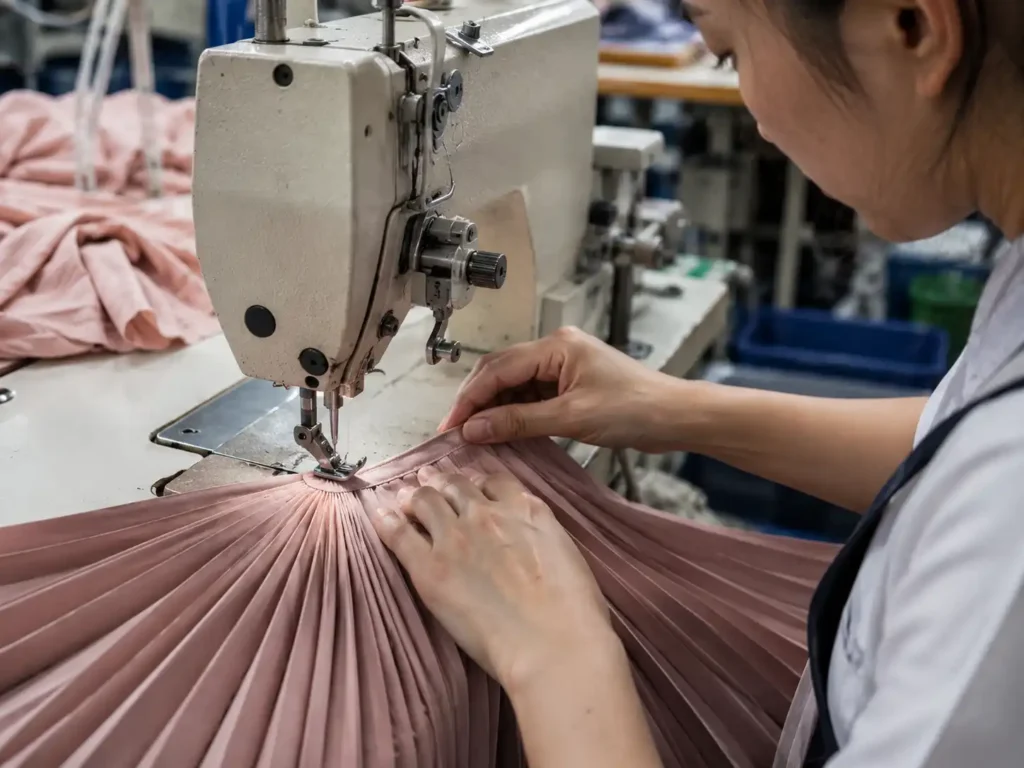
Layer alignment depends on controlled sewing sequence, stable reference marks and suitable seam finishes. Operators need approved methods for gathering, anchoring, joining, hemming and handling delicate surfaces.
- Stabilize Before Adding Volume
Stay stitching, stabilizing tape, basting or temporary support can protect waistlines, necklines and curved joins before heavy or gathered layers are added. Lightweight fabrics may stretch along curves or bias areas if handled without support. A stable base allows tiers and overlays to be positioned accurately. The sewing sequence should avoid pulling a finished delicate layer through unnecessary later operations.
- Gathering Must Be Measured
Gathering is distributed using notches, quarter marks and defined cut-to-finish ratios. Dense sections, flat sections and twisted gathers can create visible imbalance. Stitch tension and thread choice should suit the fabric so gathering lines do not break or pucker. For several layers, gathering may be prepared separately and joined in stages to reduce waist thickness. The first pieces are compared for tier depth and volume before the method is released across production.
- Clean Seams for Sheer Fabrics
Sheer chiffon, organza and mesh expose seam allowances through the outer surface. French seams, narrow overlock, binding, clean lining construction or carefully trimmed allowances may be used according to the design. Seams should remain smooth without bulky thread build-up. Lace and decorated mesh often need local seam cleaning where sequins, beads or motifs cross stitching lines. The approved interior finish is documented because it affects both appearance and comfort.
- Anchor Floating Layers Securely
Overlays, petals, cascades and asymmetric panels need secure attachment at defined points. Too few anchors allow rotation; too many can destroy movement. Hidden hand tacks, seam catches or lining attachments may control the layer while keeping the exterior clean. Anchor position and stitch type are included in sewing instructions. Final movement checks confirm that the layer returns to the intended position after walking or turning.
Hem Finishes for Tulle, Chiffon and Organza
Hem finish changes weight, movement, edge definition and labor. The chosen method should suit fabric behavior, selling price, silhouette and bulk repeatability.

Raw Tulle Edge
- Best for stable tulle
- No frayed woven edge
- Length differences stay visible
Rolled Chiffon Hem
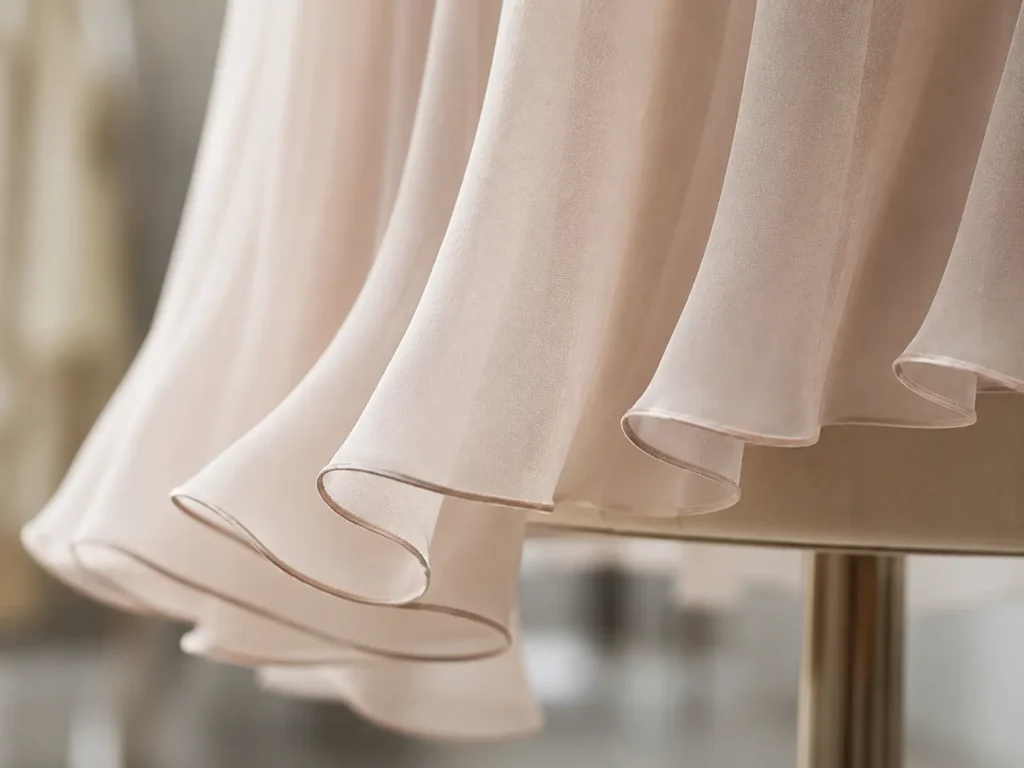
- Fine edge profile
- Requires stable tension
- Inspect full circumference

Narrow Turned Hem
- Controlled neat edge
- More body than roll hem
- Check curved sections

Bound Organza Edge
- Strong edge
- Visible design line
- Control binding tension

Horsehair Braid Hem
- Builds structured volume
- Adds labor and cost
- Inspect joins and recovery

Decorative Lace Edge
- Motif-aware placement
- Clean attachment
- Protect delicate points

Decorative Layers, Lace Placement and Sequin Control
Decoration should strengthen the design without creating unstable weight, rough skin contact, inconsistent placement or packing damage. Position, backing, attachment and inspection standards are approved before bulk production.
- Lace Applique and Motif Mapping
Applique may follow the neckline, bodice seams, waist, tier edges or scattered placement. A placement map identifies motif orientation, spacing, left-right balance and size-specific adjustment. Large motifs can be hand positioned, while repeat patterns may be cut through planned markers. Lace edges need clean trimming and secure stitches that do not distort sheer bases. Lining color and seam location are reviewed because they change how motifs appear on the body.
- Sequin Mesh and Beaded Surfaces
Sequin and beaded materials add weight and can scratch, shed or interfere with seams. Decoration is cleared from seam allowances where needed, and backing or lining protects the wearer. The direction of sequins and reflective surface is kept consistent. Attachment security can be checked through controlled handling and inspection. Heavy sections should be anchored to stable fabric rather than relying on delicate mesh alone. Zippers and side seams need enough clearance to remain flat and functional.
- Rhinestones, Embroidery and Dimensional Details
Rhinestones, embroidered motifs, floral applique and dimensional trims require approved color, size, position and attachment method. Dense decoration can alter drape and create local stiffness. Placement must remain compatible with bust shape, seam lines, folding and packing. Sample approval records include close-up images or marked artwork. Bulk inspection checks missing pieces, loose attachment, adhesive marks, asymmetry and damage to the base fabric.
- Packing Protection for Decorated Layers
Decorated surfaces can catch on adjacent layers or transfer pressure marks. Garments may need tissue, protective film, reversed folding, larger polybags or controlled stacking. Hangtags and labels should not rub against delicate mesh, satin or sequins. Packing trials confirm that embellishments remain secure and the layered silhouette can recover after unpacking. Carton quantity is planned according to garment volume and surface sensitivity rather than forcing a standard pack ratio.
What We Need to Develop Your Layered Dress
Tech Pack
- Measurement chart
- Construction notes
- BOM and artwork
Reference Image
- Multiple views
- Detail close-ups
- Desired movement
Original Sample
- Mark required changes
- Record key measurements
- Protect brand ownership
Layer Count
- Visible layers
- Support layers
- Lining layers
Fabric Direction
- Composition preference
- Hand-feel target
- Color standard
Size Chart
- Base size
- Tolerance
- Grading direction
Quantity Plan
- Per style/color
- Size ratio
- Delivery batches
Launch Date
- Photo sample need
- Bulk warehouse date
- Shipping method
Project Review Before Pattern and Sample Development

Structure Review
- Identify construction gaps
- Map major components
- Flag high-risk areas
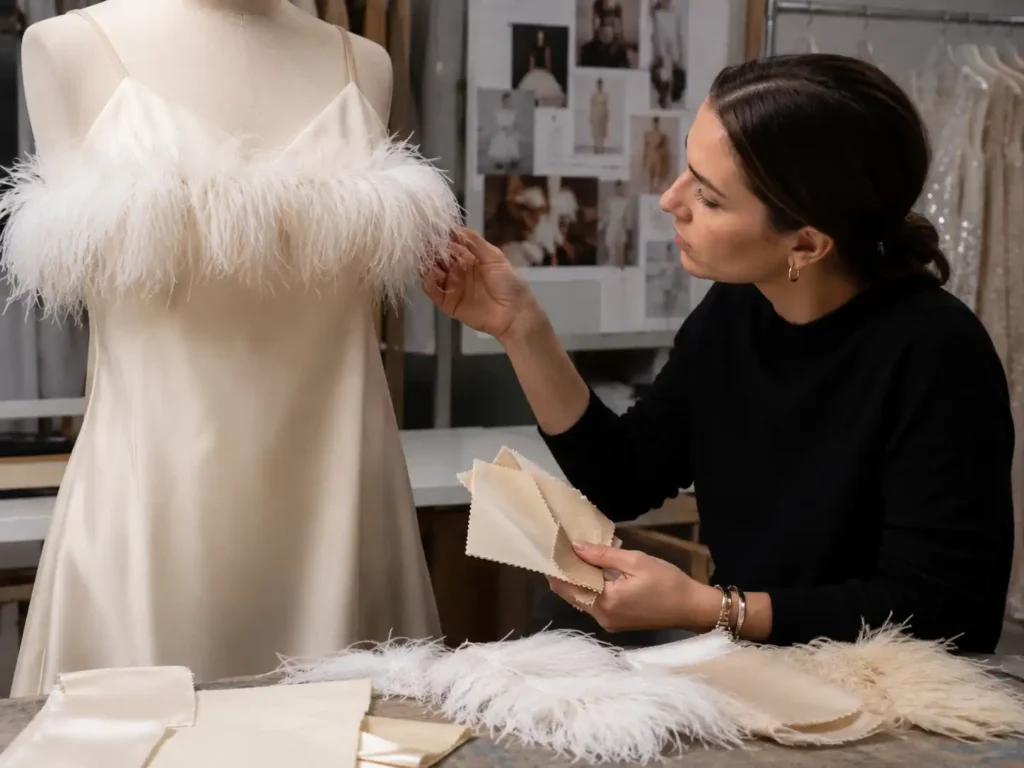
Feasibility Advice
- Suggest material options
- Simplify without losing appearance
- Clarify cost and MOQ impact

Sampling Plan
- Set sample priority
- Define approval sequence
- Confirm required files
From First Pattern to Approved Layered Dress Sample
Structure Review
- Risk list
- Material direction
- Approval questions
Fabric Direction
- Outer layer
- Support layer
- Lining
Pattern Development
- Base size
- Layer geometry
- Notches and grain
First Sample
- Silhouette check
- Construction check
- Initial fit
Fit Review
- Body fit
- Layer balance
- Comfort
Layer Revision
- Length correction
- Volume correction
- Lining correction
Revised Sample
- Version control
- Updated measurements
- Close-up approval
PP Approval
- Final standard
- Production handover
- QC reference
Why PP Approval Matters Before Bulk Production
The PP sample connects design approval to production execution. Bulk release occurs only after final materials, measurements, construction and private-label requirements are documented and approved.
The PP Sample Locks More Than Appearance
A visually acceptable sample may still contain temporary fabric, substitute trims or incomplete packaging details. The PP sample should represent the approved production direction, including fabric batch or standard, color, lining, support layers, zippers, cups, boning, decoration, labels and finishing. Measurements and tolerances are attached to the reference. Layer order, finished lengths, gathering ratio, tier spacing, hem method and waist thickness are confirmed so production does not rely on memory or informal messages.
Production Files Must Match the PP Reference
The approved PP comments feed into patterns, size charts, BOM, fabric and trim approvals, sewing instructions, label files, packing instructions and QC checklists. Any late change should be evaluated for pattern, cost, material and lead-time impact before being accepted. A physical golden reference or controlled PP sample can remain available for production and inspection. File and sample alignment reduces interpretation differences between development, cutting, sewing, QC and packing teams.
Bulk Release Requires Clear Approval
Production is not started on the assumption that a first or photo sample is final. Written approval identifies the exact sample version and any remaining conditional points. Material arrival, marker planning and line scheduling can then follow a stable specification. Where a collection includes 10-30 styles, approval status is tracked by style so one unapproved design does not create confusion across the complete program. Key styles may move first while later styles remain in development.
PP Control Protects Repeat Orders
Approved measurements, pattern versions, fabric references, trim records, sewing methods and packing requirements can support later repeat orders. Changes between seasons are compared against the prior standard instead of rebuilding the style from memory. A controlled golden reference helps QC identify whether repeat production remains consistent or whether a new fabric or fit direction requires a fresh approval cycle.
Bulk Production Built Around the Approved PP Sample
Jinfeng Apparel coordinates layered dress production through material preparation, factory allocation, process control, QC and packing. Complex styles are assigned according to construction, fabric and order structure rather than treated like basic garments.
Factory Allocation by Product Structure
Jinfeng operates six owned women’s fashion factories and works with more than ten long-term satellite production partners. Production allocation considers fabric type, sewing complexity, decoration, style count, quantity, size ratio and delivery sequence. A chiffon resort tier dress, a sequin mesh party mini and a corset tulle prom dress may require different teams and production planning. Satellite partners are long-term resources within the production system, not unverified last-minute workshops. Approved specifications and QC requirements follow the allocated style.
Material and Pre-Production Control
Material and Pre-Production Control
Fabric, lining, trims, labels and packaging are tracked before line release. Incoming inspection reviews shade, width, defects, holes, stretch, surface quality and quantity according to material type. Cutting plans reflect layer hierarchy and fabric behavior. The first production pieces are compared with the approved PP sample for measurements, tier spacing, volume, lining, zipper, decoration and overall appearance. Any process issue is corrected before output expands.
Inline Control During Sewing
Inline checks focus on construction points capable of multiplying across a bulk order: layer attachment, gathering distribution, waist thickness, side seam alignment, zipper flatness, lining position, hem finish and decoration security. Findings are recorded and linked to corrective action. A layered garment should not wait until final inspection for all errors to be discovered. Early control reduces rework and protects fabric, labor and delivery planning.
Finishing, Packing and Multi-Batch Delivery
Pressing restores the intended silhouette without flattening volume or damaging delicate surfaces. Finished garments are measured, inspected and prepared according to label, barcode, SKU and packing files. Bulky or decorated styles may require adjusted fold, bag and carton quantity. Jinfeng can support multi-batch delivery, client-appointed forwarders, express samples, air freight, sea freight or split shipment planning according to the approved project arrangement.
Quality Checkpoints for Multi-Layer Dress Production
Fabric Shade
- Check dye lot
- Compare full layer stack
- Review under consistent light
Fabric Defects
- Inspect rolls
- Protect surfaces
- Remove damaged panels
Layer Length
- Measure individually
- Check after pressing
- Compare PP reference
Tier Spacing
- Use seam references
- Measure key points
- Inspect complete circumference
Hem Balance
- Front/back comparison
- Side balance
- Floor clearance
Lining Length
- Strong-light check
- Movement check
- Seated coverage
Waist Seam
- Check bulk
- Check level line
- Check internal finish
Side Seam
- Hang garment
- Compare left/right
- Review grain behavior
Zipper Flatness
- Open-close test
- Check seam bulk
- Protect delicate layers
Decoration Security
- Compare artwork
- Inspect symmetry
- Check attachment
Pressing Shape
- Set temperature
- Protect surface
- Allow cooling
Packing Recovery
- Check fold marks
- Check volume recovery
- Confirm carton ratio
MOQ, Cost and Timeline Planning for Layered Dresses
Commercial planning starts with quantity per style and color, confirmed construction and material availability. Layer count, fabric use, sewing time, finishing and packing all influence cost and schedule.
MOQ Is Calculated by Style and Color
- Jinfeng Apparel’s MOQ starts from 200 pcs per style/color. One style in black at 200 pcs can be evaluated as one production unit.
- One style in black and ivory generally requires 200 pcs per color.
- Several styles totaling 200 pcs do not equal the standard MOQ because patterns, fabric batches, cutting, sewing methods, labels, SKU control and QC are different.
- Special dyeing, printing, lace, sequins, trims and custom packaging may carry separate supplier MOQs.
- A clear quantity plan prevents misleading quotations and later material changes.
Cost Is Built From the Actual Structure
- Layered dress quotation includes fabric consumption, lining, support materials, trims, pattern work, sample development, cutting, sewing time, edge finishing, pressing, QC, packing, wastage, testing where required, logistics and reasonable factory margin.
- A four-layer raw-edge tulle skirt and a four-layer chiffon skirt with rolled hems have very different labor and fabric costs.
- Circular panels, high gathering ratios, lace placement, sequin cleaning and horsehair hems also change consumption and sewing time.
- Cost optimization focuses on preserving brand-level appearance while removing unnecessary structure or selecting a more suitable material.
Sample and Production Timing Depends on Readiness
- A reliable schedule is issued after style information, material direction and sample scope are reviewed.
- Development includes requirement confirmation, fabric sourcing, pattern, sample sewing, internal inspection, photo or video feedback, revision and PP approval.
- Complex layered gowns, custom-dyed fabrics, special lace or heavy decoration need longer planning than standard tiered dresses using available materials.
- Bulk scheduling begins from approved PP status and confirmed material readiness, not from the first inquiry date.
- For a 10-30 style program, sample and PP priorities can be sequenced around hero SKUs and launch windows.
Delivery Planning Protects the Launch Window
- Packing, QC, carton preparation, booking and transport must be included in the delivery plan.
- Air freight can support priority launch quantities when timing carries greater value than freight cost.
- Sea freight suits larger planned deliveries and requires earlier booking.
- Split shipment can send hero styles or priority sizes by air while the main volume moves by sea.
- Client-appointed forwarders can be supported with packing lists, commercial invoices, carton measurements, gross and net weight, carton marks and pickup coordination.
Anonymous Multi-Style Programs With Layered Dress Control
The following anonymized program profiles reflect the order structure common among established fashion labels: 10-30 styles per program and 20,000-80,000 pcs across the approved order. Brand names and private files remain confidential.

US Occasionwear Program - 12 Styles, 24,000 Pieces
A US occasionwear label developed 12 layered mini and midi dresses using soft tulle, organza, satin lining and selected sequin mesh. The main risks were inconsistent skirt volume across colors, heavy waist seams and visible lining differences under flash photography. Styles were grouped by bodice base and layer system. Pattern makers standardized waist references, tier spacing and lining length while keeping separate visual effects for each SKU. Sample review focused on bust support, layer order, movement and surface protection. Two revision groups were managed through updated measurements and construction notes before PP approval. Bulk production followed style-specific golden references. QC concentrated on layer length, zipper flatness, decoration security, lining coverage and packing recovery. Cartons were separated by style, color, size and warehouse SKU.

Australian Resort Program - 18 Styles, 42,000 Pieces
An Australian resortwear label planned 18 chiffon, rayon and lightweight woven tiered dresses across mini, midi and maxi lengths. The commercial goal was visible movement without heavy packing volume. Risk analysis identified print direction, transparent light colors, tier placement and side seam twisting as priority controls. Styles were grouped by fabric and pattern base so the sample room could progress hero styles first. Chiffon hems, gathering ratios and lining lengths were documented by style. Bulk cutting used directional markers for printed panels and separate handling for slippery layers. Inline checks focused on tier spacing, seam twisting and lining position. Final packing used fold methods selected by silhouette, with priority launch quantities prepared for air shipment and remaining volume coordinated for sea delivery.

UK Occasion Collection - 26 Styles, 68,000 Pieces
A UK occasionwear program covered 26 organza, lace, mesh and satin-based dresses with asymmetric overlays, ruffles and layered formal skirts. Development complexity came from several fabric combinations, multiple bodice structures and a wide SKU count. The project was divided into fabric groups, bodice groups and launch priorities. Pattern and sample comments were tracked by version, and PP approval status was managed style by style. Lace placement maps, mesh transparency standards and organza edge methods were included in the production files. Bulk output was allocated according to construction complexity. QC reviewed shade, motif position, asymmetric reference points, lining coverage, seam thickness, decorative attachment and label accuracy. Packing files controlled woven labels, care labels, hangtags, barcode stickers, polybags and carton marks for the complete program.
Private Label, Packing and Brand Protection
Layered dresses require accurate garment presentation as well as controlled manufacturing. Labels, barcodes, packing, shipment files and confidential design information are managed through approved project records.
Private-Label Components
Jinfeng can support woven labels, size labels, care labels, hangtags, hang strings, barcode stickers, SKU labels, polybags, stickers, thank-you cards, cartons, carton marks and warehouse labels. Artwork size, material, color, position and supplier MOQ are confirmed before bulk ordering. Label placement is included in the PP review. Barcode and SKU data should come from the brand’s approved files, and packing teams check style, color, size and label combination before cartons are closed.
Packing Designed Around Garment Volume
A layered mini dress, a structured organza gown and a soft chiffon maxi should not automatically share the same fold or carton ratio. Packing trials consider surface sensitivity, skirt recovery, decoration, hanger requirements, polybag size and warehouse rules. Tissue, protective film or larger bags may be used where approved. Carton marks, carton measurements, gross and net weight, packing list and shipment photos are prepared according to project needs. Retail-ready and ecommerce-ready requirements are reviewed before production reaches the packing stage.
NDA and Unreleased Design Protection
Jinfeng Apparel supports NDA-based cooperation and protects tech packs, line sheets, original samples, patterns, size charts, fabric and trim details, private-label artwork, packaging files, barcodes, SKU data, quantities, pricing and launch plans. Files are used only for the approved development, sampling, production, QC, packing and shipment process. Unreleased samples or brand materials are not published without permission. Public production content uses internally developed samples, authorized projects or anonymized process details.
Repeat-Order Records
Pattern versions, size charts, fabric references, trim approvals, sewing instructions, QC notes, label files and packing standards can be retained for repeat-order support. A repeat order still requires material availability, color and specification confirmation, but prior records reduce repeated explanation and help identify deliberate changes from the earlier standard. Golden references and documented comments provide a stronger base for multi-batch consistency.
Frequently Asked Questions About Multi-Layer Dress Manufacturing

Start Your Multi-Layer Dress Development Project
Send Jinfeng Apparel the information available for your layered dress program. A tech pack, reference image, original sample or line sheet can begin the review. Include quantity per style/color, fabric direction, size range, target delivery window and private-label requirements where possible. The team will review layer structure, bodice support, material behavior, MOQ fit, sample route, bulk risks and information still needed before confirming the next step.
- Product type and front, back, side or close-up references
- Tech pack, size chart, BOM or original sample where available
- Target layer count, volume, lining and fabric direction
- Quantity per style/color and planned size ratio
- Brand labels, hangtags, barcodes, polybags and carton requirements
- Photo sample, PP approval, launch date and delivery destination
- Testing, inspection, warehouse guide or appointed forwarder requirements