 Skip to content
Multi-Category Womenswear Collections
Develop coordinated women’s fashion collections across multiple product categories with structured sampling, production allocation and brand-level quality control.
- Develop dresses, tops, skirts, matching sets and jumpsuits within one coordinated collection program.
- Structured for multi-style projects where fabric groups, fit requirements, sample priorities and launch dates must move together.
- 6 owned women’s fashion factories and 10+ long-term satellite production partners support category-based production allocation.
- 2 sample rooms, 7+ senior pattern makers and 20+ sample machinists support parallel development before bulk production.
- Collection projects move from line sheet and development files through sampling, PP approval, bulk production, QC, private-label packing and shipment coordination.
Manufacturing Capacity Built for Multi-Style Collections
100,000+ Pcs Monthly Capacity
18+ Sewing Lines
6+ Flexible Lines
15+ QC Inspectors
12+ Merchandisers
30+ Finishing Staff
What Multi-Category Collection Manufacturing Really Means
One Collection Direction
A dress, top, skirt and matching set may use different construction methods, yet color direction, fabric character, fit positioning and visual level still need to feel related.Development decisions should therefore be reviewed across the assortment rather than style by style in isolation.
Different Technical Logic
Different categories require different pattern and production controls.
A bodycon dress depends heavily on stretch and recovery, a jumpsuit requires careful rise and mobility control, while a matching set requires top-to-bottom proportion and color consistency.
Coordinated Execution
Womenswear Categories Developed as One Collection
Jinfeng Apparel focuses on trend-driven custom womenswear where several categories often appear in the same seasonal or private-label program. Each category is developed around its own fit and construction risks while remaining connected to the wider collection.

Dresses

Fashion Tops

Skirts

Matching Sets

Jumpsuits

Occasion and Resort Styles
Build a Collection With a Clear Assortment Structure
A strong collection is rarely a random list of attractive garments. Commercial ranges usually need visual leaders, dependable volume styles, supporting separates, controlled fabric families and a launch sequence that gives the merchandising team room to react.
Balance Hero and Commercial Styles
A collection may contain highly visual pieces for campaign photography alongside more repeatable silhouettes designed for broader sales. Jinfeng can review construction risk, fabric difficulty and development priority across the line sheet before every style enters sampling at the same time.
A heavily structured corset dress, for example, may require more fitting and sample revision than a simpler satin skirt. Giving both styles identical development priority can create unnecessary congestion. Hero SKUs with campaign or photography deadlines can move earlier, while lower-risk styles follow once key fabrics and construction decisions are stable.
For a 10–30 style program, the useful question is not whether every sample can start on the same day. The more important question is which styles unlock the largest part of the collection once approved.
Development focus:
- Identify campaign or hero SKUs.
- Separate high-risk and repeatable constructions.
- Review which styles share fabrics or trims.
- Align sample priority with photography and launch dates.
- Reserve production windows according to approval sequence.
Organize the Product Mix
Length, silhouette, occasion and styling combinations influence how a collection performs as an assortment.
A dress-heavy range might combine mini, midi and maxi lengths with selected tops, skirts and sets to widen outfit choices without diluting the brand direction.
For occasionwear, fitted statement dresses may be supported by satin separates or coordinated sets. Resort ranges may use flowing dresses, matching sets and lighter separates.
Going-out collections may place stronger emphasis on bodycon fits, cut-outs, mesh and structured tops.
Jinfeng’s role is manufacturing rather than merchandising a brand’s retail strategy, but collection development becomes more efficient when the line sheet clearly identifies product groups, fabric groups, color direction and launch priority before sampling expands.
Reduce Unnecessary Collection Complexity
More styles do not automatically create a stronger collection. Excessive fabric variations, one-off trims, unnecessary color fragmentation and unrelated constructions make sourcing, sampling, production and QC harder to control.
A more disciplined development plan may use selected core fabrics across several SKUs, reserve special materials for statement pieces and consolidate trims where appearance allows. The goal is not to make every garment identical; it is to avoid complexity that adds little visual value.
Cost can also be managed through fabric substitution, construction simplification, trim replacement, cutting-layout planning, color consolidation and size-ratio planning without weakening the brand-level appearance of the range.

Start With the Right Collection Development Files
Line Sheet
Tech Packs
Reference Samples
Reference Images
Size Charts
Fabric References
Private Label Files
Launch Calendar
Pattern Development Across Different Womenswear Categories
Fit consistency across a collection does not mean using one pattern logic for every garment. Each category responds differently to body proportions, fabric stretch, lining, closures and construction. Pattern development needs to preserve the brand’s fit direction while respecting those differences.
Dress Fit Requires More Than Three Measurements
Bust, waist and hip are essential, but they are not enough for many fashion dresses. Neckline depth, strap position, armhole shape, waist placement, slit height, skirt length, lining length and back opening can materially change the appearance of a finished garment.
Structured and bodycon products add another layer. Corset-inspired styles may require cup placement, boning position and upper-bust stability. Stretch styles need enough negative ease to create the intended silhouette without overstretching seams or causing excessive length rise.
Pattern comments are therefore linked to specific sample versions rather than remembered informally.
Tops and Sets Need Proportion Control
A fashion top may look correct alone but fail when paired with the planned skirt or trouser.
Crop length, waistband height, torso exposure and hem position should be reviewed as a combination when a matching set is intended to sell as one look.
For coordinated sets, grading also requires attention. The proportional relationship established in the base size should remain visually balanced across the size range rather than changing unexpectedly as garments are graded.
Color and fabric consistency matter as much as fit because top and bottom pieces are seen side by side.
Jumpsuits Need Full-Body Balance
Jumpsuits require torso and lower-body measurements to work together. Bust, waist and hip shape may look correct while the garment still feels uncomfortable because the rise or torso length is too short.
Pattern review can therefore include waist placement, front and back rise, crotch depth, leg width, upper-body ease, shoulder or strap length and movement allowance. Fabric stretch and drape also influence whether the same dimensions remain appropriate after a material change.
Jinfeng can develop for US, UK, EU and AU sizing, alpha sizes from XS–XL, extended ranges, plus-size standards and petite or tall adjustments according to project requirements.

Build a Smarter Fabric Strategy Across the Collection
Fabric decisions influence silhouette, cost, pattern shape, sample timing and production stability. Multi-category ranges become easier to control when materials are organized into deliberate fabric families rather than selecting a completely different construction for every SKU.
Core Fabrics Across Multiple Styles
Using one approved satin, jersey, mesh or other core material across several styles can simplify color approval, sourcing and repeat-order records. Shared fabric does not mean shared garment construction. A satin dress, satin skirt and satin top still require individual pattern and sewing review.
The advantage comes from controlling fewer material variables. Hand feel, width, composition, color and approved bulk quality can be documented once and referenced across the relevant styles.
For repeat programs, Jinfeng records fabric name, supplier, composition, weight, width, stretch, hand feel, drape, transparency, color, dye lot, MOQ, lead time and bulk issues where applicable.
Statement Fabrics Need Separate Risk Review
Lace, sequins, mesh, specialty prints and structured materials often deserve their own development path. They may create different supplier MOQs, lead times, cutting requirements, lining needs or bulk consistency risks.
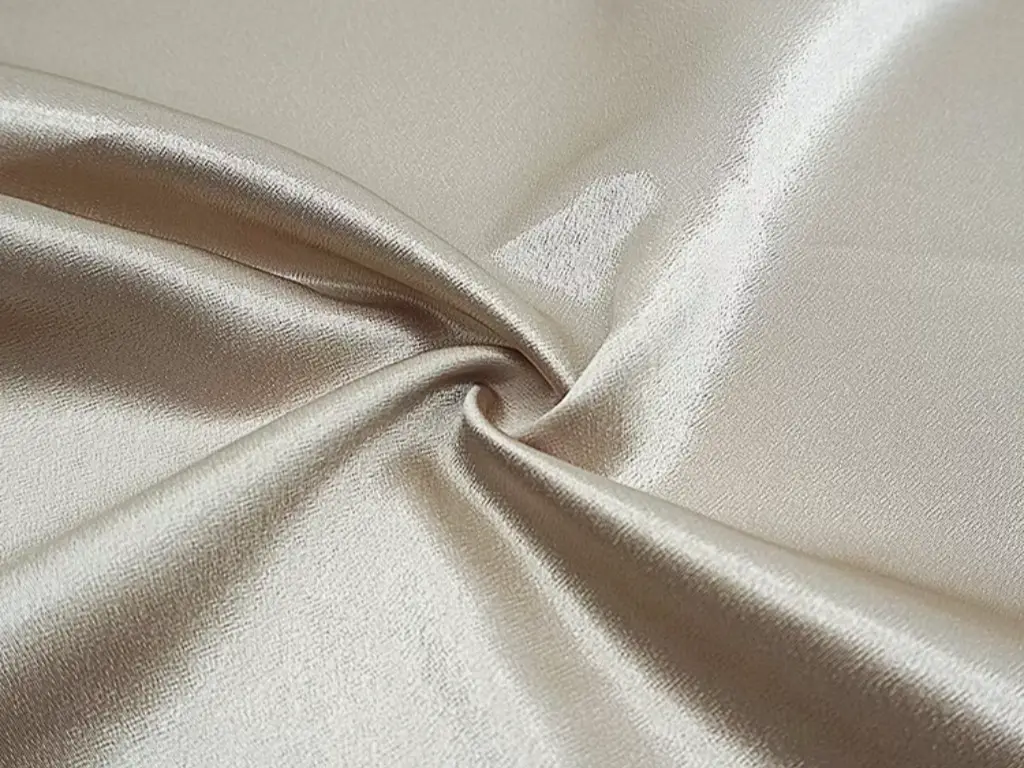
Mesh requires transparency, stretch and edge-stability review. Lace may require placement and joining decisions. Sequin materials need protection from scratching and excessive shedding. Satin needs attention to surface damage, color appearance, seam handling, zipper flatness and pressing.
A visually strong collection can still control complexity by reserving these materials for selected styles rather than using a different specialty construction everywhere.
Material Changes Must Trigger Technical Review
Replacing a fabric with a similar-looking alternative is not automatically a cosmetic change. Composition, weight, stretch, drape and transparency can alter pattern ease, lining needs, hem behavior and garment balance.
Before substitution is approved, Jinfeng reviews material differences, cost impact, MOQ, lead time and whether the pattern or sample must be updated. A high-stretch fabric replacing a lower-stretch fabric, for example, may require fit correction rather than simply cutting the existing pattern.
This discipline is particularly important when several styles share the same material and one substitution would affect the whole fabric group.
Multi-Style Sampling Without Version Confusion
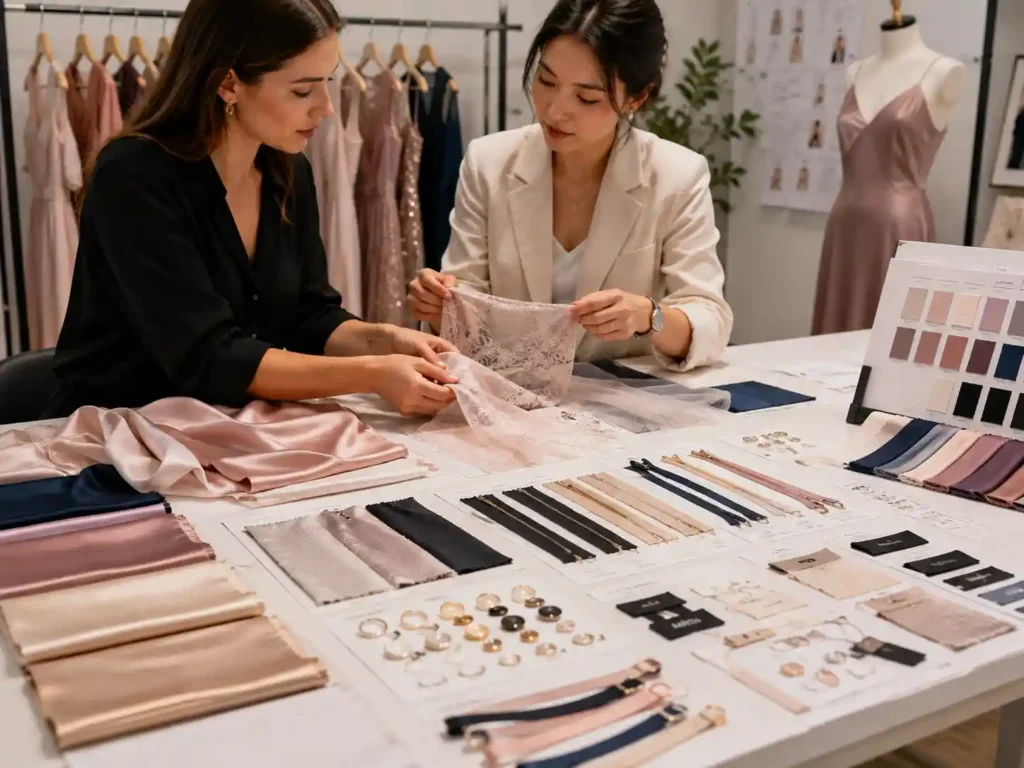
Sampling is where a multi-category collection becomes technically real. Ten or twenty styles moving at once can quickly create conflicting comments, wrong pattern versions and delayed approvals unless samples are grouped, prioritized and documented from the start.
Group Styles Before Samples Start

infeng can organize multi-style programs by fabric family, garment category, pattern complexity, trim group and launch priority.
A group of satin styles may move through sourcing together, while mesh or corset structures receive separate risk assessment.
This grouping helps identify dependencies. If six styles require the same custom fabric, there is little value in treating material approval as six unrelated tasks. If several styles use related pattern blocks, fitting information from early samples can also help prevent repeated mistakes later.
The objective is not to make development rigid. It is to give every style a clear status and relationship to the wider collection.
Prioritize Samples Around Launch Needs

Not every style should receive equal urgency. Campaign pieces, photo samples, hero SKUs and high-risk constructions may need earlier attention than straightforward supporting products.
Sampling priorities can be based on:
- launch date;
- campaign or photography deadline;
- fabric readiness;
- technical complexity;
- number of related styles;
- expected revision risk;
- planned bulk production window.
Record Every Revision as Production Data

Important changes should not remain only in email or chat history. Each sample revision can record the affected location, original feedback, measurement change, pattern impact, fabric or trim impact, construction impact, cost impact, lead-time impact and required next action.
Updates affecting bulk production are transferred into revised patterns, size charts, BOMs, sewing instructions, QC checklists, packing requirements and PP comments.
This becomes increasingly valuable when 10–30 styles are moving in parallel, because production teams need one confirmed standard rather than several informal versions.
PP Approval Creates the Bulk Standard

First samples show whether the concept can be developed. Fit and revised samples solve specific problems. Photo-ready samples serve presentation needs. The PP sample has a different role: it establishes the production standard before bulk starts.
Fabric, color, trims, measurements, construction, labels, hangtags, polybags, packing method and key QC points should be confirmed before PP approval. Major changes after approval require a new review of cost, schedule and production risk.
Golden samples then provide a physical reference for production, inspection, repeat orders and issue review.
Control Details by Fabric and Construction Type
Satin Styles

Mesh Styles

Lace Styles

Structured Styles

Stretch Bodycon

Sets and Jumpsuits
Plan Collection Cost and MOQ by Style
Collection costing works best when each style is evaluated on its real construction rather than forcing unrelated products into one average unit price. Fabric, trims, sewing time, pattern work, QC and packing can vary considerably across a single seasonal range.
| Cost or MOQ Factor | How It Affects the Collection |
|---|---|
| Fabric | Composition, weight, width, stretch, lining and sourcing volume influence both cost and pattern behavior. |
| Trims | Zippers, cups, boning, buttons, elastic, lace and decorative elements add material and handling requirements. |
| Construction | Ruching, cut-outs, corset structures, multi-layer garments and detailed finishing require different sewing time. |
| Pattern & Sampling | New silhouettes and complex fits usually require more development work than approved repeat patterns. |
| Colors | Additional colors can create separate fabric, dyeing, trim, SKU and packing requirements. |
| Size Range | Standard and extended sizing can influence grading, consumption and production planning. |
| Private Label | Woven labels, care labels, hangtags, barcodes, polybags and special packing can carry separate supplier conditions. |
| MOQ | Standard MOQ starts from 200 pcs per style/color and is calculated by style and color, not by total pieces across unrelated styles. |
| Special Materials | Custom dyeing, printing, certified fabrics, lace, sequins or specialty packaging may have their own supplier MOQ. |
| Schedule | Tight development or delivery windows can influence sourcing, production allocation and freight decisions. |
Allocate Styles to the Right Production Resources
Multi-category manufacturing becomes stronger when styles are allocated according to their real production requirements. Jinfeng uses an owned-factory and long-term satellite-partner structure so garment types, fabrics, construction complexity, quantity and schedule can be matched to suitable production units.
Do Not Put Every Style on the Same Line
A collection may include stretch bodycon dresses, satin occasion styles, lace garments, jumpsuits and matching sets. These products do not require identical sewing skills, material handling or QC priorities.
Placing every style into one generic production arrangement can create bottlenecks. Complex structured pieces may slow down straightforward styles, while fabric-specific handling requirements may be overlooked.
Production allocation therefore considers:
- garment category;
- fabric behavior;
- sewing complexity;
- finishing requirements;
- approved quantity;
- planned production window;
- required QC attention.
Use Flexible Lines for Mixed Approval Timing
In a multi-style project, all PP samples are rarely approved at exactly the same moment. Some fabrics arrive earlier, some styles need another revision and some hero SKUs need to enter bulk first.
Jinfeng’s 6+ flexible production lines help support multi-style projects where approved groups can move forward without requiring the entire collection to reach one identical development stage first.
The goal is controlled sequencing rather than simply starting everything at once.
Production planning still depends on confirmed PP standards, fabric and trim readiness and available production windows.
Keep One Project Standard Across Factories
Using more than one production unit creates value only when information remains consistent. Production orders, sewing instructions, approved patterns, PP references, size charts, BOMs, QC points, labels and packing instructions need to follow the style wherever it is allocated.
Jinfeng’s production system connects merchandising, material sourcing, pattern, sampling, production, QC, finishing, packing and logistics teams rather than treating each factory allocation as an independent supplier relationship.
For a collection team, the commercial benefit is clearer: several styles can move through specialized production resources while one manufacturing partner remains responsible for project coordination.

Move From Development Files to Bulk Production
Design Review
Fabric and Trims
Pattern Development
Sample Validation
PP Approval
Bulk Production
QC and Packing
Delivery Coordination
Unified Quality Control Across Different Categories
A multi-category range cannot rely on one vague promise of “strict QC.” Each garment has category-specific risks, while measurements, appearance, labeling and packing still need to follow one agreed brand standard across the whole shipment.
Materials Are Controlled Before Sewing
Incoming material inspection is important because fabric problems become more expensive once several styles have been cut. Width, surface condition, shade, direction, stretch behavior and other project-specific requirements can be reviewed before production progresses.
For fabrics such as satin, mesh, lace, sequins or stretch jersey, inspection priorities differ. Material direction and stretch direction also need to be respected during cutting because the wrong orientation can change garment appearance or fit.
In-Line Checks Find Problems Earlier
Waiting until the final inspection to discover a repeated sewing issue creates unnecessary rework. In-line inspection allows teams to review workmanship, measurements and product-specific risk points while bulk production is still running.
A satin style may focus on zipper and surface handling. Mesh can require edge stability and transparency control. Structured garments may require cup, boning and upper-bust checks. Jumpsuits require rise, waist and movement checks.
Product-specific QC is therefore built around the garment rather than copied from an unrelated style.
Finished Garments Must Match Approved Standards
Garment inspection can review appearance, measurements, workmanship, finishing and critical construction points against approved project files and PP or Golden references.
Jinfeng’s QC scope includes incoming material QC, cutting QC, sewing QC, in-line inspection, garment inspection, pressing review, packing QC, AQL inspection and client inspection support. AQL is treated as a sampling inspection method, not as a substitute for all process checks.
Collection-Level Consistency Extends Beyond Sewing
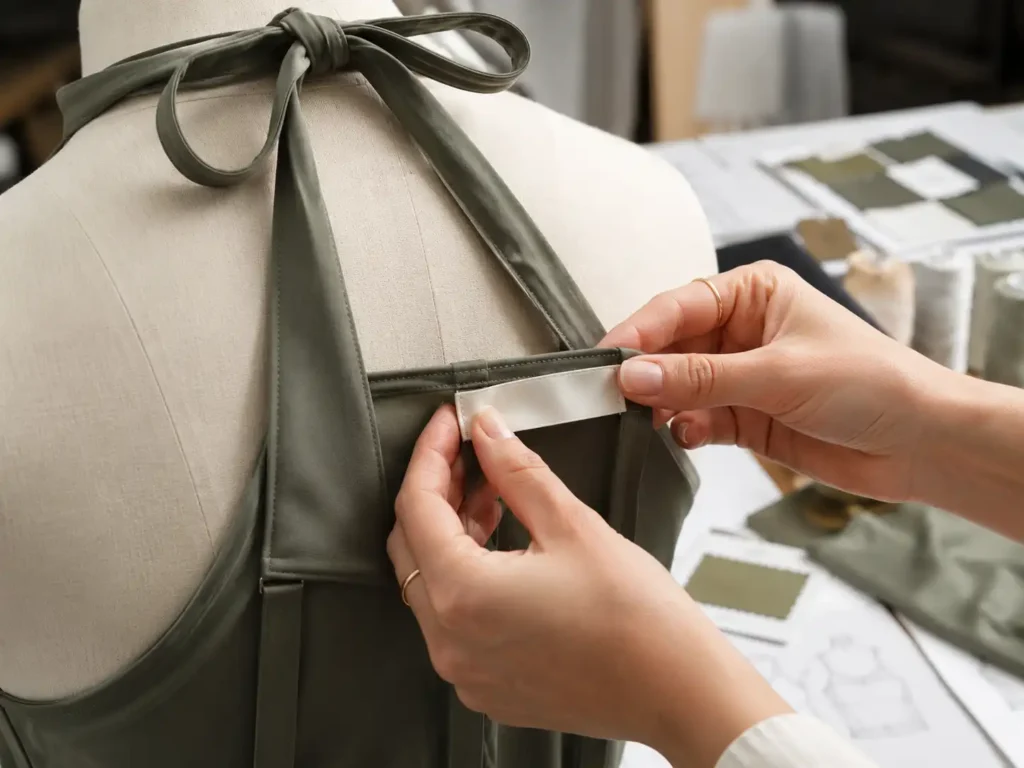
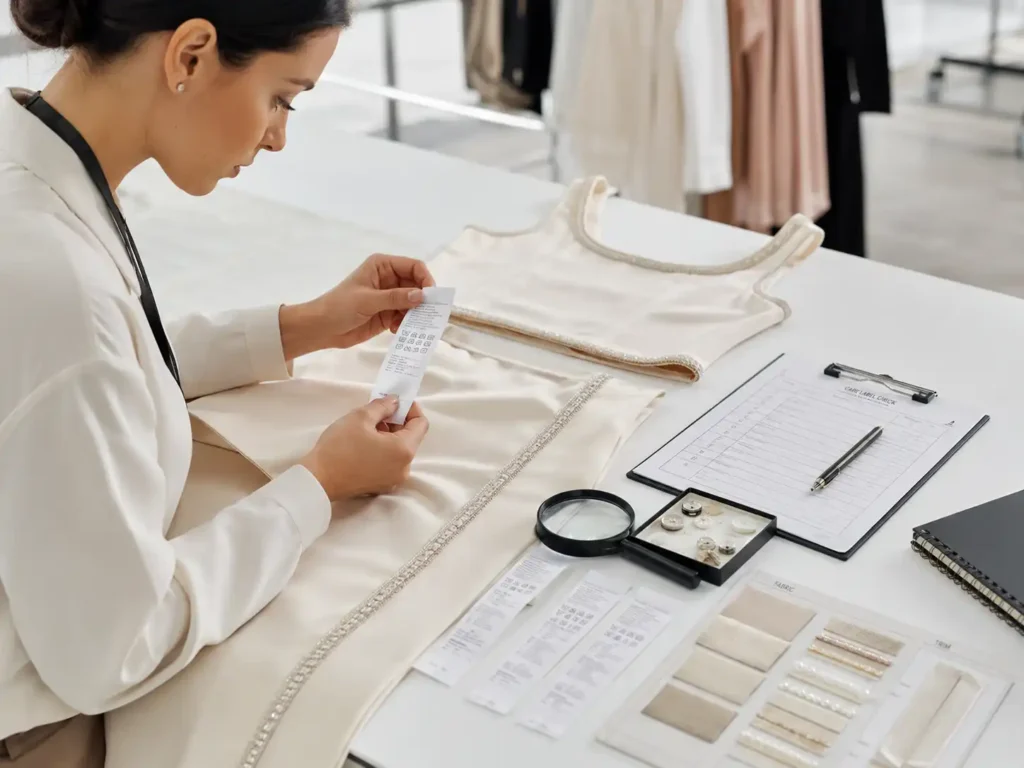
Several categories still need one common retail standard. Label position, barcode accuracy, SKU information, color names, folding, polybag format and carton marks should not change unpredictably from one production group to another.
QC therefore connects directly to private-label packing and shipment preparation. For a 20-style order, one incorrect SKU system can create warehouse problems even when sewing quality is acceptable.
Keep Private Label and SKU Packing Consistent
- Review Packing Files
- Plan SKU Packing
Woven Labels
Care Labels

Hangtags

Barcode Stickers

Polybags
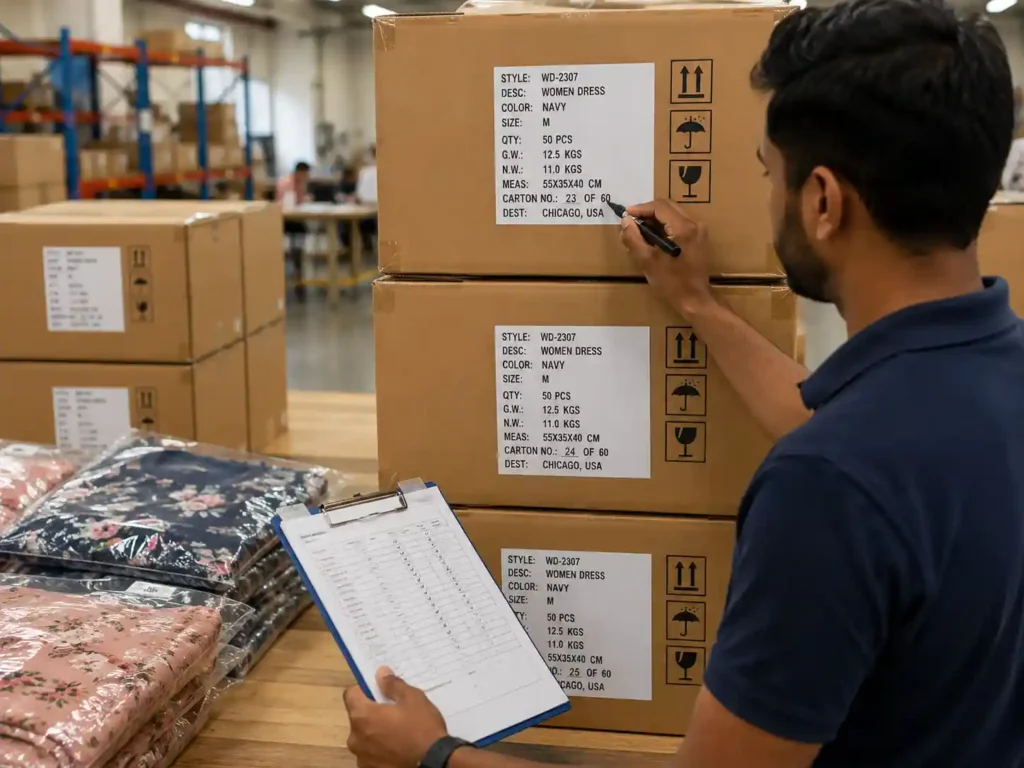
Carton Marks

Size Ratios

Warehouse Labels
Plan Development and Delivery Around the Launch Calendar
Sample Windows
PP Approval
Fabric Readiness
Production Windows
Split Shipment
Freight Planning
An 18-Style Private Label Collection in Practice
A real collection project shows more than capacity figures. It demonstrates whether different fabrics, sample versions, SKU information, packing requirements and shipment stages can remain organized once the order becomes operational.
Project Profile

An anonymous US private-label client worked with Jinfeng Apparel on an 18-style womenswear program of around 28,000 pieces. Products covered satin, mesh, jersey, lace and crepe dresses, creating several fabric and construction groups within one order.
The order required more than producing 18 individual styles. Material status, sample versions, labels, barcodes, packing and inspection preparation needed to remain traceable across the full program.
Main Coordination Risks

Five fabric families meant the same sewing and QC logic could not be applied to every style. Satin required surface and zipper control, mesh required transparency and stretch attention, while lace and jersey created different construction priorities.
At the same time, 18 styles generated multiple combinations of style, color and size. Hangtags, barcodes, polybags and carton marks needed to remain linked to the correct SKU during finishing and packing.
Client inspection and phased shipment also meant the project could not be managed as one undifferentiated production batch.
How the Project Was Managed

Jinfeng used a project timeline covering fabric and trim tracking, sample versions, production progress and packing preparation.
Styles were tracked separately while shared requirements remained standardized. Private-label elements—including hangtags, barcodes, polybags and carton marks—were coordinated against approved order information rather than added casually at the end.
Client inspection support was incorporated into the final quality stage, and shipment was arranged in phases according to project readiness. The result was a controlled path from multi-style development into private-label bulk delivery without exposing confidential brand identity or unreleased design information.
What the Case Demonstrates

The value of the project is not the number 28,000 alone. The stronger proof is the ability to coordinate several fabric types, multiple style files, SKU structures, packing standards, inspection requirements and staged shipment under one production program.
For brands evaluating a multi-category manufacturing partner, this is the operational difference between a supplier that can sew many garments and one that can manage a collection.
Jinfeng Versus a Single-Category Manufacturing Setup
Single-category specialists can be highly effective when every product follows similar fabric and construction logic. A multi-category collection creates a different requirement: several garment types must be developed and delivered under one coordinated standard.
| Evaluation Area | Single-Category Setup | Jinfeng Multi-Category Approach |
|---|---|---|
| Product Scope | Usually optimized around one garment family | Dresses, skirts, tops, sets, jumpsuits and related fashion categories |
| Pattern Development | Strong within a narrow construction range | Pattern review adapted by garment category and target market |
| Fabric Coordination | Materials often managed style by style | Fabric grouping and shared-material planning across related SKUs |
| Sampling | Individual sample workflow | Multi-style grouping, sample priority and revision tracking |
| Production | One main production specialization | Style allocation by fabric, construction, quantity and schedule |
| QC | Repeated checks for similar products | Product-specific QC points under a unified collection standard |
| Private Label | May require separate coordination | Label, barcode, SKU, polybag and carton-mark coordination |
| Multi-Batch Delivery | Depends on factory structure | Project-based phased and multi-batch delivery support |
| Repeat Programs | Focused on repeat products | Pattern, BOM, fabric, color, trim, packing and QC records support collection extensions |
| Best Fit | Narrow product programs | Mature brands managing several coordinated womenswear categories |
Turn One Collection Into a Repeat Program
Long-term manufacturing becomes more efficient when approved development work is preserved. Repeat orders still require confirmation, but the process should not begin from zero every time a proven style returns in another color, material or seasonal assortment.
Keep the Pattern History
Jinfeng can retain first, revised, PP and bulk patterns together with grading and construction notes from approved projects. These records help identify the correct starting point when a style returns.
A repeat style using the same approved construction can therefore move more efficiently than a completely new development. Pattern records also help support related collection extensions.
If fabric stretch, weight, lining, neckline, length, cup, boning, rise or another important variable changes, however, the old pattern is reviewed again rather than reused blindly.
Keep Material and Color References
Fabric records can include composition, weight, width, stretch, hand feel, drape, transparency, color, dye lot and sourcing information.
Color records may also include approved swatches or lab-dip references where relevant. These records help the team compare a new bulk lot or replacement material against the previous program.
If the original fabric is discontinued or changes materially, substitute options can be reviewed for cost, appearance and pattern impact before production resumes.
Keep the Production Standard
Repeat-order records can preserve BOMs, sewing instructions, packing requirements, QC notes and Golden samples.
For a bestselling style, the objective is not simply “make the same dress again.” Production needs to verify which details remain unchanged and which variables have moved since the previous order.
New colors may require new lining, zipper and thread matching. A new material can require revised fitting. A different destination may require updated labels or warehouse packing.
Extend Into the Next Collection
The strongest long-term relationship moves beyond repeating one SKU.
Approved silhouettes can become new colors, new fabric versions, coordinated separates or new seasonal styles while the manufacturing team already understands the brand’s fit, fabric preferences, private-label standards and launch rhythm.
Jinfeng records patterns, size charts, BOMs, fabric, color, trim, packing and QC information to support repeat orders, replenishment and seasonal collection programs.
Frequently Asked Questions About Multi-Category Collections

Start Your Multi-Category Womenswear Collection
A useful collection review begins with enough information to understand how your styles relate to each other. Send the line sheet or development files available today, and Jinfeng Apparel can review product categories, fabric directions, pattern requirements, sample priorities, MOQ structure, private-label needs and the production considerations behind the proposed launch calendar.
For a mature multi-style program, the goal is not to quote every garment from a photograph as quickly as possible. Early technical review helps separate straightforward styles from higher-risk constructions, identify shared fabric groups, establish sample priorities and determine which information must be confirmed before bulk planning begins.
Useful information to send:
- Line sheet or style list
- Tech packs, sketches or reference images
- Product categories and planned style count
- Target fabrics or fabric swatches
- Color options
- US, UK, EU, AU or brand-specific size chart
- Quantity by style and color
- Private-label and packing requirements
- Photography or campaign deadlines
- Target launch or warehouse date
- Shipping destination
- Existing samples, when available


