 Skip to content

Mini Club Dress Collections
Collection development and manufacturing for fashion brands building high-impact mini dresses for club, party, birthday and going-out drops.
- Collection programs commonly run 10-30 styles with total brand orders in the 20,000-80,000 piece range.
- 2 sample rooms, 7+ senior pattern makers and 20+ sample machinists support parallel style development.
- MOQ starts from 200 pcs per style/color, subject to fabric, trim, construction, packaging and production requirements.
- 6 owned womenswear factories and 10+ long-term production partners support multi-style bulk scheduling and repeat programs.
Start With Six Core Mini Directions

Bodycon Mini

Cut-Out Mini

Mesh Mini

Ruched Mini

Sequin Mini
Sequin minis are strong hero styles for party and holiday drops. Manufacturing has to manage sequin loss, thick seam allowances, skin contact and zipper areas. Soft lining, protected armholes and careful seam preparation reduce scratch risk while helping the garment keep a clean fitted shape.

Corset Mini

Build a Balanced Clubwear Collection
A collection becomes easier to sample, cost and produce when style decisions are grouped by silhouette, fabric, detail and commercial role rather than treated as unrelated individual dresses.
- Silhouette Balance
Use bodycon shapes for core volume, corset or strapless shapes for structure, and selected A-line or slip-inspired minis to avoid a collection where every SKU fits the body in the same way. Shared fit blocks can speed development when construction remains compatible. - Fabric Families
Group styles around a few controlled fabric families such as stretch jersey, power mesh, satin and sequin. Fewer fabric families can simplify shade approval, material tracking and production planning while still allowing strong design variation through neckline, cut-out, ruching and trim. - Visual Hierarchy
Separate commercial core styles from statement and hero styles. A black ruched bodycon may carry repeat volume, while a rhinestone, corset or sequin mini may create campaign impact. Production planning becomes clearer when each SKU has a defined commercial role. - Color Planning
Core black, red and neutral tones can sit beside metallic, pink or seasonal shades. Color count affects dye lots, trim matching, cutting, packing and SKU control, so color expansion should follow the expected sales role of each style rather than a uniform color count across the whole line. - Repeat Potential
A strong collection is designed with extension in mind. Final patterns, fabric references, trim cards, color records and packing requirements can support later new colors or repeat orders, while fabric batch, trim availability and production timing still need reconfirmation for every reorder.
Mini Club Dress Styles for Commercial Collections

Mesh Bodycon

Ruched Jersey

Side Cut-Out

Corset Mini

Sequin Mini

Satin Mini

Backless Mini

Halter Mini

Strapless Mini

Low-Waist Mini
Low-waist shapes rely on torso length and hip proportion rather than a standard natural-waist block. The low waist seam, skirt attachment and hip fit need to remain balanced across sizes.

Sheer Panel Mini

Metallic Mini
Plan Styles Around Selling Occasions
Night Out
Birthday
Party
Date Night
Festival
Holiday Drop
Choose Fabrics by Style and Risk
Fabric selection sets the fit ceiling for a mini club dress. Drape, stretch, recovery, surface behavior and transparency determine which silhouettes can be produced reliably and what has to be controlled during sampling and bulk production.

Stretch Mesh and Power Mesh
Stretch mesh works well for sheer panels, lined bodycon minis and cut-out structures. Power mesh offers stronger shaping but can change fit tension quickly if the weight or elasticity changes. Development should confirm stretch direction, recovery, transparency, hand feel, lining interaction and edge behavior. Bulk inspection needs to watch holes, snags, distorted necklines and inconsistent stretch between fabric lots.

Jersey and Spandex Blends
Jersey is useful for bodycon and ruched minis because it follows movement and allows close silhouettes. A soft hand alone is not enough. Recovery, fabric relaxation, cutting direction and shrinkage affect side-seam twisting, hem ride-up and post-wash dimensions. Tight styles should be developed with actual fabric or a technically similar substitute before measurements are locked.

Satin and Stretch Satin
Satin delivers clean shine for party, date-night and halter minis, but the surface can show snags, needle marks, pressing marks and shade variation. Stretch satin adds fit flexibility while introducing recovery control. Grain direction, zipper areas, lining choice and packing folds should be considered before bulk because a visually simple satin mini can reveal small construction defects immediately.
Sequin Fabrics
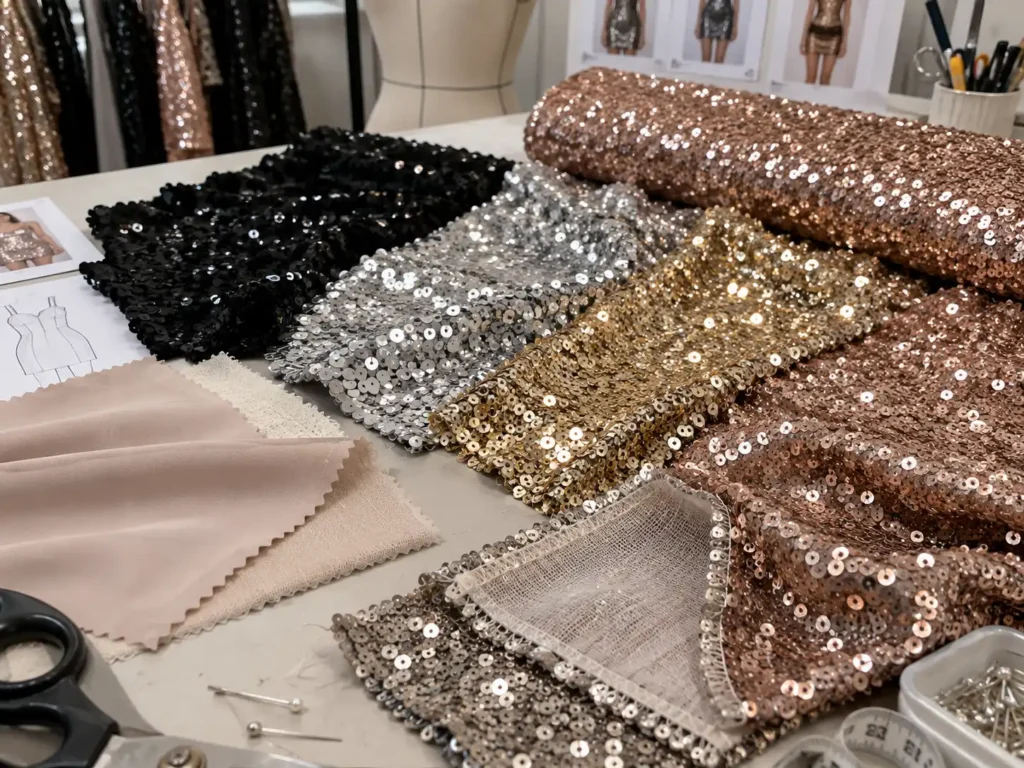
Sequin fabrics need a separate production plan. Sequin density, base fabric, motif direction and seam areas affect cutting and sewing. Removing or controlling sequins at seam allowances can reduce bulky seams and needle problems. Soft lining, protected armholes and neckline edges improve wear comfort. Final packing should minimize crushing, snagging and abrasion between garments.

Ponte and Structured Knits
Ponte and similar structured knits can support cleaner bodycon shapes, corset-inspired panels and low-waist minis where a firmer hand is useful. Thickness, stretch and recovery must match the intended negative ease. Heavy structured knit can stabilize the silhouette, but too much weight may reduce comfort or make short hems feel stiff during movement.

Control Mini Length, Fit and Coverage
Mini club dresses have less tolerance for measurement error than longer dresses. A small change in length, hip fit or neckline can shift the garment from confident to uncomfortable, especially across a graded size range.
- Front and Back Length
Front and back lengths should be reviewed separately on fitted minis. A single total length can hide ride-up created by hip shaping, ruching or a curved back. Samples should be checked standing, sitting and walking so the approved length reflects real wear rather than only a flat measurement. - Bust and Neckline Security
Halter, strapless, deep-V, backless and cut-out minis require clear bust coverage targets. Upper-bust circumference, neckline depth, cup position, strap tension and underarm shape should be reviewed together. A visually lower neckline can remain secure when the pattern, lining and support structure share the load correctly. - Waist and Hip Balance
Bodycon minis need controlled negative ease rather than simply smaller measurements. Fabric stretch and recovery decide how much reduction is appropriate. Excessive hip tension can twist side seams or pull the hem upward, while insufficient waist shaping can create a loose center waist even when the hip fits well. - Lining and Movement
Lining should support coverage without fighting the outer fabric. A lining that is too short can pull the shell upward; a lining with insufficient stretch can restrict movement; a loose lining can show below the hem. Movement review should include sitting, walking, arm raise and basic dance-like motion for styles intended for club and party use.
Engineer High-Impact Clubwear Details
Cut-Out Placement

Ruching Control

Backless Support

Halter Balance

Strapless Structure

Sheer Panels
Mesh inserts need clean joining lines, controlled transparency and stable edges. Panel tension should match the adjacent fabric so the seam does not ripple or distort.

Slit Placement

Decorative Hardware
Match Construction and Trims to Each Style
Zippers
Lining
Cups and Boning
Anti-Slip Support
Straps and Sliders
Hooks and Closures
Check Comfort Before Approving the Look

Sitting and Hem Coverage

Arm and Neck Movement

Stretch Recovery

Skin Contact

Turn a Line Sheet Into a Production Plan
Collection development becomes more controlled when style references are converted into grouped technical decisions before sampling starts. The goal is a production-ready line rather than a set of isolated samples.
- Style Grouping
Group references by silhouette, fabric family, construction level and launch priority. Similar bodycon or mesh styles can share development knowledge, while corset, sequin and unusual hardware styles usually need separate risk review. - Material Direction
Confirm whether each style needs stock fabric, custom color, printed fabric, certified material or special trim. Material choices affect MOQ, sample timing, bulk cost and whether a pattern needs adjustment. - Development Priority
Sample high-risk hero styles early enough to allow fit and construction changes. Core styles can follow shared blocks after measurements and fabric behavior are proven. A clear priority order prevents late complex styles from delaying the entire drop. - Approval Standard
Move approved decisions into pattern files, size charts, BOMs, sewing instructions, QC points and packing requirements. A collection should enter bulk with a documented standard, not a trail of unstructured chat messages.
Sample Multiple Styles Without Losing Control
Parallel sampling needs clear priorities, version tracking and realistic timing. Complex mini club dresses should not be forced into the same sample schedule as simple fitted styles.
- First Sample Timing
Simple first samples are commonly around 7-10 days when materials are available. A standard dress first sample is commonly around 10-15 days. Complex corset, lace, mesh, sequin or heavily detailed styles are commonly around 15-25 days, with special fabrics and trims following supplier lead times. Timing is confirmed by style after the reference, fabric direction and construction are reviewed. - Fit and Revised Samples
Fit feedback should be converted into measurable revisions: bust, upper bust, waist, hip, front length, back length, strap length, neckline depth, armhole, cut-out position, slit height and lining length. Revised samples are commonly around 7-15 days depending on the changes and material availability. Fabric replacement can trigger another pattern review because stretch, drape and shrinkage may change the approved silhouette. - PP and Golden Standards
A PP sample is the final pre-production reference after fabrics, trims, measurements, construction and branding requirements are confirmed. Golden sample records can then support bulk production, QC, repeat orders and dispute review. Photo-ready or salesman samples should not automatically be treated as PP standards unless the final material and construction match the planned bulk specification. - Parallel Style Tracking
For a 10-30 style program, each SKU should carry an approval status for pattern, fabric, trim, color, sample version, size chart and packaging. Parallel tracking prevents one late trim or unresolved fit issue from being hidden inside the overall collection schedule. Priority styles can move forward while unresolved styles remain clearly flagged.

Lock Revisions Before Bulk Production

Pattern Changes

Material Changes

Construction Changes

Approval Records

Manage Multi-SKU Bulk Production
A mini club dress collection may combine several fabrics, fit blocks and construction levels in one launch. Bulk control depends on grouping the work correctly and keeping style-level standards visible throughout production.
- Material Arrival and Allocation: Fabric, lining, zippers, cups, boning, labels, hangtags, barcodes, polybags and cartons need a clear arrival plan. Missing private-label materials can delay packing even when sewing is finished. Material inspection should identify shade, stretch, defects and style-specific risks before cutting.
- Factory and Line Allocation: Styles should be allocated according to fabric behavior and construction complexity. Mesh, sequin, corset and ordinary stretch knit styles do not need identical production handling. Jinfeng Apparel operates 6 owned womenswear factories, works with 10+ long-term production partners, and manages 18+ sewing lines plus 6+ flexible production lines across its production system.
- In-Line Control: Production checks should happen before problems spread. Critical points can include side-seam twist on bodycon styles, zipper waviness on satin, mesh damage, sequin loss, corset cup position, ruching symmetry and mini hem consistency. In-line correction is less disruptive than waiting until final inspection.
- SKU Packing and Shipment: Size, color, style number, hangtag, barcode, polybag, carton mark and packing ratio should match the final order file. Multi-batch shipment can be planned when the commercial calendar requires staged delivery, while final transport timing is confirmed by destination, shipping mode, warehouse requirements and forwarder arrangements.
Control Club Dress Quality by Style
Different mini club dress families fail in different ways. A useful QC plan connects each style to its highest-risk construction points instead of applying one generic inspection checklist to the entire collection.
| Style Family | Main Bulk Risk | Key QC Focus |
|---|---|---|
| Bodycon / Jersey | Weak recovery, side-seam twist, hem ride-up | Stretch and recovery, bust-waist-hip measurements, side seams, hem length, post-wash size |
| Mesh / Sheer | Holes, snags, distorted edges, inconsistent transparency | Mesh damage, stretch direction, lining coverage, neckline recovery, seam finish |
| Sequin | Sequin loss, skin scratching, thick seams | Sequin stability, seam allowance, lining, zipper function, armhole and neckline comfort, packing protection |
| Cut-Out | Opening deformation, edge rolling, exposure shift | Cut-out position, edge stability, stretch balance, reinforcement, coverage during movement |
| Corset / Strapless | Cup mismatch, slipping, boning discomfort | Cup shape, boning position, anti-slip support, upper-bust fit, zipper, waist measurement |
| Ruched | Uneven gathers, asymmetric hem, inconsistent tension | Gather density, left-right balance, elastic or drawcord tension, hem level, seam anchoring |
| Satin | Snags, shade variation, zipper waviness, pressing marks | Surface condition, grain direction, shade, zipper flatness, pressing, packing folds |
Collection Programs Built for Real Launches
US Partywear Collection
Premium Ecommerce Clubwear Program
Capacity for Multi-Style Clubwear Programs
2 Sample Rooms
7+ Pattern Makers
20+ Sample Machinists
18+ Sewing Lines
15+ QC Inspectors
100,000+ Monthly Capacity

Carry the Collection Into Private Label and Reorders
A finished clubwear line needs consistent brand identification and reliable records for repeat production. Private-label control and repeat-order files connect product development with warehouse-ready delivery and later SKU expansion.
- Branding and Labels
Private-label support can cover main labels, size labels, care labels, hangtags, barcode stickers, SKU labels, polybags and carton marks. Artwork and placement should be approved before bulk so brand details do not become a last-minute packing issue. - SKU and Packing Control
Multi-style collections need packing rules by style, color and size. Barcode, size sticker, folding method, polybag, packing ratio and carton marks should match the order file. Packing QC helps prevent warehouse receiving errors even when garment quality is correct. - NDA and Design Protection
Jinfeng Apparel supports NDA-based cooperation and protects client tech packs, patterns, samples, labels, packaging files and unreleased designs. Client styles and private development files are not intended for public display without authorization. - Repeat Order Records
Final patterns, size charts, fabric references, trim records, sewing instructions, label artwork, packing methods, Golden samples and QC notes can support repeat orders. Material batch, color, trim availability, packaging supply and production timing still need reconfirmation for every new production run.
Plan MOQ and Cost at Collection Level
Collection costing becomes clearer when every style is evaluated by fabric, construction and SKU complexity. The objective is controlled cost without weakening the visual level or fit standards expected from the brand.
| Planning Item | Working Rule | Collection Impact |
|---|---|---|
| MOQ | Starts from 200 pcs per style/color | More styles and colors create separate material, cutting, packing and QC requirements rather than combining into one 200-piece total. |
| Fabric | Cost varies with composition, weight, width, stretch, dyeing, print, MOQ and wastage | Shared fabric families can improve material planning, while special colors, sequins or certified materials may carry independent requirements. |
| Construction | Corset, cut-out, ruching, lace, sequin and complex lining add labor and control points | Use construction intensity to separate commercial core styles from higher-cost hero SKUs. |
| Trims | Zippers, cups, boning, anti-slip tape, hardware and private-label trims vary by style | Shared trims can simplify purchasing, but fit-critical components should not be substituted only for lower cost. |
| Colors and Sizes | More color and size combinations increase cutting, grading, SKU and packing management | Build color count around expected sales role and keep size ratios visible at style level. |
| Packaging | Labels, hangtags, barcodes, polybags, boxes and carton marks affect unit cost and workflow | Confirm retail or ecommerce packing before final quotation so finishing costs are included correctly. |
| Timeline | Rush materials, urgent sewing allocation and air freight can increase cost | Confirm launch date early and lock PP, materials, packing and shipping milestones before promising a final delivery schedule. |
Frequently Asked Questions
Yes. A line sheet can be reviewed by style, fabric direction, construction, color, size range and priority. Clear references help group styles into development families and identify high-risk samples before the program enters bulk planning.
Common directions include stretch mesh, power mesh, jersey, spandex blends, satin, stretch satin, ponte and sequin fabrics. Fabric choice depends on silhouette, stretch, transparency, drape, support, visual finish and the intended level of movement.
Front length, back length, hip coverage, lining length and hem position are reviewed together. Fit checks should include standing, sitting and movement because fitted hips, ruching and stretch can make a mini ride upward.
Yes. Mesh requires control over transparency, stretch, holes, edges and lining. Sequin styles require attention to shedding, seam bulk, scratch risk, lining, zipper zones and packing protection. Both need product-specific production and QC methods.
Simple first samples are commonly around 7-10 days, standard dresses around 10-15 days, and complex corset, lace, mesh or sequin styles around 15-25 days. Special fabrics and trims can extend timing. Final timing is confirmed by style.
MOQ starts from 200 pcs per style/color. Fabric availability, custom color, special trims, construction, certified materials, private-label packaging and production schedule can create additional requirements for specific styles.
Yes. Multi-style programs can be developed in parallel with clear priorities and version tracking. High-risk hero styles are usually reviewed early so fit or construction changes do not block the rest of the collection.
Private-label support can include main labels, size labels, care labels, hangtags, barcode stickers, SKU labels, polybags and carton marks. Final artwork, placement and packing rules should be approved before bulk production.
Repeat production can use stored patterns, size charts, fabric references, trim records, sewing instructions, packing files, Golden samples and QC notes. Fabric batch, color, trim availability, price and production timing are reconfirmed for each reorder.
Send reference images or a line sheet, style count, quantity per style/color, fabric direction, color plan, size range, private-label requirements and target delivery window. Tech packs and BOMs improve quotation and development accuracy when available.

Start Your Mini Club Dress Collection Review
A productive first review starts with enough information to judge fit risk, fabric direction, sample priority and bulk complexity. Jinfeng Apparel can review a planned mini club dress range from initial references through pattern development, sampling, PP approval, multi-SKU bulk production, QC, private-label packing and repeat-order preparation.
Brands planning 10-30 style programs can send the full line sheet or begin with the highest-priority styles when the collection is still being finalized. Early visibility on quantity, color, size and launch timing makes fabric and production planning more accurate and reduces late changes.
- Reference images, line sheet or tech packs for the planned styles
- Estimated quantity per style/color and expected total collection volume
- Fabric direction, color plan and any required special trims
- Size range, fit block or measurement specification when available
- Private-label, barcode, polybag and carton-mark requirements
- Target launch date, warehouse window and preferred shipping terms


