Skip to content
Mesh Skirt Manufacturer for Clubwear Brands
Custom mesh skirt development built around stretch recovery, controlled coverage, club-ready fit and repeatable bulk production. Jinfeng Apparel develops mesh skirts for clubwear, partywear, festival and going-out collections from fabric direction and pattern work through sampling, bulk production, quality control and private-label packing.
- MOQ starts from 200 pcs per style/color for standard custom production.
- Simple samples usually require 7-10 days; standard styles 10-15 days; complex mesh or embellished styles 15-25 days.
- US, UK, EU and AU sizing can be developed from XS-XL, with extended, petite, tall or plus-size grading by project.
- 6 owned factories, 10+ long-term production partners, 2 sample rooms and dedicated pattern, sampling, merchandising, QC and packing teams.
Built for Structured Clubwear Programs
Since 2008
6 Owned Factories
10+ Production Partners
2 Sample Rooms
7+ Pattern Makers
15+ QC Inspectors
Why Clubwear Mesh Skirts Need Specialized Manufacturing
Transparency Drift
- Approve mesh and lining as a pair.
- Review transparency while stretched.
- Record approved layer count and color.
Stretch Mismatch
- Compare widthwise and lengthwise stretch.
- Check recovery after repeated extension.
- Balance negative ease across both layers.
Lining Movement
- Confirm lining coverage by size.
- Check leg opening and rise.
- Verify movement before PP approval.
Weak Seam Control
- Inspect needle marks and seam flatness.
- Reinforce slits and hardware points.
- Test recovery after sewing.
Custom Mesh Skirt Styles for Clubwear Collections
A strong range combines distinct silhouettes with a shared fabric and fit language. Each style below can be developed from a tech pack, original sample, reference image or coordinated line sheet.

Sheer Mesh Mini
- Best for: nightlife and going-out drops.
- Common structure: partial lining or attached brief.
- Key QC: transparency, skirt rise and hem level.

Ruched Bodycon
- Best for: fitted clubwear capsules.
- Common structure: double-layer stretch mesh.
- Key QC: left-right symmetry and hip placement.
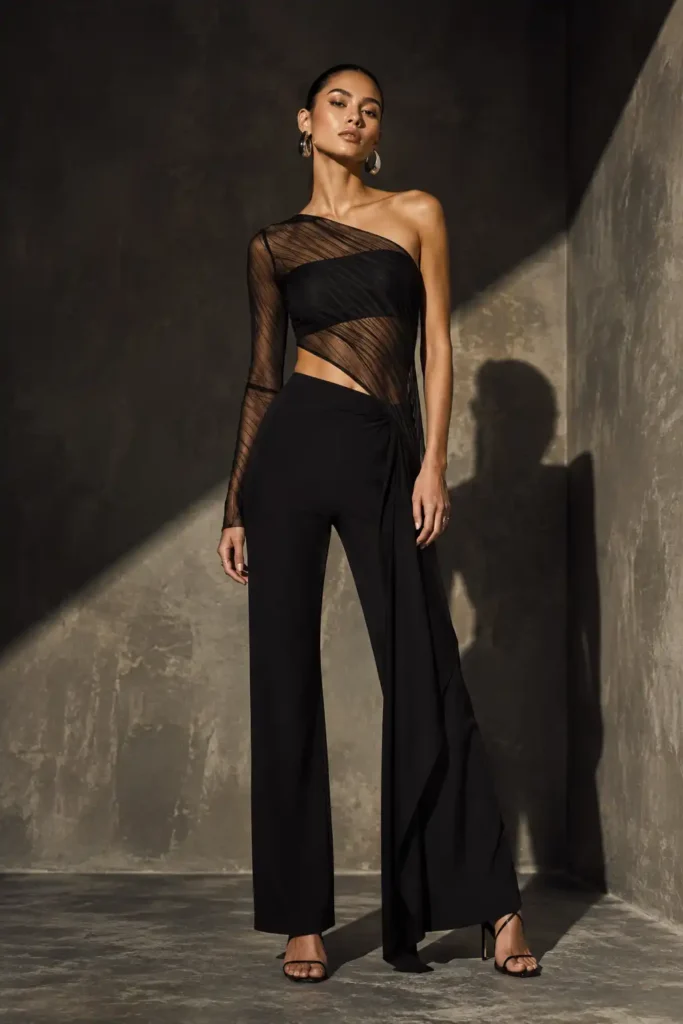
Asymmetric Mesh
- Best for: editorial and partywear stories.
- Common structure: mesh overlay with short lining.
- Key QC: hem drop and side balance.

Layered Mesh Skirt
- Best for: festival and statement looks.
- Common structure: two to four visible layers.
- Key QC: layer spacing and hem consistency.

Mesh Overlay Midi
- Best for: elevated night-out collections.
- Common structure: fitted inner skirt plus sheer midi overlay.
- Key QC: lining-to-overlay proportion.

Cut-Out Mesh Skirt
- Best for: directional clubwear ranges.
- Common structure: local lining and stabilized openings.
- Key QC: opening shape and stress-point security.

Flocked Mesh Skirt
- Best for: dark romantic and holiday capsules.
- Common structure: soft lining under decorative mesh.
- Key QC: flock loss, pressure marks and color consistency.

Sequin Mesh Skirt
- Best for: party, performance and festive launches.
- Common structure: fully lined sequin mesh.
- Key QC: missing sequins, abrasion and seam bulk.

Mesh Skirt With Shorts
- Best for: festival, dance and active nightlife.
- Common structure: integrated stretch shorts.
- Key QC: shorts migration and outer-layer balance.
Choosing Mesh Fabric for Fit and Visual Impact
Mesh selection starts with the required silhouette, coverage and movement. Weight alone cannot predict performance. Stretch direction, recovery, mesh opening, surface treatment, layer interaction and lining compatibility all affect the finished skirt. Fabric approval should include a physical swatch and, for fitted styles, a stretch comparison rather than color approval alone.
| Mesh Direction | Visual Result | Stretch Profile | Best Use | Primary Control |
|---|---|---|---|---|
| Stretch Mesh | Soft, flexible sheerness | Medium to high | Bodycon, ruched and cut-out skirts | Recovery, seam wave and layer balance |
| Power Mesh | Firm, sculpted support | High with stronger recovery | Fitted minis and supportive inner layers | Compression, comfort and size grading |
| Double-Layer Mesh | Controlled depth and coverage | Depends on both layers | Sheer bodycon and tonal layered styles | Layer alignment and combined stretch |
| Soft Tulle | Airy volume and shape | Low | Layered, flared and asymmetric skirts | Hand feel, edge finish and static |
| Flocked Mesh | Patterned depth and texture | Low to medium | Statement holiday and clubwear styles | Surface protection and cutting direction |
| Sequin Mesh | Reflective, high-impact surface | Medium | Party, performance and festival skirts | Decoration loss, seam bulk and skin contact |
| Printed Mesh | Graphic color and visual movement | Medium | Drop-led and coordinated capsule ranges | Print stretch, registration and color approval |
| Rhinestone Mesh | Sparkle with localized weight | Medium | Night-out and stage-inspired styles | Stone security, drape and protected packing |
Engineer Sheerness Without Losing Wearability
Full Stretch Lining
- Use for bodycon minis and retail-safe coverage.
- Approve lining color under natural and bright light.
- Measure outer and inner layers after wear movement.
Partial Lining
- Use for sheer midi overlays and high-slit designs.
- Check lining edge at front, side and back.
- Grade lining length with the skirt proportion.
Attached Brief
- Use for editorial clubwear and high-exposure minis.
- Check leg opening under movement.
- Keep attachment points smooth beneath the mesh.
Built-In Shorts
- Use for high-activity collections.
- Confirm inseam, rise and leg opening by size.
- Check migration after sitting and repeated steps.
Fit Control for Movement and Confident Wear

Waist and High Hip
- Control points: waist, waistband height, high hip and side seam.
- Check rolling, gaping and downward movement.
- Develop separate low-rise proportions when required.

Full Hip and Length
- Control points: full hip, front length, back length and hem level.
- Review opacity at the widest body point.
- Confirm mini length while standing, sitting and walking.

Grading and Size Range
- Bundle and identify cut parts by size.
- Measure waistband, hip, length, lining and slit height.
- Keep visual proportions consistent across the range.
Design Details Built for Clubwear Collections

Adjustable Ruching
- Check minimum and maximum length.
- Protect cord exits and bar-tack areas.
- Confirm ties do not catch the outer mesh.

Asymmetric Hem
Diagonal and high-low hems create movement but magnify cutting and hanging differences.
Pattern direction and reference points keep the silhouette stable through size grading.
- Mark balance points on the pattern.
- Allow fabric to relax before final hem review.
- Inspect left-right drop against the approved sample.

Side Slit
Slits increase stride and exposure. Slit height, reinforcement and lining interaction are developed together so the opening remains clean without pulling or spreading under movement.
- Confirm slit height by size.
- Reinforce the top of the slit.
- Check lining remains inside the intended coverage zone.

Cut-Out Panels
Cut-outs require controlled edges and clear grade rules. An opening that looks balanced in the base size may become too wide or shift position in larger sizes unless the pattern is adjusted deliberately.
- Review exposure at waist and hip.
- Stabilize edges without making them rigid.
- Check openings after repeated stretch.

Rhinestone Application
Rhinestones add concentrated weight to fine mesh. Stone size, spacing, adhesive or attachment method and fold lines must be considered before bulk placement.
- Approve a placement mockup.
- Test security and surface flexibility.
- Use protective packing between embellished areas.

Sequin Embellishment
- Protect skin contact with suitable lining.
- Inspect missing or reversed sequins.
- Avoid pressure damage during folding.

Contrast Lining
- Approve mesh and lining together.
- Check color consistency across dye lots.
- Record the approved combination in the BOM.
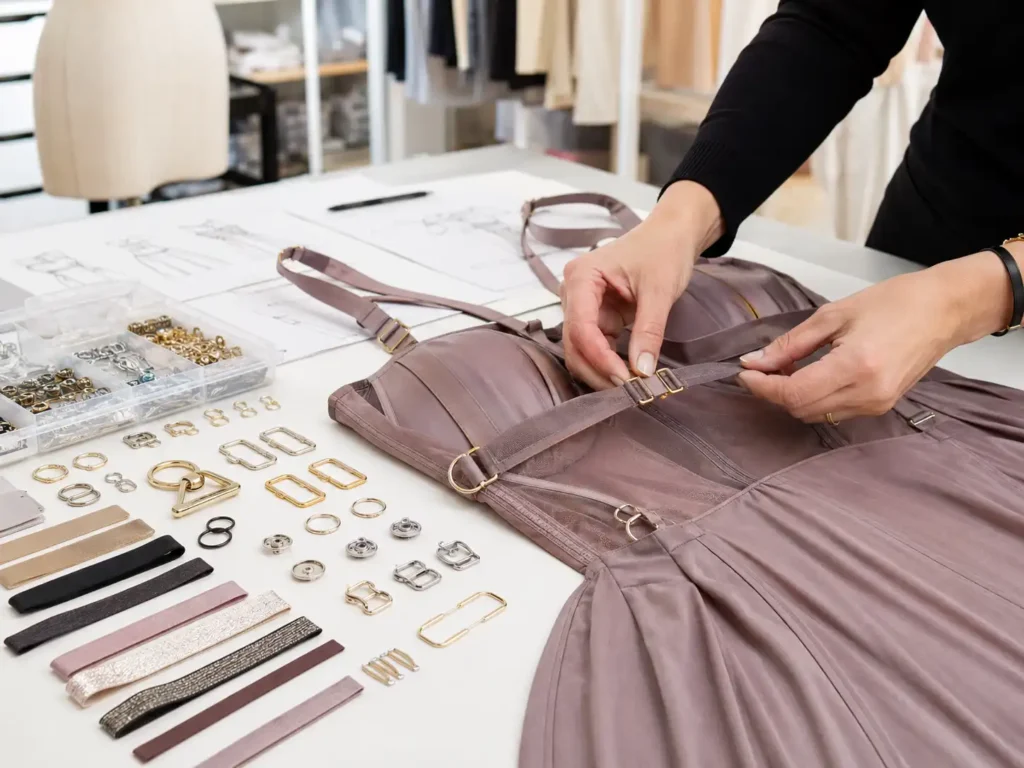
Hardware Detail
O-rings, sliders and decorative hardware create stress points on mesh.
Reinforcement, backing and placement are designed to distribute load without visible bulk.
- Confirm hardware weight and finish.
- Reinforce surrounding fabric.
- Check comfort and snag risk.
Construction Plans Matched to Each Skirt Concept
Double-Layer Bodycon
Two synchronized stretch layers improve coverage and surface depth. Both layers are cut in the approved direction, matched at control points and checked for differential shrinkage or recovery before bulk release.
- Best for fitted minis and ruched skirts.
- Primary risk: one layer growing longer.
- Approval record: combined stretch and finished length.
Overlay With Inner Skirt
- Best for midi overlays and asymmetric silhouettes.
- Primary risk: inner skirt twisting.
- Approval record: lining edge and overlay drop.
Mesh With Attached Brief
The brief is developed as part of the pattern set, with rise, leg opening and attachment position matched to the skirt.
Seam bulk is kept away from visible or high-pressure areas.
- Best for micro lengths and cut-outs.
- Primary risk: brief exposure or tightness.
- Approval record: movement and coverage check.
Mesh With Built-In Shorts
Shorts support high-activity wear while preserving a mini silhouette.
Outer and inner pieces need compatible stretch and a shared waistband strategy.
- Best for festival and dance-inspired styles.
- Primary risk: shorts pulling up the skirt.
- Approval record: repeated movement test.
Decorated Mesh Structure
- Best for holiday and statement styles.
- Primary risk: surface damage or decoration loss.
- Approval record: decoration mockup and packing method.
Mixed-Material Skirt
- Best for multi-texture clubwear capsules.
- Primary risk: incompatible stretch and weight.
- Approval record: fabric pair and seam behavior.
Sample Mesh Skirts Before Locking Bulk Production
Project Review
Fabric Direction
Mesh, lining and trims are matched to the required opacity, stretch, surface effect and target cost.
Outcome: swatch direction and sourcing plan.
Pattern Development
Waist, hip, length, slit, lining, brief or short structures are drafted for the selected base size.
Outcome: first production-oriented pattern set.
First Sample
Fit Review
Measurements, photos, video and wear feedback are compared with the specification and intended visual result.
Outcome: clear correction list.
Revised Sample
PP Sample
Pre-production approval locks fabric, color, pattern, measurements, workmanship, labels and packing before bulk cutting.
Outcome: bulk-ready standard.
Golden Sample
Workmanship That Protects Mesh Performance

Stretch-Compatible Seams
- Inspect extension against the fabric.
- Avoid rigid seam sections on fitted areas.
- Check recovery after repeated stretch.

Ruching Distribution
- Set gather start and stop points.
- Compare left and right finished lengths.
- Inspect the approved amount by size.

Waistband Attachment
- Check waistband join position.
- Measure relaxed and stretched dimensions.
- Confirm return after wear movement.

Lining Synchronization
- Match layer notches during sewing.
- Check inner layer remains centered.
- Compare front, side and back lengths.

Clean Edge Finishing
- Inspect waviness and skipped sections.
- Check edge softness against skin.
- Measure hem balance after hanging.

Reinforced Stress Points
- Mark reinforcement on the technical file.
- Check snagging and abrasion risk.
- Inspect before and after pressing.
Validate Mesh Skirts Beyond Static Fitting
Sitting Check
- Record visible coverage changes.
- Check zipper and slit stress.
- Confirm comfort at the waist.
Walking Check
- Observe front and side hem.
- Check inner shorts or brief position.
- Review seam movement.
Dance Movement
- Check skirt rise and recovery.
- Inspect embellishment movement.
- Review waistband grip.
Waist Extension
- Compare relaxed measurement before and after.
- Inspect elastic join and top edge.
- Check outer mesh tension.
Hip Extension
- Review transparency at maximum wear stretch.
- Check side-seam straightness.
- Inspect inner and outer layer balance.
Repeated Dressing
- Check zipper or opening durability.
- Inspect mesh for pulls.
- Confirm final measurements remain stable.
Convert Approved Samples Into Repeatable Bulk Orders
Lock the Standard
- Reference files: PP sample, Golden sample, BOM and measurement chart.
- Control goal: one approved interpretation for every factory team.
- Change control: written approval for fabric, trim, size or packing revisions.
Control Production
- Control points: materials, cutting, sewing, measurements and visual balance.
- Escalation: stop, correct and recheck affected batches.
- Record: inspection findings and corrective action.
Protect Repeat Orders
Pattern files, approved measurements, fabric references, color records, trim details, packing instructions and previous QC findings are retained for reorder planning. Material availability and new dye lots are still rechecked because repeat production does not remove supply-chain variation.
- Retained records reduce re-development loss.
- New fabric lots require renewed approval.
- Reorders can be split into planned production batches.
Quality Control for Mesh Skirt Bulk Production
Mesh skirt inspection begins before sewing and continues through packing. The focus changes by stage: material checks protect the starting standard, cutting checks protect direction and shape, sewing checks protect performance, and final checks protect fit, appearance, branding and delivery accuracy.
| QC Stage | Core Checks | Mesh-Specific Risk | Release Requirement |
|---|---|---|---|
| Incoming Fabric | Color, hand feel, weight, width, stretch direction, surface condition and lot identity | Snags, holes, inconsistent opening, growth and shade difference | Approved swatch or bulk lot standard confirmed |
| Cutting | Pattern version, fabric direction, size bundle, layer count and cut accuracy | Distortion, mixed stretch direction and surface damage | Cut panels match approved direction and size identification |
| Sewing | Seam quality, ruching, waistband, lining attachment, slit, zipper and hardware | Seam wave, needle marks, skipped stitches and layer mismatch | Inline measurements and visual checks pass before continuation |
| Measurements | Waist, high hip, full hip, front/back length, slit, lining and built-in short points | Ride-up, exposure change and inconsistent grade | Results remain within the approved specification and tolerance |
| Appearance | Transparency, symmetry, hem balance, stains, holes, pulls and pressing result | Visible lining drift, uneven ruching and snag damage | Garment matches the Golden sample appearance |
| Branding and Trims | Main label, size label, care label, hangtag, barcode, hardware and embellishments | Incorrect placement, loose stones, sequin loss and snagging | Brand files and approved placement are followed |
| Packing | Size sticker, folding, polybag, SKU, carton ratio, carton mark and shipment documents | Surface abrasion, mixed sizes and damaged decorative areas | Packed quantity and identification match the order files |
Build Mesh Skirts Into Complete Clubwear Capsules

Corset Top Set
- Coordinate exposure and waist position.
- Plan separate and set-based sizing.
- Pack as individual SKUs or complete sets.

Mesh Bodysuit Set
- Align mesh shade across products.
- Check torso and skirt stretch separately.
- Manage separate care and size labels.

Halter Crop Set
- Use a common fabric lot where possible.
- Coordinate ruching direction.
- Confirm top and skirt size-ratio planning.

Sequin Party Set
- Approve decoration direction.
- Protect embellished surfaces in packing.
- Coordinate color and shine.

Cut-Out Two-Piece
- Align design lines at the waist.
- Check movement between separate garments.
- Maintain coverage across sizes.

Dress-to-Skirt Story
- Reuse approved material standards.
- Adjust construction for each product.
- Keep color, label and packing systems aligned.
Private-Label Mesh Skirts Ready for Your Sales Channel
Main Label
- Confirm size, material and fold.
- Approve placement during PP sampling.
- Protect confidential brand artwork.
Size Label
- Match garment and polybag size.
- Check US, UK, EU or alpha sizing.
- Maintain clear SKU records.
Care Label
- Do not finalize before fabric confirmation.
- Keep the label soft against skin.
- Verify content before bulk printing.
Hangtag
- Use protected attachment points.
- Confirm barcode and price-ticket area.
- Check finish against brand standards.
Barcode and SKU
- Validate file version.
- Scan or visually check as required.
- Separate sizes and colors accurately.
Polybag and Carton
- Prevent decoration-to-decoration rubbing.
- Keep light colors clean.
- Confirm carton data before pickup.
MOQ Planning for Mesh Skirt Collections
Standard Order Unit
- Size quantities can be distributed within each approved color.
- Color and size ratios should be submitted before quotation.
- Production feasibility still depends on fabric, trims and schedule.
Fabric-Driven Changes
- Confirm stock availability before sampling.
- Review dye-lot and repeat-order requirements.
- Include special materials in the initial brief.
Multi-Style Planning
- Submit a line sheet with quantity by style/color.
- Mark hero SKUs and launch priorities.
- Consolidate compatible materials where suitable.
Manufacturing Support for Multi-Style Clubwear Programs
Product Allocation
- Match product structure with the right production resource.
- Separate complex styles from standard workflows.
- Reserve capacity after PP approval and material readiness.
Multi-Style Sampling
Programs with 10-30 styles are grouped by fabric family, pattern complexity, trim readiness and launch priority.
Revision status remains visible so key styles do not become blocked behind less urgent development.
- Prioritize hero SKUs and photo samples.
- Track first sample, revision and PP status.
- Keep comments linked to each style number.
Material Booking
Bulk fabric, lining, elastic, zippers, labels and packaging are booked against approved specifications.
Special mesh or decorated materials require earlier confirmation because surface treatment and supplier availability can affect timing.
- Confirm color and lot strategy.
- Review supplier minimums.
- Protect approved material references.
Production Management
- Maintain style and approval records.
- Coordinate factory, QC and packing teams.
- Escalate schedule or specification changes.
Quality Oversight
- Use approved specifications and Golden sample.
- Record findings and corrective action.
- Support client inspection requirements.
Packing and Delivery
- Confirm warehouse and forwarder rules.
- Separate shipment documents by batch.
- Protect decorated mesh during packing.
Representative Clubwear Mesh Skirt Programs

U.S. Clubwear Drop - 18 Styles, 38,400 Pieces
- Development action: regrouped fabric and lining pairs by stretch behavior, then revised negative ease and attachment points.
- Pattern action: added ruching start/stop marks, separate front/back length controls and size-specific lining lengths.
- Approval action: locked each style through revised samples, PP samples, measurement files and Golden samples.
- Production action: separated decorated mesh from standard stretch-mesh workflows and scheduled inline checks around the highest-risk operations.
- Packing action: managed style, color and size ratios under private-label SKU and carton instructions.

Multi-Channel Partywear Collection - 26 Styles, 72,000 Pieces
- Material action: grouped styles by mesh family and reserved matching lots for two-piece sets.
- Detail action: approved rhinestone placement mockups, backing methods and protected fold lines before bulk release.
- Size action: created separate checks for waistband, hip, lining, shorts rise and finished skirt length across the range.
- Project action: prioritized hero styles, maintained revision and PP status by SKU and prepared production groups around material readiness.
- Delivery action: structured packing records so selected launch quantities could be separated for faster shipment if required.
Mesh Skirt Manufacturing Frequently Asked Questions
Start Your Mesh Skirt Development
Send the available project files to Kelly for a structured review of style complexity, fabric direction, lining, size development, MOQ, sampling and bulk-production risk. A complete brief helps the development team compare mesh and lining behavior, identify difficult stress points, estimate sample timing and prepare a quotation based on the real construction rather than a visual guess. Programs with 10-30 styles can be reviewed through a line sheet so hero SKUs, shared materials, sample priorities and launch dates are planned together.
- Reference image, sketch, original sample or tech pack
- Quantity per style/color and expected size ratio
- Preferred mesh effect, opacity and lining direction
- US, UK, EU, AU or brand-specific size chart
- Ruching, slit, cut-out, hardware or embellishment details
- Main label, care label, hangtag, barcode and packing files
- Target sample date, launch date and delivery window
- Destination country, warehouse rules or nominated forwarder details when available