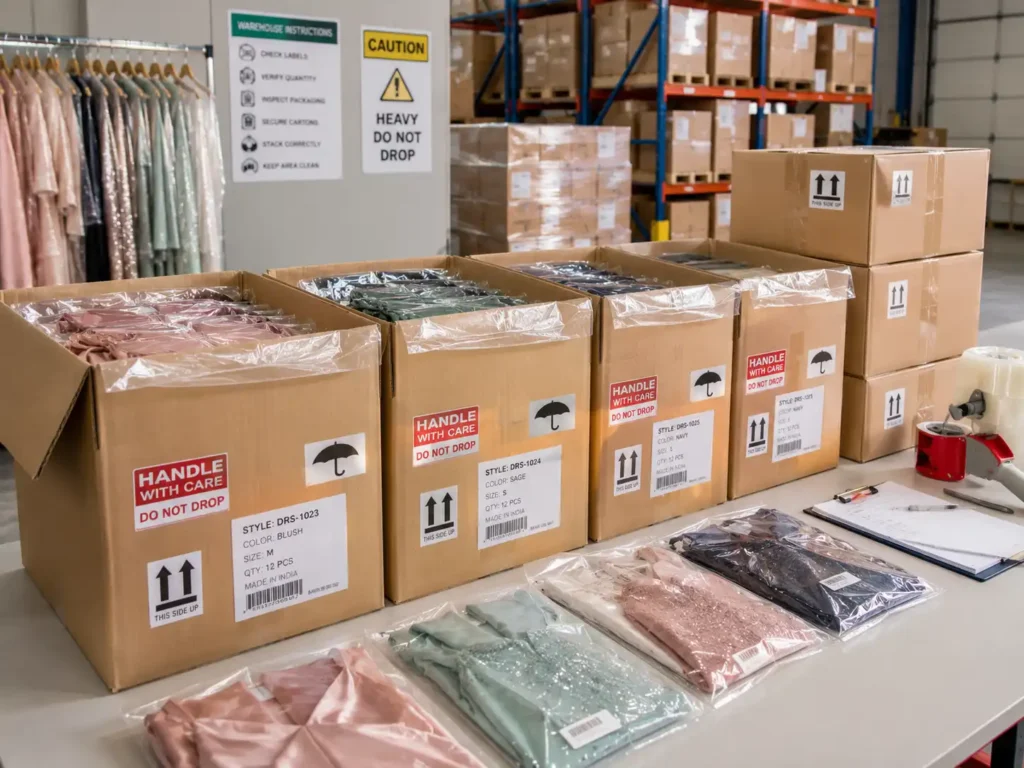
Mesh Party Dress Collection Manufacturer

Custom mesh partywear development for global fashion brands requiring strong visual impact, reliable fit, scalable production and retail-ready delivery.

Jinfeng Apparel develops mesh party dress collections from line sheets, tech packs, reference samples and approved design files. Product teams receive support across mesh selection, lining coverage, pattern correction, sample revisions, PP approval, bulk production, inspection, private-label packing and export coordination. Programs are organized around product role, fabric group, fit block, color story and launch timing, allowing multiple styles to move through development without losing design consistency or production control.

  • Collection scale: structured for 10-30 styles and total order plans of approximately 20,000-80,000 pieces.
  • Mesh direction: common mesh references range from 40-120 gsm, with stretch, transparency, drape and lining assessed by style.
  • Complex first samples: mesh, corset, lace and sequin constructions commonly require 15-25 days after materials and specifications are confirmed.
  • Production entry: MOQ starts from 200 pieces per style and color; special mesh, dyeing, trims and packaging may carry separate supplier minimums.

Production Capacity Built for Multi-Style Party Collections

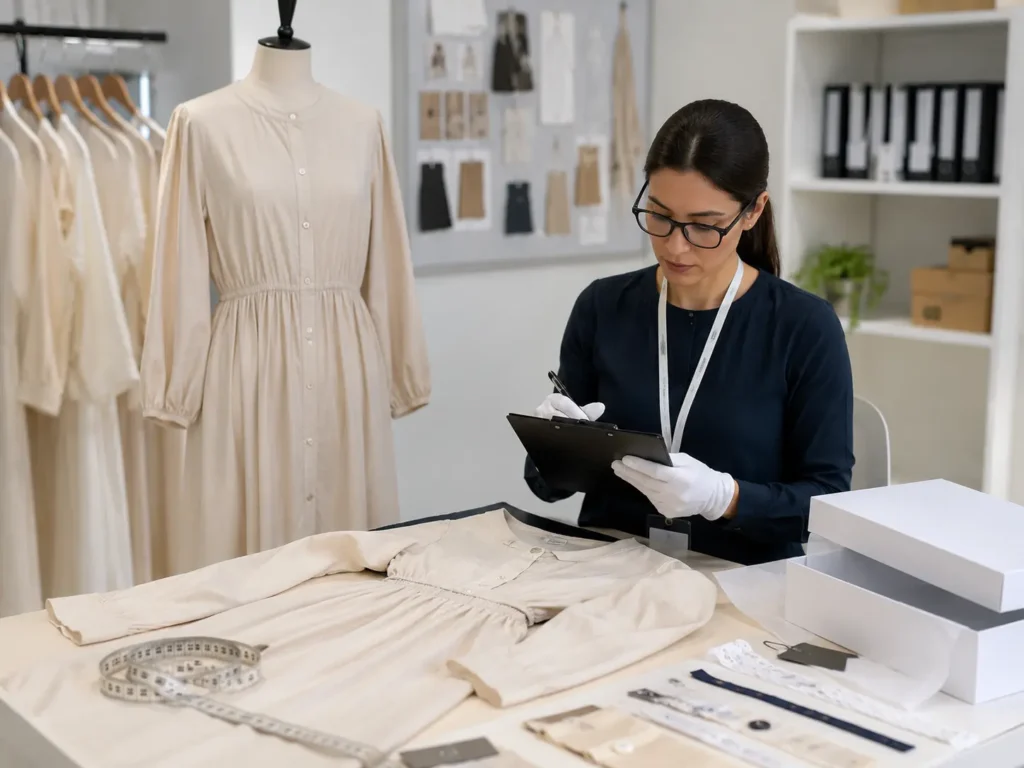
A mesh partywear program needs development resources, organized production allocation and measurable inspection support. Jinfeng Apparel combines owned factories, long-term production partners, dedicated sample rooms and quality teams to manage complex styles and repeatable bulk standards.

Since 2008

Long-term womenswear manufacturing experience supports design conversion, material evaluation, fit correction and export delivery. The operating model is built around dresses, skirts, jumpsuits, matching sets and private-label collections rather than general stock apparel.

Six Owned Factories

Owned production resources strengthen control over development, complex first orders, production scheduling and repeat programs. Styles are allocated according to fabric behavior, construction difficulty, workmanship requirements and delivery timing instead of sending every garment to the same production unit.

Ten Plus Partners

More than 10 long-term satellite production partners support peak-season capacity, repeat orders, phased delivery and stable programs. Complex first-run mesh styles remain assigned to production units with suitable experience, while repeatable styles can be distributed under unified files and QC checkpoints.

Monthly Capacity

Regular monthly capacity exceeds 100,000 pieces across the broader womenswear system. Capacity is planned by style mix, fabric group, sewing complexity, color count and launch date, giving large programs a more reliable basis than a single undifferentiated capacity figure.

Sample Development

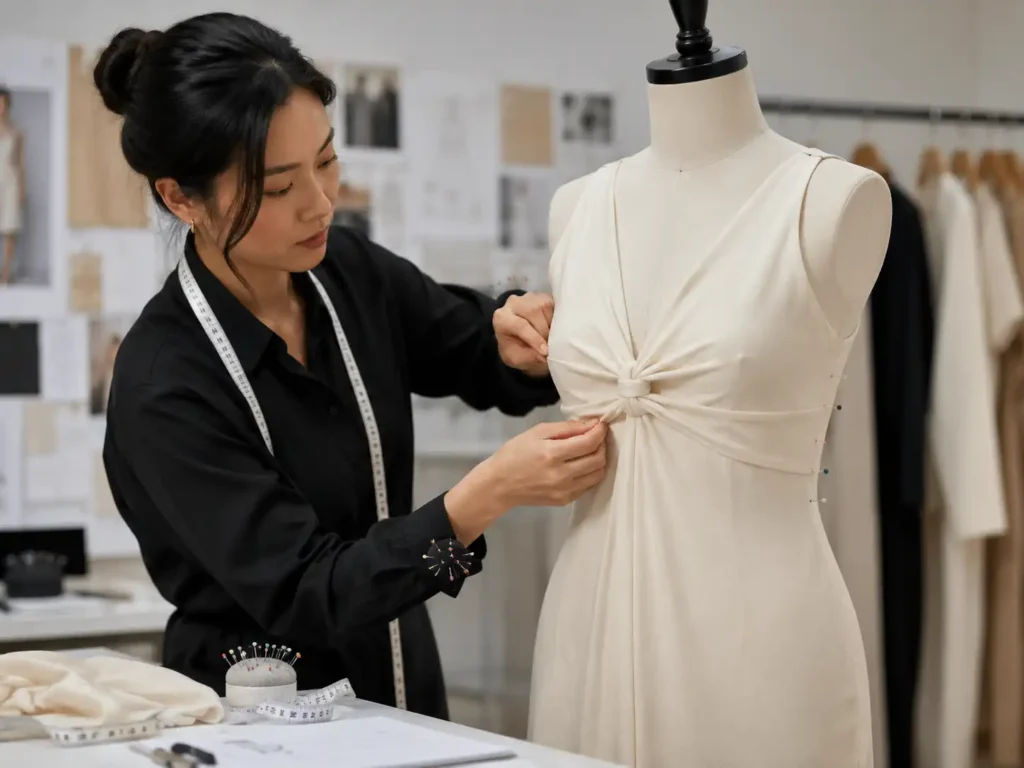
Two sample rooms, 7+ senior pattern makers and 20+ sample machinists support first samples, fit samples, revisions, photo-ready samples, salesman samples, PP samples and Golden samples. Mesh transparency, bust coverage, stretch behavior and seam stability are checked before bulk standards are locked.

Quality Team

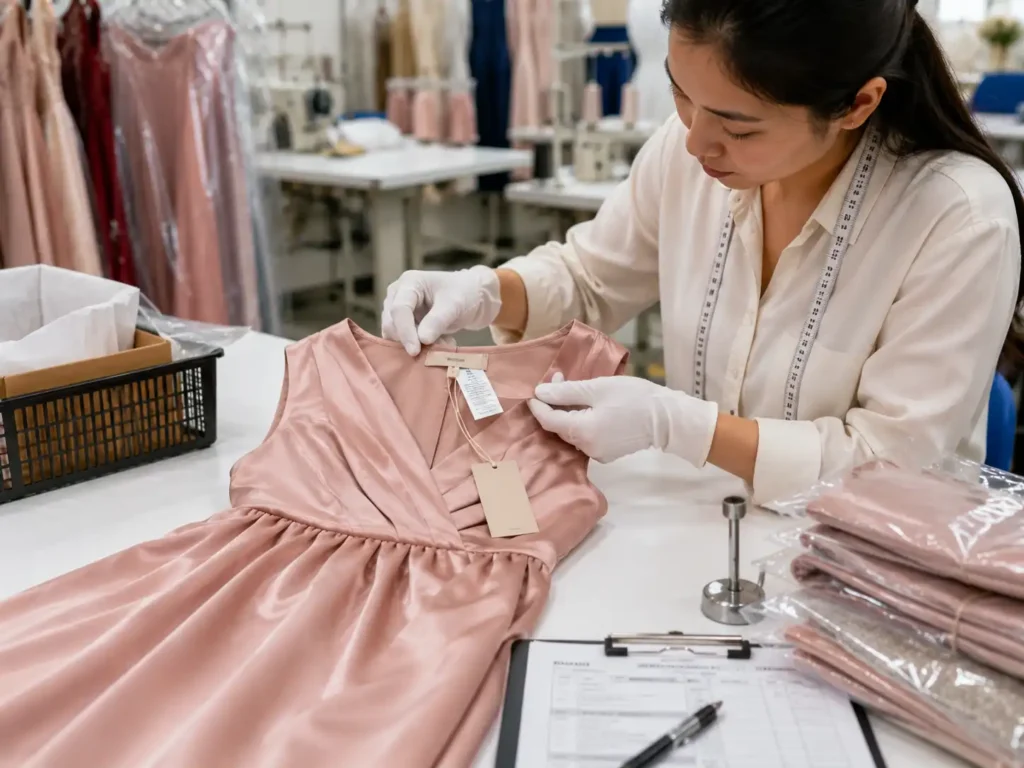
15+ QC inspectors support incoming material review, cutting checks, sewing checks, inline inspection, finished garment measurement, appearance review, pressing, packing inspection, AQL sampling and coordination with client-appointed inspection teams.

Built for Brands Developing Commercial Mesh Partywear

The strongest fit comes from teams with defined product direction, professional development files and planned bulk programs. Each profile below requires a different balance of visual impact, fit reliability, launch timing and retail execution.

Global Fashion Brands

Multi-market brands need supplier discipline across tech-pack interpretation, material approvals, sample versions, production files, inspection and shipping documents. Jinfeng Apparel supports controlled development without exposing unreleased styles, private-label files or launch information.

Partywear Labels

Partywear labels need fitted silhouettes, transparent layers, draping, cut-outs, corset elements, embellishment and strong camera performance. Manufacturing decisions must protect comfort and movement while retaining the intended visual impact under studio lights, flash photography and real wear.

Occasionwear Teams

Occasionwear collections often combine mesh with satin, lace, crepe, sequin fabric or structured lining. Product teams need coordinated fabric groups, consistent color direction, balanced formality and packing methods that preserve shape before retail presentation.

Premium Ecommerce

Online-focused labels depend on photo-ready samples, reliable size charts and low visual variance between campaign pieces and bulk stock. Neckline shape, bust coverage, ruching position, hem balance and packing recovery directly affect reviews, returns and repeat purchasing.

Product Developers

Development teams need direct feedback on structure feasibility, fabric behavior, lining, support components, sample priority and approval sequence. Clear records convert comments into revised patterns, updated measurements, BOM changes and final PP instructions.

Private Label Programs

Private-label programs need finished garments plus labels, hangtags, care information, barcodes, SKU stickers, polybags, carton marks and warehouse-ready packing. Product and packaging files are linked to each style, color and size to reduce receiving errors.

Six Risks That Break Mesh Party Dress Programs

Mesh partywear can look simple in a sketch yet become unstable during sampling or bulk production. Early risk review protects fit, transparency, workmanship, delivery and the visual consistency of the full collection.

Wrong Mesh Direction

Fine mesh, stretch mesh, power mesh, illusion mesh, printed mesh and embellished mesh create very different results. A fabric that looks similar in a photo may have the wrong recovery, stiffness, transparency or surface quality for the intended silhouette.
  • Confirm weight, width, stretch direction and recovery.
  • Check drape and skin feel with the proposed lining.
  • Reassess the pattern when the approved mesh changes.

Uncontrolled Transparency

Transparency changes under daylight, studio lighting and camera flash. A lining color that works indoors may expose seams, cups or underwear during campaign photography. Coverage must be planned by body zone, not treated as one uniform layer.
  • Review bust, hip, slit and cut-out zones separately.
  • Test lining shade against the approved mesh color.
  • Check front, side and back views on body.

Weak Stretch Recovery

Poor recovery can loosen necklines, distort armholes, twist side seams and change skirt length after wear. Bodycon mesh needs controlled negative ease and compatible stretch between shell, lining, elastic and support components.
  • Measure stretch and return after extension.
  • Compare shell and lining recovery.
  • Review garment dimensions after fitting and handling.

Unstable Fit Blocks

A 12-style collection should not feel like 12 unrelated fit systems.

Similar silhouettes need shared measurement logic, while corset, strapless, bodycon and draped products require different fit rules. Without structure, size grading becomes inconsistent across the line.

  • Group styles by silhouette and stretch behavior.
  • Lock bust-waist-hip relationships by fit block.
  • Control cut-out, strap and neckline grading separately.

Sample Version Confusion

Multi-style development creates risk when comments stay inside scattered messages. Fabric changes, pattern corrections, trim replacements and packing decisions need traceable versions so an earlier instruction cannot return during PP sampling or bulk production.
  • Record version, issue, action and approval status.
  • Update pattern, size chart, BOM and sewing notes.
  • Use PP comments as the final production checkpoint.

Missed Launch Window

Holiday, birthday, festival and eventwear launches lose value when samples, materials, packing or inspection run late. Lower quantity does not automatically shorten timing when the project includes special mesh, dyeing, embellishment, multiple colors or unresolved PP comments.
  • Prioritize campaign and commercial core styles first.
  • Book materials after direction and color are approved.
  • Reserve QC, packing and freight windows before bulk completion.

Build a Commercial Mesh Party Dress Product Matrix

A profitable collection needs contrast between high-impact hero pieces and repeatable commercial styles. Each product direction below can be developed as a lead SKU, a color extension or a coordinated family using shared mesh, lining and fit references.

Ruched Mesh Mini

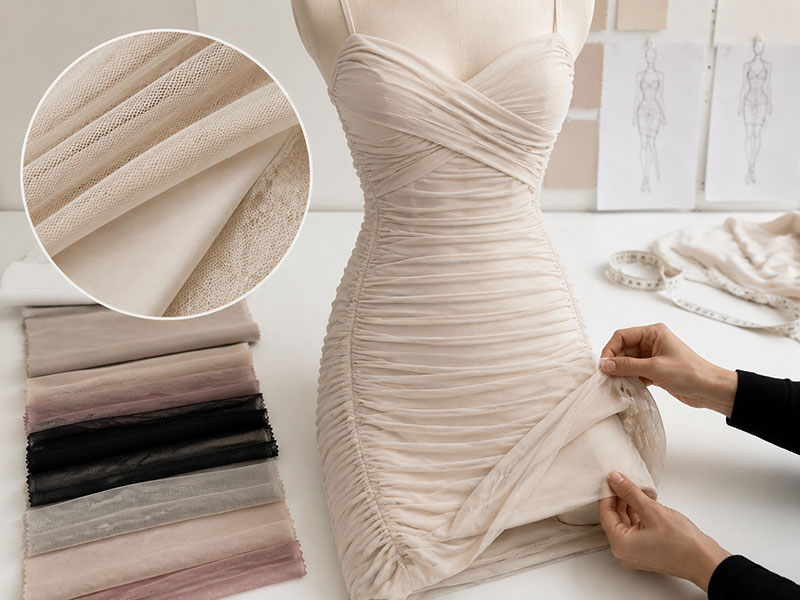
A ruched mesh mini often becomes the commercial core because it combines strong body definition with flexible color development. Stretch mesh, compatible stretch lining and controlled negative ease are essential. Ruching density, direction, seam location and skirt length must remain balanced across sizes. Collection extensions can use asymmetric ruching, side drawcords, one-shoulder necklines or tonal lining while retaining a common fit block.
  • Core role: repeatable commercial style.
  • Control: ruching symmetry, recovery and hem ride-up.
  • Extensions: mini, midi, one-shoulder and printed versions.

Corset Mesh Dress

Corset mesh dresses add structure and premium visual value. The outer mesh may be soft and transparent, while internal support uses lining, cups, boning, seam channels and stabilized closure areas. Cup position, neckline height, waist shaping and torso length require fitting rather than flat measurement alone. A series can include strapless, halter, long-sleeve and rhinestone variants built from a validated support block.
  • Hero role: structured statement piece.
  • Control: cup position, boning ends and zipper flatness.
  • Extensions: strapless, halter, embellished and midi versions.

Cut-Out Bodycon

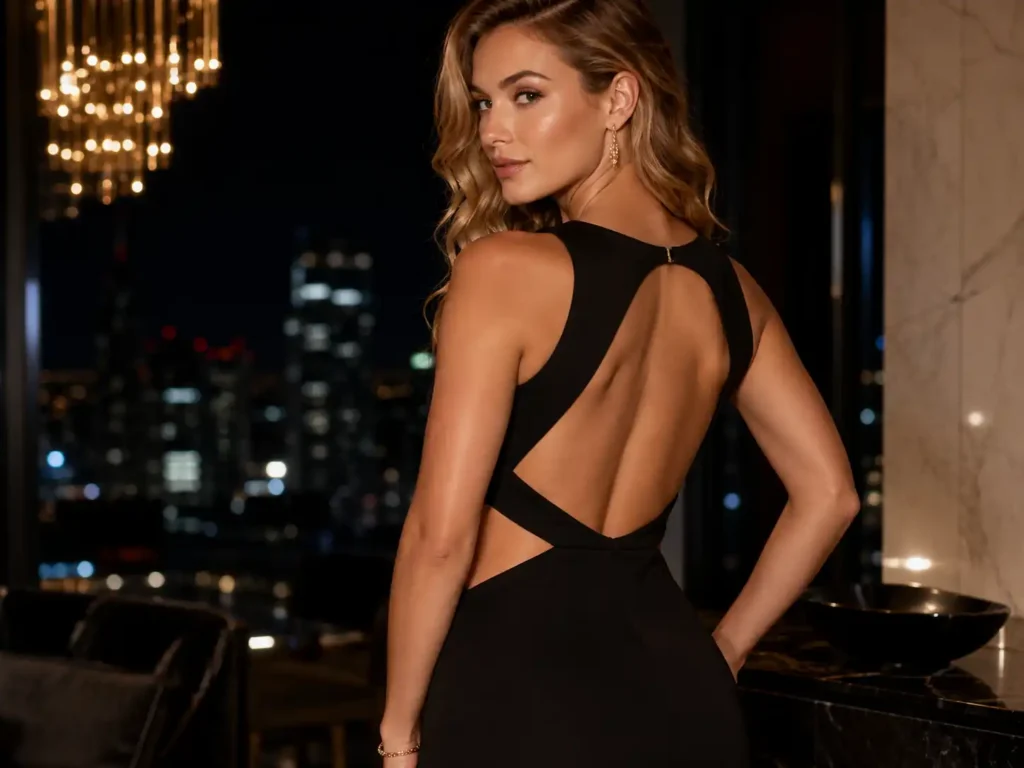
Cut-out bodycon styles create visual impact through controlled exposure rather than random openings. Edge stability, lining placement, elastic support and size grading determine whether the garment stays secure during movement. Cut-out dimensions should not increase at the same rate as bust, waist and hip measurements. Collection development may vary the cut-out position while preserving a consistent base silhouette and recovery standard.
  • Statement role: night-out and social campaign style.
  • Control: opening stability, skin comfort and movement.
  • Extensions: waist, back, shoulder and side cut-outs.

Asymmetric Mesh Midi

An asymmetric mesh midi brings a more refined direction into a party collection. Draped overlays, uneven hems, one-shoulder necklines and side ruching create motion, but the internal lining must remain stable and correctly balanced. The main challenge is keeping the visual asymmetry intentional while maintaining level waistlines, reliable side seams and clean movement across the size range.
  • Bridge role: party-to-occasion crossover.
  • Control: drape placement, lining balance and hem relationship.
  • Extensions: one-shoulder, gathered and layered versions.

Rhinestone Mesh Dress

Rhinestone mesh provides immediate visual impact for birthday, holiday and evening launches. Decoration weight, attachment method, mesh strength and skin contact must be reviewed before approval. Areas under the arm, along side seams and near zippers need extra attention because pressure and friction can damage mesh or cause discomfort. Packing must prevent stones from rubbing against adjacent panels.
  • Hero role: campaign and event statement.
  • Control: attachment, weight distribution and skin protection.
  • Extensions: scattered stones, gradient placement and crystal straps.

Printed Mesh Dress

Printed mesh supports distinctive color stories without relying on heavy decoration. Development must confirm print scale, base mesh color, transparency, repeat direction and placement across different sizes. The lining shade changes the final print appearance, so approval should consider shell and lining together. Prints can connect several silhouettes while reducing visual repetition across the collection.
  • Theme role: collection identity and color story.
  • Control: print scale, placement, dye lot and lining shade.
  • Extensions: floral, abstract, animal and placement prints.
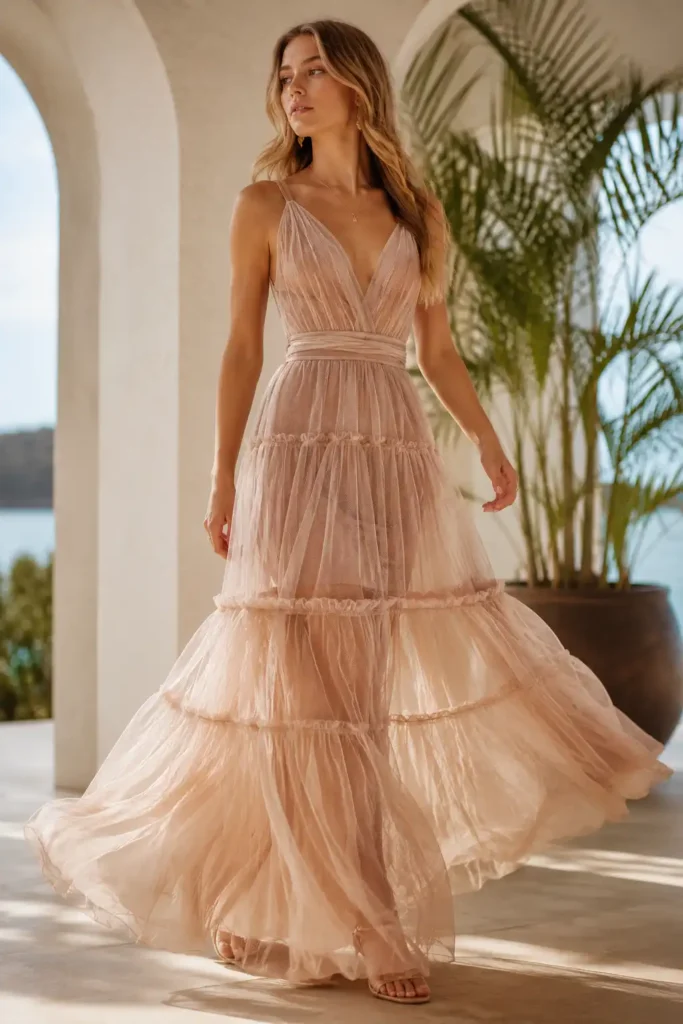
Layered Mesh Dress

Layered mesh or tulle introduces volume, softness and movement. Layer count, mesh stiffness, gathering ratio, seam bulk and lining length determine the final silhouette. Too many layers can add weight and cost; too few may lose shape or coverage. Mini, midi and high-low versions can share the same color story while providing different levels of drama for the assortment.
  • Volume role: feminine and occasion-led option.
  • Control: layer count, gathering, static and hem balance.
  • Extensions: tiered, high-low, ruffled and draped versions.
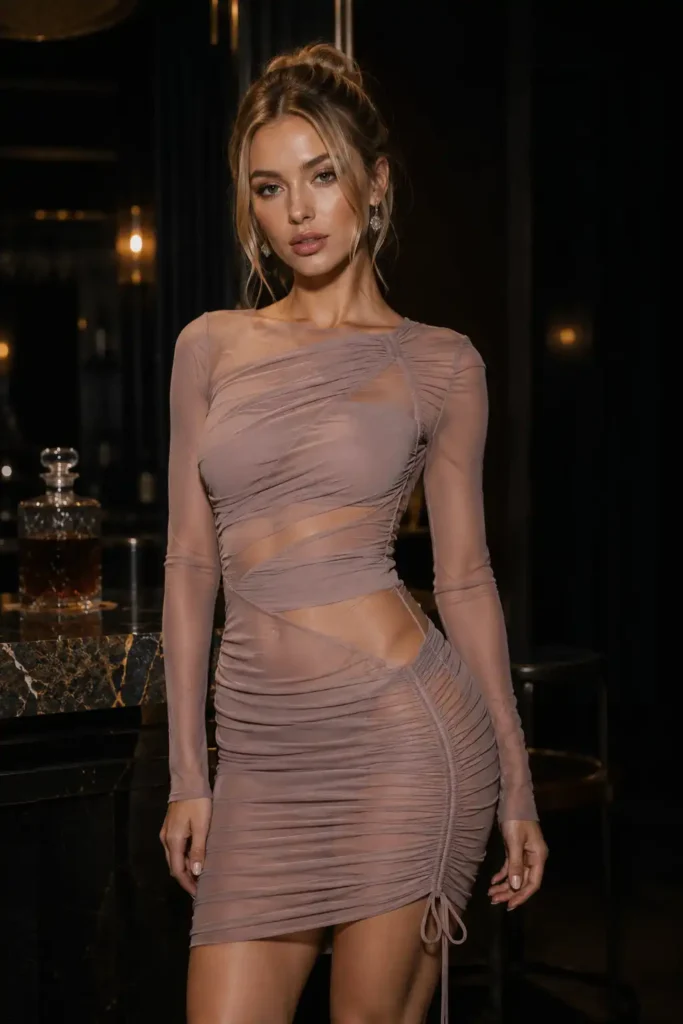
Mesh Hybrid Dress

Hybrid designs combine mesh with satin, lace, jersey, crepe or sequin fabric to create price and texture contrast. Material stretch, shrinkage, color tone and seam behavior must work together. A satin bodice with mesh skirt requires different stabilization from a jersey body with mesh sleeves. Hybrid development is most effective when each fabric has a clear structural purpose.
  • Assortment role: texture and price differentiation.
  • Control: material compatibility, seam behavior and color match.
  • Extensions: mesh-satin, mesh-lace, mesh-jersey and mesh-sequin.

Structure the Collection Around Product Roles and Launch Timing

A strong assortment balances visual impact, price, fit confidence and production risk. Jinfeng Apparel organizes styles into clear roles before sample priority and material booking are finalized.

Hero Styles

Hero styles carry the campaign image through corset structure, embellishment, dramatic layering or complex cut-outs. They receive early material review, longer sample timing and more detailed approval because delays can affect photography and launch communication.

Commercial Core

Commercial core styles use proven silhouettes, controlled mesh and repeatable construction. Ruched minis, lined bodycon dresses and simple asymmetric styles often support the largest quantities and the widest color range within the program.

Entry Price Styles

Entry styles protect price architecture through simpler seams, fewer components, controlled layer count and standard trims. Cost is reduced without weakening the visual direction, fit integrity or private-label finish expected from the wider collection.

Color Story

A focused color story improves fabric purchasing, dye-lot control, campaign presentation and replenishment. Black, red, nude, chocolate, burgundy and metallic directions may be combined with one seasonal accent rather than scattering unrelated colors across every style.

Shared Fit Blocks

Similar bodycon or corset silhouettes can share validated measurement logic while retaining style-specific neckline, strap, cut-out and length rules. Shared fit references reduce repeated development without forcing every garment into the same construction.

Launch Waves

Collections can move through campaign samples, first launch quantities, main bulk and later replenishment. Material booking, sample priority, QC windows and freight plans are linked to each wave so the most time-sensitive styles do not wait behind lower-priority products.

Select Mesh by Structure, Transparency and Commercial Role

Mesh selection is a product-engineering decision. Weight, stretch, return, hand feel, transparency, surface treatment and lining compatibility influence fit, comfort, price and bulk stability. Common mesh references range from approximately 40-120 gsm, while final specifications depend on the approved style and supplier availability.

Mesh TypeMaterial BehaviorBest Product UseMain Bulk RiskApproval Focus
Fine MeshLight, soft, transparent, usually low to medium stretchDraped overlays, sleeves, gathered panels, layered minisHoles, edge curling, seam visibility, low recoveryConfirm lining shade, seam finish, layer count and hand feel
Stretch MeshMedium to high stretch with softer bodyBodycon, ruched, cut-out and fitted mini dressesWeak recovery, neckline growth, side-seam twistingMeasure stretch direction, return and shell-lining compatibility
Power MeshFirm stretch, compression and supportCorset panels, bust support, waist control, internal liningExcess pressure, skin discomfort, seam tensionValidate comfort, negative ease and grading on body
Illusion MeshSheer, often selected near skin toneNecklines, backs, cut-outs, support panelsShade mismatch, visible seams, unexpected flash transparencyApprove against skin-tone direction and lighting conditions
Printed MeshVisual pattern over a transparent baseFestival, party, bodycon and statement dressesPrint scale, placement, color difference, lining influenceApprove strike-off, repeat direction and combined shell-lining effect
Embellished MeshRhinestones, sequins, beads or embroideryBirthday, holiday, evening and premium hero stylesWeight, snagging, attachment loss, skin scratchingTest decoration strength, edge protection and packing separation

Engineer Transparency, Lining and Coverage by Body Zone

Coverage should be planned around product use, lighting, movement and brand positioning. One lining rule cannot solve bust support, hip coverage, cut-outs, high slits and sheer sleeves at the same time.

Nude Tone Lining

Nude lining can create a near-skin visual effect, yet the correct tone depends on mesh color, target market and campaign styling. Shell and lining must be viewed together under natural light and studio conditions. A lining that is too pale, grey or warm can change the entire appearance of the garment.

Stretch Lining

Fitted party dresses usually need lining with compatible stretch and recovery. A rigid lining under high-stretch mesh restricts movement and distorts the shell; overly soft lining can shift or expose seams. Stretch direction, negative ease and hem attachment are confirmed during fitting.

Double Mesh Layers

Double mesh reduces transparency and can deepen color without adding a separate opaque lining. Layer direction, seam bulk and edge finish need control because two elastic layers may pull differently. Double layers also affect price, weight and heat comfort, so they are used only where the design benefits.

Power Mesh Support

Power mesh can stabilize the bust, waist or internal panels while the outer mesh remains soft. Compression level, seam tension and skin comfort need body testing. Support should improve security without creating visible ridges, excessive pressure or a mismatch with the outer silhouette.

Bust Coverage Panels

Corset, halter, strapless and deep-neckline styles need planned cup position, lining height and edge stability. Coverage is checked from front, side and movement views. Bra cups, boning and anti-slip elements may be added when required by the approved structure.

Slit Privacy Control

High slits and open sides need lining length, gusset placement or internal panels that protect coverage without changing the intended look. The relationship between shell slit, lining slit and walking movement is checked during sample fitting and finished-garment inspection.

Turn Partywear Design Details into Repeatable Bulk Standards
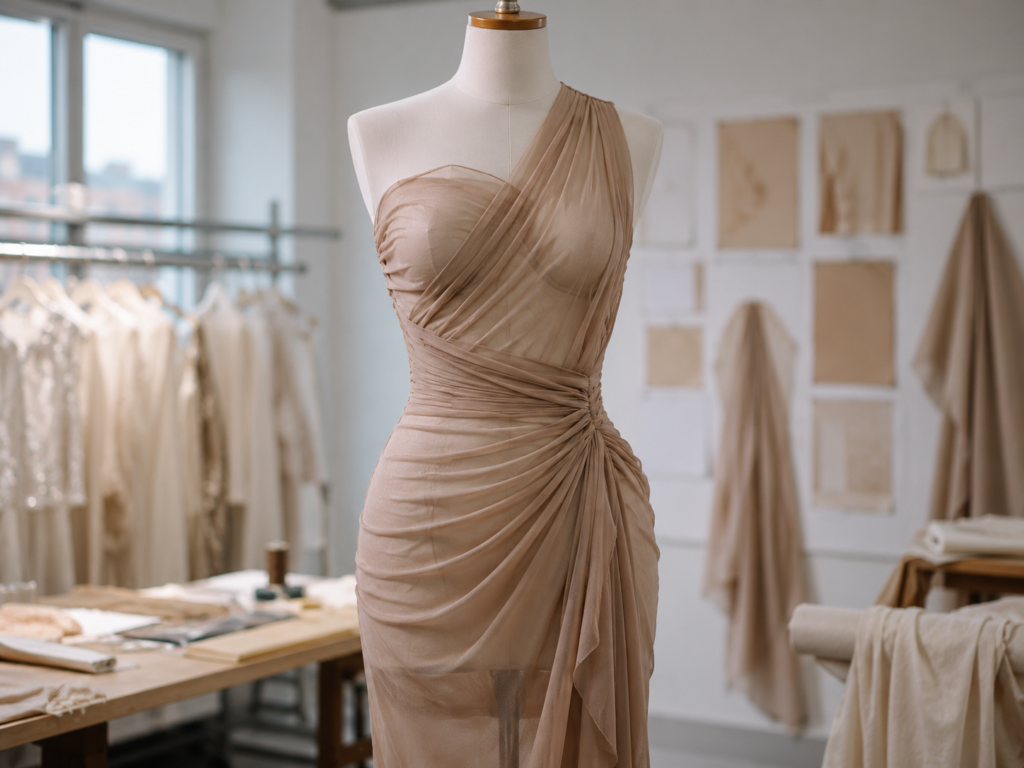
Partywear details create sales value only when their position, tension, support and finish remain consistent. Each feature below is converted from a visual idea into measurable pattern, sewing and QC instructions.

Ruching Geometry

Ruching needs a defined start point, end point, direction, finished length and gathering ratio. Left-right balance and size grading are checked during sampling. Bulk inspection compares placement, density and hem effect against the approved standard rather than accepting visually similar gathering.

Corset Support

Corset construction coordinates cup shape, lining, boning, seam channels, waist shaping and closure stability. Boning ends require protection, while cup and support positions are checked for symmetry and comfort. The outer mesh must remain smooth without exposing internal structure unintentionally.

Cut-Out Stability

Cut-out edges need stabilization so openings stay clean without curling or stretching. Pattern shape, elastic or tape support, lining, seam finish and body movement are reviewed together. Exposure proportions are controlled by size instead of enlarged mechanically.

Strapless Security

Strapless styles rely on top-edge fit, internal support, anti-slip elements and balanced tension. Over-tight construction causes discomfort; loose construction slips during movement. Sample fitting checks front, side and back stability before PP approval.

Halter Load

Halter straps carry more load than decorative shoulder straps. Strap width, stretch, attachment reinforcement, neck pressure and adjustment method are evaluated. The bodice should support itself rather than transferring excessive weight to the neck.

Backless Control

Backless designs require stable side seams, secure straps, controlled back height and correct bust support. Low-back shapes are checked for gaping during movement. Tie lengths, sliders, elastic and edge finishes must remain comfortable and visually clean.

Zipper Flatness

Invisible zippers on mesh or stretch garments can bulge when seam tension, stabilization or lining is mismatched. Zipper length, tape color, seam allowance and insertion sequence are confirmed during sampling. Finished garments are checked from side and back views.

Slit and Hem

Slit height, reinforcement, lining opening and hem balance affect both movement and coverage. Mesh hems may use narrow finishing, clean binding or layered edges according to the design. The final relationship is checked on body and after packing recovery.

Use the Right Sample for Every Approval Decision

Complex mesh partywear moves through defined sample stages. Each stage answers a different question, allowing design, fit, materials, campaign needs and bulk standards to be approved without confusing one sample purpose with another.

First Sample

The first sample checks structure, mesh direction, lining, proportions and construction feasibility. Complex mesh, corset, lace or sequin styles commonly require 15-25 days after material direction and specifications are confirmed. The goal is a reliable development baseline, not automatic final approval.

Fit Sample

Fit samples focus on bust-waist-hip balance, torso length, neckline, armhole, straps, cut-outs, slit and movement. Comments are supported by measurements and fit photos, then transferred into revised patterns and updated size charts.

Revised Sample

Revised samples normally require 7-15 days, with complex changes confirmed by scope. A new sample is usually needed when the pattern, fabric stretch, corset structure, lining coverage or major design proportions change.

Photo-Ready Sample

Photo-ready samples prioritize campaign appearance, approved color, fit and finishing. They may require final labels or special handling but do not automatically replace the PP sample. Quantity and timing depend on the requested campaign set and material availability.

Salesman Sample

Salesman samples support internal sales meetings, wholesale appointments or line reviews. Multiple units may be needed across key styles and sizes. Their specification, quantity and schedule are separated from standard fit development so the main sample path remains controlled.

PP and Golden

PP samples commonly require 7-15 days after final fabric, trims, color, measurements, labels and packing are ready. The PP sample locks the production standard. A Golden sample may be retained with final pattern, BOM, measurement and QC references for bulk and repeat orders.

Keep Multi-Style Development Traceable from Brief to Shipment

Large collections need one source of truth for style, material, sample, size, packaging and delivery decisions. Jinfeng Apparel organizes project information so approvals can move quickly without losing version control.

Style Grouping

Styles are grouped by silhouette, mesh behavior and construction difficulty. Corset mesh, stretch bodycon, layered mesh and embellished mesh follow different sample priorities and production allocation, even when they share one launch date.

Fabric Grouping

Shared mesh, lining and trim directions are identified across styles to improve color consistency, material booking and cost control. Special fabrics remain separated when weight, print, embellishment or supplier lead time creates a different risk profile.

Approval Tracker

Each style records sample version, open issues, client comments, revision action, approval status and next step. Fit, fabric, color, trim, label and packing approvals are not combined into one vague status.

BOM and Files

BOM, size chart, pattern revision, sewing notes, trim approval, label artwork and packing instruction are updated when a change affects production. Important changes do not remain only in messaging history.

SKU Control

Style, color, size, barcode, label and carton information are linked before packing. SKU control reduces wrong-label, wrong-barcode and mixed-carton problems during warehouse receiving and phased shipment.

Delivery Phases

Campaign units, launch-critical SKUs, main bulk and replenishment can be planned in separate phases. Packing lists, invoices, carton marks and freight instructions are split clearly to prevent overlap between deliveries.

Move from Collection Brief to Retail-Ready Bulk Delivery

A controlled development path protects the collection from early fabric choices through bulk inspection and shipment. Each stage produces an approval or production record before the next risk is accepted.

Review the Brief

Line sheet, tech packs, reference samples, target quantities, size range, launch date and packaging needs are reviewed. Missing information is listed before price and timing are treated as final.

Plan the Assortment

Styles are assigned as hero, commercial core, entry price or extension pieces. Sample priority, shared fit blocks, fabric groups and launch waves are mapped before development begins.

Source Materials

Mesh, lining, zippers, cups, boning, elastic, rhinestones, sequins, labels and packaging are evaluated by specification, availability, MOQ, cost, development time and bulk stability.

Develop Patterns

Pattern makers convert approved files into garment structure, then review bust-waist-hip proportions, torso length, neckline, straps, cut-outs, slit and hem according to fabric behavior.

Make and Revise

First, fit and revised samples validate appearance, movement, transparency, support and construction. Feedback is documented and transferred into patterns, measurements and BOM updates.

Lock PP Standard

Final fabric, color, trims, fit, workmanship, labels, packing and cost are confirmed before PP approval. The PP sample is the production benchmark rather than another stage for major redesign.

Allocate Production

Styles are assigned according to fabric, stretch, structure, workmanship and timing. Production files, approved samples and QC checkpoints are transferred to the selected production unit.

Inspect and Pack

Incoming material, cutting, sewing, inline quality, finished measurement, appearance, pressing, private labels, barcodes, polybags and cartons are inspected according to style risk.

Deliver and Archive

Packing lists, invoices, carton data and freight coordination support client-appointed or recommended forwarders. Patterns, BOM, fabric, trim, packaging and QC records are retained for repeat orders.

Control Mesh Workmanship Before Problems Reach Bulk Production

Mesh workmanship depends on how the fabric is handled, stabilized and combined with lining, trims and support components. Small errors can become visible as waviness, twisting, holes, gaping or uneven gathering.

Cutting Direction and Panel Stability

Mesh can shift, stretch or distort during spreading and cutting. Stretch direction, print direction, embellishment direction and panel orientation are confirmed before cutting begins. Cut pieces are organized by style, color and size so similar transparent panels do not become mixed. Printed mesh also needs repeat and placement review, while embellished mesh may require higher cutting allowance because damaged areas cannot always be used.

Lining pieces, support panels and outer mesh are checked as one structure. A stable lining pattern cannot compensate for an outer layer cut in the wrong direction. When the mesh is highly elastic, pattern dimensions and seam positions are reviewed after the first sewing trial before the bulk cutting standard is released.

  • Control stretch direction, pattern placement and panel identification.
  • Separate damaged or distorted mesh before sewing.
  • Confirm shell, lining and support patterns as one system.

Seam Tension and Edge Stabilization

Seam waviness often comes from incorrect tension between mesh, lining, zipper tape, elastic or stabilizing material.

The goal is not the tightest seam; it is a seam that lies flat, returns after stretch and remains comfortable against skin. Necklines, armholes, cut-outs and back openings may need tape, elastic or lining support according to the approved design.

Edge finishing is chosen by appearance, stretch and comfort. Narrow hems, binding, turn-back edges or enclosed finishes create different visual weight. A finish that looks clean on one mesh may curl or become bulky on another, so edge treatment is confirmed in the sample before bulk instructions are issued.

  • Balance seam tension across shell and lining.
  • Stabilize high-stress openings without creating stiffness.
  • Check edge finish after stretch and movement.

Ruching, Draping and Zipper Execution

Ruching is controlled through marked start and end points, gathering ratio, finished length and seam alignment. Bulk garments are compared for placement and density because uneven gathering changes both fit and visual value. Draped overlays require stable anchor points so the garment does not twist after wear or hanging.

Invisible zippers are tested for smooth operation, color match and flatness. Stretch mesh may pull away from zipper tape, while rigid lining may create bulging if the layers are not balanced. Zipper seams are checked from front, side and back views before the garment moves to pressing and packing.

  • Use measurable ruching and draping references.
  • Check zipper flatness on body, not only on a hanger.
  • Protect seam alignment through pressing and packing.
Embellishment and Skin Comfort

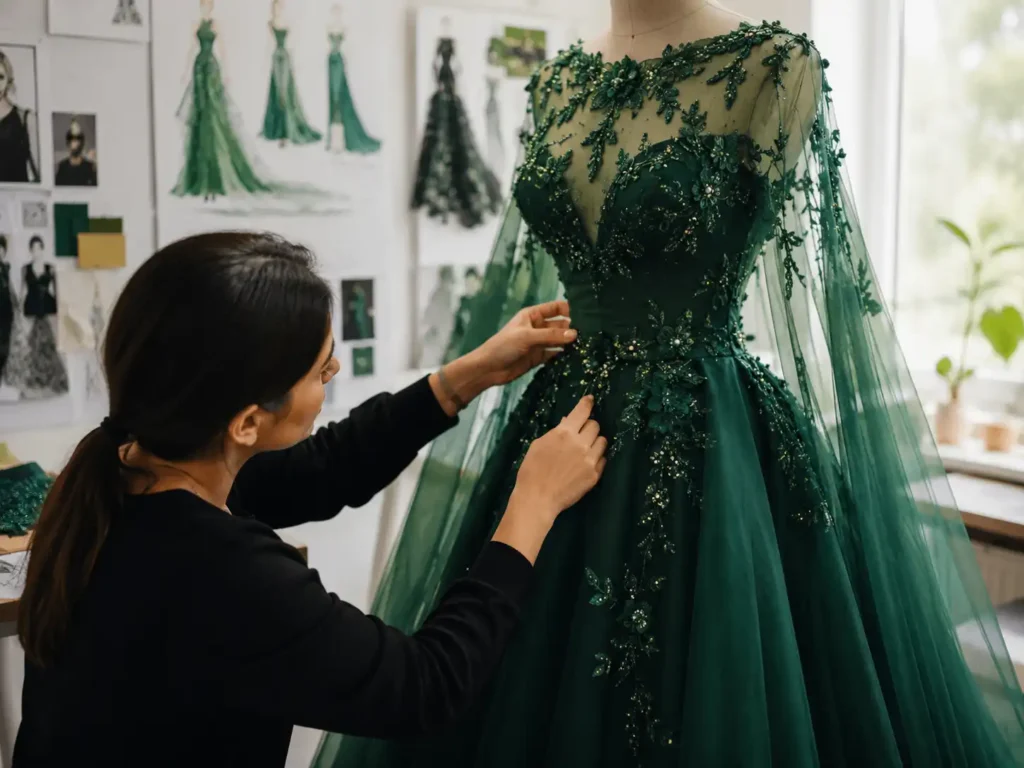
Rhinestones, sequins, beads and decorative chains add weight and friction. Attachment strength, spacing, seam thickness and skin contact are reviewed at the sample stage. Underarm, neckline, side seam and hem areas need special attention because decoration can scratch the wearer or catch on adjacent mesh.

Lining, binding or edge protection may be added where decoration meets skin. Packing separates embellished surfaces from delicate mesh to reduce rubbing, imprinting and snagging. Finished inspection checks missing decoration, loose attachment, sharp edges, color consistency and garment balance.

  • Test attachment and weight before approving bulk use.
  • Protect skin-contact areas and delicate mesh surfaces.
  • Use packing separation for embellished styles.

Inspect Mesh Party Dresses at Product-Specific Quality Gates

Inspection follows the risk of the garment rather than one generic checklist. Mesh holes, recovery, transparency, fit, ruching, support, embellishment, labels and packing are reviewed at the stages where correction is still possible.

Incoming Fabric QC

Mesh is reviewed for color, hand feel, width, holes, snags, stretch, recovery, print or embellishment condition and batch difference. Lining and support materials are compared with the approved sample before cutting.

Cutting QC

Cutting checks include stretch direction, panel shape, print placement, cut-piece identification and size-color separation. Distorted or damaged sections are removed before they enter sewing.

Sewing QC

Sewing inspection focuses on seam waviness, broken stitches, skipped stitches, edge finish, zipper insertion, elastic tension, cup and boning position, ruching placement and trim attachment.

Inline Review

Inline checks compare production garments with approved workmanship and measurement points. Repeated issues are corrected before they spread across the order, especially on complex styles or new production units.

Measurement QC

Bust, waist, hip, body length, straps, neckline, armhole, cut-out, slit and hem are measured according to style risk. Elastic garments are handled consistently before measurement to reduce false variation.

Appearance Review

Finished garments are reviewed for symmetry, drape, transparency, lining exposure, side-seam direction, zipper flatness, ruching balance, decoration condition and overall similarity to the approved sample.

Pressing and Finish

Pressing and finishing protect shape without marking mesh, lining or embellishment. Threads, stains, loose decoration and surface damage are checked before garments enter private-label packing.

Packing and AQL

Labels, barcodes, SKU stickers, polybags, carton marks, size ratios and carton breakdown are checked before shipment. AQL sampling and client-appointed inspection can be coordinated according to project requirements.

MOQ, Sample Timing and Launch Planning Data

Commercial planning becomes more accurate when style count, color count, size ratio, sample type, material development and freight method are separated. The figures below are working references; final timing and cost are confirmed after project review.

Planning ItemWorking ReferenceWhat Changes the Result
Standard MOQ200 pieces per style and colorOne style in two colors normally requires 200 pieces per color. Special mesh, dyeing, printing, trims and packaging may carry separate minimums.
Collection ScaleOften 10-30 styles and 20,000-80,000 total piecesProgram size is divided by style, color, size ratio, fabric group and delivery phase rather than treated as one undifferentiated quantity.
Complex First Sample15-25 daysTypical for mesh, corset, lace and sequin constructions after specifications and available materials are confirmed.
Revised SampleUsually 7-15 daysTiming depends on whether changes affect pattern, fabric, stretch, support structure, lining or embellishment.
PP SampleUsually 7-15 daysFinal fabric, trims, color, measurements, labels and packing must be available. Major redesign should be closed before PP sampling.
Size Ratio ExampleXS:S:M:L:XL = 1:2:3:3:1Planning example only. Final ratio follows sales history, market demand, size chart and warehouse requirements.
Order Math Example12 styles x 2 colors x 200 = 4,800 piecesTotal quantity does not replace the per-style and per-color minimum. Multi-style programs can be much larger after commercial quantities are assigned.
Bulk TimingConfirmed after PP approval and material bookingStyle complexity, fabric lead time, color count, production allocation, QC window, packing and peak-season capacity determine the final schedule.
Freight PlanningExpress, air, sea or split shipmentLaunch-critical quantities may move by air while the remaining bulk moves by sea. Route, cartons, trade term and destination determine the delivery window.

Deliver Every Style with Retail-Ready Private Label Control

Private-label execution connects the garment to the brand, SKU system, warehouse and selling channel. Files are confirmed by style, color and size before packing begins.
Brand Labels
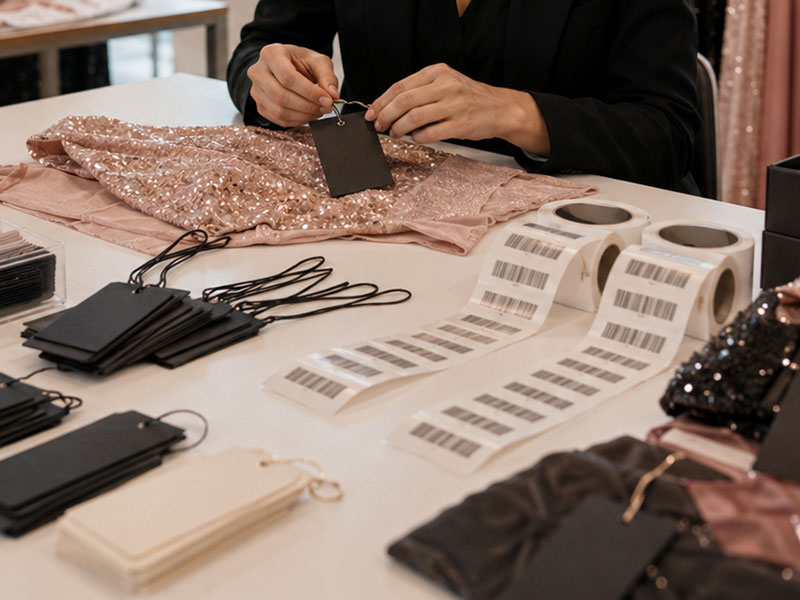
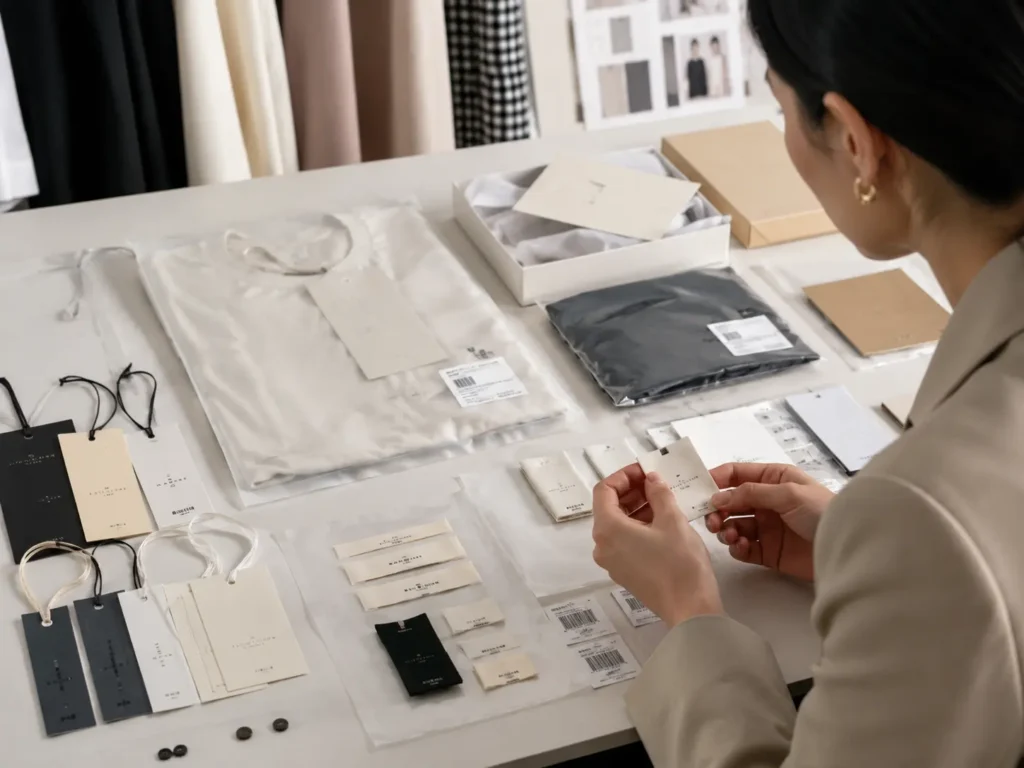
Woven labels, printed labels, size labels and care labels are matched to placement, material, color and comfort requirements. Care information must reflect the final fiber content and garment construction approved for production.

Hangtags

Hangtags, strings, safety pins or other attachment methods are checked for artwork, paper quality, position and garment safety. Attachment should not puncture delicate mesh or damage embellished surfaces.

Barcode and SKU

Barcode files and SKU lists are linked to style, color and size. Packing inspection checks code, position and readability so warehouse receiving does not depend on manual correction after arrival.

Polybags

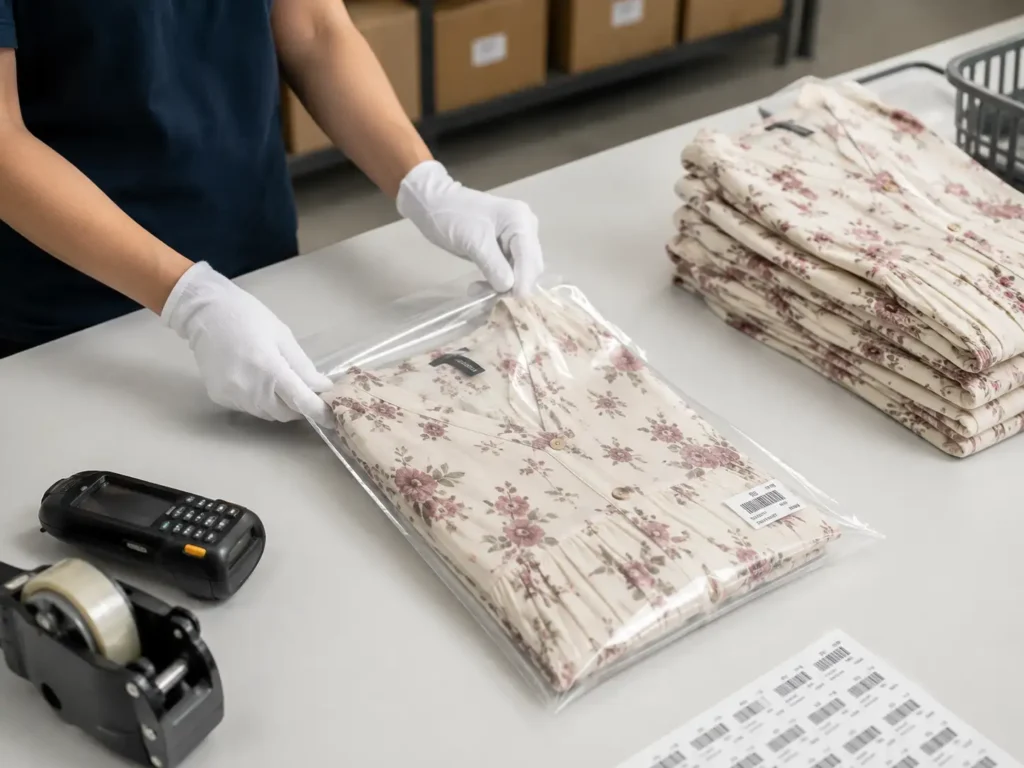
Polybags can include size stickers, barcode stickers, warnings or custom print according to the program. Bag size and folding method protect mesh from unnecessary compression, snagging and decoration transfer.

Carton Marks

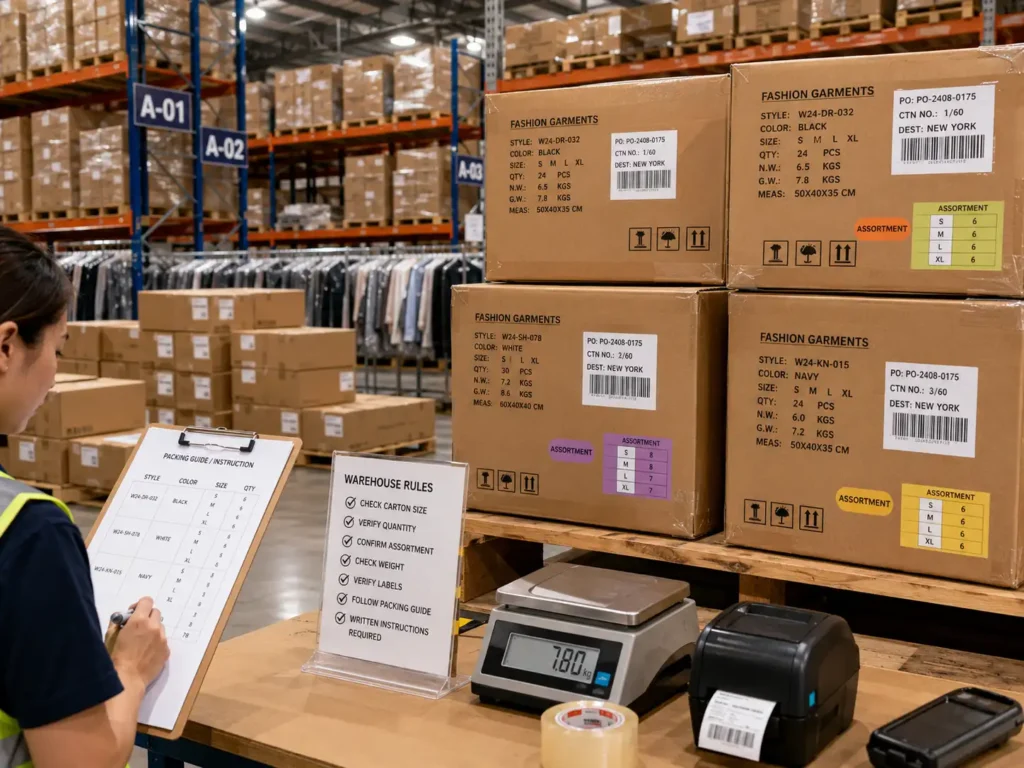
Carton marks can include PO, destination, style group, carton number, quantity and warehouse instructions. Carton breakdown is coordinated with the packing list and shipment phase.

Warehouse Packing

Size ratio, pieces per carton, mixed or solid packing, carton measurements, gross weight and net weight are prepared for freight and receiving. Client-appointed warehouse and forwarder instructions can be incorporated before shipment.

Mesh Partywear Programs Managed at Brand Scale

The examples below use anonymized project structures to show how multi-style mesh partywear can be organized. Brand names, unreleased designs, prices and confidential files remain protected.

US Partywear Launch - 18 Styles, 42,600 Pieces

An established US partywear label developed an 18-style program covering ruched mesh minis, corset mesh dresses, cut-out bodycon styles, rhinestone mesh statements and asymmetric midis. The total order reached 42,600 pieces across five core colors and an XS-XL size range. Seven mesh or support directions were used, including stretch mesh, fine mesh, power mesh, nude lining and embellished mesh.

Development began with style grouping. Six campaign-critical designs entered the first sample wave, followed by eight commercial core styles and four lower-risk extensions. Complex first samples were scheduled within the 15-25 day reference window, while revised samples were tracked by issue category: fit, transparency, ruching, cup position, zipper and decoration. A shared bodycon fit block reduced repeated corrections across related styles, while corset products used separate torso and cup rules.

Bulk preparation linked each style to BOM, size chart, label file, barcode list and packing instruction. Incoming mesh was checked by batch, and inline inspection focused on seam waviness, ruching placement, neckline stability and zipper flatness. The launch-critical quantity moved in the first delivery phase, with the remaining bulk organized in the main shipment. The project preserved a consistent color story and reduced style-to-style fit variation without forcing every product into one construction.

  • Program data: 18 styles, 42,600 pieces, 5 colors, XS-XL.
  • Main controls: transparency, stretch recovery, ruching symmetry, corset fit and SKU packing.
  • Delivery structure: prioritized launch styles followed by the main bulk phase.

Premium Ecommerce Drop - 12 Styles, 24,800 Pieces

A premium ecommerce womenswear brand planned a 12-style party capsule for a campaign-led drop. Product mix included printed mesh bodycon dresses, one-shoulder ruched minis, sheer-sleeve midis, mesh-satin hybrids and three embellished hero styles.

The order totaled 24,800 pieces in four colors, with size planning from XS through XL and higher quantities concentrated in S, M and L.

Campaign appearance was treated separately from bulk approval. Photo-ready samples used final color and finishing for the lead styles, while PP samples remained the formal production standard.

Printed mesh was reviewed with the selected lining because the underlayer changed color depth and print contrast. Embellished styles received additional checks for stone attachment, underarm comfort and packing separation.

The brand needed part of the program for a fixed content and sales date. Approximately 20% of selected launch SKUs were prepared for air shipment, while the balance moved through the main freight plan. Packing lists and invoices were separated by shipment phase, and carton marks distinguished urgent units from standard stock. The approach protected the sales window without treating air freight as a substitute for unresolved samples or unapproved materials.

  • Program data: 12 styles, 24,800 pieces, 4 colors, XS-XL.
  • Main controls: photo sample versus PP sample, printed mesh color, embellishment comfort and split packing.
  • Delivery structure: selected launch SKUs first, remaining bulk under the main freight plan.

Regional Brand Group - 26 Styles, 68,400 Pieces

A regional fashion group developed a 26-style party and occasionwear program totaling 68,400 pieces. Mesh products were combined with satin, lace, crepe and sequin fabric to create multiple price and formality levels. The line included mini, midi and limited maxi silhouettes across nine color directions and a broad size assortment.

The principal risk was coordination rather than one single garment. Styles were divided into fabric groups and production risk levels. Complex corset mesh and embellished pieces remained within experienced production units, while repeatable lined bodycon and draped styles were distributed after PP standards were locked. One project tracker connected sample versions, material status, color approvals, labels, barcodes, inspection and shipping documents.

Quality control used incoming material review, cutting checks, sewing inspection, inline measurement, final appearance review, packing inspection and AQL sampling. Private-label files covered woven labels, care labels, hangtags, barcode stickers, polybags, carton marks and warehouse breakdowns. Shipments were phased by product readiness and destination requirements. The project demonstrates how larger collections need disciplined allocation and file control rather than a promise that every style can be handled identically.

  • Program data: 26 styles, 68,400 pieces, 9 color directions, multi-fabric assortment.
  • Main controls: factory allocation, fabric grouping, approval tracking, private labels and inspection.
  • Delivery structure: phased shipment by product readiness and warehouse instruction.

Evaluate a Mesh Party Dress Manufacturer with Clear Evidence

A reliable supplier should explain how design files become samples, how mesh risks are measured, how bulk standards are locked and how finished goods reach the warehouse. The six checks below help sourcing and development teams compare evidence rather than marketing claims.

Product Specialization

Confirm whether the supplier regularly develops party, occasion, bodycon, corset, mesh and embellished womenswear. A general sewing capability does not automatically provide the fit and material control required for partywear.

Sample System

Ask how first, fit, revised, photo-ready, salesman, PP and Golden samples are used. A supplier should explain approval purpose, sample fee, timing and the point when major changes must stop.

Mesh Knowledge

Request information on mesh weight, stretch, recovery, transparency, lining, power mesh, print and embellishment. Strong answers connect material behavior to pattern, comfort, QC and bulk risk.

Bulk Control

Confirm the use of PP approval, production files, BOM, measurement charts, inline inspection, finished inspection, packing checks and AQL. Bulk should not begin from an unconfirmed sample or incomplete specification.

Private Label

Check whether labels, barcodes, polybags, carton marks, size ratios and warehouse requirements are managed by SKU. A dress is not retail-ready when packaging data remains disconnected from the product.

Brand Protection

Confirm NDA support, control of unreleased styles and restrictions on using brand names, tech packs, labels, photos and order details. Professional case evidence can be presented without exposing confidential information.

Frequently Asked Questions About Mesh Party Dress Manufacturing

MOQ starts from 200 pieces per style and color. One style in two colors normally requires 200 pieces per color. Special mesh, custom dyeing, printing, rhinestones, sequins, trims and packaging may have separate supplier minimums.
Mesh, corset, lace and sequin first samples commonly require 15-25 days after specifications and available materials are confirmed. Custom fabric, special trims or unresolved structure can extend timing.
Yes. Jinfeng Apparel can begin from a line sheet, tech pack, reference sample, sketch or reference images. More complete measurements, material direction, quantities, target market and launch timing improve development accuracy.
Transparency is reviewed through mesh type, weight, color, layer count, lining shade, lining length and body-zone coverage. Samples are checked from front, side and back views under more than one lighting condition when required.
Yes. Size development follows the brand size chart and target market. Bust, waist, hip, torso length, straps, neckline, cut-outs, slit and hem are graded according to garment structure rather than one uniform rule.
Yes. Support includes woven labels, size labels, care labels, hangtags, barcodes, SKU stickers, polybags, carton marks and warehouse packing instructions. Packaging materials may carry separate MOQ and lead-time requirements.
Yes. Jinfeng Apparel can coordinate client-appointed inspection and provide packing, carton, quantity and production information required for the inspection plan. AQL requirements and inspection timing should be confirmed before shipment.
Available options include EXW, FOB, CIF, DAP and DDP by project, plus express, air freight, sea freight and split shipment. Final route, cost and timing depend on destination, cartons, trade term and forwarder capability.
Yes. NDA-based cooperation can protect tech packs, patterns, samples, trims, labels, packaging, barcodes, quantities, prices and unreleased collection information throughout development and production.
Approved patterns, size charts, BOM, fabric references, colors, trims, sewing instructions, packing records, QC notes and Golden samples can be retained. Any change in mesh, stretch, weight, lining or construction is reviewed before reuse.

Send Your Mesh Party Dress Collection for Review

Send Kelly the collection files needed for a focused development and production review. A useful brief allows the team to assess mesh direction, lining, fit, support components, sample stages, MOQ, production allocation, private-label packing and delivery planning before a formal quotation is prepared.

Line sheets and tech packs are preferred, while reference images or original samples can also be reviewed when measurements and product goals are available. Project information is handled under NDA-based cooperation when requested. The first response will identify missing files, high-risk styles, material questions and the next development step rather than offering a blind price based on one image.

  • Line sheet, tech packs, sketches, reference images or original sample details
  • Target quantity by style and color, plus planned size range and size ratio
  • Preferred mesh, lining, color, embellishment and support requirements
  • Target market, price position, campaign date and bulk delivery window
  • Brand labels, hangtags, barcodes, polybags, carton marks and warehouse rules
  • Destination country, trade term and appointed forwarder details when available

Tell Us About Your Dress Project

Share your product details, estimated quantity and development requirements. Our team will review your project and provide practical OEM/ODM production feedback.

Premium Women’s Apparel Production for Fashion Brands

From dress sample development to bulk production, JF Apparel supports fashion brands with confidential OEM/ODM manufacturing, reliable quality control and scalable production support.

START YOUR DRESS PROJECT

Ready to Develop Your Next Dress Collection?

Share your design concept, product requirements or sourcing plans with our team. We’ll review your project and provide practical feedback on development, materials, MOQ and production.

7-10 Days

Sample Development

200 PCS

Starting MOQ

Fast Response

Professional Follow-Up