Skip to content
Mesh Dress Quality Control
Structured inspection for sheer, stretch, ruched, lined, printed, corset, and embellished mesh dresses produced for global fashion collections.
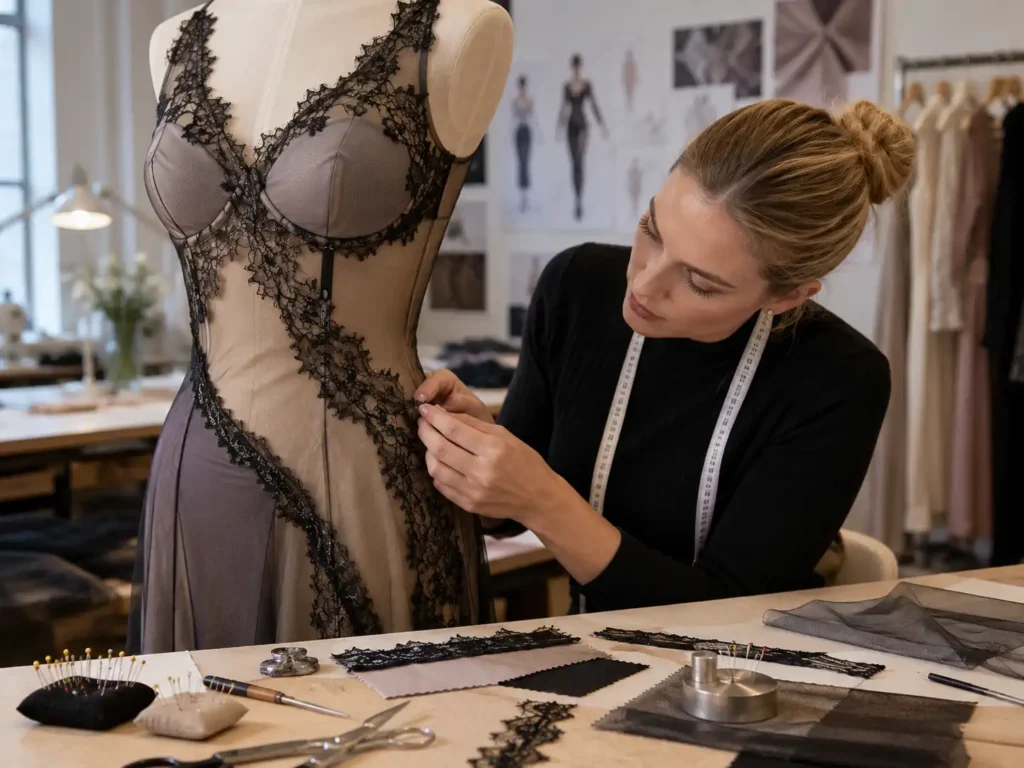
Mesh dress quality depends on more than final appearance. Fabric openings, stretch direction, transparency, lining tension, seam recovery, panel balance, grading, labels, and packing all affect whether an approved sample can be repeated across bulk production. Jinfeng Apparel manages mesh dress programs through sample approval, material control, in-line inspection, final garment checks, and order-specific testing or third-party inspection coordination.
- 6 owned factories + 10+ partners: production resources matched by dress construction, fabric behavior, order structure, and delivery plan.
- 18+ sewing lines: separate production planning for woven, stretch, party, occasion, repeat-order, and multi-style programs.
- 2 sample rooms + 7+ pattern makers: fit, transparency, lining, grading, and construction risks reviewed before bulk release.
- 15+ QC inspectors: incoming, cutting, sewing, in-line, final, packing, AQL, and client-inspection support.
Quality Control for Every Brand Function
Product Development Teams
Sourcing and Merchandising
Quality and Operations
Where Mesh Dress Defects Usually Begin
Holes and Snags
Wavy Seams
Uneven Transparency
Lining Distortion
Panel Twisting
Weak Recovery
Quality Priorities by Mesh Dress Construction

Bodycon Mesh Dresses
- Control focus: recovery, body measurements, side-seam balance, coverage, and wash stability.
- Common risk: fabric looks smooth flat but becomes over-transparent or distorted on body.

Ruched Mesh Dresses
- Control focus: gathering ratio, anchor points, symmetry, seam strength, and hem balance.
- Common risk: one side appears fuller or shorter after sewing and finishing.

Printed Mesh Dresses
- Control focus: print direction, motif position, shade, panel matching, and stretch color change.
- Common risk: approved artwork shifts across sizes because placement rules were not graded.

Layered Sheer Dresses
- Control focus: layer balance, hang, lining visibility, hem level, and packing recovery.
- Common risk: outer and inner layers behave differently after steaming or transport.

Corset and Mesh Dresses
- Control focus: cup placement, boning, edge protection, neckline coverage, and zipper balance.
- Common risk: support components improve shape but damage or distort adjacent mesh.

Embellished Mesh Dresses
- Control focus: attachment security, weight distribution, comfort, placement, and packing.
- Common risk: decoration passes visual review but causes tearing, scratching, or panel sagging.
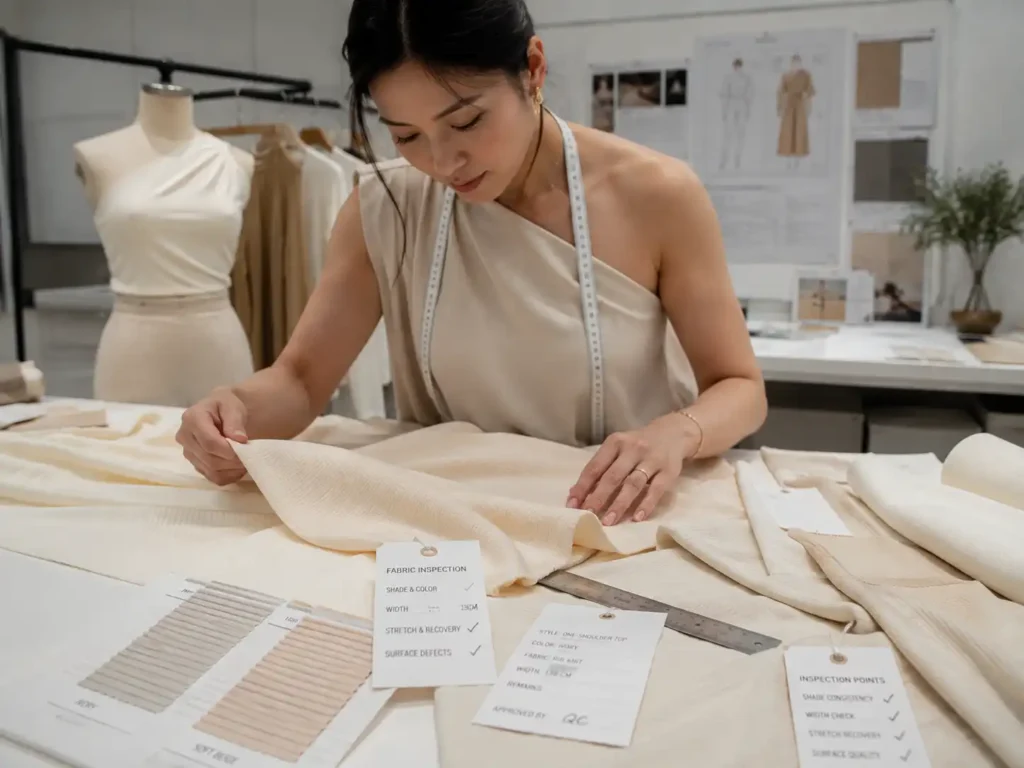
Incoming Mesh Fabric Inspection Before Cutting
Material approval must translate into measurable receiving checks. Each roll or lot is reviewed against the approved fabric reference, production order, color approval, and construction requirements before panels are released for cutting.
| Inspection Point | What to Check | Approval Basis | Action When Unacceptable |
|---|---|---|---|
| Fabric identity | Composition, width, weight, construction, lot, and color | Purchase specification and approved fabric reference | Hold the lot and reconfirm before spreading |
| Surface condition | Holes, snags, broken yarns, stains, oil marks, barre, and edge damage | Order defect standard and visible-zone requirement | Mark, segregate, replace, or revise cutting allowance |
| Mesh structure | Opening size, density, uniformity, face direction, and distortion | Approved swatch or production sample | Separate abnormal rolls and review production suitability |
| Stretch direction | Lengthwise, crosswise, and diagonal extension | Pattern and construction instruction | Correct cutting direction or revise pattern plan |
| Recovery behavior | Return after extension, bagging, curl, and permanent growth | Approved sample behavior and fit requirement | Replace material or adjust construction before sampling |
| Transparency | Opacity in relaxed and stretched states under relevant lighting | Approved outer mesh, lining, and coverage zones | Revise lining, color, layer count, or fabric choice |
| Shade consistency | Roll-to-roll, lot-to-lot, and lining color relationship | Color standard, lab dip, or approved bulk color | Shade-sort, separate cutting lots, or request replacement |
| Shrinkage and stability | Dimensional change after agreed care or steam conditions | Project testing requirement | Adjust pattern allowance or reject unsuitable material |
Transparency and Lining Must Work Together
Transparency is a design feature only when coverage, lining, color, and fit remain controlled. Review must reflect real wear rather than a flat garment viewed under one factory light.
Transparency Under Real Lighting
Mesh opacity changes with color, opening size, yarn thickness, stretch, layer count, and lighting direction. A light-colored mesh over a matching lining may appear balanced on a table but become noticeably more transparent across the bust, hip, seat, or thigh when worn. Flash photography and strong retail lighting can also reveal lining edges or body zones that are not obvious under soft room lighting. Sample approval should identify intended sheer areas, protected coverage zones, and the acceptable relationship between outer mesh and lining. Inspection can then compare production garments under consistent lighting and, where relevant, on a form or fit model. The aim is not to remove the sheer effect; the aim is to reproduce the approved effect across sizes and colors without accidental exposure.
Outer Mesh and Lining Tension
Outer mesh and lining must hang and stretch as one garment while retaining their separate visual functions. A firm lining under highly elastic mesh can restrict movement and pull seams inward. A very elastic lining under stable mesh can create bubbles or excess fullness. Length mismatch may lift the lining hem, drag the outer layer, or rotate side seams. Pattern development should compare stretch percentage, recovery, weight, and seam joining method. Fit samples should be checked standing, sitting, walking, and after short resting periods. Production inspection should confirm that seam allowance, lining notches, attachment points, and hem lengths follow the approved construction rather than relying on visual adjustment at the end of the line.
Lining Color and Coverage
Lining color changes the apparent color and depth of the outer mesh. Nude, tonal, contrast, black, or white linings can produce very different visual results even when the outer layer is unchanged. The approved combination should be recorded by color code and physical reference. Coverage boundaries around neckline, armhole, bust, cut-out, slit, and hem need clear measurements or pattern references. A vague instruction such as “lined to mid-thigh” is not enough for consistent production across sizes. The approved sample should define where the lining begins and ends, whether the lining is free-hanging or attached, how it behaves at seams, and how much ease is allowed. Final inspection then checks both coverage and the visual transition from lined to sheer areas.

Stretch Recovery and Seam Stability Control
Stretch mesh must extend for wear, return for shape retention, and pass through seams without rippling or breaking. Fabric behavior and sewing method are approved together before bulk production.
Stretch Direction Review
Pattern pieces are positioned according to the intended direction of maximum stretch, recovery, print, and visual grain. Bodycon panels may require greater crosswise stretch, while straps, waistbands, or support zones may need controlled extension. Mirrored panels should follow the same direction so left and right sides respond equally during wear. Cutting instructions must identify face, direction, pair control, and any zone requiring reinforcement. A panel cut in the wrong direction can still be sewn successfully but will produce a different fit, recovery, and transparency level. Bundle checks therefore begin before sewing, not after a completed garment shows distortion.
Recovery After Movement
Extension alone does not define performance. A mesh dress should recover after pulling over the body, sitting, walking, and normal handling. Review may include controlled extension, relaxation time, visual bagging, neckline return, armhole return, waist-seam stability, and hem shape. Steam and finishing can alter recovery, especially when heat-sensitive fibers or elastane blends are involved. The approved sample establishes expected behavior, and any required laboratory or internal test method is recorded before production. When recovery is weak, options may include a different mesh, altered lining, adjusted negative ease, reinforcement, or revised construction. Forcing the original pattern onto an unsuitable mesh usually transfers the problem to later stages.
Seam Appearance and Strength
Stable seams must stretch with the garment without creating waves, skipped stitches, open seams, excessive bulk, or visible thread damage. Production trials should confirm stitch type, seam allowance, thread, needle, tension, feed, and finishing method on the approved mesh and lining combination. Early line output is reviewed before volume increases. Side seams, neckline edges, armholes, ruching channels, zipper joins, and high-stress cut-out corners deserve closer attention because small changes can affect both appearance and strength. Inspection should compare seams in a relaxed state, under gentle extension, and after hanging. Repair methods also need limits; repeated needle penetration can weaken delicate mesh or leave visible holes.
Accurate Cutting, Panels, and Placement
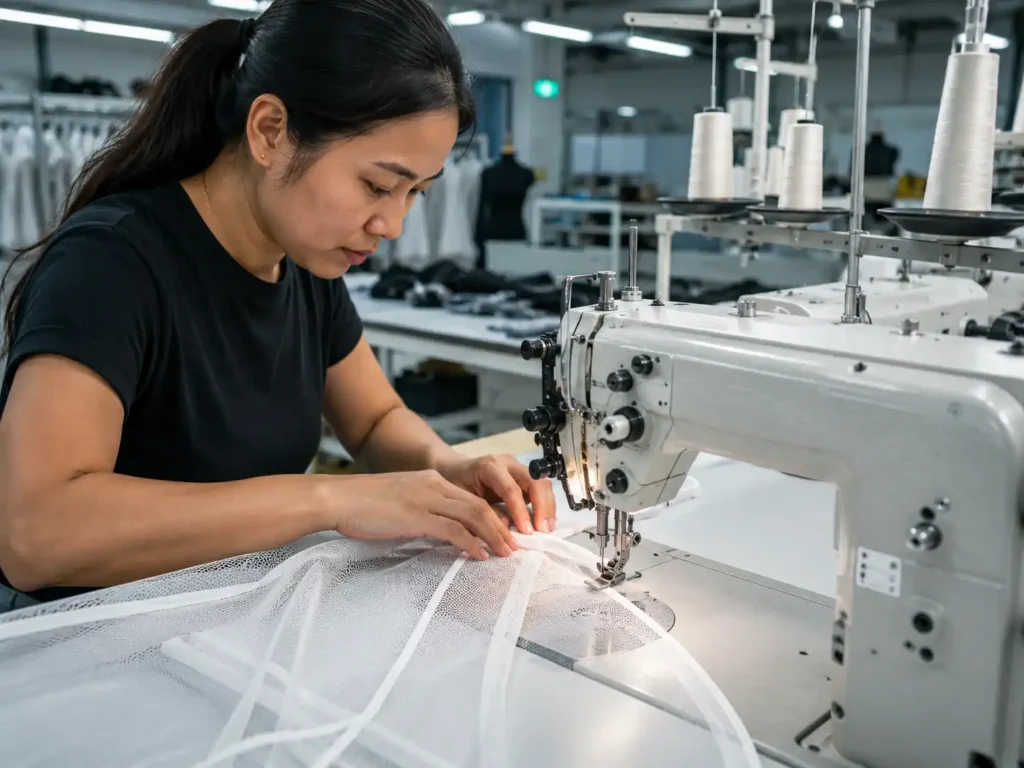
Cutting establishes the geometry of the garment. Direction, symmetry, print placement, and bundle identity must remain controlled before delicate mesh reaches the sewing line.
Stretch and Grain Direction
Markers and cutting instructions identify the approved stretch direction, face, nap or visual direction, and panel orientation. Mesh can appear symmetrical while behaving differently by direction. Incorrect orientation changes fit, transparency, seam recovery, and drape. Spread tension must remain controlled so layers are not stretched during cutting and allowed to shrink afterward.
- Check: marker direction, fabric face, spread tension, panel orientation, and relaxation.
- Release basis: approved pattern, fabric reference, and cutting instruction.
Panel Symmetry
Left and right mesh panels, cut-outs, yokes, cups, side inserts, and ruching sections are paired and checked before bundling. Symmetry is especially important when seams remain visible through sheer fabric. Notches, balance marks, and panel dimensions help prevent one side from being eased differently or attached at the wrong position.
- Check: paired panels, notches, seam curves, opening positions, and layer count.
- Release basis: final pattern and approved sample comparison.
Print and Motif Placement
Printed, flocked, embroidered, lace-applique, or patterned mesh requires placement rules that survive size grading. Center motifs, border designs, stripe directions, and visual focal points should be measured from stable garment references. Placement cannot rely only on the smallest size sample because bust, waist, hip, and length changes affect artwork position.
- Check: artwork direction, center position, seam matching, and graded placement.
- Release basis: approved artwork, marker, and size-specific placement instruction.
Bundle and Size Control
Cut panels are separated by style, color, size, shade lot, and orientation. Bundle tickets and production files prevent similar-looking mesh pieces from being mixed across sizes or colors. Shade sorting remains important because transparent fabrics can reveal lot differences after layering. Cut-panel inspection catches holes, edge damage, missing notches, and count errors before sewing.
- Check: style, color, size, lot, quantity, pair identity, and panel damage.
- Release basis: cutting plan, bundle record, and production order.
Pattern, Fit, and Size Grading Control
Fit control connects design appearance with wearer safety and repeatable production. Mesh stretch can hide pattern errors during a quick fitting, so structure and measurements require deliberate review.
Core Measurement and Structure Points
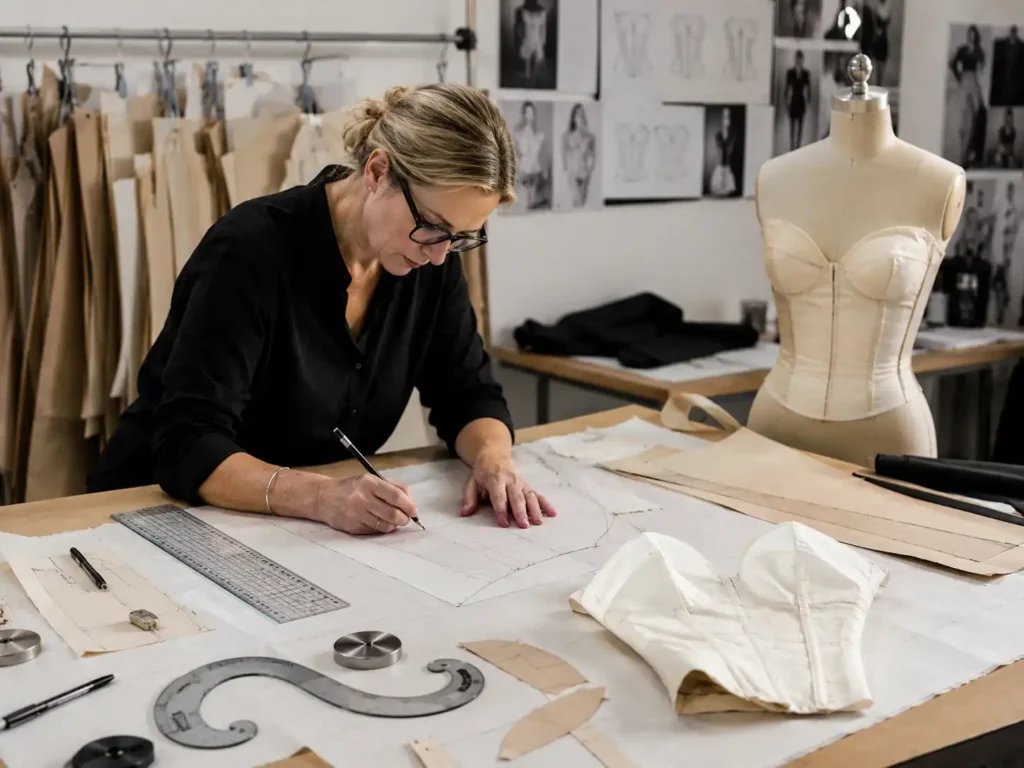
Mesh dress patterns are reviewed through bust, upper bust, under bust, waist, high or low waist, hip, front and back length, neckline depth, armhole, strap length, slit height, lining length, and hem balance. Jumpsuit-style mesh garments also require crotch length and movement allowance. Measurement points are linked to construction rather than copied blindly from a standard chart. A deep neckline, strapless bodice, cut-out waist, corset panel, or high slit changes how measurements should be taken and tolerated. The final pattern, approved size chart, grade rule, and measurement tolerance become production documents. Inspectors use the same references for first output, in-line measurement, final inspection, and repeat orders.
Fit Review by Mesh Behavior
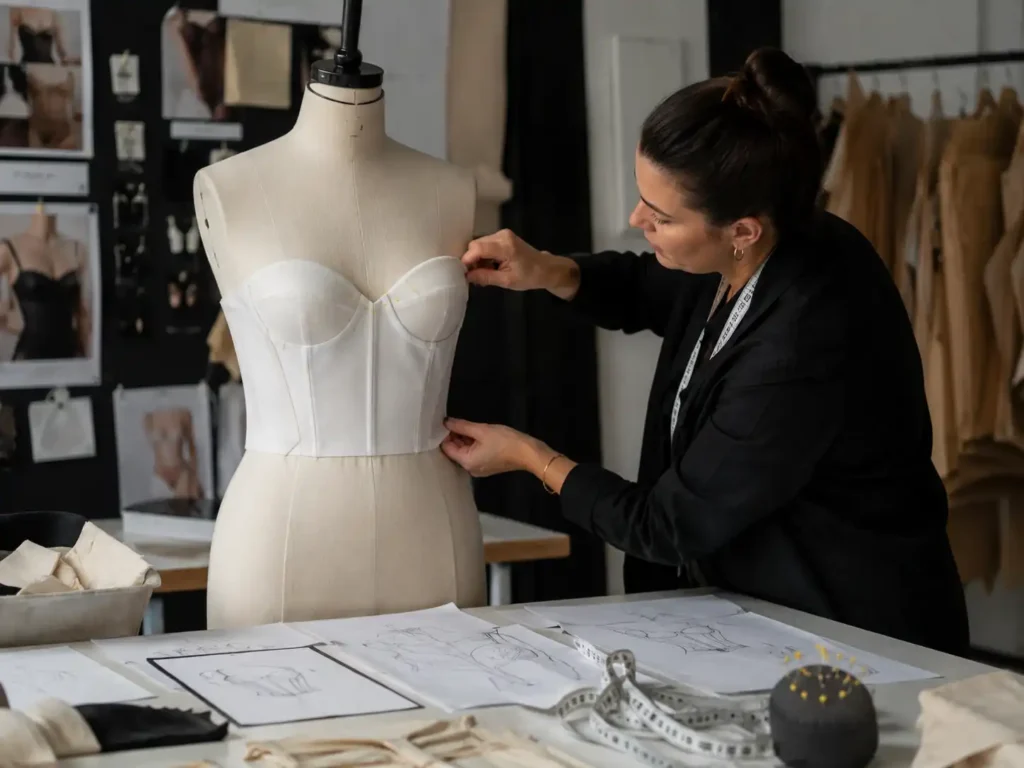
Bodycon mesh needs controlled negative ease and reliable recovery. Layered mesh needs enough ease for the outer layer to move independently without collapsing. Corset and mesh combinations need stable support at cups, boning, waist, and neckline without transferring excessive tension into transparent panels. Ruched mesh needs sufficient base-panel length to achieve the approved gathering rather than compensating through stretch. Fit review should consider standing posture, sitting, walking, arm movement, strap stability, neckline security, underarm coverage, and lining position. Any change to mesh weight, stretch, lining, elastic, or support components can alter fit and should return to sample review rather than entering bulk production as an undocumented substitution.
Size Grading Across the Range
Grading should preserve design proportion, coverage, and support across the intended size range. Larger sizes may require changes in strap width, armhole coverage, cup placement, neckline stability, lining ease, and support rather than proportional enlargement alone. Mini lengths, high slits, cut-outs, and sheer zones need size-specific safety review. Jinfeng Apparel supports pattern development through 7+ senior pattern makers, 2 sample rooms, and 20+ sample machinists. Those resources allow fit comments, pattern corrections, sample revisions, PP sample approval, and Golden Sample control to remain connected before bulk release.
Sample Approval Before Bulk Production
First Sample

Fit Sample

Revised Sample

PP Sample

Golden Sample

Production File Lock
Quality Control Through Every Production Stage
Incoming Material QC
Cutting QC
Sewing Setup Review
In-Line Inspection
Measurement Inspection
Final Garment Inspection
Packing QC
AQL or Client Inspection
Workmanship Details That Decide Garment Quality
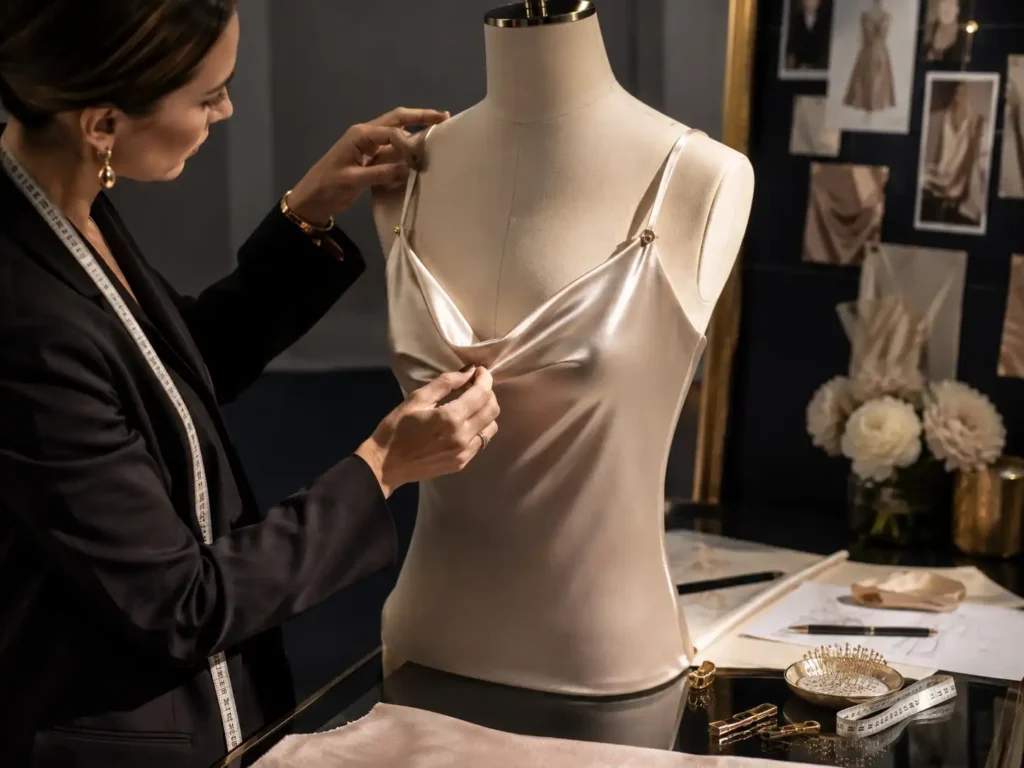
Necklines and Armholes
- Inspect: shape, depth, symmetry, edge recovery, stitch damage, and coverage.
- Reject risk: open edge, severe gaping, exposed body zone, or unstable support.
Side Seams and Panels
- Inspect: seam line, panel width, tension, allowance, symmetry, and hang.
- Reject risk: twisted side, open seam, visible distortion, or mismatched panels.

Ruching and Draping
- Inspect: gathering ratio, anchor strength, symmetry, length, and visual flow.
- Reject risk: uneven fullness, broken gathering stitches, or distorted hem.

Zippers and Closures
- Inspect: function, alignment, reinforcement, seam wave, and mesh protection.
- Reject risk: jammed closure, exposed teeth, damaged mesh, or uneven top edge.

Slits and Cut-Outs
- Inspect: height, width, symmetry, corner reinforcement, and wearer movement.
- Reject risk: excess exposure, open corner, distorted edge, or wrong position.

Hems and Layer Balance
- Inspect: hem finish, circumference, level, layer length, drape, and recovery.
- Reject risk: uneven hem, stretched edge, lining exposure, or damaged finish.
Defect Classification and Corrective Action
Critical Defects
- Action: stop, isolate, escalate, investigate, and obtain release authority.
- Evidence: defect record, affected quantity, root cause, correction, and reinspection.
Major Defects
- Action: hold affected goods, repair or replace, and perform defined reinspection.
- Evidence: defect map, repair method, quantity status, and inspection result.
Minor Defects
- Action: correct before packing and monitor recurrence by line and operation.
- Evidence: repair check, trend record, and operator or process feedback.
Root-Cause Correction
- Action: contain, analyze, correct, verify, document, and prevent recurrence.
- Evidence: updated instruction, approved repair, trial output, and follow-up inspection.
Testing and Third-Party Inspection Support
Fabric Composition
Shrinkage and Stability
Colorfastness
Stretch and Recovery
Seam and Trim Strength
Market-Specific Testing
Private Label and Packing Accuracy
A garment can pass workmanship inspection and still fail commercial delivery through incorrect labels, barcodes, SKU data, folding, or carton information. Retail-ready control protects warehouse acceptance and launch timing.

Main and Size Labels

Care and Fiber Labels

Hangtags and Accessories
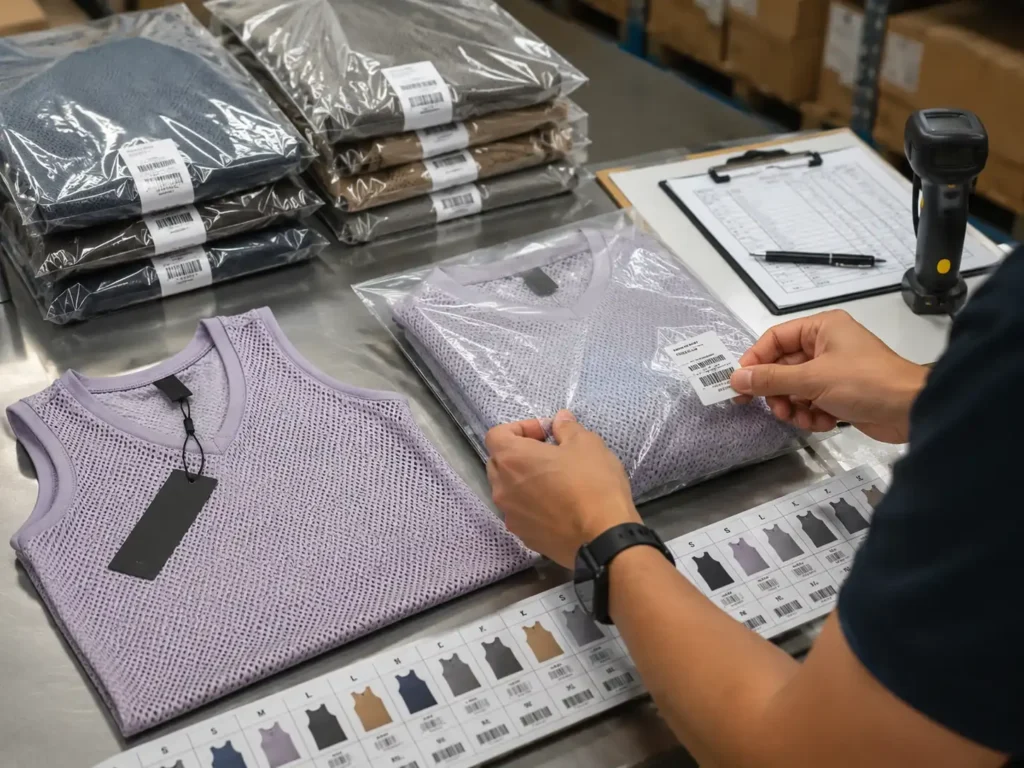
Barcode and SKU Labels

Polybag and Folding
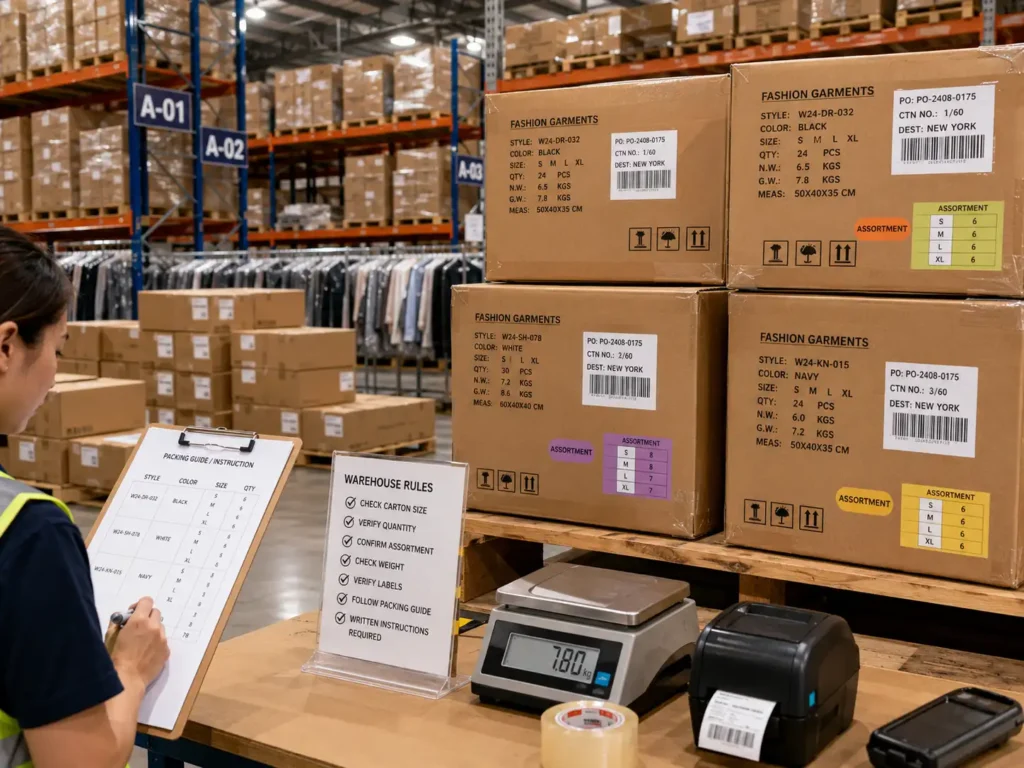
Cartons and Packing Lists
Production Resources Behind Consistent Quality
Verified production and project resources provide the operating base for sample control, multi-style planning, in-line inspection, finishing, packing, and repeat-order management. Resources are assigned according to construction and order needs.
| Verified Jinfeng Apparel Fact | Value for Mesh Dress Programs |
|---|---|
| 6 owned women’s fashion factories | Match development, woven, stretch, party, occasion, and repeat-order work with suitable production units. |
| 10+ long-term satellite partners | Support capacity coordination, multi-style programs, seasonal expansion, and multi-batch delivery planning. |
| 100,000+ pcs regular monthly capacity | Provide a defined production base across owned and coordinated resources, subject to style complexity and schedule. |
| 18+ sewing lines | Plan different dress constructions, materials, and order groups without treating every style as the same operation. |
| 6+ flexible production lines | Support multi-style, multi-color, multi-size collections and controlled repeat-order or replenishment programs. |
| 2 sample rooms | Develop first samples, fit samples, revisions, photo samples, PP samples, and Golden Samples. |
| 7+ senior pattern makers | Control bust, waist, hip, neckline, armhole, strap, slit, lining, length, and grading requirements. |
| 20+ sample machinists | Test delicate mesh sewing, lining, ruching, support, cut-outs, closures, and complex construction before bulk. |
| 15+ QC inspectors | Support incoming, cutting, sewing, in-line, garment, packing, AQL, and client-inspection activities. |
| 12+ merchandisers | Manage files, approvals, materials, sample comments, order progress, packing data, and shipment coordination. |
| 30+ finishing and packing workers | Control final appearance, labels, folding, polybags, carton marks, ratios, and shipment preparation. |
QC Records Available by Project

Approved Sample Record
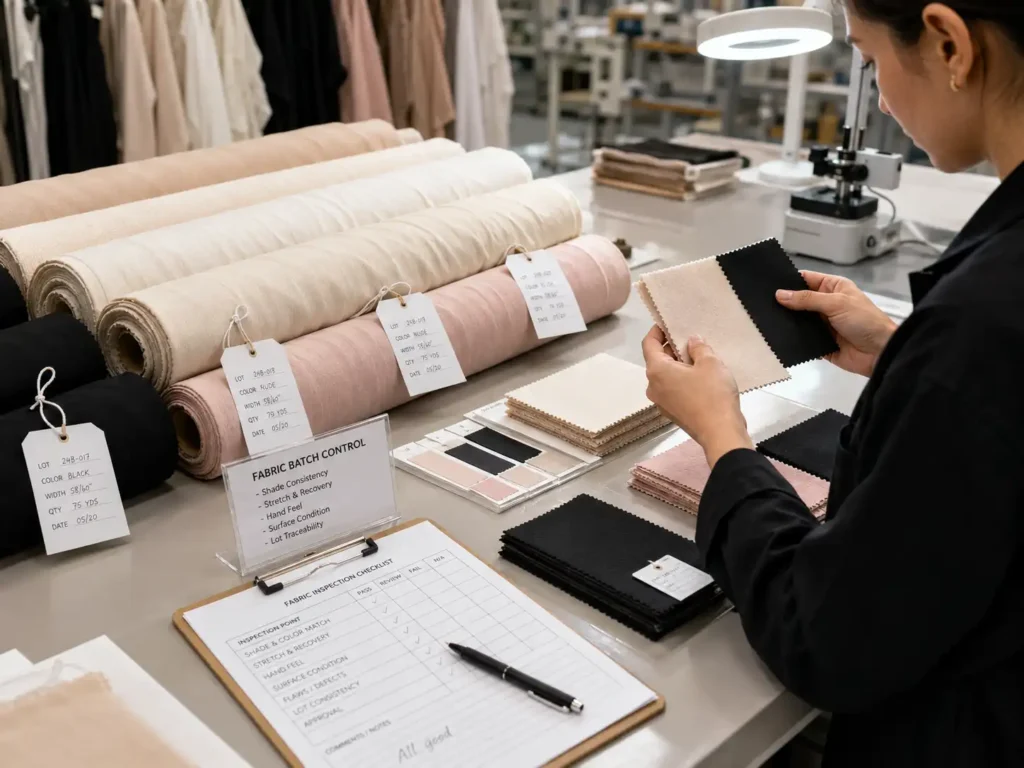
Fabric and Color Approval

Measurement Report
In-Line Inspection Record

Final Inspection Report

Packing and Shipment Checklist
Mesh Dress Quality Control Frequently Asked Questions

Send Your Mesh Dress Quality Requirements
Share the files that define how the mesh dress should look, fit, perform, and arrive at the warehouse. Jinfeng Apparel can review product structure, mesh and lining direction, sample needs, production feasibility, quality checkpoints, testing requirements, private-label details, packing instructions, and order timing before the project moves forward.
Clear source files allow the development and quality teams to identify risks early, separate design decisions from manufacturing corrections, and prepare a more accurate sampling and bulk-production plan.
- Tech pack, sketch, reference photographs, or original sample
- Mesh and lining composition, weight, stretch, color, or swatches
- Size chart, grade rule, fit reference, and measurement tolerance
- Style-color-size quantity breakdown and target launch calendar
- Quality manual, defect definitions, AQL or inspection requirements
- Labels, hangtags, barcode, SKU, polybag, carton, and warehouse instructions
- Testing, third-party inspection, shipment, and split-delivery requirements