 Skip to content
Mesh Dress Fit Solutions
Fit Engineering for Stretch, Sheer and Body-Contouring Mesh Dresses
A mesh dress can match the sketch and still fail on the body. Stretch direction, recovery, lining tension, neckline stability, bust coverage and pattern ease all change how the garment sits, moves and returns after wear. Jinfeng Apparel develops mesh dresses around measurable fit behavior before bulk production.
- 7+ senior pattern makerssupport fit and pattern correction.
- 20+ sample machinists across 2 sample roomssupport development and revisions.
- 15+ QC inspectorssupport fabric, measurement, construction and finished-garment control.
- Complex mesh styles generally require 15–25 days for sample development, depending on fabric, structure and revision requirements.
Built for Fit-Sensitive Fashion Programs
Partywear Brands
Occasionwear Labels
Premium Ecommerce
Product Developers
Sourcing Teams
Multi-Style Programs
Diagnose Mesh Dress Fit Before Correcting It
A visible fit problem often has several possible causes. Tightness around the hip may come from pattern ease, poor recovery, lining restriction or sewing tension. Correct diagnosis prevents repeated sample changes that solve one symptom while creating another.
| Fit Symptom | Common Technical Causes | Correction Direction |
| Neckline gaping | Weak recovery, neckline too open, unstable binding, sewing stretch | Review neckline pattern, stretch direction, binding tension and lining support |
| Bust pulling | Insufficient width, wrong negative ease, lining restriction | Rebalance bust shaping, fabric stretch and lining allowance |
| Waist too loose | Excess ease, weak recovery, stretched seam | Reduce pattern ease or improve recovery and seam stabilization |
| Hip over-tension | Excess negative ease, lining too tight, low recovery | Adjust hip ease and mesh/lining compatibility |
| Armhole distortion | Armhole balance, stretched sewing edge, incorrect stretch direction | Correct armhole pattern and edge control |
| Lining pulls the shell | Different stretch or recovery between layers | Rebalance lining size, direction and attachment |
| Hem rides upward | Excess body tension, insufficient length, ruching imbalance | Review vertical balance, hip ease and hem length |
| Cut-out shifts on body | Edge growth, poor anchoring, proportion error | Correct cut-out pattern, reinforcement and surrounding tension |
Where Mesh Dress Fit Commonly Fails

Neckline Gaping
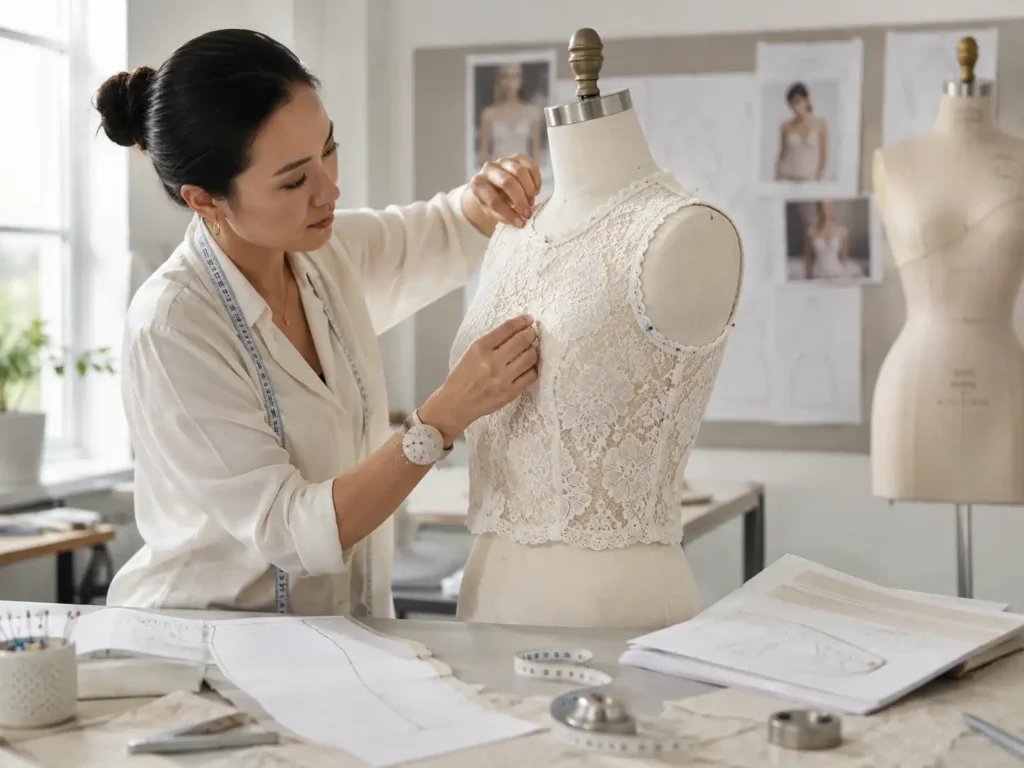
Bust Instability

Loose Waist Fit

Hip Over-Tension

Armhole Distortion

Lining Restriction

Ruching Imbalance

Hem Riding Up
Stretch and Recovery Drive the Pattern
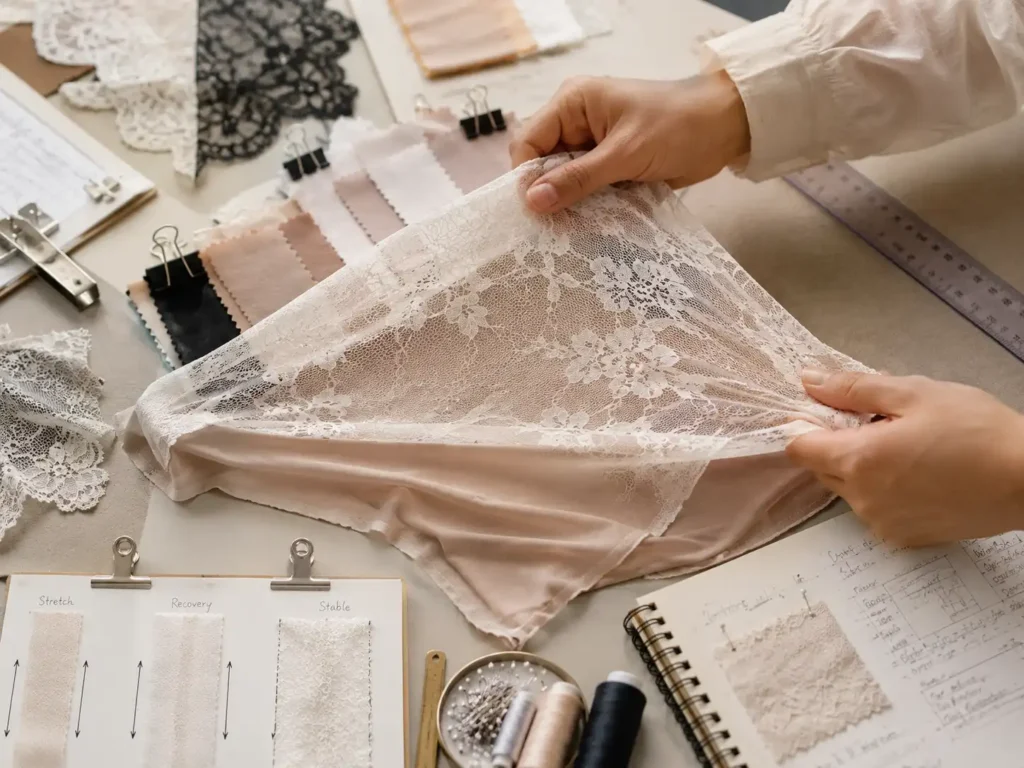
Stretch percentage alone does not tell a pattern maker how a mesh dress will fit. The direction of stretch, resistance under load, recovery after extension and growth during wear determine how closely a garment can follow the body without losing its intended shape.

Measure Stretch in the Working Direction
A mesh fabric may stretch strongly across the width but very little lengthwise, while another mesh behaves in both directions. Pattern placement must follow the actual behavior of the selected bulk fabric, especially for bodycon panels, sleeves, cut-outs and waist-to-hip areas.
Cutting a panel in the wrong direction can create a garment that feels tight vertically while becoming too loose horizontally. Printed mesh adds another limitation because print direction and visual placement may restrict how pattern pieces can be rotated.
Control points:
- Crosswise stretch
- Lengthwise stretch
- Stretch direction
- Panel orientation
- Print orientation
- Body zone receiving the highest tension

Recovery Matters More After Wearing
A fabric may stretch easily during the first fitting but fail to return quickly. Weak recovery can appear as a loose waist, wider neckline, stretched elbows or a skirt that grows longer after hanging.
For close-fit styles, Jinfeng compares the desired silhouette with how the mesh behaves after extension rather than relying only on the initial relaxed measurement. Power mesh may provide firmer recovery than soft fashion mesh, but stronger resistance can also change comfort and pattern ease.
Fit review considers:
- Initial extension
- Recovery after release
- Repeated stretch
- Hanging growth
- Shape retention
- Interaction with lining
More Stretch Is Not Automatically Better
Very high stretch can improve dressing comfort while making measurements more sensitive to sewing and handling.
Low-resistance mesh can also become visibly more transparent when extended around the bust or hip.
A stronger mesh may stabilize the silhouette but create excessive compression if the pattern was originally developed for a softer material.
The material and pattern should therefore be approved together rather than treating the fabric as an interchangeable component.

Fabric Changes Trigger Pattern Review
Changing from regular stretch mesh to power mesh, double-layer mesh or another supplier’s material can alter resistance, recovery, transparency and handfeel even when composition appears similar.
Jinfeng reviews whether the change affects:
- Bust and waist ease
- Hip tension
- Neckline stability
- Sleeve mobility
- Lining compatibility
- Cut-out proportions
- Measurement tolerance
- Bulk sewing behavior
A visually similar substitute should not automatically inherit the old pattern without assessment.
Balance Transparency, Coverage and Lining Tension
A successful sheer dress needs deliberate exposure rather than accidental exposure. Coverage is developed through mesh density, color, layering, lining position and body tension, while lining must stretch and recover closely enough to avoid fighting the outer layer.

Coverage Changes Under Tension
Mesh that appears moderately sheer on a table may become much more transparent across the bust, hip or seat once stretched. The effect can increase again under strong studio lighting or flash photography.
Coverage therefore needs to be checked on body rather than judged only from a fabric swatch. For fitted styles, review should consider the highest-tension zones separately from looser sections of the dress.
Possible controls include:
- Mesh density
- Double layering
- Skin-tone lining
- Matching-color lining
- Partial lining
- Strategic panel coverage
- Controlled negative ease
Lining Must Work With the Shell
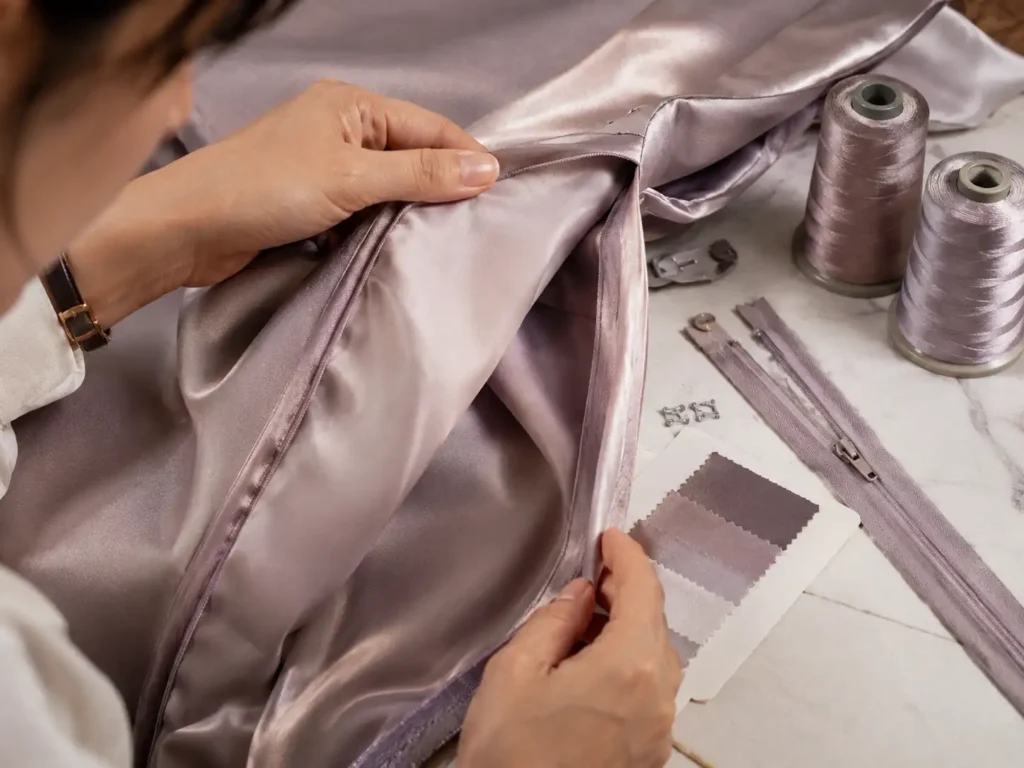
Lining is not simply an opaque layer added underneath. Its stretch direction, recovery and dimensions influence the fit of the outer mesh.
A lining that is too restrictive can pull the shell inward and create horizontal drag lines. A lining that is too loose may bunch underneath or become visible at the neckline, armhole or hem. The attachment method can also change how freely the two layers move.
Jinfeng reviews:
- Shell-to-lining stretch compatibility
- Lining length
- Bust coverage
- Side coverage
- Armhole position
- Hem relationship
- Seam attachment
- Movement between layers
Pattern Ease Must Match Mesh Behavior
A size chart gives target body or garment measurements, but it does not decide how a stretch mesh garment should feel on the body. Pattern ease must account for fabric behavior, silhouette, lining, support, seam construction and the amount of movement expected during wear.
Bust Ease Needs Local Control
The bust rarely behaves like a simple circumference.
Apex position, neckline shape, side coverage and underbust tension all influence visual fit.
Too little allowance can pull the neckline outward or increase transparency.
Too much can leave the upper bust loose even when the waist fits correctly. Stretch distribution around the front panel must therefore be considered alongside the measurement chart.
Waist and Hip Need Different Tension
A fitted silhouette usually needs stronger visual definition at the waist while allowing sufficient room and recovery at the hip. Applying one uniform reduction across the body can produce a tight hip and loose waist at the same time.
For bodycon development, Jinfeng reviews the transition through:
- Bust
- Underbust
- Natural waist
- High hip
- Full hip
- Seat
- Lower skirt
Each area can require a different correction.
Vertical Balance Is Equally Important
Mesh dresses can change length when tension is distributed incorrectly. Excess horizontal pressure at the hip may pull the skirt upward; vertical growth can make a maxi style hang longer after wear.
Pattern development therefore considers:
- Shoulder-to-bust length
- Waist position
- Waist-to-hip depth
- Center-front length
- Center-back length
- Side-seam balance
- Finished dress length
Ease Is Rechecked After Fabric Changes
Pattern corrections remain linked to the approved mesh.
A major fabric substitution can change the fit enough to require another sample rather than a simple production note.
Jinfeng treats fit as a relationship between the approved material, pattern and construction—not as an isolated measurement exercise.
Control Every Critical Mesh Fit Zone

Bust

Underbust

Neckline
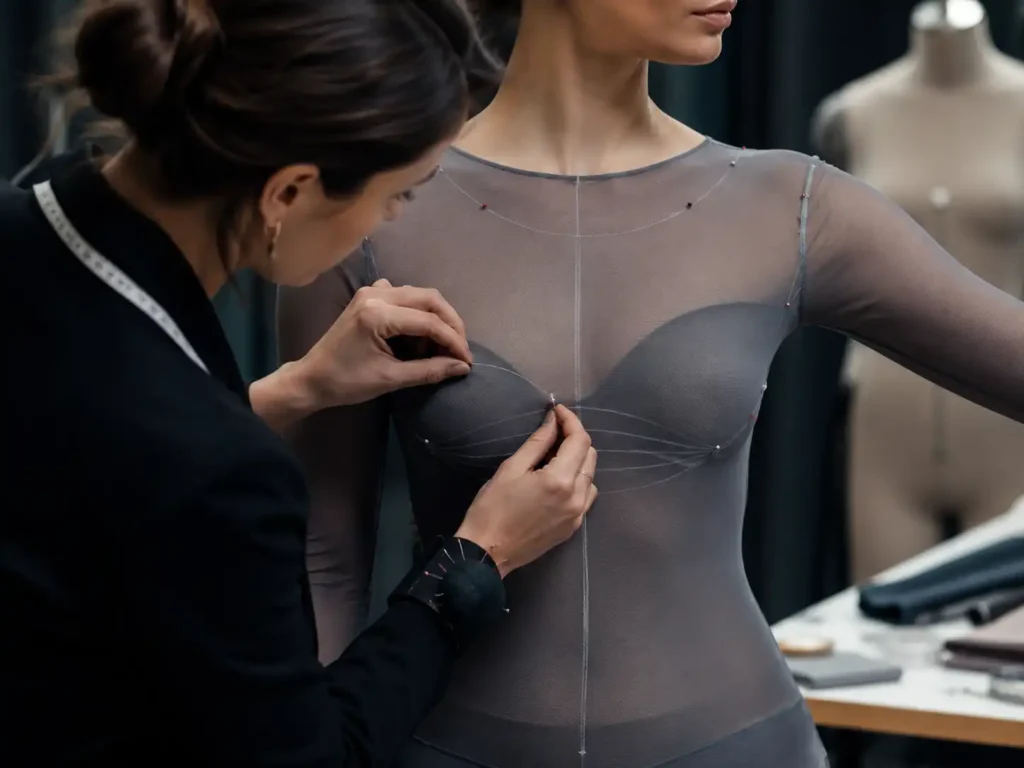
Armhole

Waist

Hip

Cut-Out Areas

Hem and Length
Test Fit Through Real Body Movement
Walk and Turn
Sit and Stand
Raise and Rotate
Repeat Stretch
Turn Fit Comments Into Controlled Sample Revisions
A serious mesh dress revision process does not rely on messages such as “make the waist smaller” or “the neckline feels strange.” Feedback needs to be separated into pattern, measurement, material, lining and construction issues before a revised sample is made.

Start With Structured Fit Evidence
Useful input can include:
- Front fitting photo
- Side fitting photo
- Back fitting photo
- Close-up problem photos
- Fit video
- Measurement comments
- Existing sample
- Tech pack
- Size chart
- Approved fabric reference
Jinfeng compares the evidence against the current sample measurements and pattern rather than changing several variables without a defined reason.
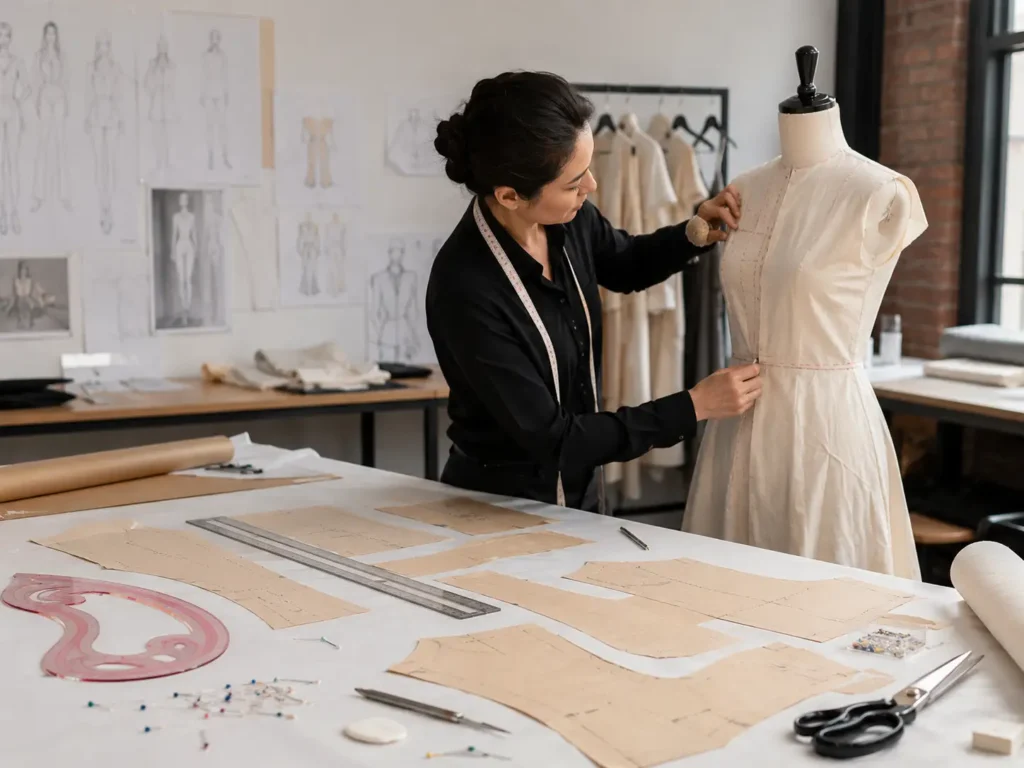
Classify Each Revision
A fit issue may require one or several types of change:
Pattern correction:
Neckline shape, bust balance, waist shaping, hip ease, armhole, length or cut-out position.
Measurement correction:
Specific numerical changes to garment measurements or tolerances.
Fabric correction:
Different mesh weight, stretch, recovery, transparency or support.
Lining correction:
Length, width, stretch direction, coverage or attachment.
Construction correction:
Binding tension, seam method, elastic, ruching, reinforcement or edge finishing.
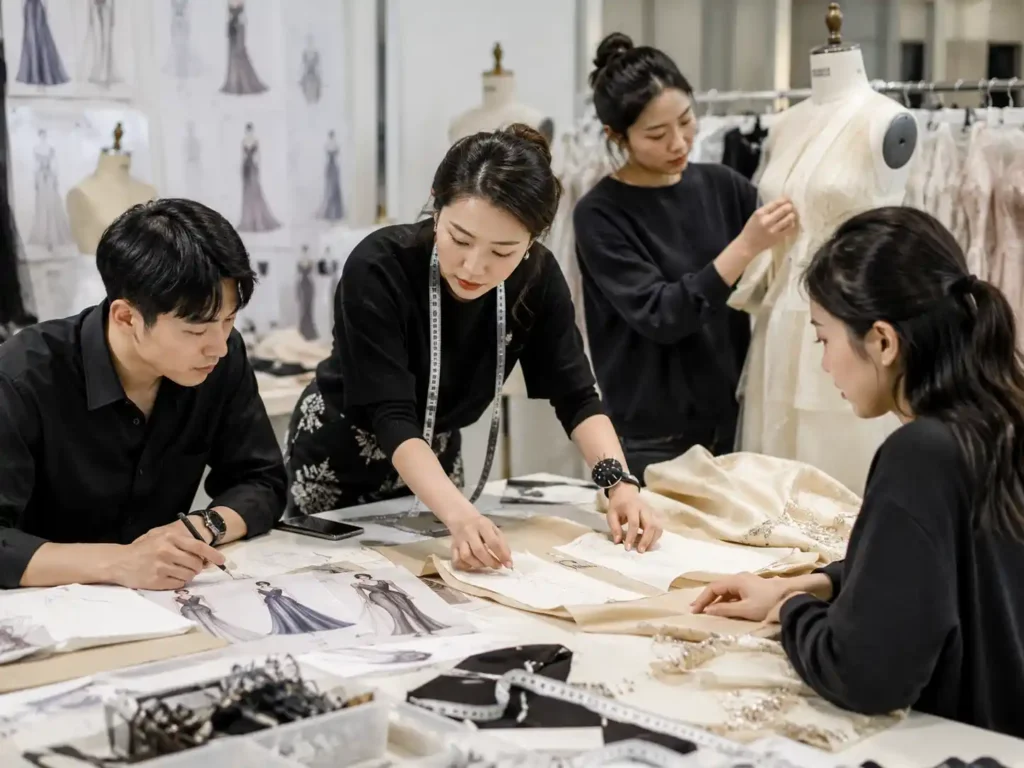
Record Changes Before the Next Sample
Changes affecting bulk production should move into formal technical records:
- Revised pattern
- Updated size chart
- Measurement tolerance
- Fabric record
- BOM
- Sewing instructions
- QC checklist
- PP sample comments
Fit decisions should not remain only in emails or messaging threads.
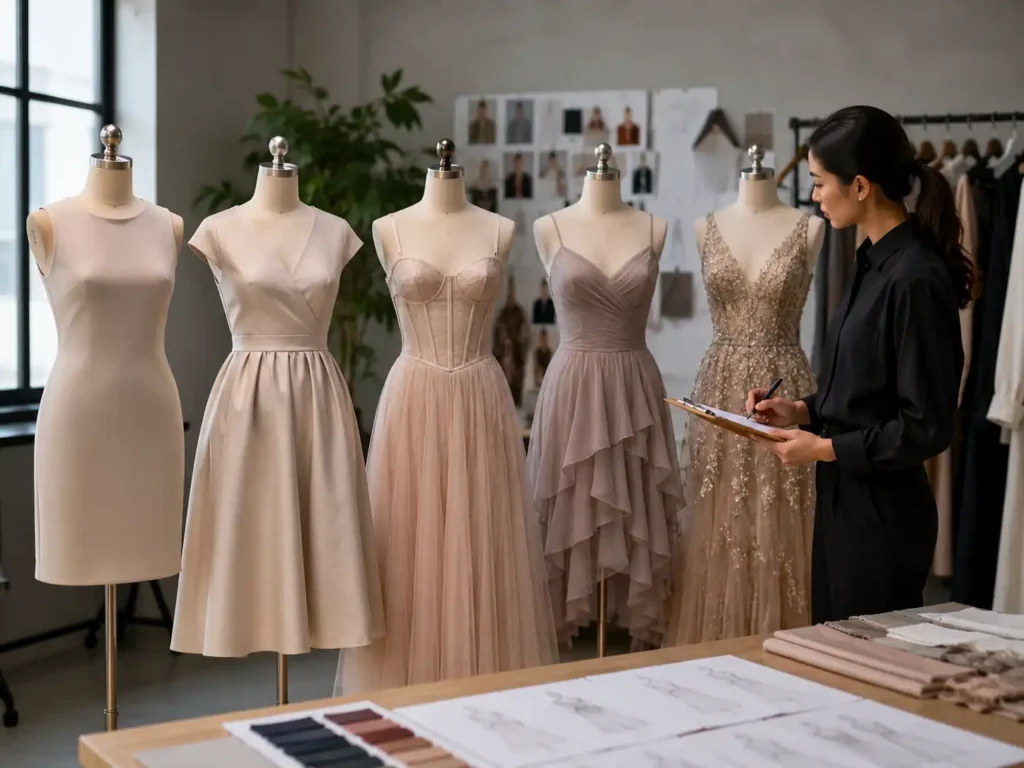
Plan Enough Revision for Complex Mesh
Mesh, corset, lace, sequin and other structurally sensitive styles commonly require approximately one first sample plus around two revised-sample rounds, depending on the design and whether the fabric or construction changes.
Complex mesh sample development typically falls around 15–25 days per sample stage, while special fabrics, printing or trims can extend the schedule. A major material or structural change may require the style to be reassessed rather than treated as a minor correction.
After the core appearance, fit, fabric, trims and construction are accepted, development moves to PP sample approval and Golden sample control.
Keep Fit Stable Across the Size Range
Bust Progression
Waist Placement
Hip Tension
Neckline and Armhole
Lining Coverage
Length and Proportion
Construction Can Preserve or Destroy Good Fit
Even a well-corrected pattern can change during production. Mesh edges stretch easily, different layers feed differently through sewing, and local tension from elastic, binding or gathering can alter the finished measurement. Construction methods therefore become part of fit control.
Stabilize Open Edges
Necklines, armholes and cut-out edges are high-risk areas because an open mesh edge has little inherent stability.
Binding, elastic or another approved finishing method needs enough control to maintain shape without making the edge visibly tight.
Too much tension creates puckering or curling.
Too little allows the opening to grow.
Control Seam Tension
Stretch mesh seams need to extend with the garment without breaking, waving or becoming visibly rigid. Seam tension also affects how adjacent panels share load across the body.
For fitted styles, Jinfeng checks:
- Seam flatness
- Stretch response
- Side-seam balance
- Thread tension
- Panel symmetry
- Recovery after handling
Match Double Layers
Double-layer mesh can improve coverage and visual depth, but two layers do not always stretch identically once sewn together.
The layers need compatible direction and controlled feeding.
If one layer is stretched farther during assembly, finished panels may twist, ripple or shrink unevenly.
Control Ruching Position and Amount
Ruched mesh needs controlled gathering volume and reference marks. Changing the amount by a small margin can affect waist shaping, hip width and finished length.Bulk production should reproduce:
- Ruching direction
- Start/end points
- Gathering amount
- Left/right symmetry
- Elastic tension where used
Stabilize Cut-Out Structures
Cut-outs concentrate stress at corners and connection points.
The edge must remain secure while allowing the surrounding body panels to stretch.
Pattern shape, reinforcement and seam construction should prevent the opening from progressively widening after wear.

Fit Solutions for Core Mesh Dress Styles
Different mesh silhouettes fail in different ways. Jinfeng develops the material, pattern, lining and construction around the intended style instead of using one generic mesh specification for every dress.

Mesh Bodycon Dress
Main risks: Excess hip tension, transparency under stretch, waist growth and hem riding.
Fit development focuses on bust-waist-hip balance, negative ease, mesh recovery, lining compatibility and side-seam stability. Repeated movement is particularly important because an initially clean silhouette can loosen after wear.
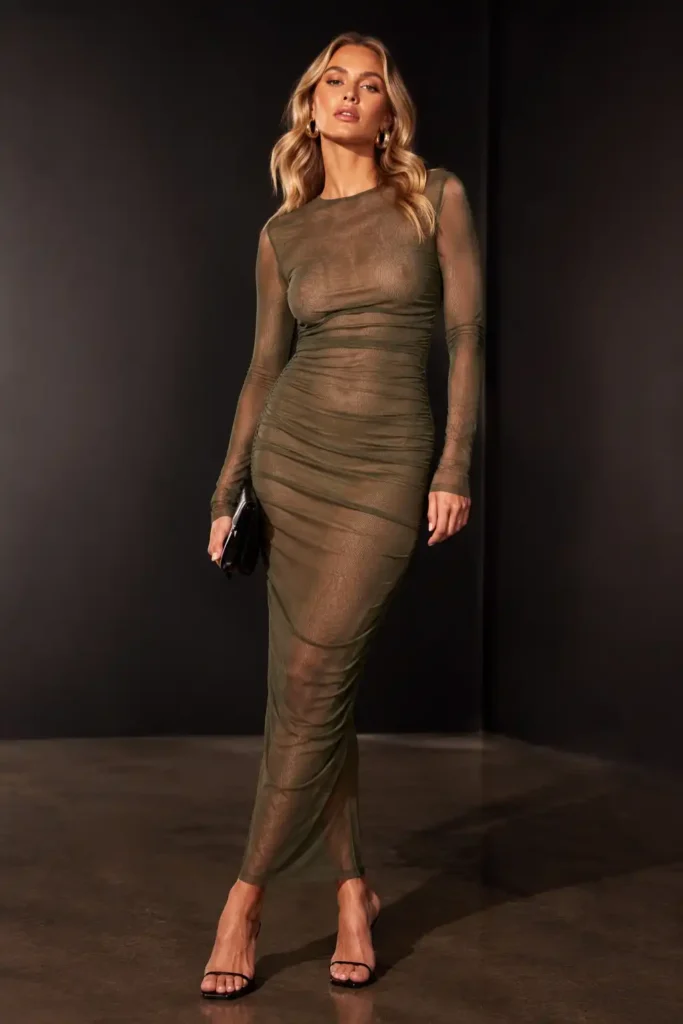
Ruched Mesh Dress
Main risks: Incorrect gathering position, left/right imbalance, shortened hem and mismatched lining tension.
Ruching volume is tied to the body position it is meant to shape. Gathering around the waist or hip should be controlled against approved sample markings so the bulk silhouette does not become fuller or flatter than the reference.

Cut-Out Mesh Dress
Main risks: Exposure proportion, unstable edges, bust coverage and shifting openings.
Fit review focuses on how surrounding tension changes the cut-out after movement. Edge shape, reinforcement, body coverage and symmetry are corrected together.

Long-Sleeve Mesh Dress
Main risks: Armhole restriction, sleeve twisting, elbow growth and body panels pulling upward.
Sleeve and armhole balance must allow movement while preserving the torso fit. Recovery becomes especially visible around the elbow after extended wear.

Double-Layer Mesh Dress
Main risks: Different layer tension, rippling, uneven transparency and twisted seams.
Layer direction, cutting, assembly and lining interaction need consistent control. Double layering should add coverage or structure without making the garment heavy or restrictive.

Printed Mesh Dress
Main risks: Print distortion, motif displacement, inconsistent body positioning and constrained cutting direction.
Pattern placement must consider both fit and visual print alignment. Stretching a printed motif strongly across the bust or hip can change the intended artwork significantly.
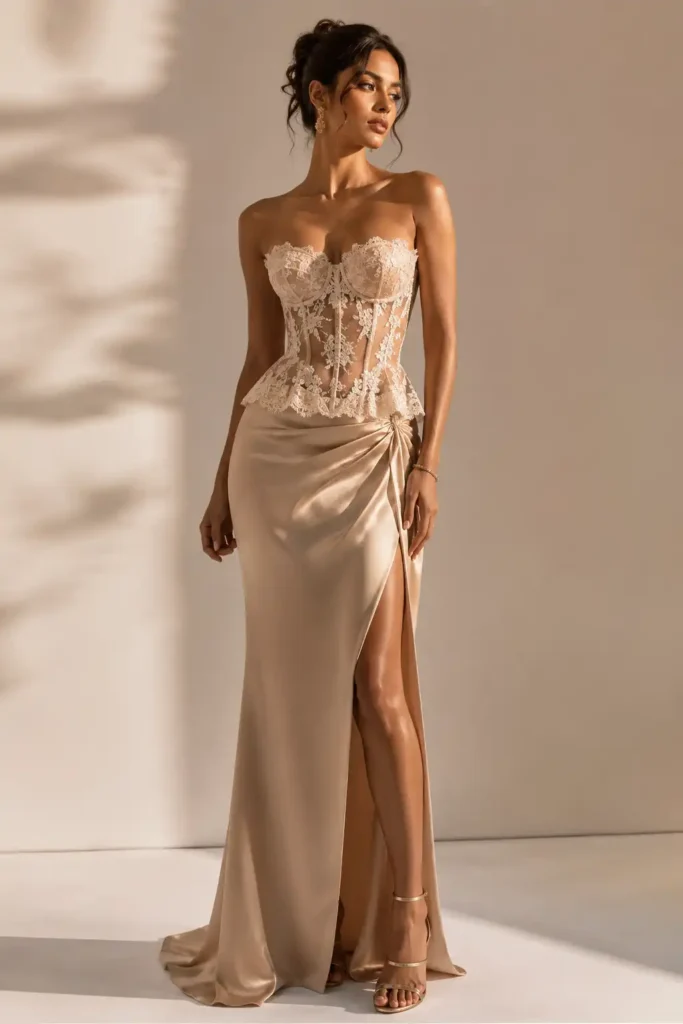
Mesh Maxi Dress
Main risks: Vertical growth, hem imbalance, side-seam twisting and lining length mismatch.
Longer panels magnify small differences in stretch and hanging behavior. Finished length should be assessed after the garment has settled rather than relying only on immediate post-sewing measurement.

Occasion Mesh Overlay
Main risks: Visible lining edges, seam exposure, refined neckline fit and inconsistent layer length.
Occasion styles generally require a cleaner visual transition between opaque and sheer areas. Fit, seam allowance, lining height and edge finishing must look deliberate from close range.
Transfer Approved Fit Into Bulk Production
Sample approval only creates value when the approved fit can be reproduced through cutting, sewing and inspection. Jinfeng converts fit decisions into controlled production references before the style is released to bulk.
PP Sample Approval
The pre-production sample confirms the approved combination of material, size, fit, construction, trims and appearance before production preparation is completed.
Golden Sample Control
The sealed Golden sample provides a physical reference for bulk production, QC, repeat orders and later comparison when a question cannot be resolved from the tech pack alone.
Production Files
Patterns, size charts, BOM, sewing instructions, fit comments and QC checkpoints are updated to reflect approved revisions. The latest version must be identifiable before cutting begins.
Fabric Confirmation
Bulk mesh is reviewed for color, handfeel, stretch, recovery, holes, printing and other relevant characteristics. Elastic and power-mesh materials require particular attention before cutting.
Cutting Direction
Cutting controls the approved pattern version, fabric orientation, stretch direction, printed direction and panel count. A correctly developed sample can still fail if bulk panels are cut against the required stretch orientation.
In-Line Verification
Fit-sensitive dimensions and construction details are checked while sewing is still in progress. Early correction is more effective than discovering a repeated neckline, lining or measurement issue after the entire order is finished.
Fit-Sensitive QC for Mesh Dress Production
Mesh dress inspection must follow the risks established during development. Generic end-of-line inspection is not enough for styles where fabric stretch, lining and open edges directly influence the final fit.

Incoming Mesh Control
Before production, relevant fabric characteristics are reviewed against the approved direction.
Checks can include:
- Color and shade
- Visible holes or damage
- Stretch direction
- Recovery
- Handfeel
- Transparency
- Printed placement
- Bulk-lot consistency

Cutting Control
Cutting checks focus on:
- Correct pattern version
- Grain and stretch direction
- Left/right panel symmetry
- Print direction
- Panel orientation
- Cut quantity
- Visible mesh damage
A wrong cutting direction can change fit across an entire production batch even when every finished garment meets the same flat measurement.
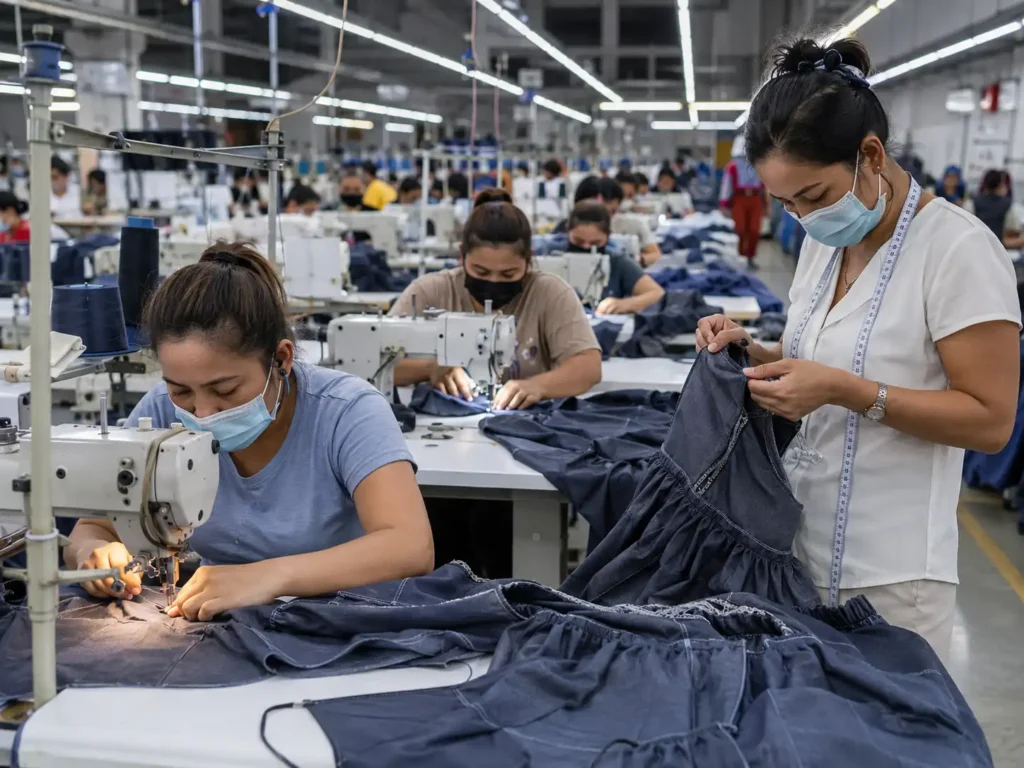
Sewing and In-Line Control
During sewing, inspectors and production teams review:
- Neckline stability
- Armhole stability
- Side-seam balance
- Lining placement
- Ruching position
- Cut-out symmetry
- Edge tension
- Seam waviness
- Zipper or closure position where applicable
Repeated deviations are corrected during production rather than left until packing.

Measurement Control
Key points are checked against the approved size chart and tolerance. For fitted mesh dresses, priority measurements often include:
- Bust
- Waist
- High hip
- Full hip
- Dress length
- Neckline depth
- Armhole
- Sleeve length
- Lining length
- Cut-out reference positions

Finished Appearance Review
Mesh products are checked for:
- Holes
- Snags
- Uneven transparency
- Distortion
- Asymmetry
- Lining exposure
- Wavy seams
- Uneven hems
- Ruching inconsistency
- Visible construction damage
Finishing and packing should preserve the approved silhouette without stretching or compressing sensitive areas.

Final Release
Final inspection can include AQL inspection and client-appointed inspection according to the project standard.
AQL sampling is treated separately from process QC and does not replace material, cutting, in-line and garment-level controls carried out earlier.
With 15+ QC inspectors, Jinfeng can assign inspection attention according to the risk profile of the style rather than treating mesh, satin, lace and conventional woven dresses as identical products.
Verify Mesh Stability With Relevant Testing
Mesh dress inspection must follow the risks established during development. Generic end-of-line inspection is not enough for styles where fabric stretch, lining and open edges directly influence the final fit.
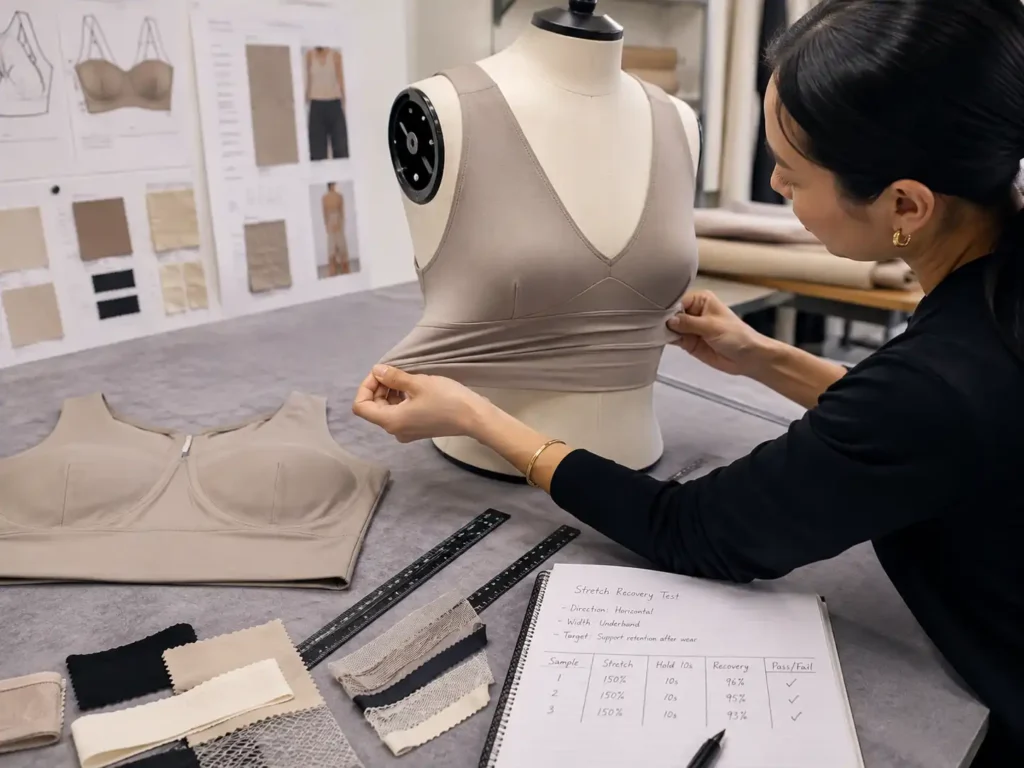
Stretch Recovery
Reviews how effectively the material returns after extension and helps identify growth risk around high-tension garment areas.

Dimensional Stability
Assesses whether washing or treatment changes garment or material dimensions enough to affect the approved fit.

Seam Strength
Useful where fitted panels, cut-outs or lining connections carry significant tension during dressing and wear.
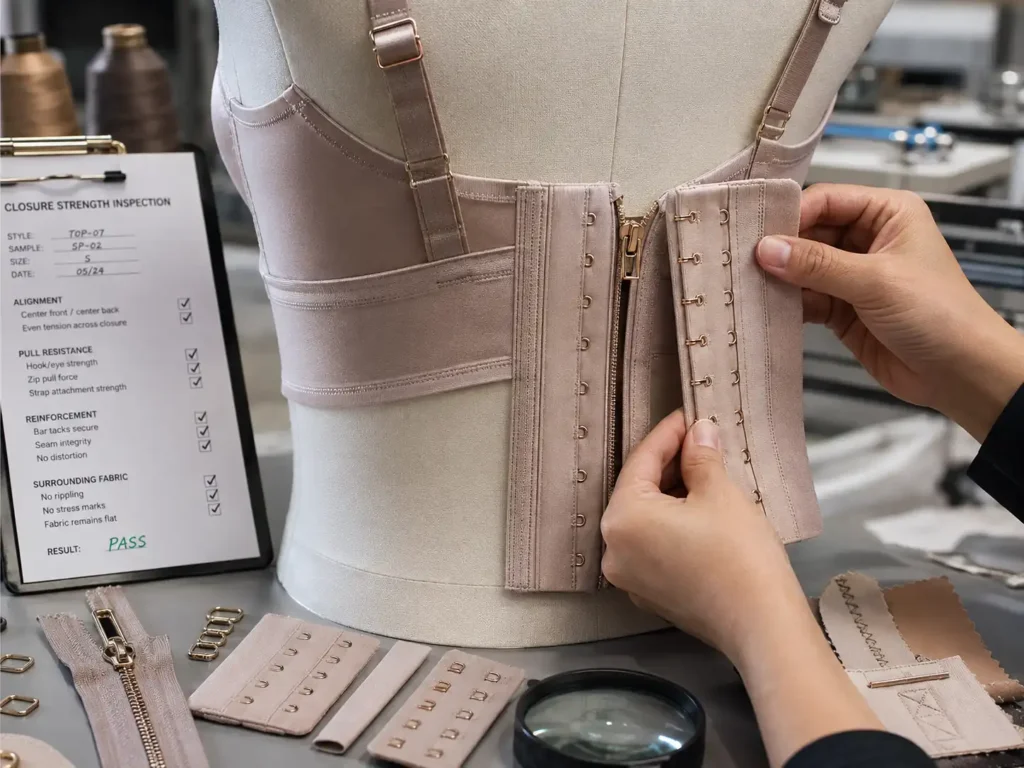
Tear Strength
Important for fine mesh or open structures where small damage may develop further around seams or stressed areas.
Appearance Retention
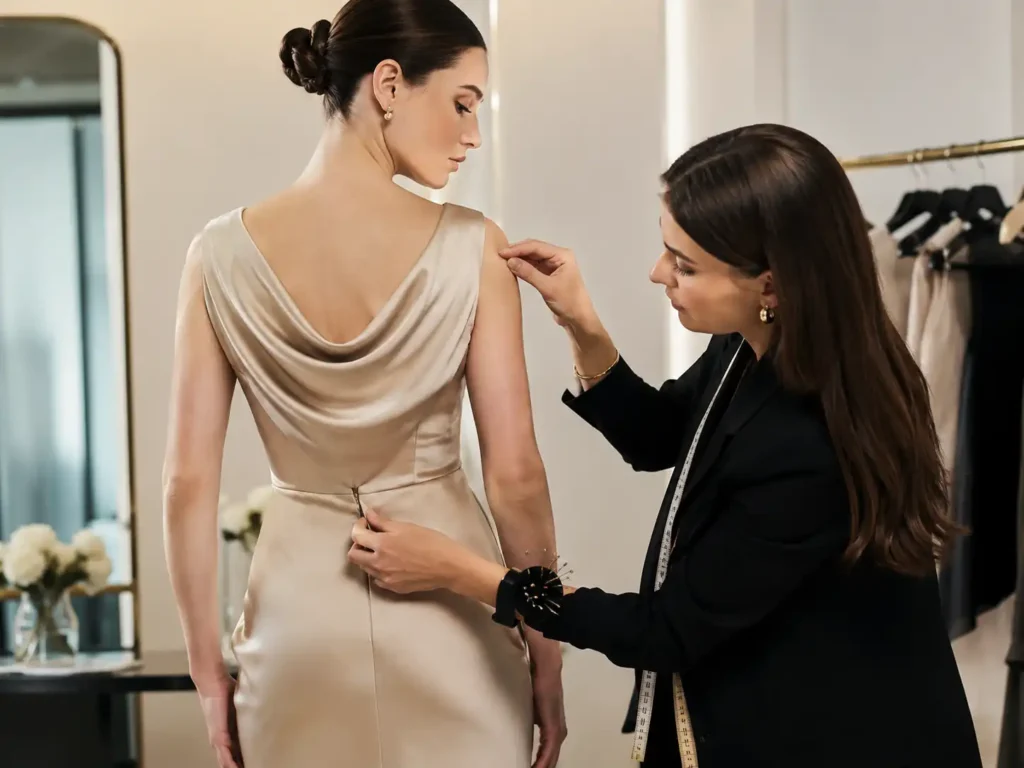
Can help evaluate distortion, twisting or other visible changes after the specified care process.
Third-Party Support
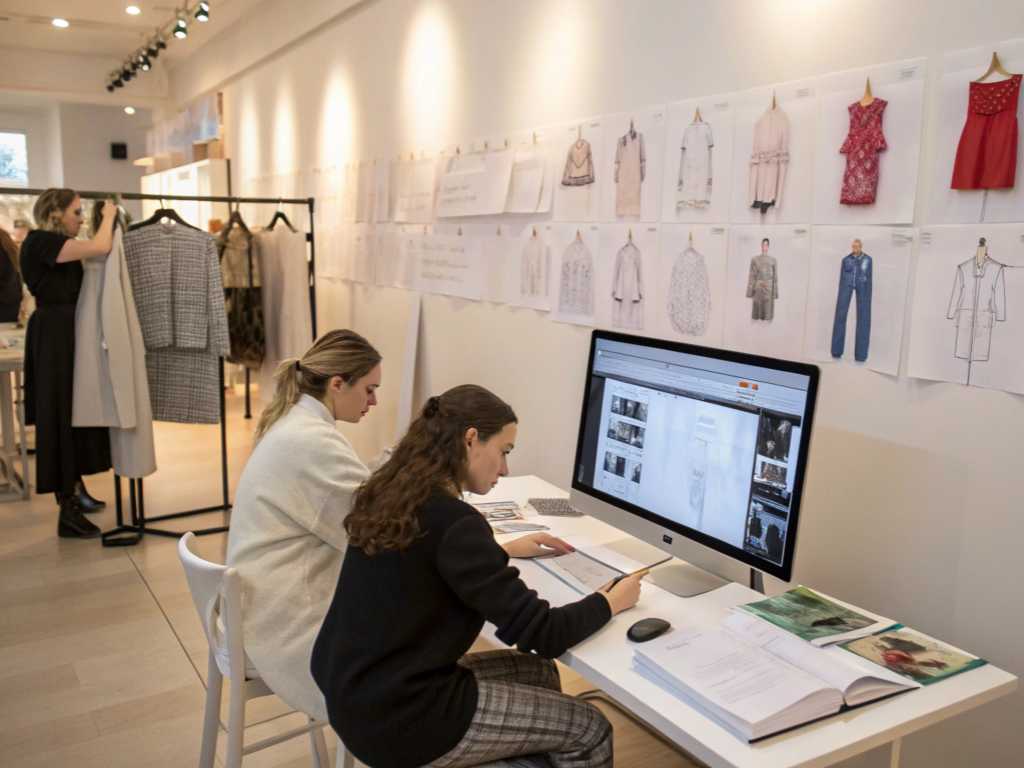
SGS, Intertek, Bureau Veritas, ITS or another appointed laboratory can be coordinated according to the required test method, sample requirement and project standard. Reports and testing scope depend on the actual fabric, order and target-market requirements.
How to Evaluate a Mesh Fit Manufacturing Partner
A capable mesh dress partner should be evaluated on how well development decisions survive from fitting through grading and bulk production. Factory capacity matters, but fit-sensitive products also require pattern judgment, material understanding, disciplined revision and product-specific QC.
| Evaluation Area | What to Verify | Jinfeng Apparel Capability |
|---|---|---|
| Mesh knowledge | Stretch direction, recovery, transparency, layering | Regular, stretch, power, printed and double-layer mesh development |
| Pattern capability | Bust, waist, hip, neckline, armhole and length correction | 7+ senior pattern makers |
| Sample development | Structured first/revised/PP sample process | 2 sample rooms and 20+ sample machinists |
| Fit feedback | Comments converted into measurable changes | Pattern, size chart, BOM, sewing and QC updates |
| Size grading | Fit and coverage preserved across size range | US, UK, EU, AU, alpha and project-specific sizing |
| Bulk transfer | Approved standards protected before cutting | PP sample, Golden sample, production and sewing records |
| Mesh QC | Material, cutting, sewing, measurement and appearance checks | 15+ QC inspectors with product-specific checkpoints |
| Production depth | Capacity for multi-style seasonal programs | 6 owned factories, 10+ long-term satellite partners, 18+ sewing lines and 100,000+ pcs regular monthly capacity |
Mesh Dress Fit Frequently Asked Questions
Weak recovery, excessive tension, unstable edges or sewing stretch can allow the garment to grow after wear. Necklines and waist areas are especially sensitive. Jinfeng reviews stretch direction, recovery, pattern ease, lining and construction to determine whether the problem comes from the fabric, pattern or assembly rather than correcting the visible symptom alone.
Stretch changes how much garment ease is required and how tension is distributed across the bust, waist and hip. Two meshes with similar composition can behave differently. Pattern development should therefore use the actual approved mesh or a technically comparable material rather than assuming all stretch mesh fits the same way.
Common causes include incorrect neckline balance, weak fabric recovery, sewing stretch, unstable binding and insufficient lining support. Correction may involve the pattern, edge construction or fabric direction. Simply reducing the neckline measurement does not always solve the underlying instability.
Bust correction may involve circumference, apex position, neckline depth, side coverage, lining tension and local pattern shaping. Transparency must also be checked under tension because a technically fitted bust can still expose more than the design intended.
They do not always need identical stretch, but their behavior must be compatible with the intended fit. A restrictive lining can pull a flexible outer mesh, while an overly loose lining may bunch or become visible. Both layers are assessed together during sampling.
Negative ease depends on mesh stretch, recovery, resistance, silhouette, body zone, lining and desired compression. Jinfeng does not apply one fixed percentage to every mesh dress. The fit is developed through the selected fabric, pattern and sample review.
Complex mesh styles generally require around 15–25 days, depending on fabric availability, construction, trims and revision requirements. Significant fabric or structure changes can extend development. First sample, revised sample and PP sample are treated as different approval stages.
Yes. Development can begin from an original sample together with fit photos, a tech pack, size chart or written comments. Jinfeng reviews pattern, measurements, fabric, lining, construction and fit issues before determining which changes should enter the revised sample.
The standard MOQ starts from 200 pcs per style/color. Special mesh, custom colors, printing, trims or packaging may carry separate supplier requirements. Final production planning also depends on material availability, construction complexity and the approved development direction.
Yes. NDA-based cooperation is supported. Tech packs, patterns, samples, trims, private-label details, packaging information and unreleased designs can be handled under confidentiality requirements throughout development and production.

Send Us Your Mesh Dress Fit Problem
A useful fit review starts with evidence. Send the current development files rather than reducing the project to a single question such as “Can you make this dress?”
Jinfeng can review the selected mesh, pattern direction, sample fit and production requirements together and identify which areas need clarification before the next sample is made.
For an effective initial review, provide as much of the following information as available:
- Tech pack or reference design
- Current mesh dress sample photos
- Front, side and back fitting photos
- Short fitting or movement video
- Current size chart
- Existing fit comments
- Mesh fabric specification or swatch
- Lining specification
- Target size range
- Style/color quantity plan
- Private-label requirements
- Target launch date


