Skip to content
Maxi Printed Dress Manufacturer
Custom printed maxi dress development for fashion brands needing fabric direction, print control, fit approval, bulk production and private-label delivery.
Jinfeng Apparel helps fashion brands develop printed maxi dresses from design references, artwork files, tech packs or original samples into production-ready garments. Our team reviews fabric drape, print scale, color direction, waistline position, lining coverage, hem balance, slit height, size grading, bulk consistency and retail packing before production begins.
- 6 owned women’s fashion factories— production support for custom printed dresses, resort dresses, vacation dresses and private-label womenswear.
- 10+ long-term satellite partners— additional capacity for multi-style, multi-print, seasonal and repeat-order programs.
- 2 sample rooms / 20+ sample machinists— first sample, fit sample, revised sample, photo-ready sample, PP sample and Golden sample support.
- 15+ QC inspectors— fabric, print direction, cutting, sewing, measurement, hem, lining and packing inspection.
- Anonymous case range: 12–24 styles / 26,400–54,000 pcs— printed maxi dress programs across US, UK and Australian markets.



Manufacturing Facts Behind Printed Maxi Dress Orders
Since 2008
- Custom womenswear manufacturing background.
- Dress-led development and bulk production support.
- Export project communication for overseas fashion teams.
6 Owned Factories
Jinfeng Apparel operates 6 owned women’s fashion factories in the Guangdong apparel supply region.
Printed maxi dress projects can be matched by fabric type, construction difficulty, order volume, style group, delivery window and finishing requirements.
- Owned production control for core dress programs.
- Factory allocation by fabric and construction risk.
- Stronger sample-to-bulk handover after PP approval.
10+ Partner Factories
More than 10 long-term satellite production partners help support multi-style orders, repeat programs and seasonal production.
For printed maxi dresses, factory matching considers fabric handling, print cutting risk, lining work, hem control and packing flow.
- Seasonal production support.
- Multi-batch order planning.
- Capacity support for approved bulk programs.
100,000+ Monthly Capacity
- Capacity reviewed by style group and launch timing.
- Multi-style printed dress programs can be planned by priority.
- Bulk output connects PP approval, material readiness and packing files.
2 Sample Rooms
Two sample rooms support first sample, fit sample, revised sample, photo-ready sample, salesman sample, PP sample and Golden sample development.
Printed maxi dress samples often require extra attention on print scale, waist proportion, skirt fall and hem balance.
- Sample development for printed dresses and resort styles.
- Revision records prepared for PP sample approval.
- Sample notes retained for production handover.
MOQ 200 Per Style/Color
MOQ starts from 200 pcs per style/color.
Final project planning depends on fabric availability, artwork method, print MOQ, color count, trim requirements, size breakdown, packing method and production schedule.
- MOQ reviewed by style and color.
- Print method and fabric MOQ checked before confirmation.
- Multi-print programs reviewed by artwork, color and quantity plan.
Built for Brands Needing Printed Maxi Dress Programs
Fashion Brands
- Style structure reviewed before sampling.
- Print direction connected with garment pattern.
- PP sample records prepared for bulk production.
Resortwear Labels
- Vacation, cruise, beach-to-dinner and summer edits supported.
- Lightweight fabrics reviewed for shrinkage and packing creases.
- Print scale and fabric movement checked before cutting.
Product Teams
- Artwork and sample versions tracked by style.
- Fabric notes connected with pattern updates.
- PP approval files prepared before bulk handover.
Sourcing Teams
- MOQ and quantity logic reviewed by style/color.
- Fabric and print risk discussed early.
- QC and shipment planning aligned with order scope.
Ecommerce Labels
- Photo-ready sample and fit review.
- SKU, barcode and polybag packing support.
- Repeat-order records for winning styles.
Private Label Programs
- Label and hangtag artwork reviewed before production.
- Barcode and SKU records matched with style data.
- Packing files checked before final carton sealing.
Supplier Fit for Printed Maxi Dress Programs
Best Aligned With
- Seasonal printed maxi dress ranges.
- Resort, vacation and wedding guest capsules.
- Private-label dress programs.
- Multi-style ecommerce launches.
- Repeat-order and new-color planning.
- Bulk production from 200 pcs per style/color.
Not Aligned With
- Single-piece or parcel-by-parcel fulfillment.
- Public stock style purchasing.
- Ready-made dress resale.
- No artwork, no style direction or no quantity plan.
- No sampling path before bulk.
- Price-only comparison without product standard.
From Print Concept to Production-Ready Maxi Dresses
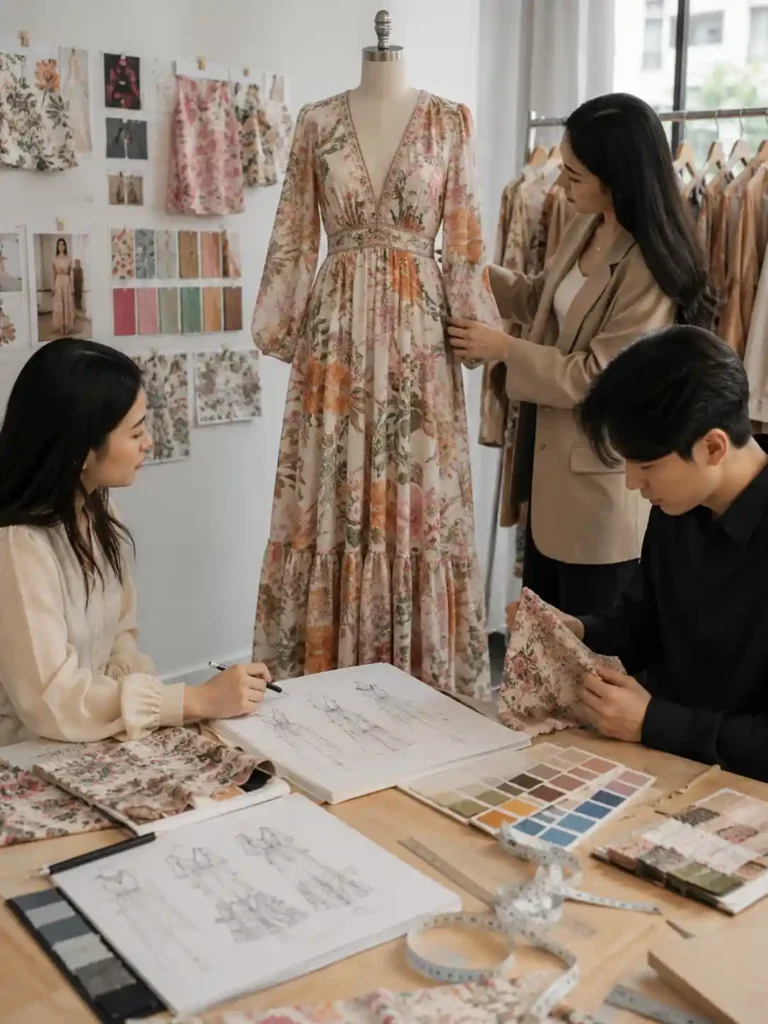
A printed maxi dress can look beautiful in artwork yet fail in production if fabric, print scale, garment length and cutting direction are not reviewed together. Jinfeng Apparel approaches printed maxi dress development as a full garment project.

Fabric First
Printed maxi dresses need fabric with the right drape, opacity, surface texture and recovery. Chiffon may need lining; rayon and viscose need shrinkage review; satin needs color and shine control; linen blends need wrinkle and packing review.
- Drape, opacity and surface feeling reviewed before sample cutting.
- Shrinkage and wrinkle behavior checked by fabric group.
- Lining relationship reviewed for light colors and sheer fabrics.

Print Before Pattern
Print artwork affects pattern layout, cutting consumption and visual balance. Large floral motifs, border prints, vertical stripes, tropical repeats, scarf-style artwork and placement prints all need early review before pattern cutting.
- Artwork scale reviewed against garment length.
- Repeat direction checked before marker planning.
- Placement areas reviewed around bodice, waist, skirt and hem.

Fit Before Bulk
Maxi length changes how a dress moves, hangs and photographs. Jinfeng Apparel reviews bust position, waistline, hip ease, skirt fall, strap length, slit height, lining length and hem sweep during sample development.
- Bust, waist and hip balance checked during fit review.
- Strap, slit and back opening reviewed by silhouette.
- Hem sweep and lining length checked before PP approval.

Approval Before Production
Bulk production should start after fabric, trims, measurements, print direction, color standard, PP sample and packing method are confirmed. The approval record becomes the production reference for cutting, sewing, inspection and packing.
- PP sample locks garment standard.
- Fabric, artwork and trim records move into production handover.
- QC and packing checks follow approved sample references.
Production Risks Controlled Before Bulk Work
Print Color Drift
- Pantone or physical color reference.
- Base fabric color and opacity.
- Strike-off and bulk fabric comparison.
- Color record by artwork and fabric group.
Print Scale Errors
- Artwork repeat size.
- Motif scale against garment length.
- Bodice and skirt balance.
- Size grading influence on visual proportion.
Maxi Length Balance
- Front and back length.
- Side seam drop.
- Lining exposure.
- Hem wave control.
Fabric Transparency
- Shell opacity.
- Lining shade.
- Layer length.
- Photo-light exposure.
Shrinkage Risk
- Fabric composition.
- Washing requirement.
- Pressing reaction.
- Length tolerance planning.
Packing Creases
- Fold line position.
- Steam recovery.
- Polybag dimension.
- Carton compression.
Printed Maxi Dress Styles for Seasonal Collections

Floral Maxi Dress
- Floral motif scale reviewed before sample cutting.
- Front panel, waist and hem balance checked.
- Print direction and color grouping prepared for bulk.

Boho Maxi Dress
- Shrinkage and print repeat reviewed.
- Tier and ruffle construction checked during sample review.
- Packing creases and fabric recovery discussed before shipment.

Resort Maxi Dress
- Travel-friendly fabric and packing reviewed.
- Print direction checked by garment panel.
- Lining and hem finish confirmed before PP approval.

Vacation Maxi Dress
- Open-back and strap placement reviewed.
- Slit height and walking comfort checked.
- Lining and fold method planned before packing.

Wedding Guest Maxi
- Event-ready fit and opacity reviewed.
- Color standard and lining tone confirmed.
- Private-label packing checked before shipment.

Chiffon Maxi Dress
- Transparency and lining reviewed.
- Hem level and ruffle edge checked.
- Fabric handling notes prepared for bulk.

Rayon Maxi Dress
- Shrinkage and twisting risk reviewed.
- Waistband stability and side seam behavior checked.
- Length tolerance prepared before bulk cutting.

Viscose Maxi Dress
- Fabric fall and garment length reviewed.
- Side seam behavior and hem balance checked.
- Packing method selected by fabric recovery.

Linen Blend Maxi
- Wrinkle appearance and handfeel reviewed.
- Print absorption and color effect checked.
- Button, belt and seam finish planned before sampling.

Wrap Maxi Dress
- Wrap overlap and tie length checked.
- Inner closure option reviewed.
- Front panel print balance confirmed before cutting.

Tiered Maxi Dress
- Tier spacing and gather ratio reviewed.
- Print direction checked across panels.
- Hem and lining length controlled before bulk.

Slit Maxi Dress
- Slit height and reinforcement reviewed.
- Lining opening matched with outer shell.
- Final pressing and packing method checked.
Fabric Choices for Printed Maxi Dress Development
| Fabric Direction | Best Use | Production Risk | Jinfeng Review Focus |
|---|---|---|---|
| Printed Chiffon | Resort, wedding guest, romantic maxi styles | Transparency, fraying, uneven hem, lining exposure | Lining color, edge finish, hem balance, print clarity |
| Printed Rayon | Vacation, boho, soft drape styles | Shrinkage, twisting, length change, seam stretching | Shrinkage review, cutting direction, measurement tolerance |
| Printed Viscose | Premium resort and fluid maxi silhouettes | Length drop, side seam movement, wrinkle behavior | Drape, hem control, size grading, packing recovery |
| Satin Print | Occasionwear, evening resort, polished maxi styles | Shade variation, seam puckering, snagging, fold marks | Shine direction, seam tension, lining, pressing method |
| Linen Blend Print | Natural resort, coastal edits, boutique capsules | Wrinkle marks, shrinkage, seam bulk, print absorption | Handfeel, color effect, pressing, polybag planning |
| Printed Cotton Voile | Summer maxi, tiered dress, easy vacation style | Transparency, shrinkage, weak structure | Lining, volume, seam finish, hem method |
| Printed Woven | Floral, tropical, abstract, vacation dresses | Print placement, color shift, panel mismatch | Artwork scale, cutting layout, panel direction |
| Georgette Print | Wedding guest, occasionwear, elevated flow | Transparency, seam slip, hem distortion | Opacity, seam strength, lining, skirt fall |
Print Artwork Review Before Dress Sampling
Artwork review should happen before fabric purchase, pattern cutting or sample sewing. A printed maxi dress has large visible areas, so print scale, repeat, placement and color direction must match the garment structure.

Artwork File Check
Jinfeng Apparel can review artwork files, reference images or print direction files before sampling. Vector files, high-resolution artwork, color references and repeat layout help the team judge whether the print can work on long skirt panels, bodice pieces, belts, sleeves and ruffles.
- Vector file, high-resolution file or repeat artwork preferred.
- Front, back and detail reference helps placement review.
- Color standard should be provided when available.

Print Scale Review
A motif may look strong on screen but appear too large or too small after cutting. Maxi dresses need balanced print scale across bodice, waist, skirt and hem. Jinfeng Apparel reviews print size against garment length and sample size range before bulk layout.
- Large floral motifs checked around bust and skirt.
- Small repeats reviewed for clarity after grading.
- Border and scarf layouts checked against finished length.

Placement Planning
Placement prints, scarf borders, engineered florals and vertical motifs need careful planning. Jinfeng Apparel reviews front center, waist seam, side seam, neckline, sleeve or strap placement and hem border position before cutting markers are prepared.
- Placement areas reviewed before sample cutting.
- Side seam and waist seam alignment checked.
- Border prints matched with hem and panel length.

Color Approval
Printed garments need a clear color reference before production. Jinfeng Apparel reviews Pantone reference, physical swatch, print strike-off, fabric base shade and lining color before PP approval. Bulk color records help maintain consistency across style groups.
- Pantone or physical swatch reviewed when supplied.
- Strike-off approval recommended before bulk print.
- Lining color checked against shell print.
Print Method and Bulk Production Review
Digital Print
- Suitable for multi-artwork seasonal programs.
- Print color can vary by fabric base.
- Strike-off review helps reduce color surprises.
Screen Print
- Suitable for simpler repeat artwork.
- Color count affects setup planning.
- MOQ and lead time need early review.
Sublimation Print
- Best suited to polyester-based fabrics.
- Color brightness depends on base fabric.
- Handfeel and opacity still need garment review.
Placement Print
- Artwork placement linked with pattern pieces.
- Cutting layout reviewed before bulk print.
- Size grading influence checked early.
Border Print
- Border position matched with dress length.
- Panel cutting reviewed by size.
- Hem allowance included before artwork approval.
Allover Print
- Repeat direction checked.
- Side seam transition reviewed.
- Fabric consumption estimated before quotation.
Maxi Length and Fit Control for Bulk Orders
Bust and Waist Balance
- Bust point and neckline reviewed before PP approval.
- Waist seam or elastic position checked by silhouette.
- Bodice balance connected with skirt volume.
Skirt Fall
The skirt fall decides how the printed maxi dress moves and photographs. Fabric weight, panel width, lining, gathers, tiers and hem sweep all affect final look.
Jinfeng reviews skirt fall after sample sewing and pressing.
- Panel shape and skirt sweep reviewed.
- Lining and shell movement checked together.
- Fabric weight matched with desired drape.
Total Length
Maxi length must be controlled across sizes and colorways.
Jinfeng reviews shoulder-to-hem, waist-to-hem, side seam, center front, center back and lining length before bulk cutting and during final measurement checks.
- Front, back and side length checked.
- Lining length reviewed separately.
- Size grading impact reviewed before production.
Slit Height
- Slit height checked by base size.
- Reinforcement and bartack position reviewed.
- Lining opening matched with outer shell.
Strap and Back Fit
- Strap length and pull strength tested.
- Back opening reviewed for stability.
- Neckline tension and coverage checked.
Hem Sweep
- Walking comfort reviewed.
- Fabric consumption estimated.
- Hem method matched with fabric type.
Design Details for Printed Maxi Dresses

Halter Neck
- Neck tie strength checked.
- Bust and armhole coverage reviewed.
- Upper-body print placement controlled.

Wrap Front
- Front overlap and tie length reviewed.
- Print balance checked across wrap panels.
- Inner closure option considered during sample review.

Tiered Skirt
- Tier height and gather ratio reviewed.
- Print direction checked across layers.
- Hem balance confirmed after sample fitting.

Side Slit
- Slit height and reinforcement checked.
- Lining opening matched with shell.
- Print continuity reviewed around side seam.

Ruffle Detail
- Ruffle width and placement checked.
- Edge finish selected by fabric type.
- Print direction reviewed before cutting.

Smocked Waist
- Elastic recovery checked.
- Waist comfort reviewed.
- Length impact measured after sample sewing.

Backless Detail
- Back depth and strap placement reviewed.
- Inner binding and side seam security checked.
- Back panel print balance considered.

Button Front
- Button spacing and placket support checked.
- Print interruption reviewed along front opening.
- Pulling risk reduced through sample testing.

Belt or Sash
- Belt width and tie length checked.
- Print direction matched with garment.
- Fold method reviewed before packing.
Cutting and Print Placement for Long Dress Panels
Panel Direction
- Grainline and print direction reviewed.
- Bodice and skirt panel relation checked.
- Size bundle records prepared before sewing.
Print Matching
- Side seam and front panel alignment reviewed.
- Repeat spacing checked before marker planning.
- Border print relation with hem confirmed.
Cutting Waste
- Fabric yield estimated before bulk.
- Large motif placement may increase waste.
- Cutting plan connected with cost review.
Size Scaling
- Base-size placement reviewed first.
- Larger-size balance checked before production.
- Pattern grading connected with print layout.
Sampling Flow for Printed Maxi Dress Projects
A sample should confirm more than silhouette. For printed maxi dresses, it must test fabric, artwork scale, print placement, lining, fit, length, movement, sewing finish and packing expectation before bulk approval.
Step 1|Project Review
Jinfeng reviews reference images, tech packs, line sheets, original samples, artwork files, target quantity, fabric direction, color plan, size range, label needs, packing requirements and launch timing before sample work begins.
Step 2|Fabric Direction
Fabric direction is reviewed before cutting because weight, stretch, opacity, drape, shrinkage and print method can change the sample result. Jinfeng checks fabric availability, supplier MOQ, color direction and bulk suitability.
Step 3|Artwork Review
Artwork scale, repeat, placement, color reference, print method and fabric base color are reviewed before sample printing. Jinfeng checks whether artwork can work on long panels, waist seams, bodice pieces, sleeves, ruffles or tiers.
Step 4|Pattern Making
Pattern makers translate visual references into garment structure. Bust, waist, hip, strap, neckline, back opening, slit, total length, lining and hem sweep are reviewed before sample sewing.
Step 5|First Sample
The first sample checks silhouette, print effect, fabric movement, shell and lining relationship, fit balance, length, hem shape and design details.
Step 6|Revised Sample
Revised samples apply pattern corrections, fabric adjustments, artwork scale updates, trim changes and measurement revisions based on approved comments.
Step 7|PP Sample
PP sample confirms garment standard before bulk production. Fabric, artwork, print direction, measurements, trims, sewing method, label placement, packing method and QC requirements are locked before cutting.
Step 8|Bulk Handover
Approved sample records, artwork notes, fabric records, trim details, measurement files, sewing notes,
QC points and packing instructions move into production planning.
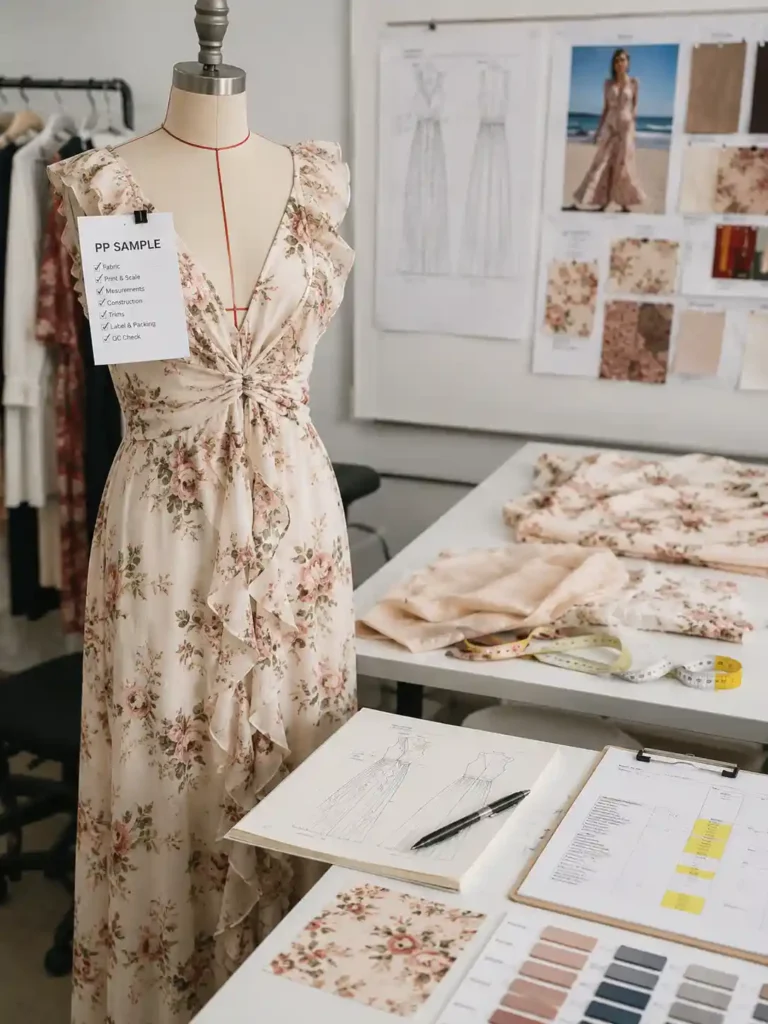
PP Sample Approval for Printed Maxi Dresses
PP sample approval protects brands from artwork drift, length imbalance and bulk inconsistency. Jinfeng Apparel does not recommend bulk cutting without confirmed fabric, print, measurements, sewing details and packing standard.
Lock the Standard Before Production
A PP sample is the bridge between sample development and bulk production. For printed maxi dresses, it should confirm shell fabric, lining fabric, print artwork, color reference, motif scale, placement direction, trims, measurements, construction method, label placement, pressing standard and packing method.
Jinfeng reviews:
- Fabric and lining combination.
- Print artwork scale and repeat direction.
- Color reference and approved strike-off.
- Measurement chart and size grading.
- Neckline, strap, waist, slit and hem details.
- Ruffle, tier, wrap, button or zipper construction.
- Private-label placement.
- Care label, hangtag and barcode requirements.
- Individual packing and carton instructions.
- QC focus before shipment.
Golden sample records are useful for repeat orders, seasonal continuation and future multi-batch production. When brands reorder a winning printed maxi dress, saved pattern, artwork, fabric, trim, measurement, workmanship and packing records help reduce repeated communication and preserve continuity.
Bulk Production Control for Multi-Style Printed Programs
Style Grouping
- Silhouette and construction grouped before production.
- Complex styles receive extra sample review.
- Approved and unapproved styles are tracked separately.
Fabric Grouping
- Fabric behavior reviewed by group.
- Lining and shrinkage notes recorded.
- Fabric base color checked against artwork.
Artwork Grouping
- Artwork files tracked by style and color.
- Repeat and placement notes recorded.
- Strike-off approval status checked.
Color Control
- Color reference reviewed before bulk.
- SKU and barcode records matched.
- Carton marks checked by color group.
Size Planning
- Base size and full size range reviewed.
- Length grading checked carefully.
- Strap and neckline consistency protected across sizes.
Production Priority
- Hero styles can be prioritized.
- Delivery waves planned by launch calendar.
- Production files prepared by style group.
Quality Control for Printed Maxi Dress Production
Jinfeng Apparel checks printed maxi dresses through material review, artwork direction, cutting control, inline sewing inspection, measurement checking, final appearance review, pressing and packing inspection.
Fabric Inspection
Fabric inspection checks color, handfeel, defects, transparency, print clarity, shade grouping and lining match before production starts. Printed fabric needs close review because pulling lines, shade changes and visible defects can appear across long dress panels.
- Fabric shade and handfeel checked.
- Print clarity and surface flaws reviewed.
- Lining match checked for transparent fabrics.
Artwork and Print QC
Artwork QC reviews print direction, repeat scale, placement areas, color reference and panel matching.
Jinfeng checks approved artwork against bulk fabric before cutting starts.
- Repeat direction checked.
- Color reference compared.
- Placement and panel balance reviewed.
Cutting Check
Cutting review focuses on fabric direction, panel accuracy, print placement, size marking, lining panels and bundle separation. Long panels make cutting accuracy especially important for bulk consistency.
- Print direction and panel position checked.
- Size bundles separated clearly.
- Fabric defects removed before sewing.
Inline Sewing Review
Inline inspection catches seam twisting, waistline issues, strap inconsistency, zipper bulging, ruffle imbalance, lining exposure and slit placement before large quantities are completed. Early correction protects production efficiency.
- Seam tension and stitch quality reviewed.
- Strap, slit and waistline checked.
- Lining and print balance inspected during sewing.
Measurement Check
Measurement checks include bust, waist, hip, dress length, lining length, strap length, slit height and hem balance. Maxi length needs careful review across sizes because small pattern errors become visible in full-length garments.
- Total length and lining length measured.
- Bust, waist and hip checked by size.
- Slit and hem balance reviewed before packing.
Pressing Review
Pressing review checks wrinkle removal, surface protection, hem smoothness, shine marks, steam response and fold readiness. Satin print, linen blend, rayon and viscose each need different finishing handling.
- Fabric-specific pressing method used.
- Surface and print protected during finishing.
- Fold plan checked before packing.
Packing Check
Packing inspection covers pressing, fold direction, polybag size, barcode, SKU label, hangtag, color separation, carton mark and carton compression. Printed maxi dresses need packing methods suited for crease control and SKU accuracy.
- Label and barcode checked.
- Polybag size and fold method reviewed.
- Carton marks matched with packing list.
Shipment Review
Pre-shipment review checks approved sample reference, packed goods, carton labels, quantity breakdown, packing list and export document coordination. For large programs, shipment photos and carton information can be prepared for review.
- Packing list and carton data prepared.
- Carton marks reviewed before dispatch.
- Forwarder coordination supported by project.
Private Label Packing for Printed Maxi Dresses
Woven Label
- Label size and position reviewed.
- Sewing method matched with garment structure.
- Placement checked against lining and neckline.
Size Label
- Size range confirmed before bulk.
- Label placement checked by garment type.
- Size records matched with packing list.
Care Label
- Care wording supplied or approved by brand.
- Fiber content matched with shell and lining.
- Placement checked before production.
Hangtag
- Hangtag artwork reviewed.
- Attachment point checked against fabric sensitivity.
- Barcode relation confirmed when needed.
Barcode Label
- SKU table matched with style data.
- Barcode sticker placement reviewed.
- Scan and packing accuracy checked.
Polybag
- Polybag size matched to fold method.
- Size and color stickers applied when required.
- Fabric crease risk reviewed before packing.
Carton Mark
- Carton mark layout reviewed.
- Style-color-size data matched with packing list.
- Mixed carton rules followed when supplied.
Packing Photos
- Label and polybag appearance can be checked.
- Carton mark review supported.
- Packing method retained for repeat orders.
MOQ, Cost and Timeline Planning
| Planning Item | Jinfeng Project Direction |
|---|---|
| Basic MOQ | MOQ starts from 200 pcs per style/color. MOQ is calculated by style and color, not only by total order quantity. |
| Multiple Prints | Each print may require separate artwork review, strike-off, fabric planning and MOQ discussion. |
| First Sample Timing | Standard styles often need 7–12 working days after fabric, artwork and pattern direction are confirmed. Complex prints or placement layouts may require longer. |
| Print Approval | Strike-off, artwork scale, color standard and fabric base should be confirmed before bulk production. |
| Bulk Production Planning | Standard planning often ranges from 25–45 days after PP approval and material readiness. Complex printing, trims, packing or peak season scheduling may extend timing. |
| Fabric Variables | Custom printing, custom dyeing, certified fabric, special trims and private-label packing may carry separate supplier MOQ and lead time. |
| Quantity Ratio | Size and color ratio should be confirmed before quotation. One style in two prints usually needs planning by print and color. |
| Shipment Planning | Express, air freight, sea freight, air-and-sea split shipment or client-nominated forwarder can be reviewed by launch date, order volume and carton data. |
Cost Control Without Weakening the Dress
Fabric Selection
- Fabric alternatives reviewed by drape and print clarity.
- Shrinkage and opacity considered before quotation.
- Bulk availability checked early.
Artwork Method
- Artwork repeat and placement checked.
- Strike-off planning reviewed.
- Fabric consumption considered before costing.
Skirt Volume
- Hem sweep reviewed for walking comfort and fabric use.
- Tier volume checked against cost target.
- Fabric width connected with cutting plan.
Lining Decision
- Lining length and color reviewed.
- Coverage and breathability balanced.
- Cost impact checked before sampling.
Trim Planning
- Trim function and quality checked.
- Color match reviewed by fabric group.
- Supplier minimums discussed early.
Packing Method
- Fold method selected by fabric behavior.
- Polybag and barcode needs reviewed.
- Carton plan aligned with delivery route.
Why Brands Choose Jinfeng for Printed Maxi Dresses
Development Depth
- Better sample discussion.
- Clearer file preparation.
- Stronger production reference.
- Less confusion before bulk.
Fabric Knowledge
- Better fabric matching.
- Fewer fabric surprises.
- More realistic cost planning.
- Cleaner finished garment look.
Pattern Control
- Cleaner on-body fit.
- Better photo sample.
- More stable size grading.
- Clearer PP standard.
Bulk Management
- Multi-style support.
- Factory matching.
- Production tracking.
- Repeat-order records.
QC Structure
- Fewer avoidable defects.
- Cleaner hem and lining.
- Better label accuracy.
- Stronger packing consistency.
Brand Protection
- Design privacy.
- Artwork protection.
- Private-label confidentiality.
- Safer long-term cooperation.
Project Examples for Printed Maxi Dress Programs
Jinfeng Apparel protects client names, artwork, unreleased styles, label files and production records. The following examples use anonymous profiles while showing realistic project data, technical difficulty and factory solutions for printed maxi dress programs.

US Resort Launch
A US ecommerce fashion brand planned a resort launch with floral maxi dresses, slit maxis, printed wrap dresses, chiffon maxis and related summer styles. The program needed photo-ready samples, artwork review, PP approval and private-label packing before launch.
- 18 styles / 54,000 pcs / 6 print groups — project data: floral maxis, slit maxis, printed wraps, chiffon maxis and summer dress styles; technical difficulty: multiple print scales and fabric groups created cutting and color-risk pressure; solution: Jinfeng grouped artwork, fabric and sample review before PP approval.
- 3 sample stages / 5 fit points — project data: first sample, revised sample and PP sample reviewed bust, waist, hip, strap and total length; technical difficulty: halter and wrap styles shifted on body; solution: strap length, wrap overlap and side seam balance were corrected before bulk approval.
- 4 private-label items / ecommerce packing — project data: woven labels, hangtags, barcode stickers and polybags were required; technical difficulty: similar prints increased SKU mismatch risk; solution: style-color-size packing records were checked before carton sealing.
- 2 delivery waves / launch timing — project data: priority styles shipped first and remaining prints followed; technical difficulty: launch calendar and freight planning needed balance; solution: packing lists and carton marks were separated by shipment wave.

UK Floral Occasion Program
A UK occasionwear label developed a printed maxi collection for wedding guest and event dressing. The program included floral chiffon maxis, satin print maxis, pleated printed styles and wrap maxis across multiple seasonal colors.
- 24 styles / 48,000 pcs / 5 product groups — project data: floral chiffon maxis, satin print maxis, pleated printed dresses, wrap maxis and event dress styles; technical difficulty: print color, lining and pleat consistency needed separate control; solution: Jinfeng reviewed fabric, print and construction notes by style group.
- 4 approval stages / campaign needs — project data: first sample, revised sample, photo sample and PP sample were required; technical difficulty: campaign samples needed strong visual finish while remaining producible; solution: photo-ready comments were transferred into PP sample standards.
- 6 QC focus points — project data: print direction, total length, strap balance, lining coverage, satin surface and packing accuracy were inspected; technical difficulty: one generic QC checklist could not cover all style groups; solution: Jinfeng separated QC points by fabric and silhouette.
- Repeat color planning / next season use — project data: selected styles were prepared for new color updates; technical difficulty: fabric and print changes could alter fit and drape; solution: pattern records, artwork notes and packing standards were retained for future review.

Australia Vacation Capsule
An Australian resortwear brand developed a vacation capsule with abstract printed maxis, tropical wraps, linen-blend maxis, button-front vacation dresses and printed matching sets. The project focused on relaxed movement, natural fabric feel and suitcase-friendly packing.
- 12 styles / 26,400 pcs / 4 fabric groups — project data: abstract printed maxis, tropical wraps, linen-blend maxis and printed matching sets; technical difficulty: linen wrinkle, viscose drape, print direction and packing method needed review; solution: Jinfeng grouped bulk production according to fabric behavior.
- 4 fabric and print controls — project data: fabric weight, print scale, skirt sweep and color effect were checked; technical difficulty: vacation fabrics could change appearance after folding or steaming; solution: sample feedback records included fabric handling and packing notes.
- 3 fit and movement checks — project data: waist ties, back opening and hem sweep were reviewed; technical difficulty: relaxed styles still needed stable on-body fit; solution: pattern updates adjusted tie length, front overlap and total dress length.
- 5 packing items / private-label delivery — project data: woven labels, care labels, hangtags, barcode stickers and polybags were included; technical difficulty: warehouse receiving required SKU accuracy; solution: packing records were checked by print, color and size before carton preparation.
Printed Maxi Dress Manufacturing FAQ
Yes. Jinfeng Apparel supports custom printed maxi dress development from reference image, tech pack, original sample, line sheet or artwork file. Support includes fabric sourcing, print direction review, pattern making, sampling, bulk production, QC, private-label packing and export delivery.
Common options include chiffon, rayon, viscose, georgette, satin print, linen blend, cotton voile and printed woven fabrics. Fabric selection depends on garment drape, opacity, print clarity, shrinkage risk, target price, lining need and packing method.
Yes. Jinfeng Apparel can review artwork scale, repeat direction, placement areas, color reference, fabric base shade and garment structure before sampling. A clear artwork file helps reduce print-size and cutting-position problems.
The standard MOQ starts from 200 pcs per style/color. Final MOQ may be affected by fabric availability, print method, color development, trims, size split, packing requirements and supplier-side material MOQ.
Yes. Multi-print projects can be reviewed by style group, artwork method, fabric type and quantity plan. Separate prints may have separate artwork, strike-off, fabric and MOQ requirements, so early planning is important.
Yes. Jinfeng Apparel supports woven labels, size labels, care labels, hangtags, barcode stickers, SKU labels, polybags, carton marks and warehouse label preparation according to supplied brand files.
Jinfeng Apparel reviews artwork layout, fabric direction, marker planning, cutting direction, placement areas and side seam visual balance before cutting. Production references help sewing and QC teams follow approved print standards.
Yes. Jinfeng Apparel supports multi-style dress collections by grouping styles according to fabric, artwork, construction, sample priority, PP approval and bulk production plan. Total volume and delivery windows should be shared early.
Send reference images, tech packs, artwork files, target quantity, fabric preference, size range, color plan, label files, packing requirements and delivery window. Clear files help Jinfeng Apparel review cost, MOQ, sample path and production risk.
Yes. Jinfeng Apparel supports NDA-based cooperation and protects tech packs, artwork files, samples, patterns, trims, private-label details, unpublished designs and order information throughout development and production.

Start Your Printed Maxi Dress Project
Jinfeng Apparel helps fashion brands develop printed maxi dresses with controlled fabric direction, artwork review, pattern making, sample correction, PP approval, bulk production, QC and private-label packing. To receive a more accurate project review, please send available files and order details. A reference image is useful for style structure; a tech pack helps with measurements and construction; an artwork file helps review print scale and placement; a quantity plan helps evaluate MOQ, fabric sourcing and production grouping; label and packing files help prepare retail-ready delivery.
Please include:
- Reference image, sketch, tech pack or original sample photos.
- Artwork file, print direction or color reference.
- Target fabric, lining preference or handfeel requirement.
- Style count, target quantity and size range.
- Label, hangtag, barcode, SKU and polybag requirements.
- Launch date, delivery window or warehouse destination.
- Any fit, length, slit, lining or packing concerns.