Skip to content
Maxi Floral Dress Manufacturer
Custom floral maxi dress development for fashion brands needing print control, balanced fit, private-label finishing, and repeatable bulk production.
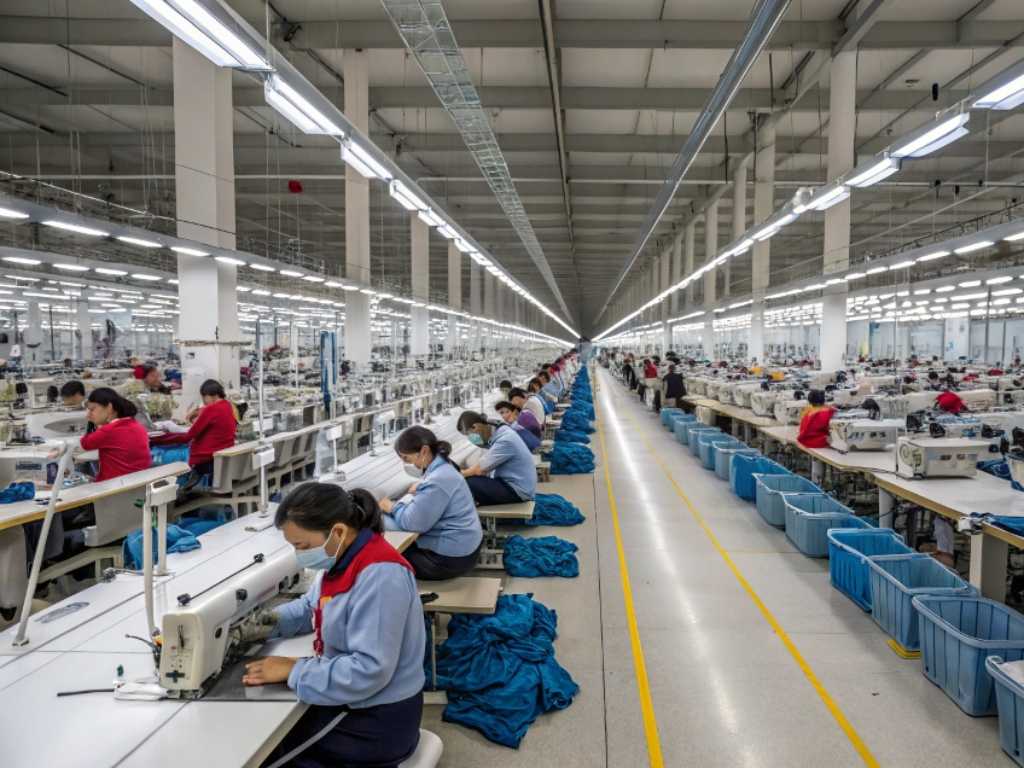
Jinfeng Apparel helps fashion brands develop custom floral maxi dresses from reference image, tech pack, or original sample into production-ready garments. Our team supports floral print review, fabric sourcing, pattern development, sample making, fit adjustment, bulk production, quality control, and private-label packing. Projects are managed for brands planning seasonal resortwear, vacation edits, wedding guest lines, spring/summer collections, and premium ecommerce launches.
- Since 2008— custom women’s fashion manufacturing experience for dress, resortwear, occasionwear, and private-label programs.
- 2 sample rooms + 7+ senior pattern makers— floral maxi length, print placement, lining, bust fit, hem sweep, and grading review before bulk.
- 6 owned women’s fashion factories + 10+ long-term satellite partners— production structure for multi-style floral dress programs and phased delivery.
- MOQ from 200 pcs/style/color— suitable for organized custom production, not ready-stock resale or micro-order fulfillment.
- Anonymous floral maxi program range: 12–24 styles / 28,000–76,000 pcs— resort, wedding guest, vacation, and spring/summer dress programs across US, UK, and Australian markets.
Built for Floral Maxi Dress Production
6 Owned Factories
- Owned factory resources for core womenswear programs.
- Production matching by fabric, construction, and delivery schedule.
- Stronger control from sample approval to bulk shipment.
10+ Partner Units
More than 10 long-term satellite production partners support flexible capacity planning for seasonal fashion programs, multi-style collections, and repeat-order arrangements.
Partner allocation is reviewed by fabric type, garment structure, sewing difficulty, and production calendar.
- Capacity support for seasonal floral dress programs.
- Multi-style production allocation by risk level.
- Unified standards for sewing notes, QC, and packing.
2 Sample Rooms
Two sample rooms support first samples, fit samples, revised samples, photo-ready samples, PP samples, and Golden sample approval before bulk production begins. Floral maxi dresses often need several review points, including print scale, dress length, lining opacity, neckline security, and hem balance.
- First sample, revised sample, and PP sample support.
- Photo-ready sample preparation for ecommerce launches.
- Sample comments converted into production references.
20+ Sample Machinists
More than 20 sample machinists work with pattern, merchandising, and production teams to test construction details before bulk sewing instructions are finalized.
Their sample work helps identify issues around fabric movement, seam tension, ruffle control, placket stability, lining attachment, and long hem finishing.
- Sample sewing support for floral maxi structures.
- Construction testing before bulk handover.
- Sewing feedback linked with pattern and QC notes.
MOQ Structure
MOQ starts from 200 pcs per style/color, depending on fabric availability, print development, trims, construction complexity, private-label needs, and production schedule.
Floral maxi dress programs also need quantity planning around print method, color stories, fabric consumption, size ratio, and delivery window.
- MOQ from 200 pcs per style/color.
- Print, fabric, and trim minimums reviewed separately.
- Quantity planning by style, color, and size ratio.
Since 2008
Jinfeng Apparel has focused on custom women’s fashion manufacturing since 2008, supporting brands with dress development, fabric direction, sampling, bulk sewing, inspection, and export coordination. Floral maxi dress programs need long-length control, print review, fabric knowledge, and repeatable sewing records before production can scale.
- Custom women’s fashion manufacturing since 2008.
- Dress, resortwear, occasionwear, and private-label support.
- Development records help future repeat orders and color extensions.
Is Jinfeng Apparel a Fit?
Best Fit For
- Fashion brands with clear floral dress direction.
- Premium ecommerce, resortwear, and occasionwear programs.
- Line sheets, tech packs, quantity plans, and launch dates ready for review.
Not Designed For
- Not for ready-stock floral dress purchasing.
- Not for single-piece shipping or micro trial orders.
- Not for price-only sourcing without development files.

Development-Led Floral Dress Review
Poor control can make a sample look attractive while bulk pieces lose shape, color balance, or wearability. A large floral motif may look elegant on a flat file but become unbalanced across a bodice seam. A light base fabric may look fresh in a swatch but become transparent under sunlight. A soft rayon or viscose may drape beautifully in one sample yet relax enough to change final length after handling.
Jinfeng Apparel reviews floral maxi dress projects through a development lens. The team checks fabric direction, print repeat, artwork scale, body proportion, lining needs, construction logic, and bulk sewing feasibility before production planning. For brands planning resortwear, vacation edits, wedding guest capsules, or summer dress collections, the goal is clear: create garments able to photograph well, fit consistently, and move into repeatable bulk production.
Key development checks include:
- Floral artwork scale and repeat direction.
- Fabric drape, opacity, shrinkage, and wrinkle behavior.
- Bust, waist, hip, dress length, and hem sweep balance.
- Lining shade, lining length, and slit compatibility.
- Print placement around bodice, waist seam, tiers, and hem.
- PP sample approval before bulk cutting.
Floral Maxi Dress Styles We Develop

Boho Floral Maxi
- Waist position and relaxed skirt sweep.
- Rayon, viscose, chiffon, cotton blend, or soft crepe review.
- Print repeat and side seam balance control.

Resort Floral Maxi
Resort floral maxi dresses often require breathable fabric, vacation-friendly drape, and strong visual appeal for travel collections. Jinfeng helps brands review tropical floral prints, light linings, belt details, split hems, halter necklines, and packing performance. Soft handfeel and wrinkle behavior are reviewed during fabric selection because resortwear must look clean after folding, steaming, and warehouse handling.
- Tropical floral print and breathable fabric review.
- Light lining, belt, split hem, and halter planning.
- Wrinkle behavior and packing performance check.

Wedding Guest Maxi
- Neckline coverage and sleeve shape.
- Lining opacity, zipper smoothness, and hem finish.
- Satin, chiffon, crepe, or refined printed fabric review.
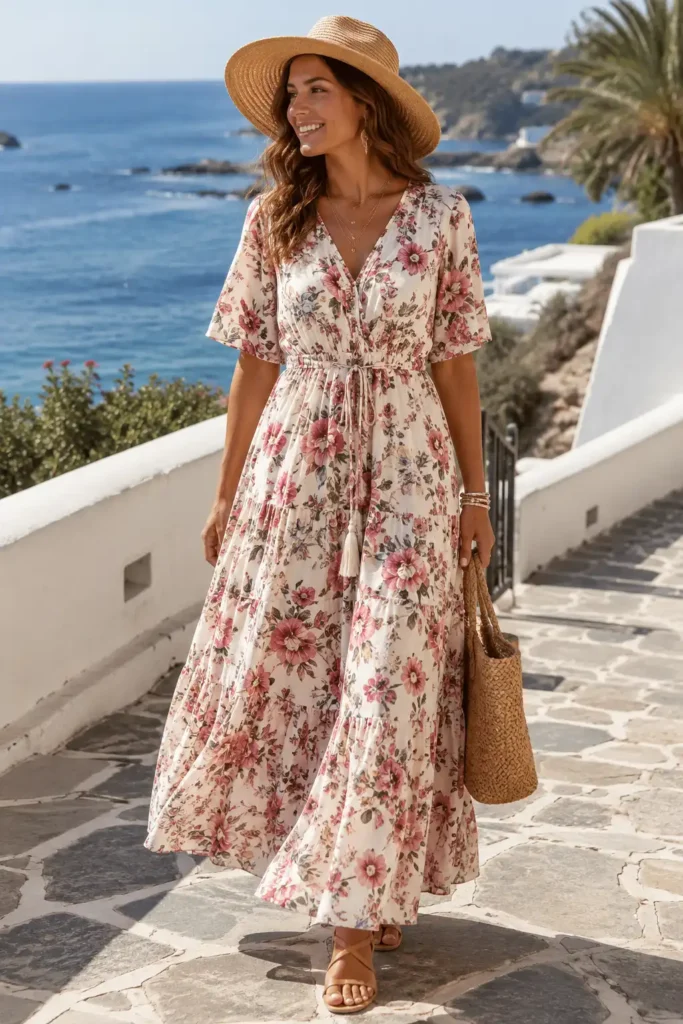
Vacation Floral Maxi
- Lightweight fabric and fresh print direction.
- Bust coverage, walking ease, and strap stability.
- Shrinkage, colorfastness, and fold-mark review.
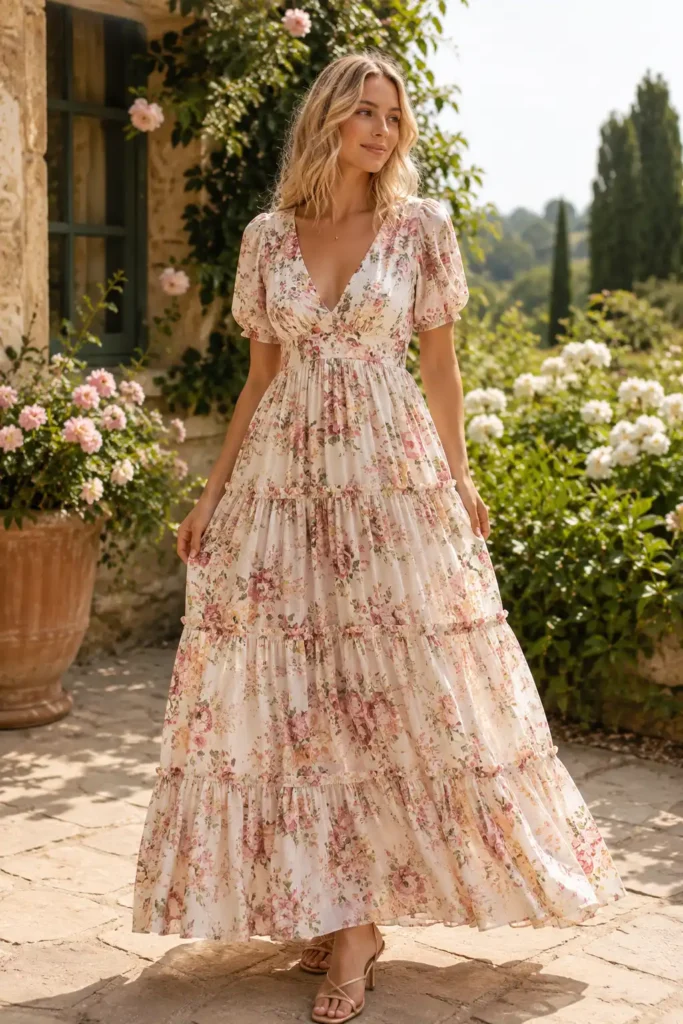
Tiered Floral Maxi
- Panel height and gathering ratio.
- Tier placement and hem balance.
- Floral motif interruption around tier seams.

Wrap Floral Maxi
- Neckline depth and front overlap.
- Inner tie location and waist seam strength.
- Print direction around front panels.

Halter Floral Maxi
- Neckline tension and chest coverage.
- Back opening and strap construction.
- Seam reinforcement across size range.

Sleeveless Floral Maxi
- Armhole depth and shoulder width.
- Bust coverage and neckline balance.
- Bodice symmetry and waist motif placement.

Long Sleeve Maxi
- Sleeve head ease and cuff shape.
- Shoulder movement and lining strategy.
- Sleeve pattern and shrinkage review.

Ruffle Floral Maxi
- Ruffle width and gathering density.
- Edge finish and pressing method.
- Fabric consumption and cost impact review.

Smocked Floral Maxi
- Elastic tension and row spacing.
- Bust support and waist recovery.
- Smocking width and grading control.

Button Front Maxi
- Placket stability and button spacing.
- Interfacing, buttonhole, and front opening review.
- Print interruption and chest coverage control.

Slit Floral Maxi
- Slit height and walking comfort.
- Seam reinforcement and lining length.
- Consistent slit position across sizes.
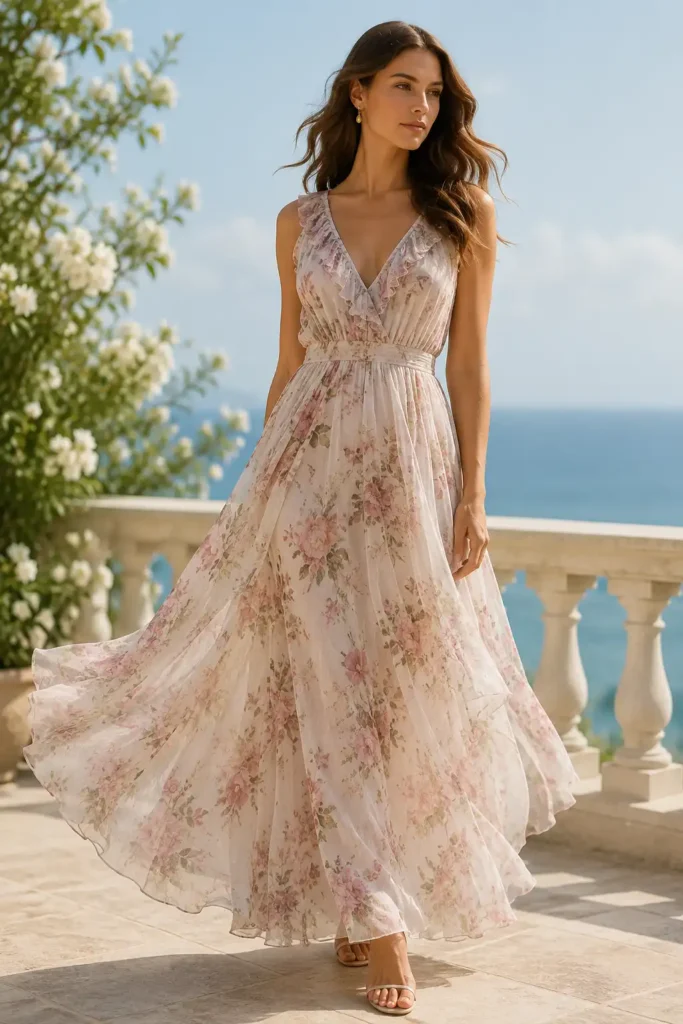
Chiffon Floral Maxi
- Fabric sheerness and print clarity.
- Lining shade and skirt volume.
- Hemming, static, and snag-risk control.
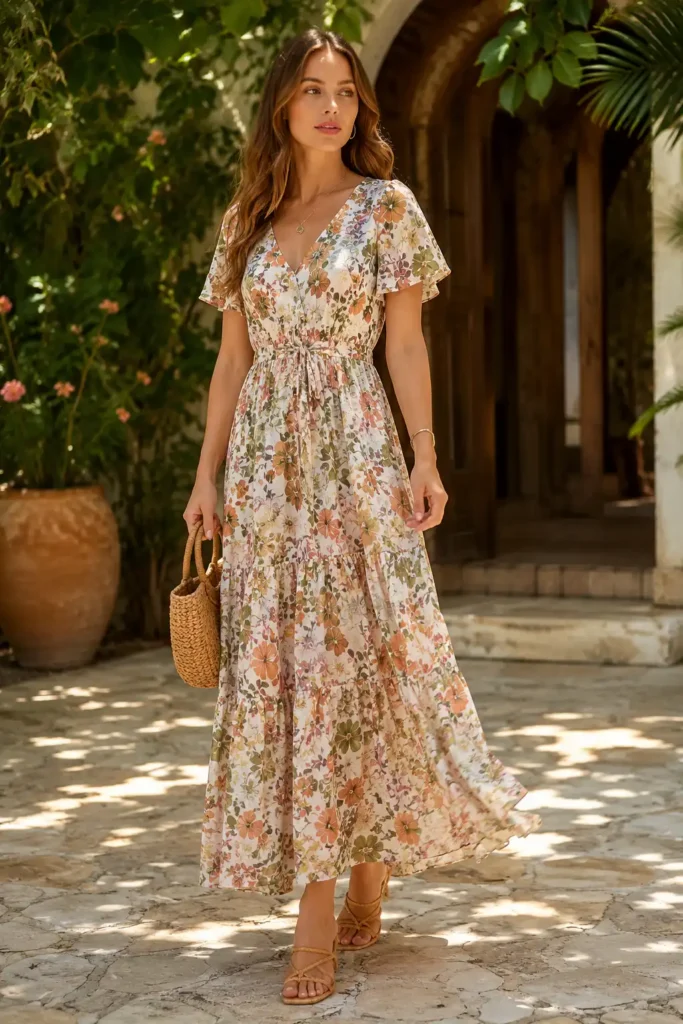
Rayon Floral Maxi
- Shrinkage and fabric weight review.
- Print penetration and seam stretch check.
- Pattern allowance and final length control.
Fabric Choices for Floral Maxi Dresses
| Fabric Direction | Best For | Development Advantage | Main Production Risk | Jinfeng Control Focus |
|---|---|---|---|---|
| Chiffon | Wedding guest, occasion, vacation maxi dresses | Light movement and soft layered appearance | Transparency, snagging, uneven hem | Lining shade, hem method, seam finish |
| Rayon / Viscose | Resort, boho, summer floral maxi dresses | Soft drape and commercial comfort | Shrinkage and length change | Pre-check shrinkage, pattern allowance |
| Cotton Blend | Casual floral maxi dresses | Breathable handfeel and natural look | Wrinkle and limited flow | Fabric weight, wash feel, pressing plan |
| Linen Blend | Resort and premium vacation dresses | Natural texture and elevated styling | Creasing and seam puckering | Construction test, pressing review |
| Satin | Polished floral maxi dresses | Smooth surface and stronger occasion feel | Snagging, shine variation, seam marks | Cutting direction, seam handling |
| Crepe | Wedding guest and elevated day dresses | Stable drape and cleaner silhouette | Color variation and seam tension | Batch review, sewing tension control |
| Mesh Overlay | Romantic layered maxi dresses | Soft transparency and dimensional print effect | Stretch distortion and edge rolling | Layer matching, lining placement |
| Jersey Blend | Stretch floral maxi dresses | Comfort and body-friendly fit | Recovery and length growth | Stretch test, size grading check |

Print Review Before Sample Making
Floral maxi dresses are highly dependent on print execution. A small floral repeat can create a soft vintage mood, while large floral artwork can create resort, statement, or occasionwear appeal. Poor print scaling can make a sample look crowded, uneven, or visually heavy once the artwork moves from file to garment.
Floral Artwork Review
Jinfeng Apparel reviews print files, color direction, repeat size, artwork scale, base fabric, panel position, and print method before sampling. Digital print may suit shorter artwork development and multi-color floral effects. Screen print may suit larger repeat programs with stable color direction. Placement print and border print require stronger pattern coordination because artwork must align with bodice panels, skirt panels, waist seams, and hem position.
For private floral artwork, NDA-based cooperation can be arranged. Jinfeng protects tech packs, print files, sample references, trims, private-label details, and unpublished designs during development and production.
Key review areas include:
- Repeat size and motif density.
- Base fabric and print method.
- Bodice, skirt, waist seam, and hem placement.
- Digital print, screen print, placement print, or border print feasibility.
- Strike-off review for exclusive artwork or color-sensitive programs.
- NDA-based print file handling.
Floral Print Control Points
Repeat Scale
- Repeat size and motif density.
- Dress length and body proportion.
- Sample printing before bulk fabric approval.
Bodice Balance
- Bust, neckline, and center-front motif placement.
- Waist seam and bodice panel review.
- Wrap, halter, and button-front artwork planning.
Seam Interruption
- Side seam, tier seam, and ruffle join review.
- Large motif repositioning when needed.
- Print matching versus cost control.
Border Placement
- Border artwork and hem position.
- Hem allowance and cutting loss.
- Size grading and border consistency.
Color Depth
Floral color on fabric can differ from digital artwork. Base fabric, fiber content, print method, and finishing all influence final shade. Jinfeng recommends strike-off review when color accuracy matters for campaign shoots, collection pairing, or repeat programs.
- Base fabric and fiber content.
- Print method and finishing influence.
- Strike-off review for color-sensitive artwork.
Cutting Marker
Cutting marker planning affects motif direction, fabric consumption, and production consistency. Jinfeng reviews marker feasibility before bulk cutting, especially for one-way prints, large florals, placement artwork, and asymmetric dress panels.
- Motif direction and marker feasibility.
- Fabric consumption and cutting efficiency.
- One-way print and asymmetric panel review.

Pattern Control for Long Floral Silhouettes
Maxi floral dresses create fit pressure in areas shorter dresses do not. Dress length, hem sweep, waist position, bust coverage, hip ease, slit height, and lining length all influence final wearability.
Long-Length Fit Engineering
A sample may look strong on one model yet fail across production sizes if grading and measurement rules are not reviewed early. Jinfeng Apparel reviews floral maxi dress structure through pattern development and fit sample feedback. Bust, waist, and hip measurements are checked against target fit. Dress length is reviewed based on market, heel assumptions, styling direction, and size range. Hem sweep is reviewed for movement, fabric usage, and sewing handling.
For styles with slits, wrap fronts, open backs, or adjustable straps, construction stability is checked before PP approval. Sample rooms support first sample, fit sample, revised sample, photo-ready sample, PP sample, and Golden sample development. Each approval step helps turn design ideas into bulk-ready garments.
Key fit control areas include:
- Bust coverage and neckline security.
- Waist position and seam balance.
- Hip ease and side seam hang.
- Shoulder-to-hem and waist-to-hem length.
- Hem sweep and skirt movement.
- Slit height and lining length.
- Size grading and measurement tolerance.
Lining Decisions for Floral Maxi Dresses
Fabric Transparency
- Chiffon, rayon voile, light cotton, and mesh overlay review.
- Pale floral print and open-weave opacity check.
- Light test and form review before sample approval.
Lining Length
- Lining length by style and market.
- Slit height and garment movement.
- Outer fabric opacity and hem clearance.
Lining Color
- Nude, ivory, white, black, or self-color lining review.
- Shell and lining shade comparison.
- Visual tone control for campaign samples.
Design Details for Floral Maxi Programs

Neckline Shape
- Neckline depth and bust coverage.
- Facing, binding, and lining treatment.
- Floral motif direction around upper body.
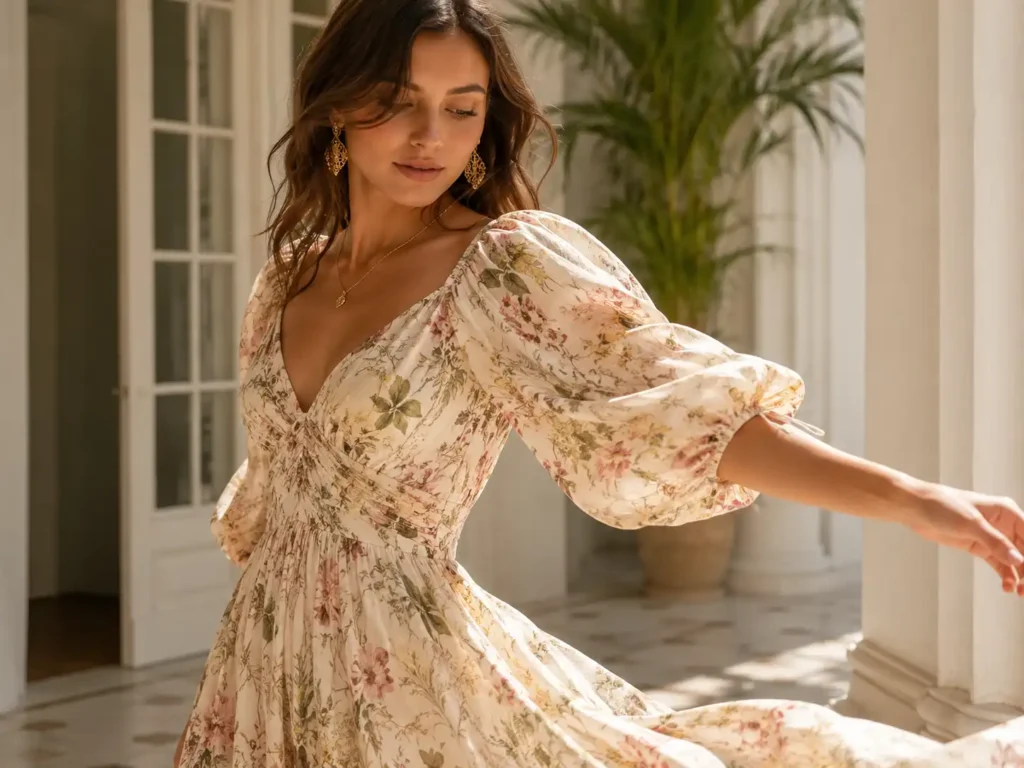
Sleeve Structure
- Sleeve head balance and armhole movement.
- Puff, flutter, cap, or long sleeve construction.
- Cuff tension and seam strength.

Ruffle Details
- Ruffle width and placement.
- Gathering density and edge finish.
- Motif direction on ruffle pieces.

Tiered Panels
- Panel height and gathering ratio.
- Seam placement and total length.
- Print interruption around tier seams.

Smocked Sections
- Elastic tension and row spacing.
- Bust support and waist recovery.
- Print distortion and color depth after stretching.

Waist Ties
- Tie width and attachment point.
- Belt loop position and seam strength.
- Waist alignment across size range.

Button Plackets
- Button spacing and placket width.
- Buttonhole quality and fabric support.
- Print interruption and twisting review.

Side Slits
Side slits improve walking ease and styling appeal. Jinfeng reviews slit height, reinforcement, lining relation, seam finish, and exposure level. Slit position must stay consistent across sizes. For occasionwear and vacation designs, slit control helps balance movement with brand standards for coverage and comfort.
- Slit height and reinforcement.
- Lining relation and seam finish.
- Exposure level and size consistency.

Back Details
- Strap stability and back width.
- Closure position and seam strength.
- Floral placement around back openings.
From Reference Image to Approved Sample
Project Review
- Reference image, tech pack, or original sample review.
- Print concept, fabric, size, and quantity check.
- Construction complexity and cost driver notes.
Fabric Direction
Fabric direction is matched to the product goal. Chiffon may suit light occasion looks, rayon may suit vacation and boho styles, satin may suit polished floral dresses, and crepe may suit elevated daywear. Swatch review helps confirm drape, weight, handfeel, and opacity.
- Chiffon, rayon, satin, crepe, and other fabric review.
- Drape, weight, handfeel, and opacity.
- Fabric suitability before sample cutting.
Print File Check
Floral artwork is reviewed for repeat scale, color direction, placement, motif density, and fabric compatibility. For custom artwork, strike-off review may be recommended before full sample cutting. Early print review helps avoid expensive sample revisions caused by wrong artwork scale.
- Repeat scale and motif density.
- Color direction and placement.
- Strike-off review for custom artwork.
Pattern Development
- Bust, waist, hip, shoulder, and armhole.
- Dress length, hem sweep, and slit position.
- Lining length and seam placement.
First Sample
- Garment structure and fabric behavior.
- Silhouette, print placement, and fit balance.
- Photo notes and measurement comments.
Fit Revision
- Bust, waist, dress length, and strap updates.
- Sleeve, slit, lining, hem, and ruffle corrections.
- Sample photos and measurement notes.
Photo Sample
- Clean pressing and balanced garment shape.
- Fabric, color, and fit close to bulk direction.
- Campaign, lookbook, and sales review use.
PP Sample
- Final fabric, print, trims, and measurements.
- Construction, labels, packing, and finishing.
- Production records aligned before bulk.
Golden Sample
- Production and final inspection reference.
- Pattern, fabric, trim, and print records.
- Repeat orders and color extension support.
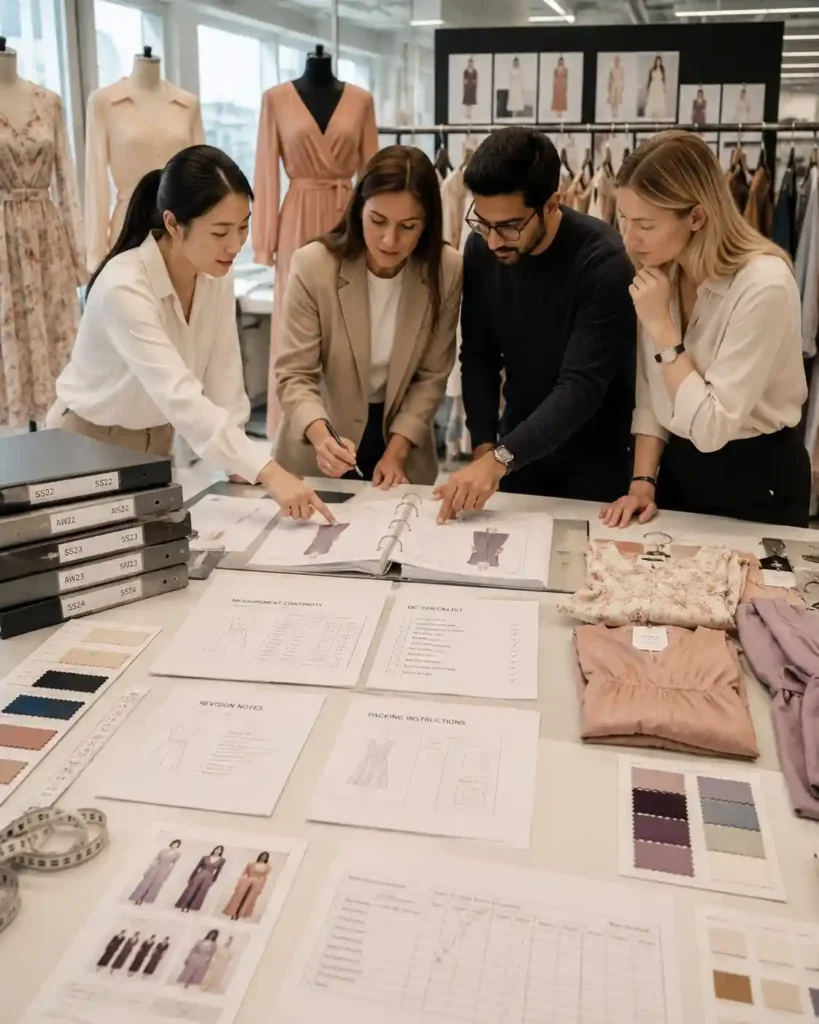
Production Built Around Repeatable Results
Bulk production of floral maxi dresses requires stronger coordination than basic woven dress sewing. Fabric batches must be checked, print colors must be reviewed, cutting direction must stay consistent, long panels must remain balanced, and hem length must be controlled across sizes.
Bulk Production Control
A single overlooked step can create uneven skirt length, twisted side seams, distorted floral motifs, or lining exposure. Jinfeng Apparel manages production through structured references: approved sample, pattern file, fabric record, trim record, print direction, measurement file, sewing notes, label layout, packing requirement, and QC points. Merchandising, pattern, sampling, production, QC, and packing teams work from approved records to reduce production variation.
For multi-style dress programs, factory matching is arranged according to fabric type, garment structure, order quantity, and delivery window. Long-term records support repeat orders, new color development, and future collection continuity.
Bulk control focuses on:
- Fabric lot and shade batch review.
- Print direction and cutting marker control.
- Long panel balance and size bundling.
- Sewing notes from PP sample approval.
- Measurement checkpoints for length, lining, and slit.
- Final pressing, folding, barcode, and carton review.
Sewing Details Affect Final Dress Value

Long Seam Control
- Seam direction and panel balance.
- Sewing tension by fabric type.
- Twist, pull, and ripple prevention.
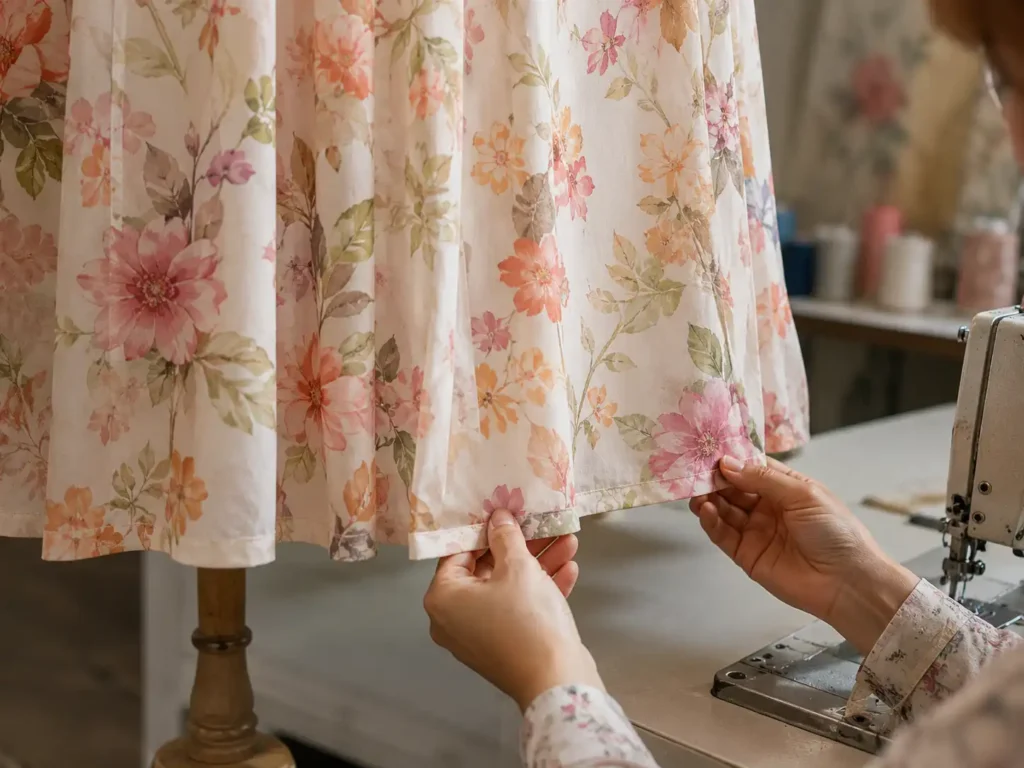
Hem Finishing
- Hem width and stitch method.
- Fabric rolling and pressing control.
- Finished length checked by size.

Gathering Balance
- Gathering marks and sewing instructions.
- Seam allowance and volume balance.
- Approved sample reference for bulk sewing.
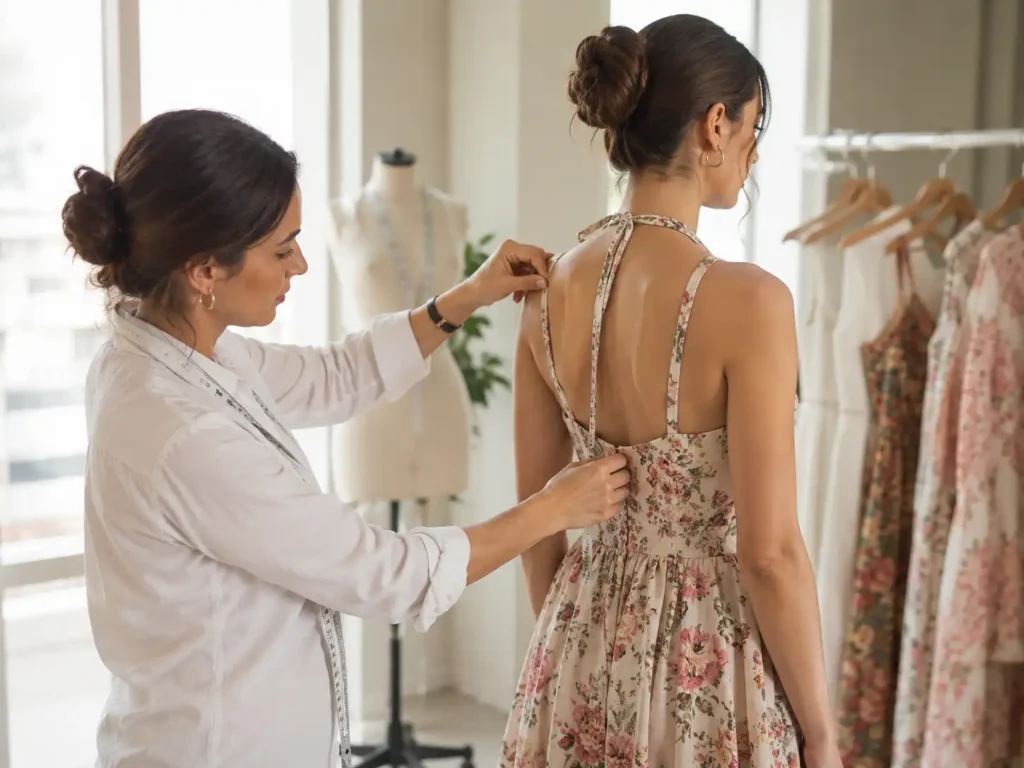
Strap Stability
- Strap width and length matching.
- Placement accuracy and reinforcement.
- PP approval for strap stability.

Zipper Smoothness
- Zipper length and seam allowance.
- Stitch tension and fabric support.
- Puckering control on light fabrics.
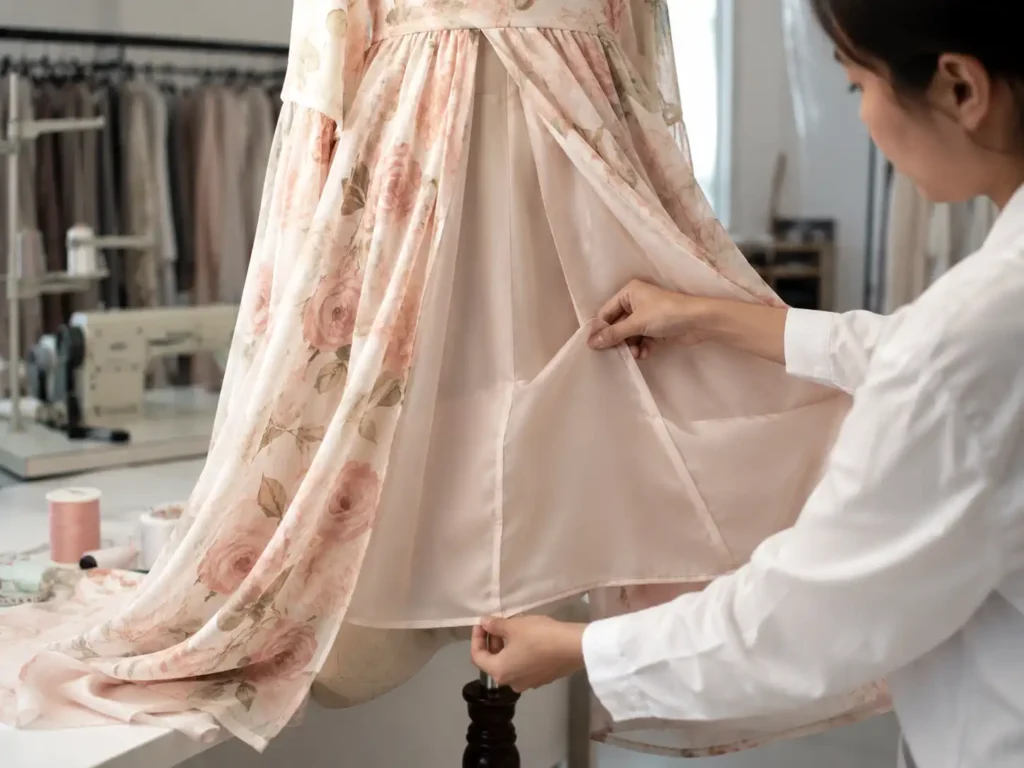
Lining Attachment
- Lining length and joining method.
- Side seam relation and hem clearance.
- Twist, pull, and visible-edge control.
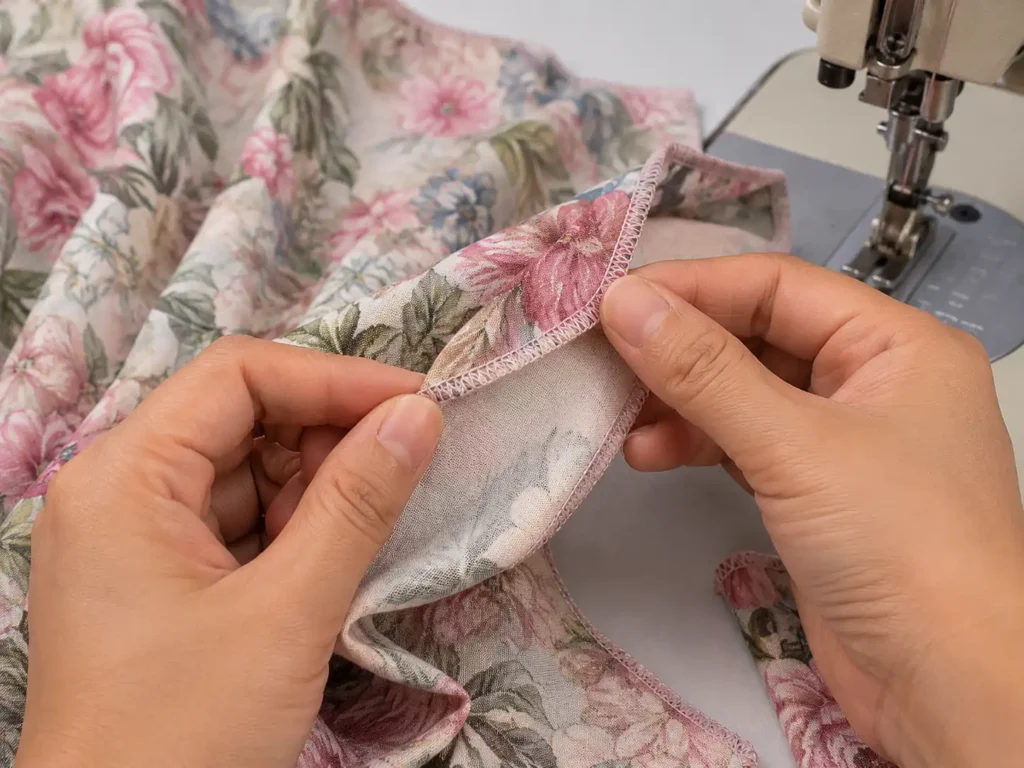
Edge Finishing
- Facing, binding, overlock, or narrow hem.
- Neckline, armhole, sleeve, ruffle, and slit finish.
- Comfort and retail presentation.

Pressing Control
- Pressing by fabric and print method.
- Heat control for satin, rayon, chiffon, and crepe.
- Folded garment appearance before packing.
QC Focus for Print, Fit and Finish
Fabric and Print QC
- Shade, handfeel, print clarity, and usable width.
- Shrinkage risk and fabric defects.
- Print direction, color batch, and repeat consistency.
Cutting QC
- Cutting direction and marker discipline.
- Panel balance and size bundling.
- One-way, border, and large motif control.
Measurement QC
- Bust, waist, hip, shoulder, and armhole.
- Dress length, lining length, and slit height.
- Hem width and tolerance check.
Sewing QC
- Seam strength and stitch neatness.
- Zipper, ruffle, strap, and lining check.
- Placket straightness and hem finishing.
Final Garment QC
- Print balance and measurement review.
- Stains, thread ends, and pressing marks.
- Lining exposure, hem level, and zipper function.
Packing QC
- Label position and barcode readability.
- Carton information and size ratio.
- Fold method and polybag presentation.
Production Planning Reference
| Planning Item | Standard Reference | Notes for Floral Maxi Dress Programs |
|---|---|---|
| MOQ | From 200 pcs per style/color | Based on fabric availability, print direction, trims, complexity, and schedule |
| Regular Sample | Usually 7–15 days | Longer when custom print, special trims, or complex structure is involved |
| Print Strike-Off | Evaluated by artwork | Recommended for exclusive floral print, color-sensitive artwork, or border print |
| PP Sample | Before bulk cutting | Confirms fabric, print, trims, measurements, labels, and packing method |
| Bulk Production | Usually 25–45 days | Depends on quantity, fabric booking, print process, and production calendar |
| Multi-Style Order | Commonly 10–30 styles | Suitable for seasonal dress programs and private-label collection development |
| Order Quantity | Often 20,000–80,000 pcs total | Typical for mature brand collection orders across multiple styles and colors |
| Size Range | Brand standard applies | Common review points include bust, waist, hip, length, slit, and lining |
| Private Label | Supported | Woven labels, care labels, hangtags, barcode stickers, polybags, and carton marks |
| Shipment Planning | Express, air, or sea | Split shipment can be reviewed for photo samples, launch stock, or replenishment |
Retail-Ready Private Label Finishing

Woven Labels
- Label placement and size matching.
- Neck, side seam, or special label positions.
- Sewing position checked before bulk attachment.
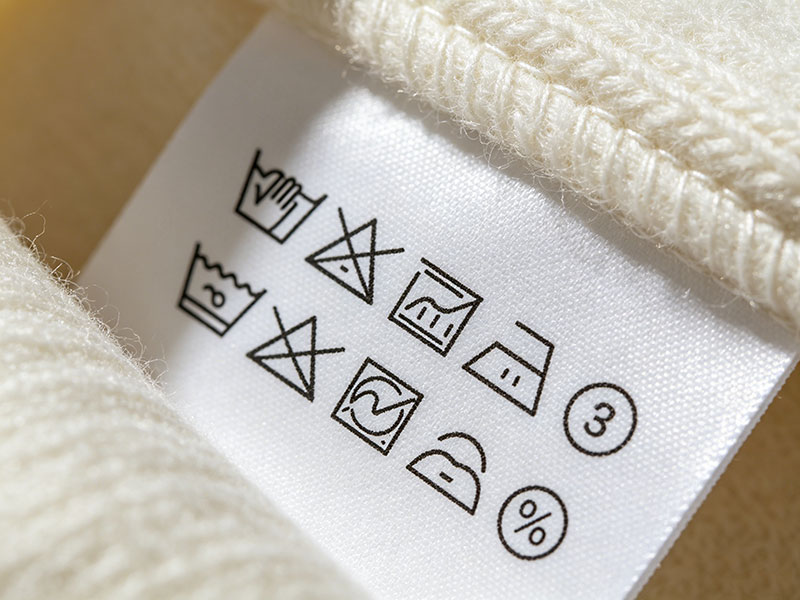
Care Labels
- Fabric content and wash instruction alignment.
- Comfort and seam position review.
- Label location for lined floral dresses.
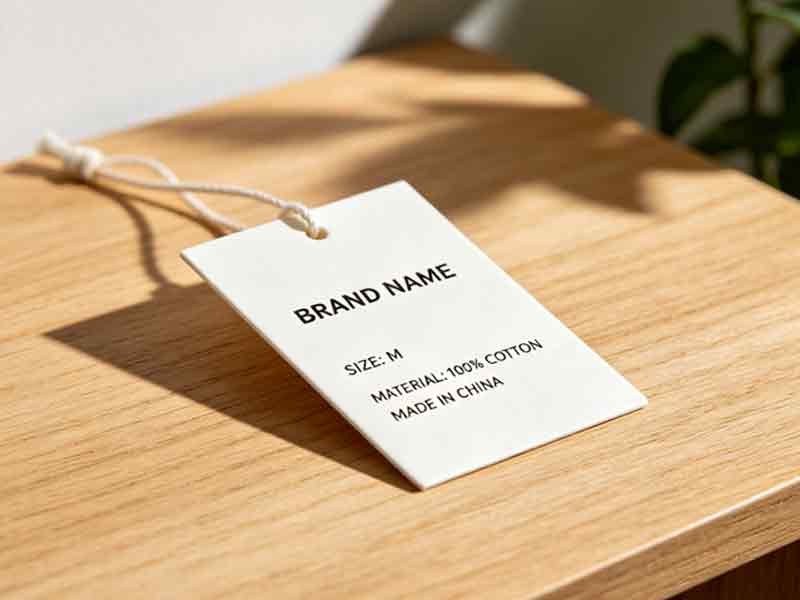
Hangtags
- Hangtag placement and string type.
- Safety pin, loop, or attachment method.
- Fabric-safe positioning for light materials.
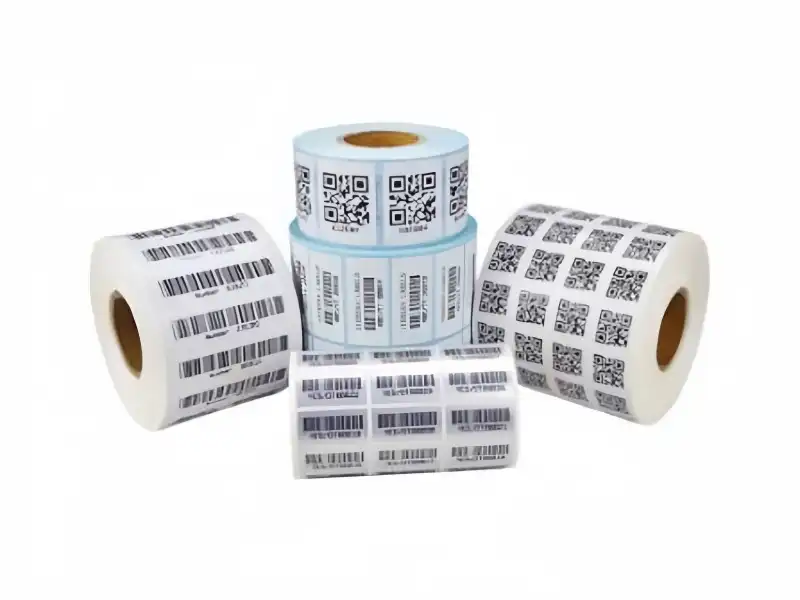
Barcode Stickers
- Barcode files and SKU labels.
- Size ratio and color code control.
- Readability and placement before shipment.

Polybag Packing
- Fold size and sticker placement.
- Size sorting and moisture control.
- Crease-aware packing for long garments.
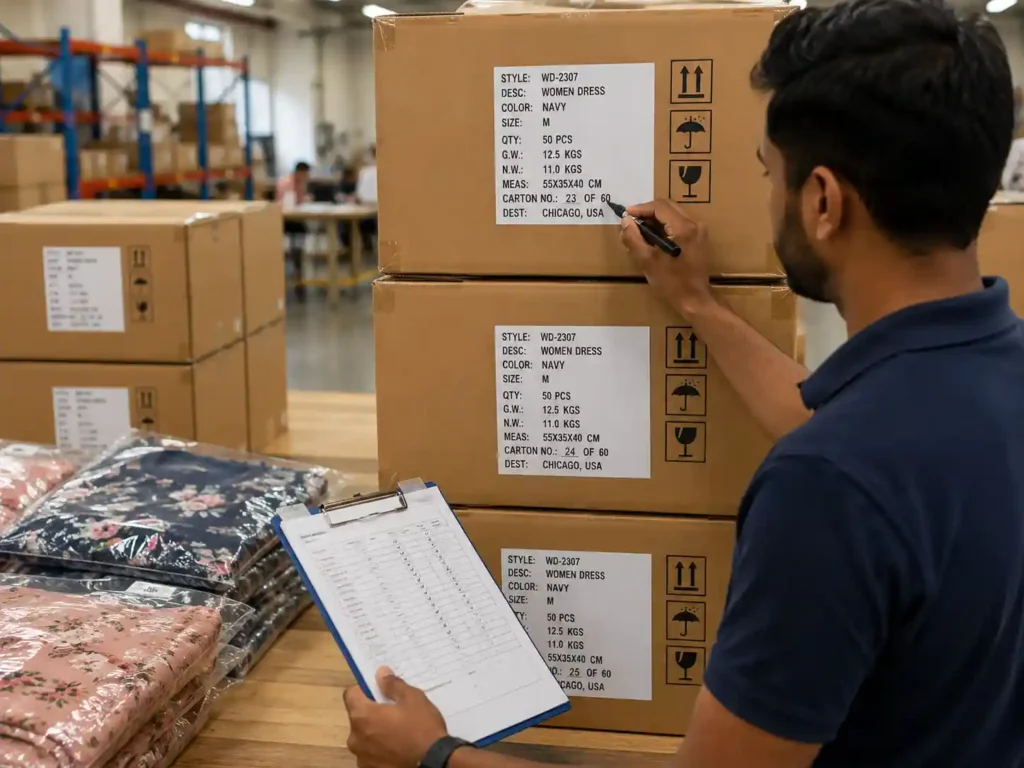
Carton Marks
- Style, color, size ratio, and carton count.
- Carton mark file and packing instruction.
- Packing list consistency before dispatch.

Records for Reorders and Seasonal Expansion
Floral maxi dresses often perform as seasonal collection pieces with repeat-order potential. A resort floral maxi may return in a new color; a wedding guest floral style may extend into chiffon, satin, or crepe; a vacation dress may become a capsule collection with short dress, midi dress, and skirt extensions.
Repeat Order Record System
Jinfeng Apparel supports long-term cooperation by keeping pattern records, fabric references, trim details, measurement files, print direction, label placement, and packing requirements. Approved records allow faster review for reorder planning, color extension, fabric update, and multi-batch production.
For brands launching 10–30 styles in one seasonal program, record keeping matters. It helps keep fit logic, fabric direction, print scale, and packing standards consistent across future orders. Long-term collection planning can include core best sellers, new color testing, print refresh programs, and repeatable private-label finishing.
Records can include:
- Approved pattern and size chart.
- Floral print repeat and direction notes.
- Fabric swatch and supplier reference.
- Trim details and label placement.
- Measurement tolerance and fit comments.
- Packing method, carton mark, and barcode rules.
- QC findings from previous bulk.
- Color extension and reorder notes.
Floral Maxi Dress Project Examples
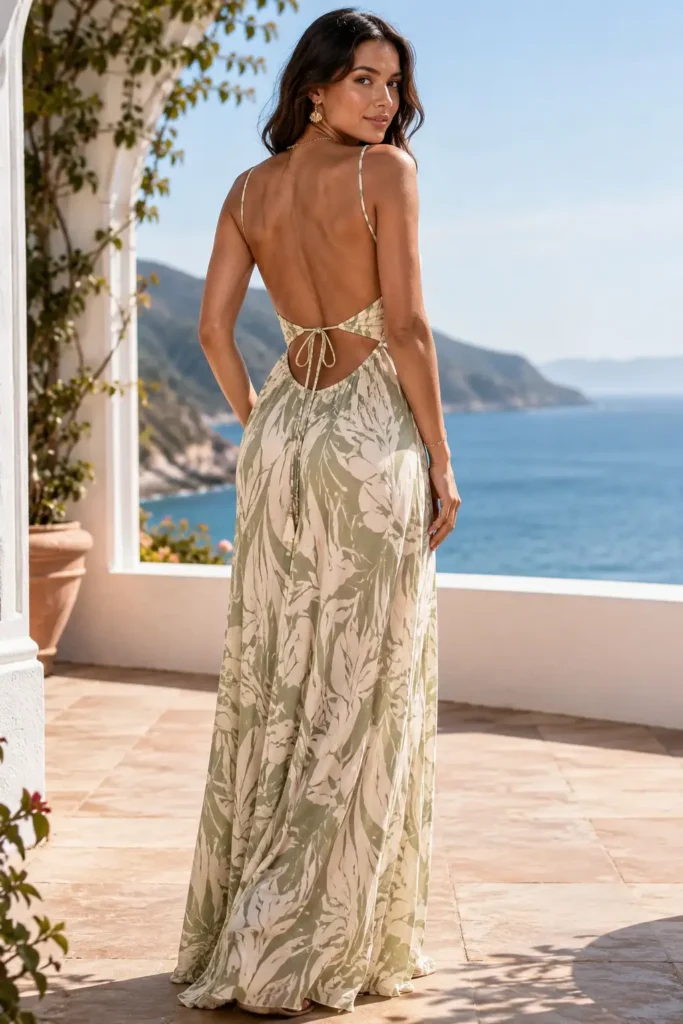
United States Premium Ecommerce Dress Program
A US ecommerce fashion brand planned a spring/summer floral dress program covering wrap floral maxi dresses, tiered rayon maxi dresses, halter chiffon maxi dresses, and wedding guest floral styles. The planned bulk quantity was 52,000 pcs across multiple colors and size ratios. Main concerns included print scale, photo sample readiness, lining opacity, and consistent dress length for campaign launch.
- 18 styles / 52,000 pcs / 4 product groups — project data: wrap floral maxi dresses, tiered rayon maxi dresses, halter chiffon maxi dresses, and wedding guest floral styles; technical difficulty: print scale, lining opacity, and long-dress measurement had to be controlled together; solution: Jinfeng reviewed print direction, fabric swatches, pattern structure, and sample priorities before development.
- 3 fabric review routes — project data: chiffon, rayon, and printed woven fabrics were used across the program; technical difficulty: fabric shrinkage and transparency could change final length and appearance; solution: chiffon styles used lining shade review, while rayon styles received shrinkage and length checks.
- Wrap and halter fit correction — project data: neckline and overlap needed refinement; technical difficulty: open vacation shapes carried fit security risks; solution: wrap styles received neckline and overlap correction, while halter styles received strap and bust coverage review.
- Photo sample and PP approval — project data: campaign launch required strong photo samples; technical difficulty: photo samples still needed bulk-ready standards; solution: PP samples were approved before bulk cutting and final production notes were locked.

Australia Resortwear Vacation Collection
An Australian resortwear label developed floral maxi dress styles for vacation, summer travel, and boutique distribution. The order plan reached 28,000 pcs, with printed rayon, cotton blend, and linen blend directions. Pain points included fabric creasing, garment transparency, tier balance, and hem consistency after shipping. The label needed dresses suitable for beach resorts, retail boutiques, and ecommerce photography.
- 12 styles / 28,000 pcs / 3 fabric groups — project data: printed rayon, cotton blend, and linen blend floral maxi dresses; technical difficulty: each fabric carried different shrinkage, wrinkle, and drape risks; solution: Jinfeng supported fabric comparison, lining review, and tier pattern adjustment.
- 4 construction controls — project data: tier balance, hem consistency, seam finish, and lining coverage required review; technical difficulty: long floral dresses could lose shape after packing; solution: gathering marks and hem notes were added to sewing instructions.
- Packing method planning — project data: boutique distribution required clean garment presentation; technical difficulty: linen blend and rayon styles creased easily during export; solution: pressing, folding, polybag size, and carton organization were reviewed before packing.
- Private-label delivery — project data: care labels, hangtags, polybags, and carton marks were required; technical difficulty: mixed style packing created receiving risk; solution: packing files were organized by style/color/size before shipment.

United Kingdom Wedding Guest Floral Line
A UK occasionwear brand prepared a wedding guest floral capsule, including chiffon floral maxi dresses, satin print maxi dresses, long sleeve floral dresses, and ruffle hem styles. Total planned production reached 76,000 pcs across several color stories. The main challenge was balancing occasion-level finishing with commercial production timing.
- 24 styles / 76,000 pcs / 4 product groups — project data: chiffon floral maxi dresses, satin print maxi dresses, long sleeve floral dresses, and ruffle hem styles; technical difficulty: occasion-level finishing required stronger fabric, print, and sewing controls; solution: Jinfeng reviewed strike-off needs, fabric weight, neckline coverage, lining length, and PP sample standards.
- Fabric-specific controls — project data: satin, chiffon, and ruffle styles needed separate handling; technical difficulty: satin needed seam and pressing control, chiffon needed transparency review, ruffles needed gathering consistency; solution: sewing notes were separated by fabric and construction group.
- Color and print consistency — project data: several color stories needed campaign consistency; technical difficulty: print shade variation could affect collection presentation; solution: strike-off, color reference, and batch review were used before bulk confirmation.
- Private-label packing files — project data: SKU labels, size labels, and carton marks were required; technical difficulty: 24 styles created packing complexity; solution: packing records were organized by style, color, and size ratio before shipment.
Why Brands Choose Jinfeng Apparel
Print-Aware Development
- Repeat scale and placement review.
- Border direction and motif balance.
- Fabric compatibility before sample printing.
Fit-Focused Pattern Work
- Long garment balance and measurement review.
- Bust, waist, hip, hem, and slit control.
- Pattern work linked with sample fitting.
Fabric Risk Review
- Drape, opacity, and shrinkage review.
- Sewing and packing risk by fabric.
- Fabric-specific control points before bulk.
Sample Approval Discipline
- Multiple sample stages by project need.
- PP sample and Golden sample references.
- Production notes linked with approved records.
Private Label Execution
- Label, hangtag, and barcode support.
- Polybag, carton mark, and packing list review.
- Retail and ecommerce receiving preparation.
Repeat Order Support
- Color extension and seasonal reorder support.
- Pattern, fabric, trim, and measurement records.
- Packing standards retained for future batches.
Send Better Files for Faster Evaluation
Reference Images
- Reference images help the team understand silhouette, neckline, sleeve, waist, skirt volume, print mood, and overall style direction. Multiple angles are helpful when the design includes back openings, slits, tiered panels, ruffles, or adjustable straps.
- Front, back, and side views.
- Close-ups for neckline, back, slit, tiers, and ruffles.
- On-body photos when available.
Tech Pack
- A tech pack provides construction details, measurements, fabric notes, trims, and label requirements. It allows faster review of pattern risk, fabric direction, sewing difficulty, sample cost, and bulk feasibility.
- Construction details and measurement specs.
- Fabric notes, trims, and label requirements.
- Pattern and sewing risk review.
Original Sample
- An original sample helps the team evaluate handfeel, fit, finishing, and construction more accurately than images alone. If sending a sample is not possible, detailed photos and measurements can support initial review.
- Handfeel and fit reference.
- Construction and finishing review.
- Detailed photos and measurements as alternative.
Print Artwork
- Print artwork should include repeat size, color reference, scale direction, and any placement requirements. For border print or engineered placement print, garment panel relation must be reviewed before fabric printing.
- Repeat size and color reference.
- Scale direction and placement need.
- Border or engineered print review.
Size Chart
- Size chart review helps confirm bust, waist, hip, dress length, armhole, sleeve, and slit dimensions. Maxi dresses need strong length control because each size may require different grading decisions.
- Bust, waist, hip, and dress length.
- Armhole, sleeve, slit, and lining length.
- Grading review for long silhouettes.
Fabric Direction
- Fabric preference helps define drape, opacity, cost, and production risk. Brands can send fabric swatches, reference names, fiber content goals, or target handfeel for review.
- Fabric swatches or reference names.
- Fiber content and target handfeel.
- Drape, opacity, and production risk.
Trim Details
- Trims may include zipper, buttons, elastic, tie cords, lining, interfacing, labels, and packaging components. Trim details influence cost, sample lead time, and production planning.
- Zippers, buttons, elastic, and ties.
- Lining, interfacing, labels, and packaging.
- Cost and lead time review.
Launch Window
- Launch window helps align sample timing, PP approval, fabric booking, bulk production, and shipping method. Seasonal floral maxi programs often need planning around campaign shoots, ecommerce launch dates, and warehouse receiving.
- Campaign shoot and launch schedule.
- PP approval and fabric booking.
- Bulk production and shipping method planning.
Frequently Asked Questions
MOQ starts from 200 pcs per style/color. Final evaluation depends on fabric availability, custom print method, trims, lining, construction complexity, private-label packing, and production schedule. Custom print, special colors, exclusive fabric, or complex placement artwork may require higher quantity planning.
Yes. Jinfeng Apparel can review tech packs, measurement specs, BOM, fabric requirements, print artwork, trims, labels, and packing details. The team can support sample development, revision, PP approval, and bulk production based on approved files.
Yes. A reference image can start the review process. For accurate sample development, the team may also need target fabric, size range, measurements, print direction, quantity plan, and brand finishing requirements. More complete files lead to faster evaluation.
Yes. Jinfeng can review floral artwork, repeat size, color direction, base fabric, and placement needs. Digital print, screen print, border print, and placement print can be evaluated according to artwork, quantity, fabric type, and delivery window.
Common options include chiffon, rayon, viscose, cotton blend, linen blend, satin, crepe, mesh overlay, and jersey blends. Fabric choice depends on target look, drape, opacity, budget, print clarity, season, and production quantity.
Yes. Jinfeng Apparel supports woven labels, care labels, size labels, hangtags, barcode stickers, SKU labels, polybags, carton marks, and export packing requirements. Brand files should be provided before PP sample or bulk packing confirmation.
Regular floral maxi dress samples usually take 7–15 days after required files and fabric direction are confirmed. Custom print, border print, new trims, special lining, or complex structures may need more development time.
Bulk production commonly takes 25–45 days after PP sample approval, fabric confirmation, and production schedule alignment. Exact timing depends on quantity, fabric booking, print process, construction complexity, and packing requirements.
Yes. Jinfeng supports seasonal programs with multiple dresses, colors, fabrics, and size ratios. Mature brand orders often include 10–30 styles and total quantities from 20,000 to 80,000 pcs across a collection plan.
Jinfeng Apparel supports NDA-based cooperation and protects tech packs, samples, print files, patterns, trims, private-label details, unpublished designs, and order information during development and production.
Yes. Pattern records, fabric references, trim details, measurement files, print direction, and packing requirements can be retained for repeat orders, new color development, and seasonal collection expansion.
Please send reference image or tech pack, target quantity per style/color, fabric preference, print artwork, size range, trims, label and packing requirements, delivery window, and target market. The team will review feasibility before quotation.

Start Your Floral Maxi Dress Project
Jinfeng Apparel supports custom floral maxi dress development for fashion brands planning seasonal collections, resortwear edits, vacation capsules, wedding guest lines, and private-label dress programs. Share reference image, tech pack, original sample photo, print artwork, fabric direction, size range, quantity plan, and delivery window.
The team will review garment structure, fabric suitability, print development needs, MOQ fit, sample path, bulk production plan, and private-label packing requirements before giving the next-step recommendation.
For faster review, please prepare:
- Reference image, tech pack, or original sample photo.
- Target quantity per style/color.
- Fabric direction or swatch reference.
- Floral print artwork or print mood board.
- Size range and measurement standard.
- Label, hangtag, barcode, and packing requirements.
- Target sample date and bulk delivery window.