Matte Satin Dress Manufacturer

Custom matte satin dress development for established fashion, occasionwear, ecommerce and private-label brands.

Jinfeng Apparel converts reference images, original samples, sketches and tech packs into production-ready matte satin dresses. Fabric direction, drape, opacity, stretch, lining, fit, zipper flatness, seam appearance, pressing and packing are reviewed before bulk cutting.

  • Matte satin options are evaluated across an 80-220 gsm reference range, with composition, stretch, drape and opacity selected for each silhouette.
  • MOQ starts from 200 pcs per style/color; custom dyeing, special trims and branded packaging may carry separate supplier minimums.
  • A structured production network includes 6 owned women’s fashion factories, 10+ long-term production partners and 18+ sewing lines.
  • A documented US satin occasionwear program covered 12 styles and around 20,000 pieces, including multi-color control, lining, invisible zippers and repeat colors.

Manufacturing Capacity for Satin Dress Programs

Brand-level satin programs need more than available sewing space. Pattern development, fabric review, sample control, line allocation, QC and packing must operate as one connected system.

Since 2008

Long-term womenswear manufacturing experience supports dress development from early concept review through repeat-order production. Project decisions are based on fabric behavior, style structure, launch timing and bulk feasibility rather than generic garment assumptions.

6 Owned Factories

Owned women’s fashion factories support controlled production allocation by garment category, construction complexity and delivery schedule. Matte satin slip dresses, corset styles, ruched dresses and lined occasionwear can be assigned according to workmanship demands.

10+ Production Partners

Long-term satellite production partners expand capacity for multi-style and multi-batch programs. Allocation remains project-based, with fabric type, construction risk, quantity, QC window and packing requirements reviewed before production placement.

2 Sample Rooms

Two sample rooms support parallel development for first samples, fit samples, revised samples, photo samples, PP samples and Golden samples. Sampling decisions are transferred into updated patterns, size charts, sewing instructions and QC checkpoints.

7+ Pattern Makers

Senior pattern makers review bust-waist-hip balance, cowl depth, strap placement, side-seam balance, zipper position, slit height and finished length. Satin weight and stretch are considered before fit approval.

15+ QC Inspectors

Dedicated inspectors cover fabric, cutting, in-line sewing, measurements, final garments, pressing and packing. Satin checks focus on shade, sheen direction, snagging, seam puckering, zipper flatness and pressure marks.

Built for Established Fashion and Occasionwear Brands

Matte satin programs often serve sales calendars with strict photography, launch and replenishment requirements. Development support is organized around the operating needs of established fashion teams.

Occasionwear Brands

Cocktail, wedding guest, evening and eventwear collections require controlled drape, clean fit, smooth zippers and consistent shades across several silhouettes. Development can cover mini, midi and maxi lengths within one coordinated fabric story.

Premium Ecommerce Brands

Online presentation magnifies puckered seams, uneven hems, twisted side seams and pressing marks. Photo-ready samples, on-body fit review, SKU planning and retail-ready packing help protect product presentation from studio photography to final delivery.

Bridesmaid Labels

Bridesmaid programs often involve several colors, repeated silhouettes and broad size planning. Matte sheen, lining color, fabric batch control and reorder records are managed to preserve a coordinated collection appearance.

Wedding Guest Brands

Modern wedding guest ranges depend on flattering midi proportions, clean necklines, comfortable lining and movement. One-shoulder, cowl-neck, strapless and ruched options can be developed around a shared color palette.

Sourcing Teams

Sourcing and production teams receive structured project reviews covering fabric direction, style complexity, MOQ, sample scope, bulk risks, labels, packaging and delivery planning. Files and approvals remain traceable throughout development.

Private Label Programs

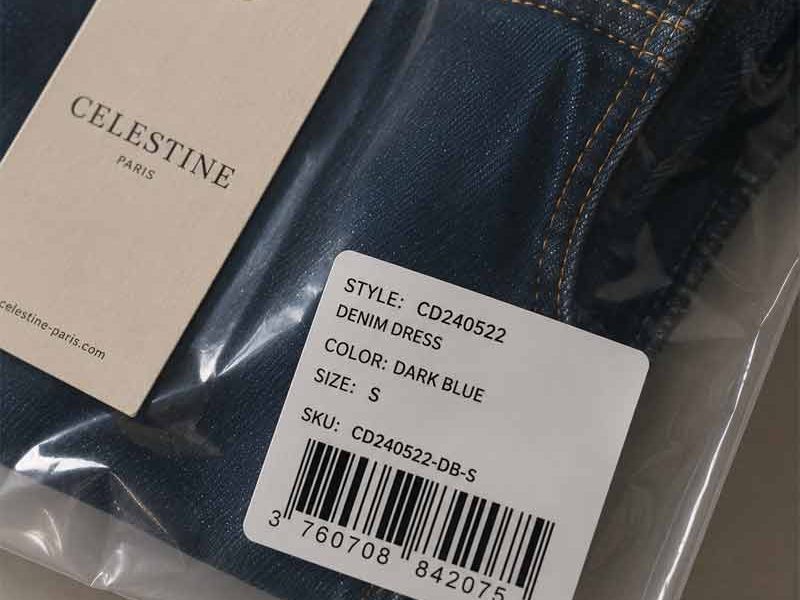
Private-label delivery can include woven labels, size labels, care labels, hangtags, barcode stickers, SKU labels, individual polybags and carton marks. Packaging specifications are confirmed before bulk completion.

Why Matte Satin Dress Production Goes Wrong

Low-gloss satin still exposes cutting, sewing, pressing and packing errors. A smooth surface can make small defects visible under studio lighting, retail lighting and natural light.

Wrong Matte Level

A fabric may look muted under warehouse lighting yet appear glossy under flash photography. Approval should include lighting review, face-side confirmation and comparison against the intended brand mood.

Shade Variation

Satin reflects light directionally, so small dye-lot differences can appear stronger on finished garments. Bulk fabric should be grouped and reviewed before panels from different lots are mixed.

Surface Snagging

Smooth satin faces can catch on rough worktables, jewelry, sharp trims or damaged cartons. Handling rules, clean surfaces and final inspection reduce visible pulls and abrasion.

Zipper Bulging

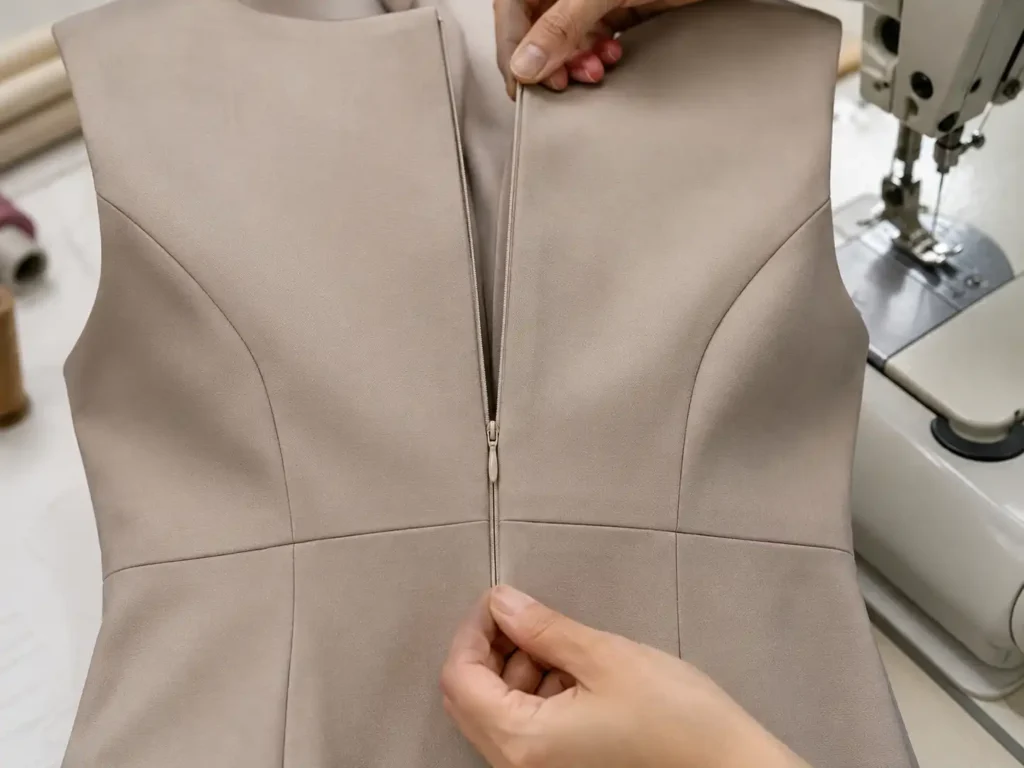
An invisible zipper can ripple when fabric, zipper tape, seam allowance, pattern shape or sewing tension are not balanced. Flatness must be checked on-body, not only on a hanger.

Seam Puckering

Excess thread tension, unsuitable needle choice, unstable seam construction or uneven feeding can create permanent waviness. Trial sewing on approved bulk fabric is needed before line production.

Pressing Creases

Excess heat, pressure or repeated pressing can create shine marks and edge impressions. Cooling, protective pressing methods and garment-specific folding reduce damage before packing.

Is Jinfeng the Right Manufacturing Partner?

The strongest project fit comes from clear product direction, professional development files and a planned route from sampling to bulk production.

Best Fit For

Jinfeng Apparel is structured for fashion brands, sourcing offices, product development teams and private-label programs with defined silhouettes, fabric expectations, size requirements, launch plans and bulk quantities.
  • Reference images, sketches, original samples, line sheets or tech packs
  • A quantity plan meeting 200 pcs per style/color
  • Professional sampling and revision approval
  • Seasonal collections, repeat colors or replenishment potential
  • Brand labels, SKU control and export packing requirements

Project Boundaries

Accurate development requires enough information to assess fabric, construction, fit, MOQ, cost and timing. Quotation and scheduling are based on confirmed project conditions rather than a single inspiration image.
  • Ready-stock purchasing is not the core service
  • Dropshipping and single-piece fulfillment are not provided
  • Multiple styles cannot be combined to reach one style/color MOQ
  • The lowest unit price is not prioritized over brand-level appearance
  • Bulk cutting does not begin before PP approval

Matte Satin Dress Styles We Develop

Each silhouette needs a different relationship between fabric weight, stretch, lining, pattern balance and finishing. Product development begins with the intended on-body effect rather than a generic satin specification.

Slip Dress

Fluid slip dresses depend on neckline stability, strap position, bust coverage and smooth side seams. Lightweight or medium matte satin can create movement without excessive shine. Light colors often need lining or carefully selected opacity. Hem balance, static control and strap hardware are reviewed before sample approval.

Cowl Neck Dress

A cowl neckline needs controlled depth, enough fabric for a clean fold and internal stabilization that does not flatten the drape. Pattern shape changes with fabric weight. The neckline is checked while standing, walking and sitting so the front remains secure and visually balanced.

Ruched Midi Dress

Ruching can improve shape and commercial appeal, yet uneven gathering may twist side seams or distort the waist. Stretch direction, lining compatibility, gathering ratio and zipper position are tested together. Midi length and slit height are confirmed on-body for balanced proportion.

Satin Mini Dress

Mini lengths expose hem imbalance, rising side seams and insufficient coverage quickly. Bust fit, waist suppression, lining length and hem structure must work as one system. Party-focused minis may add adjustable straps, side ruching, cut-outs or structured cups after stability testing.

Bias-Look Maxi Dress

True bias or bias-inspired construction creates fluid movement but increases pattern and handling risk. Fabric relaxation, side-seam balance, hem drop and length consistency need careful review. Long garments also require packing methods that limit hard fold lines and pressure marks.

Strapless Dress

A strapless satin dress relies on internal structure rather than surface fabric alone. Bra cups, boning, anti-slip tape, waist support and lining are selected according to silhouette. The upper edge is tested for security while the outer satin remains smooth and free from visible internal impressions.

One-Shoulder Dress

Asymmetrical necklines can pull toward one side when fabric weight, shoulder angle or lining tension is unbalanced. Pattern correction focuses on neckline stability, armhole shape, bust coverage and side-seam alignment. Midi and maxi versions also need controlled drape through the hip.

Corset Satin Dress

Corset-inspired styles combine soft surface appearance with internal support. Cup shape, boning channels, waist compression, seam placement and zipper strength are reviewed during sampling. Matte satin can soften the visual effect, while lining and internal components preserve the intended structure.

Satin Collections for Different Fashion Markets

A commercial collection needs product logic across colors, lengths, silhouettes and selling occasions. Manufacturing decisions change with each market position.

Wedding Guest

Midi and maxi dresses need refined proportion, comfortable lining, controlled movement and a clean photographic finish. One-shoulder, halter, ruched and draped options can share one fabric direction while retaining distinct silhouettes.

Bridesmaid

Color coordination is central. Fabric lots, lining shades, straps, zippers and trims are recorded by color. Reorder planning also needs retained color references because repeated dye lots may still require approval.

Cocktail

Cocktail dresses often use fitted waists, slits, open backs or structured necklines. Matte satin reduces mirror-like shine while still requiring smooth seams, secure closures and accurate short-to-midi proportions.

Evening

Long evening dresses place greater pressure on hem balance, drape, support, lining and packing. Floor-length styles are checked for finished length, train behavior, slit opening and carton pressure before shipment.

Partywear

Partywear may combine ruching, cut-outs, corset elements, adjustable straps or hardware. Each detail is assessed for skin comfort, stability and snagging risk against the satin surface.

Resort Evening

Lightweight satin dresses for travel-led collections need crease-aware packing, fluid movement and easy styling. Fabric weight, opacity and wrinkle behavior are reviewed before approving a resort dinner or destination event range.

What Makes Satin Look Matte Rather Than Glossy?

Matte satin describes a low-reflection satin appearance, not one fixed fiber or construction. Surface character changes with yarn, weave, density, finishing, color and lighting.

Fiber Composition

Polyester satin, acetate satin, polyester-spandex satin and silk-like satin can all produce different levels of sheen. Fiber selection influences drape, heat response, wrinkle behavior, care instructions, cost and reorder consistency.

Yarn and Weave

Satin construction creates a smooth face through longer yarn floats. Yarn type, filament luster and weave density influence how strongly light travels across the surface. Lower-luster yarns and controlled finishing can create a softer visual result.

Weight and Density

An 80-120 gsm satin may move beautifully for slips and cowls but can show seam marks or transparency. Medium and heavier weights add coverage and structure, yet may change cowl depth, ruching volume and hem movement.

Surface Finish

Sandwashed, peached or low-luster finishing can reduce brightness and alter hand feel. Finishing also affects shade, shrinkage, care and production repeatability, so approved swatches should be linked to a clear supplier reference.

Lighting Response

Studio flash, store lighting and daylight can produce different readings of the same satin. Swatches should be viewed flat, draped and on a sample garment before color and matte level are approved.

Stretch and Recovery

Non-stretch satin suits fluid and structured silhouettes, while polyester-spandex satin supports fitted and ruched shapes. Recovery must be strong enough to avoid bagging at the seat, waist or elbow area after wear.

Compare Matte Satin Options Before Sampling

Fabric selection should link visual effect with pattern behavior, lining, workmanship and end use. Reference weight ranges guide early review; final approval is based on the actual supplier swatch and sample garment.

Fabric DirectionReference WeightStretchDrapeBest-Fit StylesMain Control Points
Lightweight matte satin80-120 gsmLow or noneFluidSlip, cowl neck, resort eveningOpacity, seam marks, hem balance, lining
Medium matte satin120-170 gsmLowBalancedMidi, bridesmaid, wedding guestCreasing, zipper line, shade consistency
Stretch matte satin140-200 gsmMediumBody-followingBodycon, ruched, fitted miniRecovery, seam tension, lining stretch
Heavy matte satin170-220 gsmLowStructuredCorset, formal maxi, straplessBulk, pressing marks, internal support
Silk-like satinProject-basedVariesSoft and fluidPremium occasionwear, draped dressesSupplier consistency, care, cost, shade

Controlling Matte Sheen, Shade and Fabric Direction

Matte satin can show different brightness when panels are rotated, mixed across dye lots or pressed unevenly. Directional control starts before cutting and continues through final inspection.

Face-Side Approval

The approved face is marked before sampling and bulk use. Satin backs may look similar under weak light, yet produce a different sheen, color depth and hand feel after cutting.

Directional Cutting

Pattern pieces are placed according to approved grain and sheen direction. Rotated panels can create visible light bands across bodices, skirts or sleeves even when the dye lot is identical.

Dye-Lot Grouping

Bulk rolls are reviewed and grouped before cutting. Panels from noticeably different lots are not mixed within one garment. Color-sensitive programs may also separate production and packing by shade group.

Lighting Review

Color and sheen are checked under controlled indoor light and compared with daylight or photography conditions where required. A flat swatch alone cannot reveal the full effect of a draped garment.

Lining Coordination

Lining color is selected to support the outer shade without creating a visible cast. Light champagne, blush, ivory and pastel colors need careful opacity and seam allowance review.

Repeat Color Records

Fabric reference, color record, lining color, zipper color and approved garment photos are retained for repeat projects. A fresh bulk lot still requires approval because reflective fabrics amplify small variation.

Approve Fabric Before Pattern and Sample Development

A satin name or digital image is not enough for accurate development. Approval should connect measurable material information with the intended silhouette.

Material Specification

  • Fiber composition and supplier reference
  • Weight and usable width
  • Stretch direction and recovery
  • Face and back identification

Visual Performance

  • Matte level under several light sources
  • Color depth on flat and draped fabric
  • Opacity over skin-tone and lining references
  • Surface snagging and pressure sensitivity

Garment Compatibility

  • Drape for neckline and skirt volume
  • Suitability for ruching, bias or corset structure
  • Lining and interfacing compatibility
  • Hem and seam appearance

Commercial Conditions

  • Stock or custom-dye availability
  • Fabric MOQ by color
  • Bulk material lead time
  • Cost impact and replacement risk

Pattern Development for Satin Drape and Fit

A satin dress pattern must balance appearance, movement and production stability. Weight, stretch, lining and construction affect the final silhouette, so pattern review follows the approved fabric direction.Key measurement checkpoints commonly include bust, waist, hip, dress length, strap length, armhole, neckline depth, slit height and hem sweep. Size tolerances are confirmed by style rather than copied from unrelated garments.Send Size Chart Review Fit Requirements

Bust Coverage

Neckline depth, cup area, side coverage and armhole shape are reviewed on-body. Cowl, halter, strapless and one-shoulder styles need enough coverage without flattening the intended drape.

Waist Position

A waistline placed even 1-2 cm away from the intended level can change the proportion of a fitted midi or maxi dress. Pattern correction considers torso length, seam shape, ruching and internal support.

Hip Ease

Non-stretch satin needs enough movement through the hip and seat while preserving a clean line. Stretch satin needs controlled negative ease and recovery to avoid excessive compression or bagging.

Cowl Depth

Cowl volume depends on pattern shape, fabric weight and neckline stabilization. The fold is assessed from front, side and movement views rather than judged from a flat sample.

Strap Placement

Strap angle and length affect bust support, neckline position and armhole gaping. Adjustable hardware may be used, while anchor points still require reinforcement and symmetry.

Side-Seam Balance

Draped or bias-inspired styles may twist when grain direction, panel shape or garment balance is unstable. Side seams should hang vertically under relaxed conditions.

Slit Height

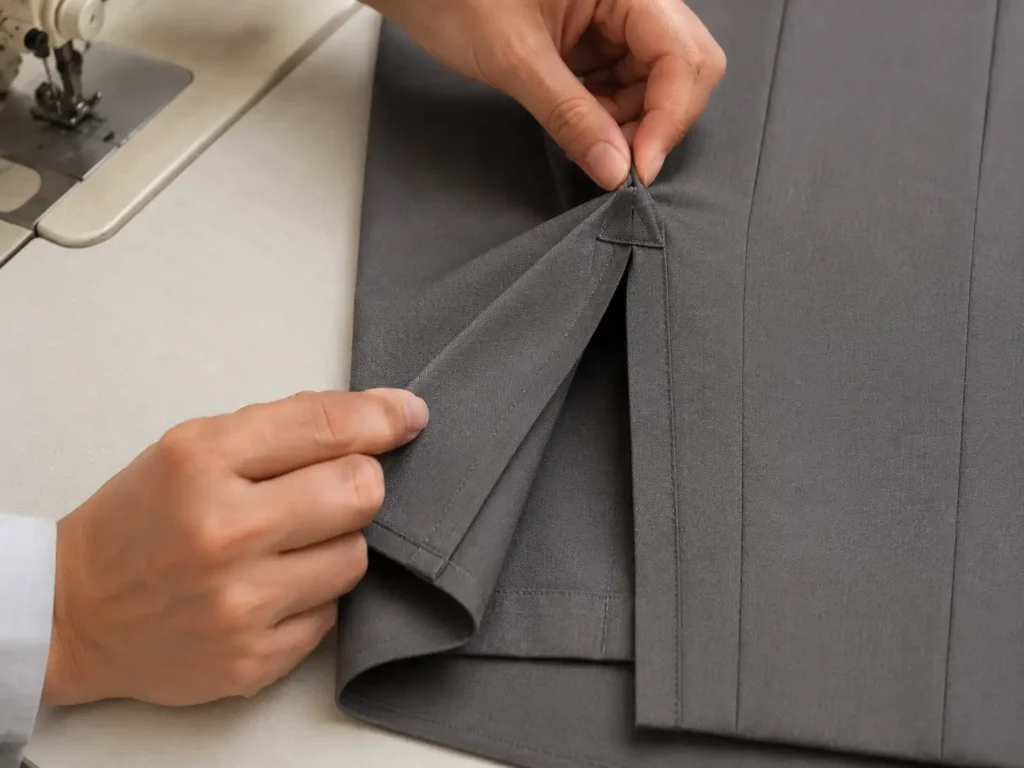
Slit placement is checked against movement, lining length and intended coverage. Reinforcement prevents tearing while avoiding visible bulk on the outer satin.

Finished Length

Mini, midi and floor-length proportions are confirmed against the approved size chart. Maxi dresses need hem-drop review because fluid fabrics can settle after hanging.

Construction Details Protecting Satin Appearance

Small construction decisions decide whether a matte satin dress looks refined or visibly manufactured. Each detail is sampled, measured and inspected against the approved garment standard.

Invisible Zipper

Zipper tape, seam allowance, stabilization and pattern shape are balanced to keep the center-back or side seam flat. The zipper is checked while worn because hanger inspection can hide bulging at the waist or hip.

Cowl Stabilization

Stay tape, internal facing or controlled neckline finishing can protect the cowl without making it rigid. The solution depends on fabric weight, depth and desired movement.

Adjustable Straps

Slider size, ring finish, strap width and anchor reinforcement are selected to suit the satin. Hardware edges must remain smooth to reduce surface snagging and skin irritation.

Ruched Waist

Gathering ratio, elastic support, lining and seam position are coordinated so ruching remains intentional rather than uneven. Bulk sewing instructions define the approved distribution.

Slit Reinforcement

Stress points are reinforced without creating a hard visible patch. Slit height, lining opening and seam finish are confirmed during fit and movement review.

Clean Hem Finish

Narrow hems, blind hems or lined finishes are selected according to weight and silhouette. Hem waviness, show-through and press marks are checked before bulk approval.

Lining Choices for Coverage, Comfort and Movement

Lining should solve opacity, comfort and structure without fighting the outer satin. Color, stretch, weight and length are matched to the garment function.

Light Fluid Lining

Slip, cowl-neck and draped dresses often need a soft lining with enough movement to follow the outer shell. Excessively stiff lining can flatten the drape, pull the side seams or create a visible inner hem.

Stretch Lining

Bodycon and ruched satin dresses need lining with compatible stretch and recovery. Mismatched stretch can restrict movement, distort gathers or cause the outer garment to ride upward.

Structured Lining

Corset, strapless and formal styles may require firmer lining, cups, boning or interfacing. Internal support is distributed carefully so edges and channels do not print through the matte satin.

From Fabric Direction to Approved Satin Sample

Sampling creates the production standard. Each stage has a different purpose, and approval records move forward into bulk files rather than remaining in scattered messages.

Project Review

Reference images, tech pack, quantity, size range, color plan, target launch and packing needs are reviewed before development starts.

Fabric Direction

Available satin options are compared for matte level, weight, stretch, opacity, drape, MOQ, cost and bulk availability.

Pattern Development

Pattern makers convert the design into measurable structure, considering approved fabric behavior, lining and trims.

First Sample

The first garment checks design interpretation, basic fit, construction and material direction. It is not treated as final bulk approval.

Fit Review

Bust-waist-hip balance, neckline, straps, armhole, slit, length and movement are measured and reviewed on-body.

Revised Sample

Approved comments are transferred into updated patterns, size charts, fabric or trim records and sewing instructions.

PP Sample

Final fabric, color, fit, trims, construction, labels and packing are confirmed before bulk production.

Golden Sample

The sealed approved garment becomes a reference for line production, QC, finishing and final inspection.

What We Review During Satin Sample Revisions

A satin sample revision should resolve root causes, not only visible symptoms. Every approved change is transferred into production-ready files. Revision records may include pattern changes, measurement changes, fabric replacement, trim adjustment, sewing method, brand comments, responsible team member and approval status. The record becomes part of the PP and Golden sample package. Review Sample Comments Send Revision Notes

Fabric and Sheen

Review covers weight, matte level, opacity, drape, stretch, color and surface sensitivity. A fabric change may require new pattern balance, lining, sewing settings, quotation and material timing.

Fit and Measurement

Bust, waist, hip, dress length, strap length, armhole, neckline depth, slit height and hem sweep are checked against the approved size chart. Changes are recorded by measurement point.

Construction and Trims

Zipper specification, strap hardware, cups, boning, lining, elastic, interfacing, seam method and hem finish are reviewed for appearance, durability and comfort.

Finishing and Presentation

Pressing, wrinkles, shine marks, thread ends, label position, hangtag, polybag, folding and carton pressure are reviewed before PP approval.

Controlled Bulk Production for Satin Collections

Bulk production begins only after PP approval and confirmed material, measurement, construction, label and packing standards. Multi-style satin programs are grouped and allocated by risk. The production system includes 6 owned women’s fashion factories, 10+ long-term production partners, 18+ sewing lines and 6+ flexible lines. Factory allocation remains dependent on style complexity, fabric, quantity, timing and QC requirements; complex satin dresses are not treated like basic garments. Plan Bulk Production Share Order Forecast

PP Approval

Final fit, fabric, color, trims, workmanship and packing are signed off before bulk cutting.

Fabric Inspection

Bulk rolls are checked for shade, sheen, snagging, stains, width and visible defects.

Shade Grouping

Rolls are grouped to avoid mixing visible shade differences within one garment or shipment batch.

Directional Cutting

Face side, grain and approved light direction are controlled during marker planning and cutting.

Sewing Setup

Trial sewing confirms needle, stitch, tension, zipper method, seam handling and pressing points.

In-Line Inspection

Early garments are checked before repeated construction problems spread through the line.

Finishing

Thread trimming, spot cleaning, pressing, cooling and hanger handling protect the smooth satin surface.

Final Inspection

Appearance, measurements, labels, packing and assortment are reviewed against approved files.

Shipment Preparation

Packing lists, carton marks, style-color-size breakdown and freight coordination are completed.

Sewing and Pressing Methods for Clean Satin

Matte satin rewards controlled handling and exposes careless workmanship. Clean sewing, protected surfaces and disciplined pressing are essential from cut panels to packed garments.

Needle Selection

Needle size and condition are matched to the approved satin. A damaged or oversized needle can leave permanent holes, pulls or ladder-like marks along seams.

Thread Tension

Upper and lower tension are balanced on production fabric before line sewing. Excess tension can pucker seams; loose tension can weaken seam appearance and durability.

Seam Feeding

Slippery panels may shift during sewing. Controlled handling, accurate notches and suitable feeding methods help preserve panel length and side-seam alignment.

Zipper Installation

Zipper tape is prepared and sewn with attention to waist and hip shape. Flatness is checked closed, open and on-body before approval.

Pressing Control

Temperature, steam, pressure, press cloth and cooling time are selected for the satin and internal components. Direct pressure on seam edges may create visible shine or impressions.

Clean Work Surfaces

Tables, machine beds, hangers and packing areas are kept free from sharp edges, oil, dust and rough contact points that can snag or stain the fabric.

Garment Transfer

Finished satin garments are moved with enough space to avoid dragging, crushing and metal contact. Heavy stacking before cooling can set unwanted creases.

Hem Preparation

Hem type is tested for waviness, show-through and balance. Long skirts may rest before final leveling so the finished hem remains even.

Satin-Specific Quality Checks Before Shipment

Quality control follows the risk path of the garment. Satin inspection begins with incoming fabric and continues through cutting, sewing, measurements, finishing and packing.

QC StageInspection FocusRisk Controlled
Incoming fabricShade, sheen, face side, snagging, stains, width, visible defectsWrong or damaged material entering production
CuttingDirection, face-side marking, panel matching, notches, shade groupingMixed light direction and panel mismatch
In-line sewingSeam puckering, needle marks, zipper flatness, gathering, strap symmetryRepeated workmanship defects
MeasurementBust, waist, hip, length, straps, neckline, slit and hem sweepFit and grading inconsistency
FinishingPressing marks, wrinkles, loose threads, stains and surface pullsPoor retail appearance
Final inspectionColor group, workmanship, labels, size and assortmentMixed, incomplete or non-conforming shipment
PackingCooling, folding, tissue, polybag, carton pressure and SKU separationTransport creases and packing errors

What Determines Matte Satin Dress Cost?

Quotation is built from the approved garment specification. Two visually similar dresses can carry different costs because fabric, lining, structure, color count and workmanship change the production requirement.

Fabric Direction

Composition, weight, stretch, finishing, stock availability and custom dyeing influence unit cost, material MOQ and lead time.

Color Plan

Each color may require 200 pcs for one style under the standard MOQ. Dyeing, lab dips, separate shade control and SKU handling add complexity.

Lining and Support

Light lining, stretch lining, cups, boning, anti-slip tape, interfacing and internal waist support affect material and labor.

Pattern Complexity

Bias-inspired panels, draping, asymmetric necklines, corset seams, ruching, cut-outs and long hems increase development and sewing work.

Trims and Branding

Special zippers, strap hardware, woven labels, care labels, hangtags, barcodes, SKU stickers and printed polybags have separate specifications and supplier conditions.

QC and Packing

Measurement checks, satin-specific inspection, protected pressing, tissue, hanger packing, carton limits and brand inspection support are included according to the agreed standard. 

Private Label Details for Retail-Ready Dresses
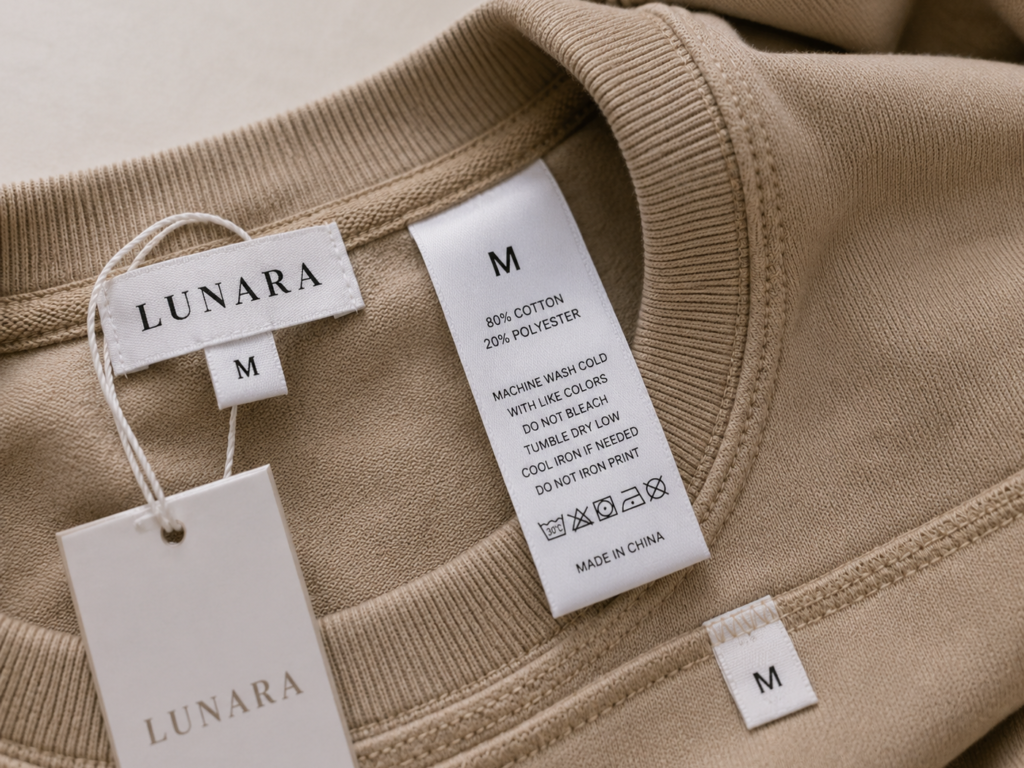
Brand identity and warehouse accuracy depend on precise label and packing execution. Artwork, placement, language, size mapping and SKU data are confirmed before bulk packing.

Woven Labels

Main labels are produced from approved artwork, dimensions, colors, fold type and placement. Satin garments need smooth label edges and secure attachment without visible outer-surface distortion.

Size Labels

Size labels are matched to the approved size chart and packing ratio. Size mapping is checked against garment measurements before final packing.

Care Labels

Fiber content, care symbols, language, country requirements and placement are reviewed by project. Final wording must match confirmed material information.

Hangtags

Hangtag artwork, string, attachment point, barcode area and quantity are approved before use. Sharp tag components are kept away from the satin surface during handling.
5.-Barcode-SKU-Sticker

Barcode and SKU

Style, color, size, barcode and SKU data are cross-checked against packing lists. Clear separation reduces warehouse receiving and inventory errors.

Branded Polybags

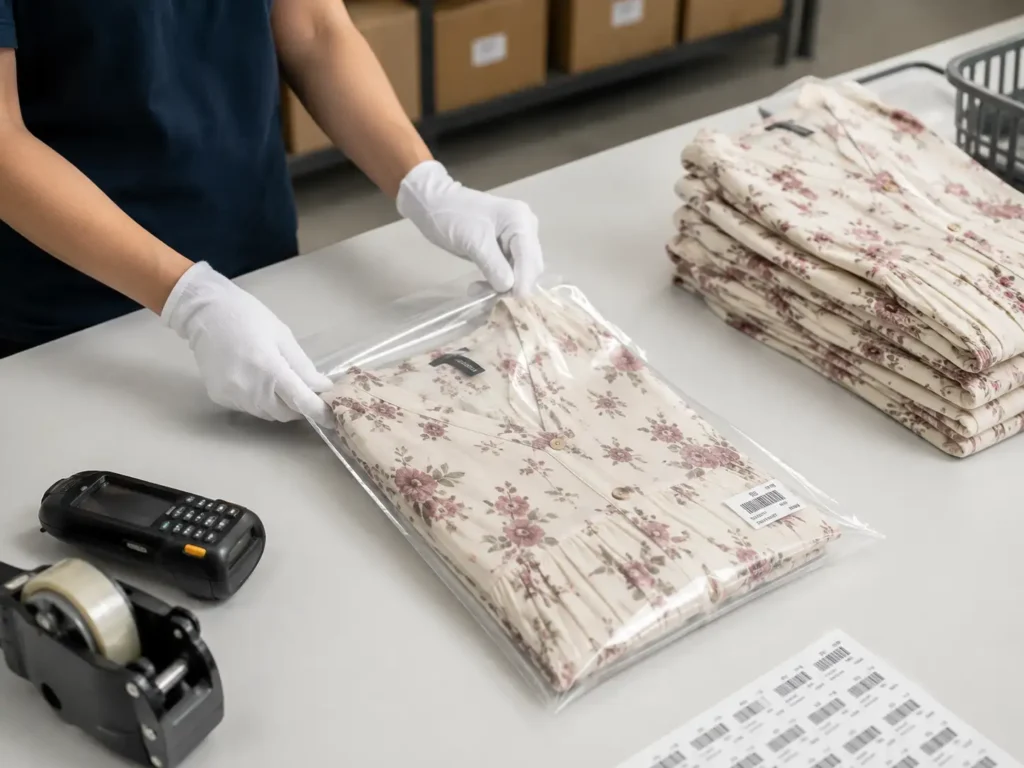
Bag dimensions, thickness, warnings, print, sealing and sticker placement are confirmed. Garments are cooled before bagging to avoid setting heat and creases.

Packing Satin Dresses to Reduce Transport Creases

Satin packing should protect shape, surface and assortment accuracy. Pressing quality can be lost when garments are folded hot, compressed heavily or packed without enough surface protection.

Cooling Before Packing

Pressed garments rest and cool before folding or bagging. Packing while warm can set hard creases and transfer internal seam impressions to the outer face.

Controlled Folding

Fold points are selected according to dress length, structure, slit and embellishment. Tissue can separate sensitive surfaces and reduce hard friction lines.

Individual Protection

Each garment is placed in an approved polybag with correct label and SKU identification. Hanger packing can be reviewed for selected formal styles.

Carton Pressure

Carton quantity and dimensions are balanced to limit crushing while maintaining freight efficiency. Long dresses and structured bodices may need lower compression.

Shipment Planning

Express, air, sea, split shipment and brand-appointed forwarder options are reviewed by launch timing, quantity, destination and budget.

Export Documents

Packing list, commercial invoice, carton marks, carton measurements, gross and net weight, style-color-size breakdown and pickup coordination are prepared according to the shipment plan.

20,000-Piece Satin Occasionwear Program

An anonymous US occasionwear brand developed a coordinated satin mini and midi dress collection with Jinfeng Apparel. Brand identity, original files, labels and unpublished designs remain protected.

Program Scale

The program covered 12 satin mini and midi styles and around 20,000 pieces. Product directions included wedding guest and cocktailwear silhouettes using matte satin, stretch satin and light lining.
  • 12 coordinated styles
  • Around 20,000 pieces
  • Mini and midi lengths
  • Several colorways
  • Matte and stretch satin
  • Private-label delivery

Development Challenges

The main risks were color consistency across reflective fabric, invisible zipper bulging, lining comfort, waist-hip balance and stable appearance across several colors. A visually acceptable first sample was not treated as enough evidence for bulk release.
  • Shade and sheen differences
  • Zipper flatness at waist and hip
  • Light lining comfort
  • Multi-color bulk consistency
  • Ruched waist balance
  • Pressing and packing marks

Control Plan

Jinfeng Apparel reconfirmed satin weight, sheen direction, lining color, zipper specification and waist-hip pattern balance. First samples moved through revision, PP approval and Golden sample sealing. Bulk inspection focused on zipper flatness, shade grouping, seam appearance, pressing and packing.

  • Fabric and lining approval
  • Pattern correction
  • Revised sample review
  • PP sample approval
  • Golden sample standard
  • In-line and final QC

Project Result

Bulk production was completed according to the project schedule, supporting the planned occasionwear launch. Approved production records were retained, and the brand later added repeat colors using the established pattern, fabric and QC references.

Built for Seasonal Collections and Repeat Orders

Repeat production becomes faster and more controlled when approved records are preserved. A new color or new fabric still receives project review, while core references remain available.

Production Records

Patterns, graded size charts, BOM, sewing instructions, measurement files, QC notes and Golden sample references are retained for repeat production and replenishment.

Fabric and Color Records

Approved fabric references, color records, lining choices, zipper colors and trim details support new-color planning. New dye lots remain subject to fresh shade approval.

Design Protection

NDA-based cooperation protects tech packs, samples, patterns, trims, labels, packaging, unpublished styles and order information. Client names and brand assets are not disclosed without written permission.

Frequently Asked Questions About Matte Satin Dresses

Matte satin reflects light more softly, while glossy satin creates stronger highlights. The result depends on fiber, yarn luster, weave, density, finish, color and lighting. Approval should rely on a physical swatch and sample garment, not only a fabric name.

Satin used for dresses often falls within an 80-220 gsm reference range. Lightweight options suit slips and cowls; medium weights suit midi and bridesmaid styles; heavier options suit structured, corset or formal silhouettes. Final selection depends on drape, opacity, lining and construction.

Lining depends on color, weight, opacity, silhouette and comfort target. Light colors, fitted styles and formal dresses often need lining. Slip and draped styles require a lining soft enough to preserve movement, while structured styles may need firmer internal support.

Bulk fabric is reviewed by roll and grouped by shade. Face side and sheen direction are confirmed before cutting, and noticeably different lots are not mixed within one garment. Repeat colors use retained references but still require fresh bulk approval.

Zipper flatness depends on pattern shape, fabric weight, seam allowance, zipper tape, stabilization and sewing tension. The zipper is sampled on approved fabric and checked on-body at the waist and hip before bulk production.

Custom dyeing can be reviewed according to target color, fabric supplier, material MOQ, lab-dip process, bulk timing and cost. Stock colors may support faster development, while custom colors require separate approval and supplier minimums.

Yes. Polyester-spandex satin can support bodycon, ruched and fitted silhouettes. Stretch percentage, direction, recovery, lining compatibility, seam tension and finished measurements are reviewed during sampling.

MOQ starts from 200 pcs per style/color. One style in two colors generally requires 200 pcs per color. Special fabrics, dyeing, trims, printing and packaging may have additional supplier MOQ.

Garments cool after pressing, then follow controlled folding, tissue placement, individual bagging and carton-pressure planning. Long or structured dresses may require adjusted carton quantities or hanger-packing review.

Yes. Jinfeng Apparel retains patterns, size charts, BOM, fabric references, color records, trim details, sewing instructions, packing requirements, QC notes and Golden sample references. 

Start Your Matte Satin Dress Development

Send the available project files for a structured review by Kelly and the development team. A useful first review should allow the team to assess silhouette, fabric direction, pattern risk, lining, trims, MOQ, sample scope, bulk feasibility, branding and delivery planning. More complete information leads to a more accurate development route and quotation basis.

  • Reference images, sketches, original samples, line sheets or tech packs
  • Target quantity for each style and color
  • Preferred matte satin composition, weight, stretch or swatch reference
  • Color plan, size chart and target measurement standard
  • Lining, zipper, strap hardware, cups, boning or other trim requirements
  • Woven label, care label, hangtag, barcode, SKU and polybag files
  • Launch date, delivery destination and preferred shipping arrangement
  • Any inspection, testing, warehouse or packing requirements
Tell Us About Your Dress Project

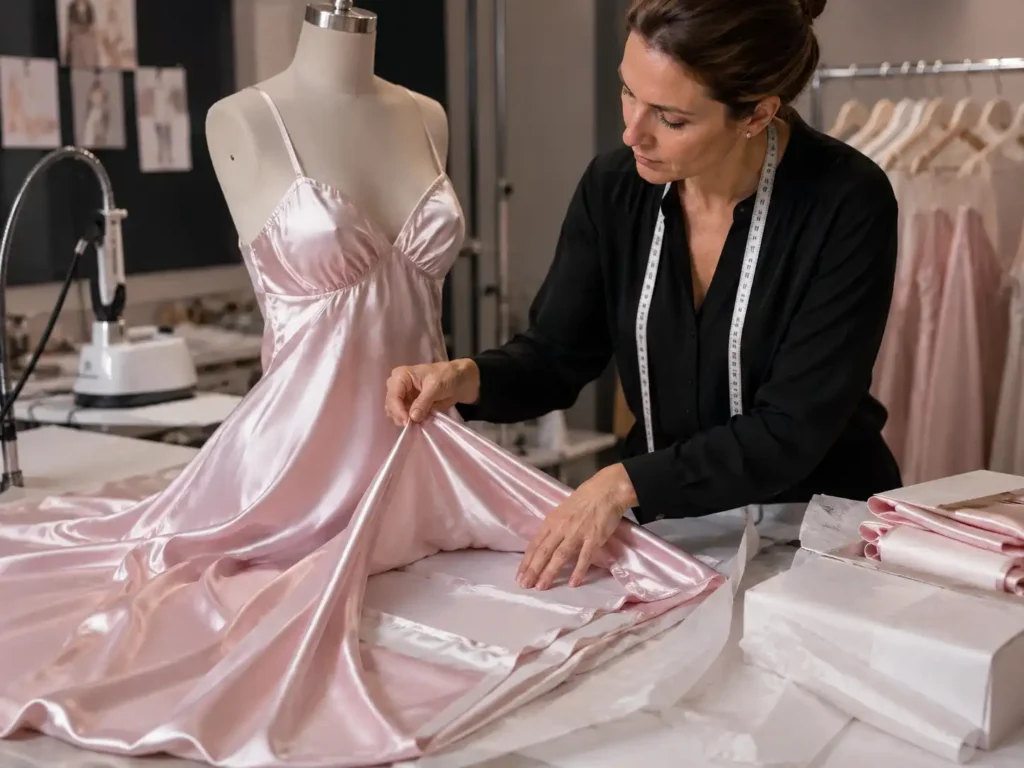
Share your product details, estimated quantity and development requirements. Our team will review your project and provide practical OEM/ODM production feedback.

Premium Women’s Apparel Production for Fashion Brands

From dress sample development to bulk production, JF Apparel supports fashion brands with confidential OEM/ODM manufacturing, reliable quality control and scalable production support.

START YOUR DRESS PROJECT

Ready to Develop Your Next Dress Collection?

Share your design concept, product requirements or sourcing plans with our team. We’ll review your project and provide practical feedback on development, materials, MOQ and production.

7-10 Days

Sample Development

200 PCS

Starting MOQ

Fast Response

Professional Follow-Up