...

Low Waist Skirt Manufacturer

Develop low waist skirts that keep the intended silhouette from first fitting through repeat bulk production.

  • Low waist placement is reviewed against high hip, full hip, waistband width, front length, back length, and intended styling position before grading begins.
  • Simple low waist skirt first samples are commonly developed in 7-10 days after fabric, trims, measurements, and construction details are confirmed.
  • MOQ starts from 200 pcs per style/color, with fabric, color, trim, print, wash, and packaging requirements reviewed separately.
  • Two sample rooms, 7+ senior pattern makers, and 20+ sample machinists support multi-style skirt development for global fashion programs.

Low Waist Skirt Development Backed by Measurable Capacity

A strong low waist skirt program needs more than an attractive sketch. Development resources, production allocation, in-line control, and documented handover determine whether approved proportions remain stable across colors, sizes, and repeat orders.

Since 2008

Jinfeng Apparel has focused on custom women’s fashion manufacturing since 2008. The working method combines garment development, pattern correction, fabric and trim coordination, sample making, bulk production, quality control, private-label packing, and export delivery. Long-term women’s fashion experience matters for low waist skirts because waist placement, hip balance, closure position, lining, and hem coverage must be solved as one connected structure.

Six Owned Factories

Six owned women’s fashion factories support woven skirts, stretch skirts, dress-led collections, matching sets, and fashion programs with different construction levels. Production is assigned by fabric, silhouette, workmanship, order rhythm, and finishing requirement instead of placing every style on the same line. More than 10 long-term satellite production partners provide additional support when a collection includes specialized materials, decorative work, or multiple delivery batches.

100,000+ Monthly Capacity

Regular monthly capacity exceeds 100,000 pieces across the women’s fashion manufacturing system. Capacity is planned by style group, material arrival, approved PP standard, line efficiency, color sequence, size ratio, and packing schedule. The figure is not used as a blanket promise for every launch date; confirmed timing depends on approved samples, final order quantities, material readiness, construction complexity, and the production calendar.

Two Sample Rooms

Two sample rooms allow development teams to separate first samples, revisions, photo samples, salesman samples, PP samples, and urgent fit corrections. Low waist skirt development often requires side-view and movement assessment, not only flat measurements. Dedicated sample rooms help pattern makers and sample machinists review waistband behavior, hip ease, zipper flatness, inner-short coverage, and hem balance before production files are locked.

Seven Pattern Makers

More than seven senior women’s fashion pattern makers work from tech packs, reference images, original samples, sketches, line sheets, and brand size charts. Their work covers low waist circumference, high hip, full hip, waist-to-hip depth, front and back length, waistband curve, side seam, hem width, slit position, and grading. Pattern revisions are recorded so approved changes can be carried into PP samples and bulk production.

Fifteen QC Inspectors

A team of 15+ QC inspectors supports incoming material review, cutting inspection, in-line sewing checks, measurement checks, appearance inspection, packing verification, and final inspection coordination. For low waist skirts, control points include fabric stretch, waist placement, high-hip fit, zipper position, waistband rolling, side-seam balance, lining exposure, inner-short length, label placement, barcode accuracy, and size-color packing.

Built for Structured Fashion Programs and Seasonal Collections

Jinfeng Apparel works with established fashion operations that need defined product direction, professional sampling, controlled bulk production, and retail-ready delivery. Low waist skirt programs can be developed as individual hero styles or as coordinated seasonal collections.

Global Fashion Brands

Global fashion brands often manage several silhouettes, fabrics, colors, and size groups within one launch. Support includes structured sample priorities, material grouping, pattern version control, PP approval, production allocation, QC reporting, private-label packing, and phased shipment. Low waist skirts can be aligned with an existing brand block, target fit model, regional size chart, and established packaging manual rather than developed as disconnected one-off garments.

Fast-Fashion Teams

Fast-fashion teams need trend accuracy without losing production discipline. A low-rise mini may look simple, yet rapid development can fail when waist placement, skirt coverage, fabric recovery, or zipper behavior remains unresolved. Jinfeng Apparel organizes styles by launch priority, sample complexity, material readiness, and production risk so key photo styles, commercial colors, and volume lines move through development in a controlled sequence.

Product Developers

Product development teams need clear translation from concept to production-ready standards. Support covers style-structure review, fabric direction, pattern development, first sample, fit feedback, measurement review, sample revision records, PP approval, and Golden Sample control. Detailed communication focuses on the garment itself: low waist position, high hip, full hip, waistband shape, closure, lining, inner-short coverage, hem balance, and movement.

Sourcing Offices

Sourcing offices evaluate capability, MOQ, production allocation, compliance support, quality systems, costing logic, and delivery reliability. Jinfeng Apparel can provide a factory profile, project-based production information, QC process details, packing data, and inspection coordination according to the assigned factory. Multi-style low waist skirt projects are separated by style, color, size, fabric, trim, sample version, production order, and shipment plan for traceable follow-up.

Retail Programs

Retail and multi-channel programs require more than finished garments. Labels, care information, hangtags, barcodes, SKU stickers, polybags, folding, carton assortment, carton marks, packing lists, and warehouse instructions affect whether goods enter distribution smoothly. Jinfeng Apparel coordinates garment production with retail-ready packing requirements so product, packaging, and shipping records correspond to the approved order structure.

Private Label Collections

Private-label collections can combine low waist skirts with crop tops, corset tops, fitted knits, matching-set pieces, and related women’s fashion styles. Main labels, care labels, hangtags, size marks, barcodes, packaging artwork, and carton marks are reviewed before bulk packing. Pattern, fabric, trim, measurement, and packing records can be retained for repeat orders, new colors, updated fabrics, or later seasonal extensions.

Low Waist Skirt Problems That Damage Sell-Through

Low waist skirt quality is visible as soon as the garment is worn. Small technical errors can change the silhouette, restrict movement, shorten coverage, distort styling images, or create inconsistent fit across the size range.

Incorrect Waist Position

Moving a standard skirt waistband downward by a fixed distance rarely creates a balanced low waist fit. The correct position depends on torso proportion, high-hip shape, full-hip projection, waistband width, fabric behavior, and the intended styling height. A line placed too high loses the low-rise effect; a line placed too low can compress the hip, shorten the visual leg line, or make the skirt feel unstable during movement.

Unstable Hip Balance

Low waist skirts sit closer to the upper hip, so the relationship between low waist, high hip, and full hip becomes more sensitive. Too little ease creates drag lines, side-seam movement, zipper stress, and upward riding. Too much ease causes rotation, gaping, or downward slip. Stretch styles also require recovery testing because a fabric can fit well at first wear yet relax after sitting, walking, or repeated fitting.

Rolling Waistband

Waistband rolling usually comes from an unsuitable curve, incorrect width, weak interlining, uneven seam allowance, excessive tension, or poor compatibility between shell fabric and support material. A rigid waistband can cut into the hip; a soft waistband can collapse or ripple. Low waist construction needs enough structure to remain clean while preserving comfort across standing, sitting, and bending positions.

Unsafe Mini Coverage

A low-rise mini begins lower on the body than a natural-waist mini. Using the same numeric skirt length can therefore produce much less front or back coverage. Center-front length, center-back length, side length, lining length, inner-short coverage, slit height, and target model height must be reviewed together. Commercial styling also needs to consider sitting, walking, turning, and stair movement rather than a single standing photo.

Distorted Size Grading

Proportional grading alone can change the intended low waist effect. As sizes increase, the relationship among low waist circumference, waist-to-hip depth, full hip, side seam, back rise area, waistband curve, and skirt length may need independent adjustment. A grade rule built only from the base size can cause smaller sizes to sit too high and larger sizes to pull upward or lose the designed silhouette.

Sample-Bulk Drift

An approved sample can change in bulk when fabric weight, stretch, shrinkage, dye lot, lining, zipper, interlining, seam method, pressing, or measurement tolerance is not controlled. Low waist positioning is especially sensitive to material variation. The production team needs the final pattern, size chart, grade rule, fabric reference, trim approval, sewing instruction, PP sample, Golden Sample, and QC checklist before cutting begins.

How We Build Production-Ready Low Waist Skirts

Development is organized around four connected disciplines: pattern engineering, material validation, controlled sampling, and production transfer. Each discipline solves a different source of fit or bulk inconsistency before quantities are committed.

Pattern Engineering

Low waist pattern development begins by defining the intended wearing position rather than adjusting a standard waistband after the fact. Pattern makers review the brand size chart, fit model, low waist measurement, high hip, full hip, waist-to-hip depth, front and back length, waistband width, closure position, side seam, hem width, lining, and inner-short requirement. The base pattern is tested against the chosen fabric and target silhouette, then corrected from fit images, measurements, and movement feedback.
Key controls include:
  • Curved or shaped waistband geometry for the selected wearing position
  • Hip ease or negative ease based on fabric stretch and recovery
  • Side-seam balance viewed from front, side, and back
  • Center-back shaping for coverage and zipper stability
  • Length balance for mini, micro, midi, and asymmetric silhouettes

Material Validation

Fabric selection affects where the skirt sits, how firmly it holds the hip, and whether the waistband stays flat. Suiting, denim, ponte, jersey, satin, mesh, lace, twill, rayon, and blended fabrics require different pattern ease, interlining, seam methods, lining, pressing, and packing. Material validation reviews weight, stretch direction, stretch percentage, recovery, shrinkage, drape, transparency, surface sensitivity, color behavior, and bulk availability before the final sample standard is approved.
Validation can include:
  • Fabric swatch and hand-feel review
  • Stretch and recovery comparison
  • Shrinkage or wash testing by project
  • Lining compatibility and color matching
  • Interlining bonding and waistband support review

Controlled Sampling

Sampling is used to build a production standard, not merely a visual prototype. A first sample establishes structure and proportion. Fit feedback identifies waistline, hip, side seam, coverage, closure, and movement issues. Revised samples verify pattern and material changes. Photo or salesman samples can be developed against agreed presentation standards, while the PP sample locks final fabric, color, trims, measurements, construction, labels, and packing details before bulk production.
Simple first samples commonly take 7-10 days after all inputs are confirmed. Revised samples usually require 7-15 days, while complex pleating, mesh layering, sequin work, specialty washing, or custom materials require separate scheduling.

Production Transfer

Approved development information is converted into a production package that line supervisors, sewing teams, QC inspectors, finishing teams, and packing teams can follow. The package includes the final pattern, graded nest, size chart, measurement tolerance, fabric reference,

BOM, trim card, sewing instruction, label placement, packing instruction, PP sample, Golden Sample, and QC checklist. Change requests after PP approval are reviewed for cost, material, fit, timing, and production impact before implementation.

Custom Low Waist Skirt Styles We Manufacture

Low waist skirts can serve different fashion positions, from sharp tailoring and Y2K denim to partywear mesh, stretch bodycon, cargo utility, and coordinated sets. Each style group requires its own pattern, material, construction, and QC logic.

Low-Rise Mini Skirts

Low-rise mini skirts can be developed in suiting, crepe, twill, denim, satin, ponte, jersey, or layered mesh. The main controls are the exact low waist level, high-hip comfort, full-hip balance, front and back coverage, zipper position, waistband stability, lining length, and hem shape.
Tailored minis need clean pressing and flat closures; stretch minis need recovery control so the garment does not loosen, rotate, or climb during wear.

Micro Mini Skorts

Micro mini skorts combine a short fashion silhouette with internal coverage. Development covers outer-skirt length, inner-short rise, crotch depth, leg opening, gusset comfort, attachment method, fabric stretch, and side-seam alignment. The inner short must remain hidden from the intended standing view while providing coverage during sitting and movement. Size grading must protect both the low waist appearance and the functional short underneath.

Pleated Low-Waist Skirts

Pleated low waist skirts depend on pleat depth, pleat direction, waistband curve, hip release, fabric memory, and pressing. Pleats that begin too high can add unwanted volume over the upper hip; pleats that open too early can distort the silhouette. Production controls include pleat marking, symmetry, pressing temperature, interlining compatibility, side-seam matching, hem accuracy, and packing methods that reduce crushing before retail display.

Low-Rise Denim Skirts

Low-rise denim skirts require wash-aware pattern development. Fabric shrinkage, torque, shade variation, seam thickness, waistband stiffness, zipper or button-fly placement, rivets, metal trims, raw edges, and distressing can all change the finished fit. Pre-production review considers raw measurements, wash recipe, expected shrinkage, sample-wash results, bulk shade bands, and final garment measurements. Decorative hardware and abrasions are checked for position, security, and skin comfort.

Cargo and Twill Skirts

Cargo and twill low waist skirts combine utility details with a controlled hip silhouette. Pocket size, pocket placement, flap thickness, bartacks, snaps, belts, D-rings, and topstitching influence both appearance and weight distribution. Pockets placed too low or too far forward can distort the body line. Construction planning reviews seam bulk, waistband support, closure strength, shrinkage, and the effect of hardware on pressing and packing.

Stretch Bodycon Skirts

Stretch bodycon low waist skirts rely on fabric recovery and engineered negative ease. Jersey, ponte, power mesh, stretch satin, and spandex blends behave differently around the high hip and full hip. Pattern makers review stretch direction, percentage, rebound, lining, seam elasticity, waistband tension, and hem recovery. Fitting includes standing, walking, sitting, and turning to check upward movement, side-seam drift, waistband rolling, and surface drag lines.

Satin and Mesh Skirts

Satin and mesh low waist skirts are suited to partywear, occasionwear, clubwear, and coordinated sets. Satin requires control of grain direction, shine direction, snagging, seam impression, zipper flatness, color variation, pressing, and protective packing. Mesh requires transparency planning, stretch alignment, lining or short coverage, seam reinforcement, edge finishing, and hole inspection. Layered constructions are tested for weight, recovery, and movement before bulk approval.

Matching-Set Skirts

Low waist skirts can be developed with crop tops, corset tops, halter tops, fitted mesh tops, satin camis, or knit pieces. Set development controls color-batch consistency, fabric direction, top-to-skirt proportion, size pairing, label placement,

SKU structure, and packing. Sets can be packed together or separately according to the selling model, but each option requires a clear barcode, size, color, and carton plan before production.

Engineering Waist Placement, Hip Balance, and Coverage

The low waist silhouette succeeds only when three systems work together: the wearing line, the hip fit, and the finished coverage. Pattern decisions are reviewed in front, side, and back views rather than judged from a flat sketch alone.

Defining the Low Waist Line

A low waist line is a planned wearing position, not a universal number below the natural waist. The same vertical drop can sit differently on bodies with different torso lengths, hip shapes, and proportions. Development begins with the brand’s intended styling reference, target fit model, and size chart. Pattern makers then identify the low waist circumference, high-hip level, full-hip level, waist-to-hip depth, waistband width, and visual line required by the design.

A shaped waistband normally follows the body more accurately than a straight strip at a low position. The curve must account for front and back body shape, zipper placement, side seam, and seam allowance. A wider waistband may need stronger interlining and more shaping; a narrow waistband may need cleaner stabilization to avoid rolling. Any belt loops, straps, cut-outs, buckles, or hardware must be positioned after the true wearing line is established.

Fit review looks for gaping, compression, horizontal drag lines, waistband tilt, side-seam movement, and uneven front-to-back placement. The approved line is then recorded through measurements, pattern notches, construction notes, and photo references so the production team does not rely on visual guesswork.

Balancing High Hip and Full Hip

Low waist fit places more pressure on the transition between the upper hip and full hip. A skirt can match the low waist measurement yet still fail because the hip curve is too straight, the waist-to-hip depth is wrong, or the side seam does not follow the body. Woven skirts normally require controlled positive ease, while stretch bodycon styles may use negative ease based on tested recovery. The amount cannot be copied from another fabric without validation.

Pattern review compares front and back hip shaping, side-seam angle, dart or panel position, center-back shaping, closure behavior, and hem fall. Too much front volume can make the skirt rotate backward; insufficient back shaping can pull the waistband down or shorten rear coverage. Heavy cargo pockets, belts, metal trims, or layered mesh can also shift the garment during wear and must be considered in the fit.

Movement testing covers walking, sitting, bending, and turning. Inspectors look for upward riding, downward slipping, side-seam drift, zipper strain, waistband folding, and fabric relaxation.
Approved ease and recovery are transferred into grade rules and measurement tolerances for bulk control.

Controlling Mini Length and Movement

Mini and micro silhouettes require separate front, back, and side analysis. A single finished-length measurement cannot show whether the rear coverage is adequate or whether the hem remains balanced after the skirt settles on the hip. The pattern therefore records center-front length, center-back length, side length, hem shape, lining length, inner-short length, and slit or vent position where relevant.

Target model height and intended footwear influence styling, but production standards still need fixed measurement points. Fit photos should show front, side, and back views in standing and seated positions. For skorts, the inner short must provide coverage without becoming visible from the approved exterior view. For asymmetric hems or slits, movement review confirms that the opening remains within the brand’s intended exposure level.

Bulk inspection compares finished lengths against the approved size chart and Golden Sample. Pressing, hanging, fabric relaxation, and packing can alter the visual hem line, especially in satin, rayon, viscose, bias-cut panels, or layered mesh. Final packing methods are selected to reduce creasing, pleat crushing, and distortion.
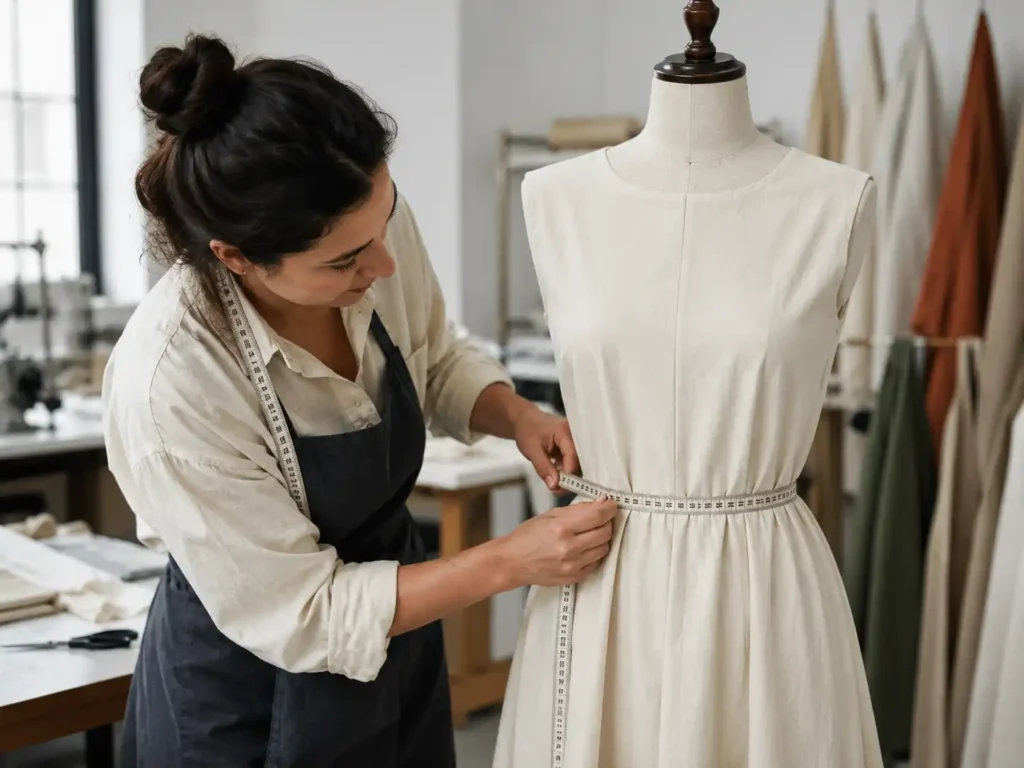
Waistband, Closure, and Lining Control Details

Internal construction determines whether a low waist skirt feels secure, lies flat, and maintains the approved line after repeated wear. Every closure, support layer, and coverage component is matched to the shell fabric and silhouette.

Shaped Waistbands

Shaped waistbands follow the low waist and upper-hip curve more accurately than straight bands. Pattern development controls front and back curvature, width, seam allowance, joining points, top edge, lower edge, and closure extension. Fit checks focus on gaping, compression, rolling, twisting, and level balance. The final waistband pattern is graded with the body pattern rather than enlarged as an independent rectangle.

Interlining Support

Interlining supports the waistband and helps prevent collapse, rippling, stretching, or zipper distortion. Selection depends on shell weight, stretch, surface, pressing tolerance, and desired hand feel. Suiting and twill may need firm but flexible support; satin requires a smoother option that does not show through; stretch styles may need compatible stretch interlining. Bonding temperature, bubbling risk, shrinkage, and edge behavior are checked during sampling.

Zipper Placement

Side zippers, center-back zippers, exposed metal zippers, invisible zippers, and button-fly constructions affect fit and visual balance differently. Side placement can preserve a clean back view but requires careful hip shaping and seam flatness. Center-back placement supports symmetrical dressing but can affect rear coverage and waistband tension. Zipper length, tape color, slider quality, seam allowance, top stop, bottom stop, and opening ease are approved before bulk purchase.

Hooks and Buttons

Hooks, bars, buttons, snaps, and waistband extensions can reduce stress on a zipper and provide a cleaner closure. Hardware is selected by size, material, finish, strength, comfort, and brand appearance. Attachment points are reinforced and checked for alignment, scratching, sharp edges, and repeated opening. Decorative buttons or metal trims are also assessed for wash, plating, weight, and packing protection.

Lining and Shorts

Lining improves opacity, comfort, shape, and seam coverage. Low waist mini skirts may also use attached shorts for movement security. Development controls lining stretch, color, hand feel, seam method, attachment position, finished length, leg opening, crotch depth, and visibility. A non-stretch lining under a stretch shell can restrict fit, while an overly loose lining can twist or show below the hem.

Elastic Adjustment

Elastic-back panels, internal elastic, adjustable tabs, buckles, or drawcord details can add comfort without losing the low waist appearance. Elastic length, recovery, insertion method, gathering ratio, extension limit, and appearance must be approved across the size range. Adjustment systems are reviewed for symmetry, skin comfort, hardware security, and repeatability so the garment does not change shape after limited wear.

Fabrics Selected for Fit, Drape, and Market Position

Material choice changes the waist hold, hip fit, movement, finish, and production risk of every low waist skirt. Fabric direction is reviewed against silhouette, target price, color plan, lining, trims, care requirements, and bulk availability.

Fabric DirectionBest UseFit BehaviorMain RiskControl Method
Suiting / CrepeTailored minis, pleated skirts, office-to-evening stylesStructured with controlled drapeWaistband stiffness, pressing marks, seam bulkInterlining test, seam review, pressing standard, hem balance
DenimY2K minis, cargo skirts, raw-edge or washed stylesFirm with wash-dependent shapingShrinkage, torque, shade variation, thick seamsWash sample, shrinkage allowance, shade band, bulk measurement
PonteBodycon and clean fitted skirtsStable stretch with strong recoveryExcess compression, seam impressionRecovery test, negative-ease review, stitch and seam selection
JerseySoft fitted skirts and casual coordinated setsFlexible, fluid, sensitive to relaxationStretch-out, curling, side-seam driftGrain control, relaxation, elastic seam, recovery check
SatinParty, occasion, asymmetric, or bias-inspired skirtsFluid with visible shine directionSnagging, color variation, seam show-throughGrain planning, protected cutting, flat zipper, controlled pressing and packing
Mesh / LaceLayered party skirts, lined minis, sheer design panelsLight or stretch-dependentTransparency, holes, edge damage, lining mismatchLayer plan, hole inspection, lining approval, reinforced seams
Cotton TwillCargo, utility, belted, and structured casual skirtsFirm with clean topstitchingShrinkage, pocket distortion, hardware weightShrinkage review, pocket template, bartack and hardware checks
Rayon / ViscoseResort, fluid midi, printed, and soft draped skirtsSoft hand feel and strong drapeShrinkage, wrinkling, hem dropFabric test, relaxed cutting, hem balance, anti-crease packing

Design Details Developed for Stable Bulk Production

Distinctive details increase visual value only when their structure, placement, durability, and bulk repeatability are controlled. Design review connects appearance with sewing sequence, reinforcement, comfort, inspection, pressing, and packing.

Pleats

Pleats are controlled through depth, direction, spacing, release point, waistband connection, seam alignment, fabric memory, and pressing. A low waist pleat must open at the correct hip level; an early release can add volume, while a late release can restrict movement. Production uses marked pleat positions, symmetry checks, pressing references, and packing methods designed to reduce crushing.

Ruching

Ruching can shape the hip, create adjustable length, or add directional texture. Development controls gathering ratio, elastic or drawcord length, channel width, stitch strength, side balance, and fabric stretch. Heavy gathering can distort the low waist line or create uneven bulk across sizes. Sample approval records the finished gathered length, placement, and visual density for production.

Asymmetric Hems

Asymmetric hems require balance in both flat pattern and worn position. The low waist angle, side-seam height, front and back drop, lining length, grain direction, and fabric drape determine whether the hem looks intentional or distorted. Satin, rayon, and bias panels may relax after hanging, so sample measurement and final pressing standards are reviewed before bulk cutting.

Slits

Slits add movement and visual length but must remain stable across sizes. Development covers slit height, underlap, reinforcement, lining opening, seam allowance, edge finish, and movement exposure. Low waist skirts can shift during walking, which changes the apparent slit height. Fit testing and graded placement help maintain the intended balance from base size through the full range.

Cargo Pockets

Cargo pockets affect weight, proportion, and hip volume. Pocket dimensions, angle, flap, pleat, gusset, snap, zipper, bartack, and placement are developed against the body line. Poor placement can widen the upper hip or pull the skirt downward. Templates, symmetry checks, reinforcement, hardware review, and pressing standards support consistent bulk appearance.

Belts and Hardware

Belts, buckles, D-rings, chains, eyelets, rivets, and decorative metal pieces require specification approval and secure attachment. Hardware is evaluated for weight, finish, plating, edge smoothness, size, color, pull strength, and skin contact. Placement must align with the low waist line and should not cause waistband collapse, fabric tearing, or packing damage.

Rhinestones and Sequins

Rhinestones and sequins are reviewed for shine, size, placement, attachment, abrasion, skin comfort, and packing protection. Decorative layouts need repeatable templates and clear repair standards. Mesh or stretch bases require special attention because heavy decoration can change recovery and fit. Inspection checks missing pieces, loose attachment, sharp edges, lining protection, and surface damage before packing.

Prints and Panels

Placement prints, contrast panels, stripes, checks, and color blocking rely on accurate pattern positioning and cutting control. Development confirms print scale, repeat, direction, panel joining, side-seam match, grain, and color approval. Bulk cutting records the approved placement and acceptable variation. Contrast materials are tested for shrinkage, stretch, thickness, and color-transfer compatibility.

Size Grading That Preserves the Low Waist Silhouette

A successful grade keeps the intended wearing line, hip balance, movement, and coverage through the full range. Jinfeng Apparel can work with US, UK, EU, AU, alpha, extended, petite, or tall standards according to the supplied brand specification.

Building the Grade Rule

Low waist skirt grading begins with the brand’s approved base size and target size chart. Key points include low waist circumference, high hip, full hip, waist-to-hip depth, waistband width, front length, back length, side length, hem width, slit position, zipper length, lining length, and inner-short dimensions. Each point is reviewed for functional and visual impact rather than increased by one universal increment.

The waistband curve may require separate front and back growth. High-hip and full-hip increments must reflect the brand’s body standard, while the waist-to-hip depth may change across extended sizes. For stretch styles, grade rules are checked against material recovery and intended negative ease. For woven minis, added circumference must not produce gaping or move the waistline upward.

Jinfeng Apparel’s pattern team can develop XS-XL, numeric US ranges, extended sizes, and petite or tall adjustments when the brand provides clear standards, fit feedback, and tolerance requirements. Plus-size or extended-size work is not treated as simple proportional enlargement; hip shape, length, coverage, waistband support, and fabric performance are reviewed separately.

Motion and Coverage Review

Fit review includes front, side, and back views in standing, walking, sitting, bending, and turning positions.

The aim is to check whether the skirt remains at the intended line, whether the waistband rolls or gaps, whether the side seam stays balanced, and whether front and back coverage remain acceptable. For fitted styles, inspectors also look for horizontal drag lines, fabric whitening, zipper strain, and seam distortion.

Micro mini skorts require additional review of inner-short rise, crotch depth, leg opening, inseam, attachment position, and exterior visibility. Pleated styles are checked for opening over the hip. Cargo styles are checked for pocket weight and garment rotation. Stretch mesh or jersey styles are checked after wearing time to identify relaxation that may not appear during the first fitting minute.

Fit feedback is most useful when photos show the same angles and movements across sizes. Measurements, written comments, and marked images are converted into pattern revisions and recorded before the next sample.

Measurement Control in Bulk

The approved size chart, grade rule, measurement tolerance, final pattern, PP sample, and Golden Sample form the bulk measurement standard. Fabric relaxation and shrinkage are considered before cutting. Cut panels are bundled by size, and in-line checks verify critical points before a large quantity is completed. Finished-garment measurements focus on low waist, high hip, full hip, front length, back length, side length, hem width, waistband width, and inner-short dimensions where applicable.

Out-of-tolerance findings are classified by severity and production stage. Corrective action may include pattern correction, seam adjustment, waistband rework, pressing correction, or size segregation. Reinspection confirms the action before packing. Repeat-order records retain the approved pattern version, size chart, fabric reference, trim details, measurement tolerance, and packing requirement for faster and more consistent replenishment.

From Reference Image to Approved Production Sample

Development can begin from a tech pack, original sample, sketch, line sheet, reference image, or brand size chart. Each step converts visual direction into measurable and repeatable production information.

Project Review

Initial review covers product type, quantity per style/color, target market, size range, fabric direction, trims, private-label needs, target delivery window, and available files. The aim is to identify missing information before pattern work begins.

Structure Review

The garment is broken into low waist level, high hip, full hip, waistband, closure, panels, darts, pleats, pockets, lining, inner shorts, slits, hem, and decorative details. Feasibility and production risks are explained before sample commitment.

Fabric Direction

Fabric options are compared for weight, drape, stretch, recovery, transparency, shrinkage, hand feel, color, lining compatibility, MOQ, and bulk availability. A selected material is confirmed before the final pattern and sample standard are locked.

Pattern Making

Pattern makers translate the approved structure and measurements into a sample pattern. Low waist circumference, high hip, full hip, depth, length, curve, side seam, and closure are defined as measurable points rather than estimated from the image.

First Sample

A simple low waist skirt first sample commonly takes 7-10 days after fabric, trims, measurements, and construction are confirmed. More complex pleats, mesh layers, sequin work, wash development, or custom materials require a longer project schedule.

Fit Feedback

Fit review uses measurements, front-side-back photos, and movement images. Comments are grouped by pattern, measurement, fabric, trim, sewing, or appearance so every correction has a clear owner and approval status.

Revised Sample

Revised samples usually require 7-15 days depending on the amount of pattern work, material changes, and trim development. A major fabric or structure change may require a new sample evaluation rather than a minor revision.

PP and Golden Sample

The PP sample confirms final fabric, color, trims, measurements, construction, labels, and packing. A Golden Sample is retained as the production, inspection, repeat-order, and dispute-reference standard after approval.

Transferring Approved Samples Into Repeatable Bulk Standards

The approved sample must become a complete production language. Clear PP locking, documented handover, and controlled changes reduce the gap between the development room and the sewing line.

Locking the PP Standard

PP approval locks the elements that define the finished garment: shell fabric, lining, color, dye lot or approved shade, trims, zipper, hardware, waistband support, measurements, construction, stitch method, label placement, hangtag, barcode, polybag, folding, carton assortment, and carton marks. Approval is recorded through files and physical references, not through informal memory.

The PP sample is reviewed with the final size chart, BOM, trim card, artwork, and packing instruction. Any remaining differences are resolved before bulk material cutting. A photo sample or salesman sample does not automatically replace PP approval because presentation samples may use different materials, quantities, or finishing standards.

Building the Production Handover

The production team receives the final pattern, graded nest, size chart, tolerance, fabric reference, BOM, trim approval card, sewing instruction, label placement, packing instruction, PP sample, Golden Sample, and QC checklist. Line supervisors review critical points before sewing begins, including waistband curve, zipper position, seam allowance, topstitching, pleat marking, lining attachment, inner-short connection, and hem finish.

Material inspection, fabric relaxation, cutting, cut-panel checking, bundling, sewing, in-line inspection, pressing, finishing, garment measurement, appearance inspection, packing, and final inspection follow the approved production order. Style, color, size, and version records remain separated for multi-style projects.

Controlling Changes After Approval

Changes after PP approval are reviewed before implementation because a new fabric, color, zipper, waistband width, lining, label, hardware, packaging material, or measurement can affect cost, MOQ, sample timing, production schedule, and fit. The change request is documented with the reason, affected files, material status, pattern impact, new approval requirement, and delivery impact.

A significant material or construction change may require a revised PP sample. Minor approved changes are updated in the production order, BOM, trim card, sewing instruction, size chart, or packing file. Controlled change management protects the launch schedule and prevents different teams from working from conflicting versions.

Golden Sample​

Capacity Organized for Multi-Style Low Waist Programs

Large skirt programs are managed through product-based factory matching, flexible line allocation, merchandising control, finishing resources, and staged delivery planning. Capacity is connected to an approved production calendar rather than presented as an isolated number.

Product-Based Allocation

Woven skirts, stretch fitted skirts, satin or mesh party skirts, denim styles, and coordinated sets are assigned according to material, construction, workmanship, and finishing needs. Factory matching reduces the risk of placing every style on a line without the right garment experience.

Eighteen Sewing Lines

More than 18 sewing lines support regular women’s fashion production. Line planning considers style complexity, operation sequence, expected efficiency, color grouping, size ratio, trim readiness, quality risk, and delivery priority before the production start date is confirmed.

Six Flexible Lines

More than six flexible production lines support multi-style collections, priority styles, color drops, and repeat orders. Flexible allocation is useful when a collection contains several low waist silhouettes with different sewing minutes or when launch priorities require staggered completion.

Merchandising Control

A team of 12+ merchandisers and order follow-up specialists coordinates files, materials, samples, approvals, production status, packing requirements, inspections, and shipment information. Each style is tracked by color, size, sample version, BOM, production order, QC checklist, and packing instruction.

Finishing and Packing

More than 30 finishing and packing workers support pressing, thread cleaning, appearance checks, folding, label verification, barcode placement, polybag packing, carton assortment, carton marks, and shipment preparation. Satin, pleated, embellished, or structured skirts receive product-specific handling.

Multi-Batch Delivery

Programs can be divided by launch priority, style group, color group, size ratio, market, warehouse, or air-and-sea strategy when confirmed in advance. Every batch requires its own packing breakdown, carton data, documents, inspection status, and handover plan.

Quality Control Built Around Low Waist Skirt Risks

Quality control follows the garment from material arrival to final packing. Inspection points are selected for low waist fit, waistband stability, hip balance, length, closure, lining, decoration, labels, SKU accuracy, and bulk consistency.

Production StageLow Waist Skirt CheckRisk Controlled
Incoming fabricWeight, width, stretch, recovery, shade, defects, shrinkage referenceFit change, color variation, material shortage
Fabric relaxingRelaxation time and direction before cuttingMeasurement change, twisting, shrinkage after sewing
CuttingGrain, panel direction, size bundle, notches, print or stripe position, fabric damageSide-seam drift, mismatch, distorted silhouette
In-line sewingWaistline, waistband curve, zipper, pleats, pockets, lining, inner-short attachment, stitch qualityBulk repetition of construction errors
MeasurementLow waist, high hip, full hip, front/back/side length, hem, waistband, inner shortSize inconsistency and coverage variation
AppearanceSymmetry, seam flatness, pressing, shine marks, puckering, drag lines, hardware positionPoor retail presentation and fit perception
DecorationRhinestones, sequins, embroidery, hardware, bartacks, sharp edgesMissing parts, weak attachment, skin discomfort
PackingMain label, care label, size, barcode, SKU, polybag, folding, carton assortmentWarehouse rejection, wrong SKU, scanning failure
Final inspectionApproved sampling standard, quantity, workmanship, measurement, appearance, packingShipment-level nonconformity
Inspection coordinationAQL or client inspection by project, records, corrective action, reinspectionUnresolved defects before shipment

Private Label Packaging Ready for Retail Operations

Private-label delivery connects the garment with the brand’s retail, ecommerce, and warehouse systems. Artwork, placement, SKU data, packaging, carton assortment, and export documents are reviewed before the packing stage.

Main and Care Labels

Main labels, size labels, care labels, and composition labels are developed or applied from approved artwork and specifications. Review covers material, size, fold, edge comfort, text, fiber content, care symbols, country-of-origin information, placement, seam attachment, and size correspondence. Final compliance content should be confirmed by the brand or professional compliance adviser for the destination market.

Hangtags

Hangtags can include brand identity, style information, price, barcode, care messaging, sustainability claims, or promotional content. Paper, thickness, finish, print, hole position, string, seal, and attachment location are confirmed before production. Files are checked against style, color, and size data to reduce mismatched tagging during packing.

Barcode and SKU

Barcode and SKU accuracy affects warehouse receiving, inventory, retail scanning, and online order fulfillment. Jinfeng Apparel packs multi-color and multi-size programs against the supplied SKU file. QC checks scanability, style code, color, size, barcode content, sticker position, and correspondence among garment, polybag, carton assortment, and packing list.

Polybag Packaging

Polybags can be specified by size, thickness, finish, warning text, vent holes, zipper or self-seal closure, printed branding, and barcode position. Standard bags are more flexible, while printed or special-material bags may have separate supplier MOQ and development timing. Packing approval includes folding method, garment dimensions, surface protection, and presentation after unpacking.

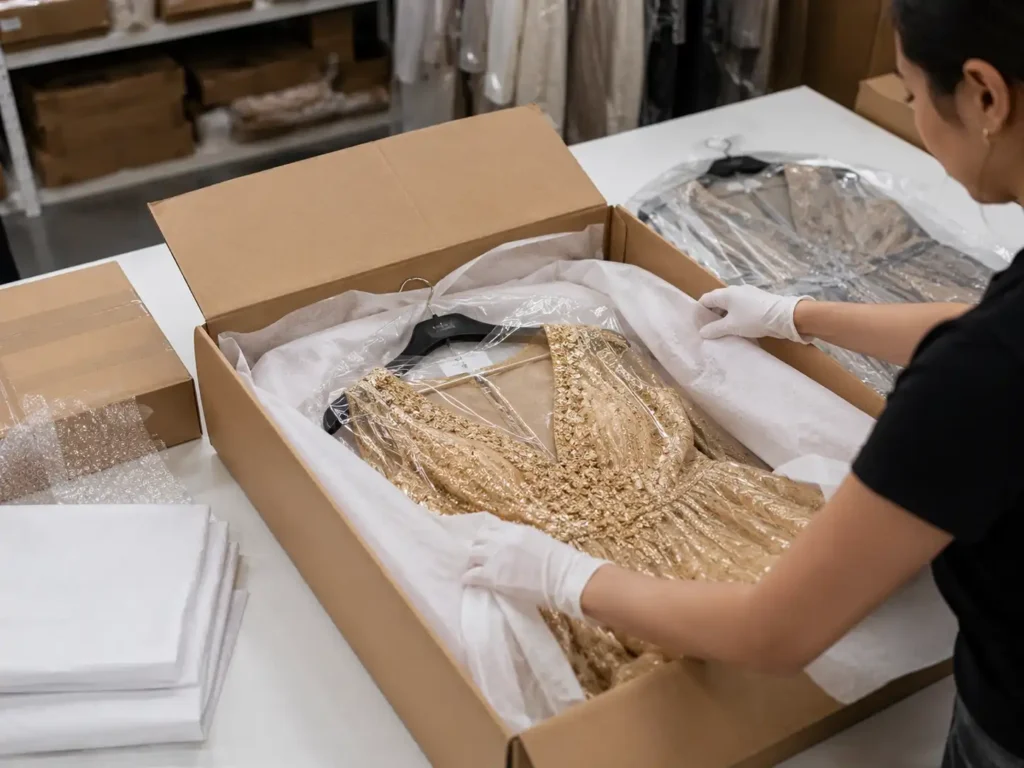
Folding and Protection

Pleated skirts, satin surfaces, sequins, metal hardware, raw denim details, and structured waistbands require different folding and protective methods. Tissue, protective layers, hardware covers, or adjusted fold lines may be used according to the garment. Packing trials check whether the product arrives without excessive creasing, crushed pleats, snagging, or surface marks.

Cartons and Documents

Carton quantity, style-color-size breakdown, carton dimensions, gross weight, net weight, carton marks, packing list, commercial invoice, and shipment instructions are prepared according to the delivery method. Multi-batch shipments are separated clearly so each warehouse or launch group receives the correct assortment and documents.

MOQ, Costing, and Production Planning Explained Clearly

Commercial planning starts with the real garment specification. Quantity, material, construction, colors, size range, labels, packaging, inspection, and launch timing are reviewed together so the quotation and production calendar reflect the approved program.

MOQ by Style and Color

MOQ starts from 200 pcs per style/color. The quantity is calculated by style and color, not by combining unrelated styles into one total. One style produced in two colors normally requires 200 pieces per color. Standard MOQ is most workable with available fabrics, regular colors, standard trims, and established packing materials. The final requirement is confirmed after material and construction review.

Costing Inputs

Quotation is built from fabric, lining, trims, pattern development, sampling, cutting, sewing time, special processes, pressing, QC, packing, wastage, testing or certification requirements, and logistics terms. Pleats, ruching, inner shorts, specialty wash, heavy hardware, rhinestones, sequin work, custom print, complex lining, or extended grading can change the production cost. Cost optimization focuses on controlling expense without weakening brand-level appearance.

Supplier-Based MOQ

Custom-dyed, custom-woven, certified, imported, printed, washed, specialty lace, sequin, metal trim, label, hangtag, printed polybag, or custom carton requirements may carry separate supplier MOQ. Jinfeng Apparel reviews available alternatives, color options, material consumption, development timing, and price impact before recommending a direction. Any substitution is rechecked for fit, drape, support, transparency, seam method, and bulk availability.

Production Calendar

A bulk production calendar is issued after PP approval, order quantity, fabric, trims, colors, size ratios, labels, packaging, QC requirements, and payment terms are confirmed. The schedule normally shows material arrival, fabric inspection, relaxation, cutting, sewing, in-line inspection, finishing, final inspection, packing, and shipment handover. Delivery timing changes when late approvals, material changes, added colors, new packaging, or revised measurements affect the locked standard.

Anonymous US Low Waist Skirt Collection Case

An anonymized US fast-fashion womenswear program shows how a multi-style low waist skirt collection can be developed, approved, produced, packed, and handed over without exposing the brand name, original files, prices, or unpublished designs.

Project data snapshot:

  • Market: United States
  • Collection: 18 low waist skirt and skort styles
  • Total order volume: 46,800 pieces
  • Product mix: 6 tailored or satin minis, 4 micro skorts, 3 pleated skirts, 3 cargo or denim styles, and 2 mesh party skirts
  • Size range: XS-XL
  • Color structure: five core color families distributed by style
  • Sample route: first sample, one or two revised samples by complexity, PP sample, and Golden Sample
  • Delivery plan: 14-week program from confirmed materials to final packed handover, divided into two prioritized batches

Development Challenge

The collection used several material groups and different wearing positions while the brand wanted one recognizable low waist attitude across every style.

Early references showed inconsistent waist drops, and the same numeric length produced different coverage on tailored minis, stretch skirts, and skorts. Pleated styles opened too early over the high hip, while two stretch styles relaxed after sitting.

Denim wash development also changed the waist and hip measurements from the raw sample.

The first task was to create a measurement language shared across the collection. The team defined low waist, high hip, full hip, waist-to-hip depth, center-front length, center-back length, side length, waistband width, closure position, lining, and inner-short measurements.
Styles were then grouped by woven structured, stretch fitted, washed denim, and layered party construction so each group could use a suitable pattern and material-control method.

Manufacturing Actions

Pattern makers corrected waistband curves and separated front and back growth rules. Skort patterns were adjusted for inner-short rise and hidden coverage. Pleat release points were moved below the high-hip pressure area. Stretch styles were reworked after recovery review, and the denim styles included raw-to-wash shrinkage allowances based on wash samples.

Sampling was prioritized by commercial importance and construction risk. Hero styles entered first fitting before secondary colors. Final approvals were converted into style-specific pattern files, size charts, grade rules, fabric references, BOMs, trim cards, sewing instructions, label placements, packing instructions, QC checklists, PP samples, and Golden Samples. The 18-style program was allocated across suitable production groups instead of being treated as one uniform sewing package.

QC focused on low waist level, high-hip comfort, full-hip balance, waistband rolling, zipper flatness, pleat symmetry, inner-short coverage, denim shade and shrinkage, mesh damage, satin surface marks, label placement, barcode accuracy, and size-color carton assortment.

Delivery Result

The project calendar used six weeks for material confirmation, pattern work, first samples, revisions, and PP locking. Weeks 7-12 covered bulk material control, cutting, sewing, in-line inspection, finishing, and staged measurement review. Weeks 13-14 covered final inspection, retail packing, carton verification, and two-batch handover based on launch priority.

The first batch contained key campaign styles and priority sizes. The second batch contained the remaining volume and replenishment structure. Packing lists, carton marks, style-color-size breakdowns, and barcode files were separated by batch. Pattern, measurement, material, trim, packing, and inspection records were retained for color extensions and repeat production.

Anonymous US Low Waist Skirt Collection Case​

Design Protection and Project-Based Compliance Support

Established brands need secure development files, controlled public disclosure, and accurate project-based compliance support. Jinfeng Apparel protects design information and confirms certification, testing, audit, and inspection requirements against the actual material and assigned factory.

NDA and Design Protection

Jinfeng Apparel can sign an NDA before reviewing detailed tech packs, samples, patterns, size charts, labels, packaging files, or unpublished collection information. Brand names, original design files, samples, pattern data, fabric and trim details, order quantities, pricing information, barcodes, SKU data, and launch plans are used only for the approved project. Client samples are not posted publicly without permission. Public proof uses authorized material, internally developed samples, or anonymized descriptions.

Material and Testing Support

OEKO-TEX, GOTS, GRS, organic, recycled, or other material directions are confirmed by fabric type, supplier, color, batch, certificate scope, validity, MOQ, and current availability.
SGS, Intertek, BV, ITS, or other testing can be coordinated by project according to the agreed product and destination requirements. Final regulatory decisions and label content should be confirmed by the brand, importer, laboratory, or qualified compliance adviser.

Audit and Inspection Cooperation

Factory profiles, production-process information, QC records, packing procedures, and available audit-related documentation can be reviewed according to the factory assigned to the order. SMETA, Sedex, BSCI, ISO-related references, client audits, AQL inspection, client-appointed inspection, or third-party inspection are handled according to current project requirements and available documentation. No certification claim is applied automatically to every factory, material, color, or order.

Low Waist Skirt Frequently Asked Questions

Yes. Development can begin from a tech pack, original sample, sketch, line sheet, size chart, or reference image. A reference image provides visual direction, while fabric, measurements, construction, trims, quantity, labels, and packing still need confirmation before an accurate sample and quotation can be prepared.
MOQ starts from 200 pcs per style/color. MOQ is calculated by style and color rather than total pieces across unrelated styles. Custom-dyed, custom-printed, certified, washed, specialty lace, sequin, hardware, label, or packaging requirements may have separate supplier MOQ.
A simple first sample commonly takes 7-10 days after fabric, trims, measurements, and construction details are confirmed. Revised samples normally require 7-15 days. Pleating, layered mesh, sequin work, special wash, custom materials, or major pattern changes require a separate schedule.
The position is defined through the target styling line, low waist circumference, high hip, full hip, waist-to-hip depth, waistband width, front and back balance, fit model, and fabric behavior. The line is approved through measurements and fit images rather than a universal drop below the natural waist.
Yes. Jinfeng Apparel can work with US, UK, EU, AU, alpha sizes such as XS-XL, extended ranges, and petite or tall adjustments according to the supplied brand standard. Extended sizing requires independent review of hip shape, depth, length, coverage, waistband support, and fabric recovery.
Yes. Attached inner shorts can be developed for micro minis, skorts, pleated minis, and active fashion silhouettes. Development covers rise, crotch depth, leg opening, inseam, stretch, attachment, exterior visibility, comfort, and grading across the size range.
Options include suiting, crepe, denim, twill, ponte, jersey, satin, stretch satin, mesh, power mesh, lace, rayon, viscose, linen blends, cotton blends, polyester blends, and spandex blends. Final selection depends on silhouette, fit, drape, transparency, lining, color, MOQ, cost, and bulk availability.
Bulk production follows the final pattern, size chart, grade rule, measurement tolerance, fabric reference, BOM, trim card, sewing instruction, PP sample, Golden Sample, QC checklist, and packing instruction. Material inspection, cutting checks, in-line inspection, measurements, appearance review, and final inspection reduce sample-to-bulk variation.
Yes. Support includes main labels, size labels, care labels, hangtags, barcode stickers, SKU labels, polybags, folding methods, carton assortment, carton marks, and packing lists. Artwork, placement, MOQ, development time, and warehouse requirements are confirmed before bulk packing.
Yes. NDA-based cooperation is available before detailed project review. Client files and unpublished designs are not shared or posted without permission. AQL, client-appointed, or third-party inspection can be coordinated by project, with criteria and reporting requirements confirmed in advance.

Start Your Low Waist Skirt Program

Send Jinfeng Apparel the available development information for a focused review of style structure, low waist position, fabric direction, sample requirements, MOQ, costing inputs, bulk risks, private labels, and delivery planning. A complete tech pack is helpful but not required for the first evaluation; a clear reference image, original sample photos, line sheet, brand size chart, and preliminary quantity plan can also establish the next step. Kelly coordinates the initial review and routes the project to the relevant development, merchandising, pattern, material, production, or QC team.

Please include:

  • Company name, market, and sales channel
  • Reference image, tech pack, sketch, or original sample photos
  • Quantity per style/color and expected number of styles
  • Fabric preference, color plan, trims, wash, print, or decoration
  • Size range, fit standard, and available size chart
  • Main labels, care labels, hangtags, barcodes, polybags, and carton requirements
  • Target sample date, launch date, and preferred shipment plan
  • Inspection, testing, audit, NDA, or warehouse requirements

Tell Us About Your Dress Project

Share your product details, estimated quantity and development requirements. Our team will review your project and provide practical OEM/ODM production feedback.

Premium Women’s Apparel Production for Fashion Brands

From dress sample development to bulk production, JF Apparel supports fashion brands with confidential OEM/ODM manufacturing, reliable quality control and scalable production support.

START YOUR DRESS PROJECT

Ready to Develop Your Next Dress Collection?

Share your design concept, product requirements or sourcing plans with our team. We’ll review your project and provide practical feedback on development, materials, MOQ and production.

7-10 Days

Sample Development

200 PCS

Starting MOQ

Fast Response

Professional Follow-Up