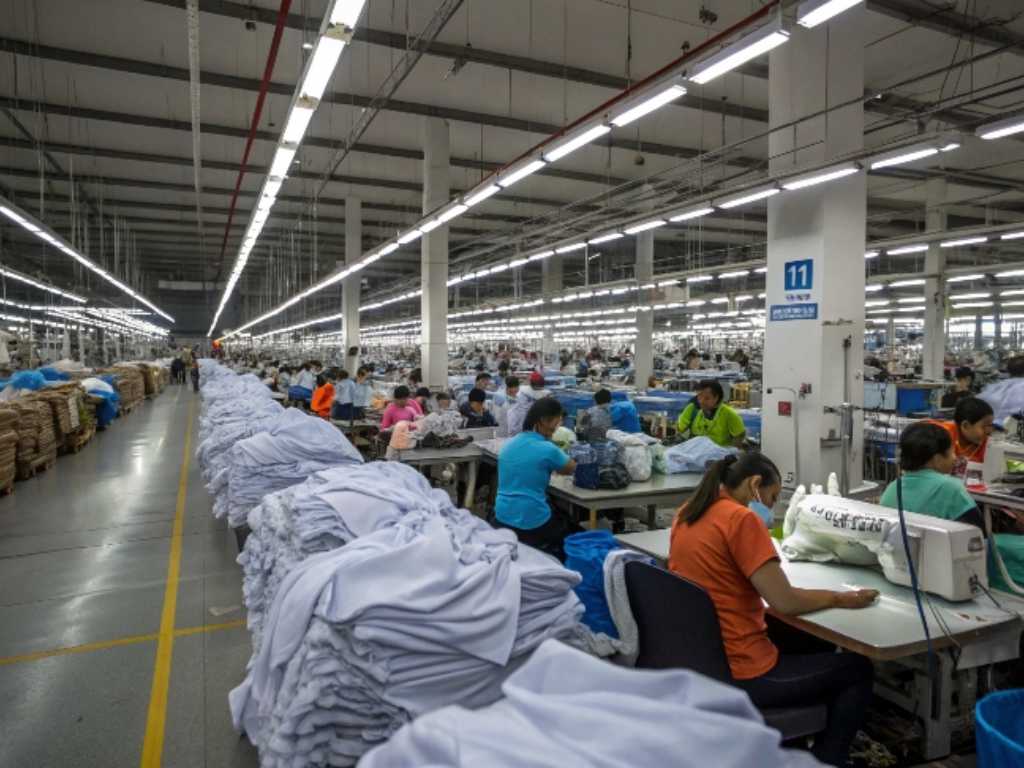
Long Sleeve Party Dress Manufacturer
Custom long sleeve party dress development for established fashion brands, occasionwear labels and large apparel programs.
- Since 2008, Jinfeng Apparel has developed premium dresses for international fashion markets.
- 7+ senior pattern makers control sleeve cap shape, armhole balance, bicep ease, cuff opening and size grading.
- Complex long sleeve party dress samples normally require about 15-25 days, depending on fabric, decoration and structure.
- MOQ starts from 200 pieces per style and color, subject to fabric, trims, packaging and production planning.
Jinfeng Apparel supports custom long sleeve party dresses from design review, fabric sourcing and pattern development through sampling, bulk production, quality control, private-label packing and export coordination. Each project is assessed around fit, movement, transparency, decoration, launch timing and bulk repeatability before a production plan is confirmed.
Production Facts Supporting Long Sleeve Dress Programs
Since 2008
Six Owned Factories
Ten Plus Partners
Two Sample Rooms
Development Team
Quality Team
Built for Established Partywear and Fashion Brands
Partywear Brands
Partywear labels need dramatic visual impact without sacrificing movement, comfort or bulk consistency.
Jinfeng supports sequin, mesh, lace, velvet, satin, ruched and bodycon styles while controlling sleeve comfort, lining coverage, decoration security, zipper flatness and photo-ready appearance.
Ecommerce Fashion Teams
Premium ecommerce programs rely on strong photography, accurate fit information, stable size grading and retail-ready packing.
Sample development can include photo-ready samples, fit feedback, measurement review, revised patterns and packaging preparation for barcode, SKU and warehouse requirements.
Sourcing and Development Teams
A Manufacturing Fit for Serious Dress Programs
Strong Project Fit
Production Model
The manufacturing model is built around custom development, professional sampling, PP approval, bulk production, quality control and brand delivery. Accurate project evaluation requires more than a single image because fabric, sleeve construction, lining, trims, size range and packing directly affect cost and timing.

Why Long Sleeve Party Dresses Fail in Production
Armhole Pulling
Tight Upper Arms
Sleeve Twisting
Decoration Irritation
Transparency Errors
Bulk Size Drift
Long Sleeve Party Dress Styles We Develop
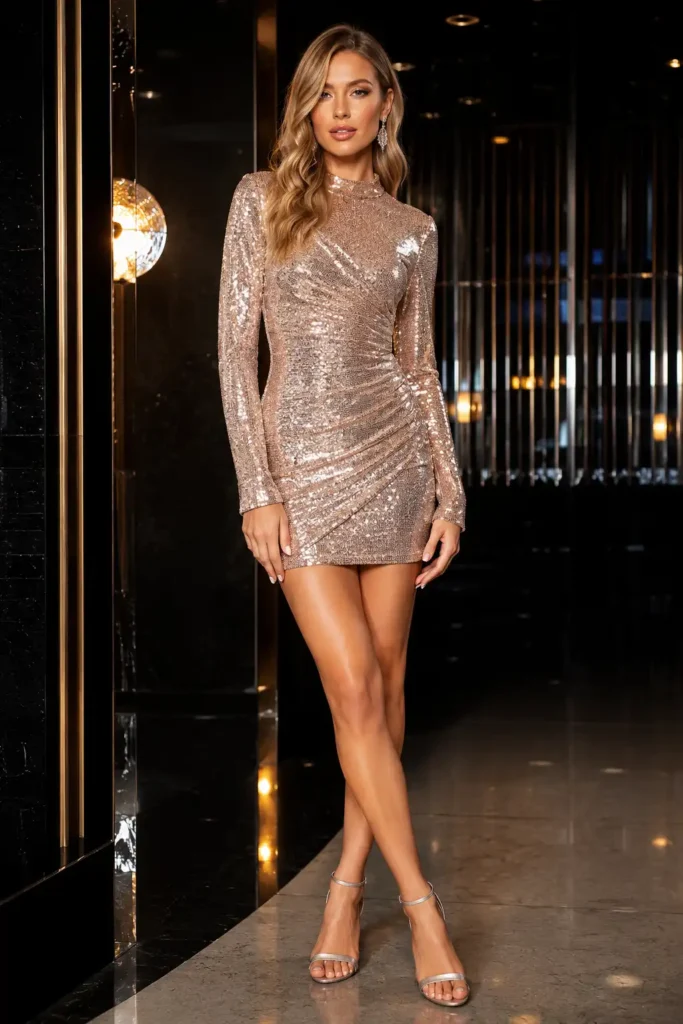
Sequin Mini Dress
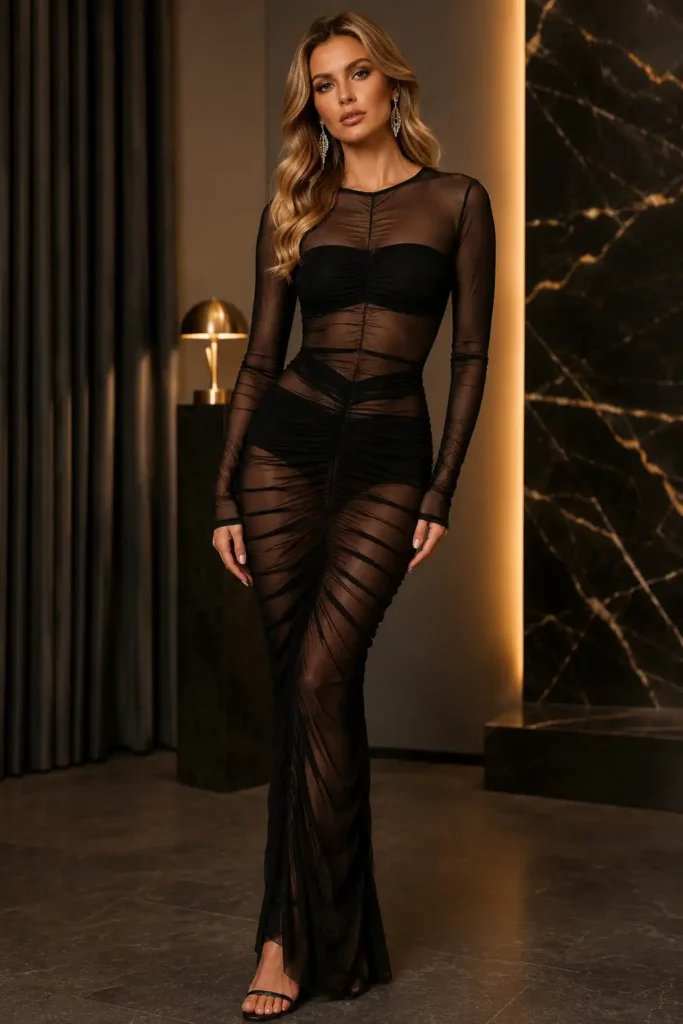
Mesh Bodycon Dress
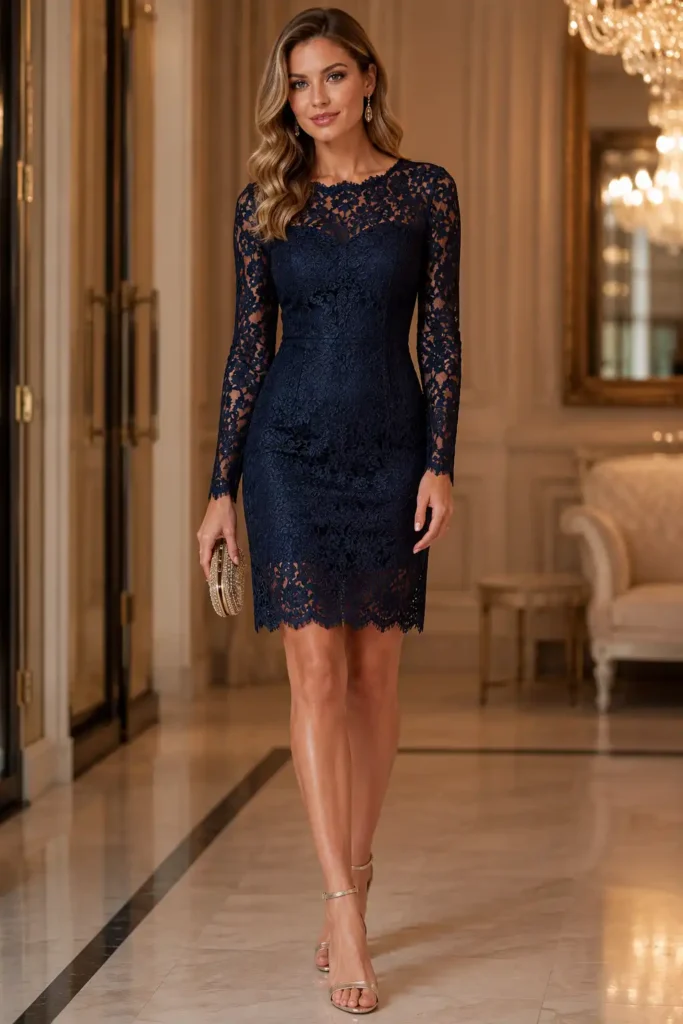
Lace Cocktail Dress

Velvet Party Dress
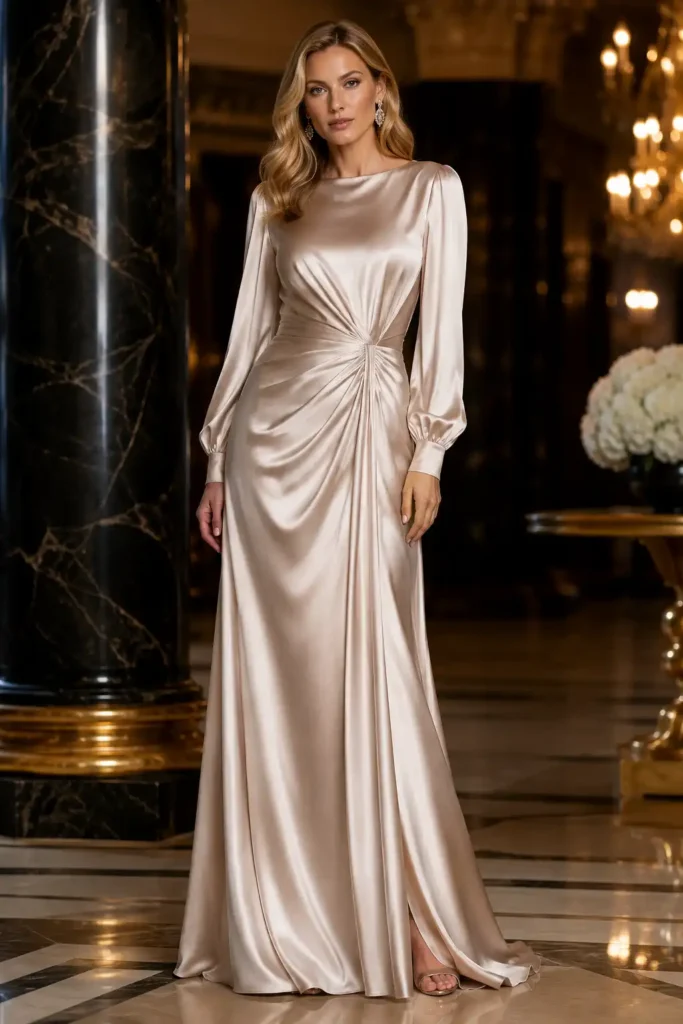
Satin Occasion Dress

Ruched Mini Dress
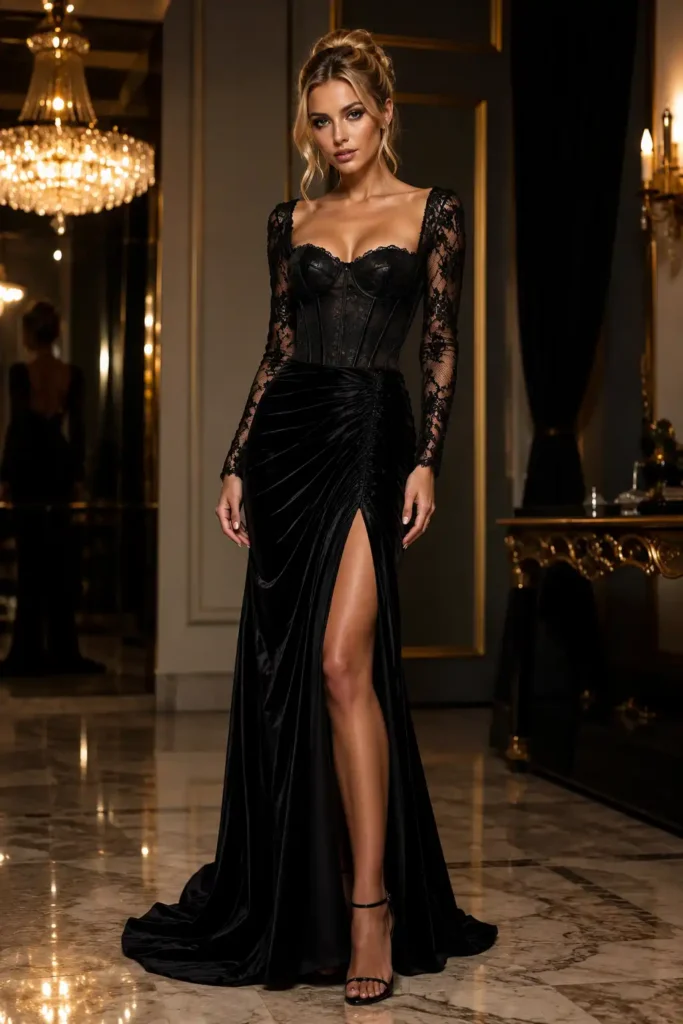
Corset Party Dress
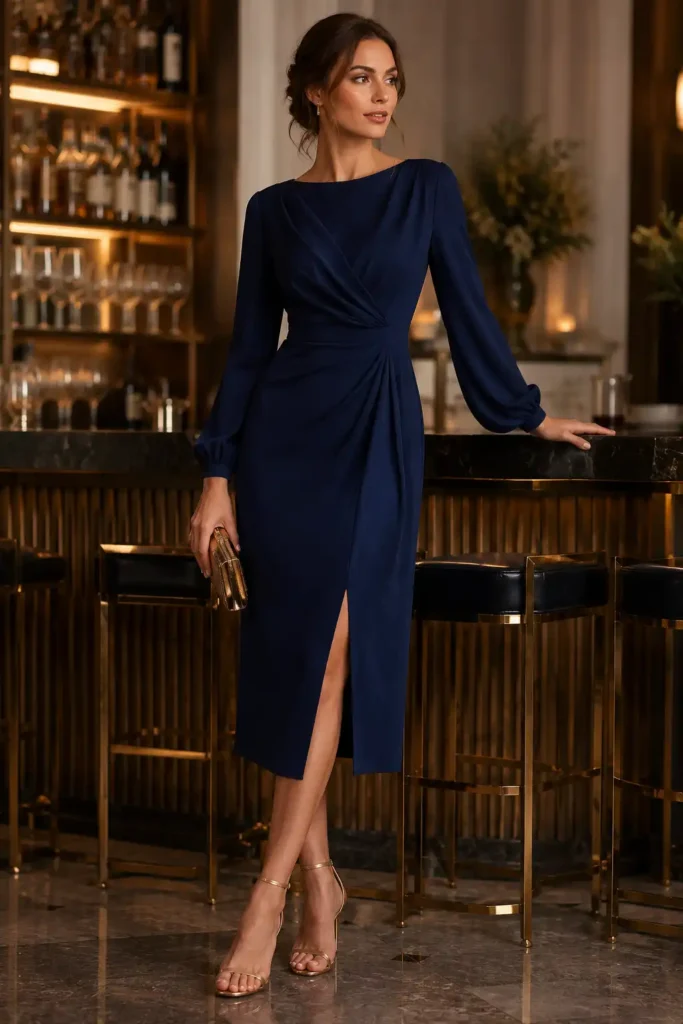
Cocktail Midi Dress
How We Engineer Long Sleeve Fit
Long sleeve fit is controlled as a connected pattern system. Shoulder width, sleeve pitch, sleeve cap, armhole, upper arm, elbow, cuff and garment body influence one another. A correction at one point can create a new issue elsewhere, so development follows movement tests and measured pattern adjustments rather than visual guesswork.
Sleeve Cap and Armhole Balance
The sleeve cap must match the armhole seam length while preserving the intended amount of sleeve-head ease. Excess cap ease can produce puckering, while insufficient ease can flatten the shoulder or restrict movement. The team reviews front and back armhole shape, shoulder slope, sleeve pitch and fabric response before deciding whether the problem belongs to the sleeve, bodice or both.
During fit review, the wearer stands naturally, reaches forward and raises both arms. The bodice should not rise excessively, the neckline should remain stable and the sleeve seam should not rotate. Knit and stretch-mesh styles may use negative or limited ease, while woven satin, velvet and lined lace require controlled positive ease.
Upper Arm and Elbow Movement
Upper-arm comfort is evaluated against the target silhouette. A sleek fitted sleeve still needs enough room for elbow movement and normal wear. Fabric stretch percentage alone is not enough; recovery, thickness, lining, decoration and seam type change usable stretch.
For lined or embellished sleeves, the inner layer may become the limiting measurement. Pattern makers therefore measure both shell and lining behavior. Elbow shaping, sleeve seam position and cuff opening are revised from fit feedback. Larger sizes receive controlled increases rather than simple proportional enlargement, helping maintain the intended fitted appearance without excessive pressure.
Shoulder, Cuff and Sleeve Length
Shoulder-point placement influences sleeve hang and the perceived width of the upper body.
A shoulder that extends too far can collapse the sleeve cap, while a short shoulder can pull the armhole inward. Sleeve length is measured from a defined shoulder point with the arm position recorded in the size specification.
Cuff design is checked for hand entry, wrist comfort, closure strength and decoration clearance. Button cuffs, zip cuffs, elastic cuffs and clean-finished stretch cuffs each need different allowances. Final measurements are recorded in the approved size chart and transferred into the bulk inspection plan.
Measurements That Control Sleeve Comfort and Balance
Measurement points must use one agreed method across tech pack, sample room, production and final inspection. Differences in measuring position can create false disputes even when the garment has not changed. The table below identifies the main points used for long sleeve party dress development.
| Measurement Point | How It Is Checked | Main Risk Controlled | Sample Review Focus |
| Shoulder Width | Shoulder point to shoulder point across back | Dropped or narrow shoulders | Sleeve hang and neckline balance |
| Armhole Depth | Shoulder high point to armhole level | Tight underarm or excess fabric | Movement and body lift |
| Armhole Circumference | Along front and back armhole seam | Sleeve mismatch and pulling | Sleeve cap compatibility |
| Sleeve Cap Height | Top of cap to bicep line | Puckering or flat shoulder | Shape and mobility |
| Bicep Width | Across sleeve at upper-arm line | Tight upper arm | Ease, stretch and lining |
| Elbow Width | Across sleeve at elbow level | Restricted bending | Flexion and sleeve recovery |
| Sleeve Length | Shoulder point to cuff edge | Short or overlong sleeves | Approved size method |
| Cuff Opening | Finished edge or closed cuff | Hand entry and wrist comfort | Closure and decoration clearance |
| Sleeve Seam Position | Visual line along inner or back arm | Sleeve twisting | Grain, pitch and cutting alignment |
| Lining Length | Lining seam and cuff relation | Pulling or lining exposure | Shell-lining balance |
Fabrics Engineered for Long Sleeve Party Dresses

Satin
- Review: weight, shine, stretch and snag risk.
- Control: cutting direction, clean table surfaces and suitable seam tension.
- Bulk focus: shade consistency, puckering, pressing marks and packaging folds.

Stretch Mesh
- Review: stretch, recovery, transparency and seam strength.
- Control: pattern reduction, lining placement and discreet reinforcement.
- Bulk focus: holes, skipped stitches, stretched seams and shade variation.

Lace
Lace quality depends on motif scale, direction, border design, softness and base stability. Sleeve planning considers motif placement at the cap, elbow and cuff. Scalloped borders may be used at the cuff when fabric width and cutting layout allow.
- Review: motif direction, softness, width and border position.
- Control: paired cutting, left-right balance and lining color.
- Bulk focus: broken motifs, mismatch, frayed edges and seam irritation.

Sequin Fabric
- Review: sequin direction, base strength, weight and comfort.
- Control: seam allowance cleaning, reinforcement and lining.
- Bulk focus: loose sequins, missing areas, scratching and packing damage.

Velvet
- Review: nap, weight, stretch and pressing response.
- Control: directional cutting, controlled feeding and low-pressure pressing.
- Bulk focus: shade direction, crushed areas, seam movement and carton pressure.
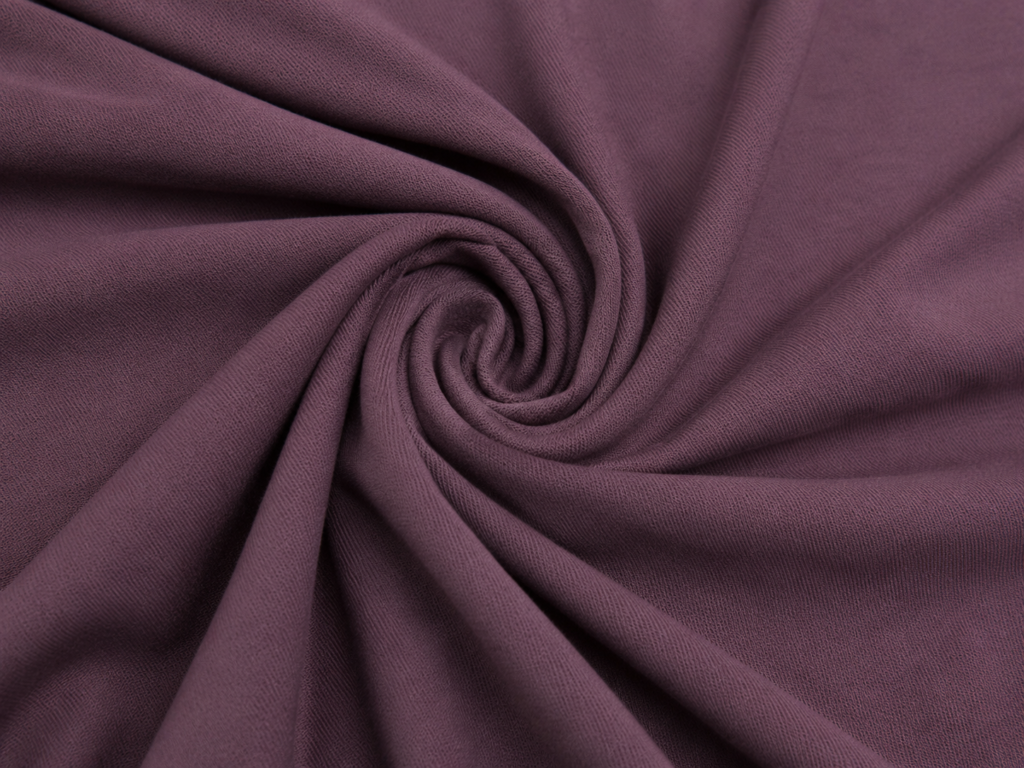
Stretch Jersey
- Review: stretch, recovery, weight, shrinkage and opacity.
- Control: fabric relaxation, cutting direction and seam elasticity.
- Bulk focus: sleeve waves, size drift, twisting and poor recovery.

Crepe
- Review: drape, stretch, opacity and surface texture.
- Control: sleeve ease, pressing and seam stabilization.
- Bulk focus: armhole pulling, seam impressions and shade consistency.

Chiffon
- Review: weight, transparency, color and drape.
- Control: stable cutting, fine seams and gathering consistency.
- Bulk focus: puckering, uneven sleeve volume, snags and damaged edges.
Lining, Transparency and Internal Support Decisions
Controlled Coverage
Support Without Bulk
Shell and Lining Balance
Trims and Embellishments Built Into the Garment
Invisible Zippers
Hooks and Closures
Sequins and Rhinestones
Lace Trims
Elastic and Gathering
Labels and Branding
Photo-Ready Samples for Ecommerce and Campaign Launches
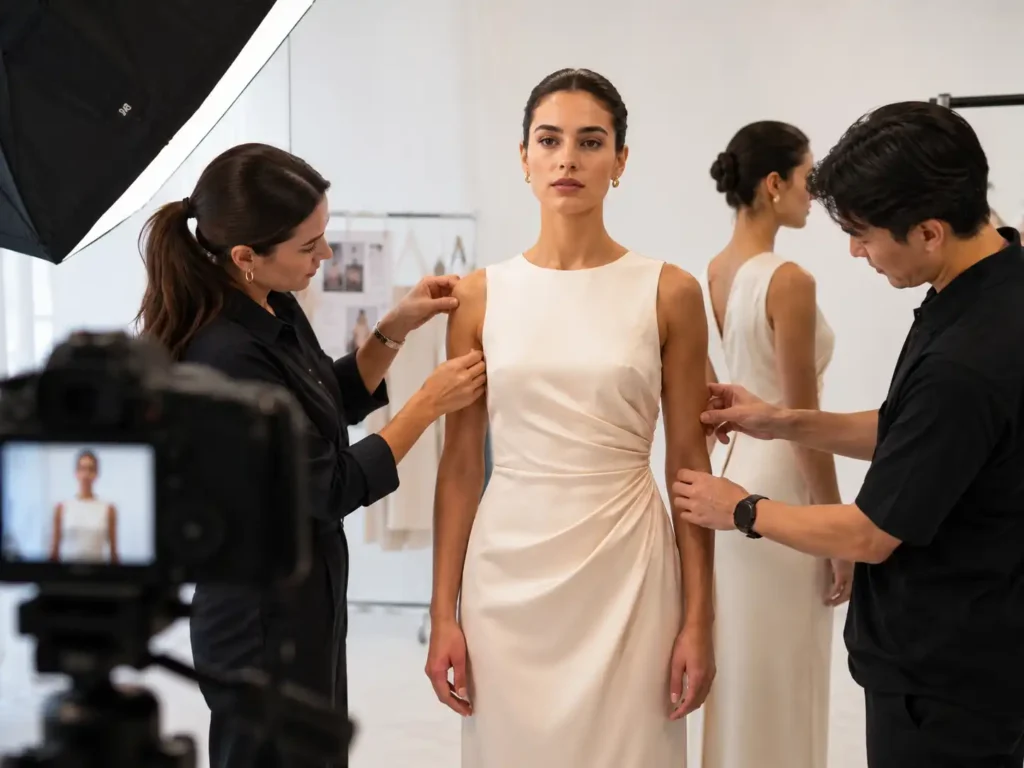
Camera-Visible Fit
Photography exposes neckline gaps, armhole pulling, sleeve twisting, uneven ruching and lining edges. The sample is checked from front, side and back, then through movement positions. Sleeve and bodice lines should remain clean without excessive retouching being needed to hide construction problems.
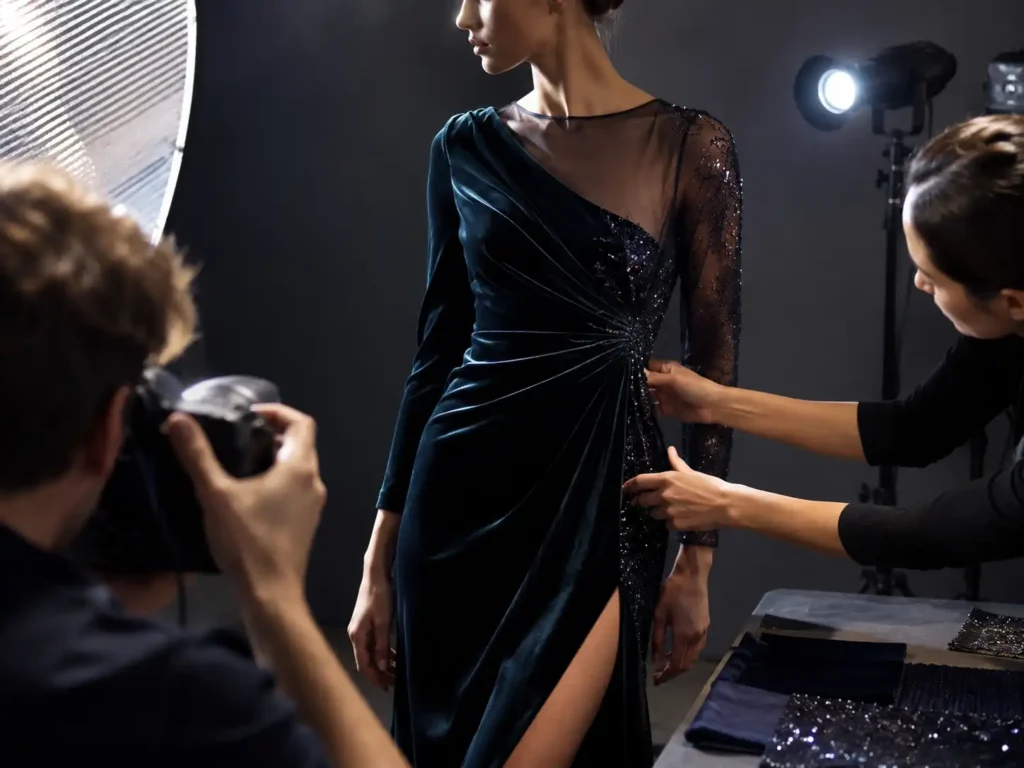
Surface and Light
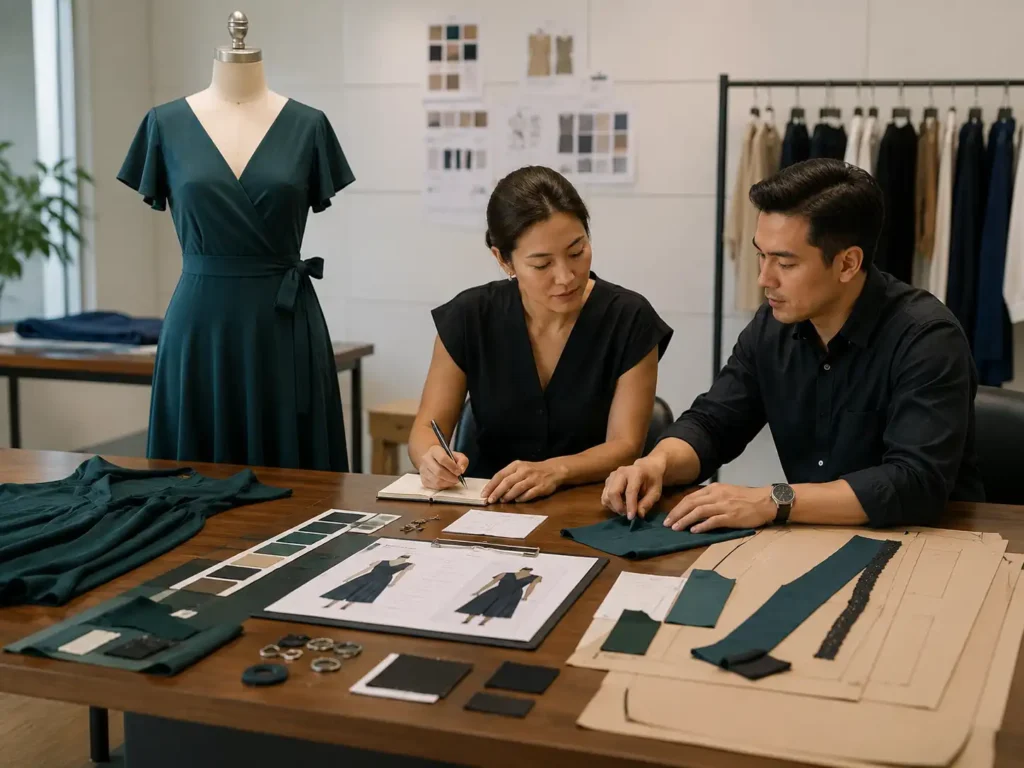
Bulk Connection
Moving an Approved Sample Into Bulk Production
Bulk production begins only after approved standards are translated into clear production files. Pattern, measurement, fabric, trims, color, workmanship, labels and packing are locked so every team follows the same reference.
Pre-Production Control
The production package includes approved pattern, graded sizes, measurement chart, BOM, fabric and trim specifications, construction notes, decoration placement, label artwork, packing instructions and PP sample approval. Fabric lot and color are reviewed before cutting. Directional materials receive marked cutting instructions.
Risk points are added to the production and QC plan. Long sleeve party dresses may require checks for sleeve pair matching, seam direction, bicep measurement, cuff opening, decoration security, mesh damage, zipper flatness and pressing.
Line Setup and In-Line Inspection
Production lines receive the approved sample and operation requirements before sewing starts. Early pieces are checked before volume increases. Measurement and workmanship inspection continues during sewing rather than waiting until final inspection.
In-line findings are corrected at the source. For example, sleeve-head puckering may require feed adjustment or seam handling changes; sequin irritation may require better seam cleaning; uneven ruching may require guide marks or controlled stitch length.
Final Appearance and Packing
Finished garments are checked for measurement, symmetry, sleeve hang, movement, closures, lining, decoration, pressing and clean appearance.
Packing is selected according to fabric sensitivity.
Velvet, satin, sequins and rhinestones may need tissue, protective layers, reduced compression or controlled fold positions.
Workmanship for Complex Partywear Fabrics
Satin Seam Control
Mesh and Lace Joining
Sequin Seam Preparation
Velvet Direction and Pressure
Stretch Seam Stability
Ruching and Symmetry
Quality Control From Fabric Arrival to Packing
Material Inspection
Cutting Control
Sewing Inspection
Measurement Review
Finished Appearance
Packing Inspection
Client Standards

Long Sleeve Dress Defect Prevention Matrix
| Defect | Common Cause | Sample Verification | Bulk Control | Final Inspection |
|---|---|---|---|---|
| Sleeve twisting | Incorrect grain, pitch or cutting direction | Relaxed-arm and movement photos | Pair marking, cutting direction and in-line checks | Seam position and sleeve hang |
| Armhole pulling | Tight armhole, wrong cap balance or limited ease | Arms forward and raised | Early size measurements and operation checks | Movement review on selected sizes |
| Tight bicep | Insufficient ease, lining restriction or weak stretch | Bicep measure and elbow bend | Size grading check and fabric-lot stretch review | Measurement plus wear review |
| Sleeve-head puckering | Excess ease, feeding or tension problem | Cap smoothness after pressing | Sewing method and early-piece approval | Visual inspection under side light |
| Mesh holes | Needle damage, rough handling or seam stress | Stretch and seam test | Needle control, bundling and in-line inspection | Light-table or visual hole check |
| Lace mismatch | Uncontrolled motif direction or paired cutting | Left-right sleeve comparison | Placement marks and paired bundles | Symmetry and motif inspection |
| Sequin irritation | Decoration inside seam or insufficient lining | Wear test at underarm and cuff | Seam allowance cleaning and lining control | Hand-feel and inside inspection |
| Satin snagging | Rough surface, sharp object or handling damage | Surface review under light | Clean work areas and protected handling | Full surface inspection |
| Uneven ruching | Inconsistent gather length or tension | Left-right comparison | Guide marks and operation standard | Symmetry, length and density check |
| Cuff inconsistency | Closure, elastic or measurement variation | Hand entry and closed-cuff measure | Component and in-line measurement check | Pair comparison and operation test |
Capacity for Multi-Style Partywear Programs
Style Allocation
Multi-Style Scheduling
Repeat Orders
Peak-Season Support
Launch Priorities
Project Visibility
Project management covers material tracking, sample status, revision records, PP approval, production updates, QC feedback, packing confirmation and shipment coordination. Clear ownership reduces delays caused by missing decisions or conflicting files.
MOQ, Costing and Development Timing
MOQ by Style and Color
Transparent Cost Drivers
Sample Timing
Production Calendar
Label Lead Times
Delivery Planning
Private Label and Retail-Ready Packing
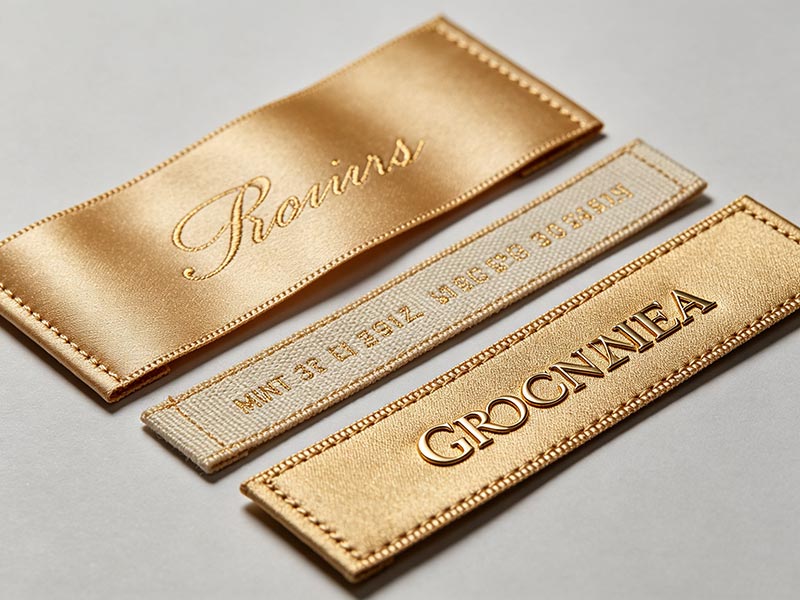
Garment Labels
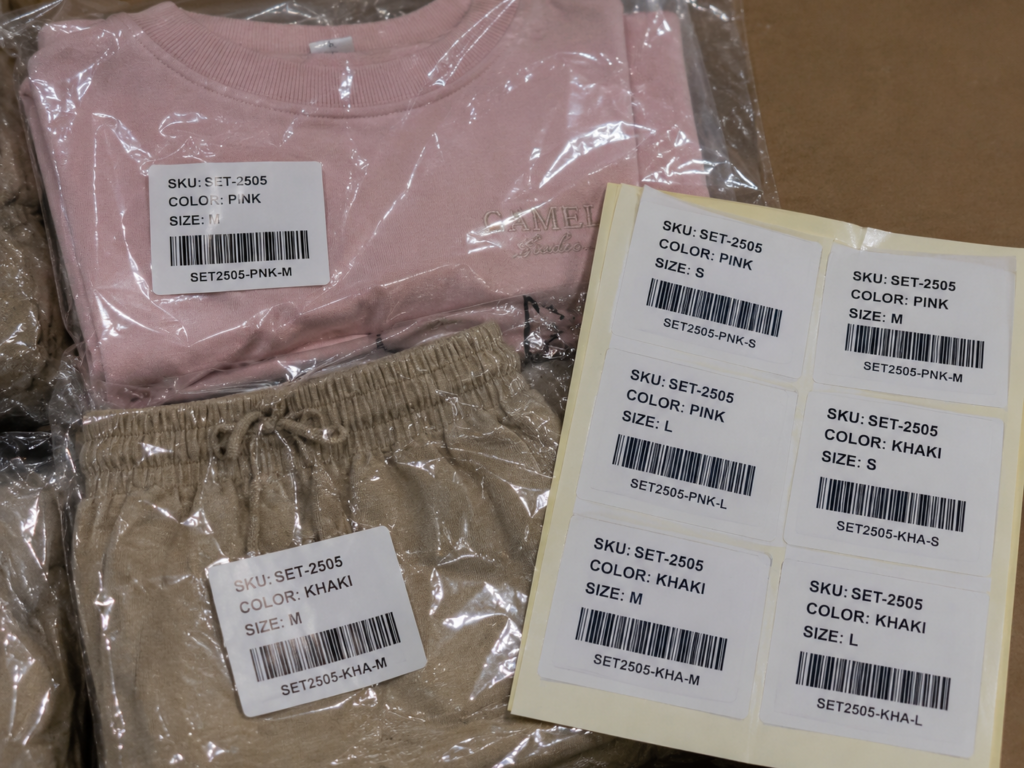
Hangtags and Barcodes

Polybags and Folding

Carton Assortment
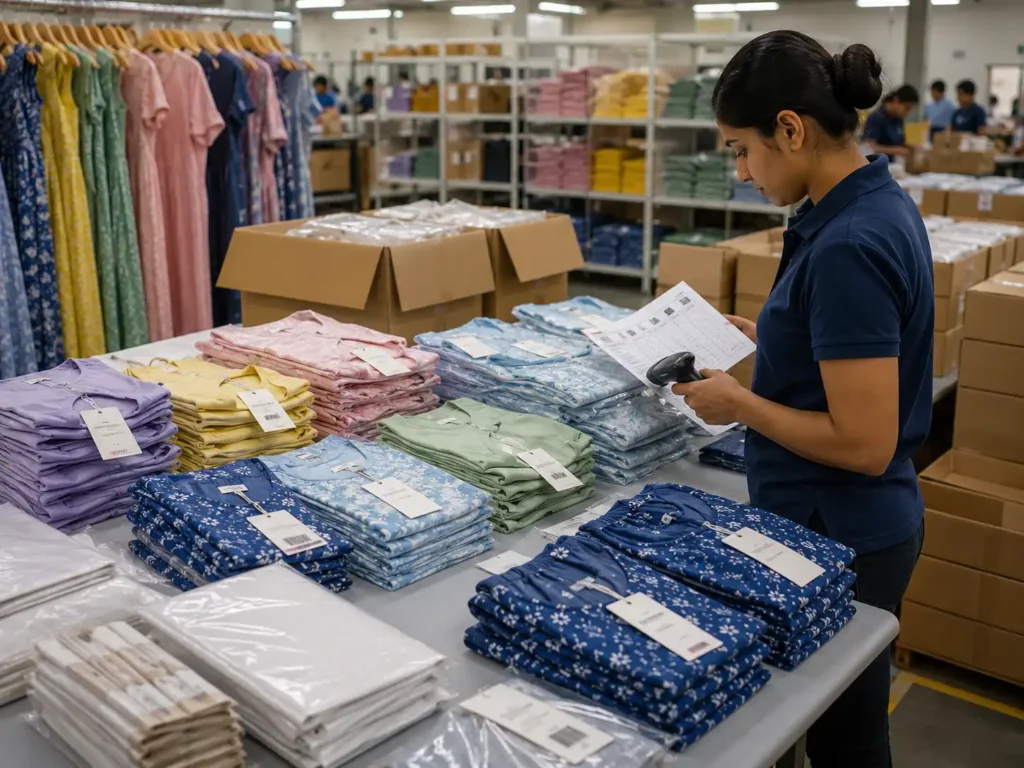
Packing Approval

Shipment Coordination
NDA, Compliance and Brand Quality Requirements
Design Protection
Audit and Compliance Support
Material and Testing Requests
Brand Manuals
Long Sleeve Partywear Programs Managed by Jinfeng
The following anonymized examples reflect the scale and technical structure common in ongoing brand programs. Names, designs, prices and confidential files remain protected.
US Holiday Partywear Collection
An established US partywear label developed 18 styles and approximately 36,000 pieces across long sleeve sequin minis, mesh-sleeve bodycon dresses, ruched jersey styles and velvet cocktail dresses. The program used four color groups and a commercial size range developed from an approved base size.
Main risks included sequin irritation at the underarm, sleeve twisting on directional fabrics, inconsistent ruching length and velvet pressure marks. Jinfeng separated fabric groups, revised bicep and elbow ease, defined decoration-free seam zones and added packing protection for velvet and sequins. First samples moved through fit review, revised samples, PP approval and Golden Sample records. In-line inspection focused on sleeve pairing, decoration security, ruching symmetry and finished measurements. The program was delivered in planned production batches to support holiday launch and replenishment.
Australian Mesh Occasion Program
An Australian occasionwear brand placed a 14-style program of around 28,000 pieces, including sheer long sleeve minis, mesh-overlay midi dresses, lined bodycon dresses and cut-out party styles. Key design goals were clean transparency, close fit and strong photography under studio lighting.
Development focused on mesh recovery, lining boundaries, sleeve seam strength, neckline stability and size grading. Movement tests showed that two original sleeve blocks were too tight at the elbow and pulled the bodice upward.
Pattern corrections increased targeted movement ease without making the sleeves look loose. Bulk controls covered mesh holes, stretched seams, lining exposure, sleeve length and color consistency. Packing used controlled folding to reduce pressure marks on gathered and layered areas.
UK Satin and Lace Cocktail Range
A UK fashion label developed 22 styles and approximately 52,000 pieces across satin long sleeve cocktail dresses, lace-sleeve midi dresses, structured minis and matching occasion sets. The collection included several dark jewel tones, two light colors and private-label retail packing.
Main challenges were satin shade direction, zipper waviness, lace motif alignment, cuff consistency and multi-style packing accuracy. Jinfeng confirmed satin weight and shine direction, paired lace sleeve cutting, revised zipper seam stabilization and established cuff measurement checks. Label, barcode, size sticker and carton assortment files were approved before bulk packing. Production was divided by fabric and complexity while a shared QC standard controlled measurements, appearance and retail presentation across the full program.
Long Sleeve Party Dress Frequently Asked Questions
Yes. Jinfeng Apparel develops custom long sleeve party dresses from tech packs, original samples, line sheets, sketches or reference images. Development can cover fabric sourcing, sleeve and body patterns, lining, trims, first sample, fit revision, PP sample, bulk production, quality control, private-label packing and export coordination. Final quotation requires confirmed fabric, structure, quantity, colors, size range and packaging requirements.
Programs can include fitted sleeves, mesh sleeves, lace sleeves, bishop sleeves, puff sleeves, bell sleeves, ruched sleeves and embellished sleeves. Dress categories include sequin minis, mesh bodycon dresses, satin cocktail dresses, velvet party dresses, lace occasion dresses, corset-influenced dresses and long sleeve midi styles. Feasibility depends on fabric behavior, construction, target fit and commercial quantity.
Sleeve twisting is controlled through grain direction, stretch direction, sleeve pitch, sleeve cap shape, armhole balance and accurate cutting. Directional materials such as velvet, sequins and lace receive marked cutting instructions. Samples are reviewed with the arms relaxed, extended and bent. Sleeve seam position and left-right balance are checked again during bulk production.
Yes. Mesh and lace sleeves are developed around stretch, recovery, transparency, motif direction, seam strength, cuff finish and skin comfort. Lace sleeves may need paired cutting and motif placement, while mesh sleeves may need discreet reinforcement or compatible lining. Material samples are reviewed before the sleeve pattern and sewing method are finalized.
Sequin direction, seam allowances, underarm contact, cuff edges and lining are checked during sampling. Sequins may be removed from selected seam paths to reduce bulk and scratching, then secured where needed. Soft lining, clean edges and decoration-free contact zones can improve comfort. Final inspection includes inside hand-feel and loose-decoration checks.
Important points include shoulder width, armhole depth, armhole circumference, sleeve cap height, bicep width, elbow width, sleeve length, cuff opening and sleeve seam position. Bust, waist, hip and dress length remain connected to sleeve fit because arm movement can pull the entire body. Measurement methods and tolerances should be defined in the tech pack.
Reference images can be used for initial structure and material assessment. Accurate development still requires confirmation of target fabric, size chart, base size, desired fit, colors, quantity and construction details. A reference image alone cannot provide a final bulk price because hidden lining, closures, trims, decoration and internal structure affect cost and production.
MOQ starts from 200 pieces per style and color. The calculation is made by style and color, not by total order quantity. Custom-dyed fabrics, special lace, sequins, printed materials, custom trims, certified materials and private-label packaging may have separate supplier MOQ. Size quantities can be distributed within the confirmed production quantity.
Simple dress samples may take about 7-10 days, regular dresses about 10-15 days, and complex long sleeve party dresses using corset structures, lace, mesh, sequins or eveningwear construction about 15-25 days. Material sourcing, custom trims, color development and revision scope can extend the schedule.
Yes. Private-label support can include woven labels, size labels, care labels, hangtags, barcode stickers, size and color stickers, polybags, carton marks, assortment planning and warehouse labels. Artwork, content, placement, SKU lists and packing instructions should be confirmed before production. Some materials have separate MOQ and development lead times.

Start Your Long Sleeve Party Dress Project
A useful project review begins with enough information to assess style structure, fabric direction, sleeve risk, MOQ, sample cost, development timing and bulk production requirements. Send a tech pack, line sheet, original sample photos or reference images together with the planned quantity per style and color.
Helpful project information includes:
- Product images, sketches, tech pack or original sample details
- Target fabric, composition, weight, stretch, color and transparency
- Sleeve shape, lining, closures, decoration and comfort requirements
- Base size, size chart, grade rules and intended fit
- Quantity per style, color and size range
- Private-label artwork, barcode, SKU and packing requirements
- Target sample date, campaign date, warehouse date and market
- Quality manual, testing, audit or third-party inspection requirements