 Skip to content
Lingerie-Inspired Fashion Manufacturer
Fashion-led development for corset dresses, bodysuits, slip silhouettes, bustier tops, lace pieces, and structured private-label womenswear collections.
Jinfeng Apparel converts intimate-inspired concepts into retail-ready fashion garments through fabric direction, pattern development, fit review, structured sampling, bulk production, quality control, and branded packing. Development focuses on outerwear appearance, secure coverage, skin comfort, movement, and repeatable construction rather than traditional bra-only production.
- 8+ commercial style directions: corset dresses, bustier tops, bralette-style tops, fashion bodysuits, slip dresses, cami sets, lace pieces, and mesh occasionwear.
- 4-point body control: cup position, underbust line, waist shaping, and hip or torso balance are reviewed together before bulk approval.
- 10-15 working days: a common first-sample range for regular styles; structured corset, lace, mesh, and multi-layer designs commonly require 15-25 working days.
- From 200 pcs per style/color: production planning supports multi-style programs, seasonal capsules, repeat orders, and split deliveries for established fashion operations.
Manufacturing Capacity for Structured Fashion Programs
Since 2008
6 Owned Factories
10+ Production Partners
2 Sample Rooms
7+ Pattern Makers
Senior pattern makers review bust placement, neckline depth, waist shaping, hip balance, garment length, torso girth, lining coverage, and grading.
Fit decisions are recorded in updated patterns and measurement files rather than left as verbal comments.
20+ Sample Machinists
Sample machinists work with delicate and structured constructions including satin, stretch satin, soft mesh, power mesh, lace, cups, boning, adjustable straps, hook-and-eye closures, and fitted linings.
Sample workmanship also establishes sewing references for bulk teams.
15+ QC Inspectors
Quality inspectors cover material receipt, cutting, sewing, measurement, finishing, packing, and pre-shipment review.
Critical points for intimate-inspired fashion include symmetry, cup position, boning ends, mesh damage, lace placement, zipper flatness, stretch recovery, and label accuracy.
100,000+ Monthly Capacity
What Lingerie-Inspired Fashion Manufacturing Really Requires
Lingerie-inspired fashion uses intimate-apparel shapes, fabrics, or construction details in garments designed for public wear. A successful program balances visual impact with coverage, body movement, fit, durability, and repeatable bulk production.
Fashion Outerwear Comes First
Corset dresses, bustier tops, slip dresses, bodysuits, cami sets, sheer-panel dresses, and lace-trim occasionwear may borrow from lingerie, yet their commercial purpose remains fashion retail. Garments must work under store lighting, campaign photography, sitting, walking, dancing, and normal wardrobe use. Neckline height, lining coverage, strap adjustment, closure security, and hem balance therefore matter as much as the initial sketch. Jinfeng Apparel approaches the category through women’s fashion development: silhouette and styling are preserved while internal support, coverage, comfort, and construction are adapted for outerwear.
Intimate Details Need Engineering
A lace edge or satin surface may look simple in a rendering, but intimate-inspired details create concentrated fit risks. Cup spacing affects neckline shape. Boning influences waist contour and sitting comfort. Power mesh changes pressure and recovery. A bodysuit needs sufficient torso girth and a stable crotch closure. Adjustable straps need a usable range without sliding under tension. Every element interacts with pattern dimensions and fabric stretch, so decisions cannot be isolated. Sample fitting, material testing, and construction review turn visual inspiration into a garment capable of consistent production.
Clear Scope Protects the Collection
Jinfeng Apparel supports fashion-led bralettes, bustier tops, corset-style dresses, bodysuits, sleepwear-inspired sets, cami sets, slip dresses, light-support tops, lace fashion pieces, and related womenswear.
High-support technical bras, specialist large-cup engineering, medical shapewear, post-surgical garments, maternity or nursing bras, children’s intimates, and products making medical or corrective claims require separate specialist evaluation and are not core positioning.
A clear scope prevents development resources from being applied to products needing a different manufacturing platform.

Where Fashion Engineering Meets Intimate Details
Fashion-Led Hybrid
Traditional Intimates
General Womenswear
Built for Established Fashion and Retail Programs
Global Fashion Brands
Occasionwear Labels
Lingerie Brands Expanding
Premium Ecommerce Brands
Product Development Teams
Private-Label Programs
Development Risks Closed Before Bulk Production
Unwearable Concepts
Incorrect Cup Position
Boning Discomfort
Uncontrolled Transparency
Unstable Stretch
Bulk Inconsistency
Lingerie-Inspired Styles We Develop and Produce

Corset Dresses

Bustier Tops

Bralette-Style Tops

Fashion Bodysuits

Slip Dresses

Cami Sets

Lace Dresses
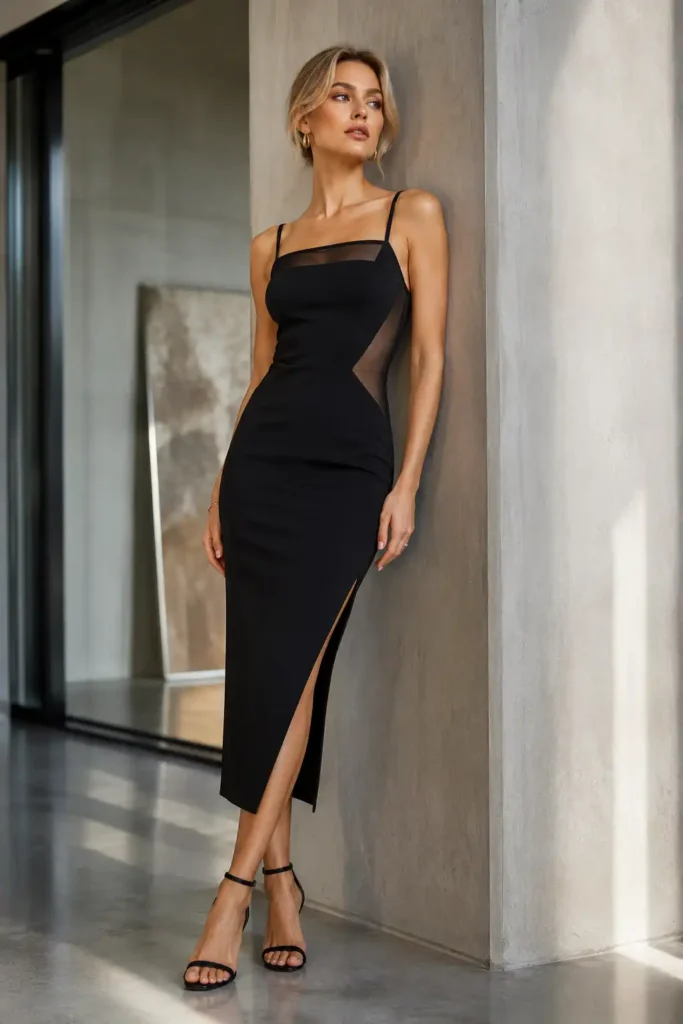
Mesh Panel Dresses
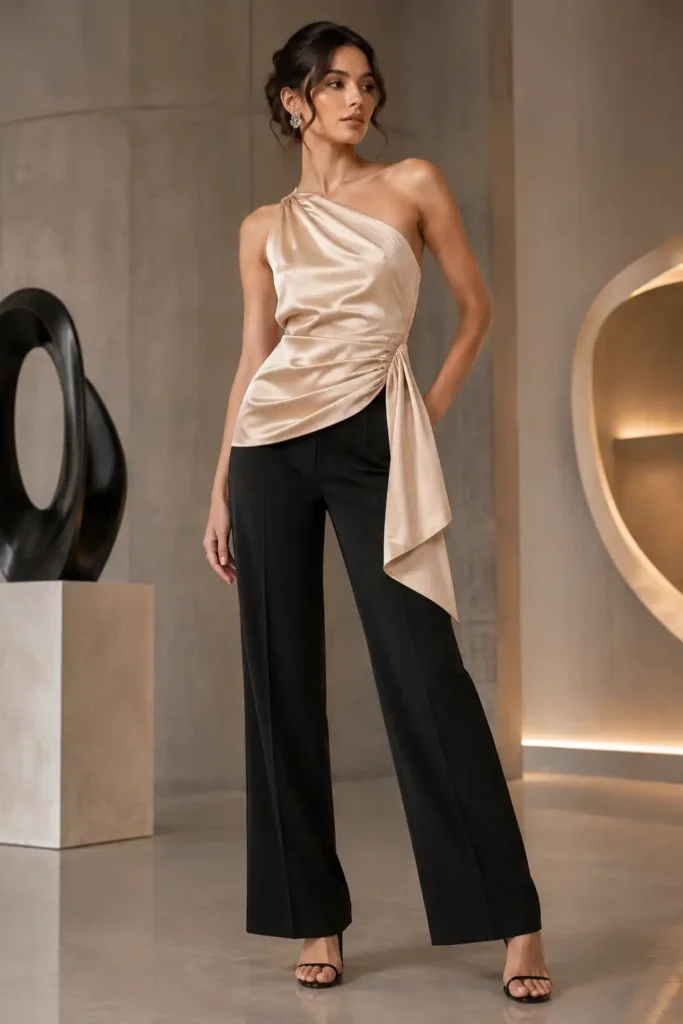
Satin Fashion Sets

Bodycon Clubwear

Structured Jumpsuits

Private-Label Capsules
From Creative Direction to Production-Ready Styles
Jinfeng Apparel supports OEM, ODM, and private-label womenswear development from tech packs, reference images, original samples, line sheets, or sketches. Every step converts visual direction into measurable and repeatable production information.

Concept and Reference Review
Development begins with the intended product role: party, club, occasion, date-night, resort, lounge-inspired, layering, or a coordinated retail capsule. Reference materials are reviewed for silhouette, neckline, bust shape, seam architecture, transparency, support, stretch, closure, lining, trims, and expected price position. A reference photo may show appearance but rarely defines fabric weight, back construction, cup type, inside finishing, or grading. Open points are listed before pattern work begins so styling choices and manufacturing assumptions do not become mixed later.
- Useful inputs: tech pack, front and back drawings, reference photos, original sample, measurement chart, fabric direction, color plan, quantity, size range, label files, packaging instructions, and launch date.
- Early decisions: fashion outerwear or intimate function, fixed or removable cup, level of support, lining coverage, closure type, target stretch, and acceptable exposure.

Feasibility and Risk Review
Pattern and production teams review conflicts before fabric is cut. A narrow corset front may not hold the selected cup. A deep neckline may require hidden support or additional lining. Heavy rhinestone straps can pull down soft mesh. A bodysuit in low-recovery fabric may feel restrictive across the torso. Lace motifs can create high consumption when exact placement is required. Risks are discussed with alternatives: modify seam position, change material, add support, adjust coverage, simplify a trim, or reserve the original concept for a photo sample while developing a production version.
- Cost control: fabric yield, lace placement, cup specification, boning count, panel quantity, trim customization, color count, and packing level are reviewed before the final quotation.
- Schedule control: custom dyeing, special lace, cups, hardware, printed mesh, and branded packaging may add separate development and material lead times.

Pattern and Material Development
A production-ready pattern connects visual proportion with the behavior of the approved materials. Bust, underbust, waist, hip, neckline, garment length, strap length, torso girth, and crotch position are developed according to the style. Stretch direction and recovery influence negative ease and measurement tolerances. Soft mesh may require double layers or clean edge support.
Satin may need seam changes to reduce rippling. Boning channels and cup placement are drawn into the pattern instead of added late. Material cards, trim references, and color approvals remain linked to the style file.
- Fit reference: sample comments are converted into updated pattern points and measurement values, not stored only in email or chat.
- Material reference: approved hand feel, drape, shine, transparency, stretch, recovery, and lining interaction guide bulk material approval.

Production Standard Creation
Before bulk production, an approved PP sample or golden sample becomes the physical reference. The technical set is updated with measurements, pattern version, BOM, fabric and trim approvals, stitch and seam notes, label placement, packing method, and critical QC points. A pre-production review clarifies areas where operators must follow a specific sequence, such as cup insertion, boning end protection, lace motif alignment, mesh handling, zipper installation, or strap attachment. Structured records also make repeat orders faster because fit, material, and packaging decisions remain available for later production.
- Bulk release requires: approved sample, confirmed materials, final measurements, color approval, label and packaging approval, order breakdown, and production schedule.
- Repeat-order value: retained patterns, material references, trim details, measurements, and packing files reduce unnecessary redevelopment while still allowing controlled updates.
Fabrics Selected for Look, Support, and Comfort
Material selection begins with the desired silhouette and wearing experience. Surface shine, drape, stretch, recovery, transparency, skin contact, lining, seam behavior, and packing response are reviewed together. Typical weight ranges guide early discussion, while final approval is based on the actual fabric lot and sample construction.
Satin and Stretch Satin

Satin creates a clear lingerie-inspired visual language, especially in slip dresses, corset dresses, camisoles, and matching sets. Matte satin offers a softer premium finish, while stretch satin supports closer silhouettes. Development checks shine direction, shade consistency, snagging, seam tension, zipper flatness, bias or straight-grain drape, and crease recovery. A beautiful surface can lose retail value quickly if pressing or packing leaves permanent marks.
Soft Mesh and Power Mesh

Soft mesh provides transparency, layering, and lightweight movement.
Power mesh adds internal support, firmer recovery, and controlled compression for fitted dresses, bodysuits, corset panels, or linings. Mesh is selected by stretch direction, density, touch, recovery, and hole resistance. Lining zones and double layers are planned around the intended exposure rather than added after fitting.
Lace Fabric and Lace Trim
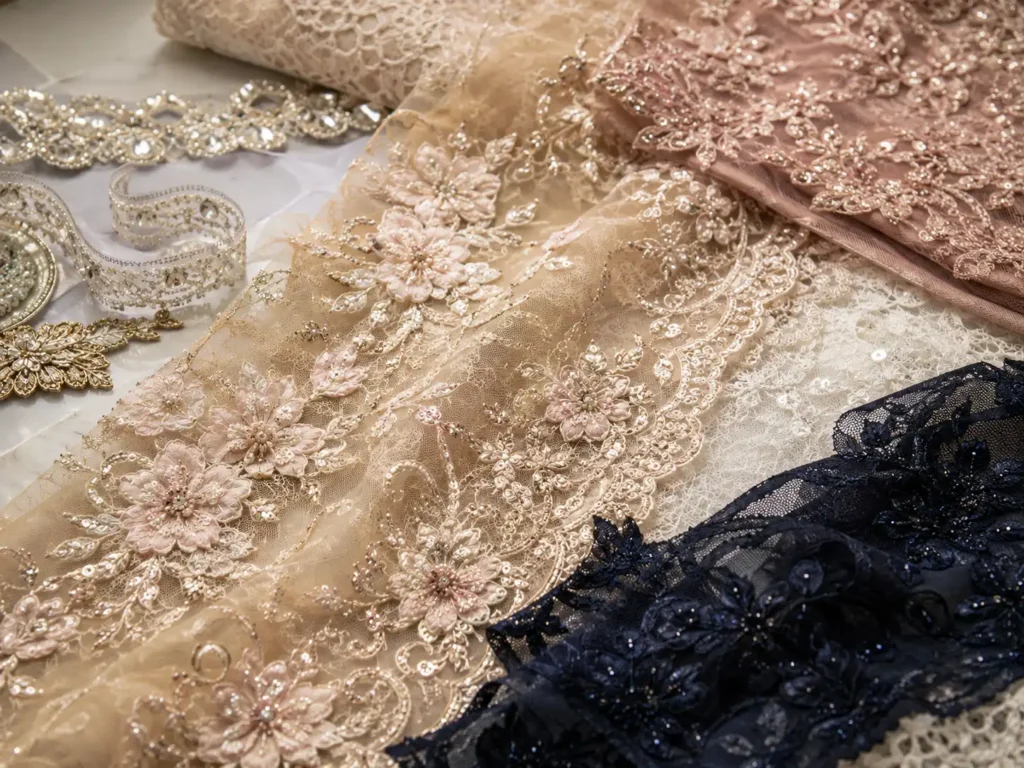
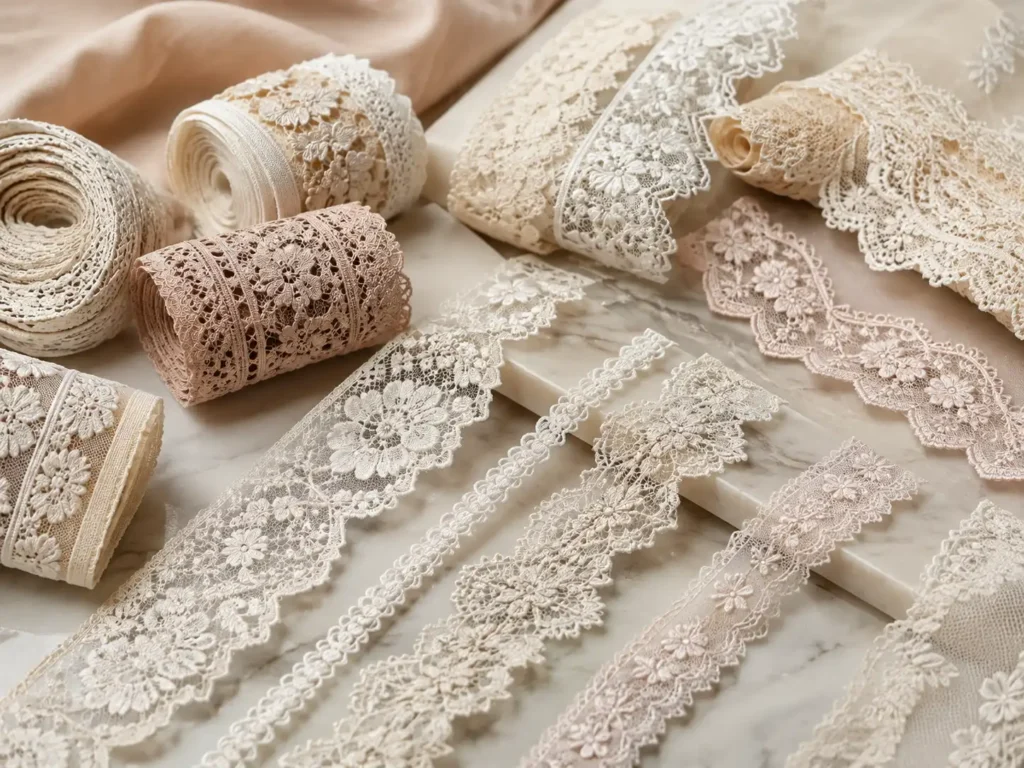
Full lace fabric and narrow lace trim serve different construction roles. Full lace requires motif planning, seam placement, lining color, usable width, and allowance for matching. Lace trim requires a compatible edge, width, softness, color, and stretch. Both need hole inspection, edge control, snag protection, and skin-contact review. Scalloped edges can become part of a neckline or hem only when the pattern is built around the motif.
Jersey, Ponte, and Linings

Jersey and spandex blends support bodycon silhouettes and soft bralette-style tops, but recovery must match the intended fit. Ponte provides greater structure for clean panels and stable waist shaping. Linings may be soft knit, stretch lining, woven lining, or power mesh depending on coverage, support, hand feel, and construction.
The lining should cooperate with the outer fabric rather than fight its stretch or drape.
Material | Typical Project Range | Best Use | Development Checks | Bulk QC Focus |
Satin | 90-160 gsm | Slip dresses, camisoles, fluid sets | Drape, shine direction, opacity, bias behavior, lining | Shade, snagging, seams, pressing, packing marks |
Stretch Satin | 120-220 gsm | Corset dresses, bodycon, bustier tops | Stretch direction, recovery, bust-waist-hip fit, zipper | Recovery, seam tension, measurements, surface finish |
Soft Mesh | 40-120 gsm | Sheer panels, layered dresses, sleeves | Transparency, edge stability, stretch, lining zones | Holes, distortion, seam visibility, color consistency |
Power Mesh | 100-220 gsm | Support panels, bodysuits, corset linings | Compression feel, recovery, skin comfort, grading | Recovery, seam tension, dimensions, damage |
Lace Fabric | 80-220 gsm | Dresses, bodysuits, structured panels | Motif placement, width, lining color, stretch | Motif alignment, holes, fraying, shade, snagging |
Lace Trim | 10-80 mm width | Necklines, hems, cups, straps | Width, softness, stretch, color, edge shape | Attachment, symmetry, color, edge quality |
Stretch Jersey | 160-240 gsm | Bodycon, tops, soft bodysuits | Two-way or four-way stretch, recovery, opacity | Growth, measurements, seam waving, wash stability |
Lining | 60-160 gsm | Coverage, comfort, support, clean interior | Stretch compatibility, softness, opacity, color | Twisting, exposure, shrinkage, attachment, shade |

Construction Details Behind a Secure Silhouette
The strongest lingerie-inspired garments hide a disciplined internal structure beneath a clean fashion surface. Cups, boning, underwire by project, lining, closures, and anti-slip elements must work as one system rather than separate add-ons.
- Bra Cups and Bust Shaping
Fixed cups, removable cups, soft foam cups, thin molded cups, or shaped lining can be considered according to the style. Cup shape, thickness, softness, and edge profile must suit the neckline and outer fabric. Position is validated on body because a flat pattern cannot show cleavage balance, upper-cup gaping, side coverage, or visual symmetry. The cup also affects lining pockets, boning routes, seam allowances, and graded sizes. Bulk QC checks left-right symmetry, correct size reference, secure attachment, smooth edges, and consistent placement against approved measurements.
- Boning and Internal Support
Boning creates vertical support, prevents collapse, and defines the bust-to-waist line in corset dresses and bustier styles. Placement is selected around seam architecture and intended body shape. Too little support can create folding; excessive stiffness can restrict movement. Channels need correct width, straight stitching, protected ends, and enough lining separation to avoid skin pressure. Fitting includes standing, sitting, arm movement, and zipper operation. Bulk inspection checks channel position, end protection, symmetry, length, and external read-through.
- Underwire Evaluated by Project
Selected bustier tops, structured bodysuits, or dress fronts may use underwire, but the decision requires a clear cup system, size range, fabric support, and supplier specification. Wire curve, length, coating, channel, end security, and position must correspond to the approved pattern. A fashion style requiring light shaping is not automatically improved by adding wire. Jinfeng Apparel evaluates underwire only where the structure and intended use justify it, while specialist high-support and large-cup programs remain outside core positioning.
- Lining, Grip, and Closures
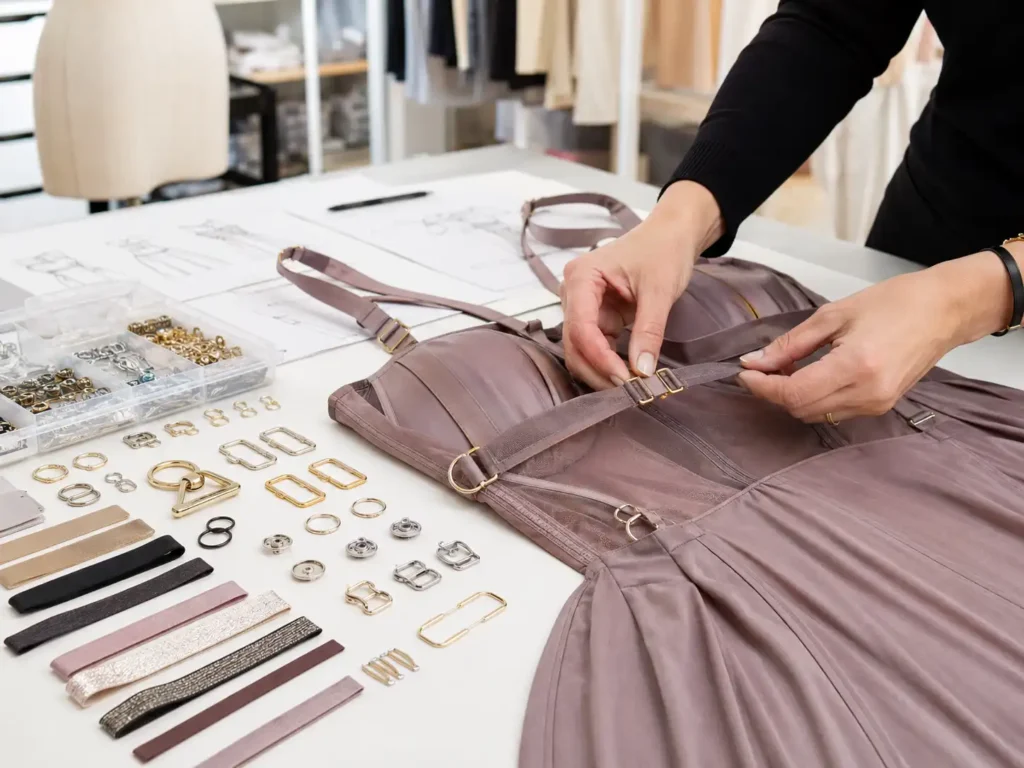
Lining manages transparency, skin comfort, seam coverage, and internal stability. Stretch lining or power mesh may support fitted silhouettes, while soft woven or knit lining can protect skin from lace or internal seams. Anti-slip elastic may assist strapless designs when matched to the fabric and fit. Hook-and-eye closures, invisible zippers, regular zippers, snaps, and bodysuit closures are selected by load, accessibility, comfort, and visual finish. Every closure is reviewed for pull strength, smooth operation, alignment, and risk of catching delicate fabric.
Fit, Coverage, and Grading for Real Wear
A garment can match a flat measurement chart and still fail on body. Lingerie-inspired outerwear needs proportion control across bust, underbust, waist, hip, torso, neckline, and straps, followed by grading rules suited to the approved fabric and support system.
Upper-Body Balance
Bust circumference alone cannot define fit. Cup spacing, cup height, center-front width, underbust line, side coverage, neckline depth, strap position, and back height all shape the visual result. Structured fronts are reviewed for gaping, overflow, compression, lifting, and asymmetry. Strapless styles need enough grip without excessive pressure. Bralette-style tops need secure coverage during arm movement. Corset dresses need a stable waist line without pulling the bust downward. Critical points are normally controlled more tightly than general garment measurements, with final tolerances confirmed in the approved specification.
Torso and Lower-Body Balance
Bodysuits and jumpsuits require vertical fit control. Torso girth, front and back rise, waist position, hip opening, crotch length, closure position, and stretch determine comfort.
A short torso pattern can pull the neckline down or create crotch pressure; excessive length can wrinkle through the waist. Bodycon dresses also need balanced negative ease across bust, waist, and hip. Hem length, slit height, and riding-up behavior are checked through walking and sitting rather than standing photographs alone.
Size Grading with Structure
Uniform enlargement can distort cups, boning, neckline, straps, cut-outs, and lace motifs. Grading rules therefore separate body growth from structural placement. Cup position may shift at a different rate from garment width. Boning length and waist position need review across the size range. Strap adjustment should cover expected height variation. Stretch fabrics need controlled negative ease, while rigid satin and lace need sufficient movement. Pilot-size approval is followed by graded measurement review and, where the program requires, additional size-set samples before bulk release.
- Common approval sizes: a central fit size plus selected smaller or larger sizes according to the brand size range and risk level.
- Typical critical tolerance discussion: cup and strap positions often use approximately ±0.5 cm, while key garment measurements commonly use ±0.5-1.0 cm according to style, fabric, and approved specification.
- Size ranges: XXS-XXL or extended ranges can be developed by project, but each structure must be assessed for cup system, grading logic, material stretch, and order ratio.

Trims Matched to Structure, Comfort, and Brand Finish

Adjustable Straps

Hook-and-Eye

Invisible Zippers
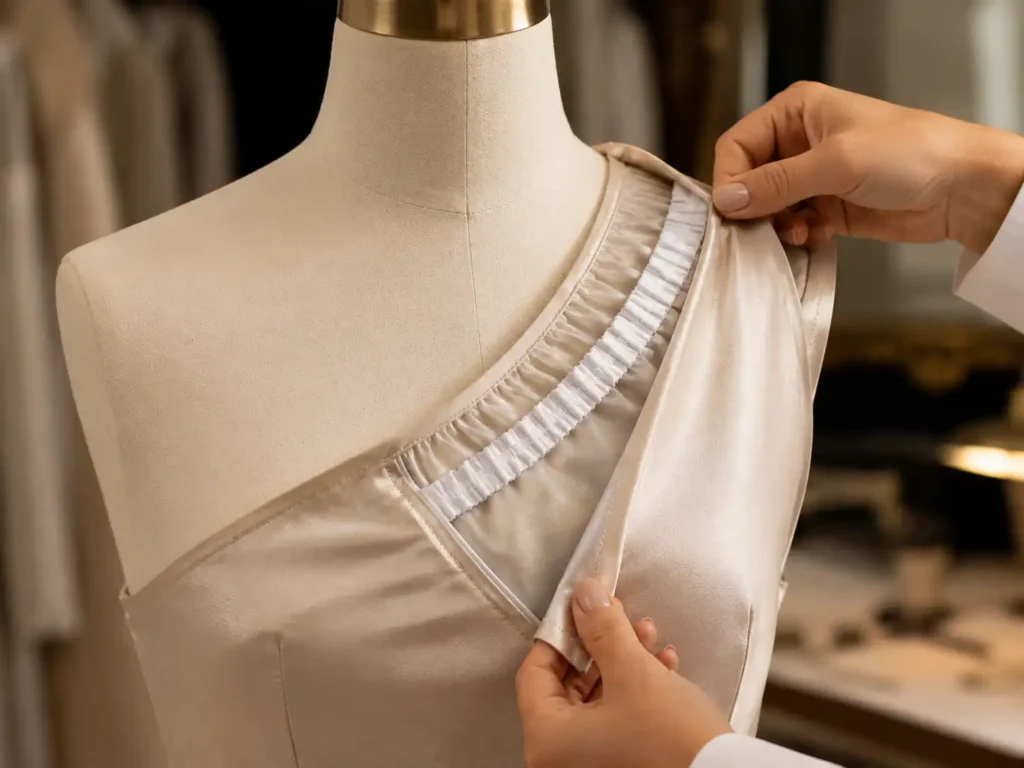
Elastic Systems
Lace Trims
Decorative Hardware

Bra Cups

Boning and Wire
Sampling Built Around On-Body Validation
Sampling is a controlled development cycle rather than a promise of a final garment in the first round. Each round closes specific questions about material, silhouette, support, coverage, movement, workmanship, cost, and bulk readiness.
Development Sample
The first sample tests the initial interpretation of the style. Pattern shape, selected fabric, cup and boning direction, lining, closure, trims, and overall proportion are assembled for review. Regular styles commonly need around 10-15 working days after materials and specifications are confirmed. Complex corset, multi-layer lace, mesh, sequin, cut-out, or structured bodysuit styles commonly need around 15-25 working days. Special fabrics or customized trims can extend the timeline. The aim is to reveal decisions early, not hide differences until production.
Fit and Construction Review
Brand teams can return fit photographs, measurement notes, annotated comments, or a reviewed sample. Comments are grouped into fit, construction, material, trim, appearance, and packing categories. Examples include raising the neckline 1.5 cm, moving cups inward, extending strap adjustment, reducing boning pressure, increasing bodysuit torso girth, changing lining coverage, replacing lace trim, or flattening a zipper. Clear photographs should show front, back, side, and the area under movement or tension.
Revised and Size-Set Samples
Revisions are applied to the pattern and technical records before the next sample is made. A revised sample should demonstrate the closed comments, not simply repeat the first round with cosmetic changes. For high-risk grading, selected size-set samples may be requested to review cup position, torso length, neckline, strap range, and stretch across the size range. Material or trim substitutions are identified clearly because a fit approved in one fabric cannot automatically be transferred to another with different stretch or weight.
PP and Golden Sample Approval
The PP sample represents the approved production direction using confirmed or production-equivalent materials and final construction. After approval, a golden sample can be sealed as the physical reference for production, inspection, and packing. Bulk release also requires final measurements, color approval, BOM, label placement, packaging, order breakdown, and production schedule. Moving into bulk without PP approval creates avoidable risk, especially for cups, boning, mesh transparency, lace placement, and fitted stretch styles.
Controlled Production from PP Sample to Packing
Bulk production begins only after style, material, measurement, construction, label, and packing references are aligned. Multi-style orders are scheduled by material readiness and construction risk, not pushed onto one line without product matching.
Material Booking and Incoming Control
Fabric, lining, lace, mesh, cups, boning, zippers, elastics, hardware, labels, and packing materials are booked against the approved BOM. Incoming control reviews color, hand feel, width, weight where specified, stretch, recovery, transparency, defects, quantity, and lot consistency.
Delicate fabrics are separated and protected to reduce snagging or contamination. Shade-sensitive satin and coordinated sets require lot planning so components remain visually consistent within each SKU.
Factory Allocation and Pre-Production Review
Jinfeng Apparel operates six owned women’s fashion factories and works with more than ten long-term satellite production partners. Allocation considers fabric type, construction complexity, order quantity, delivery rhythm, and repeat history. Complex first orders and high-risk styles are placed with suitable production units, while repeat or regular styles can be distributed under unified standards. A pre-production review covers sample reference, sewing sequence, measurement points, critical details, labeling, packing, and inspection checkpoints.
Cutting, Sewing, and Inline Inspection
Cutting checks marker direction, fabric face, shine direction, stretch direction, lace motif, mesh print, panel pairing, and defect removal. Sewing control focuses on cup insertion, boning channels, lining attachment, strap position, elastic tension, lace placement, mesh handling, zipper flatness, seam balance, and clean interior finishing. Inline inspectors identify repeated issues early enough for correction. Measurement checks are completed during production rather than waiting for the final packed quantity.
Finishing, Packing, and Shipment Coordination
Final finishing covers thread trimming, surface cleaning, pressing, shape restoration, hardware review, label verification, and individual garment inspection. Satin and decorated styles require controlled pressing and packing to reduce creases, snagging, or pressure marks. Packing teams follow approved polybag, barcode, SKU, carton ratio, and carton-mark instructions. Shipment support includes packing lists, commercial invoices, carton information, coordination with nominated forwarders, air or sea options, and split delivery planning by project.
Quality Control for Delicate and Structured Garments
Inspection standards are built around the risks of each product rather than one generic checklist. Material, measurement, construction, symmetry, movement, surface condition, private-label accuracy, and packing are reviewed from receipt through shipment.
| Style or Detail | Primary Risk | Critical Control Points | Typical Measurement Focus | Final Inspection Evidence |
|---|---|---|---|---|
| Corset Dress | Cup shift, boning pressure, zipper ripple | Cup symmetry, boning channels, end protection, waist line, lining | Bust, underbust, waist, neckline, length | Front/back symmetry, sitting comfort, zipper and surface review |
| Bustier Top | Coverage loss, hem lift, strap movement | Cup position, side coverage, closure, hem grip, strap attachment | Bust, underbust, cup spacing, top length | Movement review, closure strength, paired-set color check |
| Fashion Bodysuit | Short torso, crotch pressure, recovery loss | Torso girth, crotch closure, leg opening, bust stability, seams | Torso girth, bust, waist, hip opening, crotch position | Stretch and recovery, closure, wash or dimensional check by project |
| Mesh Dress | Excess transparency, holes, edge distortion | Mesh lot, layer count, lining zones, edge finish, seam tension | Bust/waist/hip, neckline, lining position, length | Light inspection, hole check, on-body coverage reference |
| Lace Dress | Motif mismatch, holes, fraying, lining exposure | Motif placement, seam alignment, scallop use, edges, lining | Key body points, motif reference, hem balance | Paired panels, hole inspection, trim and lining review |
| Satin Slip | Snagging, seam twisting, crease marks | Grain direction, strap range, seam balance, pressing, packing | Bust, neckline, strap, side length, hem | Surface under light, drape, wrinkle and pack-out check |
| Bralette-Style Top | Cup imbalance, strap twist, weak coverage | Cup/lining, strap tension, elastic, edge softness, symmetry | Bust, underbust, cup position, strap range | On-body fit, elastic recovery, skin-contact finish |
| Private-Label Pack | Wrong SKU, label, barcode, or carton ratio | Label placement, barcode match, polybag, size/color sticker, carton mark | Order breakdown and pack ratio | Packing audit, carton photos, packing list cross-check |
Private-Label Packing for Retail and Ecommerce
Main Labels
Woven or printed main labels are positioned according to brand design and garment comfort.
Lace, mesh, low backs, and sheer areas may require alternative placement so the label remains secure without showing through or irritating the skin.
Care Labels
Size Labels
Size labels must match the garment, polybag sticker, barcode, order breakdown, and carton ratio.
A controlled size-label workflow reduces picking errors and prevents mixed-size packs across multi-style programs.
Hangtags
Hangtags, hang strings, price tickets, and campaign inserts can be packed according to brand instructions.
Attachment location should avoid snagging satin, lace, mesh, rhinestone trims, or delicate straps.
Barcode Stickers
Individual Polybags
SKU Packing
Carton Marks
MOQ, Cost, and Quotation Factors
What Changes Cost
- Material variables: fabric weight, width, stretch, recovery, color, custom dyeing, lace placement, lining, and supplier MOQ.
- Construction variables: cups, boning, wire by project, panel count, ruching, cut-outs, clean finishing, closures, and delicate handling.
- Program variables: styles, colors, sizes, quantity per SKU, delivery waves, testing, labels, packaging, and season.
What Supports Quotation
A useful quotation begins with enough information to evaluate construction and material direction. A reference photo alone can support an initial feasibility discussion, while a firm development and bulk quotation needs clearer quantities, size range, fabric expectation, internal structure, branding, and delivery timing. Early disclosure of target price helps identify material or construction alternatives before sampling resources are committed.
- Send: tech pack or reference, target quantity, color plan, size range, fabric preference, cup and boning needs, label and packing files, destination, and launch date.
- Receive: style feasibility, material direction, MOQ fit, sample plan, development lead-time view, cost drivers, and the information needed for a formal quotation.
Compliance Support and Clear Product Boundaries
Supported Fashion Scope
- Testing support: third-party testing can be coordinated with SGS, Intertek, BV, ITS, or a brand-appointed laboratory according to product, market, and order requirements.
- Document verification: certified fabric or audit references must be checked by supplier, batch, factory scope, certificate validity, and project requirements before public or order use.
Specialist Review Required
- Claims control: avoid unsupported shaping, health, correction, recovery, or medical claims in product development and labeling.
- Market control: final requirements depend on destination, product classification, fiber content, skin contact, trims, age group, and brand compliance manual.
Anonymous Lingerie-Inspired Fashion Programs
The following anonymized programs use representative order structures from current multi-style brand cooperation. Brand names, unpublished designs, exact prices, original tech packs, labels, and private files remain protected under NDA-based project management.

United States Occasionwear Program - 18 Styles, 42,600 Pieces
A U.S. occasionwear brand planned an 18-style launch built around corset mini dresses, stretch-satin bustier dresses, lace-panel midi dresses, and mesh bodycon styles. The program covered five core colors, six sizes from XS to XXL, and 42,600 pieces divided into two shipment waves. Development risk centered on cup placement, waist shaping, zipper rippling, lace motif balance, and transparent mesh zones. Priority styles were grouped for first-sample review so campaign pieces could move ahead while lower-risk variations followed.
- Sample plan: regular satin styles entered a 10-15 working-day first-sample window; complex lace, mesh, and corset styles entered a 15-25 working-day window according to material and trim readiness.
- Fit corrections: cup spacing was reduced on two corset blocks, the center-front neckline was raised 1.2 cm on three styles, and boning ends were shortened and re-protected to improve sitting comfort.
- Production control: stretch satin was booked by shade lot, lace motifs were marked at high-visibility front panels, and mesh lining zones were fixed in pattern and sewing references.
- Delivery: bulk production ran for 43 days after PP and material readiness, followed by two coordinated shipment releases to match the brand launch calendar.

Multi-Channel Clubwear Program - 24 Styles, 68,400 Pieces
A multi-channel fashion operation developed 24 styles across fashion bodysuits, mesh-panel dresses, bralette-style tops, matching skirts, and structured jumpsuits.
The order totaled 68,400 pieces across seven sizes from XXS to XXL, with several high-volume black styles and smaller seasonal colors. The largest development challenge came from combining soft mesh for visual transparency with power mesh for internal support while maintaining consistent fit across bodysuits and dresses.
- Engineering review: torso girth, crotch placement, bust coverage, strap range, power-mesh tension, and cut-out recovery were measured separately rather than using one bodycon reduction rule.
- Size-set review: selected small, central, and larger sizes were sampled for bodysuits and jumpsuits because vertical grading carried more risk than the dress styles.
- QC controls: inline inspection tracked mesh holes, seam tension, elastic recovery, closure position, and repeated measurement drift; packed units were checked against barcode and SKU maps.
- Delivery: production and packing were completed through three planned batches over 48 days after full material readiness, allowing the operation to receive campaign, core-stock, and replenishment quantities in sequence.

Satin and Lace Capsule - 12 Styles, 24,800 Pieces
A premium ecommerce label planned a 12-style capsule containing satin slip dresses, lace-trim camisoles, coordinated shorts, midi slips, and light structured bustier tops.
The total order reached 24,800 pieces in four colors and six sizes. Product photography, soft skin contact, clean drape, and wrinkle-controlled delivery were major priorities.
Several styles shared satin colors and hardware, creating an opportunity to consolidate materials without making the products look repetitive.
- Material approval: satin references were compared for shine, drape, opacity, snagging, and crease recovery; lace trim was matched by softness, width, color, and edge shape.
- Sample revision: strap adjustment range increased by 3 cm on the slip block, neckline height increased by 0.8 cm on two ecommerce-focused styles, and side-seam balance was corrected to reduce twisting.
- Packing development: folding direction, tissue placement, polybag size, cup protection for bustier tops, and carton compression were reviewed to reduce surface marks and shape loss.
- Delivery: bulk production required 36 days after PP and material confirmation, with one early campaign shipment followed by the main stock release.
Lingerie-Inspired Fashion Frequently Asked Questions
Start Your Lingerie-Inspired Fashion Collection
Send your collection materials to Kelly for an initial manufacturing review. A useful project brief allows the development team to evaluate style structure, fabric direction, cups, boning, lining, stretch, fit risk, MOQ, sample timing, bulk schedule, and private-label requirements before formal sampling begins. Tech packs are helpful, although reference photos, sketches, line sheets, or an original sample can also support the first discussion. NDA arrangements can be completed before unpublished collection details are reviewed.
- Reference images, tech packs, sketches, line sheets, or original samples
- Target quantity by style and color
- Color plan and size range
- Fabric, lace, mesh, satin, or lining preferences
- Cup, boning, underwire, strap, elastic, and closure requirements
- Main labels, care labels, hangtags, barcodes, polybags, and carton instructions
- Target launch date, delivery window, destination market, and nominated forwarder information


