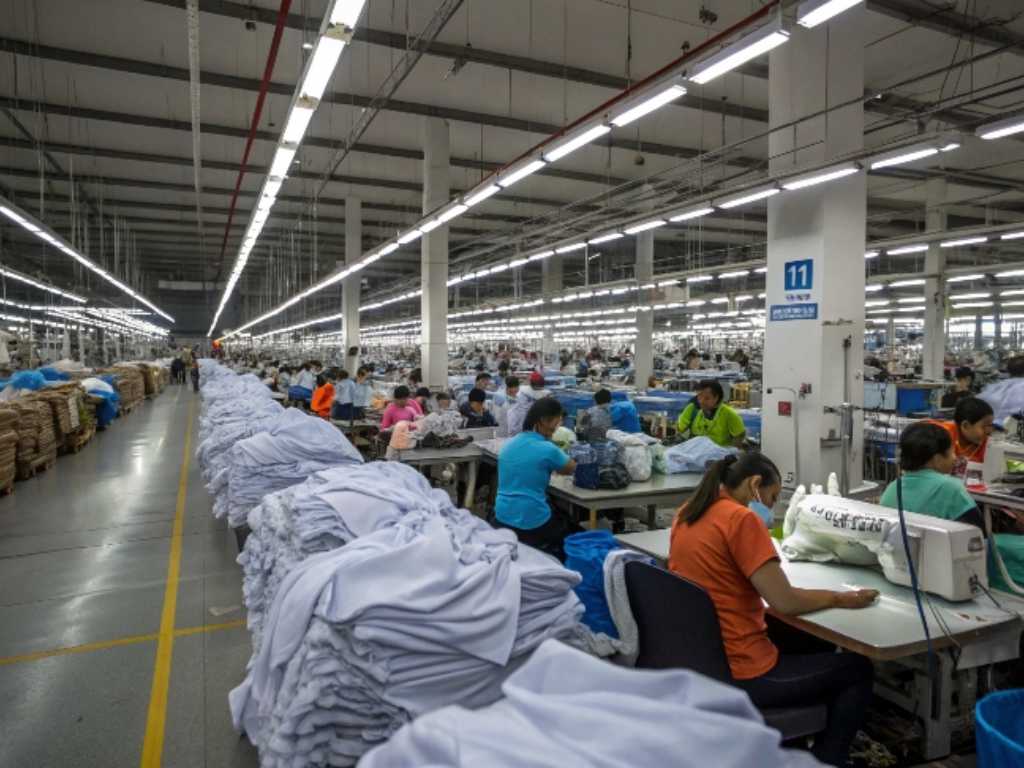
Lined Sheer Dress Manufacturer
Custom sheer dresses engineered around coverage, stretch, fit, lining balance, and repeatable bulk production for global fashion labels.
Jinfeng Apparel develops lined sheer dresses from fabric direction and coverage mapping through pattern making, sample revision, PP approval, bulk production, quality control, private-label packing, and export coordination. Each program begins by defining how the outer layer should reveal, soften, or conceal the body while the lining protects fit, movement, comfort, and commercial wearability.
- 3 coverage levels can be specified: opaque, semi-sheer, and fully sheer.
- 2 pattern systems are reviewed separately: outer shell and inner lining.
- 9 fit and coverage points receive focused review: bust, waist, hip, neckline, armhole, back, slit, shell length, and lining length.
- MOQ starts from 200 pcs per style/color, subject to fabric, trims, construction, and production planning.
Development Capacity Built for Layered Sheer Dress Programs
Pattern and Sample Depth
Production Coordination
Quality and Follow-Up
Made for Established Fashion Teams with Clear Collection Plans
Fast Fashion Labels
Occasionwear Collections
Partywear Brands
Premium Ecommerce
Sourcing Organizations
Brand Groups
Why Lined Sheer Dresses Fail During Bulk Production
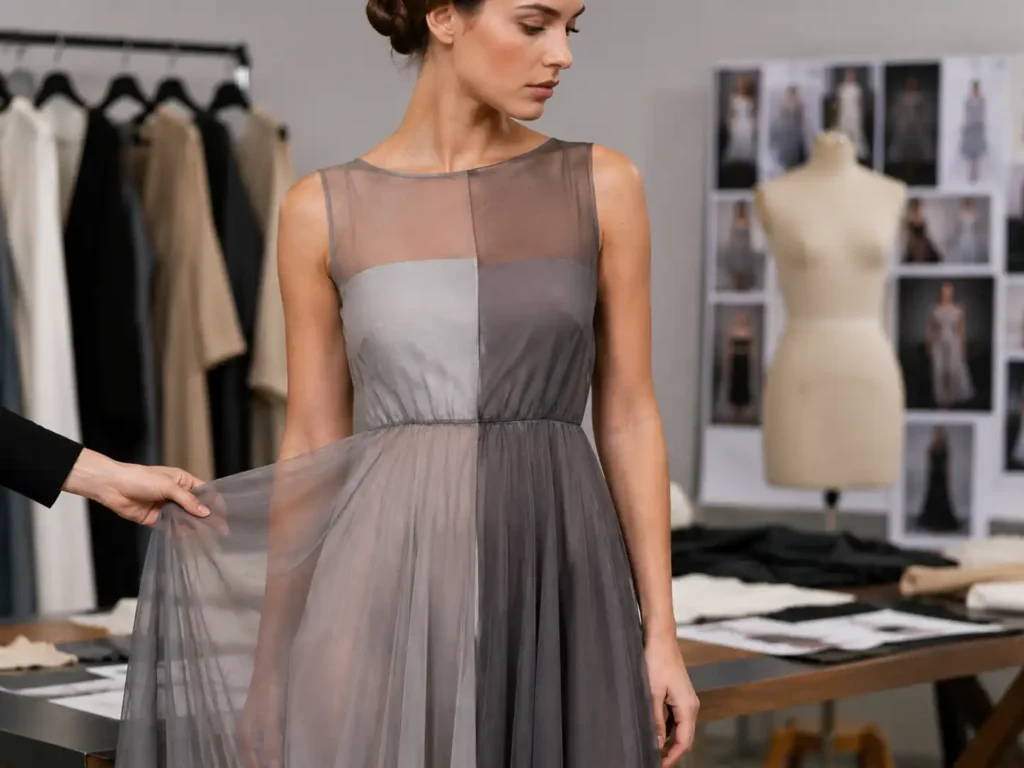
Opacity Shifts
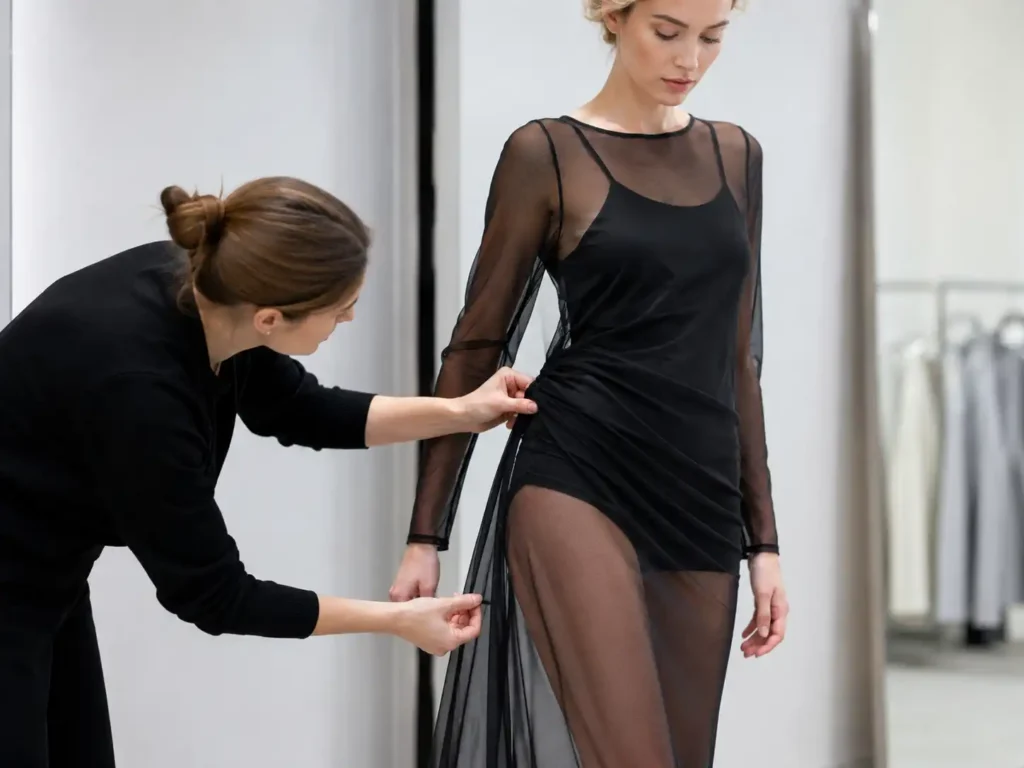
Lining Rides Up
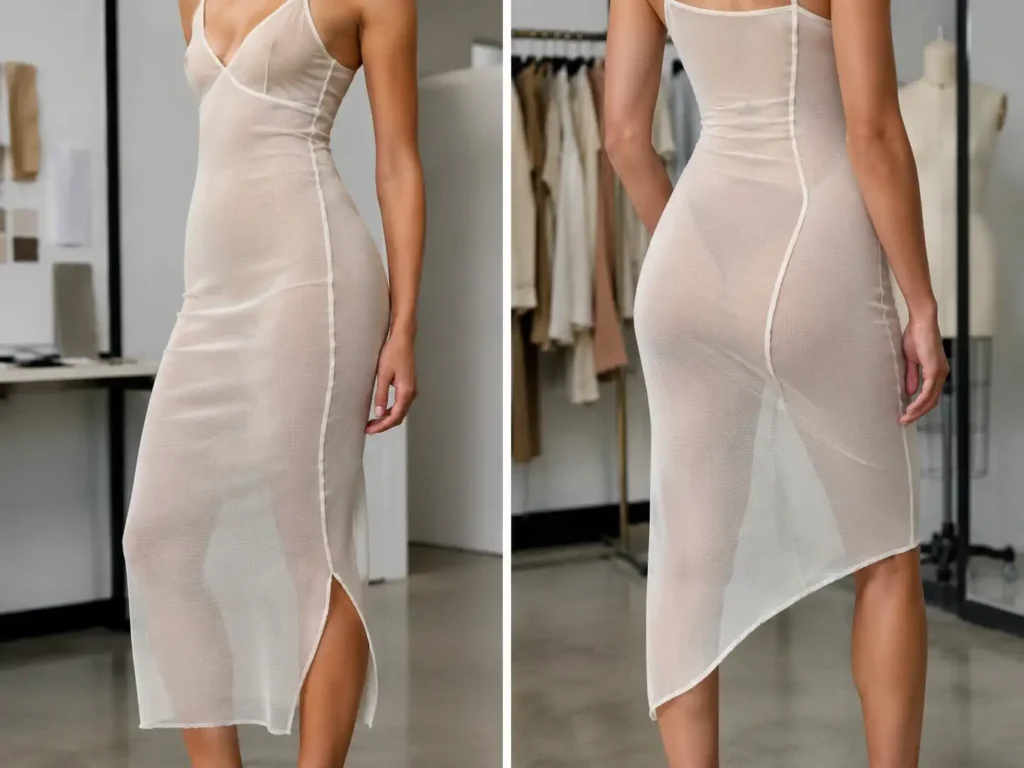
Twisted Side Seams
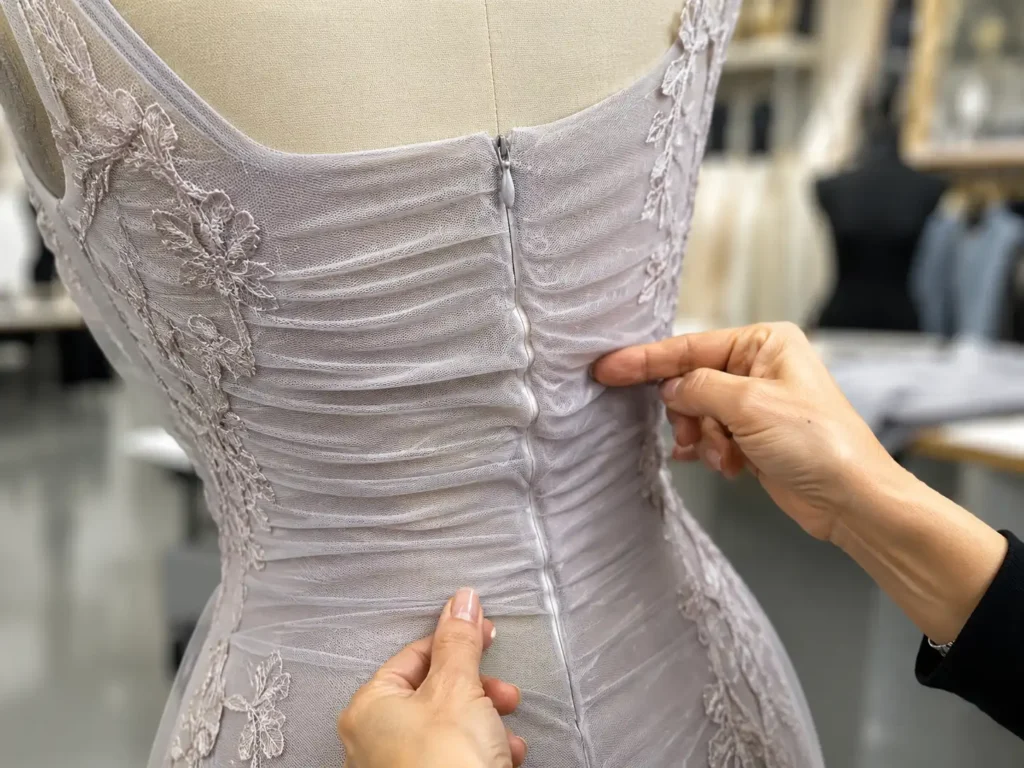
Zipper Rippling

Slit Exposure
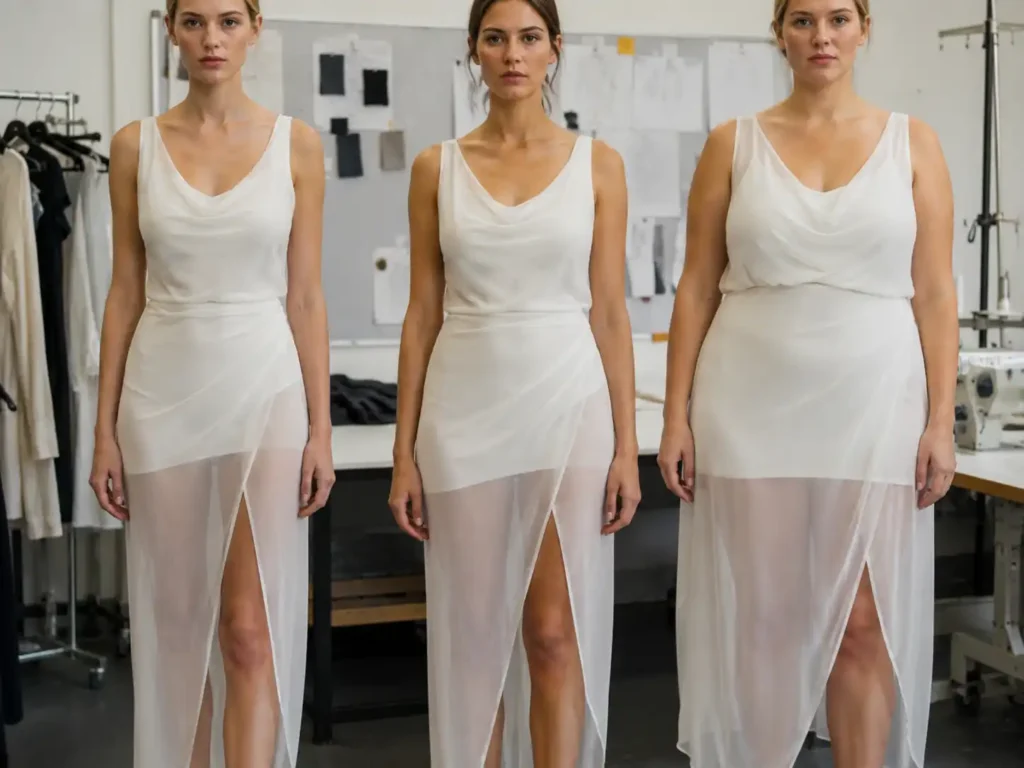
Size-Range Drift
Custom Lined Sheer Dress Styles We Manufacture
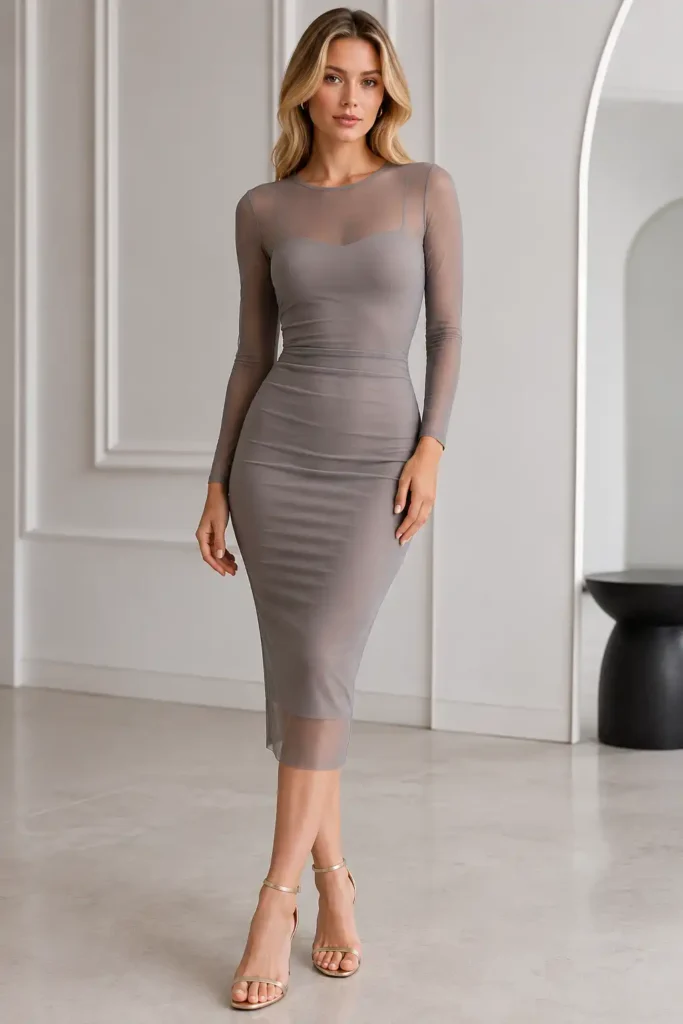
Lined Mesh Bodycon
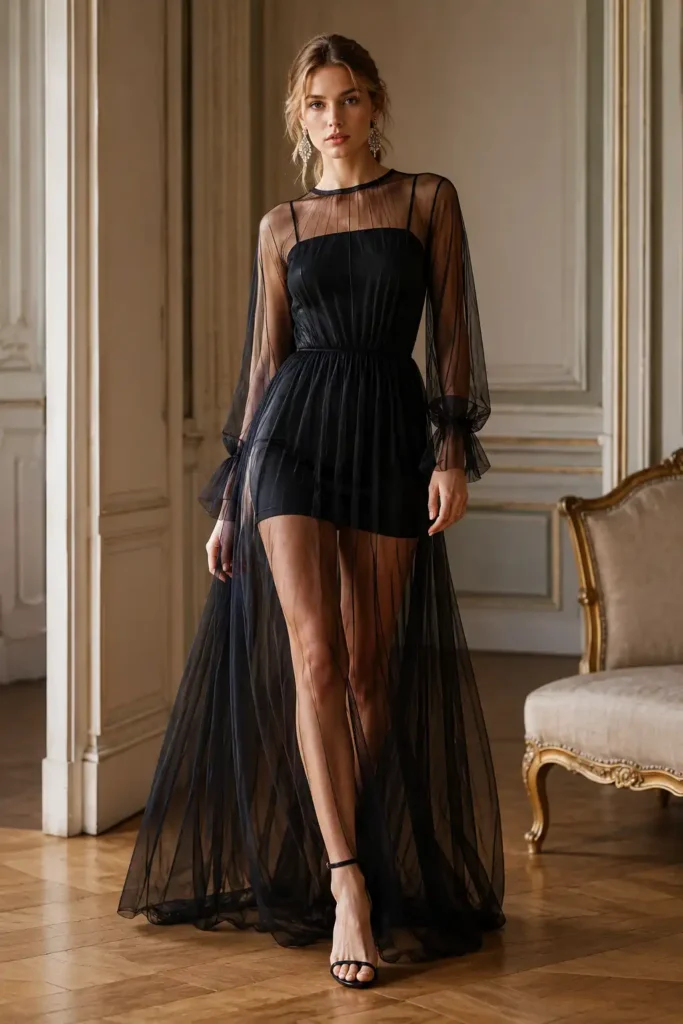
Sheer Maxi Mini-Lined
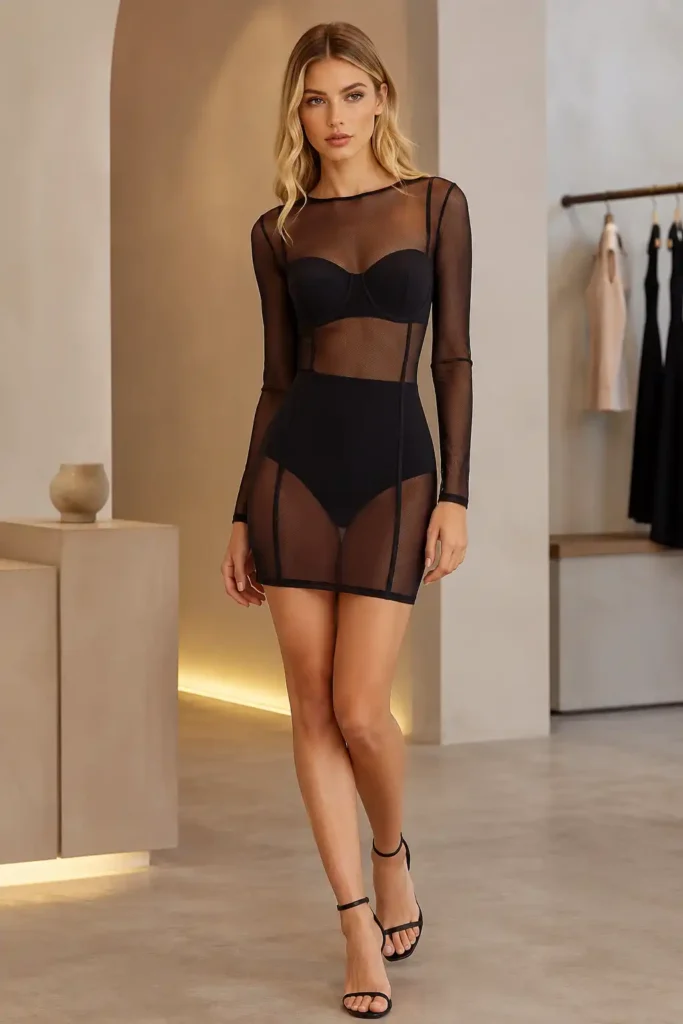
Partially Lined Mini
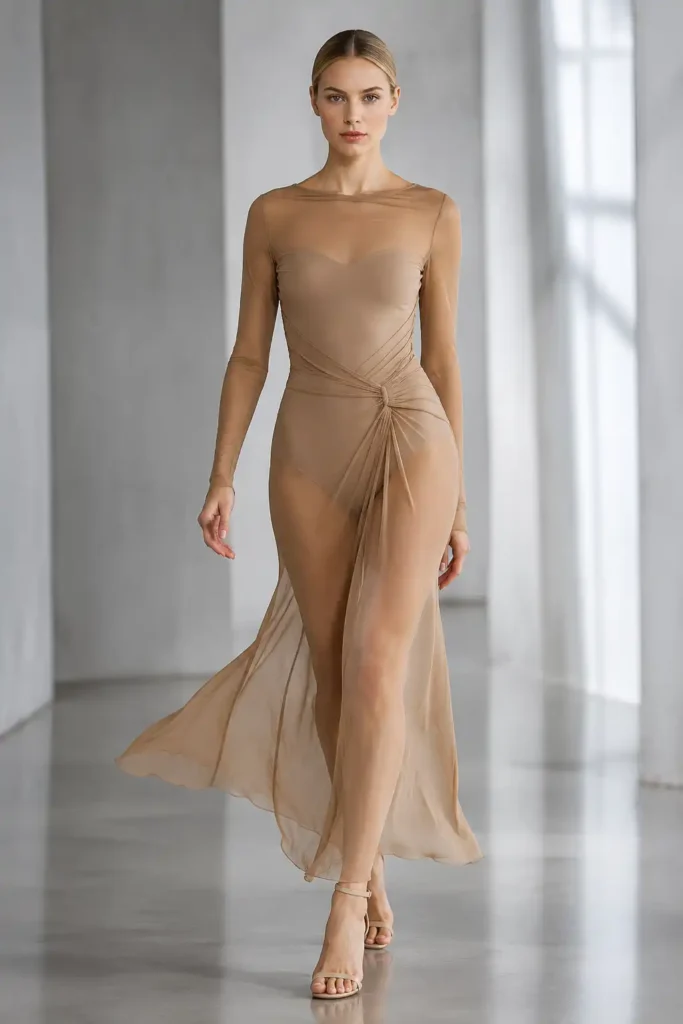
Built-In Bodysuit Dress
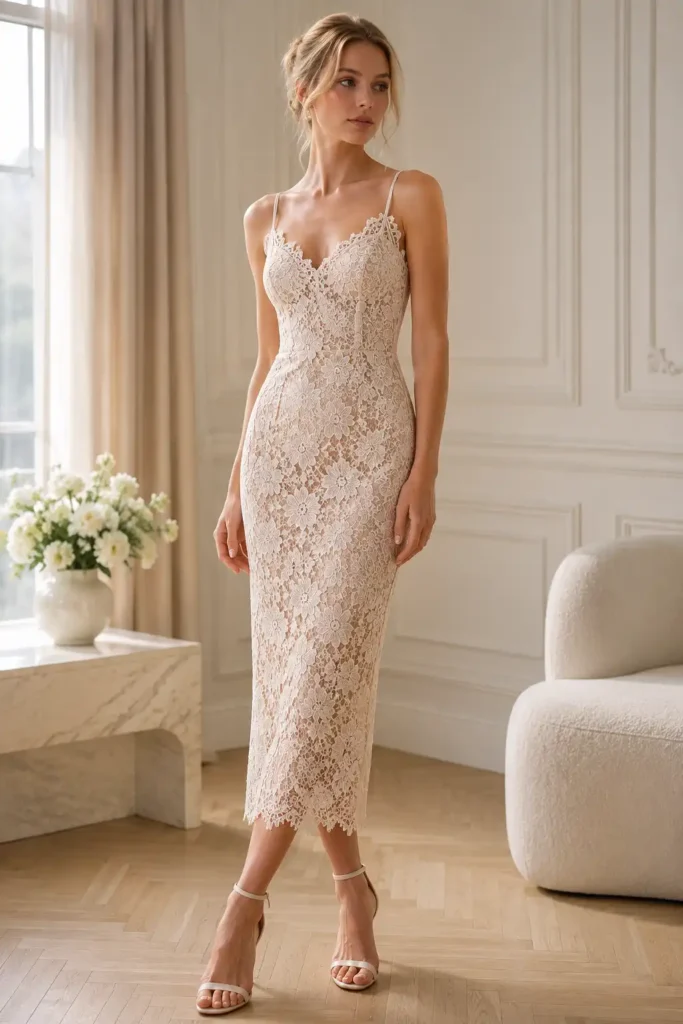
Lined Lace Dress
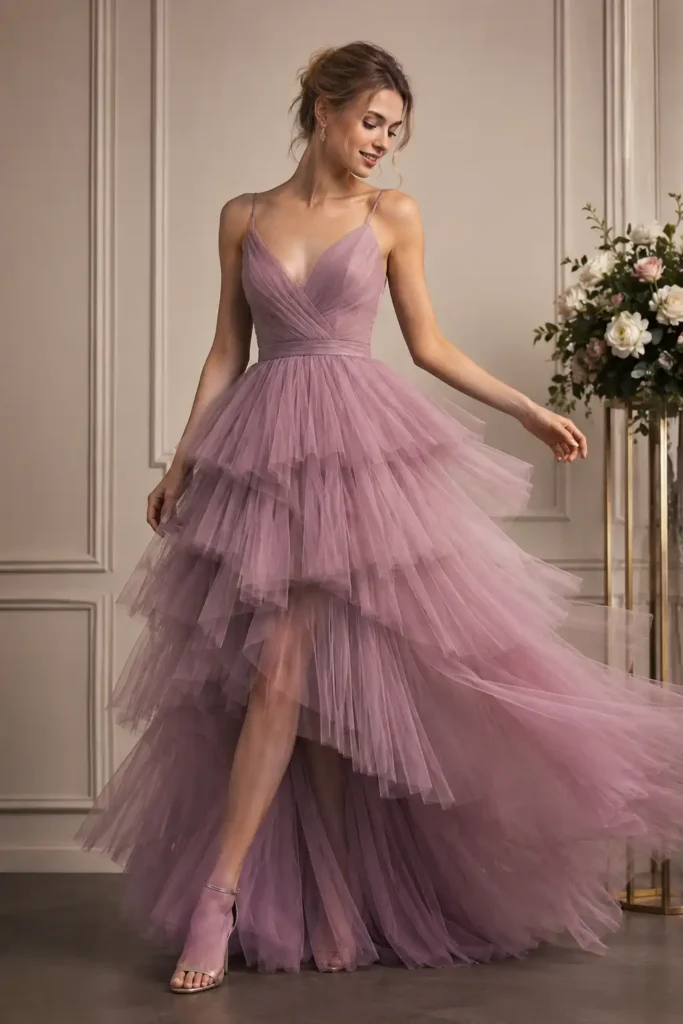
Layered Tulle Dress
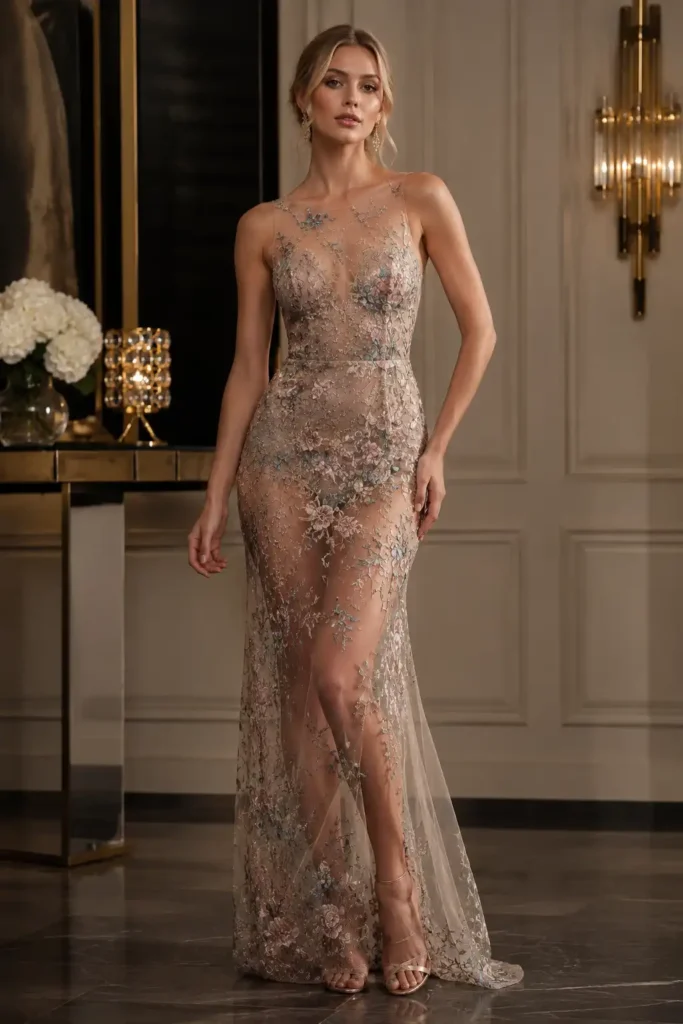
Embroidered Mesh Dress
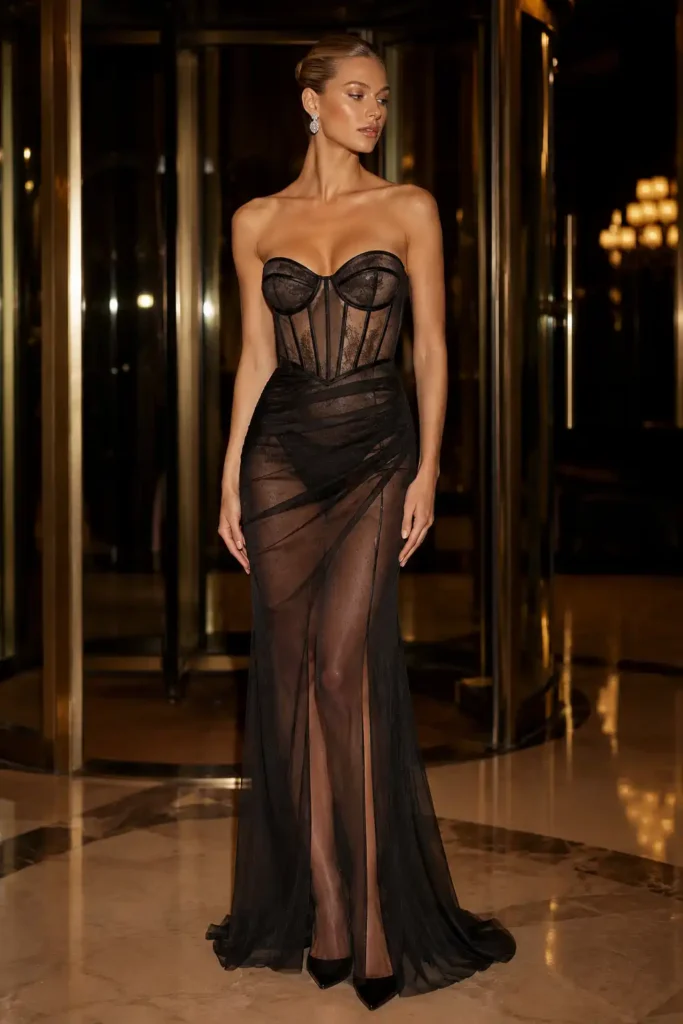
Sheer Corset Dress
Choose a Lining Structure Around Coverage and Movement
Full Garment Lining
Partial Body Lining
Mini Slip Lining
Built-In Bodysuit
Double Mesh Layer
Modesty Panels
Sheer Outer Fabrics Selected for the Intended Silhouette
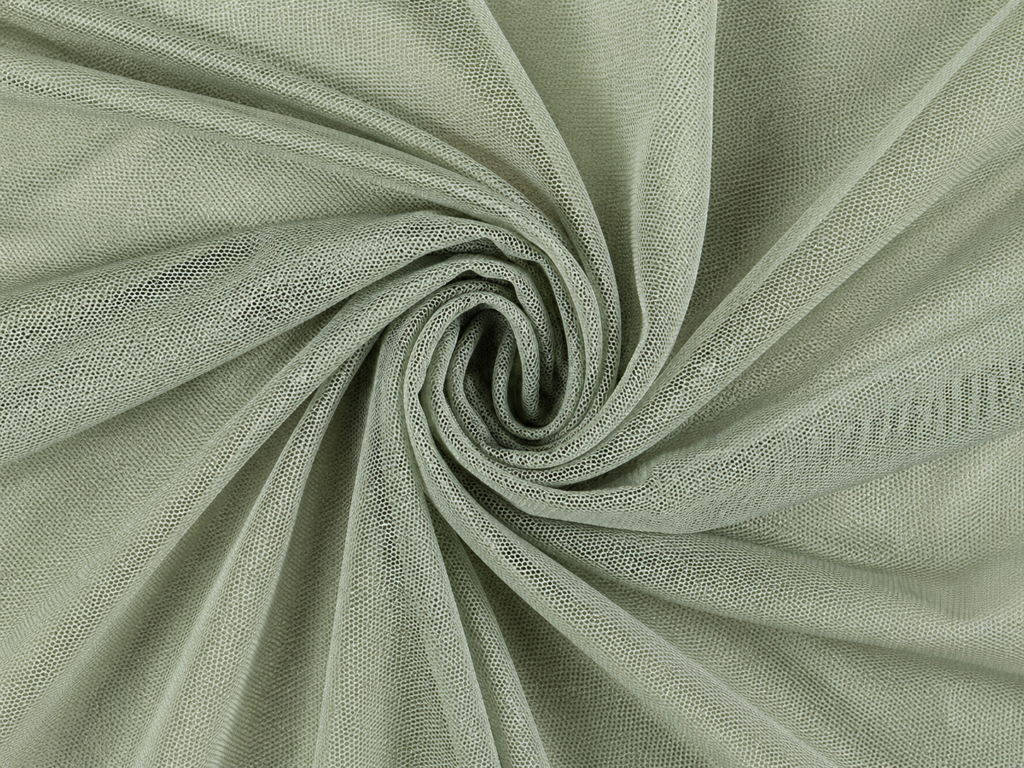
Stretch Mesh
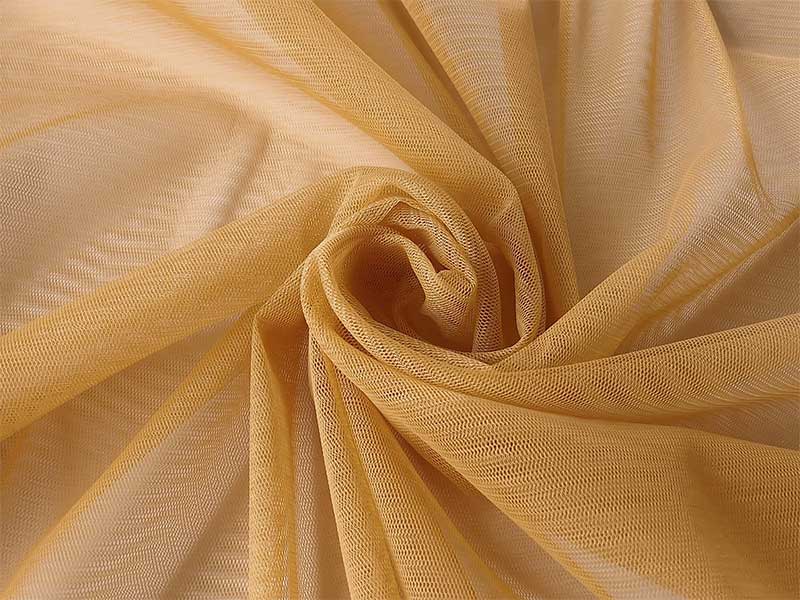
Power Mesh

Soft Tulle

Structured Tulle

Lace Fabric

Chiffon

Organza
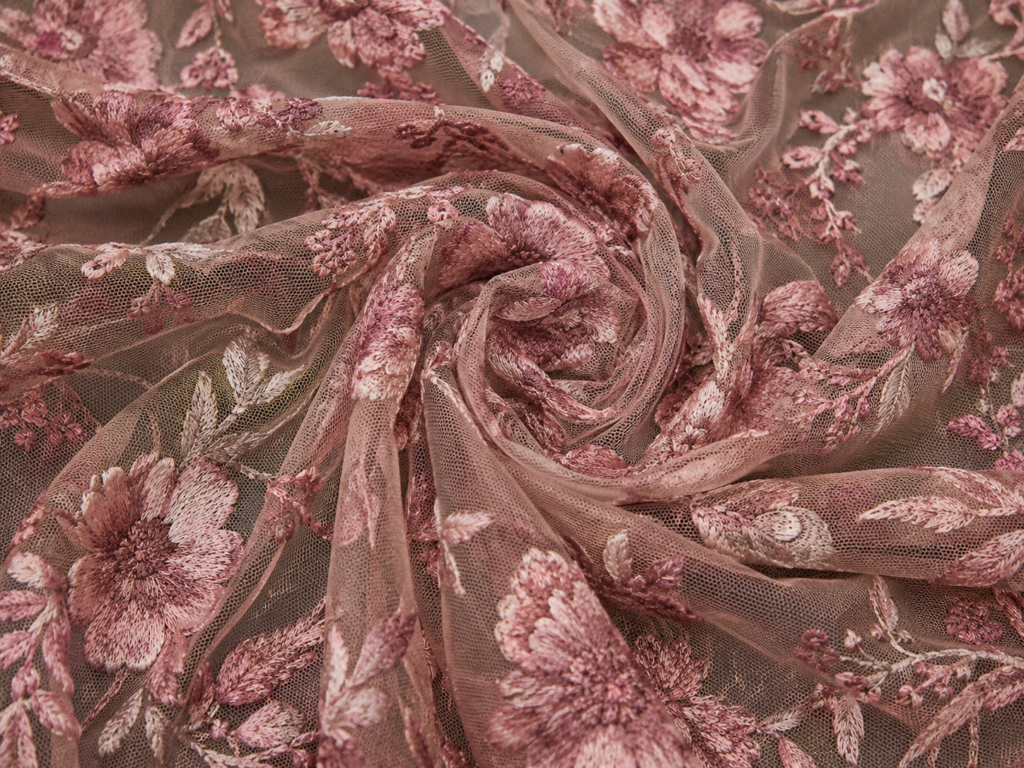
Embroidered Mesh
Lining Fabrics Matched to Stretch, Weight, and Drape
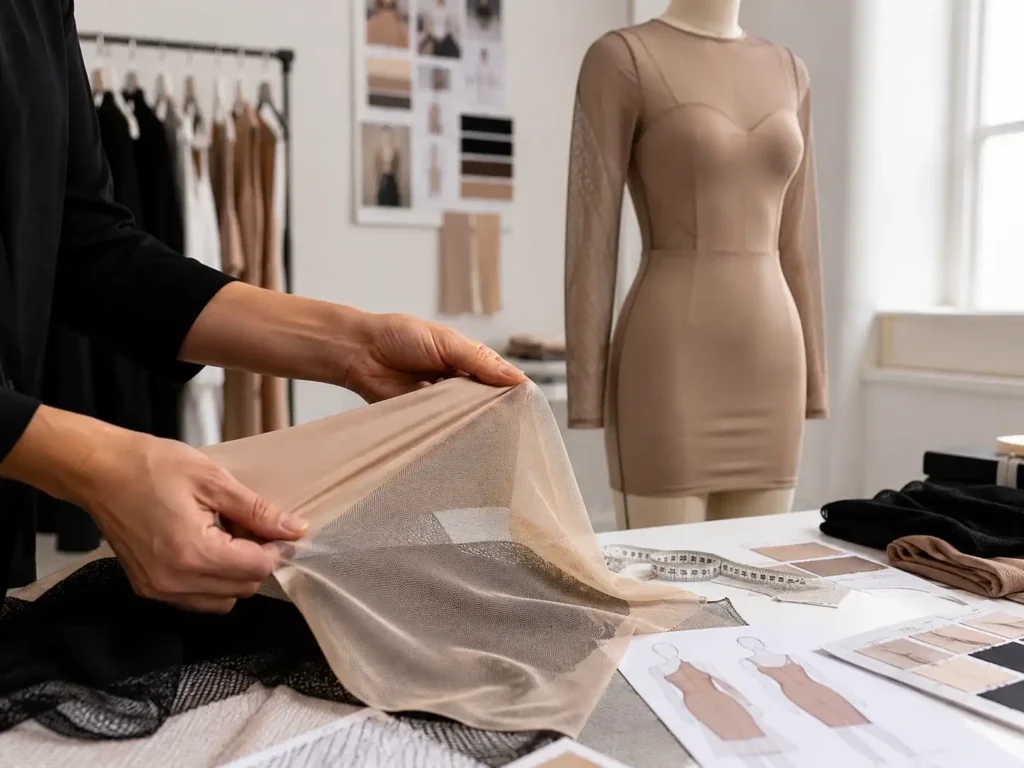
Stretch Tricot

Lightweight Jersey
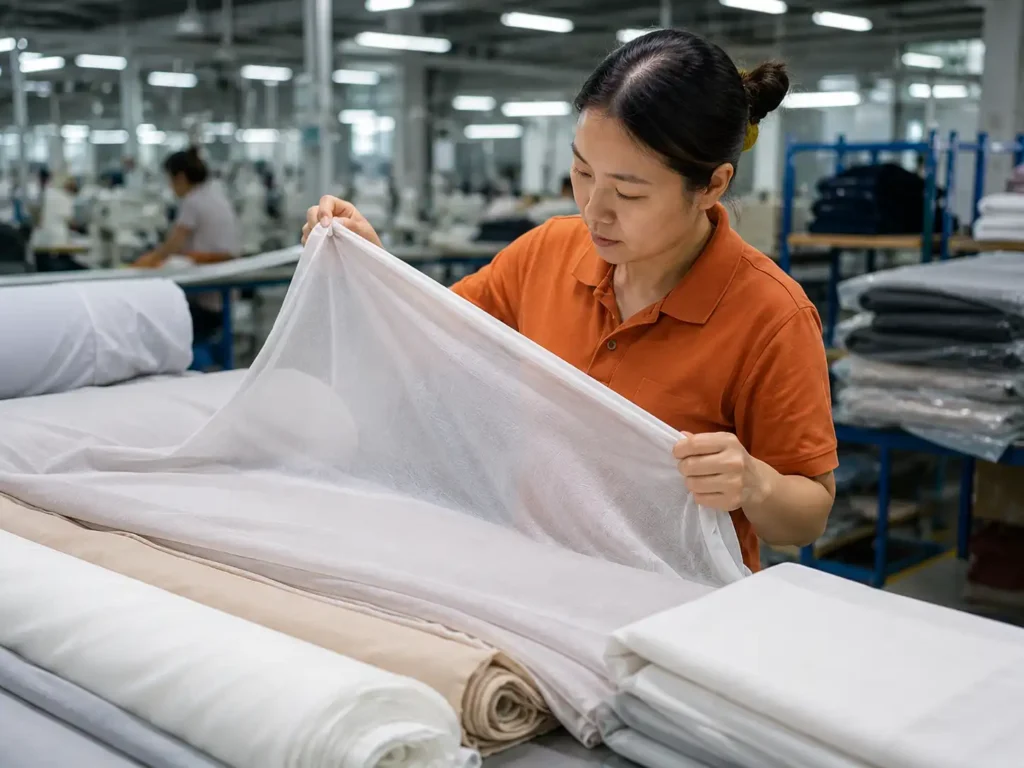
Poly Knit Lining
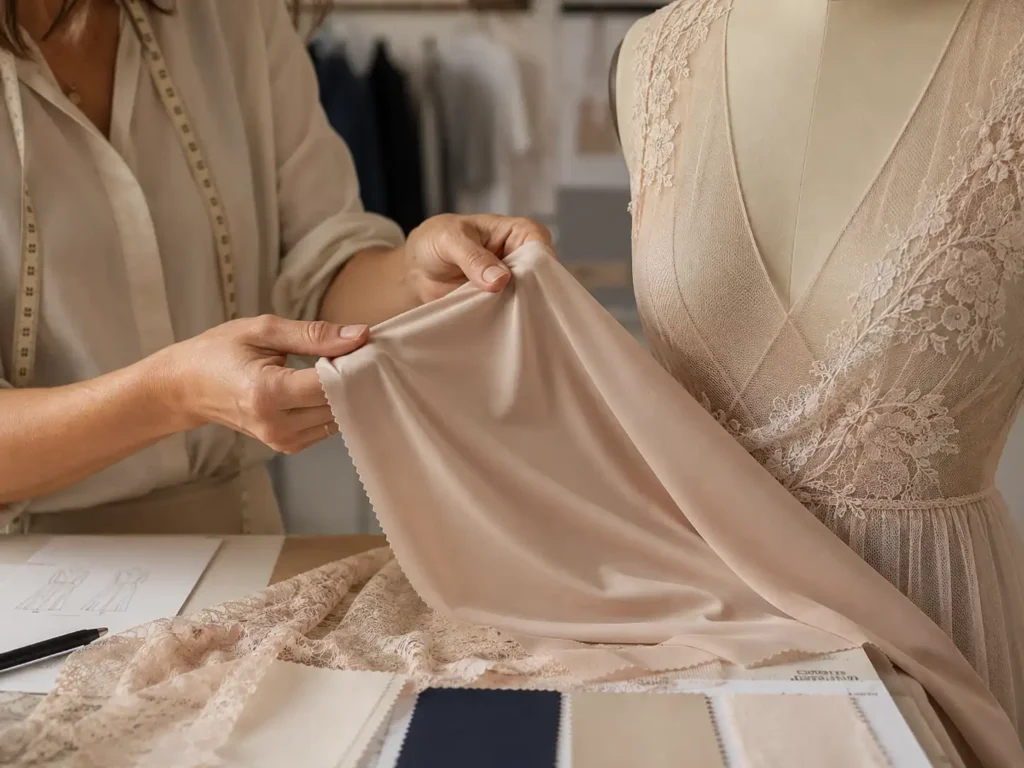
Rayon Stretch Lining
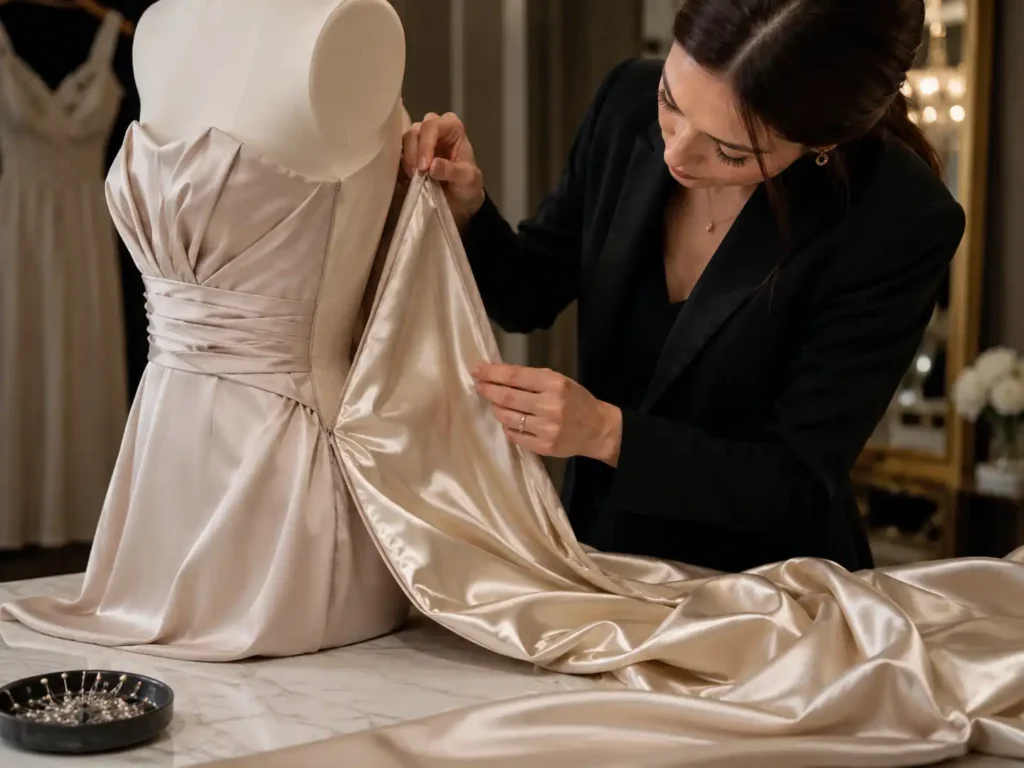
Stretch Satin Lining
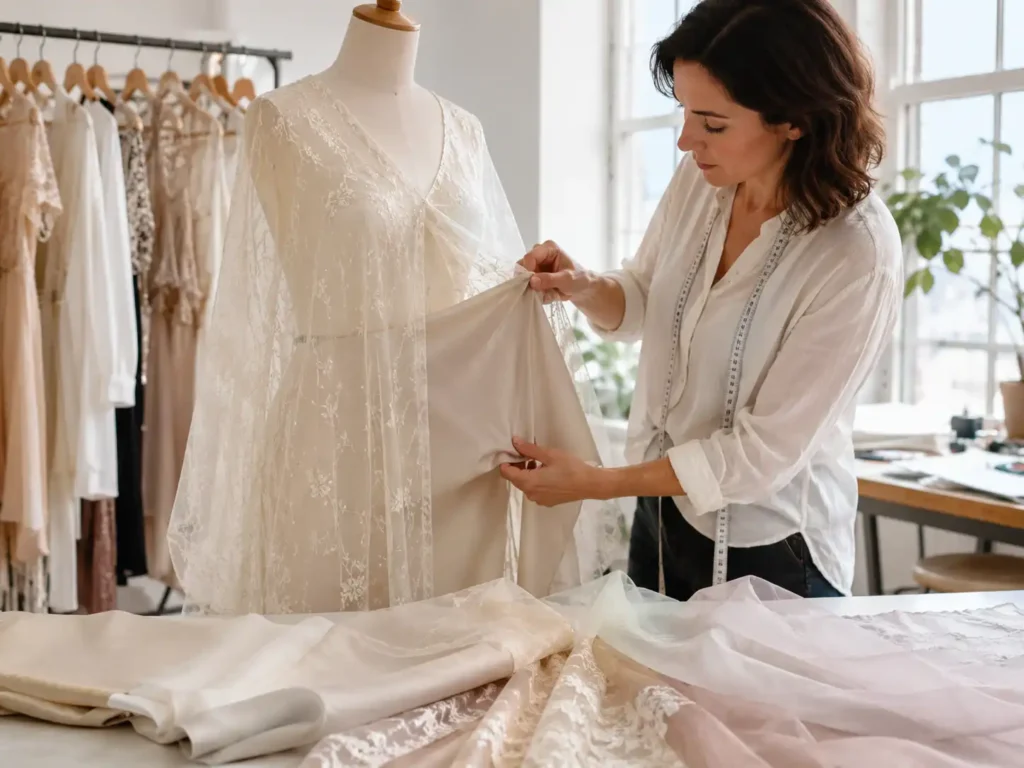
Light Woven Lining
Control Transparency Without Losing the Sheer Effect
Define Three Zones
- Mark bust, under-bust, waist, hip, upper thigh, back, and slit areas.
- State whether transparency changes by colorway.
- Confirm whether undergarments may remain visible.
Review Multiple Lights
- Use the intended lining color.
- Review pale and dark colorways separately.
- Check wet-look or high-shine surfaces for visual amplification.
Balance Lining Length
- Measure shell and lining from fixed landmarks.
- Check front, back, and side hem balance.
- Confirm lining visibility through slits and vents.
Lock Approval Standards
- Record shell and lining article references.
- Keep approved swatches with the production file.
- Use consistent lighting for production comparison.
Pattern Engineering for Two-Layer Dress Construction
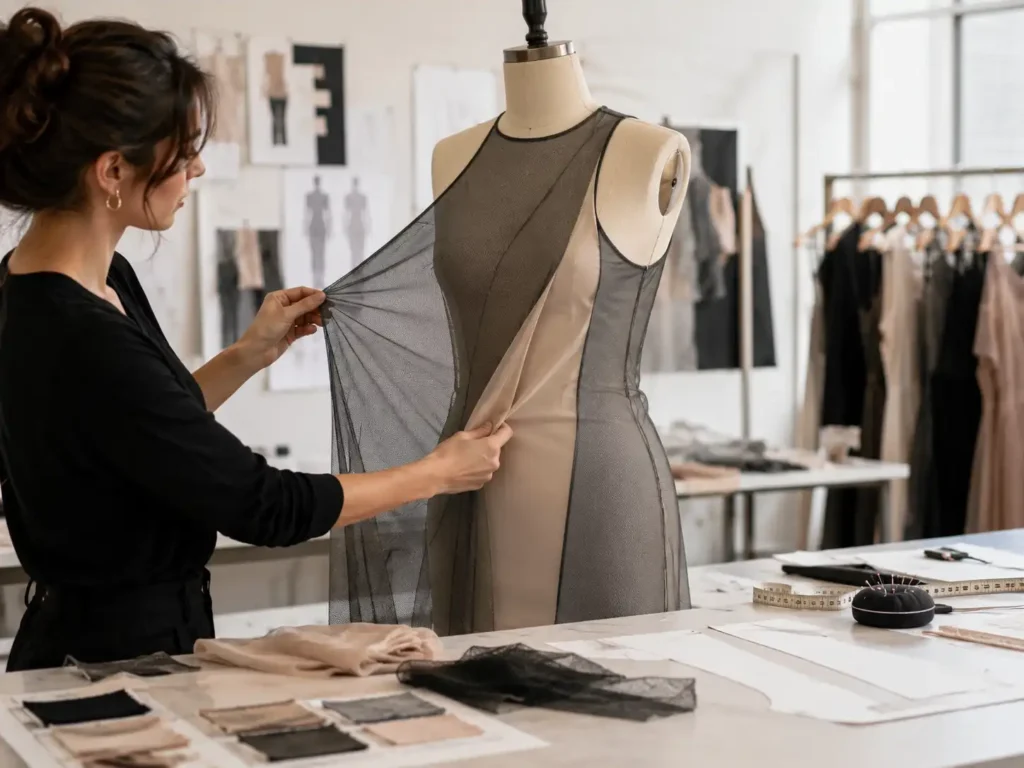
Separate Ease Rules
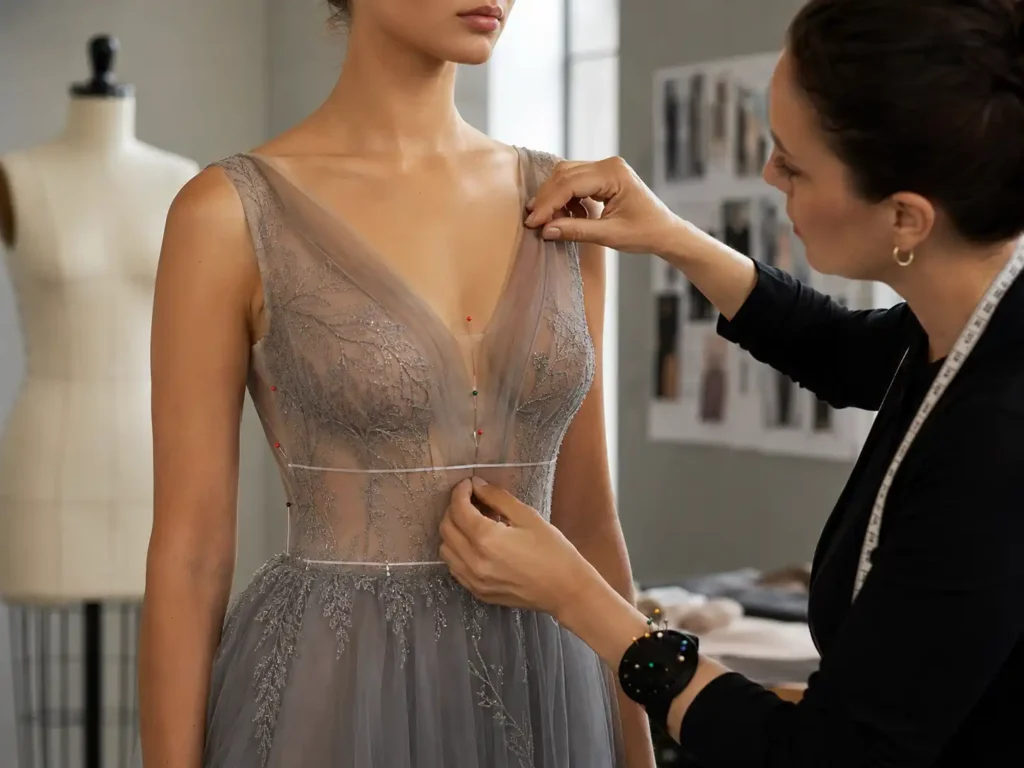
Control Bust and Neckline
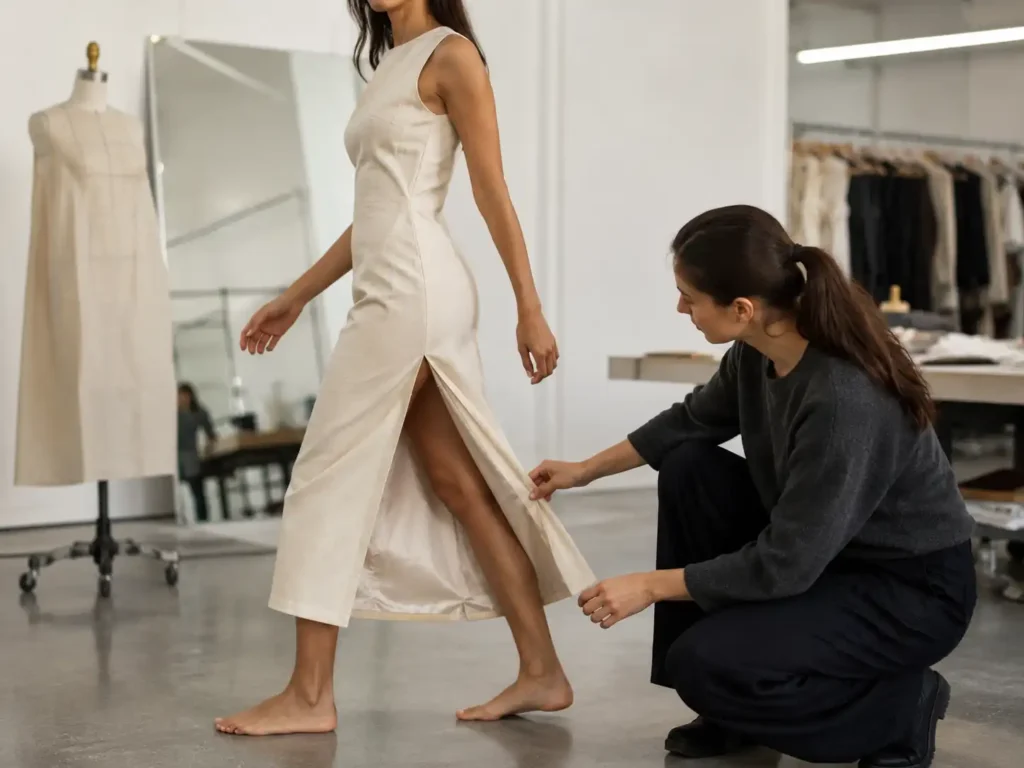
Engineer Hip Movement
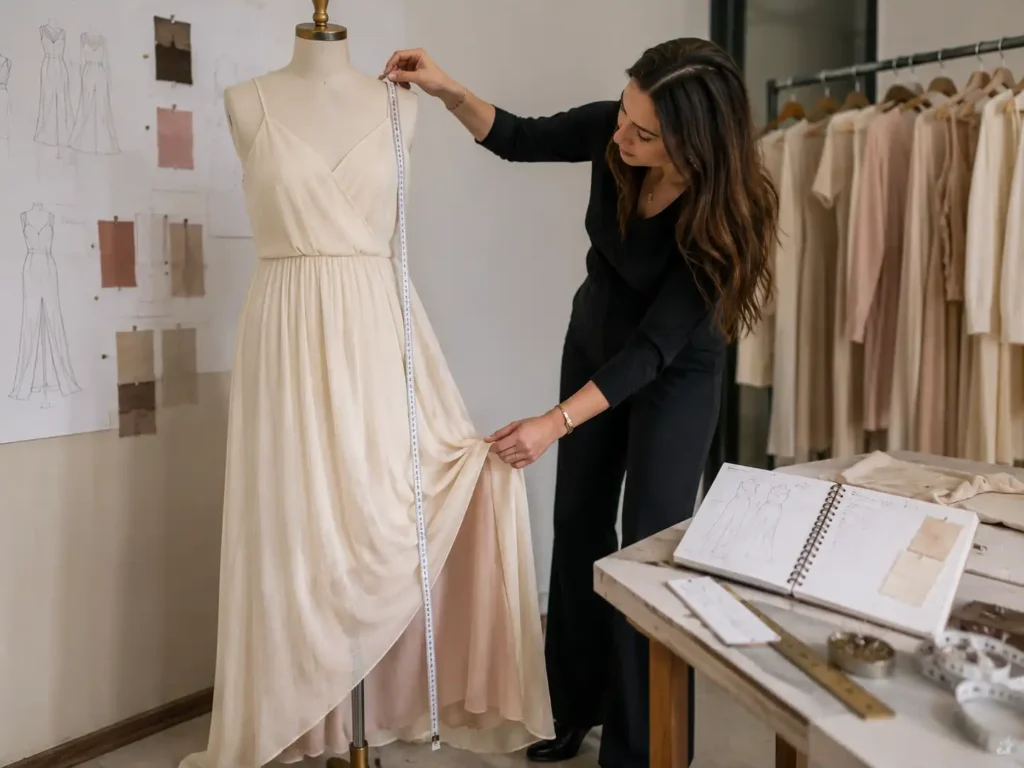
Set Layer Lengths
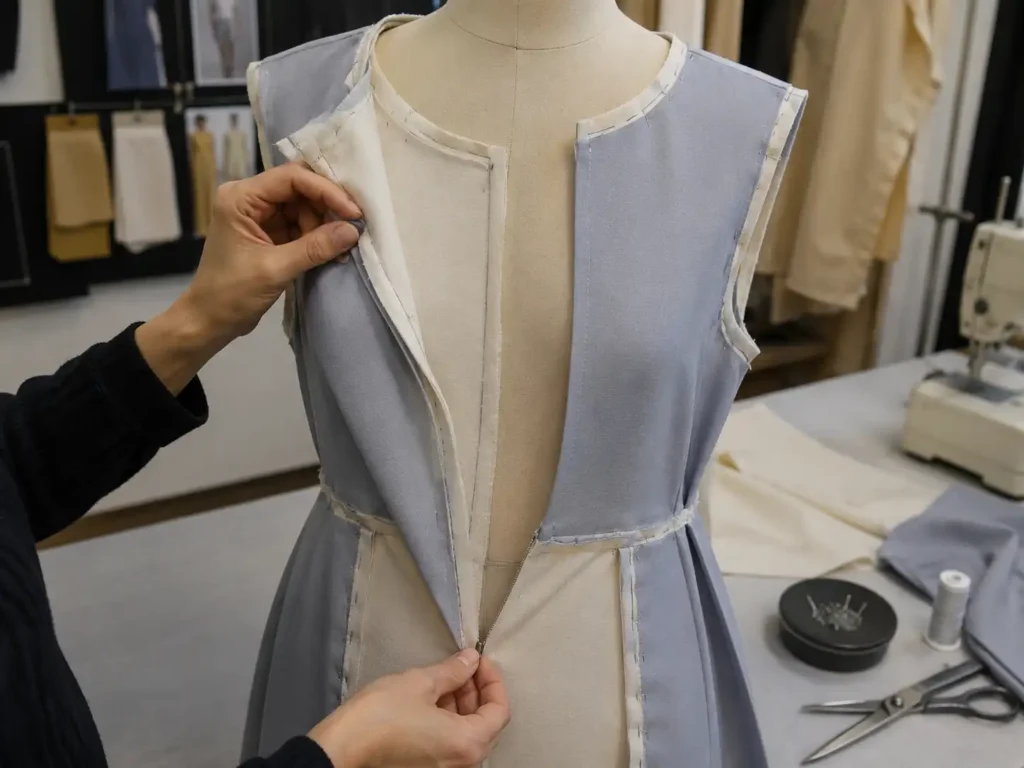
Place Attachment Points
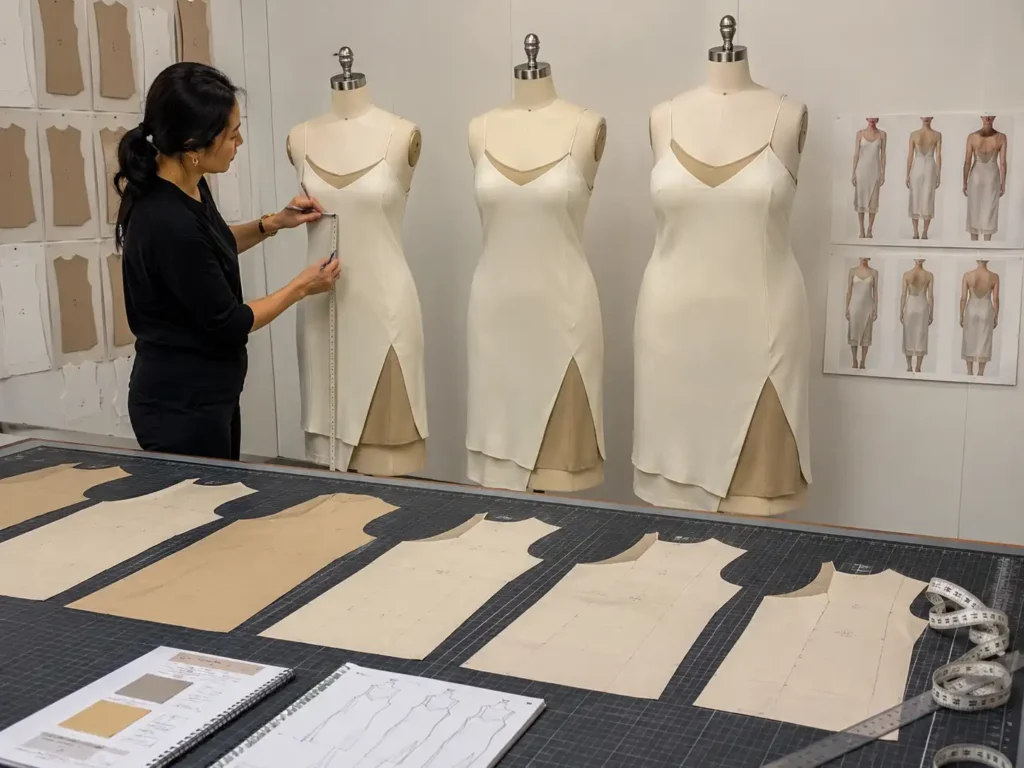
Grade Coverage Safely
Construction Details That Keep Sheer and Lining Layers Stable
Neckline Finish
Armhole Control
Shoulder Attachment
Waist Stabilization
Zipper Integration
Slit Construction
Hem Relationship
Internal Comfort
Design Details Developed for Commercial Sheer Dress Collections
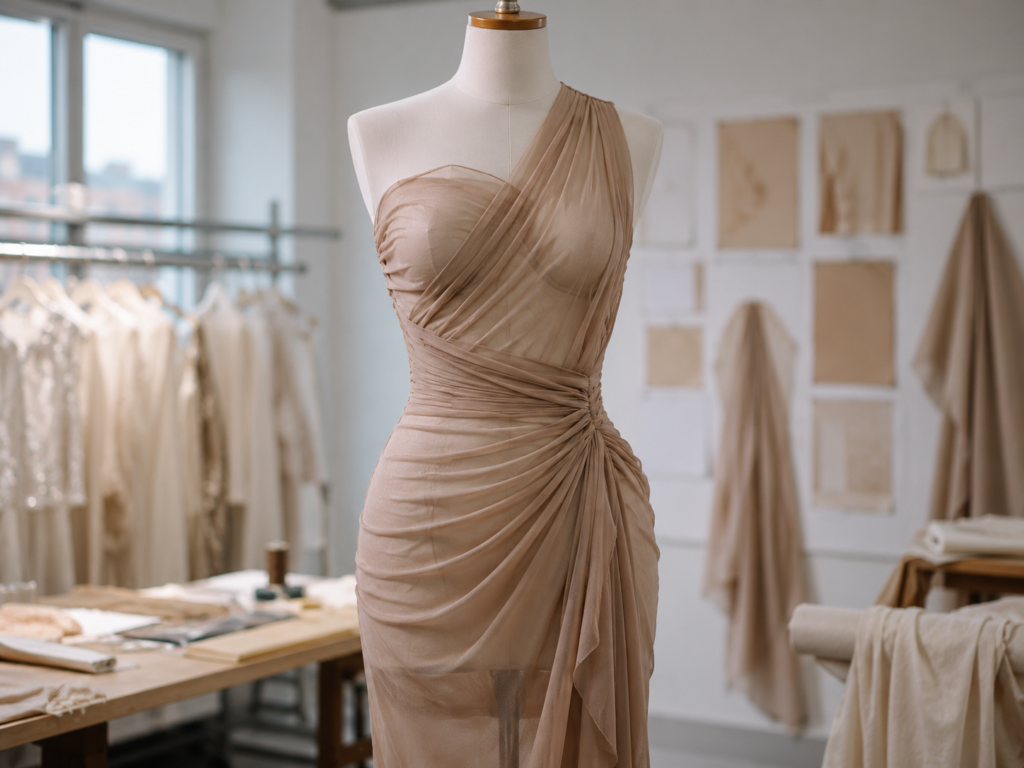
Ruching and Draping
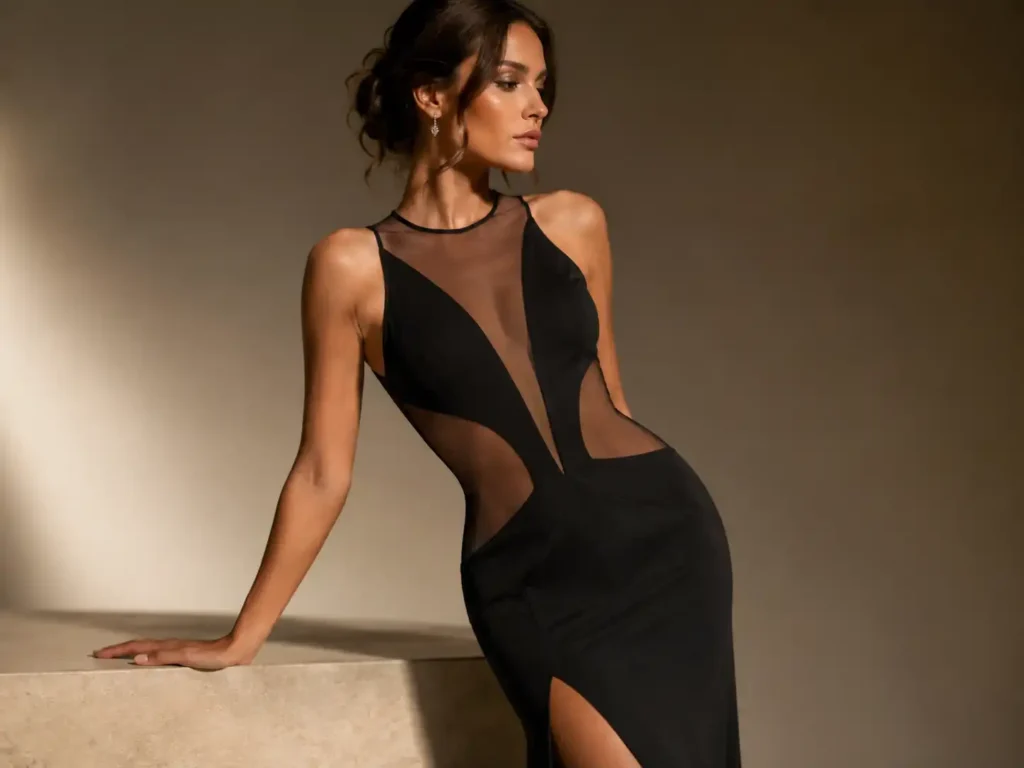
Illusion Panels
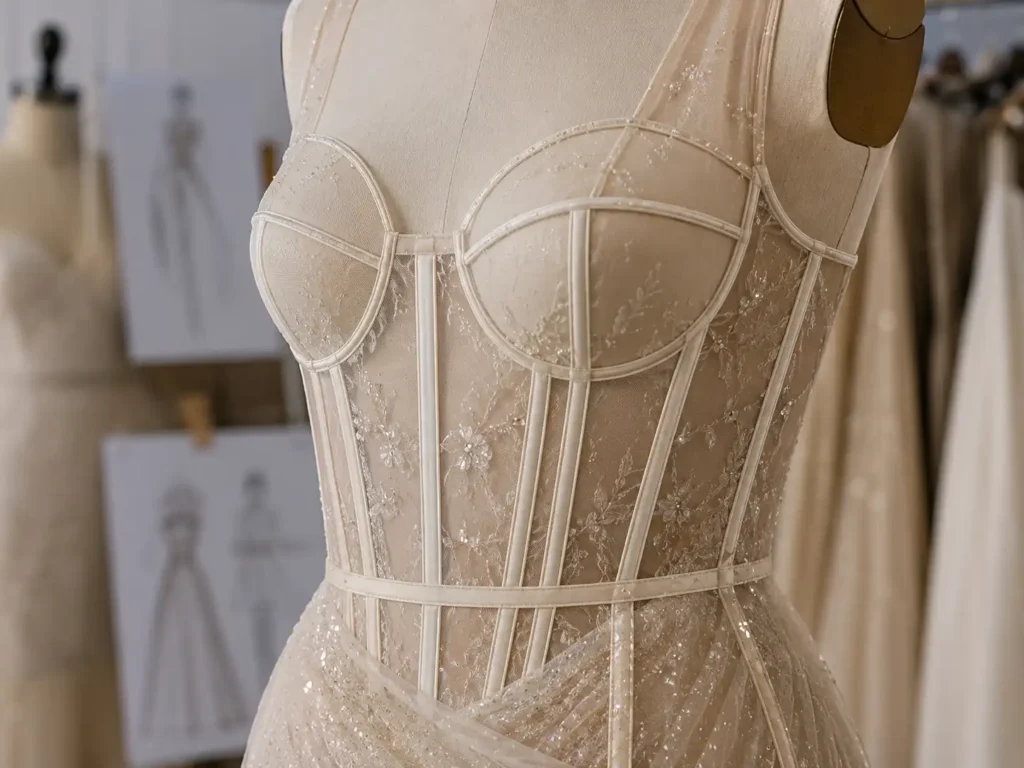
Corset Boning
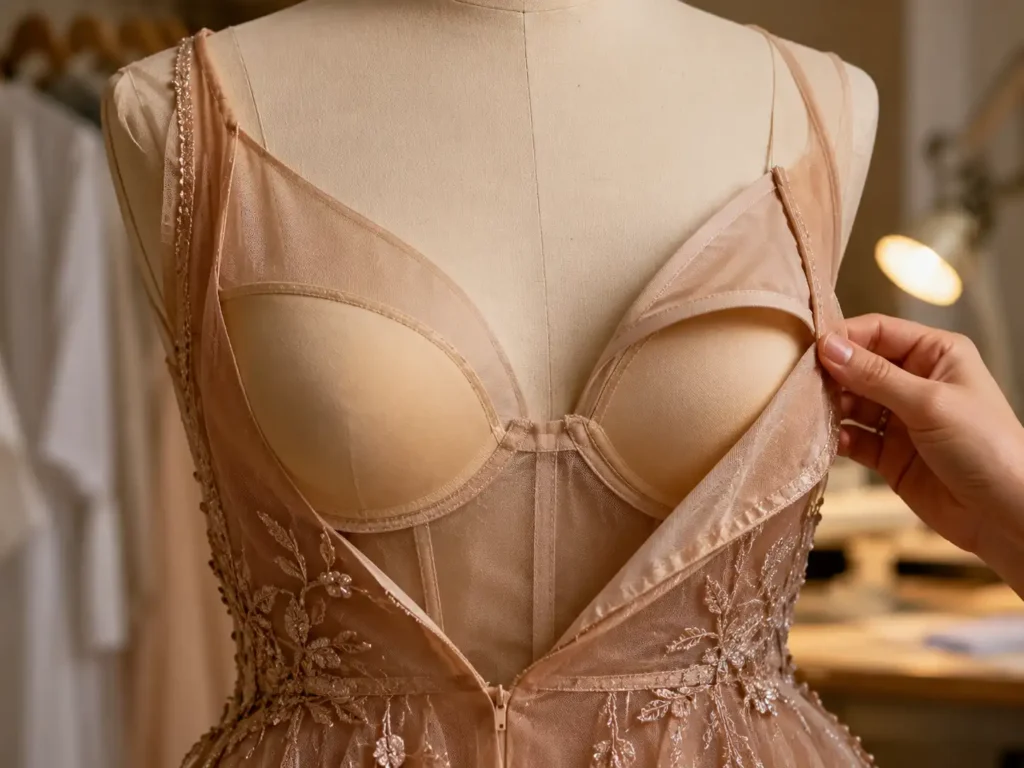
Bra Cups
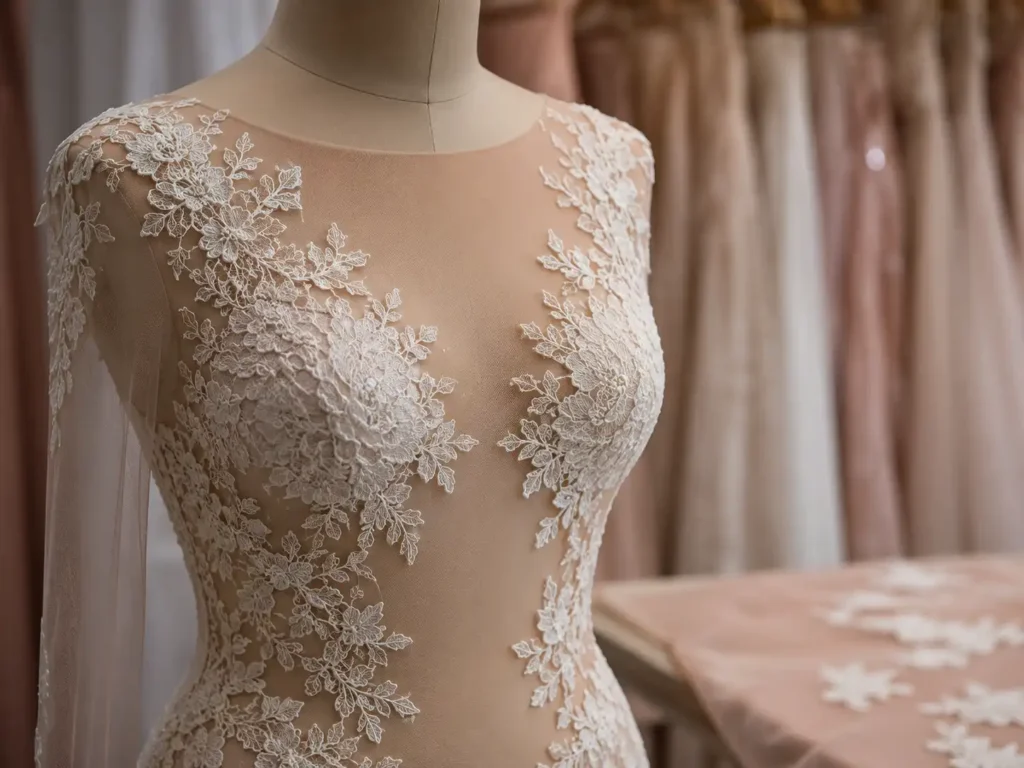
Lace Placement
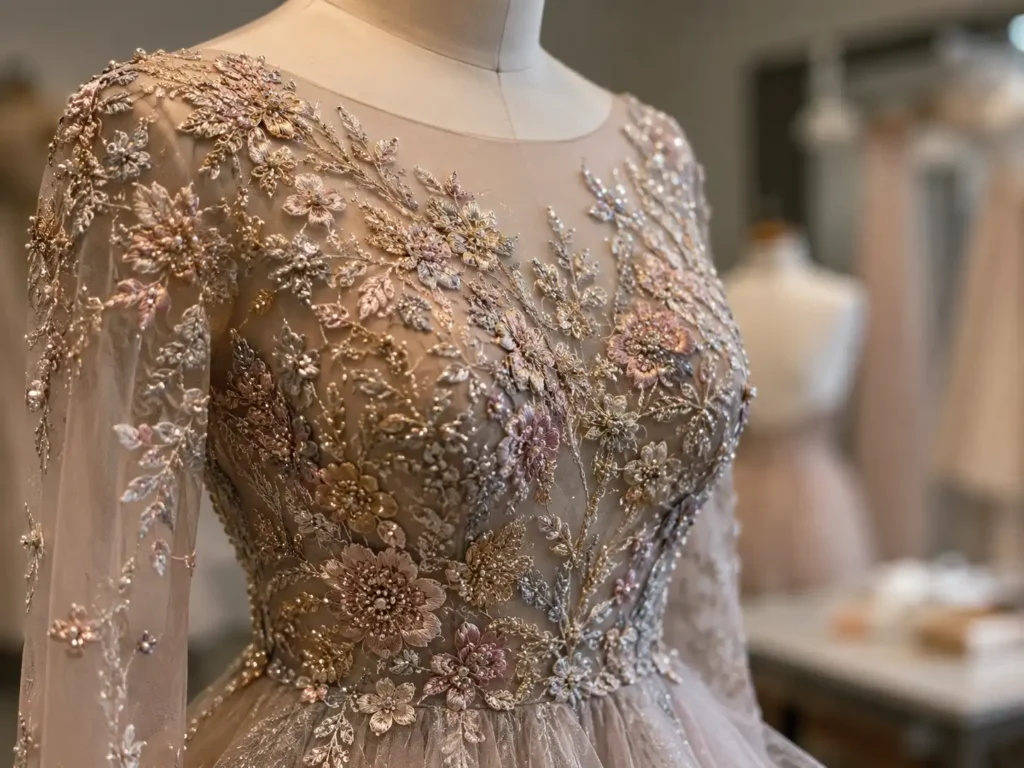
Embroidery
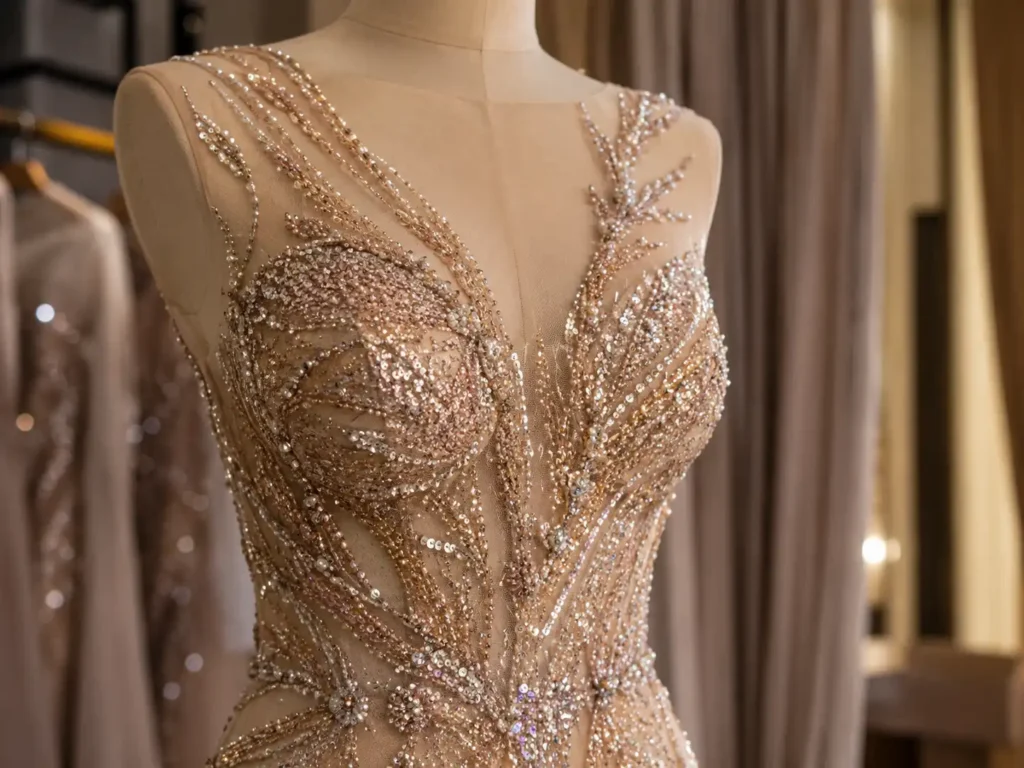
Sequins and Beads
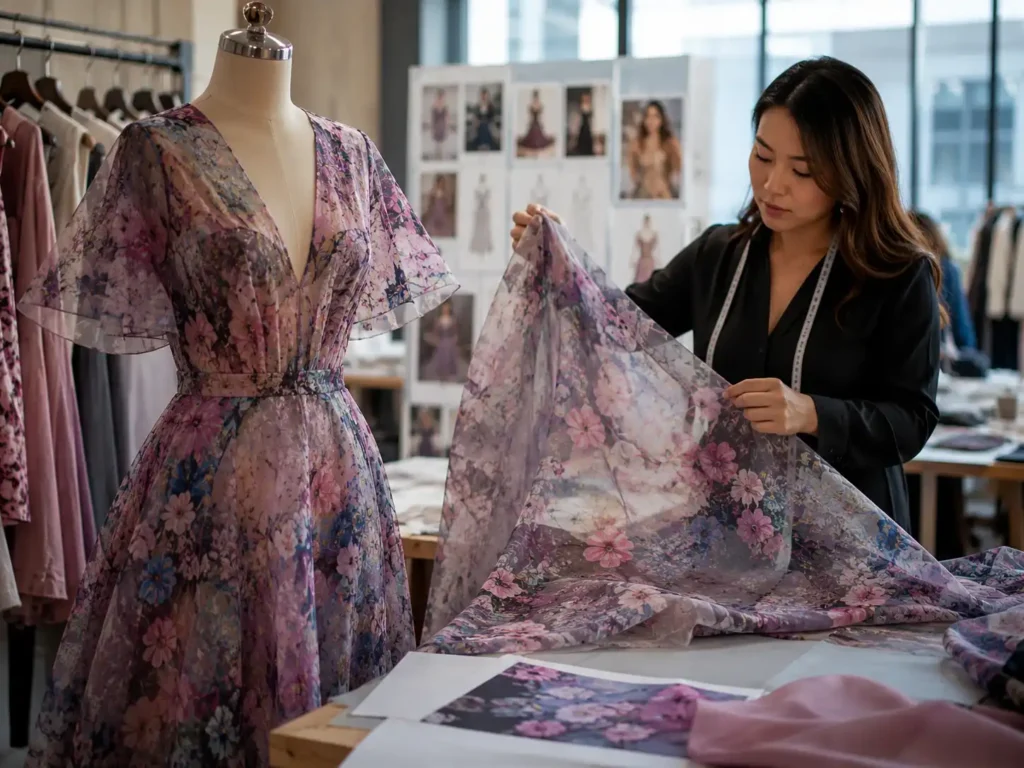
Printed Mesh
What a Production-Ready Tech Pack Must Define
Fabric Specifications
- Identify face and reverse side.
- Mark grain or stretch direction.
- Record approved swatch reference.
Coverage Mapping
- Use clear color coding.
- Add notes for movement-sensitive areas.
- Confirm undergarment assumptions.
Layer Measurements
- Define POM codes.
- Set tolerances by measurement.
- State base size and size range.
Construction Details
- Add enlarged detail drawings.
- Reference approved sample comments.
- Separate shell and lining instructions.
BOM and Trims
- Confirm material MOQ.
- Record substitute rules.
- Track arrival timing.
Packing Instructions
- Protect snag-sensitive surfaces.
- Separate embellished garments when needed.
- Match barcode to SKU and size.
Measurement and Grading for Reliable Size Runs
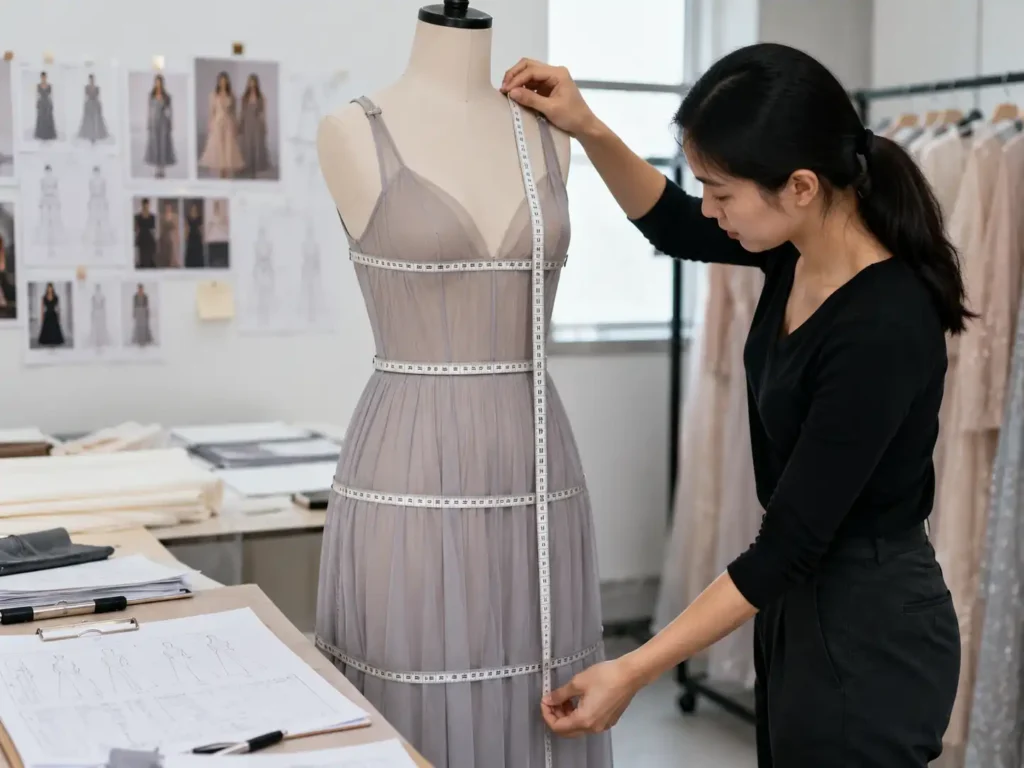
Base-Size Measurement
- Measure shell and lining separately.
- Record relaxed and stretched measurements when required.
- Use the approved fit model or brand block.
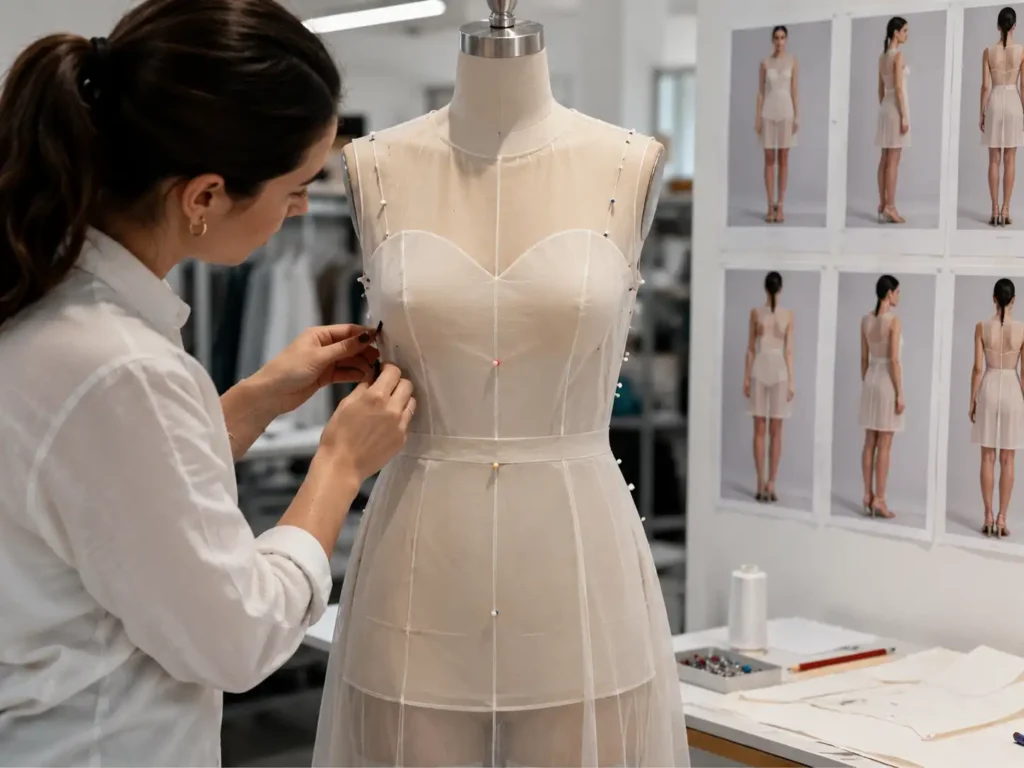
Coverage Grade Rules
- Protect minimum bust coverage.
- Control slit height by size.
- Review neckline and armhole exposure.
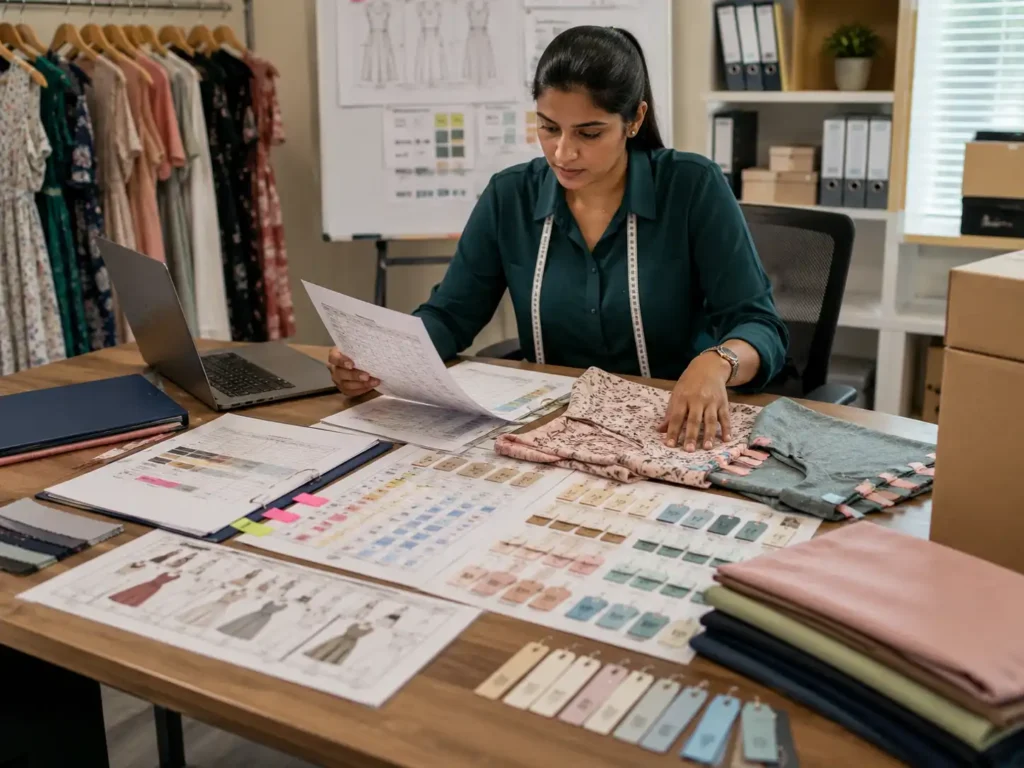
Size-Ratio Planning
- Submit XS-XL or numeric ratios early.
- Confirm extended sizes against separate specifications.
- Match size labels and carton breakdowns.
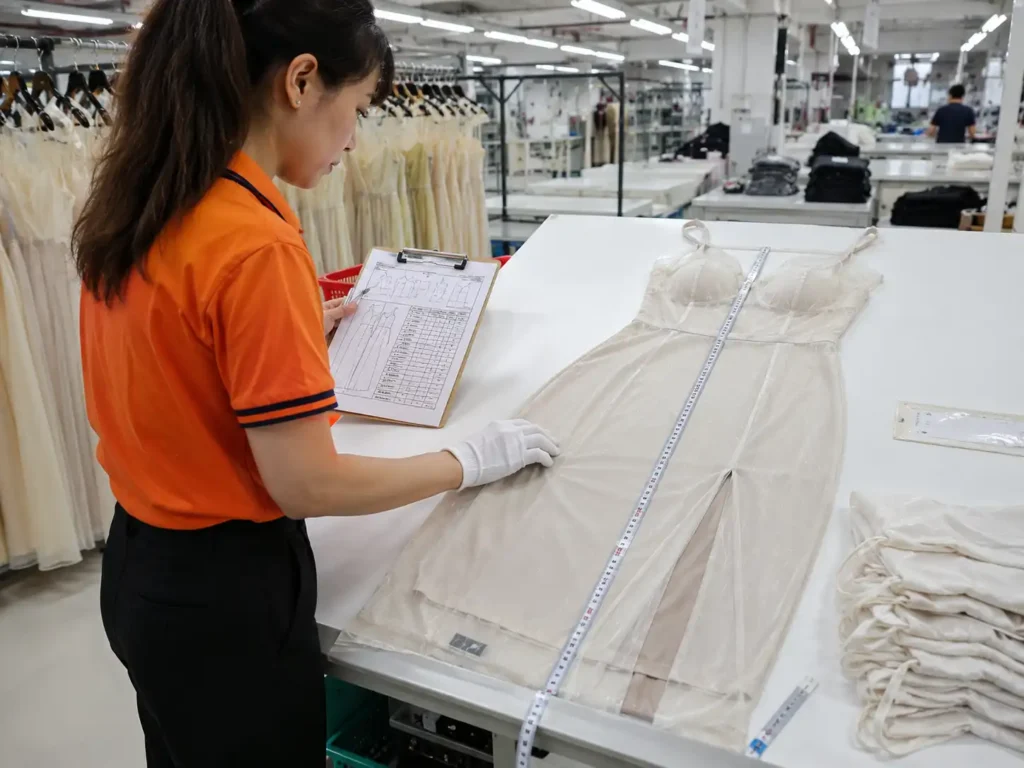
Production Measurement
- Record out-of-tolerance findings.
- Correct pattern or sewing causes, not only finished pieces.
- Keep approved measurement files for repeat orders.
From First Sample to Approved PP Sample
Project Review
Fabric Direction
Pattern Development
First Sample
Fit Review
Revised Sample
PP Sample
Golden Sample
Validate Fit, Coverage, Movement, and Photo Performance
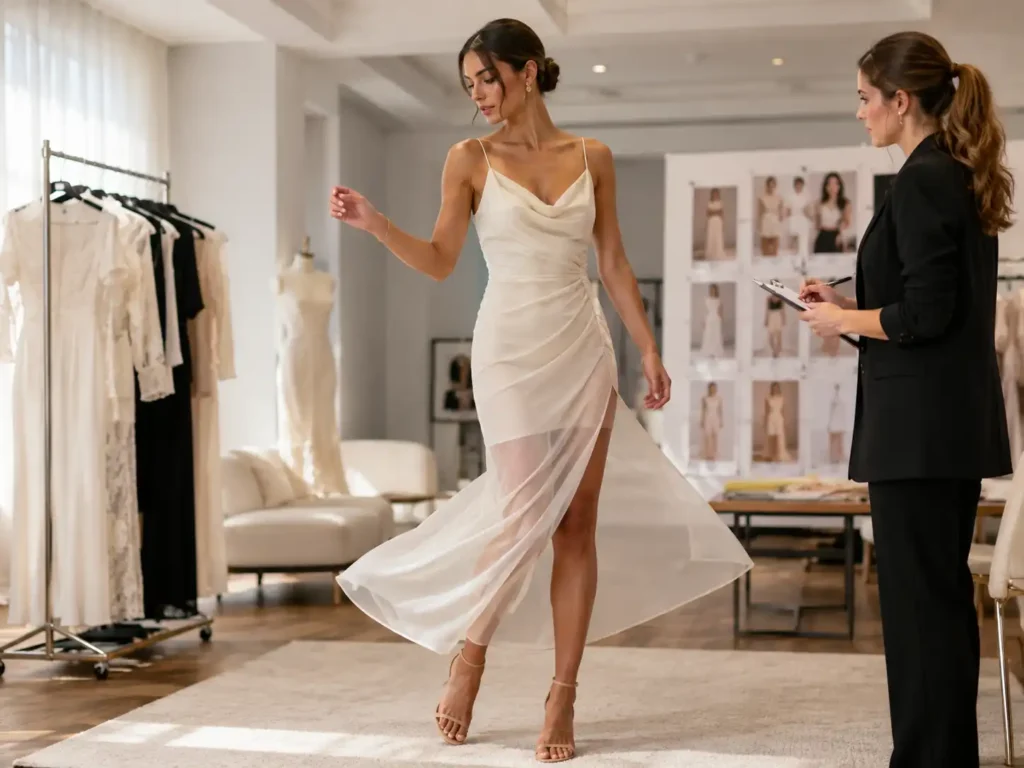
Fit and Balance Review
- Compare with the brand size chart.
- Photograph key angles consistently.
- Measure before and after fitting.
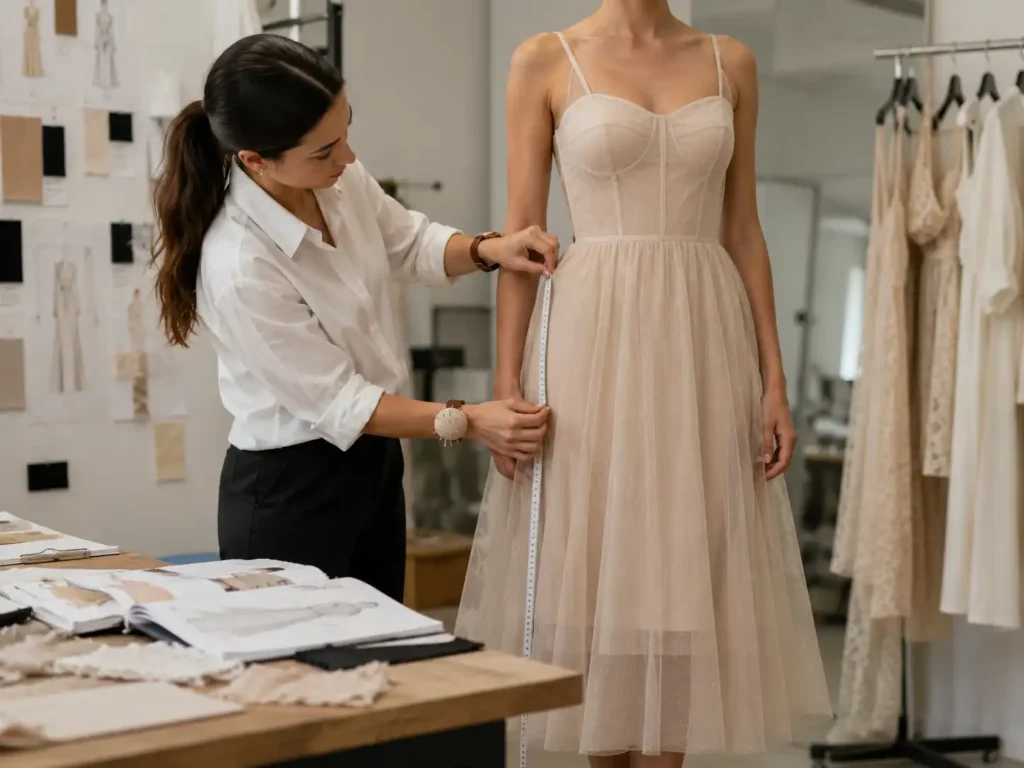
Movement Testing
- Check seated hip coverage.
- Review slit opening during stride.
- Confirm arm movement and neckline security.
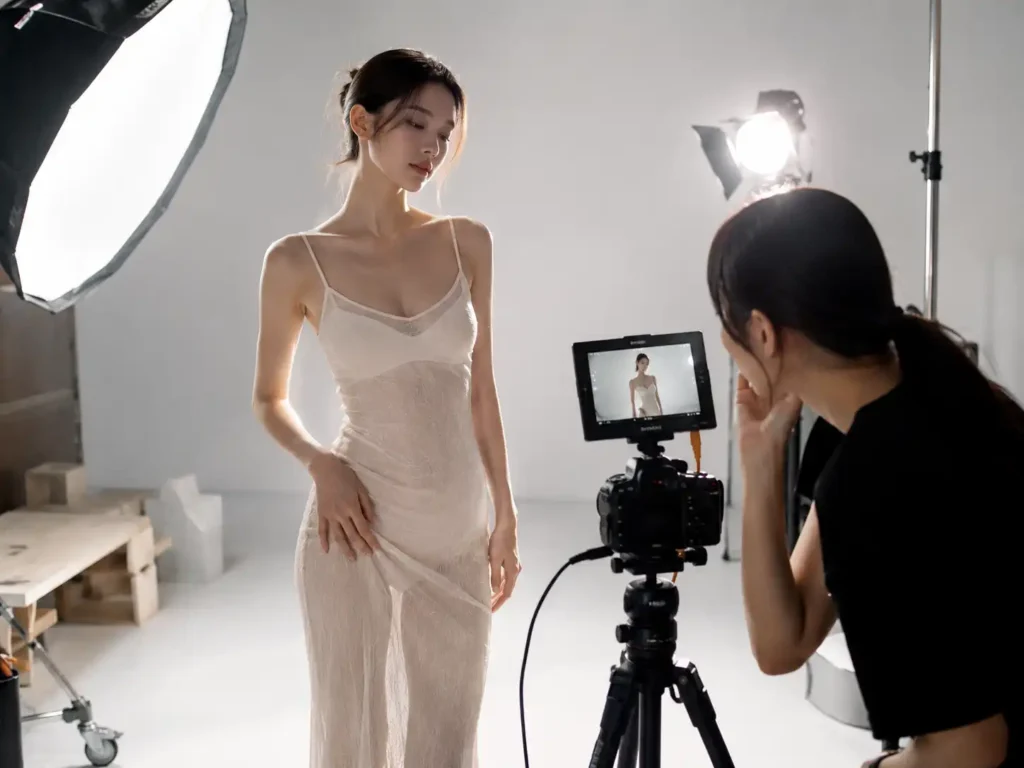
Lighting Review
- Use approved underwear or styling assumptions.
- Review every colorway.
- Keep reference images with sample records.
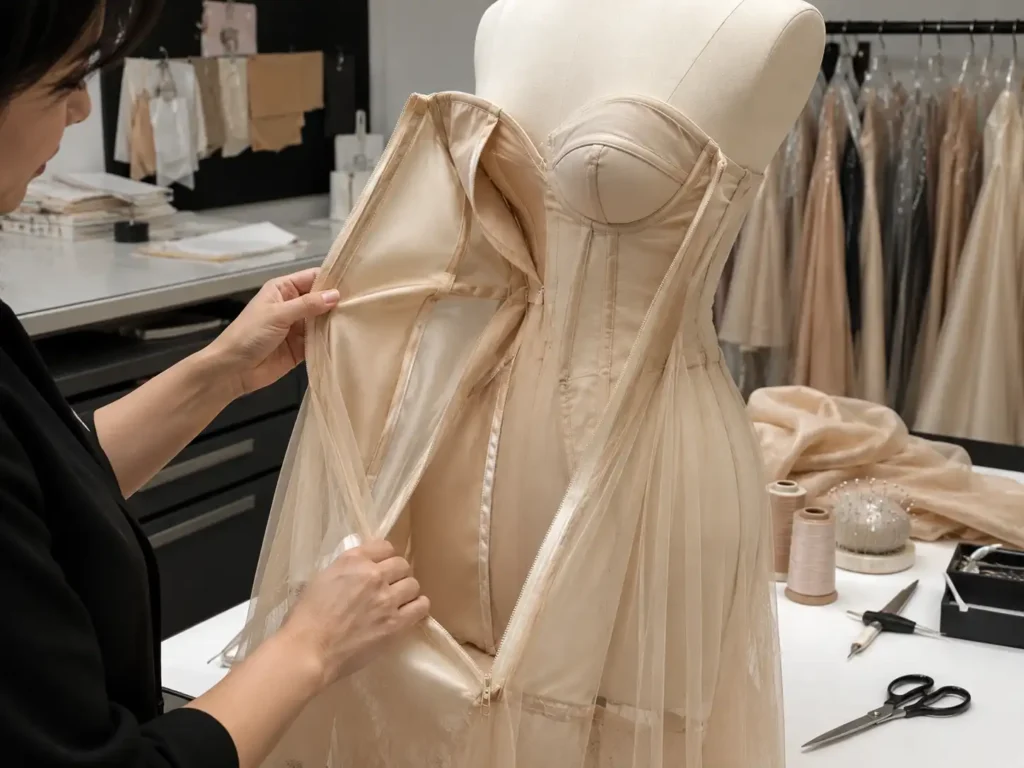
Inside Construction Review
- Check visible seam shadows.
- Protect sharp decoration backs.
- Confirm care and composition labels.
Bulk Production Workflow for Layered Sheer Dresses
Material Approval
Fabric Inspection
Relaxing and Preparation
Cutting and Bundling
Sewing Instruction
Inline Inspection
Finishing and Final QC
Packing and Shipment
Cutting Control for Mesh, Lace, Tulle, and Chiffon
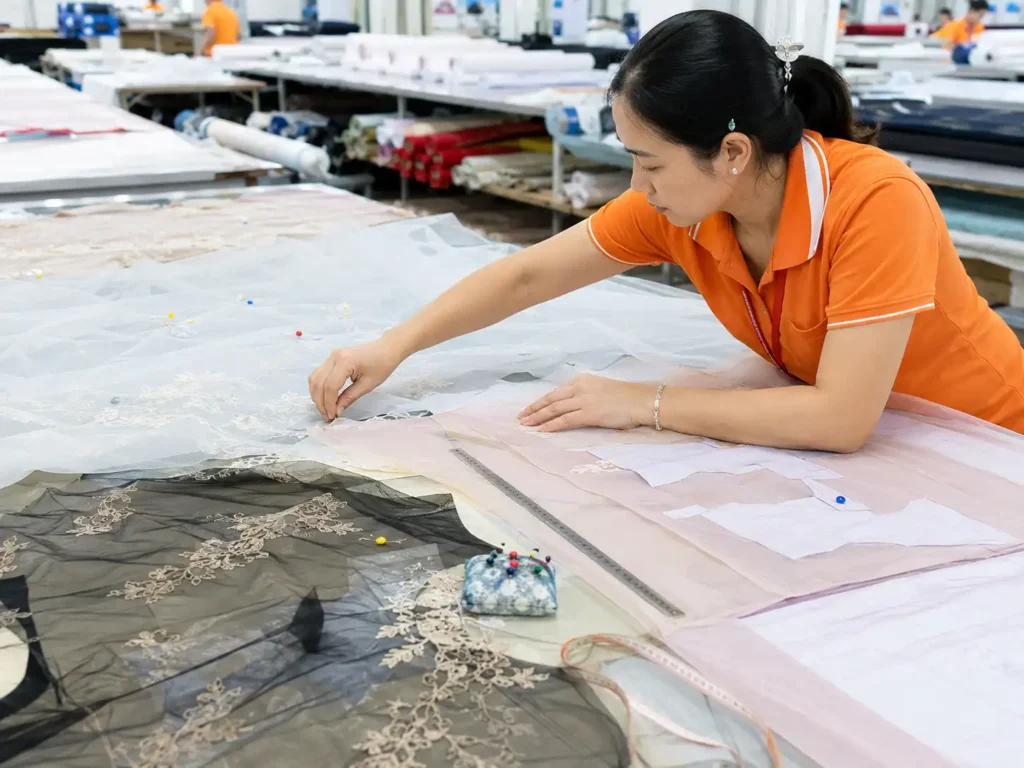
Direction and Stability
- Verify marker direction before cutting.
- Avoid excess tension in the fabric lay.
- Separate dye lots and approved color batches.
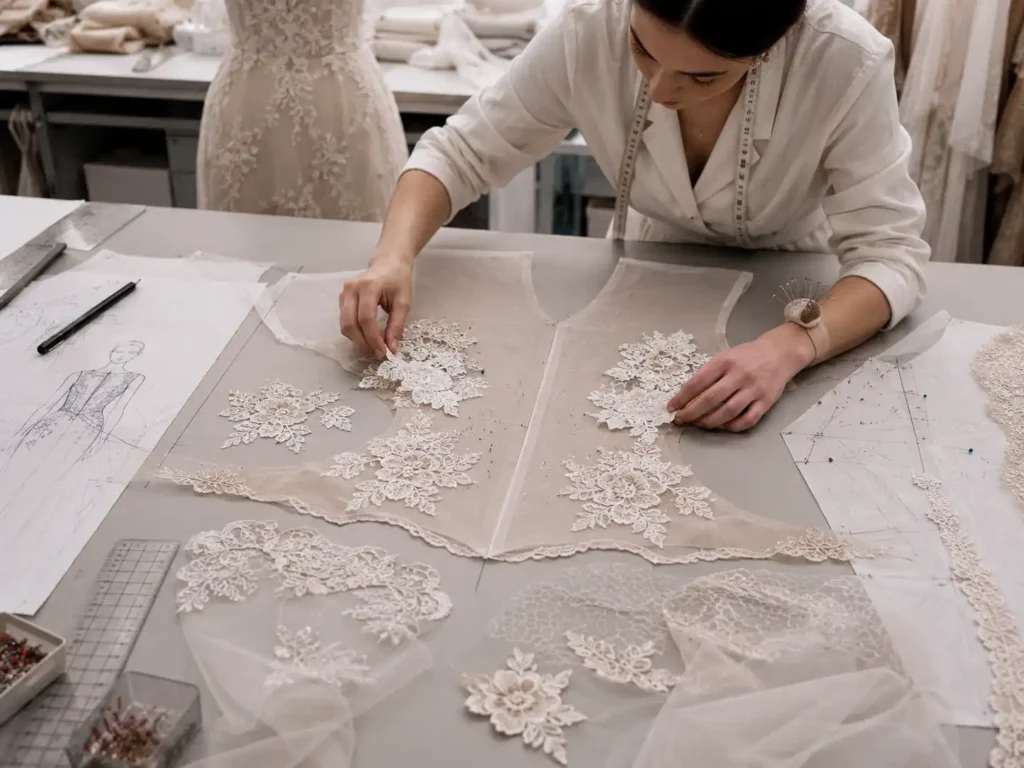
Motif and Panel Placement
Lace, embroidered mesh, appliqué, and placement print may need mirrored or centered positions. Seam lines should avoid cutting through important motifs unless approved. Coverage panels must align with the design and remain consistent across sizes.
- Mark center-front and bust reference points.
- Reserve scalloped lace edges when required.
- Check left-right balance before bulk cutting.
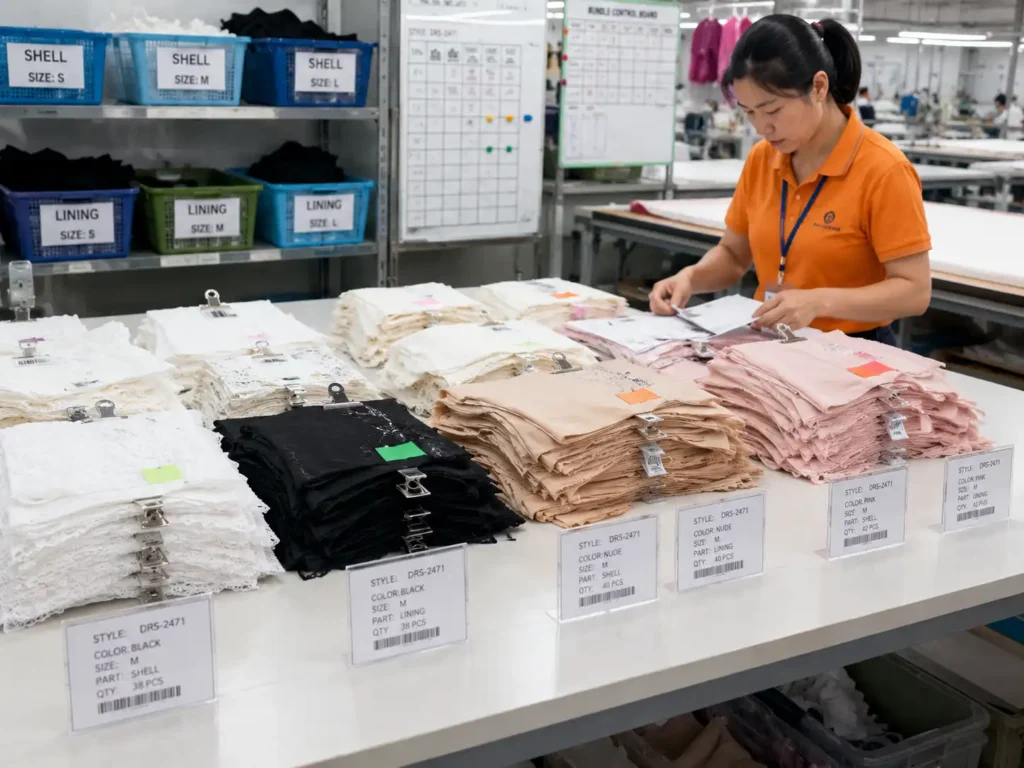
Bundle Identification
Every cut bundle should identify style, color, size, shell part, lining part, and quantity. Similar nude shades or multiple mesh qualities can be easily mixed. Clear bundle control protects opacity, color, fit, and packing accuracy throughout production.
- Count shell and lining parts separately.
- Use clear size and color identification.
- Report damaged or missing cut panels before sewing.
Sewing Instructions for Sheer Shells and Inner Layers
Seam and Needle Control
- Run seam trials on bulk fabric.
- Check recovery after stretching.
- Avoid heavy seam shadows under transparent areas.
Layer Feeding
- Match pattern notches.
- Control shell and lining tension separately.
- Inspect side-seam rotation early.
Attachment and Openings
- State exact tack locations.
- Protect zipper ends and boning tips.
- Keep lining clear of closure teeth.
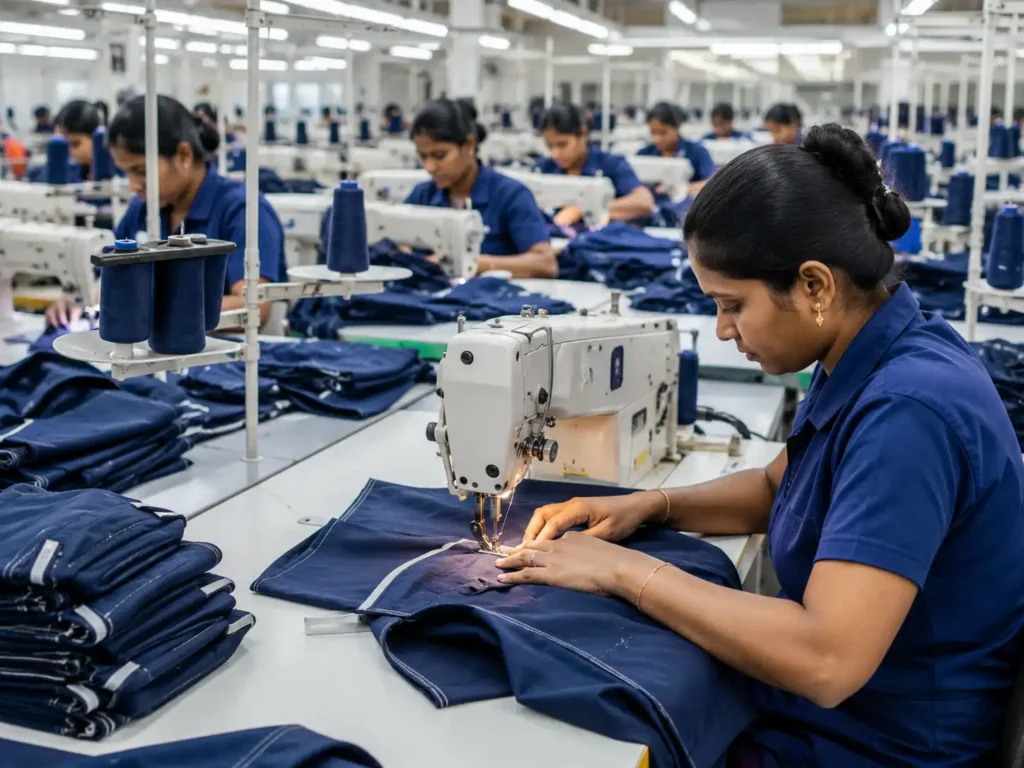
Quality Control for Every Visible and Hidden Layer
Review QC Plan Set Inspection Points
Transparency Level
Lining Coverage
Layer Alignment
Stretch Recovery
Seam Stability
Zipper Flatness
Slit and Movement
Final Appearance
Keep Coverage Stable Across the Full Size Range
Pattern Version Control
- Identify pattern version and approval date.
- Link revisions to the PP sample.
- Archive final files for repeat orders.
Shell and Lining Measurements
- Use separate POM references where needed.
- Measure relaxed and stretched points consistently.
- Check lining hem against the coverage map.
Extended Size Review
- Use market-specific size charts.
- Confirm fit models or reference blocks.
- Review support components by size.
Production Sampling
- Prioritize smallest, base, and largest sizes.
- Check colorways with different opacity.
- Correct root causes before full completion.
Control Color, Opacity, and Layer Interaction in Bulk
Shell and Lining Color
- Confirm Pantone or physical standards.
- Approve paired swatches.
- Review under agreed lighting.
Dye Lot Management
- Record supplier and batch references.
- Compare shell and lining together.
- Avoid mixing visibly different lots in one garment.
Trim Color Coordination
- Use approved thread and zipper references.
- Check under tension and flash.
- Review internal components on pale colorways.
Bulk Color Approval
- Keep approval records.
- Photograph only as supporting evidence.
- Use physical references for final comparison.
MOQ, Cost Drivers, and Quotation Logic
MOQ starts from 200 pcs per style/color. Final feasibility and price depend on material availability, color development, construction, size breakdown, decoration, packing, sampling, QC, and production scheduling.
Cost Driver | Why Cost Changes | Cost-Control Direction | Approval Needed |
Outer fabric | Weight, width, stretch, decoration, yield, supplier MOQ | Use stable stock qualities or consolidate fabrics across styles | Fabric swatch and bulk availability |
Lining system | Full lining, bodysuit, double mesh, partial panels, multiple colors | Select coverage architecture around real wear needs | Coverage map and lining sample |
Pattern complexity | Corset, cut-outs, asymmetry, multiple panels, fitted layers | Simplify hidden seams or share approved blocks | Pattern and fit approval |
Sewing time | Ruching, narrow binding, lace placement, boning, cups, handwork | Prioritize visible value and simplify low-impact operations | Construction sample |
Color quantity | Each color may carry separate fabric and trim MOQ | Consolidate launch colors or use available color families | Color plan by style |
Size quantity | Wide size ranges increase grading, cutting, labels, QC, and packing | Use a workable ratio and clear size chart | Size breakdown |
Decoration | Embroidery, sequins, beads, appliqué, print placement | Adjust density, coverage, or placement without losing the design focus | Artwork and strike-off |
Private label | Labels, hangtags, printed bags, boxes can carry independent MOQ | Stage packaging upgrades around order scale | Packaging specification |
Testing and documents | Market or retailer requirements vary by material and destination | Confirm requirements before material booking | Test scope and destination |
Timeline | Special fabric, dyeing, custom trims, complex samples, and late changes extend scheduling | Lock PP sample, materials, and packaging before bulk release | Confirmed production calendar |
Private Label and Retail-Ready Packing for Delicate Dresses

Brand Label
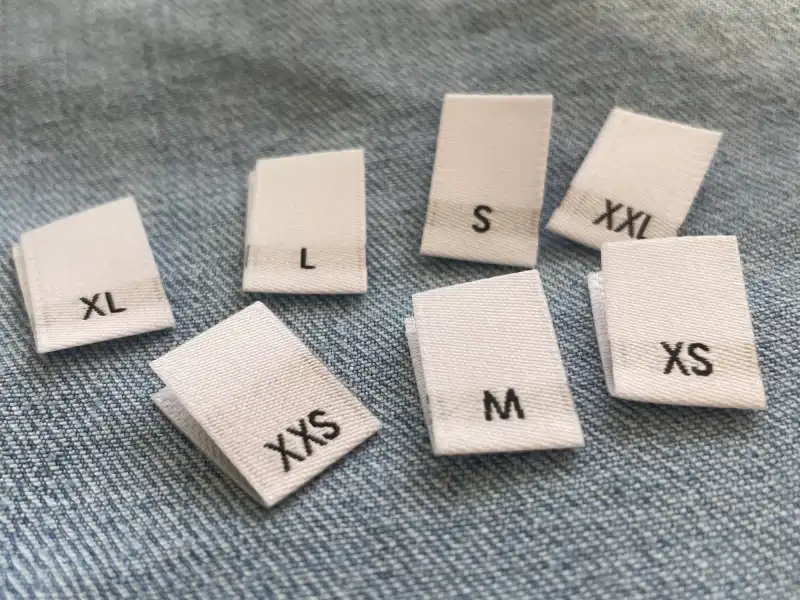
Size Label
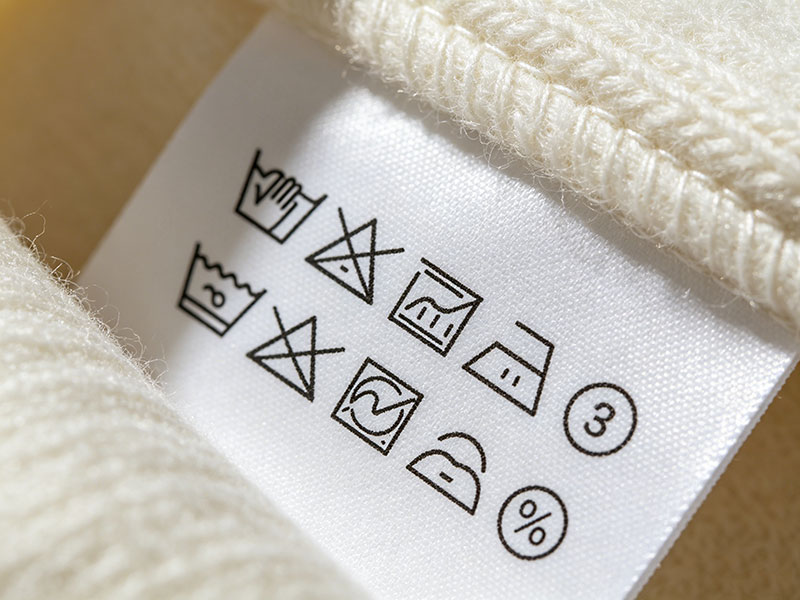
Care Label

Hangtag System
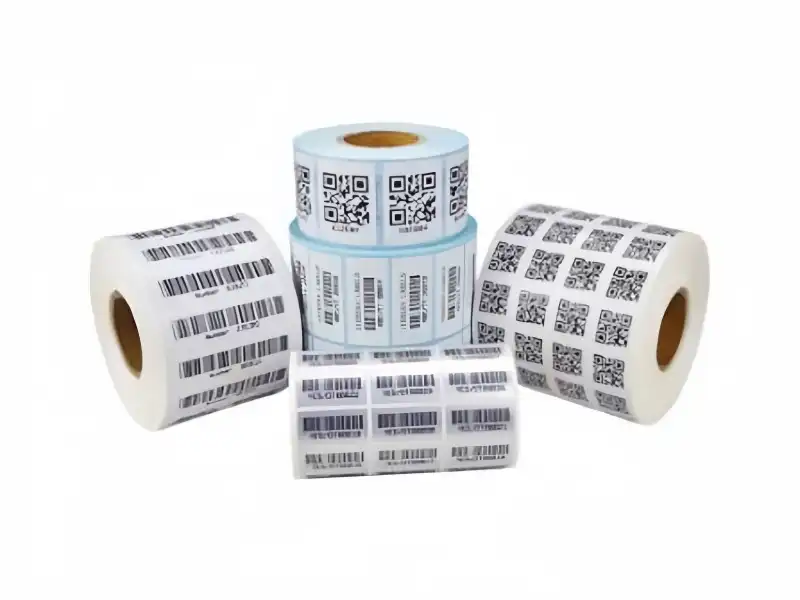
Barcode and SKU
Snag Protection

Polybag and Folding
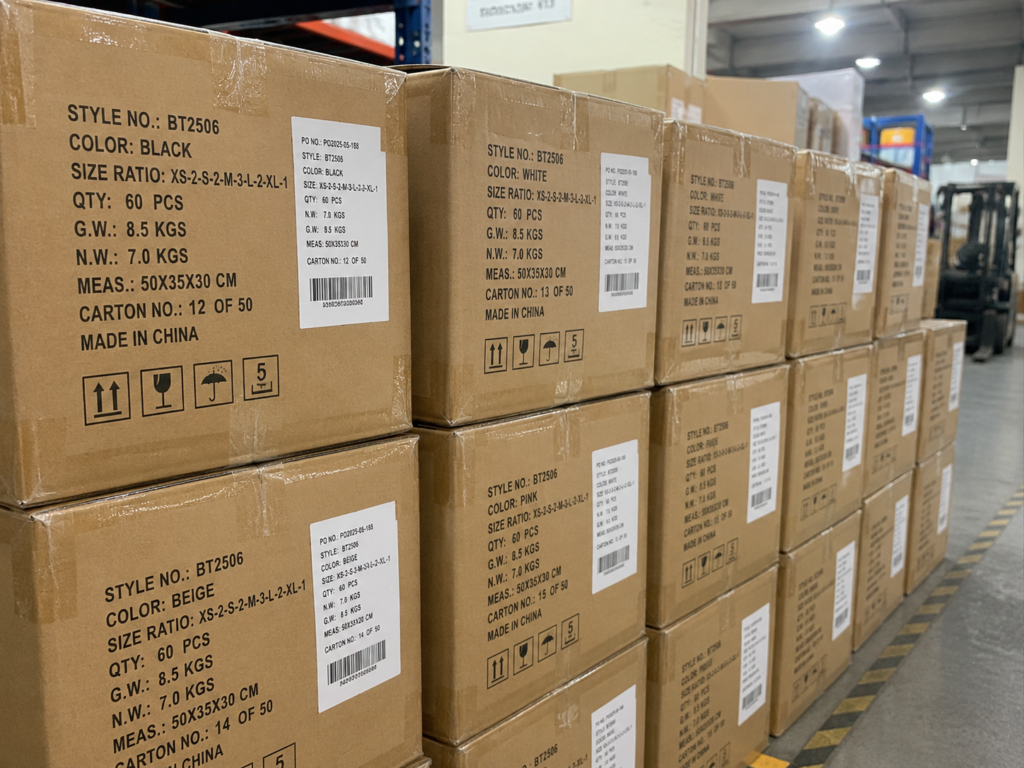
Carton Accuracy
Lined Sheer Dress Case Studies
United States Partywear Program
- Project profile: 18 styles, 46,800 pieces total, with bodycon minis, ruched midis, sheer corset dresses, and maxi shells over short linings. The range used black, wine, cocoa, and selected nude tones across XS-XL.
- Challenge: the first fabric direction produced inconsistent opacity between black and nude colorways, while several mini linings climbed at the hip during walking.
- Development action: shell-and-lining pairings were separated by color, mini-lining ease and hem circumference were revised, slit exposure was reviewed in motion, and zipper seams were stabilized.
- Production control: color-pair approval, size-set review, shell/lining bundle identification, inline opacity checks, and SKU packing verification were added to the production file.
- Result: the collection moved into coordinated bulk production only after PP standards were locked for each fabric pairing; pattern, BOM, packing, and color references were retained for replenishment.
European Occasionwear Collection
- Project profile: 12 styles, 27,600 pieces total, combining lined lace, embroidered mesh, soft tulle overlays, long sheer sleeves, and corset-inspired bodices. Orders were distributed across two seasonal delivery windows.
- Challenge: lace motif position and nude lining shade changed the apparent symmetry and coverage of the bodice, while embroidered mesh added uneven weight around the neckline.
- Development action: motif landmarks were placed on patterns, lining shades were compared under indoor and natural light, shoulder support was reinforced, and decoration-free seam allowances were defined.
- Production control: incoming lace and embroidery were checked by lot, cutting used placement references, bodice support points received inline inspection, and delicate surfaces received anti-snag packing.
- Result: the range was organized around shared lining families and repeated bodice blocks, reducing unnecessary variation while preserving distinct visible designs.
Australian Ecommerce Launch
- Project profile: 24 styles, 62,400 pieces total, covering printed mesh, double-layer mesh, sheer maxi dresses with built-in bodysuits, and lightweight resort silhouettes across multiple online drops.
- Challenge: campaign photography required controlled flash transparency, while launch timing required selected SKUs to arrive earlier than the balance of the collection.
- Development action: each colorway was reviewed under natural light and flash, bodysuit rise and leg openings were adjusted by size, and photo-ready samples were separated from PP approval when materials differed.
- Production control: barcode and SKU packing were linked to size ratios, urgent launch quantities were prioritized, and a split-shipment plan assigned selected quantities to air freight with the remaining bulk moving by sea.
- Result: production records linked approved fabric pairs, size files, color approvals, labels, packing, and shipment allocation for later repeat-order review.
Support Repeat Orders, Replenishment, and Seasonal Drops
Seasonal Collection Records
Patterns, size charts, measurement files, fabric references, lining references, trims, construction notes, labels, packing, and approved samples can be archived for later collections.
Shared blocks and material families help organize 10-30 style programs without making every style unrelated.
- Keep style-level version records.
- Link colorways to approved shell-and-lining pairs.
- Preserve NDA-protected files.
Replenishment Review
Repeat orders begin by checking material availability, dye lot, trim supply, packaging stock, current pricing, quantity, and requested delivery.
A former fabric may require a new swatch or replacement when supply changes.
- Reconfirm bulk color.
- Review size ratio and hot SKUs.
- Update quotation when materials change.
Launch and Shipment Planning
Programs can be arranged around launch dates, photo samples, sales samples, PP approval, production windows, packing, and freight. For launch-sensitive orders, selected SKUs or 10-30% of urgent quantity may be planned by air while the balance moves by sea, subject to project confirmation.
- Prioritize hero styles and key sizes.
- Separate invoices and packing lists when required.
- Confirm warehouse and forwarder instructions.
Frequently Asked Questions About Lined Sheer Dress Manufacturing
A lined sheer dress combines a transparent or semi-transparent outer fabric with an inner layer that controls coverage, comfort, support, color, and movement. The lining may cover the full body, selected zones, a short inner skirt, or a built-in bodysuit.
Yes. Full lining, partial lining, mini-slip lining, double mesh, built-in bodysuits, and modesty panels can be developed according to the silhouette, target coverage, selling occasion, and fabric behavior.
Stretch direction, percentage, recovery, weight, and hand are compared. The shell and lining do not always need identical stretch, but their relationship must allow movement without twisting, ride-up, sagging, or restricted fit.
Yes. Nude, tonal, contrast, and color-matched linings can be reviewed. Skin-tone descriptions vary across markets, so Pantone, physical swatches, color cards, or approved fabric references are preferred.
Yes. Built-in bodysuits can be developed with controlled torso length, leg opening, snap closure, cups, lining, stretch, waist connection, and coverage. Fit testing is especially important across the size range.
Reference images can support an initial structure review. Accurate sampling and quotation improve when the project also includes measurements, size range, fabric direction, coverage notes, quantity, colors, labels, packing, and target launch date.
Include front, back, and detail drawings; shell and lining specifications; coverage maps; measurements; grade rules; construction; zipper, cups, boning, elastic, labels, packing, colors, and quantity. A BOM helps control every material.
Complex corset, lace, mesh, or sequin first samples commonly require 15-25 days depending on materials and construction. Revised samples commonly require 7-15 days. PP samples commonly require 7-15 days after final materials are ready.
MOQ starts from 200 pcs per style/color. Fabric supplier MOQ, custom dyeing, embroidery, special trims, decoration, packaging, and production scheduling can increase the required quantity.
A production schedule is provided after PP sample, materials, trims, colors, sizes, labels, packing, order quantity, QC requirements, and payment terms are confirmed. Complex materials or late changes extend the schedule.
Pattern ease, hip circumference, lining length, fabric recovery, hem opening, attachment points, and movement tests are reviewed. The lining should remain stable without pulling the outer shell.
Bulk shell and lining are checked as a pair under agreed lighting. Coverage maps, approved swatches, PP sample, Golden sample, dye-lot records, inline checks, and final appearance review support consistency.
Yes. Jinfeng Apparel supports brand labels, size labels, care labels, hangtags, barcodes, SKU labels, polybags, carton marks, individual garment packing, and repeat-order packing records.
Yes. NDA-based cooperation and design protection can cover tech packs, samples, patterns, fabrics, trims, labels, packaging, order information, and unpublished styles throughout development and production.

Start Your Lined Sheer Dress Project
A complete submission helps the team evaluate fabric compatibility, lining structure, pattern risk, sample timing, MOQ, cost drivers, private-label requirements, and production planning without relying on assumptions. Reference images are welcome, while a tech pack, size chart, or original sample provides stronger control for complex layered styles.
- Reference image, sketch, original sample, or tech pack
- Outer sheer fabric direction and preferred lining structure
- Coverage requirement for front, back, sides, sleeves, slit, and hem
- Target quantity per style/color and planned size ratio
- Color plan, Pantone references, or physical color standard
- Brand labels, hangtags, barcode, SKU, polybag, and carton requirements
- Target launch date, delivery market, and preferred freight arrangement
- Testing, documentation, or factory-audit requirements for the program