Lined Dress Manufacturer
Custom lined dress manufacturing for global fashion brands that need controlled opacity, clean internal construction, reliable fit, and stable bulk quality.
- Full, partial, bodice, skirt, self, free-hanging, attached, and stretch lining solutions are developed around the outer fabric and dress structure.
- Ordinary lined dress first samples generally require 10-15 days; corset, lace, mesh, sequin, and other complex lined styles generally require 15-25 days after materials and specifications are confirmed.
- Development is supported by 7+ senior pattern makers, 2 sample rooms, and 20+ sample machinists.
- Bulk programs are coordinated through 6 owned women’s fashion factories, 10+ long-term production partners, 18+ sewing lines, and 6+ flexible production lines.
Manufacturing Capacity Behind Every Lined Dress Program
Since 2008
6 Owned Factories
10+ Production Partners
2 Sample Rooms
7+ Pattern Makers
15+ QC Inspectors
Built for Established Fashion and Dress Programs
Best Fit For
- Global fashion brands developing lined dress collections
- Occasionwear, partywear, eveningwear, and wedding guest labels
- Premium ecommerce brands requiring consistent fit and retail-ready packing
- Fashion retailers, sourcing companies, and brand groups
- Product development, merchandising, sourcing, and QA teams
- Multi-style programs with defined launch windows and repeat-order potential
- Private-label projects requiring labels, barcodes, SKU packing, and export delivery
Production Boundaries
Jinfeng Apparel focuses on custom development, sampling, bulk production, QC, private-label packing, and shipment coordination. The production system is not structured around ready-stock purchasing, dropshipping, individual garments, open-ended design exploration without production plans, or price-only sourcing.
MOQ starts from 200 pcs per style/color. Fabric suppliers, custom colors, special lace, custom trims, branded packaging, and complex structures may carry separate minimums. The strongest fit comes from brands that value fabric performance, fit accuracy, workmanship, bulk consistency, and disciplined approvals.
Why Lined Dresses Fail During Sampling and Bulk Production
Lining Shows Below Hem
Lining Restricts Movement
Dress Remains Transparent
Lining Rides Up
Zipper Catches Lining
Bulk Differs From Sample
How Leading Brands Evaluate Lined Dress Manufacturers
Dress Specialization
Pattern Capability
Material Knowledge
Sample Discipline
Process Quality Control
Branded Delivery
From Lining Direction to Brand-Ready Delivery
Style Review
Fabric Direction
Pattern Development
First Sample
Fit Revision
PP Approval
Bulk Production
Quality Control
Packing and Delivery
Custom Lined Dresses Across Fabrics and Occasions
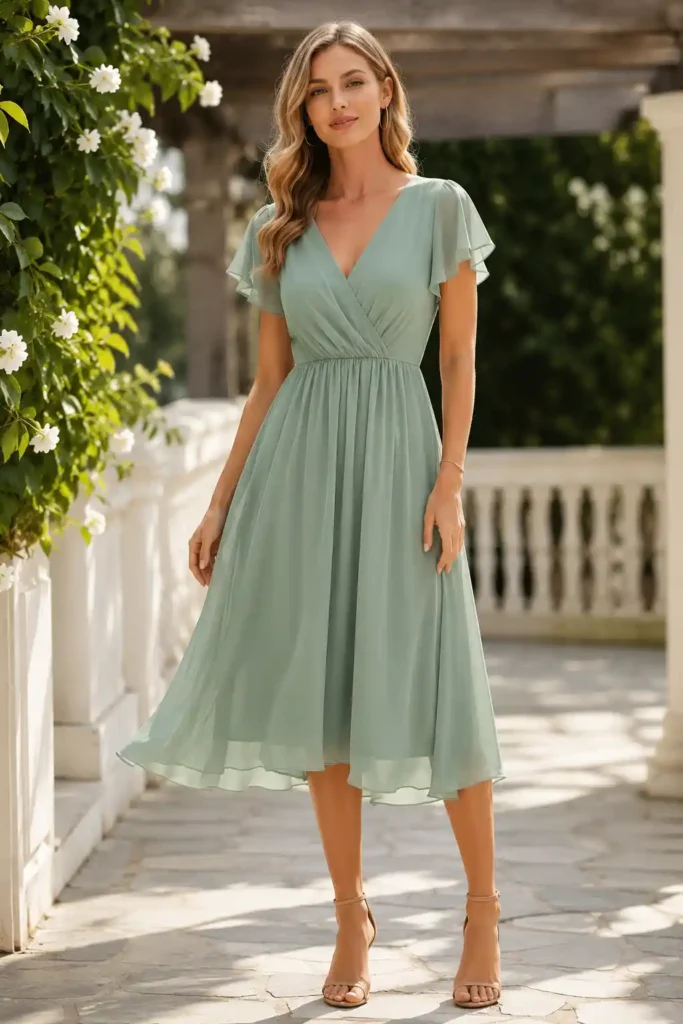
Lined Chiffon Dress
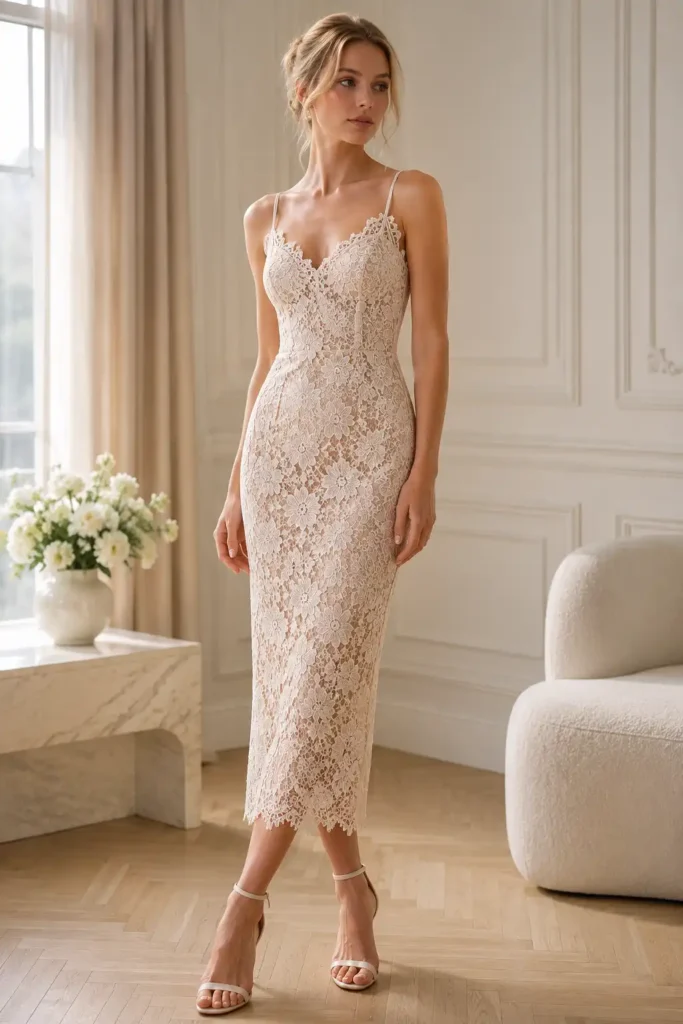
Lined Lace Dress

Lined Mesh Dress

Lined Satin Dress

Lined Sequin Dress

Lined White Dress

Lined Bodycon Dress

Lined Slip Dress

Lined Corset Dress

Lined Maxi Dress

Lined Occasion Dress

Lined Resort Dress
Choose the Right Lining Construction for Each Dress

Fully Lined

Bodice Lined
Only the upper body is lined, commonly around the bust, neckline, armhole, shoulder, or waist.
Bodice lining supports clean edges, opacity, cups, boning, and neckline security without adding a second layer through the skirt. It is often used in fit-and-flare, corset, strapless, halter, lace, and occasion dresses.

Skirt Lined
Skirt lining provides opacity and comfort below the waist while keeping the upper body lighter. It is useful for chiffon, lace, printed, light-colored, and textured skirts.
Waist attachment, hip ease, slit position, skirt volume, static behavior, and lining length must be coordinated with the shell.

Partial Lining
Partial lining covers only selected zones such as bust, front body, upper thigh, or specific sheer panels.
The approach can preserve intentional transparency while protecting modesty and comfort. Coverage lines must be designed carefully so the lining edge does not create an unwanted horizontal shadow through mesh, lace, or light fabric.

Stretch Lining

Self Lining

Free-Hanging Lining

Attached Lining
Match Outer Fabrics With the Right Lining
Fabric pairing determines opacity, comfort, drape, stretch, shrinkage, static behavior, and the final silhouette. The matrix below shows the main development direction; final selection is approved through swatches, samples, fit review, and project specifications.
| Outer Fabric | Primary Risk | Recommended Lining Direction | Key Sample Check | Bulk QC Focus |
|---|---|---|---|---|
| Chiffon | Transparency, seam slippage, shifting | Lightweight woven or soft knit lining | Opacity, skirt movement, waist attachment, hem length | Shade, shell damage, inner length, seam security |
| Lace | Coverage boundary, motif loss, skin contact | Soft woven, stretch lining, or partial tonal/nude lining | Motif visibility, bust/hip coverage, seam placement | Lace damage, lining color, edge exposure, zipper area |
| Mesh | Transparency increases under stretch | Stretch lining or power mesh by support need | Stretch compatibility, recovery, bust coverage, cut-outs | Holes, recovery, lining exposure, attachment tension |
| Satin | Snagging, pressing marks, lining shadow | Smooth lightweight lining with low friction | Drape, zipper flatness, shell/lining color, seam show | Snags, shine direction, color batch, pressing quality |
| Sequin Fabric | Abrasion, seam bulk, missing sequins | Soft protective lining with secure attachment | Skin comfort, zipper clearance, armhole and neckline | Missing sequins, scratch points, seam cleaning, packing |
| Crepe | Drape variation, opacity by weight | Soft woven or stretch lining according to shell | Hand feel, movement, seam behavior, hem fall | Shrinkage, shade, dimensions, surface marks |
| Jersey | Stretch mismatch, hem distortion | Jersey or stretch lining | Recovery, hip ease, movement, wash stability | Twisting, size stability, seam stretch, lining ride-up |
| Ponte | Excess weight, restricted movement | Lightweight stretch lining or selective lining | Compression, bust/hip fit, seam bulk | Recovery, dimensions, side seam, internal comfort |
| Rayon / Viscose | Shrinkage, wrinkling, drape change | Lightweight breathable lining | Wash response, shell drop, skirt movement | Shrinkage, twisting, shade, hem balance |
| Organza / Tulle | Transparency, stiffness, sharp edges | Soft lining, layered coverage, or partial support | Layer count, volume, skin comfort, edge finish | Layer consistency, tears, hem, attachment |
| Velvet | Pile marks, heat sensitivity, bulk | Smooth lining with controlled friction | Drape, pile direction, seam bulk, pressing | Pile damage, pressure marks, shade direction |
| Light Woven Fabric | See-through effect, seam visibility | Tonal or nude lining selected by appearance | Daylight, flash, stretch, label visibility | Opacity, lining shade, seam show, inner length |
Lining Materials Selected for Comfort and Performance
Soft Woven Lining
Stretch Lining
Jersey Lining
Power Mesh Support
Lightweight Coverage Lining
Structured Support Lining
Control Transparency Without Losing the Intended Design
Opacity should protect wearability while preserving lace texture, mesh effects, lightness, color depth, and intended cut-outs. Coverage is developed by zone, lighting condition, stretch level, and styling purpose.
Lining Color Changes the Final Appearance
A lining color can transform the same shell fabric. Tonal lining creates a denser, more uniform look. Nude lining preserves visible lace or mesh motifs and creates an illusion effect. Contrast lining emphasizes pattern and can become a deliberate design feature. White or very pale lining can increase brightness but may expose seam allowance or underwear under flash.
Color selection should consider Pantone references, physical swatches, shell transparency, fabric shine, skin-tone expectations, and photography. Satin can reflect color differently from matte lining. Lace may appear lighter or darker depending on the background. Mesh under stretch can reveal more of the inner color than a flat swatch suggests.
During development, Jinfeng can compare shell and lining combinations under natural light, indoor light, and flash. Final approval records the selected shell batch, lining shade, and color relationship. Bulk incoming inspection then checks whether both materials follow the approved reference.
Coverage Must Follow the Garment Design
Coverage should be mapped around bust, waist, hip, upper thigh, neckline, back, armhole, slit, cut-out, and skirt length. Full coverage may be required for a white chiffon dress, while a mesh party dress may intentionally keep shoulders, waist, or lower skirt transparent. A lace dress may need tonal coverage through the body while leaving sleeves unlined.
The edge of partial lining must be positioned carefully. A straight horizontal edge under transparent fabric may appear as an unwanted line. Shaped coverage, seam placement, motif alignment, or layered transitions can produce a cleaner result. Labels and care tags also need placement where they do not show through light shells.
Fitting checks confirm whether coverage remains safe while standing, sitting, walking, and raising the arms.
Slit opening and skirt movement should be reviewed from front, side, and back. Coverage decisions are then carried into the pattern, sewing instruction, and QC checklist.
Transparency Changes Under Stretch and Movement
Mesh, lace, jersey, and light stretch fabrics often become more transparent as they expand around bust, hip, or thigh. A swatch held flat can hide the real wearing condition. Stretch percentage, pattern ease, lining recovery, color, and garment tension must be considered together.
A bodycon sample should be checked on the intended size or fitting form, with attention to bust and hip tension. Movement testing can reveal inner layers shifting, cut-out edges pulling, or lining coverage moving away from the planned position.
Photo-ready samples should also be reviewed under strong studio lighting.
Bulk inspection needs a repeatable standard: approved fabric and lining, measurement tolerance, coverage reference, stretch direction, and attachment method.
Visual judgment without defined references can create inconsistent results across colors and sizes.
Match Stretch, Shrinkage, Drape, and Static Behavior
Two attractive fabrics can fail when their mechanical behavior conflicts. Shell and lining need compatible movement, dimensional stability, weight, friction, and care performance.
Stretch Compatibility
A stretch shell paired with a rigid lining can reduce the effective garment measurement. Hip ease becomes tighter, the hem rises during walking, and the shell may form horizontal drag lines. Stretch lining should match the direction and approximate recovery needed by the pattern, but excessive compression can also change fit.
Development checks include shell stretch, lining stretch, recovery, pattern ease, seam elasticity, and movement. Bodycon, mesh, jersey, ponte, and stretch satin dresses need special attention around bust, waist, hip, thigh, armhole, and slit. Multi-size grading should preserve the same functional relationship across the size range.
Shrinkage Compatibility
Shell and lining may react differently to washing, steaming, pressing, or environmental moisture. If the shell shrinks more, the lining can hang below the hem. If the lining shrinks more, it can pull the shell upward or create internal tension. Rayon, viscose, jersey, cotton blends, and certain satin qualities require particular care.
Sampling should use the intended care method and final material direction. Any material substitution may require renewed review because weight, composition, finish, and shrinkage can change. Bulk material records should separate fabric batches and preserve the approved reference.
Drape and Weight Balance
A heavy lining under chiffon, organza, or light satin can suppress movement and make the dress look flat. A very light lining under a structured shell may not provide enough support or coverage. The inner layer also influences seam fall, skirt volume, pleats, gathering, and how the garment recovers after sitting.
Jinfeng compares fabric weight, hand feel, drape, surface friction, garment length, skirt fullness, and intended occasion. The goal is not the lightest or thickest lining; the goal is a balanced silhouette that holds the approved appearance in production.
Friction and Static Control
High friction can make the lining grip the shell, while static can make the inner layer cling to the legs. Both problems interfere with movement and may cause the lining to ride upward. Fiber content, finish, climate, garment length, tights, and shell surface all affect performance.
Material choice, lining ease, attachment points, hem relationship, and finishing need coordinated review. Static-related claims should remain material-specific rather than absolute. Samples can be assessed in realistic wearing conditions before a bulk standard is set.
Pattern Engineering for Outer Shell and Dress Lining
Pattern development determines whether both layers move together, hang evenly, and preserve the intended silhouette. The lining pattern is built around its function, not copied mechanically from the shell.
Independent Lining Ease
Shell and lining may need different ease. A fitted outer layer can still require enough inner room for sitting, walking, and breathing. Bust, waist, hip, thigh, and armhole relationships are reviewed against the size chart and target fit. Excess lining can bunch; insufficient lining can pull or expose the inner hem.
Pattern makers assess where the lining should follow the shell closely and where additional movement allowance is required. Stretch styles are reviewed through fabric behavior as well as paper measurements. Fit comments and measurement records are translated into the revised pattern before the next sample is made.
Darts, Princess Seams, and Waistlines
Darts and princess seams shape the bust and waist, yet the inner construction may not always use the exact same seam treatment as the shell. Lace placement, cups, boning, facing, seam bulk, and transparency can change the best solution. Waist seams must keep the lining stable without creating pulling or visible ridges.
Jinfeng reviews bust point, under-bust, waist position, side seam, center front, center back, and zipper alignment. Structured styles may need lining panels that support cups and boning channels. Soft styles may need cleaner, lighter internal seams to preserve drape.
Bias, Gathering, Pleats, and Layered Skirts
Bias-cut shells stretch and settle along the grain, while a lining may behave differently. Gathered and pleated shells often require a simpler lining volume to avoid excessive bulk. Layered skirts need planned lengths and attachment points so each layer hangs independently without tangling.
Samples may need hanging time before the final hem is leveled. The pattern record should define shell length, lining length, seam position, fullness, slit opening, and attachment. Bulk cutting follows the final version rather than early sample measurements.
Size Grading and Length Control
Grading should preserve the intended coverage and movement across sizes. Adding width without reviewing neckline depth, armhole, strap length, slit height, lining ease, and hem relationship can create new fit problems. A lining that works in the base size may become tight or visible in extended sizes if grade rules are incomplete.
Jinfeng controls key points including bust, upper bust, under-bust, waist, high waist, low waist, hip, front length, back length, dress length, shoulder width, strap length, armhole, neckline depth, slit height, and lining length. Final grade rules, measurement tolerances, and PP approval establish bulk measurement standards.
Fit Review for Comfortable and Stable Lined Dresses

Bust and Neckline
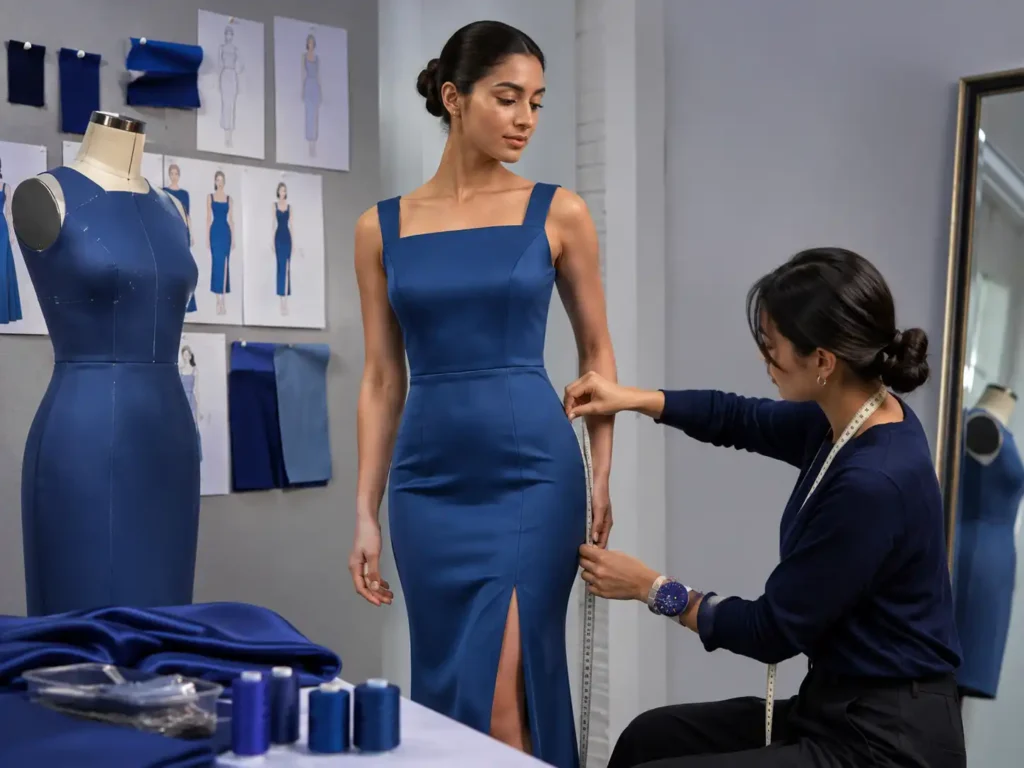
Waist and Hip
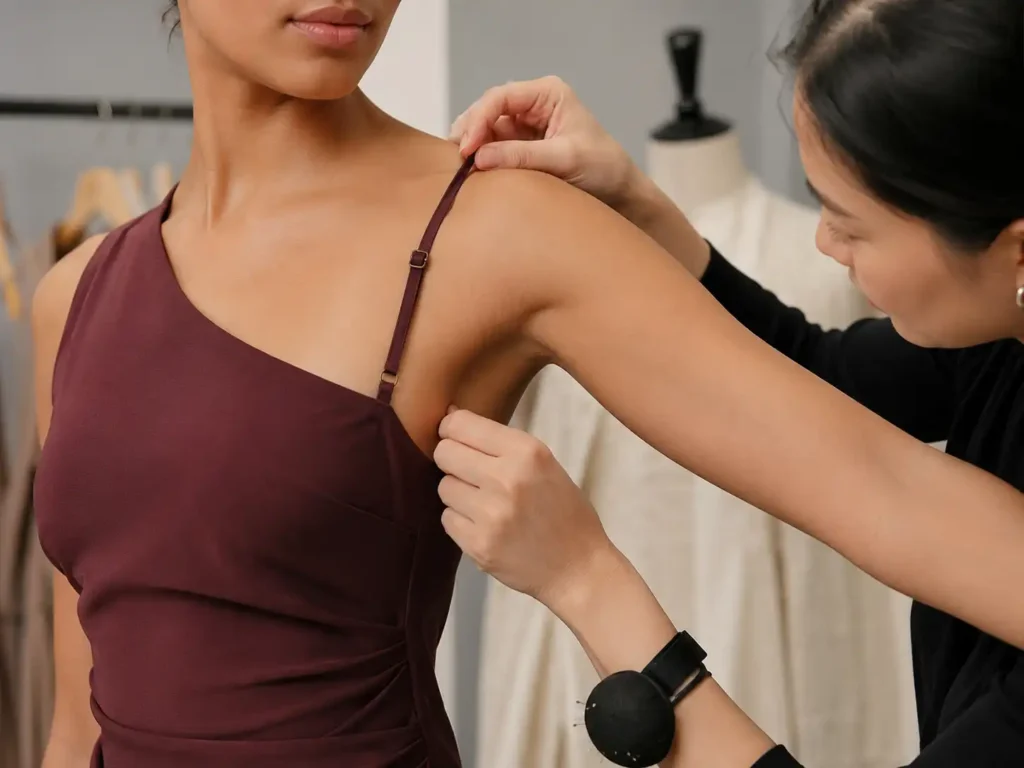
Straps and Armholes

Length, Slit, and Hem
How Lining Connects to Critical Dress Details

Neckline

Armhole

Invisible Zipper

Waist Seam

Side Seam

Slit

Hem

Strap or Sleeve Opening
Lining Support for Structured and Occasion Dresses

Bra Cups

Boning

Underwire

Elastic

Anti-Slip Tape

Waist Support

Sequin Protection

Lace Seam Protection
Develop Lined Dress Samples Before Bulk Production
Project Review
First Sample
Fit Sample
Revised Sample
Photo-Ready Sample
Salesman Sample
PP Sample
Sealed Reference
What We Need to Review Your Lined Dress Project
Reference Images
Tech Pack
Size Chart
Quantity Plan
Shell Fabric Direction
Lining Direction
Brand and Packing
Launch and Delivery
Controlled Bulk Production for Multi-Layer Dress Construction
PP Lock
Production Handover
Material Inspection
Fabric Relaxation
Cutting Control
Sewing and Attachment
In-Line Inspection
Finishing and Garment QC
Packing and Pre-Shipment Review
Workmanship Standards for Clean and Comfortable Interiors
The inside of a lined dress reveals the manufacturing standard. Clean seams, controlled attachments, flat closures, and balanced hems improve comfort, durability, appearance, and repeatability.
Clean Internal Seams
Internal seams should suit the fabric and wearing area. A fine chiffon lining, stretch knit lining, lace overlay, and structured corset lining cannot use one identical seam approach. Seam allowance, stitch type, stitch density, edge finish, thread, and bulk are selected around strength, transparency, elasticity, and skin contact.
Necklines, armholes, side seams, waist seams, cups, boning channels, and zipper areas receive particular attention. Rough edges, trimmed sequins, lace backing, or thick seam stacks may require binding, covering, or revised construction. Thread ends and seam allowances should remain controlled without creating visible ridges through the shell.
During bulk production, workmanship is checked against the approved sample and sewing instruction. In-line inspection focuses on seam shape, symmetry, tension, damage, and comfort before defects spread to later operations.
Flat Zipper Construction
An invisible zipper should open smoothly, remain visually flat, and keep the lining away from the slider. Zipper length, color, tape, seam allowance, waist alignment, top finish, hook-and-eye position, and lining method are confirmed during sampling.
Common failure includes bulging, waviness, caught lining, uneven waist seams, exposed zipper tape, or a top edge that does not close cleanly. Satin, velvet, lace, sequin, and fitted dresses are especially sensitive because surface damage or seam bulk becomes visible quickly.
Bulk checks compare zipper position, smoothness, shell appearance, inner clearance, and fastening security with the PP standard. Any repeated issue is corrected at the line rather than left for final inspection.
Stable Lining Attachment
Attachment controls how both layers move together. Shoulder, neckline, armhole, waist, zipper, slit, hem, and thread-chain points may be used depending on the style. Too many rigid attachments can pull the shell; too few can allow twisting or exposure.
Fitted dresses need controlled inner ease. Bias, satin, and flowing skirts often benefit from more independent movement. Structured bodices may need stronger connection around support seams. The chosen method is recorded in the construction file and verified during the first production pieces.
In-line QC checks pulling, puckering, twisted layers, uneven fullness, visible inner edges, and movement restriction. Garment inspection repeats the review through standing, hanging, and basic movement.
Balanced Hem Finishing
Shell and lining hems must remain visually level while accounting for material drop, shrinkage, bias movement, skirt volume, slit, and garment length. A fixed universal difference cannot serve every style. Maxi chiffon, satin slip, lace midi, bodycon, and structured occasion dresses each need different handling.
Bias and long dresses may require hanging before final leveling. Pressing should avoid shine, seam impressions, or heat damage. The lining should not show under the shell, pull the outer hem upward, or bunch inside the garment.
Bulk QC measures key lengths and compares front, back, and side balance. Packing method also matters because tight folding can create uneven creases or pressure marks across multilayer hems.
Quality Control From Fabric Inspection to Final Packing
Quality is controlled in stages rather than inspected only after production. Lined dresses receive checks for shell and inner materials, pattern execution, layer relationship, measurements, finishing, labels, and packing.
Incoming Material QC
Shell fabric and lining are checked for type, composition reference, color, hand feel, width, weight direction where specified, stretch, recovery, transparency, damage, stains, holes, snags, surface defects, and batch differences. Satin requires snag and shade review; mesh requires hole and elasticity checks; lace requires motif and damage checks; chiffon requires transparency and slippage attention.
Trims and support components are checked for color, size, function, comfort, and quantity. Labels and packaging are compared with approved artwork and specifications. Materials that do not match the approved reference are held for clarification before cutting.
Cutting QC
Cutting inspection confirms the final pattern version, shell and lining quantities, grain or stretch direction, fabric face, print or motif placement, panel damage, size bundle, and component completeness. Early detection prevents defective panels from moving into sewing.
Lace, mesh, satin, chiffon, velvet, stripe, and placement-print styles receive product-specific checks. Shell and lining bundles are identified by style, color, and size to reduce mix-ups in multi-style programs.
Sewing and In-Line QC
In-line checks focus on neckline, armhole, strap, bust, waist, hip, side seam, zipper, lining attachment, slit, hem, seam allowance, stitch quality, symmetry, and fabric damage. Inspection occurs while the line is active, allowing correction before the same error spreads across hundreds of garments.
The QC team communicates with production management and merchandising when material, pattern, or sewing issues affect the approved standard. Corrective action and recheck results are recorded for follow-up.
Finished Garment QC
Finished garments are reviewed for measurements, fit-related balance, opacity, lining exposure, lining restriction, zipper function, symmetry, seam appearance, loose threads, stains, holes, snags, missing decoration, pressing, labels, and general presentation.
Measurements are checked against the size chart and tolerance. Product-specific points may include bust, waist, hip, dress length, strap length, neckline depth, armhole, slit height, hem width, and lining length. The garment is compared with the approved sample and reference records.
Packing and Pre-Shipment QC
Packing inspection covers main label, size label, care label, hangtag, barcode, SKU, color, size, polybag, warning text where required, folding, assortment, carton ratio, carton mark, carton dimensions, gross and net weight, and packing list consistency.
AQL inspection and client inspection support can be arranged according to the agreed quality plan. AQL is a sampling method, not a claim that every garment is inspected under the same statistical plan. Project requirements, order scale, product risk, and inspection agreement determine the final approach.
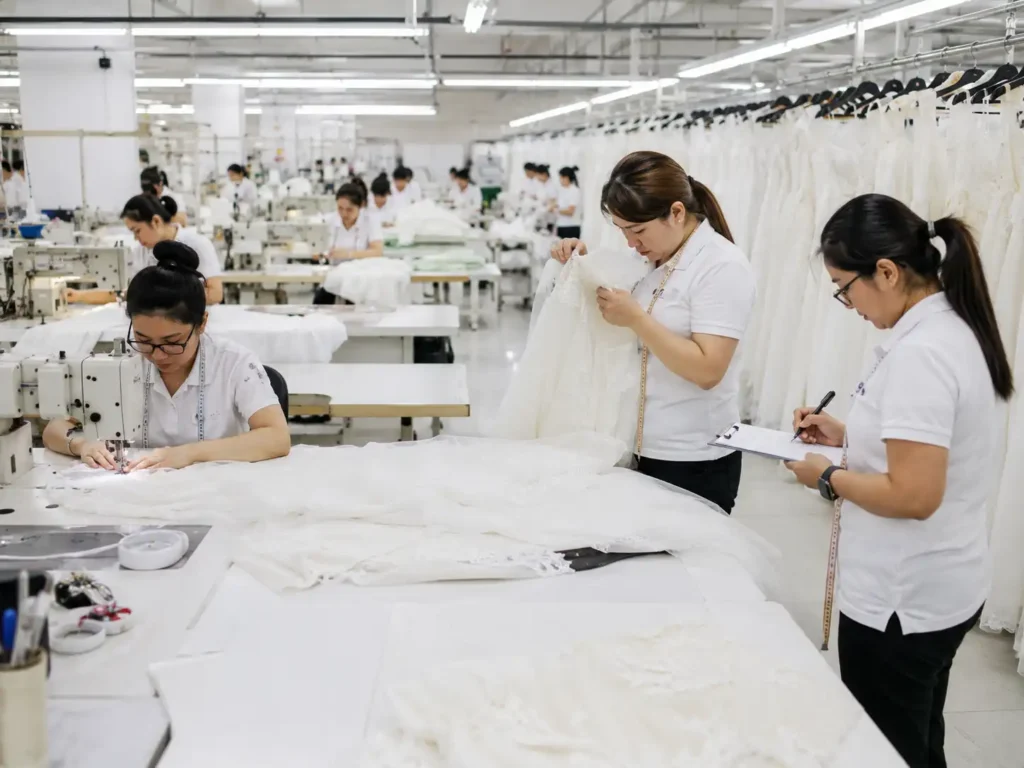
Common Lined Dress Defects and Prevention Controls
Defect prevention begins during material review and sampling. The matrix links visible failures with their likely causes, development actions, and bulk checks.
| Defect | Likely Cause | Sample Prevention | Bulk QC Check |
|---|---|---|---|
| Lining visible below hem | Inner layer too long, shell drop, shrinkage mismatch | Confirm fabric behavior, hanging, final length relationship | Measure shell/lining length and inspect hanging balance |
| Lining rides upward | High friction, static, insufficient ease, tight attachment | Review lining hand feel, ease, movement, and attachment | Movement check, inner smoothness, attachment tension |
| Lining feels too tight | Pattern copied from shell, wrong stretch, limited hip or bust ease | Develop lining pattern and test sitting/walking | Measure lining-related fit points and inspect drag lines |
| Dress remains transparent | Lining too sheer, wrong color, incomplete coverage | Test daylight, indoor light, flash, and stretch condition | Compare opacity and coverage with approved sample |
| Zipper catches lining | Inner layer too close to teeth, uncontrolled seam allowance | Set zipper clearance and finish method | Open/close test, internal clearance, zipper flatness |
| Lining twists | Grain error, uneven attachment, shell/lining behavior conflict | Check grain, side seams, hanging, attachment points | Side-seam direction, layer alignment, garment hang |
| Static cling | Material finish, climate, friction, limited ease | Review fiber/finish, ease, hem, and wearing condition | Visual movement check and material conformity |
| Uneven hem | Bias drop, cutting error, unequal layer behavior | Hang and level sample; confirm final pattern | Front/back/side length and lining exposure check |
| Shade mismatch | Unapproved lining color, mixed batches, lighting difference | Approve shell/lining pair and physical reference | Batch, shade, and color relationship inspection |
| Shrinkage mismatch | Different dimensional change after care or pressing | Review intended care and material response | Material record, pressing control, dimension check |
| Slit lining turns outward | Opening shape or attachment not planned | Fit and movement test; revise lining opening | Slit position, reinforcement, inner visibility check |
| Bulk differs from PP | Version, material, or sewing instruction not transferred | Lock PP sample and complete production handover | Compare first output and bulk inspections with PP standard |
Production Capacity for Multi-Style Dress Programs
100,000+ Monthly Capacity
18+ Sewing Lines
6+ Flexible Lines
Product-Based Factory Allocation
Multi-Style Control
Repeat and Multi-Batch Support
MOQ, Cost, and Schedule Factors for Lined Dresses
MOQ by Style and Color
Cost Construction
Sample Timing
Production and Delivery Scheduling
- Request Cost Review
- Send Quantity Plan
Private-Label Finishing for Retail and Ecommerce Delivery
Main Label
Size Label
Care Label
Hangtag
Barcode and SKU
Polybag
Folding and Protection
Carton Mark
Warehouse Delivery
Lined Dress Programs Developed for International Brands

US Satin Occasionwear Program
Market: United States
Program: 14 satin mini and midi dress styles
Order scale: approximately 24,000 pieces across multiple colors and sizes
The collection combined fitted bodices, slip silhouettes, asymmetric necklines, waist seams, side slits, and full or partial lining. Main risks included satin shade variation, zipper bulging, lining shadow, bust coverage, and shell-to-lining hem balance.
Development grouped styles by shell quality and lining construction. Color approval compared satin shine with the inner shade under studio and room lighting. Fit review focused on bust, waist, hip, strap, neckline, and slit safety. PP samples locked zipper method, lining attachment, measurements, label placement, and packing.
Bulk control included shade grouping, snag inspection, zipper flatness, lining exposure, measurement checks, pressing review, SKU packing, and phased shipment planning. The program moved through coordinated style groups rather than treating 14 styles as unrelated orders.

European Lined Resort Collection
Market: Europe
Program: 18 chiffon, rayon, printed, and lightweight woven dress styles
Order scale: approximately 36,000 pieces across mini, midi, and maxi lengths
The collection needed breathable coverage without making summer garments heavy. Main risks included transparency, rayon shrinkage, print direction, long skirt balance, lining cling, and size-dependent slit exposure. Several styles used skirt lining, bodice lining, or partial coverage rather than one full-lining standard.
Sampling compared lightweight woven and soft stretch inner options. The team reviewed daylight opacity, movement, shell drop, waist attachment, skirt volume, and suitcase recovery. Maxi styles were checked for hanging and final hem balance. Printed styles required direction and placement control through cutting.
Bulk management separated fabric and lining batches by style and color. QC focused on shrinkage risk, print orientation, inner length, seam security, slit position, pressing, folding, and carton allocation. Selected launch quantities were prioritized while the remaining bulk followed the planned shipment sequence.

UK Wedding Guest Collection
Market: United Kingdom
Program: 12 lace, satin, mesh, and crepe wedding guest dress styles
Order scale: approximately 22,000 pieces across coordinated seasonal colors
The program combined one-shoulder bodices, fitted waists, asymmetric hems, lace overlays, mesh panels, and side or back zippers. Key concerns included lining color under lace, mesh transparency, neckline security, inner comfort, zipper clearance, and consistent appearance across colors.
Development used coverage maps for bust, waist, hip, upper thigh, sleeves, and cut-out zones. Lace styles compared tonal and nude lining effects. Mesh sections were reviewed under stretch. Pattern changes corrected shoulder balance, armhole exposure, waist position, and lining ease before PP approval.
Bulk QC included lace damage, motif consistency, lining color, zipper function, seam bulk, neckline stability, measurement, label accuracy, and retail-ready packing. SKU and barcode checks supported warehouse receiving across the multi-style order.
Frequently Asked Questions About Lined Dress Manufacturing
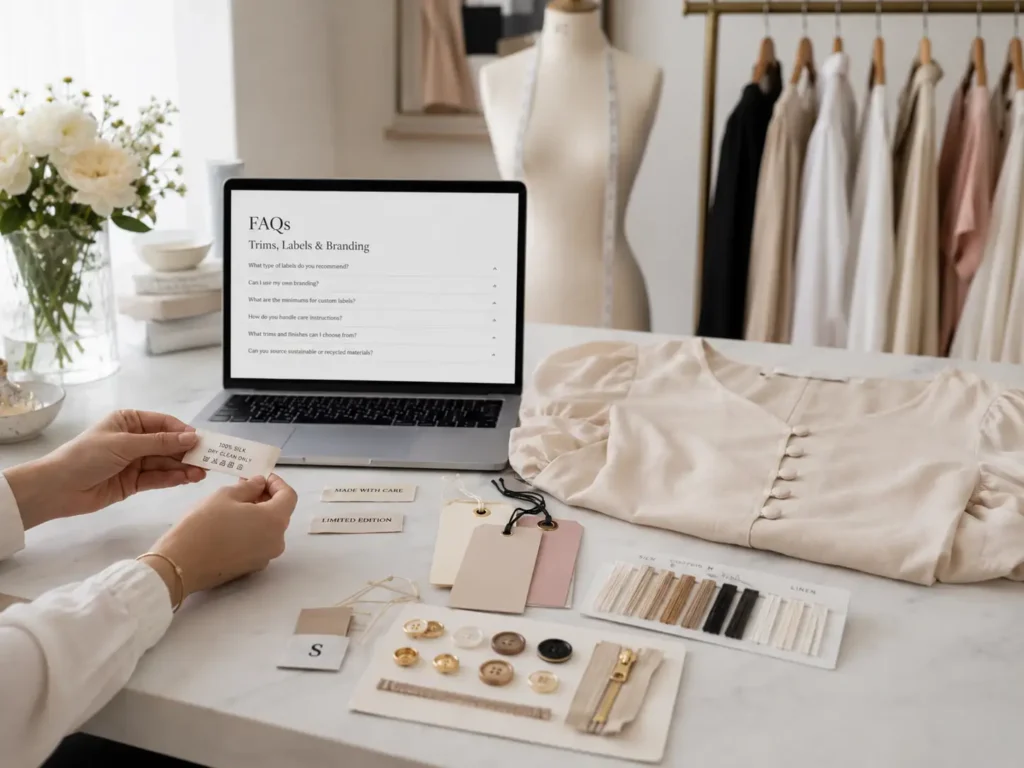
Send Your Lined Dress Project for Review
A useful review begins with enough information to assess shell fabric, lining direction, fit, construction, MOQ, sampling, bulk production, and branded delivery. Send a tech pack, reference images, original sample details, or a line sheet together with the intended quantity and launch plan. Kelly will coordinate an initial review with the relevant product, fabric, pattern, sampling, production, and quotation teams.
Please include:
- Product type and design references
- Tech pack, size chart, or garment measurements
- Quantity by style, color, and size
- Shell fabric, composition, weight, stretch, or swatch direction
- Preferred lining type, color, and coverage area
- Trims, cups, boning, zipper, lace, sequin, or support requirements
- Main label, care label, hangtag, barcode, SKU, polybag, and carton needs
- Target sample date, launch date, destination, and shipping term