Lace Trim Dress Manufacturer
Custom lace trim dress development for fashion brands, from material matching and pattern correction to controlled bulk production and private-label delivery.
- Up to 8 common lace placement zones reviewed by design: neckline, bust edge, straps, armholes, waist seam, side slit, back opening and hem.
- 3 coordinated material layers planned as one garment system: shell fabric, lace trim and lining, with color, stretch, weight and skin contact reviewed together.
- MOQ starts from 200 pcs per style/color, subject to lace availability, custom dyeing, construction, packaging and production schedule.
- Multi-style programs commonly include 10-30 styles and 20,000-80,000 garments across coordinated colors, sizes, launch priorities and delivery windows.
Manufacturing Facts Behind Lace Trim Dress Programs
Since 2008
Six Owned Factories
Ten Plus Partners
Two Sample Rooms
Seven Plus Pattern Makers
Fifteen Plus QC
Quality inspectors cover incoming fabrics and trims, cutting, in-line sewing, garment measurements, lace placement, finishing, labels, barcodes, packing and project-specific final inspection requirements.
Built for Established Fashion and Dress Programs
Premium Ecommerce
Occasionwear Labels
Partywear Brands
Fashion Retailers
Sourcing Teams
Private Label Programs
A Lace Trim Dress Manufacturer Builds Complete Garments
Trim Supplier Role
Garment Manufacturer Role
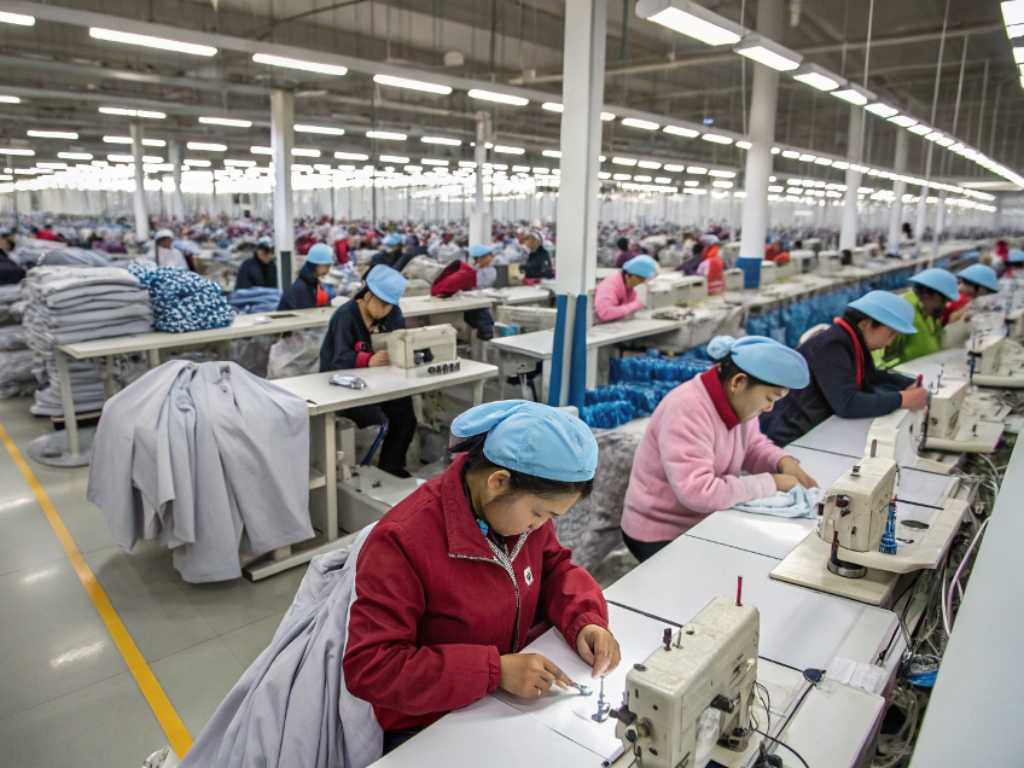
Why Lace Trim Dresses Fail During Bulk Production
Wrong Lace Selection
Poor Color Matching
Uneven Placement
Wavy Edges
Skin Discomfort
Sample Bulk Gap
Custom Lace Trim Dress Styles We Manufacture

Lace Trim Slip Dress
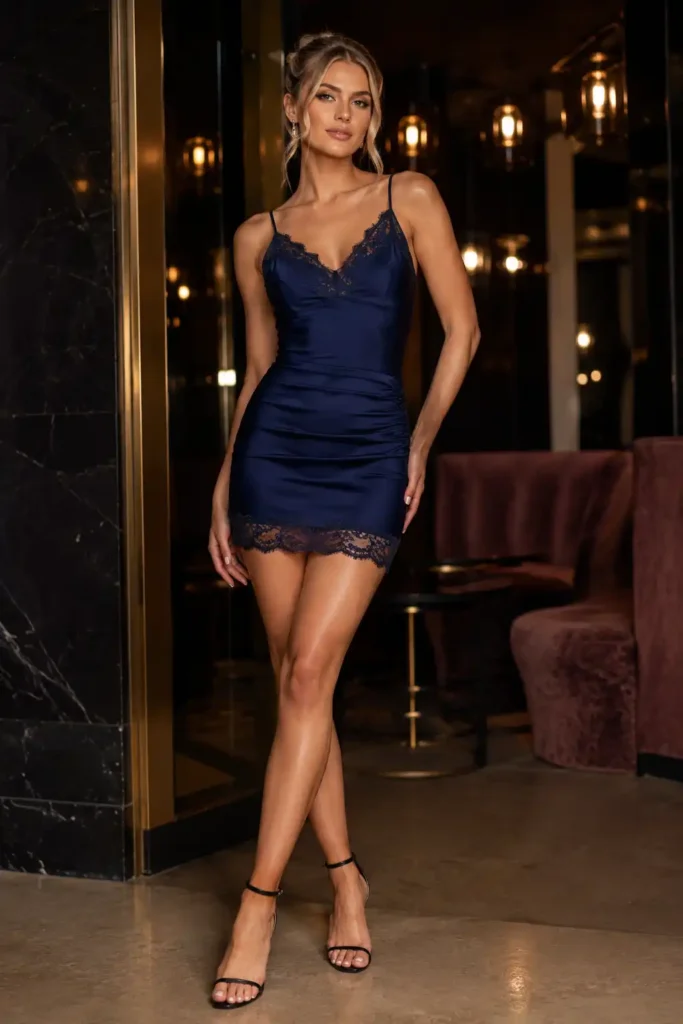
Lace Trim Mini Dress
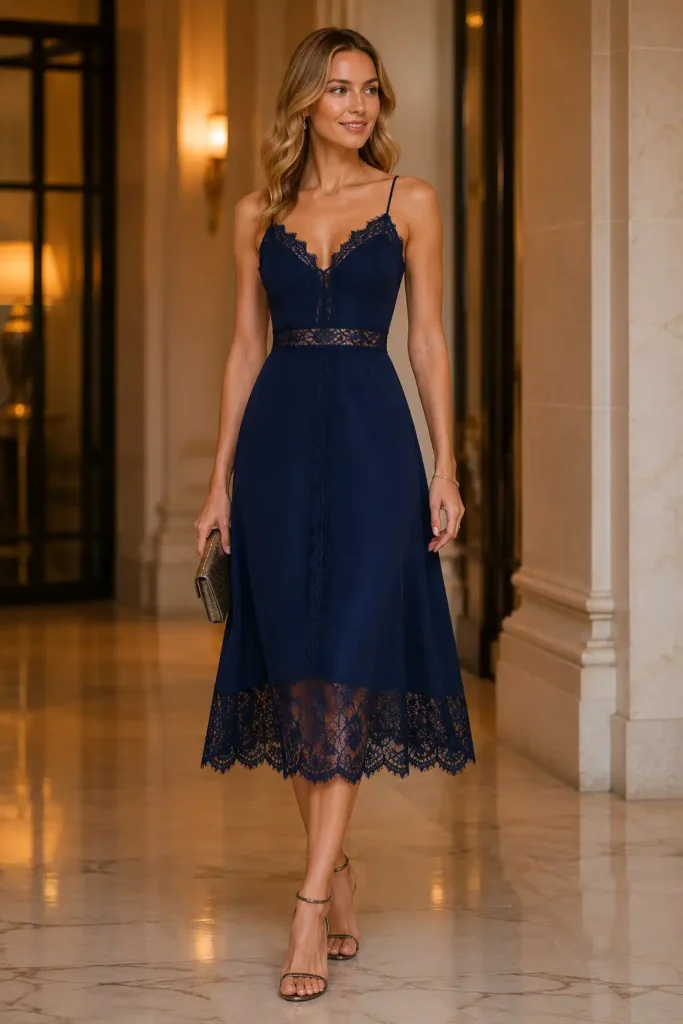
Lace Trim Midi Dress

Lace Trim Maxi Dress

Satin Lace Trim Dress
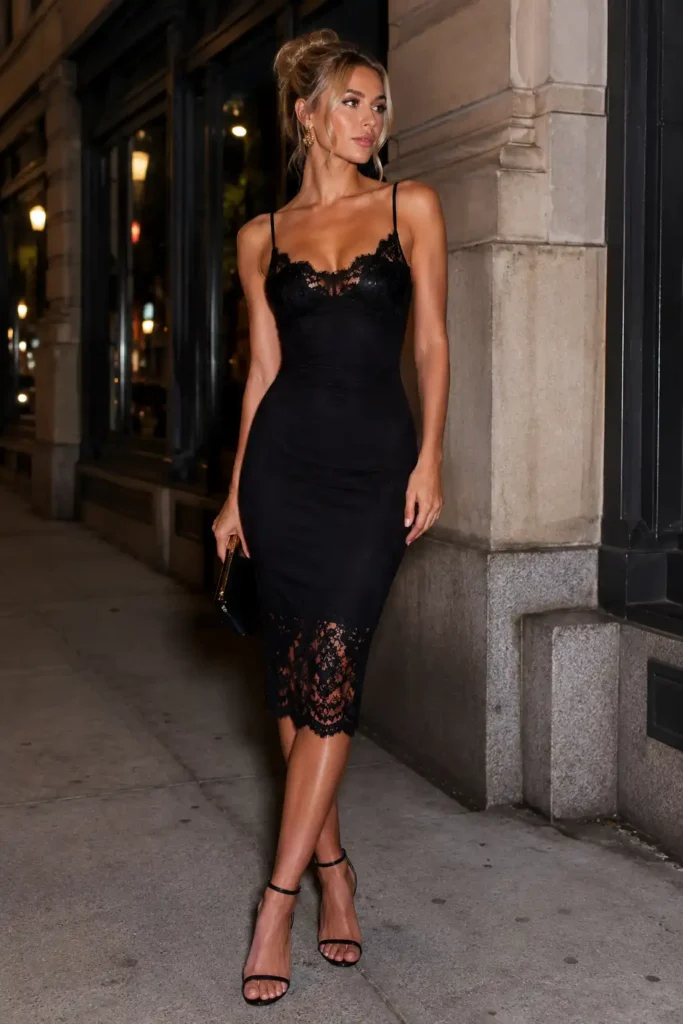
Bodycon Lace Dress

Corset Trim Dress

Lace Trim Cocktail

Lace Trim Resort
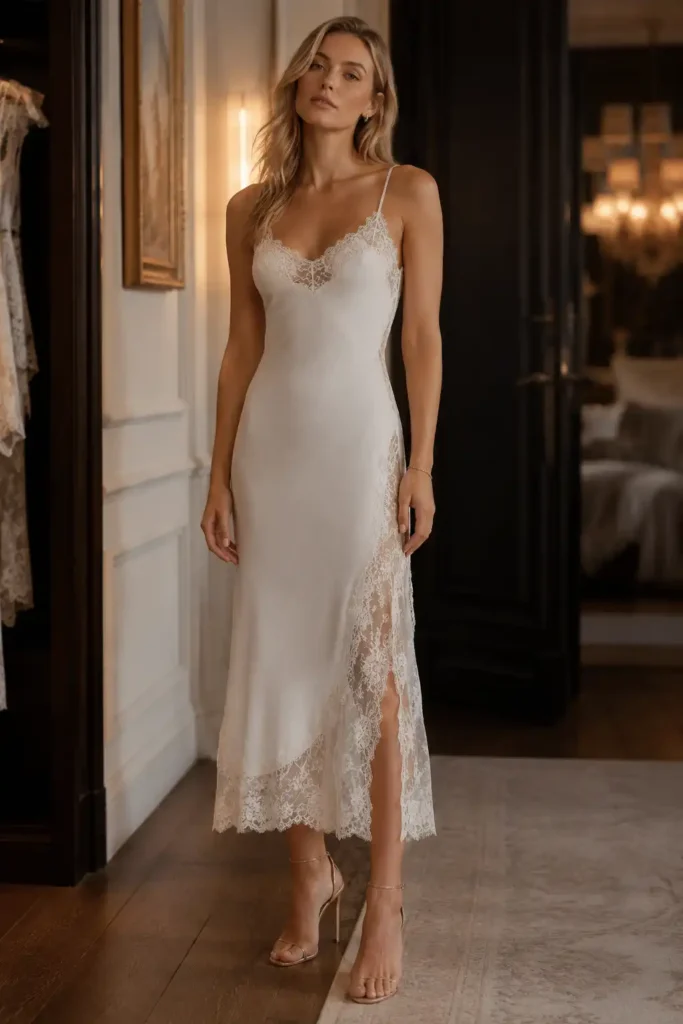
Cami Lace Dress
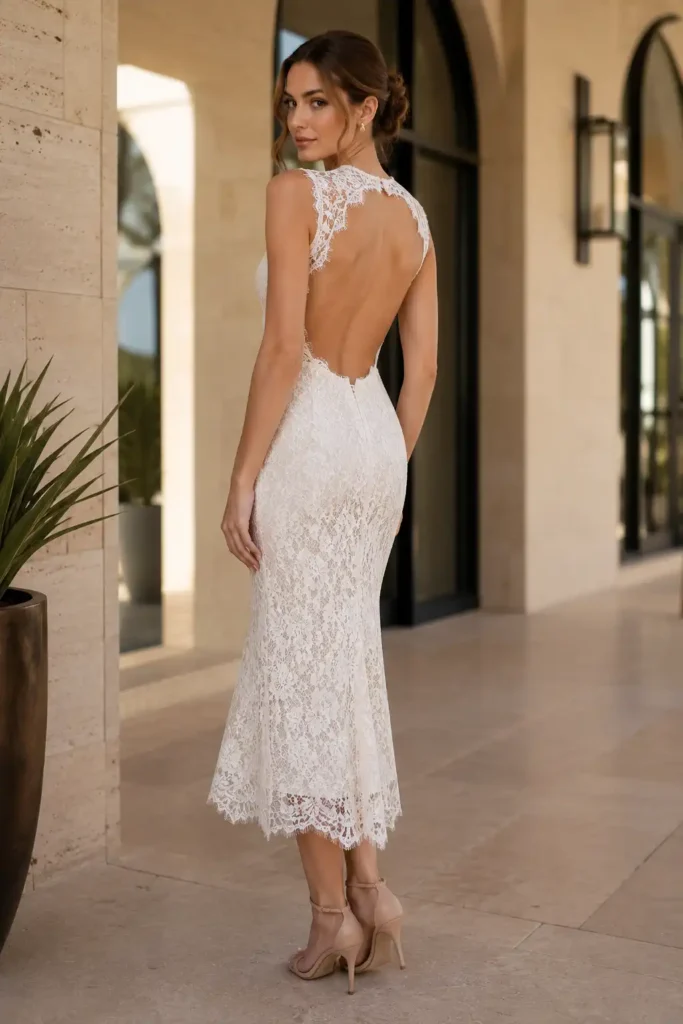
Open Back Lace

Lace Slit Dress
Lace Trim Placement Changes Construction and Fit
Placement determines visual effect, stress level, skin contact and inspection method. The same lace can behave very differently at a neckline, slit or full hem.
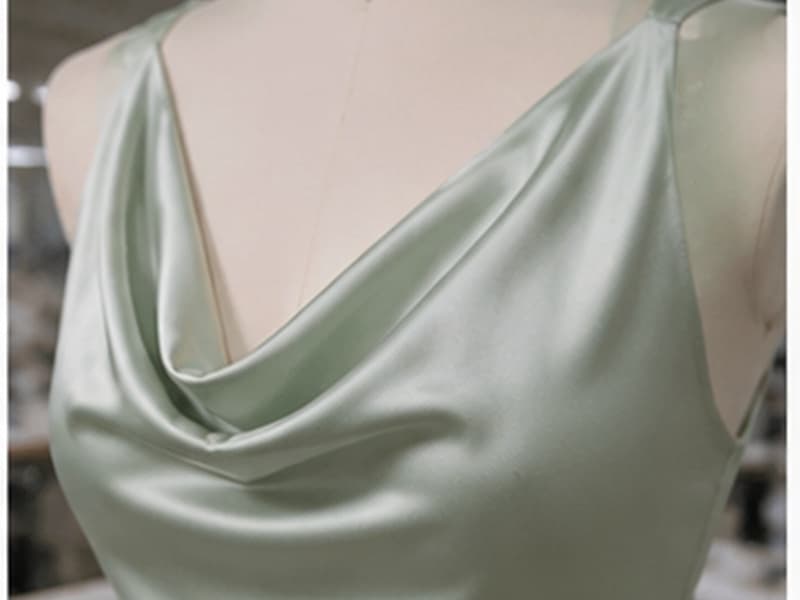
Neckline Edge

Bust Line

Shoulder Straps

Armhole Edge

Waist Seam
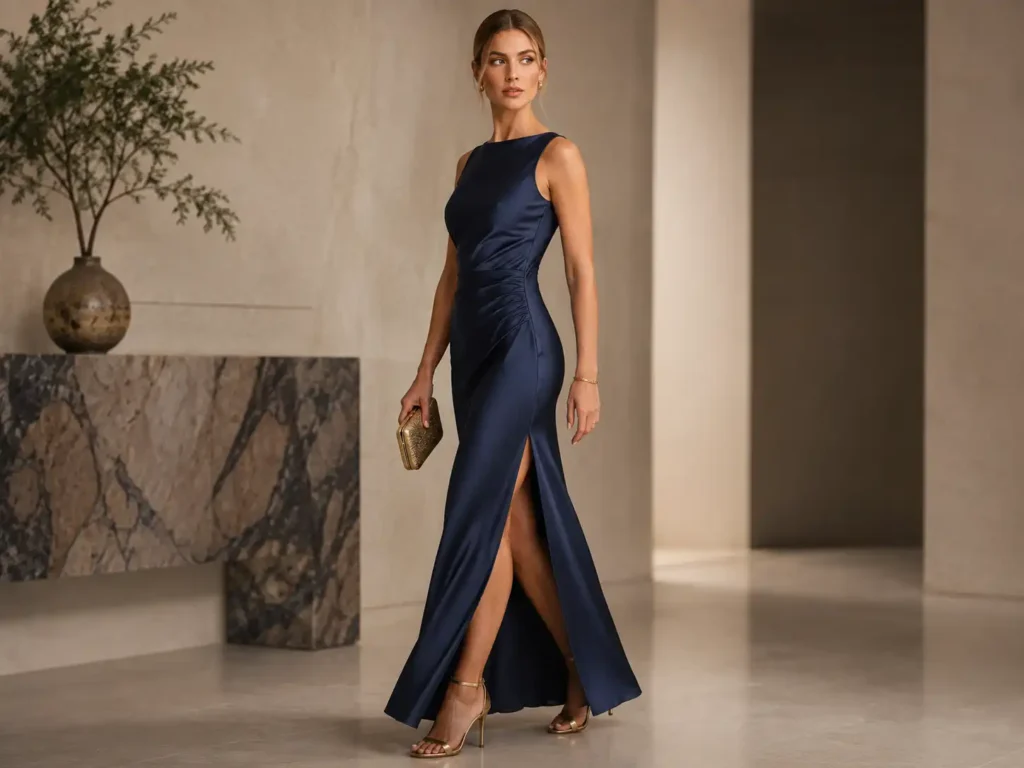
Side Slit

Back Opening

Dress Hem
How We Select Lace Trim for Each Design
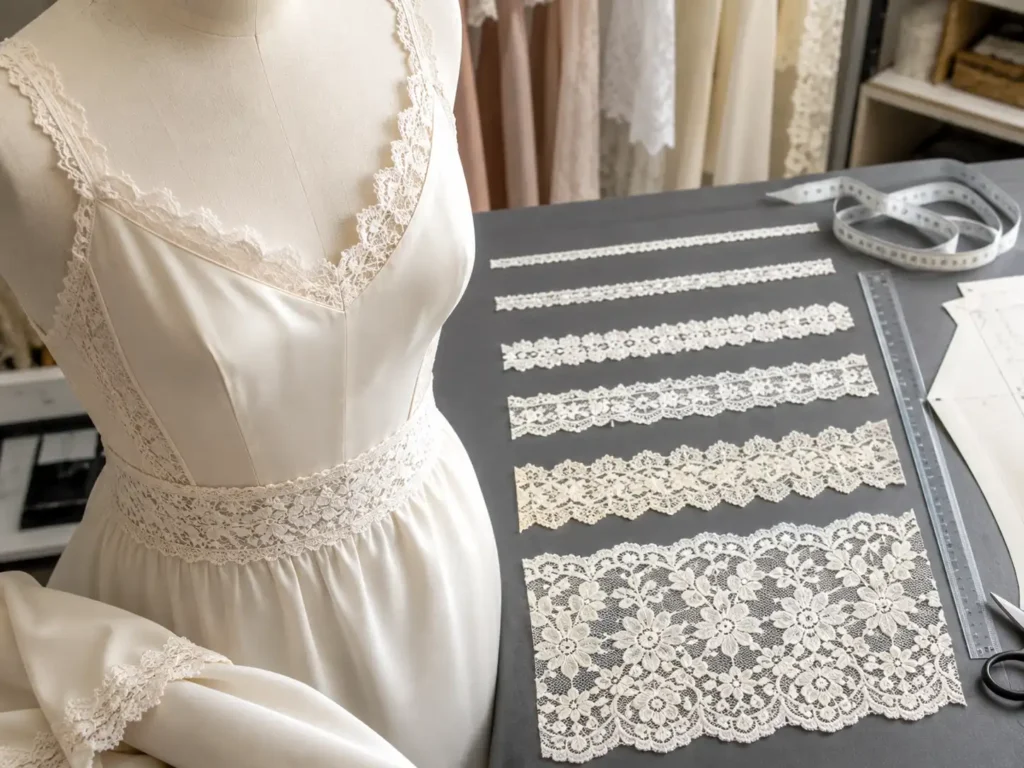
Width and Scale
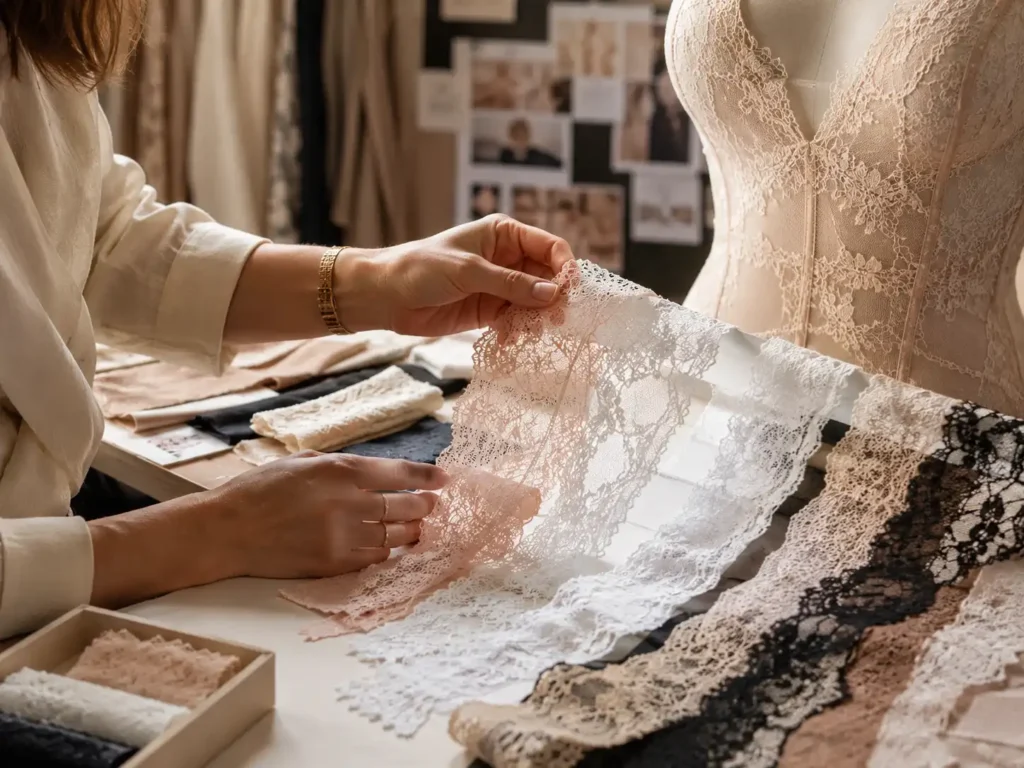
Fiber and Handfeel
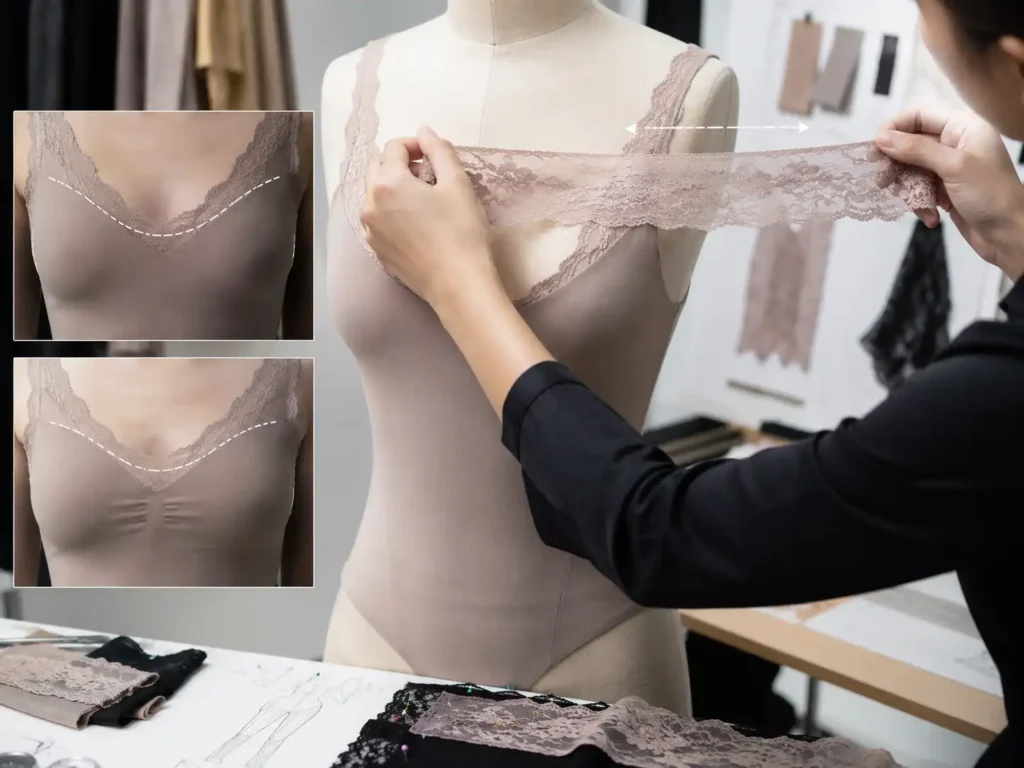
Stretch and Recovery
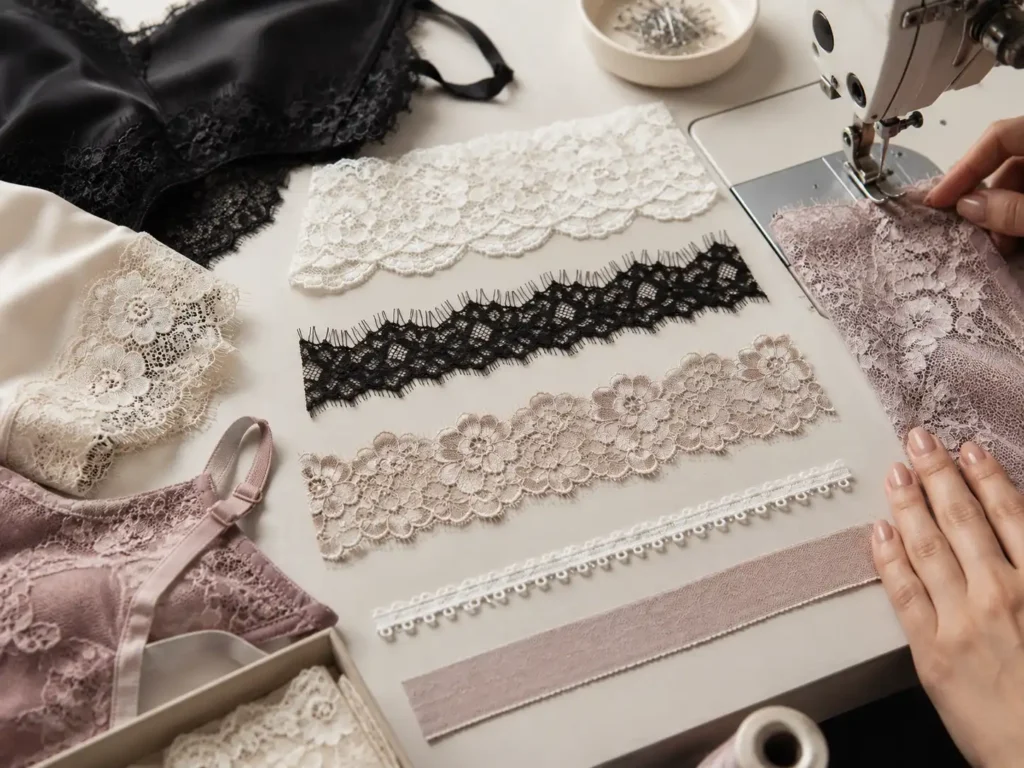
Edge Character
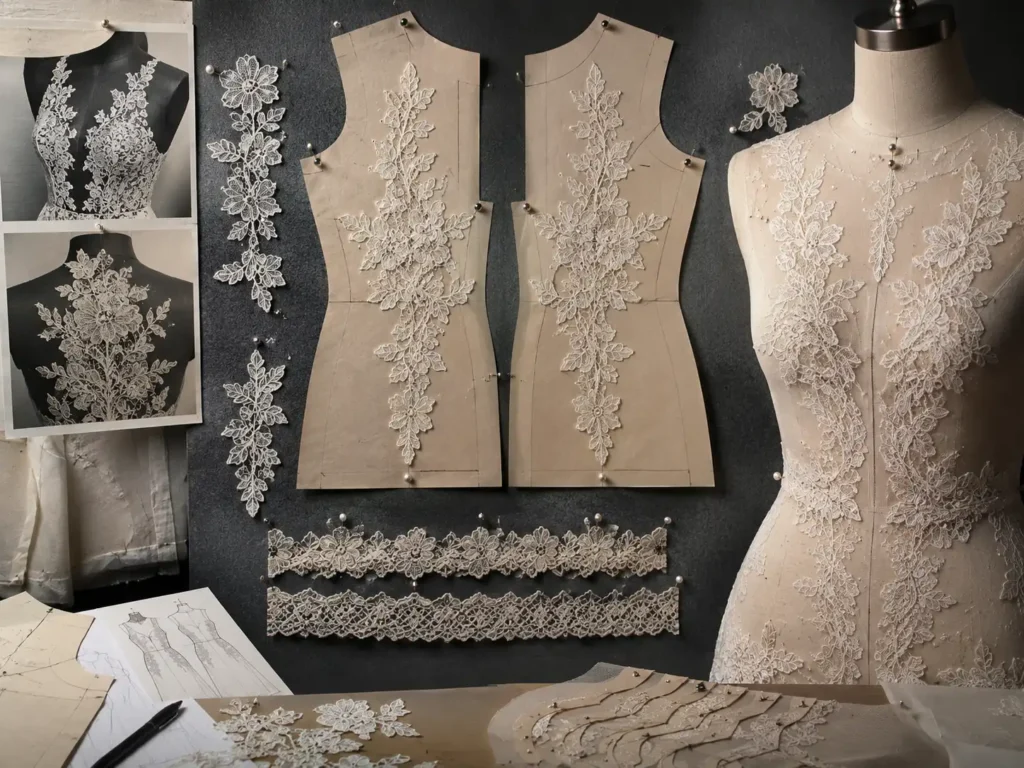
Motif Direction
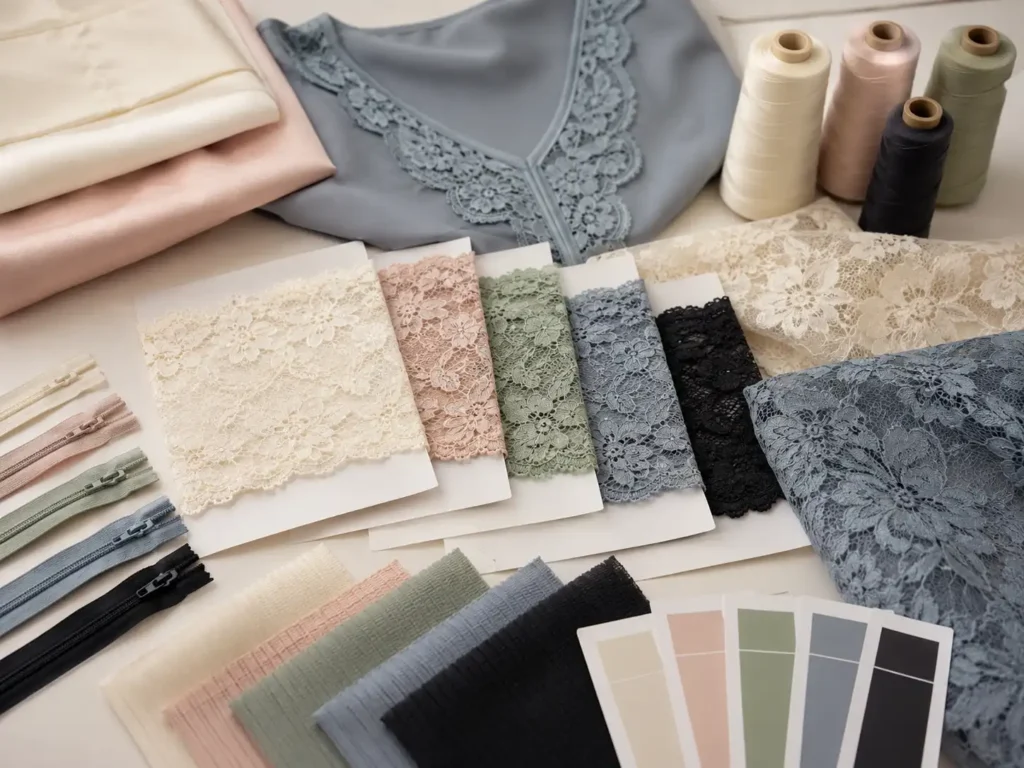
Color Availability
Main Fabrics Matched with Lace Trim
Main fabric controls drape, stretch, shine, transparency and seam response. Lace trim must support the same silhouette rather than pulling against it. Material review uses swatches, stretch checks, handfeel comparison and sample validation before bulk approval.
| Main Fabric | Common Lace Use | Development Focus | Bulk Control |
|---|---|---|---|
| Satin | Neckline, bust edge, straps, hem | Snagging, shine difference, stitch impressions, color reflection, bias influence | Shade lots, handling marks, trim waves, pressing and anti-snag packing |
| Stretch Satin | Bodycon neckline, side slit, corset edge | Compatible stretch direction, recovery, neckline tension, zipper balance | Relaxation, measurement stability, seam stretch and trim lot recovery |
| Chiffon | Neckline, sleeve edge, tier seam, hem | Weight balance, transparency, fraying, trim stiffness, lining relationship | Panel distortion, trim pulling, seam puckering and long-hem balance |
| Mesh | Neckline, cut-out edge, sheer panel, sleeve | Stretch, hole risk, transparency, backing, skin contact | Cutting damage, seam growth, motif alignment and lining coverage |
| Jersey | Cami edge, neckline, bodycon hem | Stretch and recovery compatibility, feed balance, edge stability | Measurement recovery, waves, skipped stitches and side-seam twist |
| Viscose / Rayon | Resort neckline, sleeve, skirt hem | Drape, shrinkage, color response, trim weight and care method | Pre-production shrinkage review, hem balance and packing creases |
| Cotton Blend | Day dress neckline, cuff, yoke, hem | Natural handfeel, wash behavior, trim shrinkage and seam finish | Wash test by project, edge roll, colorfastness and dimensional stability |
| Crepe | Cocktail neckline, waist insert, slit | Surface texture, drape, edge thickness, seam appearance | Shade, seam impressions, trim alignment and finished measurement |
Color Matching Across Lace, Shell and Lining
Approved Color Standard
Layered Swatch Review
Custom Dye Assessment
Bulk Lot Control
Lining and Comfort for Lace Trim Dresses

Stretch Lining

Soft Woven Lining

Partial Coverage

Full Coverage

Skin Protection
Static and Cling

Pattern Development Controls Lace Placement and Fit
Lace trim follows pattern geometry. A neckline can only remain symmetrical when the underlying pattern, seam lengths, strap positions and grade rules are correct. Pattern review therefore begins before trim attachment methods are finalized.
- Reference and Construction Mapping
Development begins by separating shell panels, lining, lace locations, closures, support components and visible edge finishes. Hidden construction is interpreted from reference images and checked against the intended selling price, fit and production method. - Neckline and Bust Geometry
Neckline width, depth, curve length, bust volume and center-front relationship are measured together. Lace placement can expose imbalance immediately, so left and right seam lengths are walked and compared before sample cutting. - Straps and Armholes
Strap position affects neckline tension, bust security and open-back balance. Armhole depth, front coverage, back coverage and underarm comfort are corrected with the selected trim width and stretch in mind. - Waist, Hip and Slit
Bodycon and fitted styles require controlled waist and hip ease. Slit start, side-seam position, lining opening and trim length are defined by size so the opening does not widen unexpectedly during movement. - Length and Hem Balance
Mini, midi and maxi lengths respond differently to body proportion and fabric drape. Hem lace creates a strong visual reference, making front-back balance, side length and long-hem relaxation especially important. - Grade Rules and Size Set
Lace cannot be copied at one fixed length across every size. Neckline, strap, waist, opening and hem measurements follow grade rules. Selected size-set samples can verify visual proportion and trim placement before full production.
Information Needed for an Accurate Development Review
Design Reference
Tech Pack
Quantity Plan
Fabric Direction
Lace Reference
Size Range
Brand Materials
Launch Schedule
Sample and Production Planning Milestones
Timing starts after required files and materials are ready. Lace availability, custom color, construction difficulty, revision scope, quantity, private-label materials and production schedule influence the final plan. Working ranges below support early calendar planning and remain subject to project review.
| Stage | Typical Working Range | Main Output | Approval Focus |
|---|---|---|---|
| Project Review | 1-3 working days | Feasibility notes and missing-file list | Style structure, quantity, material direction, launch date |
| Fabric and Trim Sourcing | 3-10+ working days | Shell, lace and lining options | Color, width, softness, stretch, price, availability |
| First Sample | 7-15 working days | Initial development sample | Proportion, fit, lace placement, construction |
| Sample Revision | 5-10 working days | Corrected sample | Pattern changes, material changes, workmanship comments |
| PP Sample | 7-12 working days | Pre-production standard | Bulk-intent materials, measurements, labels, finish, packing |
| Bulk Production | 20-35 working days | Finished production order | Material readiness, quantity, complexity, factory allocation |
| Final QC and Packing | 3-7 working days | Shipment-ready goods | Inspection plan, measurements, appearance, labels, cartons |
Complex Lace Trim Samples Need Focused Validation
Higher-risk styles receive targeted sample checks before PP approval. The goal is not more samples for appearance alone; each round closes a defined material, fit or production risk.
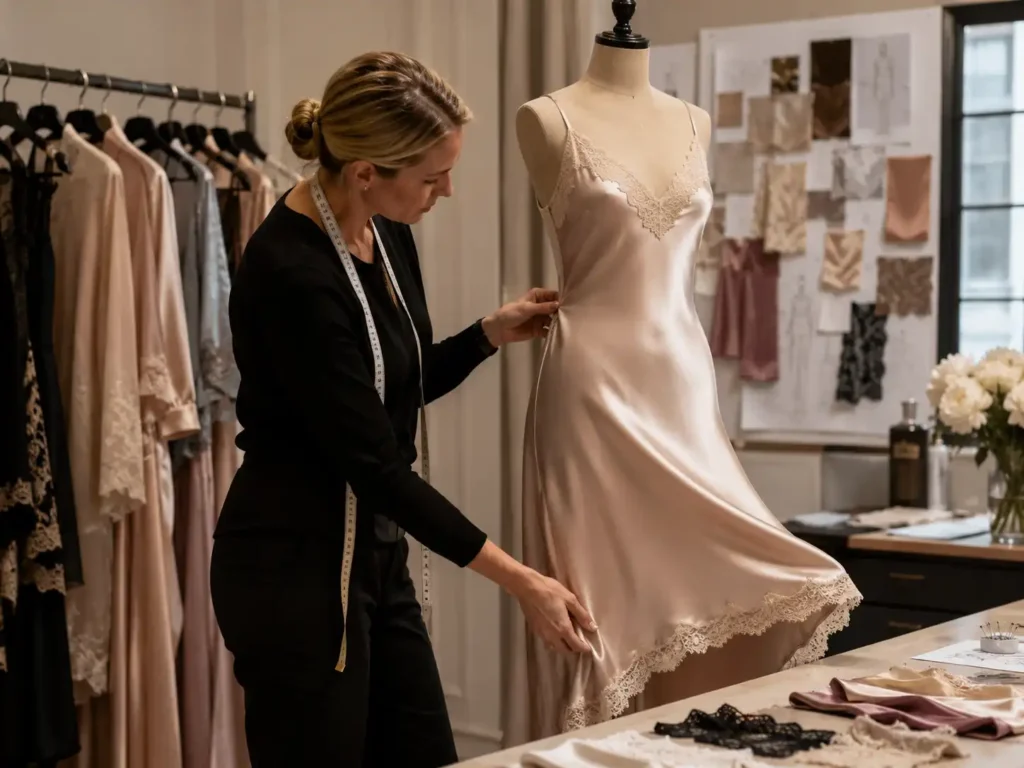
Bias Slip Structure
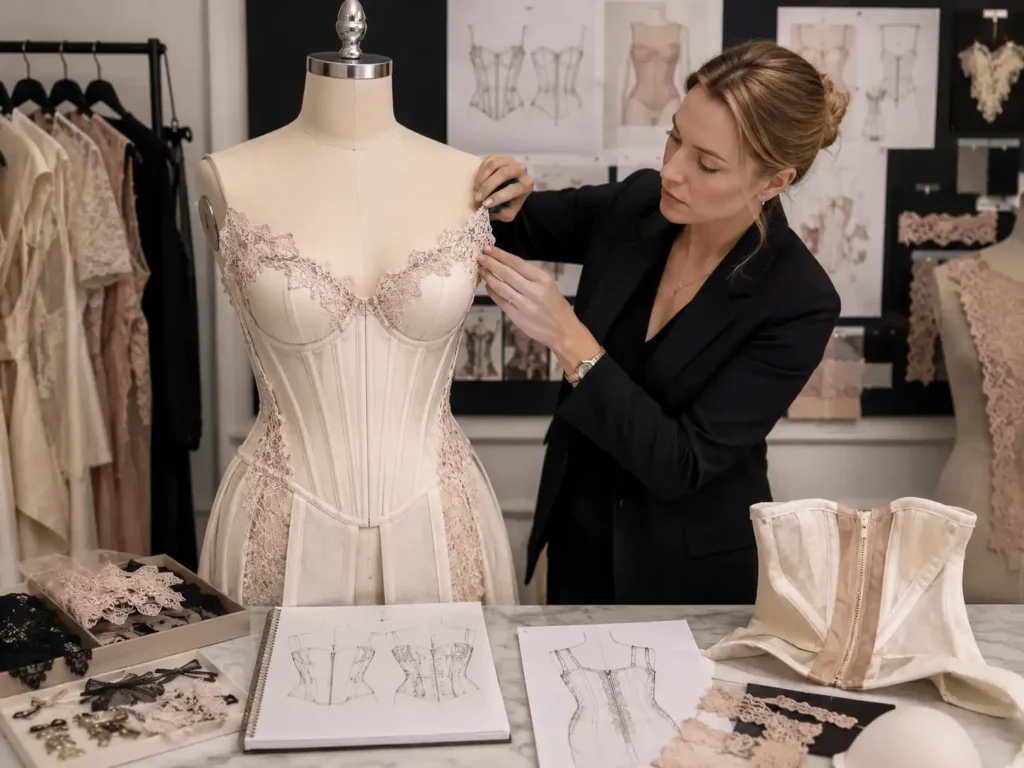
Corset and Lace

Stretch Bodycon
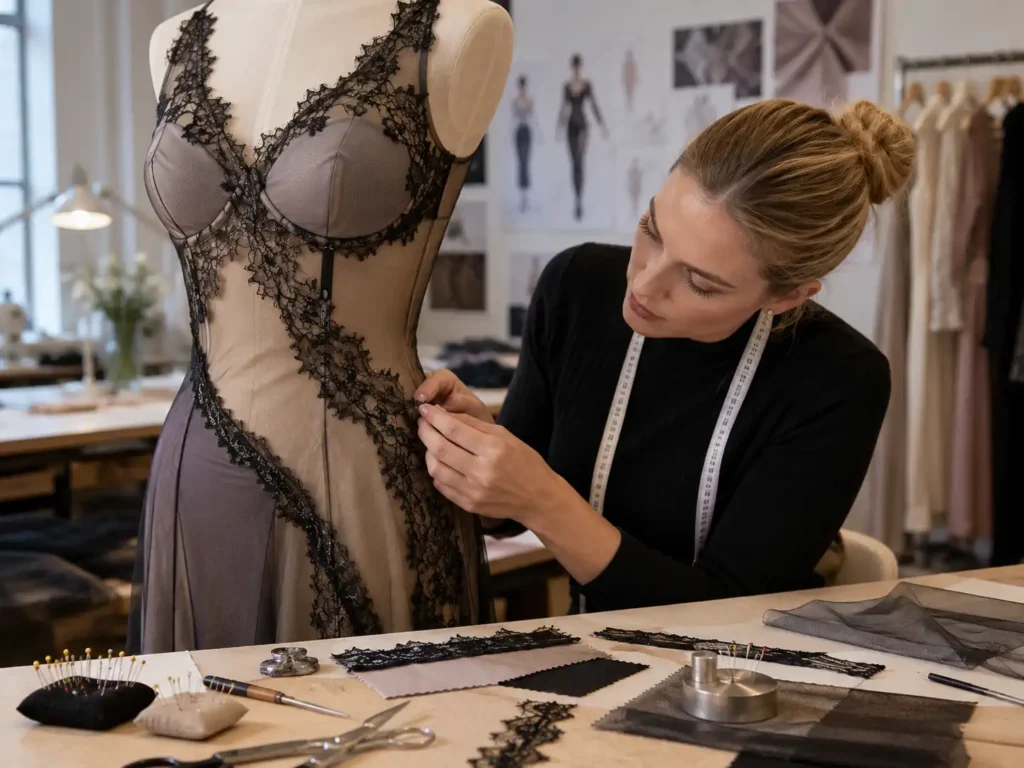
Mesh Panel Edging
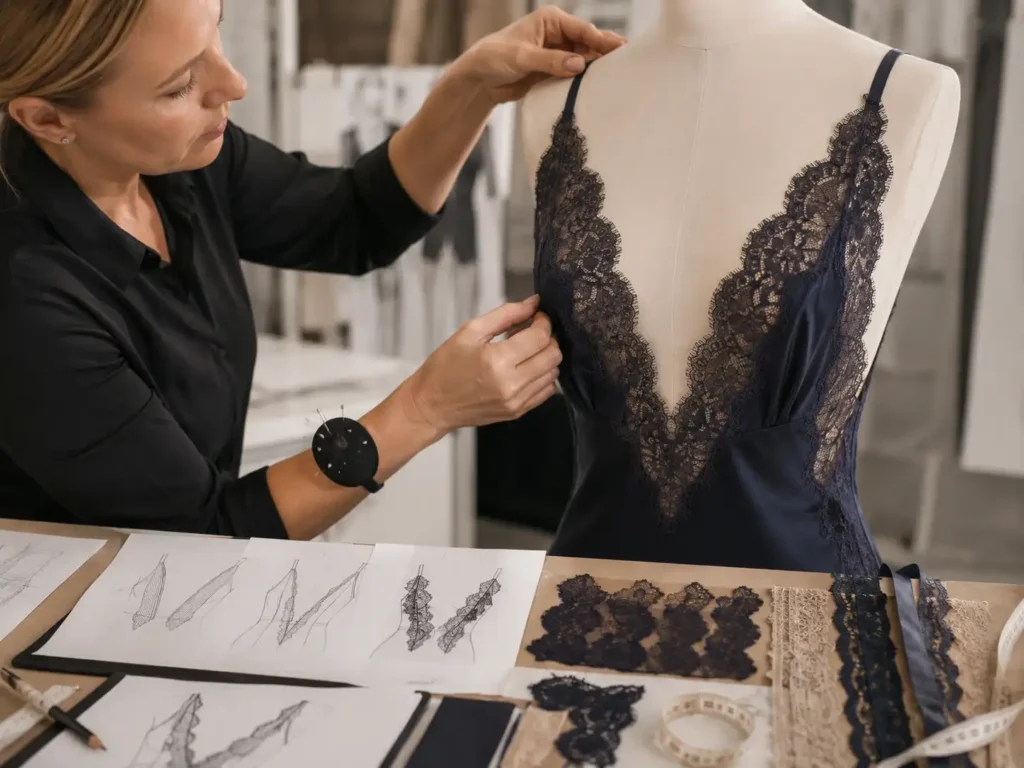
Low Neckline
Deep front shapes require coverage, edge stability and strap support. Lace width and motif can change the apparent neckline depth, so visual and measured positions are reviewed together.
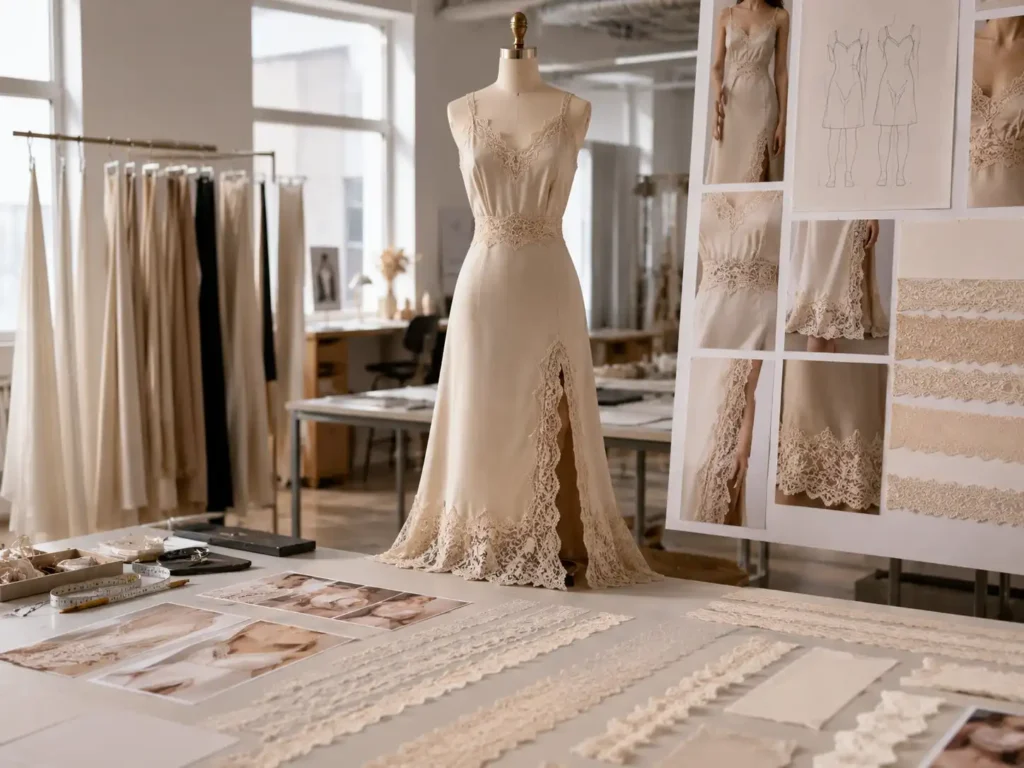
Multiple Lace Zones
Lace Trim Sewing Details That Protect Dress Quality

Trim Alignment
Placement marks, seam references and center points guide the trim. Long edges are checked at intervals so minor movement does not accumulate into visible drift.
-1024x768.png)
Scallop Control

Tension Balance
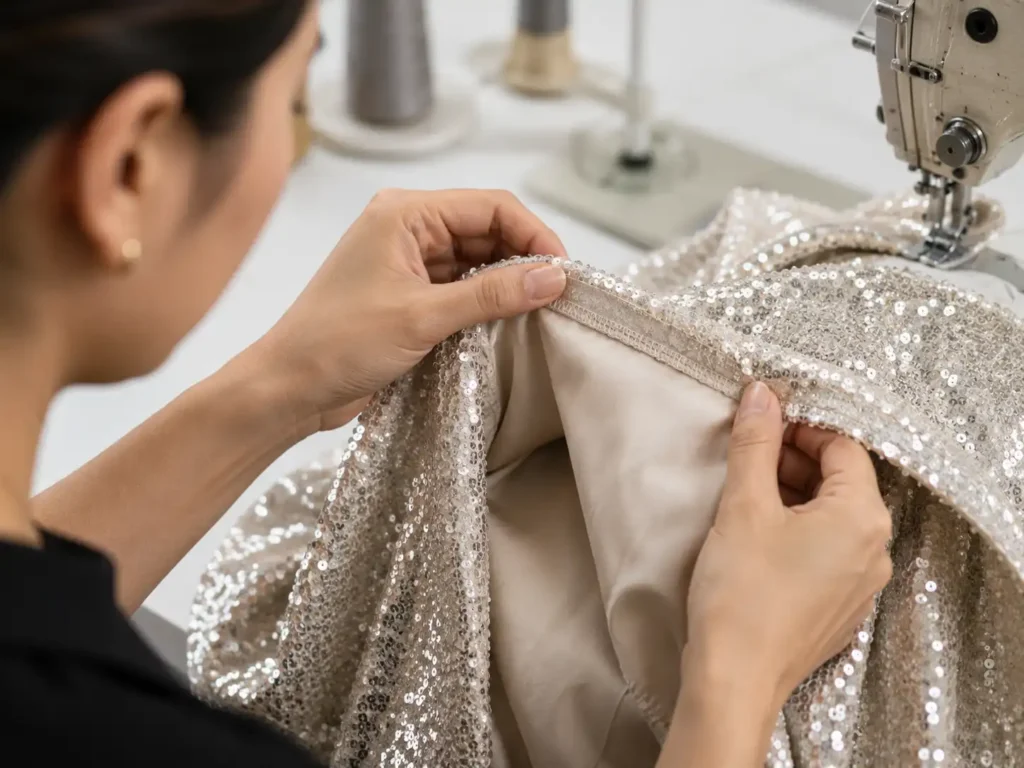
Clean Joining

Corner Finishing
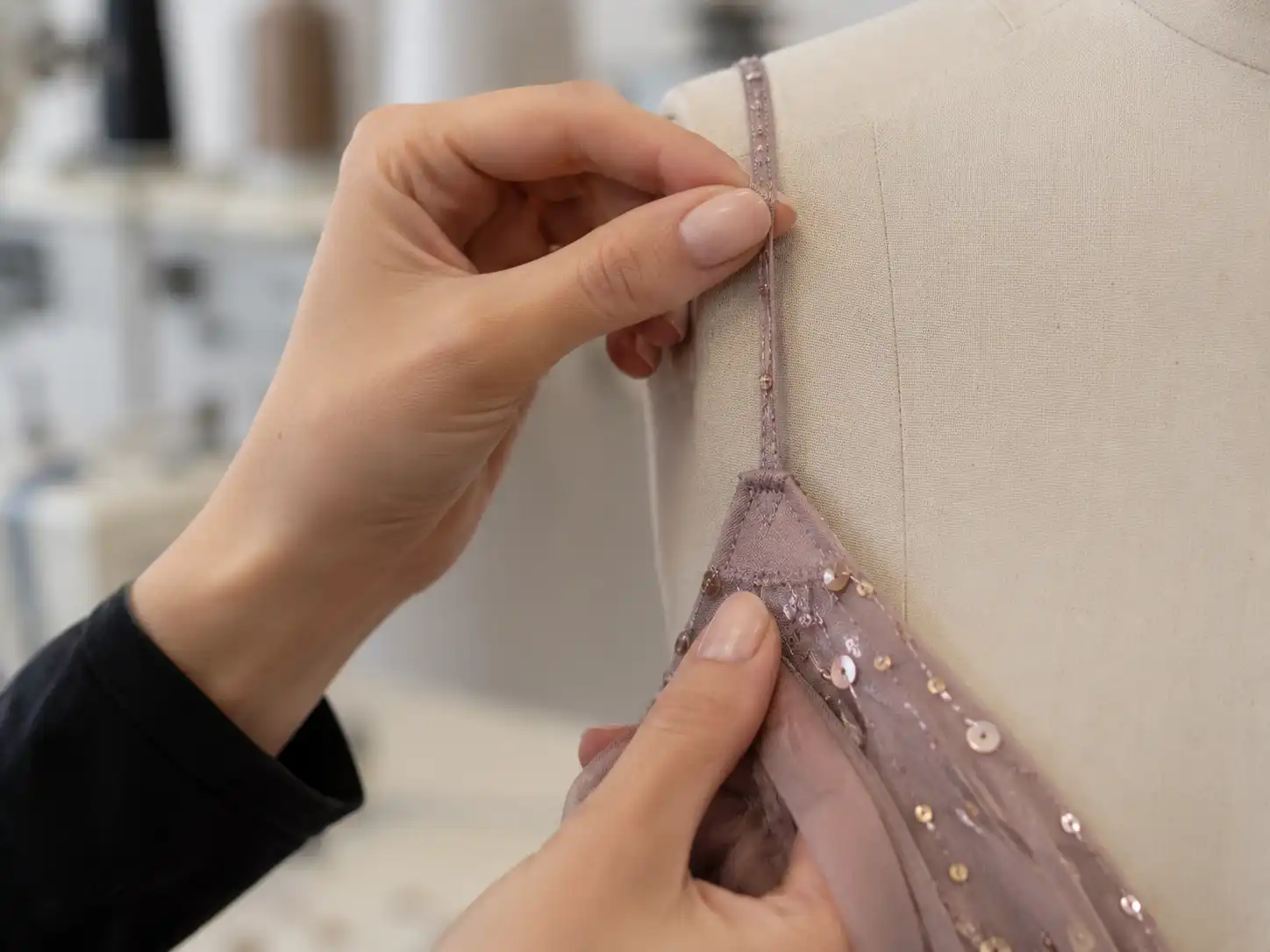
Stress Reinforcement

Skin Safe Backing
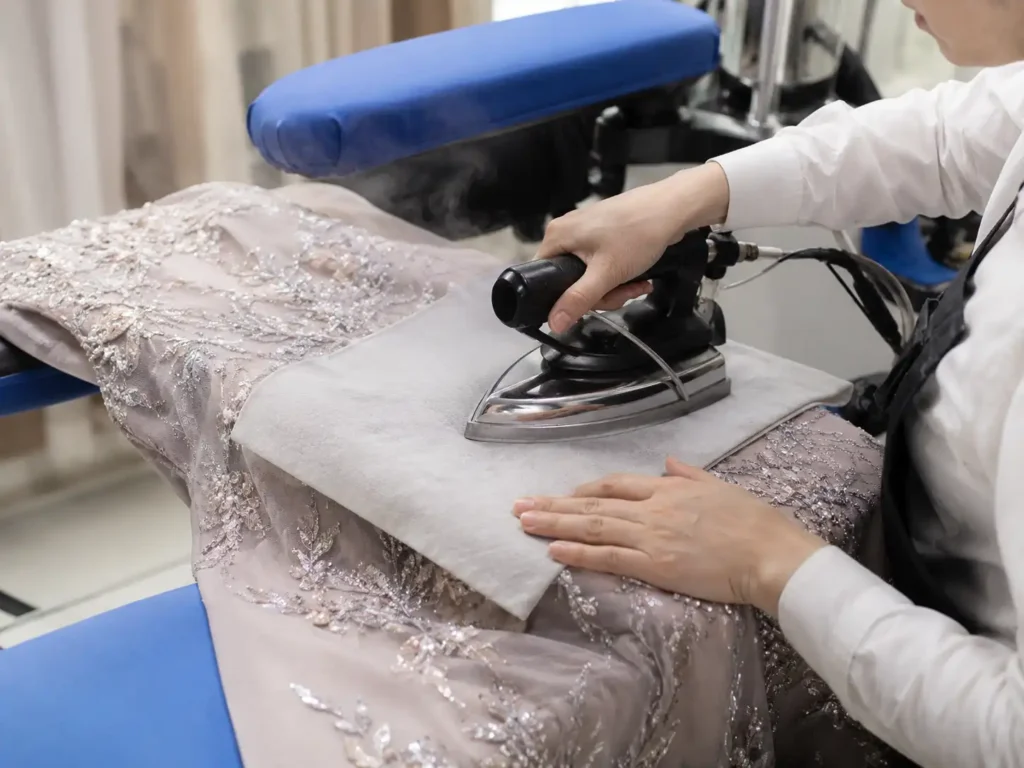
Pressing Discipline
Locking the Standard Before Bulk Production
Approved PP Sample
Golden Sample
Confirmed BOM
Placement Map
First Piece Review
Lot and Shade Control
From Design Files to Private Label Delivery
Requirement Review
Material Direction
Pattern Development
First Sample
Fit Revision
PP Approval
Material Inspection
Cutting Control
Sewing Control
Garment Inspection
Private Label Packing
Shipment Coordination
Quality Control Follows the Lace from Roll to Carton
Lace trim inspection needs dedicated checkpoints beyond general garment appearance. Each stage addresses a different failure mode before the next production step adds more value and complexity.
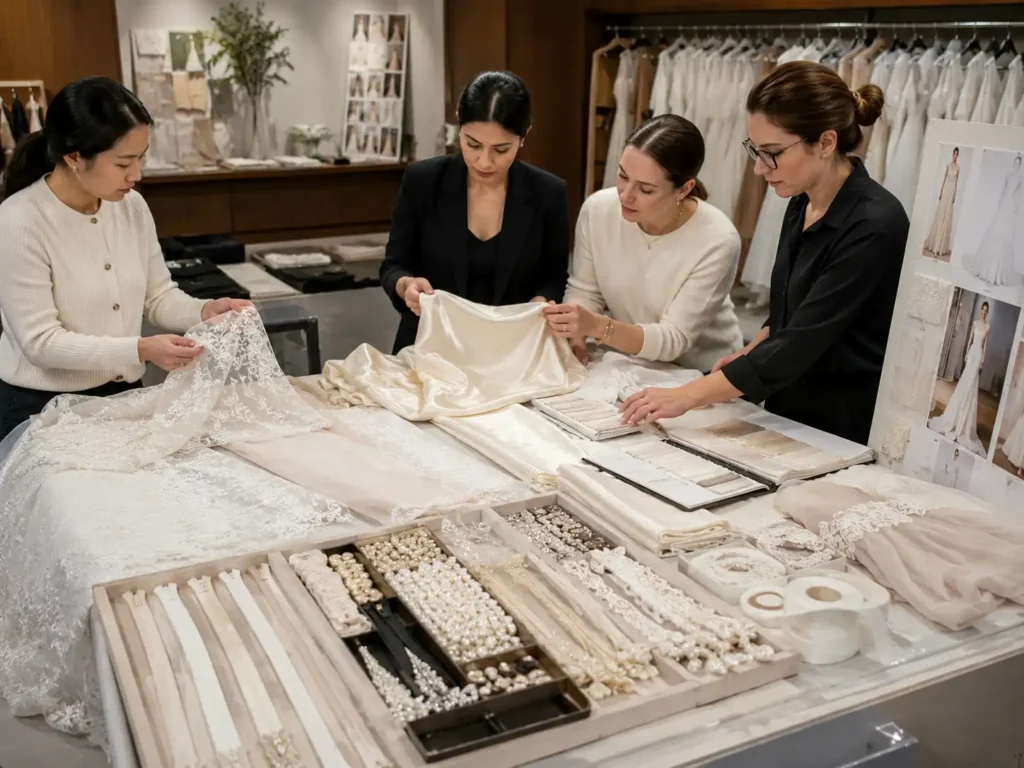
Incoming Fabric and Trim

Cutting and Preparation
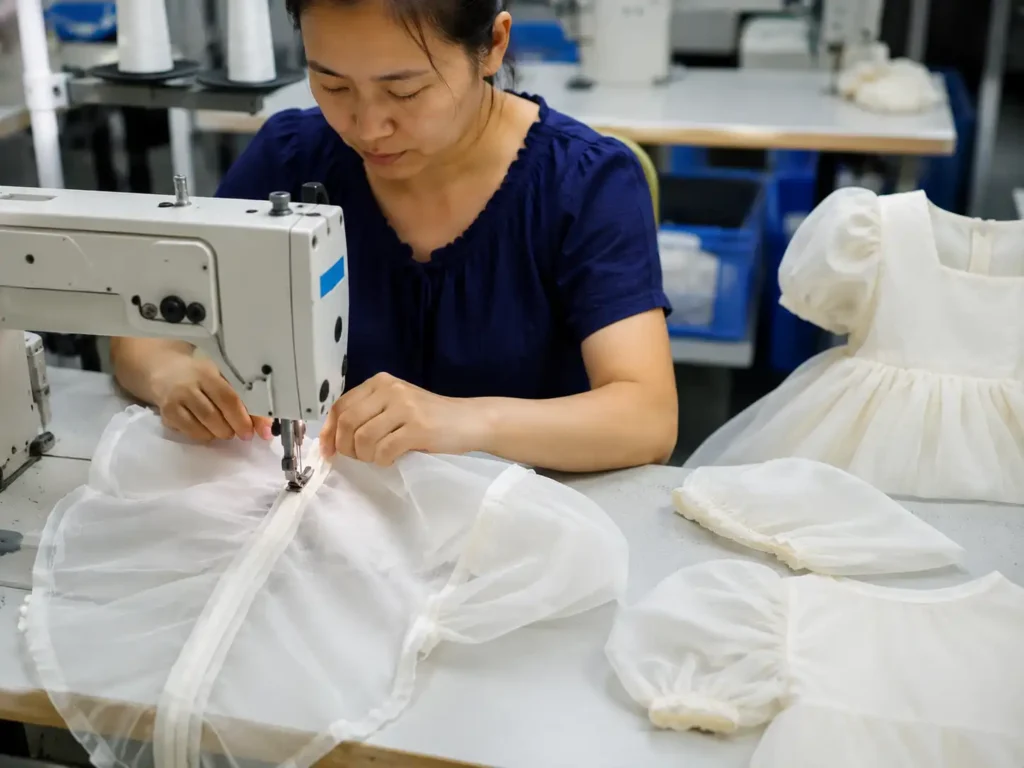
In-Line Sewing
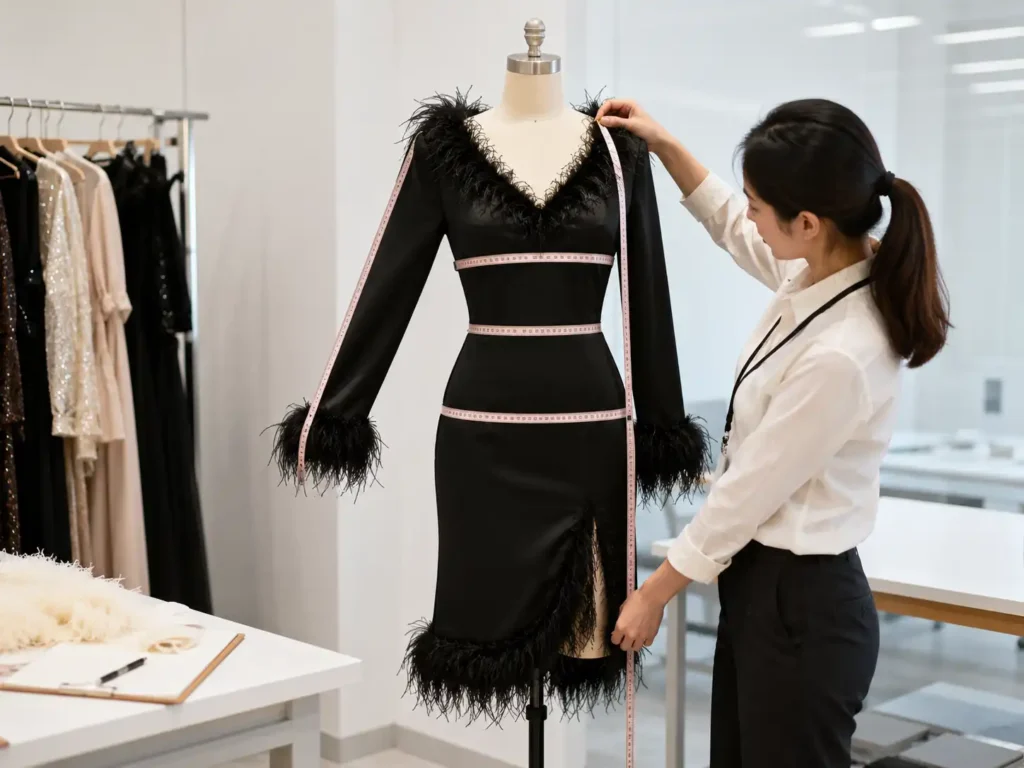
Measurement Control

Finished Garment
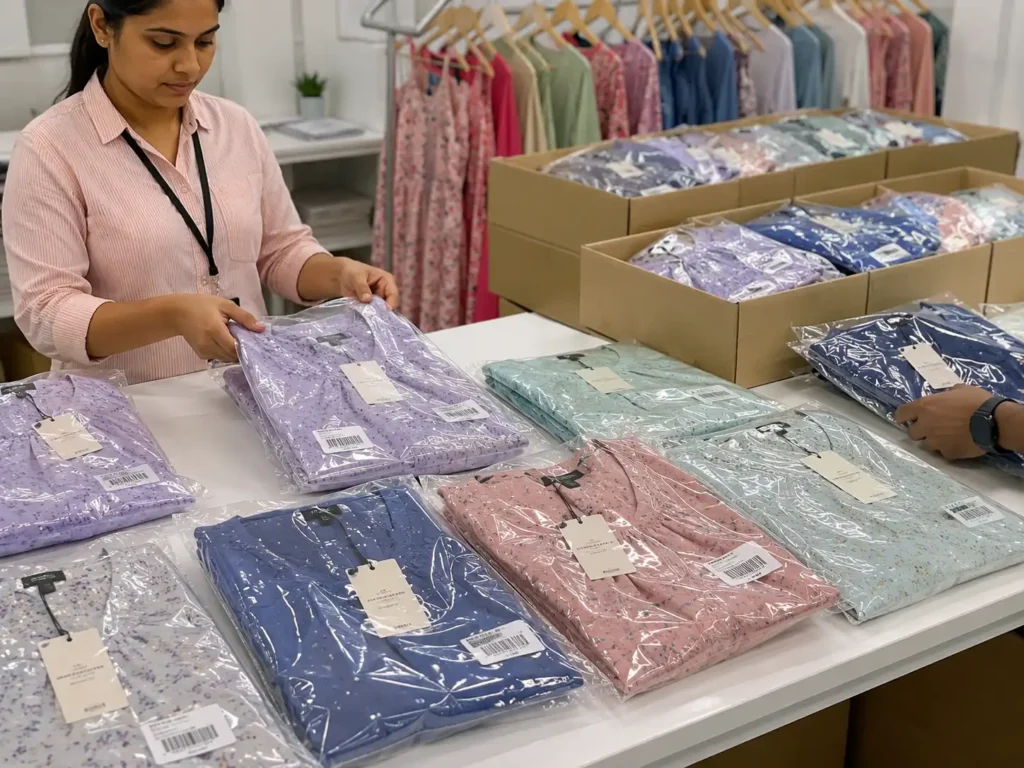
Labels and Packing
MOQ and Cost Structure for Lace Trim Dresses
MOQ by Style and Color
Main Cost Drivers
Private Label Packaging for Lace Trim Collections

Garment Labels
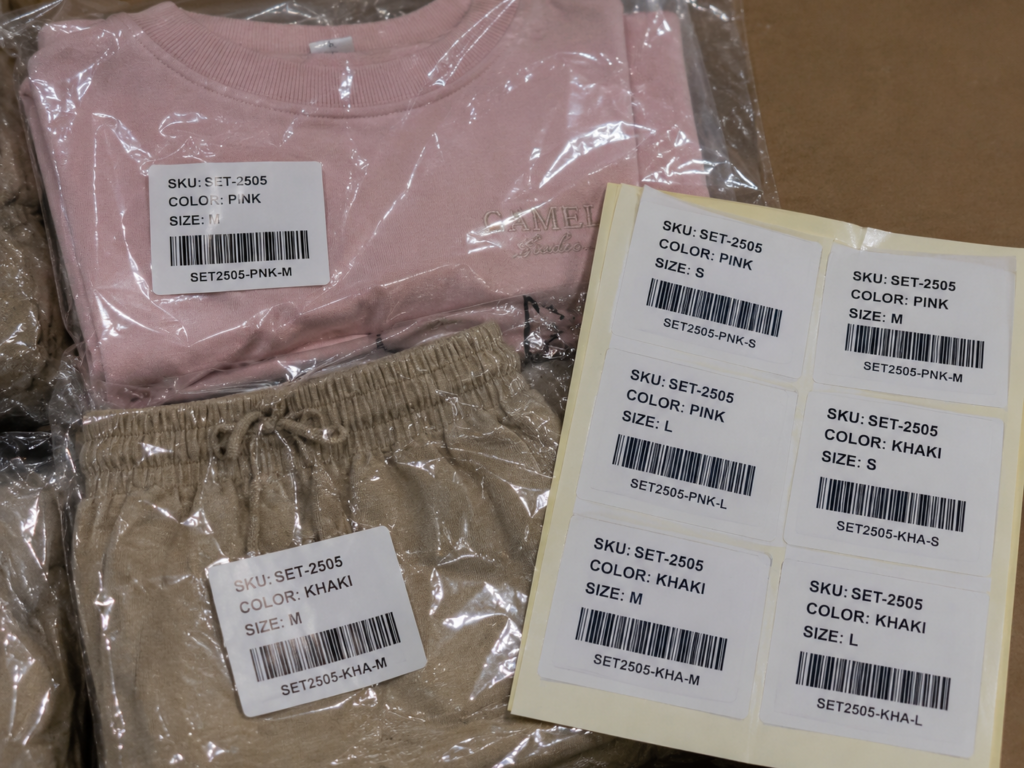
Hangtags and Tickets
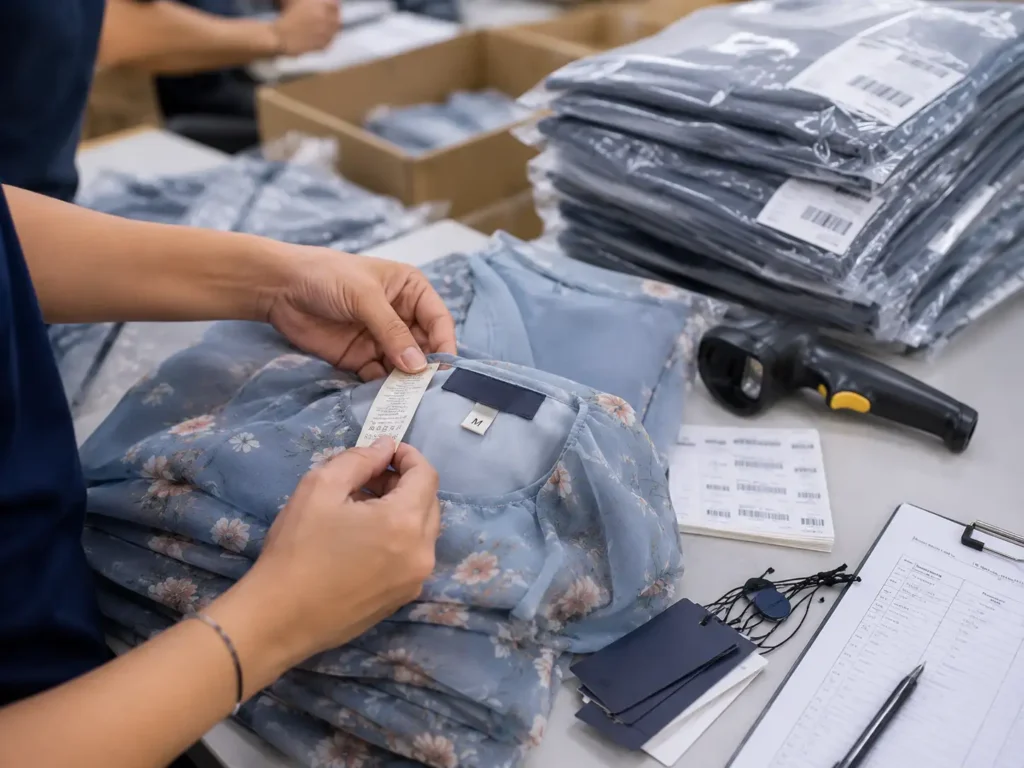
Barcode and SKU
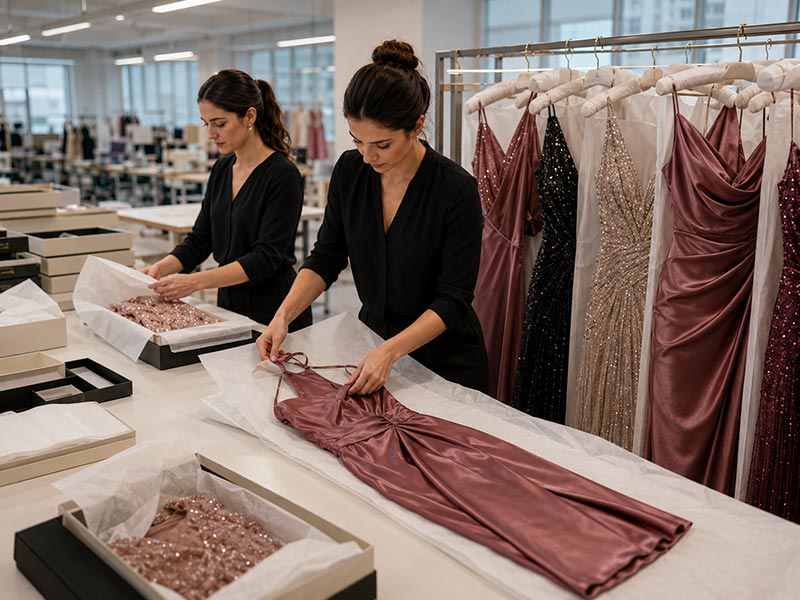
Protective Folding

Individual Packaging
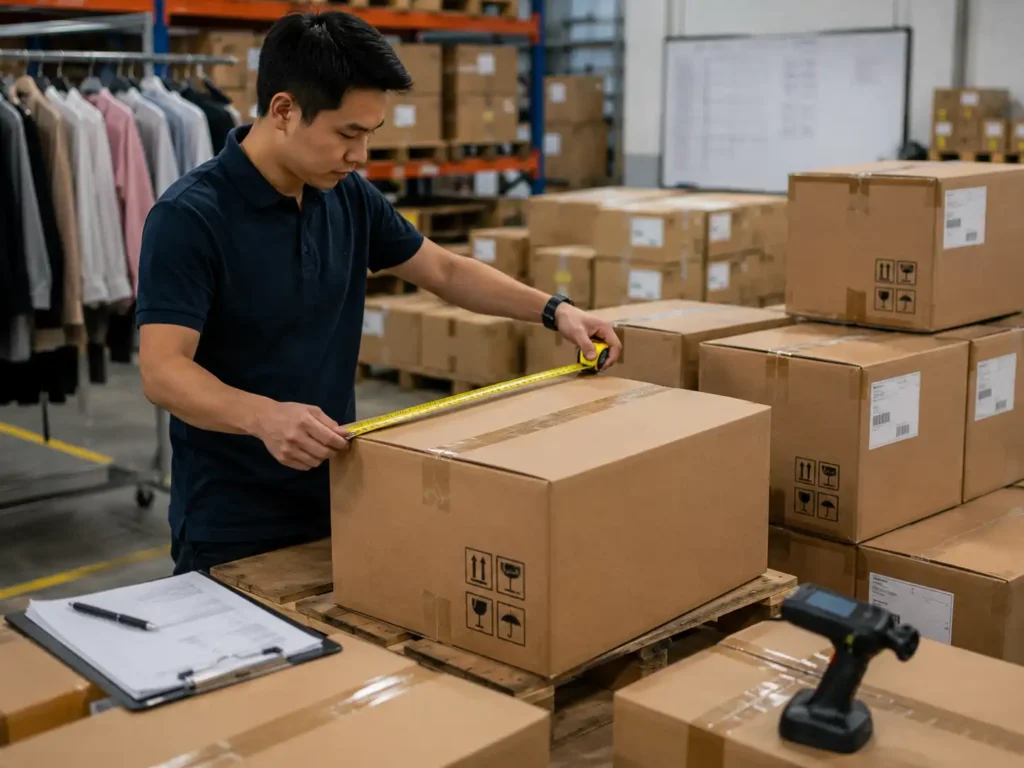
Carton and Warehouse
Production Support for Multi-Style Dress Collections
Large collections need style-level control and collection-level coordination. Jinfeng Apparel groups work by fabric, construction, sample priority, factory suitability, QC risk and delivery window.
Production Allocation
Sample and Pattern
Merchandising Control
Quality Team
Finishing and Packing
Capacity Planning
Why Fashion Brands Choose Jinfeng Apparel
Dress Focus
Material Integration
Fit Development
Complex Sampling
Bulk Control
Long-Term Records
Lace Trim Dress Programs for Fashion Markets
US Premium Ecommerce Program
Program scope: 18 styles and 42,600 garments across satin lace-trim slips, stretch bodycon minis, mesh-panel midis and open-back maxi dresses. Six colorways were organized across XS-2XL, with higher volume assigned to black, ivory and wine. Hero products needed photo-ready samples before the balance of the line, while shell, lace and lining shades had to remain coordinated under studio lighting.
Development challenge: early satin samples showed slight neckline waves where non-stretch lace met a soft bias-influenced shell. Two bodycon styles also pulled the lace inward at larger sizes, reducing the intended neckline width. Pattern length, strap position and trim specification were separated by fabric group rather than applying one method to every style. Lace placement references, finished neckline measurements and recovery checks were added before PP approval.
Production response: styles were grouped into satin, stretch and mesh routes. Six campaign styles moved first, followed by revised samples for the highest-risk constructions. Bulk instructions locked lace code, width, overlap, joining position, lining color, measurement tolerance and protective packing. Final inspection emphasized neckline symmetry, trim waves, strap length, lining visibility, snagging and barcode accuracy. Launch-critical units were separated for an earlier shipping window while the main volume followed the planned bulk route.
UK Occasionwear Collection
Program scope: 12 styles and 28,800 garments for cocktail, wedding guest and evening use. The range combined lace-trim satin midis, crepe dresses with lace waist inserts, mesh sleeves with edged cuffs and slit dresses with scalloped trim. Sizes ran from UK 6-18 across four core color families, supported by private labels, hangtags and SKU packing.
Development challenge: wide scalloped lace looked balanced in the base size but appeared too dominant after direct proportional grading. One slit style also interrupted the floral motif at the endpoint, while a pale lining shifted the visible tone of an ivory shell-and-lace combination.
The development team revised the grade rule for visible trim width, moved selected motif joins to lower-visibility positions and approved shell, lace and lining as one layered color standard.
Production response: each style received a lace-placement map and separate quality points.
Incoming inspection compared motif repeat, width, color and damage. In-line checks reviewed symmetry, join location, slit endpoint and lining attachment. Final inspection added close-range review under both normal and stronger lighting.
Production and packing followed two release windows aligned with the retail calendar, with carton assortment and barcode records controlled by style, color and size.
Australian Resortwear Program
Program scope: 24 styles and 67,200 garments using printed viscose, lightweight crepe, chiffon and soft satin. The collection included lace-trim minis, relaxed midis, cami maxis and open-back vacation dresses in seven print or color stories. Sizes covered AU 6-18, with selected high-volume styles extended beyond the core range.
Development challenge: lightweight shells reacted differently to the same trim. Chiffon styles lost edge balance under a heavier embroidered lace, while viscose samples required shrinkage and long-hem review. Packing trials also showed lace scallops folding sharply along maxi hems. Material groups were separated, lighter trim options were selected for delicate shells and finished hem approval took place after the required settling and sample review.
Production response: the program was organized by fabric group, trim family and launch priority.
Patterns recorded lace length and placement by size; cutting and sewing instructions protected print direction, long hems and open backs. Packing methods used larger folds and tissue support for sensitive maxi styles.
Final QC covered transparency, shrinkage references, hem balance, lace joins, back-opening symmetry, labels and carton marks. Priority styles moved first, followed by the main seasonal delivery.
Lace Trim Dress Manufacturing Questions
MOQ starts from 200 pcs per style/color. Stock materials and regular trims can support a simpler route. Custom-dyed fabric, custom lace, exclusive motifs, special colors, certified material requests and specialized packaging may require higher supplier minimums.
Yes. A clear reference image, sketch, line sheet or original sample can support an initial review. Front, back and detail views improve accuracy. Quantity, size range, material direction and launch timing are also needed before a useful development plan can be prepared.
Yes. Technical drawings, measurement charts, tolerances, grade rules, BOM, stitch notes, lace placement, labels, artwork and packing files can be reviewed before sample development. Conflicting or missing specifications are identified during the review.
A close-up image can guide motif, width, edge and color sourcing. A physical swatch or supplier code gives a more reliable target. Exact replication may depend on supplier availability, exclusive ownership, custom development, MOQ and schedule.
Custom dyeing can be assessed by lace fiber, construction, color difficulty and supplier minimum. A lab dip or color sample may be required. Shell, lace, lining and thread are approved together because identical dye names can still look different.
Pattern length, lace stretch, shell stretch, feed balance, stitch tension and handling are checked together. Sample correction identifies whether the problem comes from material incompatibility, sewing method or pattern geometry. Pressing alone is not treated as a reliable correction.
A first sample is commonly planned within 7-15 working days after specifications and key materials are ready. Custom-dyed lace, complex corset work, multiple lace zones, unusual trims or incomplete files can extend the schedule.
The approved standard can include a PP sample, Golden sample, placement map, measured distances, motif direction, trim code, joining method, measurement chart and in-line inspection points. Size grading receives separate references where visible placement changes.
Yes. Main labels, size labels, care labels, hangtags, barcodes, SKU stickers, individual packing, carton ratios, carton marks and warehouse instructions can follow approved files and supplier minimums.
Jinfeng Apparel supports NDA-based cooperation and protects tech packs, patterns, samples, measurements, fabrics, trims, labels, packaging files, quantities and unpublished styles. Public use of identifiable project materials requires authorization.

Start Your Lace Trim Dress Development
Jinfeng Apparel can evaluate silhouette, lace placement, shell and lining direction, pattern risk, sample complexity, MOQ, cost drivers, private-label requirements and delivery planning after receiving the core project details.
A complete tech pack is welcome, while clear reference images and commercial information can also support an initial assessment.
Kelly coordinates the review with the relevant development, material, pattern and production teams.
- Reference image, sketch, tech pack, line sheet or original sample details
- Target quantity for every style and color; standard MOQ starts from 200 pcs per style/color
- Preferred shell fabric, lace trim reference, lining direction and color plan
- Size range, measurement chart, fit direction and planned size ratio
- Main label, care label, hangtag, barcode, packing and warehouse requirements
- Target sample date, launch date, shipping destination and preferred delivery route
- Any testing, NDA, inspection or document requirements connected with the program